Transform Your Window Seat into a Cozy Reading Nook

Introduction:
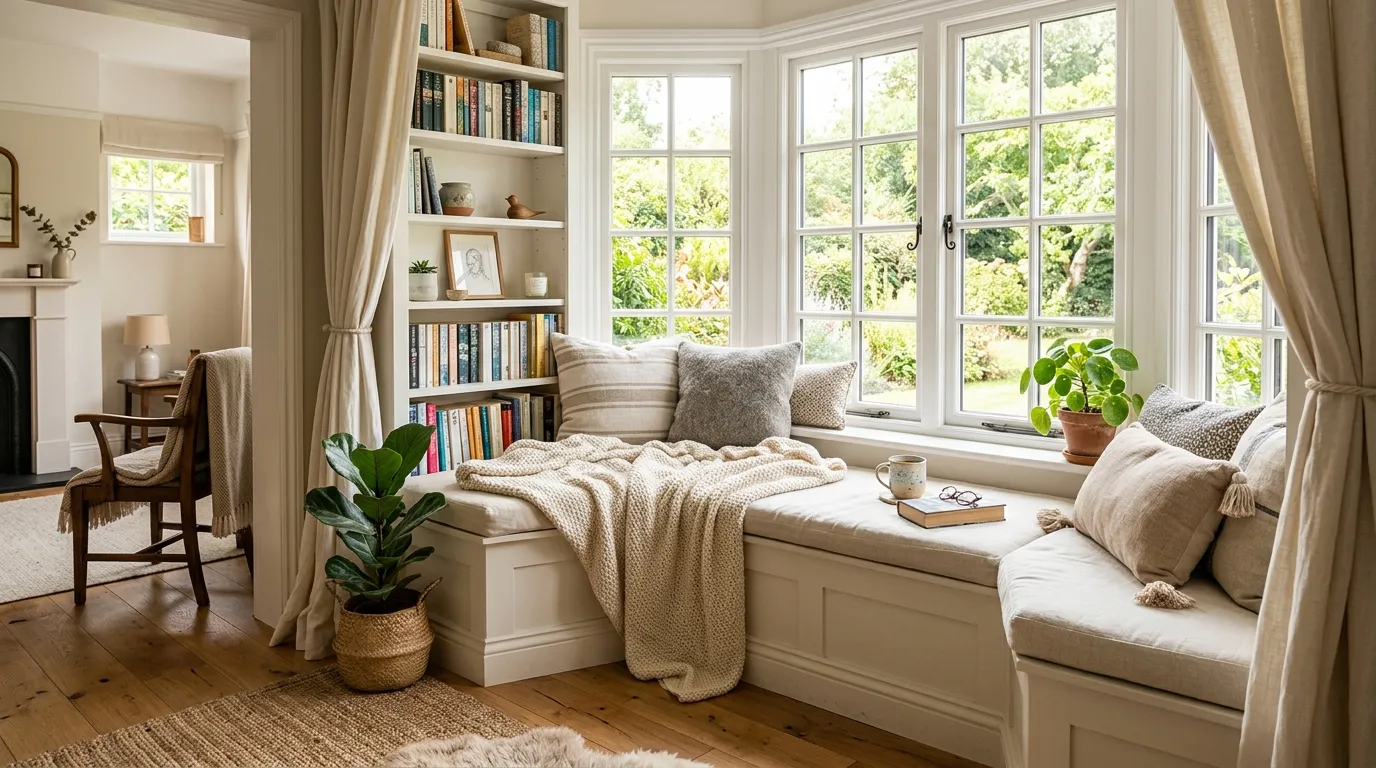
Imagine having a window seat that invites you to slow down, open a favorite book, and enjoy a peaceful escape from everyday distractions. A thoughtfully designed reading nook is more than an attractive feature—it creates a dedicated place to relax, recharge, and build a lasting reading habit.
Whether you have a spacious bay window or a compact corner with natural light, creating a comfortable reading space is achievable with careful planning and intentional design choices. From selecting supportive seating and calming color palettes to choosing the right lighting, textures, and storage, every detail contributes to a more enjoyable experience.
In my experience, the most inviting reading nooks are not always the largest or most expensive. They are the ones designed around comfort, functionality, and personal preferences. I’ve seen many people transform overlooked spaces into favorite spots simply by making thoughtful improvements that support both relaxation and everyday use.
This guide explains the essential principles behind designing a welcoming reading retreat, helping you understand not only what works but also why it works. By the end, you’ll have practical knowledge you can confidently apply to create a timeless space that encourages reading, comfort, and quiet moments every day.
How to Choose the Ideal Location for a Reading Nook
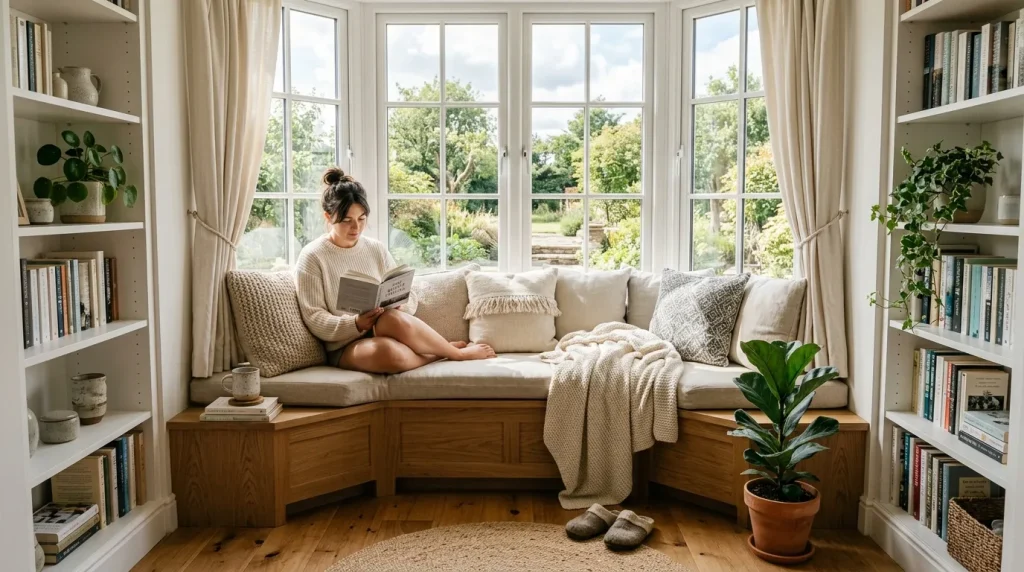
A thoughtfully chosen location lays the foundation for a reading space that feels inviting every day. Areas near large windows naturally provide comfortable daylight, reducing the need for artificial lighting while creating a calm atmosphere. When selecting a spot, consider how often the area is used, nearby distractions, and available space for seating and storage. Many professionals recommend evaluating the room during different times of day because sunlight changes significantly, affecting comfort, brightness, and the overall experience throughout changing seasons.
The surrounding environment also influences how relaxing the space becomes over time. A quiet corner away from televisions, busy hallways, or noisy appliances allows deeper concentration and makes reading more enjoyable. In my experience, even a compact window seat can become an inviting retreat when positioned thoughtfully within the room. Small adjustments such as nearby shelving, convenient access to blankets, or a side table for drinks often make the area feel intentionally designed rather than simply filling an unused corner.
Why Comfortable Seating Makes Reading More Enjoyable
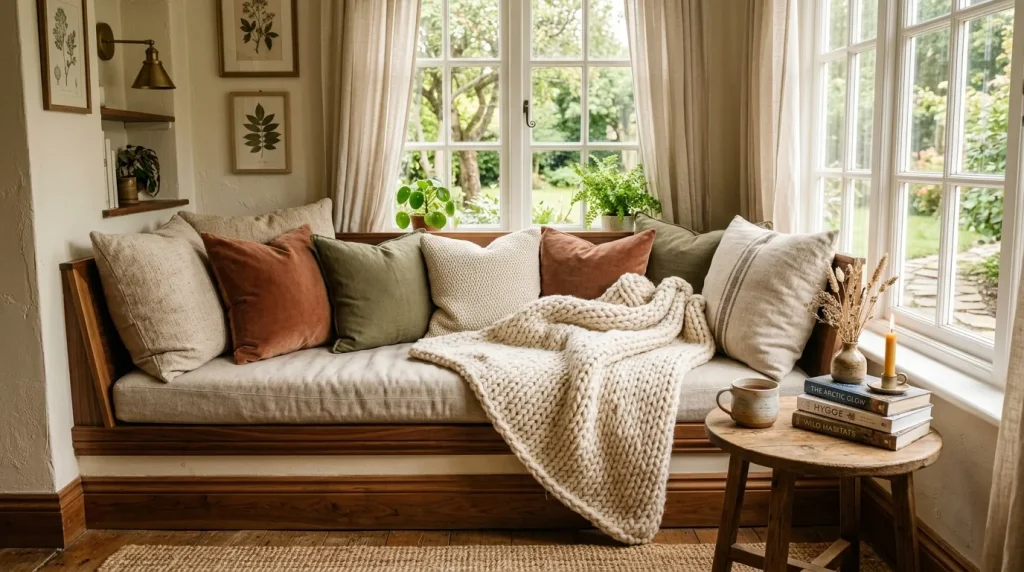
Comfort directly affects how long someone enjoys reading without becoming distracted by physical discomfort. Supportive cushions, quality padding, and ergonomic back support help reduce strain during extended reading sessions. Research shows that maintaining a comfortable posture improves concentration while minimizing neck and lower back fatigue. Choosing materials that feel pleasant throughout different seasons also encourages regular use, making the reading corner an everyday destination instead of an occasional decorative feature.
Selecting seating involves balancing softness with adequate support rather than choosing the thickest cushion available. Dense foam paired with layered textiles often provides lasting comfort while maintaining its shape over time. I’ve noticed that readers frequently appreciate seating deep enough to shift positions naturally without feeling restricted. Adding lumbar pillows, adjustable cushions, and washable covers increases practicality, allowing the area to remain comfortable, visually appealing, and easy to maintain despite regular daily use by family members.
Creating the Right Lighting for Every Time of Day
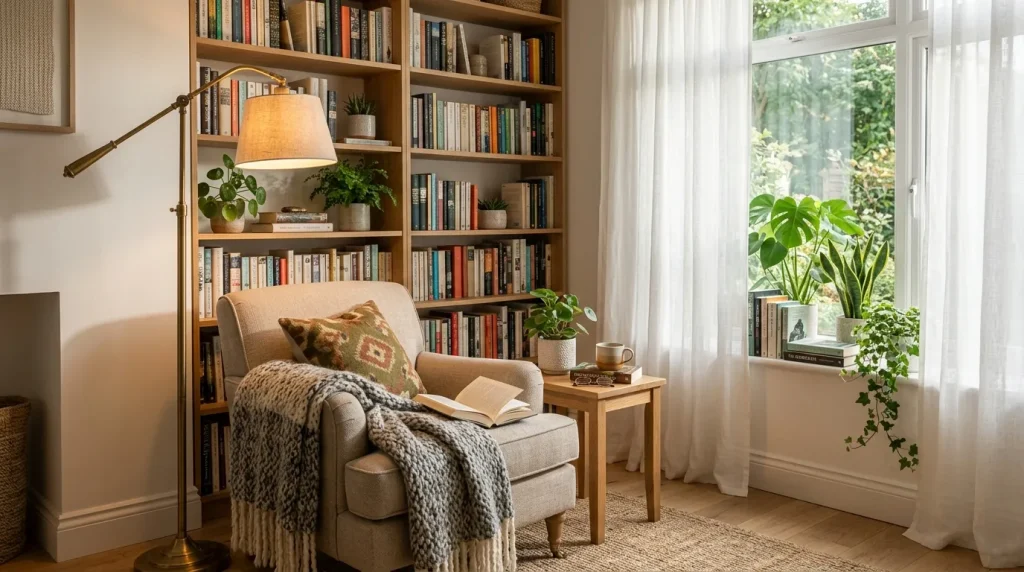
Lighting dramatically shapes both the functionality and atmosphere of a reading corner throughout the day. Natural daylight provides excellent color accuracy and reduces eye strain during morning and afternoon hours, while thoughtfully placed task lighting supports comfortable reading after sunset. Instead of relying on a single overhead fixture, layered illumination creates flexibility and enhances visual comfort. Many experts recommend combining daylight, adjustable lamps, and warm accent lighting to maintain consistent brightness without producing harsh glare or distracting shadows.
Even small lighting improvements can significantly enhance the reading experience. Adjustable floor lamps allow readers to direct light precisely where needed, while warm-toned bulbs create a welcoming atmosphere during evening hours. In my experience, balancing brightness with softness produces the most relaxing environment because excessively intense lighting often feels clinical rather than cozy. Reflective surfaces, light-colored walls, and carefully positioned mirrors can also distribute available light more evenly, making compact reading spaces appear brighter and more spacious.
Understanding the Importance of Layered Textures
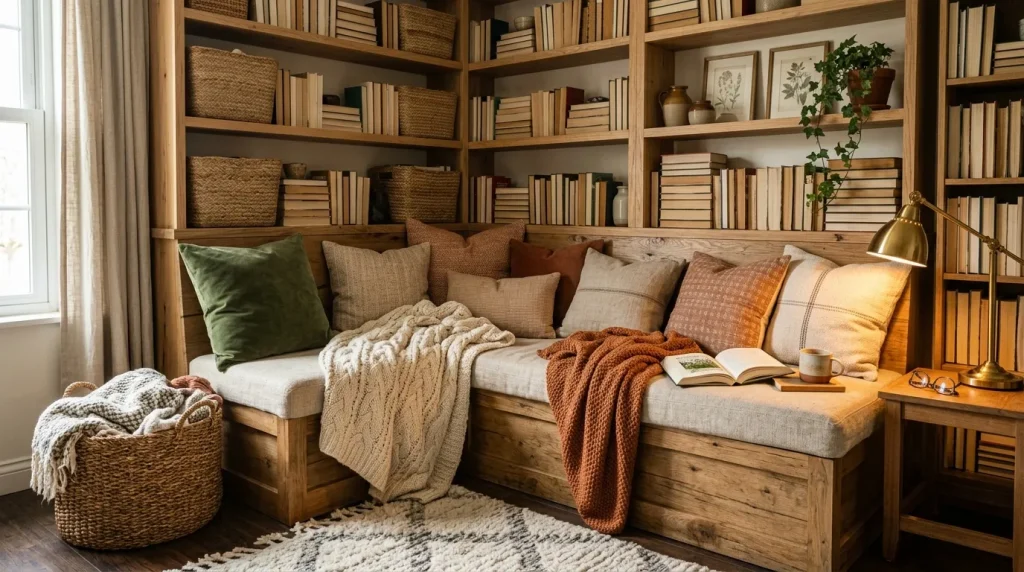
Texture adds visual depth while making a reading space feel noticeably more comfortable and welcoming. Combining smooth, woven, knitted, and plush materials prevents the design from appearing flat or overly formal. Soft blankets, natural fiber rugs, linen cushions, and wooden finishes introduce warmth without overwhelming the room. Many interior designers recommend layering different materials because subtle contrast creates richness that photographs beautifully while also improving the everyday experience of relaxing with a favorite book.
Practicality matters just as much as appearance when selecting fabrics and finishes. Durable materials that resist everyday wear allow the space to remain attractive even with frequent use. In my experience, mixing washable textiles with long-lasting natural materials offers an excellent balance between beauty and maintenance. Layering textures also allows seasonal adjustments, making it easy to introduce lighter fabrics during warmer months and thicker throws during cooler weather without redesigning the entire reading corner.
Ways to Add Practical Storage Without Creating Clutter
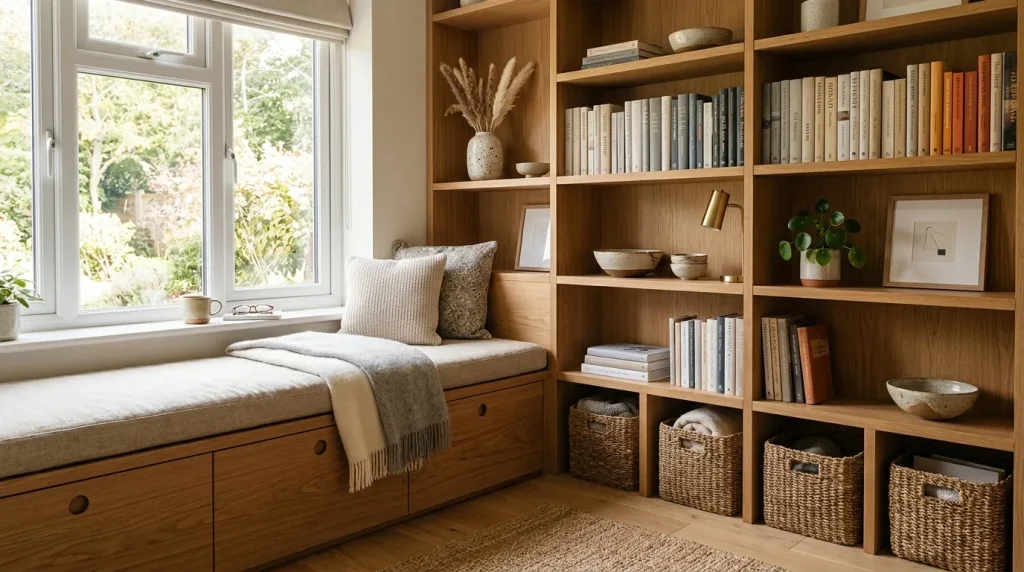
An organized reading area feels more relaxing because everything has a designated place. Shelving, concealed drawers, baskets, and compact cabinets help keep books, blankets, journals, and reading accessories accessible without making the space appear crowded. Well-planned storage also reduces visual distractions, allowing the room to maintain a calm appearance. Research consistently shows that organized environments can improve focus and reduce unnecessary stress, making thoughtful storage an important part of creating a comfortable reading retreat.
Storage solutions work best when they match the available space instead of dominating it. Built-in cabinetry often maximizes every inch, while decorative baskets offer flexibility for smaller rooms or apartments. A carefully planned window seat with hidden compartments combines seating and storage in one efficient design, making excellent use of limited square footage. I’ve found that regularly removing unused items keeps the area functional and visually balanced, ensuring the reading corner remains welcoming instead of gradually becoming another place where clutter accumulates.
How to Personalize Your Reading Space Thoughtfully
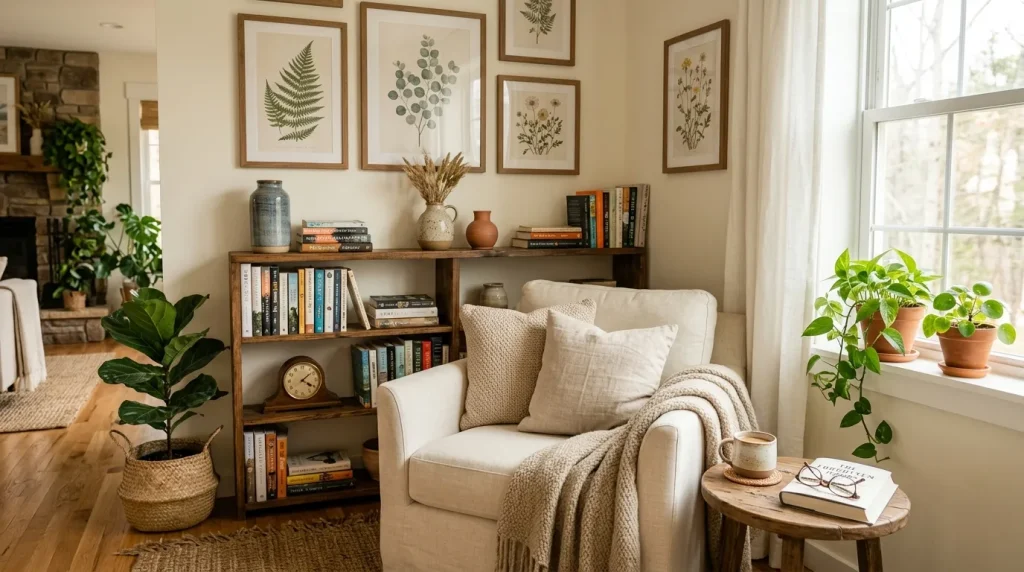
Personal touches transform an attractive reading corner into a meaningful retreat that reflects individual interests and daily habits. Carefully selected artwork, treasured books, family photographs, or handcrafted décor create emotional connection without overwhelming the space. Rather than filling every surface, thoughtful editing allows each item to contribute to the overall atmosphere. Many designers recommend displaying only pieces that inspire relaxation or positive memories because intentional decoration helps maintain a calm environment that supports focused reading and quiet reflection.
The most memorable reading spaces often evolve gradually instead of being completed in a single shopping trip. I’ve observed that adding meaningful items over time creates greater authenticity than purchasing matching decorations all at once. Rotating seasonal accents or displaying recently enjoyed books keeps the space feeling fresh while preserving its character. Personalization works best when every object serves either a practical purpose, an emotional connection, or both, preventing unnecessary clutter from distracting attention.
The Role of Plants in a Peaceful Environment
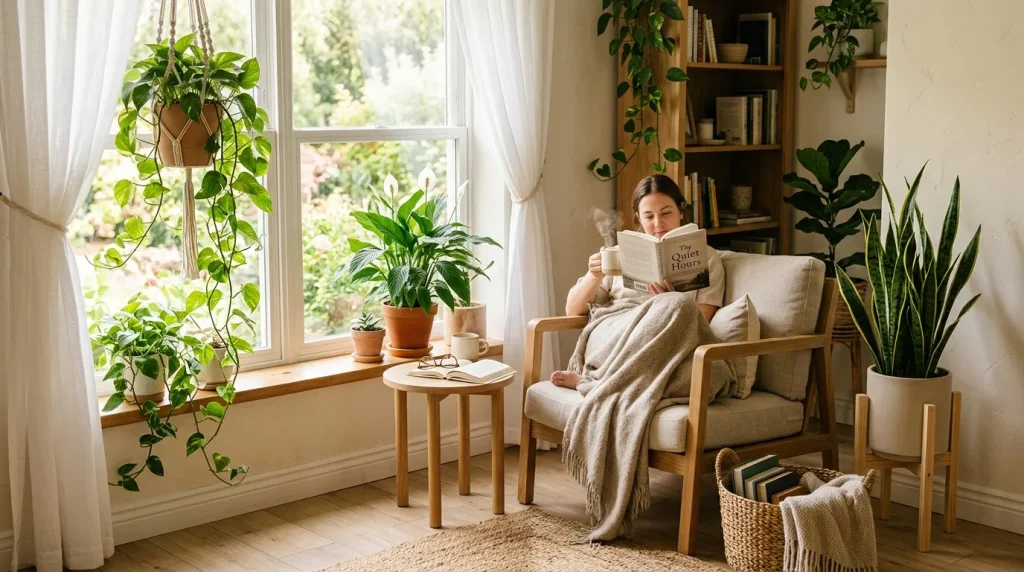
Indoor plants contribute far more than decorative appeal by introducing texture, color, and a sense of natural balance. Greenery softens hard architectural lines while creating a visually refreshing setting that feels connected to nature. Studies have found that exposure to plants may improve mood, reduce perceived stress, and increase overall comfort in indoor environments. Even a few carefully chosen low-maintenance varieties can significantly enhance the atmosphere without requiring extensive gardening knowledge or constant attention. Plants also pair beautifully with vibrant interiors, and this guide to a colorful boys room shows how natural greenery can complement bold colors while creating a lively, balanced space.
Choosing suitable plants depends on available light, humidity, and maintenance preferences. Hardy varieties such as snake plants, pothos, or ZZ plants thrive in many homes with minimal care, making them excellent choices for beginners. In my experience, grouping plants with varying heights creates a balanced composition while avoiding visual clutter. Healthy greenery also pairs beautifully with natural wood, woven textiles, and soft neutral colors, helping the reading area feel vibrant yet peaceful throughout every season.
Why Quiet Surroundings Improve Reading Focus
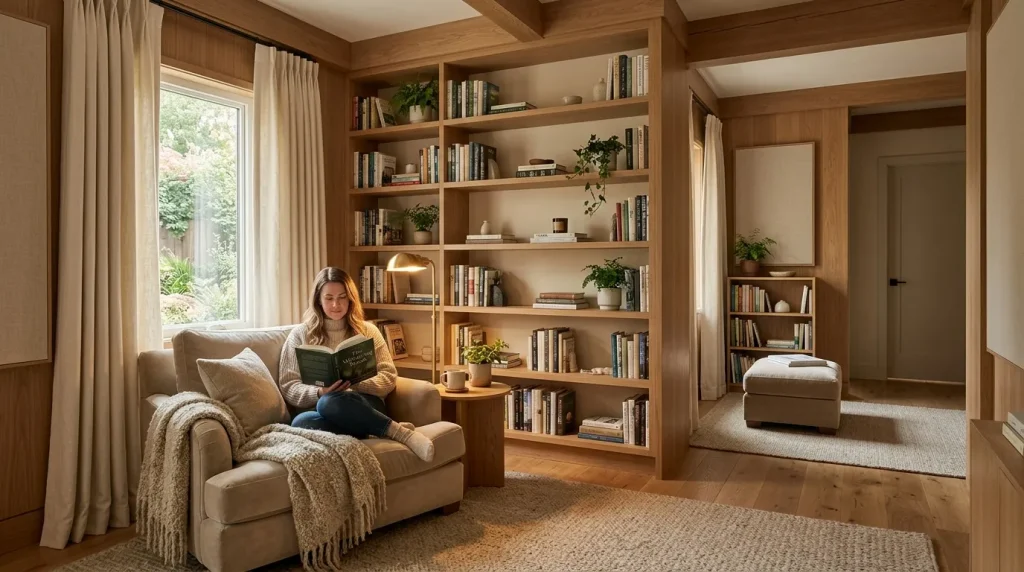
A peaceful environment makes it easier to become fully absorbed in a book without frequent interruptions. Background conversations, electronic devices, and household noise can repeatedly break concentration, reducing both enjoyment and comprehension. Creating separation from high-traffic areas encourages longer, more focused reading sessions. Research suggests that quieter surroundings support sustained attention, allowing readers to process information more effectively while experiencing greater mental relaxation during both educational and recreational reading.
Reducing distractions does not necessarily require complete silence. Soft furnishings, rugs, curtains, and upholstered furniture naturally absorb sound, helping create a gentler acoustic environment. I’ve noticed that establishing simple household routines, such as designated quiet reading times, often improves the experience for everyone at home. Small adjustments, including silencing notifications or placing the reading area away from entertainment systems, can make a noticeable difference in maintaining concentration and building a consistent reading habit.
How to Make Small Spaces Feel More Inviting
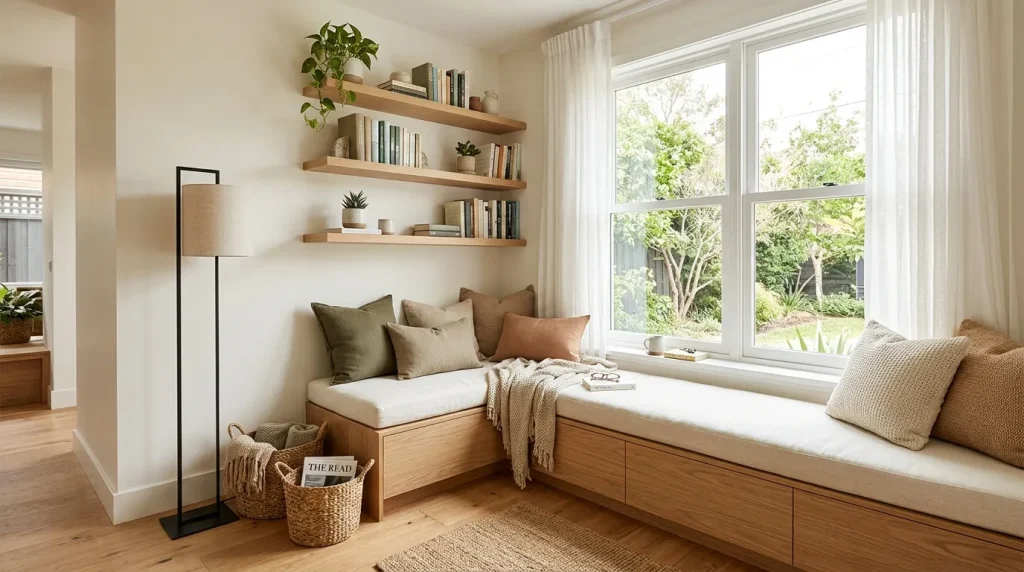
Limited square footage does not prevent a home from having a comfortable place dedicated to reading. Careful planning, multifunctional furniture, and thoughtful organization allow even the smallest corner to feel welcoming and practical. Light color palettes, streamlined furnishings, and vertical storage help maximize available space without creating visual heaviness. Interior design professionals often recommend prioritizing functionality first, ensuring every element contributes to comfort while preserving an open, uncluttered appearance that encourages regular use.
Creating a sense of spaciousness depends as much on visual balance as actual dimensions. Floating shelves, slim lighting fixtures, and furniture with exposed legs reduce visual bulk while maintaining useful storage. I’ve found that keeping decorative accessories intentionally minimal prevents compact spaces from feeling crowded. Mirrors positioned to reflect daylight, paired with coordinated textiles and carefully chosen furniture proportions, help create an airy atmosphere that feels considerably larger than the room’s physical footprint.
Simple Decorating Principles for a Timeless Look
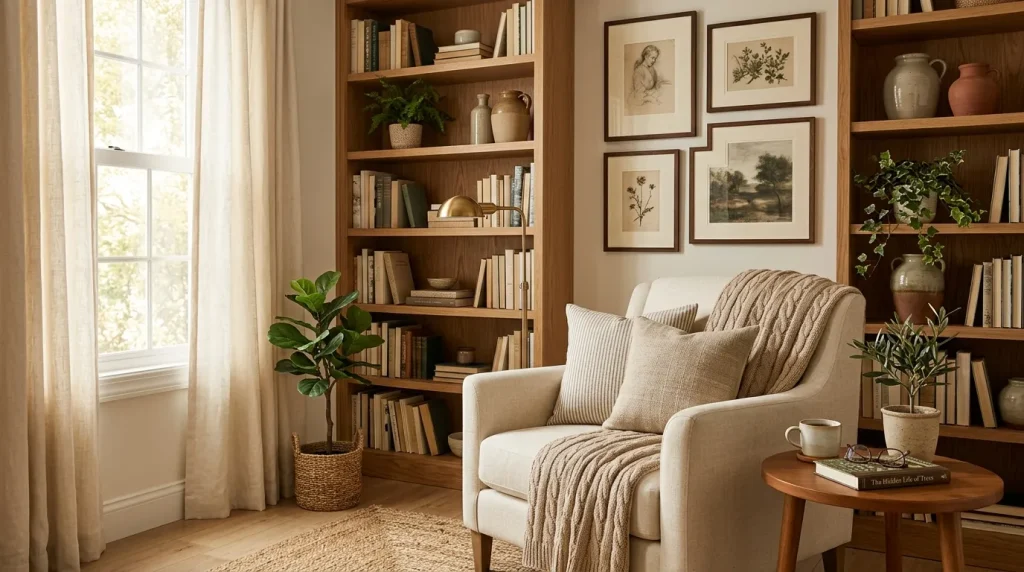
Timeless decorating focuses on lasting appeal rather than short-lived trends, creating a reading space that remains attractive for years. Clean lines, balanced proportions, and carefully selected accessories establish visual harmony without excessive ornamentation. Choosing classic materials and restrained color combinations allows future updates without requiring a complete redesign. Designers frequently recommend building a strong foundation with quality furniture before introducing smaller decorative details that can evolve as personal preferences change over time.
Thoughtful restraint often produces more satisfying results than filling every available surface. Decorative objects become more meaningful when each one has room to stand out and contribute to the overall composition. I’ve observed that combining books, natural textures, and a few carefully chosen accessories creates an inviting environment without overwhelming the eye. Maintaining this balance also simplifies cleaning and seasonal updates, ensuring the reading area continues to feel organized, welcoming, and effortlessly elegant throughout the year.
Conclusion:
Creating a cozy reading retreat is about more than decorating a corner of your home. It involves understanding how layout, lighting, comfort, storage, color, and thoughtful design work together to support relaxation and focused reading. Every improvement, no matter how small, can make the space more enjoyable and encourage you to spend more time with your favorite books.
Whether you’re designing a brand-new window seat or refreshing an existing one, applying these principles will help you build a space that remains comfortable, functional, and inviting for years. I’ve seen how thoughtful planning can completely transform an ordinary corner into a place people genuinely look forward to using every day. Return to this guide whenever you need inspiration, share it with others who love reading, and enjoy creating a space that brings comfort, knowledge, and lasting enjoyment.
Clara Whitmore
Clara specializes in interior styling, seasonal home trends, and cozy living spaces. She loves combining classic design elements with modern touches to create homes that feel personal, welcoming, and effortlessly stylish.