25 Afrohemian Living Room Ideas for a Richer Home

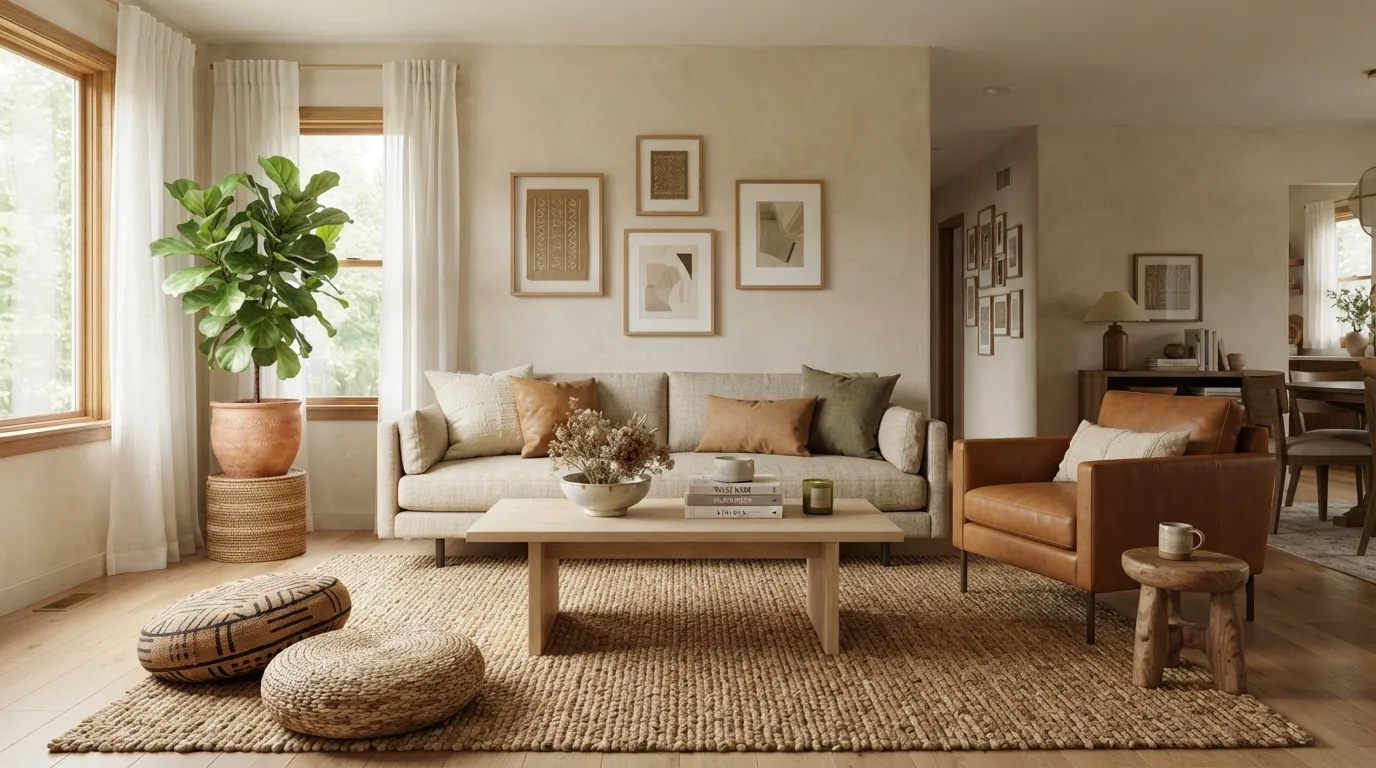
An Afrohemian Living Room brings together African-inspired patterns, natural materials, handmade details, and relaxed bohemian style. The result feels warm, personal, and full of character without looking overly formal. Think carved wood, woven baskets, earthy colors, textured rugs, and artwork that gives your space a story. You don’t need to replace every piece of furniture to create this look. A few thoughtful changes can make an ordinary living room feel collected, welcoming, and rich in texture.
The best part is how flexible this style can be. You can keep a neutral sofa, add bold tribal-inspired prints, introduce plants, or mix vintage furniture with handcrafted accessories. The key is balancing expressive patterns with comfortable seating and open space. Whether you’re decorating a small apartment or a large family room, these ideas will help you create a living room that feels connected to nature, celebrates African-inspired design, and reflects your own taste.
Build an Earthy Neutral Foundation
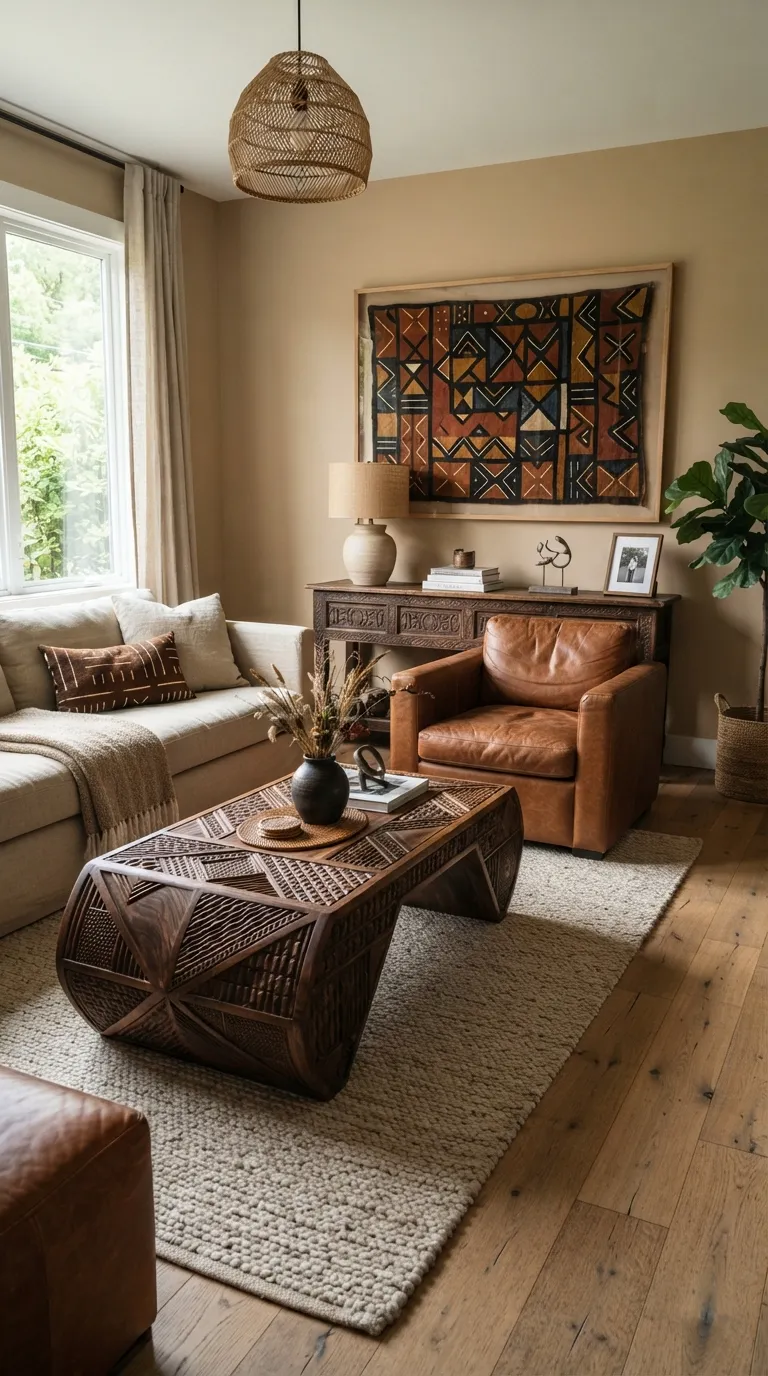
Start with earthy neutrals if you want a calm Afrohemian living room. Cream, sand, tan, and warm brown create a soft base that lets handcrafted furniture and patterned accessories stand out. Choose a comfortable linen sofa, a natural-fiber rug, and a wooden coffee table to establish the look.
Keep the largest surfaces simple, then bring in smaller touches of terracotta or olive green. This approach works especially well in small rooms because the limited palette helps the space feel connected. You can add stronger patterns later without making the room look crowded.
Make Carved Wood the Focal Point
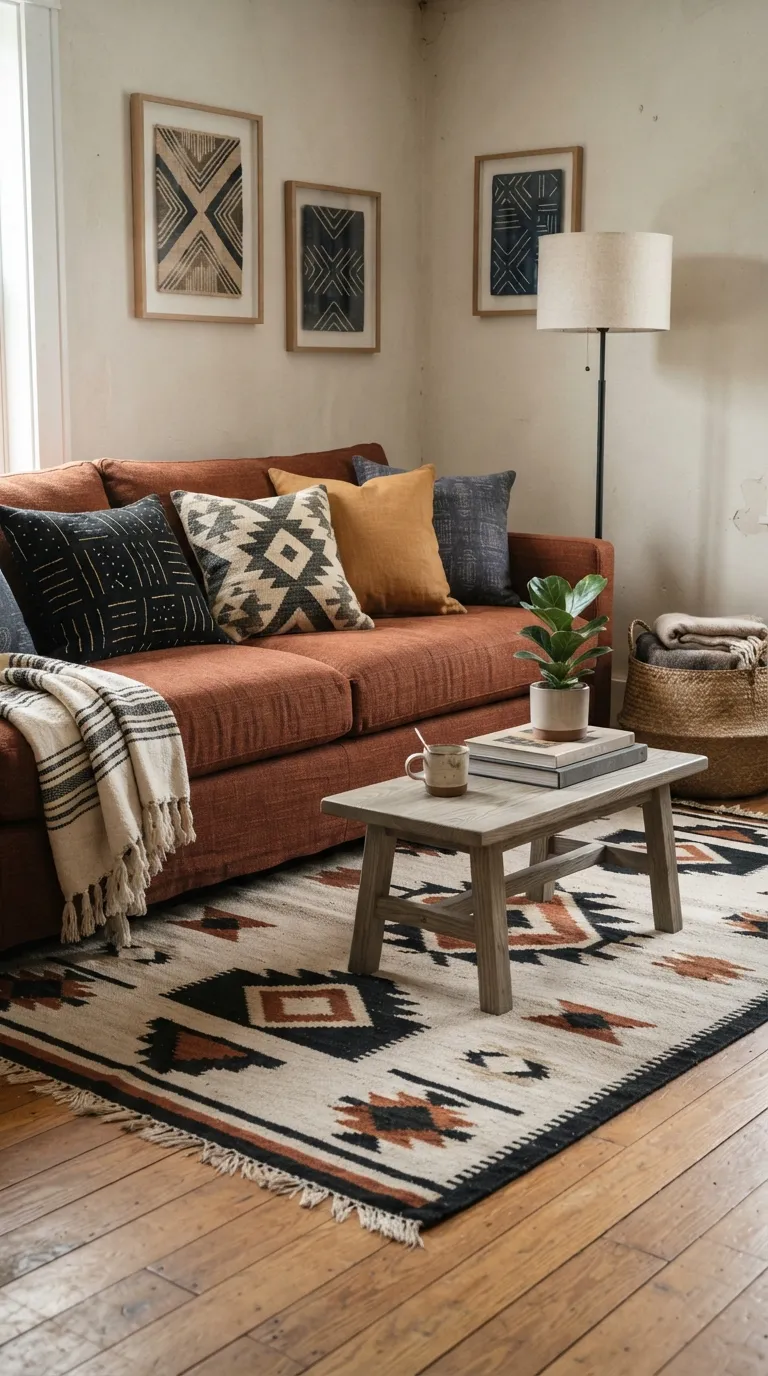
Carved wood gives your living room a strong visual anchor. Look for a coffee table, sideboard, accent chair, or console with detailed craftsmanship. Geometric carving and natural wood grain bring depth to the room without requiring bright colors or a large collection of accessories.
Let one substantial piece take the lead. If you choose a detailed wooden console, keep nearby furniture simpler so its design remains easy to appreciate. Pair dark wood with linen, woven fibers, or a light rug to create contrast and prevent the room from feeling too heavy.
Layer African-Inspired Textiles
Textiles are an easy way to bring Afrohemian character into a plain living room. Mix patterned cushions, woven throws, and rugs with geometric designs inspired by African craft traditions. Choose two or three main colors so the different prints feel related rather than competing for attention.
Start with a patterned rug or a pair of statement cushions, then add smaller textile details around the seating area. If your sofa already has a bold color, use cream, brown, or black accents to balance it. Choose authentic handmade textiles when possible, and learn about their origins instead of treating every traditional pattern as interchangeable decoration.
Add Terracotta and Rust Accents
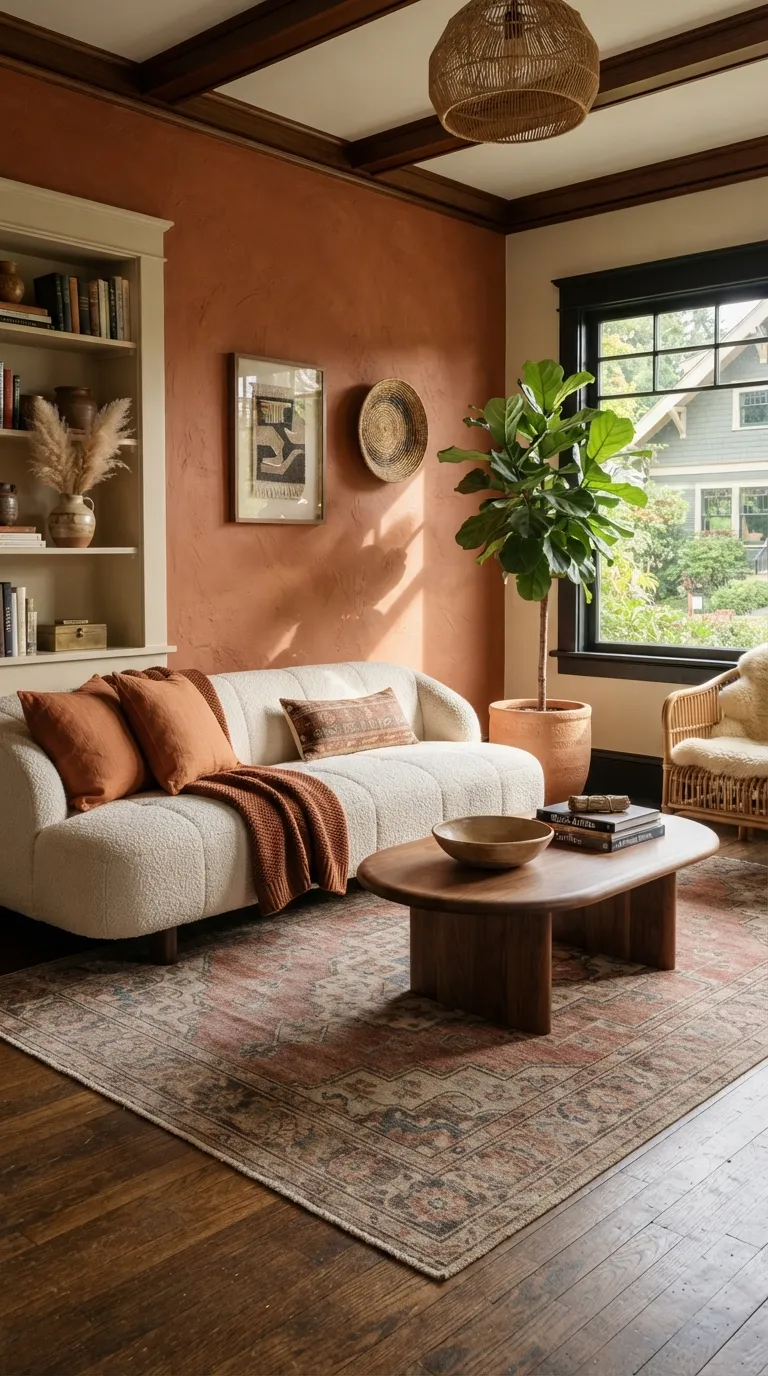
Terracotta and rust add warmth without making your living room feel too dark. These earthy shades work well with cream upholstery, brown wood, woven baskets, and black accents. You can introduce them through cushions, ceramic pots, curtains, or a painted feature wall.
For a simple update, choose one rust-colored cushion and repeat that shade in a vase or artwork. If you prefer a bolder look, paint a single wall in muted terracotta and keep the remaining walls light. This gives the room a warm backdrop while allowing furniture and decorative pieces to stand out.
Create a Gallery Wall with African-Inspired Art
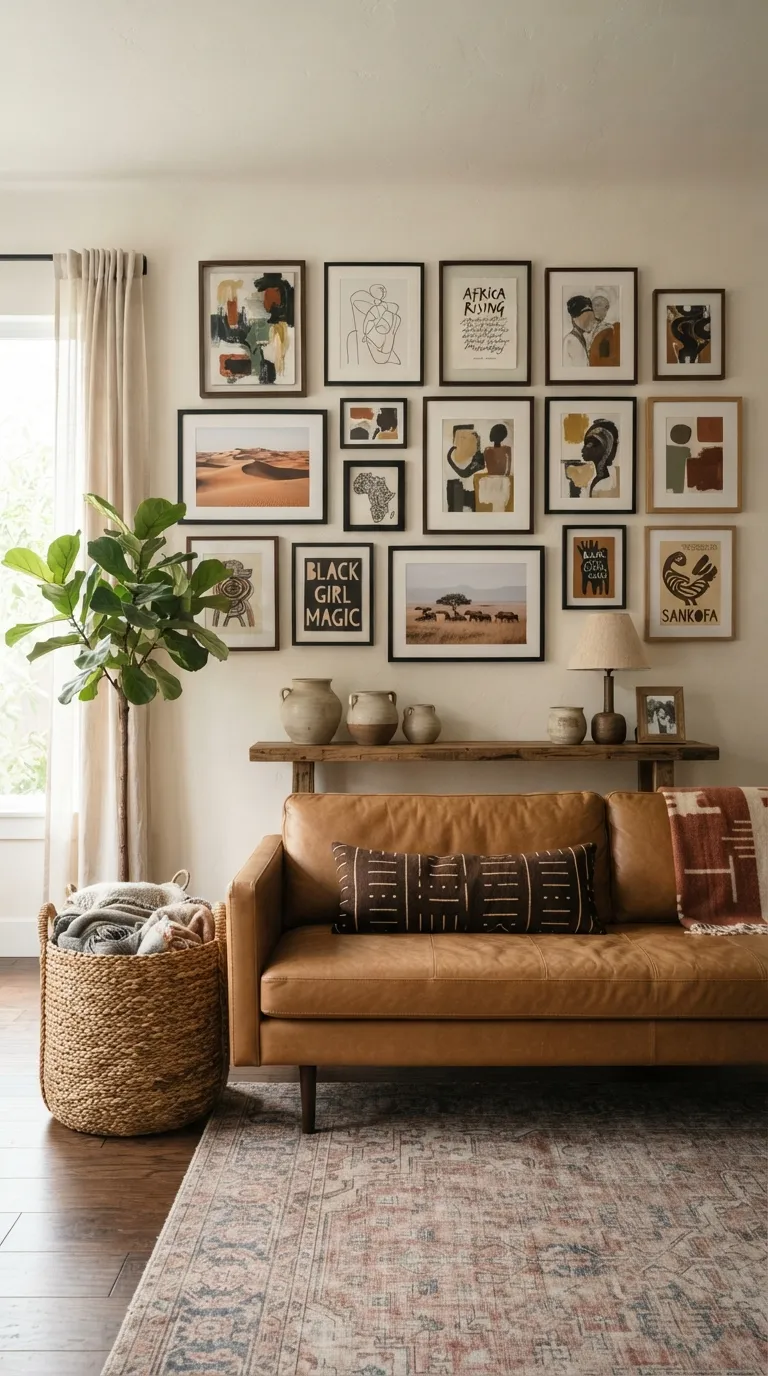
A gallery wall gives your living room personality and visual interest. Combine abstract artwork, photography, line drawings, and pieces from African artists whose work speaks to you. Look for a shared color palette instead of buying prints that all look alike.
Plan the arrangement on the floor before hanging anything. Leave roughly two to three inches between smaller frames, and position the center of the overall display near seated eye level when the wall sits above a sofa. Mix frame finishes for a collected feel, but repeat a few colors to keep the arrangement connected.
Bring in Handwoven Baskets
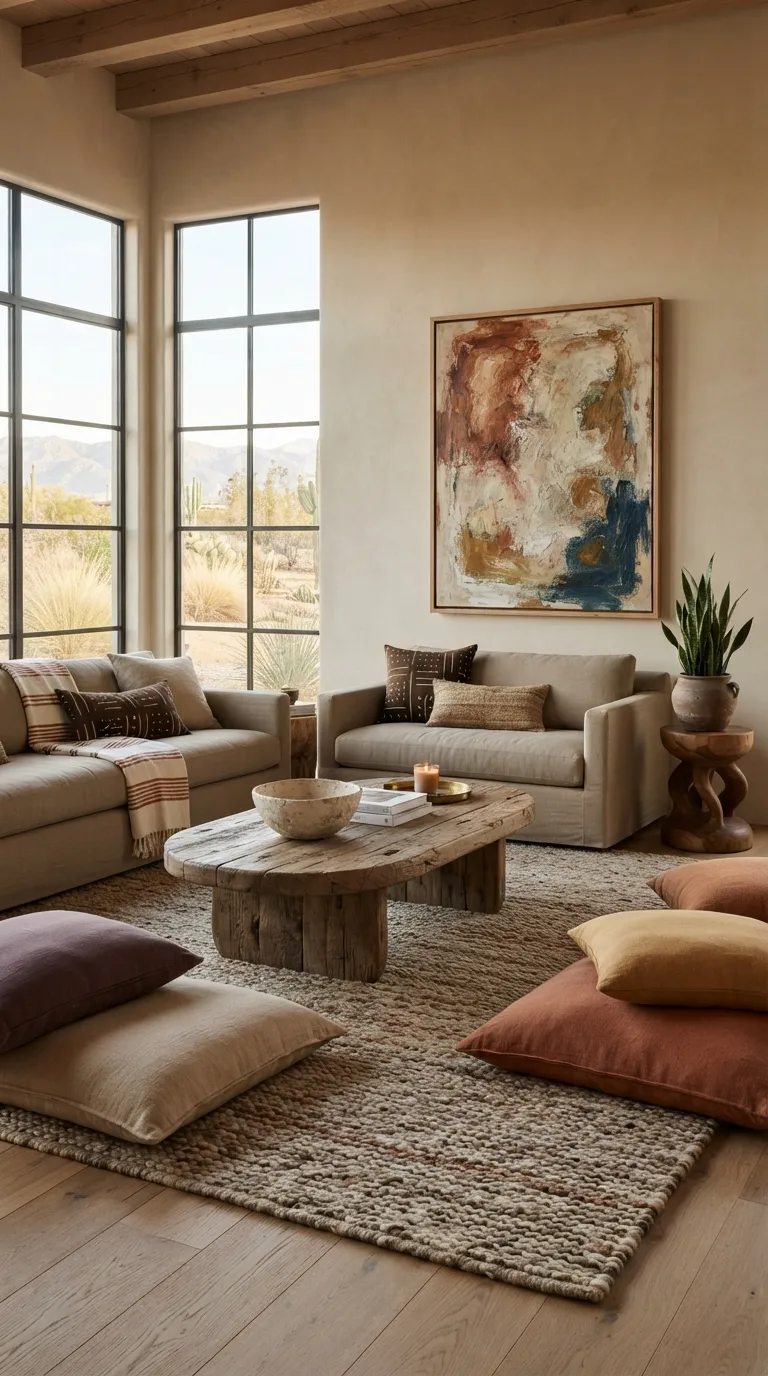
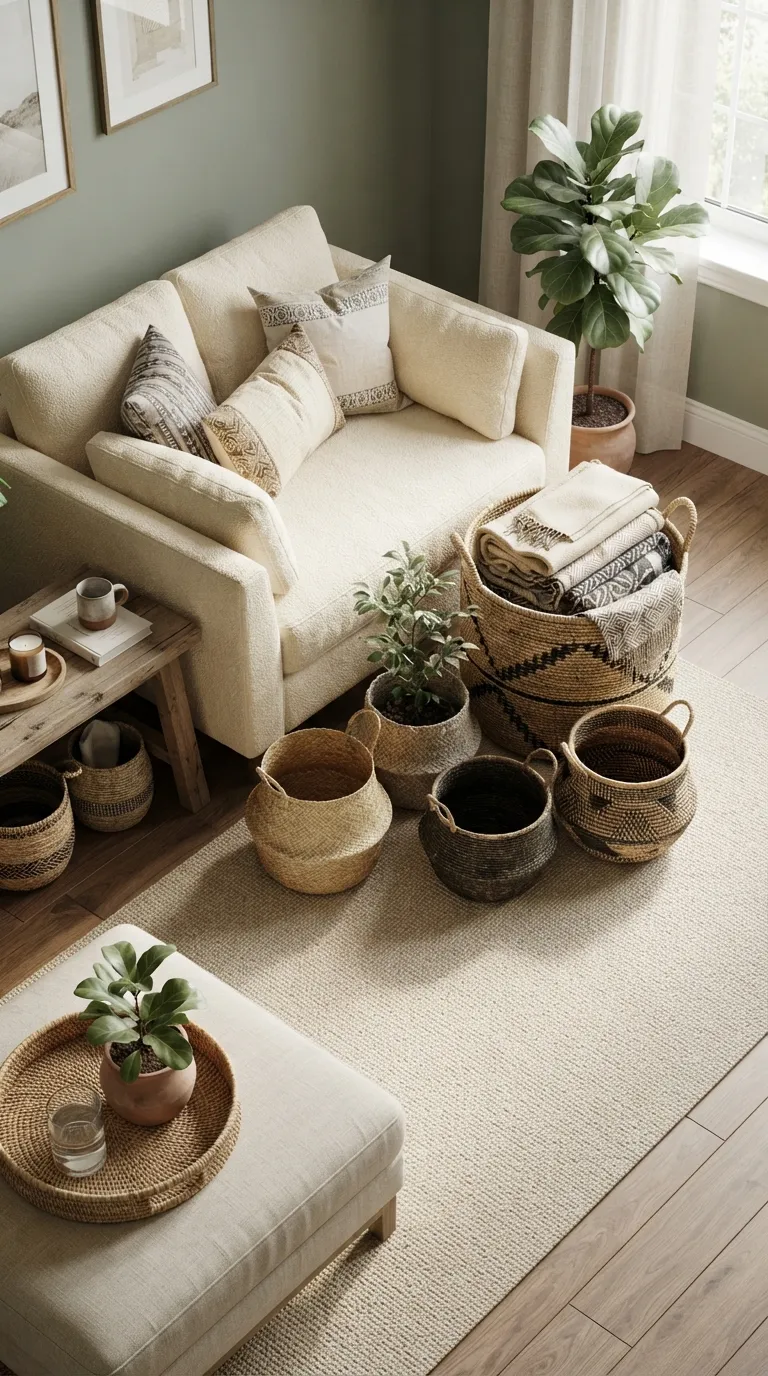
Handwoven baskets add texture while helping you keep everyday clutter under control. Use a large basket for spare blankets, a smaller one for magazines, or a shallow woven tray to group items on your coffee table. Their natural fibers pair easily with wooden furniture, linen upholstery, and earthy colors.
Vary the sizes and weave patterns instead of lining up identical baskets. You can also hang a few baskets on a plain wall to create a textured display. Choose sturdy pieces with a stable base for storage, and keep delicate handmade baskets away from damp areas or prolonged direct sunlight.
Style a Low, Relaxed Seating Area
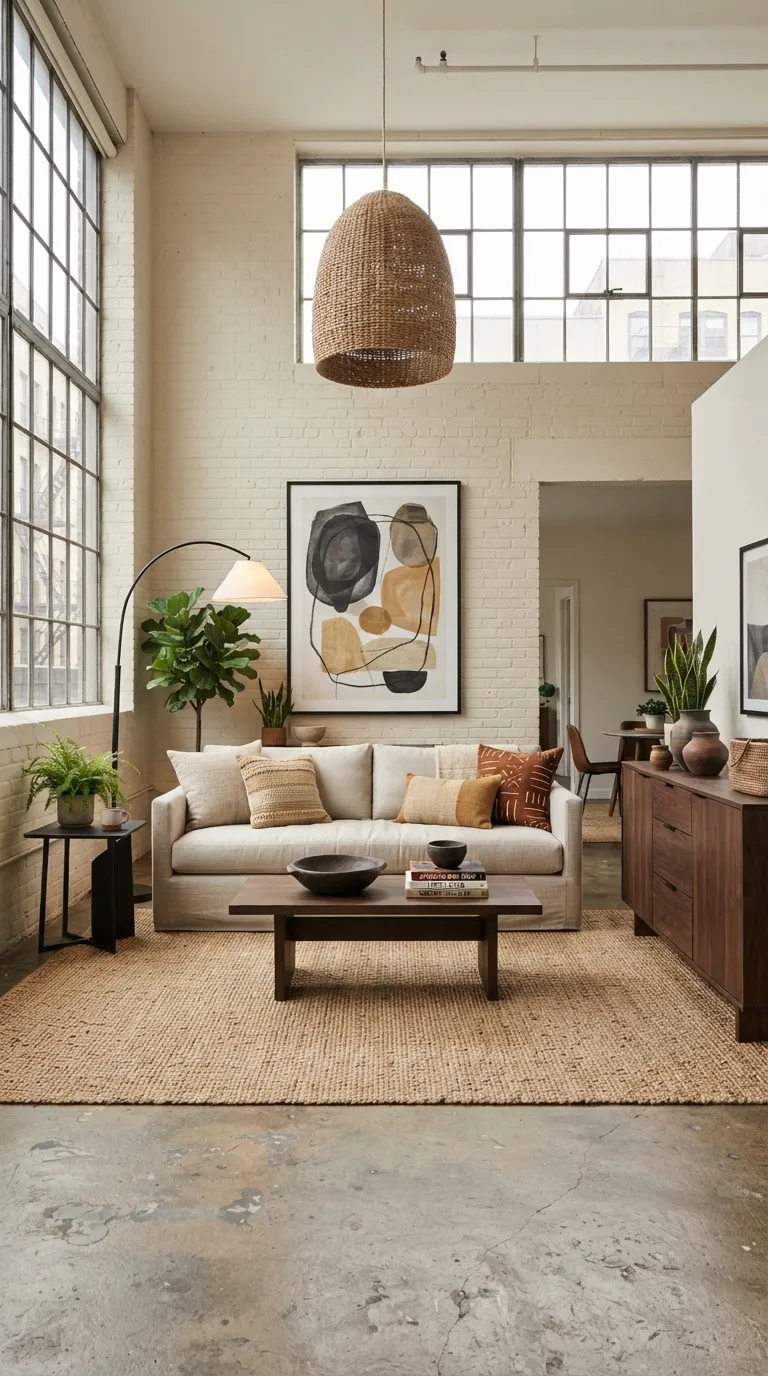
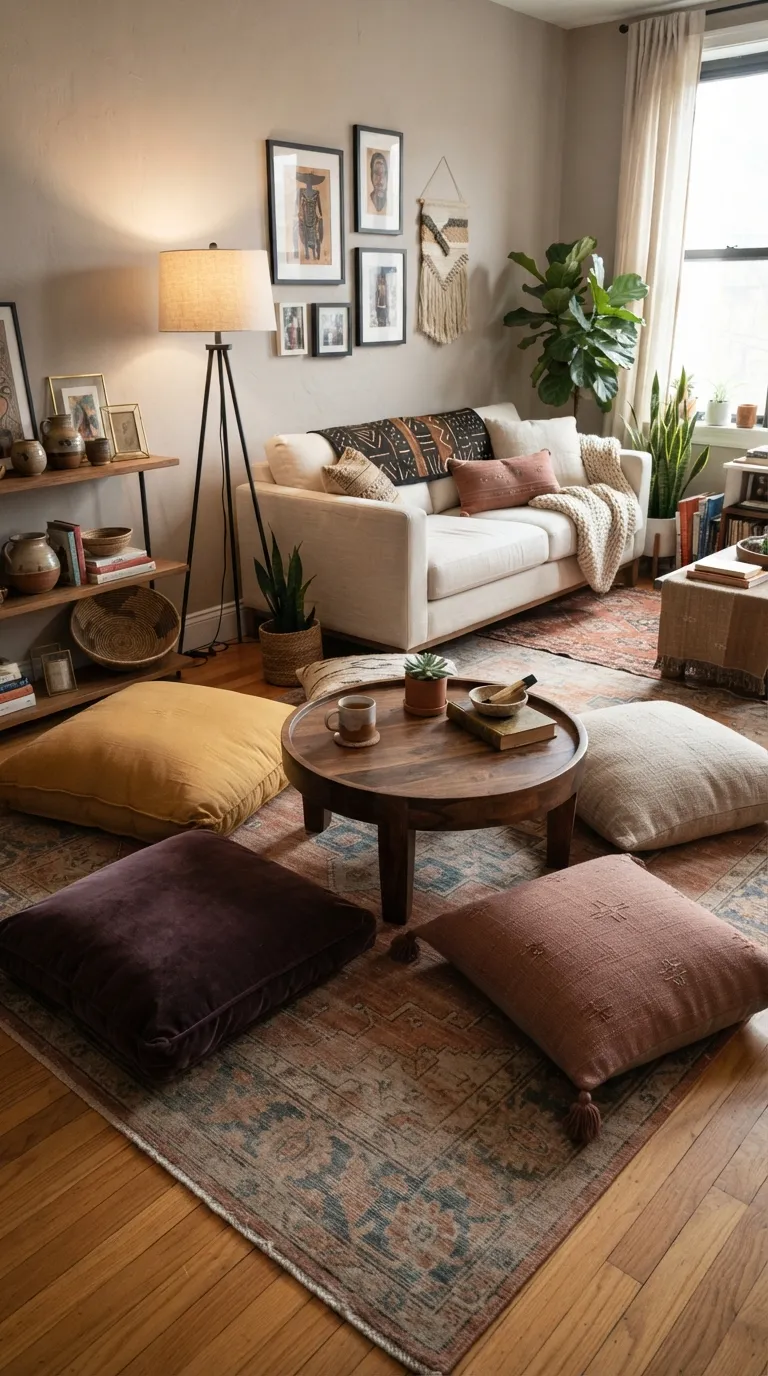
Low seating makes an Afrohemian living room feel casual and welcoming. Choose a low sofa, floor cushions, or a padded pouf to create extra places to sit without filling the room with bulky furniture. This arrangement works particularly well for relaxed conversations, reading, or gathering with friends.
Keep comfort in mind when choosing floor-level pieces. Supportive cushions and a coffee table at a practical height make the area easier to use every day. If your room is small, start with one or two floor cushions that you can move aside when you need more space.
Mix Black Accents with Natural Materials
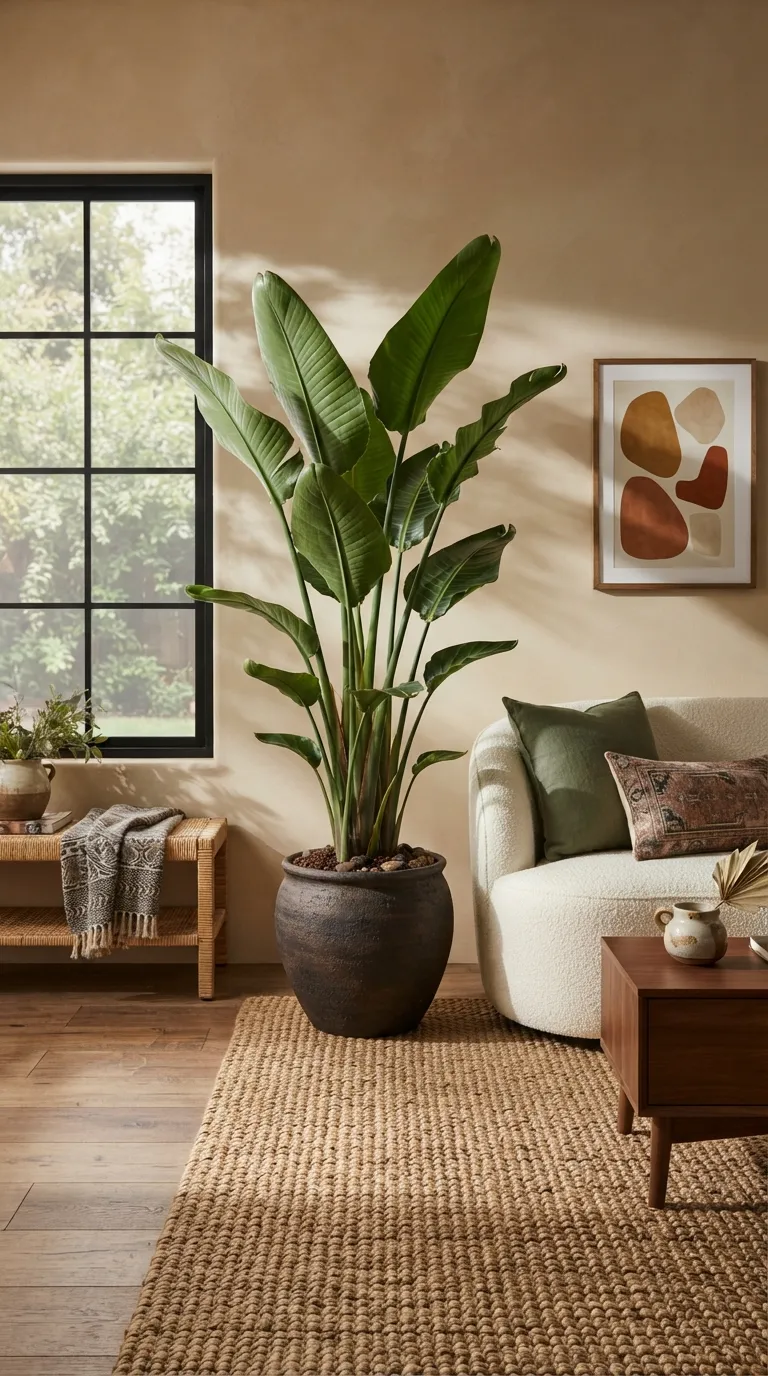
Black accents give an Afrohemian living room a little structure. Try matte black picture frames, a slim floor lamp, dark cabinet handles, or a small metal side table. These details stand out against warm wood, woven fibers, and pale walls without taking over the room.
The trick is to repeat black in a few places rather than concentrating it in one corner. Pair it with natural textures to soften the contrast and make the space feel comfortable. If your room has limited daylight, keep larger furniture and wall colors light, using black for smaller decorative details.
Add a Statement Indoor Plant
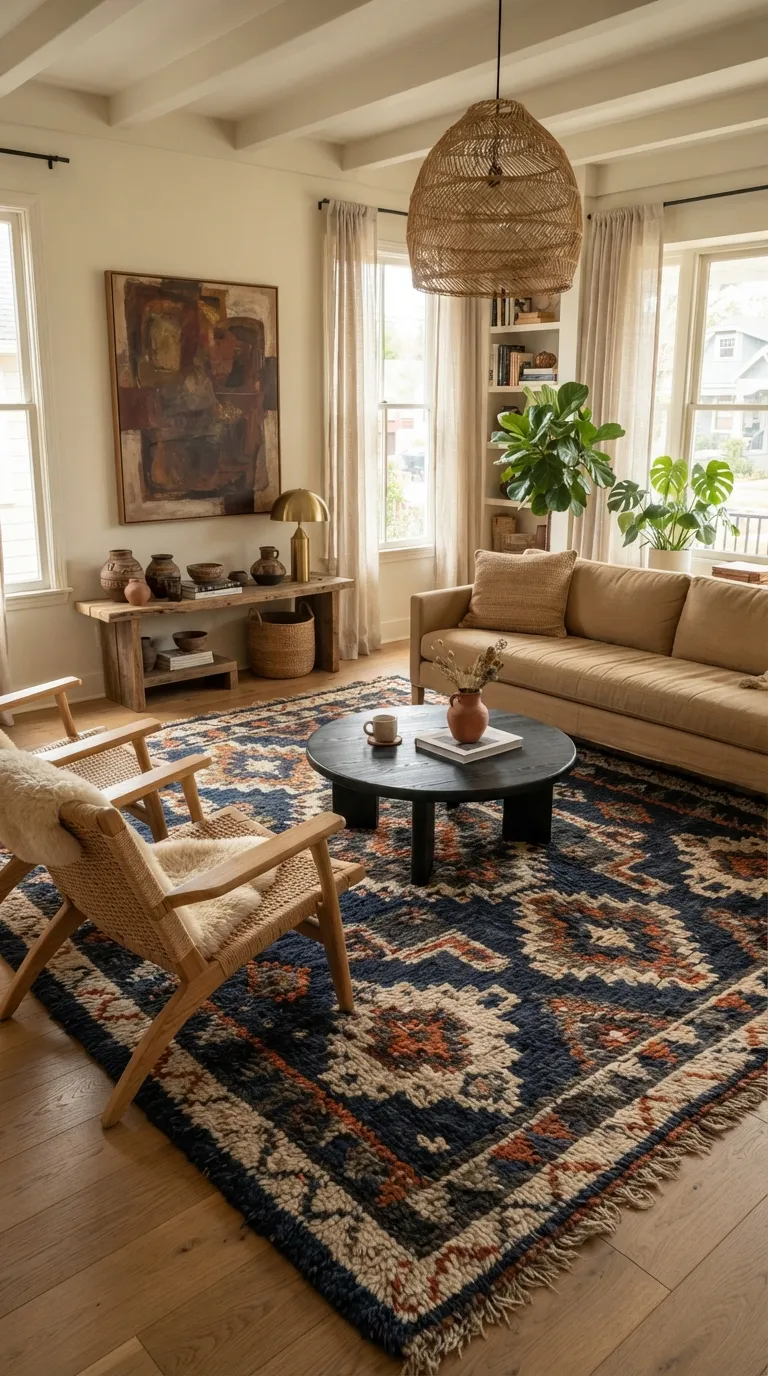
A statement plant brings life and height to a room filled with earthy materials. A bird of paradise, rubber plant, or tall dracaena can fill an empty corner and soften the straight lines of sofas and cabinets. Choose a planter made from clay, woven seagrass, or textured ceramic to suit the Afrohemian look.
Check the plant’s light and watering needs before deciding where it should go. A bright window may suit one variety but be too intense for another. If you have pets or young children, check plant safety and secure heavy pots so your green focal point stays practical as well as attractive.
Choose a Bold Patterned Area Rug
A patterned area rug can bring the entire Afrohemian living room together. Choose geometric motifs, faded tribal-inspired designs, or handwoven textures in colors that already appear in your furniture and artwork. A bold rug works especially well when the sofa and walls are relatively simple.
Size matters just as much as pattern. Choose a rug large enough for at least the front legs of your main seating pieces to rest on it. This creates a connected conversation area instead of making the furniture look scattered across the floor.
Decorate with Handmade Ceramic Pieces
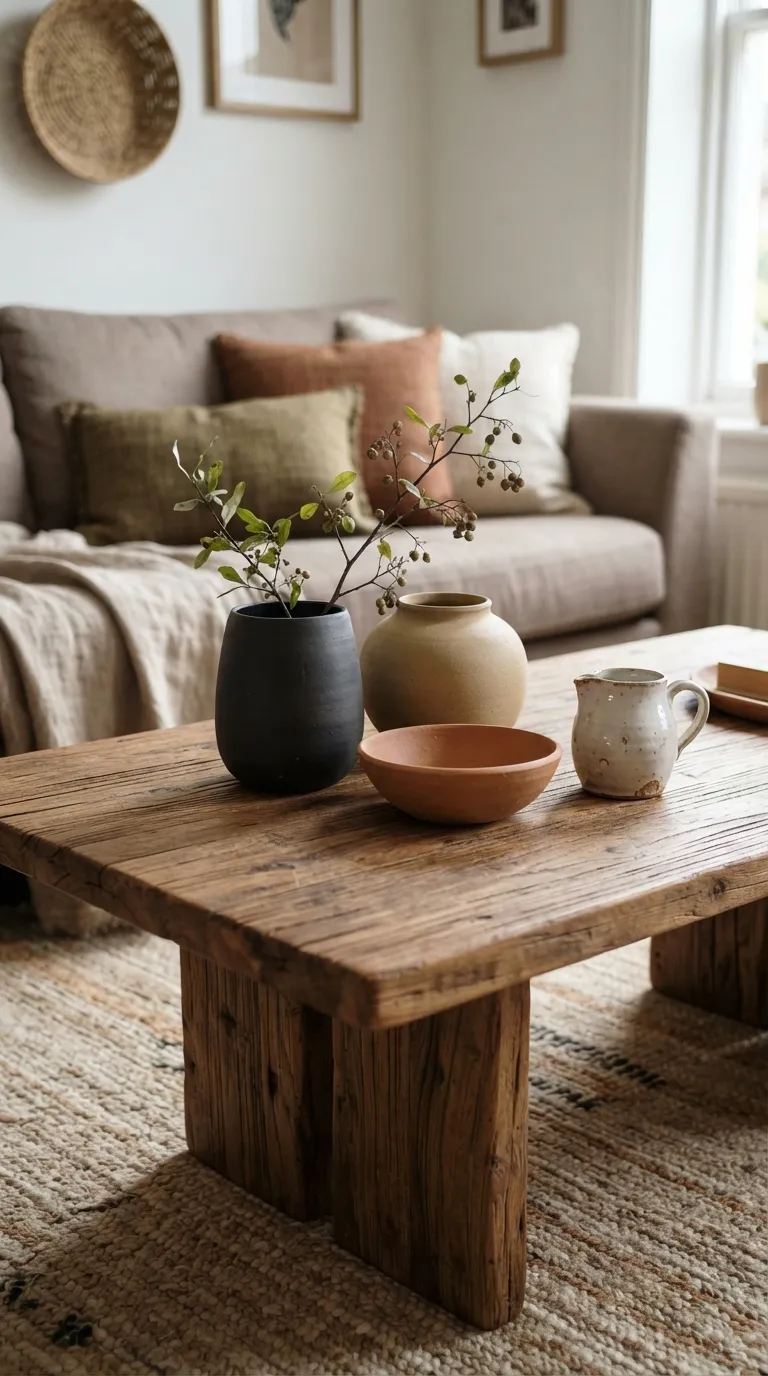
Handmade ceramics add small details that make a room feel personal. Place a sculptural vase on a console, use a shallow bowl on the coffee table, or group pottery on an open shelf. Earthy glazes in charcoal, cream, clay, and brown work naturally with wood and woven materials.
Keep each arrangement simple enough for the individual shapes to stand out. Three pieces at different heights often create a more balanced display than a crowded collection. If you buy handmade work, consider the maker and the item’s origin, especially when a piece draws on a specific cultural tradition.
Hang a Natural Fiber Pendant Light
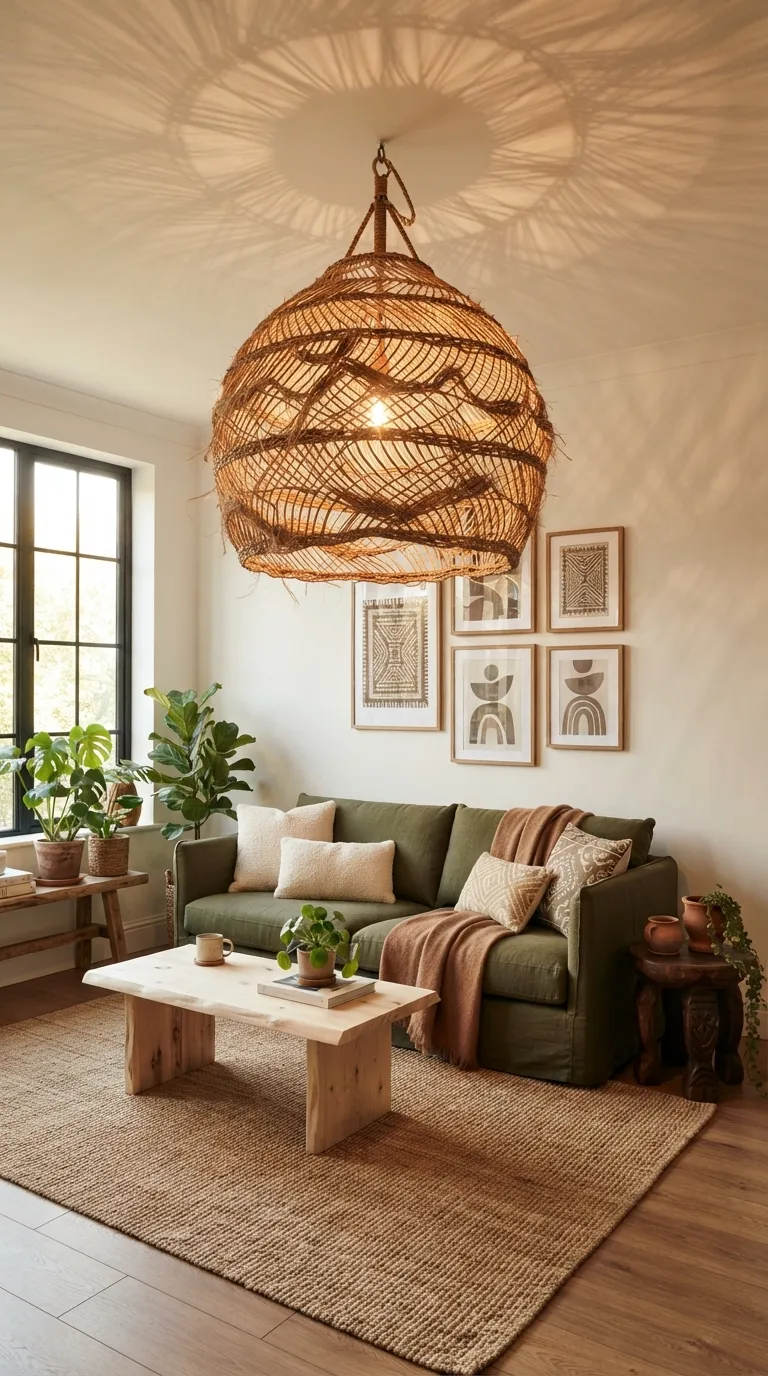
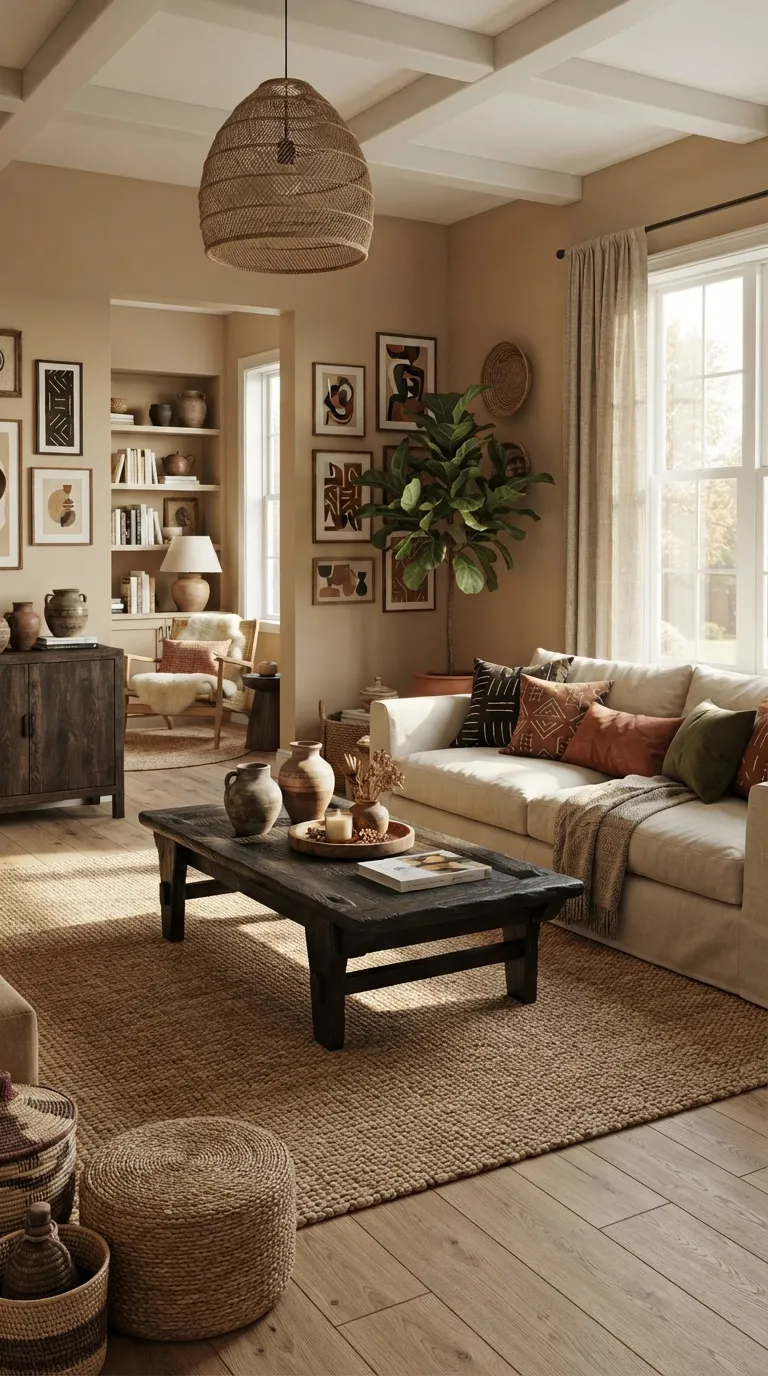
A natural fiber pendant light adds texture above your living room seating area. Woven rattan, seagrass, and other natural materials can soften a room with dark furniture or complement an earthy neutral palette. A sculptural shade also draws the eye upward, which helps balance a space filled with low furniture.
Check the pendant’s size and hanging height before installing it. In a room with standard ceilings, choose a fixture that doesn’t obstruct sightlines or make the seating area feel cramped. Use a suitable bulb for comfortable evening light, and follow the fixture manufacturer’s clearance and electrical installation requirements.
Create a Cozy Reading Corner
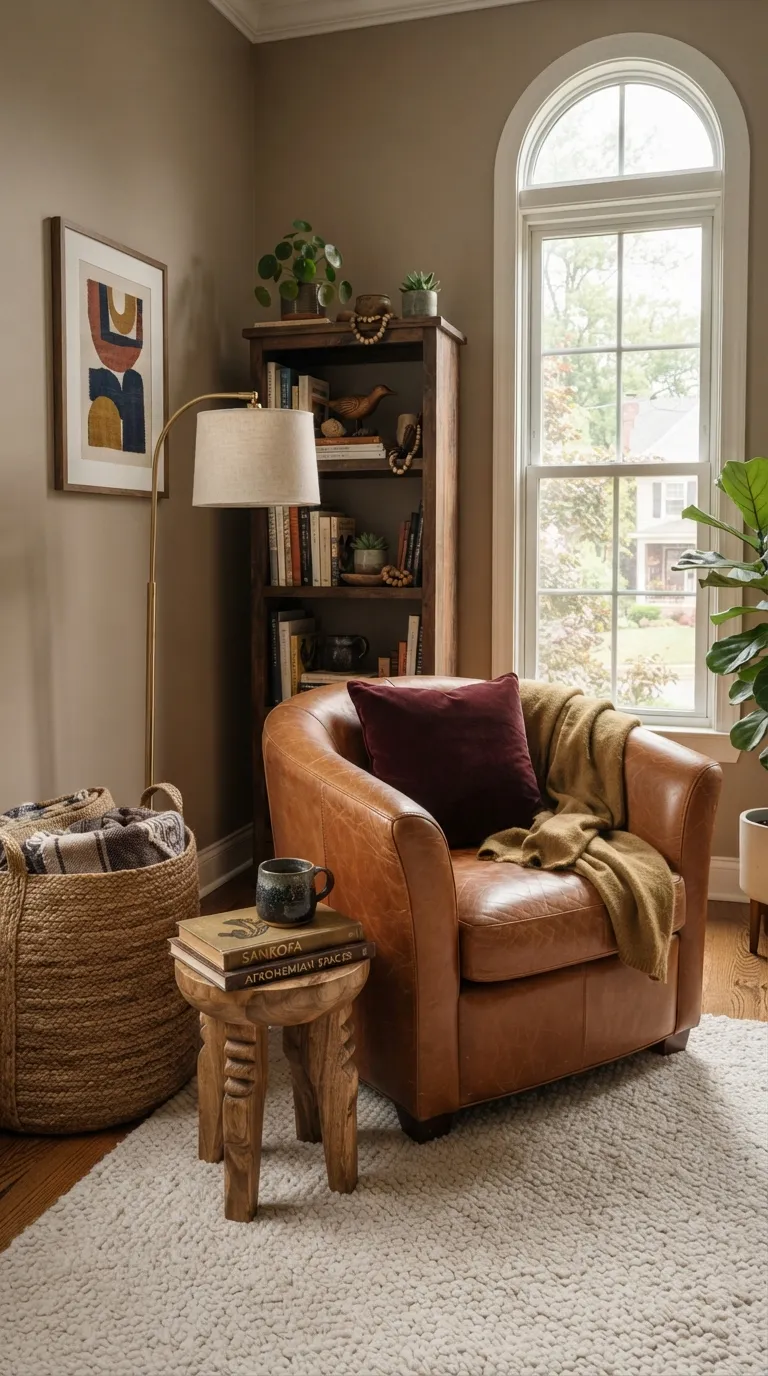
A reading corner gives your Afrohemian living room a quiet spot for slowing down. Start with a comfortable armchair, then add a small side table, a soft throw, and a lamp for evening reading. Leather, linen, and woven materials work well together because each adds a different texture.
You don’t need a separate room to create this little retreat. Use an empty corner beside a window or place a chair next to your bookshelf. A small rug can define the area, while a basket keeps books and blankets close without adding visual clutter.
Use Deep Olive Green for a Natural Mood
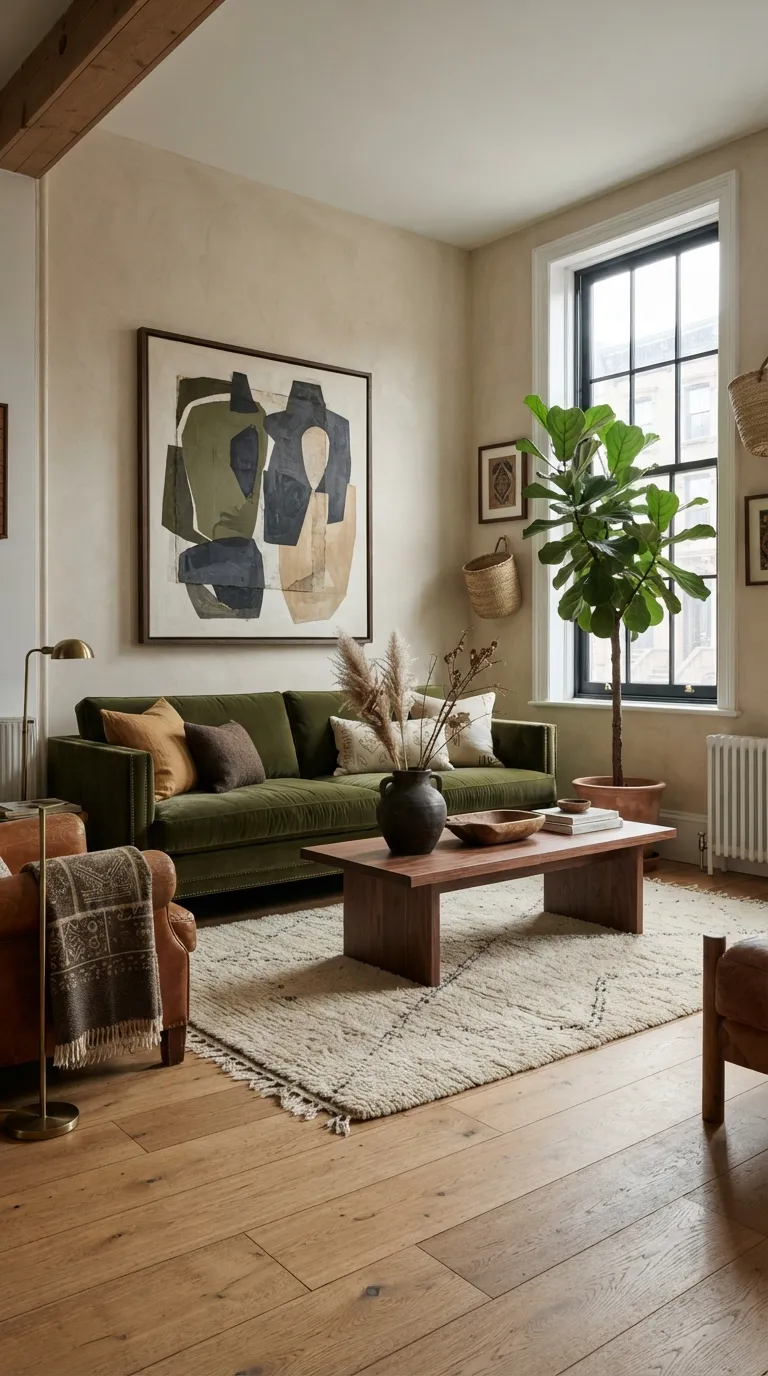
Olive green brings a natural, grounded feel to an Afrohemian living room. Use it on a sofa if you want a strong color anchor, or introduce it through cushions, curtains, artwork, and plant pots for a gentler effect. The shade pairs especially well with warm wood, cream, ochre, and terracotta.
Balance deep green with lighter surfaces so the room doesn’t feel too dark. A cream rug and pale walls can keep the space open, while wooden furniture adds warmth. If you’re unsure about committing to a green sofa, begin with two olive cushions and repeat the color in a small decorative piece.
Display Meaningful Travel Finds
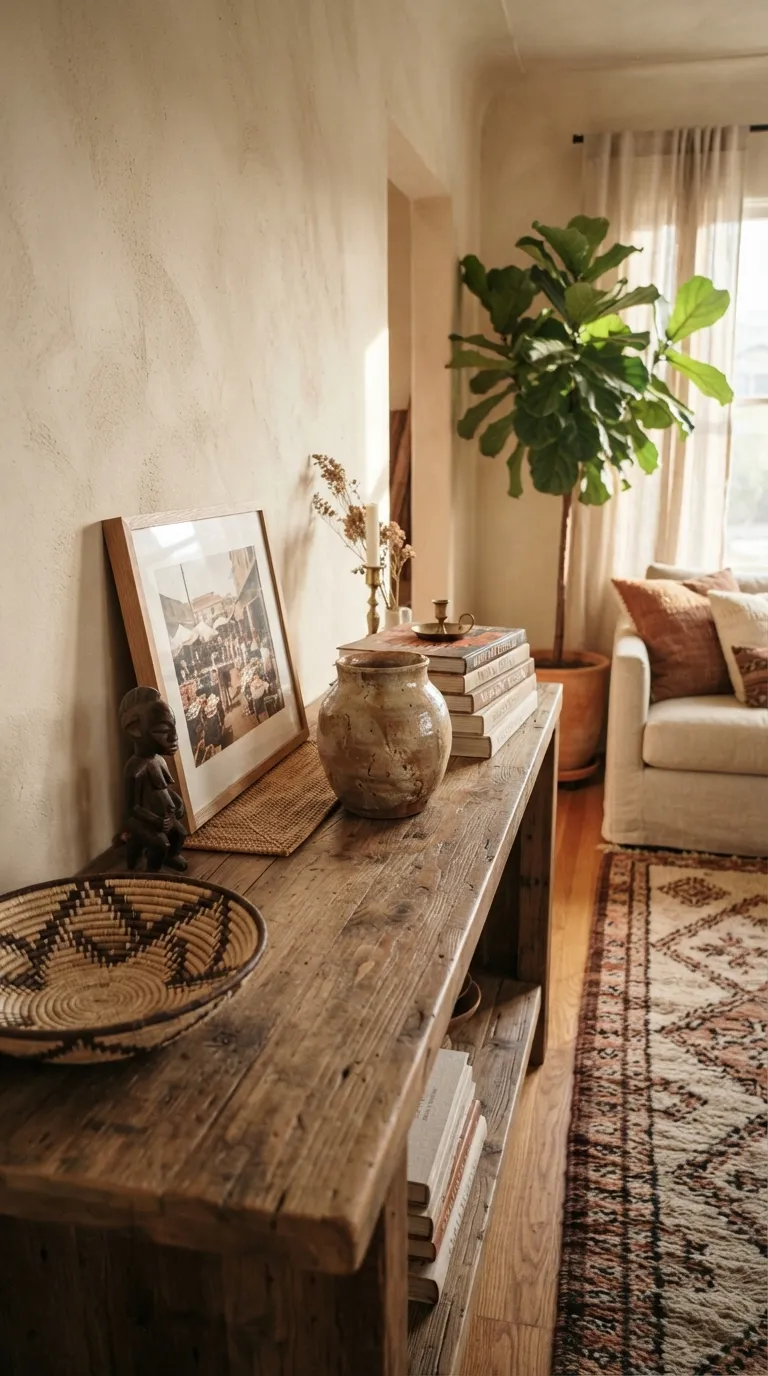
Meaningful objects give your living room a personal touch that store-bought accessories can’t always provide. Display travel photographs, handmade pottery, books, and pieces collected from places that matter to you. The mix should reflect your interests rather than follow a strict decorating formula.
Group objects in small arrangements and vary their heights to keep the display interesting. A console table is ideal because it offers space without filling the entire room. When choosing cultural art or crafts, learn about their makers and origins, and avoid presenting sacred or ceremonial objects as ordinary decoration.
Bring in a Leather Accent Chair
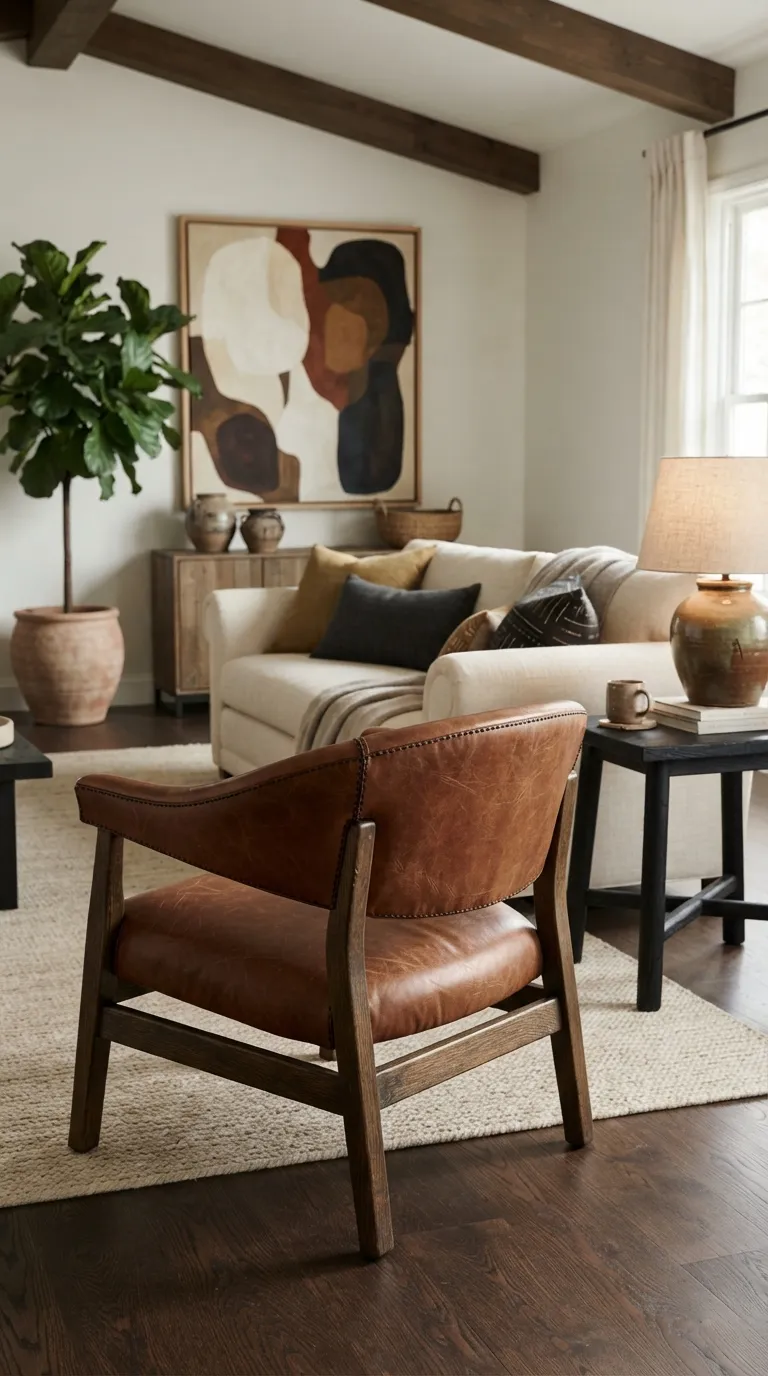
A leather accent chair adds a rich finish to an Afrohemian living room. Cognac, tobacco, and chestnut tones pair well with woven rugs, carved wood, and soft neutral upholstery. Choose a chair with a comfortable seat and an interesting frame so it looks good while serving a practical purpose.
Place it near the sofa to create a connected conversation area, or angle it toward a window for a separate place to relax. If the chair has a strong color, keep nearby cushions and accessories relatively simple. For a lower-maintenance option, consider quality faux leather with a realistic finish.
Add a Textured Accent Wall
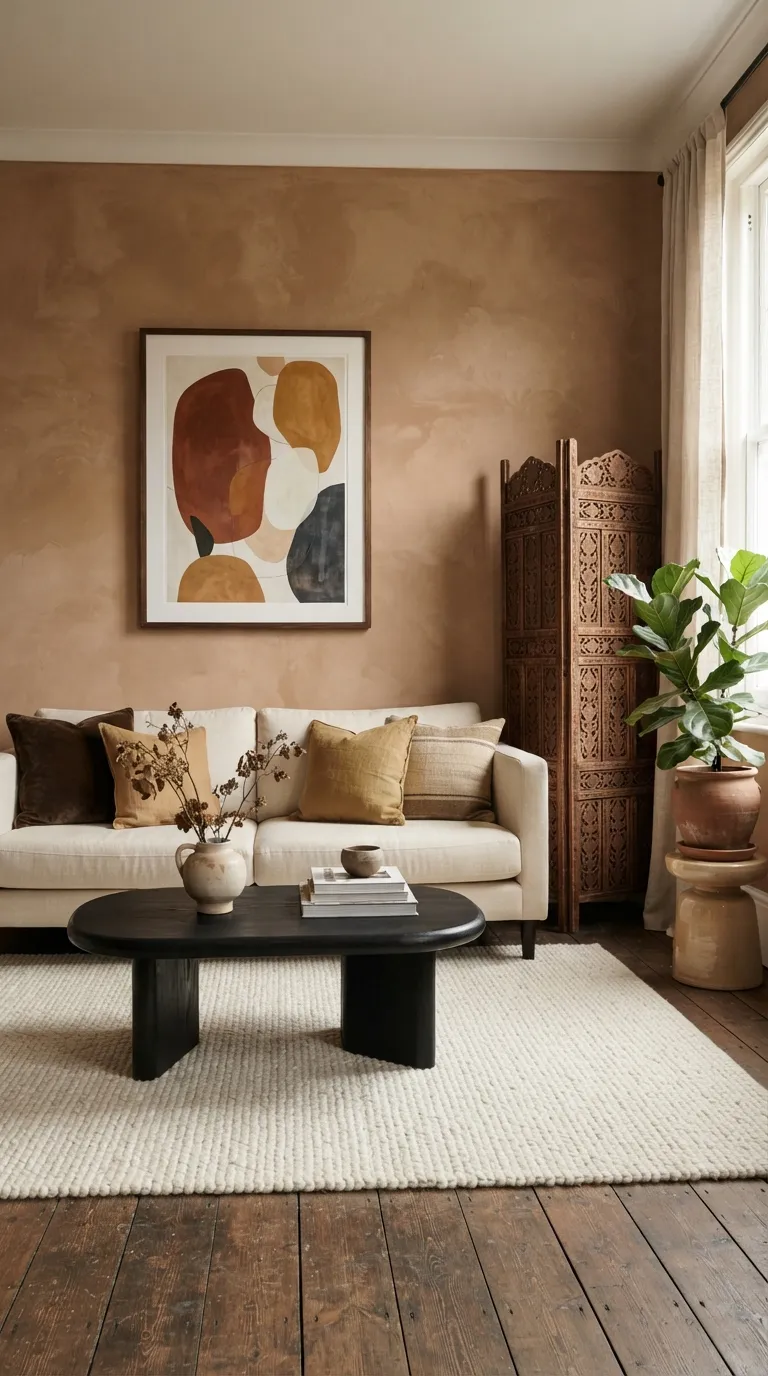
A textured accent wall adds depth without requiring more furniture. Limewash paint, a clay-toned finish, or a warm earthy color can create a backdrop for artwork and natural materials. This is especially useful when your living room has simple furniture but needs a stronger focal point.
Test paint samples at different times of day before committing to a color. Natural and artificial light can make the same shade appear quite different. Keep the surrounding decor relatively restrained, allowing the wall texture and a few carefully chosen accessories to carry the design.
Mix Vintage Finds with Modern Furniture
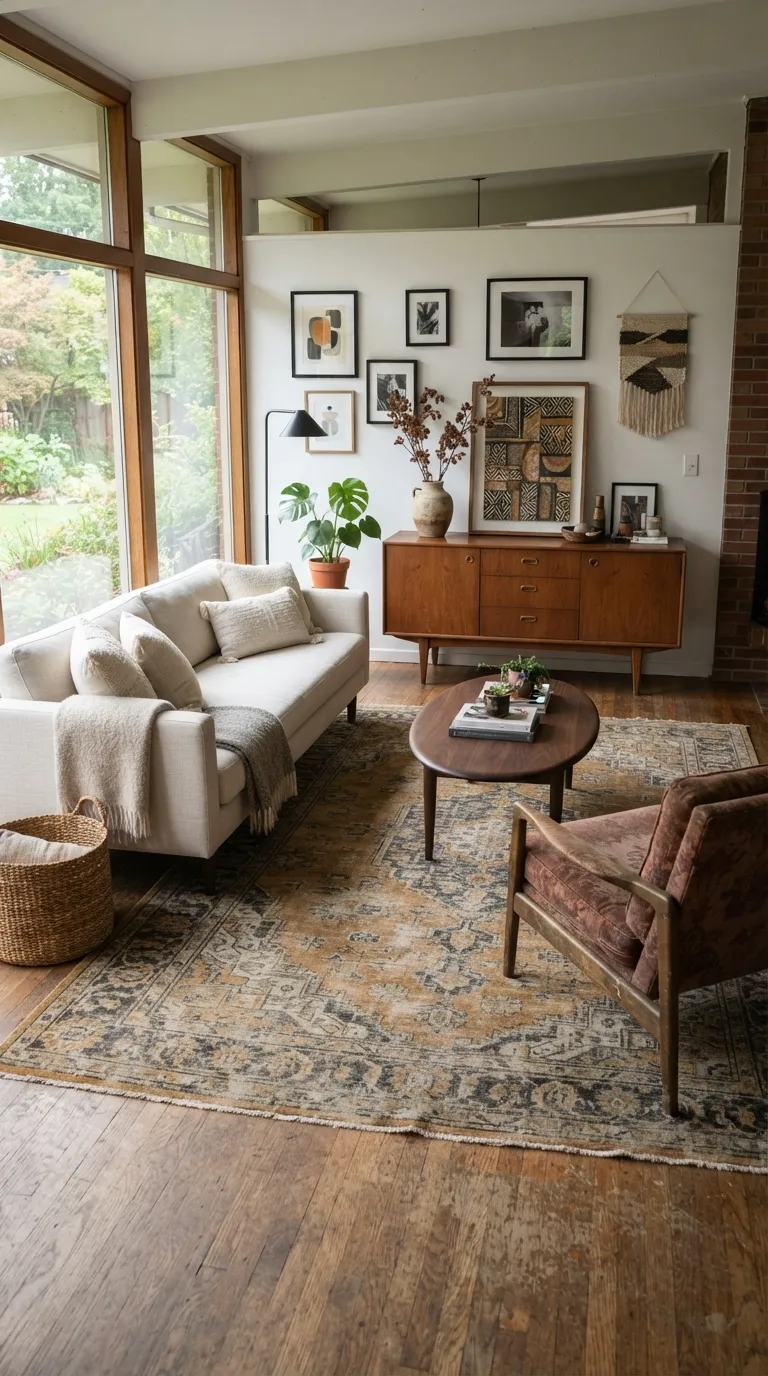
Mixing vintage and modern furniture makes an Afrohemian living room feel individual rather than overly coordinated. Pair a clean-lined sofa with a vintage wooden cabinet, or place a contemporary coffee table beside a secondhand accent chair. Differences in age, shape, and finish create interest when the pieces share a compatible color palette.
Choose one or two vintage items as the main features, then keep the surrounding furniture relatively simple. Check secondhand pieces for loose joints, damaged upholstery, and strong odors before bringing them home. A little wear can add character, but furniture should still be sturdy and comfortable for daily use.
Use Floor Cushions for Flexible Seating
Floor cushions offer extra seating without the bulk of another sofa or armchair. Choose covers in earthy shades, woven fabrics, or geometric prints that complement your existing decor. They’re useful for casual gatherings, quiet reading, or creating a relaxed spot for guests.
Keep a few cushions in a woven basket when they’re not in use. This makes the room easier to tidy and prevents the floor from looking crowded. If you have limited space, choose cushions that are lightweight and easy to move rather than oversized pieces that block walking paths.
Decorate Open Shelves with Natural Objects
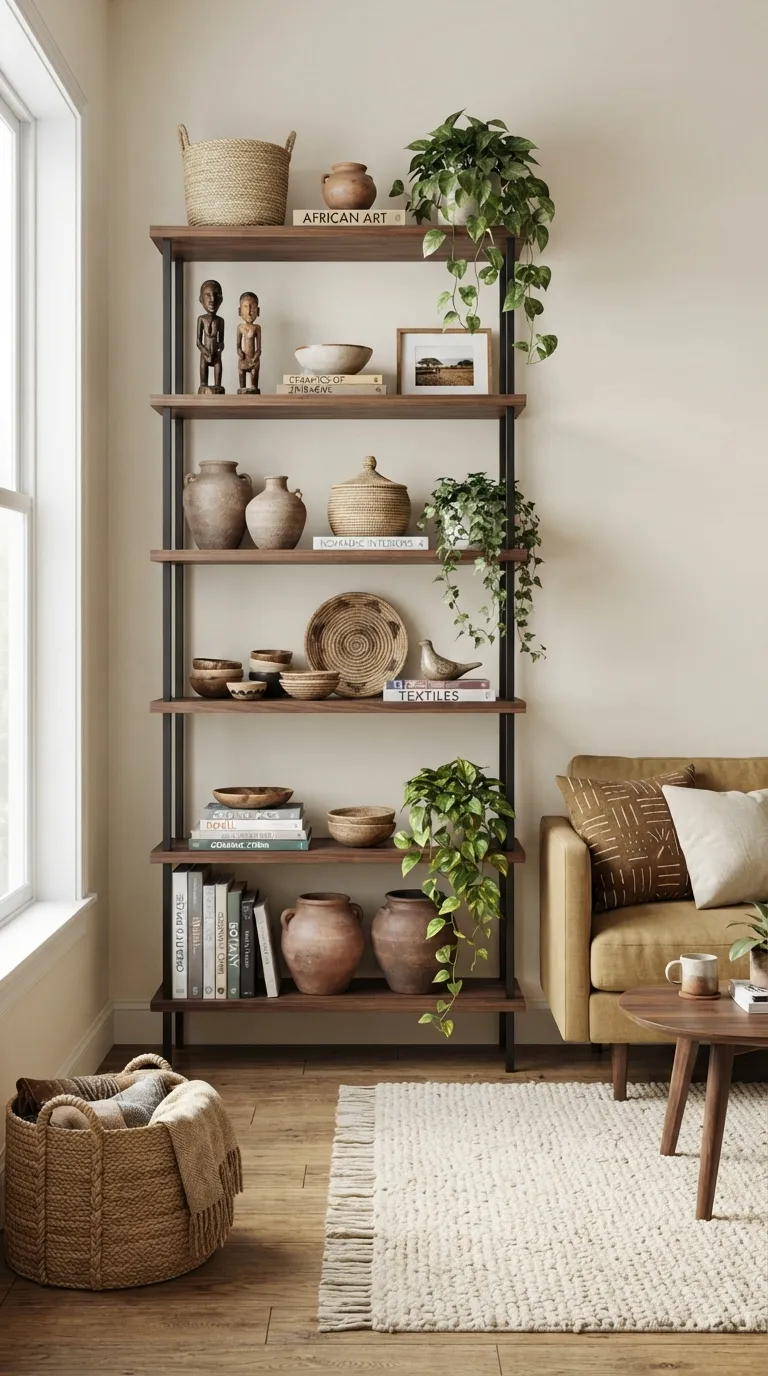
Open shelves give you space to display the natural materials and collected pieces that define your style. Combine pottery, woven baskets, books, small plants, and carved objects instead of filling every shelf with similar accessories. Varying shapes and heights makes the arrangement feel more natural.
Start by grouping objects in sets of two or three, then leave some empty space around them. Place heavier items on lower shelves and keep fragile pieces away from edges. If the shelves sit in a busy part of the living room, limit the number of small objects so dusting and everyday cleaning remain simple.
Pair a Cream Sofa with Rich Brown Details
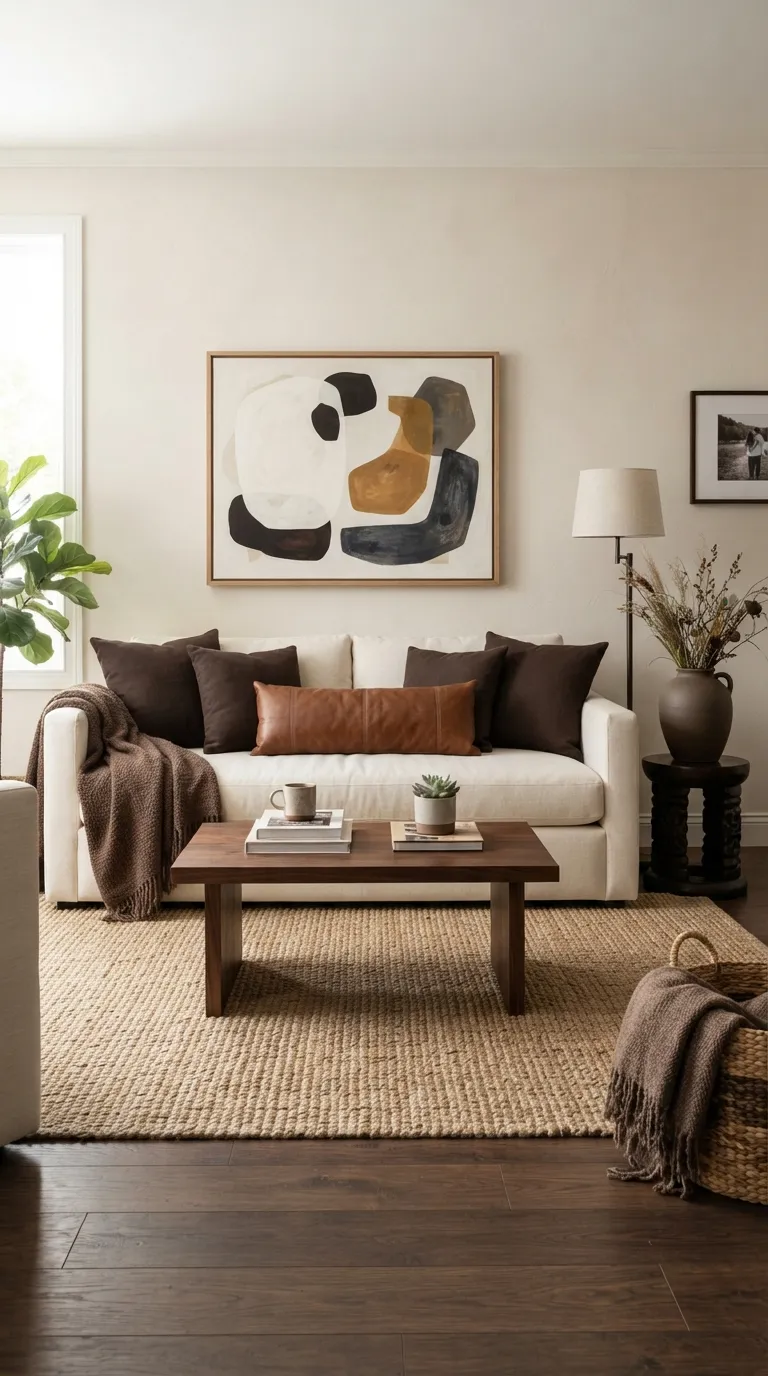
A cream sofa makes a useful base for rich brown accents. Chocolate cushions, a cocoa throw, dark wooden furniture, and a few leather details add depth without making the living room feel heavy. This combination suits both modern apartments and larger homes with plenty of natural materials.
Repeat the brown tones in at least two or three places so they feel connected. For example, match a dark coffee table with a brown vase and a leather cushion. Mix smooth leather, soft linen, and rough woven fibers to create contrast even when the colors stay within a narrow range.
Add Sculptural Wooden Wall Decor
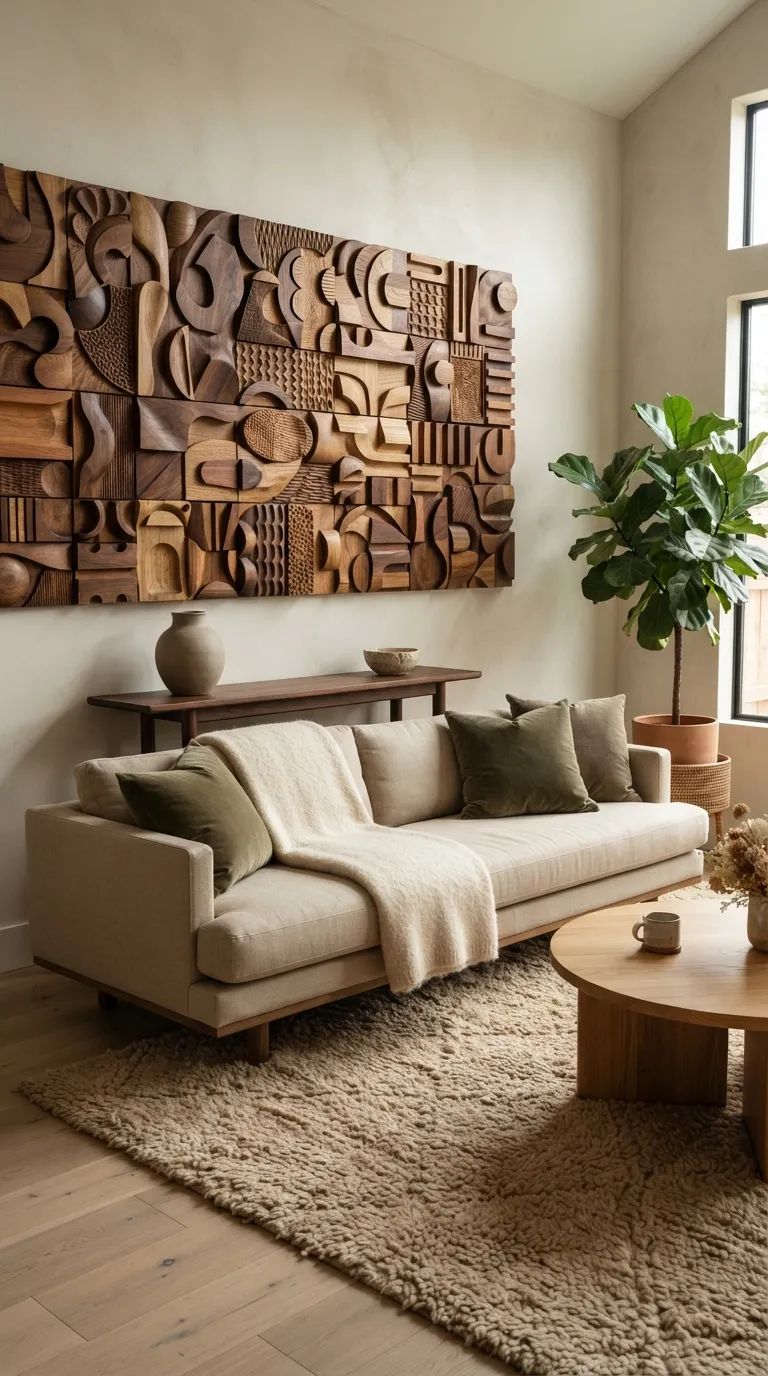
Sculptural wooden wall decor adds depth and natural character without using more floor space. Choose carved panels, abstract wooden forms, or a handcrafted wall piece that suits the scale of your living room. The warm grain works especially well against cream, clay, and soft beige walls.
Let the wall installation take center stage by keeping nearby decorations simple. Measure the available wall space before buying a large piece, especially if it will hang above a sofa. Secure heavy panels with suitable wall fixings, and choose work that reflects its maker’s craft rather than relying on generic cultural motifs.
Layer Sheer Curtains with Natural Textures
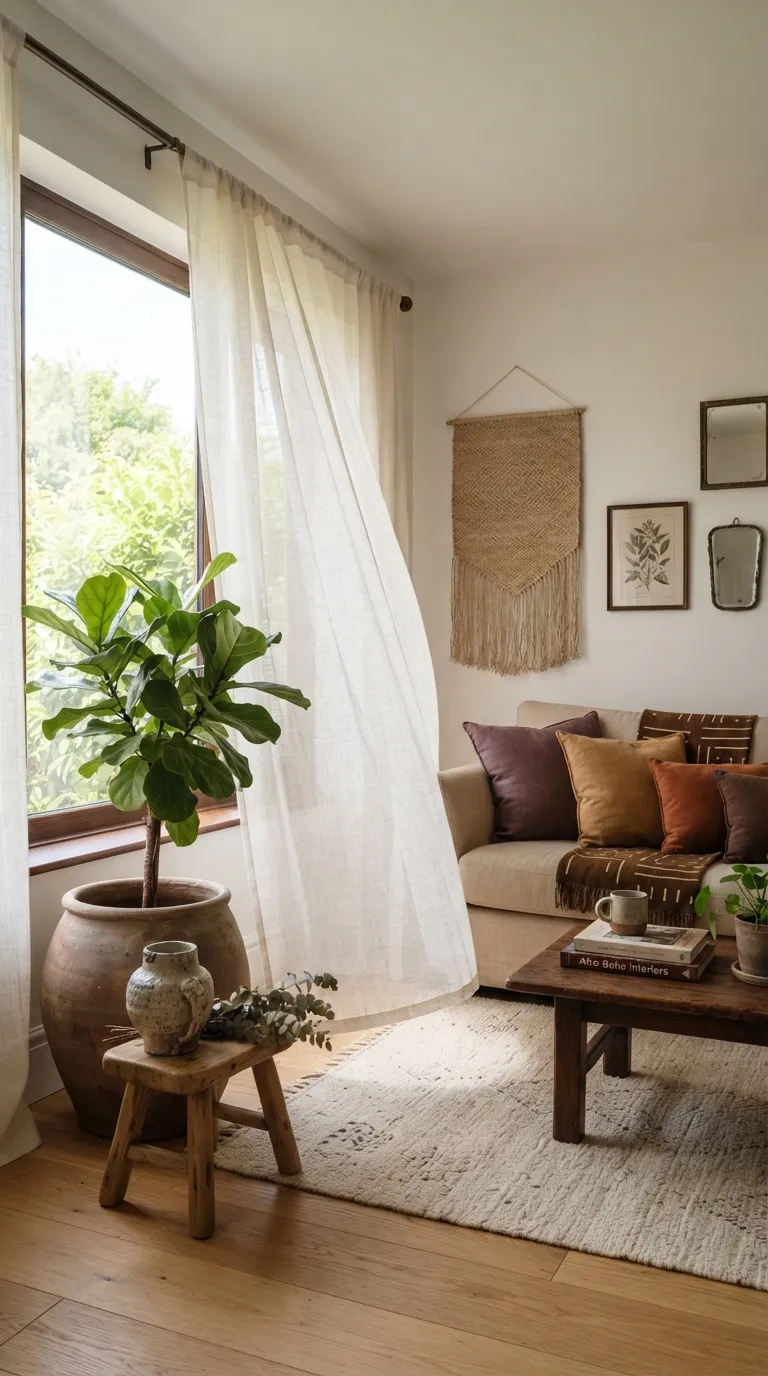
Sheer curtains soften strong sunlight and make an Afrohemian living room feel relaxed. Ivory, oatmeal, and natural linen shades work well with woven rugs, wooden furniture, and earthy accessories. Hang the curtains close to the ceiling and let them reach the floor to create a taller, more finished look.
For added privacy, layer the sheers with heavier curtains in a complementary earthy shade. This also gives you better control over afternoon glare and evening light. Measure your windows carefully before ordering, and choose a fabric that’s easy to wash or maintain according to the manufacturer’s instructions.
Style a Round Coffee Table with Earthy Objects
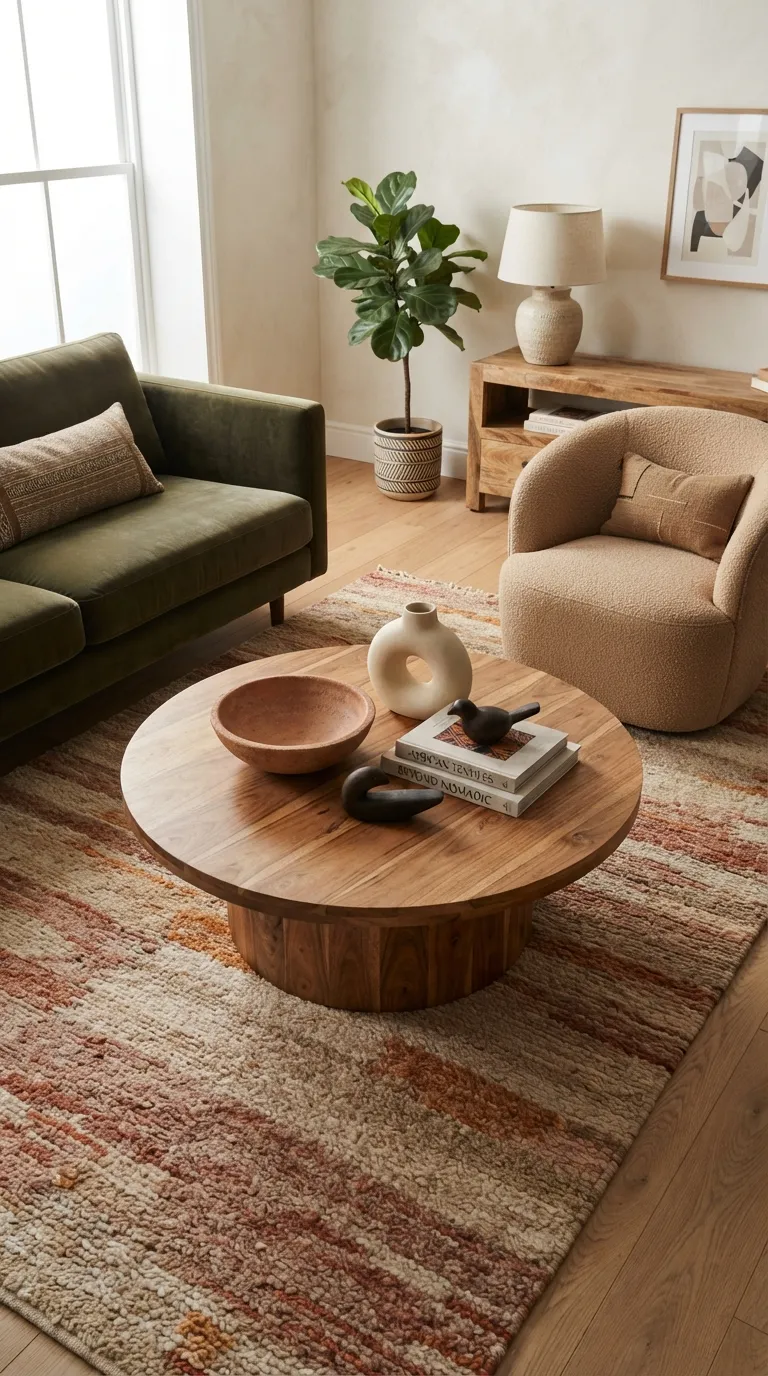
A round coffee table gives you a natural place to display a few favorite objects. Start with a shallow bowl, a handmade vase, and a couple of books with attractive covers. Choose pieces in clay, cream, brown, or charcoal to connect the display with the rest of your living room.
Vary the heights and shapes, but leave enough room for drinks and everyday items. A tray can keep smaller accessories together, while a single sculptural object creates a simpler look. If your table is small, use fewer pieces rather than squeezing in every decorative item you own.
Create a Moody Afrohemian Living Room
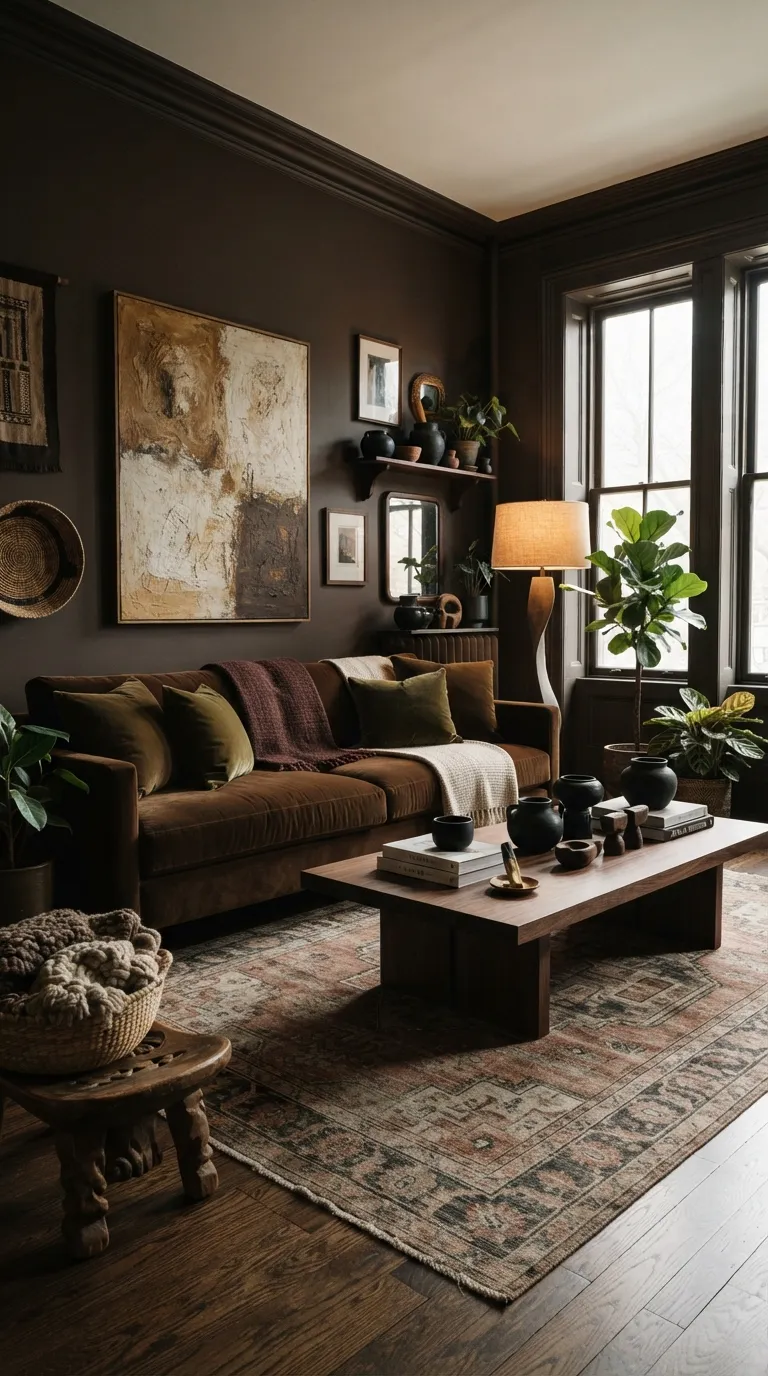
A moody Afrohemian living room uses deeper colors to create a cozy, intimate atmosphere. Chocolate brown, burgundy, olive, charcoal, and burnt rust work well with carved wood, textured rugs, and handmade pottery. The key is to mix dark finishes with different materials so the room feels layered rather than flat.
If you’re painting the walls a deep shade, keep some lighter elements in the space, such as cream cushions, natural curtains, or a pale rug. Add warm lamps for comfortable evening lighting, and check how the colors look in daylight before making a final decision. Start with one dark wall if you’re not ready to commit to the entire room.
Bring Your Afrohemian Living Room Together
Creating an Afrohemian living room is about choosing materials, colors, and objects that feel meaningful to you. Start with a comfortable foundation, then build character through carved wood, woven textiles, earthy pottery, greenery, and artwork from artists whose work you value. You don’t need to use every idea in this list to create a room with personality.
Pick two or three changes that suit your budget and space. You might begin with a patterned rug, add a few textured cushions, or style a bare corner with a plant and a wooden stool. Let the room develop gradually, keeping comfort and cultural appreciation at the heart of your choices.
Clara Whitmore
Clara specializes in interior styling, seasonal home trends, and cozy living spaces. She loves combining classic design elements with modern touches to create homes that feel personal, welcoming, and effortlessly stylish.