Colorful Boys Room Style Guide for a Fun and Calm Space

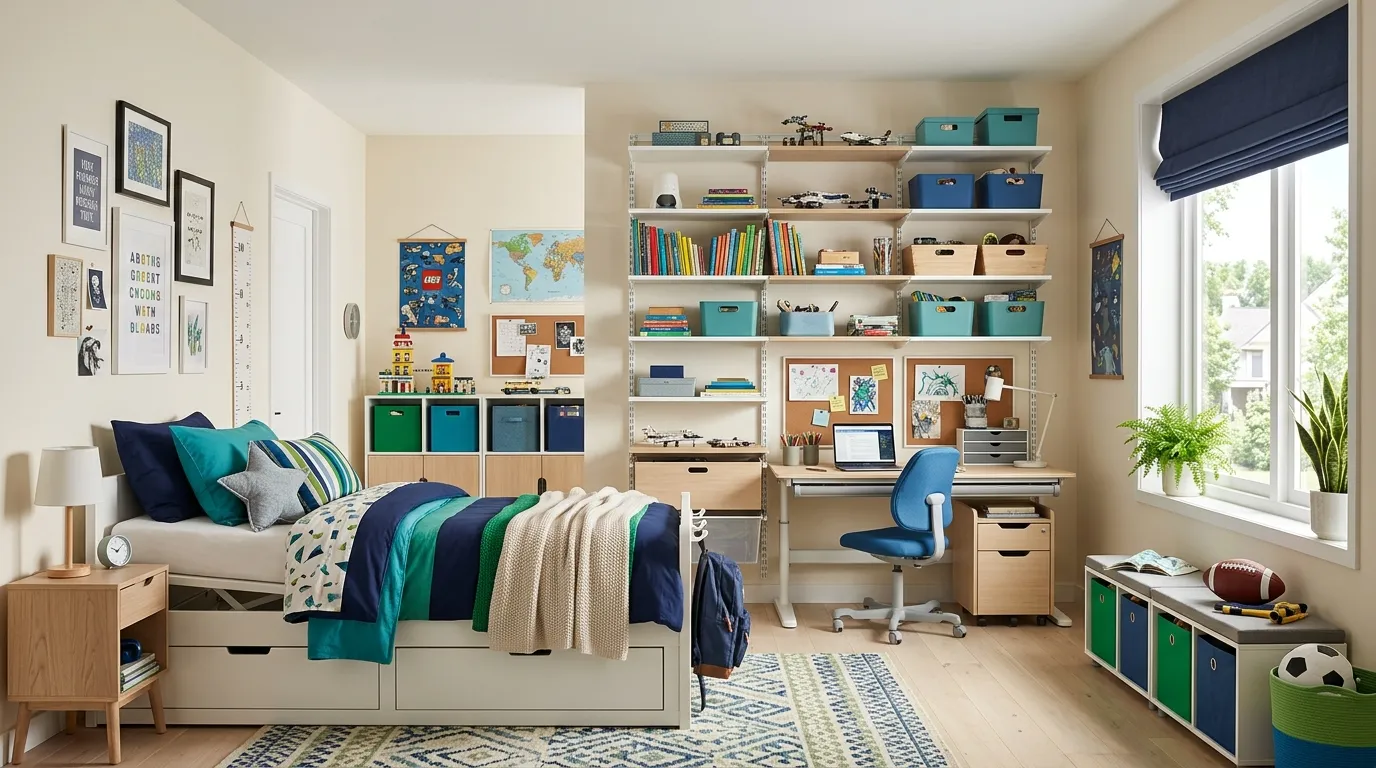
Table of Contents
The Big Picture
A colorful boys room should feel fun enough to play in and calm enough to sleep in. Getting that balance right comes down to a few decisions: how much bright color to use and where, which colors go on the big surfaces, how the room is lit, and how easily it can change as interests move from dinosaurs to football to gaming.
This style guide works through each of those decisions with concrete examples, color pairings and sizes, so the room looks lively without becoming overwhelming. For more finished room examples, see these modern boys room decor ideas.
How to Choose a Balanced Color Palette
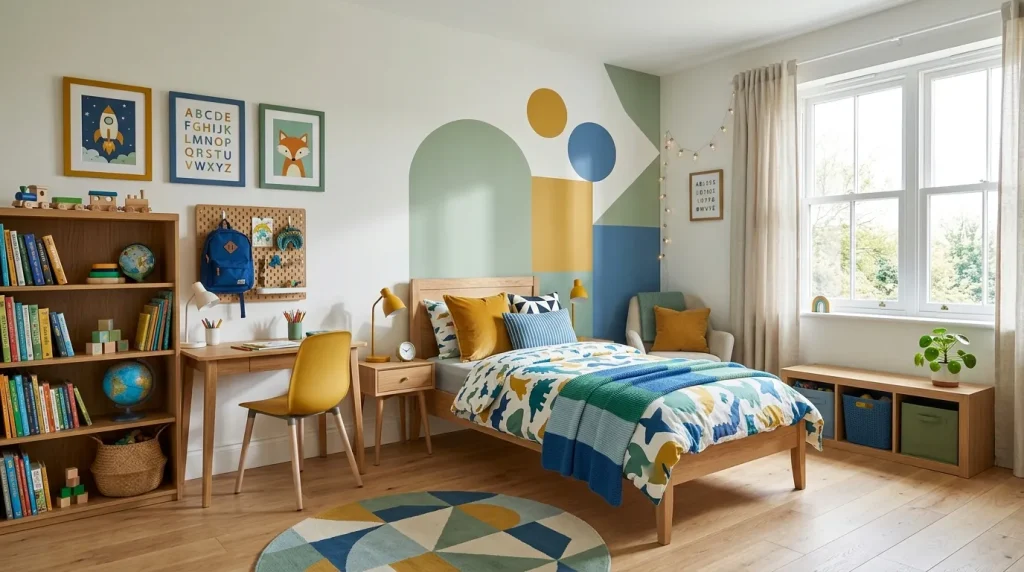
A simple way to keep a bright room balanced is the 60-30-10 split: about 60 percent of the room in a calm base color, 30 percent in a secondary color and 10 percent in a bold accent. In practice that might be soft white walls, navy bedding and furniture, and pops of orange or lime in pillows, a lamp and art.
Pick the accent from something the child loves, such as a favorite sports team color or a toy, then repeat it at least three times around the room. Navy with mustard, forest green with rust, teal with coral, and gray with red are all easy combinations that stay fun as a child grows.
Understanding the Role of Color Psychology
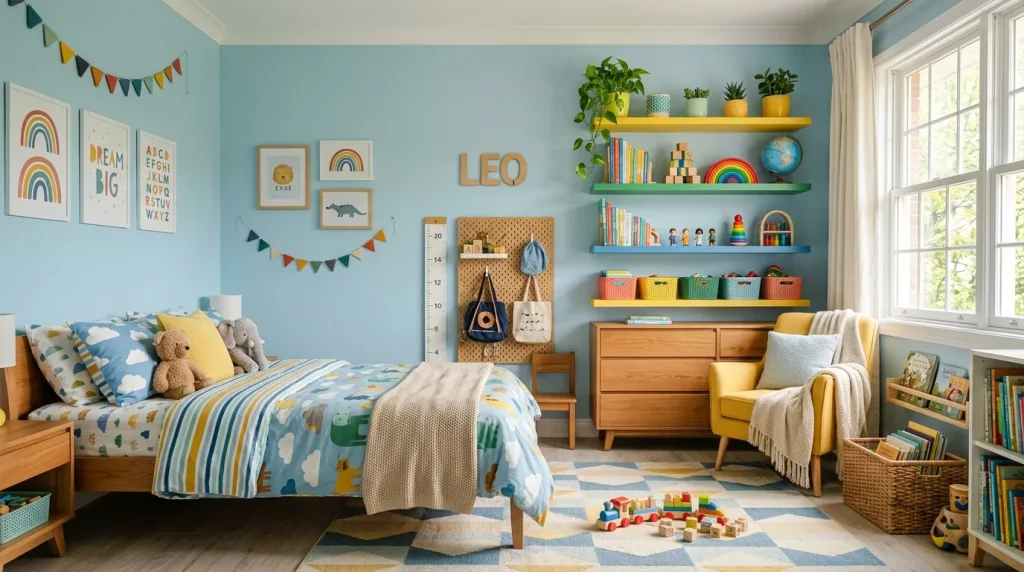
Colors change how a room feels. Blues and greens are calming and suit sleeping and reading areas. Yellows and oranges feel cheerful and energetic, so they work best as accents in a play or craft zone. Red is bold and stimulating, which makes it better on a single object, such as a chair or bookcase, than on a whole wall.
Preferences matter too. Asking a child to pick between two or three pre-chosen palettes gives them ownership while keeping the result balanced. Put the strongest colors where they are seen during the day, and keep the wall behind the bed softer.
How Lighting Influences Color Perception Indoors
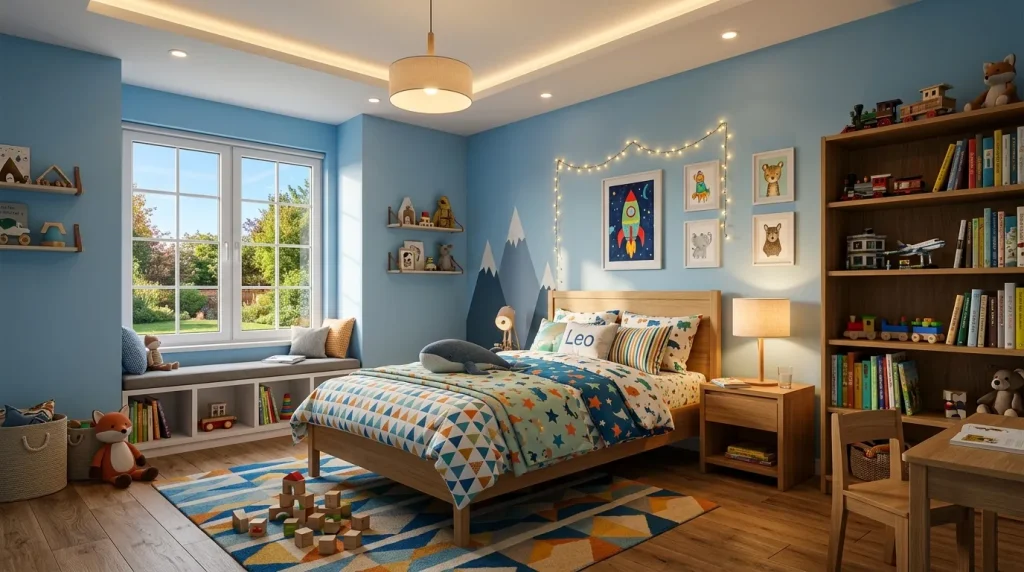
Paint looks different in different light, so test samples before committing. Paint two large swatches, at least 2 by 2 feet, on different walls and check them in the morning, afternoon and under lamps at night. North-facing rooms make colors look cooler, while south-facing rooms warm them up.
Use layered lighting: a ceiling light for general use, a desk lamp with neutral white light around 3500K to 4000K for homework, and a warm bedside lamp around 2700K for winding down. A dimmable night light or a string of warm fairy lights helps younger children who do not like full darkness.
What Furniture Colors Work Best Together
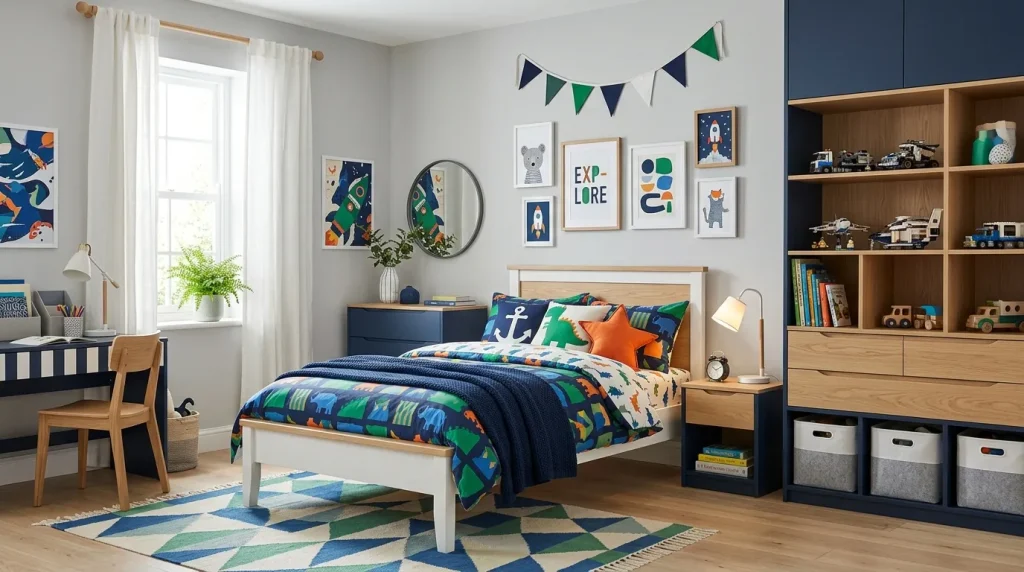
Neutral furniture keeps a colorful room flexible. White, light oak, natural pine and soft gray pieces work with almost any palette and last through several redecorations. Add color through one statement piece instead, such as a painted bookcase, a colored bed frame or a bright desk chair.
Mixing two finishes, for example white storage with natural wood shelves, looks warmer than a full matching set. Choose sturdy, rounded-edge furniture for younger boys and anchor tall pieces such as bookcases and dressers to the wall.
Creating Separate Zones for Play and Rest
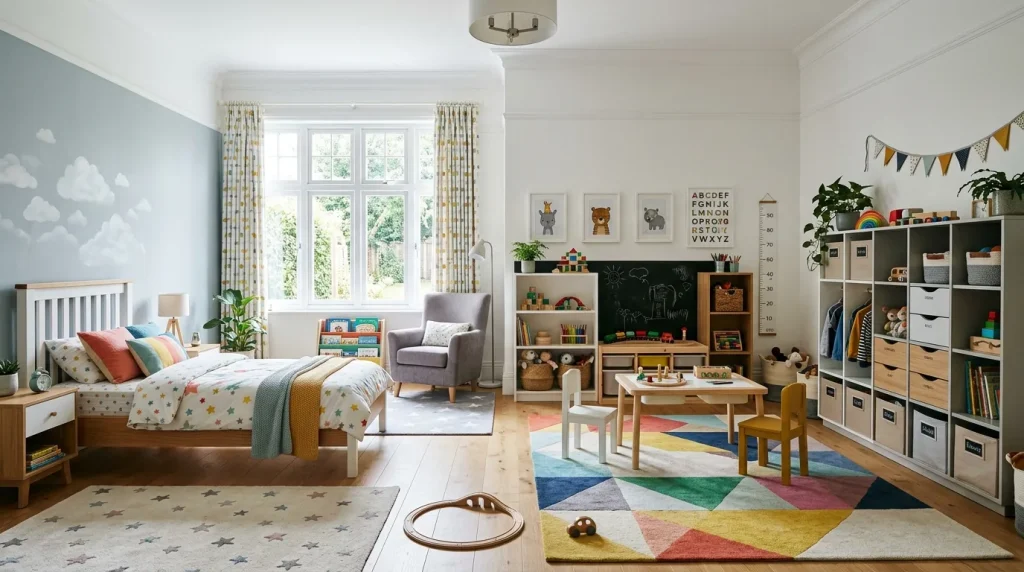
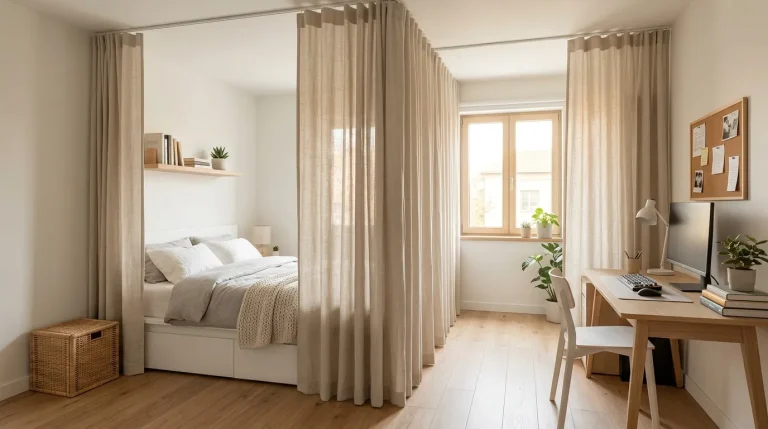
Separate zones help a single bedroom handle sleep, play and study. Keep the bed area calm, with soft bedding and fewer toys; give the play zone a durable rug and low storage; and place the desk near a window with a good task light.
A large rug, about 5 by 7 feet, defines the play area even in a small room. A low bookcase turned sideways can divide zones without blocking light. For bonus space ideas, these under-the-stairs kids space ideas show how to carve out a reading or play nook.
How Wall Treatments Add Personality and Depth
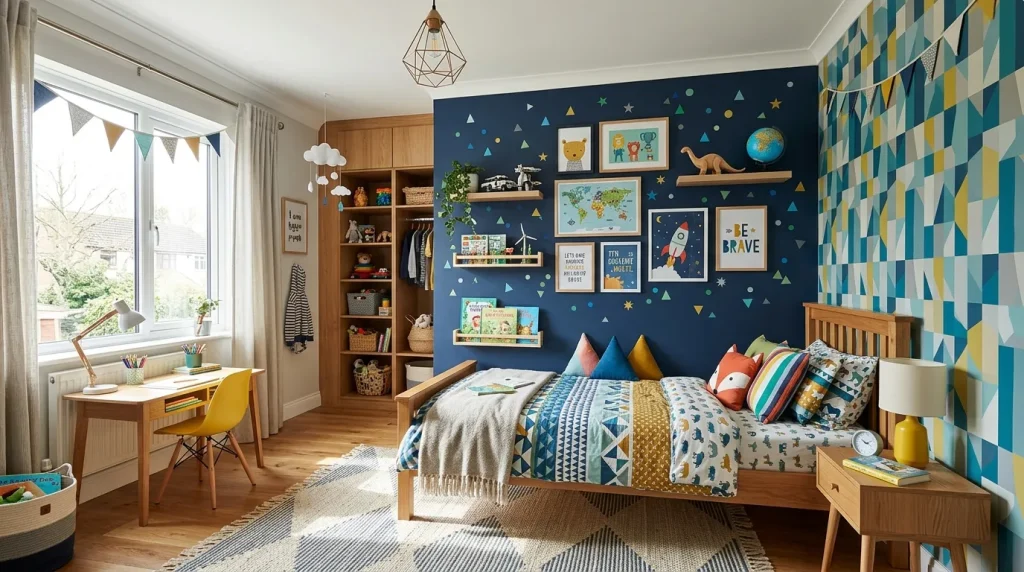
Walls are the easiest place to add personality. One accent wall in a bold color or wallpaper, such as stripes, a mountain mural or a map print, adds energy while the other walls stay calm. The wall behind the bed or the one facing the door usually works best.
Choose changeable options for themes: peel-and-stick wallpaper, removable decals, framed prints and a picture ledge for rotating art. A wipeable eggshell or satin paint makes cleaning marks easier. Half-wall paint, with the lower part in a darker color, also hides scuffs.
Why Smart Storage Supports Everyday Organization
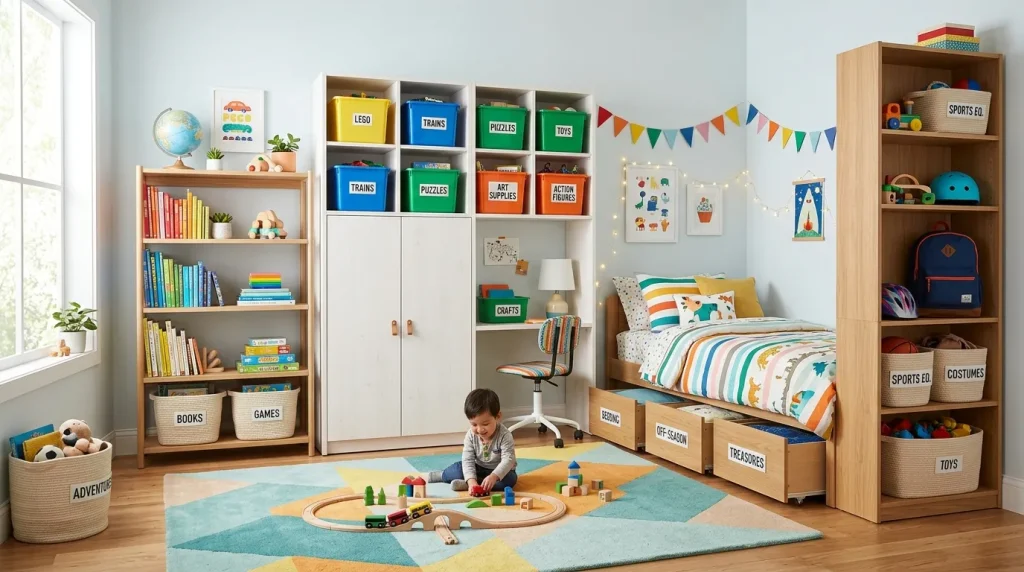
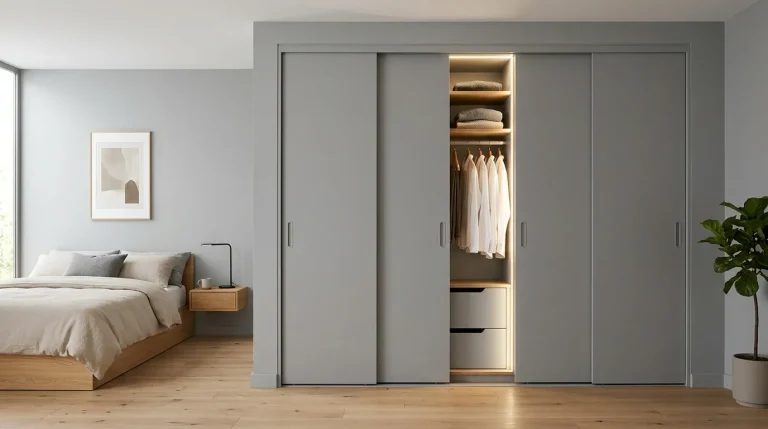
Good storage is what keeps a colorful room from looking chaotic. Use low open shelves and bins for toys younger boys use daily, a closed cabinet or drawers for things that make the room look busy, and under-bed drawers for out-of-season clothes or larger toys.
Label bins with words or pictures so children can tidy up on their own. Cube storage units with fabric bins are inexpensive and work for toys now and school supplies later. Wall-mounted shelves keep collections such as LEGO models or trophies on display but off the floor.
Choosing Textiles That Improve Comfort and Style
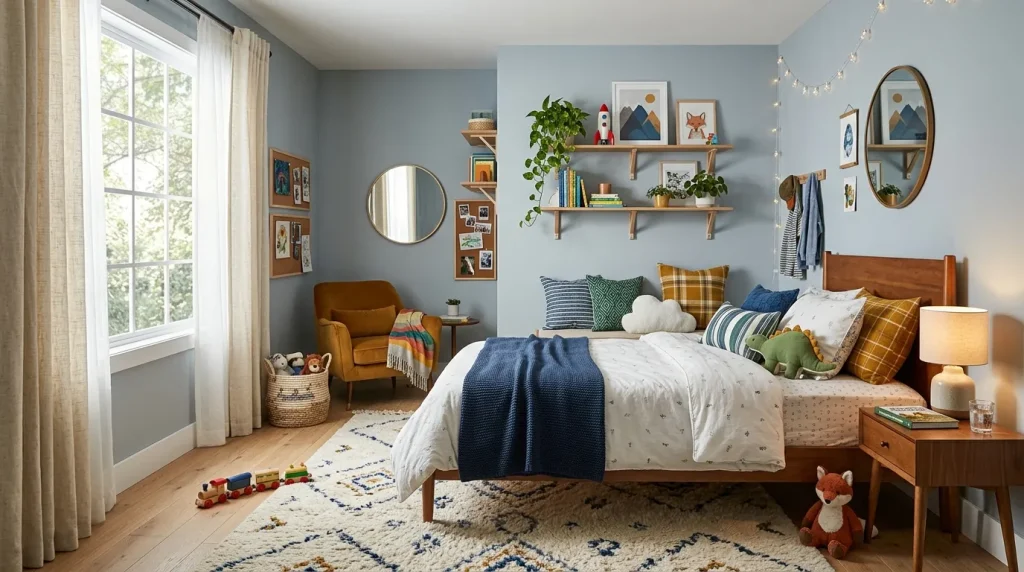
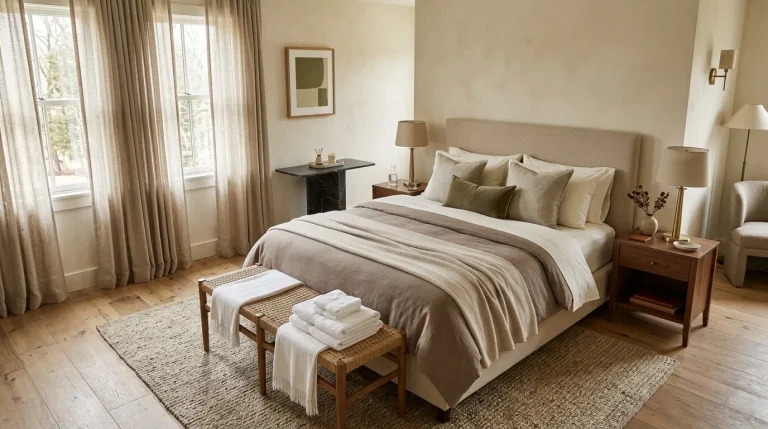
Textiles add color in a way that is cheap to change. Bedding, curtains, a rug and a few pillows can carry the main accent color, while the walls and furniture stay calm. Blackout-lined curtains help with sleep, especially in summer.
Choose washable cotton and durable blends that handle daily use. A low-pile or washable rug is easier to keep clean than a shaggy one and safer for toy cars and building blocks. Two sets of bedding mean one is always ready while the other is in the wash.
How Decorative Accessories Complete the Overall Design
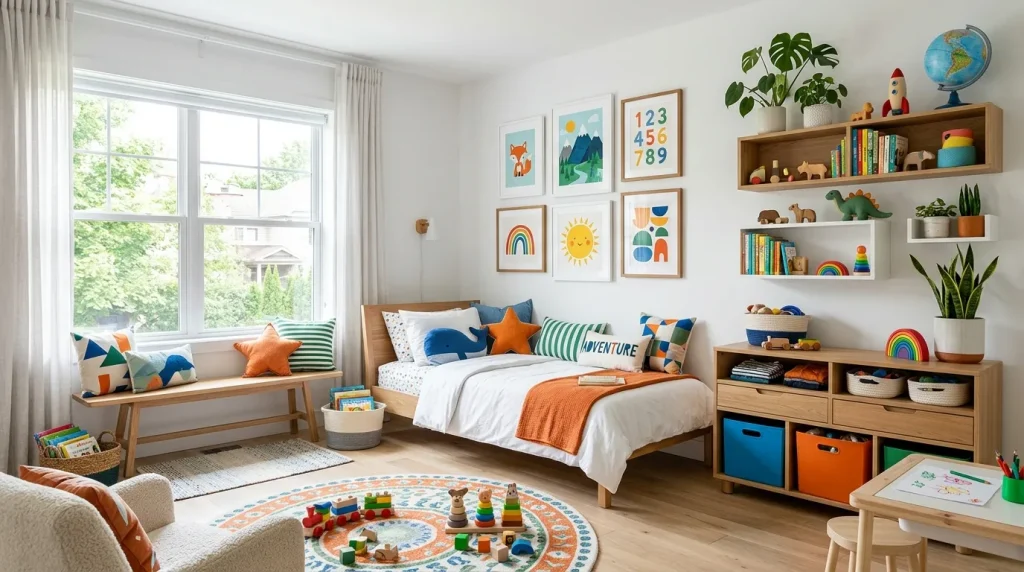
Accessories bring the room to life. A large framed print or poster, a fun clock, a world map, a globe, a few plants and a display shelf for collections all add personality.
Edit them regularly. A picture ledge or pinboard lets children change their art and certificates without new nail holes. Keep accessories off the floor and away from the bed so the sleep area stays calm.
The Importance of Designing for Future Growth
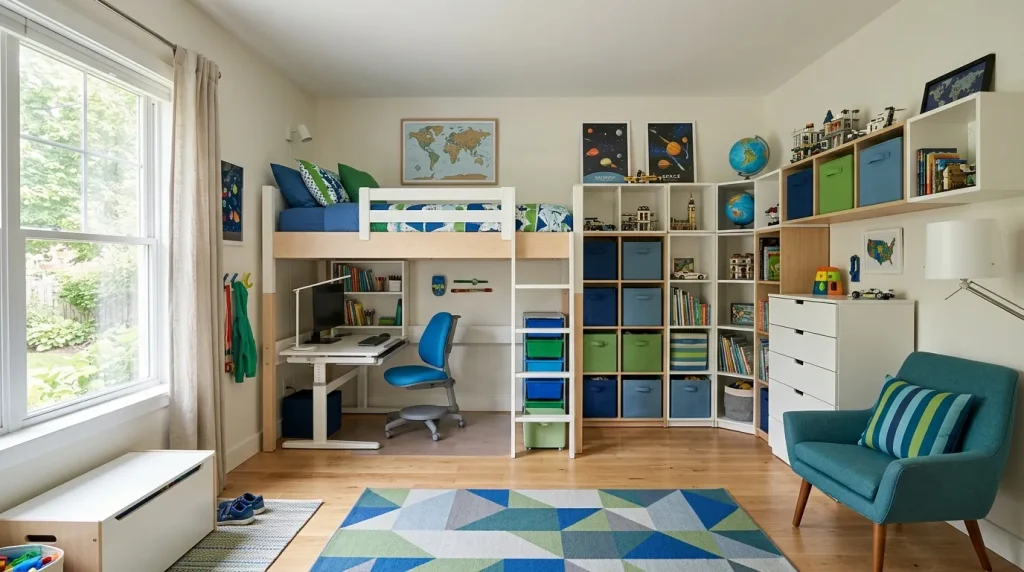
A boys room usually needs to work from early childhood into the teen years. Investing in neutral, good-quality basics, such as a full-size bed frame, a sturdy dresser and adjustable desk, and keeping themes in easy-to-change items saves money later.
Plan for a desk by school age, and leave wall space for a larger bed or more storage. Room ideas for older kids are covered in these room ideas for teen boys, and a well-sized study setup is shown in these study table designs for kids.
Common Decorating Mistakes and How to Avoid Them
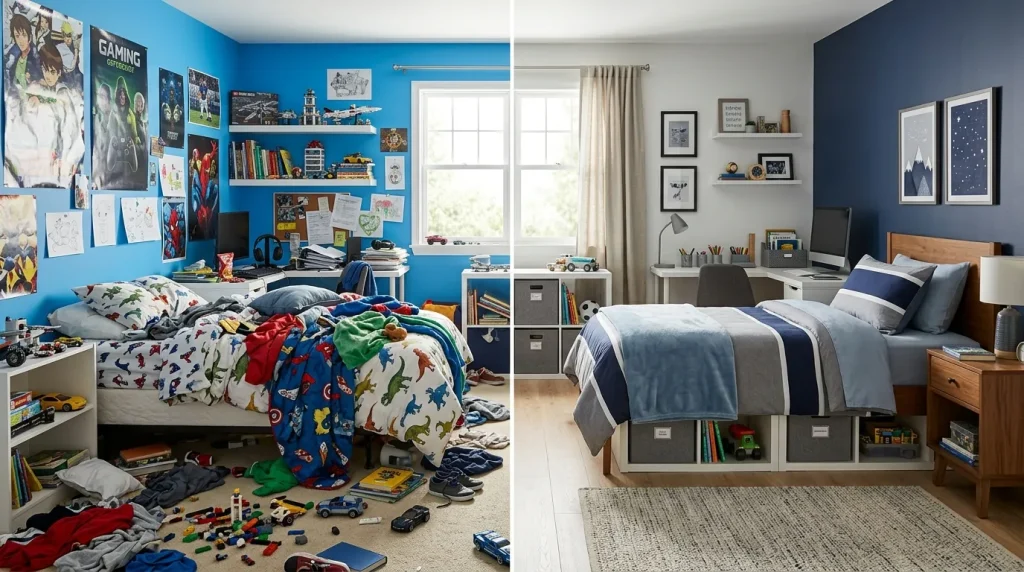
The most common mistakes are painting every wall a bright color, buying a full themed furniture set, overcrowding a small room with large furniture, and having only one ceiling light.
Another mistake is leaving no space to play. Keep at least a few square feet of open floor, and choose furniture with storage built in, such as a captain’s bed with drawers, rather than adding extra pieces.
Colorful Boys Room Palettes to Try
- Navy, white and mustard: classic and easy to update.
- Forest green, rust and cream: warm, outdoorsy and calm for sleep.
- Teal, coral and light gray: fresh and playful.
- Sky blue, red and white: bright and sporty, best with red used sparingly.
- Olive, orange and natural wood: earthy with a pop of energy.
Colorful Boys Room FAQ
What color is best for a boy’s bedroom? There is no single best color, but blues and greens are the easiest base colors for sleep, with brighter shades such as orange, yellow or red used as accents.
How do you make a colorful room feel calm? Keep the wall behind the bed soft, use one main accent color, limit patterns to two or three, and store toys in closed bins at night.
How can a shared boys room suit two children? Use the same base palette and furniture, and give each child his own accent color in bedding, a lamp and a shelf.
To Sum It Up
A colorful boys room works when bright color is used with purpose: a calm base, one or two bold accents repeated around the room, good lighting and plenty of easy storage. Keep the big pieces neutral and let bedding, art and accessories carry the color, and the room will grow with him for years.
Clara Whitmore
Clara specializes in interior styling, seasonal home trends, and cozy living spaces. She loves combining classic design elements with modern touches to create homes that feel personal, welcoming, and effortlessly stylish.