Kids room paint ideas 9 stunning colors kids will love

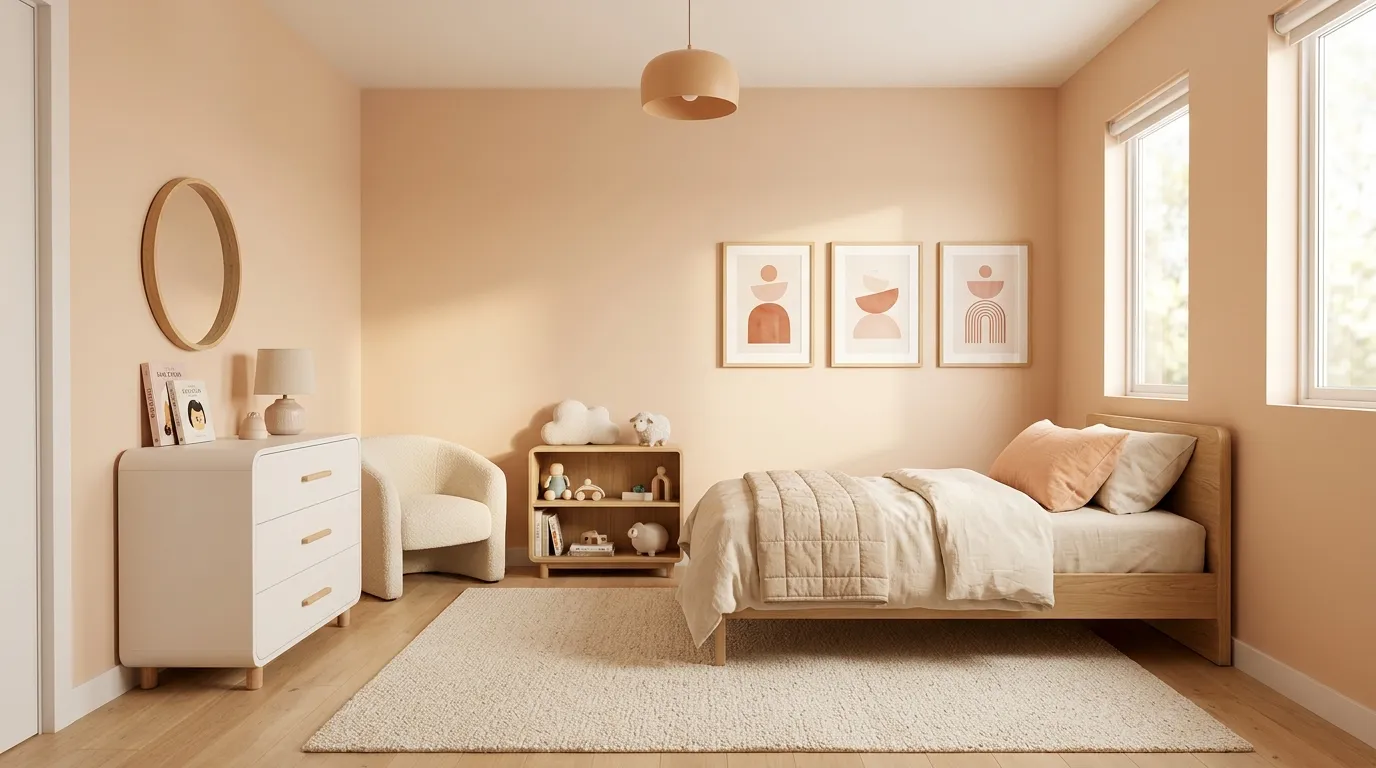
Paint is the cheapest way to change how a child’s room feels, and the right color can make it calmer for sleep, brighter for play or simply more personal. The trick is choosing a shade that suits the room’s light, works with the furniture and can grow with the child for a few years.
The nine kids room paint ideas below each include who the color suits, which rooms it works best in, what to pair it with and how to keep it practical with the right finish. For furniture and layout ideas to go with the paint, see these kids room ideas.
Table of Contents
1. Soft Sage Walls
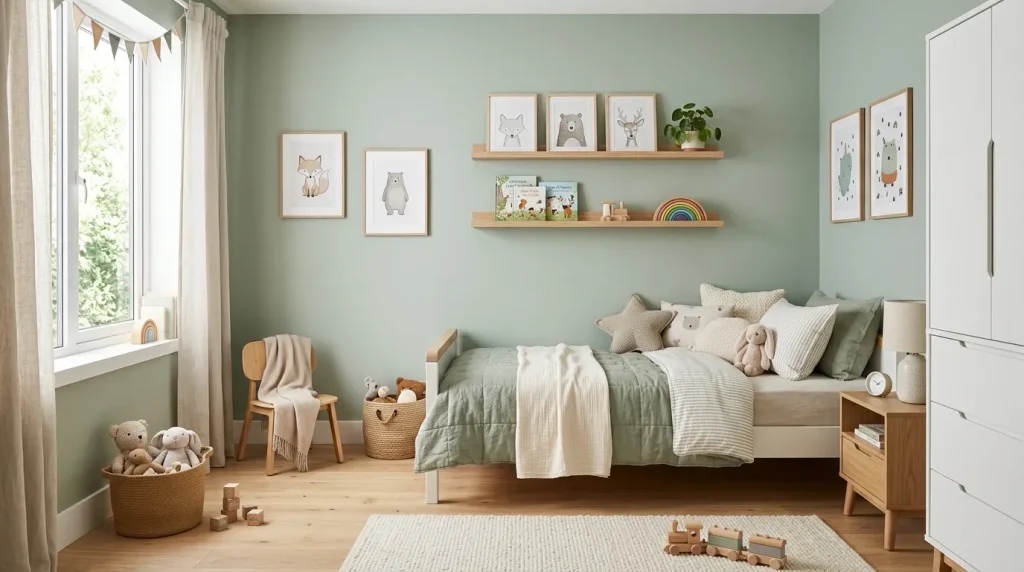
Soft sage is a gentle gray-green that feels calm and natural, which makes it one of the easiest colors for a bedroom used for both sleep and play. It suits all ages, from nursery to teen, and works for any gender.
It looks best in rooms with moderate to good daylight; in a dark north-facing room, choose a warmer sage with a hint of yellow so it does not look gray. Pair with white or oak furniture, cream bedding and accents in rust, mustard or blush. A woodland or botanical theme fits naturally, as in these woodland nursery decor ideas.
2. Sky Blue Corners
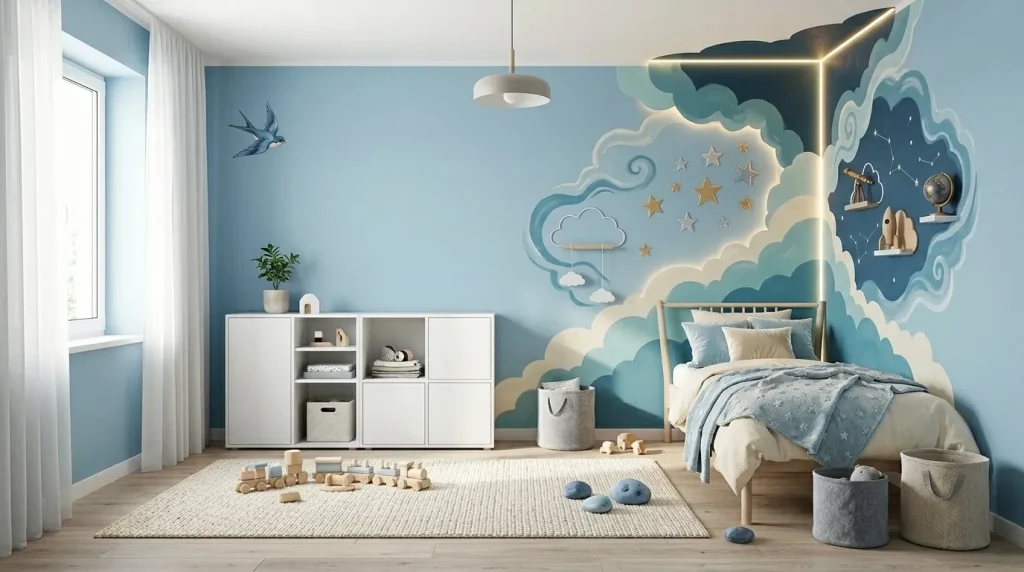
Sky blue makes a room feel fresh and airy. Paint it on all walls for a light, open look, or use it on the ceiling and upper walls with white below for a playful “sky” effect in a younger child’s room.
Choose a soft blue with a little gray in it rather than a bright baby blue so it stays stylish as the child grows. Pair with white furniture, natural wood and accents in navy, yellow or coral. In cool north-facing rooms, a slightly warmer blue avoids an icy feel.
3. Warm Peach Glow
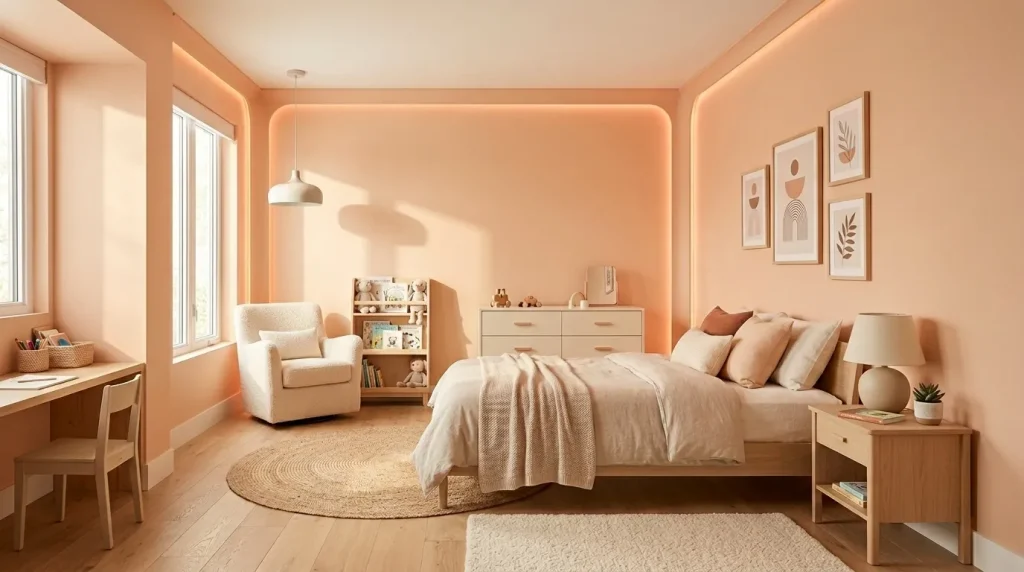
Warm peach brings a soft, sunny glow without the intensity of orange or bright pink. It suits younger children and nurseries especially well, and looks lovely in rooms that get afternoon sun.
Muted, slightly dusty peach shades age better than candy-like ones. Pair with cream, light oak, sage green and woven textures. Peach also flatters skin tones and warm lighting, so bedtime reading under a lamp looks cozy.
4. Dusty Lavender
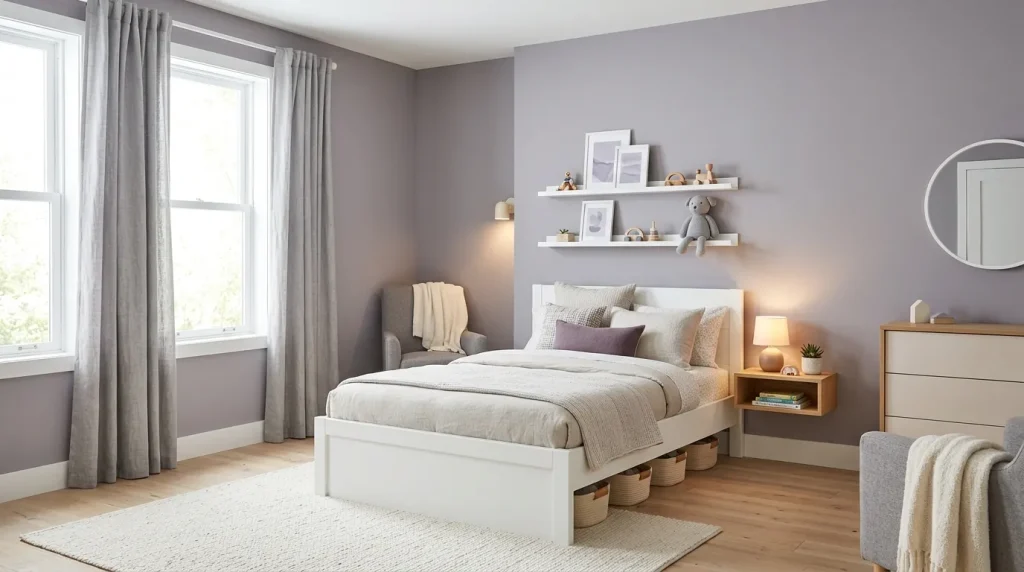
Dusty lavender is a grayed purple that feels dreamy but grown-up. It works for little ones and tweens alike and pairs beautifully with white, soft gray, sage and brass.
Because lavender can lean cool, it looks best with warm bulbs around 2700K to 3000K. Use it on all walls for a soft cocoon, or on one wall behind the bed with white elsewhere. For older girls who want a more mature version, these cozy teen room ideas show how muted colors grow up.
5. Creamy Sand Tones
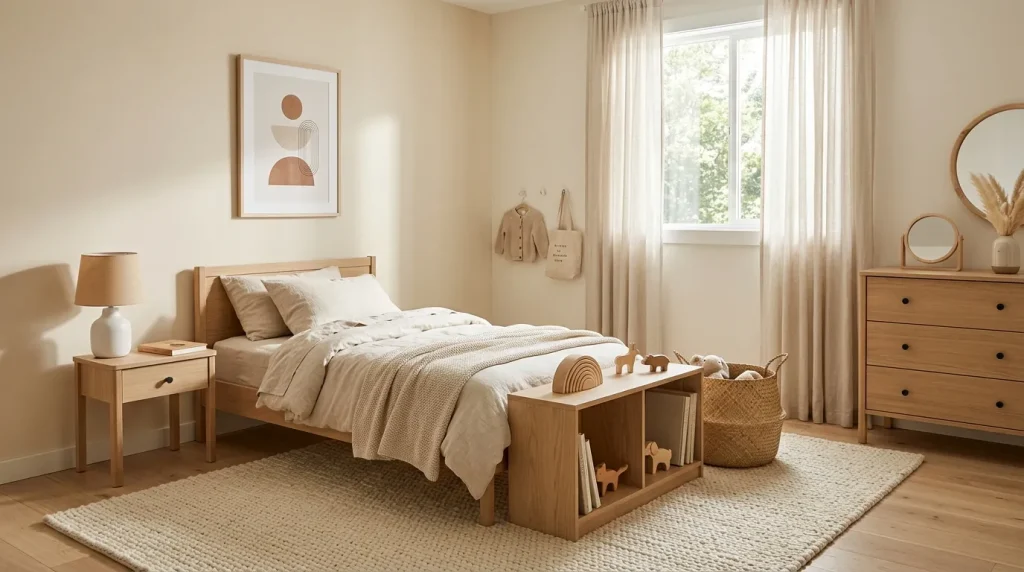
Creamy sand and warm beige create a calm, neutral base that lets toys, books and art provide the color. This is the safest choice for parents who expect the child’s favorite colors to change often, or for shared rooms.
Choose a warm sand with a slight yellow or pink undertone so it does not read as dull. Add personality through bedding, a rug, a colorful bookshelf or a painted headboard shape on the wall. It also suits gender-neutral nurseries, as in these gender-neutral nursery decor ideas.
6. Muted Coral Accent
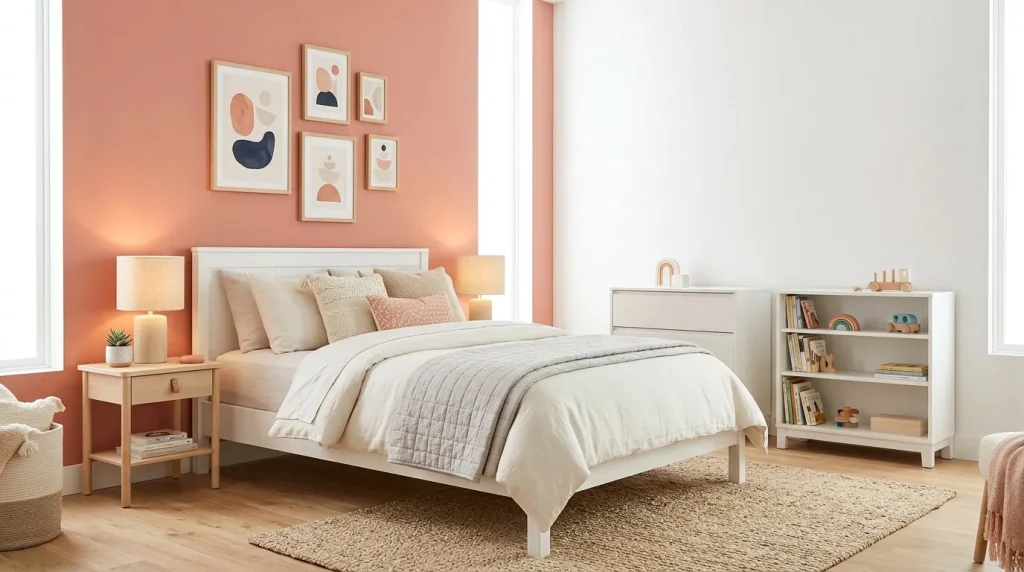
A muted coral accent wall gives a burst of warmth without painting the whole room. Paint the wall behind the bed or the one facing the door, and keep the others white or warm neutral.
Soft coral pairs well with cream, sand, light wood and navy. Painted shapes are a fun alternative to a full wall: an arch behind the bed, a half wall in coral below a white top, or a coral circle above a reading nook.
7. Moody Navy Walls
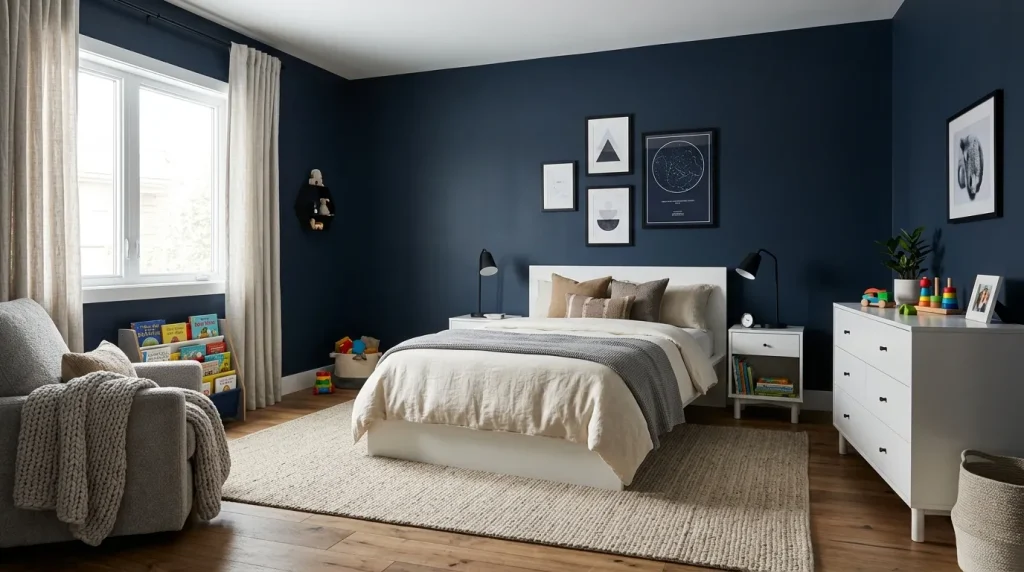
Navy feels cozy, smart and grows easily from childhood into the teen years. It suits boys’ and shared rooms especially, and makes bright toys and art stand out.
Balance the dark color with white trim, light bedding, a pale rug and good lighting, including a ceiling light, a bedside lamp and a desk lamp. In a small room, try navy on the lower half of the wall with white above, which gives a cozy feel without darkening the space.
8. Soft Gray Layers
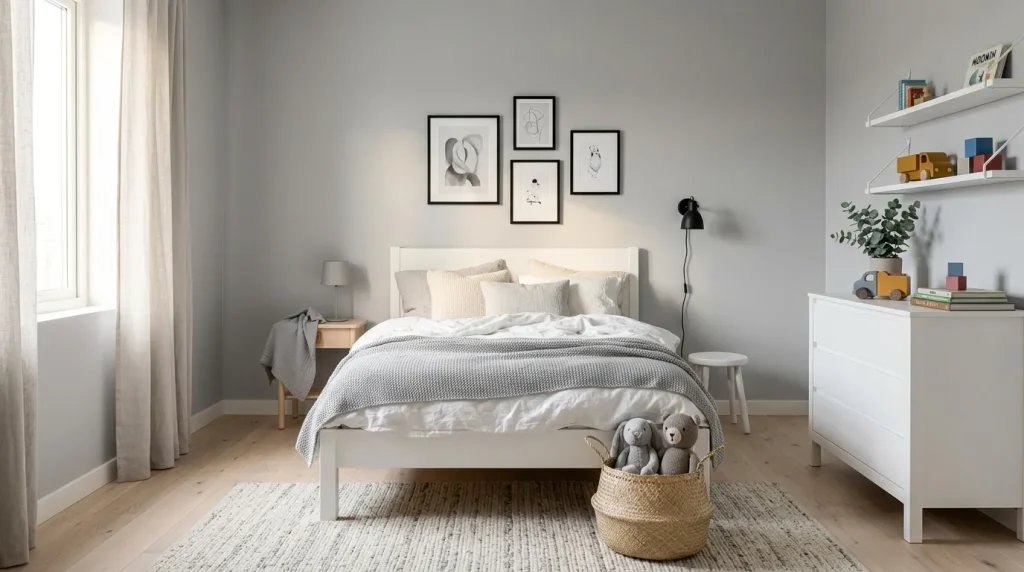
Warm soft gray creates a calm, modern backdrop that works with almost any accent color. Choose a greige or warm gray rather than a cool blue-gray, which can feel cold in a child’s room.
Gray suits shared rooms where each child has a different favorite color: one side can have yellow accents, the other green, and the walls tie them together. Add warmth with wood furniture and textured rugs.
9. Butter Yellow Glow
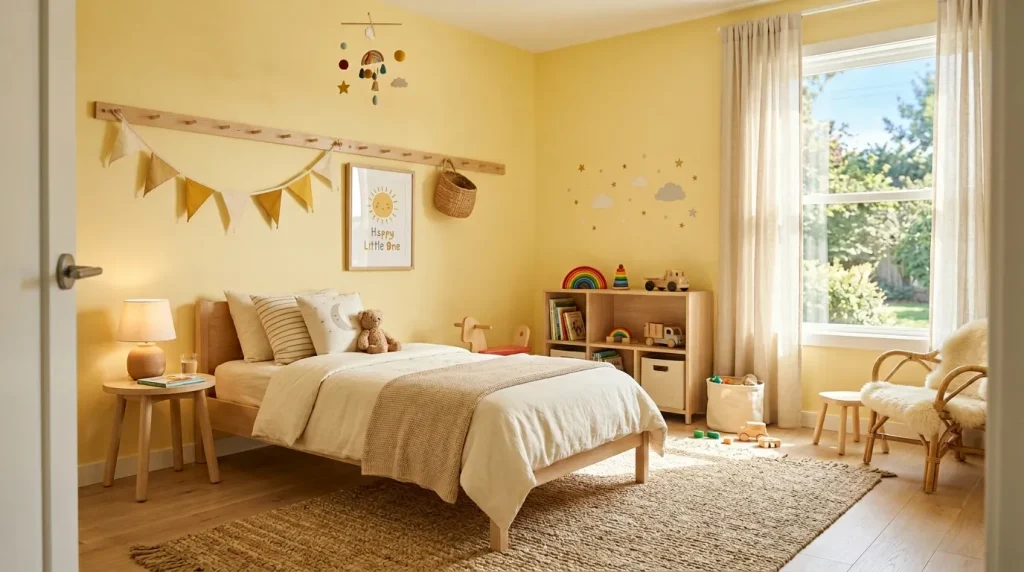
Butter yellow is a soft, creamy yellow that feels cheerful without being loud. It brightens rooms with limited daylight and suits nurseries and young children particularly well.
Choose a shade with a touch of cream or beige so it stays soft under artificial light. Pair with white, light gray, sage and natural wood. Avoid bright lemon tones on all four walls, which can feel overstimulating at bedtime.
Choosing the Right Paint Finish for Kids Rooms
- Walls: washable matte or eggshell; both wipe clean and hide small flaws.
- Trim and doors: satin or semi-gloss, which stands up to knocks and fingerprints.
- Furniture: a hard-wearing enamel or furniture paint, sanded and primed first.
- Low-VOC paint: choose low- or zero-VOC paint and air the room well for a few days, especially before a baby or young child sleeps there.
How to Test Kids Room Paint Colors
Paint two or three large samples, around 2 by 2 feet, on different walls, or use peel-and-stick sample sheets. Look at them in the morning, afternoon and at night with the room’s lamps on. North-facing rooms make colors look cooler and darker; south-facing rooms warm them up. Letting a child choose between two pre-approved shades gives them ownership without risking a color that is hard to live with.
Kids Room Paint Ideas FAQ
What is the most calming color for a child’s bedroom? Soft greens and blues, such as sage and sky blue, are the most common calming choices, along with warm neutrals like sand.
Should a kids room be painted a bright color? Bright colors work best as accents, such as one wall, a painted shape or furniture, rather than on every wall.
How often should a kids room be repainted? With a muted, flexible color, many families repaint only every five to seven years, often when moving from little-kid to tween style.
Fun Paint Ideas Beyond Plain Walls
- Painted arch: a large arch shape behind the bed creates a “headboard” for very little cost.
- Half-wall color: a darker or brighter shade on the lower third or half of the wall hides scuffs and adds fun.
- Colored ceiling: a soft blue or blush ceiling surprises and keeps walls calm.
- Stripes or color blocks: painter’s tape and two shades create bold graphic shapes on one wall.
- Painted furniture: a bright dresser, bed frame or bookcase adds color that is easy to change later.
Shapes and accents are also easier to repaint than four full walls when tastes change, so they suit children who switch favorite colors often. Measure and mark the shape lightly in pencil, use low-tack tape, and remove the tape while the paint is still slightly wet for crisp edges.
In the End
The best kids room paint color is one that matches the room’s light, suits the child’s age and can stay for a few years. Soft, slightly muted shades of sage, blue, peach, lavender or yellow give color without overwhelming, while navy and gray provide a calm base that grows with them. Test samples, pick a washable finish, and let bedding and art carry the fun.
Clara Whitmore
Clara specializes in interior styling, seasonal home trends, and cozy living spaces. She loves combining classic design elements with modern touches to create homes that feel personal, welcoming, and effortlessly stylish.