Japandi bathroom design: Easy 22 stress-free ideas for a clutter-free peaceful bathroom

Introduction:
Imagine stepping into a bathroom that instantly calms your mind and clears your thoughts.
No clutter, no chaos—just quiet, soft, and beautifully balanced space.
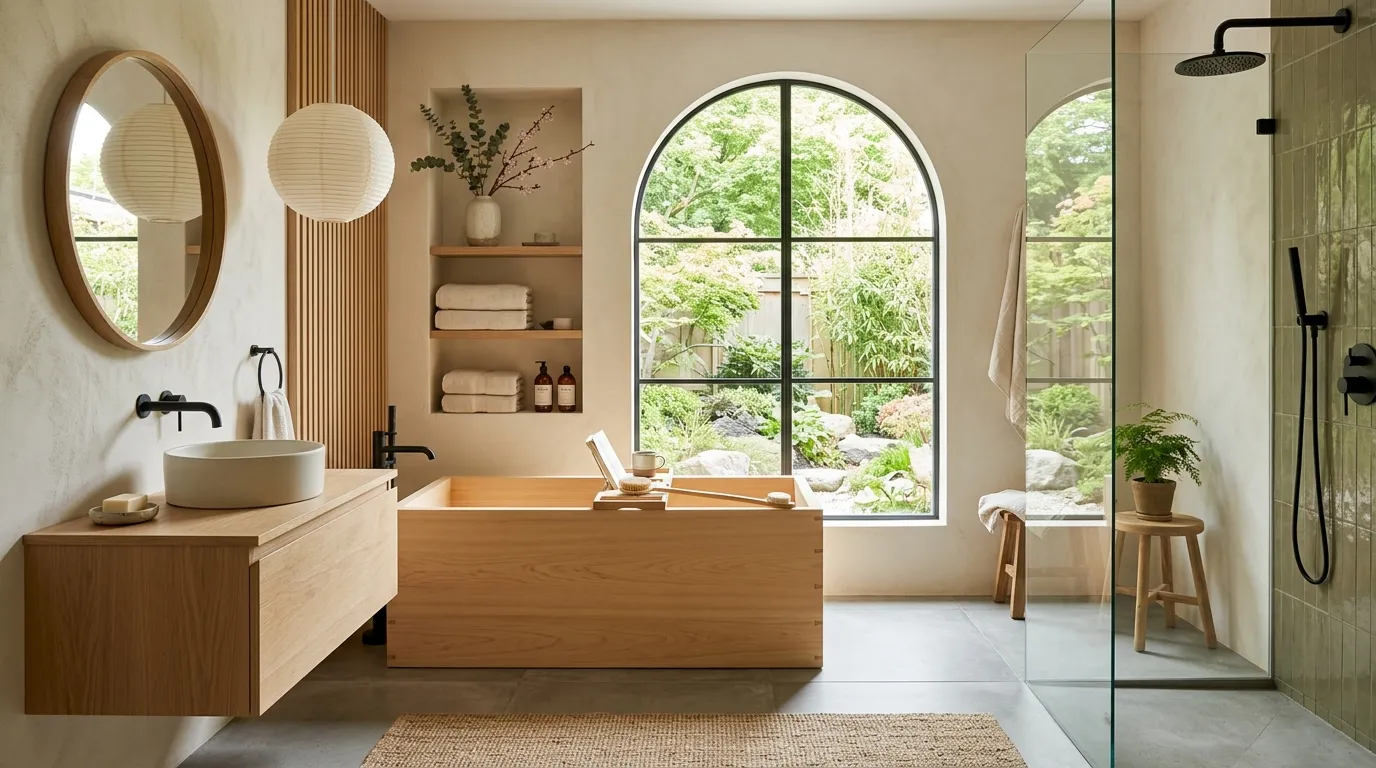
Japandi bathroom design blends minimalism with warmth, creating a peaceful environment that feels both modern and deeply relaxing. If your current bathroom feels crowded, outdated, or visually overwhelming, this guide will help you transform it into a calm, clutter-free retreat without complicated renovations. I’ve noticed that even small design shifts can completely change how a space feels day to day.
In this article, you’ll discover simple yet powerful ideas that bring harmony, functionality, and beauty into your bathroom. From smart storage to soft textures and natural elements, each idea is designed to be practical and easy to apply. Whether you’re starting fresh or just upgrading a few details, these ideas will help you create a space that feels lighter, more organized, and genuinely relaxing.
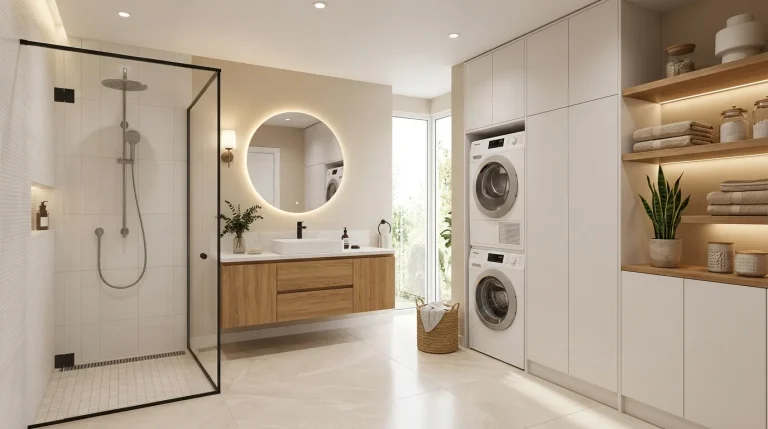
1.Warm Neutral Palette
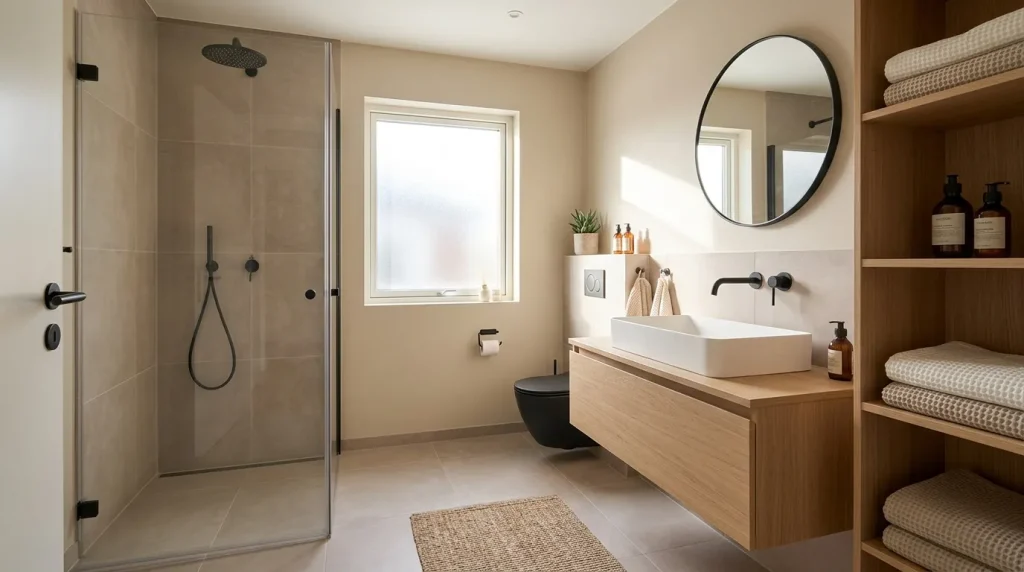
Minimal open shelving creates a perfect balance between functionality and visual simplicity. Instead of heavy cabinets, these clean, lightweight shelves keep the space feeling open while still offering storage. The key is to style them intentionally with only a few essential items like folded towels, neutral containers, or simple decor. I’ve noticed that when shelves are not overcrowded, they actually enhance the calmness of the space. This approach aligns beautifully with Japandi-inspired bathroom aesthetics, where restraint, balance, and thoughtful simplicity define the overall look.
What makes this approach so effective is how adaptable it is to real homes. You can start small with neutral towels, a light wood vanity, or matte ceramic accessories, and still achieve a cohesive look. I’ve noticed that when everything blends softly, the mind naturally relaxes because there’s less visual tension. That’s why many designers recommend limiting bold colors in bathrooms meant for relaxation. The result is a space that feels organized, modern, and effortlessly peaceful every single day.
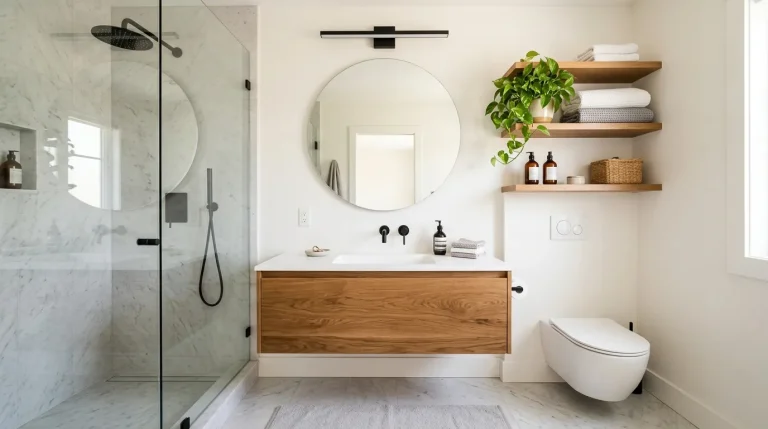
2.Floating Wood Vanity
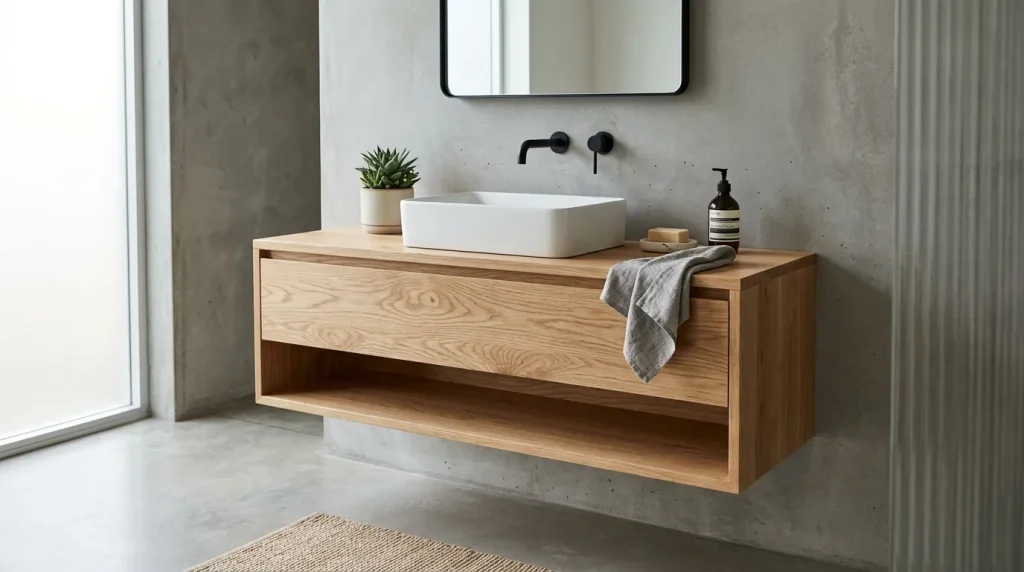
A floating wood vanity instantly elevates the space with a clean, weightless appearance that feels both modern and calming. By lifting the vanity off the floor, the entire bathroom feels more open, which is especially helpful in smaller layouts. I’ve seen this work well in many homes where even a few inches of visible floor space make a big visual difference. The natural wood adds warmth without overwhelming the design, balancing minimalism with comfort. It’s a simple upgrade that delivers both style and function.
Beyond aesthetics, this setup is incredibly practical for everyday use. Cleaning becomes easier since there are no corners trapping dust or moisture underneath. You can also add subtle under-lighting to enhance the floating effect, creating a soft glow during evenings. In my experience, pairing this with neutral tiles and matte fixtures keeps everything cohesive and grounded. The result is a bathroom that feels intentional, organized, and visually lighter without requiring complex design changes or expensive renovations.
3.Minimal Open Shelving
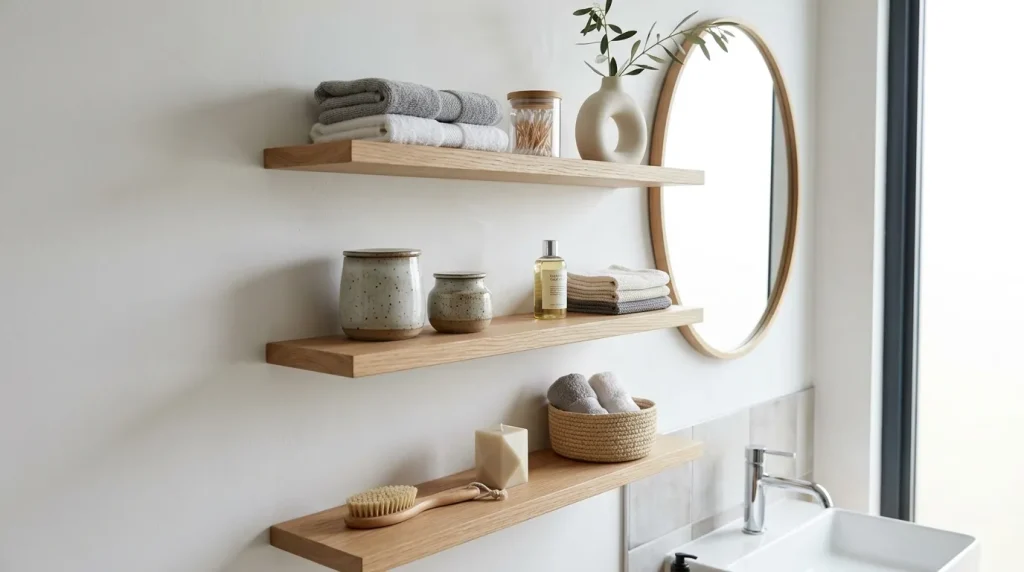
Minimal open shelving creates a perfect balance between functionality and visual simplicity. Instead of heavy cabinets, these clean, lightweight shelves keep the space feeling open while still offering storage. The key is to style them intentionally with only a few essential items like folded towels, neutral containers, or simple decor. I’ve noticed that when shelves are not overcrowded, they actually enhance the calmness of the space. This approach aligns beautifully with japandi bathroom design, where less truly feels more.
This idea works especially well for people who want both convenience and aesthetics. Everything is within reach, yet nothing feels chaotic or messy. In my experience, limiting each shelf to just a few items creates a curated, almost gallery-like look. That’s why many designers suggest leaving empty space between objects to let each piece stand out. The result is a bathroom that feels organized, airy, and thoughtfully styled without adding unnecessary complexity or visual noise.
4.Matte Black Fixtures
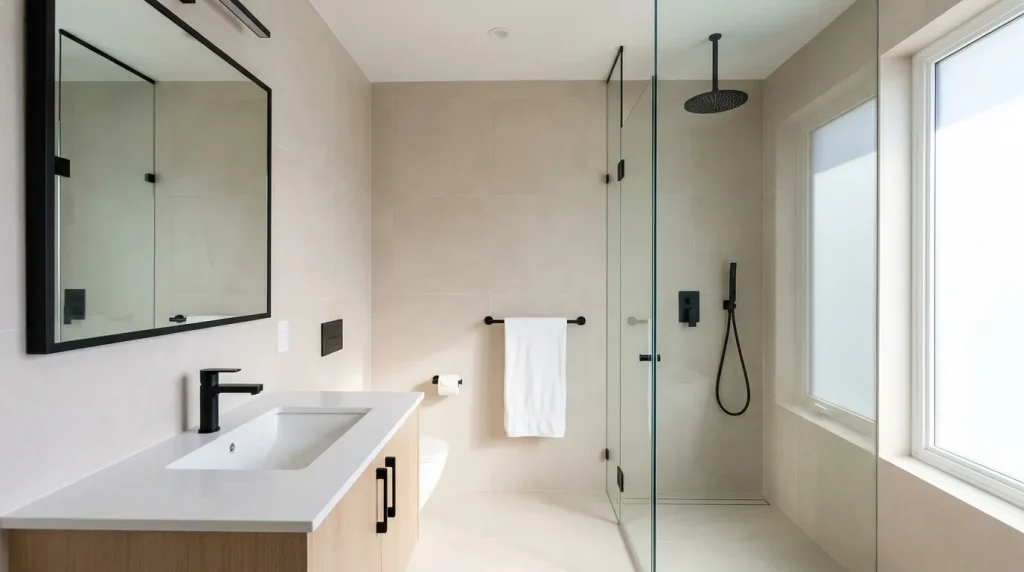
Matte black fixtures introduce a bold yet controlled contrast that instantly sharpens the entire bathroom design. Instead of relying on heavy decor, these sleek elements create visual definition through simple lines and dark accents. I’ve noticed that even small upgrades like changing faucets or handles can completely transform the space without a full remodel. The muted finish avoids shine, keeping everything soft and balanced rather than dramatic. This makes it perfect for a calm, modern environment that still feels intentional and refined.
What makes this idea practical is how easy it is to implement step by step. You can start with a faucet or showerhead and gradually match other hardware for consistency. In my experience, pairing matte black with light wood and neutral tiles creates a grounded, cohesive look that feels effortlessly stylish. That’s why many designers recommend using dark accents sparingly to guide the eye without overwhelming the room. The result is a bathroom that feels structured, contemporary, and visually striking without losing its peaceful atmosphere.
5.Soft Ambient Lighting
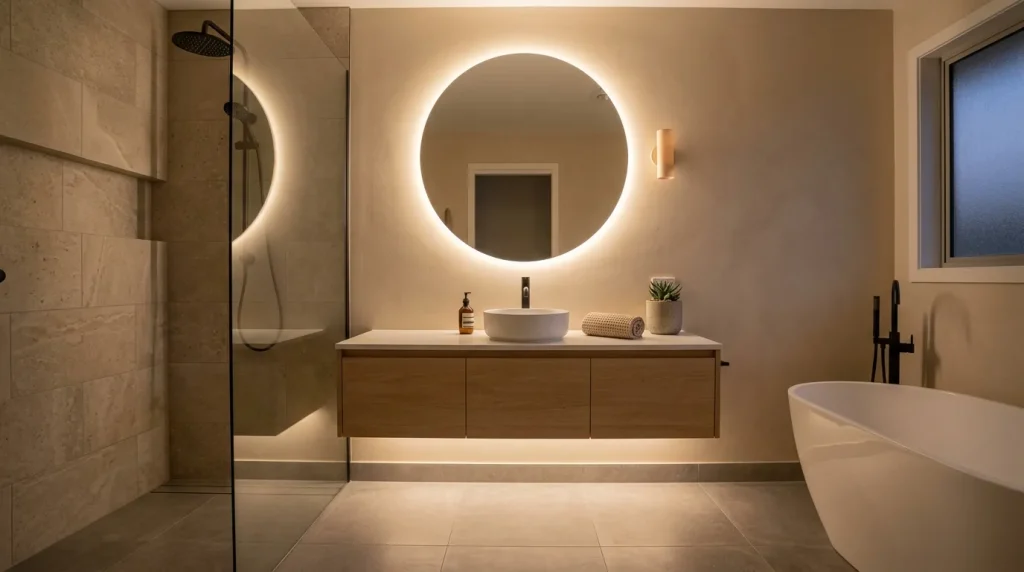
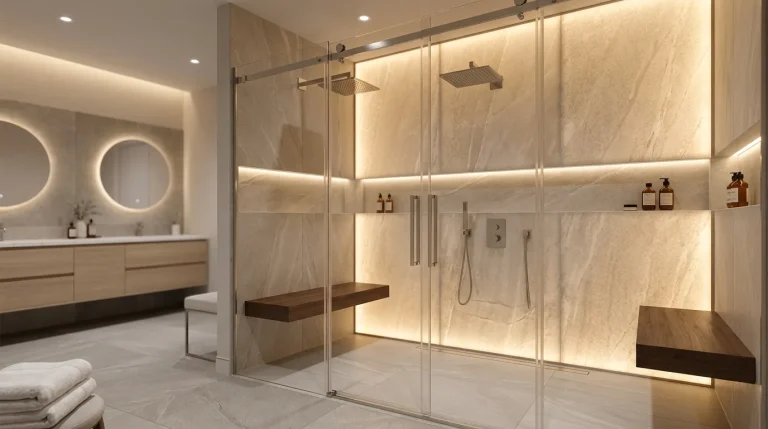
Soft ambient lighting completely changes the emotional feel of a bathroom, turning it from purely functional into a relaxing retreat. Instead of relying on bright overhead lights, this approach layers gentle illumination that wraps the space in warmth. I’ve seen this work especially well during evening routines, where softer light helps create a calming transition at the end of the day. It also enhances textures like wood grain and matte finishes, making the design feel richer without adding more elements.
This lighting style is surprisingly easy to introduce without major changes. Adding LED strips under a vanity or behind a mirror can instantly create depth and dimension. In my experience, warm lighting tones feel more natural and comfortable compared to cool white lights, especially in minimalist spaces. That’s why many designers recommend avoiding overly bright lighting in relaxation-focused areas. The result is a bathroom that feels peaceful, layered, and visually soothing while still being practical for everyday use.
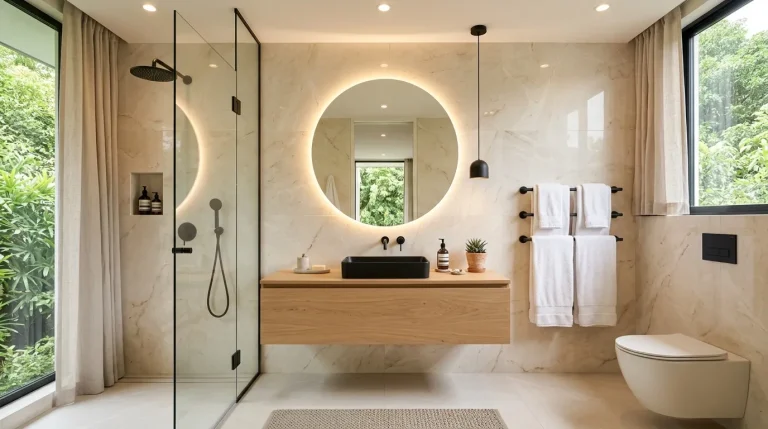
6.Stone Texture Walls
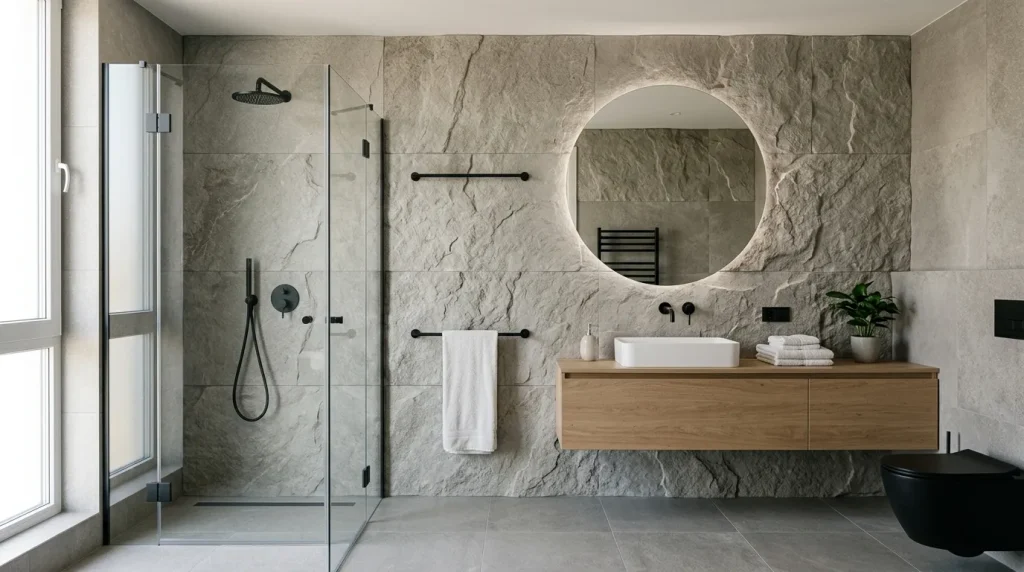
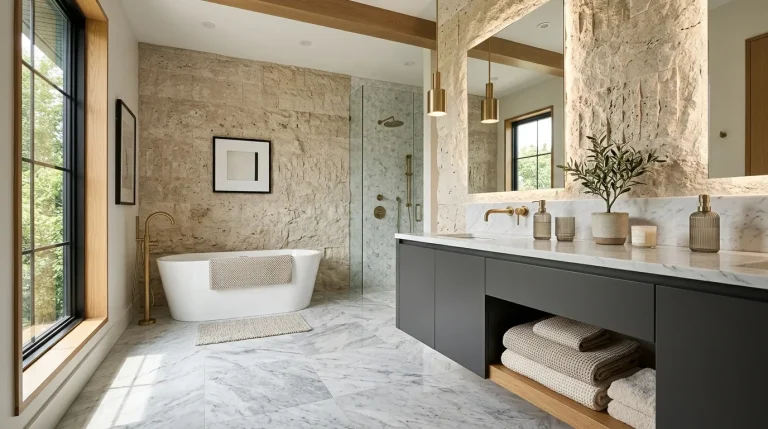
Stone-textured walls bring a grounded, natural element that instantly elevates the bathroom’s visual depth. Instead of flat surfaces, these textures create subtle variation that catches light beautifully throughout the day. I’ve noticed that even neutral stone finishes can make a space feel more luxurious without adding complexity. The organic look pairs perfectly with clean lines and minimal styling, allowing the materials themselves to become the highlight. This creates a calm yet visually engaging environment that feels both modern and timeless.
What makes this idea effective is its ability to stand out without overwhelming the design. Large-format tiles or seamless stone finishes reduce grout lines, keeping the overall look clean and uninterrupted. In my experience, combining stone textures with soft lighting enhances the natural patterns, making the space feel warmer and more inviting. That’s why many designers use textured surfaces to add interest instead of decorative clutter. The result is a bathroom that feels refined, balanced, and deeply connected to natural elements.
7.Frameless Glass Shower
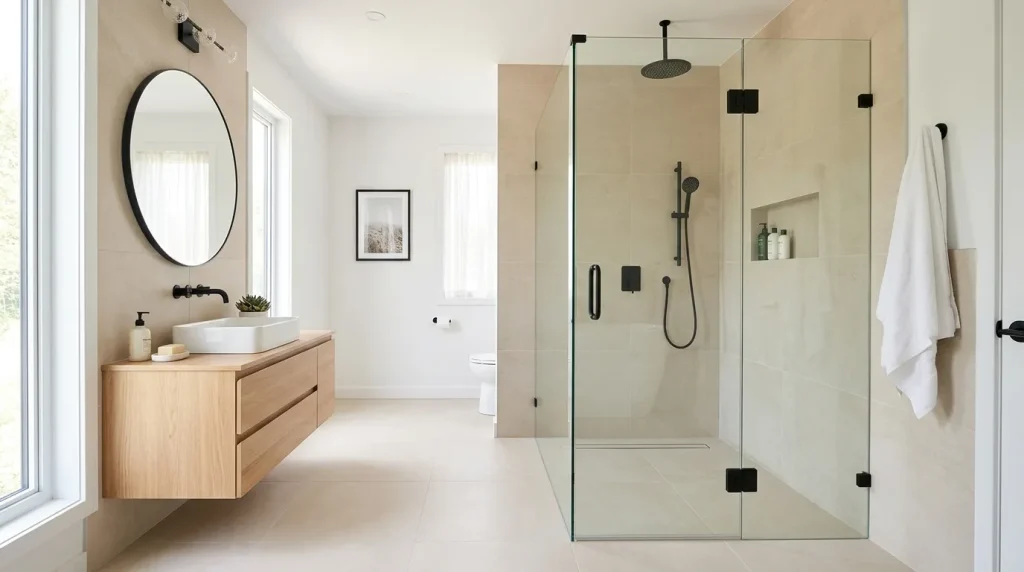
A frameless glass shower instantly removes visual barriers, making the bathroom feel larger and more connected. Instead of dividing the space, clear panels allow light and textures to flow uninterrupted across the room. I’ve noticed that even in compact bathrooms, this simple change creates a dramatic sense of openness. The absence of bulky frames keeps the design clean and modern, which fits perfectly with a calm, minimal aesthetic. It’s one of those upgrades that quietly transforms the entire layout without adding complexity.
What makes this idea practical is how well it integrates with different materials and layouts. Whether paired with stone tiles or neutral finishes, the transparency keeps everything cohesive and balanced. In my experience, maintaining clean glass with regular wiping helps preserve that crisp, polished look. That’s why many designers prefer frameless designs when aiming for simplicity and elegance. The result is a bathroom that feels spacious, bright, and effortlessly refined while still being highly functional for daily use.
8.Round Mirror Accent
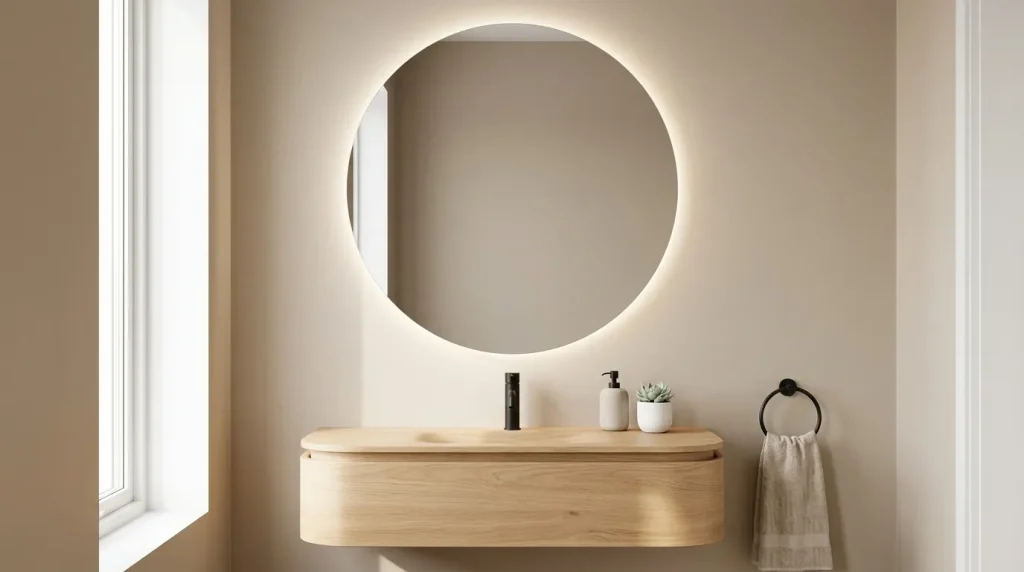
A round mirror introduces softness into a space often dominated by straight lines and sharp edges. This simple shape creates visual balance, making the bathroom feel more relaxed and welcoming. I’ve seen this work especially well in minimalist setups where every element matters. The curved form naturally draws attention without overpowering the design, acting as a subtle focal point. It also reflects light evenly, helping the room feel brighter and more open without needing additional fixtures or decorations.
This idea is easy to implement while delivering a noticeable impact. Choosing a thin frame or frameless design keeps the look clean and modern. In my experience, pairing a round mirror with soft lighting enhances its effect, creating a calm and cohesive atmosphere. That’s why many designers recommend using curves to break up rigid layouts. The result is a bathroom that feels balanced, visually interesting, and thoughtfully designed without adding unnecessary complexity or clutter.
9.Indoor Plant Touch
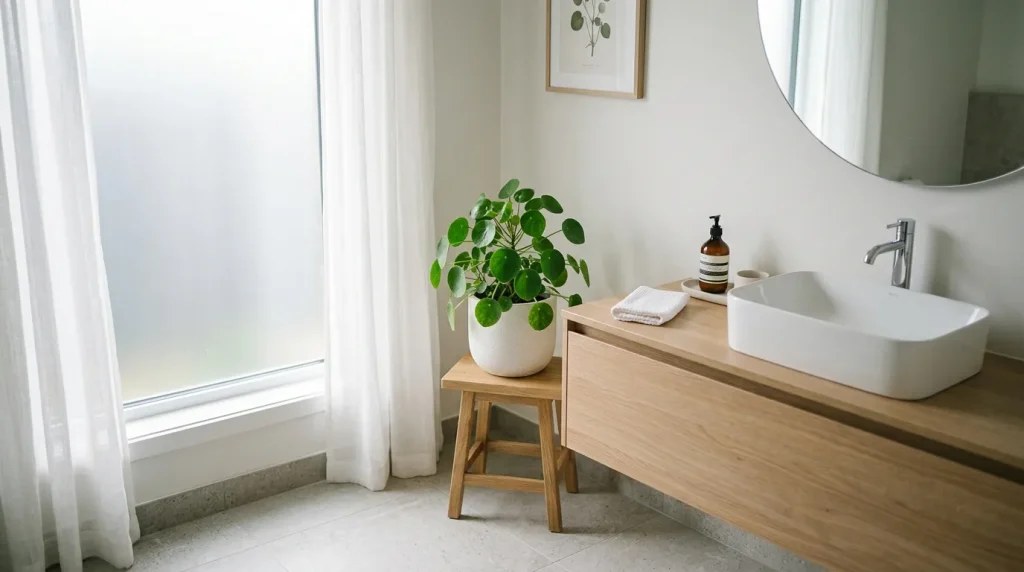
A simple indoor plant can completely change the mood of a bathroom by adding a touch of life and freshness. Against neutral tones and clean surfaces, greenery stands out in a subtle yet powerful way. I’ve noticed that even a single plant near a window or vanity can make the space feel more inviting and less sterile. It creates a natural connection that softens the overall design while keeping everything minimal. This small addition makes the environment feel more lived-in and balanced.
Choosing the right plant makes this idea both practical and low maintenance. Options like snake plants or pothos thrive in bathroom conditions with limited sunlight and humidity. In my experience, placing greenery where it naturally catches light enhances its visual impact without cluttering the space. That’s why many designers incorporate plants as a finishing touch rather than a focal point. The result is a bathroom that feels fresh, calming, and effortlessly styled with minimal effort.
10.Hidden Storage Drawers
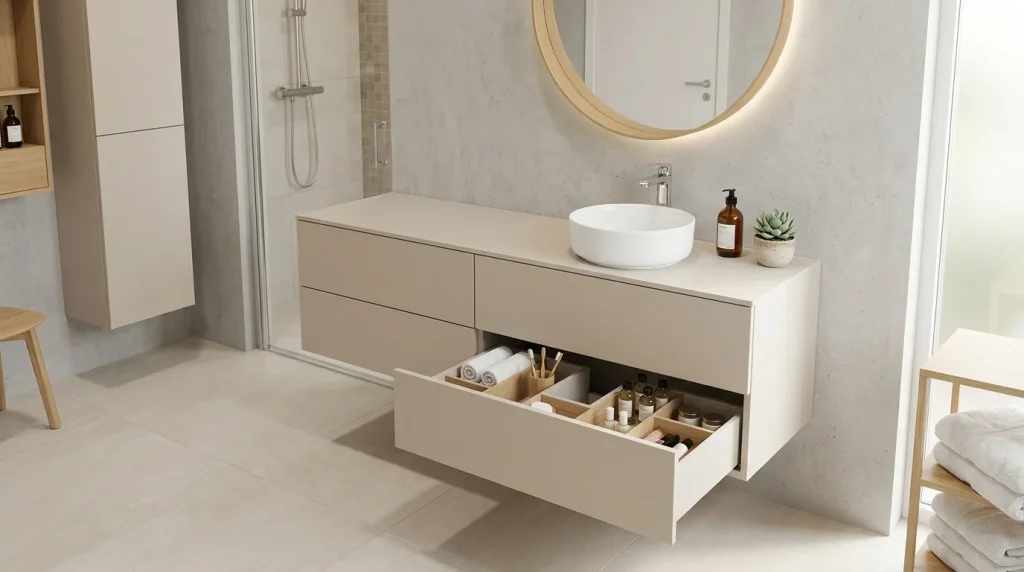
Hidden storage drawers are one of the easiest ways to maintain a clean and peaceful bathroom without sacrificing functionality. Instead of leaving items on display, everything is tucked neatly inside, allowing surfaces to stay clear and uncluttered. I’ve noticed that when countertops are free from visual noise, the entire space instantly feels calmer and more organized. This approach works especially well for maintaining a minimalist Japandi bathroom layout, where simplicity, order, and intentional design are essential to the overall aesthetic.
What makes this idea practical is how seamlessly it blends into modern layouts. Handle-less designs or push-to-open drawers keep the exterior smooth and uninterrupted, enhancing the minimalist look. In my experience, organizing items into small compartments inside the drawers makes daily routines much easier and faster. That’s why many designers prioritize hidden storage over open clutter. The result is a bathroom that feels intentional, tidy, and visually balanced while still being highly functional for everyday use.
11.Light Wood Elements
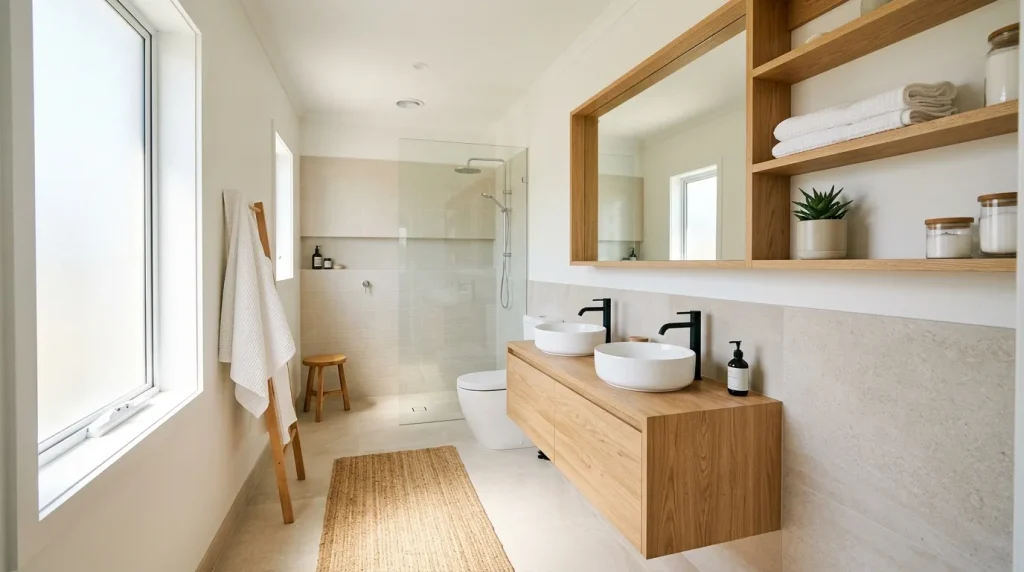
Light wood elements bring warmth and softness into a bathroom without disrupting its clean, minimal feel. The natural grain adds subtle texture, making the space feel more inviting and less sterile. I’ve seen this work well in many homes where even small touches like a wooden stool or shelf can transform the overall mood. The key is to keep the tones light and consistent so everything feels cohesive. This helps maintain a calm, airy environment that aligns beautifully with modern minimal aesthetics.
What makes this approach effective is its versatility across different layouts and sizes. Light wood pairs effortlessly with neutral tiles, matte finishes, and soft lighting, creating a balanced and harmonious look. In my experience, using wood sparingly keeps the design from feeling heavy or cluttered. That’s why many designers recommend focusing on a few key pieces rather than overusing the material. The result is a bathroom that feels warm, natural, and thoughtfully styled without losing its simplicity.
12.Neutral Textured Towels
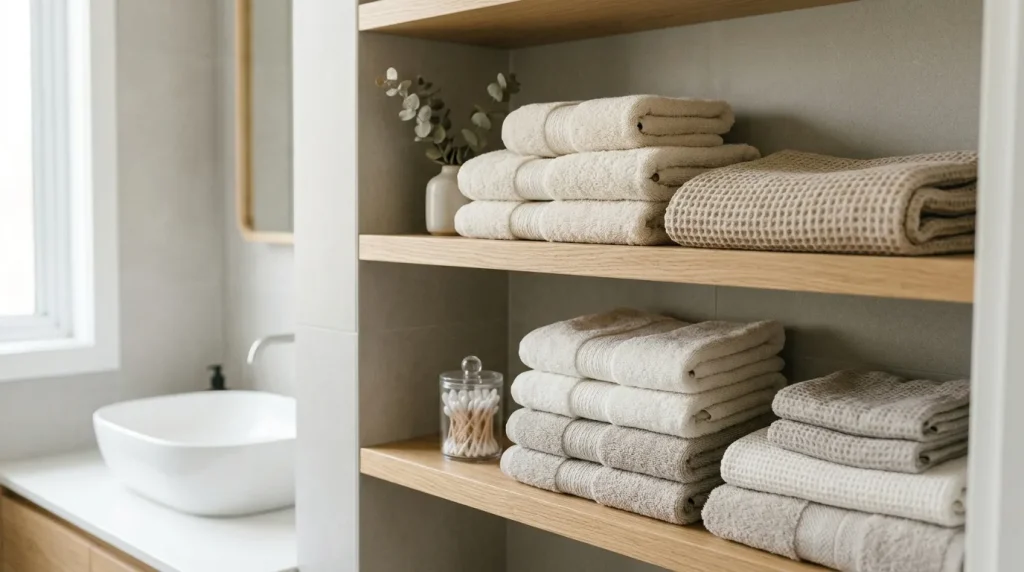
Neutral textured towels may seem like a small detail, but they play a big role in shaping the overall feel of a bathroom. Soft fabrics in shades like beige, cream, or light gray add depth without introducing harsh contrast. I’ve noticed that when towels match the overall palette, the space feels more cohesive and intentionally styled. The texture itself creates visual interest, making the bathroom feel warmer and more inviting without adding extra decorative elements.
This idea is one of the simplest ways to refresh a space without major changes. Swapping out bright or mismatched towels for soft, neutral ones can instantly elevate the look. In my experience, choosing high-quality fabrics also improves daily comfort, making the space feel more luxurious. That’s why many designers treat textiles as an important finishing touch rather than an afterthought. The result is a bathroom that feels calm, cohesive, and effortlessly put together with minimal effort.
13.Sliding Panel Doors
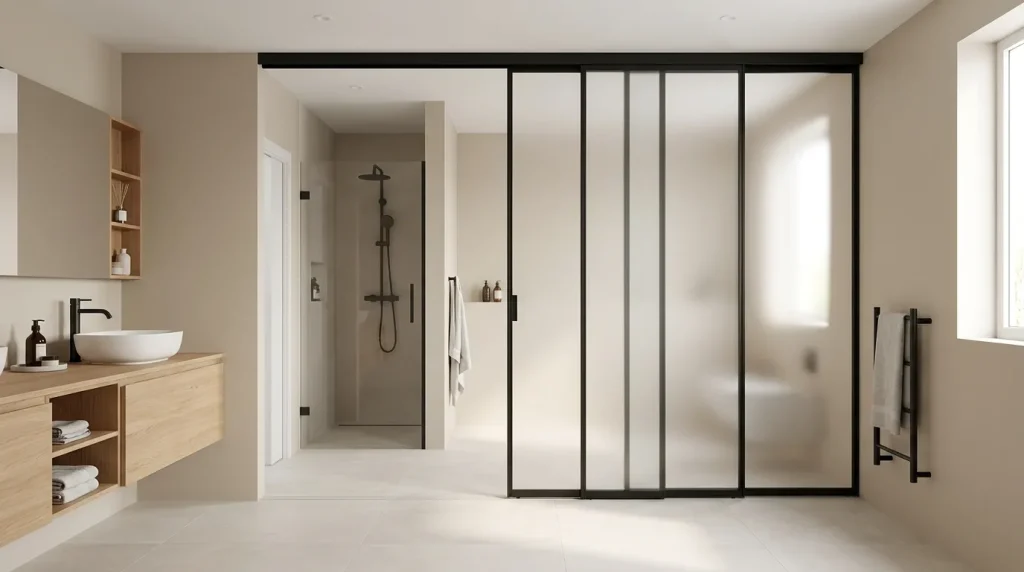
Sliding panel doors are a smart way to maximize space while keeping the bathroom visually clean and modern. Unlike traditional swing doors, they glide smoothly without taking up extra room, which is especially useful in smaller layouts. I’ve noticed that this small structural change can make tight spaces feel more open and functional. The slim profiles and minimal framing keep the look sleek, allowing the rest of the design elements to stand out without interruption or visual clutter.
What makes this idea practical is how seamlessly it fits into contemporary interiors. Frosted or semi-transparent panels add privacy while still allowing light to pass through, maintaining brightness in the space. In my experience, choosing simple frames and neutral tones keeps everything cohesive and balanced. That’s why many designers prefer sliding solutions when aiming for both efficiency and aesthetics. The result is a bathroom that feels modern, spacious, and thoughtfully designed without unnecessary bulk.
14.Concrete Sink Finish
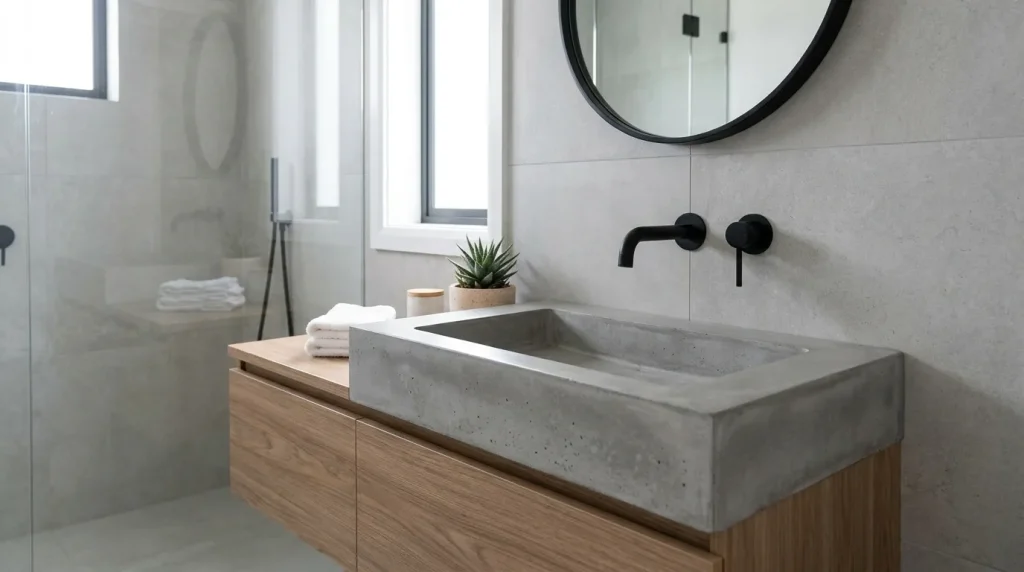
A concrete sink finish brings a unique balance of strength and simplicity into a bathroom design. Its smooth yet slightly textured surface adds character without overwhelming the space. I’ve seen this work well in minimalist settings where every element needs to feel intentional. The muted gray tones blend effortlessly with neutral palettes, creating a grounded and modern aesthetic. It becomes a quiet focal point that draws attention through texture rather than bold color or excessive detail.
This idea is surprisingly versatile and practical for everyday use. Concrete sinks are durable and resistant to wear, making them a long-lasting choice for busy households. In my experience, pairing this finish with warm wood and soft lighting prevents the space from feeling too cold or industrial. That’s why many designers use concrete as an accent rather than the dominant material. The result is a bathroom that feels contemporary, balanced, and visually interesting while still maintaining a calm atmosphere.
15.Low Profile Bathtub
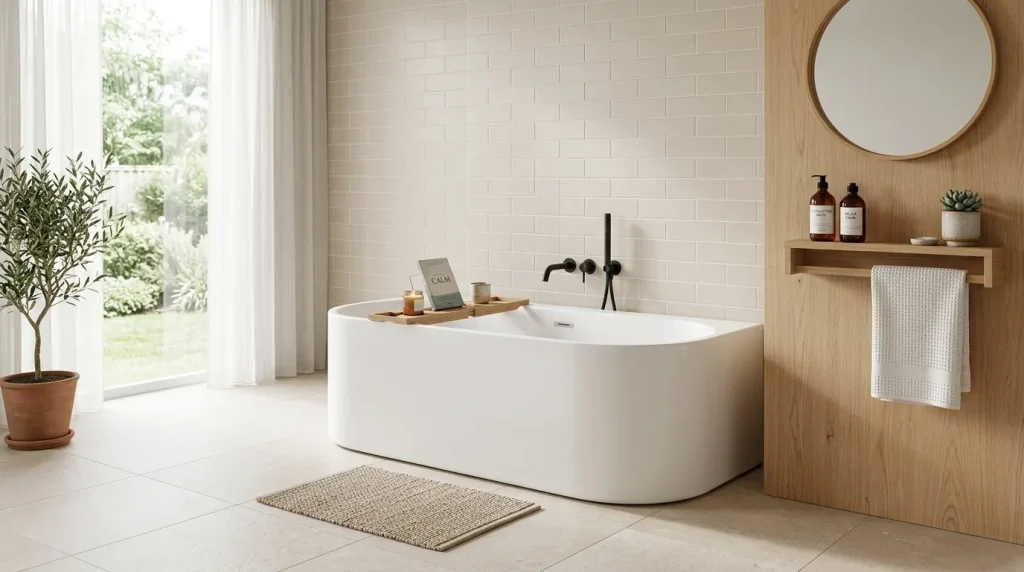
A low profile bathtub adds a sense of calm and simplicity by keeping the visual weight of the space minimal. Instead of bulky, high-sided tubs, this design sits closer to the ground, creating a more open and relaxed feel. I’ve noticed that this subtle difference can make the entire bathroom appear larger and more balanced. The clean lines and smooth surfaces align perfectly with minimalist principles, making the space feel both modern and inviting without unnecessary visual distractions.
What makes this idea appealing is how it blends comfort with aesthetics. The lower height creates a spa-like experience that feels approachable and easy to use. In my experience, placing the tub near natural light enhances its calming effect, turning it into a quiet retreat within the home. That’s why many designers recommend keeping surrounding decor minimal to let the tub stand out naturally. The result is a bathroom that feels serene, open, and effortlessly luxurious.
16.Soft Linen Curtains
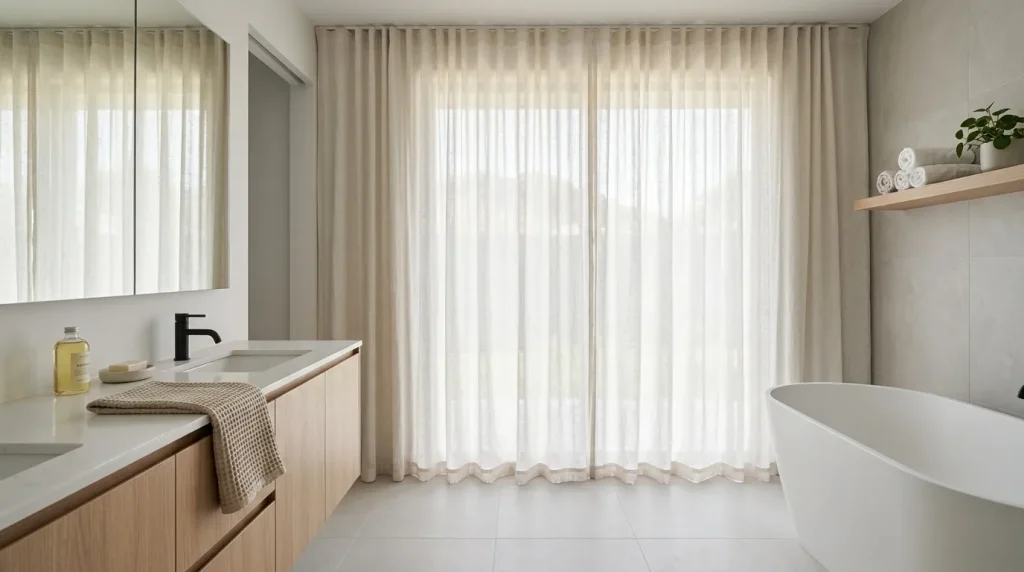
Soft linen curtains bring a gentle, calming softness that transforms the way light enters the bathroom. Instead of harsh sunlight or heavy blinds, linen filters light into a warm, diffused glow that feels peaceful and inviting. I’ve noticed that this subtle change can make morning routines feel more relaxed and less rushed. The lightweight fabric adds texture without visual weight, keeping the space airy and uncluttered while still providing necessary privacy.
This idea works beautifully in both large and small bathrooms because it doesn’t overpower the design. Choosing neutral tones helps maintain a cohesive and balanced look throughout the space. In my experience, slightly sheer linen works best, allowing enough light to pass through while softening the overall brightness. That’s why many designers prefer natural fabrics over synthetic options in minimal spaces. The result is a bathroom that feels light, serene, and effortlessly elegant every day.
17.Wall Niche Storage
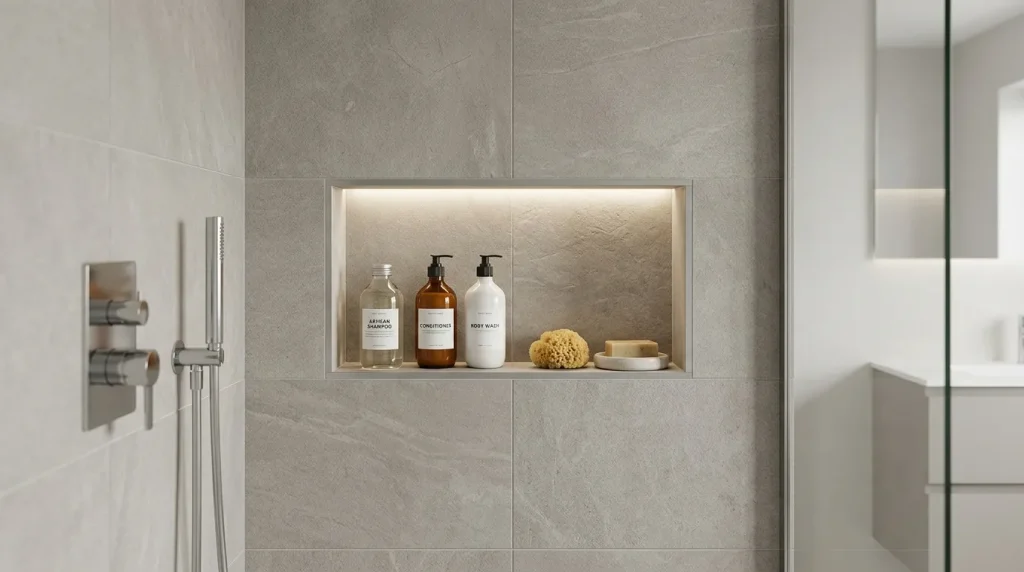
Wall niche storage is a smart and elegant solution for keeping everyday essentials organized without adding extra fixtures. Built directly into the wall, it creates a seamless look that blends perfectly with the surrounding tiles. I’ve seen this work especially well in smaller bathrooms where every inch matters. By eliminating hanging racks or corner shelves, the space feels more open and visually clean, which supports a calm and minimal atmosphere.
What makes this idea highly practical is its combination of functionality and design. Everything you need stays within reach, yet nothing disrupts the clean lines of the space. In my experience, aligning the niche with tile patterns creates a more polished and intentional look. That’s why many designers incorporate niches during renovations rather than relying on external storage solutions. The result is a bathroom that feels streamlined, organized, and thoughtfully designed down to the smallest detail.
18.Monochrome Decor Balance
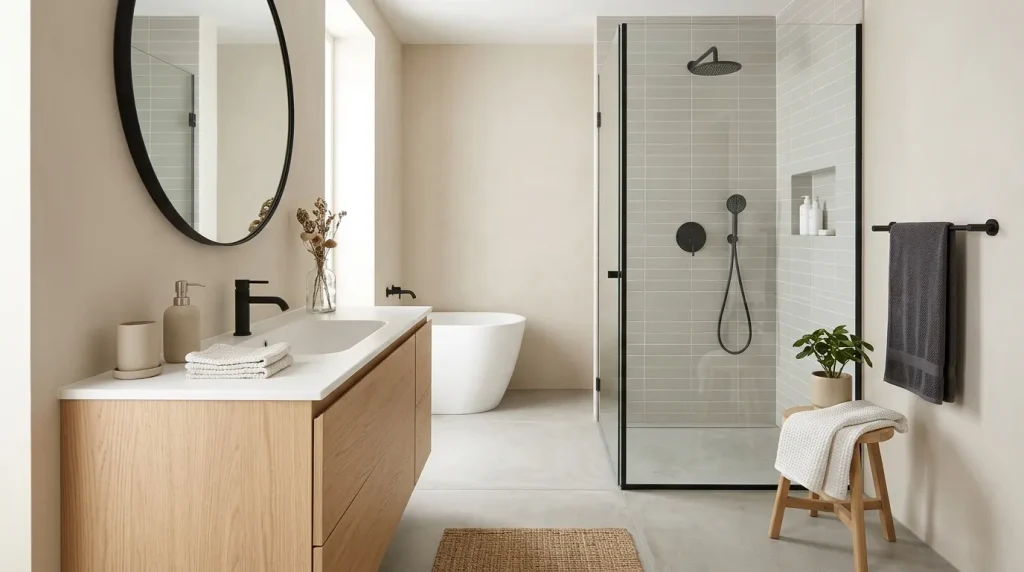
A monochrome decor balance creates a sense of harmony that instantly makes the bathroom feel calm and organized. By limiting the color palette to a few closely related tones, the space feels more cohesive and visually quiet. I’ve noticed that this approach works especially well in minimal interiors where too many colors can feel overwhelming. Instead of relying on bold contrasts, subtle variations in tone and texture add depth without disrupting the overall flow.
This idea is both practical and easy to maintain over time. Matching accessories, textiles, and finishes within the same color family keeps everything looking intentional and polished. In my experience, introducing slight contrast through materials like wood or matte metal prevents the space from feeling flat. That’s why many designers focus on texture rather than color when working with monochrome schemes. The result is a bathroom that feels balanced, modern, and effortlessly refined.
A monochrome decor balance creates a sense of harmony that instantly makes the bathroom feel calm and organized. By limiting the color palette to a few closely related tones, the space feels more cohesive and visually quiet. I’ve noticed that this approach works especially well in minimal interiors where too many colors can feel overwhelming. If you enjoy this kind of clean, coordinated look, you might also like exploring Kitchen color palettes: Easy 22 stress-free combinations for a calm modern kitchen makeover for creating the same peaceful flow in your kitchen space. Instead of relying on bold contrasts, subtle variations in tone and texture add depth without disrupting the overall flow.
This idea is both practical and easy to maintain over time. Matching accessories, textiles, and finishes within the same color family keeps everything looking intentional and polished. In my experience, introducing slight contrast through materials like wood or matte metal prevents the space from feeling flat. That’s why many designers focus on texture rather than color when working with monochrome schemes. The result is a bathroom that feels balanced, modern, and effortlessly refined.
19.Minimal Decor Accents
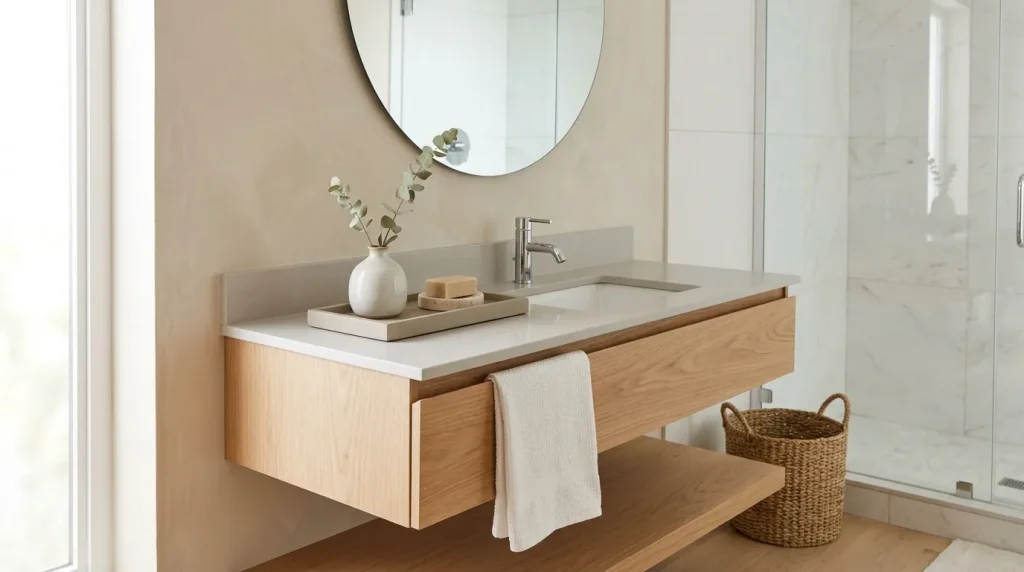
Minimal decor accents help define the space without overwhelming it, allowing every item to feel purposeful and balanced. Instead of filling surfaces with multiple objects, a few carefully chosen pieces create a stronger visual impact. I’ve noticed that when decor is limited, the bathroom feels more open and calming. This approach aligns perfectly with Japandi-style bathroom design, where simplicity, intention, and quiet elegance are key. Each element stands out on its own, contributing to a cohesive and peaceful environment.
What makes this idea effective is its flexibility and ease of maintenance. You can switch out small accents like trays, vases, or natural elements without disrupting the overall design. In my experience, choosing items with soft tones and clean shapes keeps everything consistent and visually pleasing. That’s why many designers recommend editing decor regularly rather than adding more. The result is a bathroom that feels curated, uncluttered, and effortlessly stylish without requiring constant updates.
20.Natural Stone Accessories
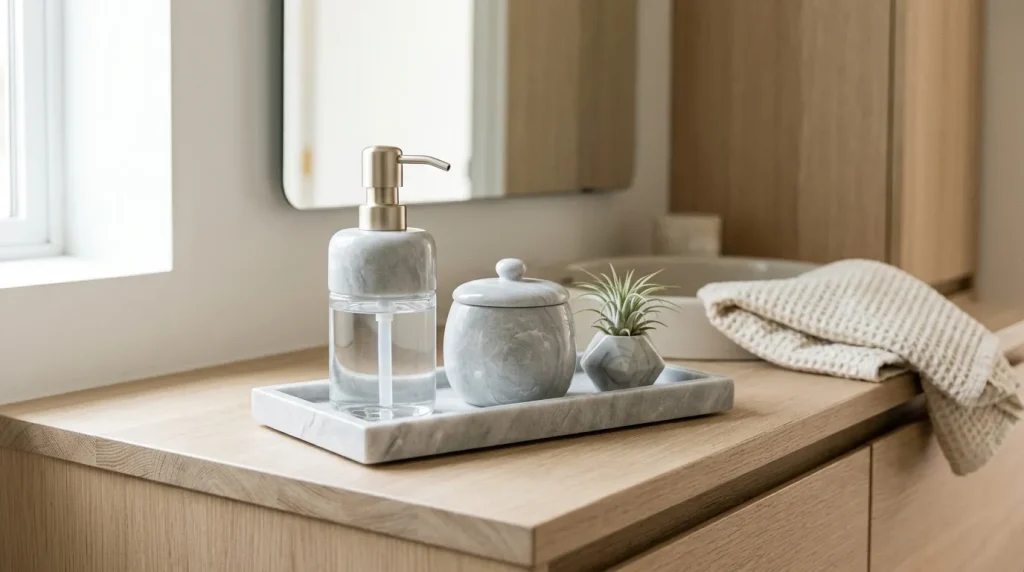
Natural stone accessories introduce a refined touch that elevates the bathroom without adding unnecessary complexity. Small elements like a marble tray or soap dispenser can make a noticeable difference by adding texture and weight to the design. I’ve seen this work well in many homes where even a few stone pieces create a more polished and cohesive look. The organic patterns bring quiet visual interest while maintaining the overall calm and minimal aesthetic.
This idea is both practical and long-lasting, making it a smart addition to any modern bathroom. Stone accessories are durable and easy to maintain, which makes them ideal for everyday use. In my experience, pairing them with soft lighting enhances their natural patterns, creating a subtle sense of luxury. That’s why many designers use stone as a finishing detail rather than a dominant feature. The result is a bathroom that feels elegant, grounded, and thoughtfully styled.
21.Recessed Ceiling Lights
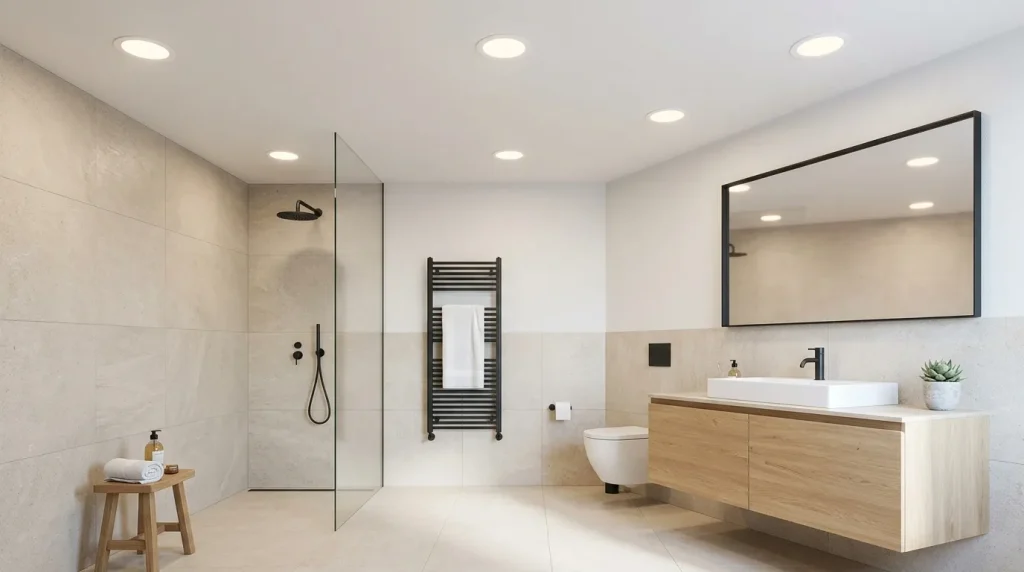
Recessed ceiling lights create a clean and seamless lighting solution that keeps the bathroom feeling open and uncluttered. Instead of bulky fixtures hanging down, these lights sit flush with the ceiling, allowing the design to remain minimal and visually calm. I’ve noticed that evenly spaced lighting helps eliminate harsh shadows, making daily routines like grooming much easier and more comfortable. The soft, diffused illumination enhances every surface without drawing attention to the light source itself.
This idea is highly practical and works well in almost any bathroom layout. Combining recessed lights with other softer lighting sources creates a layered effect that feels both functional and relaxing. In my experience, warm-toned bulbs make a big difference in maintaining a cozy and inviting atmosphere. That’s why many designers rely on recessed lighting as a foundation for modern bathrooms. The result is a space that feels bright, balanced, and effortlessly polished without adding visual clutter.
22.Seamless Floor Tiles
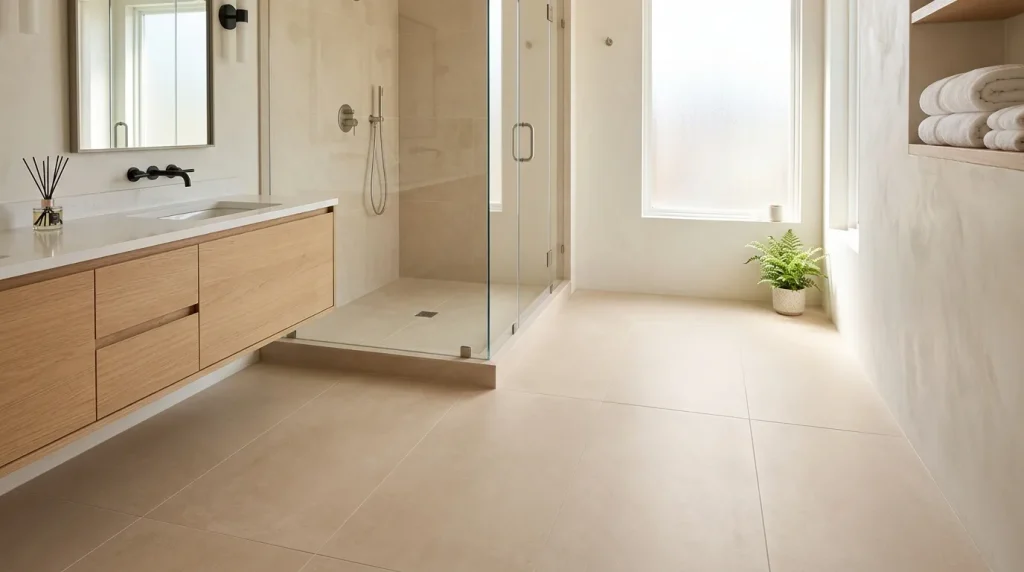
Seamless floor tiles instantly make a bathroom feel more expansive and refined by removing visual breaks. Large-format tiles with minimal grout lines create a smooth surface that guides the eye effortlessly across the room. I’ve seen this work especially well in smaller bathrooms where reducing visual interruptions can make a noticeable difference. The clean continuity supports a calm and organized look, allowing other design elements to stand out without competing for attention.
What makes this idea practical is its long-term ease of maintenance and durability. Fewer grout lines mean less cleaning and a more hygienic surface over time. In my experience, choosing neutral tones for the flooring helps maintain flexibility with future design updates. That’s why many designers recommend seamless tiles as a foundation for modern interiors. The result is a bathroom that feels spacious, polished, and visually cohesive while remaining simple to maintain.
Conclusion:
Creating a peaceful bathroom doesn’t require a full renovation—it starts with small, intentional changes that bring balance and simplicity into your space. These ideas show how japandi bathroom design can turn even the most ordinary bathroom into a calm, clutter-free retreat. I’ve seen how simple upgrades like lighting, textures, and layout tweaks can completely shift the mood of a space.
Save this guide on Pinterest so you can come back to it anytime, try one or two ideas that fit your space, and share it with anyone looking to create a more relaxing home. Small steps can lead to a big transformation.
Elira Montclair
Elira writes about timeless home decor, kitchen styling, and practical interior ideas. Her work blends warm, inviting aesthetics with simple decorating tips that make everyday spaces feel beautiful and comfortable.