25 Dark Cottagecore Kitchen Ideas for a Warm Vintage Feel

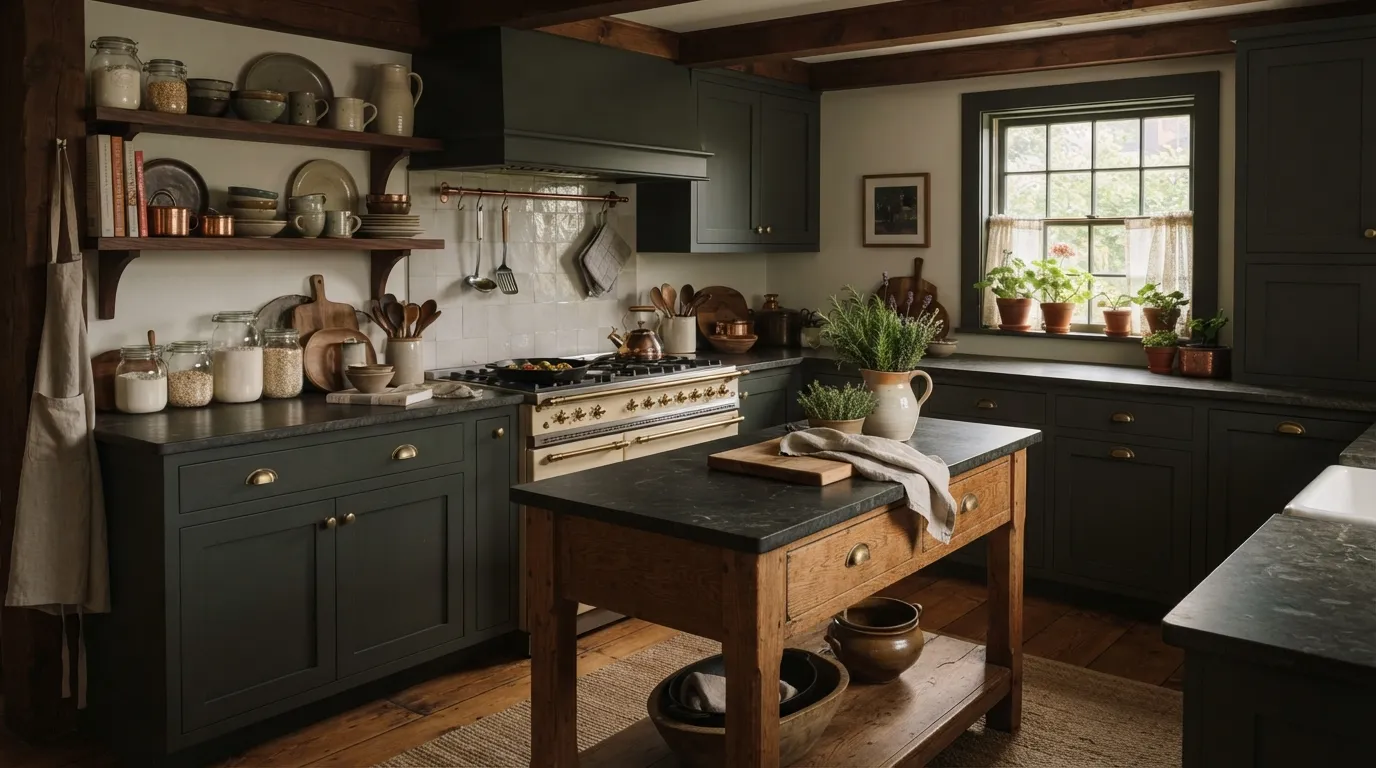
A Dark Cottagecore Kitchen blends moody color, old-fashioned details, and the comfort of a well-loved home. Think deep green cabinets, aged brass, worn wood, stone counters, floral pottery, and soft linen instead of a perfectly matched showroom look. The result feels warm without looking heavy.
You don’t need a large kitchen to get this style right. A darker wall, vintage cabinet hardware, open shelves, or one antique-looking piece can set the tone. These ideas show how to layer rustic textures and practical details so your kitchen feels collected, cozy, and full of character.
Deep Green Cabinetry
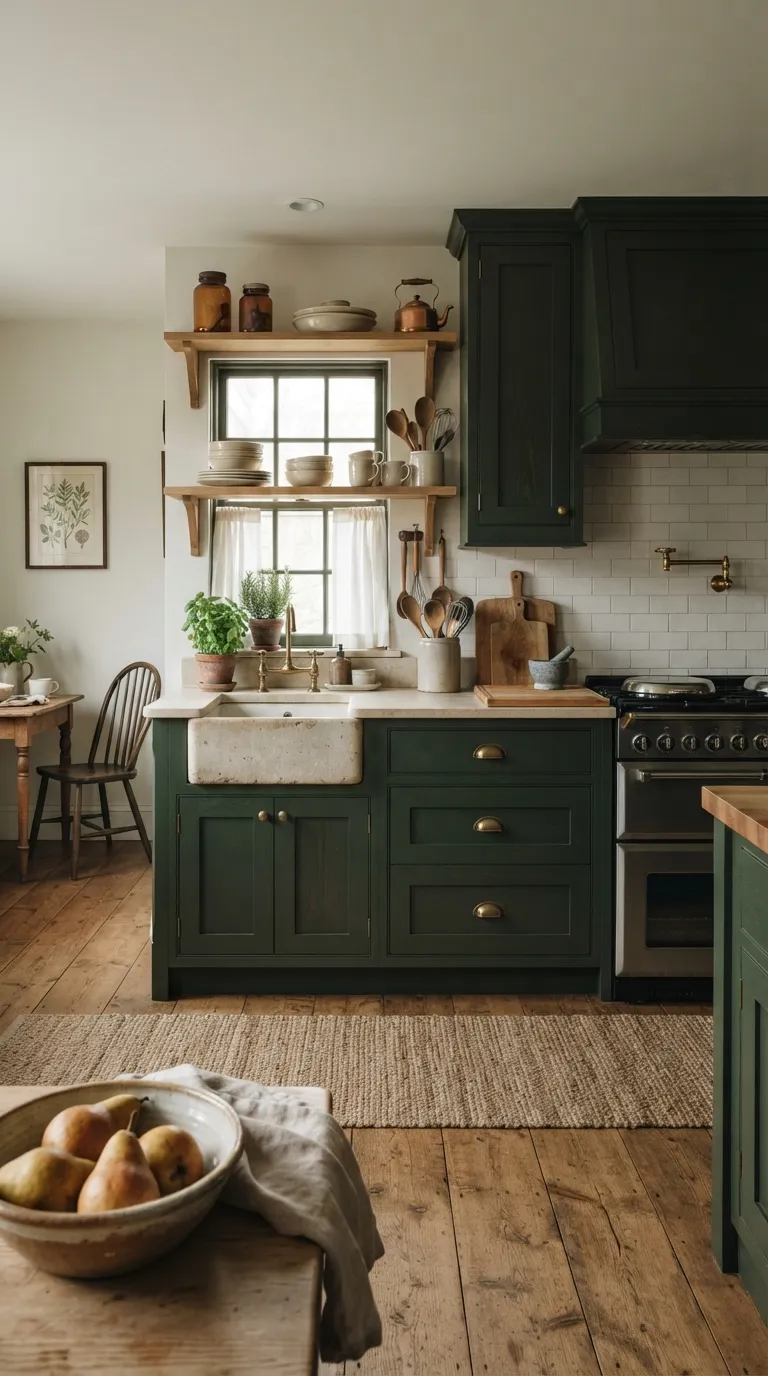
Deep green cabinets make a strong base for this style without making the room feel gloomy. Choose a muted shade with gray or earthy undertones, then pair it with warm wood and creamy surfaces to keep the room balanced. Simple shaker doors also fit the vintage cottage look naturally.
For a smaller kitchen, consider using the dark shade on the lower cabinets and keeping the upper walls lighter. A few brass pulls can add a warm glint without making the room feel too polished. This is one of the easiest ways to create a Dark Cottagecore Kitchen with a practical everyday layout.
Antique Brass Hardware
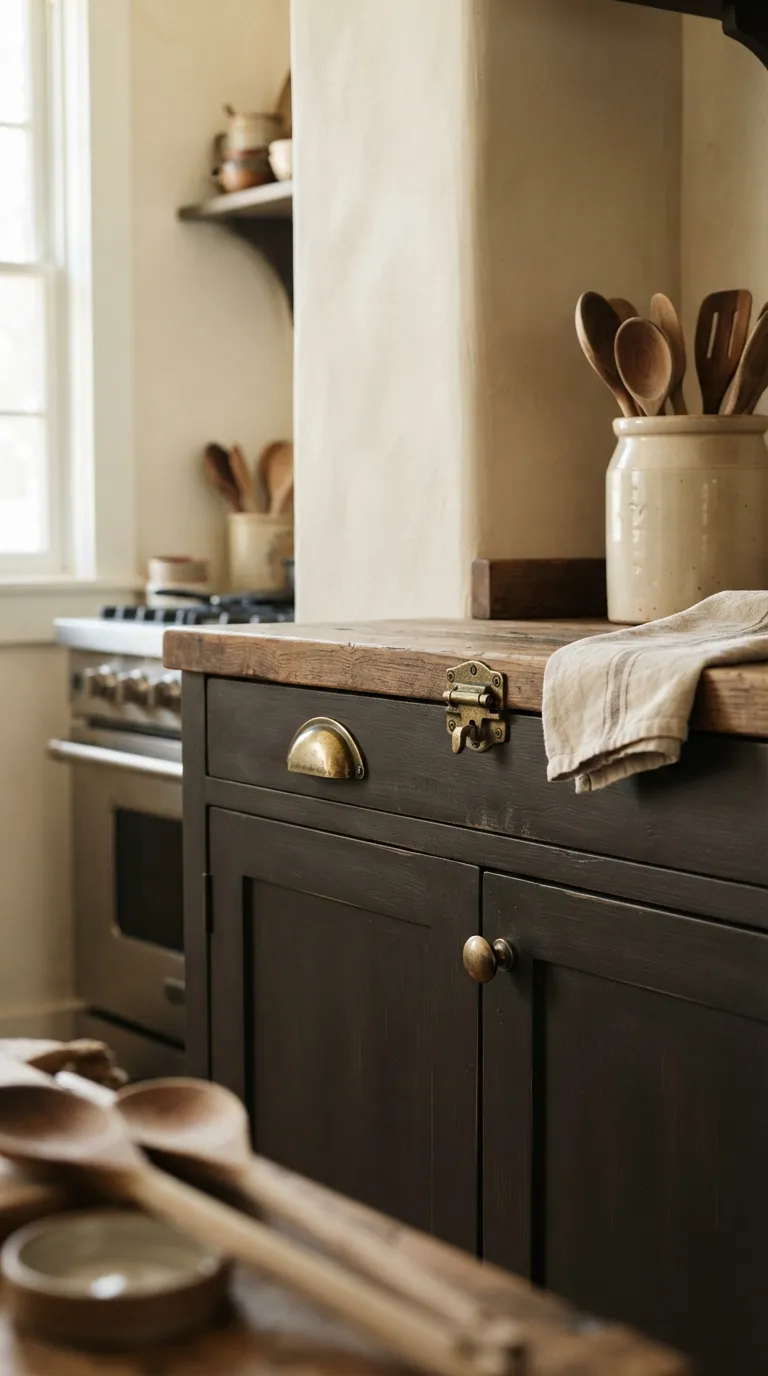
Antique brass hardware gives dark cabinets a softer, older feel. Look for cup pulls, simple knobs, and small latches with a brushed or aged finish rather than mirror-like metal. These small details can make new cabinetry feel less uniform.
Keep the hardware style consistent across the main cabinets for a calmer look. If your kitchen already has dark cupboards, replacing basic pulls can create a noticeable change without replacing the doors. Pair the brass with wood, stone, or cream ceramics for a warm vintage palette.
Warm Wood Island
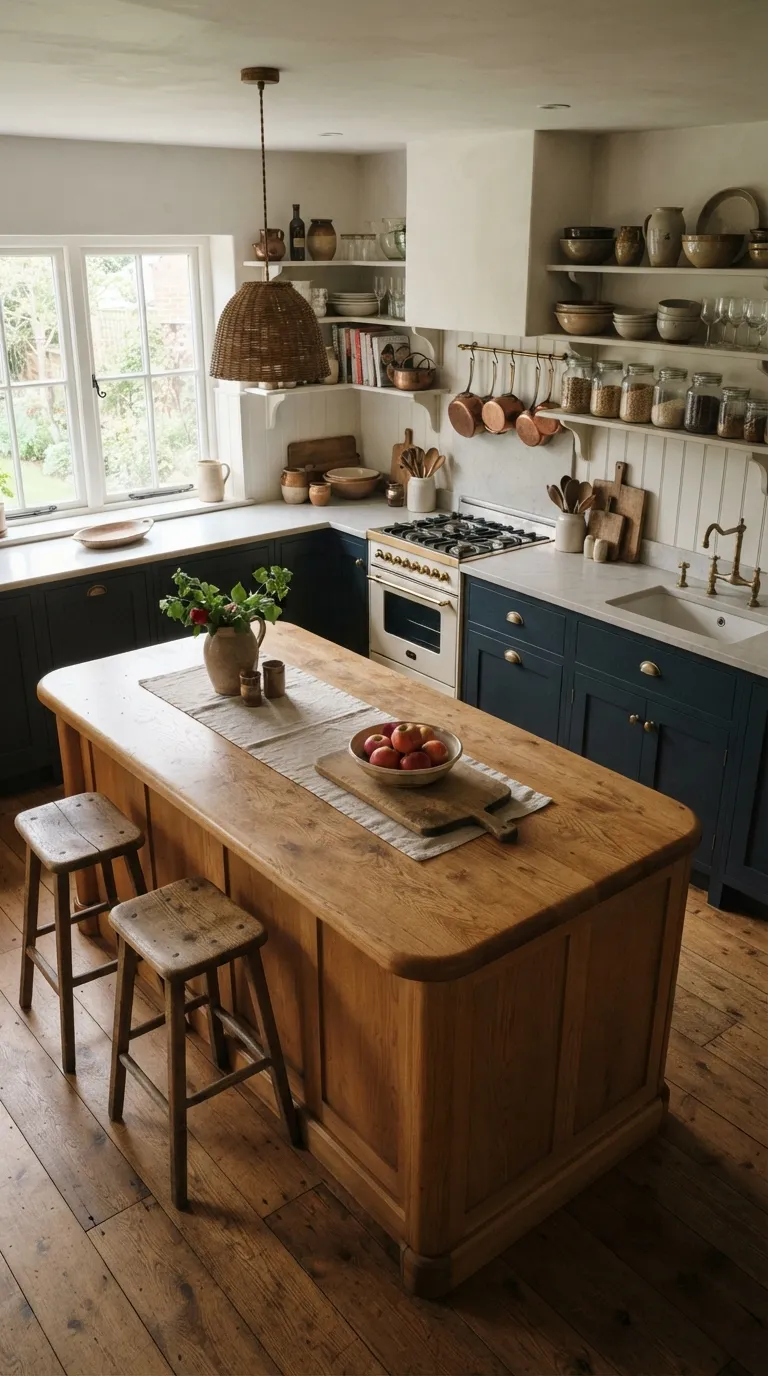
A warm wood island can keep a dark kitchen from feeling flat. Oak, walnut, or reclaimed timber brings natural variation that works beautifully beside deep cabinet colors. Choose a simple shape with visible grain instead of a highly polished finish.
If your kitchen is narrow, a slim island or movable worktable can give you the same cottage character. Picture a dark cabinet wall paired with a honey-toned wood surface and a few handmade bowls nearby. The contrast makes the room feel grounded while keeping the workspace useful.
Vintage Open Shelving
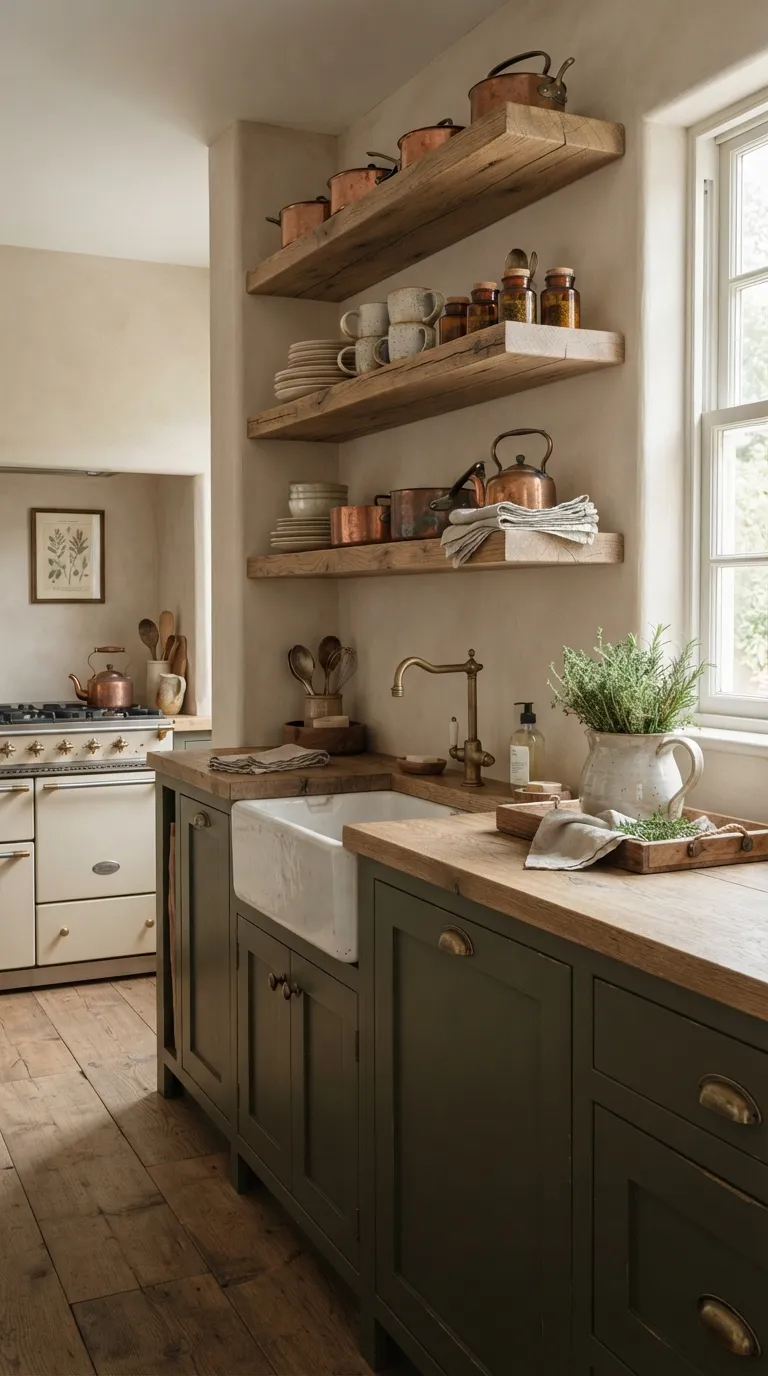
Open shelves give a dark kitchen room to breathe. Natural wood shelves also add warmth against deep paint colors while giving everyday dishes a decorative role. Choose pieces with different shapes and finishes so the arrangement feels collected rather than staged.
Keep the most-used items within easy reach. A stack of plates, a few mugs, and one ceramic pitcher can fill a shelf without creating clutter. Leave some empty wall space around the pieces so the display still feels calm.
Farmhouse Sink
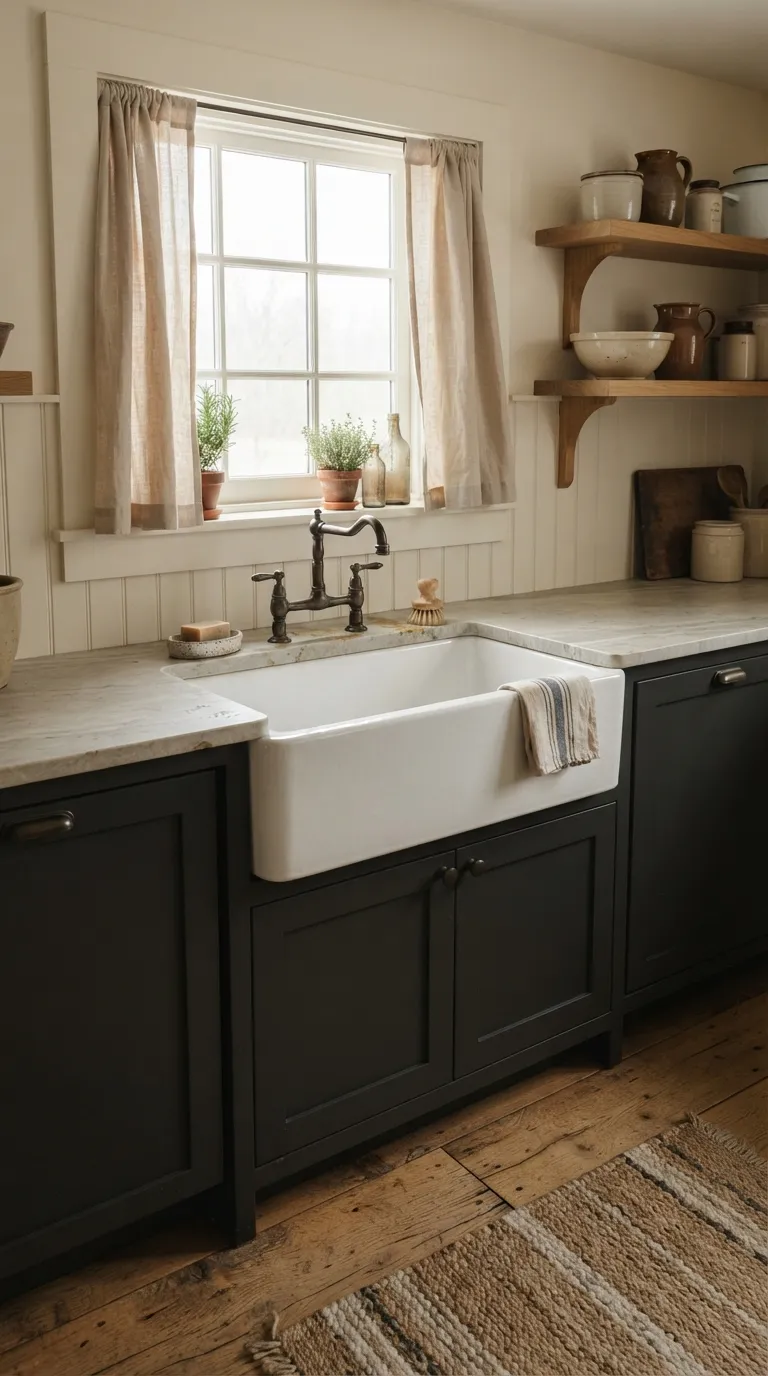
A farmhouse sink brings instant cottage character to a dark kitchen. White fireclay creates a clean break against charcoal, navy, or deep green cabinetry. Its broad front also gives the room a classic farmhouse detail without relying on extra decoration.
Pair the sink with an aged metal faucet for a softer vintage effect. A linen towel and simple ceramic soap dish can finish the area without making it fussy. For daily use, choose durable materials that can handle frequent washing and splashes.
Moody Stone Countertops
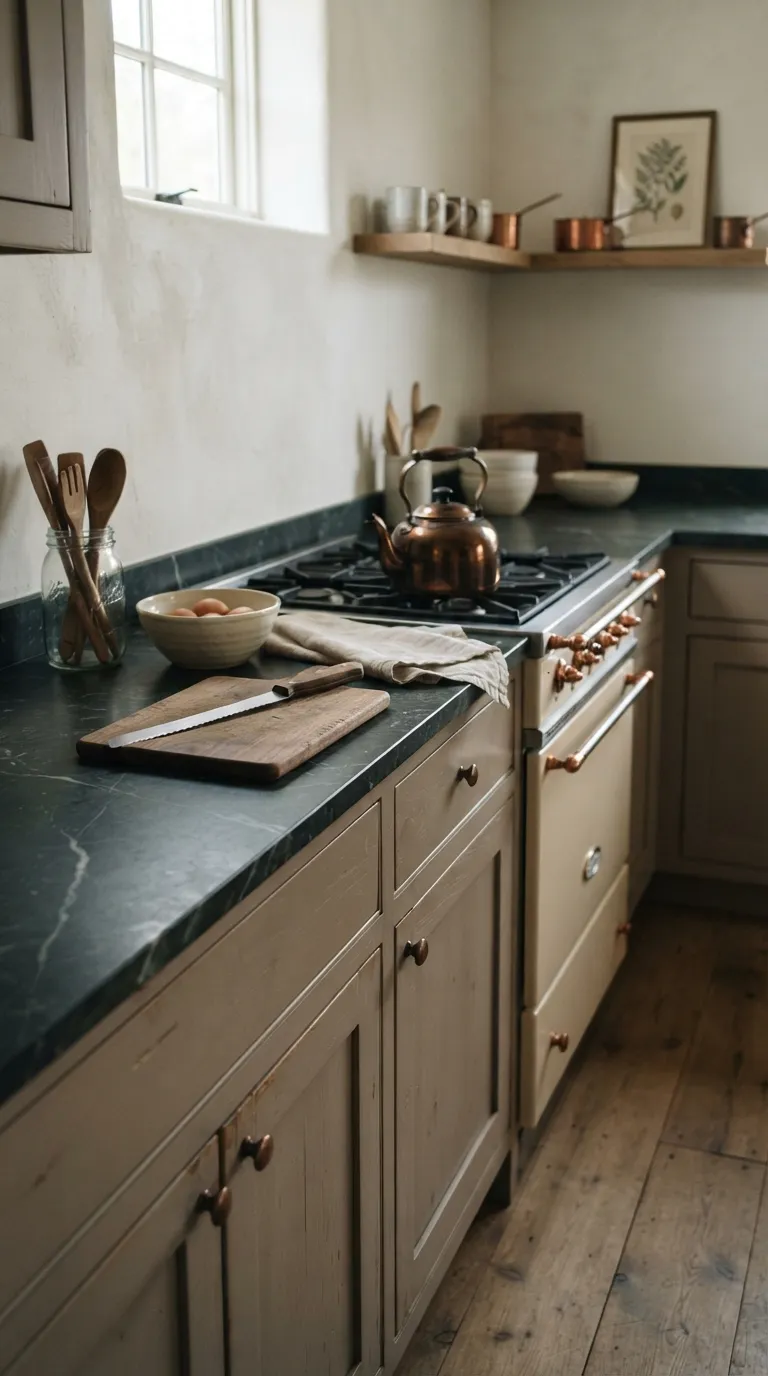
Dark stone countertops can make the room feel grounded and old-world without looking dated. Soapstone works especially well because its muted surface pairs naturally with deep cabinetry and warm wood. A honed finish keeps the look soft instead of overly glossy.
Balance the counter with lighter pottery or a pale backsplash. This prevents too many dark surfaces from crowding the room visually. A wooden cutting board or woven basket can also break up the stone with a warmer texture.
Aged Copper Accents
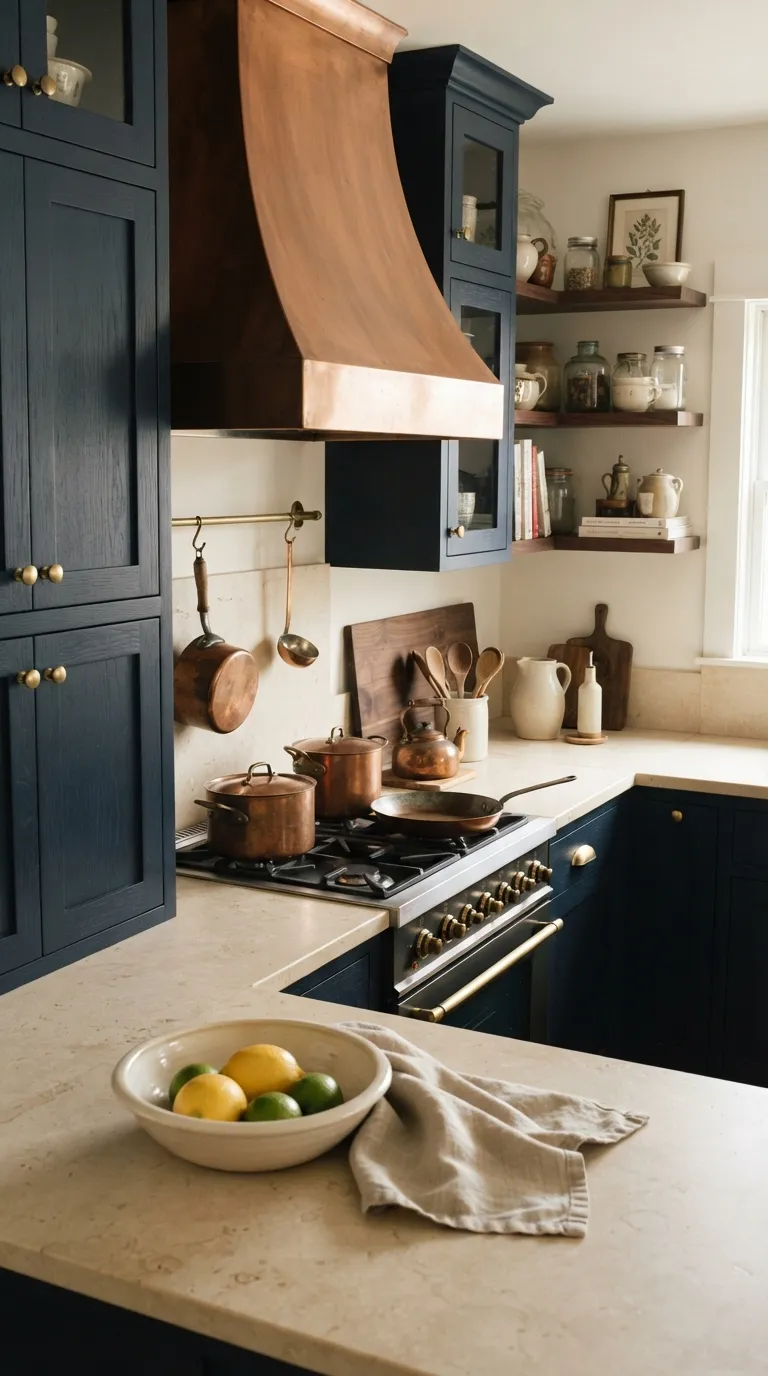
Copper adds a warm glow to deep kitchen colors. A few aged pans or a copper kettle can bring vintage character without filling every surface. Let the finish look naturally worn rather than perfectly polished.
Use copper where you want the eye to land. A hanging pan above the range or one large copper pot on an open shelf can be enough. Pair it with dark green, navy, or brown cabinetry for a rich cottage palette.
Floral Ceramic Displays

Floral ceramics soften the darker side of cottagecore. Look for botanical patterns in muted blue, brown, olive, cream, or faded red. Small imperfections make thrifted and vintage-inspired pieces feel more natural together.
You don’t need a full collection to create the effect. Display three or four floral dishes beside plain stoneware so the patterns have room to stand out. A floral pitcher can also become a simple focal point on an open shelf or counter.
Vintage Checkerboard Floor

A checkerboard floor gives a Dark Cottagecore Kitchen a strong vintage foundation. Choose softened shades such as charcoal and cream instead of stark black and white for a gentler look. Stone or stone-look tile can suit the rustic mood especially well.
Let the floor carry some visual weight and keep the upper surfaces simpler. A plain wood island, dark cabinets, and a few warm metal details can work beautifully above it. A runner near the sink adds softness while protecting a busy work area.
Plaster Walls
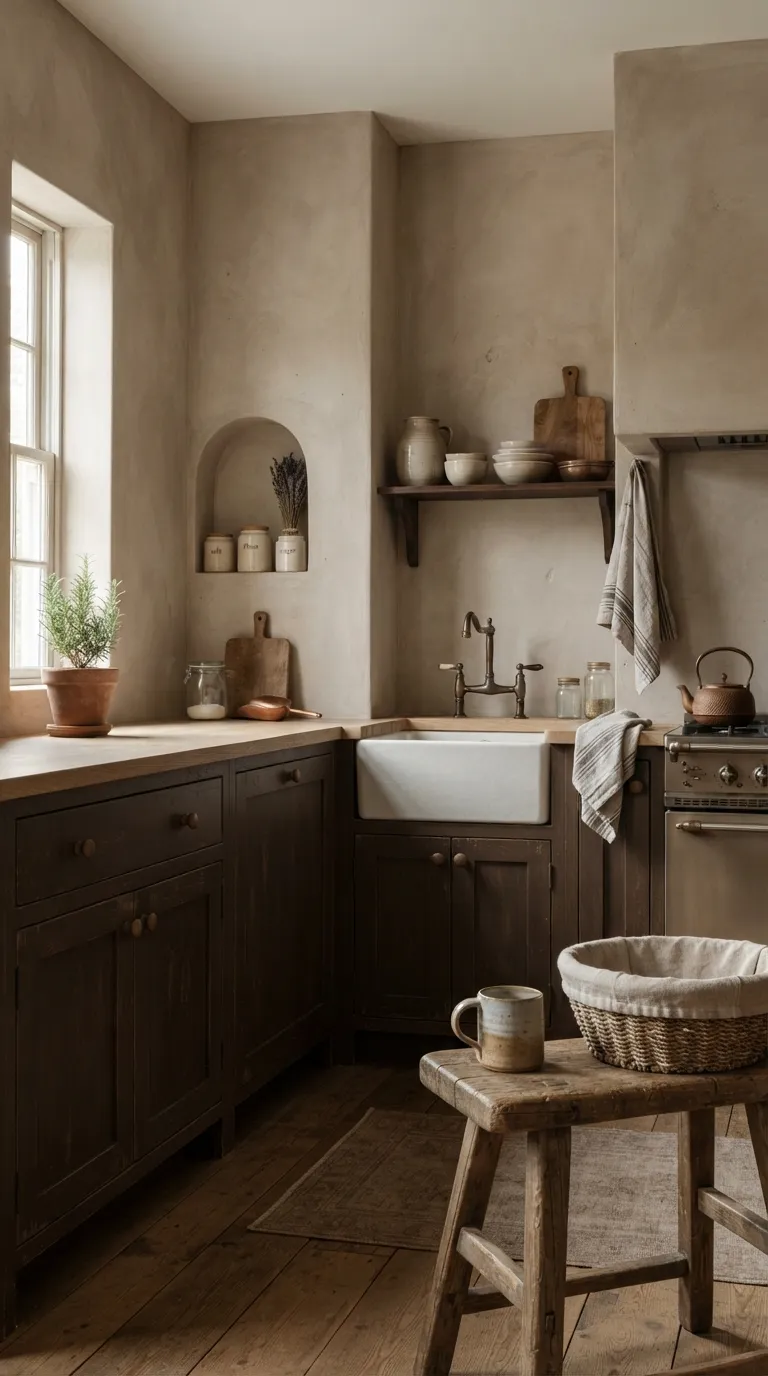
Textured plaster gives the walls a handmade quality that suits cottage kitchens. Warm taupe, mushroom, clay, and soft beige can balance deep cabinetry without making the room feel stark. The uneven surface also adds interest when the rest of the kitchen has simple lines.
Keep wall decor limited when the plaster already has texture. One wooden shelf, a ceramic plate, or a small botanical piece may be enough. This approach lets the wall become part of the room’s character rather than just a background.
Deep Brown Cabinetry
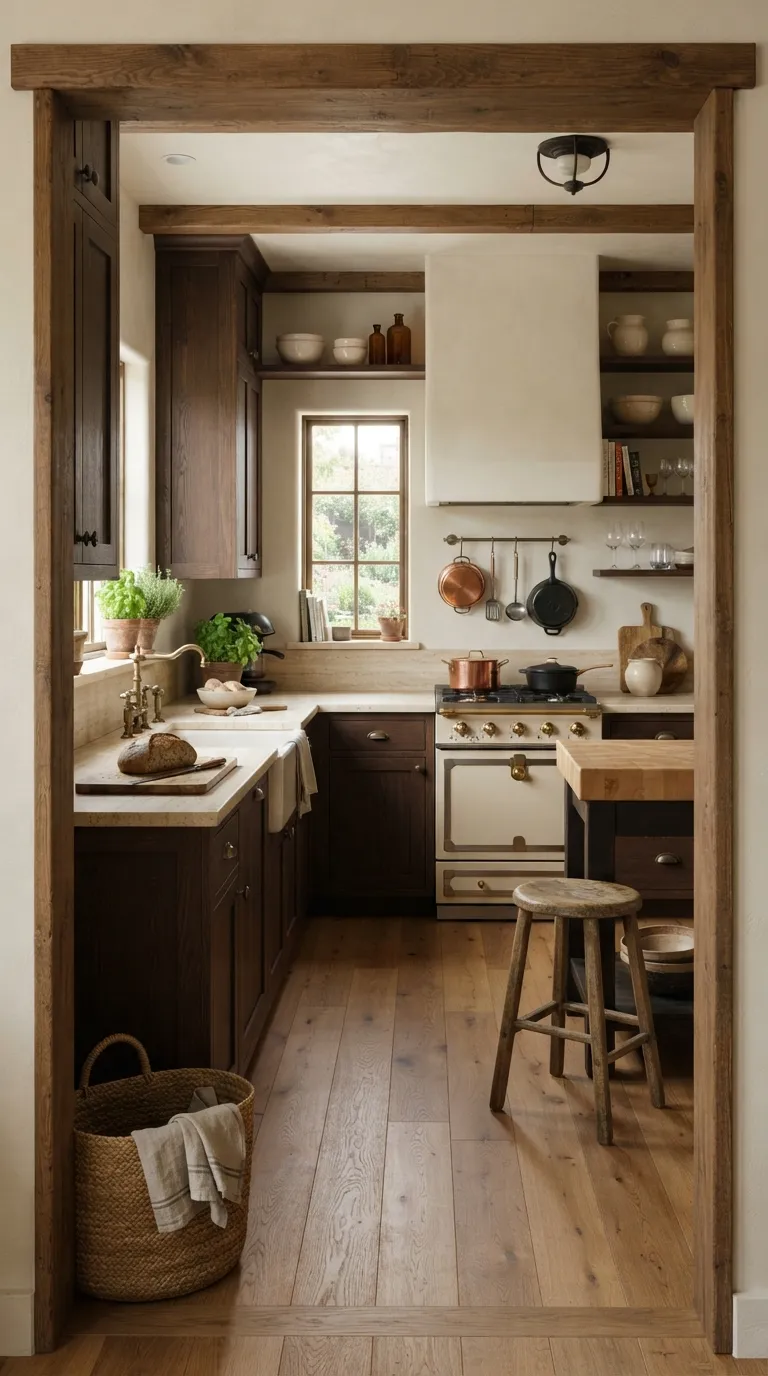
Deep brown cabinets bring the look of old timber furniture into the kitchen. Walnut, espresso, and chocolate tones work well when you want a darker room with plenty of warmth. Pair them with lighter stone or plaster so the space doesn’t become visually dense.
For a softer result, choose brown with warm undertones instead of a near-black finish. Simple cabinet fronts help the wood remain the main feature. Brass, iron, and natural linen can then add small layers of vintage character.
Soft Linen Curtains
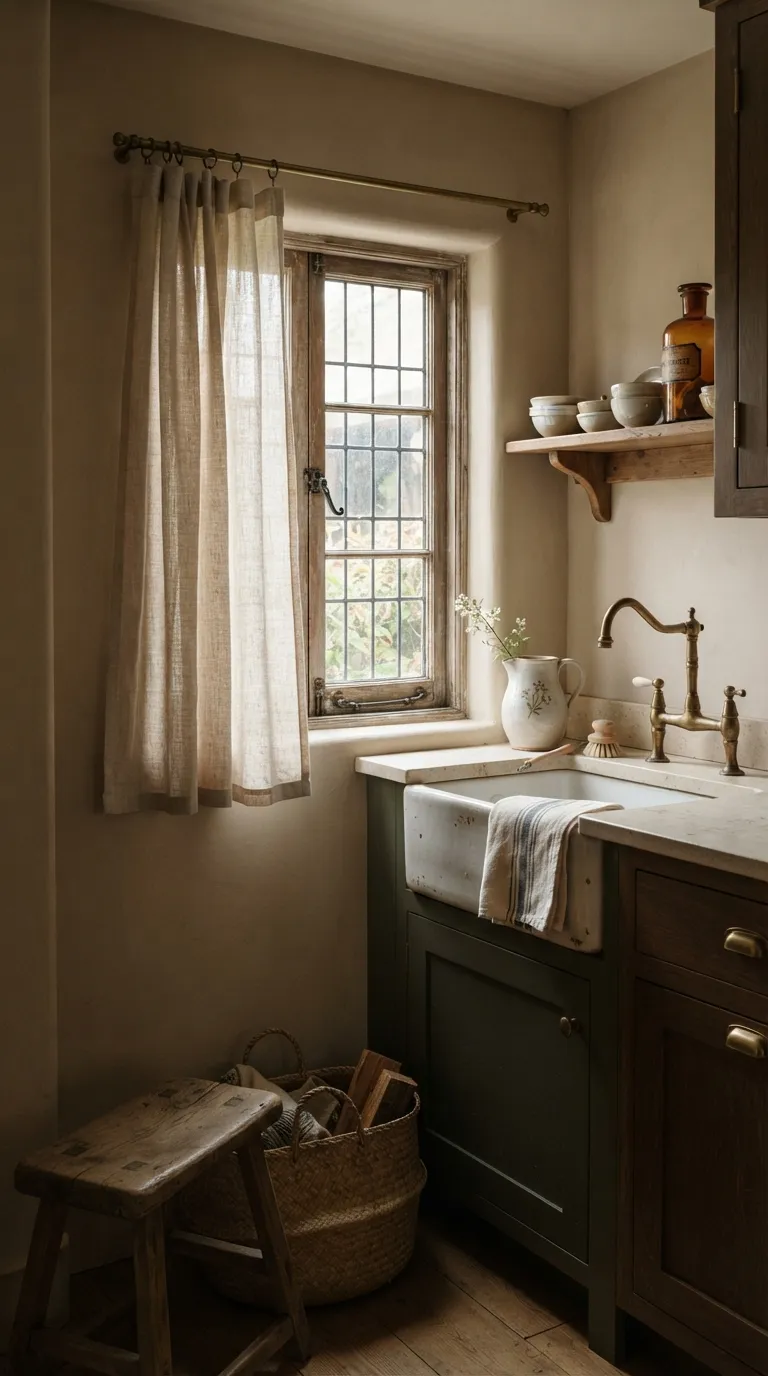
Linen curtains soften hard kitchen surfaces in a simple way. Choose oatmeal, flax, cream, or muted brown rather than bright white if you want a warmer cottage feel. The loose weave lets daylight through while adding a gentle layer around the window.
Keep the fabric slightly relaxed instead of tightly tailored. A simple rod and small gathered curtain can look more natural than elaborate window treatments. This detail works especially well beside dark cabinets and aged metal fixtures.
Freestanding Vintage Hutch
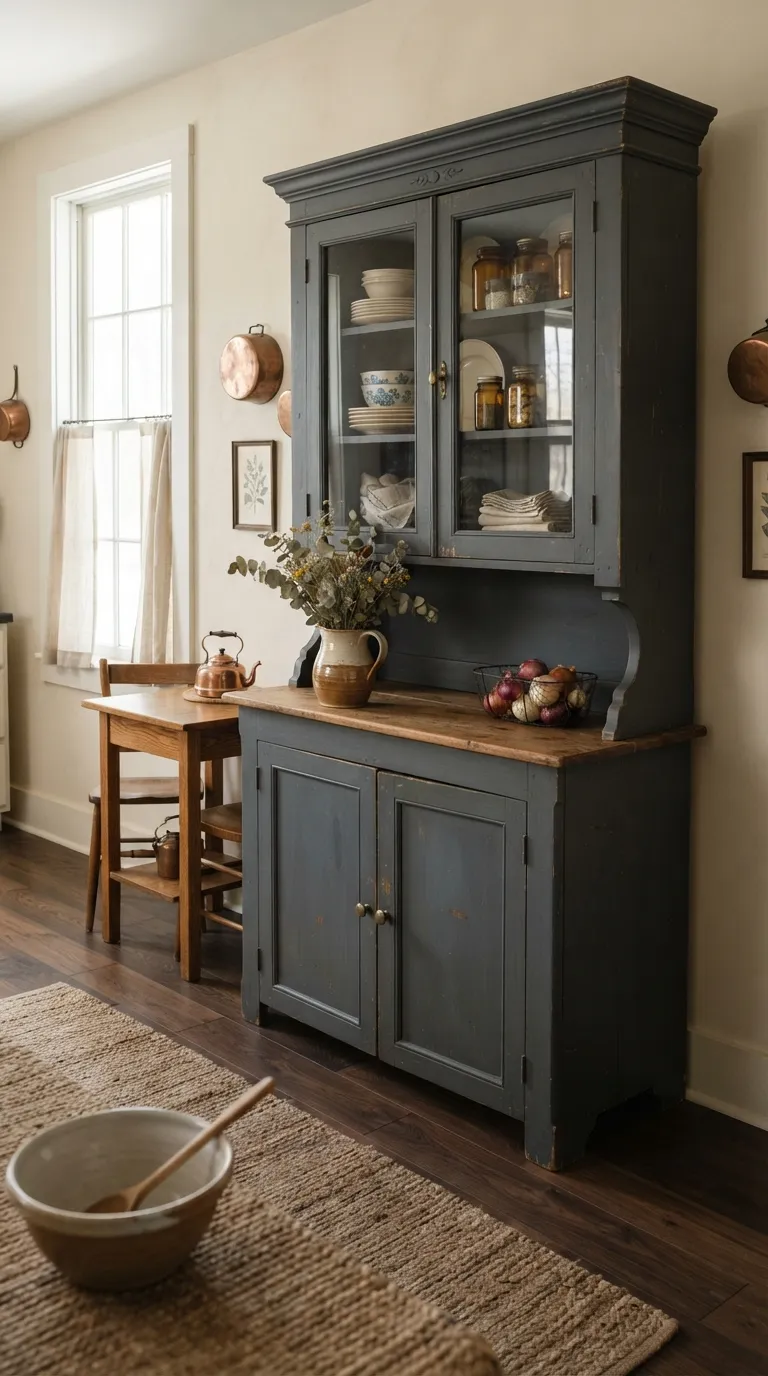
A vintage hutch can give your kitchen the feel of a room collected over time. Look for a painted wood piece with glass doors, simple trim, or gently worn edges. It can also provide useful storage for dishes and serving pieces.
Place the hutch where it has enough breathing room to stand out. Keep the shelves practical with everyday ceramics, glass jars, and linens. A few mismatched pieces will make the display feel personal without becoming cluttered.
Dark Floral Wallpaper

Dark floral wallpaper can give a small kitchen a cozy, old-fashioned backdrop. Choose botanical prints with softened colors instead of bright, high-contrast flowers. The darker background helps wood, brass, and cream ceramics stand out.
Use wallpaper on one wall if covering the entire room feels too heavy. A breakfast nook, pantry wall, or open-shelf backdrop can be a good place to try it. Keep nearby furniture simple so the pattern remains the main decorative feature.
Rustic Wood Ceiling
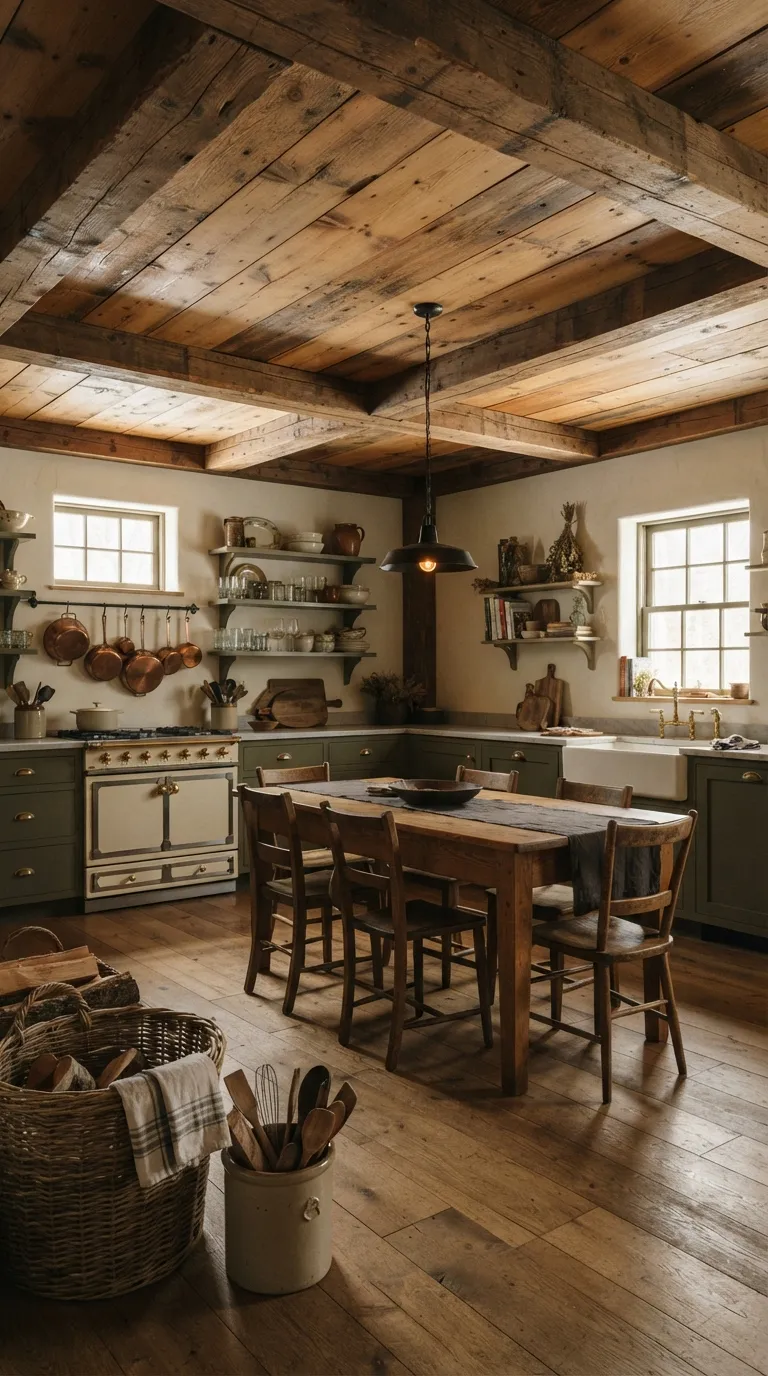
A wood ceiling adds warmth from above, which can be useful when the cabinets and walls are dark. Reclaimed boards bring visible grain and variation that suit the cottagecore look. Even a simple tongue-and-groove treatment can create a similar effect.
Balance the timber with lighter counters and soft fabrics. Too many deep wood tones can make a compact kitchen feel closed in. If the ceiling is already low, use pale wood or a lighter stain to keep the room visually open.
Vintage Apothecary Jars
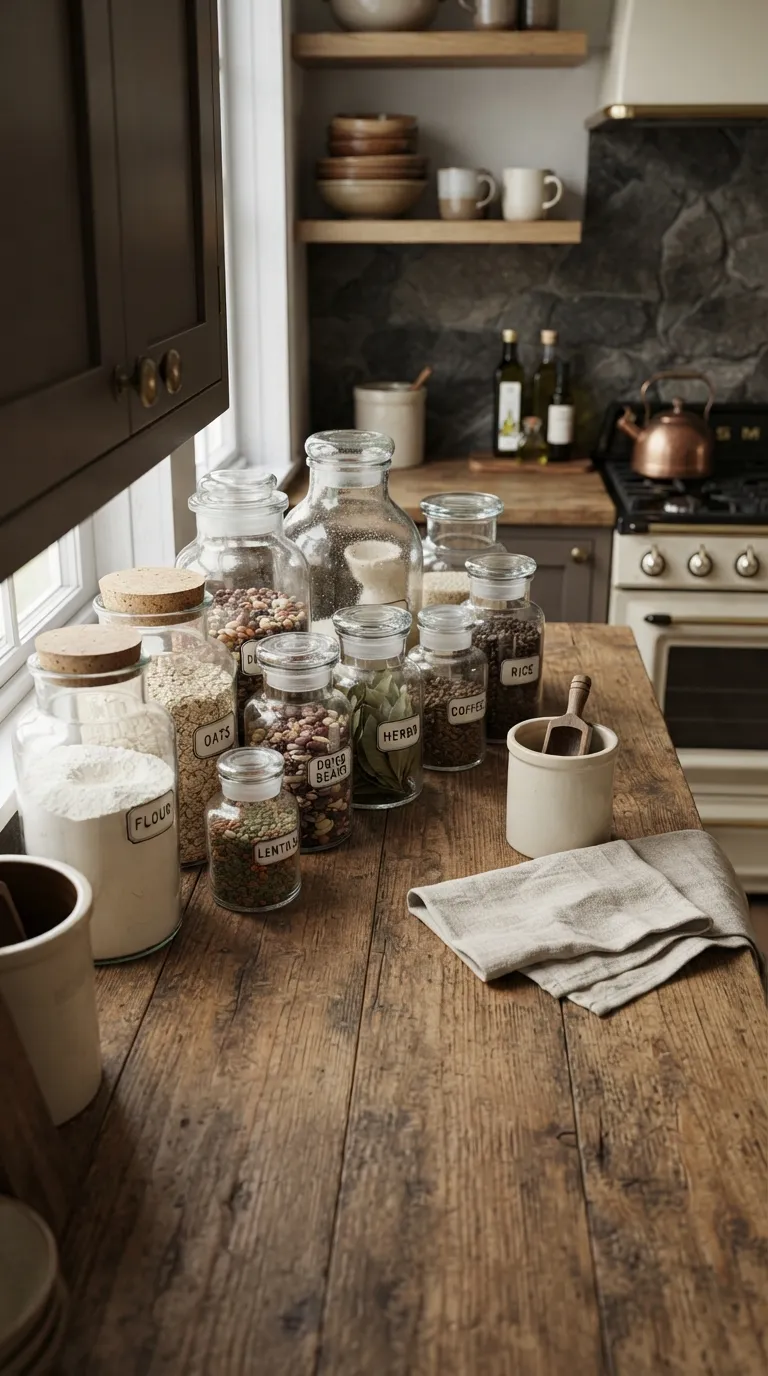
Vintage-style glass jars make everyday pantry storage look at home in a cottage kitchen. Amber glass works especially well with dark cabinetry because its warm tone keeps the display from feeling cold. Clear jars can add variety while keeping contents easy to see.
Group jars by height rather than lining them up perfectly. Add a wooden scoop or ceramic bowl nearby for a practical touch. Keep only a few jars visible if your counter space is limited.
Warm Terracotta Details
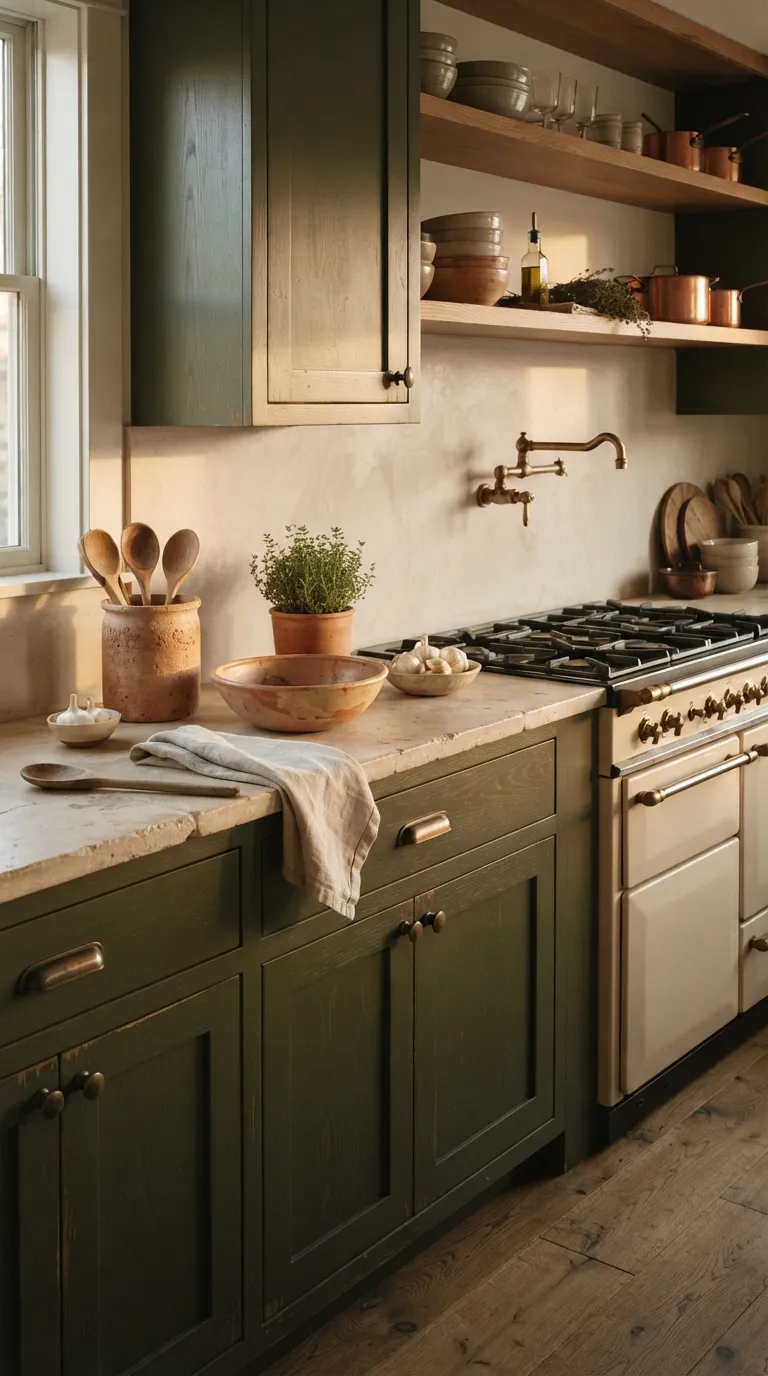
Terracotta brings an earthy note to dark kitchen colors. Its muted orange and clay tones look especially natural beside olive green, brown, cream, and aged brass. You can add the color through pottery instead of committing to painted surfaces.
Start with one or two pieces on the counter. A terracotta utensil holder or shallow bowl can add enough warmth without making the palette busy. Pair it with natural wood and linen for a relaxed cottage feel.
Vintage Pendant Lighting
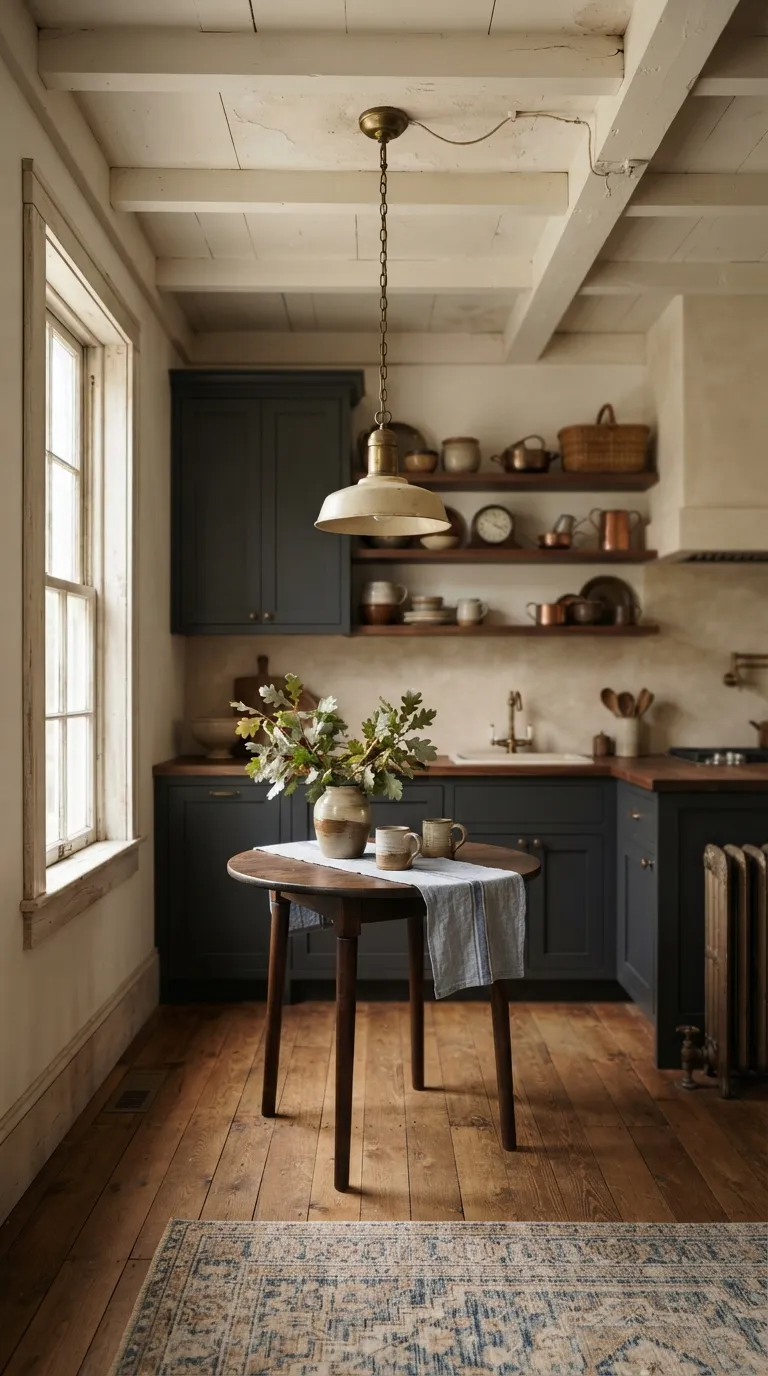
Lighting can change the mood of a dark kitchen more than another decorative object. A vintage pendant with an aged metal finish can make a breakfast nook or island feel more rooted in the cottage style. Choose a simple shade with a slightly worn surface.
Hang the fixture at a comfortable height above the work or dining area. Keep the shape fairly clean if your cabinets already have detailed trim. Warm bulbs can add a cozy evening glow while the fixture still looks natural during daylight.
Cottagecore Range Hood

A shaped range hood can become the architectural focal point of a dark cottage kitchen. A plaster finish keeps it softer than a large stainless-steel hood, while an arched profile adds an old-house feel. Warm ivory also breaks up a wall of deep cabinetry.
Keep the area around the hood fairly restrained. A small rail, wooden utensil, or ceramic crock can provide useful decoration without competing with the hood. The result feels substantial but still relaxed.
Woven Kitchen Baskets
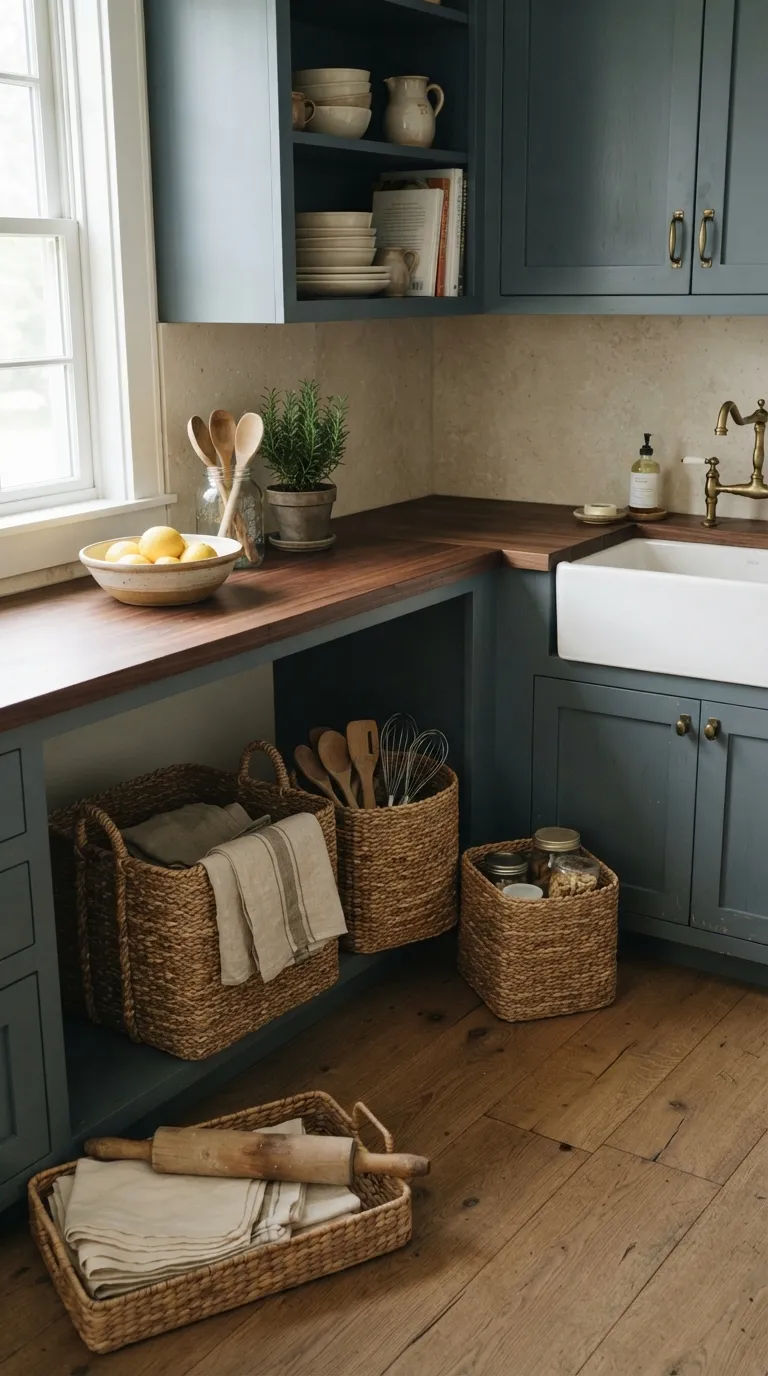
Woven baskets add texture without introducing another strong color. Seagrass, rattan, and natural rush work well with dark cabinetry because their warm fibers create a soft contrast. They also give you practical storage for linens, produce, or small kitchen supplies.
Use baskets where they won’t become obstacles. Open shelving, the bottom of a pantry, or the space beneath a worktable can all work well. Vary the shapes slightly, but keep the natural fiber tones within the same warm family.
Classic Butcher Block Counters
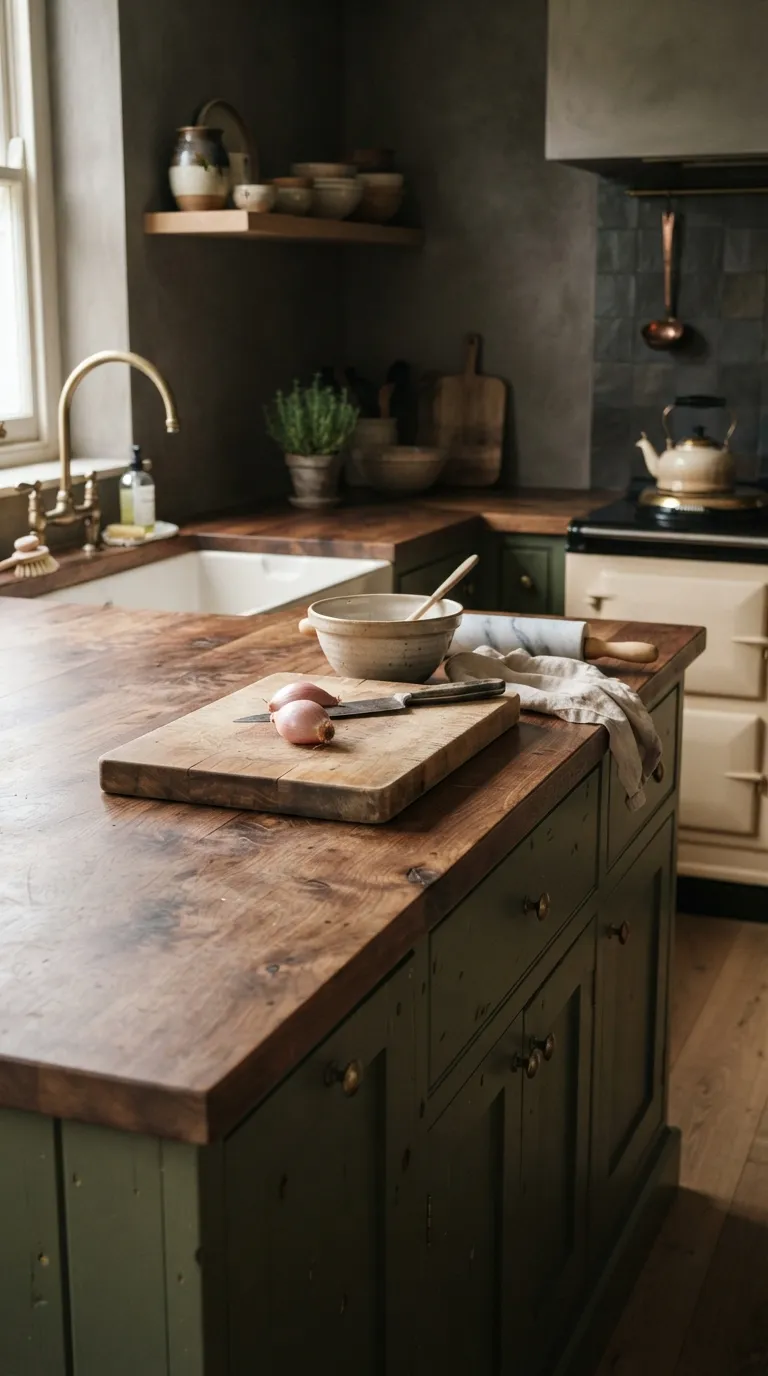
Butcher block counters bring natural warmth to dark cabinetry. Walnut and oak both work well because their grain adds movement without introducing a busy pattern. A matte or lightly oiled finish keeps the surface looking more like furniture than a glossy countertop.
Use wood where it makes sense for your cooking habits. A dedicated prep section can provide warmth while stone covers areas that need easier cleanup. Pair the counter with ceramic bowls and linen for a simple cottage arrangement.
Dark Beadboard Backsplash
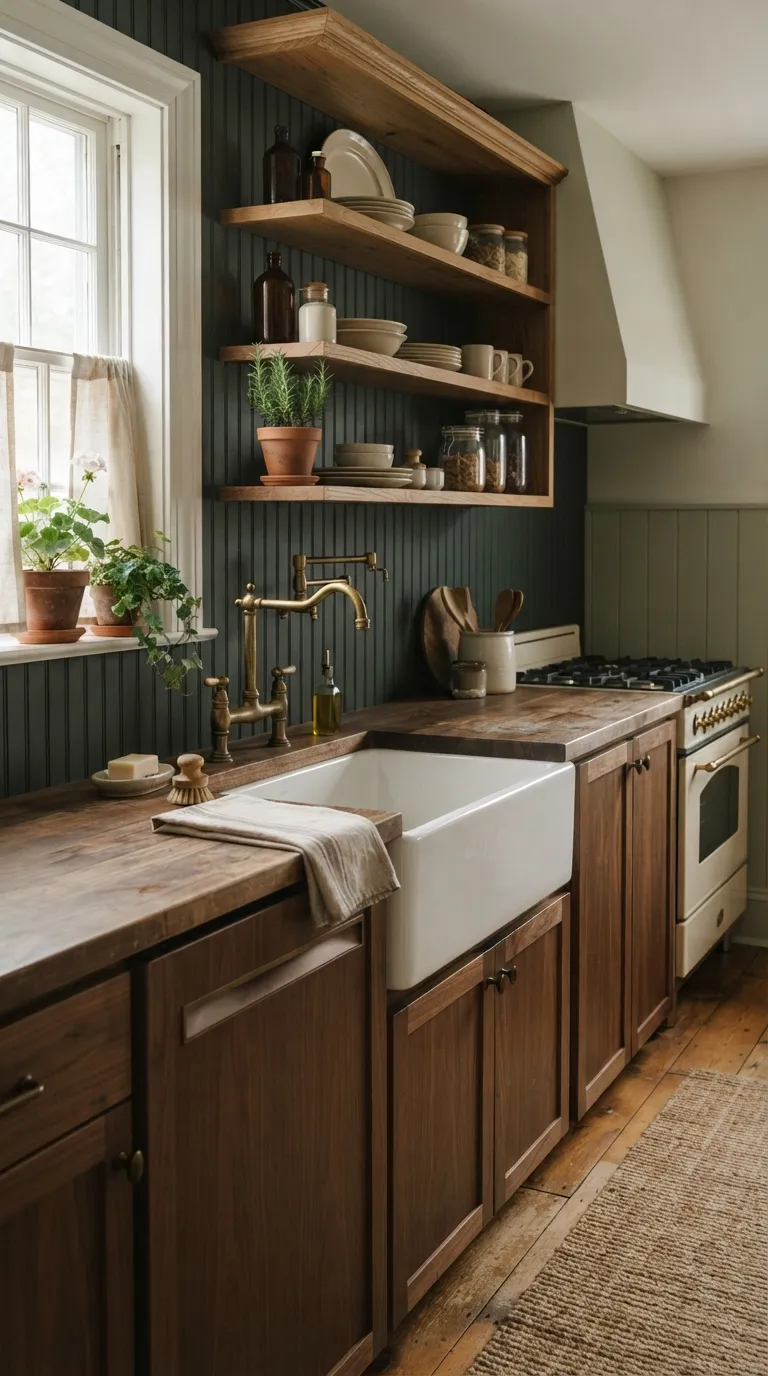
Beadboard adds cottage texture without needing a complicated pattern. Painting it a deep olive, charcoal, or brown can make the backsplash feel connected to the darker palette. The narrow vertical lines also add subtle visual structure.
Use beadboard behind the sink or along a smaller wall if you want to keep the project contained. Pairing it with natural wood makes the dark finish feel warmer. A white sink or cream pottery can provide a useful light contrast.
Moody Breakfast Nook
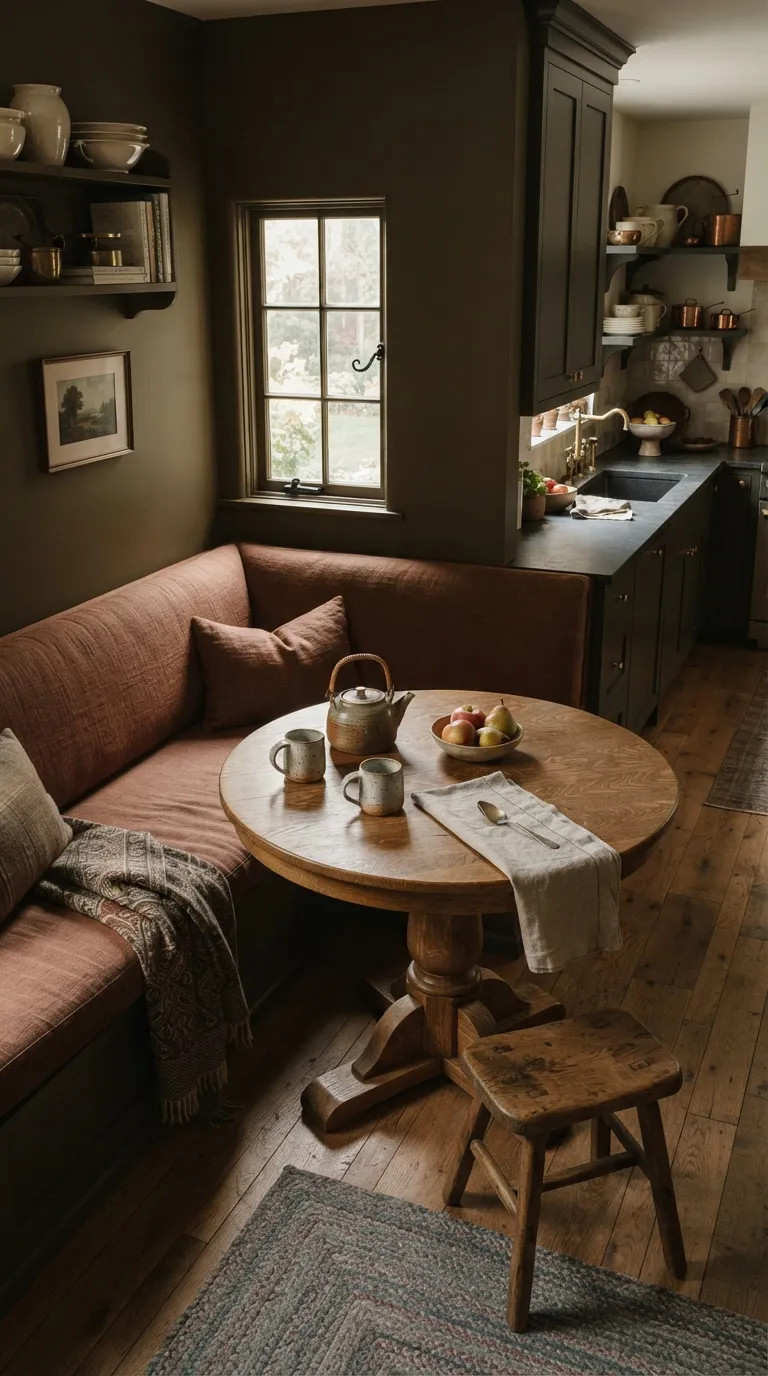
A breakfast nook gives a dark kitchen a softer place to pause. A round wood table, built-in bench, and linen upholstery can make even a small corner feel useful and inviting. Keep the colors muted so the space stays connected to the kitchen.
Try a deep wall color behind the seating area to create a cozy backdrop. Light oak furniture can then keep the corner from feeling too dark. A simple ceramic teapot or bowl adds just enough everyday character.
Vintage Wooden Pantry Door

A vintage wood pantry door can make an ordinary storage area feel like part of the kitchen design. Look for natural timber, simple panels, or an aged finish rather than a highly polished door. Iron hardware adds another small rustic detail.
You can also use a salvaged interior door if its size and condition suit the space. Keep the surrounding trim simple so the wood remains the focus. A woven basket or ceramic crock nearby can tie the door into the rest of the room.
Layered Vintage Textures
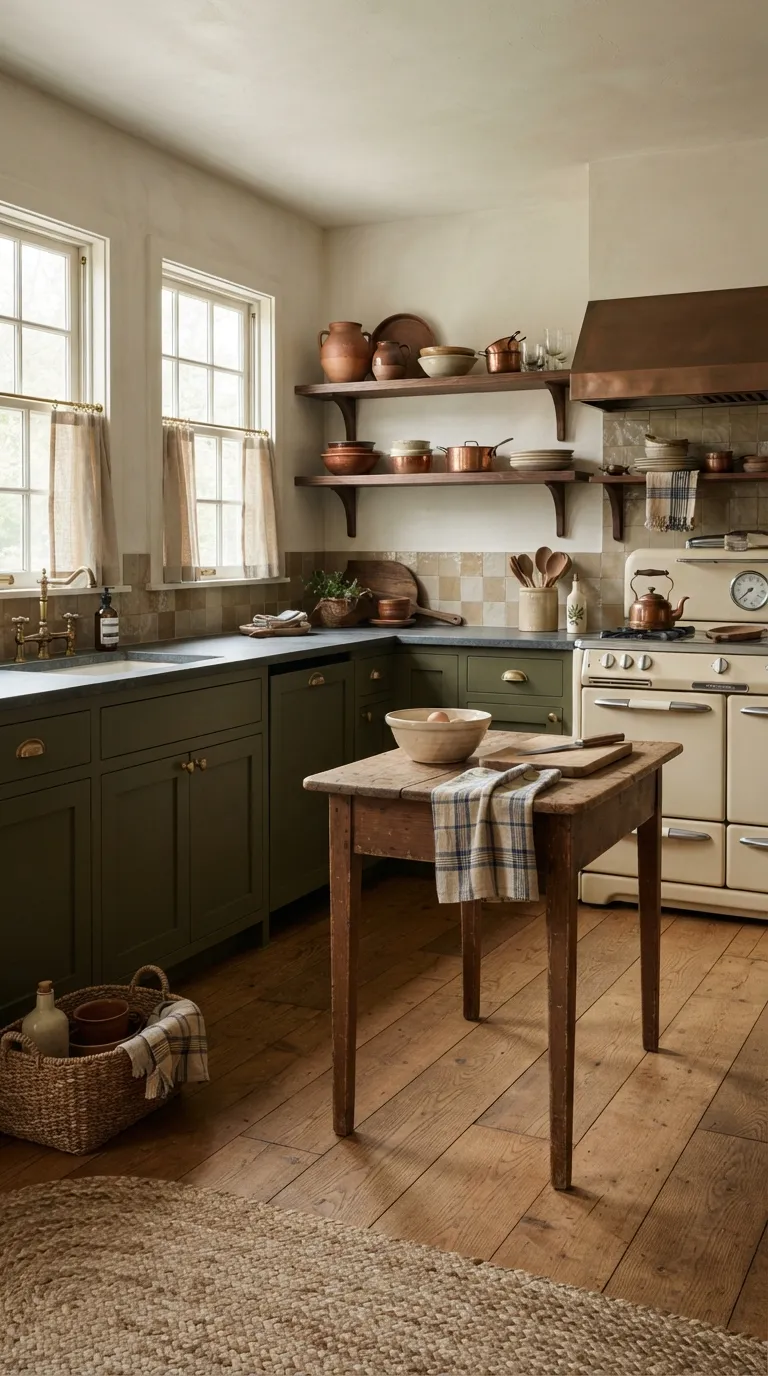
A Dark Cottagecore Kitchen feels richest when several natural textures work together. Wood, stone, linen, ceramic, woven fibers, and aged metal each bring a different surface to the room. The trick is to repeat a few warm tones so the mix still feels connected.
Start with the largest elements first, such as cabinets, counters, and flooring. Then add smaller layers through hardware, pottery, textiles, and baskets. If the room starts to feel busy, remove one decorative layer and let the strongest materials speak for themselves.
Bringing the Kitchen Together
A warm vintage kitchen doesn’t need every cottage detail at once. Start with one strong foundation, such as deep cabinetry, dark walls, or a wood island, then add a few supporting materials that make the space feel lived in. Natural timber, aged metals, handmade ceramics, linen, and earthy colors can give the room plenty of character while keeping it practical.
Choose details that fit how you actually use your kitchen. A useful hutch, hardworking butcher block, open shelf, or farmhouse sink can add style while earning its place. With a few thoughtful choices, your Dark Cottagecore Kitchen can feel cozy, collected, and timeless without looking overly themed.
Elira Montclair
Elira writes about timeless home decor, kitchen styling, and practical interior ideas. Her work blends warm, inviting aesthetics with simple decorating tips that make everyday spaces feel beautiful and comfortable.