Create a Charming Home With 20 Cottagecore Style Decorating Ideas

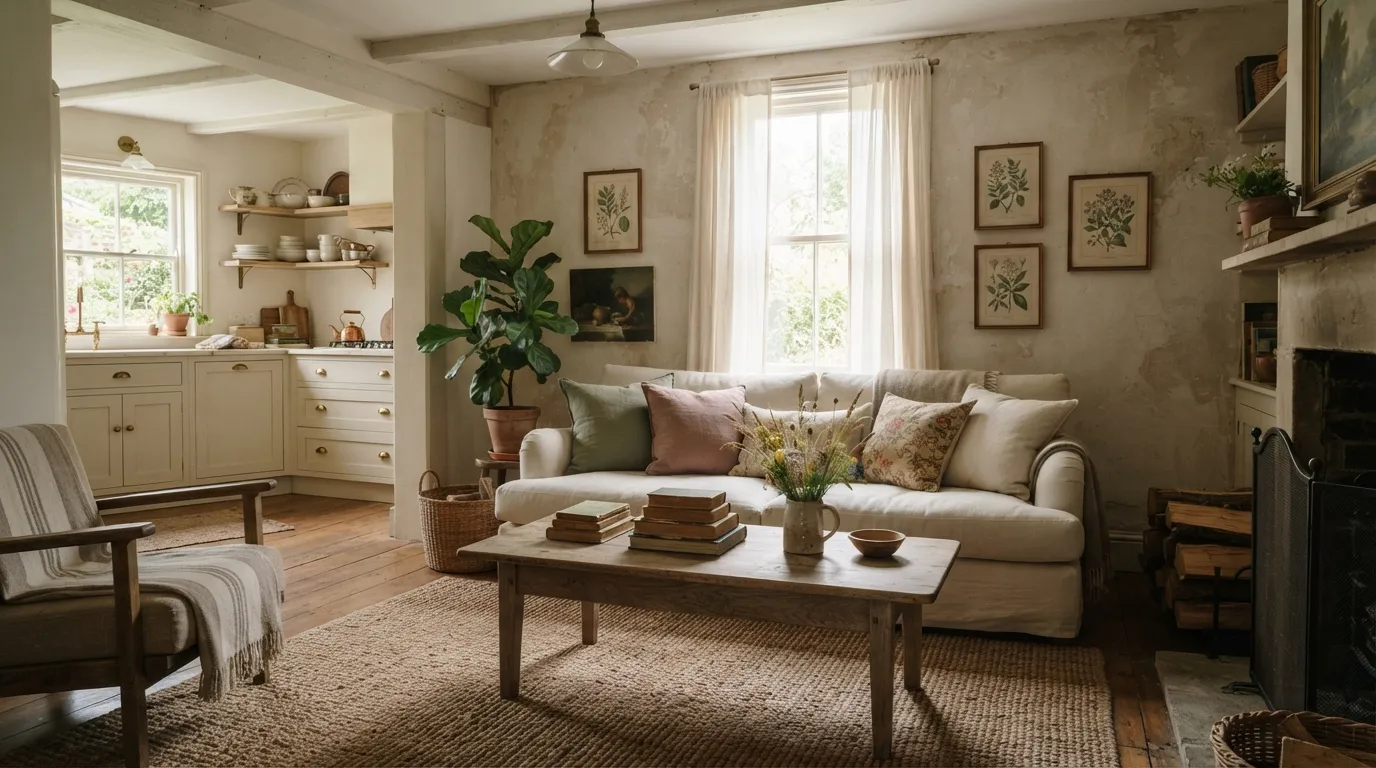
Cottagecore turns a home into a softer, more personal space. If you’re wondering how to decorate your home in cottagecore style, start with pieces that feel collected rather than perfectly matched, such as vintage furniture, floral textiles, aged wood, handmade ceramics, and natural woven materials. The goal is a home that feels comfortable enough for slow mornings and afternoon tea.
You don’t need a farmhouse, antique-filled house, or huge decorating budget to get the look. A small rental can feel cottage-inspired with linen curtains, thrifted frames, a floral cushion, or a simple shelf filled with pottery and books. These ideas show you how to layer cottagecore details without making your rooms feel crowded or overly themed.
Start With Soft Natural Colors
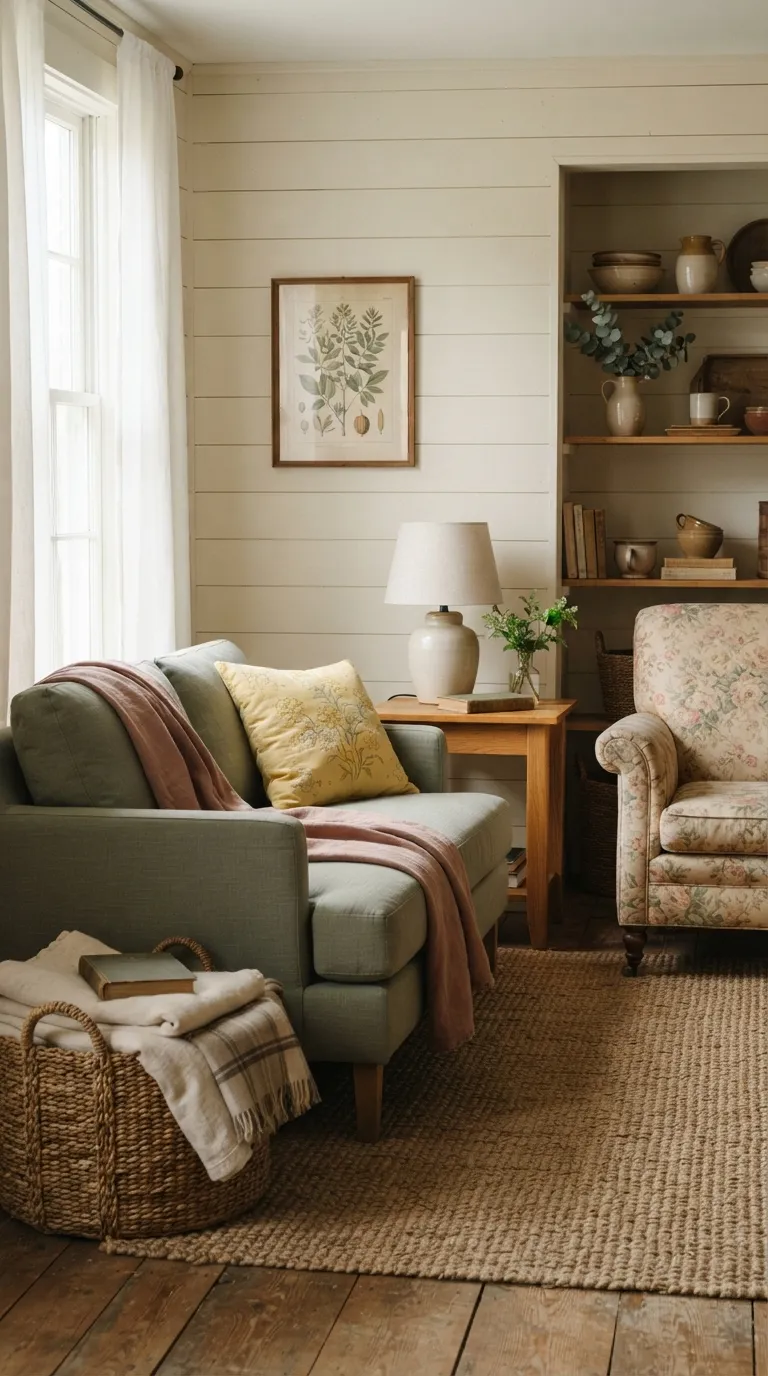
Soft colors create an easy starting point for cottagecore decorating. Choose warm whites, sage, clay, faded pink, muted yellow, and earthy brown instead of filling every surface with bright color. These shades work well because they mimic the gentle tones found in gardens, old cottages, dried flowers, and natural materials.
Keep the strongest color on one large item, such as a sofa, rug, painted cabinet, or bedspread. Then repeat smaller hints around the room so the palette feels connected without looking too planned. Picture a cream bedroom with a sage headboard, faded floral bedding, and a dusty rose vase on the nightstand.
Bring In Vintage Wood
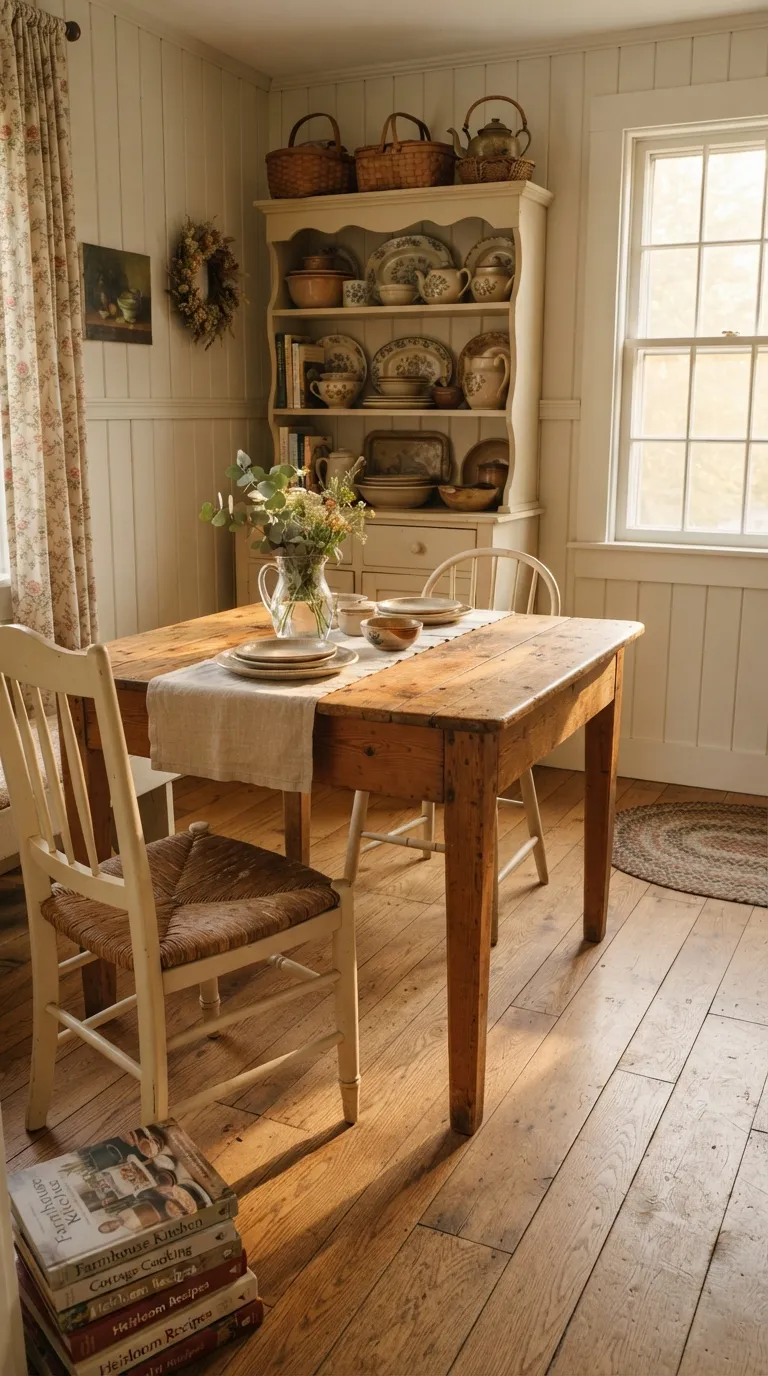
Vintage wood gives cottagecore rooms their grounded feel. Look for oak, pine, walnut, or painted wood with visible grain rather than glossy finishes that appear brand new. A secondhand sideboard, small writing desk, farmhouse stool, or old dining table can add more character than several matching furniture pieces.
Don’t worry if the wood has small scratches or uneven coloring. Those details can make a room feel collected over time, especially when paired with linen, wicker, and pottery. If a large antique piece isn’t practical, try a wooden picture frame, cutting board, stool, or bedside table as a smaller way to bring the material into your home.
Layer Floral Fabrics
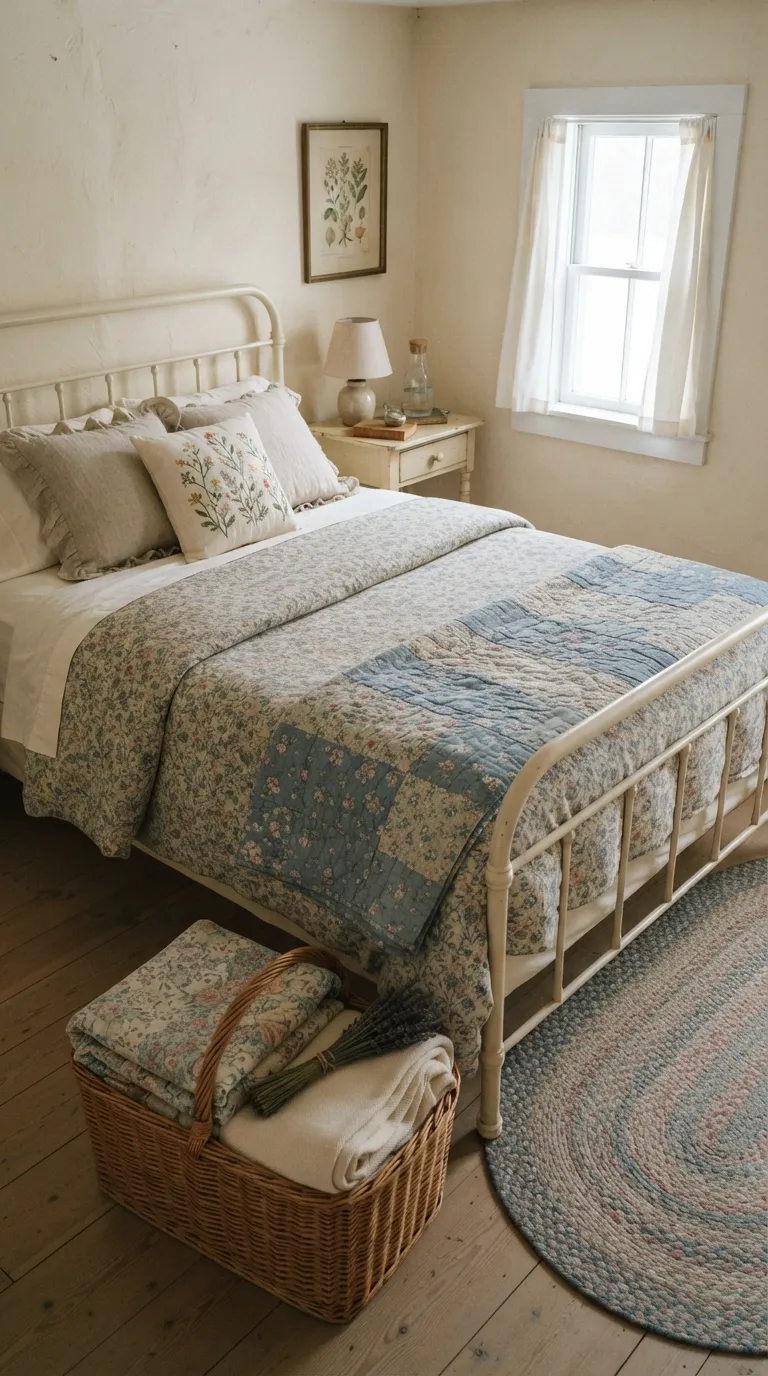
Floral fabric can instantly give a room a cottagecore mood, but scale matters. Small botanical prints often feel softer and more traditional, while one larger floral pattern can act as a focal point on curtains, a chair, or a duvet cover. Mix patterns by keeping at least one shared color between them.
Start with one floral textile and build around it. For example, a faded botanical quilt can guide the colors for your pillowcases, curtain trim, and nearby artwork. Linen, cotton, ticking stripes, gingham, and embroidered fabric also pair naturally with florals, giving the room the layered look of a well-loved cottage.
Display Handmade Pottery
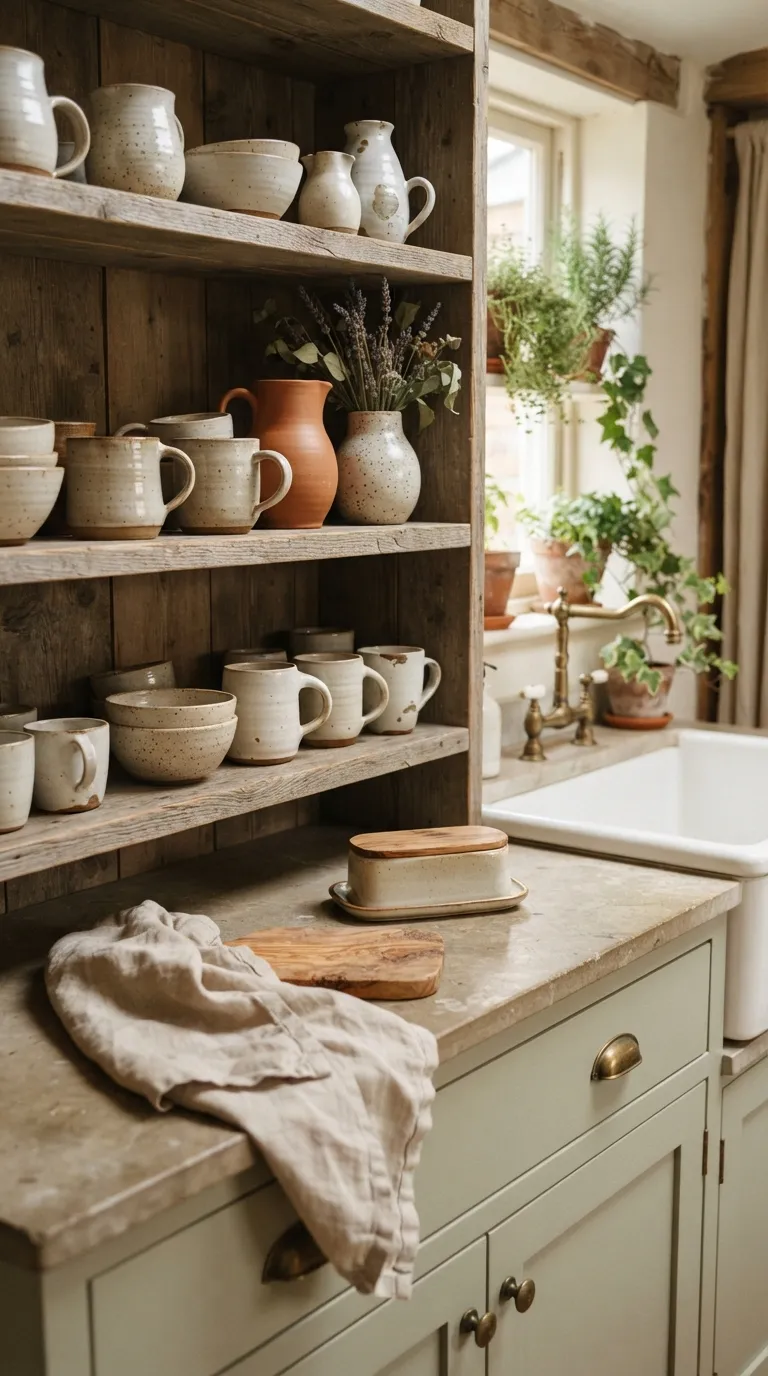
Handmade pottery brings a useful kind of imperfection into cottagecore decor. Choose mugs, bowls, pitchers, or vases with uneven rims and subtle glaze changes instead of pieces that look factory-perfect. You can group a few items on an open shelf, dresser, kitchen counter, or dining cabinet.
Keep the display practical rather than filling every inch. A stack of bowls beside a ceramic pitcher can look more natural than a large collection arranged by size. For how to decorate your home in cottagecore style, small pottery pieces are also an easy choice when you want character without replacing your furniture.
Hang Botanical Artwork
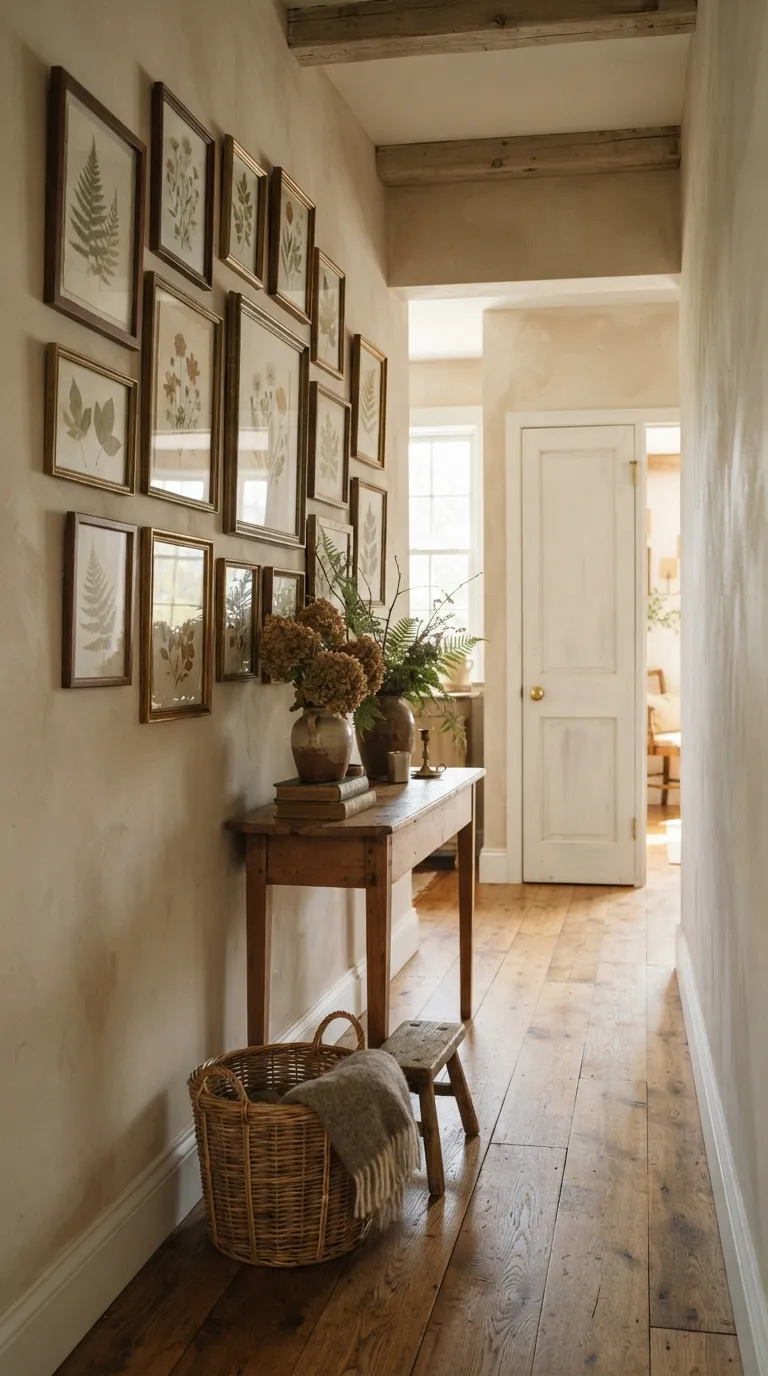
Botanical artwork gives plain walls a storybook quality without turning the room into a themed set. Look for pressed-flower prints, vintage plant illustrations, mushroom studies, garden sketches, or simple landscape art in wood or aged metal frames. Thrift stores and secondhand markets can be useful places to find frames with character.
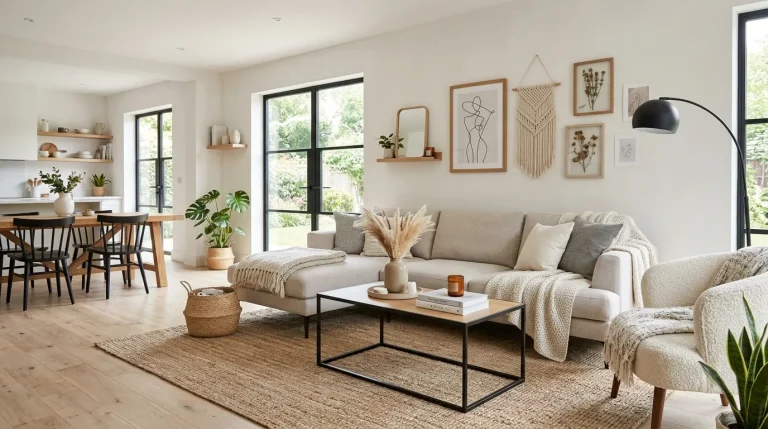
Try grouping three to seven pieces instead of spreading tiny prints across every wall. Mix frame widths and finishes while keeping the artwork within a quiet color family. A botanical gallery works especially well above a console, beside a staircase, or on a bedroom wall where the artwork can sit beside natural textiles and wood.
Add Gingham Accents
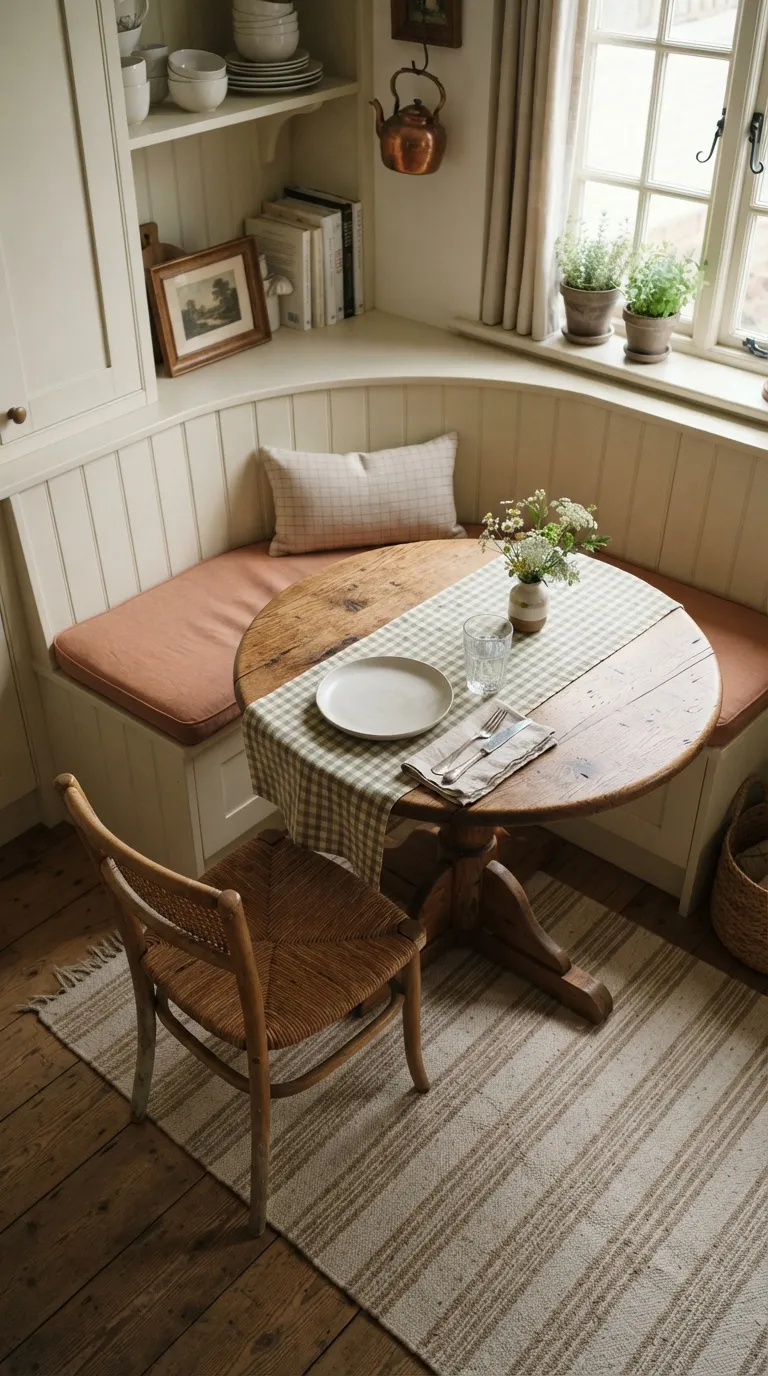
Gingham is a simple way to add cottage character without committing to a major furniture change. Use it on a table runner, kitchen curtain, cushion, napkin, lampshade, or small upholstered stool. Muted green, cream, dusty blue, and soft brown checks tend to sit comfortably beside wood and floral patterns.
Keep the pattern focused in one or two places. If the dining nook has a gingham runner, for example, repeat its color in a cushion or small vase rather than adding more checks everywhere. This gives your cottagecore home a relaxed rhythm while keeping the room visually calm.
Dress Windows in Linen
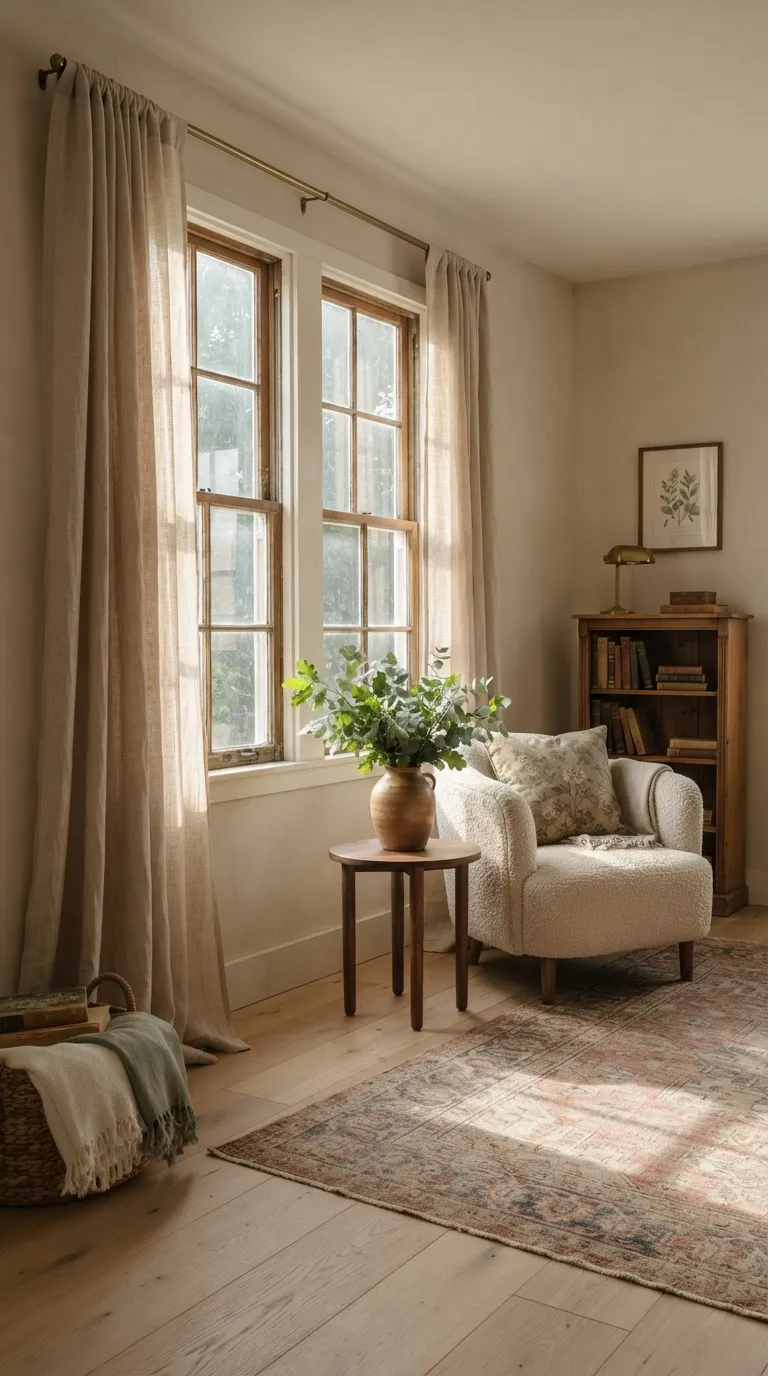
Linen curtains soften hard window lines and let natural light remain part of the room. Choose oatmeal, ivory, flax, or soft beige rather than heavy synthetic panels. A slightly relaxed linen texture works particularly well with painted wood, wicker, floral fabrics, and aged furniture.
Hang the curtain rod a little above the window frame to give the fabric room to fall naturally. Let the panels reach close to the floor for a relaxed look, but avoid excess fabric pooling where it could collect dust. In a small room, lightweight linen can also make the window area feel less visually heavy.
Create a Cozy Reading Nook
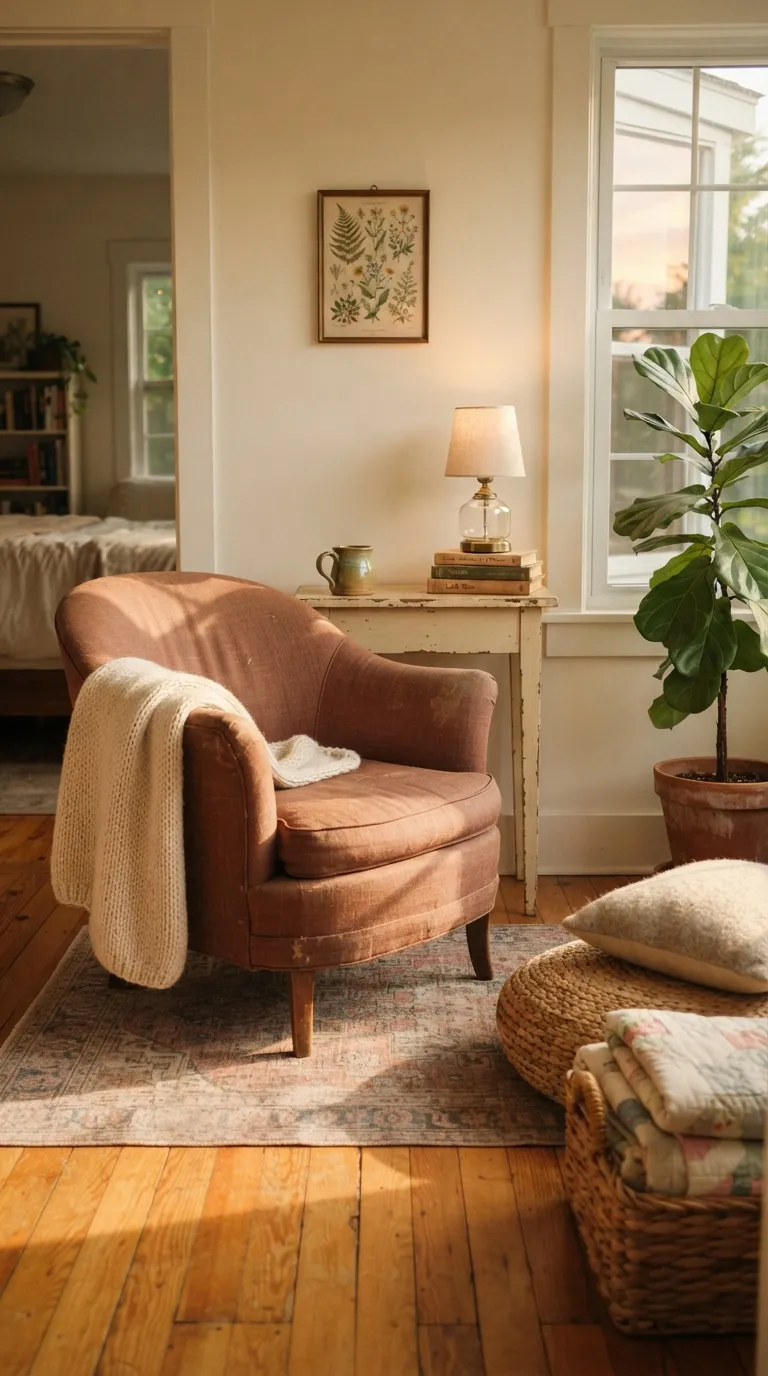
A reading nook gives cottagecore decor a useful purpose. Start with a comfortable chair, then add a small table, warm lamp, soft throw, and basket for books or blankets. You don’t need an entire room, since an unused corner beside a window can become the perfect spot.
Choose one strong texture for the chair and one for the floor. Linen beside wool or cotton creates enough contrast without needing many decorative objects. A narrow table also keeps the footprint small, making this idea practical for apartments and compact bedrooms.
Style a Cottagecore Kitchen
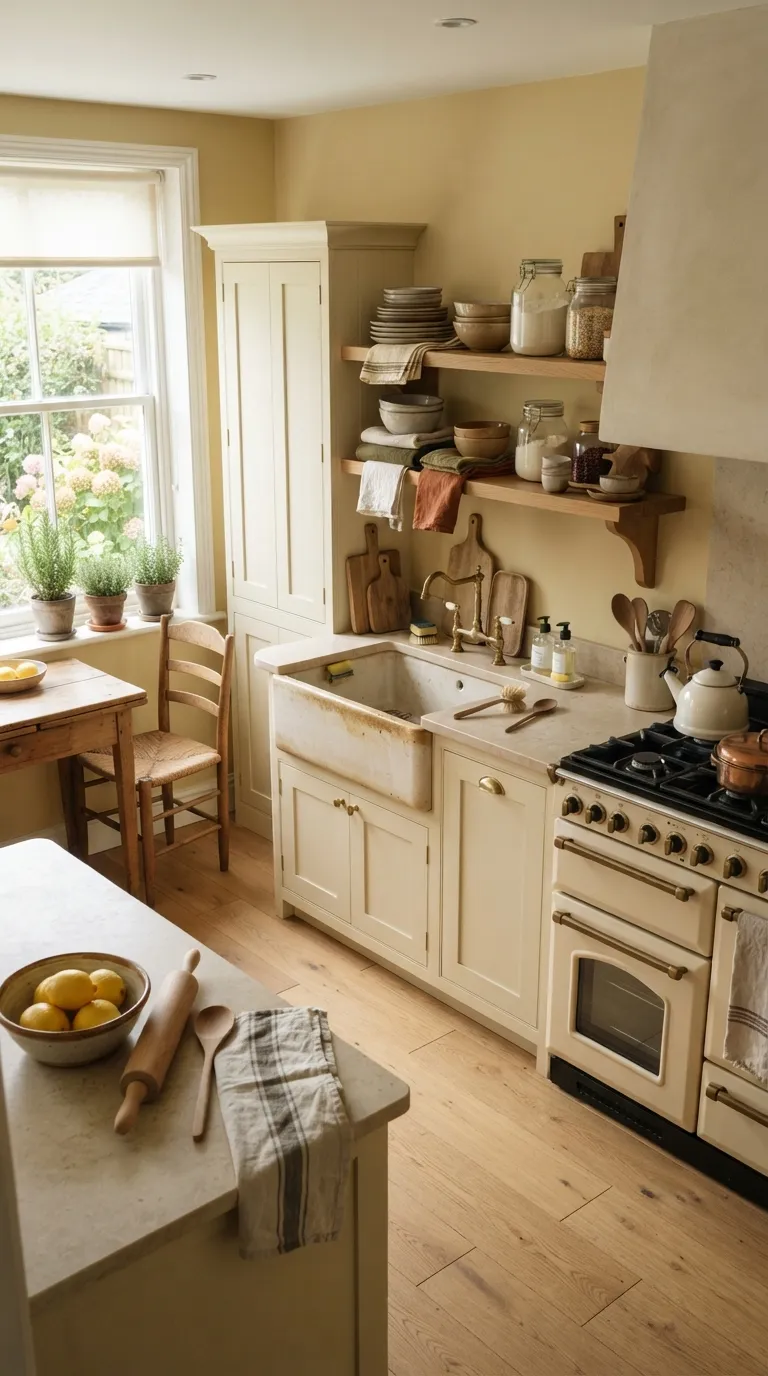
A cottagecore kitchen should feel useful first and pretty second. Open shelving, painted cabinets, wood boards, ceramic dishes, glass storage jars, and linen towels can create the look while keeping everyday items within reach. Warm metals such as aged brass also pair naturally with cream and wood.
Avoid displaying every kitchen item you own. Choose a few pieces with pleasing shapes, then leave breathing room around them. A wooden cutting board leaning against the backsplash, a ceramic pitcher near the sink, and a small bowl of seasonal produce can provide enough detail without making the counters feel crowded.
Grow a Kitchen Herb Corner
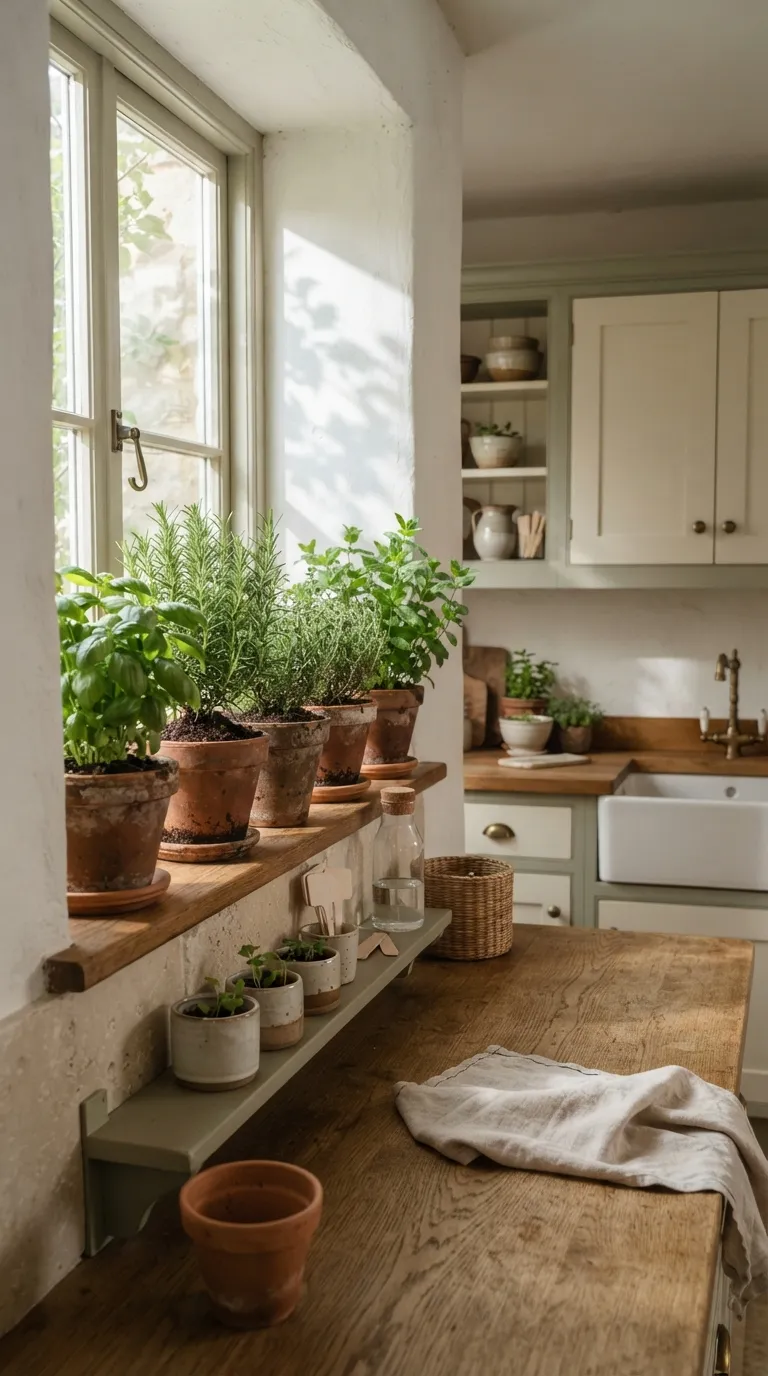
A small herb corner brings living greenery into a cottagecore kitchen. Place basil, thyme, rosemary, mint, or parsley near a bright window when their growing needs suit the available light. Terracotta pots add earthy color and pair naturally with wood, linen, and cream cabinetry.
Use different pot heights to create a relaxed display. Keep the arrangement close to the cooking area if the plants receive suitable light, but don’t crowd the windowsill or block ventilation. A single tray can also group several small pots neatly while protecting the surface underneath.
Choose Wicker Storage
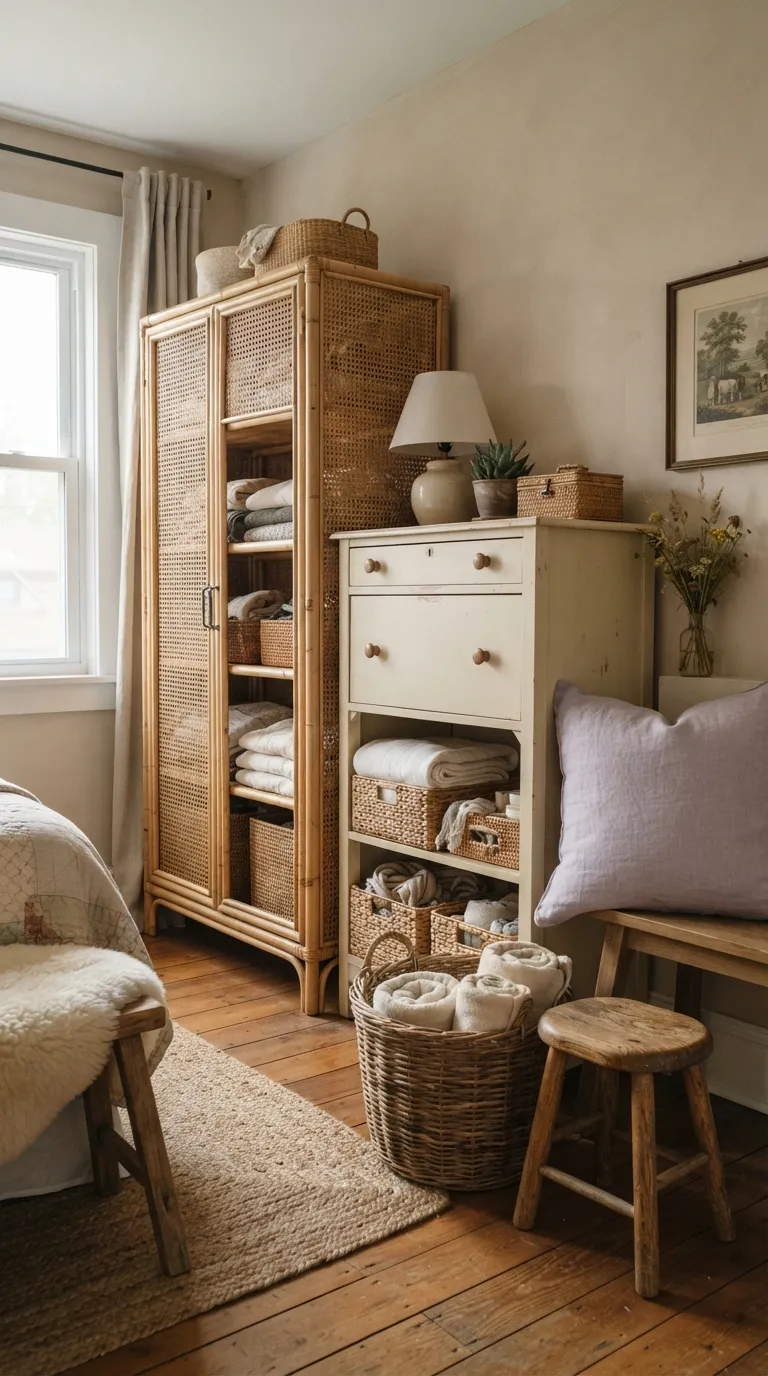
Wicker storage solves clutter while keeping the room visually warm. Try lidded baskets under a console, open baskets on shelves, or a tall rattan cabinet for linens and everyday items. Natural fibers work especially well beside painted furniture because their texture adds contrast without introducing a strong new color.
Match the basket shape to its job. Deep baskets suit blankets and larger textiles, while shallow versions work for books, accessories, or small household supplies. A few useful baskets usually look better than a room filled with woven containers.
Use Painted Cottage Furniture
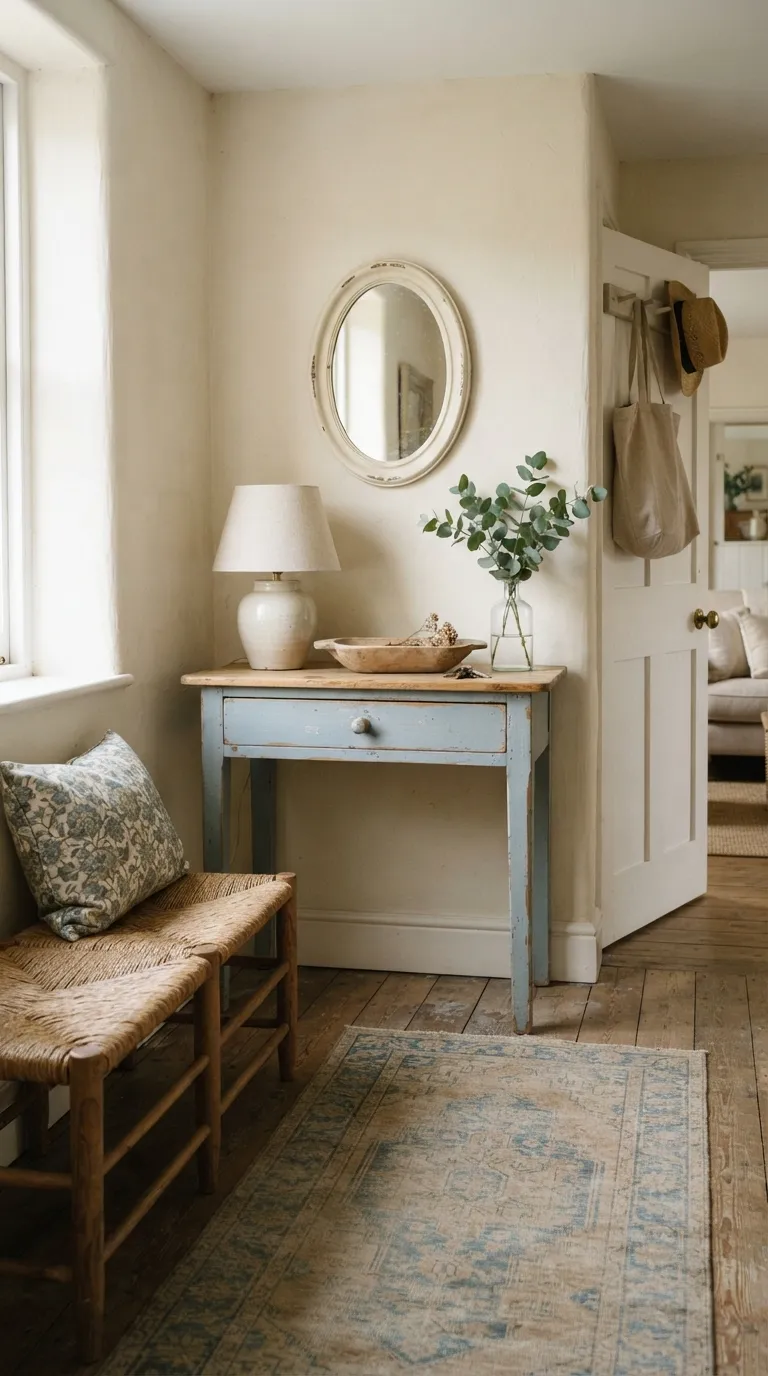
Painted furniture can make a room feel collected without requiring a full makeover. Look for bedside tables, cabinets, stools, dressers, or small consoles in soft shades such as dusty blue, sage, cream, or muted green. Slightly worn paint can suit the cottage look, especially when the underlying wood still shows through at the edges.
Let one painted piece act as the anchor. If you have a sage dresser, keep nearby walls and textiles quieter so the furniture remains the main color note. Secondhand furniture is particularly useful here because an older silhouette can add cottage character even when the finish is freshly painted.
Layer Vintage Mirrors
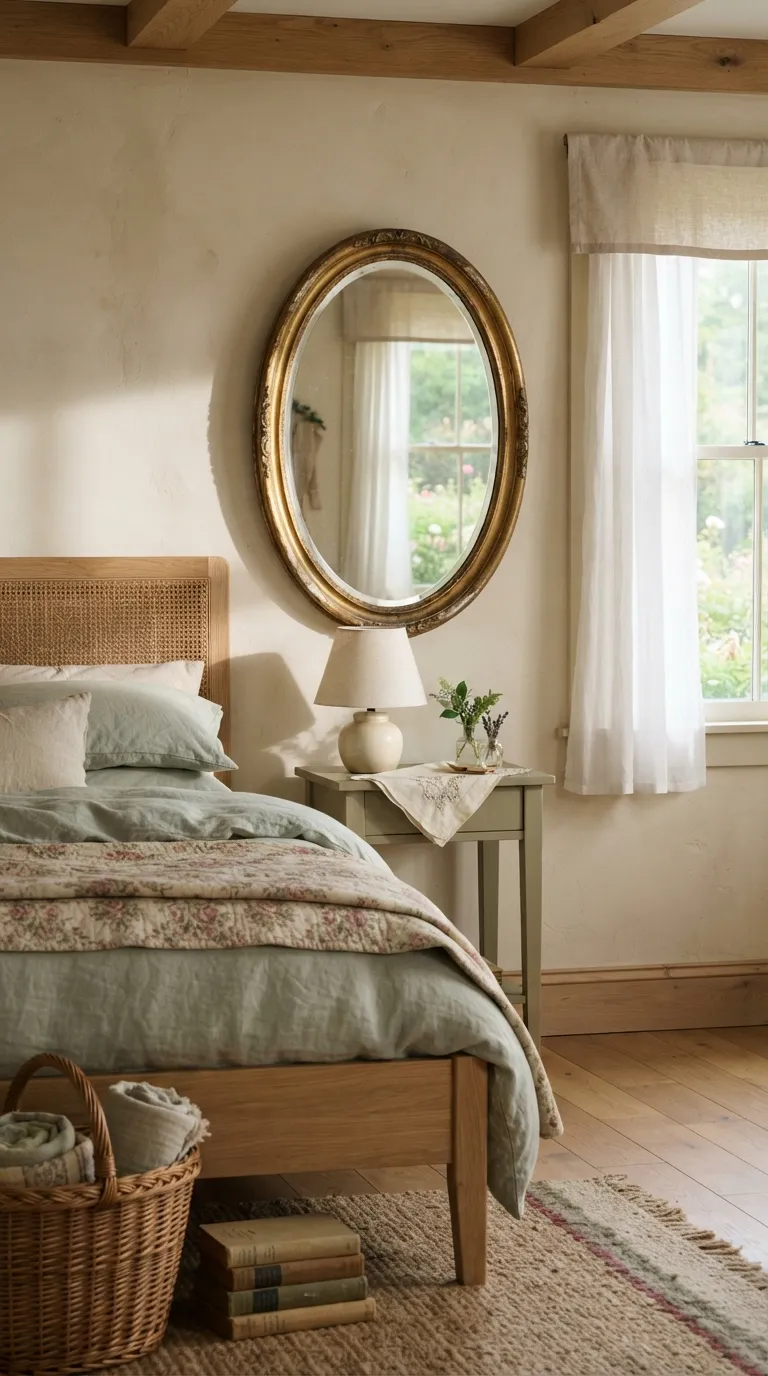
Vintage mirrors add charm while making cottagecore rooms feel lighter. Look for oval, arched, or softly rectangular frames in aged wood, painted finishes, or lightly tarnished metal. A mirror above a dresser, fireplace, console, or small entryway table can become a strong focal point without taking up floor space.
Think about what the mirror reflects before hanging it. Positioning it opposite a window can bounce daylight through the room, while placing it near artwork or greenery can repeat those details visually. For a smaller home, a single well-framed mirror can provide more impact than several small decorative objects.
Mix Floral and Stripe Prints
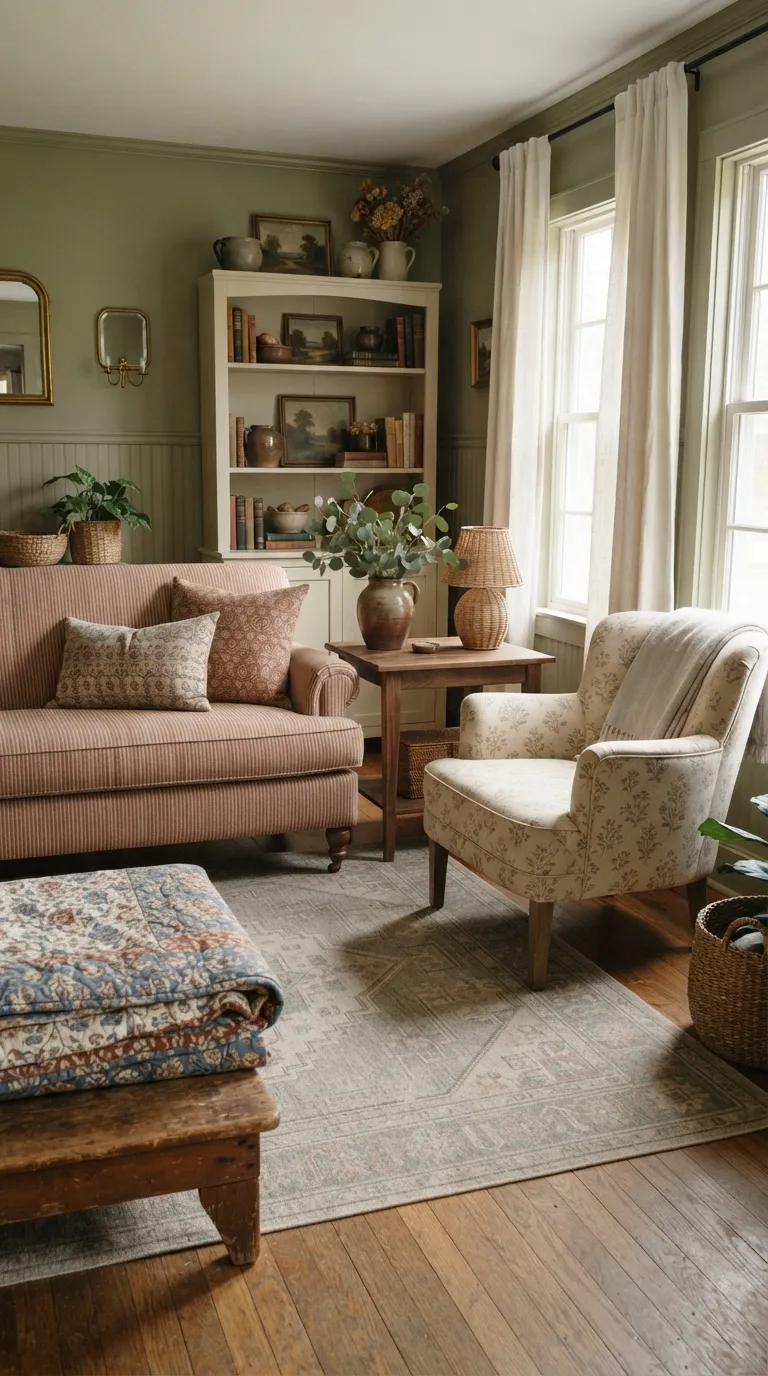
Floral and stripe prints work well together because they create contrast without feeling harsh. Let the floral pattern carry the detail, then use a narrow stripe on a cushion, chair, curtain, or upholstered bench to give the eye a quieter pattern to rest on.
Keep one color running through both prints. A sage floral cushion can sit beside sage-and-cream ticking stripes, for example. Varying the pattern scale also helps, since a tiny floral beside a broad stripe feels more relaxed than placing two equally busy prints next to each other.
Add Ruffled Linen
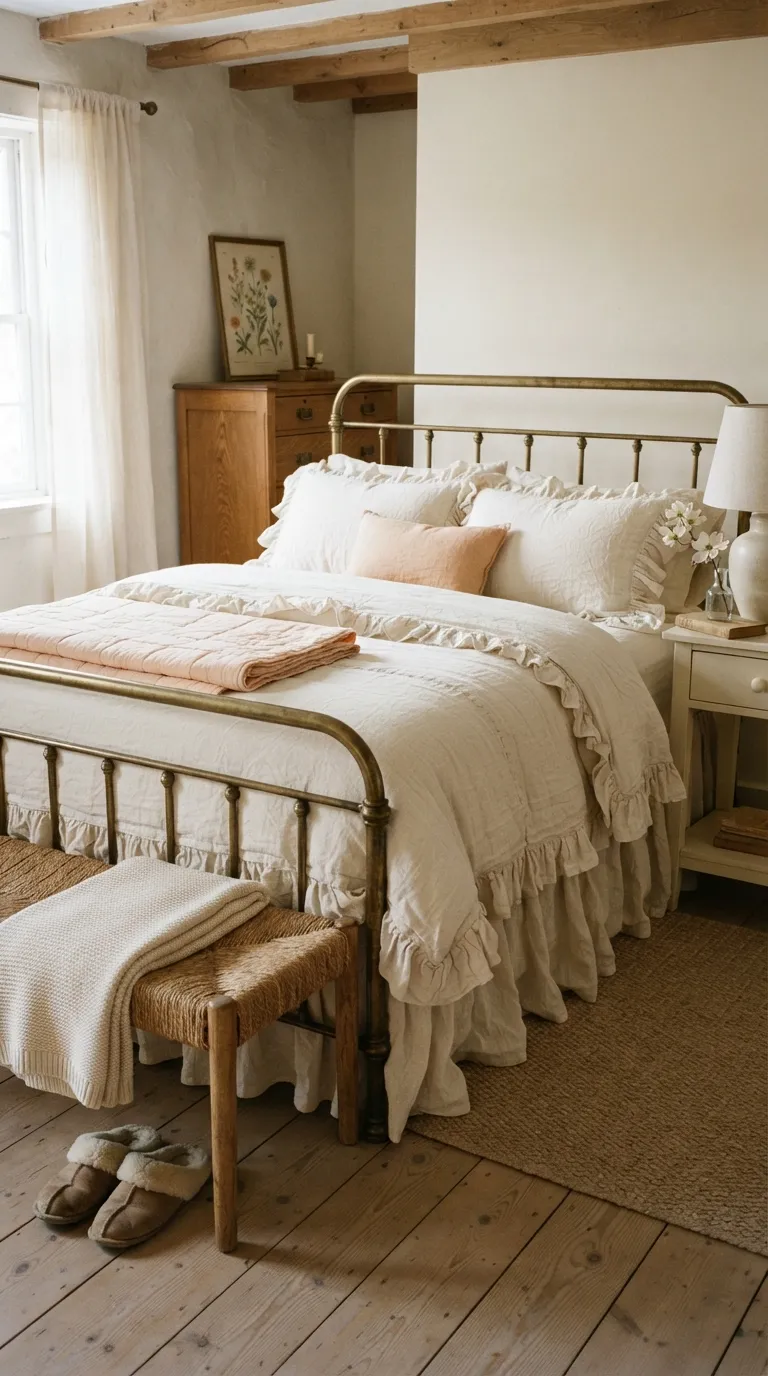
Ruffled linen brings a gentle handmade feel to bedrooms, dining spaces, and seating areas. Try gathered pillowcases, a ruffled bed skirt, a relaxed tablecloth, or a small linen throw instead of using ruffles throughout the room. One or two details can create the soft cottage look without making the space feel overly sweet.
Choose natural-looking fabric with visible texture and a relaxed finish. Pair ruffled linen with straight-edged wood furniture or simple pottery for balance. If your room already has floral bedding, use plain ivory linen with a subtle gathered edge so the textures work together without competing for attention.
Display Vintage Books
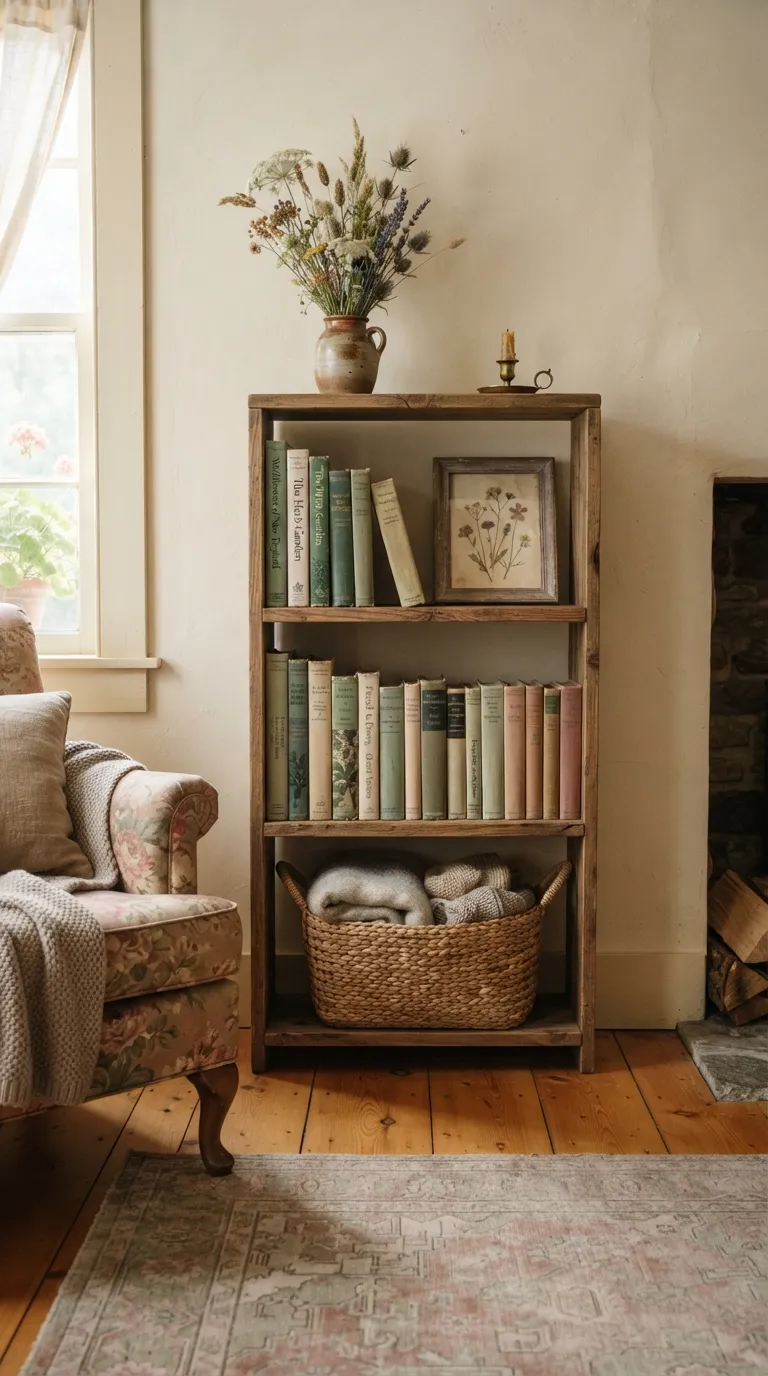
Vintage books add personality without needing lots of decorative objects. Stack a few horizontally on a console, then place smaller books upright beside a pottery vase or framed print.
Choose covers in cream, olive, tan, muted blue, or faded red for a relaxed palette. Books with botanical illustrations, poetry, gardening, or old recipes can also support the cottage theme while giving shelves a lived-in feel.
Use Antique Brass Accents
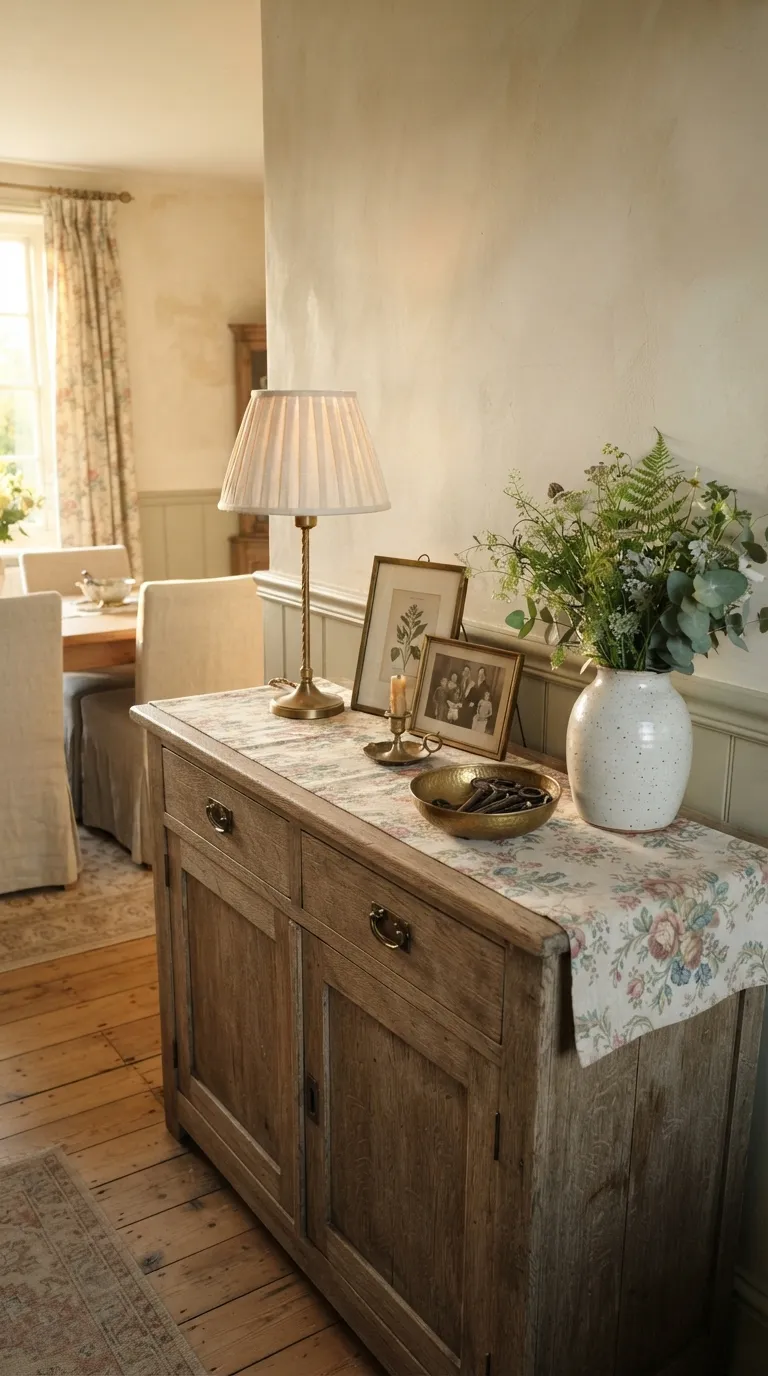
A few aged brass pieces can warm up a room without making it feel overly decorated. Try a small lamp, picture frame, candlestick, drawer pulls, or a vintage tray.
Look for finishes that have a slightly worn surface instead of perfectly polished metal. That gentle patina works well with painted furniture, aged wood, linen, and ceramic pieces because the room feels collected over time.
Create a Cottage Bathroom
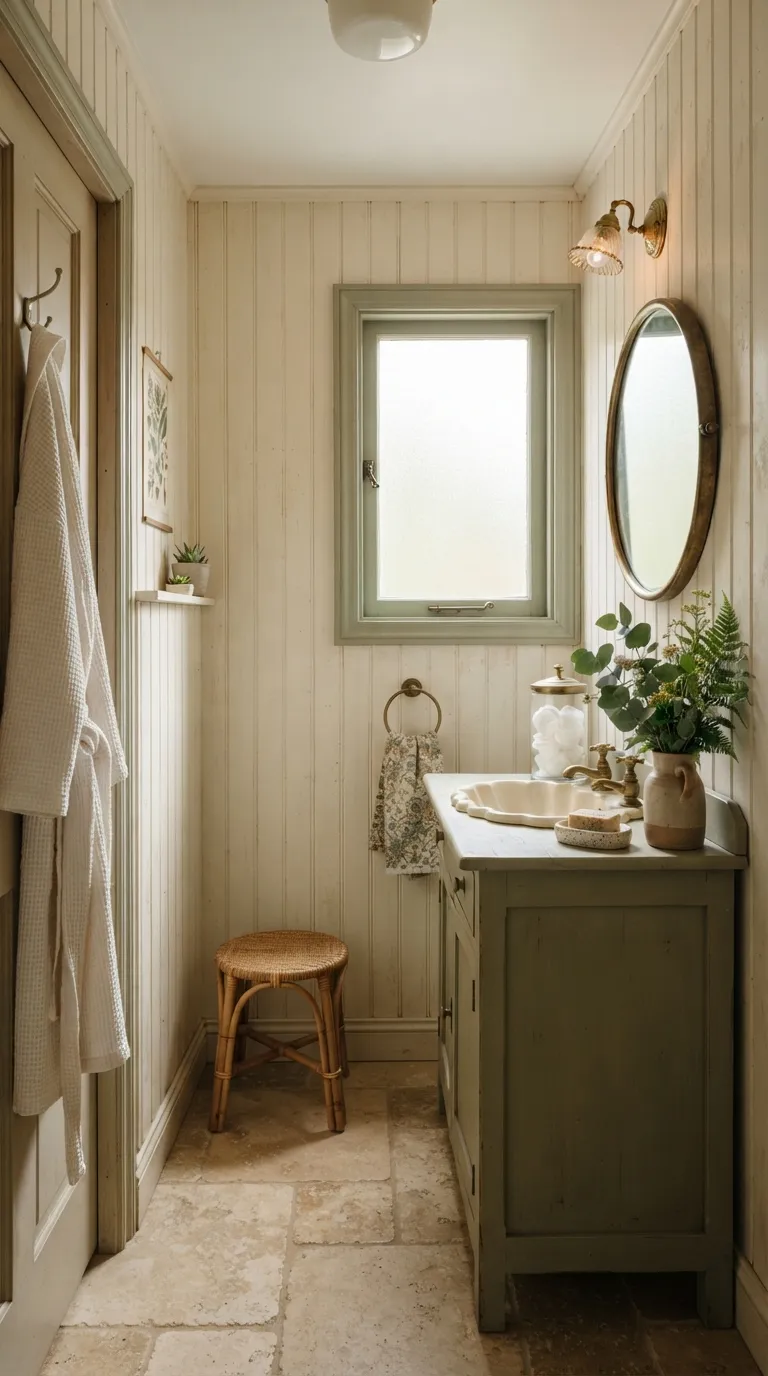
A cottage bathroom doesn’t need a full renovation to feel softer and more inviting. Swap in a floral towel, vintage mirror, ceramic soap dish, or woven storage basket for an easy starting point.
Keep everyday items in glass jars or simple containers so the counters stay calm. Creamy walls, warm wood, aged brass, and small botanical touches can make even a compact bathroom feel connected to the rest of your cottagecore home.
Style a Cozy Entryway
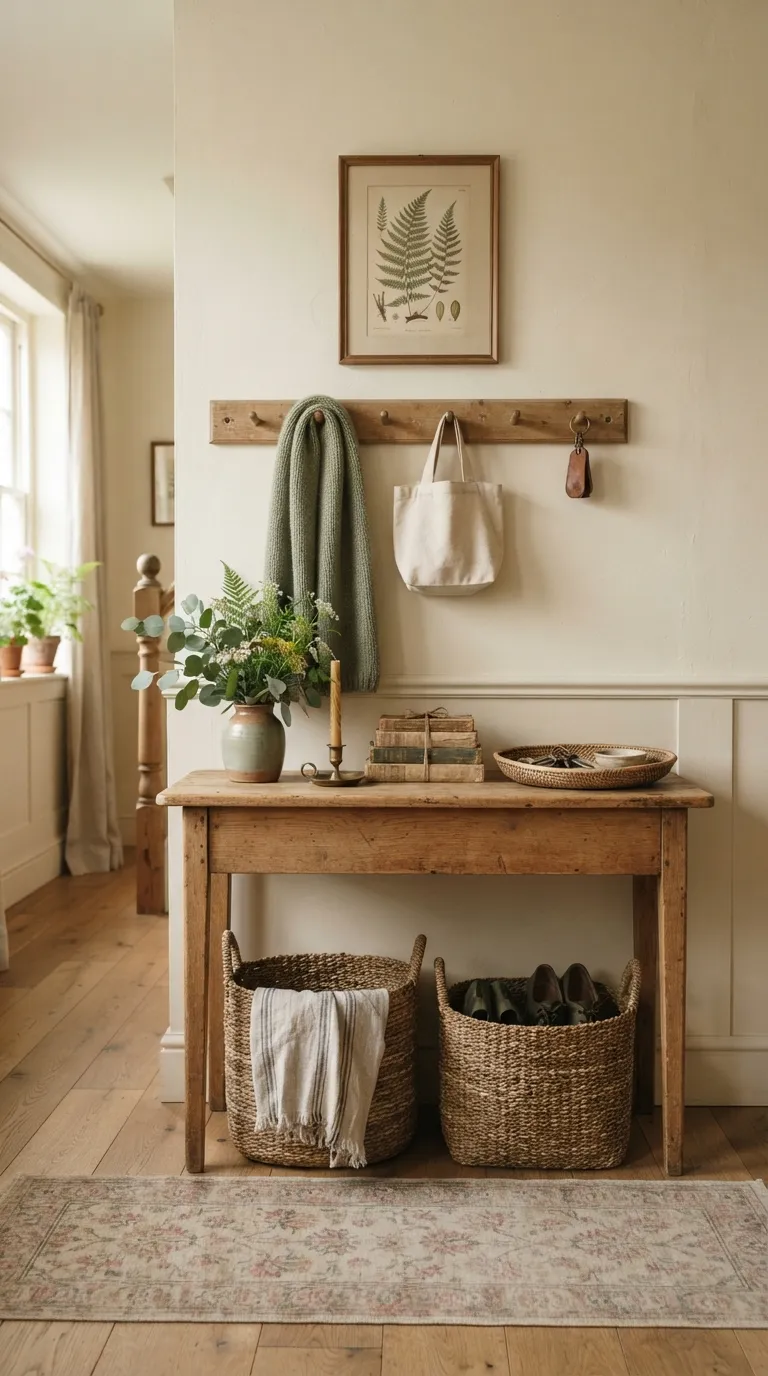
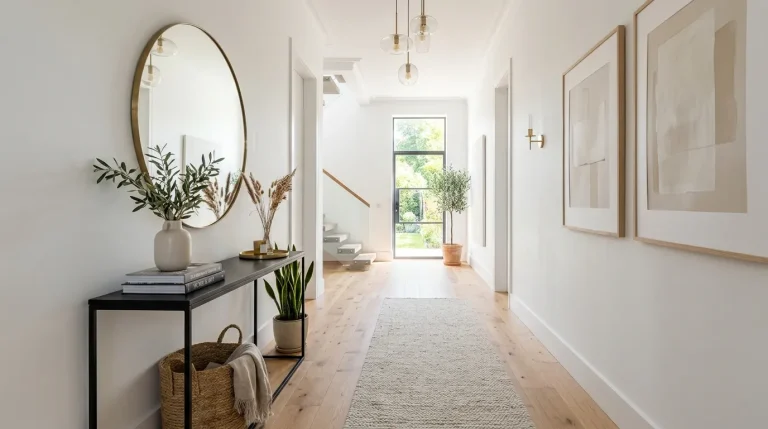
Your entryway sets the mood for the rest of the home, so keep it warm, simple, and useful. A slim wooden console, peg rail, woven basket, and small botanical display can create cottage character without taking up much floor space.
Choose storage that looks decorative while serving a purpose. Baskets can hold shoes or bags, while hooks keep coats and hats easy to grab. A faded runner or small floral print adds softness without filling the walkway with unnecessary pieces.
Layer Cozy Cottage Textures
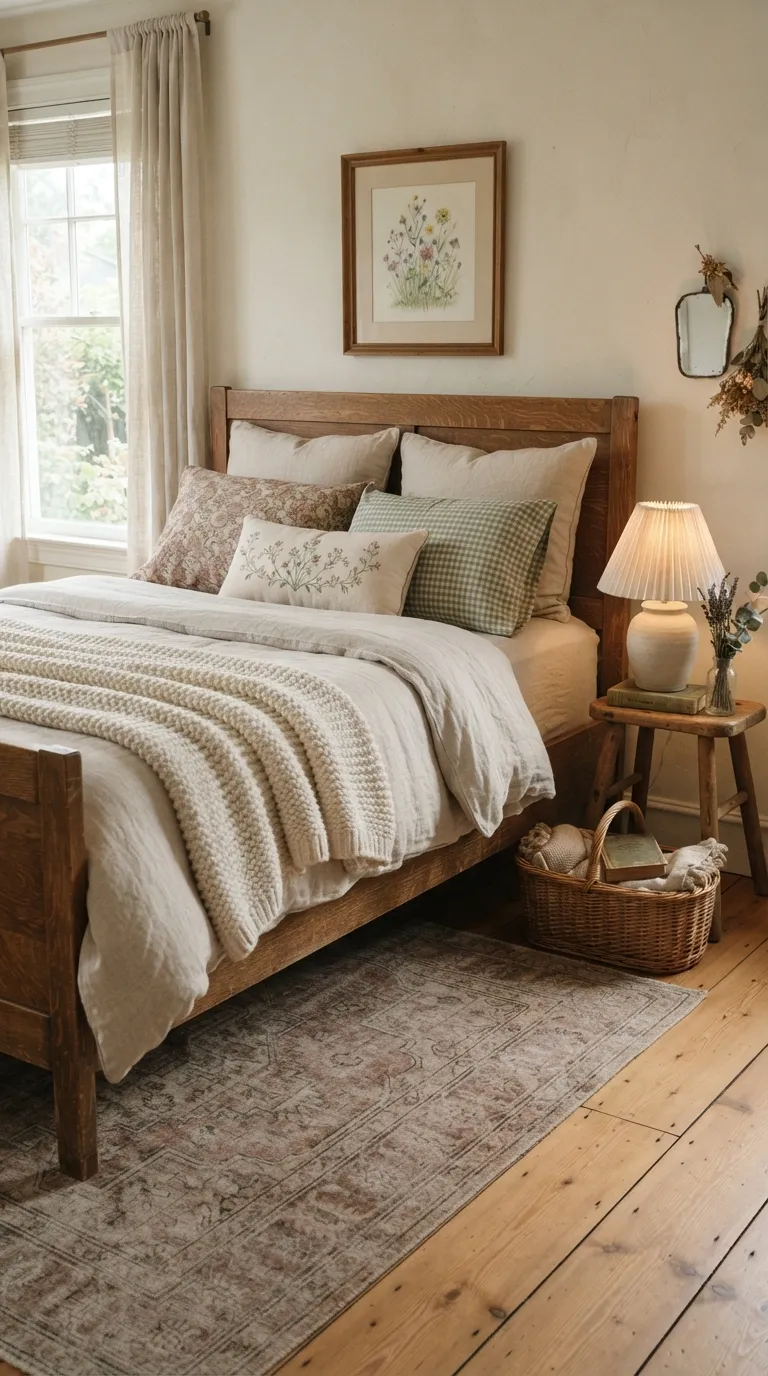
Texture helps cottagecore rooms feel comfortable and relaxed. Mix linen, cotton, wool, knitted fabric, woven baskets, and natural wood instead of relying on one matching material throughout the room.
Start with a simple base, then add one layer at a time. A quilted coverlet can sit beneath a knitted throw, while a small rug and woven basket bring more texture near the floor. Keeping the colors muted helps the different materials work together without making the room feel busy.
Make Your Home Feel Like a Cottage
Cottagecore works best when the room feels personal rather than perfectly themed. Mix old and new pieces, choose natural materials, and let small imperfections give furniture and accessories their own character.
You don’t need to redecorate every room at once. Start with one corner, add a few soft colors and vintage details, then build the look gradually around pieces you genuinely enjoy.
Elira Montclair
Elira writes about timeless home decor, kitchen styling, and practical interior ideas. Her work blends warm, inviting aesthetics with simple decorating tips that make everyday spaces feel beautiful and comfortable.