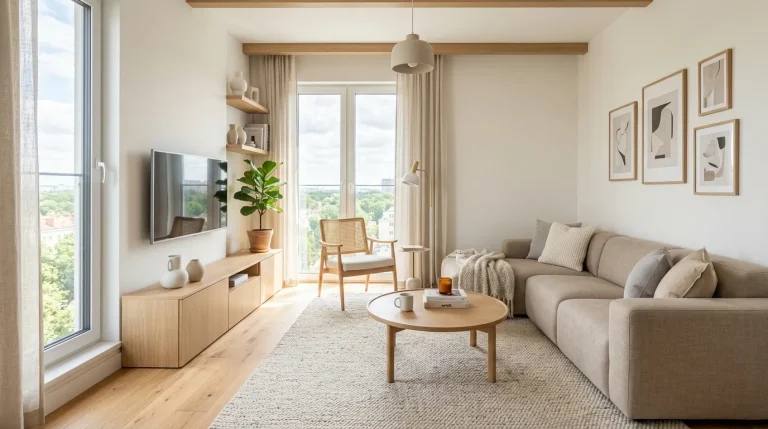
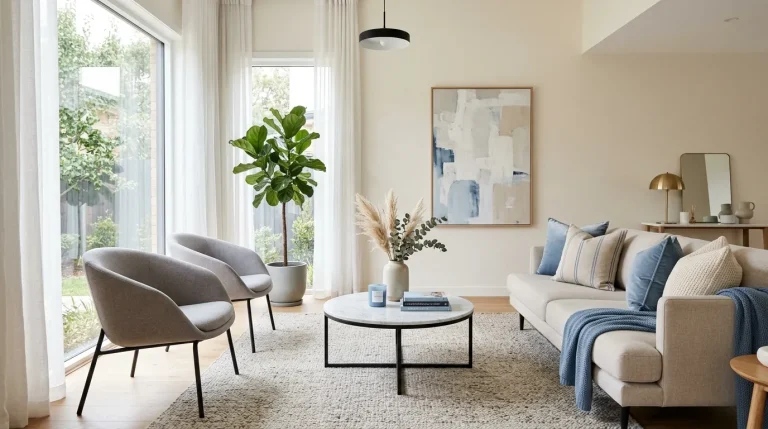
Colorful TV Stand Wall Design Ideas to Instantly Refresh Your Living Room

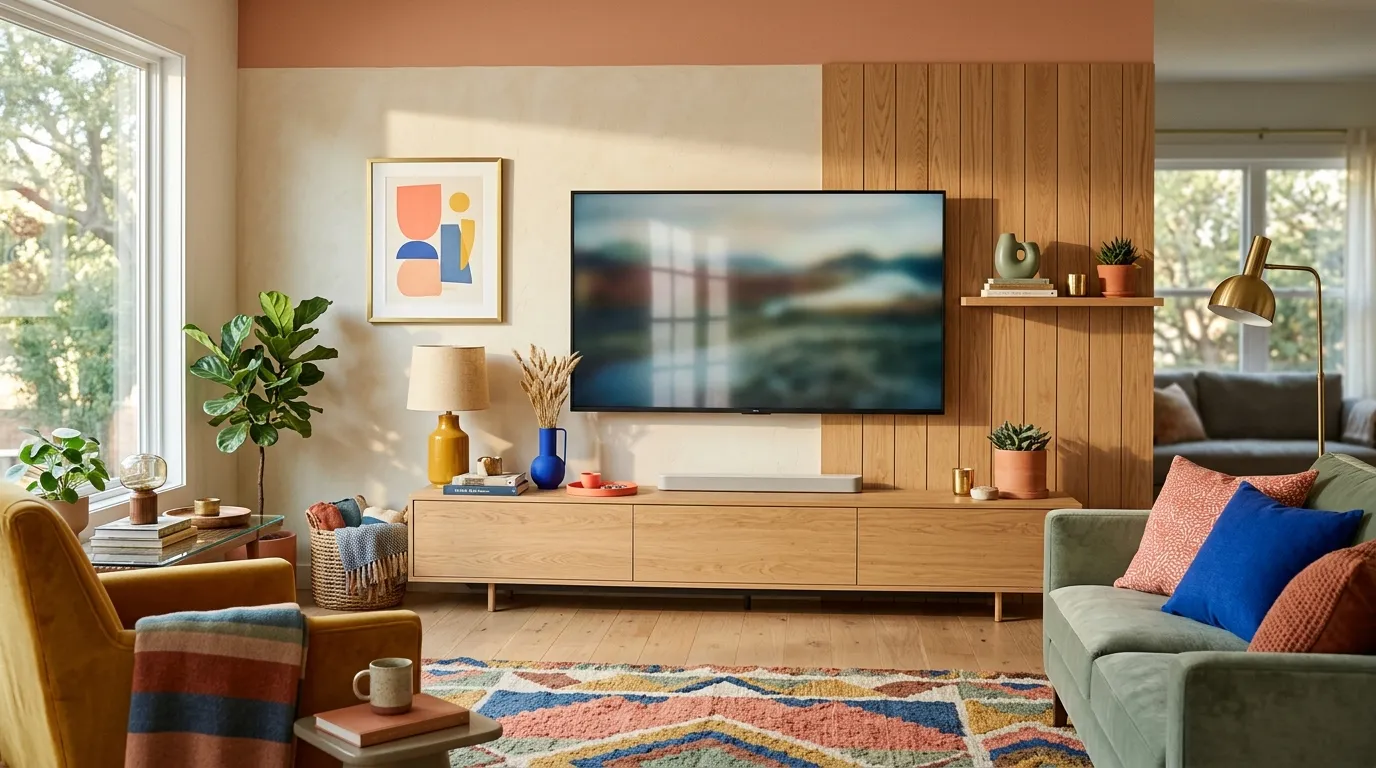
A TV wall can do more than hold your screen. With the right colors, materials, and storage, it can become the visual anchor that gives your living room a fresh personality. These tv stand wall design ideas show how paint, wood, shelving, artwork, and simple decor can work together without making the room feel busy.
Color doesn’t have to mean loud. A muted green wall, warm wood console, or a few sunny accessories can create plenty of character while keeping the space comfortable. Whether your room is small, open-plan, modern, or cozy, the key is choosing one clear color story and building the TV wall around it.
Color Block Backdrop
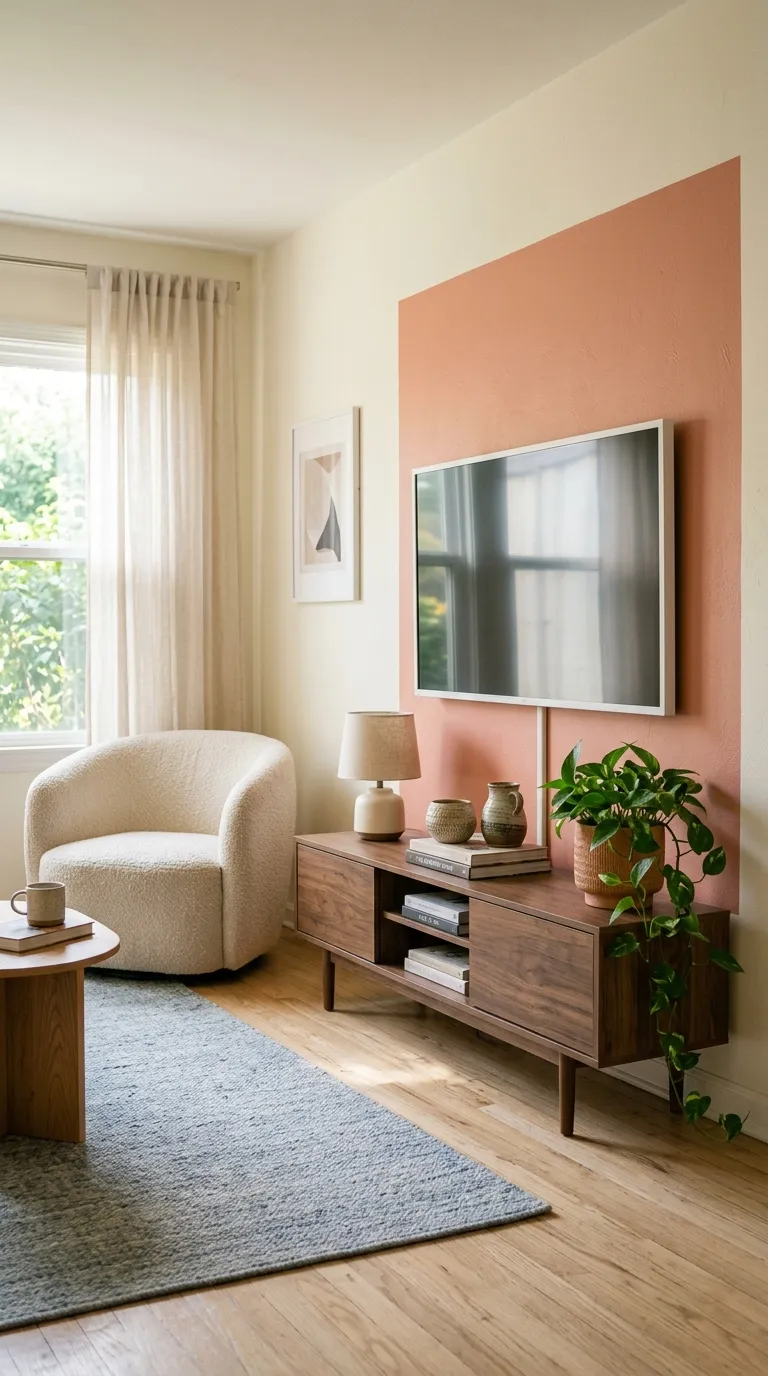
A painted block behind the TV creates a strong focal point without covering the whole wall. Try coral, dusty blue, olive, or clay if you want color that feels warm rather than overly bright.
Keep the block slightly wider than the screen and console for a clean frame-like effect. This trick works especially well in rental-friendly rooms where removable paint or temporary wall coverings can give the TV area a clear visual zone.
Warm Wood Slats
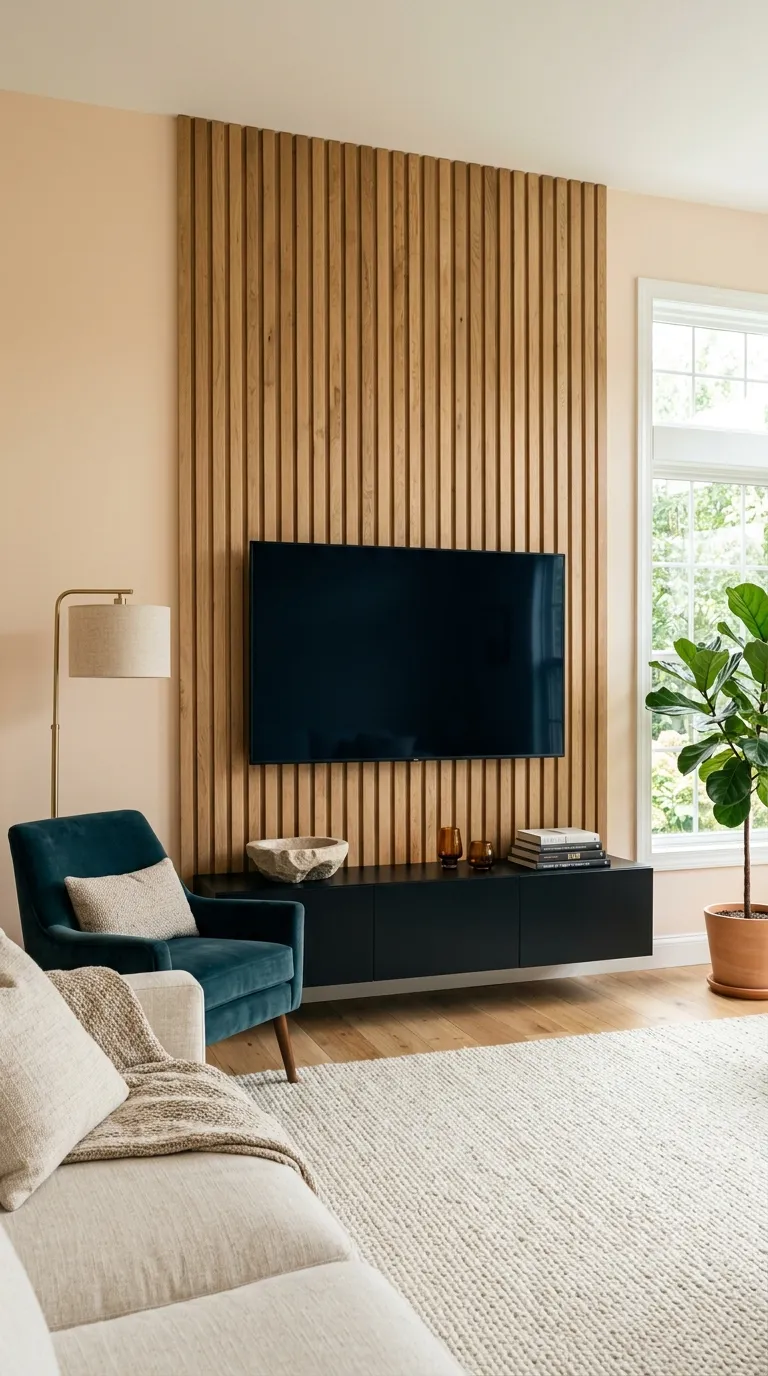
Wood slats bring warmth to a TV wall while giving a flat screen a softer backdrop. Vertical lines can also make a low ceiling feel taller, especially when the slats extend upward behind the television.
For a colorful room, choose natural oak or walnut instead of another bold finish.minimalist tv stand ideas Then add color through nearby seating, artwork, or ceramics so the wood remains the steady base of the design.
Colorful Open Shelves
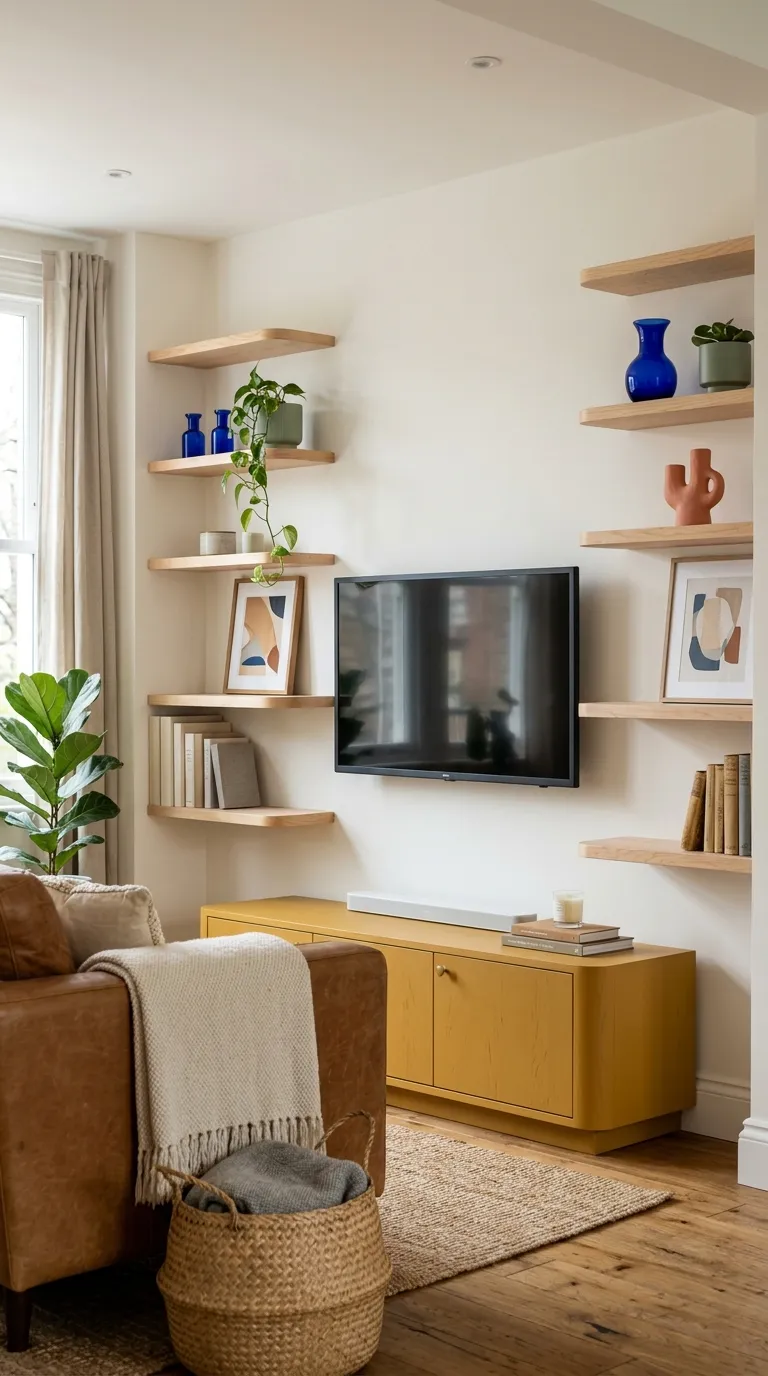
Open shelves give you an easy place to bring personality around the screen. Use three or four colors in small doses, such as blue pottery, green plants, and coral artwork, rather than filling every shelf with bright objects.
Leave some shelf space empty so the wall can breathe. A practical setup might place books on one level, ceramics on another, and a plant near the edge where its leaves can soften the straight lines of the shelving.
Fluted Media Cabinet
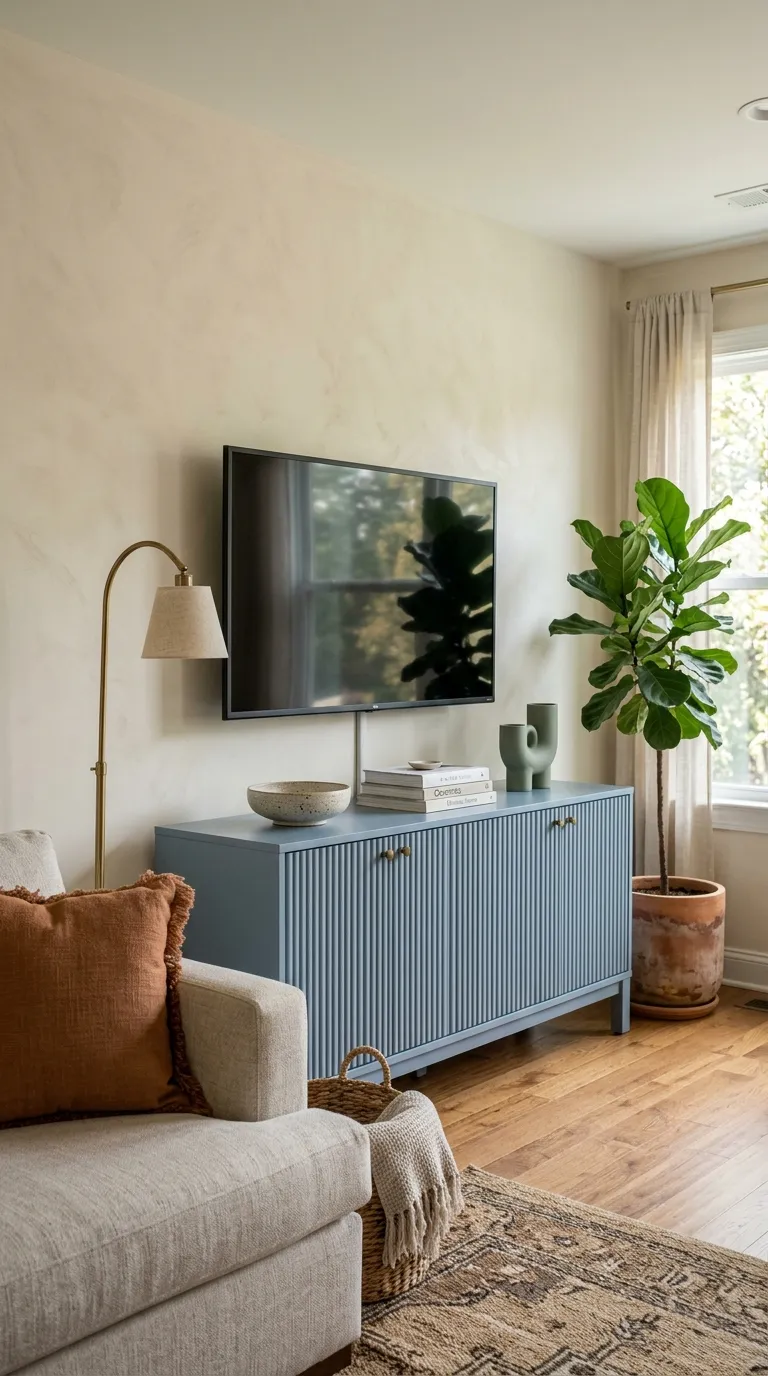
A fluted media cabinet adds texture without needing a busy wall treatment. Soft blue works especially well when you want color but still prefer a calm living room.
Keep the cabinet styling low and simple. Closed storage can hide remotes, game consoles, and cables, while the vertical grooves give the furniture enough detail to stand on its own.
Arched TV Niche
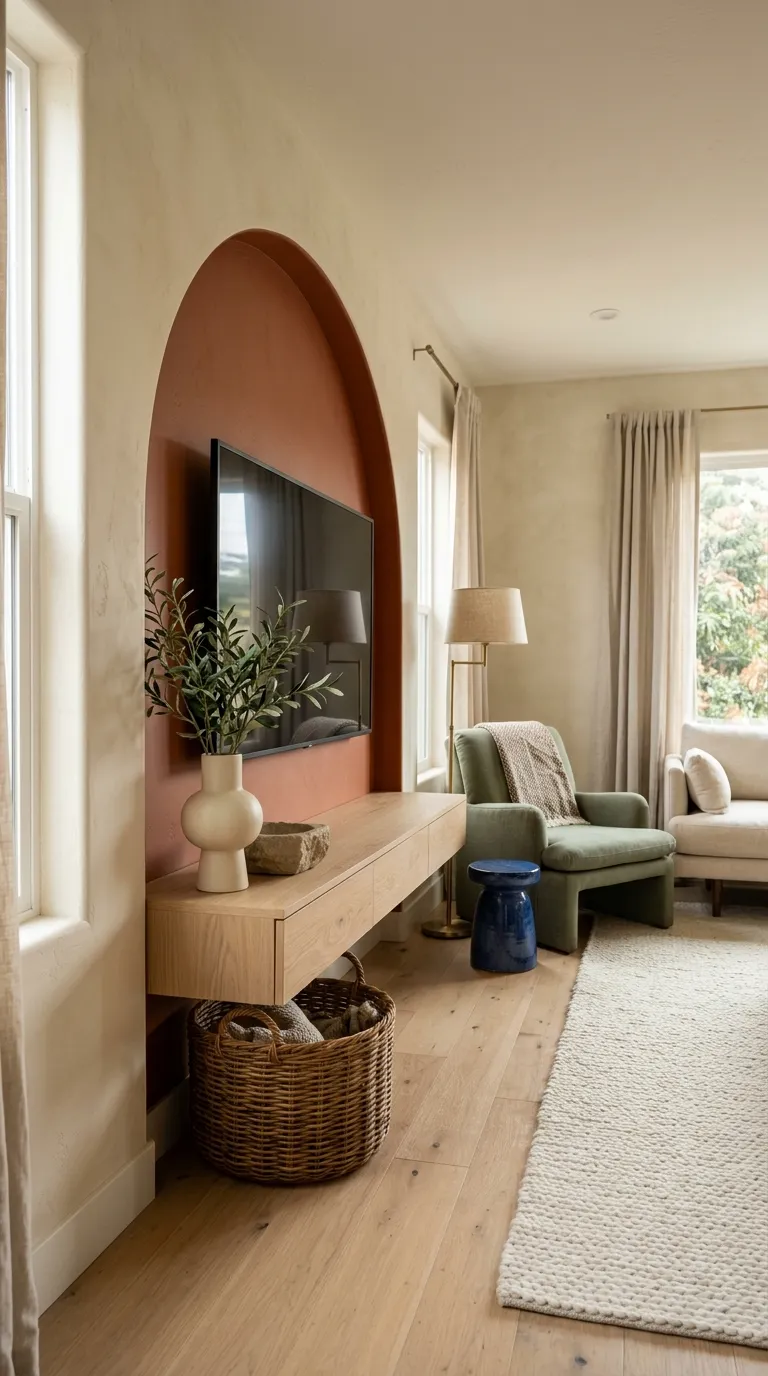
An arched niche gives the television a built-in appearance and softens the hard rectangle of the screen. Terracotta makes the feature feel warm, especially when paired with pale wood and cream walls.
If you’re planning a built-in niche, check the TV dimensions and cable route before construction. A few extra inches around the screen can make installation and future upgrades much easier.
Gallery Wall Frame
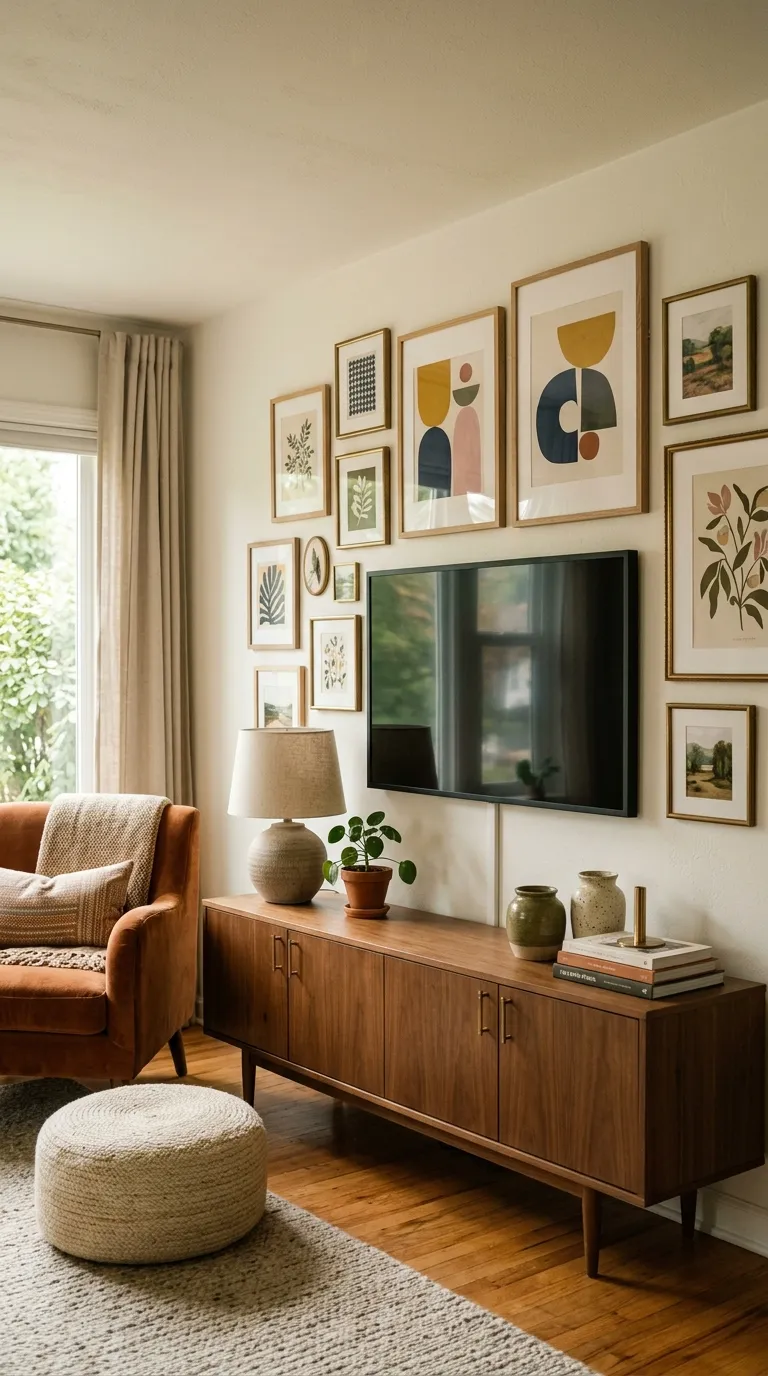
A gallery wall can make the TV feel like part of the room instead of a separate black rectangle. Choose artwork with a shared color palette, then vary the frame sizes to keep the arrangement relaxed.
Start by placing the largest pieces around the screen and fill smaller gaps afterward. Keep the artwork far enough from the television edges to avoid a cramped look, especially on a narrow wall.
Painted Panel Wall
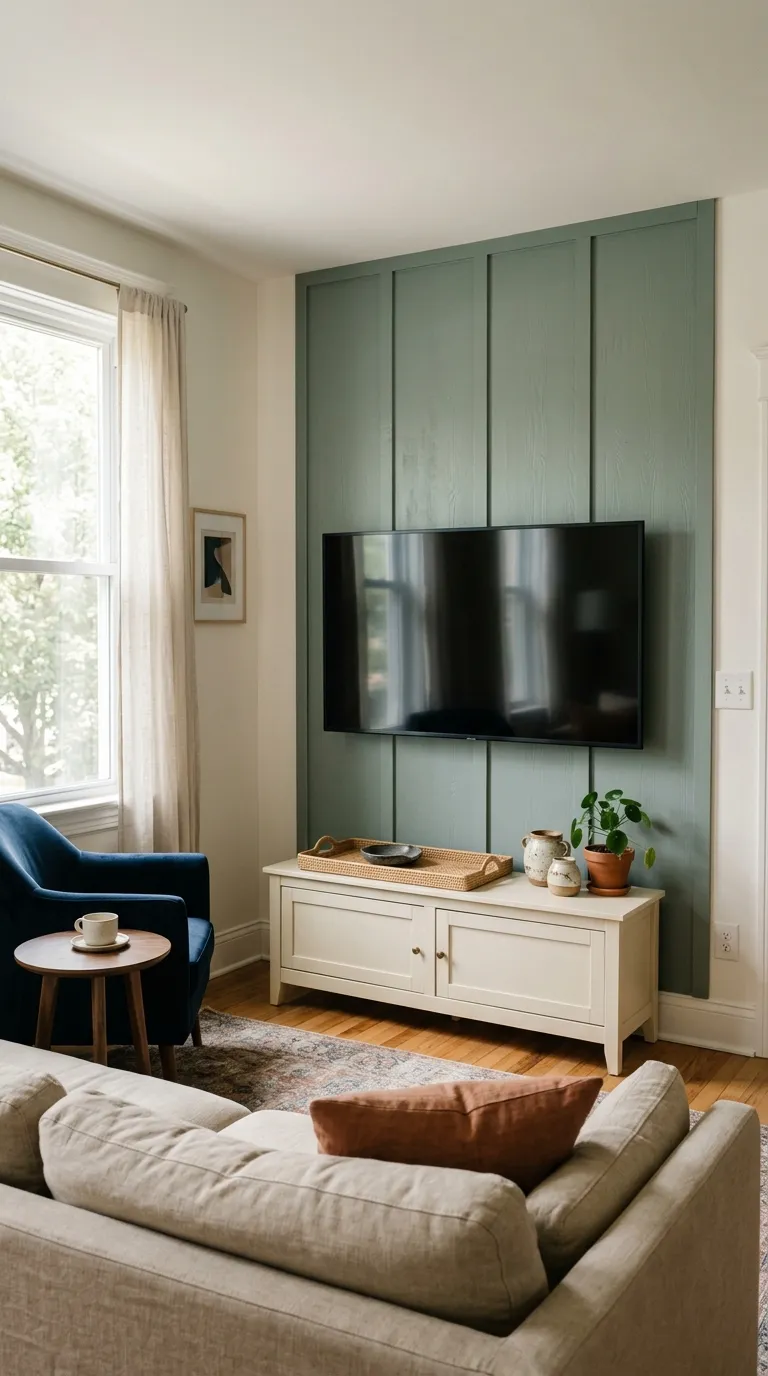
Painted wall panels give the TV area a structured look without needing a complicated built-in. Sage green feels restful, while narrow white edges keep the wall from looking too heavy.
For a smaller living room, use shallow decorative panels rather than deep molding. A slim profile takes up less visual space and still creates a clear frame around the television and media cabinet.
Floating Color Console
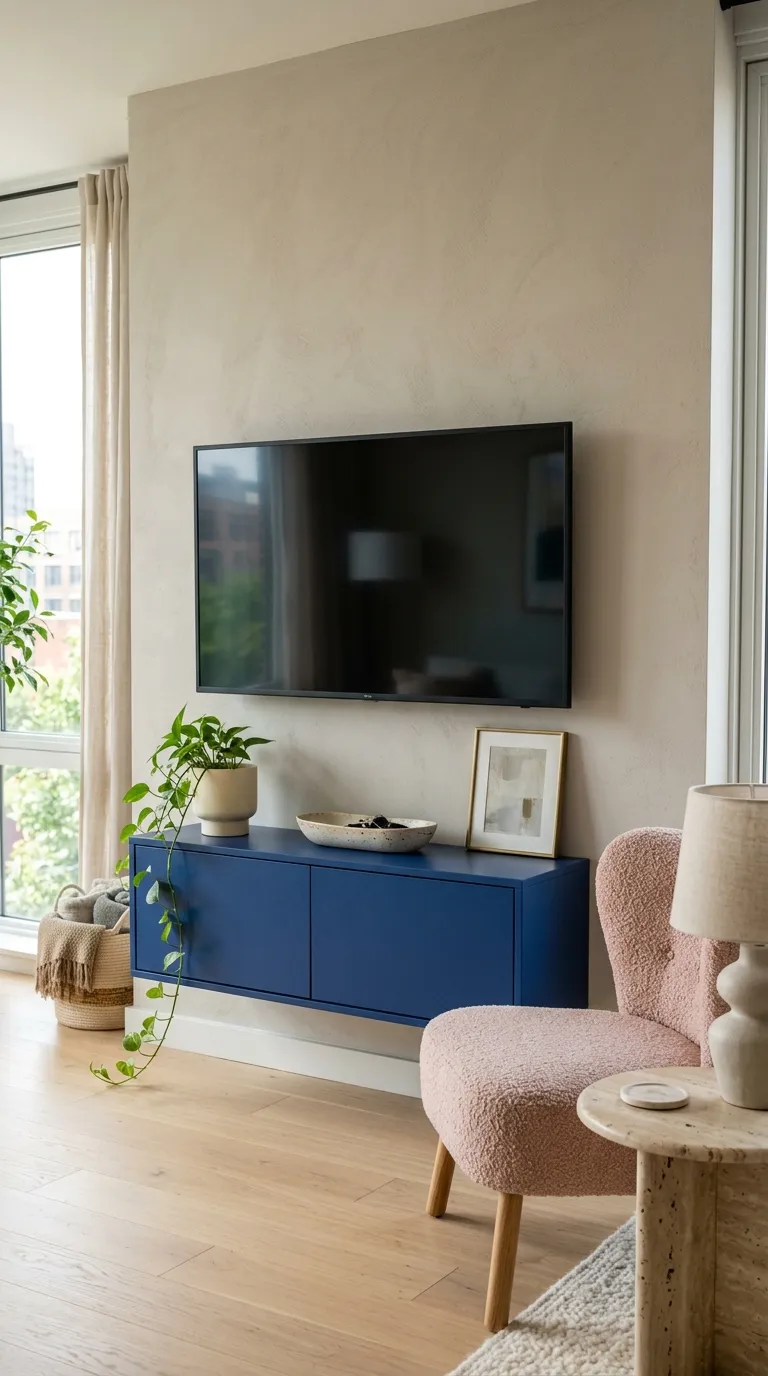
A floating console is useful when you want the floor to stay visually open. A bold finish such as cobalt blue can become the main color note while the surrounding walls and furniture stay quiet.
Keep the cabinet wide enough to visually support the screen, but don’t let it crowd nearby doors or walkways. Wall-mounted storage also makes cleaning beneath the TV area much easier.
Two-Tone TV Wall
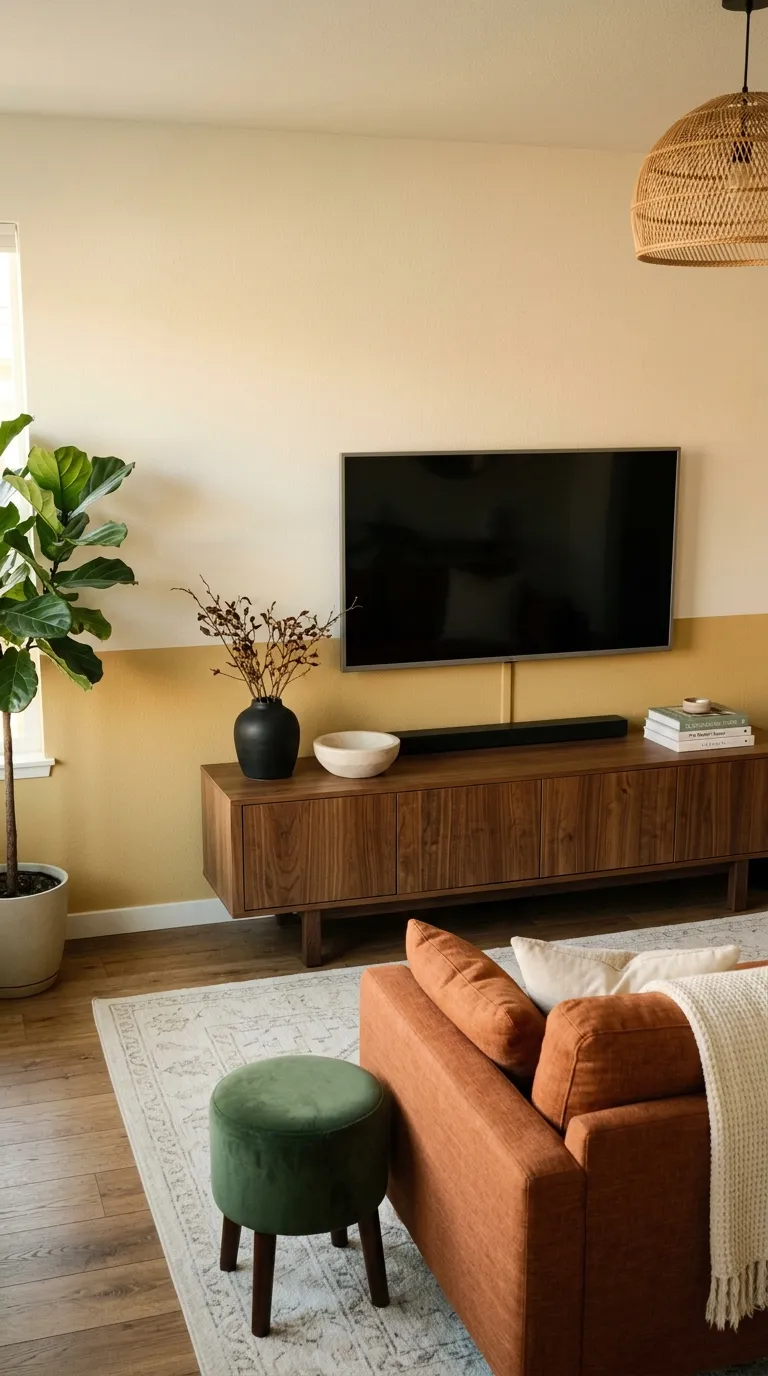
Two wall colors can give a TV area more depth while keeping the palette controlled. A warm cream above and muted mustard below creates a cheerful look that still feels grounded.
Place the color break where it supports the furniture rather than cutting directly through the screen. Test large paint samples first, because natural and artificial light can make the same shade look quite different throughout the day.
Stone Texture Wall
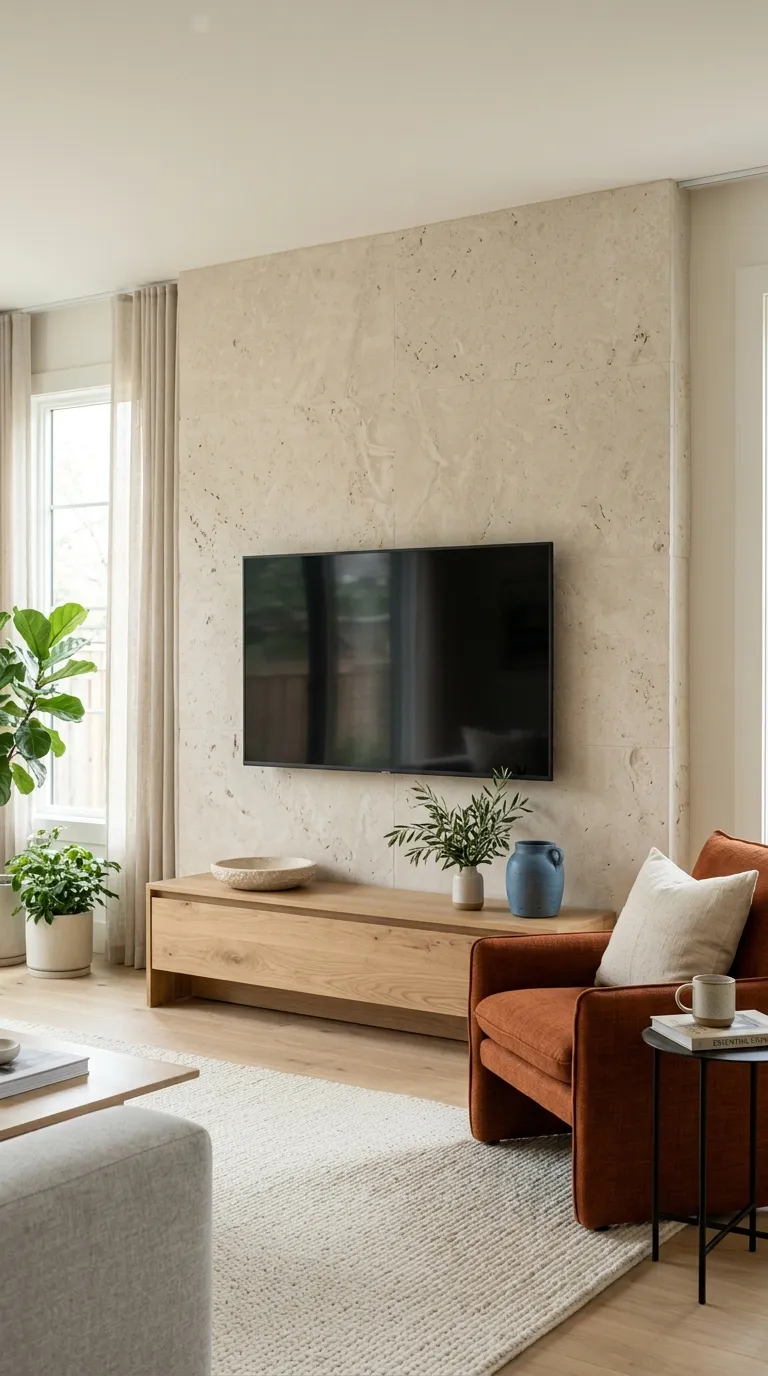
A stone-textured wall gives the TV area a solid backdrop while keeping the room comfortable and warm. Pale limestone tones pair nicely with colorful accents because they don’t compete with stronger shades.
If real stone feels too costly or heavy, a quality textured wall finish can create a similar visual effect. Keep the media cabinet simple so the wall texture remains the main feature.
Built-In Color Niches
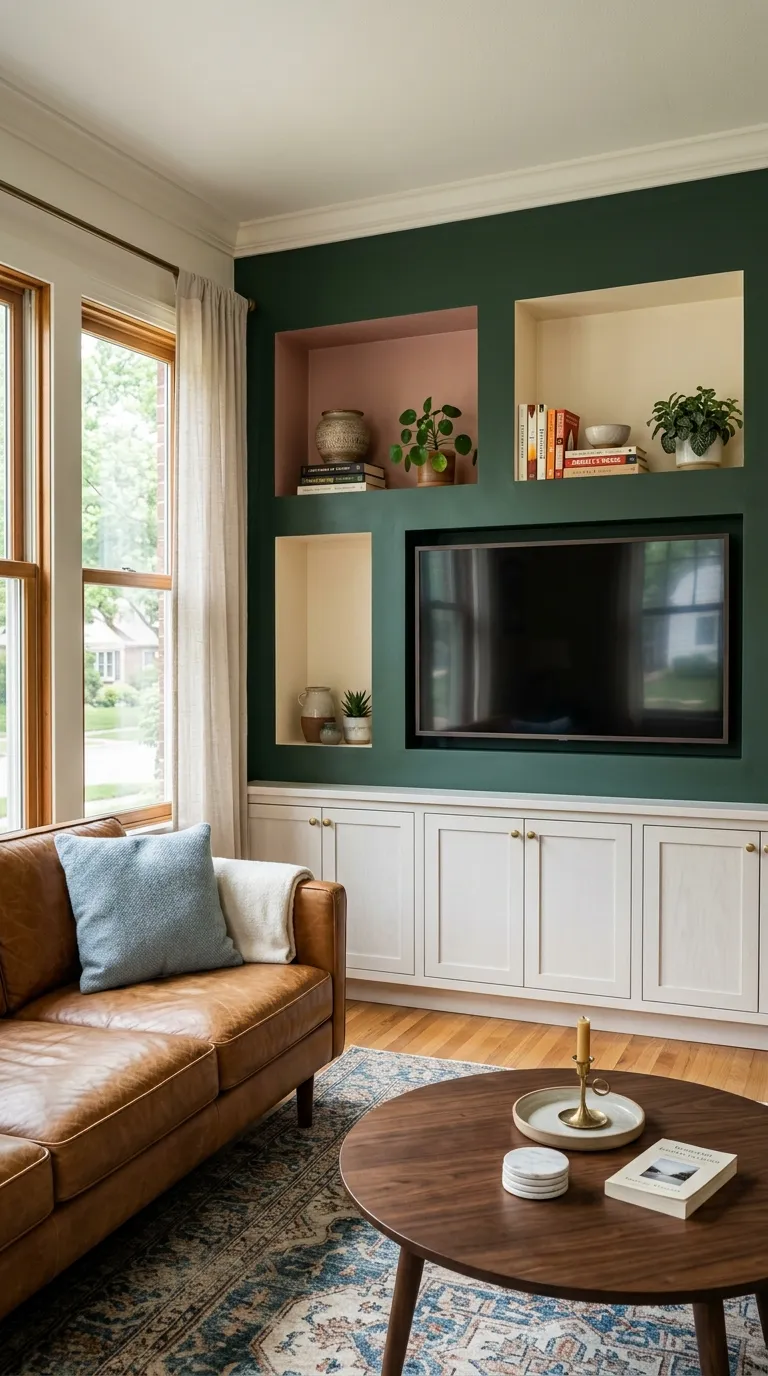
Built-in niches turn storage into part of the TV wall design. Painting the main structure one deep shade and the recesses lighter creates layers without filling the wall with extra objects.
Use the niches for items you actually enjoy seeing. A few books, pottery pieces, framed prints, and plants can make the shelves useful while keeping cables, devices, and everyday clutter inside the lower cabinets.
Retro Color Palette
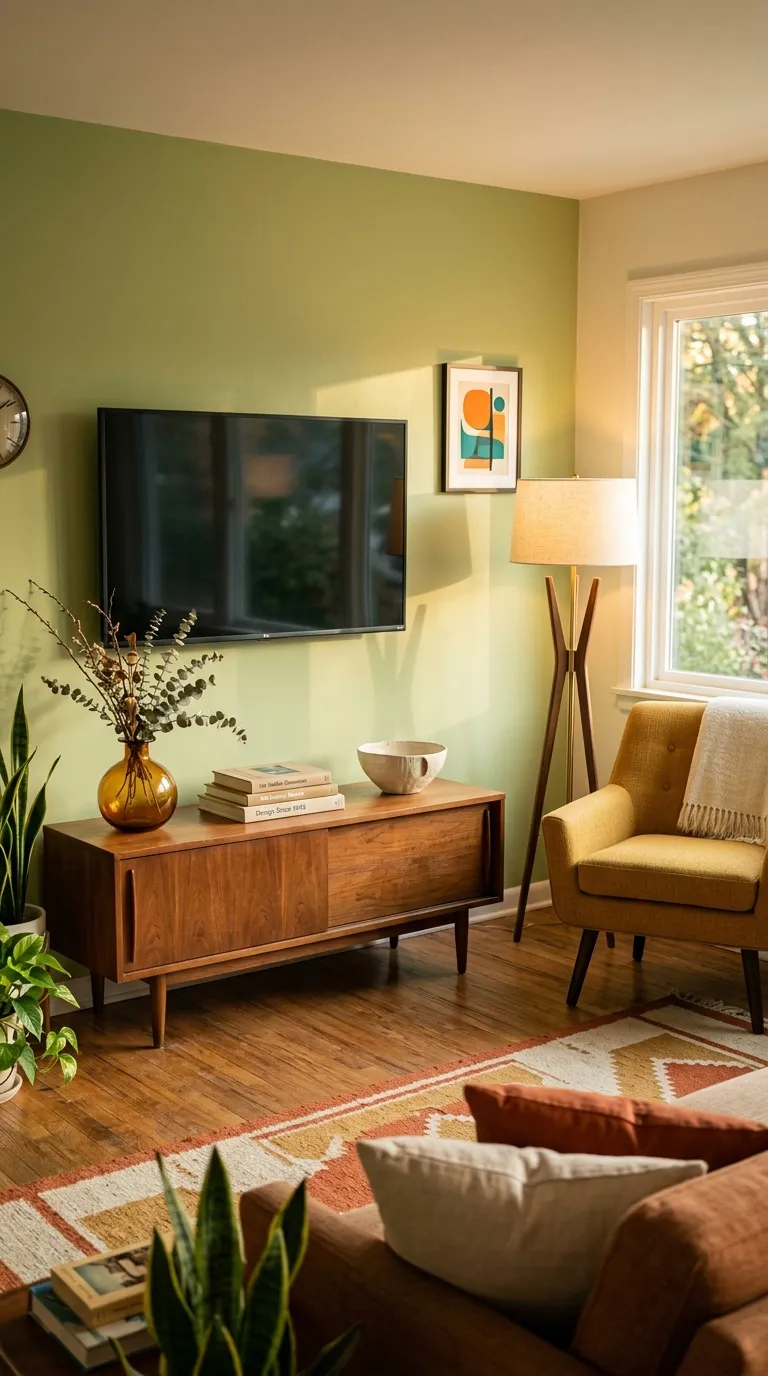
A retro palette can make the television area feel collected rather than overly modern. Avocado green, burnt orange, mustard, and teak wood work well because each shade has a warm, slightly softened quality.
Don’t try to make every item look vintage. A modern television and simple media equipment can sit comfortably with a retro console, rounded lamp, and patterned rug for a room that feels current but has character.
Blue Accent Wall
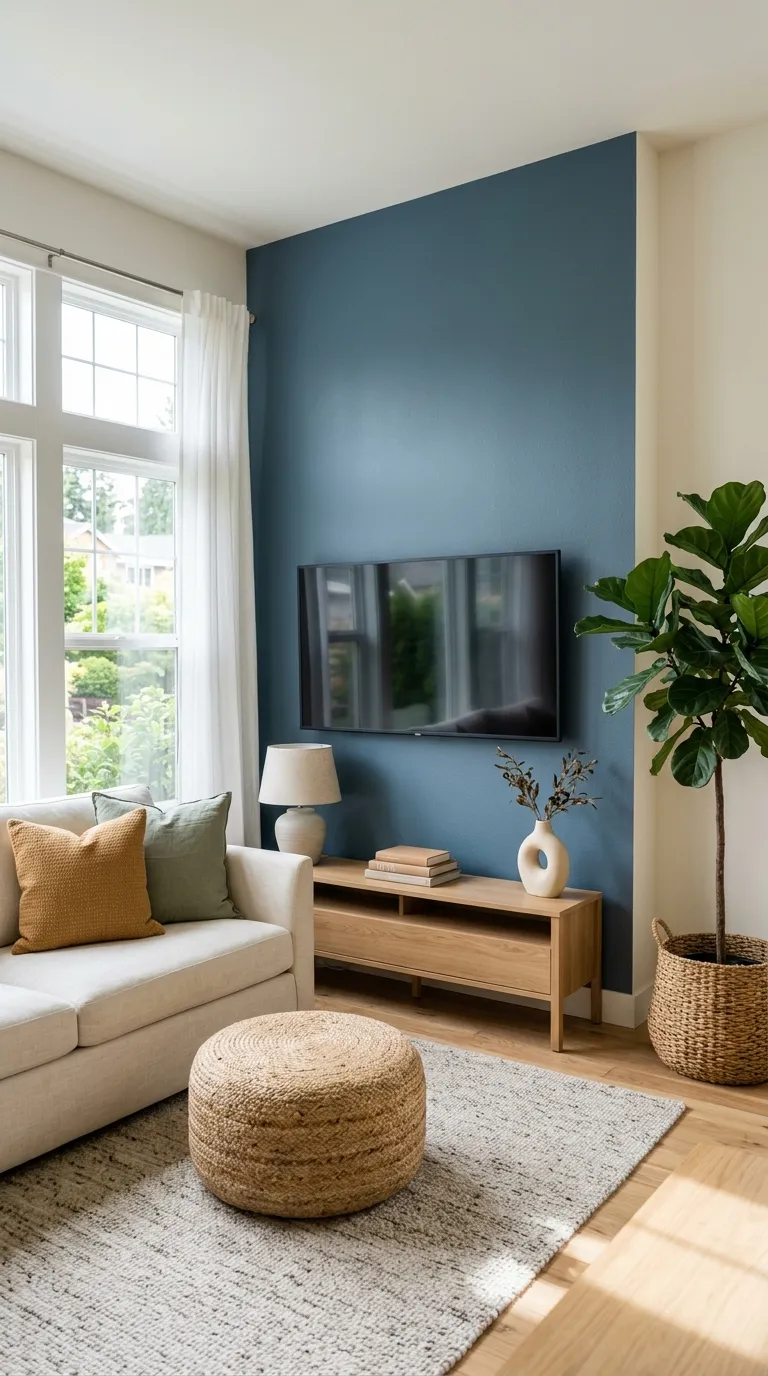
A blue accent wall can give the television a defined home without adding shelves or heavy architectural details. Dusty blue feels softer than a highly saturated shade and pairs naturally with cream, oak, sage, and ochre.
Use the wall as your main color statement, then repeat small touches of blue elsewhere in the room. This creates a visual thread without making the space feel like every piece came from the same set.
Terracotta Console Wall
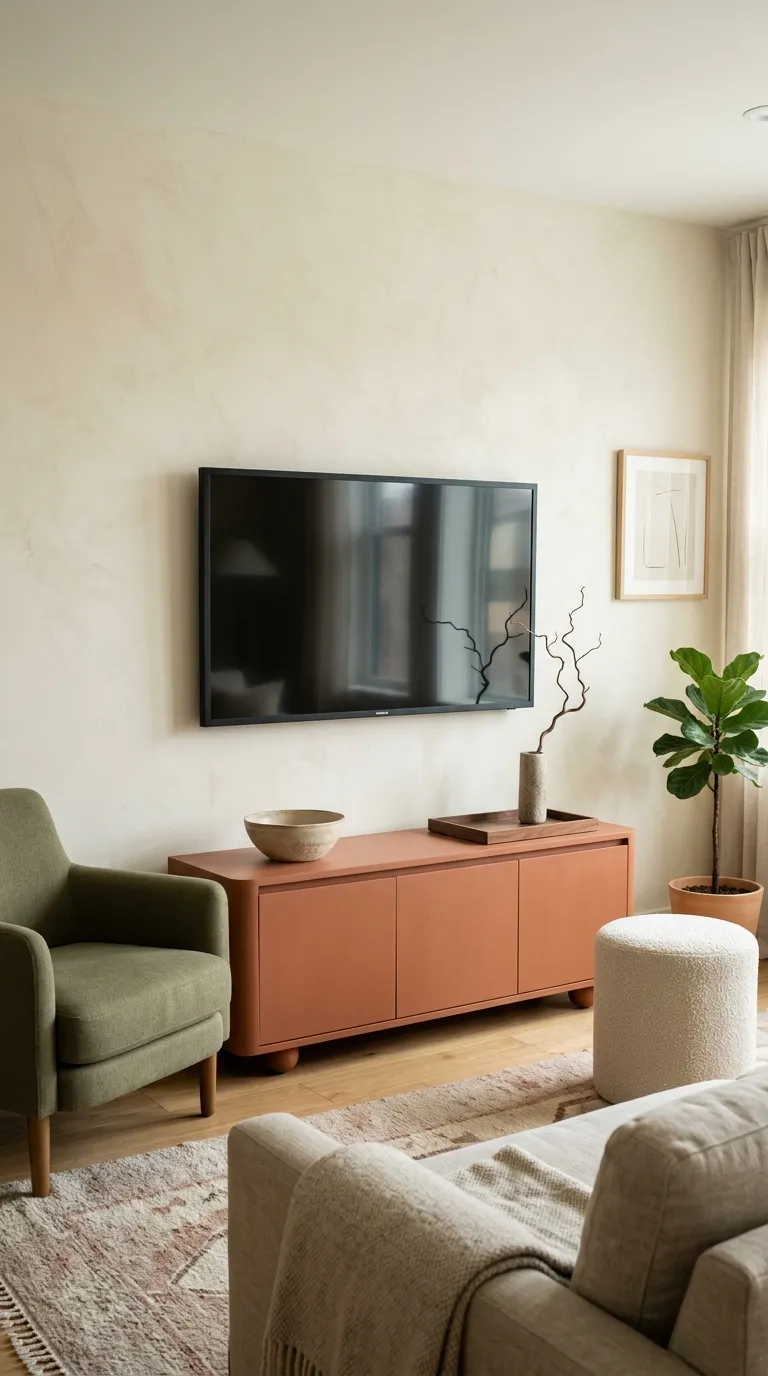
A terracotta media console adds color at furniture level instead of putting another strong shade on the wall. The warm clay tone works particularly well with cream walls, natural wood, olive green, and soft brown.
Choose closed doors if the TV area tends to collect clutter. The color gives the cabinet visual interest, while hidden storage keeps controllers, cables, and accessories out of sight.
Asymmetrical Storage
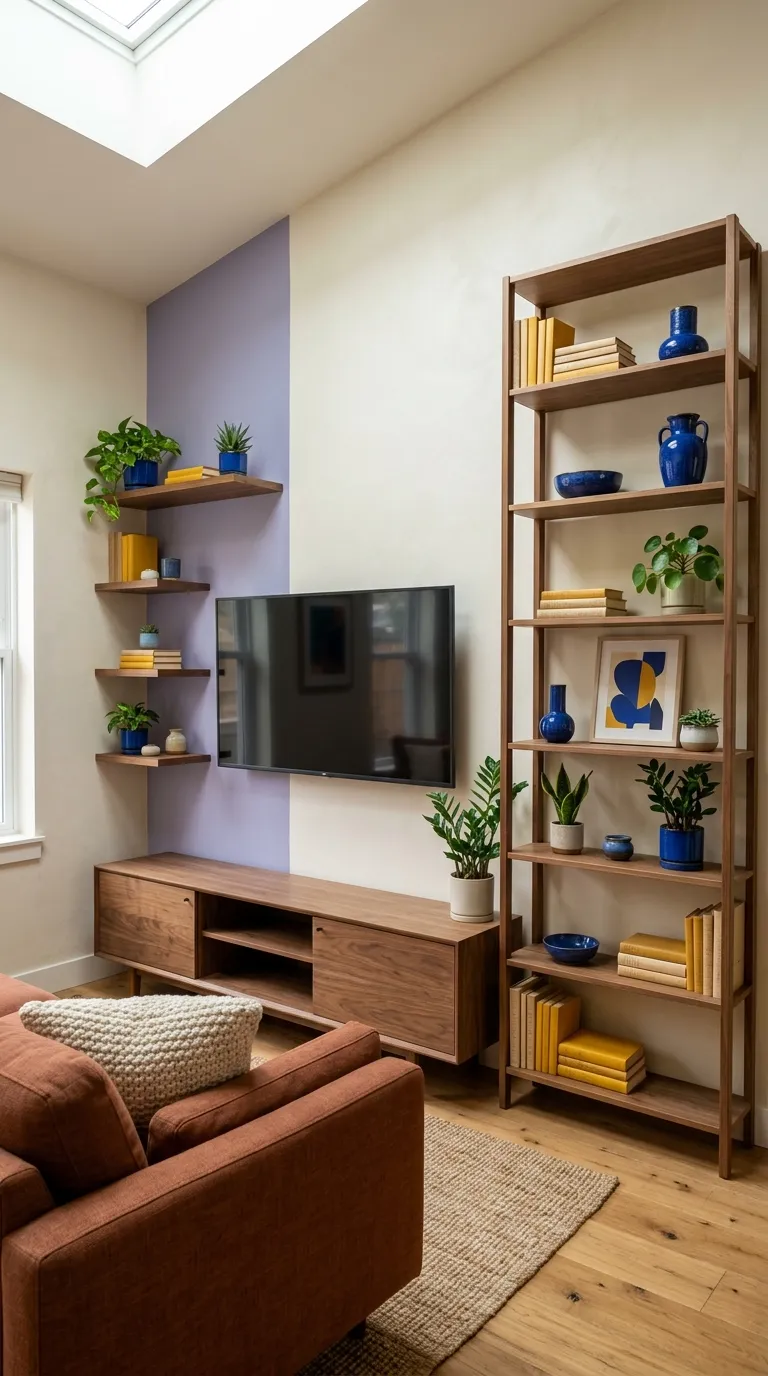
Asymmetrical storage keeps a TV wall from looking too rigid. One tall cabinet paired with smaller shelves can create balance while giving you room for books, plants, and decorative pieces.
Start with the television and media console as your anchors. Then add storage on one side and lighter shelving on the other, checking the open space around each piece so the arrangement feels intentional rather than crowded.
Rainbow Shelf Styling
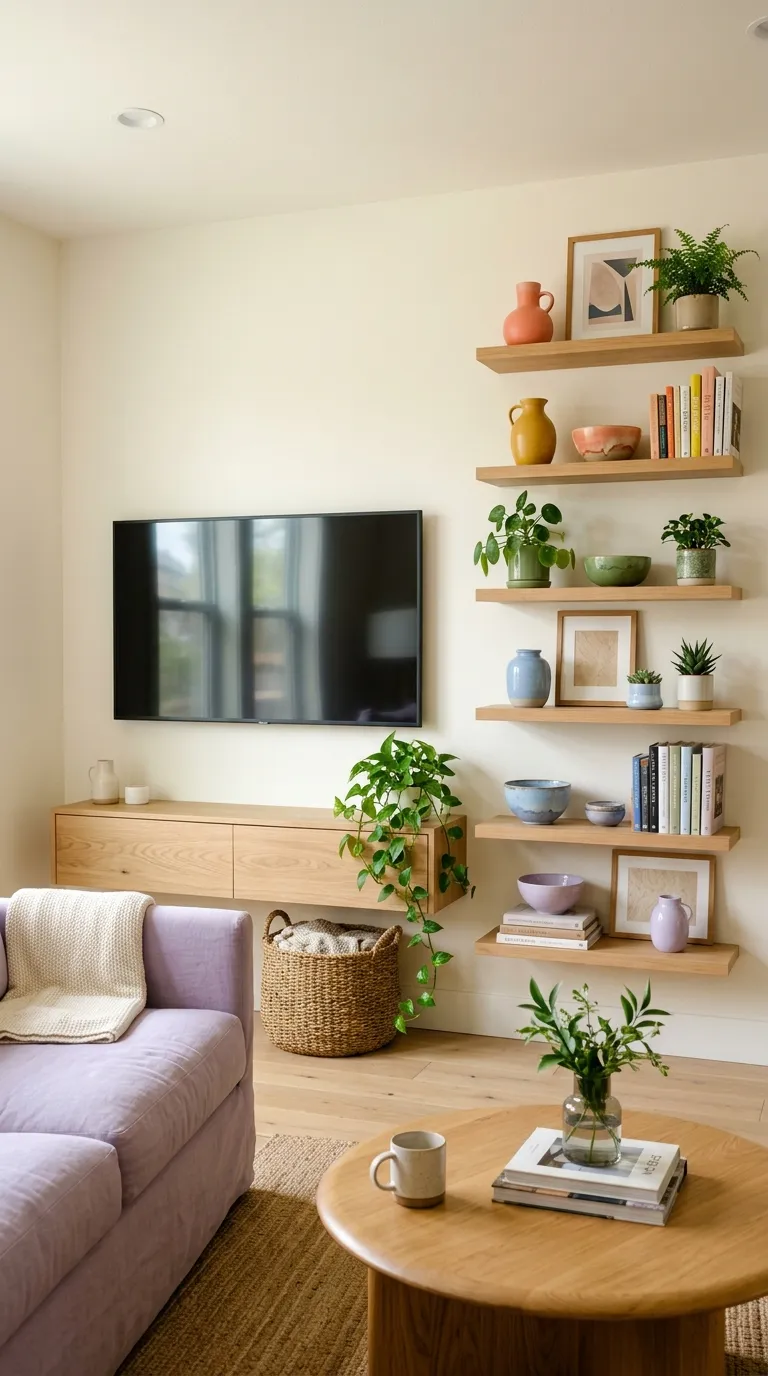
Rainbow decor can bring playful energy to a TV wall without requiring a rainbow-painted backdrop. The trick is to repeat several shades in small amounts while leaving plenty of neutral space between them.
Arrange colors in loose groups rather than lining them up like a display rack. Mix books with pottery and greenery so the shelves feel like part of a real living room instead of a collection of color samples.
Minimal Black Console
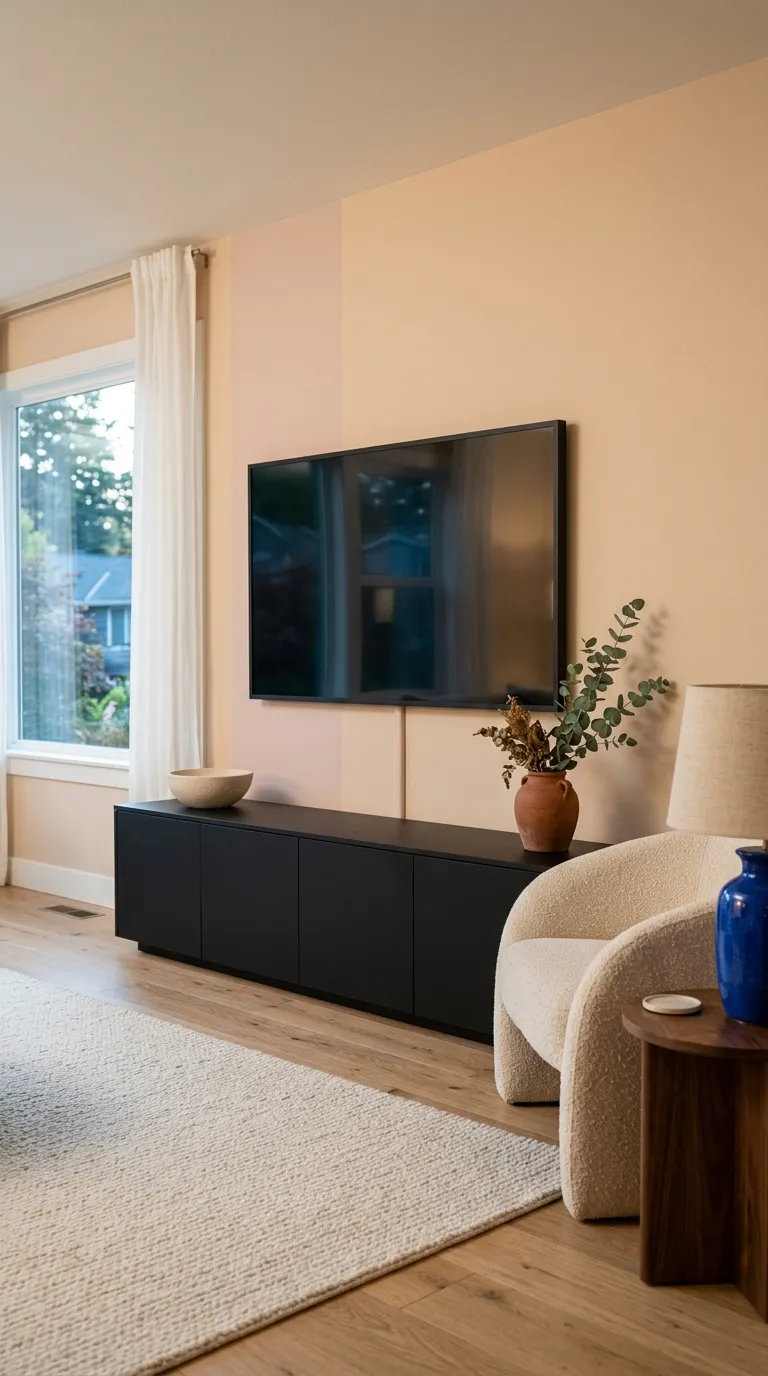
A black console gives colorful surroundings a strong visual anchor. Against a soft peach or blush wall, the dark furniture feels crisp while the lighter colors keep the room from becoming too heavy.
Choose a low console with closed storage when you want a clean media area. Its simple shape can balance a colorful rug, artwork, or accent chair without adding another complicated pattern to the wall.
Green Cabinet Contrast
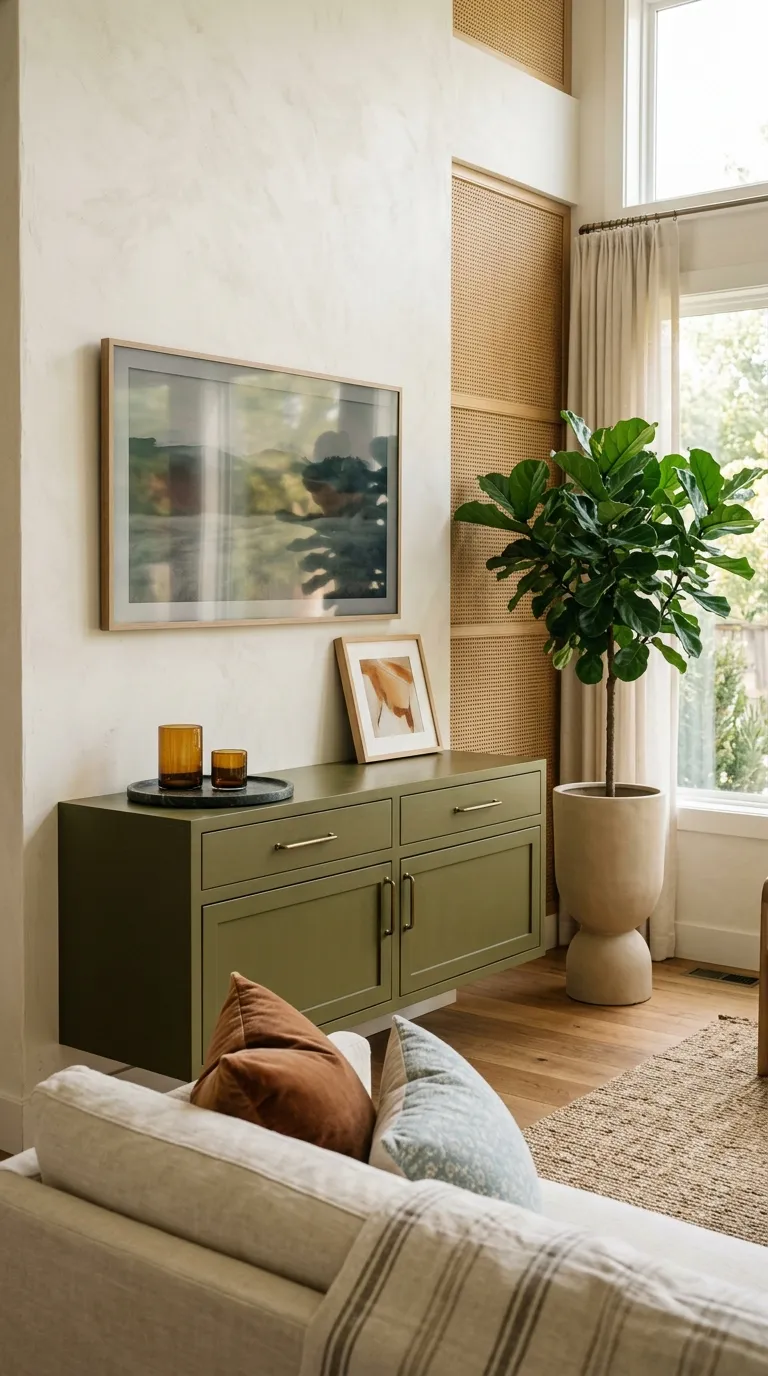
An olive cabinet brings earthy color directly into the media furniture. It pairs naturally with cream, rust, pale blue, brass, and natural fibers, giving you several easy ways to repeat the palette around the room.
Use brass hardware in small amounts so it doesn’t compete with the green finish. If the cabinet already has strong color, let the TV wall stay quiet and use texture, rather than more bold paint, for added interest.
Soft Pink TV Wall
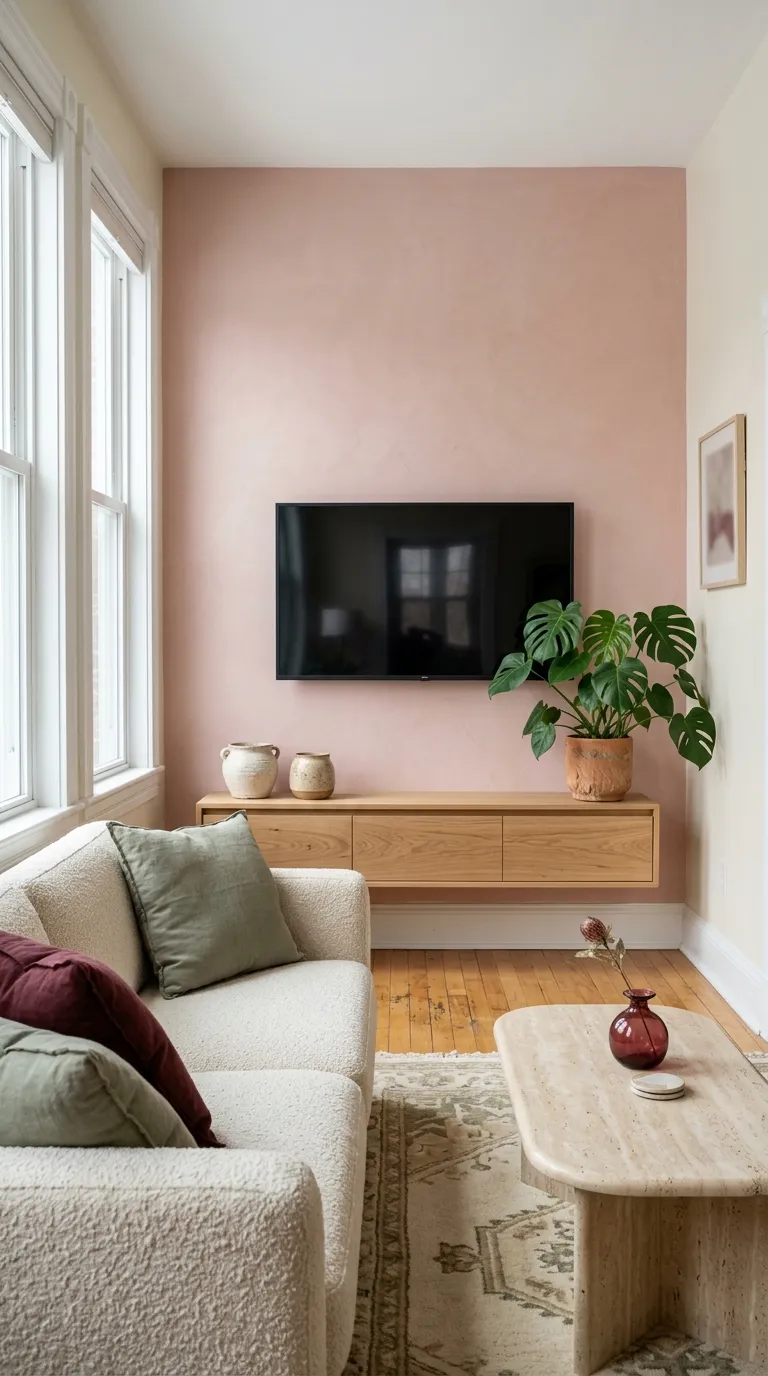
Soft pink can make a TV wall feel warm without turning the room overly sweet. Dusty or muted versions work especially well with pale wood, cream upholstery, sage green, and deeper red accents.
Keep the rest of the wall simple so the color has room to work. A clean TV stand with rounded furniture nearby can soften the screen’s sharp edges and give the living room a relaxed look.
Colorful Brick Feature
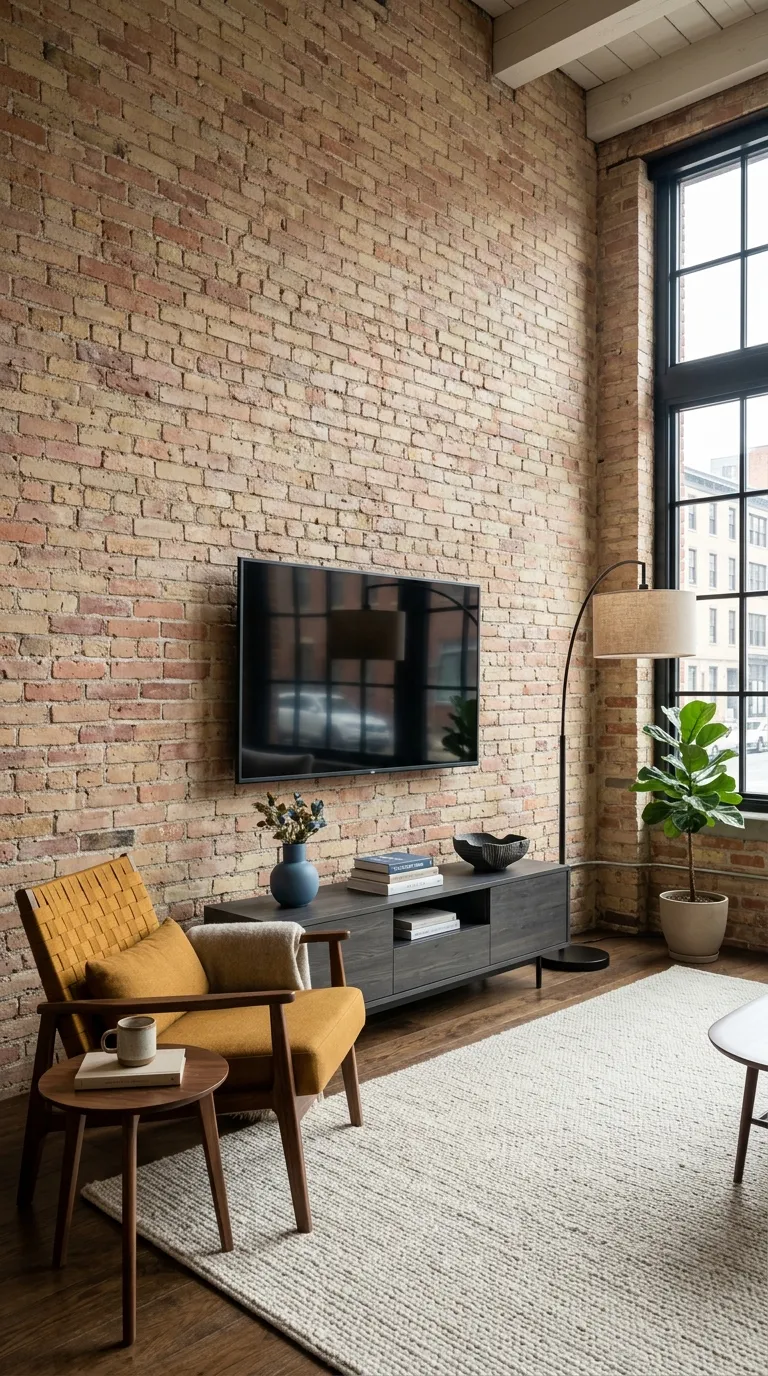
A painted brick wall adds texture and personality around a television. Muted red and peach tones can feel especially inviting when balanced with charcoal furniture, warm wood, and cream textiles.
If the existing brick feels too strong, soften it with a limewash or mineral paint finish. Keep the TV stand visually simple so the brick remains the star rather than competing with several busy patterns.
Layered Color Panels
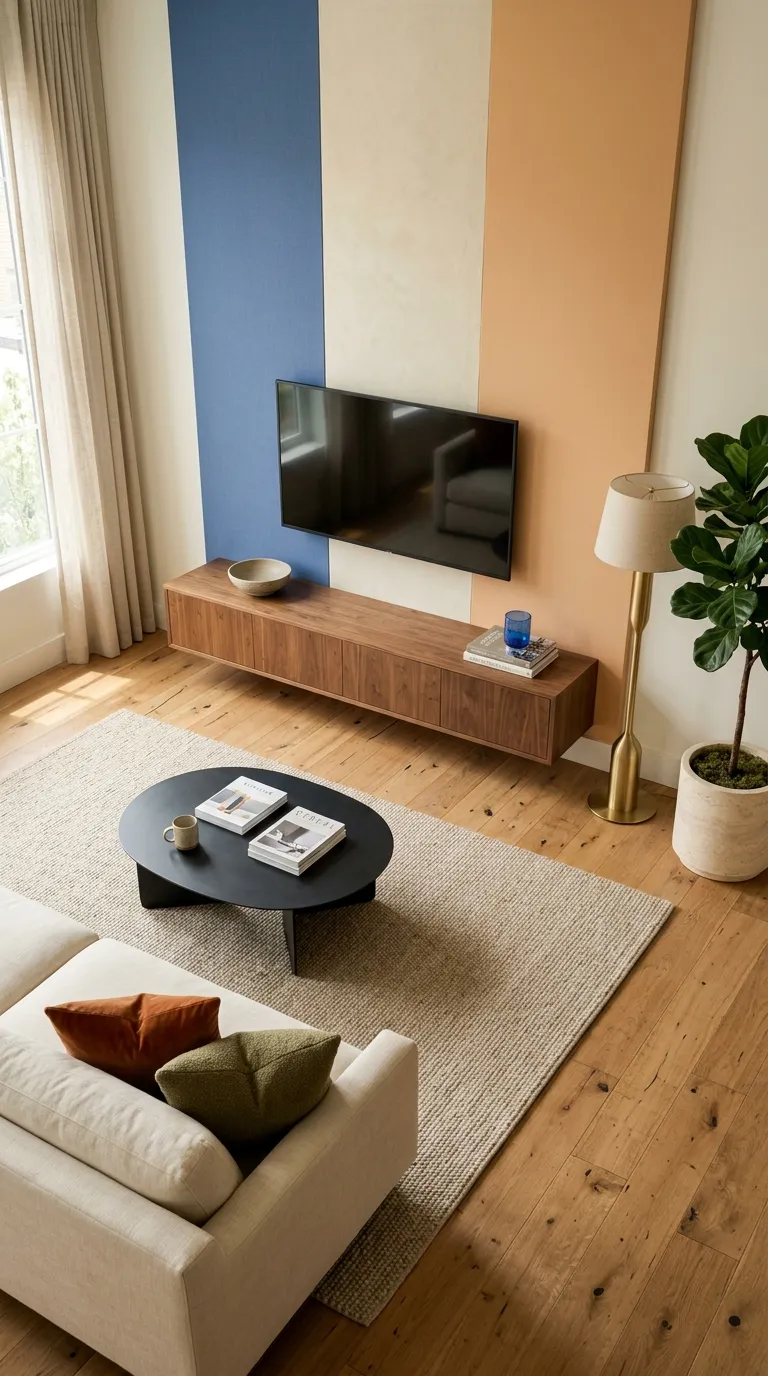
Layered color panels give you a way to use several shades without painting the entire room one bold color. Vertical sections can also create a strong frame around the TV and console.
Choose one dominant shade, one supporting color, and one neutral. That simple formula keeps colorful TV stand wall design ideas looking polished instead of turning the wall into visual clutter.
Patterned Tile Backdrop
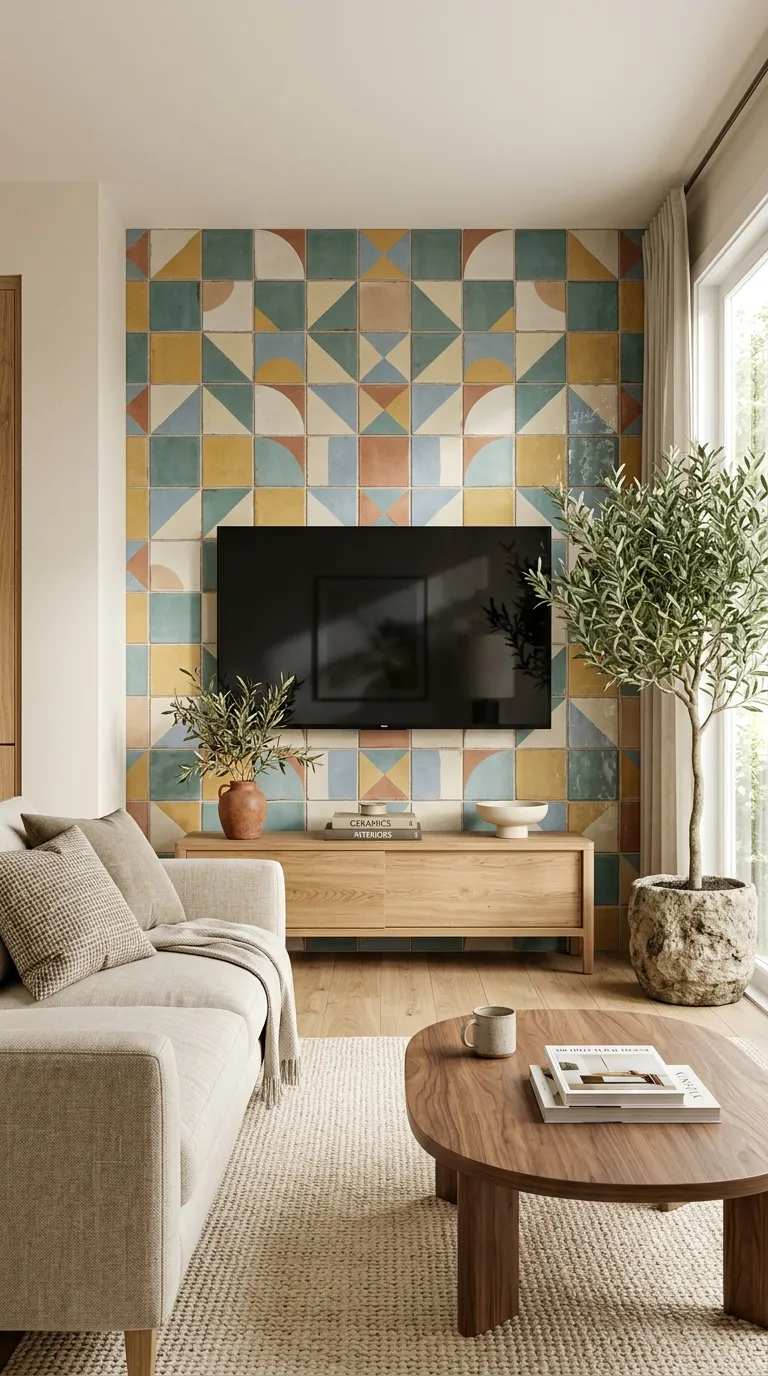
Patterned tile can turn the TV wall into a strong focal point while giving the room plenty of color. Small geometric designs work well because they add detail without requiring extra wall art.
For a calmer look, keep the tile colors muted and pair them with simple furniture. A plain wood console and neutral sofa can give the patterned surface enough breathing room.
Mustard Accent Niche
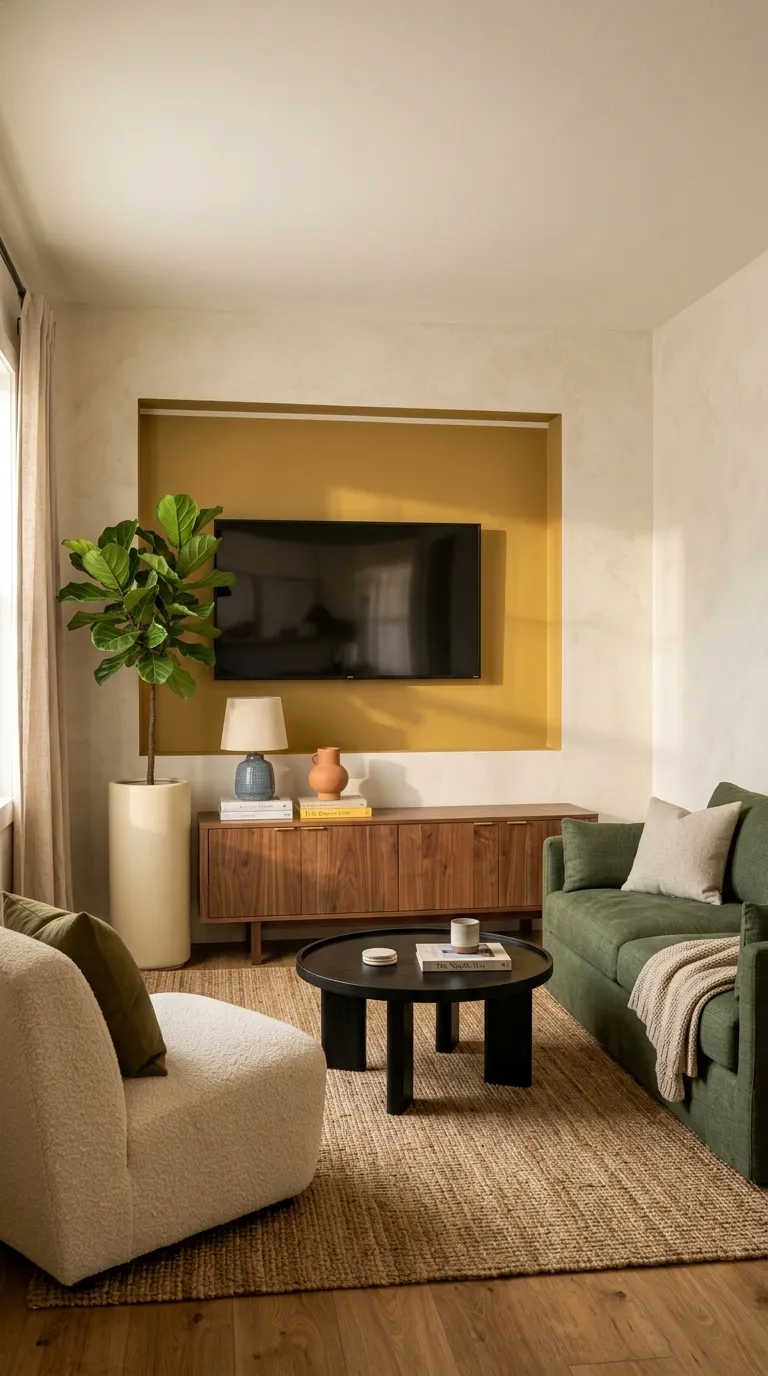
A mustard niche gives the television a defined place without covering the whole wall in a strong shade. The warm yellow pairs naturally with walnut, cream, terracotta, and deep green.
Use the niche to hide cables and keep small media devices tucked below the screen. A cabinet with closed storage also keeps the colorful wall from feeling crowded.
A Colorful TV Wall That Feels Like Home
The best TV wall brings color, texture, storage, and furniture together without making the screen feel out of place. Whether the backdrop uses painted panels, warm wood, patterned tile, or a soft accent shade, the goal is to create a setting that feels connected to the rest of the living room.
Start with one main color and build around it with two or three supporting tones. Keep the console practical, leave some open space, and choose decor that adds personality without crowding the screen.
Elira Montclair
Elira writes about timeless home decor, kitchen styling, and practical interior ideas. Her work blends warm, inviting aesthetics with simple decorating tips that make everyday spaces feel beautiful and comfortable.