Transform Your Space with Minimalist TV Stand Ideas That Feel Luxe

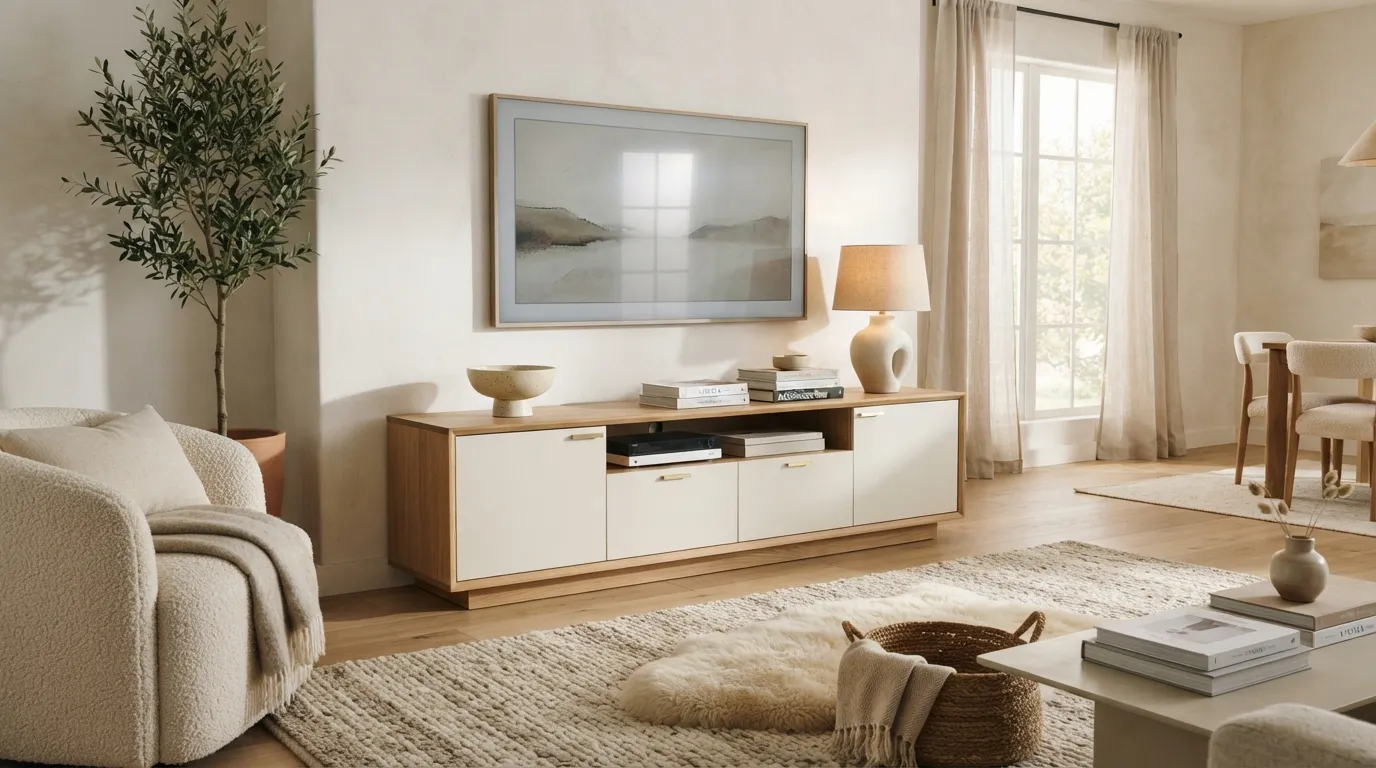
A TV wall can set the tone for your whole living room. The right minimalist tv stand ideas can make your setup feel calm, polished, and easy to live with, even when the room has plenty of everyday clutter. Think low profiles, simple lines, warm wood, hidden storage, and a few carefully chosen objects rather than a crowded media center.
You don’t need a huge console or a costly renovation to get the look. A narrow wall-mounted cabinet, natural oak console, or matte black unit can give your television area a clean foundation while leaving room for art, plants, books, and soft lighting. These ideas will help you choose a TV stand that looks intentional while still handling the practical needs of your space.
Warm Oak Simplicity
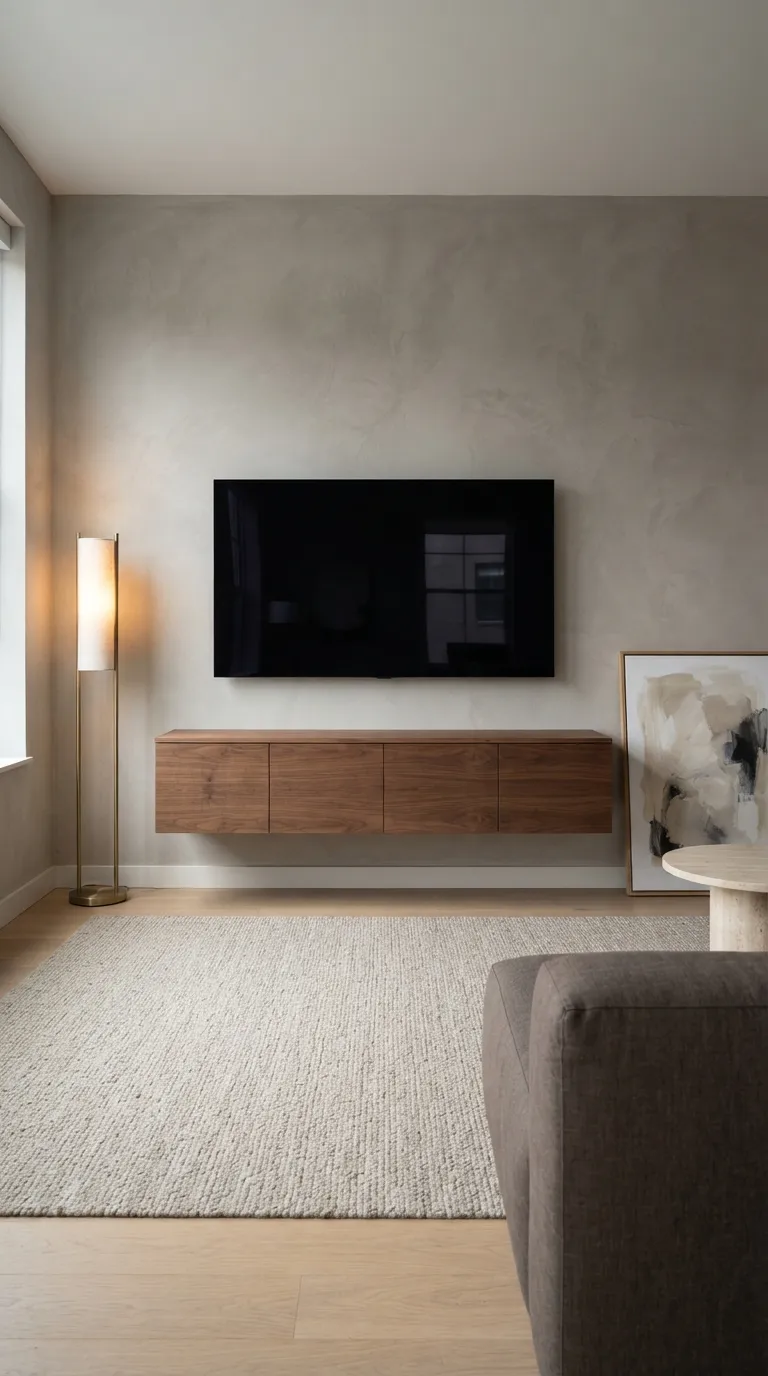
Warm oak gives a minimalist TV area a softer feel than stark white or glossy finishes. Choose a console with a long horizontal shape, flat cabinet fronts, and visible wood grain for a piece that feels substantial without looking heavy. If your television is wide, a stand that’s slightly wider can create a balanced frame around the screen.
Keep the styling restrained. Two stacked books, one ceramic object, and a small branch are enough for the top surface, while closed storage keeps remotes, controllers, and spare cables out of sight. This approach works especially well in open-plan rooms because the natural wood connects easily with nearby flooring, dining furniture, or shelving.
Floating Media Cabinet
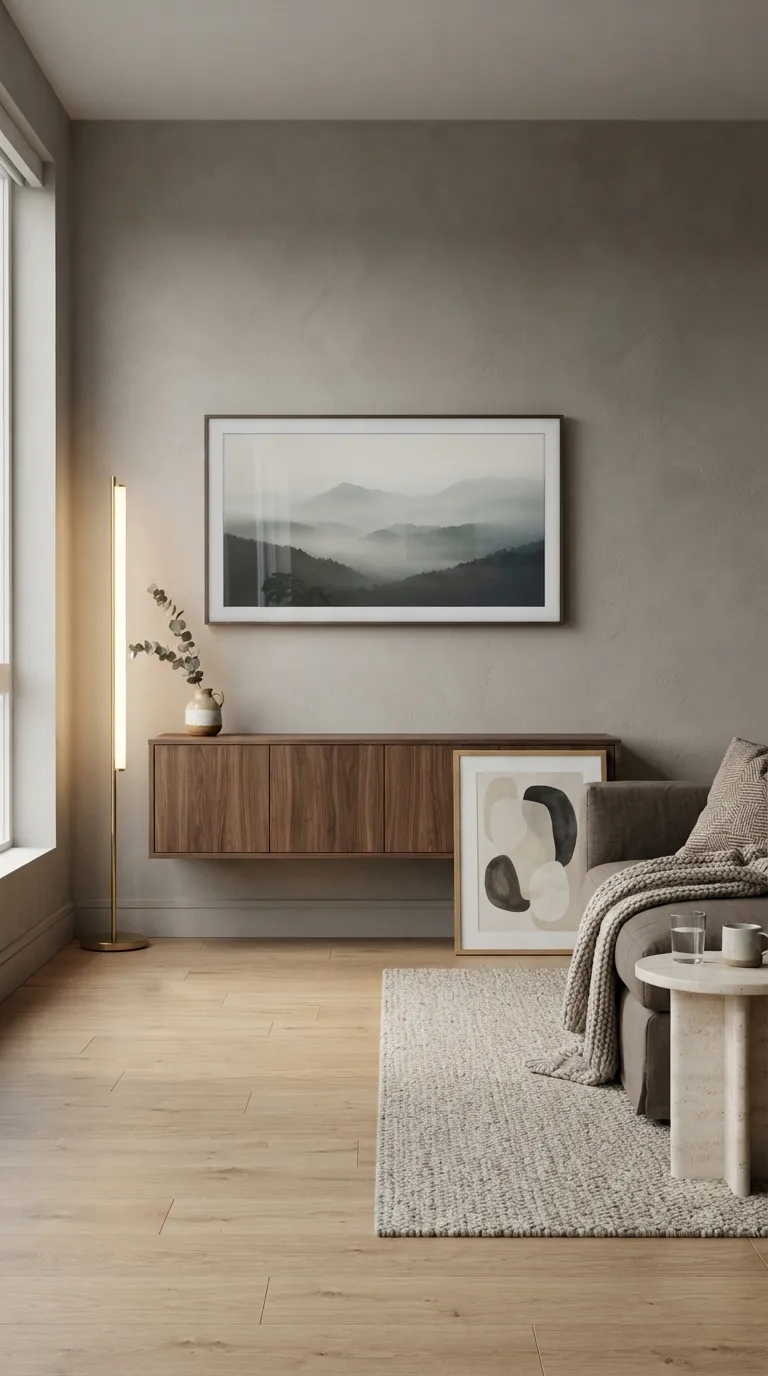
A floating cabinet creates a lighter visual footprint because the floor stays visible underneath it. This can be useful in compact living rooms where a bulky console may make the television wall feel crowded. A unit with drawers or push-to-open doors also gives you storage without adding busy hardware to the wall.
Measure carefully before choosing this style. The wall needs to support the cabinet and the weight of anything stored inside, while the mounting height should leave the television at a comfortable viewing level. Add one vertical element, such as a floor lamp or tall plant, to balance the wide horizontal cabinet without filling every inch of the wall.
Black and Natural Wood
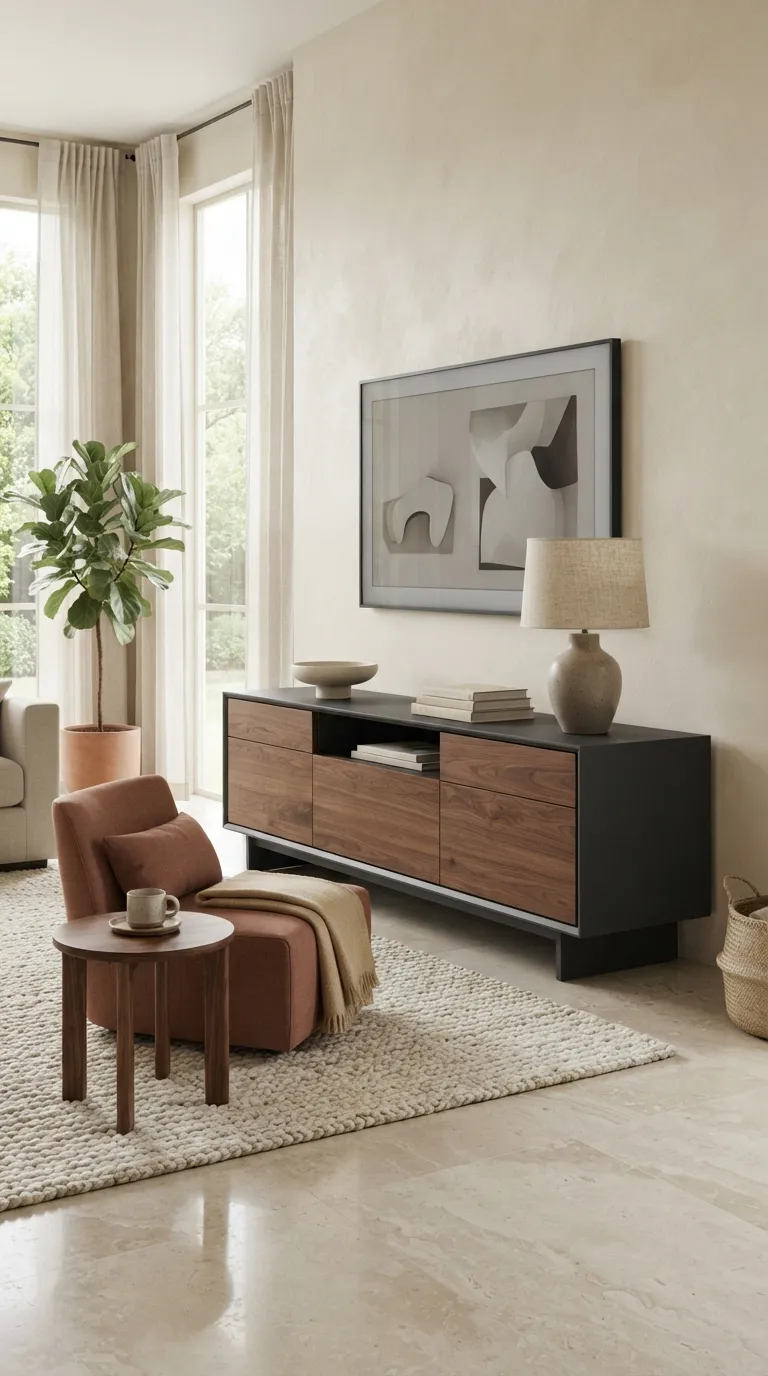
Black and natural wood make a strong pair when you want a TV stand with a little more visual weight. The dark frame anchors the television, while walnut or oak fronts keep the room from feeling too cold. Look for simple rectangular shapes instead of ornate legs or decorative trim.
This combination also gives you an easy color guide for the rest of the room. Repeat the black in a lamp or picture frame, then bring in warm wood through a side table or shelving. Keep larger textiles lighter so the media area remains defined without becoming the darkest part of the room.
Slimline White Console
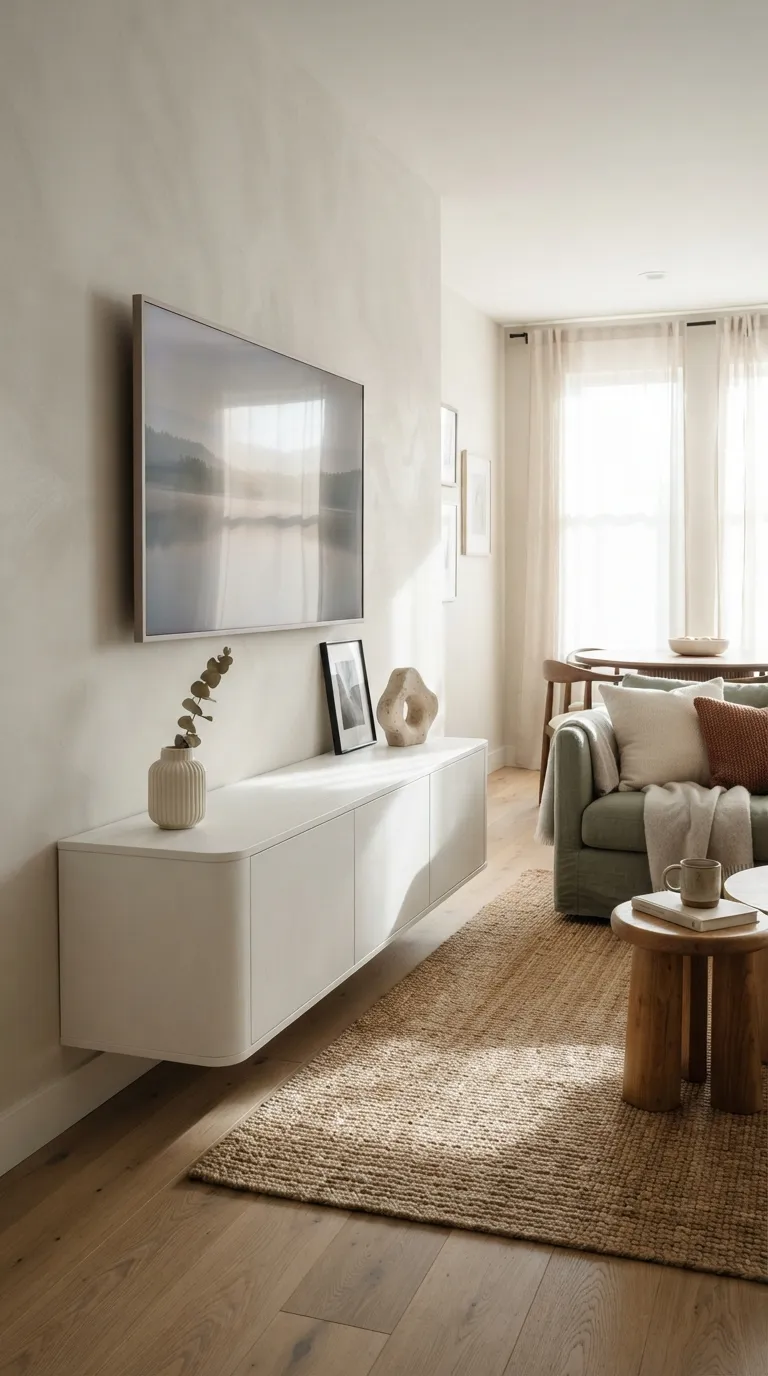
A slim white console can make a television wall feel almost weightless. Choose one with enough depth for your equipment but avoid oversized cabinets that extend far into the room. Handle-free doors keep the front visually quiet and make the whole piece read as one clean shape.
White works best when you give it texture nearby. A woven rug, linen curtains, pale wood, or handmade ceramics can keep the room from feeling flat. For a small apartment, this is one of the most useful minimalist tv stand ideas because the light finish helps the furniture recede while the television remains easy to see.
Built-In Wall Storage
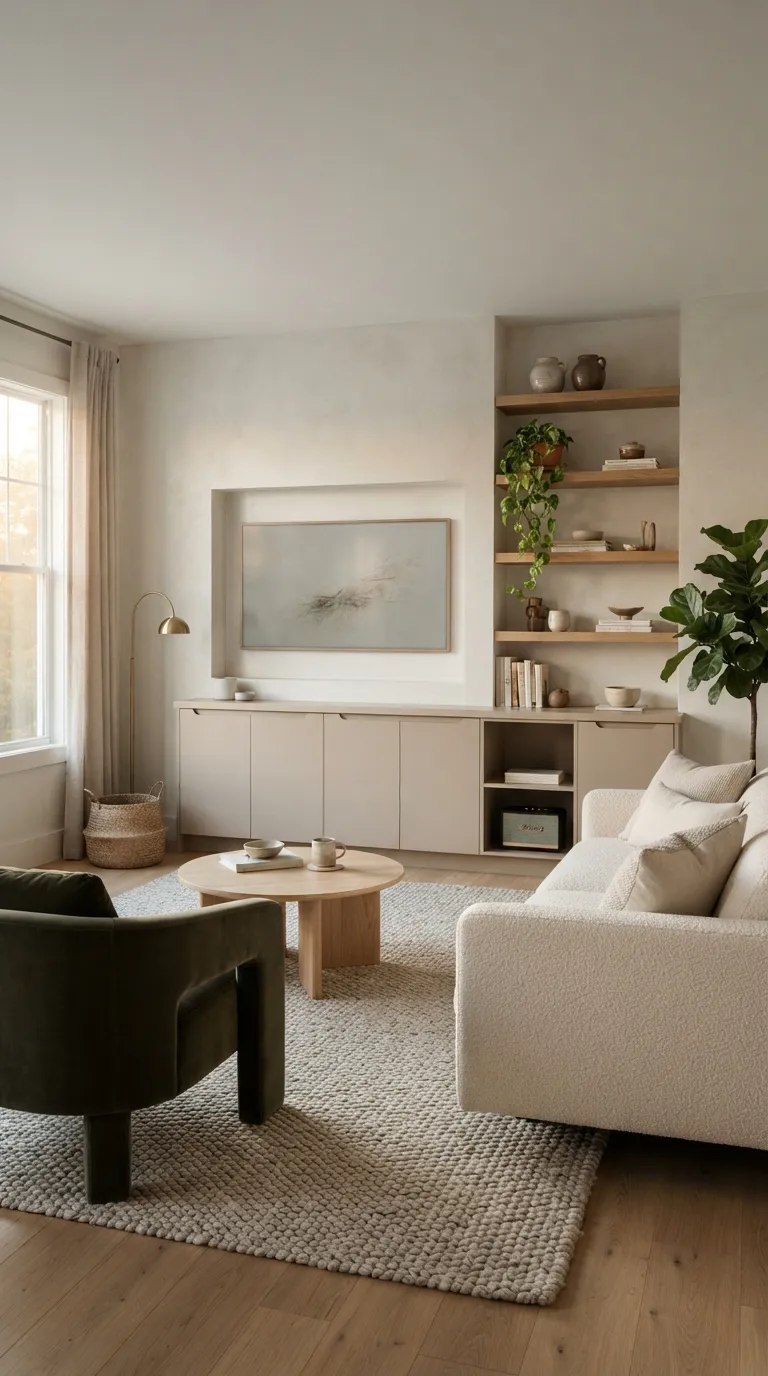
Built-ins are useful when your TV wall needs more than a place to hold electronics. A low cabinet can hide equipment and household items, while one open shelf gives you space for a few decorative pieces. Keeping most storage closed prevents the wall from becoming a display zone filled with small objects.
If you’re planning a custom unit, let the television guide the layout. Experienced interior designers often leave breathing room around the screen instead of filling every available section with cabinetry. diy tv stand ideas on a budget A restrained arrangement makes the TV feel integrated without turning the entire wall into one large storage system.
Mid-Century Low Profile
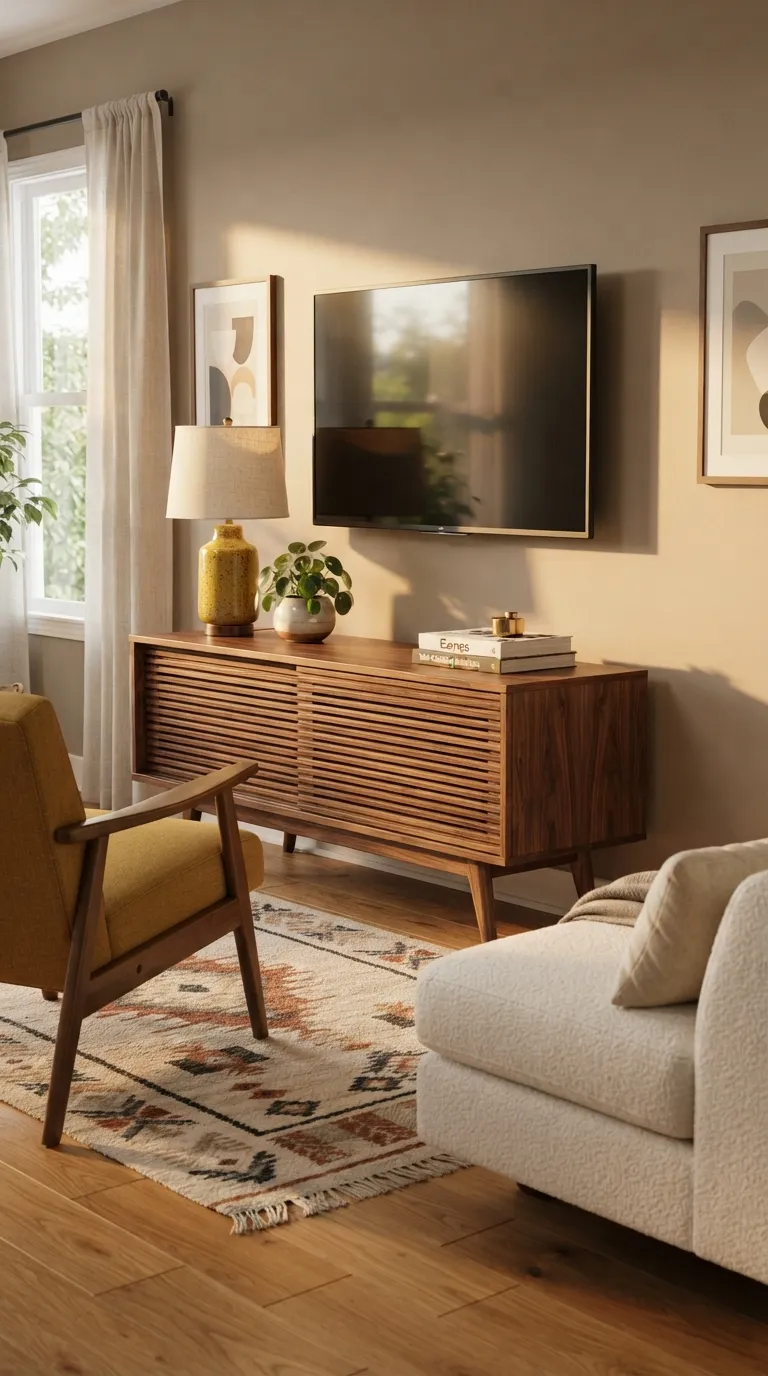
A mid-century console adds character without breaking the clean look of a minimalist room. Tapered legs lift the cabinet from the floor, while sliding or tambour doors give the front some texture without adding visual clutter. Walnut works particularly well when the surrounding palette includes cream, clay, mustard, or muted green.
Keep the rest of the TV wall fairly quiet. One lamp and a small planter can provide enough decoration, especially when the console already has interesting wood grain or door detailing. The result feels collected rather than overly matched, which suits relaxed modern living rooms.
Stone Top Contrast
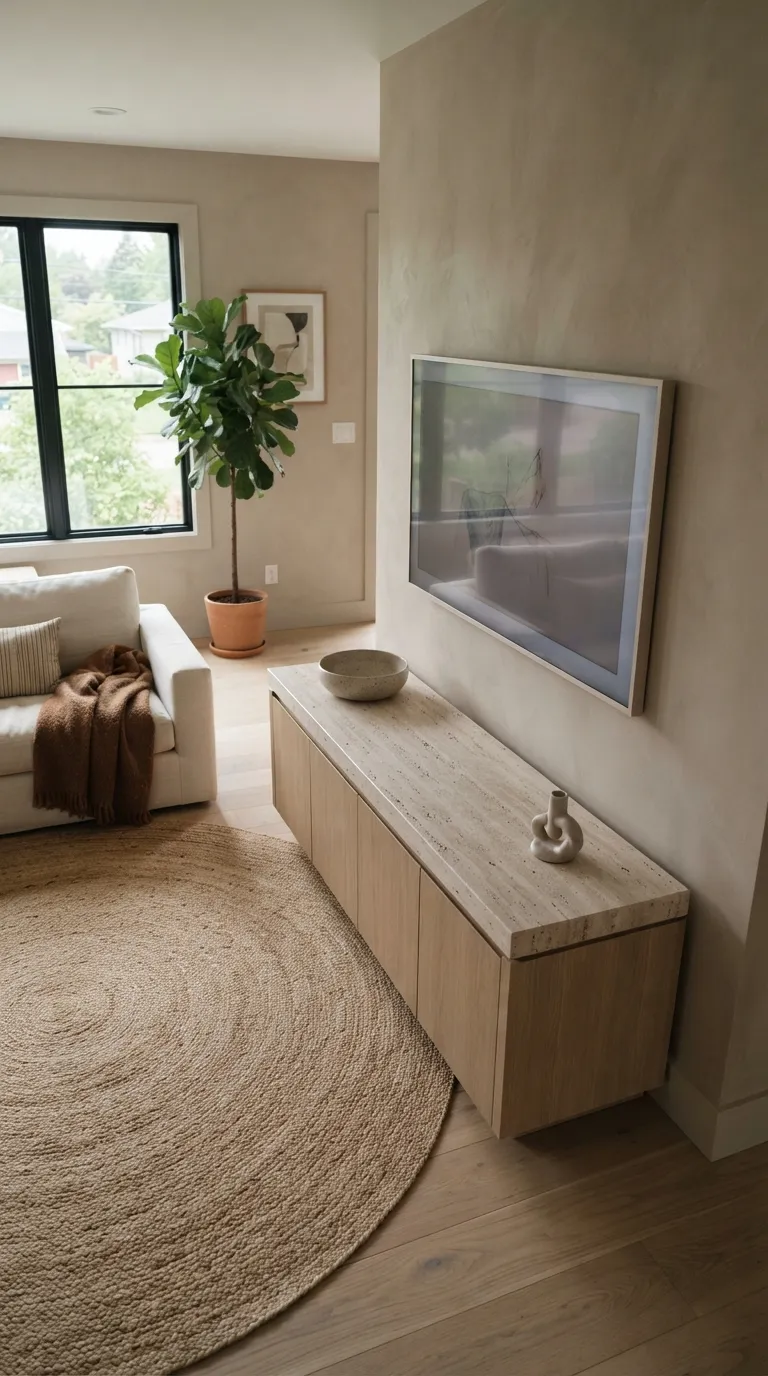
A stone top gives a simple TV stand a more substantial finish. Travertine, limestone, or another pale stone can introduce natural variation while the cabinet below keeps the overall shape clean. This pairing works well when your room already uses wood flooring or furniture and needs another material to break up the surfaces.
Keep the stone mostly exposed rather than covering it with decor. Its natural pores and tonal changes already provide visual interest. For a practical setup, check the manufacturer’s weight limits before placing heavy electronics or accessories on the console.
Vertical Slat Detail
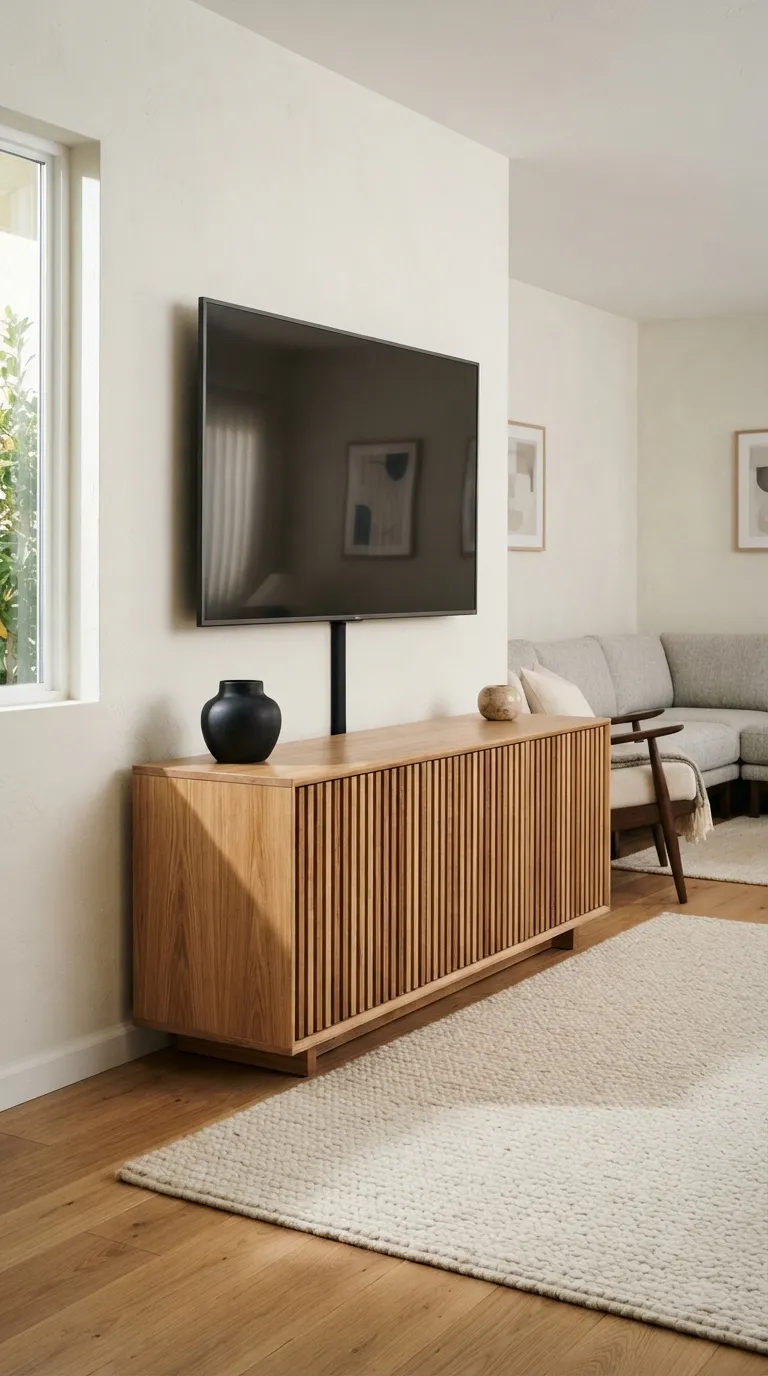
Vertical slats give a minimalist TV stand texture without adding ornate decoration. The repeated lines can also create a subtle connection with other vertical features in the room, such as curtains, wall paneling, or narrow shelving. Choose closely spaced slats for a quieter look and wider gaps when you want the texture to stand out more.
Because the front already has detail, keep the top nearly bare. A single dark ceramic piece can provide contrast without competing with the wood. This is a useful choice if you want your media console to act as a design feature while still keeping its basic form simple.
Matte Black Statement
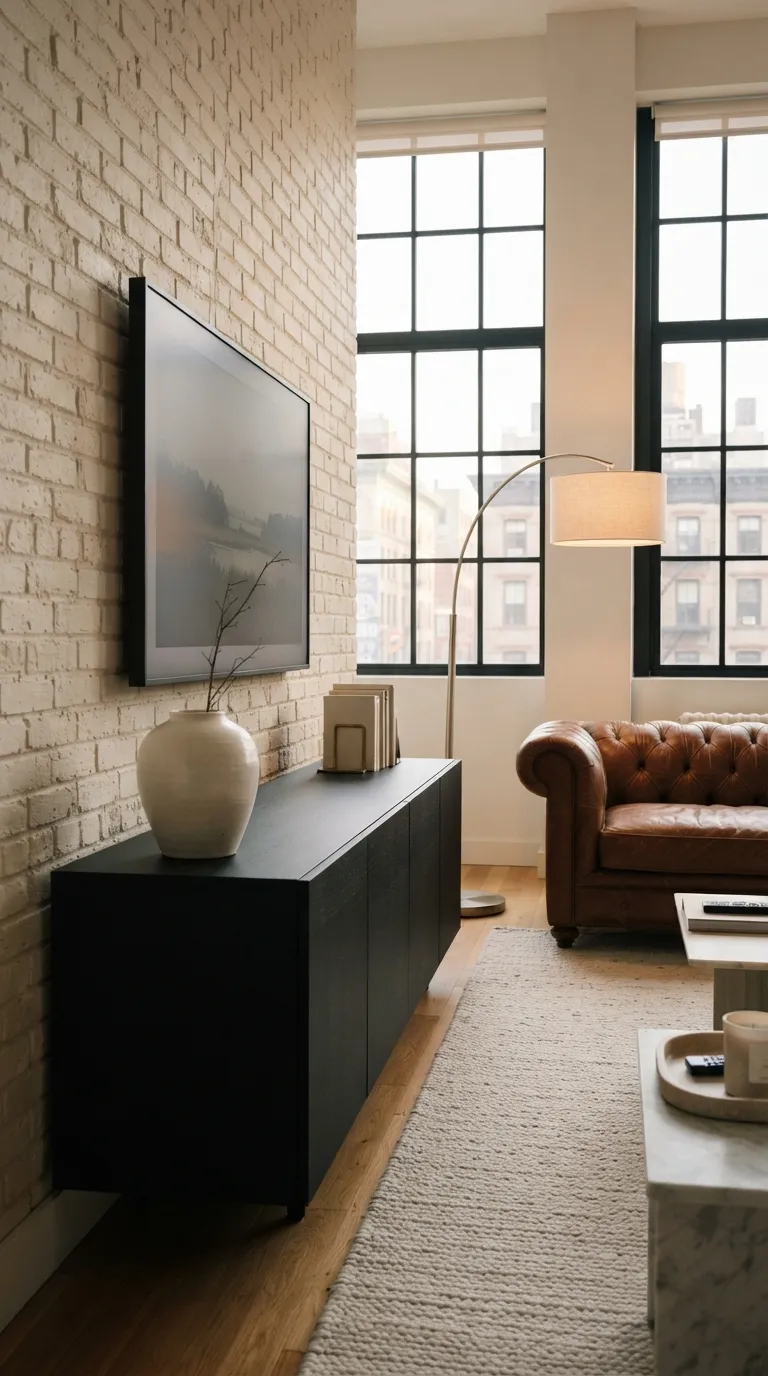
A matte black TV stand can anchor a pale room with very little decoration. Its dark finish gives the television wall definition, while handle-free doors keep the silhouette uninterrupted. This style suits lofts and contemporary spaces, but it can also work in a softer home when paired with warm wood, leather, or woven materials.
Watch the proportions when using a dark console. A piece that’s too tall or deep may dominate the wall, especially in a smaller room. A low cabinet with a generous gap between its top and the screen usually keeps the composition airy and gives the television a clear visual frame.
Open Shelf Styling
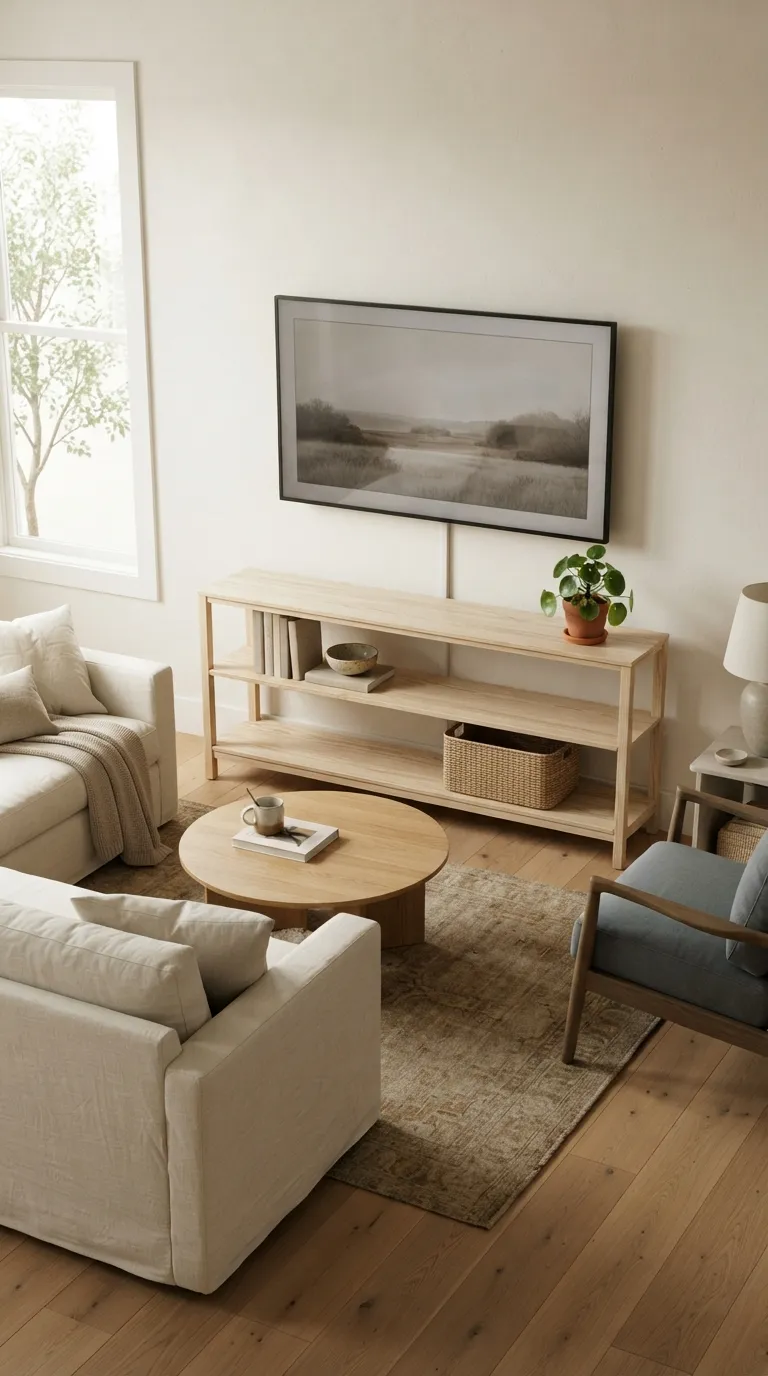
Open shelving can make a TV console feel lighter, but it needs editing. Group similar items together and leave visible gaps so the shelves don’t turn into a catch-all for remotes, cords, games, and random objects. A woven basket can hide smaller pieces while adding useful texture.
Think in layers when styling the shelves. Place books horizontally, add one rounded ceramic piece, then introduce a plant for softness. If you have children or pets, keep fragile objects higher up and reserve lower shelves for sturdy baskets or items that can handle everyday use.
Neutral Panel Wall
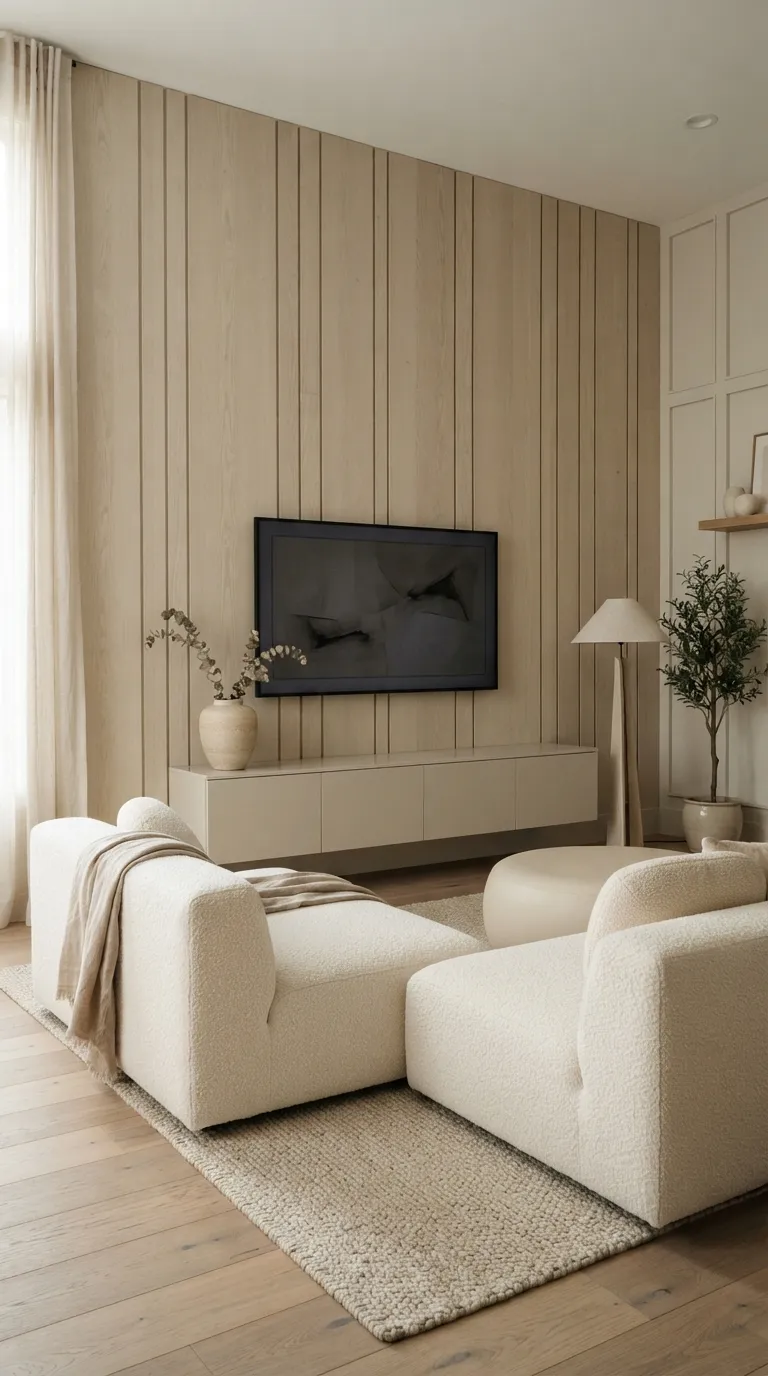
A neutral panel wall gives your television a defined backdrop without relying on bold color. Narrow panels can add rhythm behind a simple console, while a low cabinet keeps the lower half of the wall grounded. This pairing suits rooms where you want architectural interest but still prefer a quiet palette.
Keep the console finish close to the wall color for a seamless appearance. The television will naturally become the strongest dark shape, so adding several dark accessories can make the wall feel busy. One pale stone vase or ceramic piece is enough to give the cabinet a finished look.
Compact Apartment Console
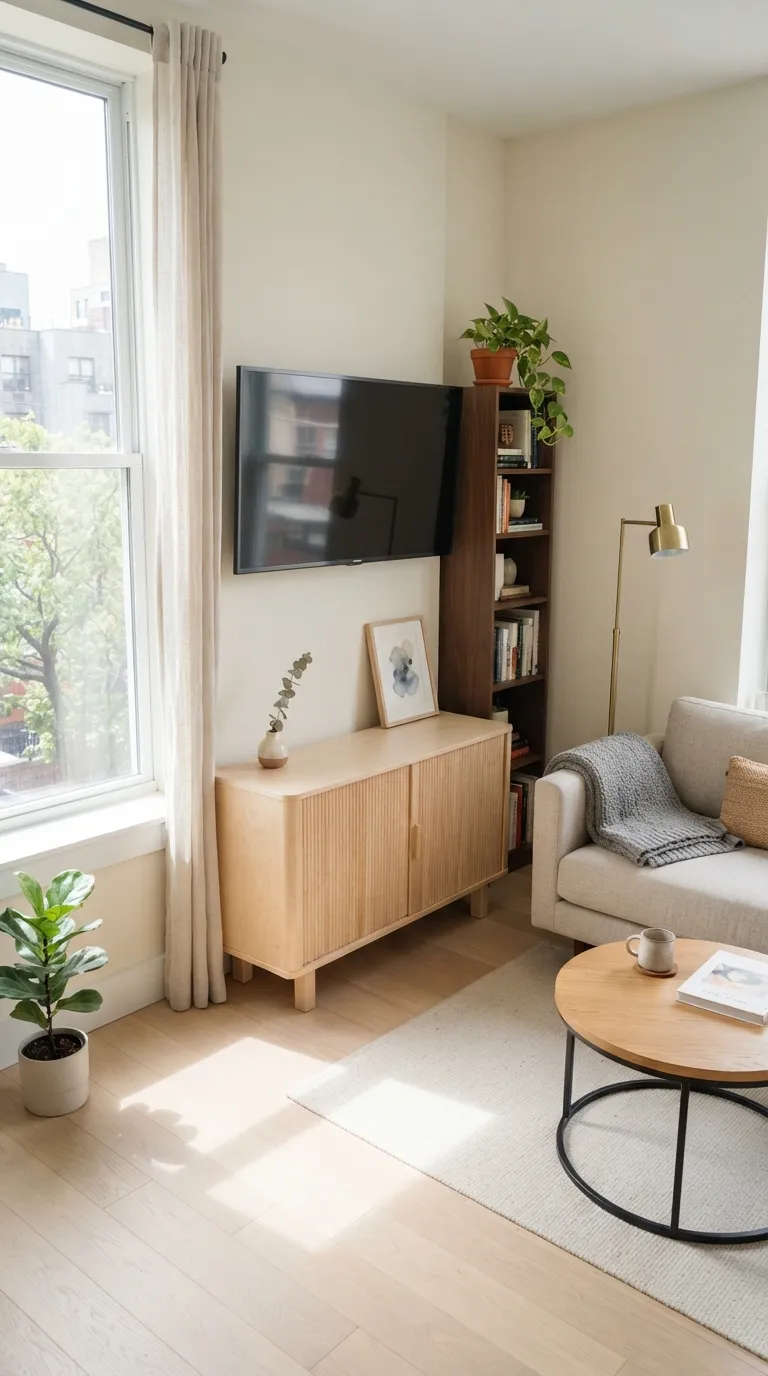
Small rooms benefit from a TV stand that respects the available floor area. Measure the wall, walking path, and furniture depth before shopping so the console doesn’t create a tight passage. Sliding doors can also be handy when you want storage without needing clearance for cabinet doors.
For a compact apartment, look upward when planning the rest of the wall. Mounting the television and choosing a low console can preserve visual space below the screen. Keep decorative pieces small and use closed storage for everyday items so the room stays orderly without needing a large media cabinet.
Asymmetrical Display
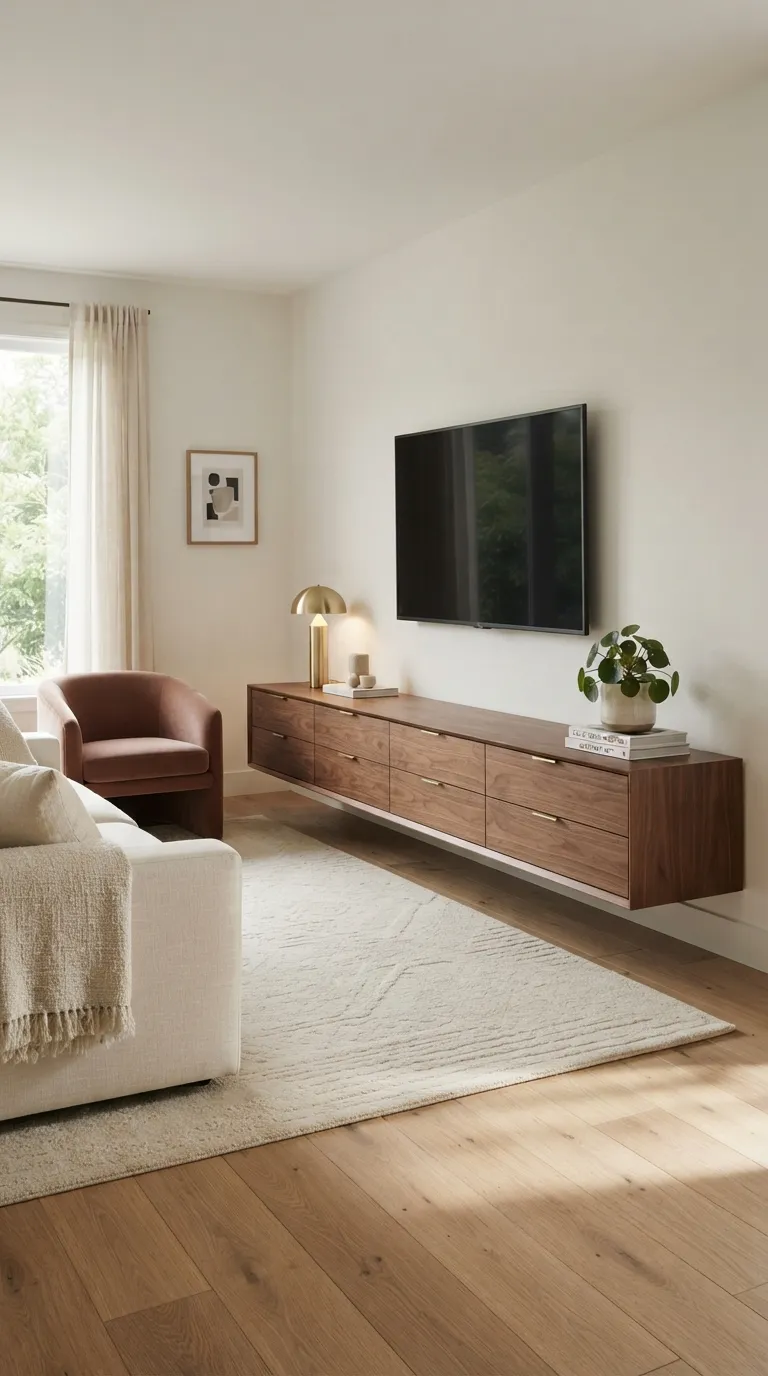
Symmetry isn’t required for a polished TV wall. An asymmetrical console can feel more relaxed, especially when one side has a lamp, plant, or artwork and the other side stays open. The trick is to balance visual weight rather than making both sides identical.
Start with the television as your main anchor, then let the console extend beyond it on one or both sides. A longer console can also give you more usable storage without making the screen look oversized. Keep the accessories low and sparse so the unusual layout remains the main feature.
Glass Door Storage
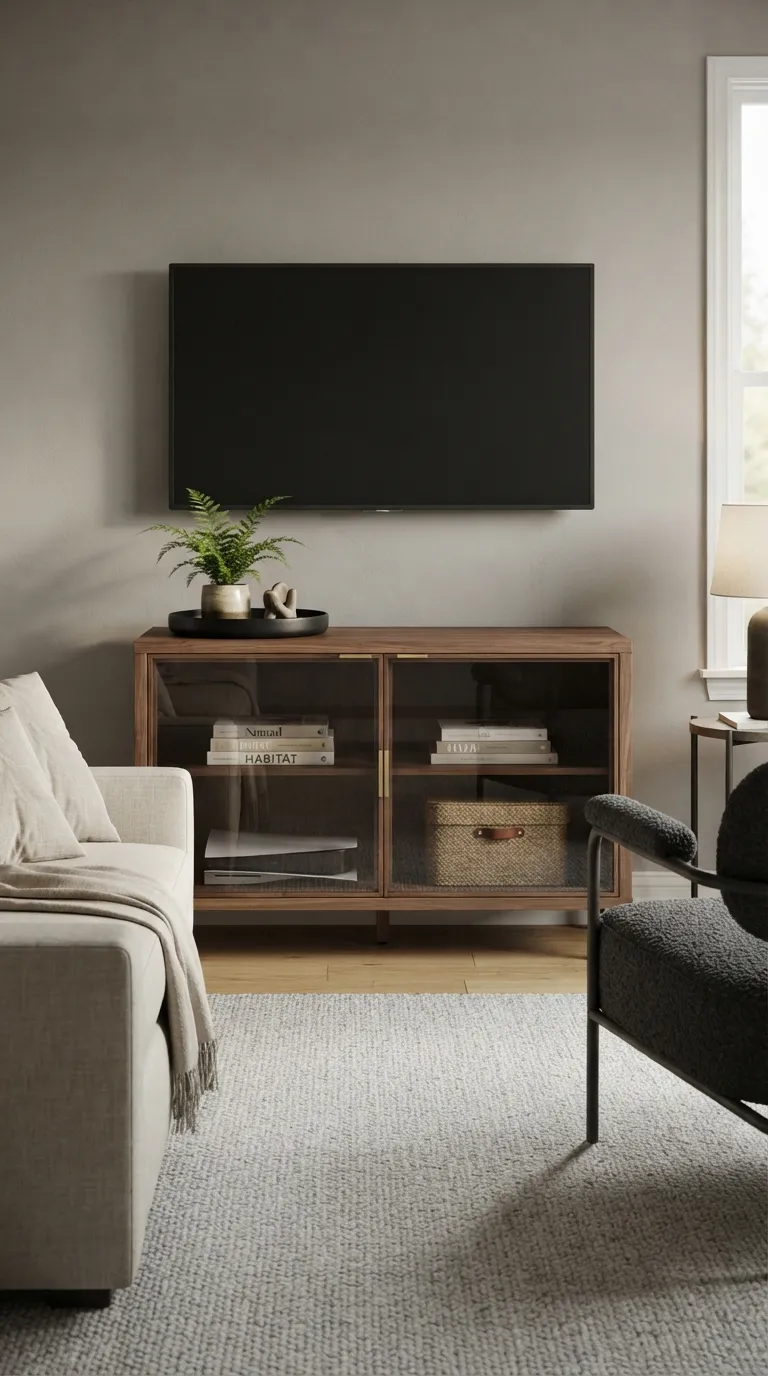
Glass-front storage gives you a middle ground between fully open shelves and closed cabinets. Smoked glass hides some visual clutter while still letting you see what’s stored inside. It’s especially useful when you want easy access to books, consoles, or media accessories without leaving everything exposed.
Keep the contents organized by category rather than filling every compartment. A few books, one basket, and neatly placed electronics can look intentional through the glass. If fingerprints are a concern, choose a finish that’s easy to clean and keep a soft cloth nearby for quick touch-ups.
Ribbed Wood Texture
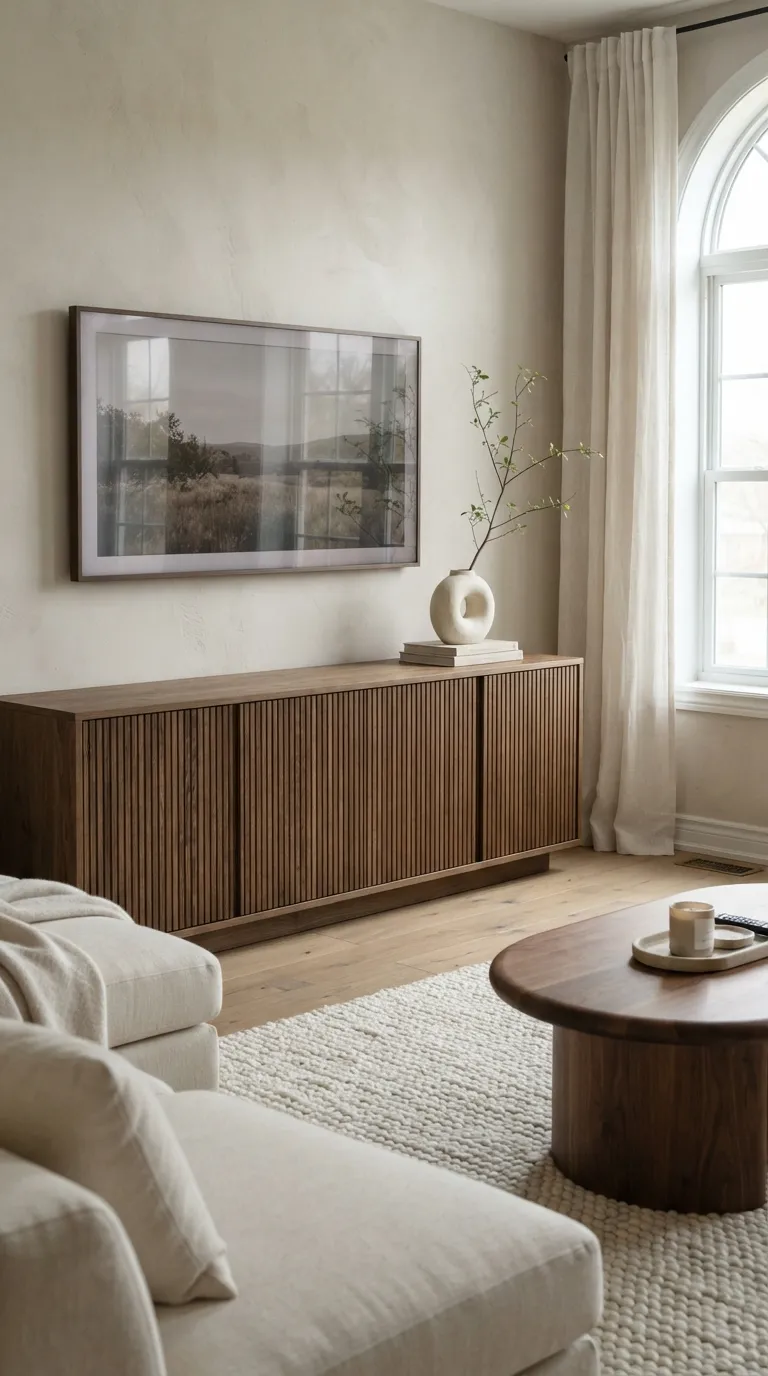
Ribbed wood adds texture while keeping the overall cabinet shape simple. The narrow grooves catch light differently throughout the day, giving the front a subtle change in appearance without relying on color or decorative hardware. A recessed base can make the console appear lighter against the floor.
Let the texture do most of the work. One pale vase or branch is enough for the top, particularly when the wall behind it has a plaster or limewashed finish. When choosing between similar pieces, inspect the spacing and depth of the ribs because those details can change how busy the cabinet looks from across the room.
Wall-to-Wall Console
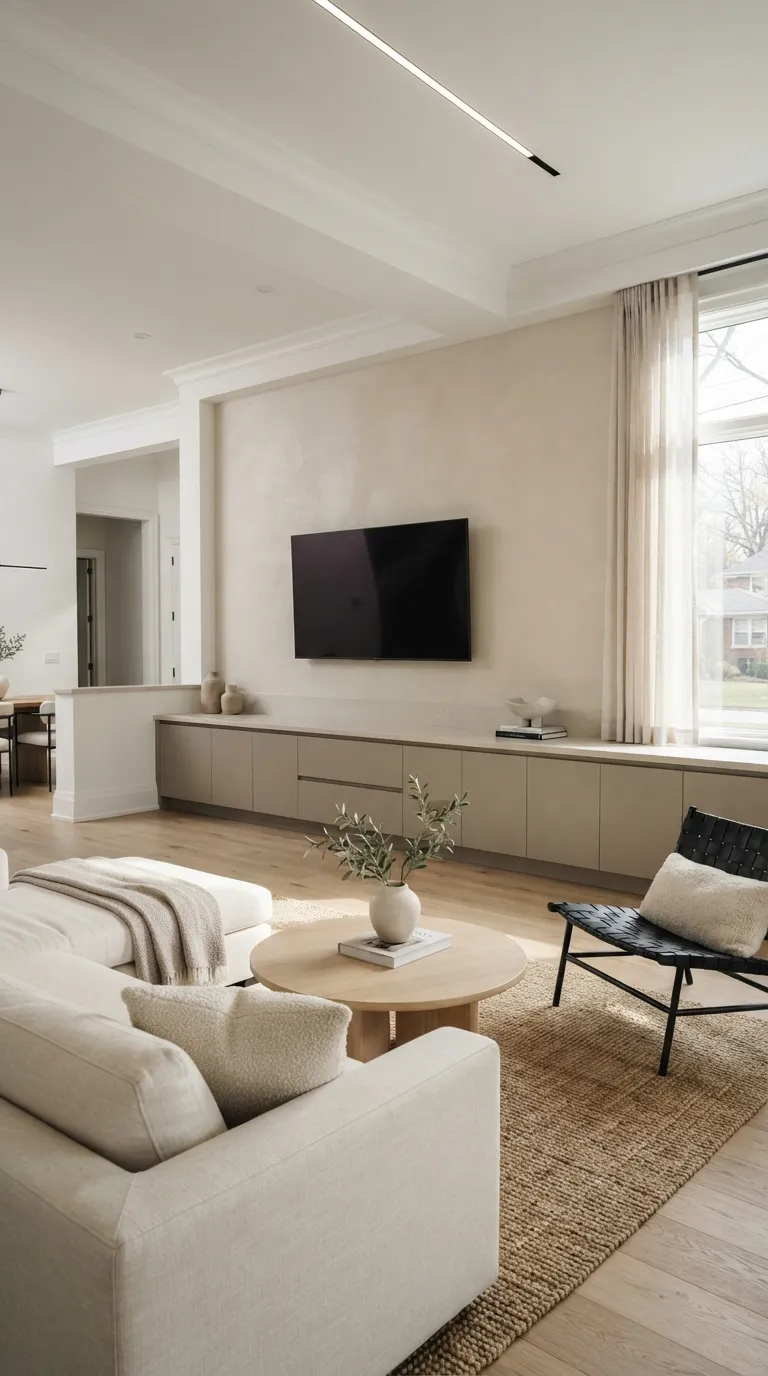
A wall-to-wall console can make a large room feel more intentional. Instead of placing one small piece beneath the television, a continuous cabinet gives the entire wall a clear horizontal line and plenty of hidden storage. This works particularly well when the room has a wide television wall that currently feels unfinished.
Don’t fill the whole surface just because you have it. Spread a few low objects across the length and leave generous empty areas between them. For long cabinets, consider dividing storage by function so media equipment, books, games, and household items each have a sensible place.
Sculptural Pedestal Base
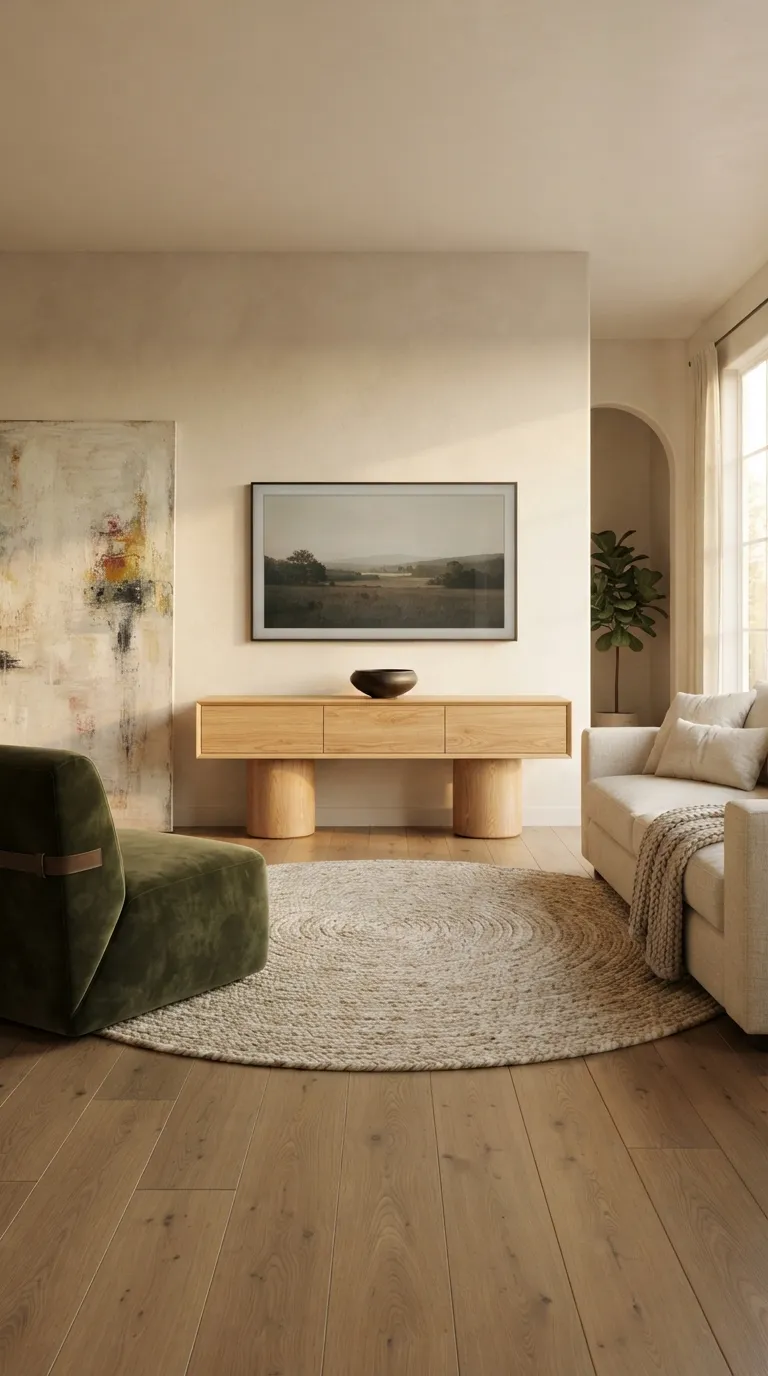
A pedestal base can give a simple TV console a distinctive shape without adding lots of decoration. Rounded supports soften the straight lines of the cabinet and television, creating a useful contrast in a room filled with rectangular furniture. Keep the cabinet top slim so the base remains the main visual detail.
This style works best when repeated curves appear elsewhere in small doses. A round rug, circular side table, or curved chair can echo the base without making the room look themed. Since the stand itself has a strong silhouette, keep its surface almost completely clear.
Warm Minimalist Luxe
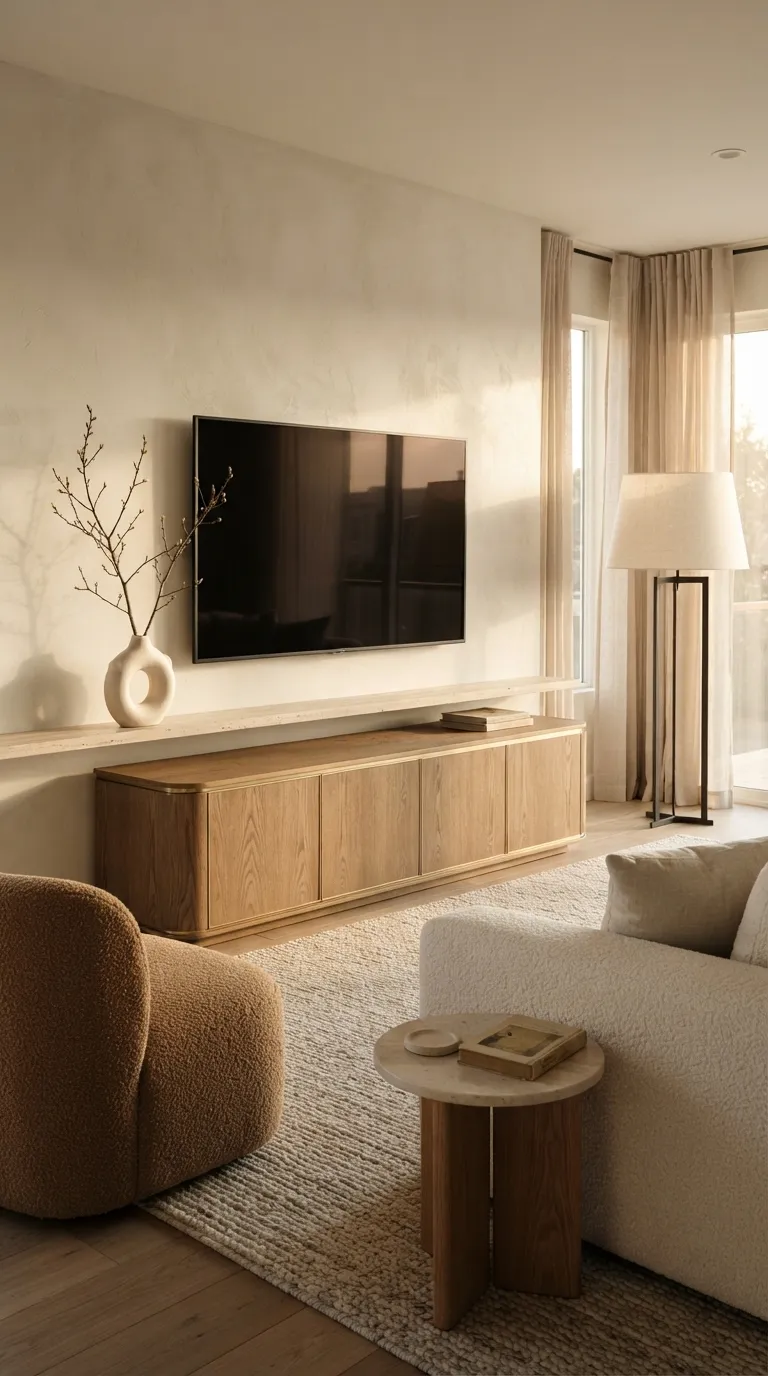
A luxe minimalist TV area doesn’t need glossy finishes or lots of expensive-looking objects. Warm oak, natural stone, soft textiles, and a small amount of brass can create a refined mix while keeping the furniture practical. The key is to let each material have room to show its own texture.
Choose two or three finishes and repeat them gently around the room. For example, brass can appear on the console and lamp, while warm oak connects to a side table. This keeps the room cohesive without making every item look like it came from the same collection.
Hidden Cable Design
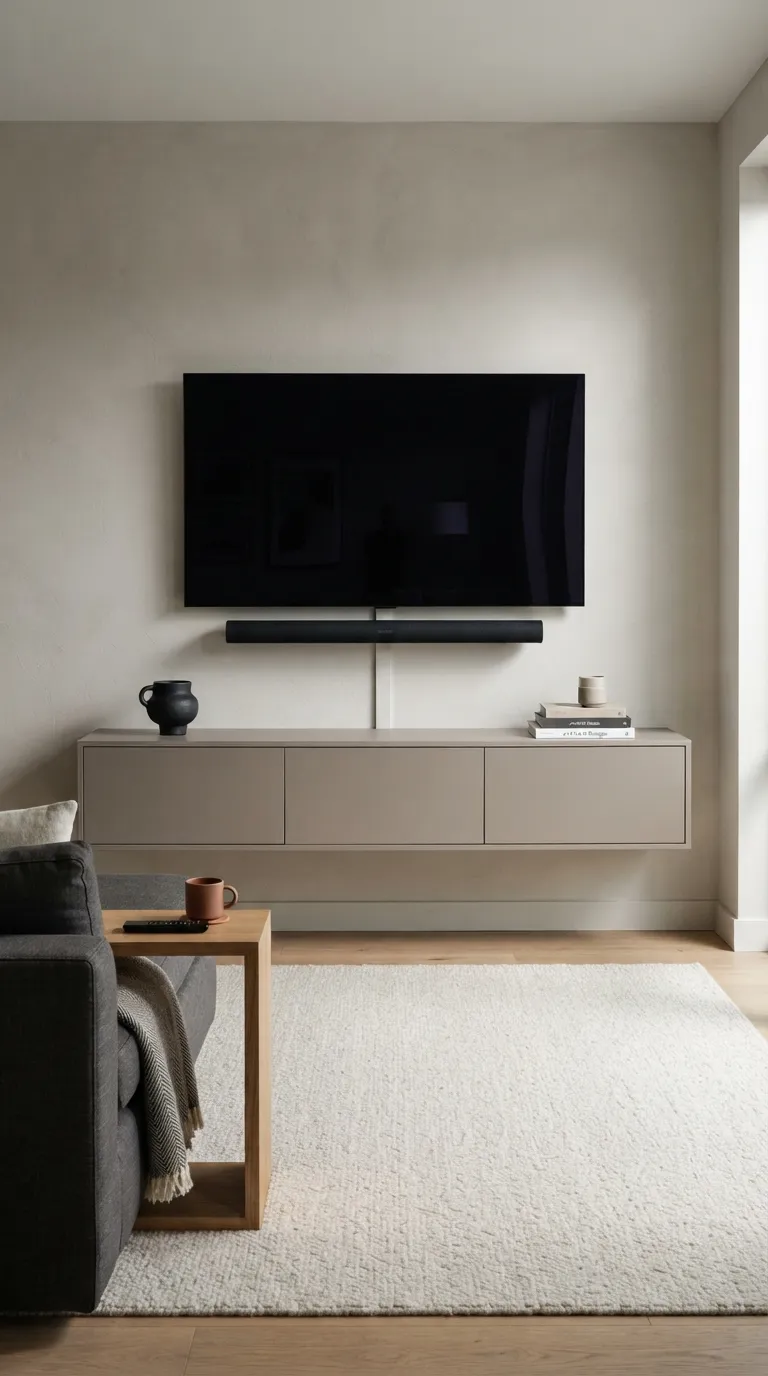
Good minimalist TV stand ideas aren’t just about appearance. Cable control has a major effect on how clean the finished wall looks, so choose a console with rear openings or a dedicated cable channel. Keep power strips and adapters inside the cabinet where safe and practical, rather than letting them collect on the floor.
Plan cable routes before mounting the television. A simple sketch showing the screen, console, outlets, and equipment can prevent awkward wire paths later. If electrical work is needed inside a wall, use a qualified professional and follow local building requirements instead of improvising behind finished surfaces.
Soft Curved Console
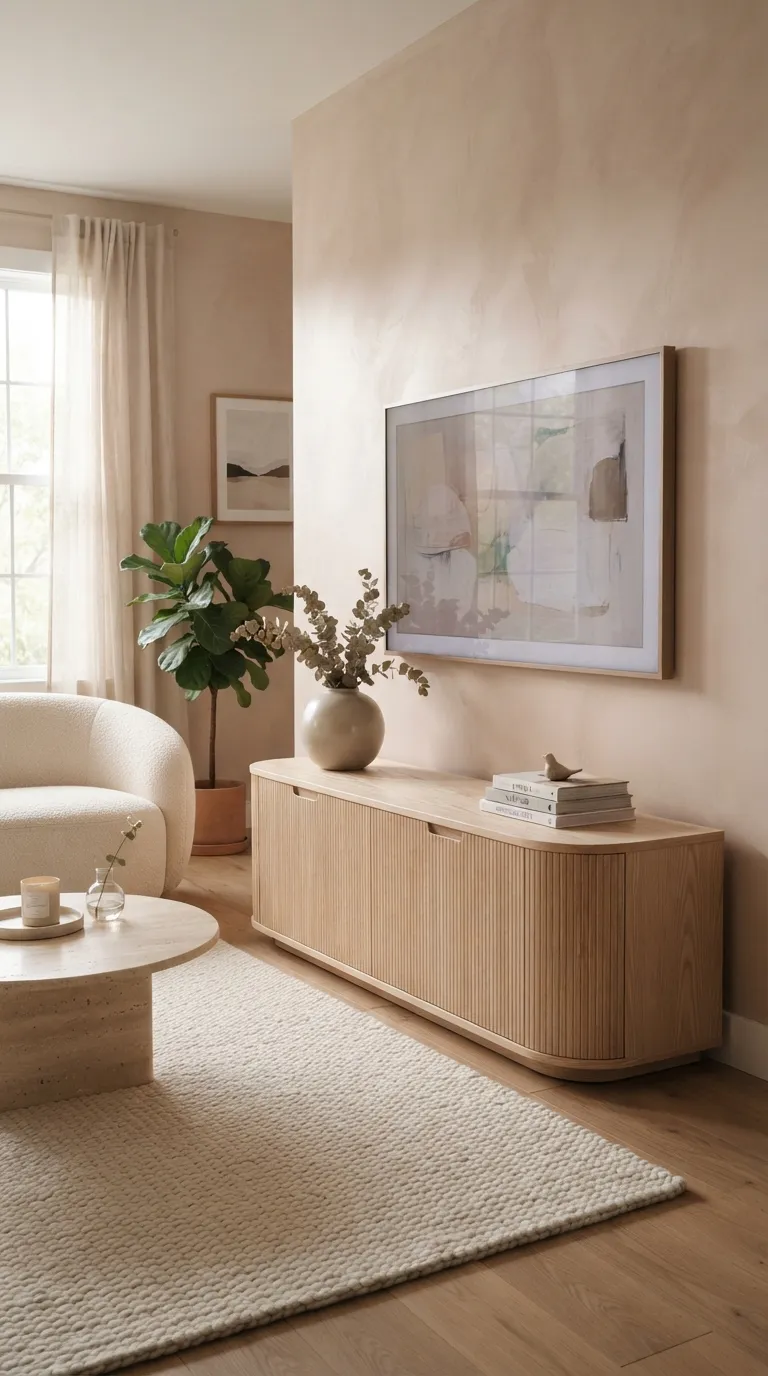
Curved furniture can soften a TV wall that contains several hard rectangular shapes. A rounded console brings a quieter organic line while still providing the storage you need. Pale ash or oak keeps the look light and works nicely with cream, beige, and muted blush tones.
Don’t add curves everywhere. One curved console paired with a round table or soft chair is often enough to create a visual connection. Keep the television centered above the cabinet so the screen remains the clear focal point while the console adds character underneath.
Minimal Decor Layering
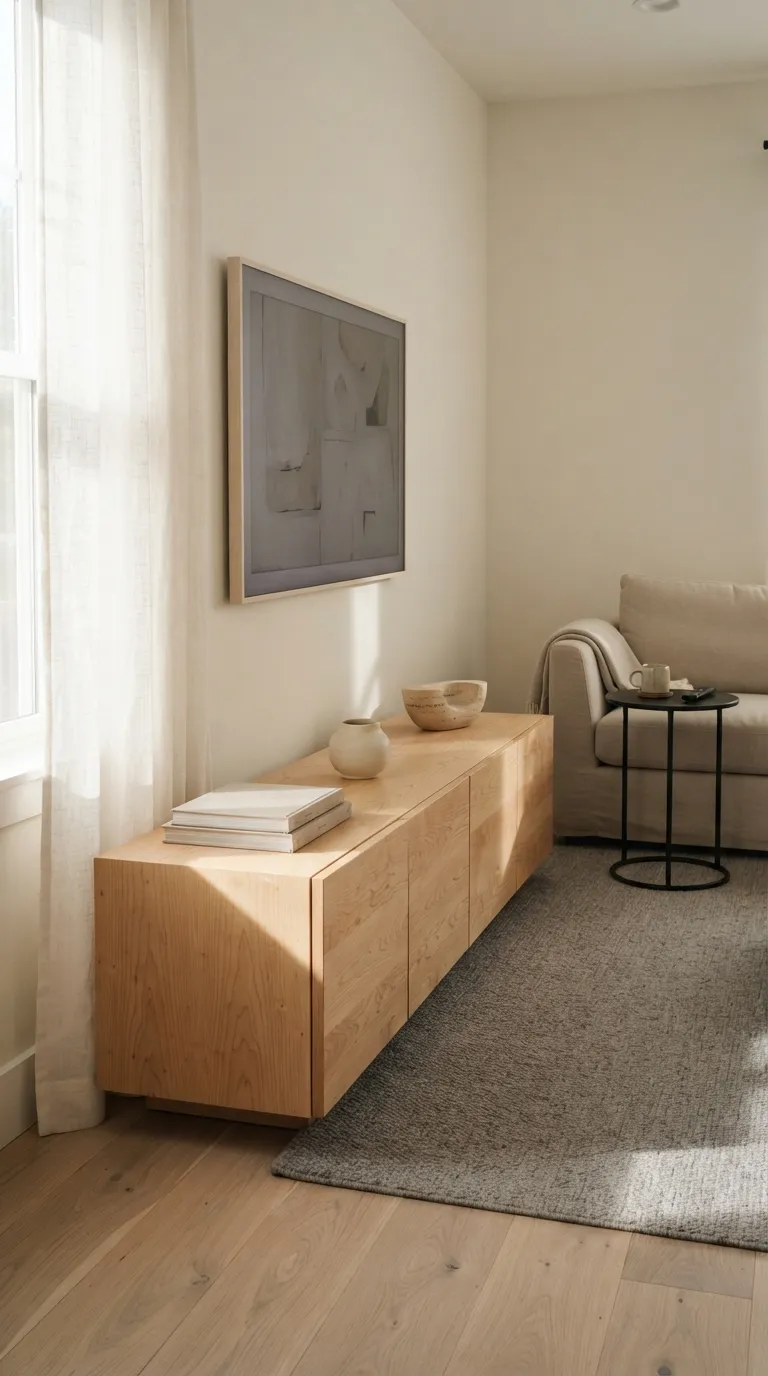
Minimal styling works best when each object has a reason to be there. Instead of covering the console, choose a small group with different heights and textures. Books add a flat layer, ceramic adds shape, and stone brings a heavier visual note.
Leave empty space between pieces so the console can breathe. If your stand already has textured doors, bold hardware, or unusual legs, you may need even fewer accessories. A useful test is to remove one object and see whether the arrangement looks cleaner without losing balance.
Luxe Small-Space Finish
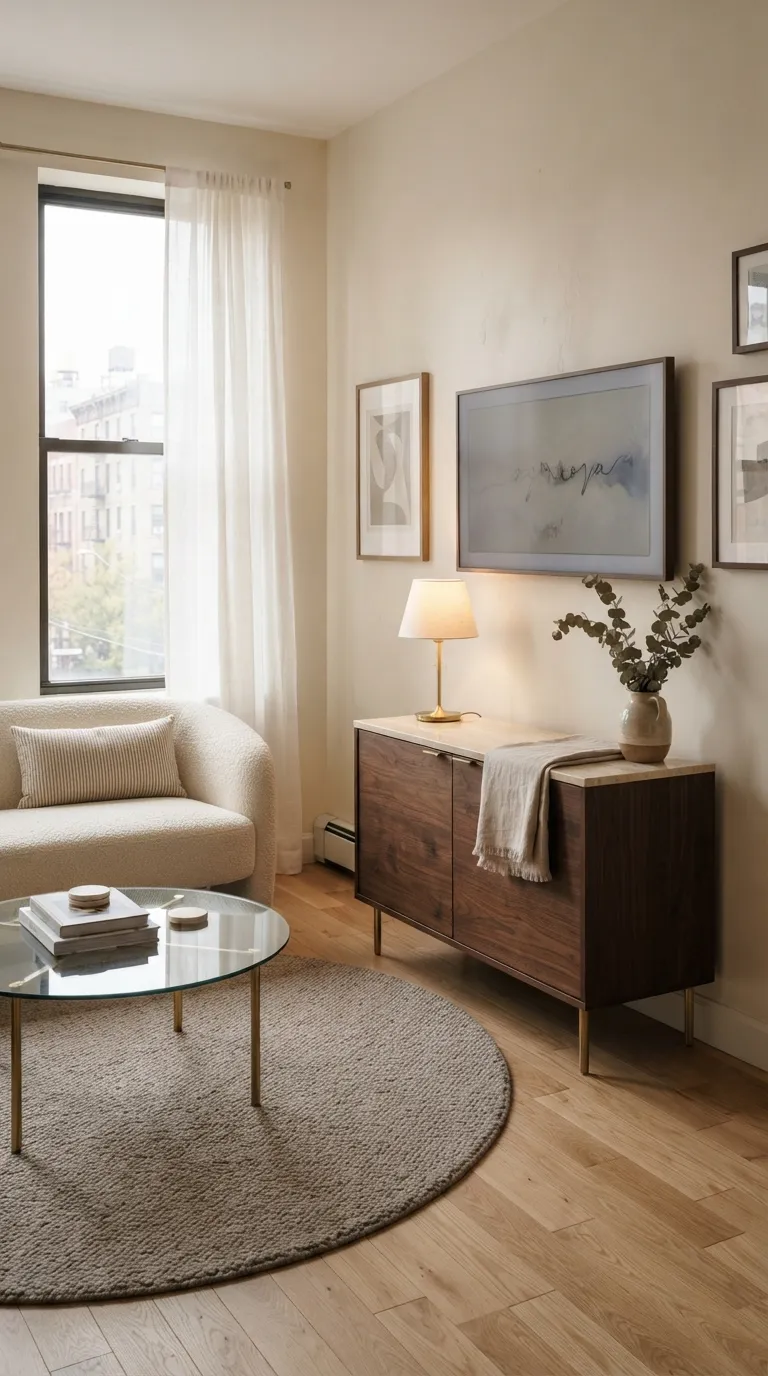
A small room can still have a polished media area. Look for a console with a shallow depth, useful storage, and one strong material detail such as a stone top or brass legs. Keeping some floor visible around the furniture helps the space feel less crowded.
Use the television wall as a quiet backdrop rather than another storage zone. A small lamp, ceramic vase, or folded textile can bring personality without taking over the surface. Among minimalist tv stand ideas, this approach is especially practical for studio apartments and narrow living rooms.
Luxe Layered Finish
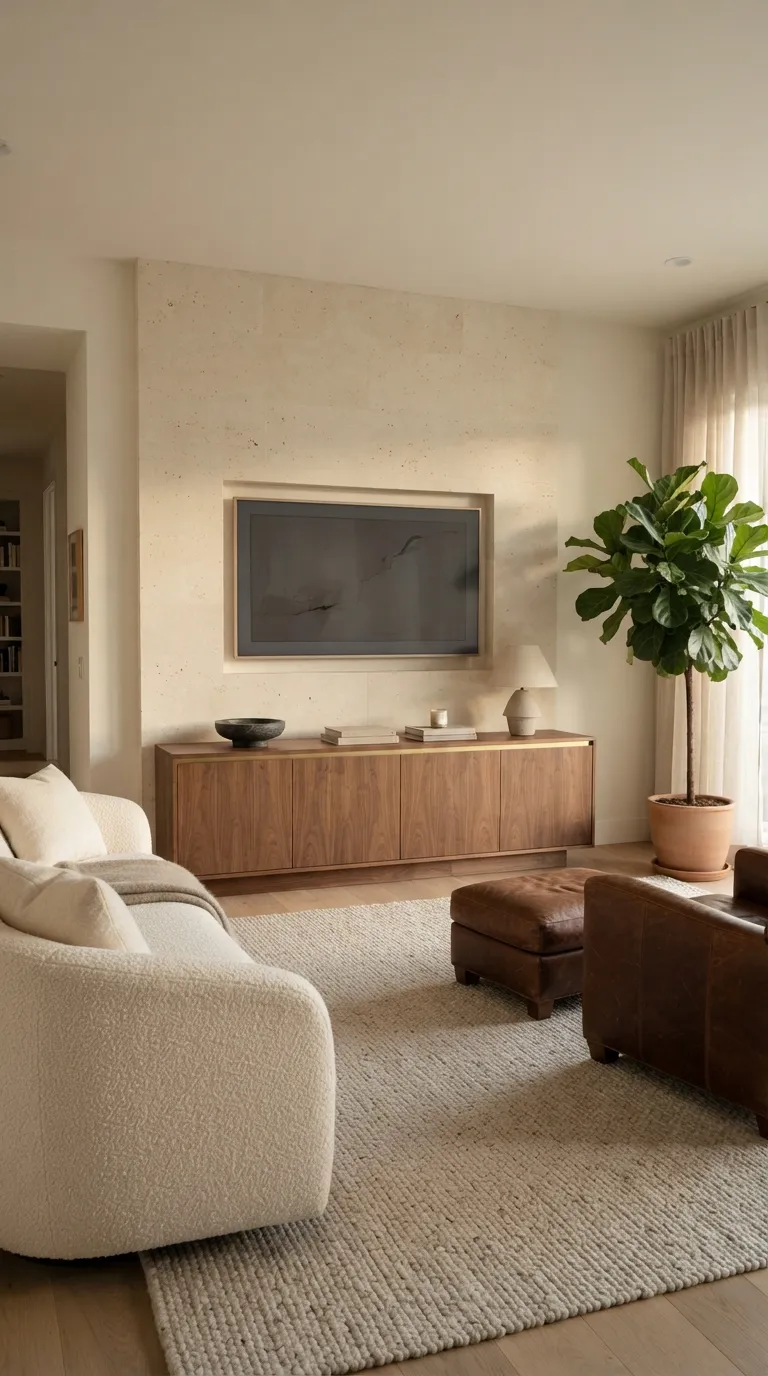
A polished TV wall comes from restraint, not from filling every surface. A low console, thoughtful materials, hidden storage, and a few well-spaced objects can make the room feel settled while keeping the television from taking over.
Start with the practical pieces first. Measure your wall, choose the right console width and depth, plan cable storage, then add texture through wood, stone, linen, ceramics, or woven accents. With the right balance, your TV stand can support everyday life while giving the room a clean, luxe finish.
A Calm TV Wall That Lasts
The best minimalist TV stand ideas should work on an ordinary Tuesday, not just look good in a styled photo. Choose storage that fits your electronics, a size that leaves comfortable walking space, and materials that suit how you use the room. A clean console gives you a strong base, while small decorative details can change with the seasons.
Before you buy, measure the television, wall, outlets, and available floor depth. Then choose one finish you love and build around it instead of collecting too many competing pieces. A simple, well-proportioned TV stand can keep your living room feeling calm and pulled together for years.
Elira Montclair
Elira writes about timeless home decor, kitchen styling, and practical interior ideas. Her work blends warm, inviting aesthetics with simple decorating tips that make everyday spaces feel beautiful and comfortable.