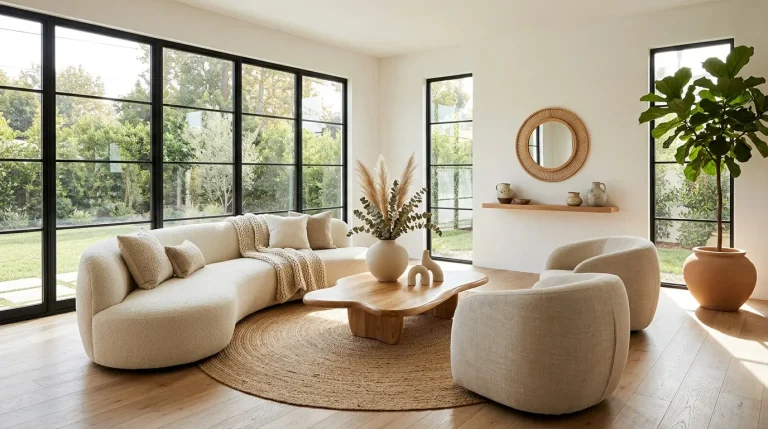
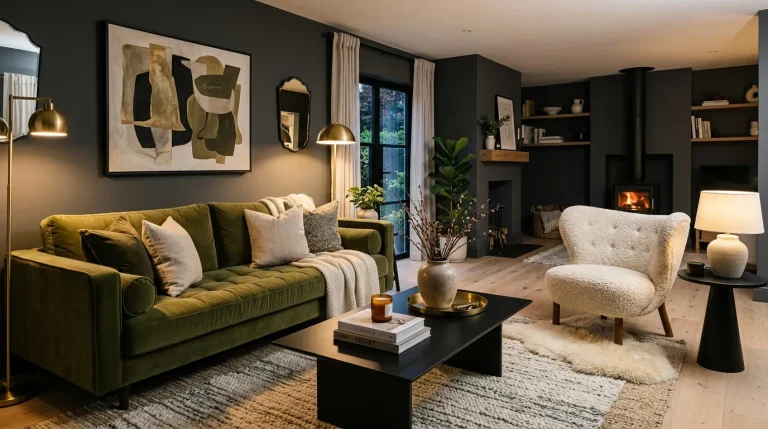
Living Room Layout That Makes Any Space Feel Bigger Fast

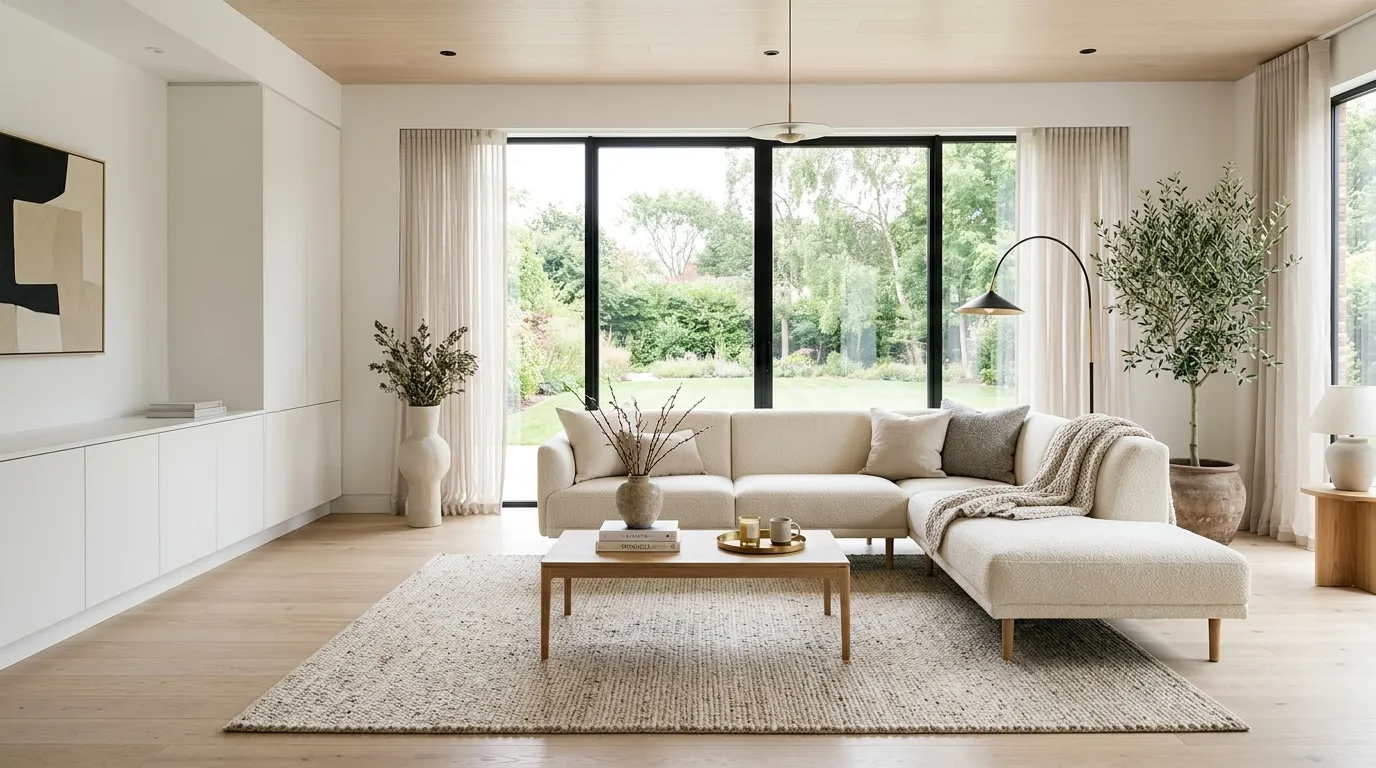
Does your living room feel cramped, cluttered, or simply smaller than you’d like? The right living room layout can completely change how your space looks and functions without requiring a major renovation. A few thoughtful furniture placements, balanced proportions, and clever design choices can instantly create a brighter, more open atmosphere that feels welcoming every day.
In my experience, even small layout adjustments often have a bigger impact than buying new furniture. I’ve noticed that when every piece has a purpose and enough breathing room, the entire room feels calmer and more comfortable. In this article, you’ll discover practical, Pinterest-worthy ideas that maximize space, improve flow, and help your living room feel effortlessly stylish, functional, and larger than its actual size.
1. Floating Furniture
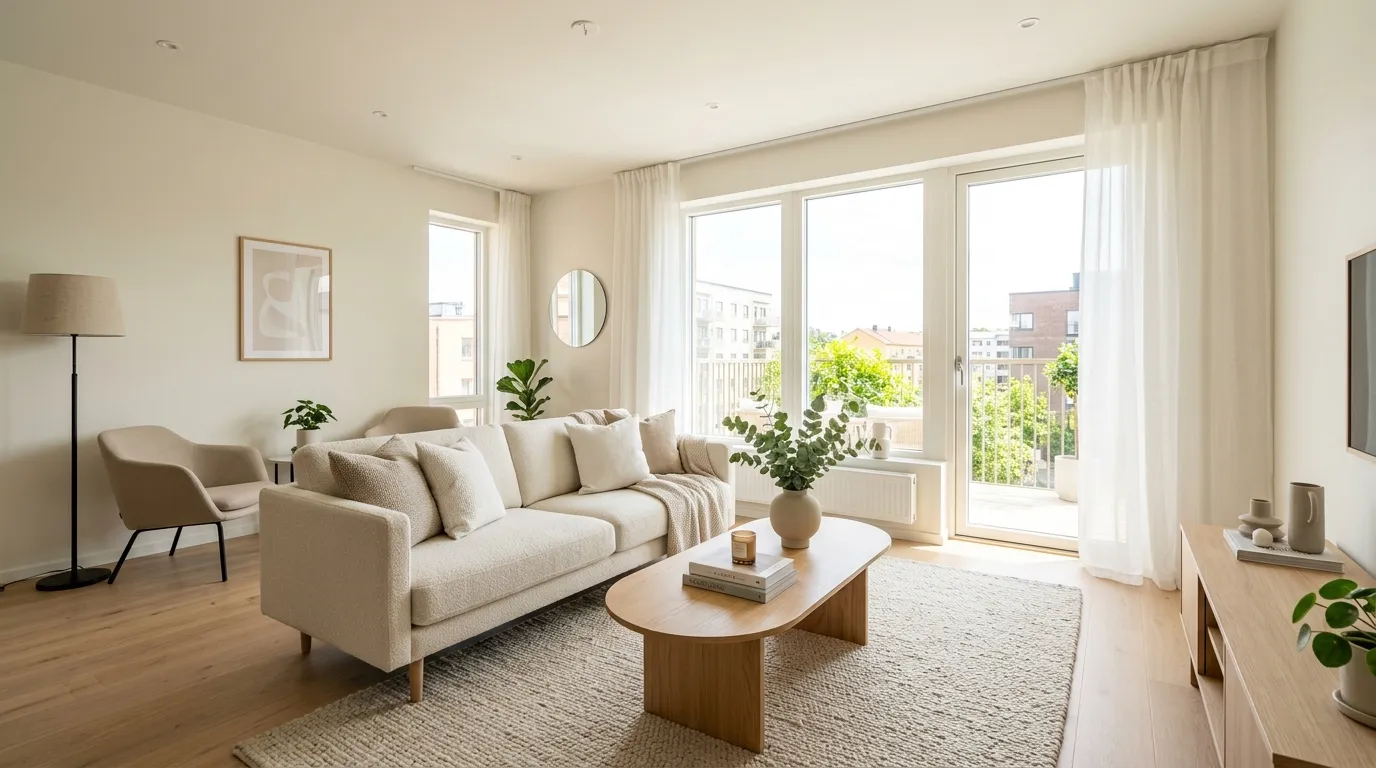
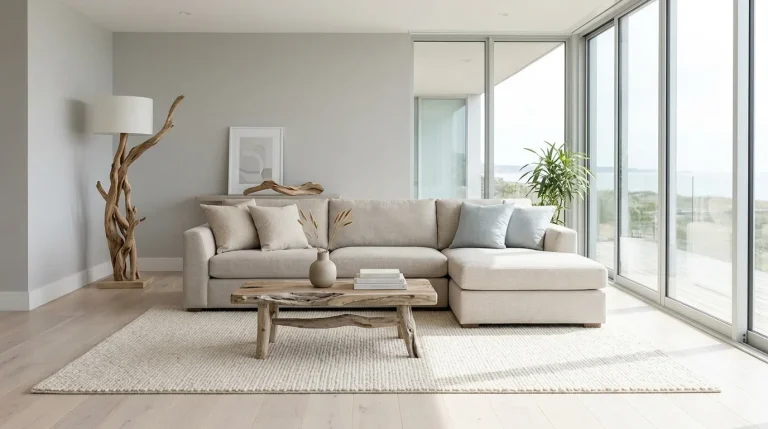
One of the simplest ways to make a space feel larger is by pulling furniture away from the walls instead of pushing every piece to the edges. This arrangement creates breathing room and gives the eye a chance to travel around the room naturally. I’ve noticed this small adjustment often surprises homeowners because the space immediately feels less cramped. Even in smaller homes, placing a sofa with a little clearance behind it creates depth while making the seating area look intentional rather than squeezed into the room.
Floating furniture also allows decorative elements to work together instead of competing for attention. A well-placed rug can anchor the seating area while side tables and lighting create a cozy, functional zone without blocking movement. That’s why many designers recommend this approach when improving a living room layout without buying new furniture. The result feels lighter, more inviting, and easier to enjoy every day, while guests naturally experience the room as larger, brighter, and thoughtfully organized from nearly every viewing angle.
2. Light Color Palette
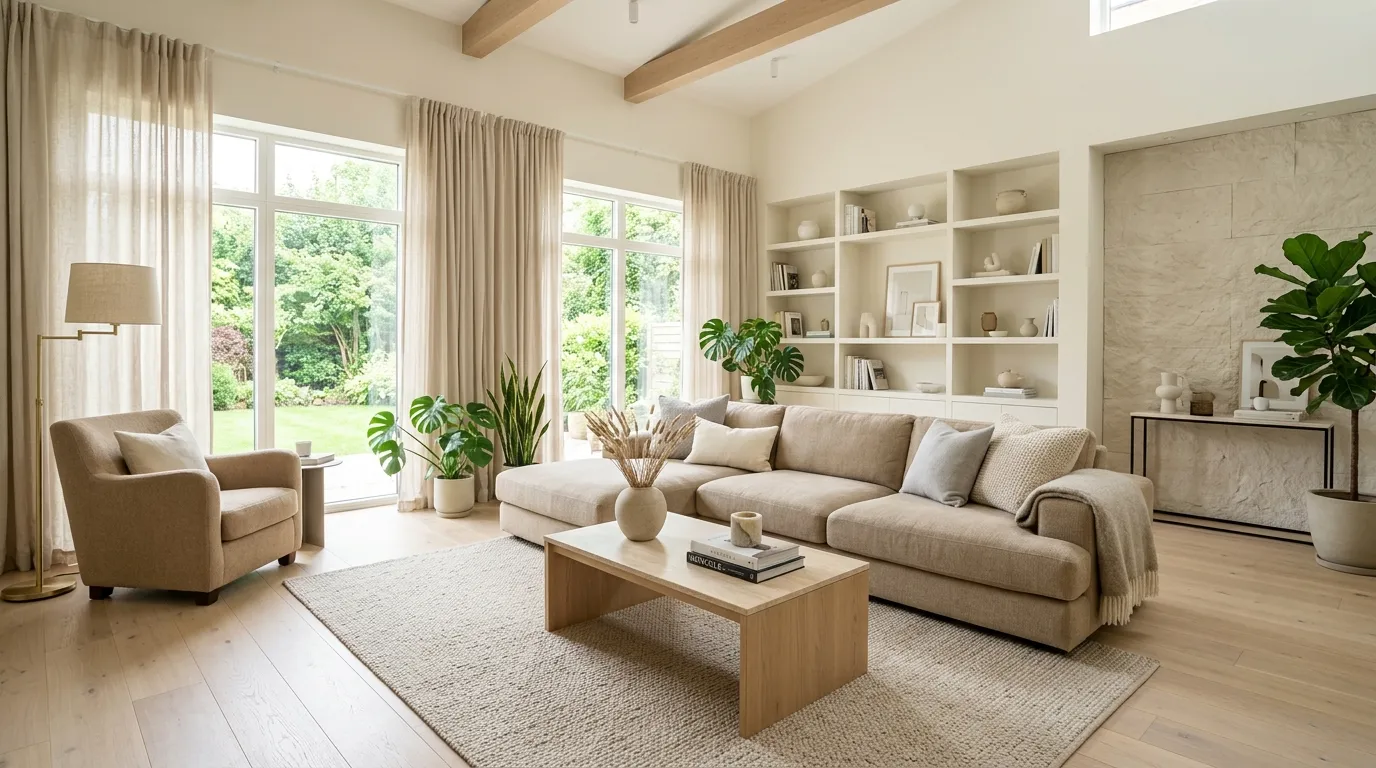
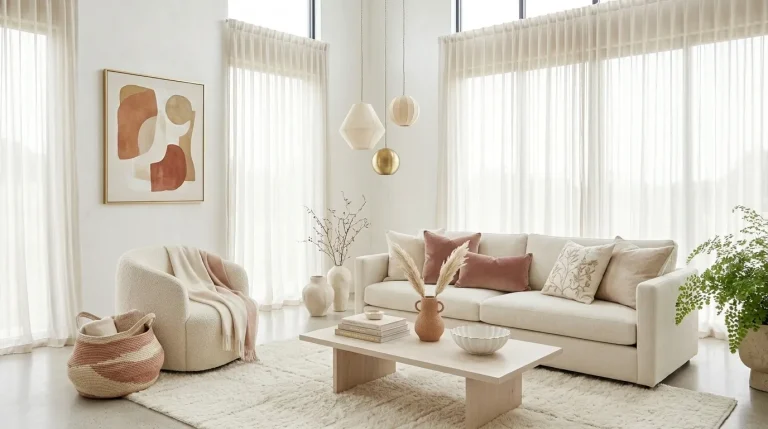
Soft neutral shades naturally expand the visual boundaries of a room. Instead of creating harsh contrasts, light colors bounce daylight around the space, helping every corner feel brighter. I’ve seen this work especially well in apartments where sunlight is limited during parts of the day. Even replacing darker curtains with sheer fabrics can noticeably increase the sense of openness. When everything flows together with gentle color transitions, the room instantly feels cleaner and more welcoming without requiring major renovations.
Layering different neutral tones prevents the space from looking flat while still maintaining an open atmosphere. Warm whites, sandy beige, light gray, and natural wood textures add depth without making the room feel busy. Decorative cushions, textured throws, and subtle artwork provide personality while preserving the airy mood. This balanced approach creates a timeless interior that adapts easily as trends change, allowing homeowners to refresh accessories instead of redesigning the entire room whenever they want a new look.
3. Defined Conversation Zone
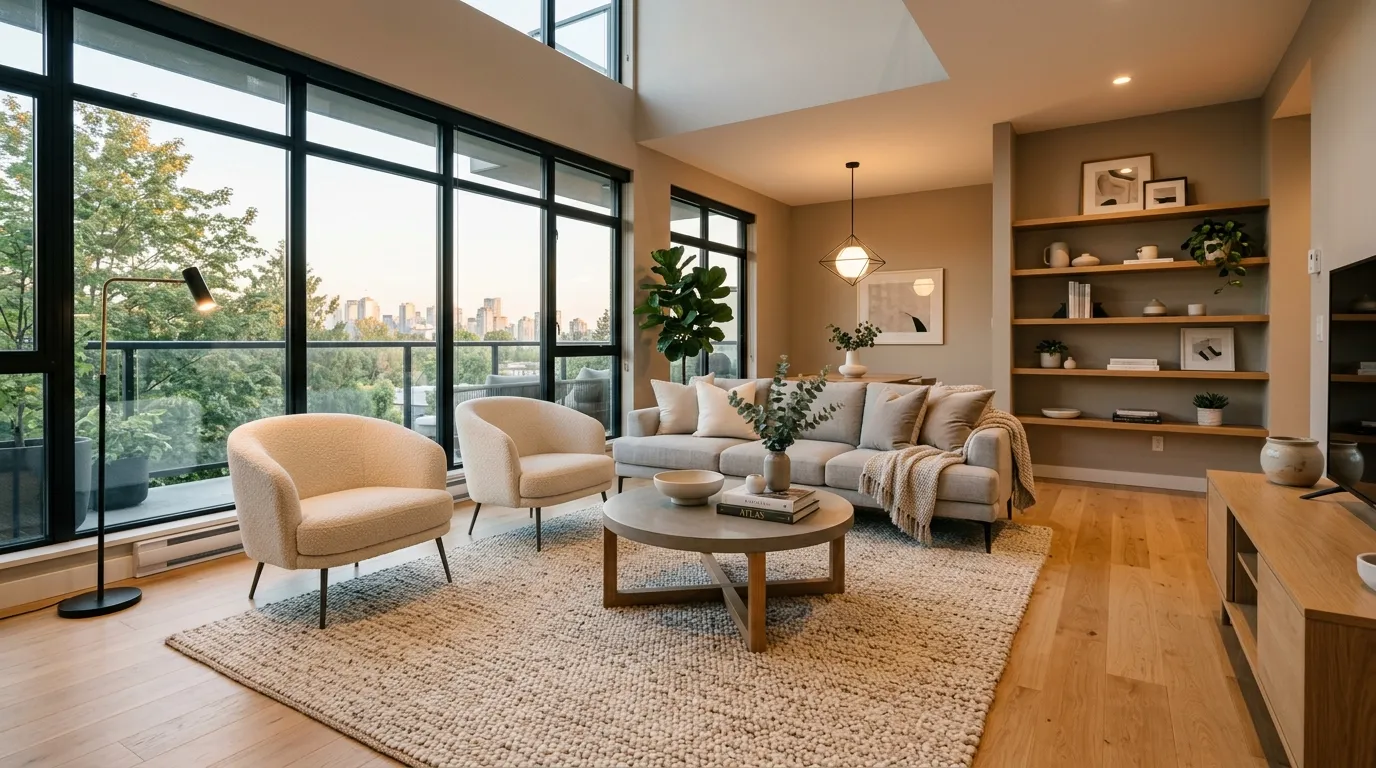
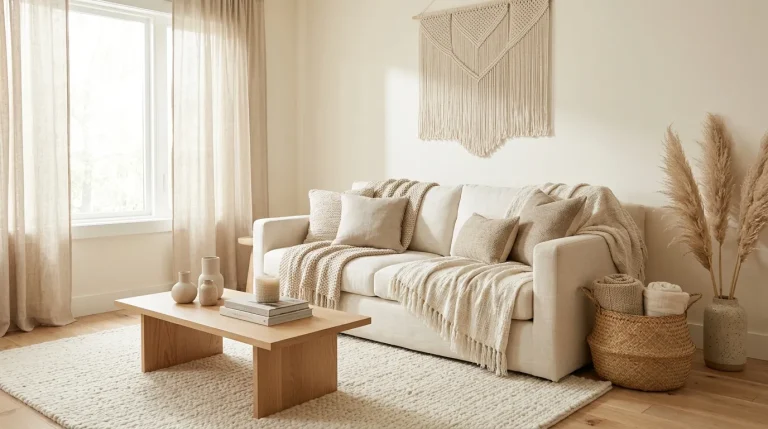
A thoughtfully arranged seating area helps every piece of furniture feel connected. Instead of scattering chairs across the room, grouping them around a coffee table forms a welcoming destination where family and guests naturally gather. In my experience, this simple adjustment changes how people actually use the room. Conversations become more comfortable, daily routines feel smoother, and the overall design appears professionally planned even when working with affordable furniture and accessories already available in the home.
Defining one central zone also helps the surrounding space feel less cluttered because every item has a clear purpose. A properly sized rug anchors the arrangement while leaving comfortable walkways around the seating area. Decorative lighting and carefully chosen accessories reinforce the focal point without overwhelming the design. The finished space feels balanced, visually spacious, and inviting from every angle, making it easier to relax, entertain, or simply enjoy a comfortable evening while appreciating the room’s refreshed appearance.
4. Strategic Mirror Placement
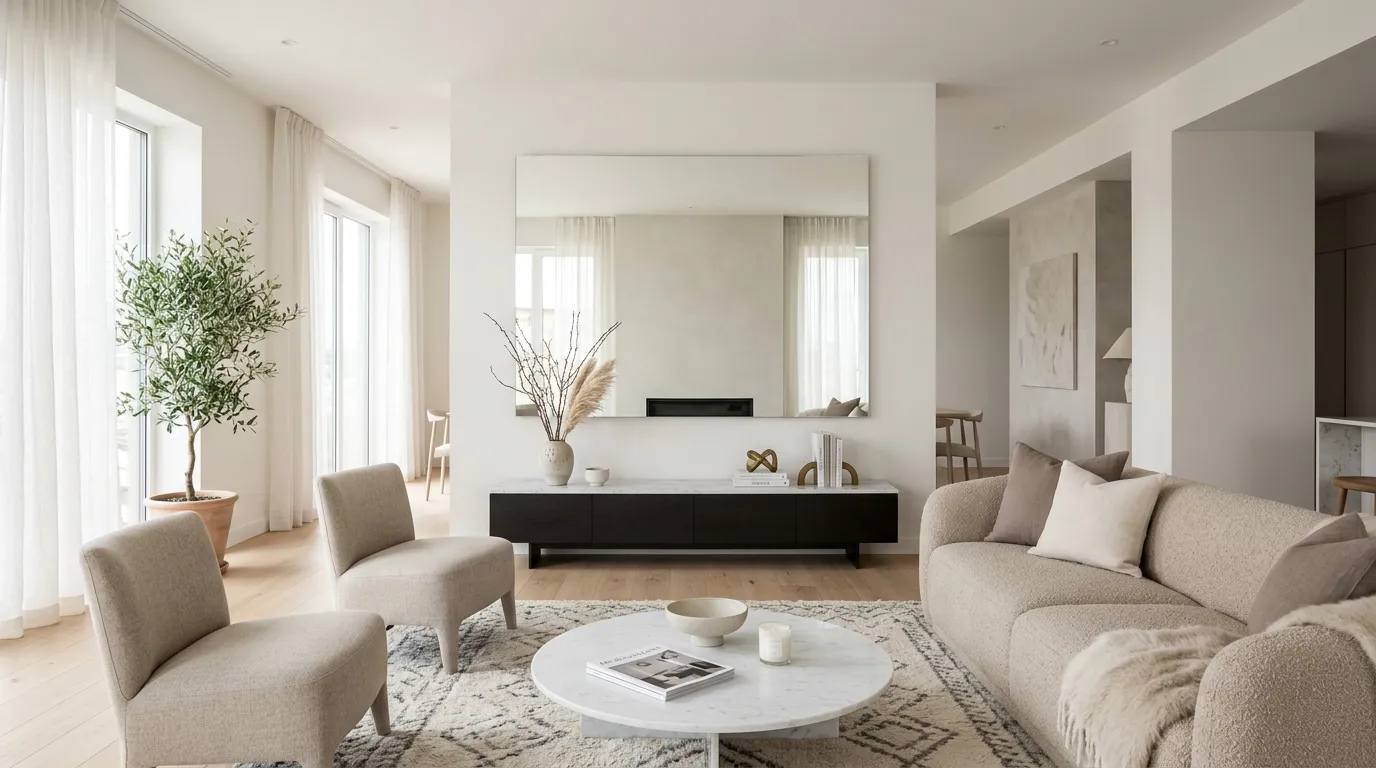
Mirrors are one of the easiest ways to create the feeling of extra space without changing the actual dimensions of a room. When placed across from windows or near light sources, they reflect brightness and make the surroundings appear more open. I’ve noticed that a well-positioned mirror can completely change how a smaller living area feels, especially when the room lacks strong natural light. Choosing a large, simple design often works better than using multiple small mirrors that can create visual clutter.
The key is placement rather than simply adding reflective surfaces anywhere. A mirror should enhance the room’s natural flow by reflecting attractive features like windows, artwork, or open areas. In a thoughtful living room layout, it can create the illusion of extended space while adding elegance and personality. Modern frameless mirrors, curved designs, or clean geometric styles blend beautifully with contemporary interiors and help maintain a calm, uncluttered appearance that feels both luxurious and practical.
If this was useful, you may also like Brown Living Room.
5. Open Walkways
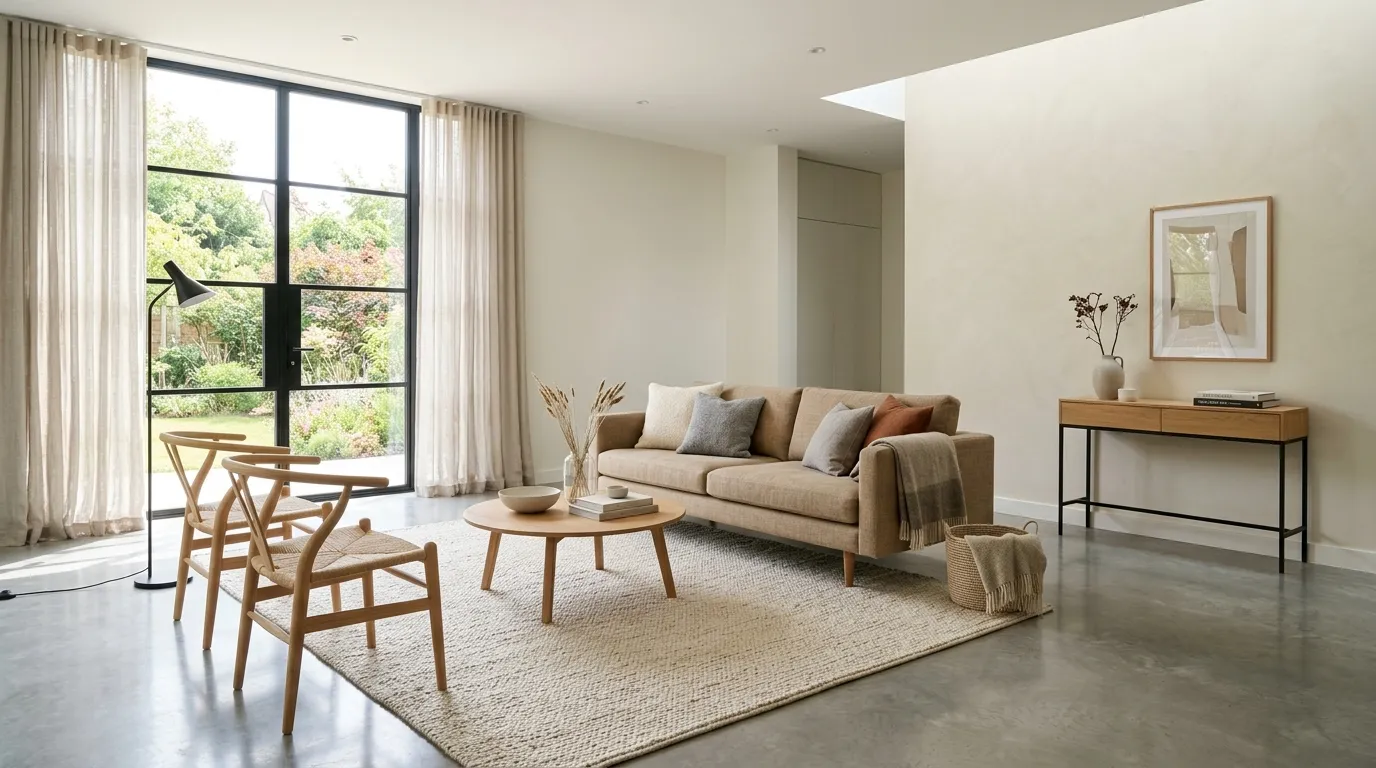
A room instantly feels larger when people can move through it easily. Crowded pathways and oversized furniture arrangements often make even generous spaces appear smaller. Keeping clear routes between seating, doors, and frequently used areas creates a sense of openness that improves both style and function. I’ve seen many rooms transform simply by removing one unnecessary piece or shifting furniture a few inches to create better circulation. These small changes can have a surprisingly noticeable visual impact.
Open walkways also allow the design elements to stand out because furniture is no longer competing for every inch of space. A clean path around the seating area creates balance and makes the entire room feel more intentional. Using slim furniture profiles, thoughtful spacing, and minimal accessories supports a modern aesthetic while improving everyday comfort. The result is a home that feels easier to live in, more welcoming for visitors, and visually larger without requiring structural changes.
6. Multi-Use Furniture
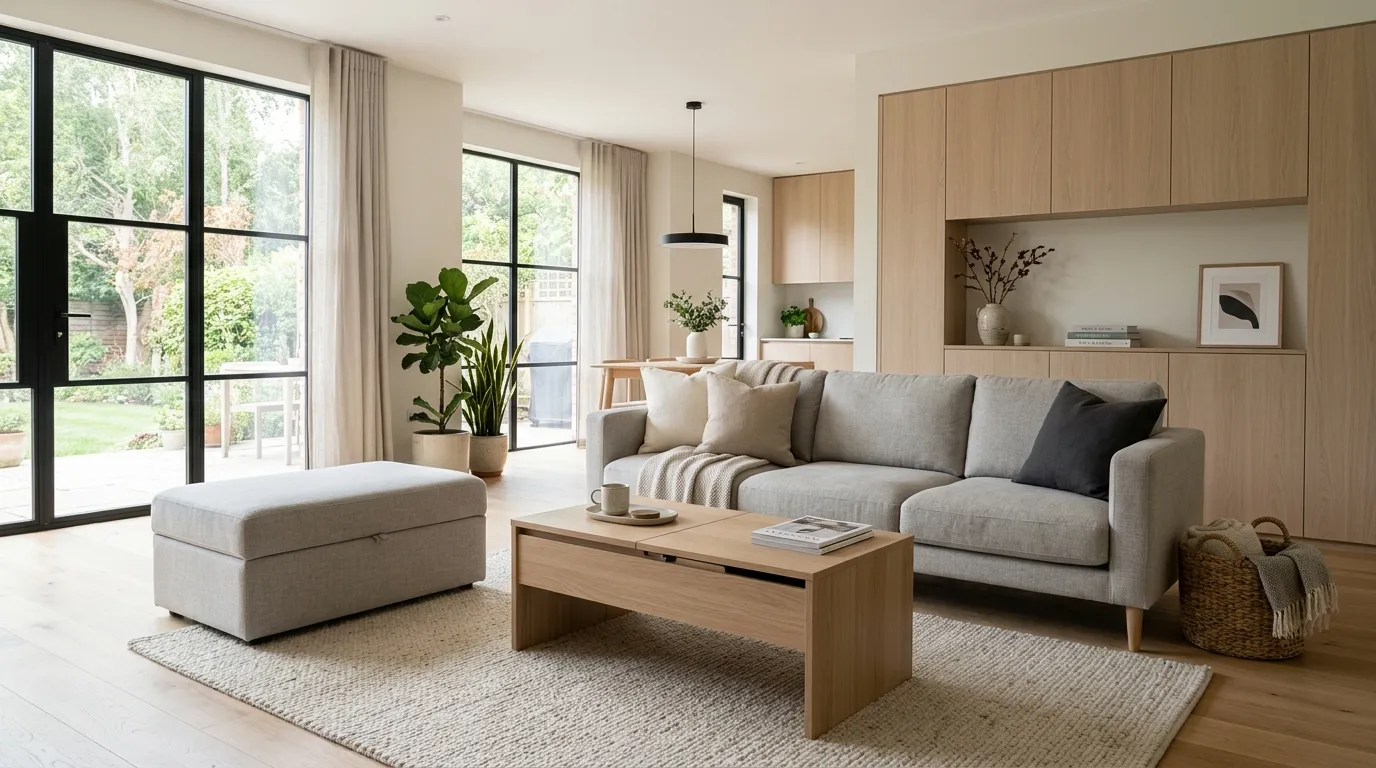
Furniture that serves more than one purpose can completely change how efficiently a living room functions. Pieces like storage ottomans, nesting tables, or sleek modular sofas help maximize available space while keeping the design polished. I’ve noticed that homes often feel larger when everyday items have a dedicated place to disappear. Instead of adding more storage furniture, choosing smarter pieces allows the room to stay open while still supporting real-life needs.
Multi-functional designs are especially useful in smaller homes where every square foot matters. A coffee table with hidden storage or an ottoman that provides extra seating can reduce clutter while maintaining a stylish appearance. These practical choices create a flexible environment that adapts to different activities, from relaxing evenings to entertaining guests. By combining beauty with function, the room feels organized, comfortable, and spacious while reflecting a modern approach to interior design.
7. Vertical Storage
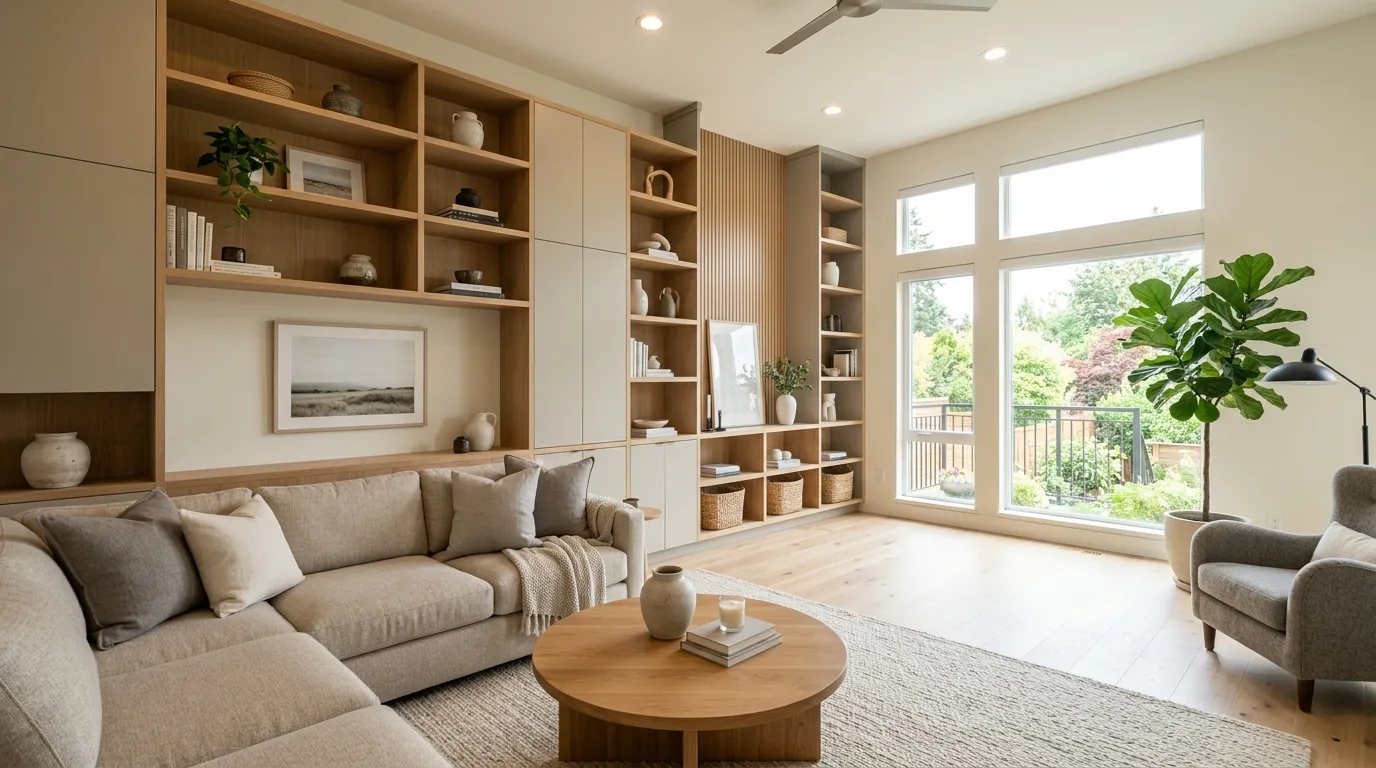
Using vertical space is a smart way to make a living area feel larger without taking away valuable floor space. Tall shelving, built-in cabinets, and elevated storage solutions naturally draw the eyes upward, creating the impression of higher ceilings. I’ve noticed this approach works especially well in compact homes because it keeps everyday items organized while allowing the room to maintain a clean appearance. Instead of filling the floor with storage pieces, the walls become functional design features that add personality.
Well-designed vertical storage also improves the overall balance of a room. Open shelves can display carefully chosen décor, while closed cabinets hide items that create visual distractions. When paired with light colors and simple materials, these features enhance the sense of openness. A thoughtful arrangement keeps the space practical without making it feel crowded, helping the room look more refined, spacious, and intentionally designed for modern everyday living.
8. Low Profile Furniture
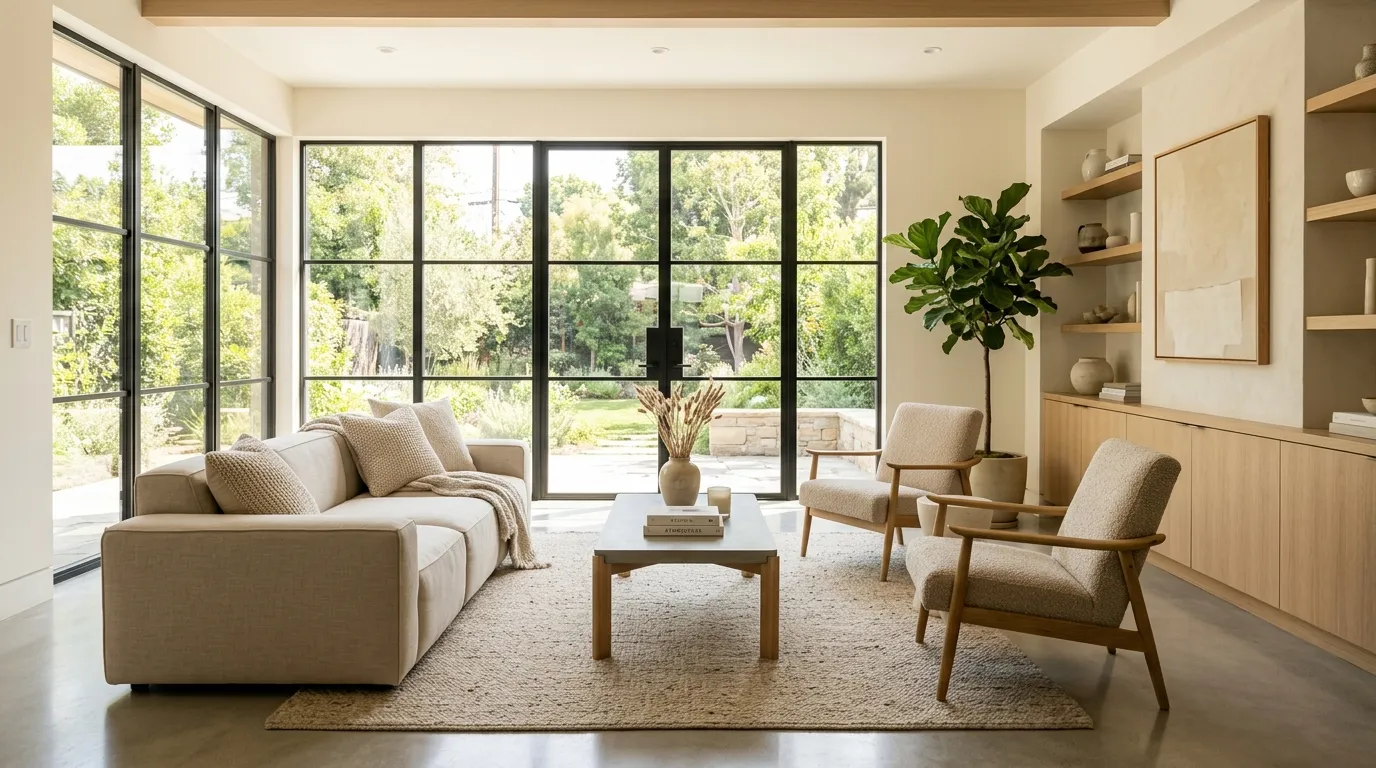
Choosing furniture with lower heights can dramatically influence how large a room feels. When sofas, chairs, and tables sit closer to the floor, more wall space remains visible, creating a lighter and less crowded appearance. I’ve seen this technique make smaller living rooms feel more comfortable because the eye can travel across the entire space without interruptions. Low-profile furniture also adds a contemporary touch that works beautifully with minimalist and Scandinavian-inspired interiors.
The goal is not to sacrifice comfort but to create better visual balance. A streamlined sofa combined with open-legged chairs and a simple coffee table allows more light to move through the room. This arrangement supports a cleaner living room layout while keeping the atmosphere relaxed and inviting. By reducing bulky shapes and choosing furniture with elegant proportions, the room gains a spacious feeling that looks intentional, modern, and effortlessly stylish.
9. Glass Accent Pieces
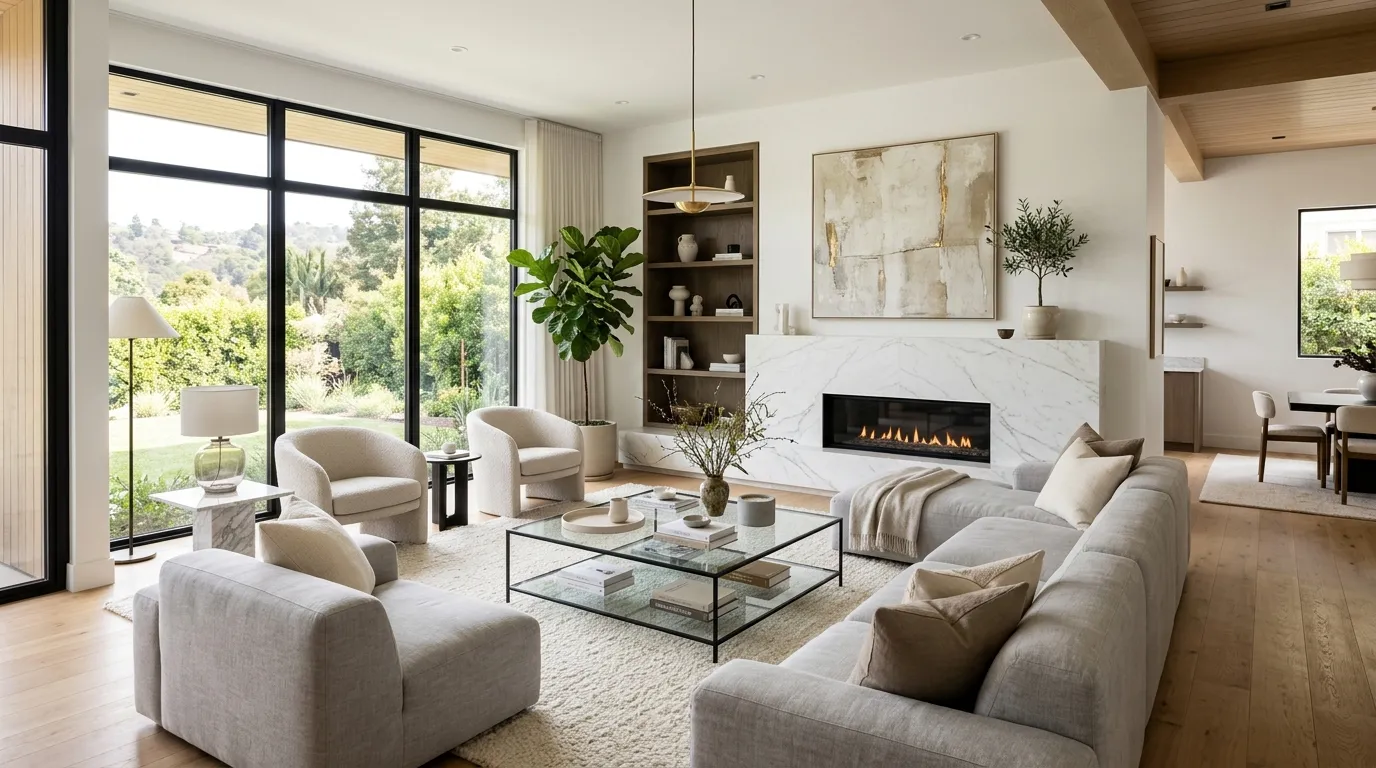
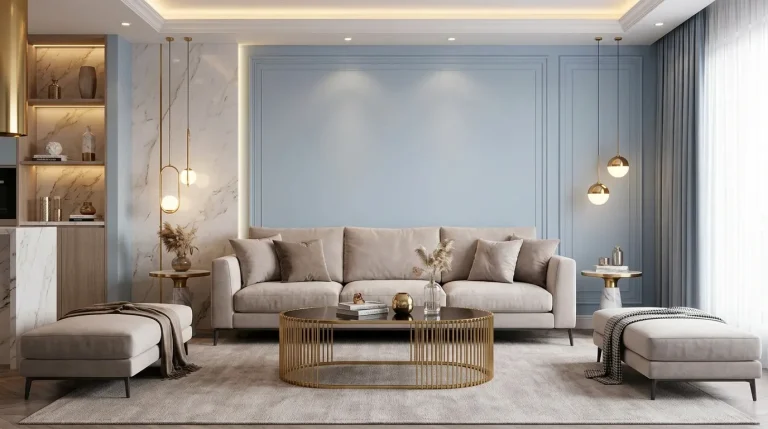
Glass furniture works beautifully when the goal is to maintain a spacious and uncluttered atmosphere. Transparent materials allow the eye to move through the room instead of stopping at heavy visual barriers. A glass coffee table, for example, provides functionality while keeping the flooring and surrounding décor visible. I’ve noticed this simple swap can make a compact seating area feel much less crowded without changing the overall furniture arrangement.
The beauty of glass accents comes from their ability to blend with different interior styles while adding a sophisticated touch. Pairing clear surfaces with warm textures like fabric rugs, wood finishes, and soft lighting creates a balanced look that feels welcoming rather than cold. These reflective and lightweight elements help support a more open environment, making the room appear brighter, larger, and easier to enjoy while maintaining a polished contemporary aesthetic.
Conclusion:
Small design decisions can make an incredible difference when they work together. By choosing the right living room layout, creating better flow, and arranging furniture with intention, you can make almost any room feel brighter, more spacious, and far more inviting. I’ve seen how simple changes like these can completely transform the way a space feels without stretching the budget. Save these ideas to Pinterest for future inspiration, try the ones that suit your home best, and share this guide with friends or family who want to create a living room that feels open, stylish, and comfortable every day.
Clara Whitmore
Clara specializes in interior styling, seasonal home trends, and cozy living spaces. She loves combining classic design elements with modern touches to create homes that feel personal, welcoming, and effortlessly stylish.