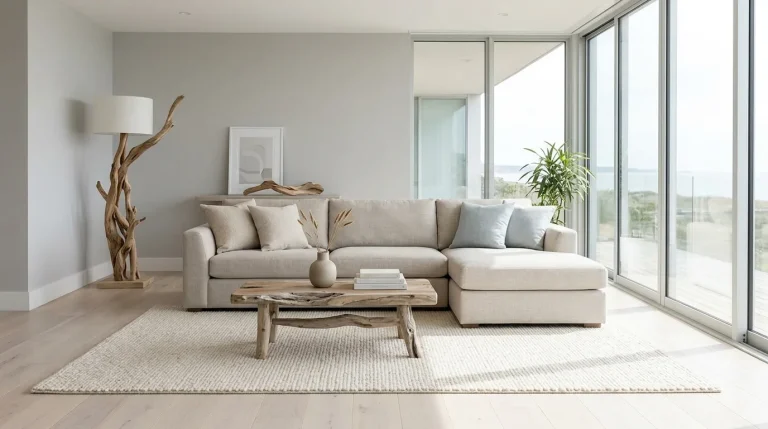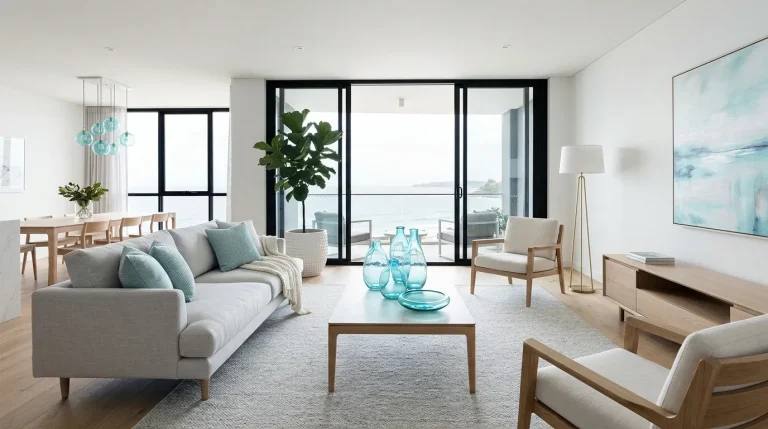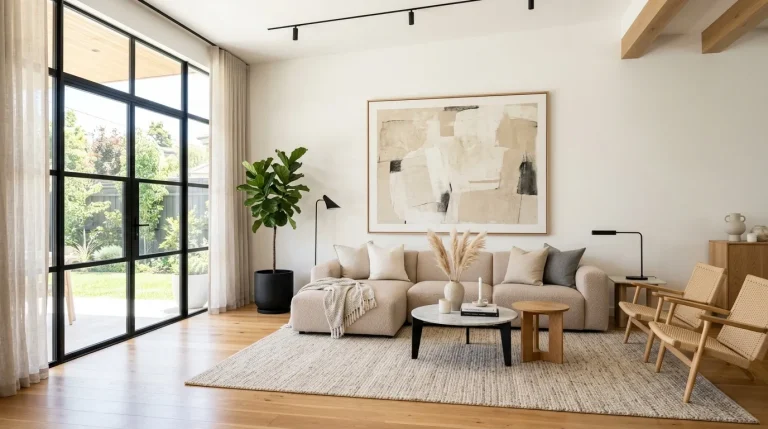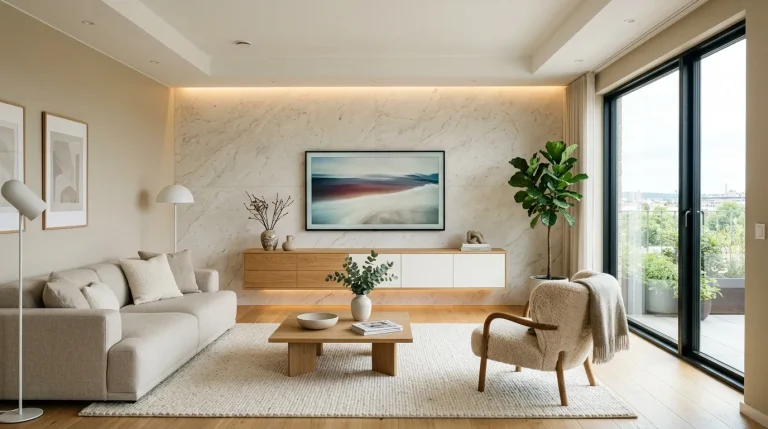
The Ultimate Gray and Brown Living Room Guide for Every Home

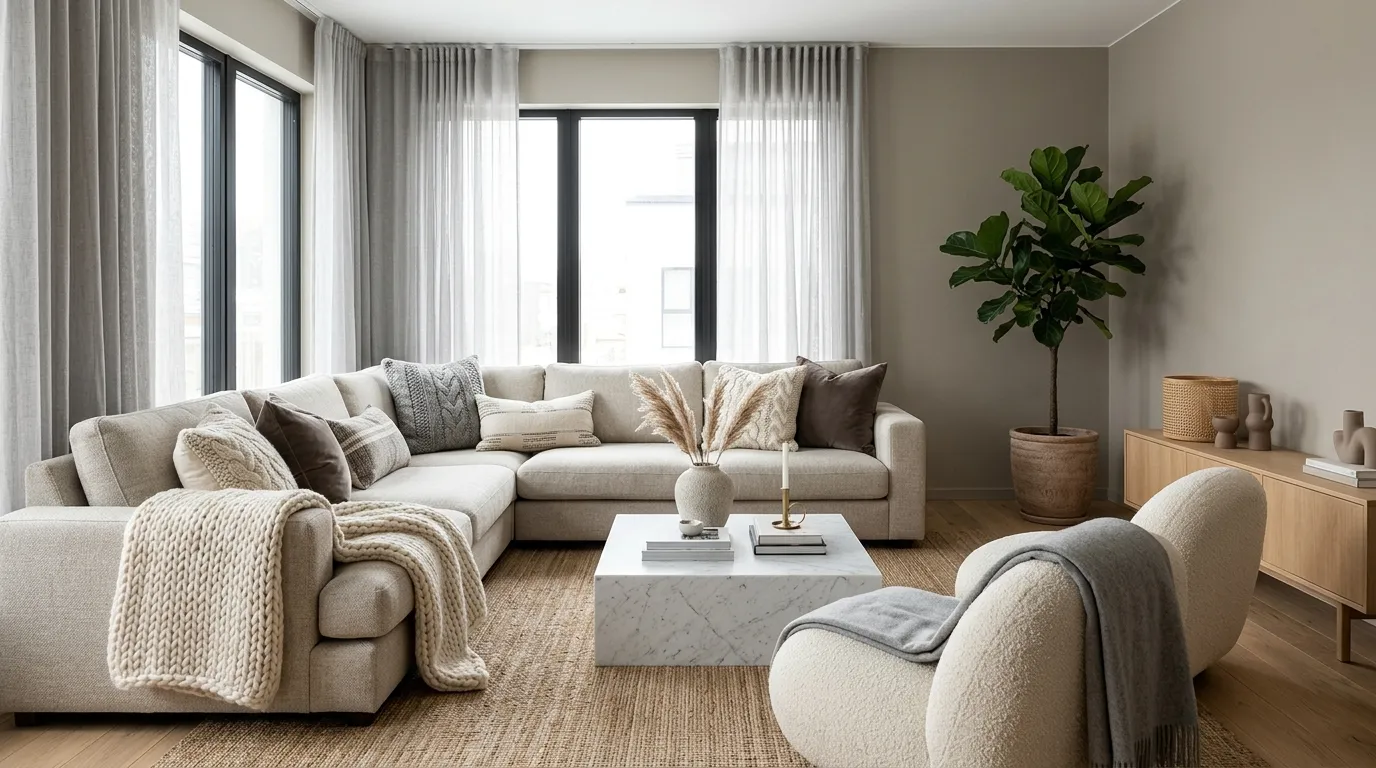
Gray and brown work together when the gray is warm and the brown brings texture: wood, leather, wool, and stone. Get the undertones right and the room feels calm and cozy; get them wrong and it can look dull or muddy.
This guide covers how to choose the right gray, where to add brown, and the materials that make the pairing feel finished. For more examples, browse these brown and grey living room ideas.
Table of Contents
1. Warm Greige Layers
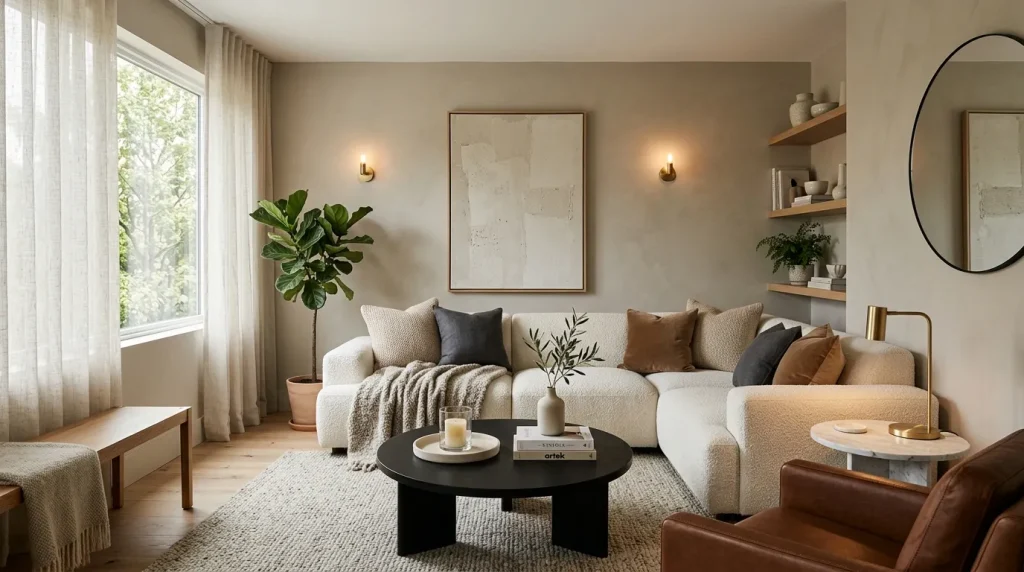
The easiest base is a warm gray or greige, a gray with a little beige in it. Cool blue-grays can clash with brown wood, while greige sits comfortably beside caramel, walnut, and cream.
Layer three or four shades rather than one: a light greige wall, a mid-gray sofa, a taupe rug, and brown accents. Changing only pillows and throws between seasons, such as light linen in summer and chunky knits in winter, keeps the room fresh.
2. Walnut Accents
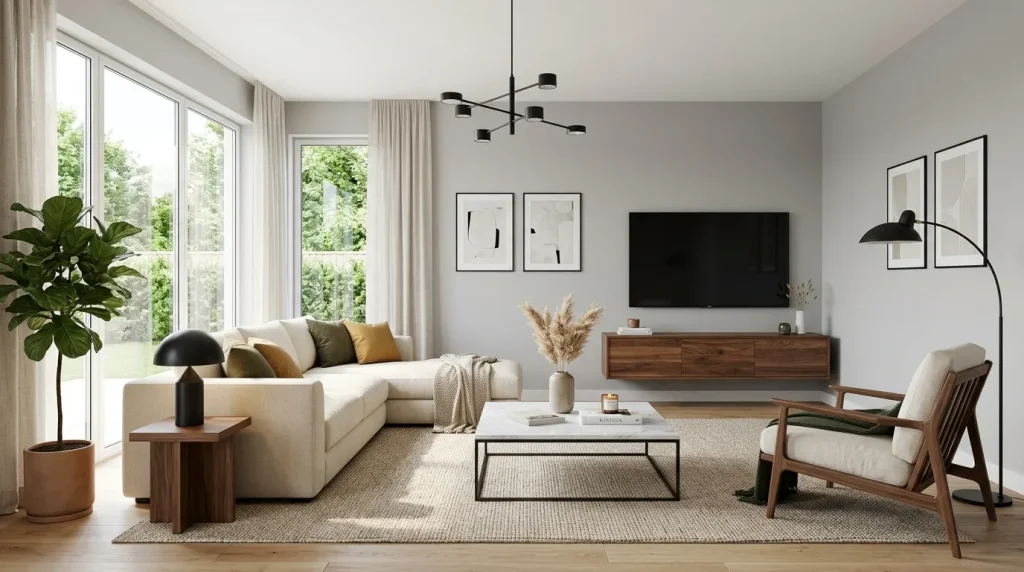
Walnut gives a gray room warmth and depth. A walnut coffee table, media console, or shelving unit is often enough to anchor the space.
Repeat the same wood tone two or three times, for example in a coffee table, picture frames, and a side table, so it looks intentional. Avoid mixing many different wood tones in one small room, which can look patchy.
3. Soft Textured Fabrics
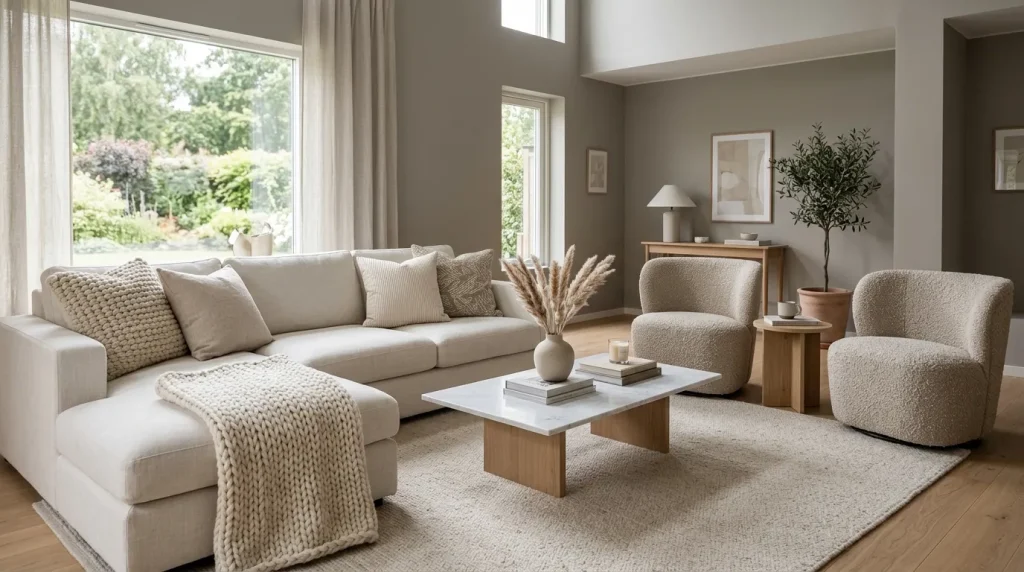
Texture keeps a neutral room from looking flat. Mix bouclé, linen, wool, and chunky knits in pillows, throws, and upholstery.
A good mix is one smooth fabric, one nubby or textured one, and one knitted or woven one. Washable pillow covers and throws are the cheapest way to refresh the room later.
4. Stone Coffee Tables
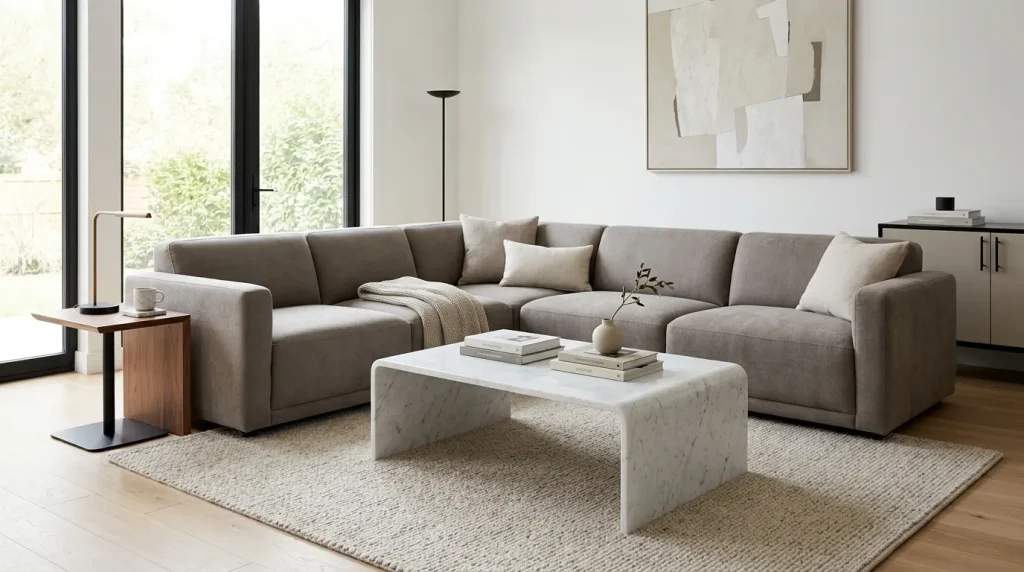
A stone coffee table adds a light, cool surface between gray upholstery and brown wood. Honed marble, travertine, or sintered stone all work; a lighter stone brightens the middle of the room.
Round or oval tables are easier to move around in tight layouts. Leave about 16 to 18 inches between the sofa and the table so it is reachable without blocking legs.
5. Layered Area Rugs
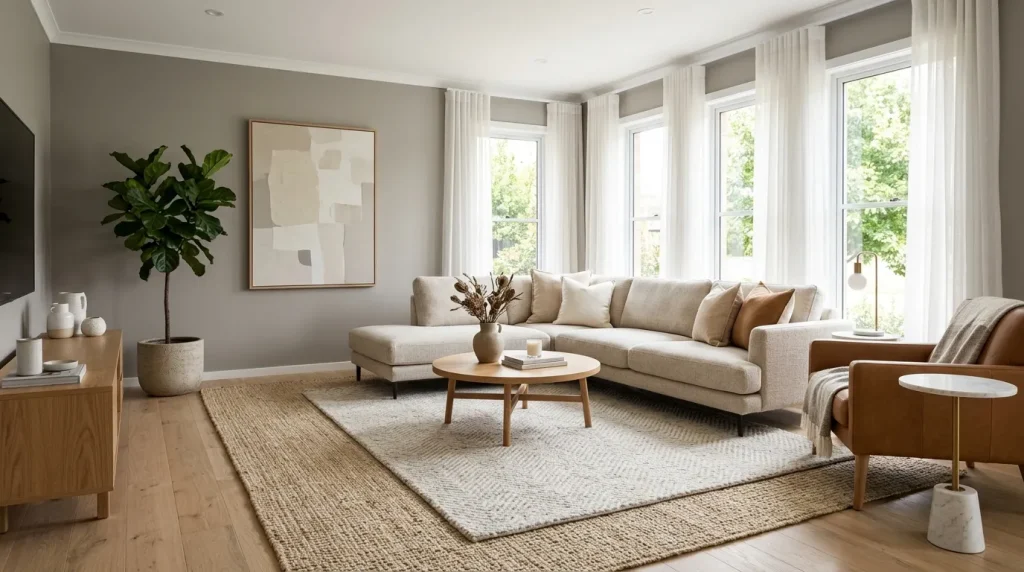
Layering rugs defines the seating area and adds warmth. Use a large flatweave or jute base rug, then a smaller textured or patterned rug in gray, taupe, or rust on top.
The base rug should be big enough for at least the front legs of all seating, usually 8 by 10 feet in an average living room. Swapping only the top rug is an easy seasonal change.
6. Black Metal Details
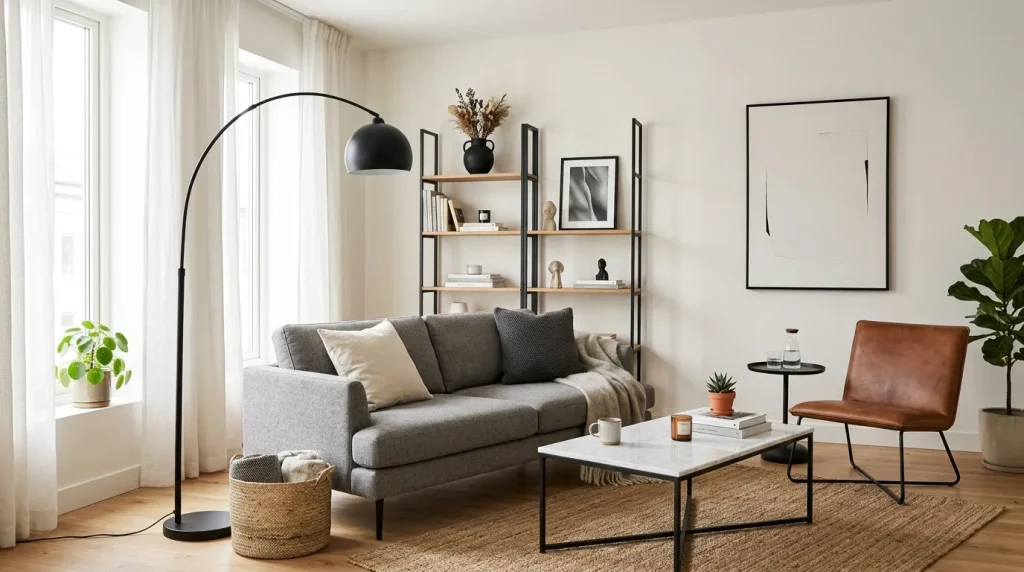
A few black details give the soft palette some definition. A slim black floor lamp, metal shelf frames, or black picture frames are enough.
Keep black to small accents spread around the room so the eye moves across the space. It pairs especially well with walnut and warm leather.
7. Leather Accent Chair
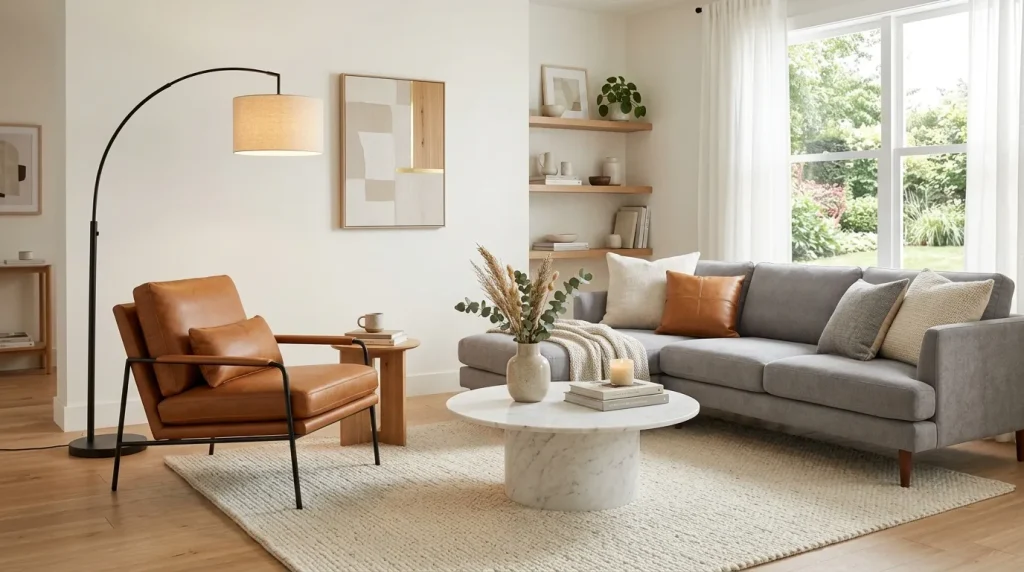
A cognac or caramel leather chair is one of the best ways to bring brown into a gray room. It contrasts nicely with a gray sofa and adds a warm, lived-in feel.
Set it near a window or lamp to create a reading spot; these reading nook ideas for the living room show how. Real leather develops a patina over time, while good faux leather is easier to clean in homes with kids or pets.
8. Floating Wall Shelves
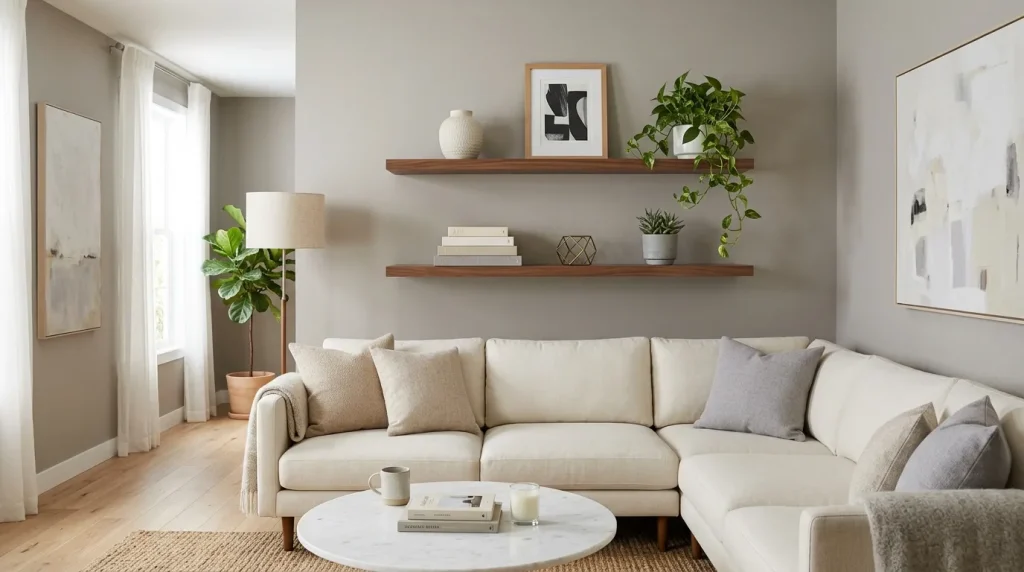
Floating shelves add display space without taking floor space. Style them with books, ceramics, small framed art, and a trailing plant, leaving some empty space between groups.
Mix heights and keep colors within the palette, with creams, grays, browns, and a touch of black. Mount shelves 10 to 15 inches apart vertically so taller objects fit.
9. Oversized Wall Art
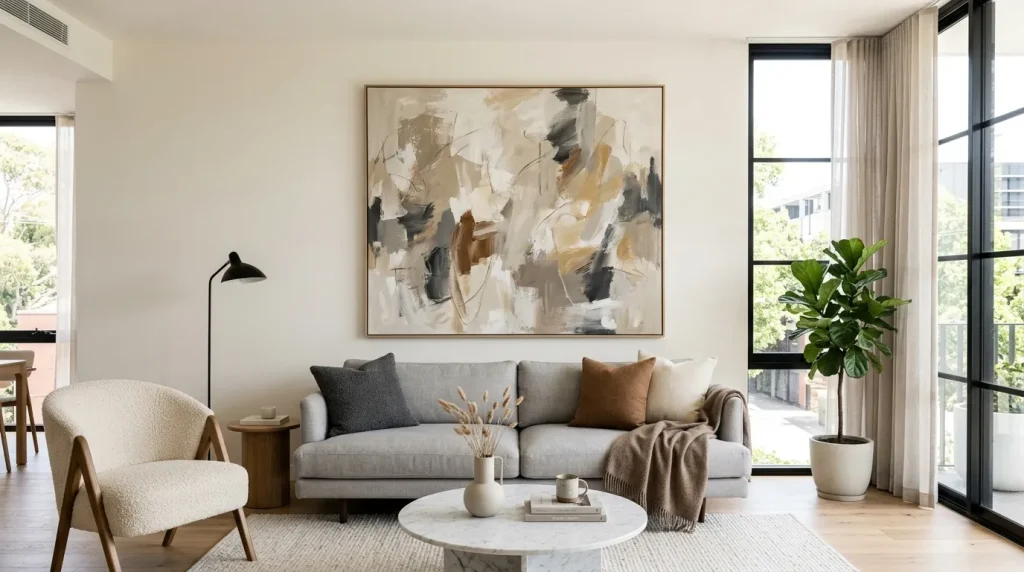
One large piece of art makes a stronger statement than many small ones. Abstract pieces in taupe, rust, cream, and charcoal tie gray and brown together.
Over a sofa, art about two-thirds the sofa’s width looks balanced; hang it so the bottom sits 8 to 10 inches above the sofa back.
Choosing the Right Shades
- Light room: pale greige walls, a mid-gray sofa, oak or walnut wood.
- Dark, cozy room: charcoal walls with chocolate leather and brass; see this chocolate brown living room for deeper brown ideas.
- North-facing room: pick warmer grays with beige undertones to avoid a cold look.
- South-facing room: slightly cooler grays can work because sunlight adds warmth.
- Accent colors: rust, olive, and cream all sit well with gray and brown.
Lighting a Gray and Brown Room
Neutral rooms depend on good light to show off their textures.
- Warm bulbs: 2700K to 3000K keeps gray from looking cold and makes wood tones glow.
- Three light sources: combine a ceiling fixture with a floor lamp by the sofa and a table lamp on a side table or console.
- Shade materials: linen or rice-paper shades soften the light; a brass or black base ties into the metal accents.
- Picture or shelf lights: a small plug-in light over art or shelves adds depth in the evening.
Dimmers on the main light make the same room work for bright daytime tasks and relaxed evenings.
The Bottom Line
A gray and brown living room works best with a warm gray base, repeated wood tones, plenty of texture, and a few black accents. Start with the color and one wood piece, then layer in fabrics and art over time.
Clara Whitmore
Clara specializes in interior styling, seasonal home trends, and cozy living spaces. She loves combining classic design elements with modern touches to create homes that feel personal, welcoming, and effortlessly stylish.