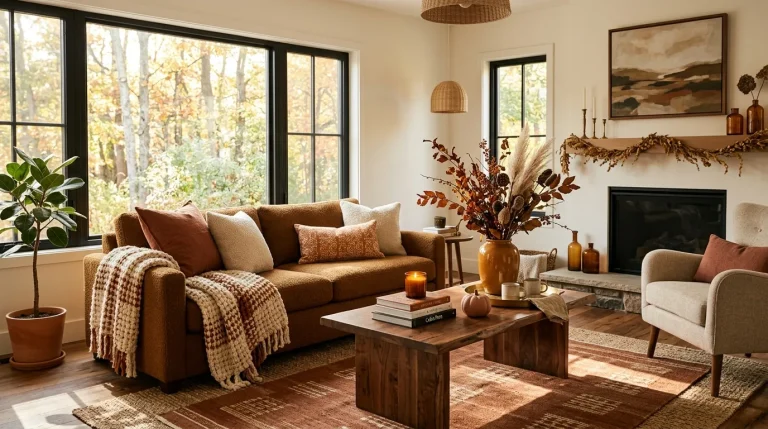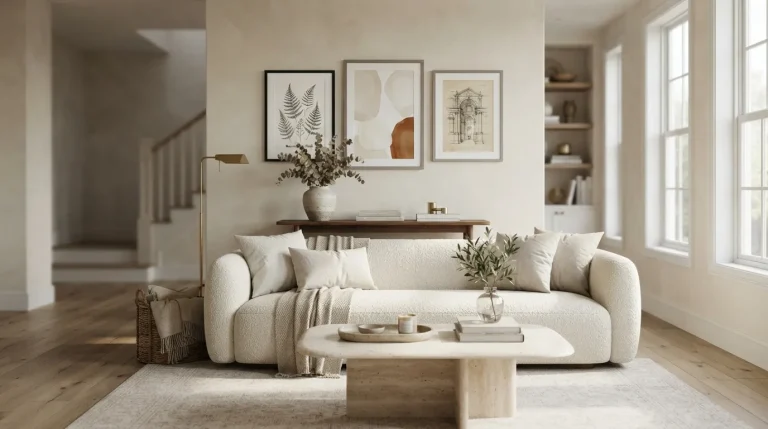
Best Brown and Grey Living Room Ideas for a Stylish Refresh

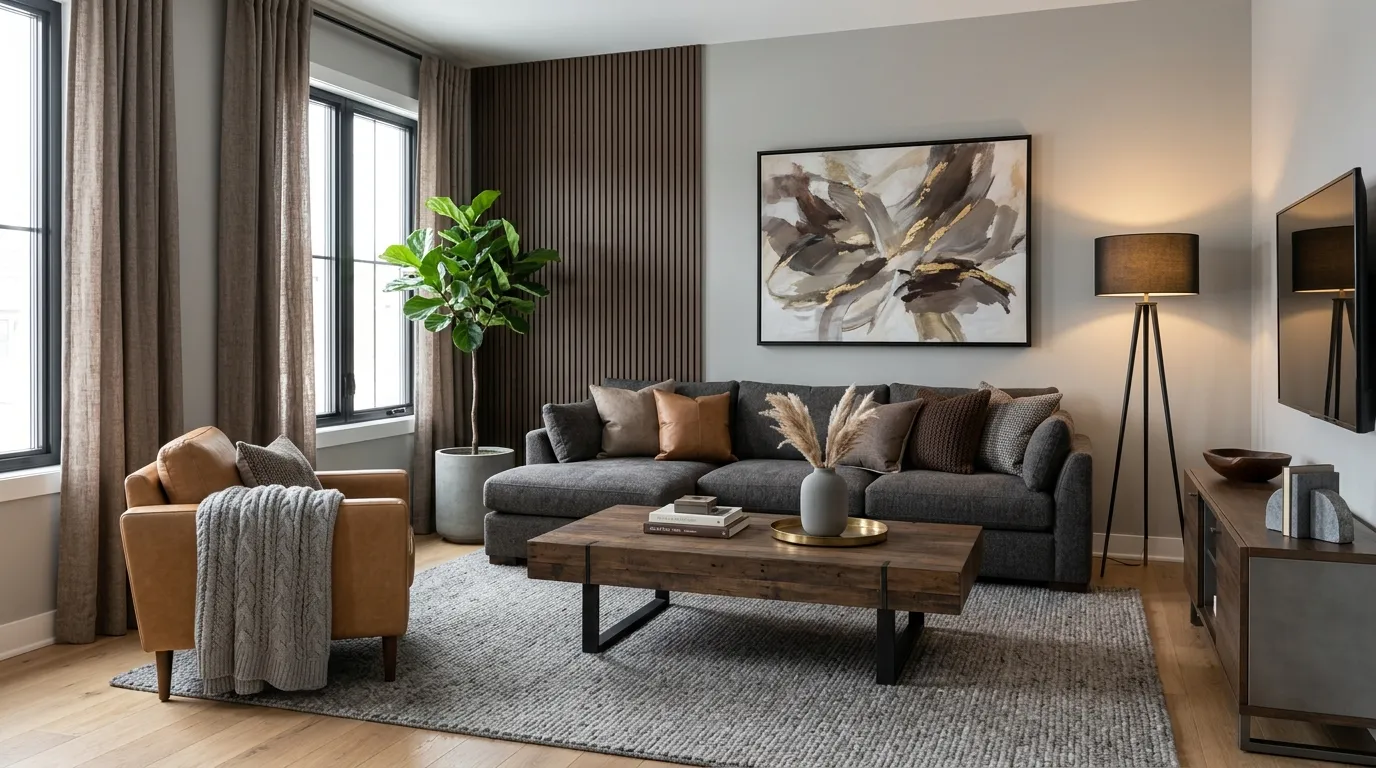
If you’re looking for a simple way to refresh your home without a full renovation, these Brown and Grey Living Room Ideas are exactly what you need right now. The combination of warm brown tones and cool grey shades creates a balanced, modern look that feels both cozy and stylish at the same time.
This color pairing is one of the easiest ways to make a living room feel instantly more designed without spending much. It works in small apartments, large open spaces, and everything in between. Minimal, moody, or softly layered, this guide helps you picture real, practical ideas you can actually use. Each idea is meant to inspire a space that feels calm, inviting, and beautifully put together.
Table of Contents
1. Warm Taupe Harmony
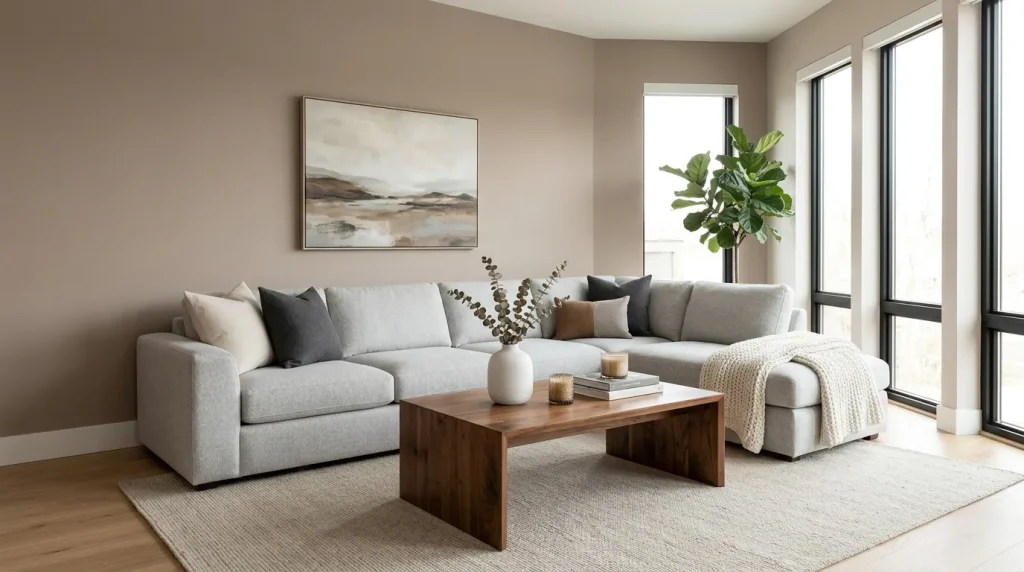
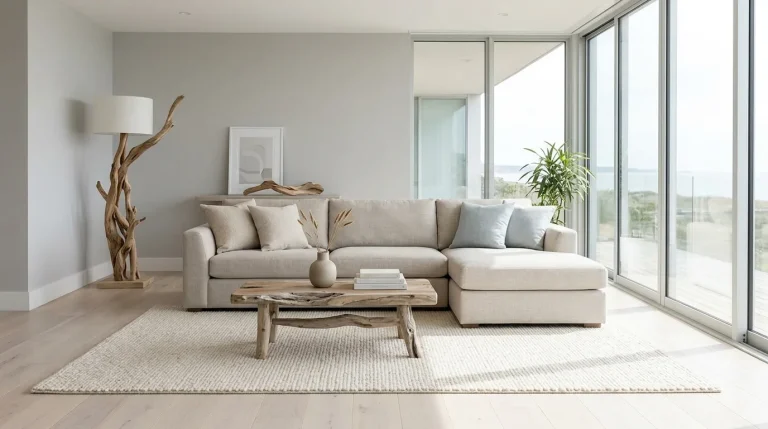
Warm taupe harmony instantly transforms a living room into a calm, balanced retreat that feels both modern and inviting. In many Brown and Grey Living Room, taupe is used as the bridging tone between warm brown furniture and cool grey walls, creating effortless visual balance. This combination works especially well in spaces that feel too cold or too dark, because taupe softens both extremes. A taupe sofa or rug can anchor the room while wooden accents bring warmth. This palette works best in natural light rooms where textures stand out beautifully and create depth without clutter.
Layered taupe styling brings a subtle luxury that feels effortless yet highly curated. When combined with grey seating and brown wood finishes, it creates a seamless transition between warm and cool tones. Textured cushions, woven throws, and matte ceramics add depth without crowding the room. This approach works best in medium sized living rooms where balance matters more than bold contrast. Soft lighting, especially warm LED lamps, helps highlight the neutral palette and makes the room feel cozy, grounded, and visually cohesive throughout the day and evening.
2. Charcoal Accent Wall
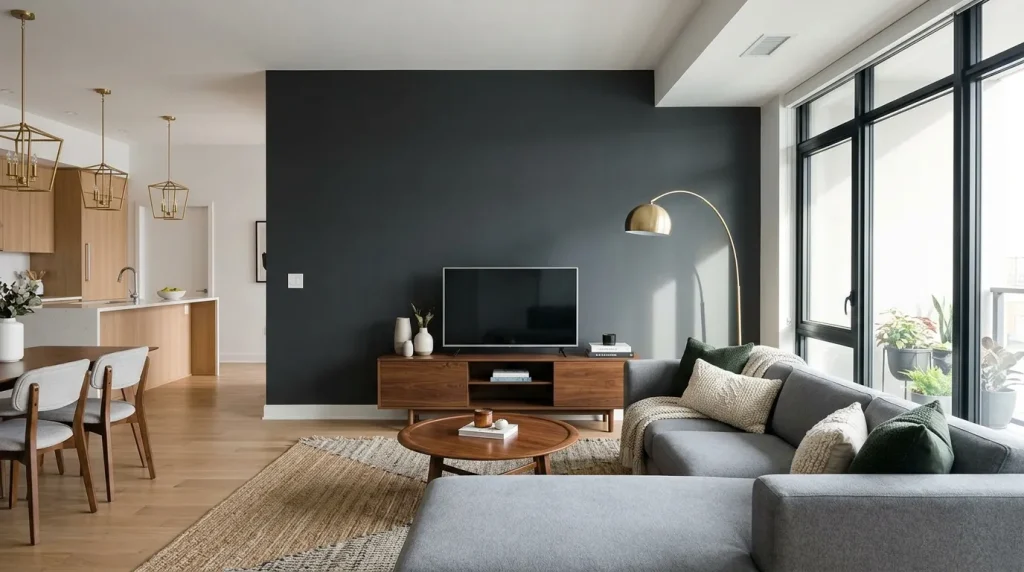
An accent wall in deep charcoal instantly adds drama and structure to a living room without overwhelming the space. Paired with warm brown wood furniture and soft grey seating, it creates a balanced contrast that feels both modern and grounded. This idea works especially well in open layouts where a visual anchor is needed to define the seating area. Keep the decor around it minimal so the wall stays the focal point.
Charcoal tones also work beautifully to highlight natural materials and soft textures. When light hits a dark wall, it creates depth that makes furniture stand out more clearly. Brown leather sofas, wooden coffee tables, and neutral rugs all appear richer against this backdrop. This contrast is one of the easiest ways to achieve a high-end look without expensive renovations. Adding subtle metallic accents like brass lamps or black frames enhances the modern feel while keeping the overall design clean, intentional, and visually soothing for everyday living spaces.
3. Soft Neutral Layering
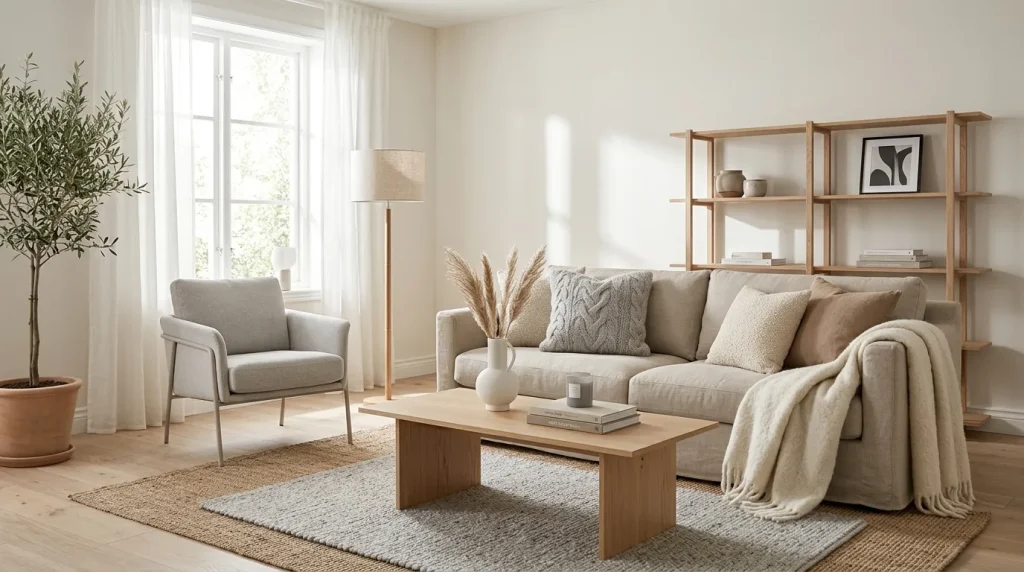
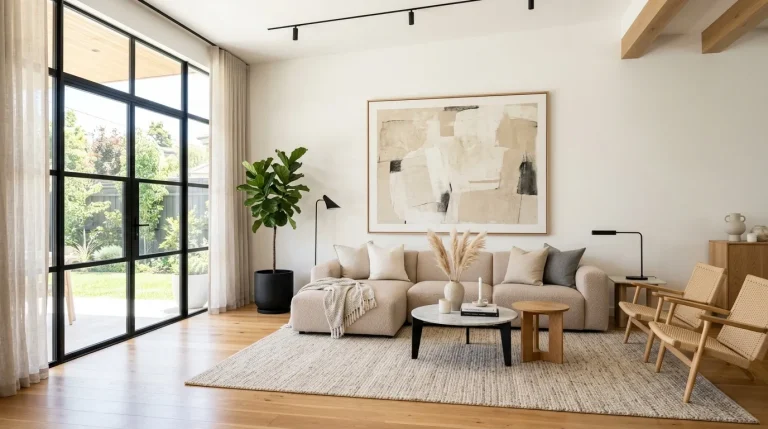
Soft neutral layering is one of the most timeless approaches in Living Room Ideas, especially for those who prefer calm, uncluttered interiors. By combining beige, soft grey, and light brown tones, the space feels balanced and visually soothing. This style works well in both small and large rooms because it avoids heaviness while staying complete. Layered textiles like linen cushions, wool throws, and textured rugs add depth without clutter. It performs best in natural light spaces, where soft tones shift gently throughout the day and maintain an airy, refreshing atmosphere.
This layered palette also makes decorating easier because every piece naturally fits together. Furniture in muted tones like grey sofas or brown wooden tables blends effortlessly without needing bold contrast. Accessories can remain minimal, focusing on texture rather than color. In many homes, this approach helps reduce visual stress and creates a peaceful environment that feels lived in but still refined. It is a good fit for a first home because it is forgiving and easy to update later without a full redesign.
4. Walnut & Steel Blend
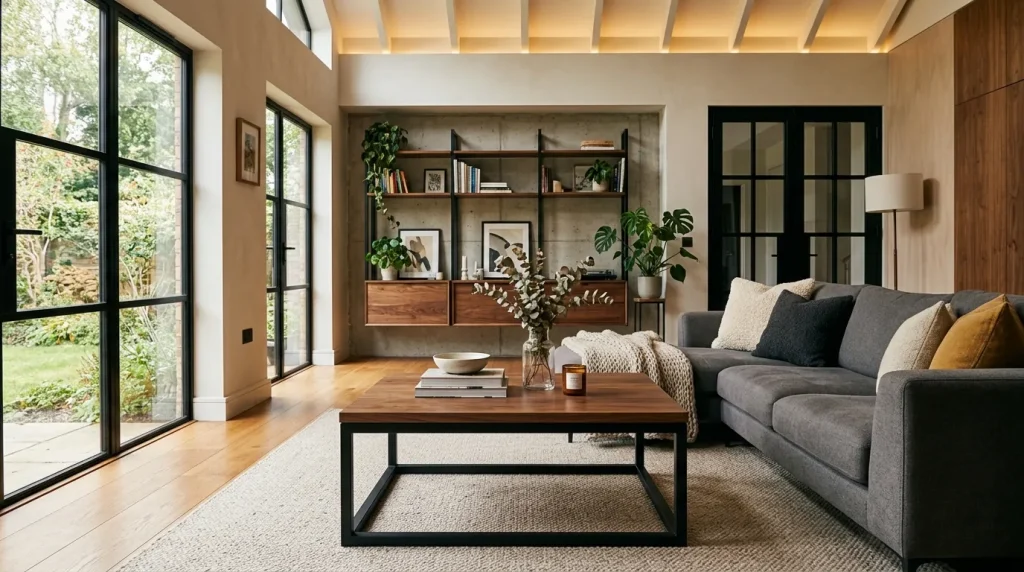
Walnut and steel combinations bring a refined contrast that feels both grounded and modern. The warmth of walnut wood instantly softens the cool, structured look of steel frames, creating a balanced interior that feels curated rather than accidental. This approach is especially effective in open living rooms where furniture needs to stand out without overwhelming the space. This pairing works beautifully when neutral fabrics are used, allowing the materials themselves to become the visual focus without adding unnecessary decoration.
This style also adds quiet sophistication without requiring bold colors or complex styling. Steel legs on tables or shelves introduce a clean architectural edge, while walnut surfaces keep the atmosphere warm and inviting. The mix gives a subtle industrial feel without making the room feel cold. In real homes, this balance makes the space feel modern yet comfortable, especially when paired with soft lighting and textured fabrics like wool or linen.
5. Grey Sofa Focus
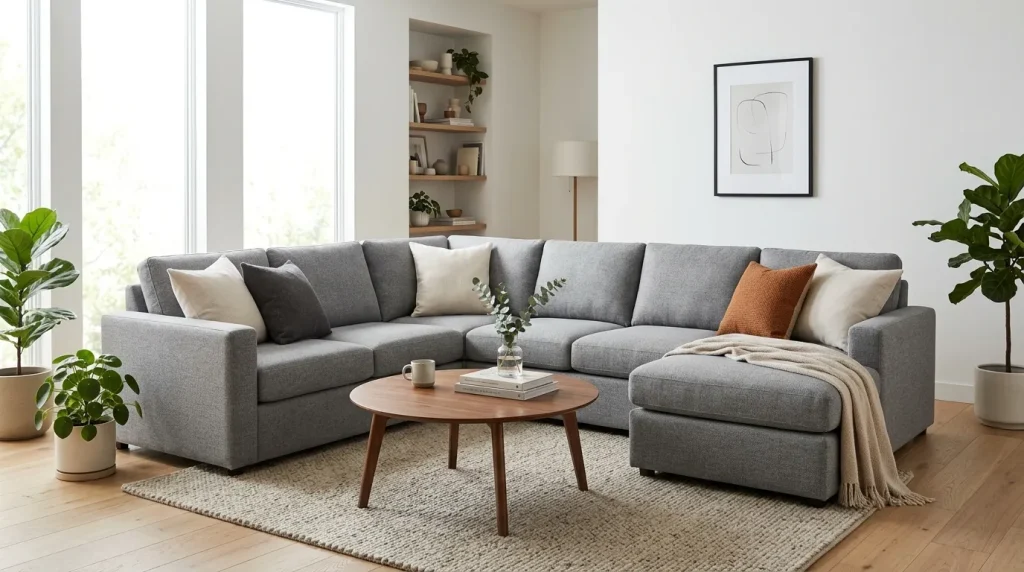
A grey sofa focus instantly grounds the living room and gives it a strong visual anchor. In many modern interiors, this approach allows other elements like wooden tables and warm-toned décor to naturally complement the seating area. The neutrality of grey makes it incredibly flexible, allowing homeowners to change accent colors without redesigning the entire space. This works especially well in smaller apartments where simplicity and clarity make the room feel more spacious and intentional. Similar soft neutral layering also works beautifully in bedrooms, especially in these Easy Purple Gray Bedroom Ideas for a Soft Dreamy Look.
The beauty of a grey sofa is how easily it adapts to different styles. Adding brown cushions or wooden side tables creates warmth, while keeping the base neutral ensures long-term design flexibility. It suits anyone who likes to swap decor with the seasons, since a gray sofa works with almost any accent color. In everyday living, this creates a balanced environment that feels calm, modern, and visually stable without feeling boring or overly minimal.
6. Natural Wood Flooring
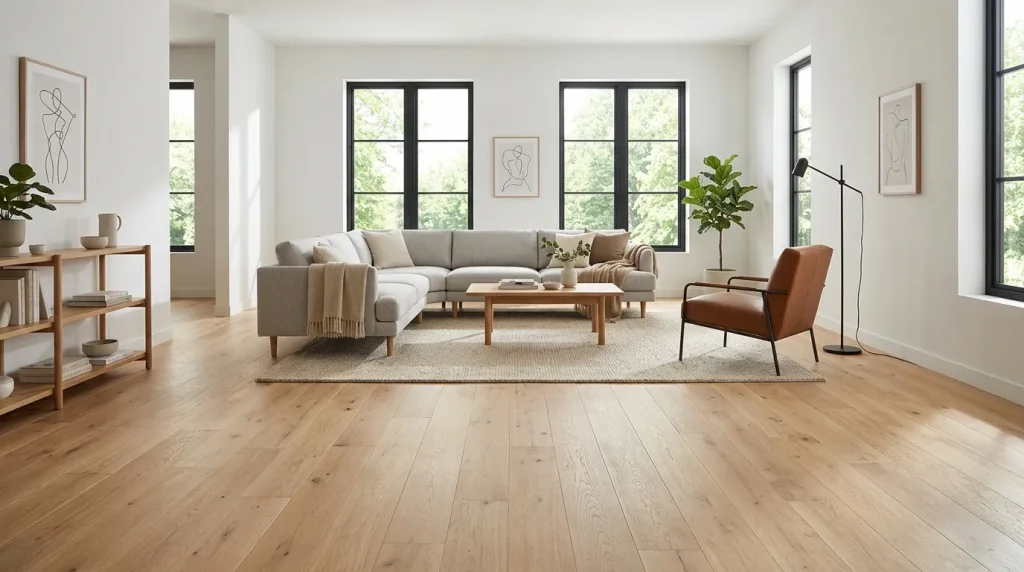
Natural wood flooring creates a strong foundation that instantly lifts the entire living room design. It introduces warmth that balances perfectly with cooler grey tones, making the space feel grounded yet airy. Light oak or warm walnut floors work especially well because they reflect natural light beautifully. Wood flooring often becomes the unifying element that ties all furniture pieces together without needing heavy decoration or bold colors.
This flooring choice also enhances the long-term versatility of the space. Whether paired with modern grey sofas or rich brown furniture, it always adapts without losing its charm. Natural wood ages gracefully and keeps its warmth over time. In everyday use, it helps create a welcoming environment that feels both stylish and practical, especially when combined with soft rugs, minimal décor, and warm lighting.
7. Moody Lighting Layers
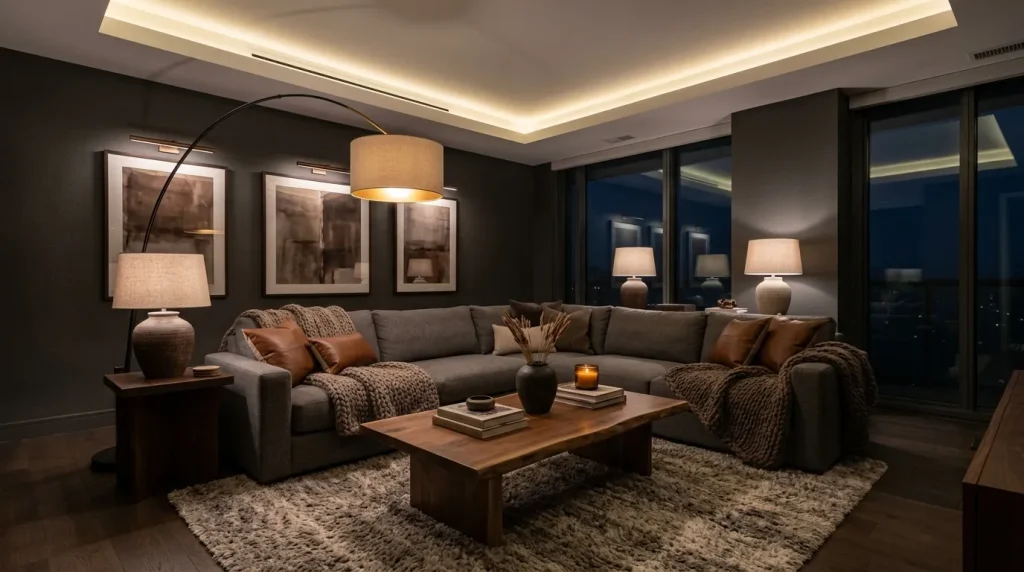
Moody lighting layers completely change how a living room feels after sunset, turning a simple space into something cinematic and inviting. Instead of relying on a single overhead light, multiple light sources create depth and warmth across the room. In Living Room Ideas, this technique is especially powerful because it highlights the contrast between cool grey surfaces and warm brown wood tones. Even basic furniture looks more expensive when layered lighting is used thoughtfully.
The key is combining floor lamps, table lamps, and soft ambient lighting to build visual zones within the room. This avoids harsh shadows and makes the space feel more relaxed and lived-in. Warm-white bulbs bring out wood grain and soft fabrics far better than cool light. In real homes, this setup creates a cozy evening atmosphere that feels calm, stylish, and perfect for unwinding without needing any structural changes.
8. Minimal Coffee Center
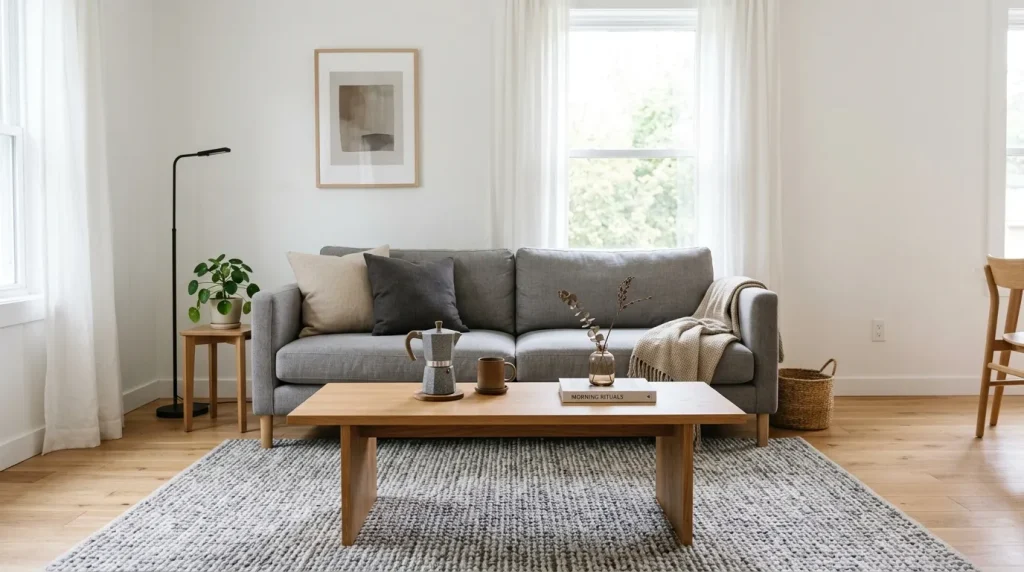
A minimal coffee center design focuses on simplicity, allowing the rest of the room to breathe visually. Instead of bulky or overly decorative tables, a clean wooden or glass coffee table becomes the functional centerpiece. This approach works extremely well in modern interiors where balance between brown and grey tones needs to remain subtle.
The beauty of this idea lies in its restraint. By reducing visual clutter, every element in the room becomes more intentional and noticeable. Grey sofas appear softer, and brown wood accents feel more refined. Limit the table to one or two statement pieces, such as a vase or a tray. In everyday living, this creates a peaceful, stress-free environment that feels open, modern, and easy to maintain.
9. Textured Neutral Mix
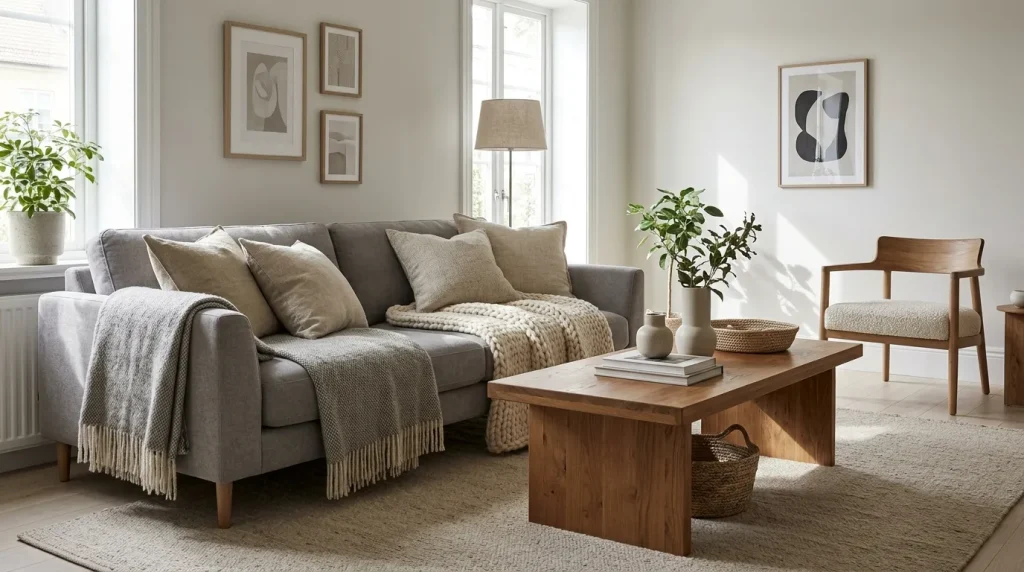
A textured neutral mix brings life into a room without relying on strong colors or patterns. Instead, it focuses on how materials feel and visually interact. Linen, wool, cotton, and soft upholstery all work together to create subtle depth. In many Brown, Grey Living Room Ideas, this approach helps prevent the space from feeling flat or overly plain while still keeping a calm, cohesive palette.
This style is especially effective in modern homes where simplicity is important but warmth is still desired. Layering different textures across cushions, rugs, and throws creates a cozy, lived-in feeling without clutter. Even small texture changes can completely transform how a room feels. Layering texture this way adds richness while keeping the room clean and easy to live in.
Making Brown and Grey Work Together
Brown and grey can clash when their undertones fight, which is why some rooms look muddy instead of cozy. A few simple rules keep them on the same side.
- Pick one lead color: let either brown or grey cover the big surfaces (walls, sofa, rug) and use the other as the accent, roughly a 70/30 split.
- Match the temperature: warm greys with a beige undertone (greige) sit easily beside walnut and leather; cool blue-greys pair better with darker, espresso browns.
- Add a bridge shade: cream, oatmeal, or taupe in pillows and throws links the two colors so they read as one palette.
- Mix textures: two flat neutrals can look dull, so combine boucle, linen, wool, and wood grain to give the room depth.
- Bring in one living accent: a large plant or a touch of olive or rust keeps the scheme from feeling flat.
For a richer, darker take on the same palette, these chocolate brown living room ideas lean fully into brown, and this list of living room paint colors helps pick the right wall shade.
To Sum It Up
These ideas show how powerful Brown and Grey Living Room Ideas can be when used with the right balance of tones, textures, and lighting. Even the smallest change—like adding warm wood accents or soft grey layers—can completely transform how your space feels every day.
If you’re planning a refresh, start with just one idea and build slowly. Even simple updates can make a room feel more peaceful, modern, and lived-in. Save this post on Pinterest so you can revisit it later, try your favorite idea at home, and share it with someone who loves interior inspiration.
Clara Whitmore
Clara specializes in interior styling, seasonal home trends, and cozy living spaces. She loves combining classic design elements with modern touches to create homes that feel personal, welcoming, and effortlessly stylish.