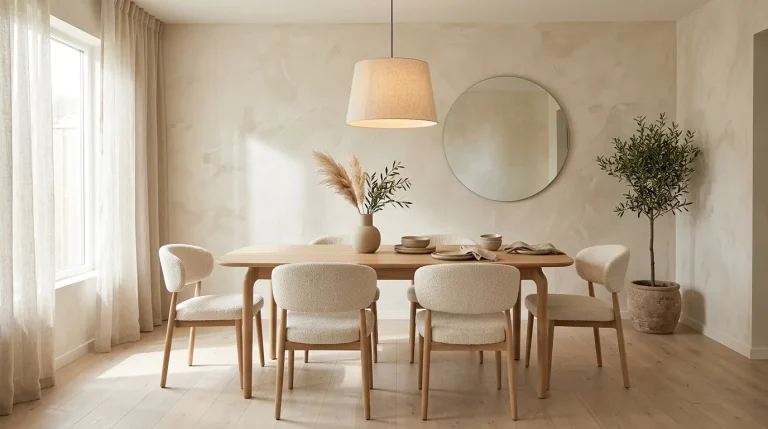
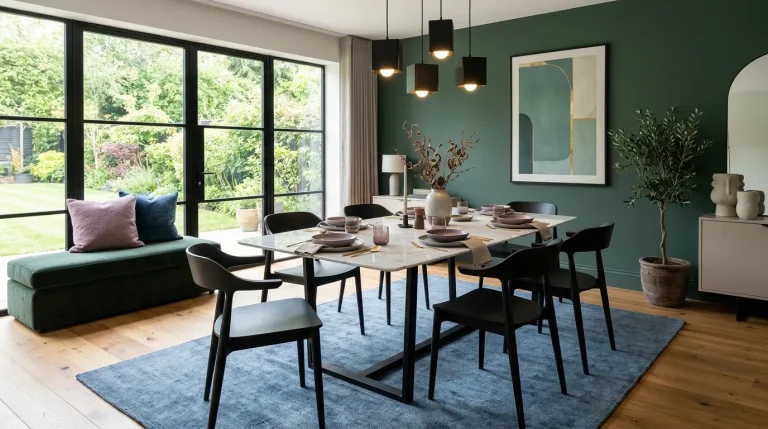
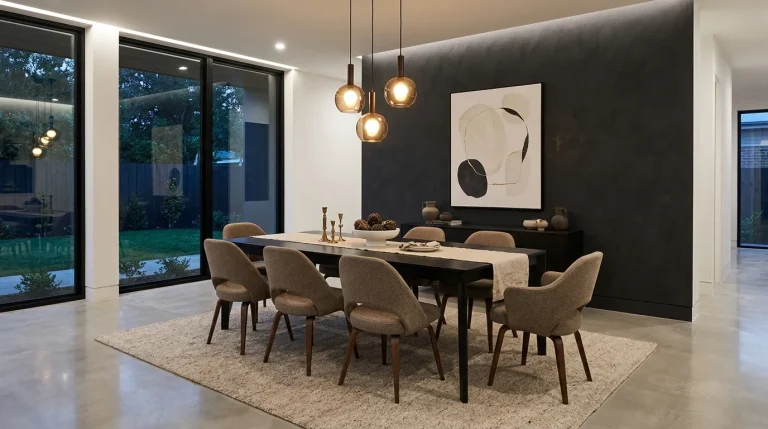
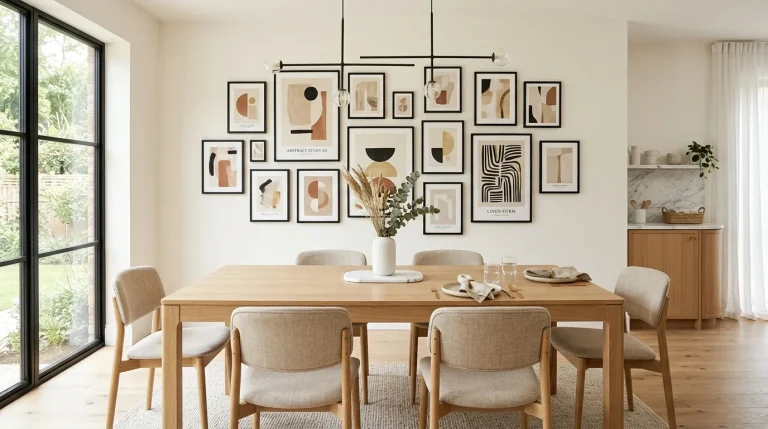
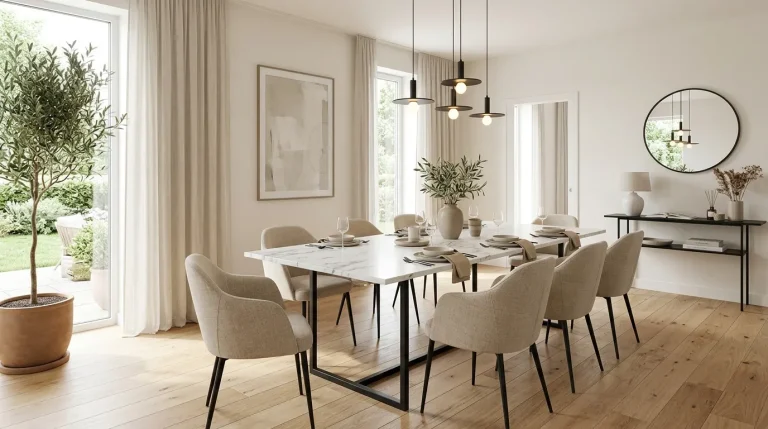
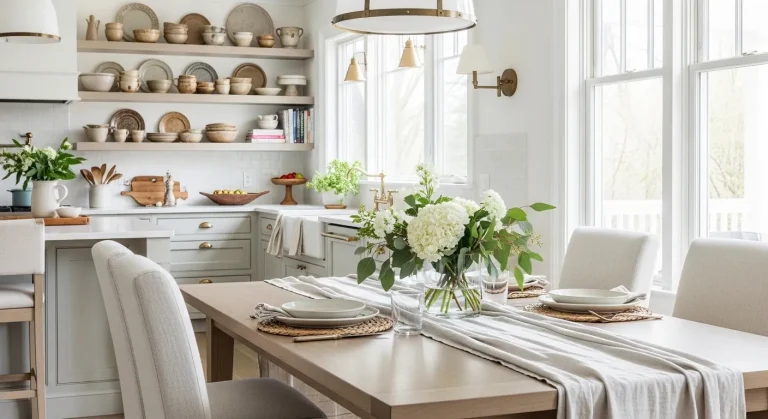
25 Stunning Modern Farmhouse Dining Room Ideas

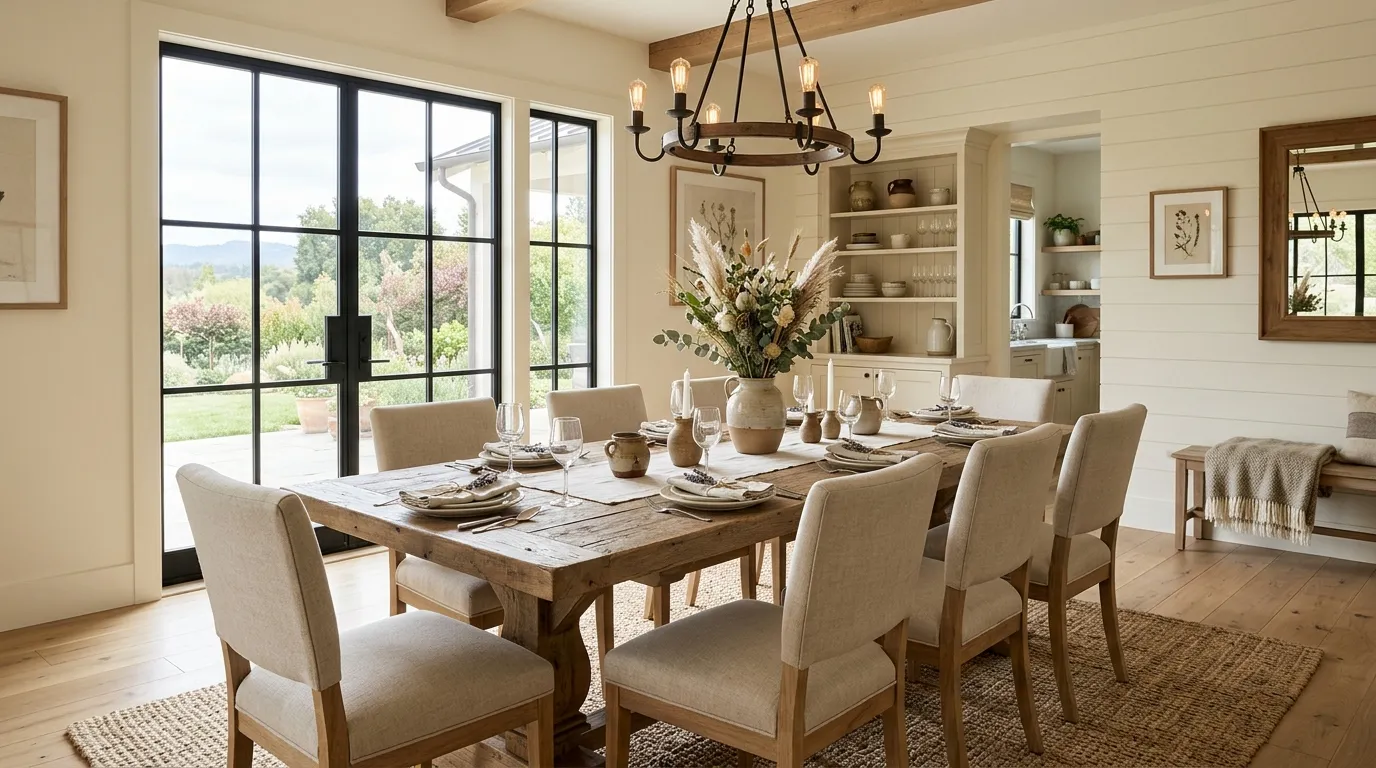
Your dining room should feel like a place people never want to leave. A modern farmhouse dining room does exactly that it blends warmth, texture, and simplicity into a space that feels both stylish and deeply comfortable. In my experience, the rooms that truly feel like home are never about perfection.
They are about layering the right elements together. Whether you are starting fresh or refreshing what you already have, these 27 ideas give you practical, beautiful, and achievable ways to transform your dining space into something you genuinely love. From rustic wood tables to cozy lighting and natural textures, every idea here is designed to inspire real action and real results. Save what speaks to you and start with just one change you will be amazed how quickly everything comes together.
Shiplap Accent Wall
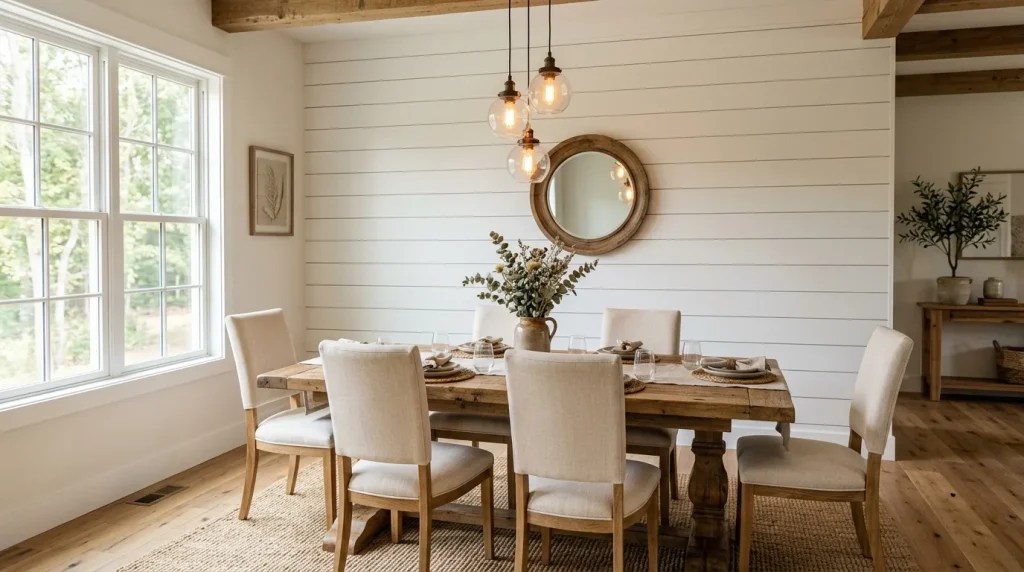
A shiplap accent wall is one of the most impactful changes you can make in a dining space without gutting the room. It adds architectural interest, texture, and that signature farmhouse feeling that designers spend years chasing. The raw wood detail feels intentional rather than overdone, especially when paired with clean white paint and warm lighting. In my experience, this is the one upgrade that immediately makes guests ask what changed even if they cannot quite put their finger on it. It reads as polished and personal at the same time.
When you pair a white shiplap wall with a reclaimed wood dining table and linen chairs, the layering feels effortless. The contrast between painted wood and raw timber creates a visual story that is warm, grounded, and inviting. That combination of rough and refined is exactly what makes modern farmhouse design so enduring. I’ve seen this work well in small dining rooms and large open-plan spaces alike. The key is keeping the surrounding decor calm so the wall remains the star without feeling busy or overwhelming to the eye.Planning a dining room makeover? Check out modern farmhouse dining room ideas.
Reclaimed Wood Table
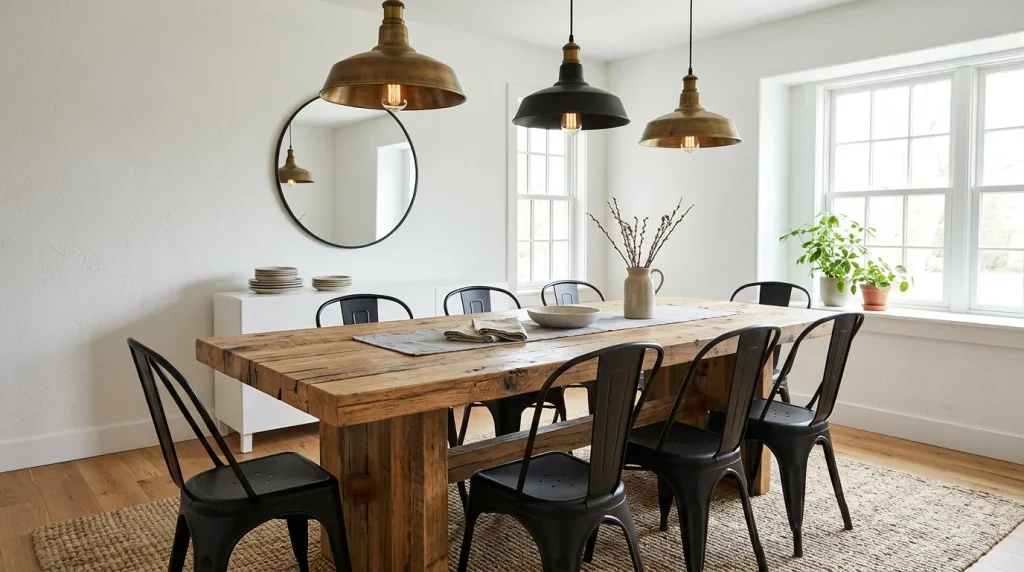
Few pieces of furniture carry as much weight as the dining table. In a farmhouse-inspired space, a reclaimed wood table does not just fill the room it anchors the entire aesthetic. The organic texture, warm tones, and visible history of the wood create a visual warmth that no brand new surface can replicate. It makes every meal feel a little more meaningful and every gathering feel a little more grounded. The table essentially becomes the conversation piece that brings the whole room together and gives guests something beautiful to sit around each time.
What makes reclaimed wood so special is how well it plays with other materials. Pair it with linen, leather, iron, or ceramic, and it never clashes it complements. The wood absorbs the tones around it and makes the room feel cohesive without requiring everything to match. I’ve tried several different table styles in farmhouse spaces, and reclaimed wood consistently outperforms everything else in terms of visual warmth and versatility. It is the kind of investment that looks better every year rather than dating itself the moment trends shift in a new direction.
Woven Rattan Pendant Light
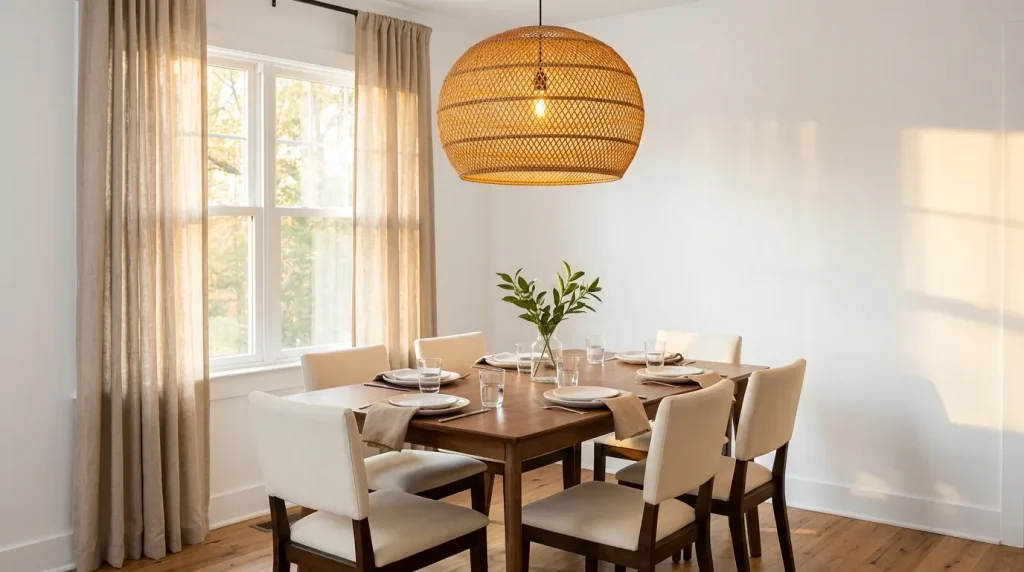
Lighting is the fastest way to change how a room feels, and in a farmhouse dining space, a woven rattan pendant makes an immediate statement. The natural material introduces organic warmth and texture at eye level, which is exactly where your attention lands when you sit down at the table. I’ve noticed that rooms with a beautiful overhead light fixture always feel more intentional and more finished than those without one. It is the detail that pulls everything together and gives the space a sense of purpose and design that feels deliberate rather than accidental.
Beyond aesthetics, a rattan pendant adds a handcrafted quality to the room that resonates strongly with modern farmhouse sensibility. The imperfect weave, the natural color variation, the way light moves through the gaps all of it contributes to an atmosphere that feels warm and genuinely livable. That’s why many designers recommend investing in your lighting before anything else. When you pair a well-chosen pendant with a reclaimed wood table and soft neutral walls, the room suddenly feels curated without feeling cold or overly styled. It is the kind of warmth that makes people linger long after dinner ends.
Mixed Seating Bench Setup
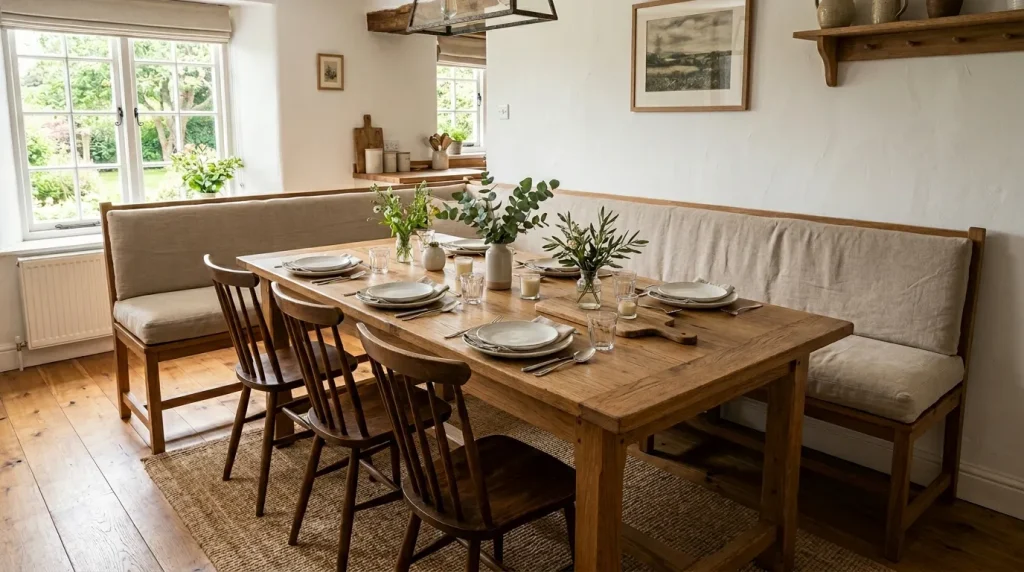
The mixed bench and chair setup is one of the smartest moves in farmhouse dining design. It replaces the formality of matched seating with something that feels lived-in, generous, and relaxed. The bench signals to every guest that this is a space built for real life for long meals, comfortable conversation, and plenty of room to settle in. That casual energy is exactly what the modern farmhouse aesthetic is built around: beautiful spaces that function beautifully too. In my experience, this is also one of the most cost-effective seating arrangements you can create.
What makes the bench setup work so well visually is the asymmetry it introduces. Paired chairs bring order and repetition. A bench brings a different kind of rhythm longer, lower, and softer. That contrast naturally draws the eye and makes the entire composition more interesting. Use a bench with a cushion in a neutral linen or cotton fabric and it adds texture without competing with the wood table or the rest of the room. Keep the opposite side with wooden or metal chairs for balance, and the result is a dining space that feels considered, approachable, and genuinely comfortable for everyday living.
Vintage Galvanized Metal Accents
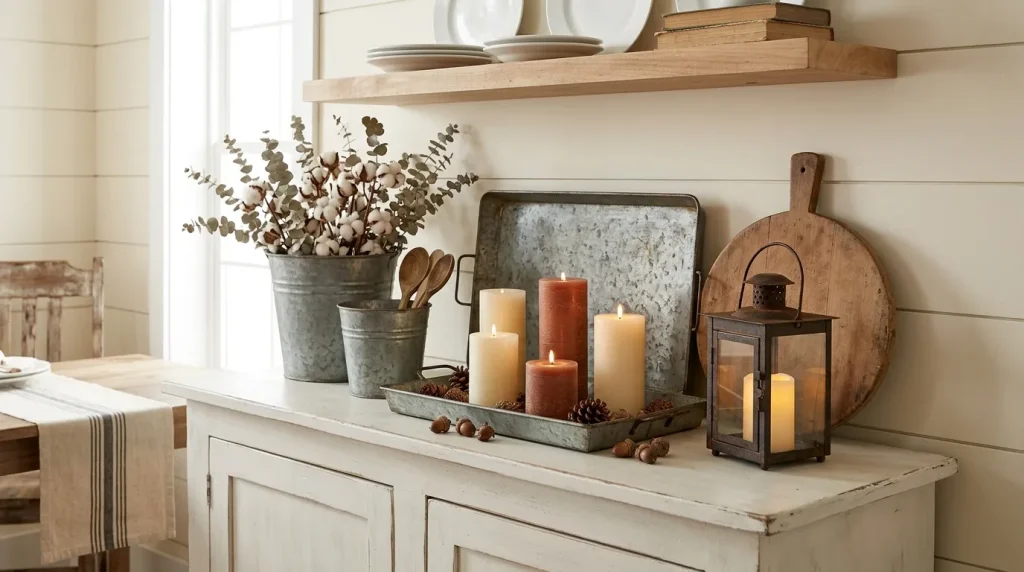
Vintage galvanized metal is one of those farmhouse details that punches far above its weight. A simple metal pitcher on a sideboard or a set of iron candleholders on the table introduces texture, age, and authenticity that no new decor item can replicate. The worn, matte surface of aged metal creates a visual anchor that balances softer elements like linen, wood, and woven textures. I’ve tried incorporating just a few vintage pieces into a mostly new room, and the result always feels more complete, more storied, and more genuinely farmhouse in character.
The appeal of galvanized metal in a dining room comes from its contrast. Against a white wall or cream-painted cabinet, the gray tones pop quietly rather than aggressively, adding depth without demanding attention. When you use it as part of a styled vignette on a sideboard or buffet, it layers beautifully with other natural materials and seasonal greenery. That’s why many designers recommend at least one or two metal elements in every farmhouse dining room. They function as visual anchors and they never go out of style. Functional, affordable, and endlessly adaptable to different seasonal displays throughout the year.
Open Floating Shelves
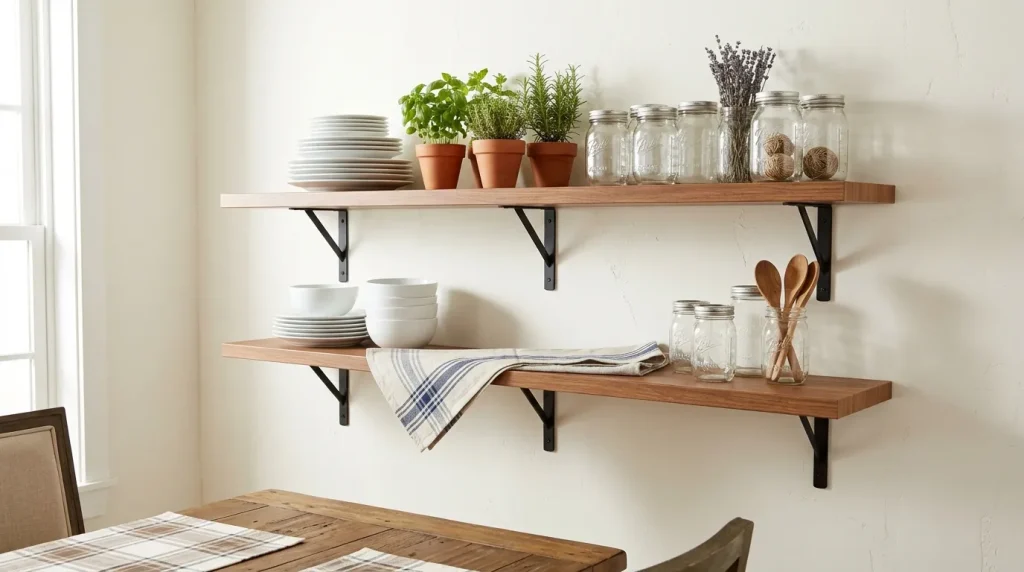
Open floating shelves in a dining room change the entire relationship between the wall and the space around it. Instead of blank paint or heavy cabinetry, you have living, breathing displays that tell something about the people who eat there. A stack of simple white plates, a few small plants, and a ceramic crock all arranged naturally create more warmth than any artwork could in the same spot. I’ve noticed that when shelves are styled with items you actually use, the room instantly feels more authentic and more connected to real daily life rather than staged for a magazine shoot.
The practical beauty of open shelving is that it evolves with you. Switch out seasonal items, add fresh herbs in small pots, or rearrange the pieces when the mood shifts. That flexibility keeps the room feeling fresh without requiring any renovation or major investment. Shelves become the perfect home for your best ceramics, linen napkins, and collected pieces that would otherwise hide behind cabinet doors. They transform the dining area into something that feels thoughtfully assembled over time, and that sense of gradual, personal curation is exactly what gives farmhouse spaces their irresistible, lived-in character.
Linen Curtain Panels
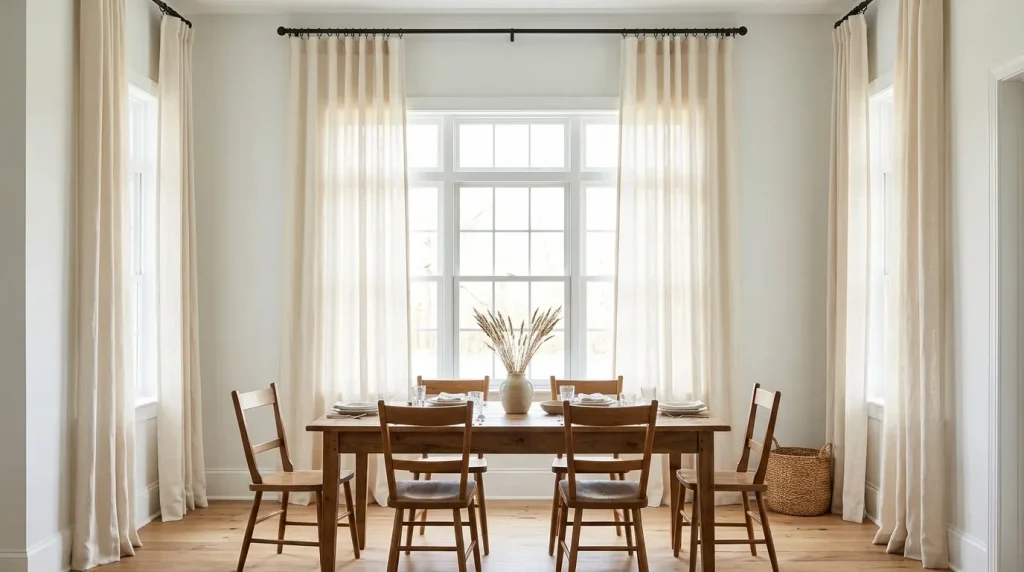
There is something about linen curtains that makes a room feel immediately more relaxed and more refined at the same time. The natural fiber, the slight wrinkle, the way light moves through the loose weave all of it contributes to an atmosphere that feels soft and effortless. In a farmhouse dining room, linen panels are one of the most impactful additions you can make because they transform how the room feels at every hour of the day. Morning light through linen is warm and golden. Evening light becomes soft and intimate. I’ve never seen this material fail to improve a space.
What makes linen such a perfect fit for farmhouse dining rooms is its unpretentious quality. It does not demand attention the way patterned fabrics or velvet drapery might. Instead, it adds texture and warmth quietly, supporting the rest of the room rather than competing with it. Pair it with a simple iron rod and ring clips for that clean, understated look that works beautifully in both casual and formal settings. That’s why many designers choose linen first when styling farmhouse windows it is versatile, affordable, and brings an authenticity to the space that synthetic fabrics simply cannot replicate no matter how closely they mimic the look.
Brick or Stone Feature
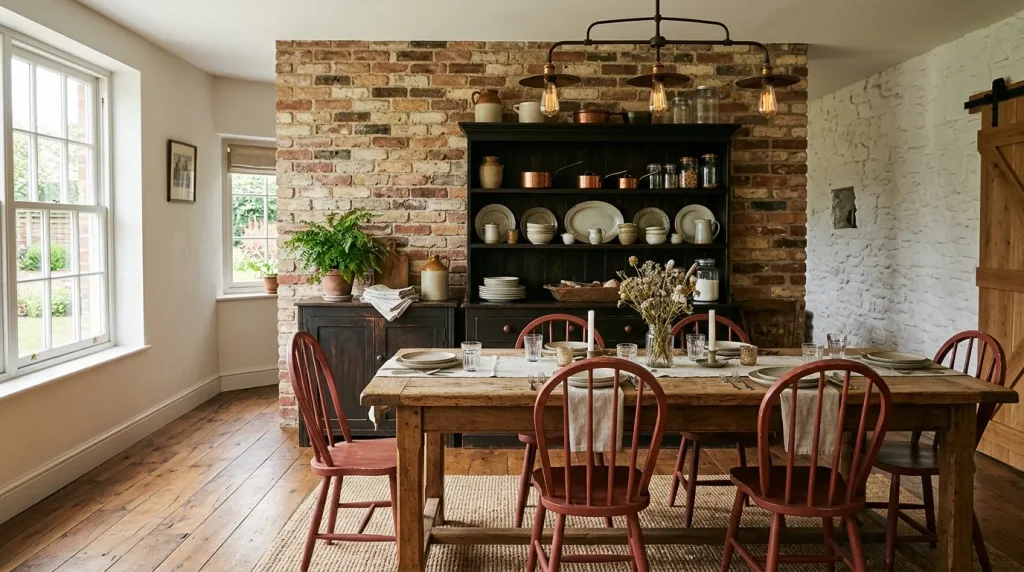
An exposed brick or stone wall in a dining room does something no other surface can it makes the space feel like it has always been there. The texture, the depth, and the imperfections of natural masonry bring an irreplaceable sense of history and rootedness to a room. In modern farmhouse design, that lived in quality is exactly what elevates a space from pretty to genuinely meaningful. I’ve seen raw brick walls transform even very new homes into spaces that feel full of warmth and character, simply because the material carries so much inherent personality and visual depth that goes far beyond decoration.
If original brick is not part of your home’s architecture, there are excellent thin brick veneers and stone panels that create the same effect. Whitewashing is another simple option that tones down the rustic edge slightly, giving you a softer, more neutral surface that still carries all the texture and dimension of real masonry. The result is a wall that feels both old and modern grounded in tradition but fresh in the context of a well styled farmhouse dining room. That balance of old and new is the heart of the modern farmhouse aesthetic and brick delivers it more naturally than almost any other material available to homeowners today.
Farmhouse Chandelier
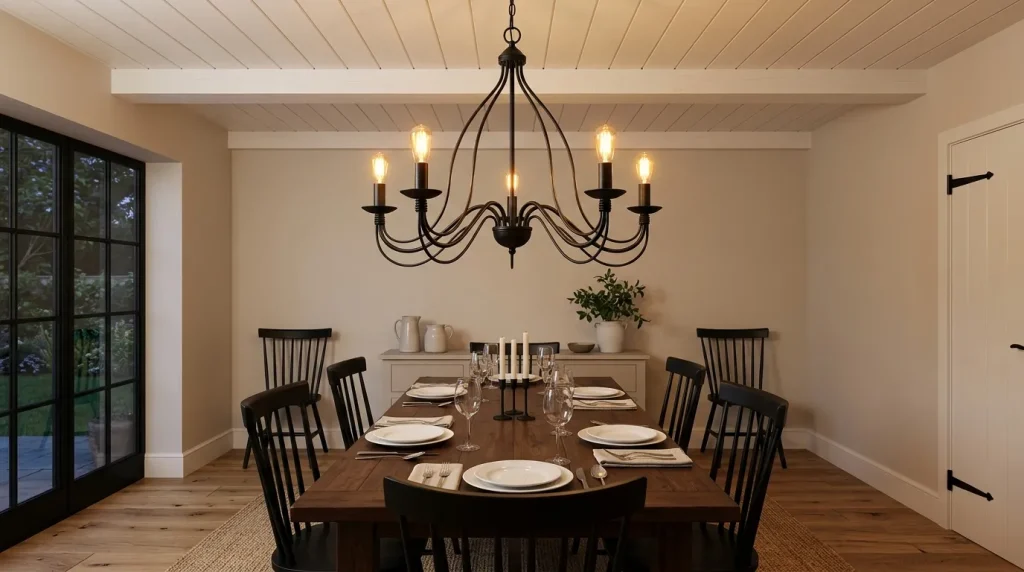
A farmhouse chandelier is not just a light source it is the centerpiece of the entire ceiling plane. In a dining room, your eyes naturally look up when you first enter, and a beautiful iron chandelier gives them exactly the right place to land. The combination of hand forged metal, candelabra style arms, and warm Edison bulbs creates a mood that feels both grand and approachable exactly the balance that defines modern farmhouse style at its best. I’ve noticed that rooms with a striking overhead fixture feel more complete and more intentional than those where lighting was treated as an afterthought rather than a design decision.
The practical benefit of a chandelier in a dining room is equally important. When you position it correctly hanging 30 to 36 inches above the table surface it creates a pool of warm light that focuses attention on the table and the people seated around it. That concentrated warmth is what makes dining by candlelight feel so special, and a well designed iron chandelier with warm toned bulbs replicates that intimacy beautifully every evening. That’s why many designers prioritize overhead lighting above every other decor decision in a dining room. When the light is right, everything else the table, the chairs, the wall color simply looks better underneath it.
Neutral Color Layering
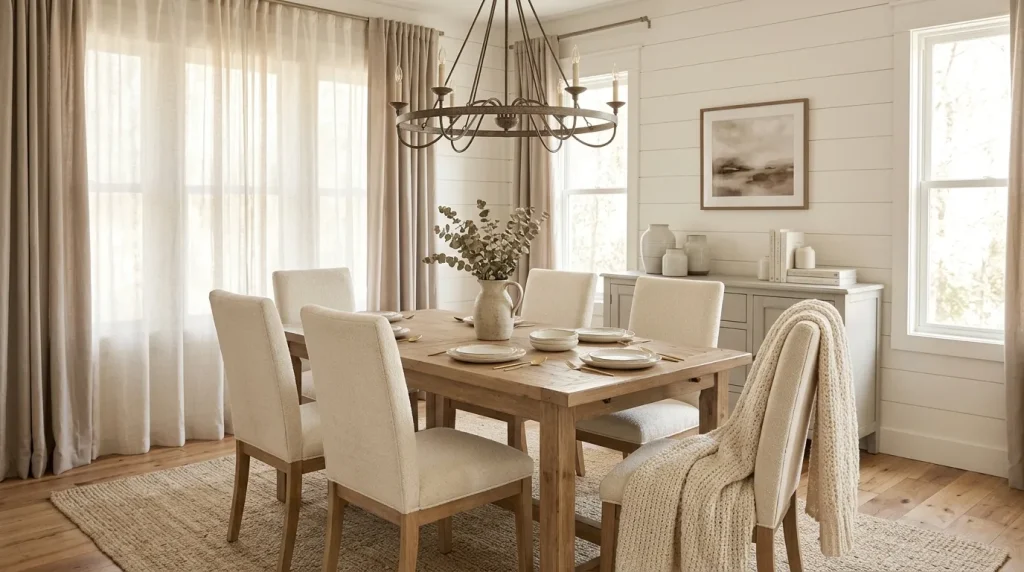
Neutral layering is one of the most misunderstood techniques in interior design. Many people assume a room filled with creams and taupes will look boring, but when done well, it is anything but. The secret is in the variation of texture, tone, and material. A warm white wall, an oak table, a linen chair, a jute rug, and a soft cotton throw all sit in the neutral family but they create extraordinary depth when placed together. I’ve tried this approach in several spaces and it consistently produces results that feel calm, cohesive, and quietly luxurious the kind of room that looks expensive without spending excessively on individual pieces.
Neutral layering also has a practical advantage: it makes every seasonal update feel effortless. Add a rust-colored centerpiece in autumn, deep green candles in winter, or fresh white florals in spring and the room transforms without requiring any repainting or furniture changes. The neutral base absorbs every seasonal accent beautifully because it never competes. That adaptability is one of the reasons farmhouse neutrals have remained so popular and enduring across decades of changing interior trends. A well-layered neutral dining room is essentially a blank canvas that is always ready for the next beautiful thing you want to bring into it.
Mason Jar Centerpiece
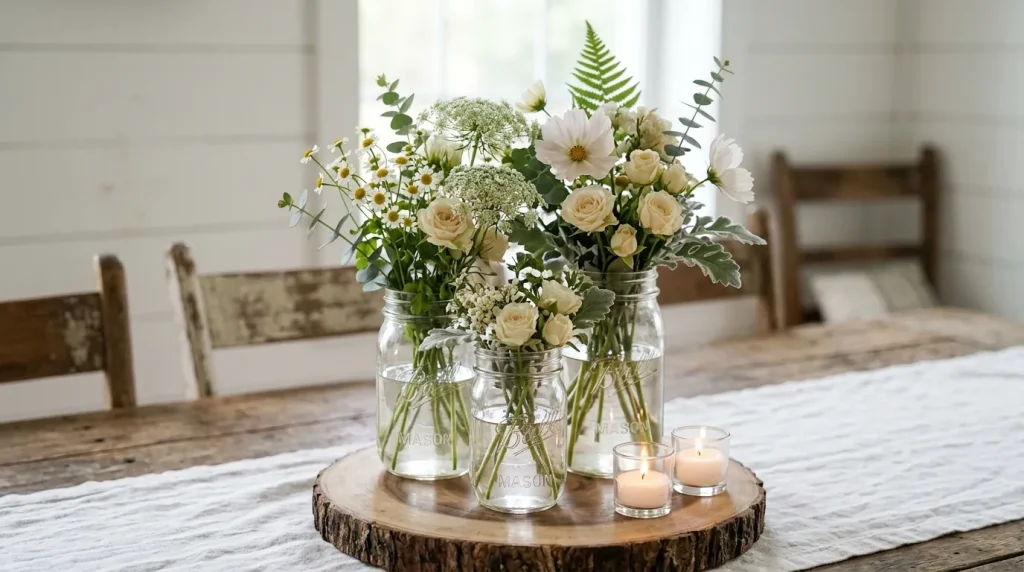
There is a reason the mason jar became a symbol of farmhouse style it is humble, honest, and completely beautiful in its simplicity. On a dining table, a trio of mason jars filled with loose wildflowers or fresh herbs creates the kind of unpretentious charm that sets the tone for the entire room. In my experience, this one detail changes how a dining table feels more than almost any other single styling choice. It signals that the space is cared for, alive, and full of warmth without trying too hard or spending more than a few dollars on fresh flowers from the market.
The practical beauty of this centerpiece style is its complete flexibility. In winter, swap fresh flowers for evergreen stems, berried branches, or simple white tapers in the jars. In spring, fill them with daffodils or cherry blossom cuttings. In summer, try lavender or sunflowers for a burst of color and scent. That seasonal adaptability makes mason jar centerpieces one of the most cost-effective and endlessly refreshable styling tools in any farmhouse dining room. Keep three jars of varying heights on a small wooden tray or cutting board to ground the arrangement and prevent it from looking scattered across the table surface.
Wide Plank Wood Floors
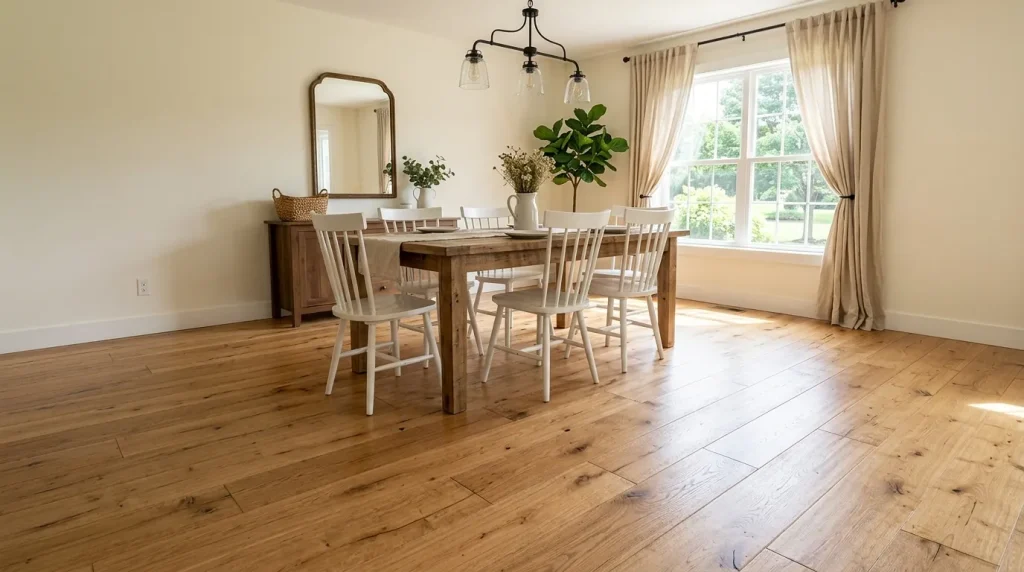
Wide plank wood floors are one of those foundational elements that quietly transform every other design decision in a dining room. When the floor is beautiful, everything placed on it looks better the table, the chairs, the rug layered over it. The long continuous grain lines of wide planks create a natural visual flow that makes even small dining rooms feel expansive and thoughtfully designed. That’s why many designers and architects consider the flooring the most important design decision in any room, not an afterthought. Getting it right creates a platform that elevates every other element above it effortlessly.
The choice between light, medium, and dark toned planks depends entirely on how you want the room to feel. Lighter tones white washed, pale oak, or natural maple create an airy, Scandinavian farmhouse crossover that feels fresh and modern. Warmer honey and amber tones create a more traditionally cozy atmosphere that wraps the room in richness and depth. Dark stains add drama and contrast, particularly beautiful against white walls and light linen furnishings. Whichever direction you choose, wide planks rather than narrow strips will always deliver more visual impact and more of that authentic, old world farmhouse character that makes a dining room feel rooted and real.
Sliding Barn Door
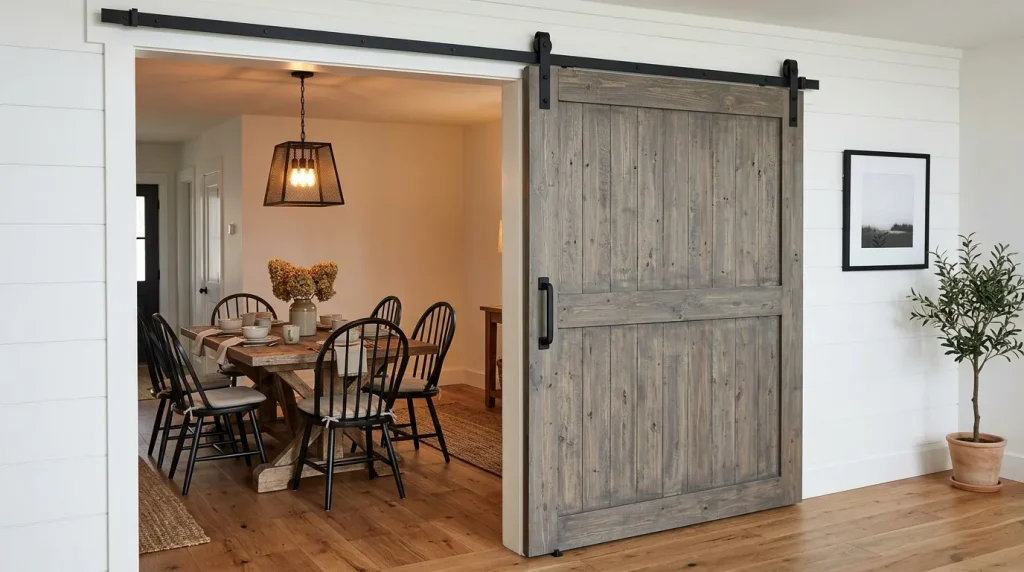
A sliding barn door in a dining room is one of those design choices that crosses seamlessly between form and function. It is practical in tight spaces where a swinging door would eat into precious room, and it is visually striking in a way that few other architectural details can match. The combination of rough hewn wood planks and smooth black steel hardware captures exactly what modern farmhouse style is about the union of the raw and the refined, the old and the new, the natural and the industrial. I’ve seen barn doors installed in very contemporary homes where they instantly became the most photographed feature of the entire space.
What makes the barn door particularly successful in dining rooms is its ability to frame an opening without fully closing it off. Leaving the door partially open at a slight angle creates a layered view into adjacent spaces that feels inviting and architecturally interesting. It also becomes a focal point on the wall even when the door is fully slid open, because the track and hardware remain visible and decorative. Choose a wood tone that complements your dining table similar tones for cohesion, contrasting tones for drama. Either approach works beautifully because the barn door brings enough inherent character to anchor the room regardless of the finish chosen.
Painted Board and Batten
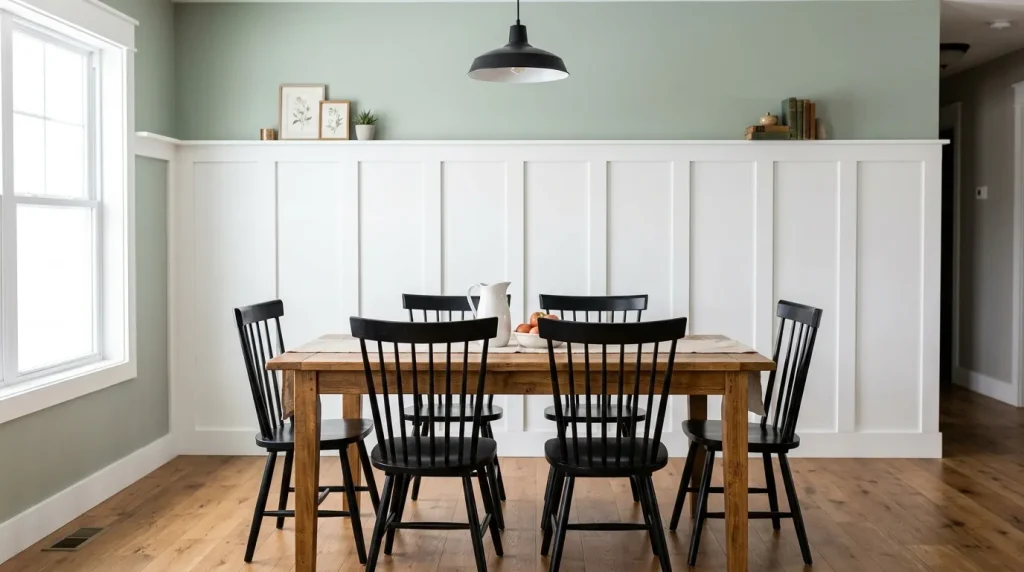
Board and batten paneling is one of the most architecturally satisfying updates you can make to a dining room because it transforms flat, builder-grade walls into something that looks crafted and considered. The vertical battens and horizontal rails divide the wall plane into deliberate sections that create rhythm and shadow both of which make a room feel more alive and more layered. I’ve noticed that rooms with board and batten always photograph beautifully because the paneling adds the kind of structural depth that cameras and eyes alike respond to with genuine appreciation. It reads as both historic and current at the same time.
The color choices you make with board and batten determine the entire mood of the room. Classic white on white gives a clean, fresh farmhouse look that works in any lighting condition. Two-toned approaches white lower panels with a deeply saturated upper wall create drama and coziness simultaneously. Sage green, deep navy, or warm terracotta above white battens are all combinations that interior designers keep returning to because they balance the freshness of white trim with a depth of color that makes the room feel layered and thoughtfully designed. Whichever palette you choose, the paneling itself will elevate the space in a way that few other wall treatments can match at a comparable investment level.
Seasonal Table Runner
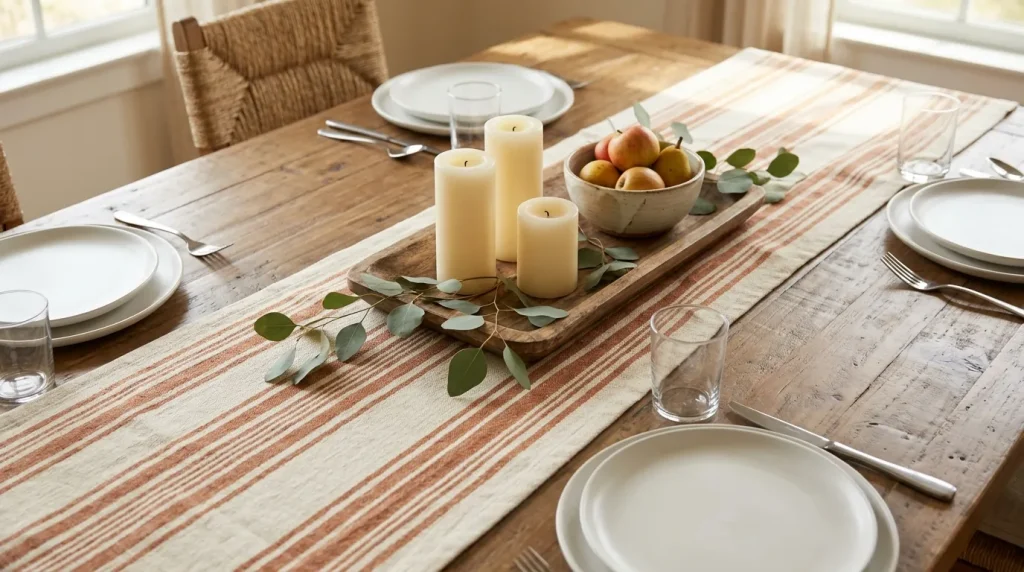
A table runner is the most underrated tool in a farmhouse dining room stylist’s kit. It is small in scale but enormous in impact a single well-chosen runner can transform a bare wood table into something that looks thoughtfully prepared and warmly inviting. I’ve used runners in countless dining spaces and the consistent observation is that guests respond to a set table in a completely different way than they respond to a bare one. The runner signals that someone took time and care, and that signal creates warmth before a single word is spoken or a single dish is served. That effect is worth every penny of a good linen runner.
The seasonal adaptability of table runners makes them one of the best investments in the entire dining room. A small collection of four or five runners in different textures, tones, and patterns gives you the ability to completely refresh the table’s character throughout the year without changing a single piece of furniture. Layer a chunky knit runner over the bare wood table in winter for maximum coziness. Switch to a crisp white linen runner with drawn thread work in summer for an airy, elegant feel. In autumn, a warm rust or spice-toned runner with a few dried leaves scattered alongside it creates a seasonal table moment that is Pinterest-worthy in the most genuine and effortless possible way.
Rustic Wooden Hutch
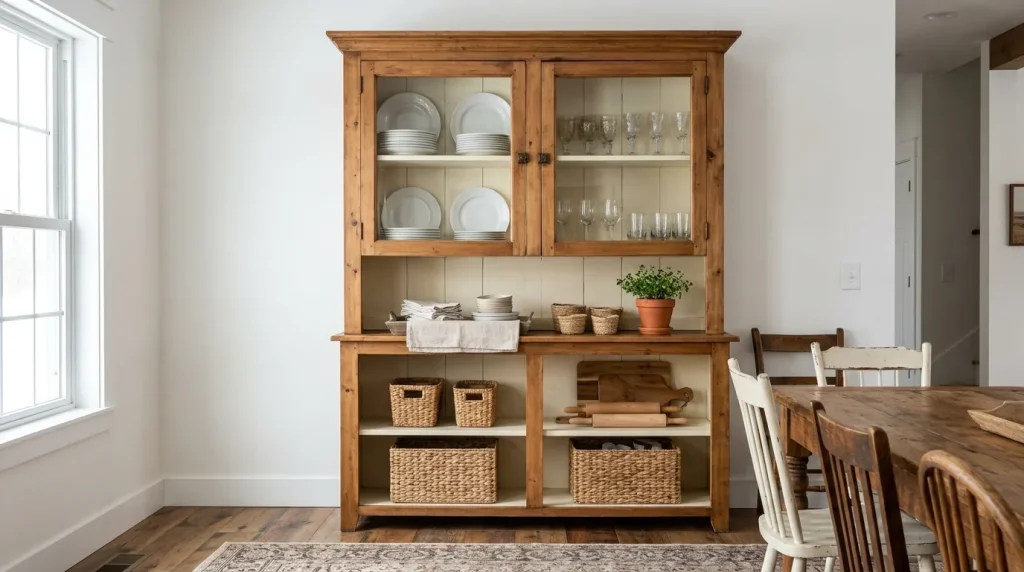
A rustic wooden hutch is the farmhouse dining room’s answer to both the credenza and the gallery wall. In a single piece, it delivers storage, display, texture, and warmth all while filling a wall that might otherwise feel vacant and undirected. The combination of glass-front upper cabinets with open lower shelving gives you the best of both worlds: protected display for your most beautiful dishware and accessible storage for everyday items. I’ve seen hutches transform dining rooms that previously felt incomplete by simply providing a visual destination that drew the eye and gave the room a clear focal point to build around.
The styling of a farmhouse hutch is one of the most enjoyable parts of putting together a dining room. Stack simple white ceramic plates of varying sizes for an effortless, editorial display. Add a few vintage glasses, a small pitcher, and a potted herb and the hutch becomes a fully realized vignette. On the lower open shelves, layer in woven baskets, linen napkins rolled in wooden rings, and a small ceramic bowl of fresh fruit. That combination of practical and beautiful is exactly what farmhouse interiors do best the everyday becomes the aesthetic, and the aesthetic serves the everyday without any contradiction or compromise between the two.
Iron and Wood Bar Cart
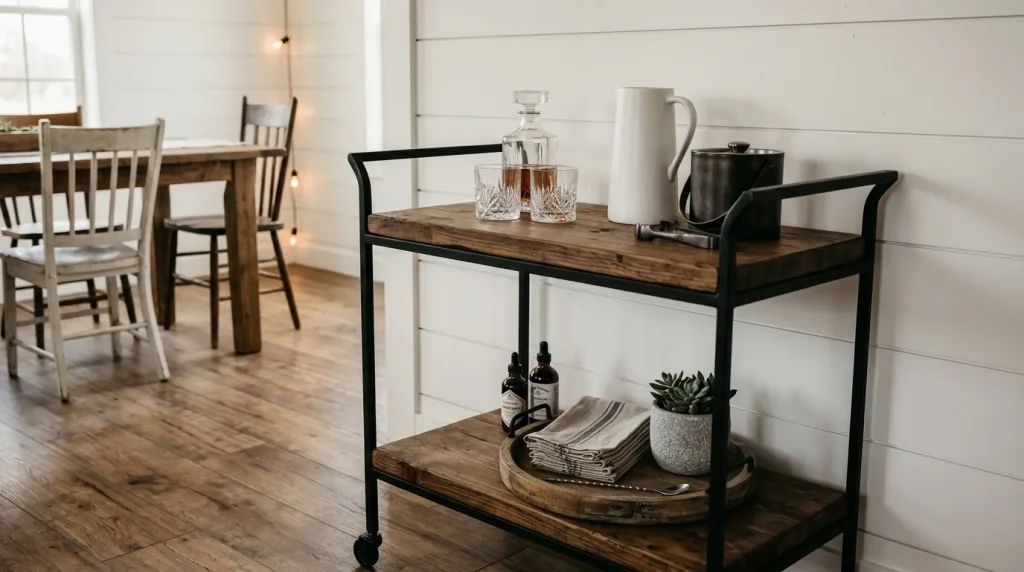
A bar cart in a farmhouse dining room is the kind of addition that is simultaneously practical and completely charming. It gives you a dedicated space for drinks and entertaining that keeps the dining table clear and organized while adding a styled vignette to a corner that might otherwise sit empty. The black iron and wood combination is particularly well suited to modern farmhouse spaces because it brings the same material contrast industrial metal against warm organic wood that appears throughout the best-designed farmhouse interiors. I’ve tried several different cart styles and this pairing consistently looks the most intentional and the most original.
What makes a bar cart especially appealing in a dining context is how naturally it encourages a convivial atmosphere. Guests are drawn to it before a meal, and it creates an informal gathering point that loosens the formality of a sit-down dinner before it even begins. Style it thoughtfully with a small cutting board, a simple ceramic bowl for garnishes, your best glassware, and a modest seasonal plant. Keep the styling restrained so the individual pieces read clearly rather than competing for attention. That’s why many designers recommend the rule of odd numbers three items on a shelf always look more natural and more intentional than two or four placed side by side together.
Cozy Rug Layering
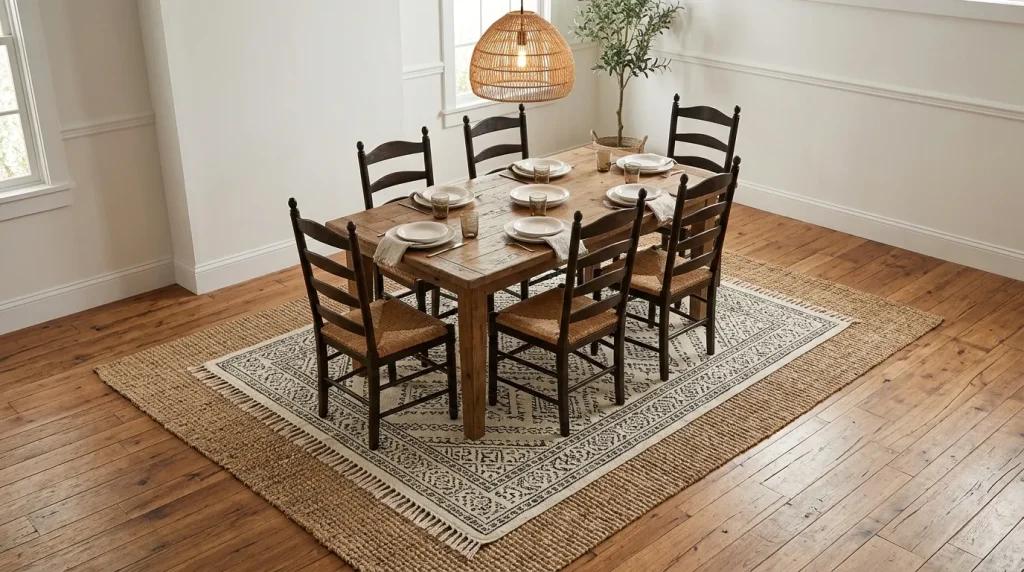
Rugs under a dining table are one of those styling decisions that completely transforms how a room feels underfoot and visually. The rug defines the dining zone, adds a layer of warmth and texture to the floor plane, and softens the visual hardness of wood furniture against hard flooring. In a farmhouse dining room, a natural jute rug serves as the ideal foundation because its texture and warm neutral tone complement virtually every other material in the space. I’ve tried both with-rug and without-rug configurations and the difference in how warm and finished the room feels is genuinely significant and immediate.
Layering a smaller printed rug on top of the jute takes the floor treatment one step further and introduces a design detail that feels collected and considered rather than simply functional. Choose a pattern that picks up at least one tone from your existing palette the table wood, the wall color, or the chair upholstery and the layered rugs will feel like they belong rather than like an afterthought.
Practical note: always size the base rug generously enough so all four legs of each dining chair sit fully on the rug when pulled out from the table. This grounding detail is what separates a rug that looks purposeful from one that looks randomly placed in a space that deserves better.
Farmhouse Window Seat
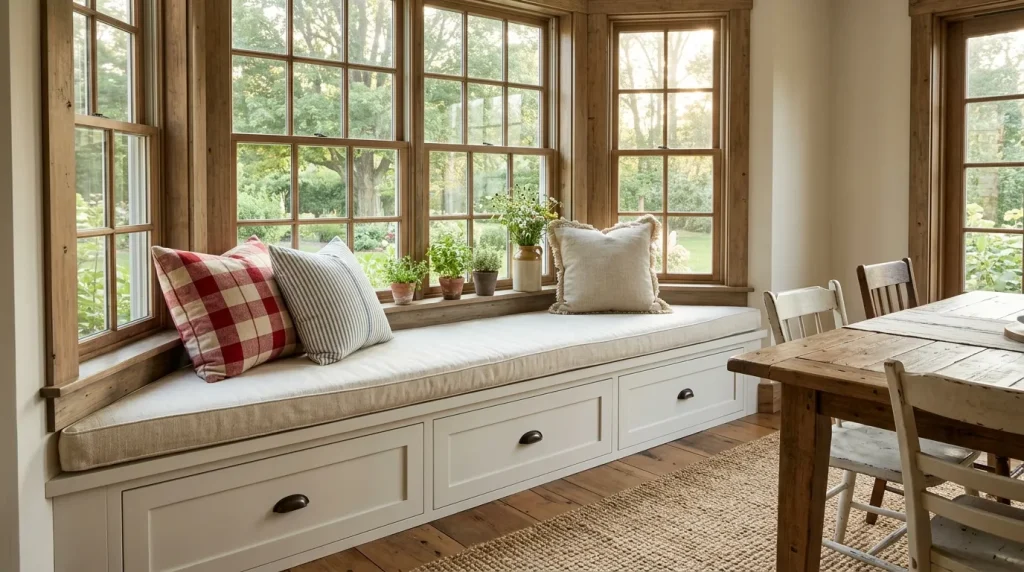
A farmhouse window seat is one of those design additions that makes an immediate and lasting impression on everyone who sees it. It is cozy, purposeful, and completely charming the kind of feature that makes a dining room feel custom-built and deeply considered rather than assembled from catalog pieces. Positioned beside or below a large window, a window seat invites you to sit with morning coffee before breakfast or linger with a book after dinner. In a dining room context, it also functions as flexible seating when extra guests arrive, making it one of the most genuinely useful design features you can add to the space.
The storage potential of a built-in window seat is an often overlooked bonus. Deep drawers or lift-up bases beneath the cushion provide clean, accessible storage for dining linens, seasonal table runners, extra candles, and anything else that clutters your dining room but needs to stay close at hand. That combination of seating and storage in a beautifully styled package is exactly why built in window seats continue to appear in the most admired farmhouse dining rooms on Pinterest year after year. Style the cushion with a mix of two or three throw pillows in complementary patterns and the seat instantly becomes the warmest, most inviting corner of the entire room.
Candlelit Table Setting
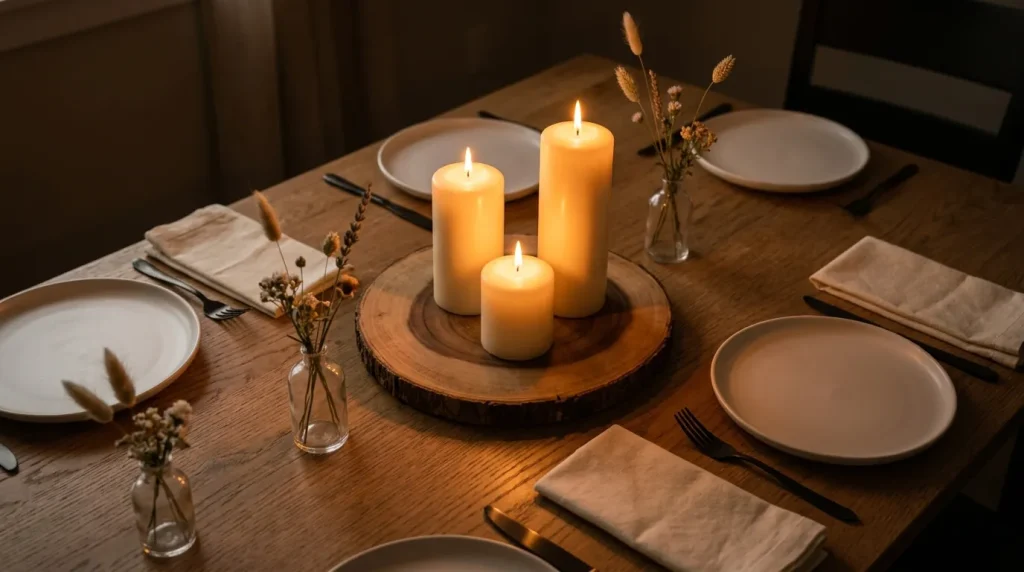
The way a table is set communicates everything about how a space is meant to be experienced. A candlelit farmhouse table setting takes the most basic dining ritual eating together and elevates it into something genuinely memorable. The combination of pillar candles in warm wax tones, simple white ceramics, and natural linen napkins creates an atmosphere that feels both deliberate and relaxed. I’ve tried more elaborate table settings and simpler ones, and this combination consistently delivers the most warmth and the most positive response from guests who sit down for a meal. Candlelight does more for a room than any renovation possibly could.
What makes this kind of setting so achievable for everyday use is that none of the elements require significant investment or complicated styling skills. A wooden slice or small cutting board under three pillar candles already creates a centered, grounded focal point. Add a few small bud vases with single stems between place settings and the table feels styled without looking overworked. That balance enough detail to feel special, restrained enough to feel natural is the hallmark of great farmhouse table styling. That’s why many designers recommend investing in a set of quality pillar candles and simple white ceramics before anything else when beginning to style a dining room table.
Black Window Frame Contrast
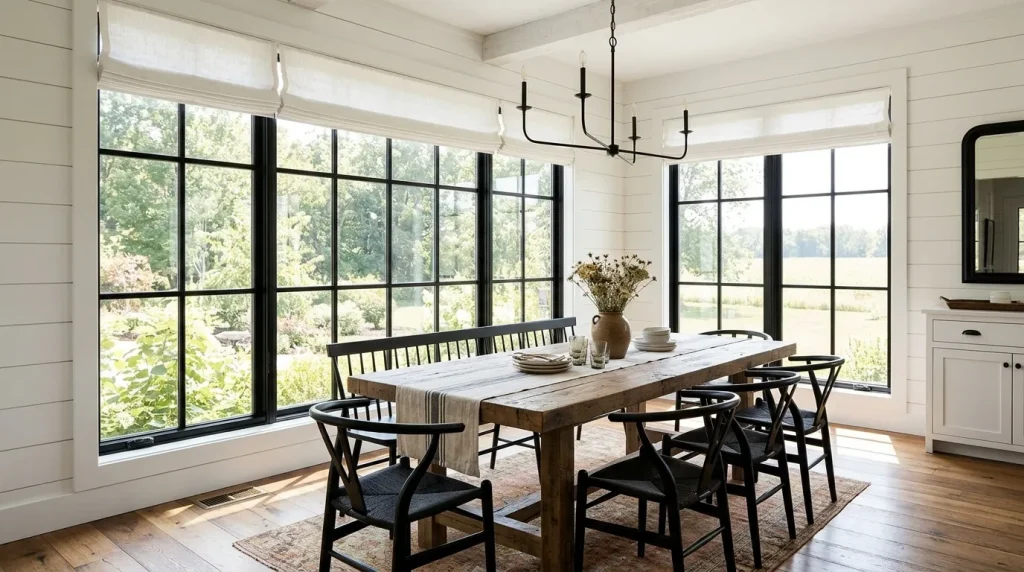
Black window frames are having a long and well-deserved moment in modern farmhouse design, and for good reason they do something that very few other architectural details can. They introduce a sharp, graphic contrast into rooms that might otherwise feel too soft or too uniform in their neutrality. Against white walls and warm wood tones, black-framed windows read as intentional, sophisticated, and boldly current. I’ve noticed that this one change even when achieved simply by repainting existing window trim in matte black can shift a room from feeling pleasant to feeling genuinely designed. The effect is outsized relative to the investment required to achieve it.
The practical benefit of black window frames is how naturally they tie together the other dark accents in a farmhouse dining room. Iron pendant lights, matte black door hardware, dark chair legs, and a black frame chandelier all find a visual partner in the window frames, creating a consistent thread of dark tone that runs through the room and gives it coherence and intention. Without that thread, dark accents can feel randomly placed. With it, they feel part of a considered palette. That’s why many interior designers now specify black or dark bronze window frames as a default in farmhouse and transitional design projects rather than the traditional white they might have chosen in previous years.
Antique Mirror Statement
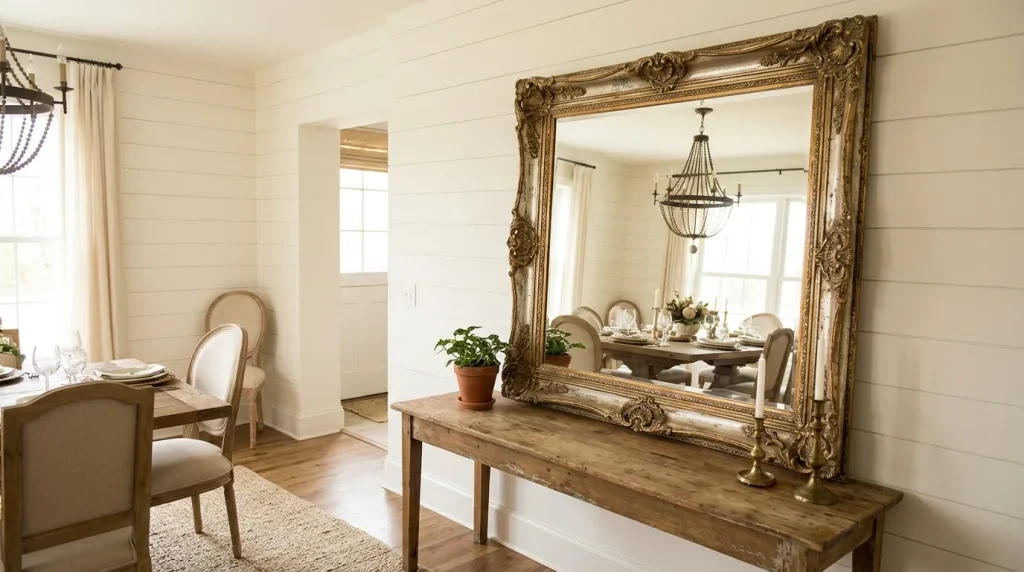
An antique mirror is one of the most impactful additions a dining room can receive, not just visually but physically. By reflecting light from every source in the room natural window light, chandelier glow, candle flicker a large mirror effectively doubles the luminosity of the space without adding a single additional light fixture. In smaller dining rooms especially, this effect feels almost miraculous. I’ve tried this in rooms where natural light was limited and the difference that one large mirror made to the perceived brightness and spaciousness of the room was genuinely remarkable and immediately noticeable to everyone who entered.
The ornate quality of an antique mirror frame also plays a beautiful counterpoint to the more rustic, raw elements in a farmhouse dining room. Against shiplap, reclaimed wood, and simple linen, a gilded or silver-leafed mirror frame reads as the collected treasure that elevates the entire aesthetic. It introduces a note of elegance and history that prevents farmhouse design from tipping too far into rustic simplicity. Think of it as the room’s one extravagant gesture the piece that says this space has been considered carefully and that not everything needs to be humble. That contrast between the grand and the simple is one of the most enduring tensions in great farmhouse interior design.
Terrarium and Botanical Display
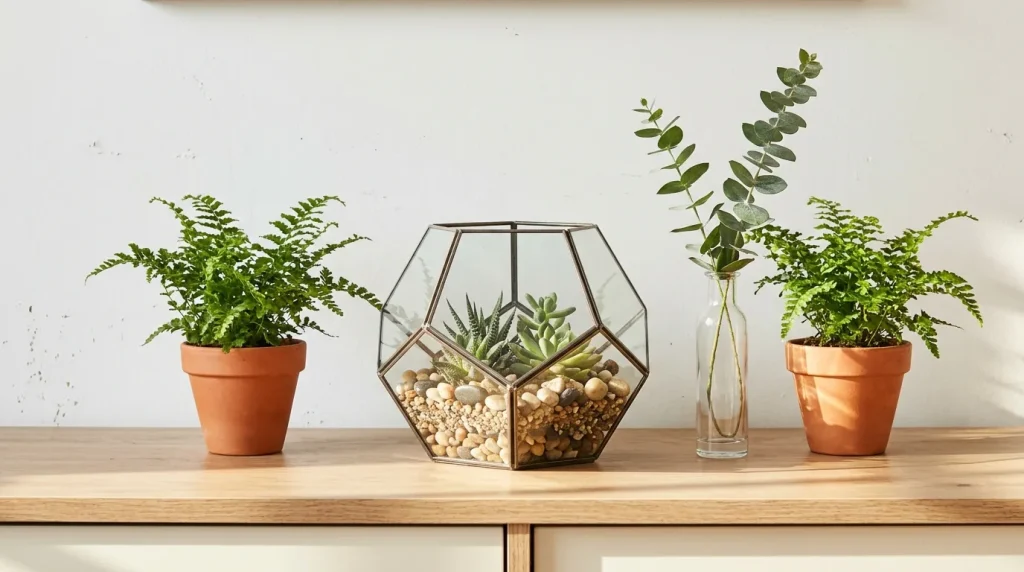
Botanical displays in a farmhouse dining room bring the outside in, and that connection to nature is one of the most fundamental and emotionally resonant qualities of the farmhouse aesthetic. A well-styled grouping of terrariums, potted plants, and simple bud vases transforms a sideboard from a storage surface into a living display that changes subtly with each season and each new addition. In my experience, rooms with multiple plant elements always feel more energized and more welcoming than those without. The presence of something living even something as minimal as a small succulent in a terracotta pot introduces a quality of care and attention that no inanimate object can replicate.
The key to a successful botanical display is variation in height, container material, and plant type. A geometric glass terrarium beside a rough-surfaced terracotta pot beside a simple ceramic planter creates visual rhythm that draws the eye across the arrangement and keeps it moving pleasurably from piece to piece. Add a long eucalyptus stem in a tall bud vase at one end of the grouping to give the display an elegant vertical anchor. Eucalyptus is particularly well-suited to farmhouse dining rooms because its soft gray-green tone pairs beautifully with neutral walls and warm wood surfaces, and its subtle fragrance makes the entire room smell fresh and inviting throughout the day.
Exposed Ceiling Beams
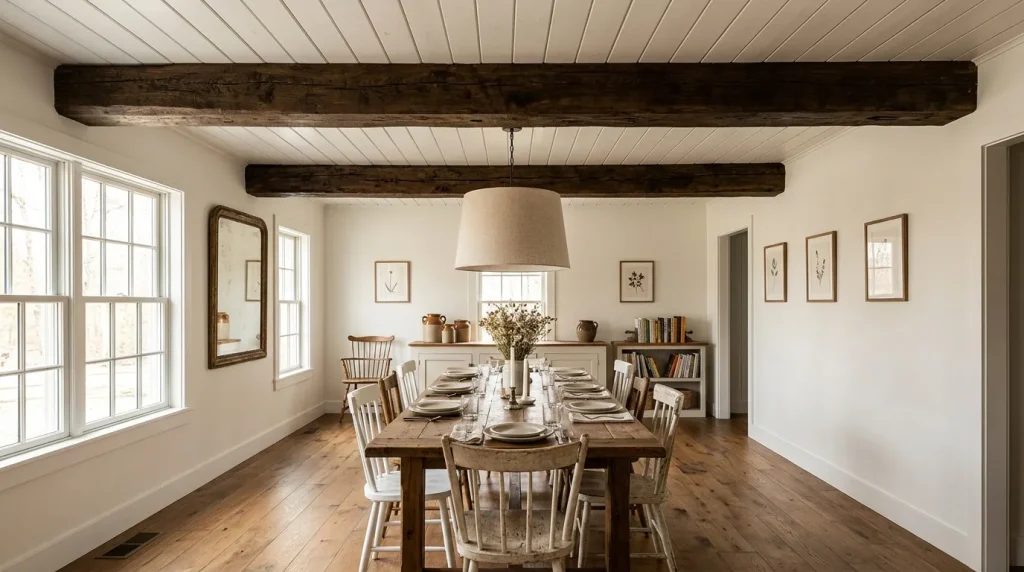
Exposed ceiling beams are the architectural equivalent of a statement piece in a farmhouse dining room they command attention from the moment you walk in and set the tone for every other design decision that follows beneath them. The combination of dark-stained heavy timber against a white-painted ceiling creates a contrast that feels both rustic and refined, anchoring the room visually in a way that no piece of furniture or wall treatment can replicate. I’ve seen faux beam installations transform completely ordinary dining rooms into spaces that look structurally original and deeply considered, with guests often assuming the beams were part of the home’s original construction rather than a relatively recent addition.
The practical versatility of ceiling beams also makes them a genuinely functional addition rather than a purely decorative one. A central beam becomes the natural hanging point for a pendant light or chandelier, grounding the fixture without the need for a ceiling medallion or additional hardware. Seasonal garlands of eucalyptus, dried citrus, or winter greenery draped across beams create effortless holiday and seasonal decor that requires no nails and leaves no marks. That combination of year-round architectural presence and seasonal styling flexibility is exactly why exposed ceiling beams remain one of the most requested and most loved features in farmhouse design across every style of home.
Cotton Macramé Wall Hanging
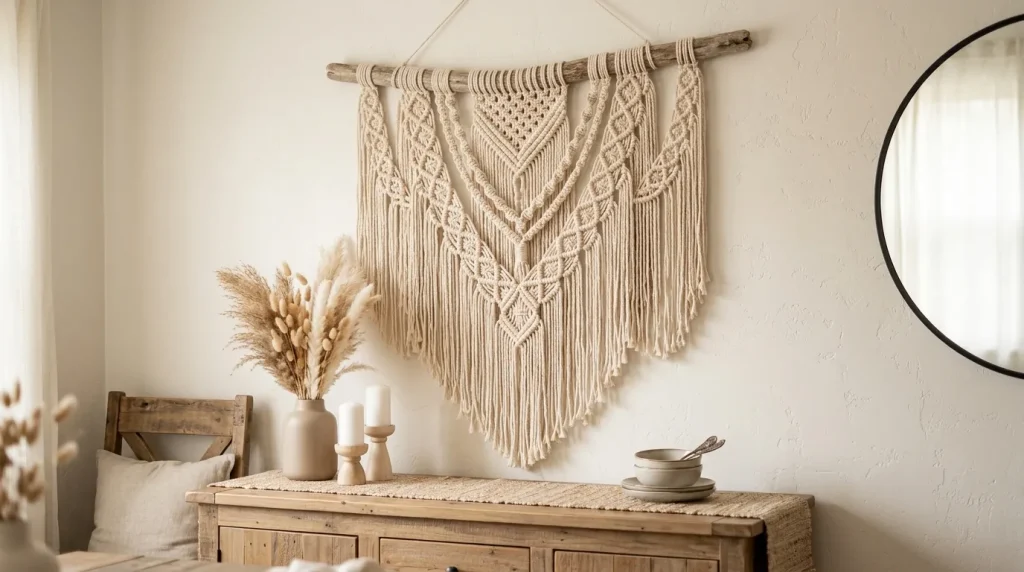
A macramé wall hanging occupies a unique space in farmhouse decor it is textile art that functions as wall art, bringing texture, craftsmanship, and organic form to a vertical surface that would otherwise remain a flat painted plane. In a dining room where the walls are largely bare or defined by a single mirror or sign, a large-scale macramé piece adds dimension and warmth in a way that framed artwork alone cannot. I’ve noticed that handcrafted pieces like macramé always communicate something genuine about the values of the people who live in a home an appreciation for skill, slowness, and the beauty of things made by hand rather than produced by machines.
Explore more inspiring home styling ideas on our homepage, where we share the latest trends, tips, and decor inspiration to transform every corner of your home.
The pairing of macramé with dried botanicals is one of the most consistently beautiful combinations in modern farmhouse styling. A piece of macramé above a sideboard, flanked by a vase of dried pampas grass and a pair of pillar candles, creates a complete tonal vignette in cream, warm white, and natural tan that requires almost no color coordination because everything sits in the same organic family. That ease of styling is one of macramé’s great practical advantages it never clashes, it never competes, and it always adds more than it takes away from the space around it. Choose a piece with good scale relative to the wall and allow it room to breathe on all sides.
CONCLUSION:
Your dining room has the potential to become one of the most meaningful spaces in your home — warm, beautiful, and full of life. A modern farmhouse dining room is not about perfection. It is about layering texture, warmth, and personality until a room finally feels like it belongs to the people who live in it. I’ve seen how small changes like swapping out a light fixture, adding a bench, or bringing in fresh herbs can completely shift the energy of a space. You do not need to do everything at once.
Start with one idea that excites you. Save this post on Pinterest so you can return to it when you are ready for the next step. Share it with a friend who is planning their own dining room refresh. Your perfect dining room is closer than you think — and every great room begins with one inspiring idea.
Clara Whitmore
Clara specializes in interior styling, seasonal home trends, and cozy living spaces. She loves combining classic design elements with modern touches to create homes that feel personal, welcoming, and effortlessly stylish.