Colorful Dining Rooms Made Simple Quick Luxe Decor Upgrades

Introduction:
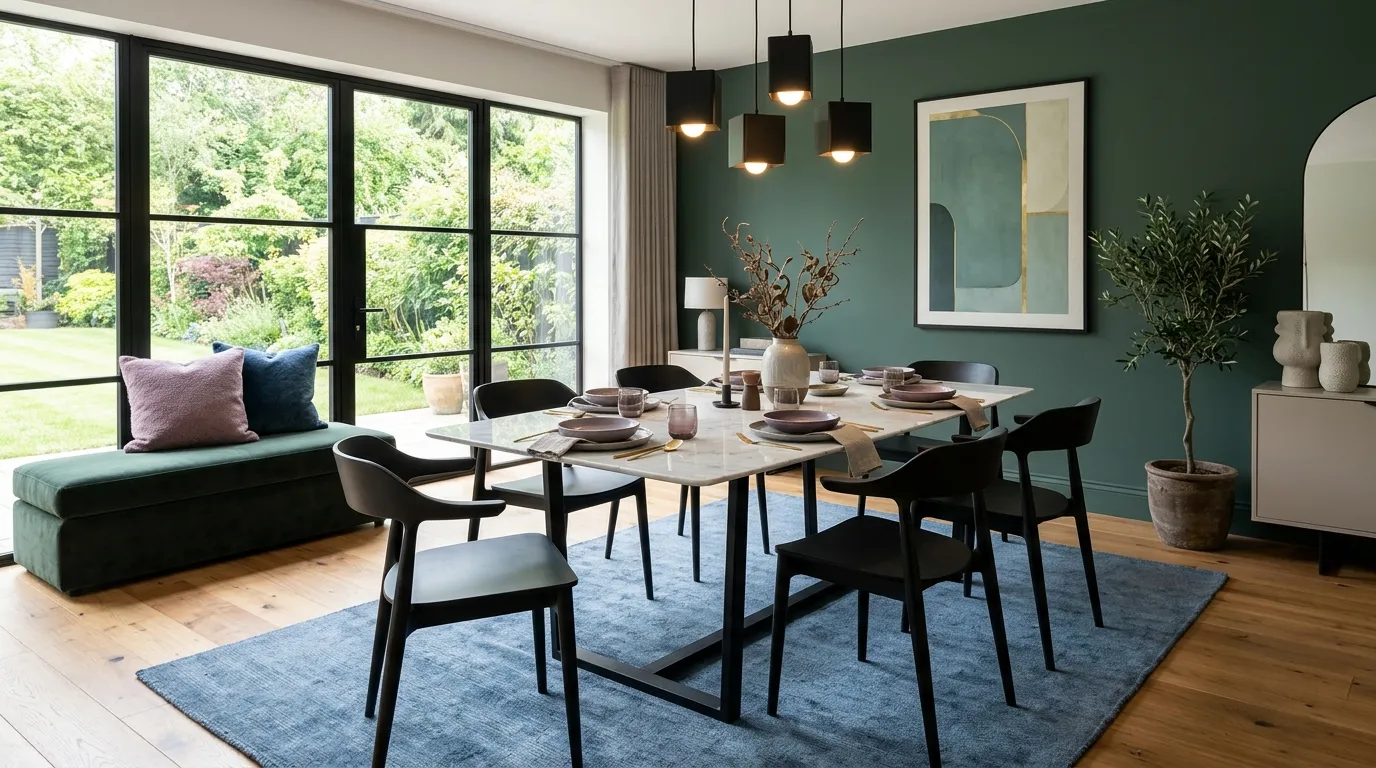
Colorful Dining Rooms are no longer just about bold paint or bright furniture—they’re about creating a space that feels stylish, balanced, and deeply inviting. In this guide, you’ll discover simple yet powerful decor upgrades that can completely transform your dining area into a modern, Pinterest-worthy space without overwhelming effort or cost.
If you’ve ever felt your dining room looks too plain, too dull, or lacks personality, you’re not alone. I’ve seen many homes struggle with this exact issue, especially in open layouts where the dining zone blends into everything else. In my experience, even small changes like lighting, texture, or subtle color layering can completely shift the mood and make the space feel intentional, warm, and beautifully styled.
Velvet Accent Chairs
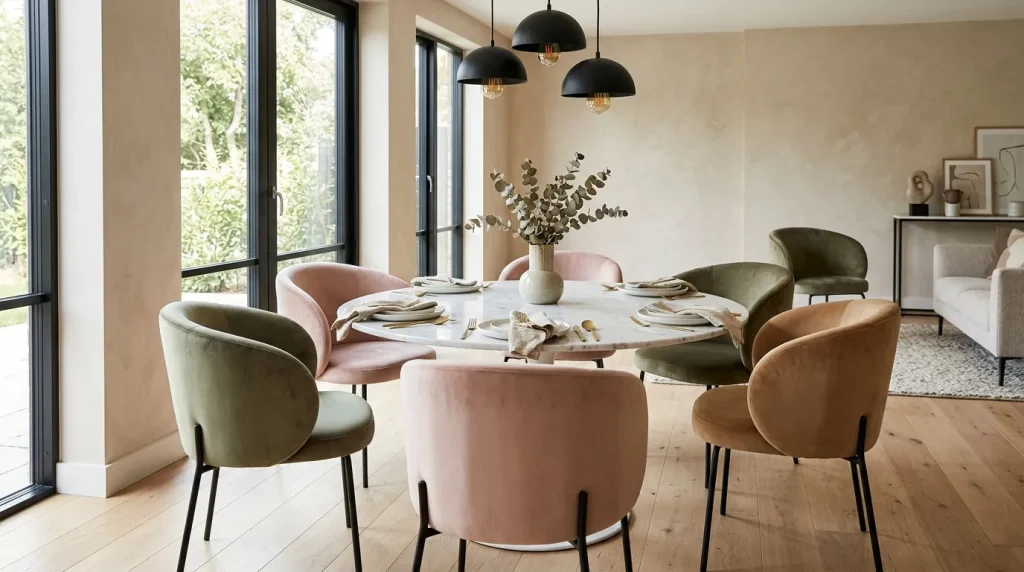
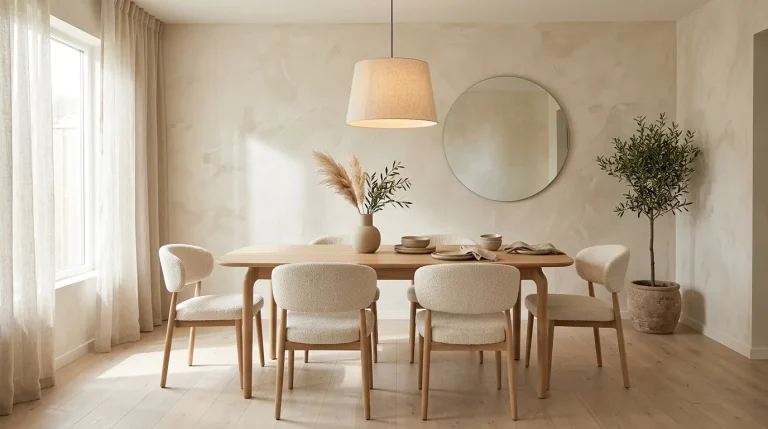
A simple chair swap can completely reshape the feeling of a dining space without requiring a major renovation. Velvet seating introduces softness, texture, and subtle richness that instantly makes the room feel more intentional. In many modern homes, dining areas often look flat because everything shares the same hard finish or neutral tone. Adding plush fabrics creates contrast that feels elevated without becoming visually chaotic. That is why many designers recommend textured seating when working with sleek tables or polished flooring. The result feels warmer, calmer, and significantly more styled while still remaining practical for everyday meals and casual entertaining.
One of the easiest ways to make colorful dining room feel curated instead of overwhelming is by choosing muted jewel tones rather than extremely bright shades. Olive green, dusty rust, deep navy, or soft blush chairs bring personality while still blending naturally with wood, stone, and matte finishes. In my experience, rounded silhouettes also help soften modern interiors that feel overly sharp or minimal. This combination creates a balanced atmosphere that feels both luxurious and welcoming. Guests immediately notice the richer texture, while homeowners often find the dining zone feels more complete, comfortable, and visually layered throughout the entire day.
Color Block Walls
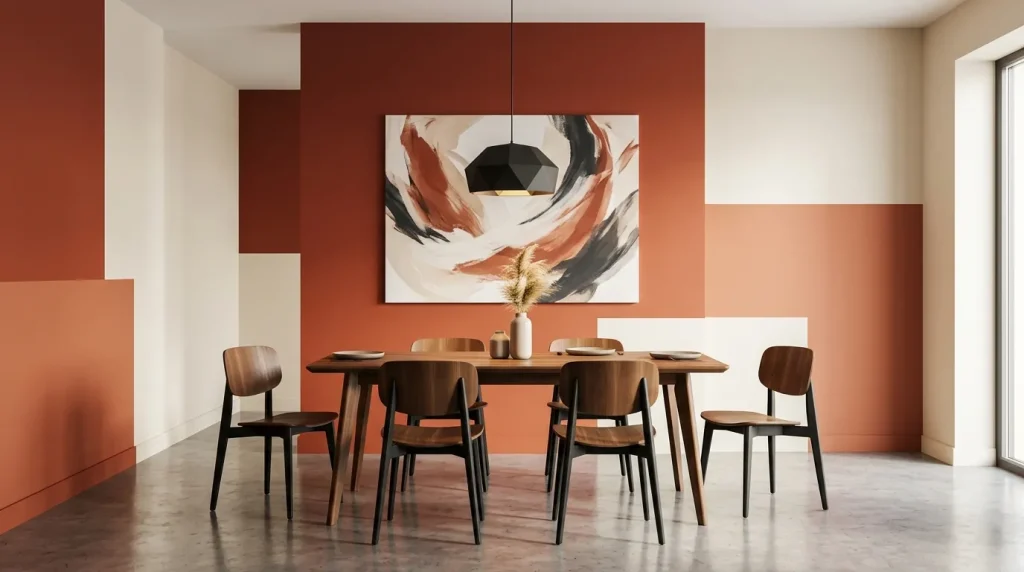
A painted feature wall can instantly transform an ordinary dining setup into something visually striking and highly memorable. Instead of relying on complicated renovations, color blocking creates architectural interest using only shape, contrast, and strategic paint placement. Warm earthy tones paired with soft neutrals tend to feel modern while still remaining comfortable for everyday living. I’ve seen this work especially well in apartments where the dining area blends directly into the living room. The painted sections help define the space naturally without adding bulky dividers or excessive furniture. Even simple furniture looks more expensive when framed against intentional wall color placement.
Many homeowners hesitate to experiment with bold tones because they fear the room may feel too loud or trendy over time. The key is balancing stronger shades with calm finishes like light wood, matte black accents, or cream textiles. In colorful dining room, structured color placement creates focus while keeping the overall atmosphere clean and refined. That is why many designers prefer oversized geometric sections instead of fully saturated walls. This approach feels artistic but still polished enough for long-term use. The dining space immediately gains depth, stronger visual contrast, and a more styled appearance that feels thoughtfully designed rather than randomly decorated.
Glass Pendant Lighting
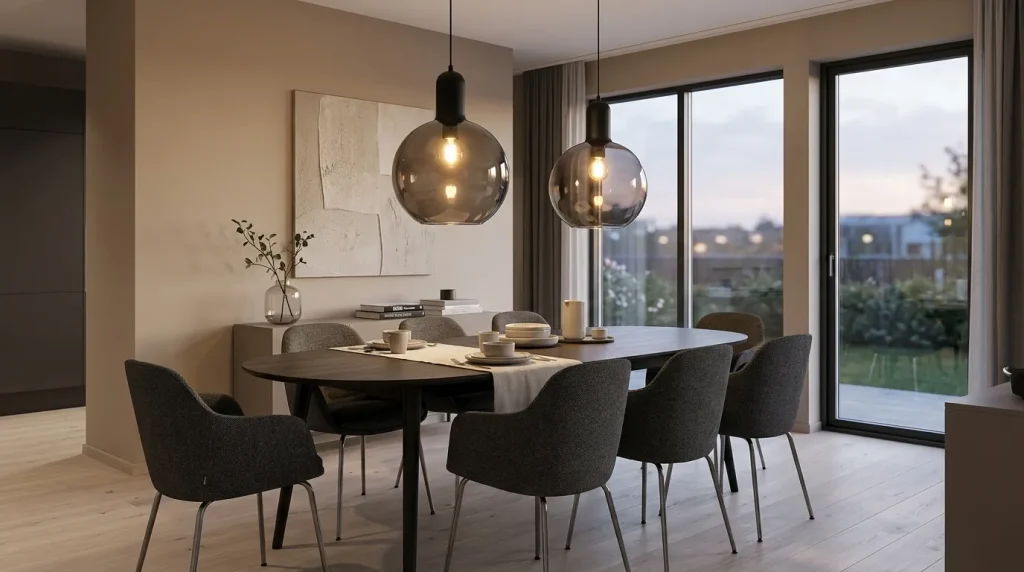
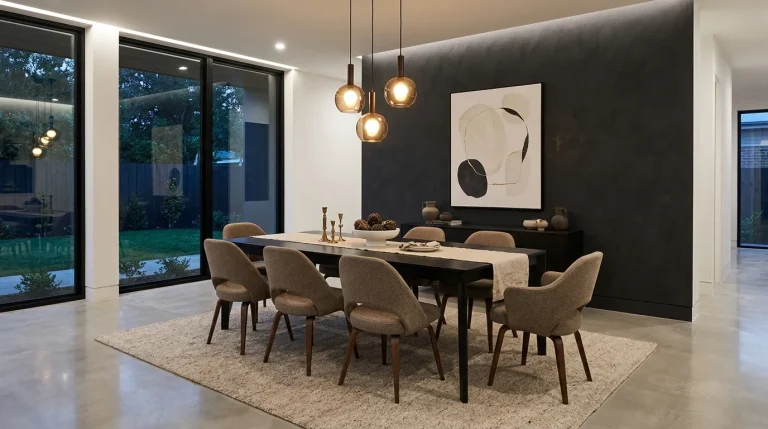
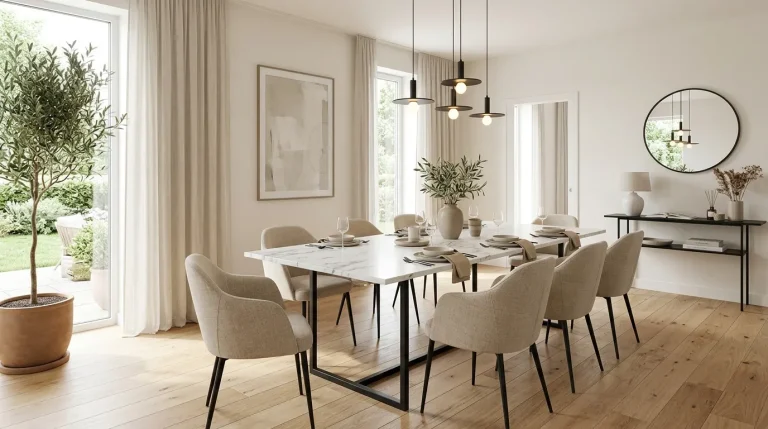
Lighting changes the mood of a dining room faster than almost any other upgrade. Oversized glass pendants create softness, reflection, and warmth while still maintaining a modern minimalist appearance. Many dining spaces look unfinished because the ceiling area feels empty or disconnected from the furniture below. Adding sculptural lighting visually anchors the table and creates a stronger sense of balance throughout the room. In my experience, smoked or frosted glass fixtures work particularly well because they diffuse light gently without producing harsh glare. The entire setup immediately feels calmer, more elevated, and significantly more cohesive both during daytime and evening gatherings.
One reason this idea works so well in modern interiors is because glass lighting pairs naturally with nearly every palette or material choice. Whether the room includes soft neutrals, darker contrast tones, or layered textures, transparent fixtures keep the overall look airy and uncluttered. In colorful dining room, lighting becomes even more important because it affects how every shade appears throughout the day. Warm bulbs help richer tones feel softer and more luxurious instead of overly bright. That is why many designers recommend ambient lighting with dimmable settings. The final result feels sophisticated, comfortable, and intentionally styled without requiring excessive decorative accessories.
Curved Dining Tables
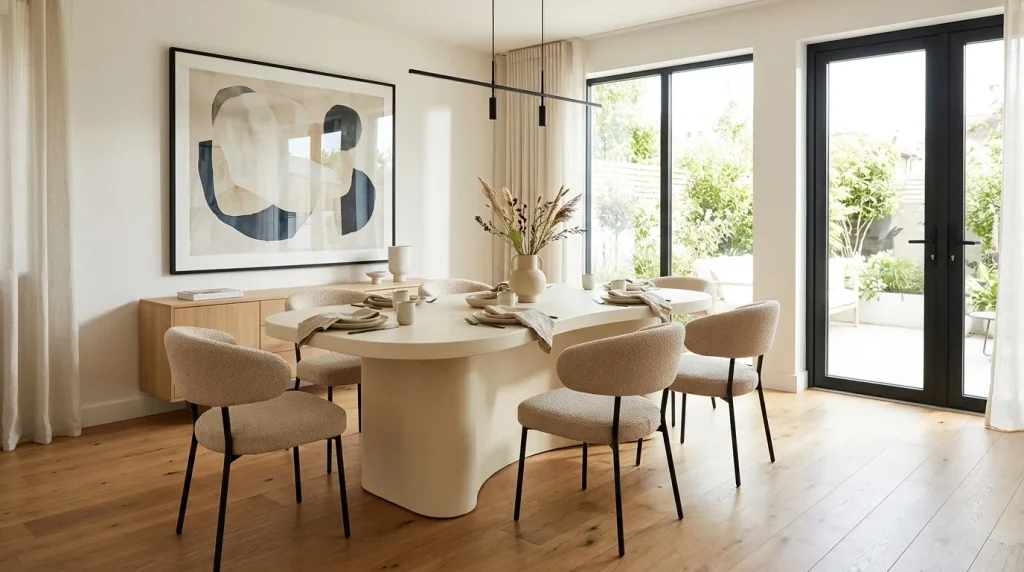
Sharp furniture lines can sometimes make dining spaces feel rigid or visually cold, especially in homes filled with modern finishes and minimal decor. A curved table immediately softens the atmosphere and creates a more welcoming flow throughout the room. This design works particularly well in smaller layouts because there are no harsh corners interrupting movement around the table. In my experience, rounded furniture also photographs beautifully because it naturally guides the eye through the space. The room begins to feel calmer, more open, and intentionally styled without adding excessive decorative elements or overwhelming color combinations that compete for attention.
Many homeowners are surprised by how much a table shape affects the entire energy of a dining area. Circular and oval silhouettes create a smoother visual rhythm that helps bold colors and layered textures feel more balanced. In colorful dining room, softer furniture shapes prevent stronger tones from appearing too heavy or overpowering. That is why many designers pair curved tables with textured fabrics, sculptural lighting, and simple wall treatments. The overall result feels modern but still approachable for everyday use. Guests often notice the space feels more conversational, spacious, and comfortable even when the square footage itself has not changed at all.
Monochrome Contrast
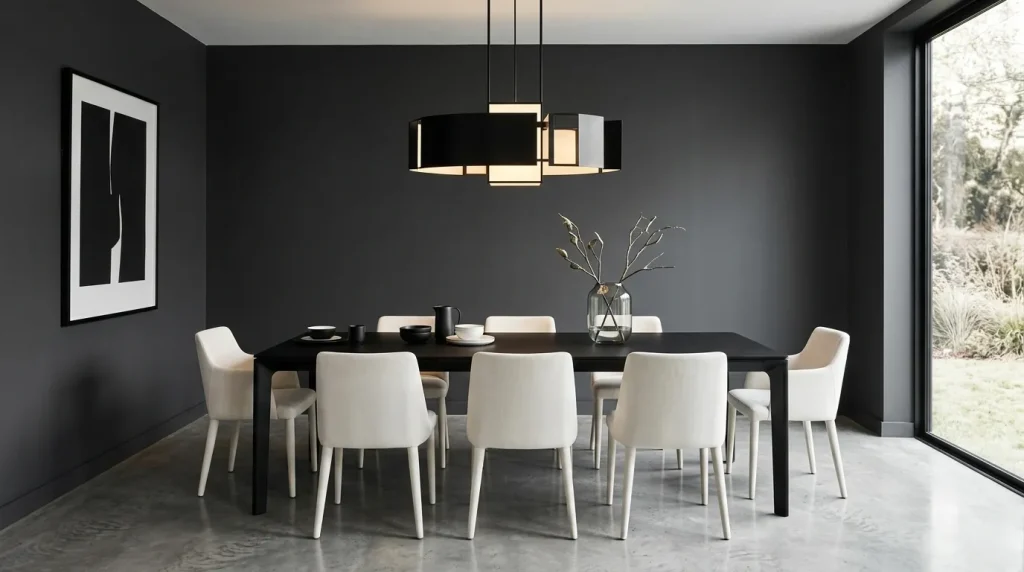
A high-contrast palette can completely transform a dining area from basic to editorial-looking in just a few simple updates. Deep charcoal, black, or espresso tones paired with soft ivory finishes create balance while giving the room stronger visual structure. Many modern spaces lack depth because every surface blends into the same neutral range. Adding darker contrast immediately creates dimension and helps furniture feel more defined. I’ve seen this work especially well in open-plan homes where dining areas need a stronger identity. The room instantly feels more polished, layered, and intentionally designed without relying on complicated styling or excessive decorative accessories.
One reason monochrome styling remains popular is because it allows statement pieces to stand out without making the room feel chaotic. In colorful dining room, darker contrast elements help brighter accents appear more refined instead of random. Matte black lighting, sculptural chairs, or darker wall tones can ground softer colors beautifully. That is why many designers recommend limiting the palette while focusing on texture and shape for visual interest. In my experience, this strategy also makes decorating easier over time because nearly every accent works against a clean monochrome base. The final look feels sleek, luxurious, and highly adaptable for changing trends.
Layered Wall Art
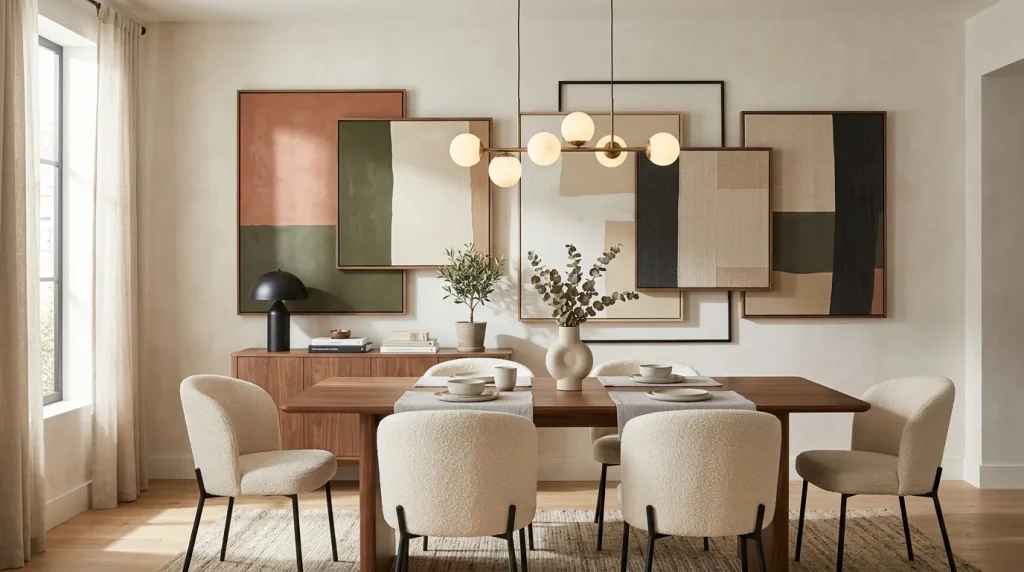
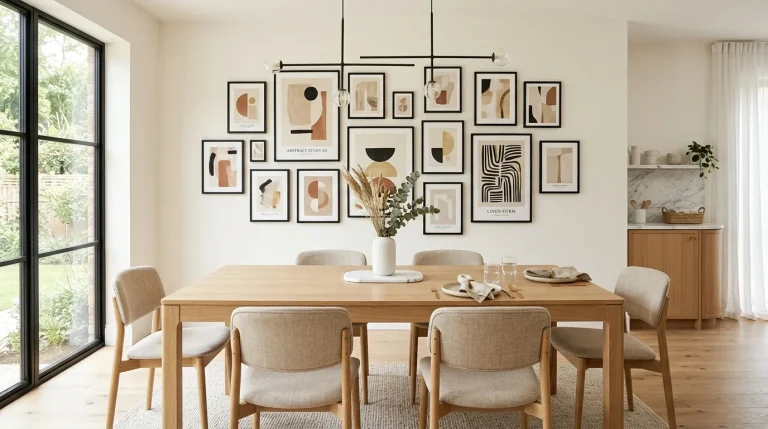
Blank dining room walls can make even beautiful furniture feel unfinished or disconnected from the rest of the home. Oversized layered artwork creates a focal point that immediately gives the space personality and depth. Abstract prints in muted earthy shades work especially well because they introduce color without overwhelming the room visually. In my experience, combining different canvas sizes creates a more collected and custom appearance compared to using perfectly matched frames. This styling approach helps modern dining areas feel softer and more lived-in while still maintaining a clean aesthetic. The room begins to feel thoughtfully designed instead of minimally decorated or incomplete.
Art placement also plays a major role in how spacious and balanced the dining area feels overall. Larger pieces naturally draw the eye upward, making ceilings appear taller and walls more expansive. In colorful dining room, layered artwork can subtly connect multiple tones throughout the space without forcing exact color matching. That is why many designers recommend abstract compositions with soft contrast and texture rather than busy detailed prints. The overall atmosphere feels elevated, calm, and visually cohesive from every angle. Guests often notice the room feels more personal and refined while still remaining modern enough for everyday use.
Muted Jewel Tones
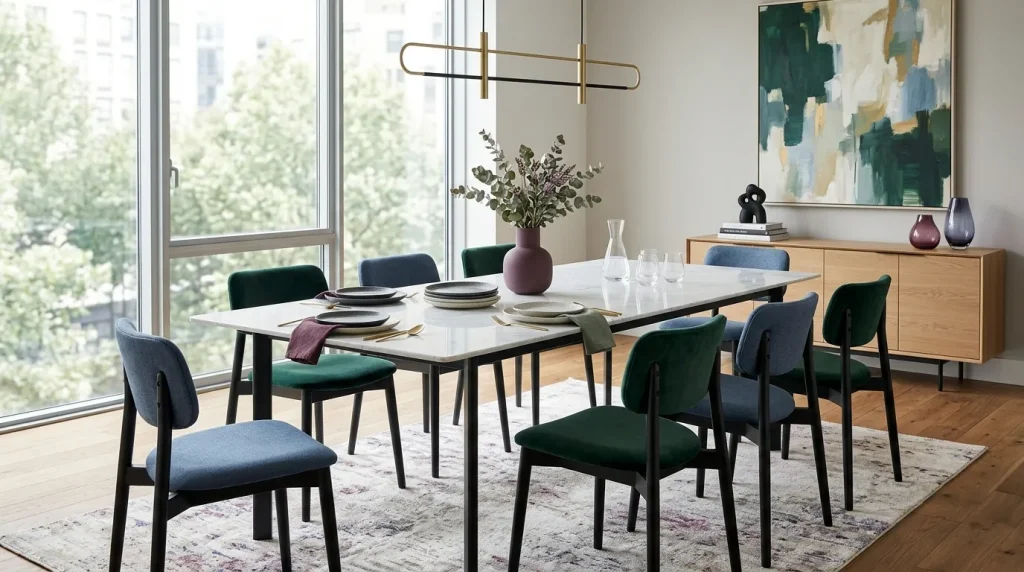
Bright colors can sometimes overwhelm a dining space when they compete for attention across every surface. Muted jewel tones solve that problem by adding depth and personality while still maintaining a calm and refined atmosphere. Shades like dusty emerald, smoky navy, and softened burgundy feel luxurious without becoming visually exhausting. In my experience, these colors work especially well when layered through chairs, artwork, or textiles instead of covering every wall.
The softer saturation allows the room to feel expressive yet balanced. Even simple modern furniture appears more elevated when paired with rich, toned-down colors that create subtle visual warmth. A similar approach can be seen in these mauve bedroom ideas where muted, sophisticated tones create a cozy atmosphere while maintaining a polished and elegant look.
Many homeowners love colorful interiors but struggle to make them feel cohesive rather than chaotic. That is why many designers recommend limiting brighter shades and focusing on deeper, softened variations instead. In colorful dining room, muted jewel tones create a sophisticated contrast against natural wood, matte black finishes, or creamy neutral backdrops. This balance keeps the room stylish while still feeling approachable enough for daily use and entertaining. I’ve seen this work particularly well in homes with open layouts because the palette transitions smoothly into nearby living spaces. The overall result feels curated, calming, and effortlessly modern without losing visual character.
Floating Sideboards
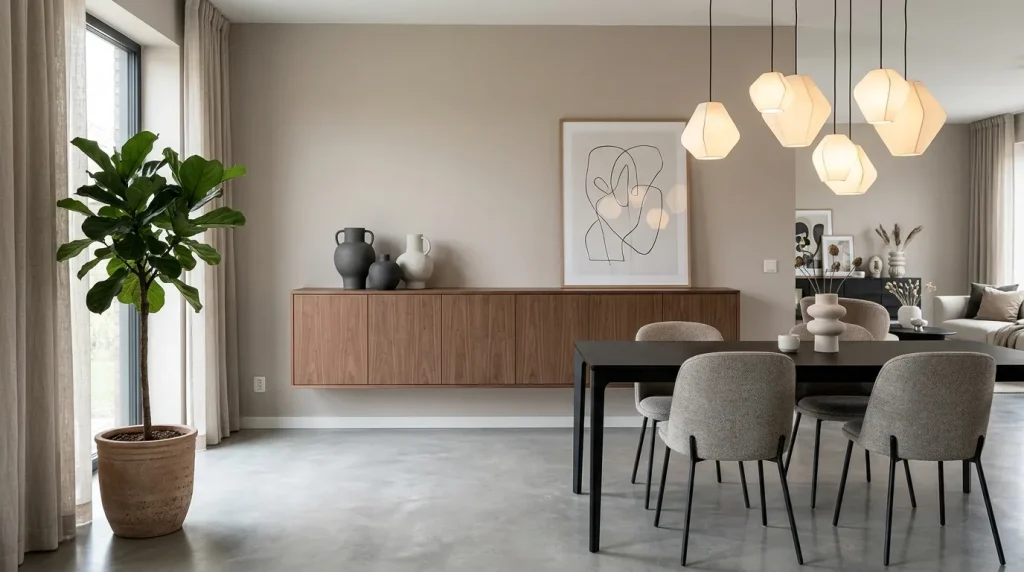
Storage can dramatically affect how calm and polished a dining area feels on a daily basis. Bulky cabinets often make modern spaces feel visually heavy, especially in smaller homes or apartments. A floating sideboard solves that issue by adding practical storage while keeping the floor area open and airy. In my experience, wall-mounted furniture instantly creates a cleaner architectural look that feels more expensive and intentional. It also makes cleaning underneath significantly easier, which helps the room stay visually fresh over time. The dining area begins to feel lighter, more spacious, and far less cluttered without sacrificing functionality or everyday convenience.
Many designers recommend floating storage because it balances practicality with a sleek contemporary aesthetic. Matte walnut, soft beige, or charcoal finishes pair beautifully with modern dining furniture while still adding warmth and texture. In colorful dining room, a streamlined sideboard helps anchor brighter accents without competing against them visually. Styling the top surface with minimal decor like sculptural vases or framed artwork keeps the overall look refined instead of overcrowded. I’ve seen this approach work especially well in open-plan homes where visual flow matters. The final result feels organized, elevated, and effortlessly modern from every angle in the room.
Soft Linen Drapes
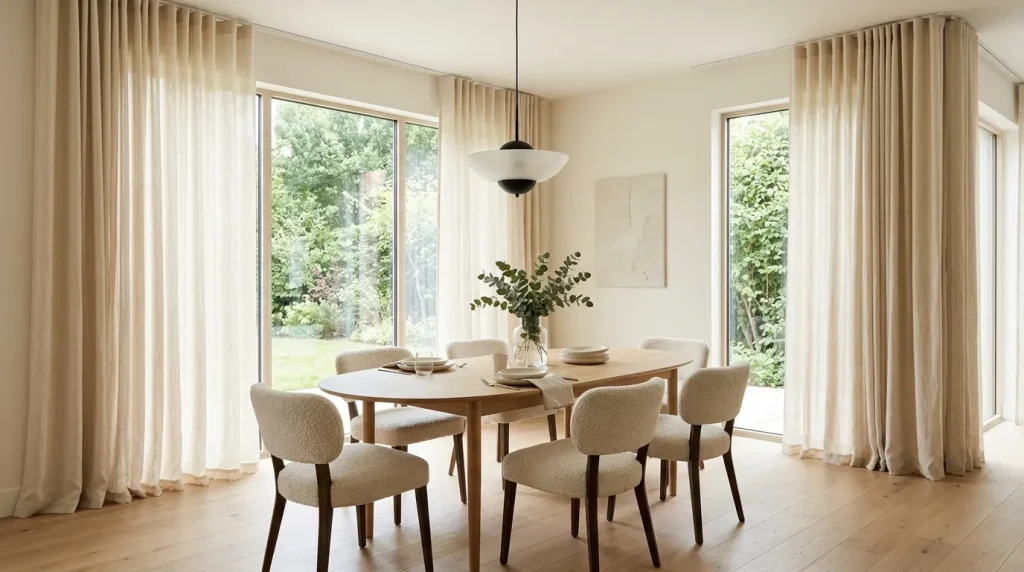
Window treatments are often overlooked, yet they completely change how a dining room feels throughout the day. Soft linen drapes diffuse natural light gently, creating a relaxed atmosphere that instantly feels more welcoming and elevated. Many modern interiors rely heavily on hard finishes like glass, stone, and matte surfaces, which can sometimes feel visually cold. Adding lightweight fabric introduces movement and softness without disrupting a clean aesthetic. In my experience, floor-to-ceiling curtains also make ceilings appear taller and windows feel larger than they actually are. The entire dining area begins to feel brighter, calmer, and noticeably more luxurious with very little effort.
The beauty of linen drapes is that they complement nearly every modern color palette while still adding subtle texture and warmth. In colorful dining room, soft neutral curtains help balance stronger tones so the space feels cohesive rather than overly busy. That is why many designers recommend warm ivory, oat, or sand shades instead of stark white fabrics. These softer tones blend naturally with wood finishes, sculptural lighting, and layered decor. I’ve seen this work especially well in smaller homes where natural light needs to travel through multiple connected spaces. The final atmosphere feels airy, refined, and effortlessly comfortable for everyday living.
Conclusion:
Creating beautiful Colorful Dining Rooms is all about balance, texture, and thoughtful detail—not overwhelming design. From soft lighting and layered art to muted tones and sculptural furniture, each idea in this guide helps you build a space that feels modern, welcoming, and visually inspiring.
When you combine even a few of these upgrades, the transformation is instant and deeply noticeable. I’ve seen how small changes like these can completely elevate everyday dining experiences and make the room feel more alive. Save this guide on Pinterest, try one idea at a time, and share it with someone who loves home decor inspiration. Your dream dining space starts with simple, intentional choices.
Elira Montclair
Elira writes about timeless home decor, kitchen styling, and practical interior ideas. Her work blends warm, inviting aesthetics with simple decorating tips that make everyday spaces feel beautiful and comfortable.