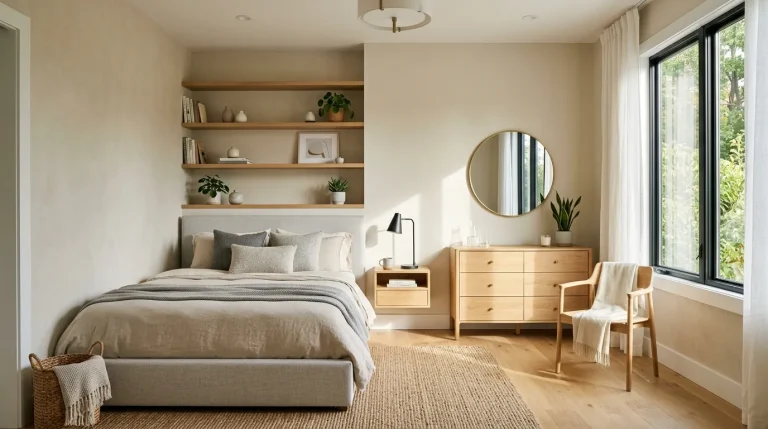
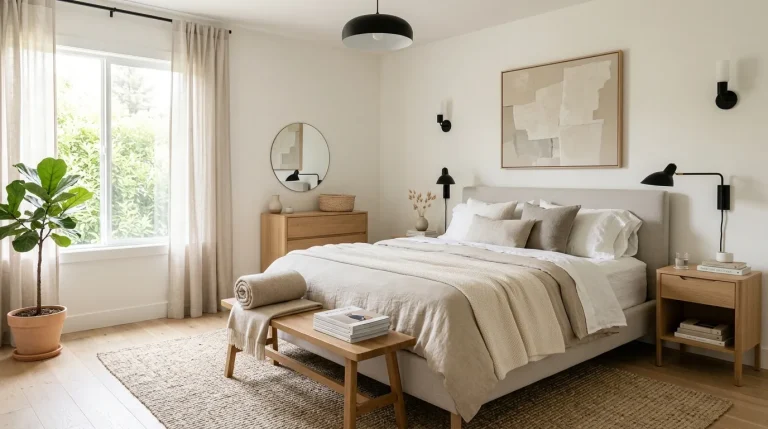
Wabi sabi bedroom aesthetic quick ways to create quiet luxury at home

Introduction:
A Wabi sabi bedroom is more than just a design style—it’s a gentle shift toward calm, simplicity, and natural beauty. If your space feels cluttered, noisy, or emotionally overwhelming, this approach helps you slow everything down and reconnect with comfort. Instead of perfection, it embraces softness, imperfection, and quiet balance that feels deeply human.
In this article, you’ll discover simple yet powerful bedroom ideas that create a peaceful atmosphere using natural textures, muted tones, and intentional design choices. The goal is not to decorate more, but to design less—and better. In my experience, even small changes like softer lighting or linen bedding can instantly transform how a room feels.
If you’ve been searching for a way to make your bedroom feel more calming, grounded, and visually beautiful for Pinterest inspiration, this guide will show you exactly how to achieve that transformation.
1.Neutral Layers
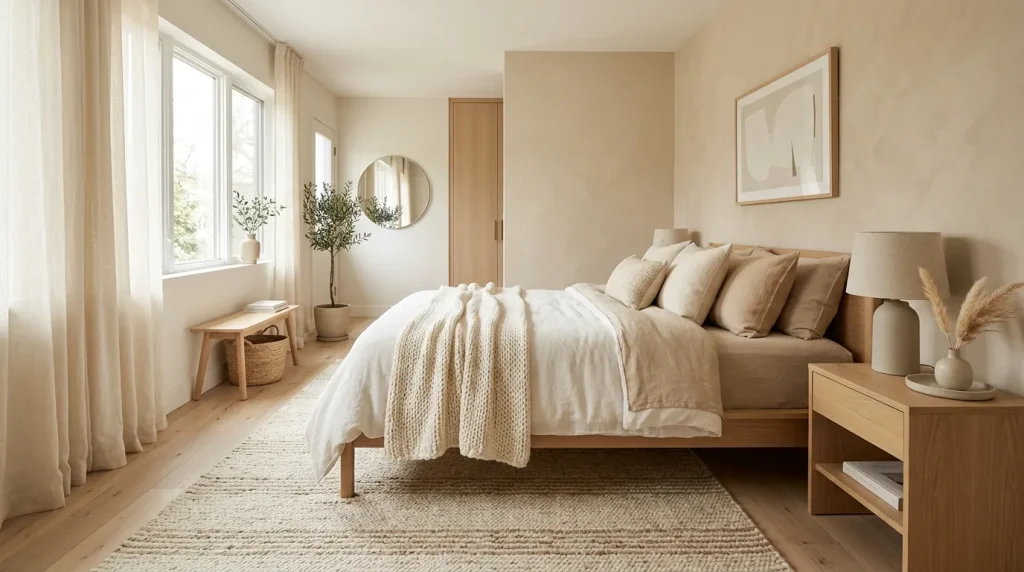
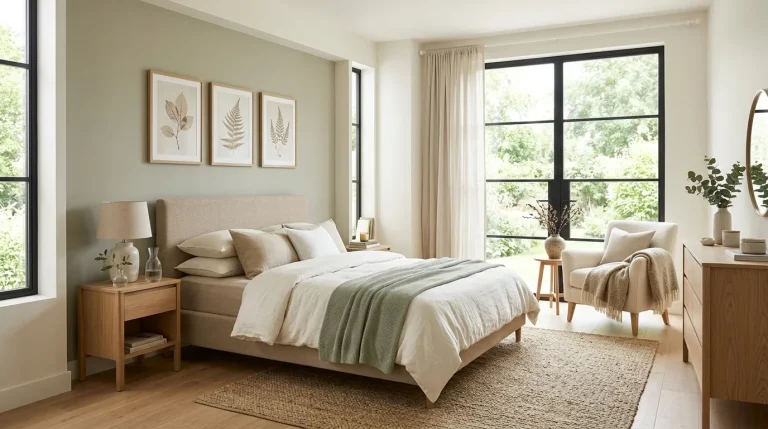
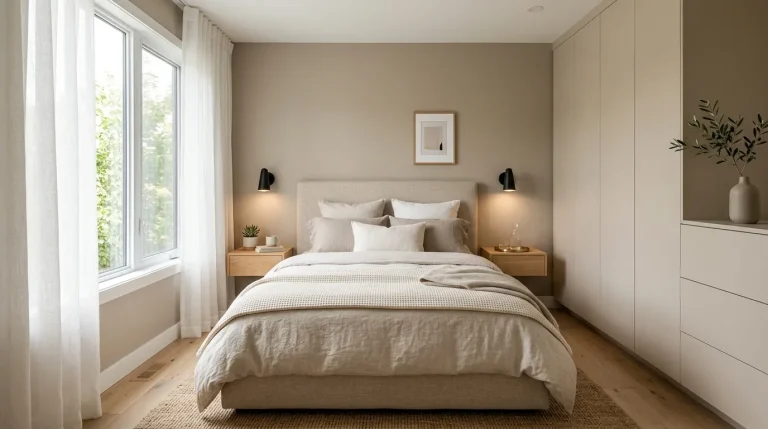
Soft neutral layering instantly transforms a space into a calm retreat, and it is one of the most effective foundations for a Wabi sabi bedroom. This approach focuses on mixing warm beige, soft ivory, and muted earth tones to create visual harmony without overwhelming the eye. In my experience, using multiple textures like linen, cotton, and wool helps the room feel lived-in yet refined. The result is a naturally balanced atmosphere that feels peaceful, breathable, and emotionally grounding for everyday rest and relaxation. It enhances modern minimalist living beautifully space.
Designing with soft neutral layers also improves how natural light interacts with the room, making even small bedrooms feel brighter and more open. This technique works especially well in compact urban homes where visual space matters more than physical size. Light fabrics, matte surfaces, and subtle contrast help reduce visual noise while maintaining warmth. Many designers recommend starting with bedding and gradually building tones across furniture and decor. The overall effect is a cohesive, calming environment that supports rest, focus, and emotional balance. It feels naturally inviting every day space.
2.Imperfect Textures
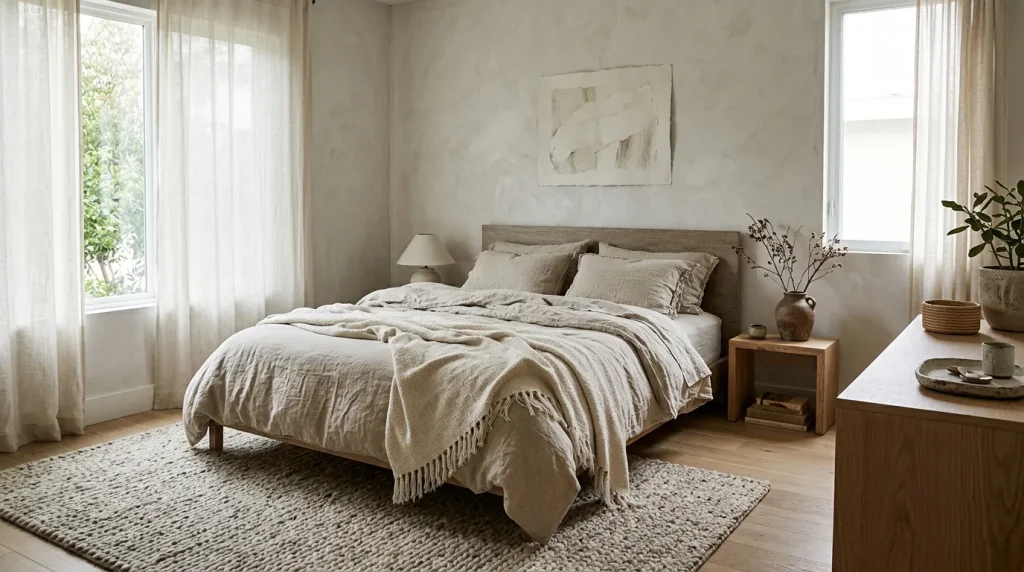
Imperfect textures create a quiet sense of authenticity that instantly softens a modern bedroom. Instead of polished perfection, this idea embraces natural wrinkles in linen, raw fabric finishes, and slightly uneven surfaces that feel real and comforting. In my experience, this approach makes a space feel more human and emotionally grounded. It removes the pressure of maintaining a flawless look and replaces it with ease and calm. The result is a bedroom that feels warm, inviting, and effortlessly balanced without trying too hard visually.
This design approach works especially well in minimalist homes where simplicity can sometimes feel cold or rigid. By introducing soft irregularities, the room gains character without adding clutter. Textured bedding, handmade ceramics, and natural fiber rugs all contribute to a layered sensory experience. I’ve noticed this style is increasingly popular because it supports both comfort and visual interest at the same time. The overall effect is a peaceful environment where imperfections are not flaws but essential design elements that enhance emotional comfort and daily relaxation naturally.
3.Earth Tone Palette
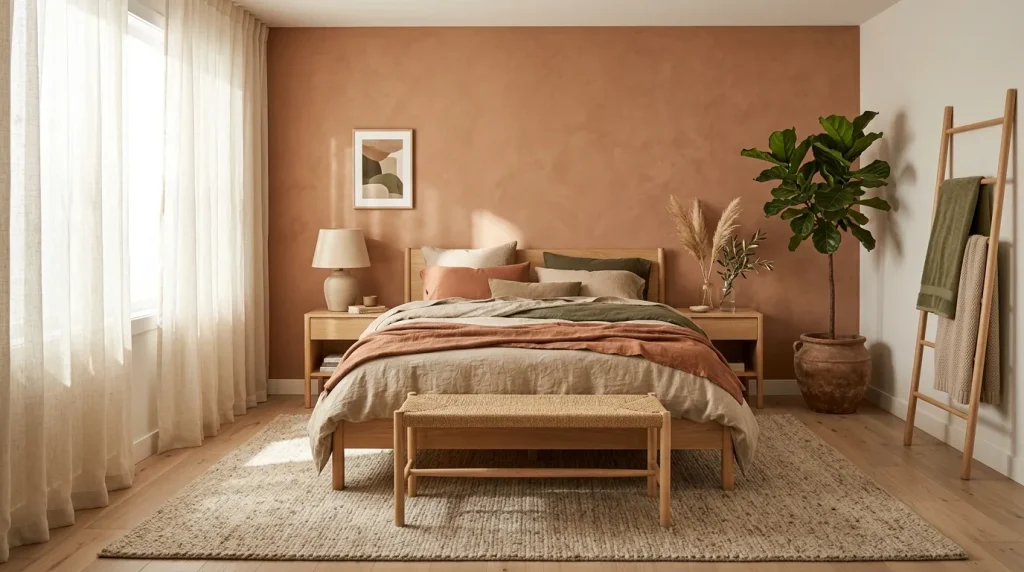
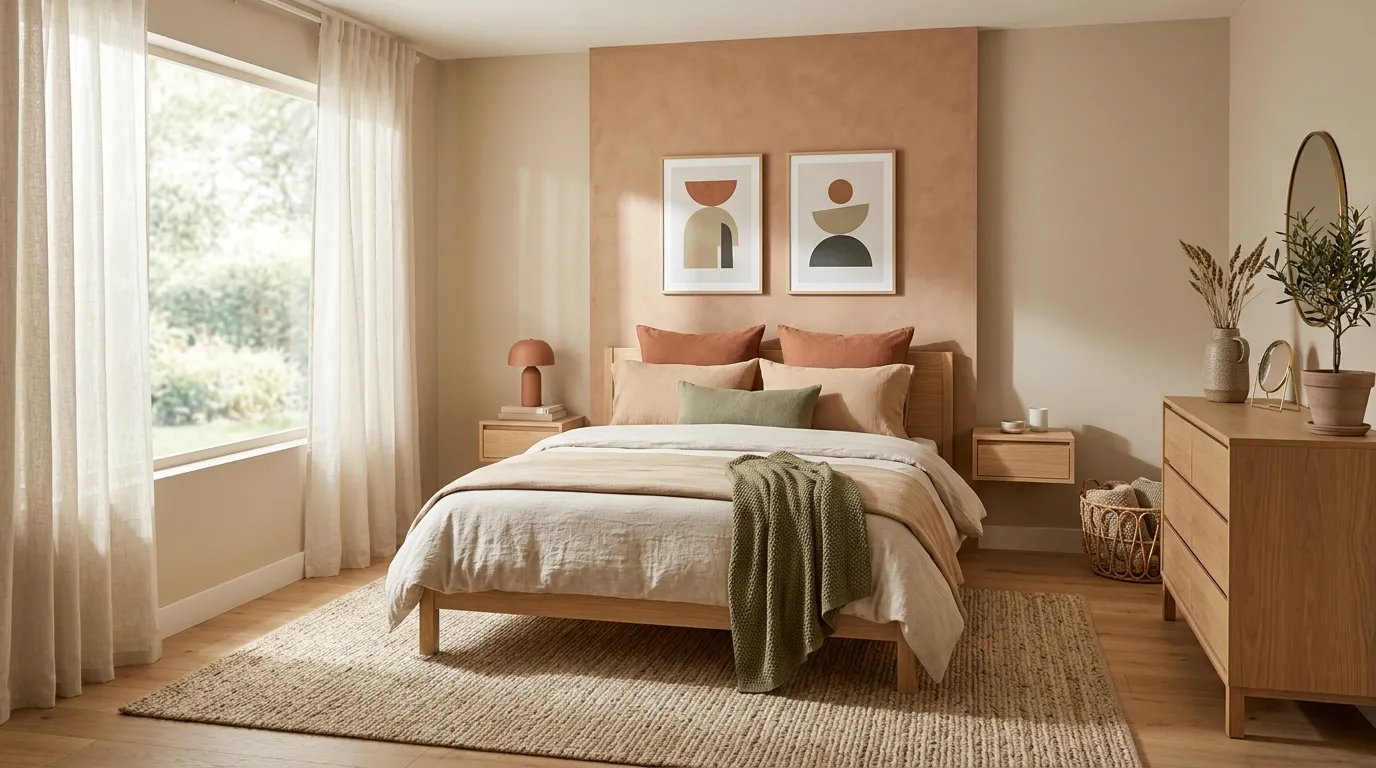
An earth tone palette brings an immediate sense of grounding and warmth to any bedroom space. By using shades like terracotta, sand, clay, and muted olive, the room feels naturally connected to outdoor landscapes. This color approach is especially effective for creating emotional balance and reducing visual stress. In many interiors I’ve observed, these tones help people feel more relaxed and present in their environment. The subtle warmth of earth colors makes the space feel lived-in, comforting, and visually cohesive without overwhelming the senses or requiring complex decor choices.
This palette also works beautifully with minimalist furniture because it adds depth without visual noise. Light wood, linen fabrics, and matte finishes complement earthy tones effortlessly. Designers often recommend layering these colors gradually through textiles and decor rather than painting everything at once. The result is a soft, natural flow of color that feels intentional yet effortless. I’ve seen this approach transform plain bedrooms into cozy retreats that feel both modern and organic. It creates a timeless aesthetic that supports relaxation and emotional comfort every single day.
4.Handmade Accents
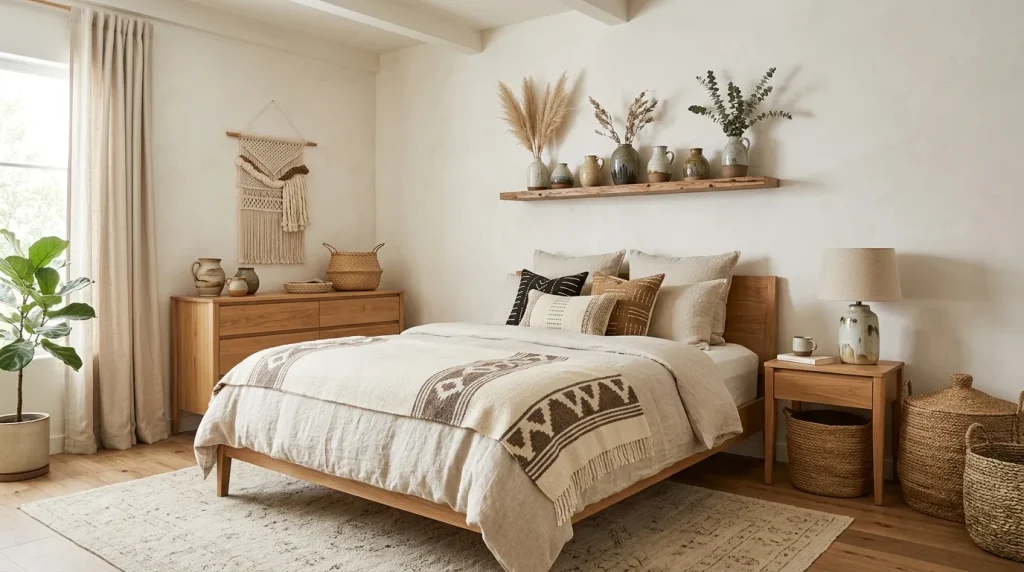
Handmade accents bring a unique emotional layer to a bedroom by introducing objects that feel personal and intentional. Unlike mass-produced decor, these pieces carry subtle imperfections that make the space feel more human and expressive. In my experience, even one or two handcrafted items like a ceramic vase or woven basket can completely shift the room’s atmosphere. They add warmth without clutter and create focal points that feel meaningful. This approach works especially well in modern minimalist spaces where personality is often missing.
Incorporating handmade elements also helps break the visual uniformity of clean interiors. These pieces introduce texture, variation, and organic shapes that soften structured layouts. Designers often recommend mixing artisan decor with simple furniture to maintain balance. I’ve noticed that rooms with handcrafted details feel more inviting because they tell a quiet visual story. The result is a bedroom that feels curated yet natural, where every object has purpose and presence. It creates a calm, thoughtful environment that encourages rest, reflection, and everyday comfort in a subtle way.
5.Natural Wood Focus
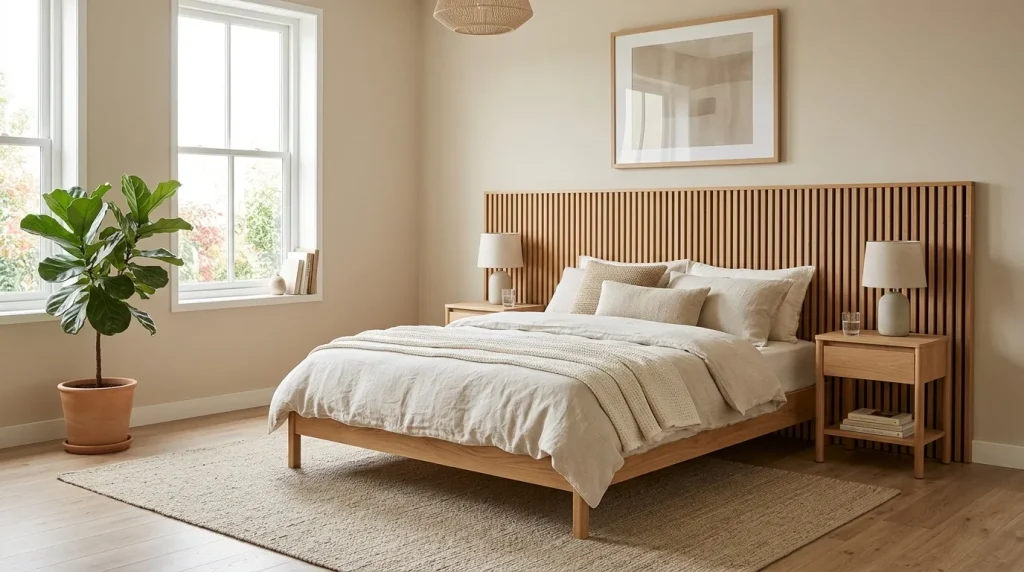
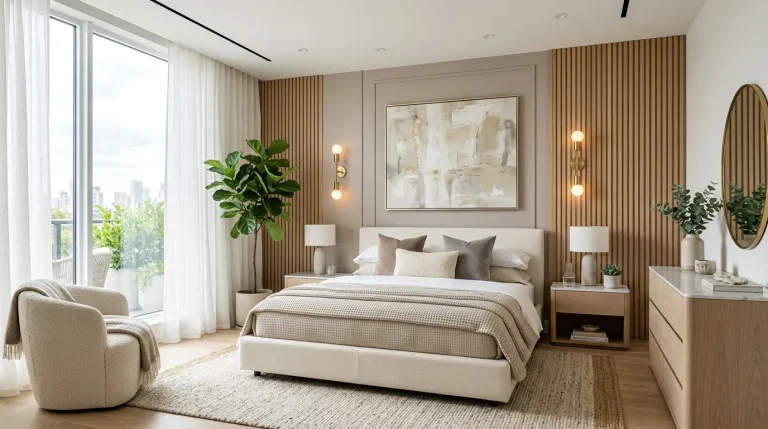
A natural wood focus brings warmth and organic character into a modern bedroom, making the space feel grounded and inviting. Light oak, ash, or birch finishes introduce soft grain patterns that instantly reduce the coldness often found in minimalist interiors. This approach works beautifully with neutral color palettes because wood acts as a natural bridge between structure and softness. In many homes I’ve observed, wooden elements become the quiet anchor of the room, adding depth without overwhelming the simplicity of the overall design direction. This appreciation for natural materials also carries into other areas of the home, as seen in these boho style bathroom ideas, where organic textures and earthy finishes create a similarly warm, relaxed, and welcoming atmosphere.
Using natural wood across furniture pieces also helps create visual continuity throughout the space. Bed frames, nightstands, and shelving in similar tones produce a cohesive flow that feels intentional and balanced. Designers often recommend keeping finishes matte or lightly textured to preserve the organic feel. This approach enhances the emotional comfort of the room, making it feel more connected to nature. The result is a timeless bedroom aesthetic that feels warm, calm, and naturally elegant without relying on excessive decoration or visual complexity.
6.Minimal Wall Art
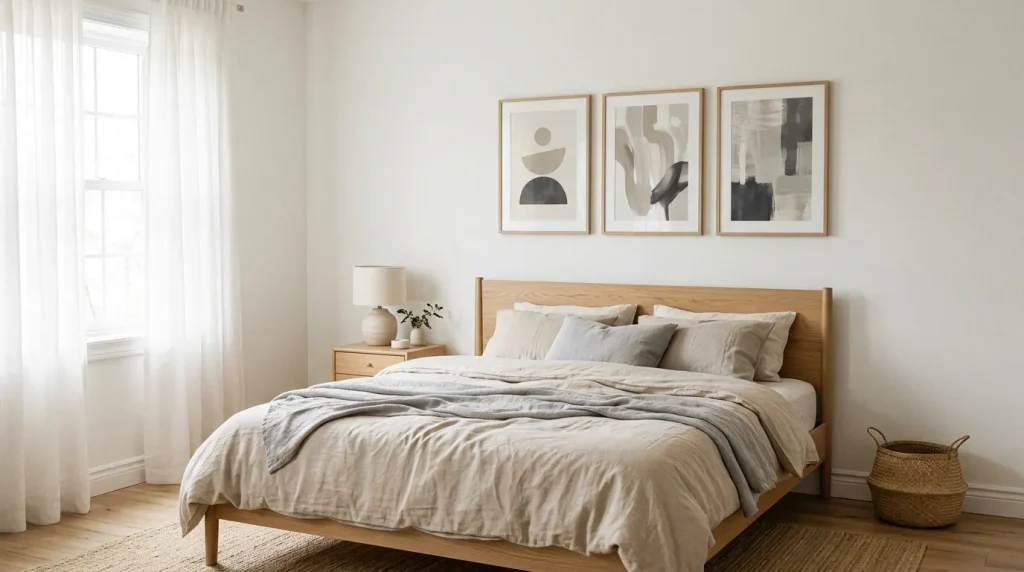
Minimal wall art brings personality into a bedroom without disrupting its calm and uncluttered atmosphere. Instead of bold or overly detailed pieces, this approach focuses on simple abstract forms, soft lines, and neutral colors that blend naturally into the space. In many modern interiors I’ve observed, a single understated artwork can completely define the mood of a room. It adds character while still respecting the principles of simplicity and balance, making the bedroom feel thoughtfully curated rather than decorated.
This design choice works especially well in neutral, minimalist bedrooms where visual noise needs to be reduced. Wall art becomes a quiet focal point rather than a dominant feature, helping guide the eye gently across the space. Designers often recommend placing artwork at eye level with enough surrounding negative space to maintain balance. I’ve noticed that this technique makes bedrooms feel more refined and intentional. The final result is a peaceful, cohesive environment where creativity and simplicity exist in perfect harmony without overwhelming the senses.
Conclusion:
A Wabi sabi bedroom is all about slowing down, simplifying, and creating a space that feels real rather than perfect. Each idea in this article works together to build a calm, grounded environment that supports rest and emotional comfort. When you focus on natural textures, soft lighting, and minimal design choices, your bedroom naturally becomes a peaceful retreat.
I’ve seen how even small changes like linen bedding or muted tones can completely shift a room’s energy. Save this guide on Pinterest and try one or two ideas in your own space—you don’t need a full makeover to feel the difference. Share it with someone who loves calm, minimalist interiors and start building your own quiet sanctuary today.
Clara Whitmore
Clara specializes in interior styling, seasonal home trends, and cozy living spaces. She loves combining classic design elements with modern touches to create homes that feel personal, welcoming, and effortlessly stylish.