Ultimate Small Apartment Entryway Ideas for a Beautiful and Functional Entry

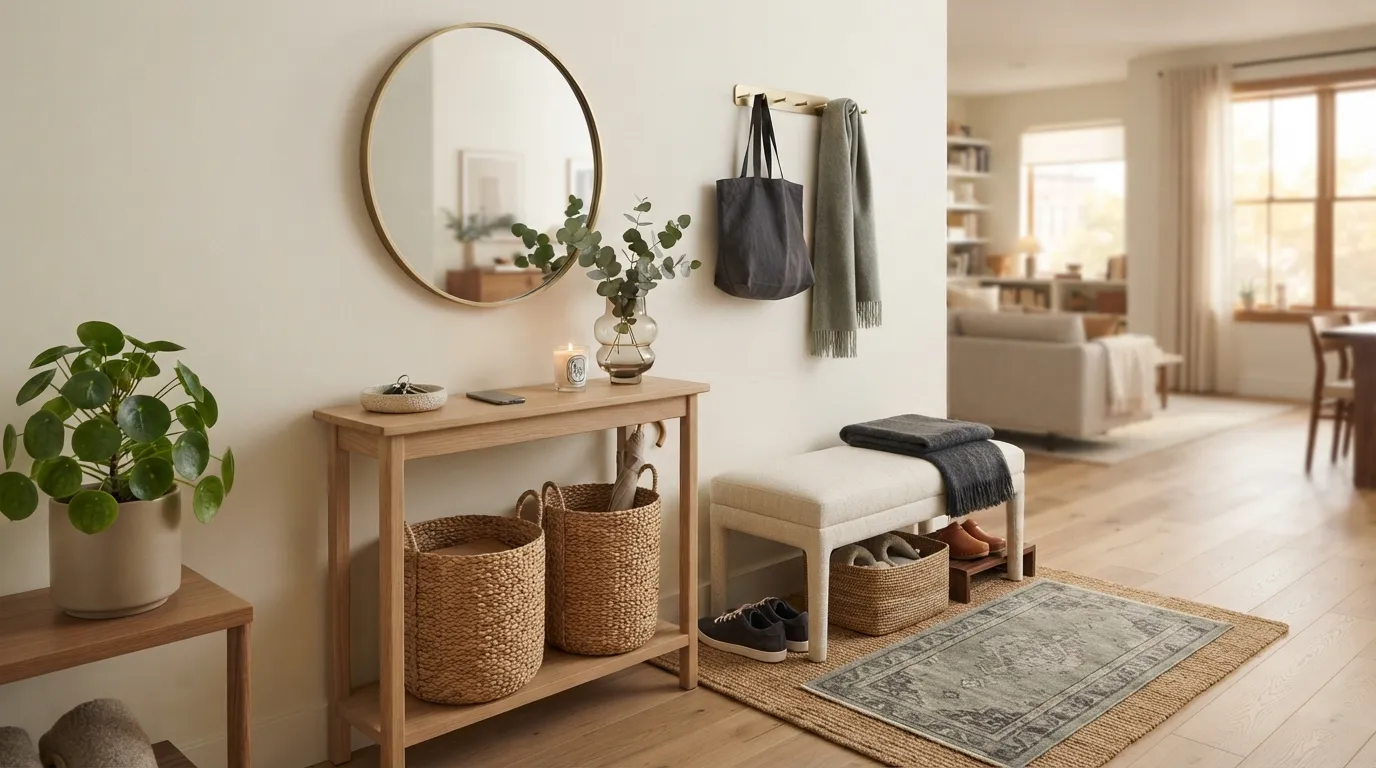
Small apartments often make the entryway do too much with too little space. The right small apartment entryway ideas can give coats, shoes, keys, and bags a clear home without making your doorway feel crowded. A slim console, wall hooks, mirror, or narrow bench can turn an awkward corner into a useful landing spot.
The trick is to work with the footprint instead of fighting it. Think vertical storage, furniture with a shallow profile, light colors, and pieces that serve more than one purpose. Whether your entry opens straight into the living room or sits inside a tiny hallway, these ideas can help you create a welcoming entrance that feels tidy and connected to the rest of your home.
Slim Console Style
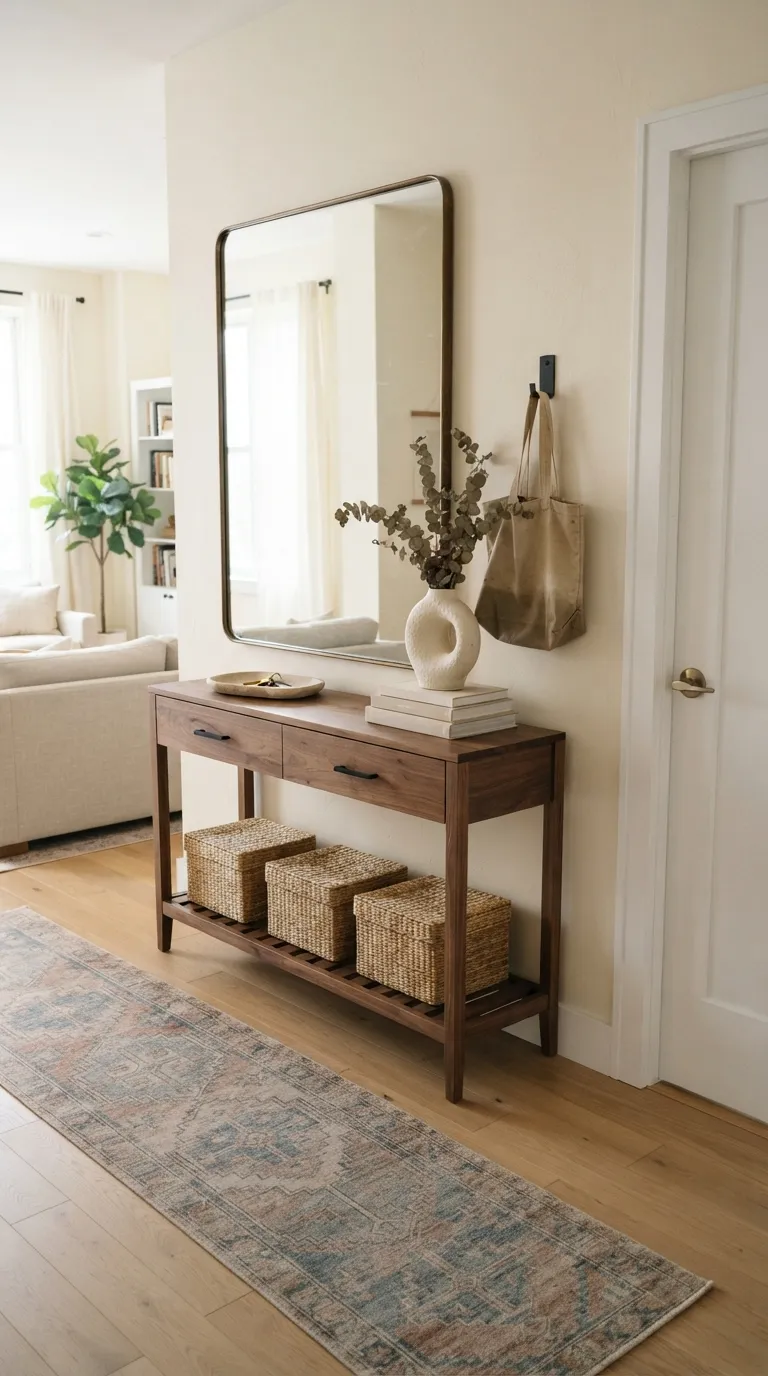
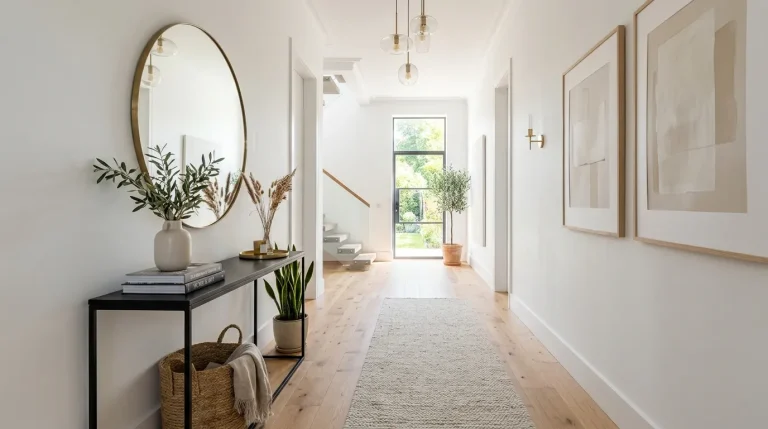
A slim console gives you a landing zone without stealing precious floor space. Look for a piece around 8 to 12 inches deep, especially if the entry sits along a busy path into the living room. Drawers are useful for small items, while a lower shelf can hold baskets for hats, scarves, or pet supplies.
Keep the top simple so the area doesn’t feel busy. A tray can gather keys and sunglasses, while a mirror above the console gives you a quick last look before leaving. This is one of the easiest small apartment entryway ideas to adapt because the same console can work beside a door, behind a sofa, or along a narrow passage.
Wall-Mounted Drop Zone
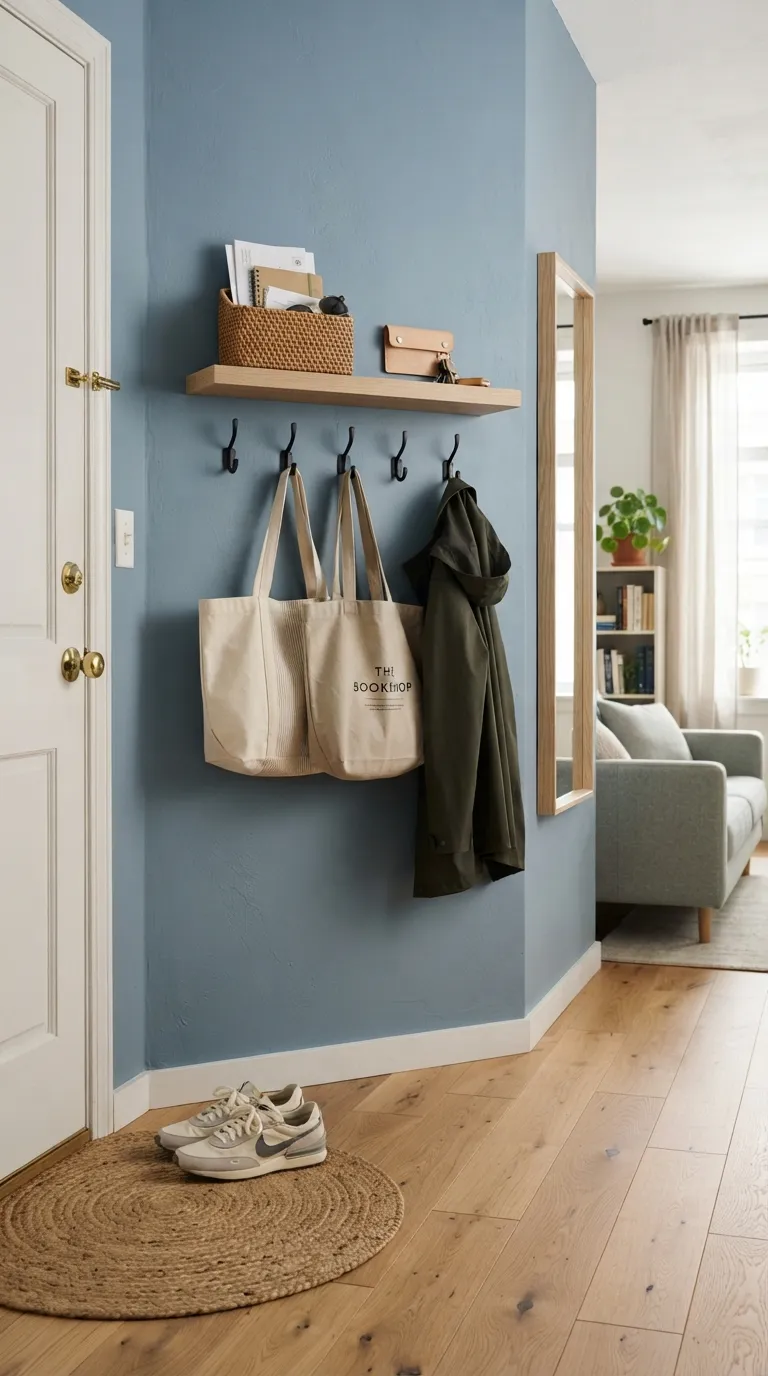
A wall-mounted drop zone works when floor space is almost nonexistent. A floating shelf can hold the little things that tend to wander around the home, while hooks keep jackets and everyday bags off chairs and countertops. Mounting these pieces at different heights creates storage without adding bulky furniture.
For a tiny rental entry, choose removable hooks and a lightweight shelf that suits the lease rules. Keep the setup limited to daily-use items rather than turning it into a storage wall. If your doorway opens directly into the living room, a neat drop zone can also act as a visual boundary between the entrance and your main seating area.
Mirror And Bench
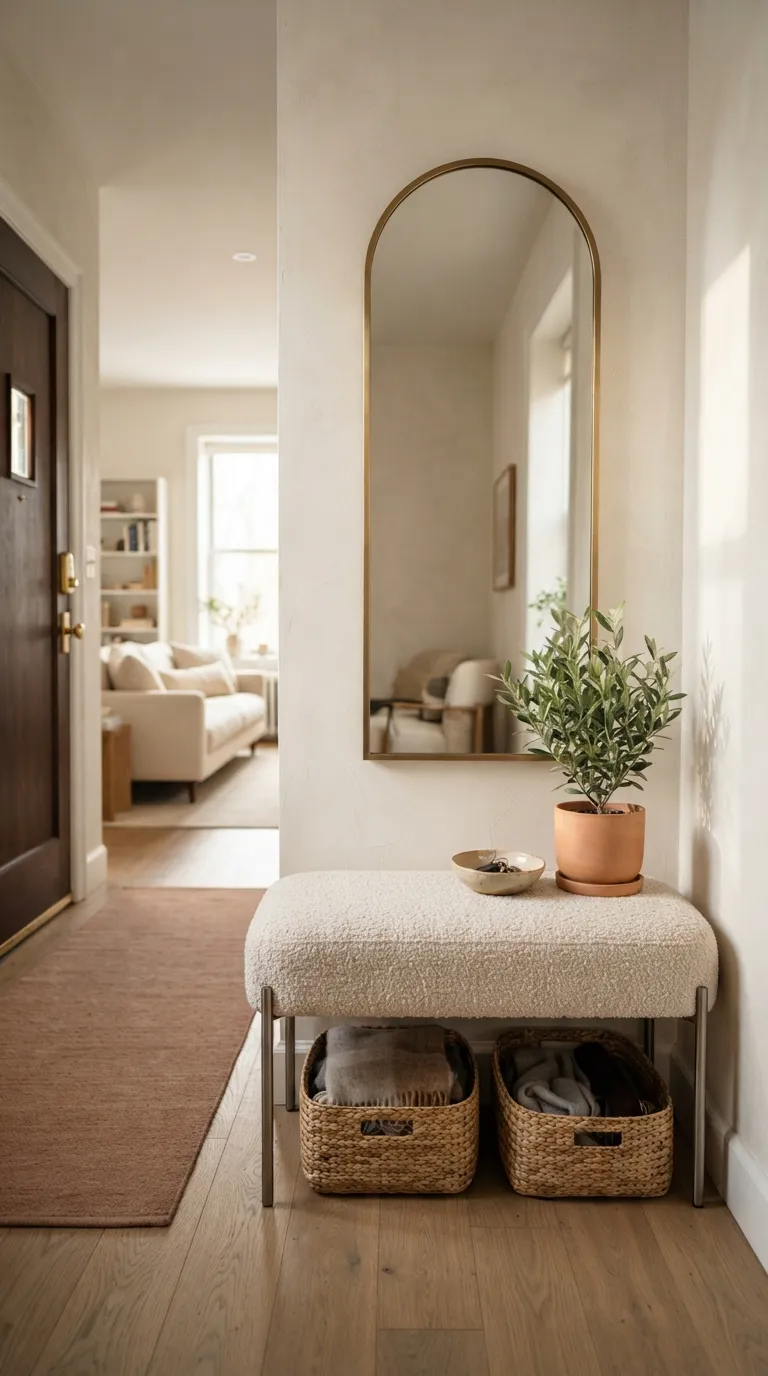
A narrow bench earns its place by solving two problems at once. You get a comfortable seat for slipping on shoes, plus an open area underneath for baskets or low-profile footwear storage. Choose a bench that’s shorter than the wall width so the entry still has breathing room around it.
Pairing the bench with a tall mirror can make the wall feel more open while giving the entry a useful finishing touch. Picture a narrow doorway beside the living room: the mirror catches light from the larger room, while the bench keeps shoes and bags from spreading across the floor. For small apartment entryway ideas, this pairing gives a lot of function without demanding much space.
Vertical Coat Storage
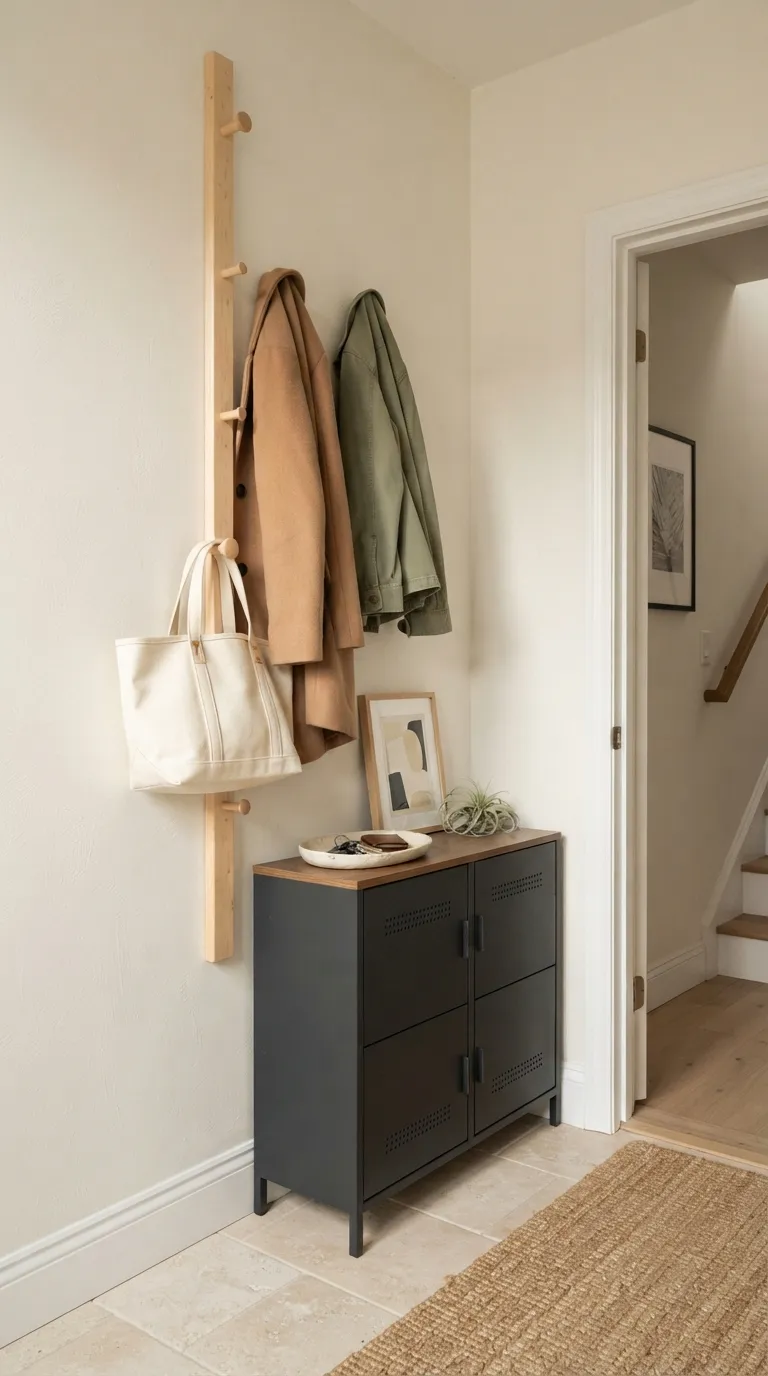
Look up when floor space runs out. A tall peg rail makes use of vertical wall area while keeping coats, bags, and hats easy to grab. Choose a narrow design with enough spacing between pegs so bulky items don’t pile into one large mound.
Add a slim shoe cabinet below the rail if footwear tends to collect by the door. Closed storage keeps the entry looking calmer than an open shoe rack, especially when the doorway sits beside your living room. One useful rule is to reserve the easiest-to-reach pegs for items used every day and place less-used pieces higher.
Hidden Shoe Cabinet
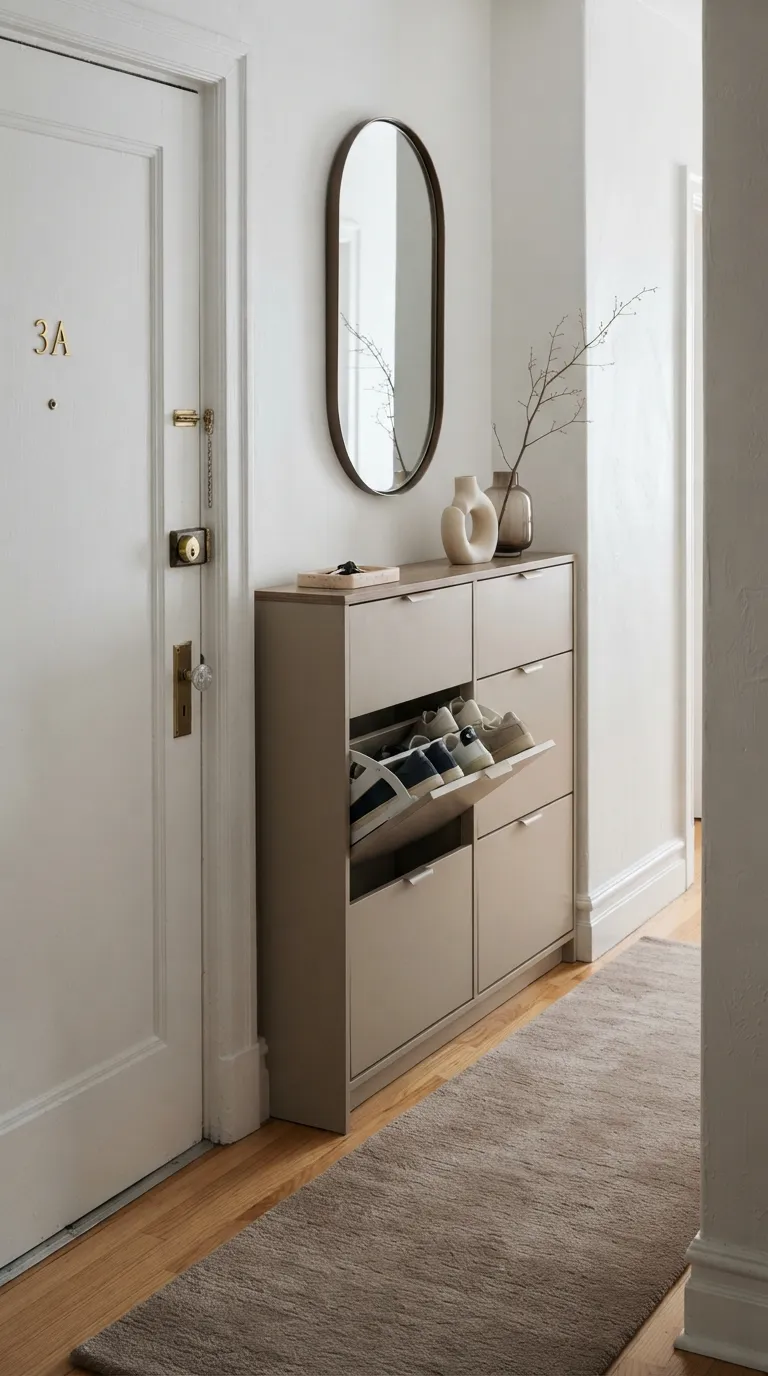
Shoes can make a small entry look messy within minutes. A hidden shoe cabinet keeps pairs contained while taking up far less visual space than a traditional open rack. Tilt-out compartments work especially well because they can store several pairs without requiring a deep piece of furniture.
Keep the cabinet close to the door so putting shoes away becomes automatic. A shallow top also gives you a place for keys or a small decorative object, but don’t treat it like another countertop. In a compact home, every surface can become a clutter magnet, so giving each item one clear home makes the entire entrance easier to maintain.
Floating Entry Shelf
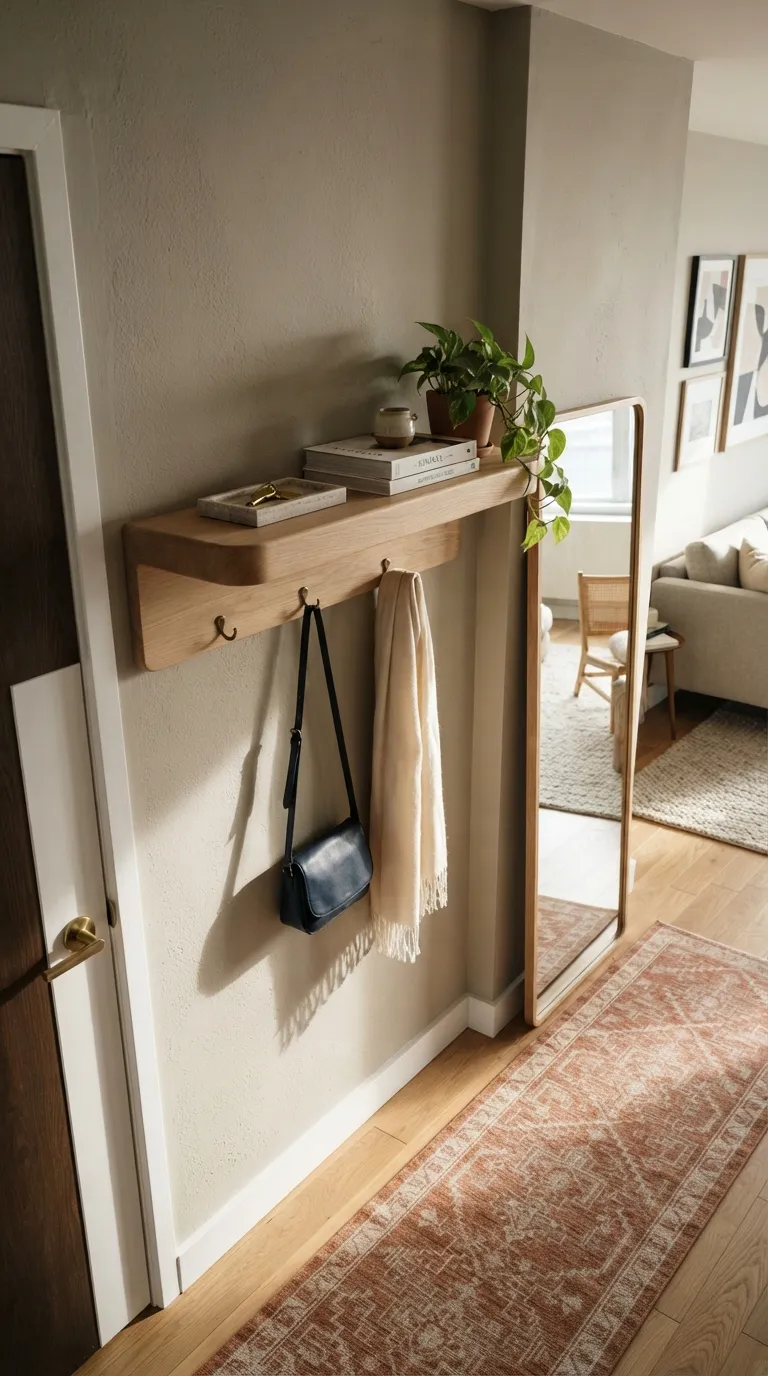
A floating shelf is a smart choice when even a narrow console feels too large. It gives you a small surface for keys, mail, and decor while leaving the floor completely open. Add a few hooks underneath, and the same wall can handle daily bags or lightweight outerwear.
Keep the shelf shallow enough that people can pass comfortably without bumping into it. A simple wood finish works well in apartments because it adds warmth without making the wall feel heavy. Among small apartment entryway ideas, this one is also easy to connect visually with a living room by repeating the shelf’s wood tone on a nearby coffee table, frame, or side table.
Corner Bench Nook
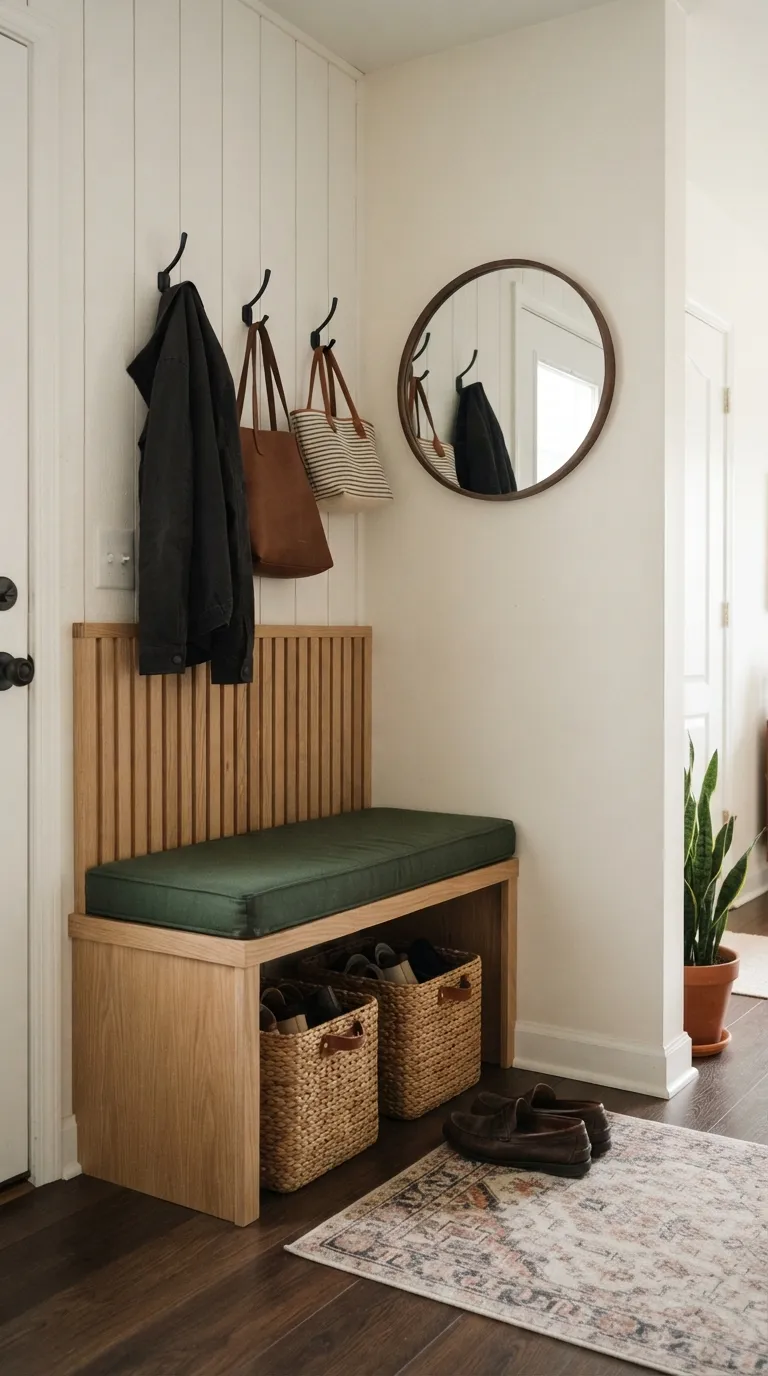
An empty corner can become your best entryway asset. A compact bench tucked into the space gives you somewhere to sit while also creating storage underneath. Add hooks above it, and one small wall can handle coats, bags, shoes, and a few accessories.
Keep the bench narrower than the corner so the doorway doesn’t feel boxed in. Baskets underneath can hide everyday clutter while keeping frequently used items within easy reach. This setup works particularly well when your apartment lacks a dedicated foyer and the entrance shares space with the living room.
Narrow Runner Path
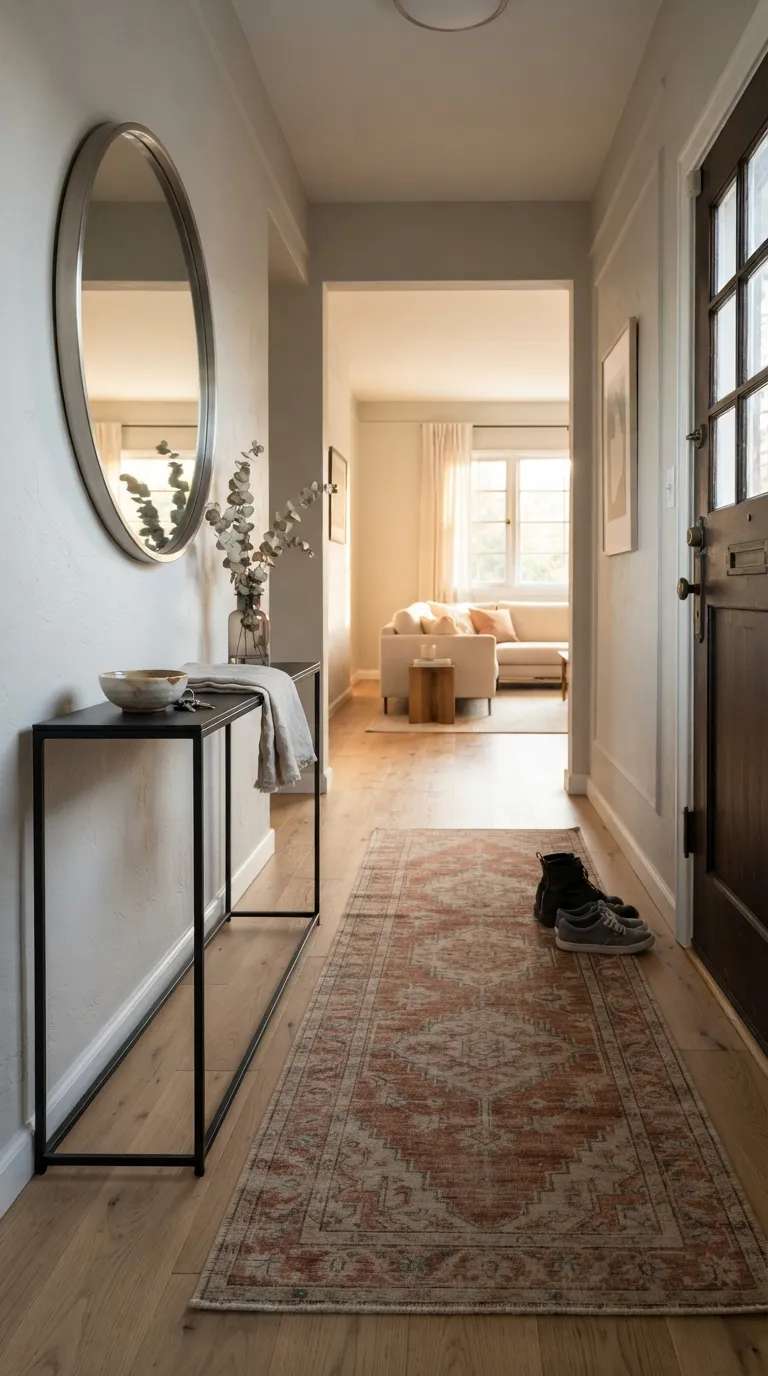
A runner can define an entry when walls or floor space don’t give you much to work with. In an open-plan apartment, it creates a visual path between the front door and living room without adding another piece of furniture. Choose a narrow style that leaves a clear border of floor on both sides.
Pattern helps hide small bits of everyday dust and gives the doorway some personality. A washable low-pile runner is a practical choice for an entrance that gets regular foot traffic. When choosing colors, pull one or two shades from your living room so the entry feels connected rather than separated.
Multipurpose Storage Ottoman
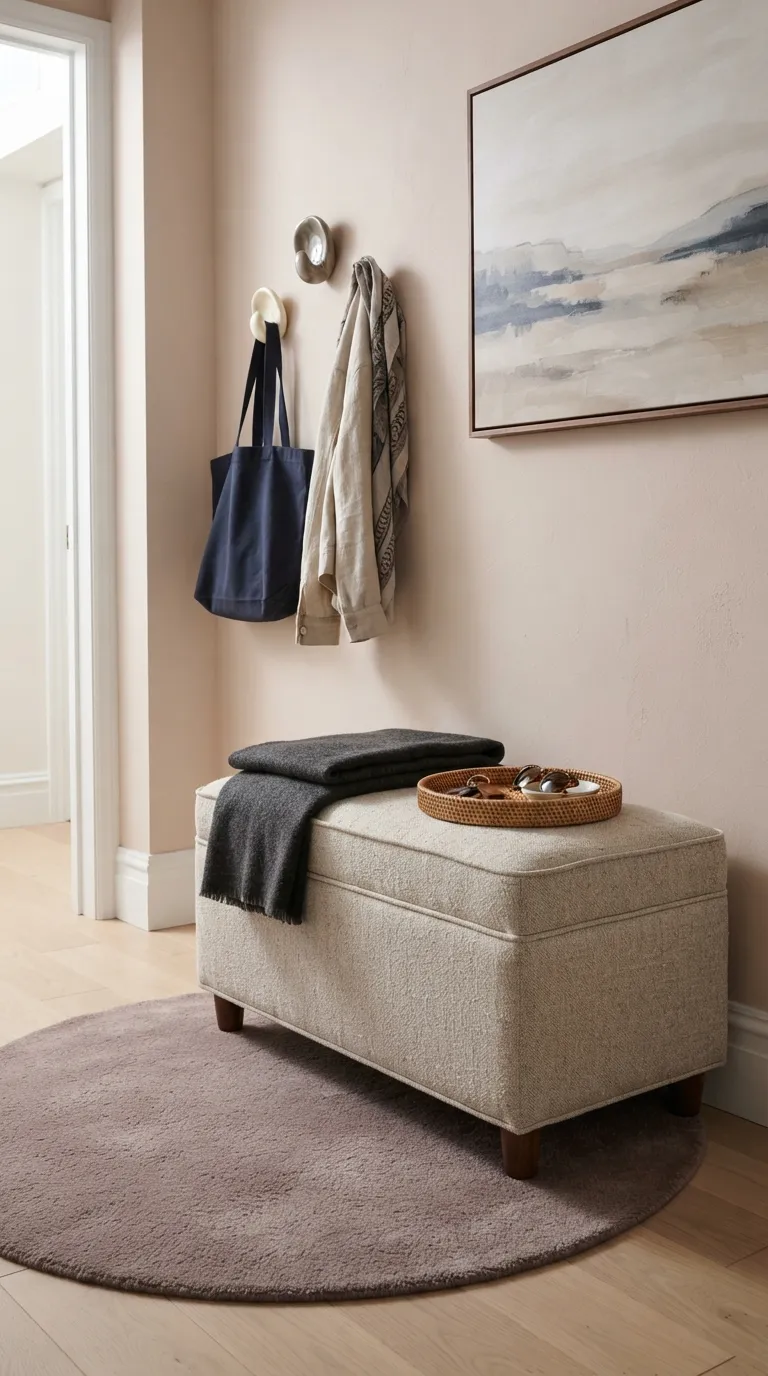
A storage ottoman can earn its floor space by doing two jobs. It gives you a comfortable place to sit and provides a hidden compartment for shoes, bags, or seasonal accessories. Its soft shape also keeps a compact entry from feeling too rigid.
Choose one with a hinged lid that’s easy to lift without moving the entire piece. Keep the top mostly clear so it can function as a temporary landing spot when your hands are full. For a small apartment connected directly to the living room, a neutral upholstered ottoman can also echo nearby seating and make the two zones feel visually related.
Built-In Wall Niches
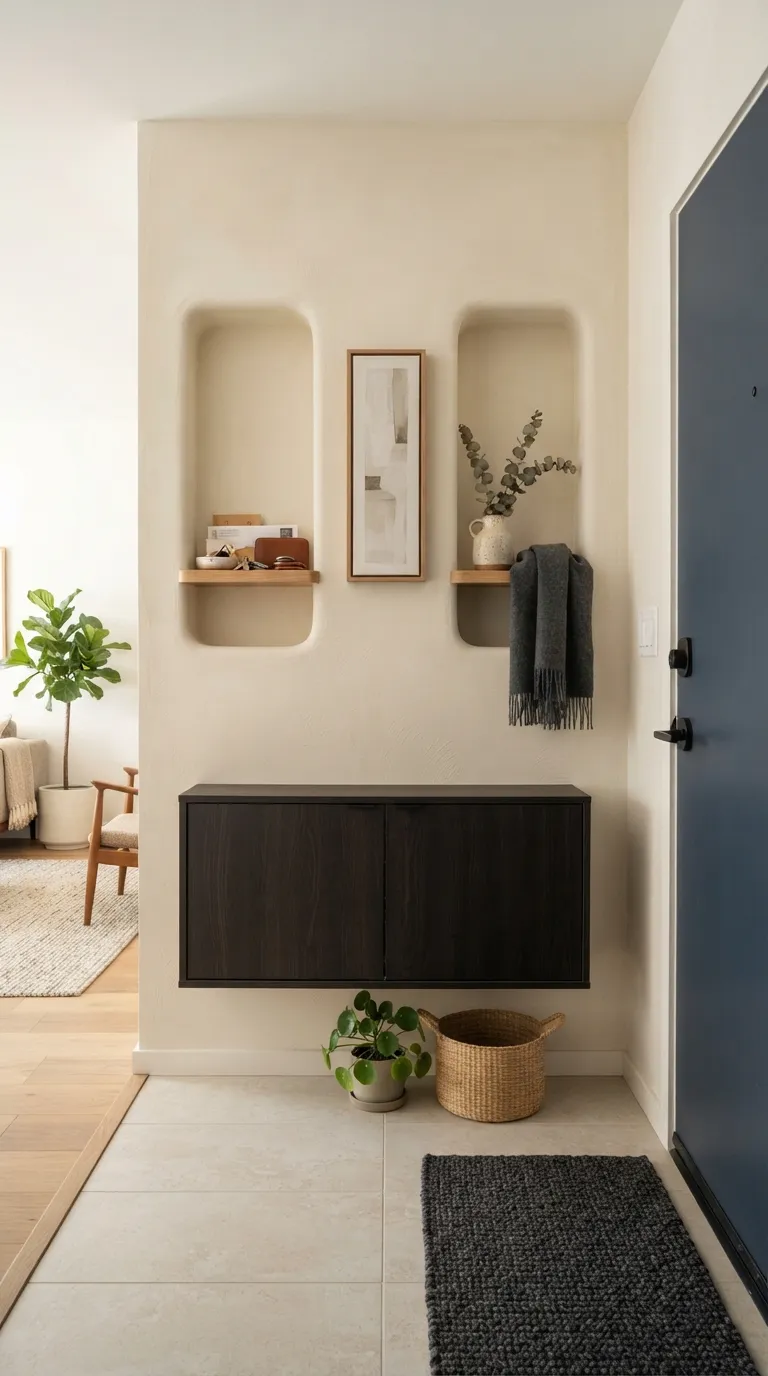
Wall niches make use of space that would otherwise sit empty. If your apartment already has recessed areas near the doorway, add slim shelves instead of bringing in another cabinet. One shelf can handle keys and mail, while a second can hold a small decorative piece.
For a renovation, recessed storage can be planned around the wall structure and available depth. For a simpler setup, shallow wall boxes can create a similar visual effect without changing the wall itself. Keep the niches lightly styled so they don’t become another place for loose items to collect.
Curved Entry Table
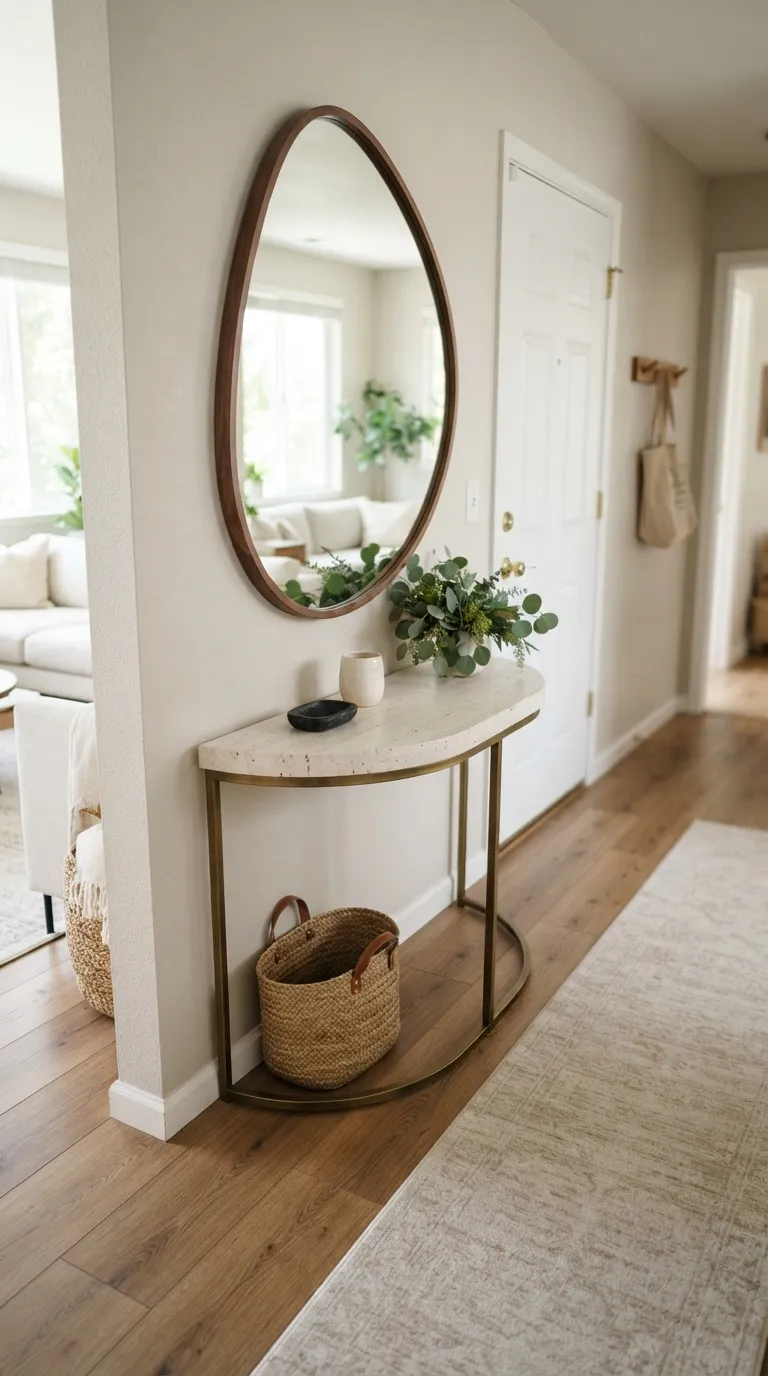
Curved furniture can make a tight walkway easier to use. A half-moon table gives you a useful surface while its rounded edge avoids the sharp corners found on many rectangular consoles. This shape works well when the entry sits close to a door swing or a narrow passage.
Keep the tabletop restrained with one tray and one decorative object. The open space beneath the table can hold a small basket, but leave enough floor visible to preserve the light feel. When the entry connects to the living room, repeat the table’s material in a nearby frame, lamp base, or side table for a cohesive look.
Peg Rail Gallery
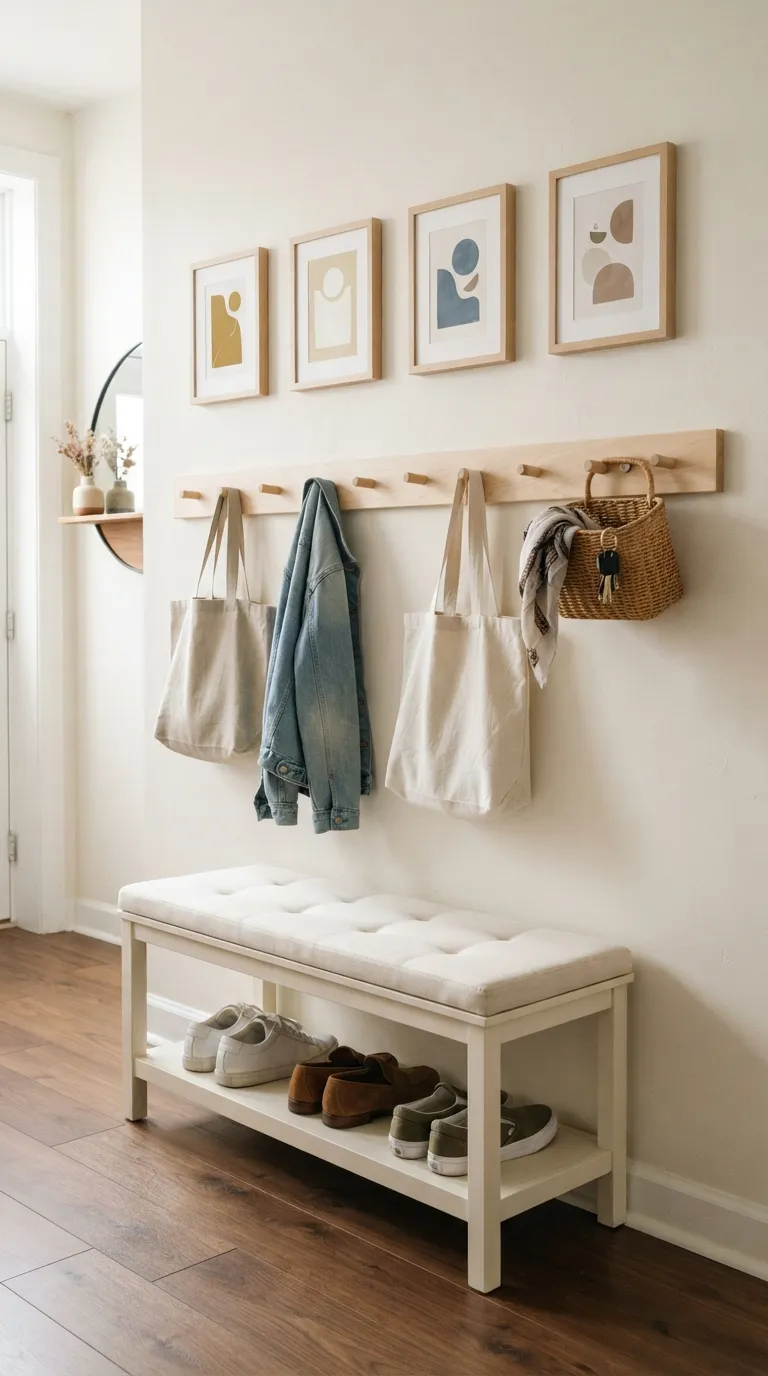
A peg rail can be more than a place for coats. Pairing it with a few small art prints creates a useful wall that also feels personal. The key is to keep the arrangement structured, with the artwork grouped above and the storage items kept below.
Choose pegs with enough spacing for bags and jackets to hang without touching each other. A slim bench underneath adds a place to sit and keeps the storage zone grounded. This approach suits apartments where the entrance is visible from the living room because the wall works as both functional storage and simple decor.
Open Basket Storage
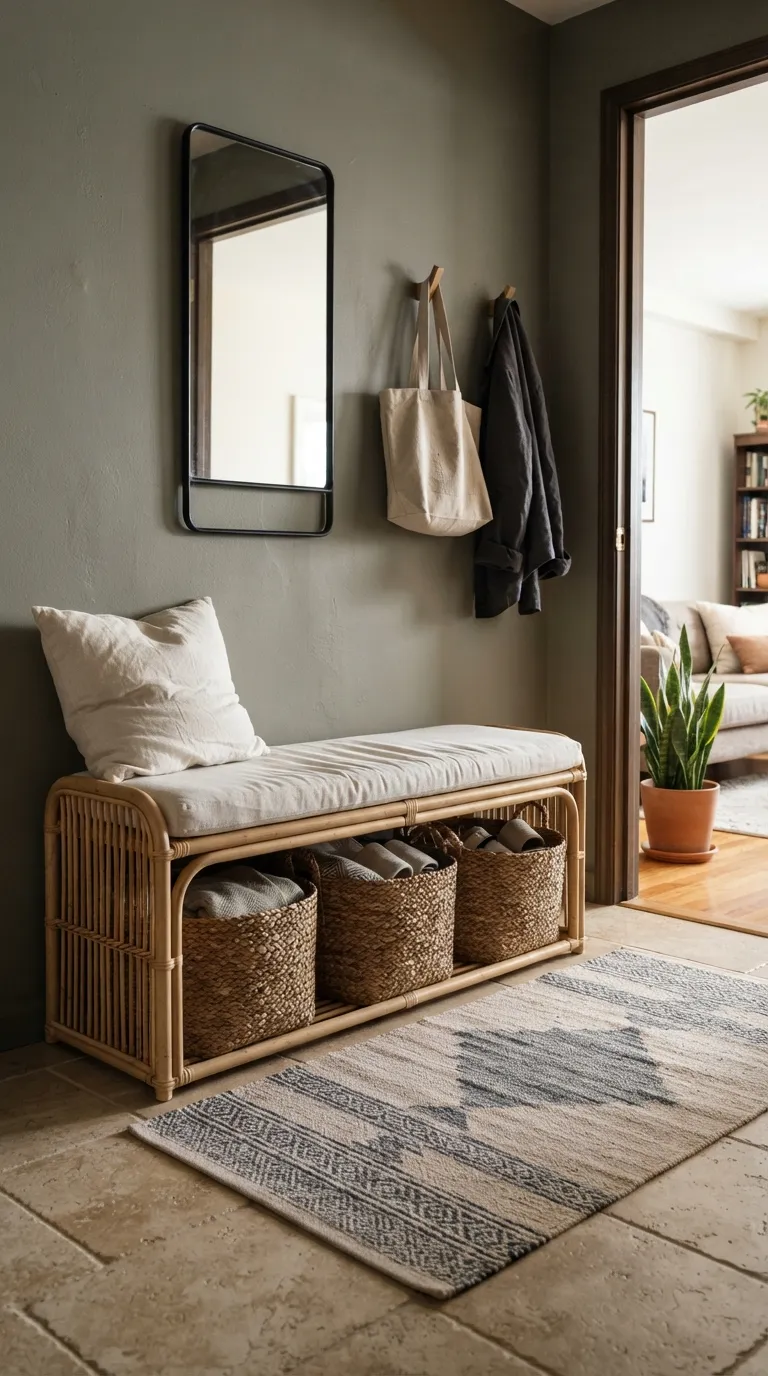
Open baskets make sense when you need quick access to everyday entryway items. Slide one beneath a bench for shoes, another for scarves, and a third for reusable bags or small accessories. The categories give loose belongings a clear place without requiring a large cabinet.
Choose baskets that fit fully beneath the furniture so the walking path stays open. Matching shapes create a calmer look, while natural fibers add warmth to hard flooring and painted walls. For small apartment entryway ideas, this setup is especially useful when you want storage that looks decorative rather than strictly functional.
Mirrored Storage Door
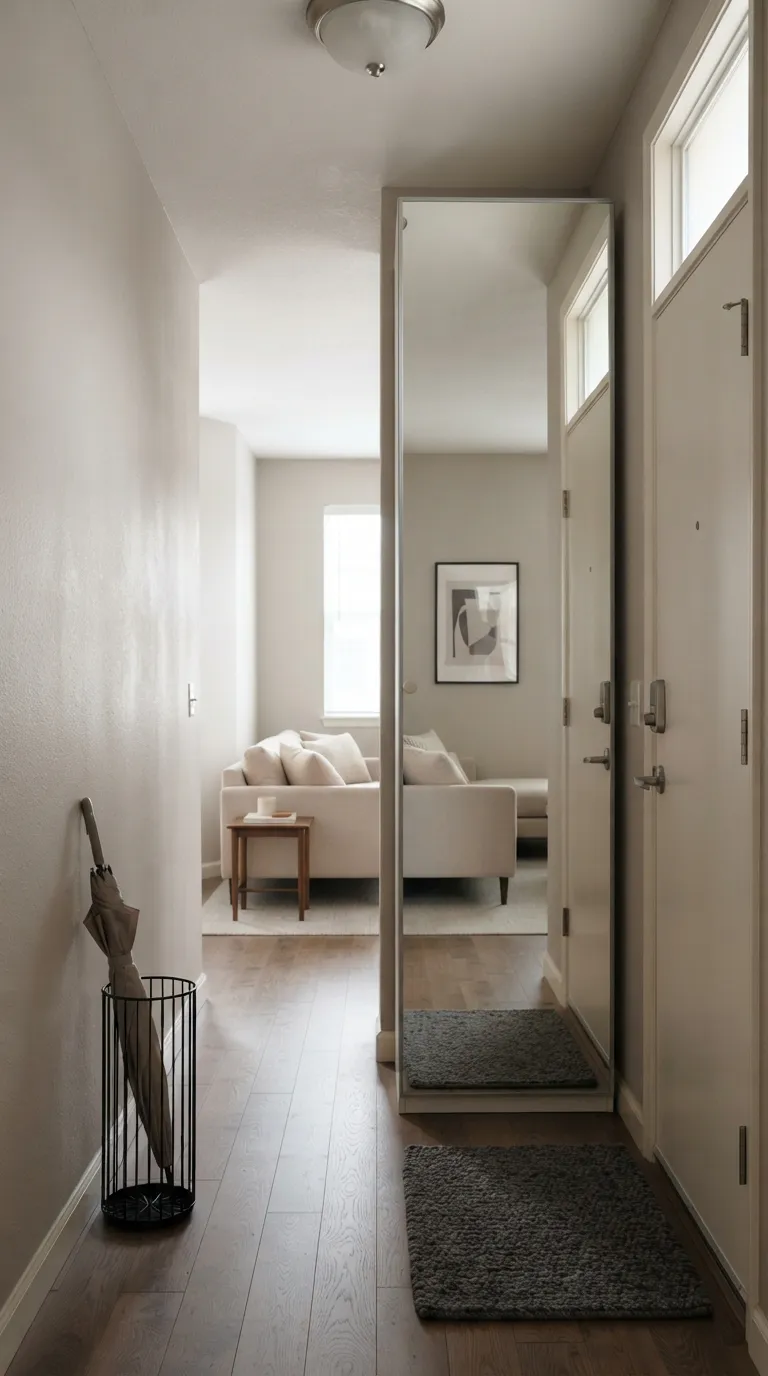
A mirrored storage door can solve two entryway problems at once. Behind the reflective surface, you can store coats, shoes, bags, or cleaning supplies, while the mirror makes the narrow area feel visually more open. This works best when the cabinet sits where a traditional full-length mirror would normally go.
Keep the cabinet exterior simple so the reflection doesn’t compete with lots of nearby decor. Check the door swing and surrounding clearance before choosing the size, especially in a tight hallway. If the entry leads directly into your living room, the mirror can also reflect furniture and daylight from that larger space.
Small Artful Landing
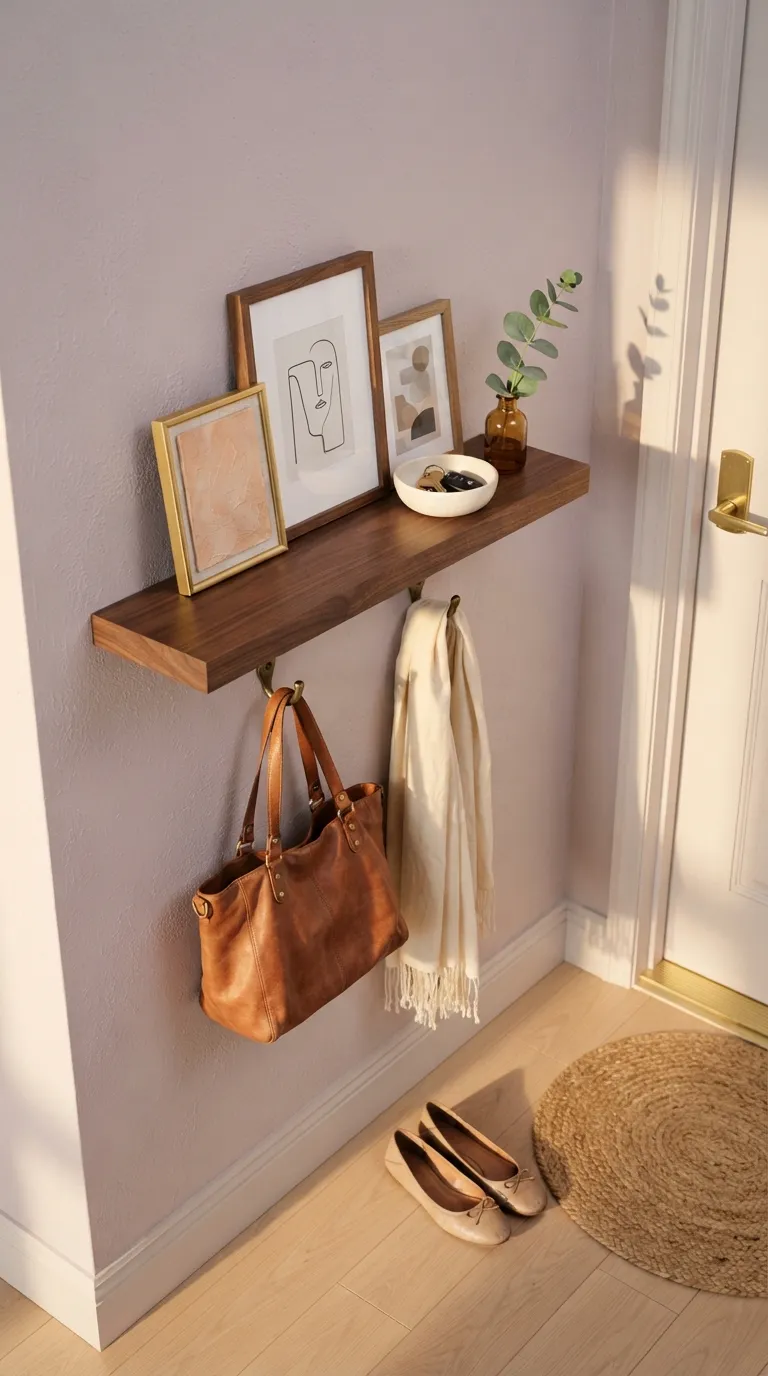
A tiny landing zone doesn’t need much furniture to feel finished. A floating ledge gives you a spot for keys and a few decorative pieces, while hooks below handle the items you grab on the way out. Small framed art adds personality without consuming valuable floor area.
Keep the display deliberately limited. Three small frames, one catchall, and one little vase can be enough to make a blank wall feel considered. This approach suits renters and homeowners alike because the same basic layout can be adjusted with removable hooks, lightweight frames, or a different ledge finish.
Fold-Down Entry Seat
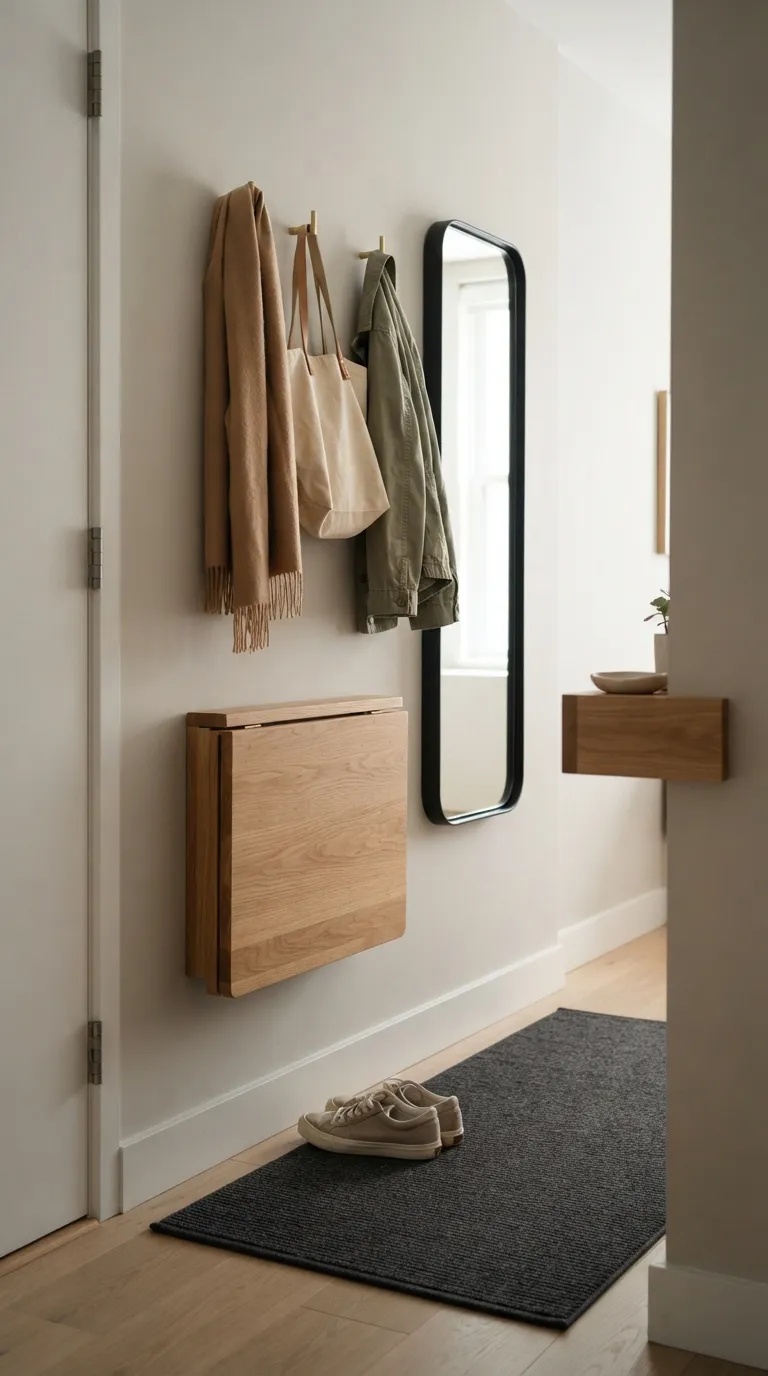
A fold-down seat gives you seating when you need it and open floor space when you don’t. It’s a useful choice for an entry where a permanent bench would make the walkway too tight. Mount the seat securely and check its weight rating before regular use.
Keep the wall above it focused on practical storage. A few hooks can hold the items you use most, while a nearby mirror handles quick outfit checks. When the seat stays folded, the entry can feel almost as open as it did before adding furniture.
Floating Shoe Shelves
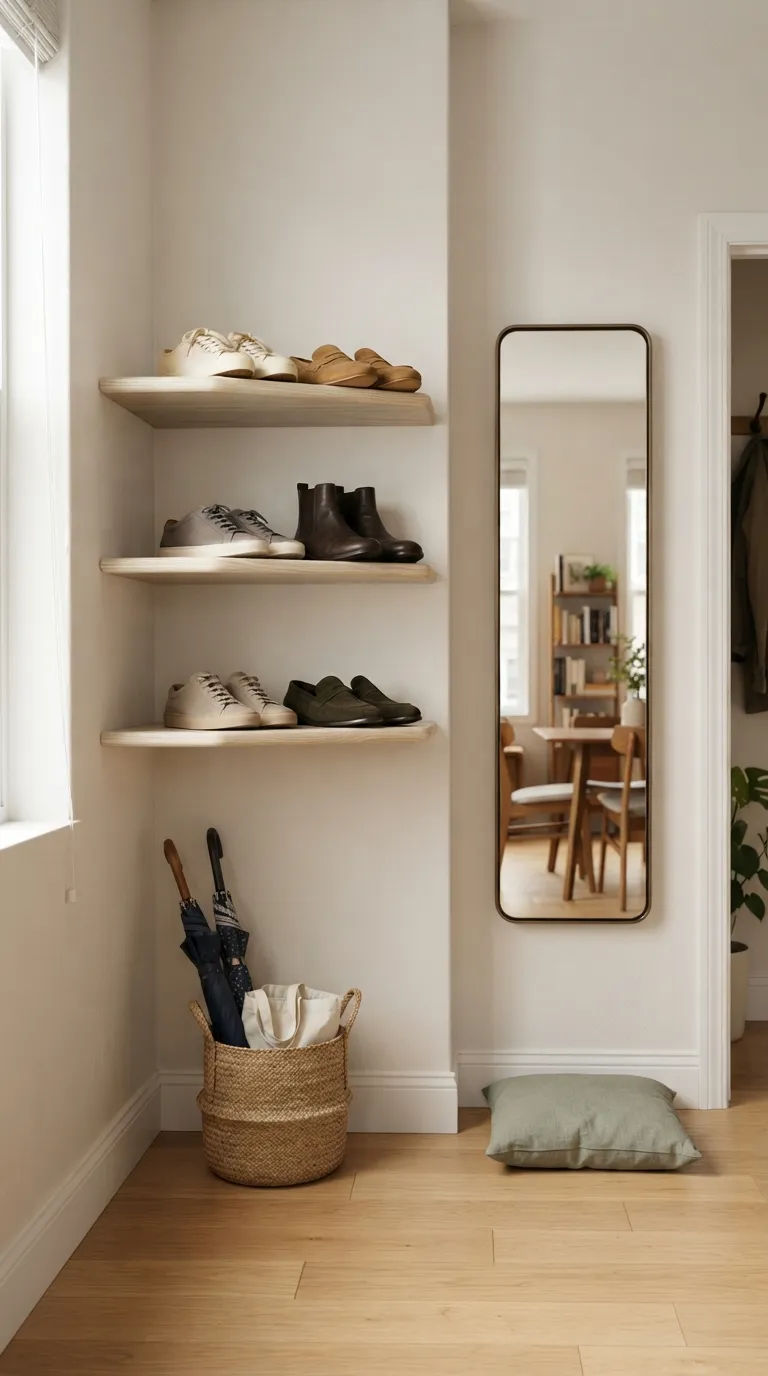
Floating shoe shelves keep footwear off the floor while using very little depth. Install them in a vertical stack if wall space is limited, leaving enough room between shelves for the shoes you actually wear. This can work better than a floor rack when the entry is also a passage to the living room.
Use the shelves for a small rotation rather than your entire shoe collection. Store seasonal or rarely worn pairs elsewhere to keep the entry easy to use. A basket below can hold umbrellas or reusable bags, giving the wall another practical job without adding a bulky cabinet.
Statement Door Color
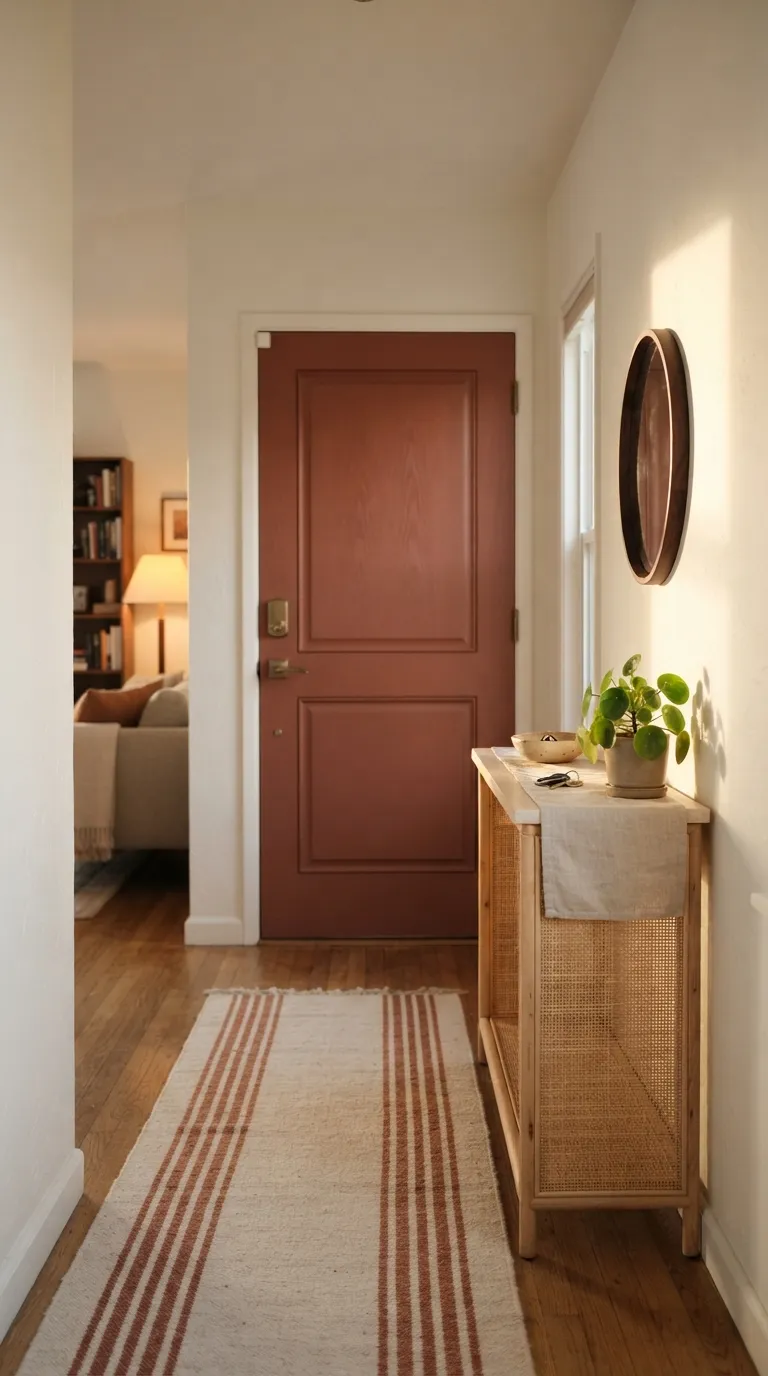
A small entry doesn’t need lots of decor to have personality. A painted front door can become the main visual feature while the rest of the space stays simple. Muted terracotta, olive, navy, or deep brown can add depth without requiring extra furniture.
Keep the surrounding pieces quiet so the door has room to stand out. Repeat one small color detail in the runner, artwork, or nearby living room accessories to connect the spaces. Before painting, check your lease rules if you’re renting and test a small area first to see how the color looks under your home’s actual light.
Glass Catchall Station
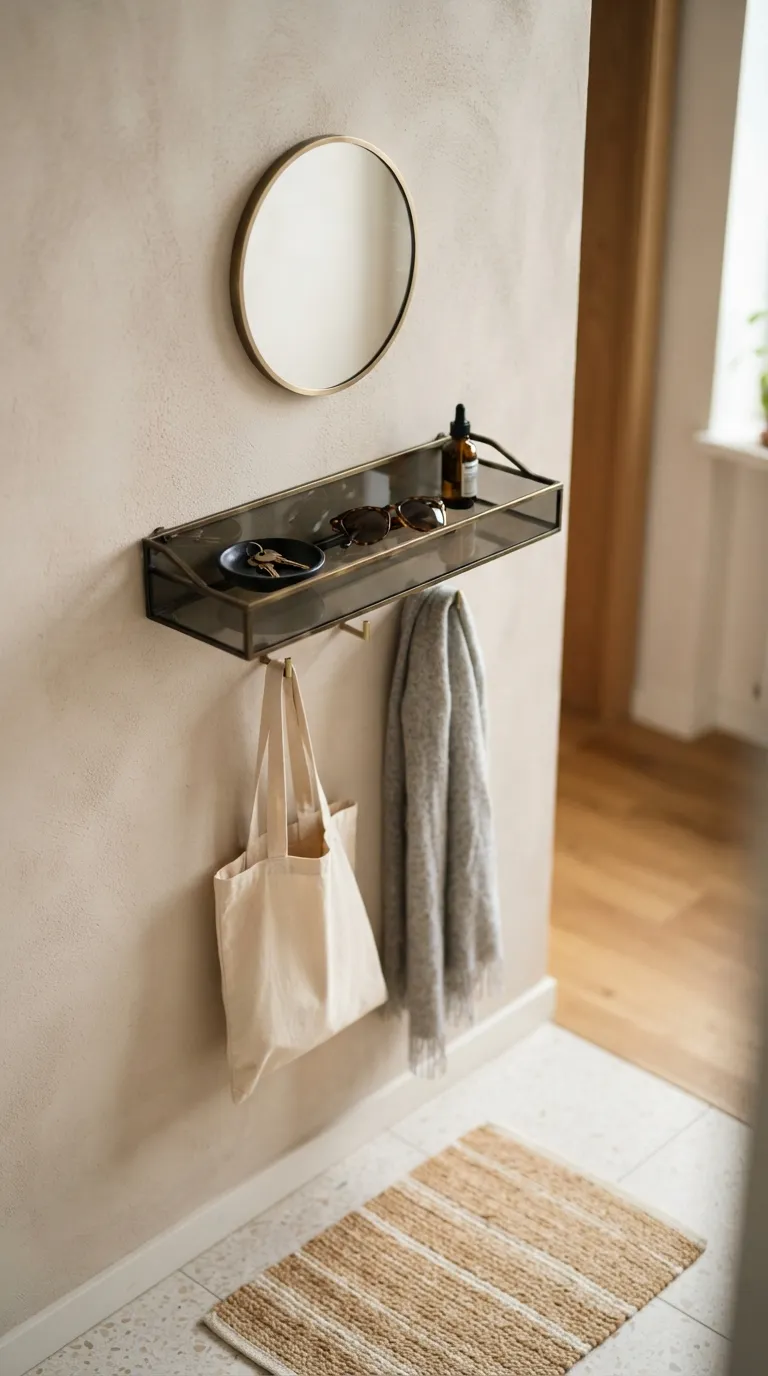
A dedicated catchall station stops tiny objects from migrating around your home. Keys, sunglasses, and loose change can go straight into one small tray instead of landing on the kitchen counter or living room table. A wall shelf keeps the system off the floor and requires almost no room.
Glass or acrylic can work well when you want storage that feels visually light. Keep heavier belongings elsewhere and reserve the shelf for small daily items. If your entry is visible from the living room, choose a tray and shelf finish that echoes nearby metals or wood for a more connected look.
Layered Wall Hooks
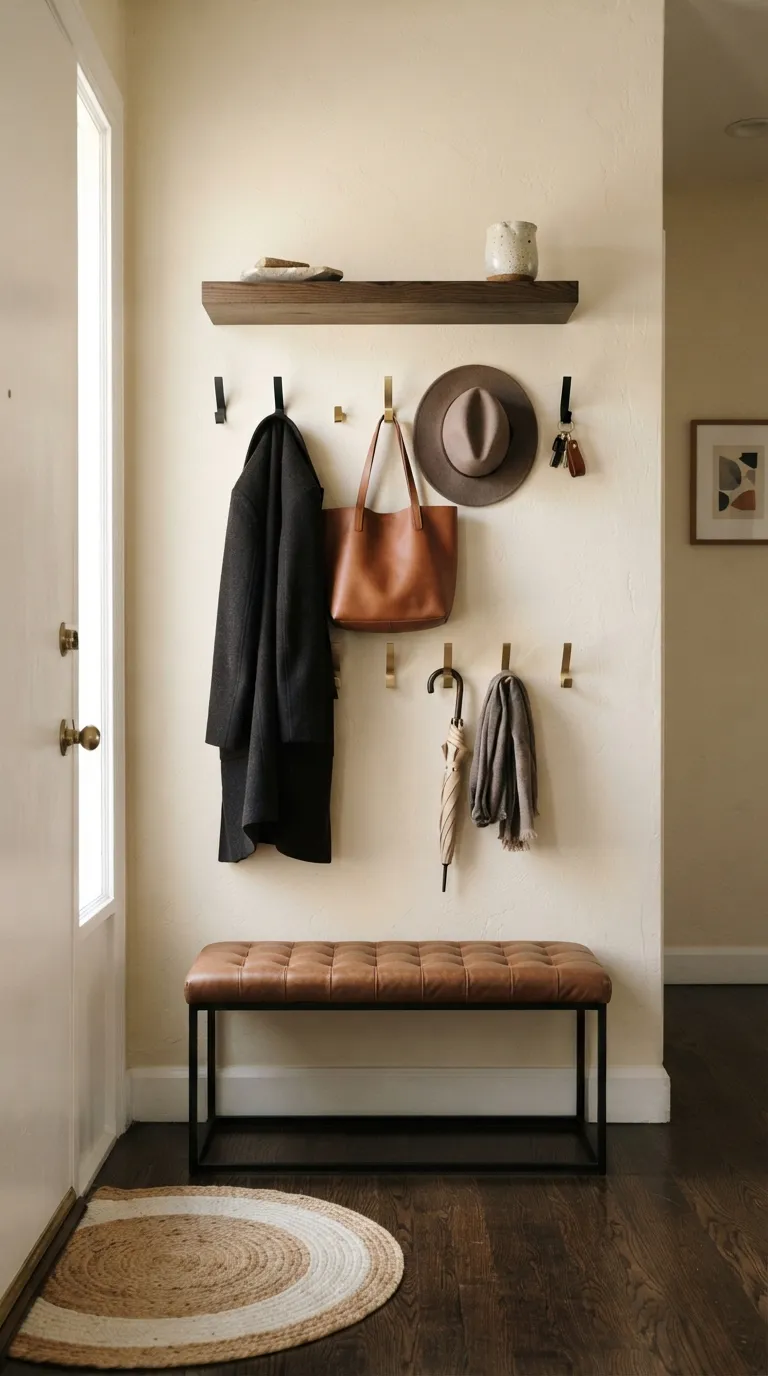
Hooks don’t need to sit in one straight line. Staggering them vertically lets you give different belongings their own space while making better use of a narrow wall. Place higher hooks for adult coats and bags, with lower ones for lightweight items that need easier access.
Don’t fill every hook just because it’s available. A little empty wall space keeps the setup from looking overloaded, especially when the entry opens directly into the living room. Add one slim shelf above the hooks for a tray or small decorative piece, and you’ve got a compact storage wall with several useful functions.
Hidden Entry Curtain
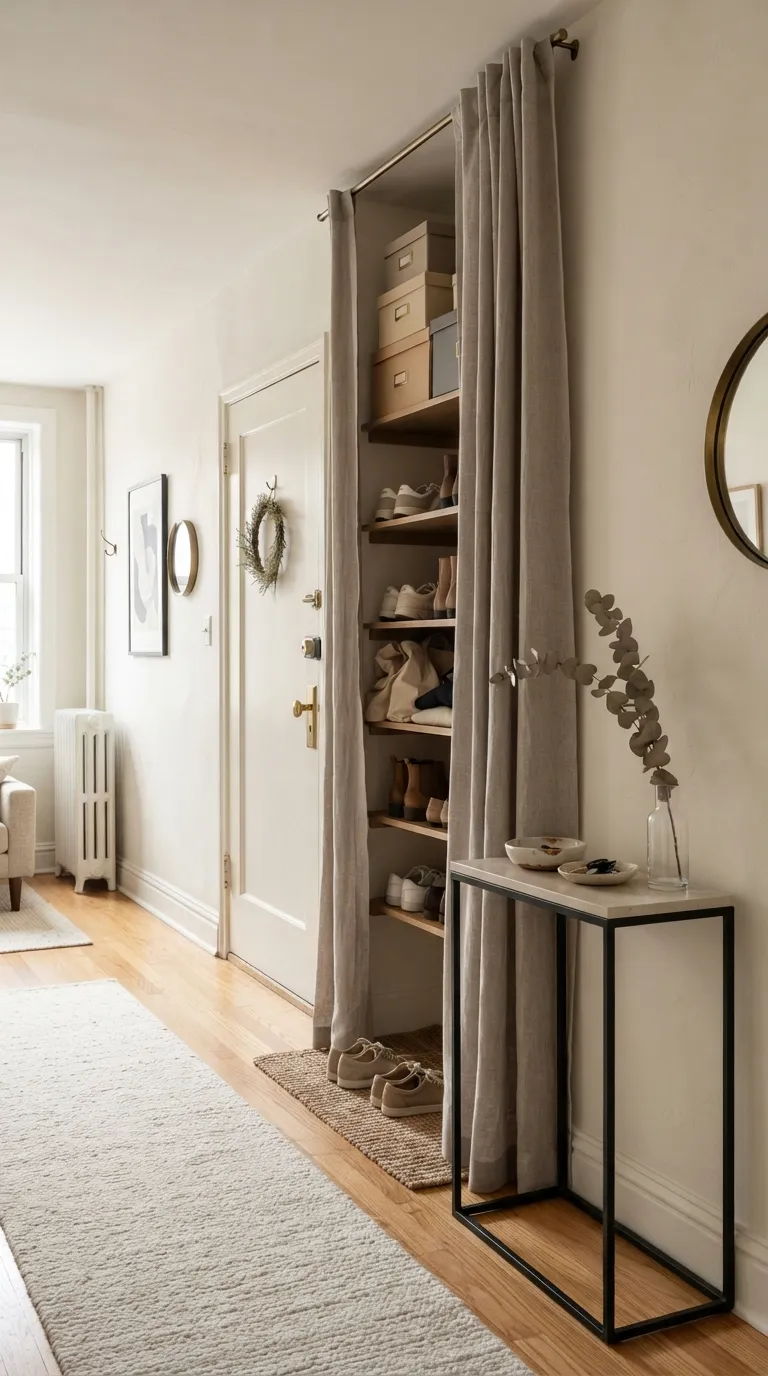
A curtain can hide storage when a cabinet would feel too heavy. Use a shallow alcove for shoes, bags, boxes, or seasonal items, then close the curtain when you want the entry to look clean. Linen adds softness without taking up meaningful floor space.
Choose a curtain that reaches the floor for a tidy visual line. A ceiling-mounted track can also make the storage area feel more intentional than a basic tension rod. This idea suits apartments with an awkward recessed nook that needs a purpose but doesn’t have enough depth for standard cabinetry.
Living Room Divider
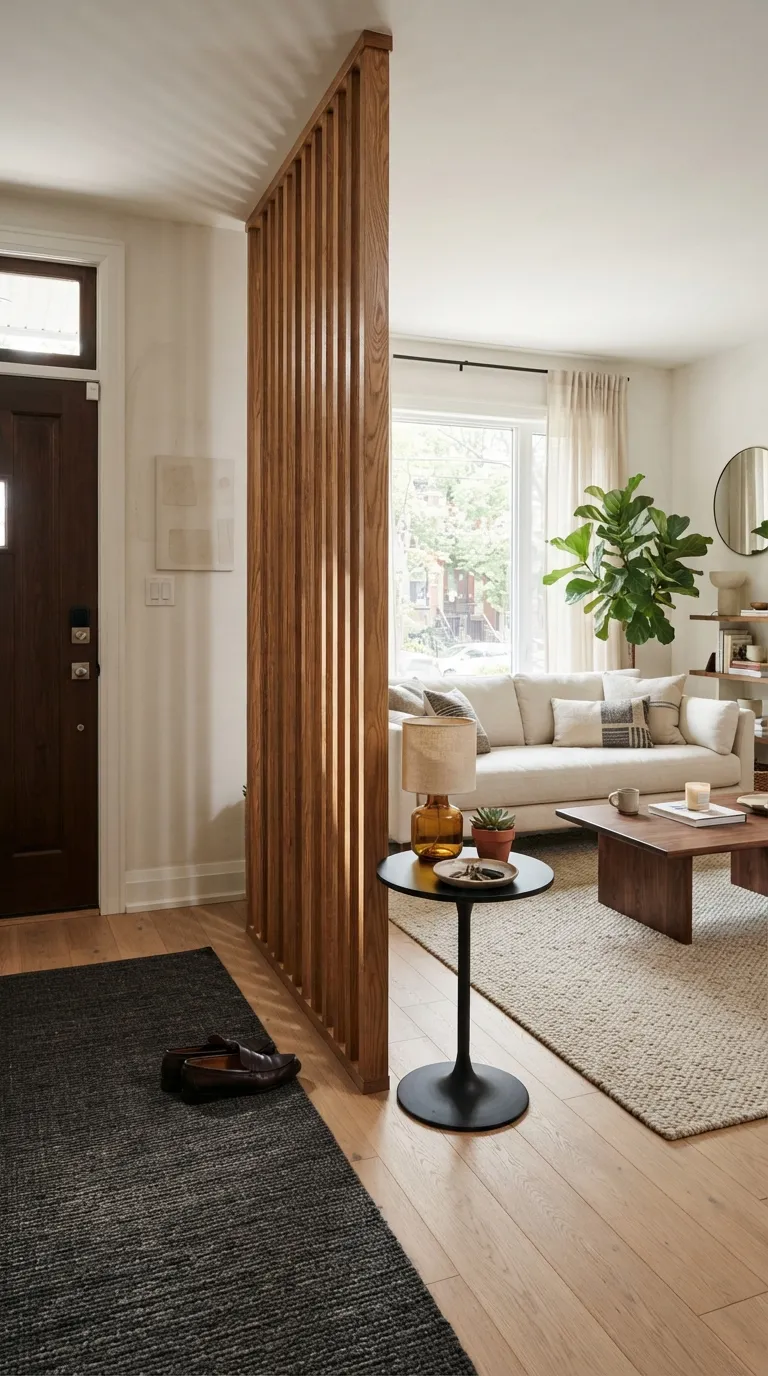
An open-slat divider can give an entry its own visual zone without closing off a small apartment. The gaps between the slats keep light moving through the room, while the vertical lines create a clear boundary between the doorway and living area. This is useful when there’s no hallway at all.
Keep the divider narrow enough to preserve an easy walking route. Open shelving can work in a similar spot, but slats usually create less visual clutter because they don’t invite you to fill every surface. Repeat the wood tone in your coffee table or side table so the entry and living room feel like parts of one room.
Soft Minimal Entry
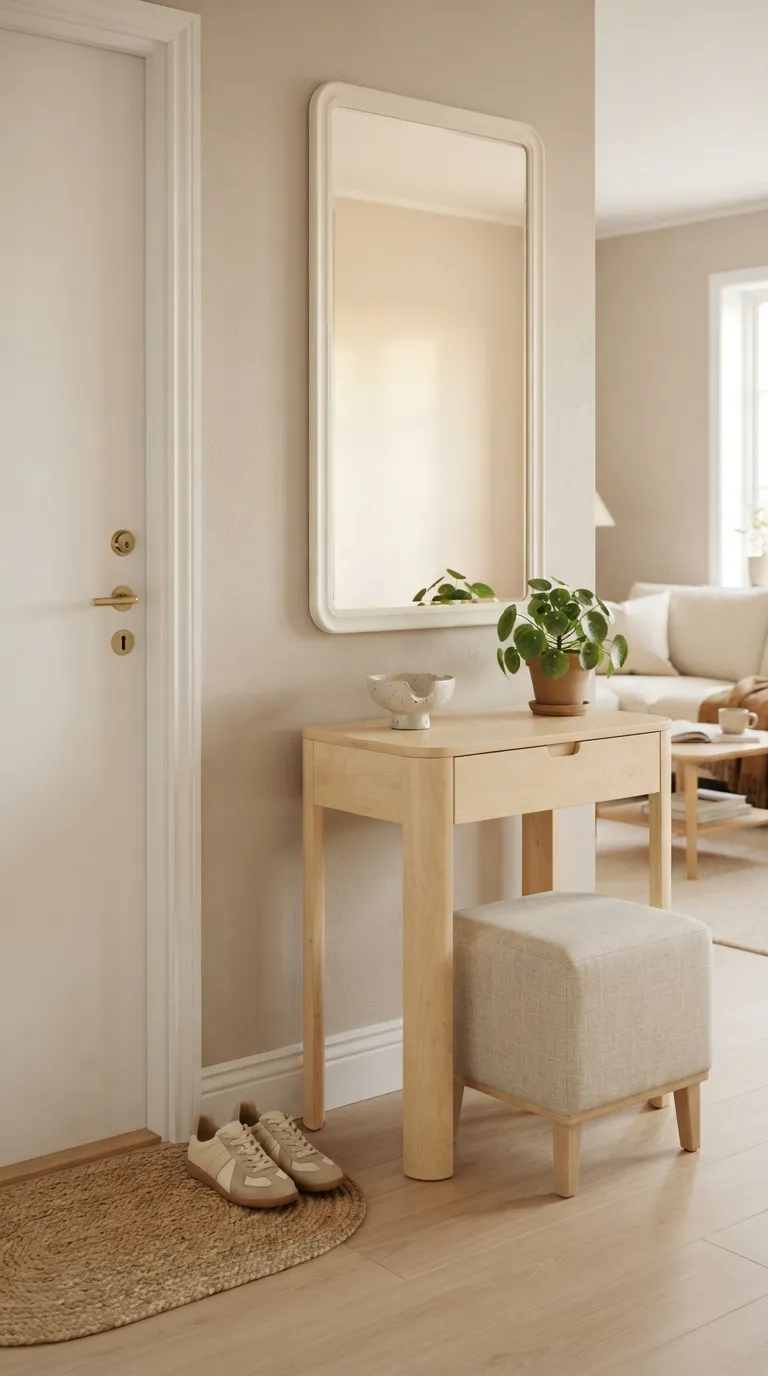
Sometimes the best entryway is the one with less in it. A slim console, mirror, small seat, and simple mat can cover the basics without filling every inch of the doorway. This approach is especially useful when your entry is visible from several parts of the apartment.
Start by keeping only what you use near the door each day. Give keys, shoes, bags, and outerwear fixed homes, then move less-used items elsewhere. A restrained setup makes cleaning easier and leaves your living room view open, which can make the entire apartment feel more orderly.
A Welcoming Entry That Works
The best small apartment entryway ideas make everyday routines easier without making the doorway feel packed. Start with the problem that bothers you most, whether that’s shoes, coats, keys, or a lack of seating, then choose one piece that solves it well.
You don’t need a large foyer to create a polished first impression. A slim console, wall shelf, mirror, bench, hooks, or hidden storage can give a tiny entrance a clear purpose while keeping your living room connected to it. Pick two or three ideas that fit your actual footprint, keep the floor path open, and let useful storage do most of the work.
Elira Montclair
Elira writes about timeless home decor, kitchen styling, and practical interior ideas. Her work blends warm, inviting aesthetics with simple decorating tips that make everyday spaces feel beautiful and comfortable.