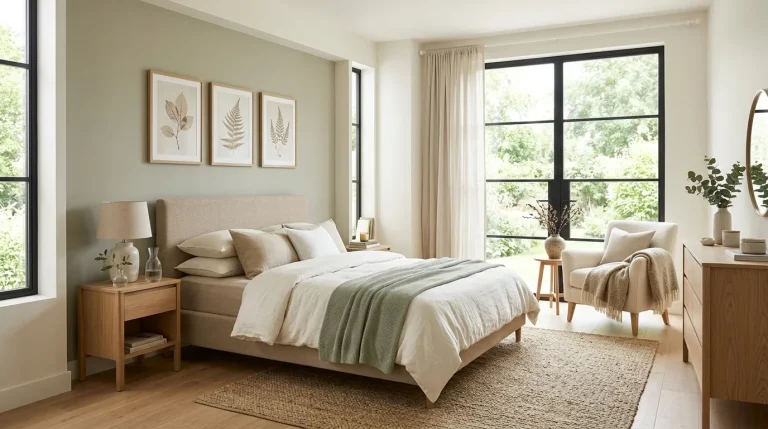
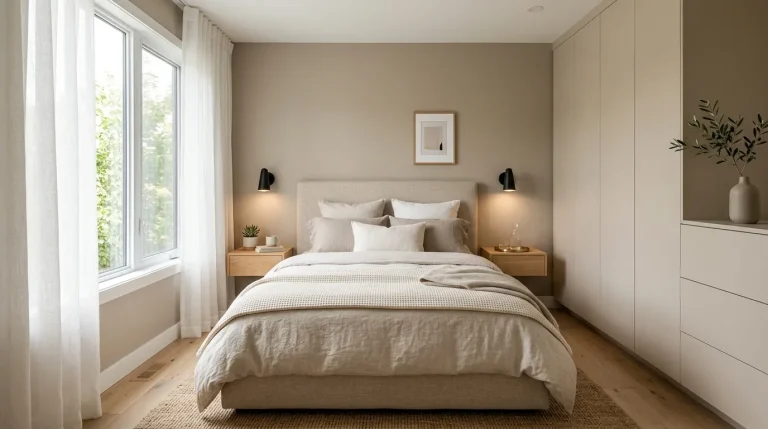
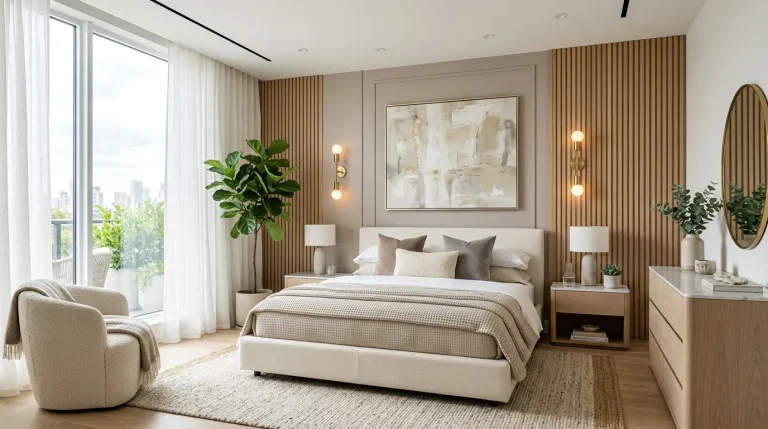
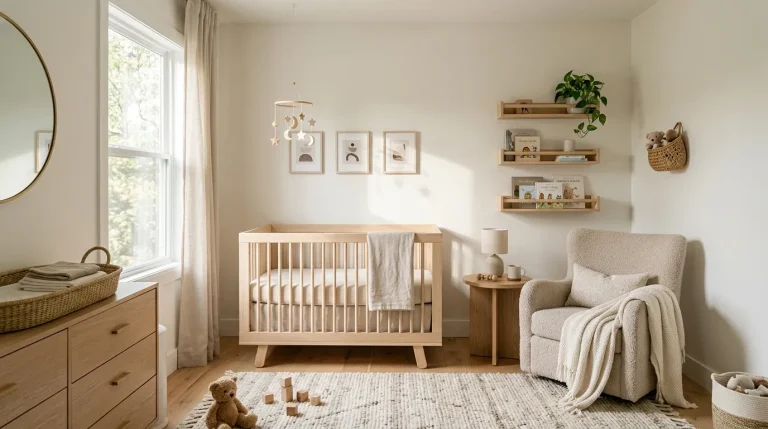
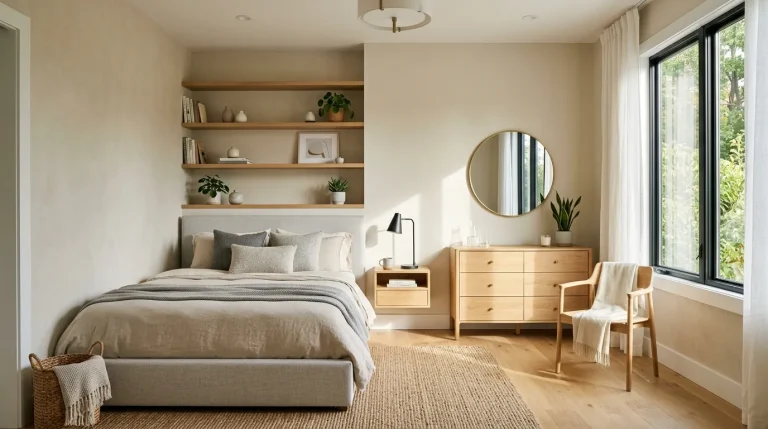
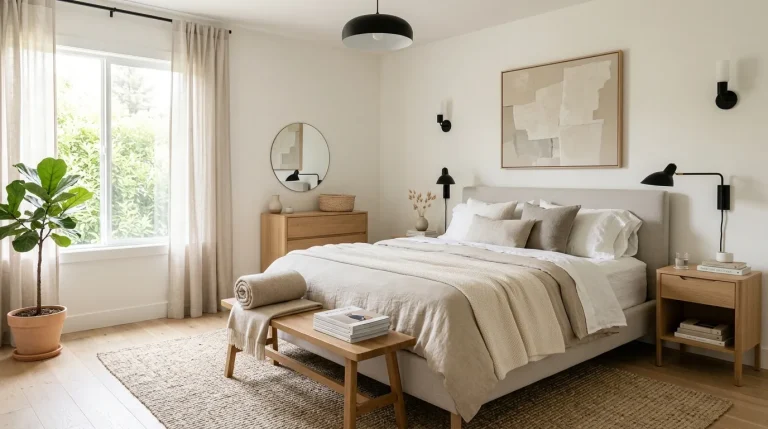
Scandinavian bedroom ideas: 25 simple ways to create a stress-free, clutter-free calm space

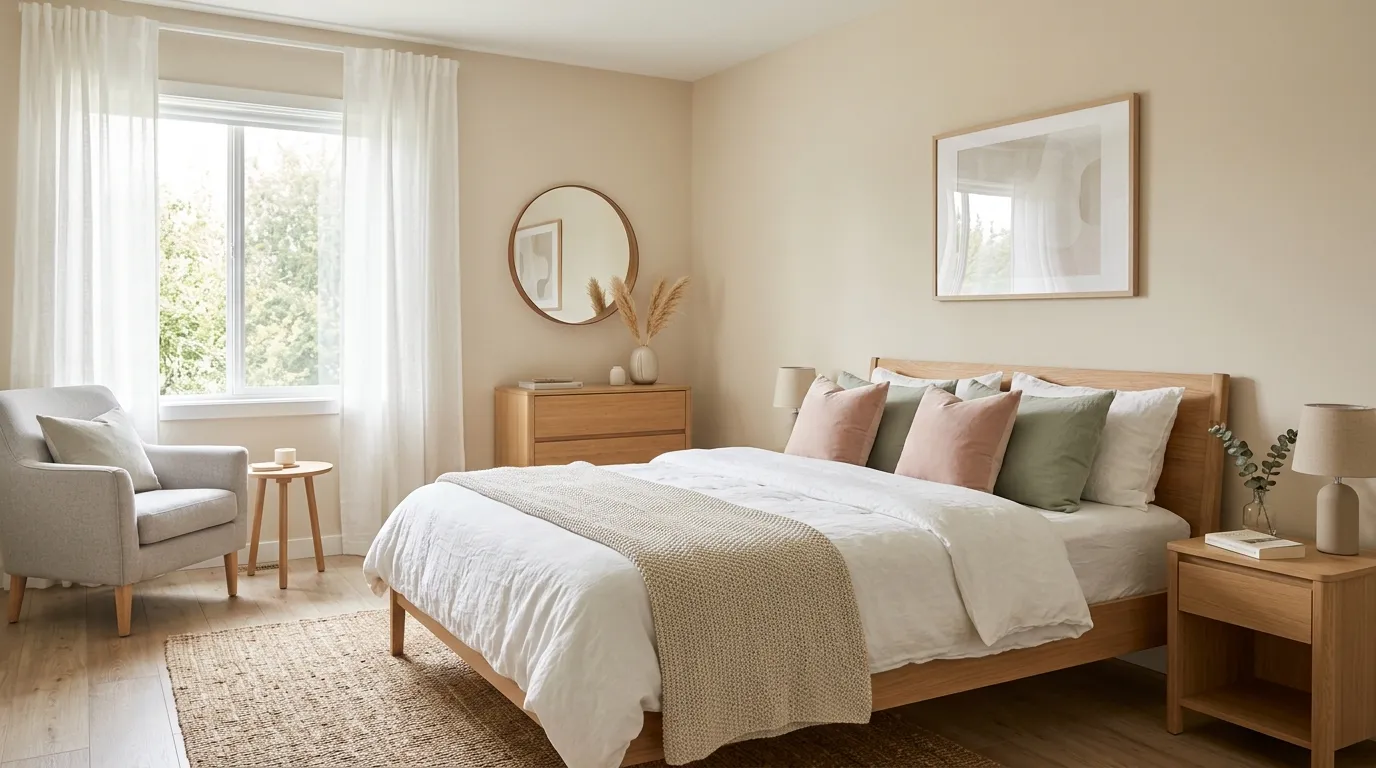
Introduction:
Ever walked into a bedroom and instantly felt calm… like your stress just melted away? That’s the power of intentional design. In this guide to scandinavian bedroom ideas, you’ll discover how simple, thoughtful styling can completely transform your space into a peaceful, clutter-free retreat that feels both beautiful and livable.
The focus here is not perfection, but balance—soft tones, natural textures, and calm layouts that make everyday life feel lighter. In my experience, even small changes like neutral bedding or better lighting can shift the entire mood of a room. I’ve noticed many people feel more relaxed and focused when their bedroom is visually clean and softly styled.
This article will inspire you with easy, real-life ideas you can actually use—no complicated decor, just calm, modern, Pinterest-worthy transformations.
1.Soft Neutral Layers
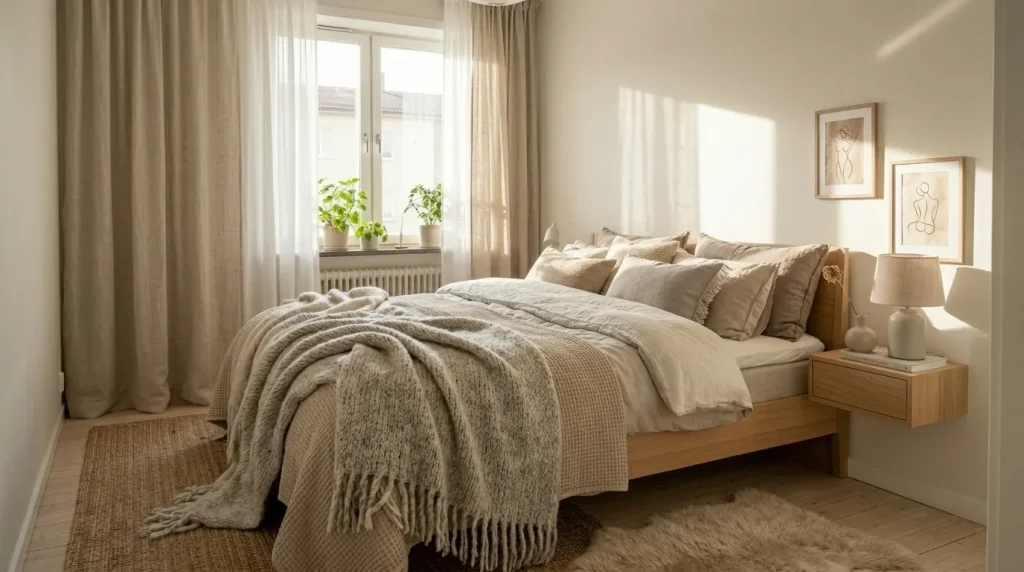
A soft neutral bedroom instantly changes how your space feels the moment you walk in. This idea focuses on layering beige, ivory, and warm white tones to build a calm and balanced atmosphere without visual noise. Light linen bedding, textured throws, and soft cushions create depth while keeping everything minimal. In real homes, this approach helps reduce visual stress and makes even small rooms feel more open. I’ve noticed that when people switch to simple neutral layering, their bedroom naturally becomes more relaxing, easier to maintain, and visually aligned with a modern Scandinavian-inspired aesthetic that always feels timeless and clean.
One of the most effective ways to elevate a bedroom is by focusing on soft lighting and texture balance. Warm natural light combined with sheer curtains creates an airy feeling that instantly improves mood. When paired with neutral tones, the entire room feels cohesive and intentionally designed rather than decorated randomly. This approach is often seen in scandinavian bedroom ideas because it prioritizes simplicity and comfort over excess decor. In many real spaces I’ve seen, removing bold colors and unnecessary items allows the architecture and textures to stand out, making the room feel calm, organized, and effortlessly stylish every day.
2.Minimal Wood Accents
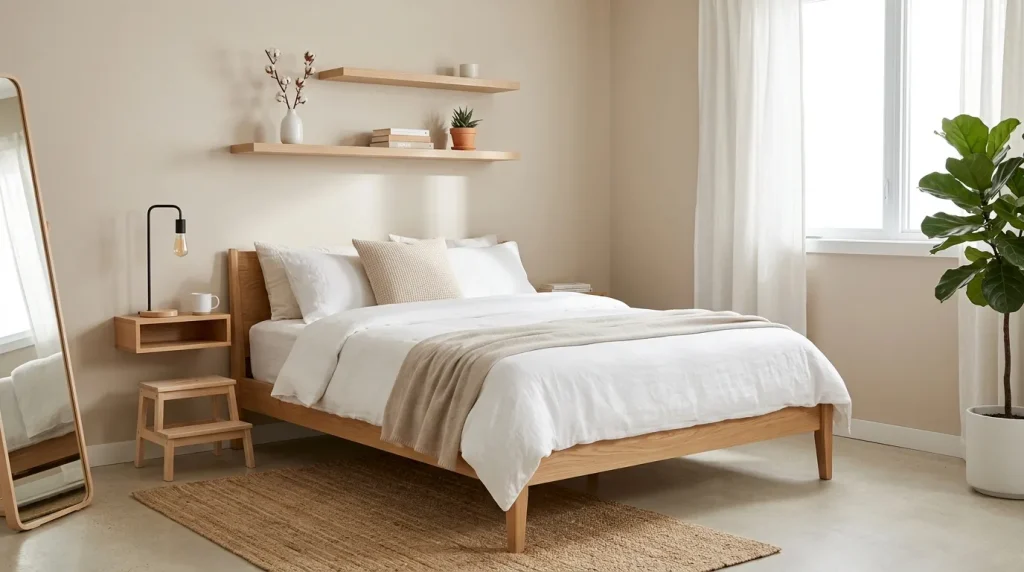
Natural wood details can completely transform a bedroom by adding warmth without overwhelming the space. This idea focuses on keeping furniture simple while introducing light oak or ash tones through bed frames, shelves, or side tables. The contrast between soft textiles and wooden elements creates a balanced and grounded look. In real interiors, this combination prevents the room from feeling too cold or empty. I’ve seen this work especially well in smaller bedrooms where every design choice matters, helping the space feel intentional, cozy, and visually connected without adding unnecessary decoration or clutter.
Wood accents also play a major role in creating visual stability within a room. When paired with soft fabrics and neutral tones, they naturally draw the eye without overpowering the design. This balance helps maintain a calm and organized environment, especially in bedrooms where rest is the priority. Many designers recommend limiting decorative elements and focusing instead on texture contrast. From my experience, even a single wooden element like a bedside table can anchor the entire room, making it feel more structured, cohesive, and thoughtfully designed while still keeping the overall look light and breathable.
3.Clutter-Free Nightstand
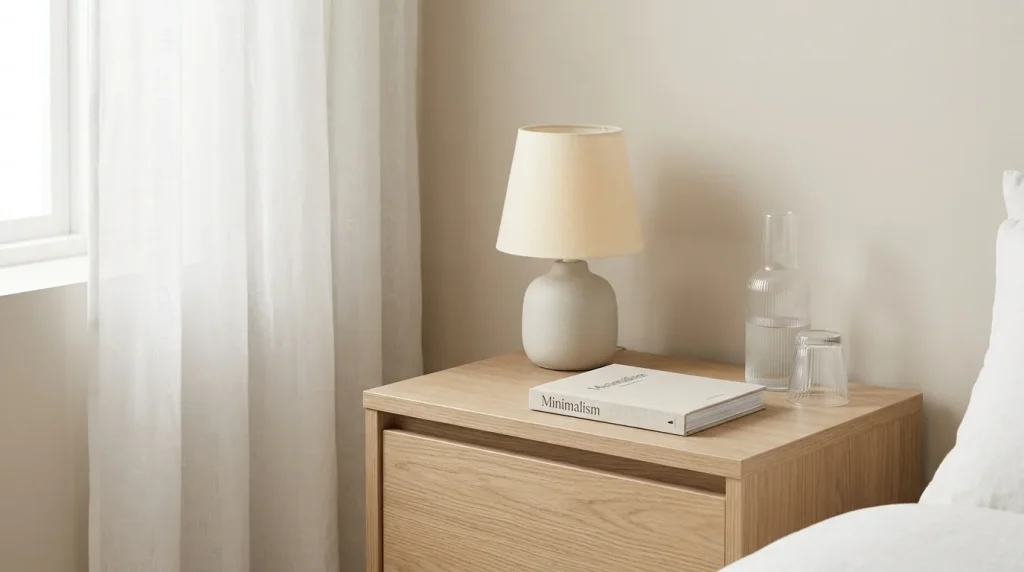
A well-styled nightstand can completely change how peaceful a bedroom feels at the end of the day. This idea focuses on keeping only essential items visible while removing unnecessary clutter that creates visual distraction. A simple lamp, a book, and a small decorative object are often enough to maintain function and beauty. In many homes, I’ve noticed that people feel more relaxed when their bedside area is clean and intentional. This approach supports better sleep habits and makes the entire room feel more organized, especially when combined with soft lighting and neutral surrounding decor for a calming effect.
Keeping surfaces clear is one of the simplest ways to make a bedroom feel more spacious and intentional. A clutter-free approach allows the mind to relax because there is less visual noise competing for attention. Instead of multiple decorative pieces, focusing on one or two meaningful items creates stronger visual impact. Many interior stylists recommend this method for maintaining long-term order without effort. In practice, it becomes easier to clean and maintain the space daily, while also ensuring the bedroom always feels calm, balanced, and visually aligned with modern minimalist living principles.
4.Soft Linen Bedding
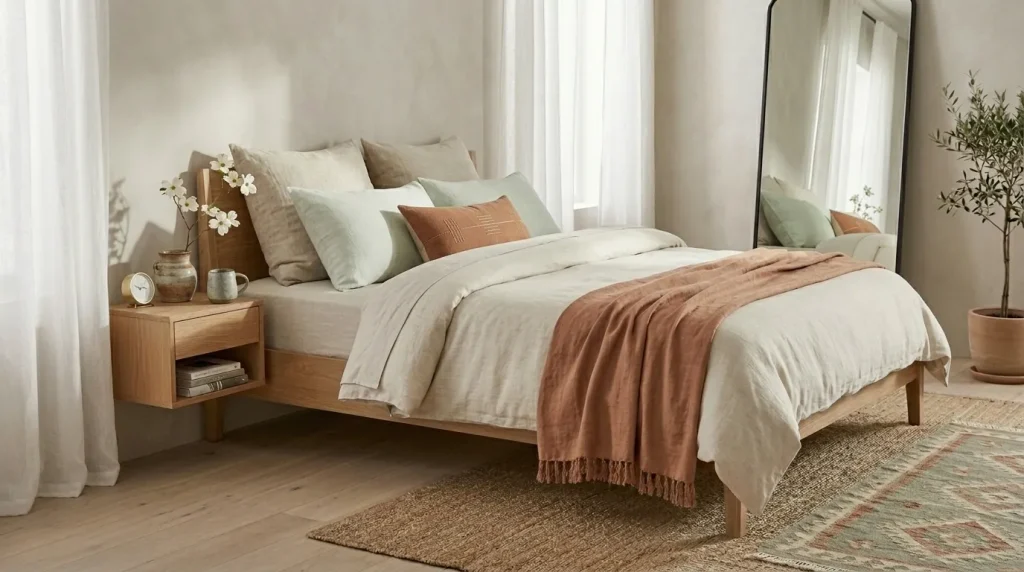
Soft linen bedding is one of the easiest ways to bring calm energy into a bedroom without overthinking the design. The slightly wrinkled texture of linen creates a natural, relaxed look that feels both lived-in and intentionally styled. Neutral shades like beige, cream, and soft grey blend beautifully together, giving the space a cohesive and peaceful vibe. In real homes, this small change often makes the bed the focal point of the room, instantly elevating the overall mood without adding any extra decor or complexity to the space.
What makes this approach so effective is its balance between comfort and simplicity. Linen naturally breathes well and softens over time, making it perfect for everyday use. When paired with minimal furniture and soft lighting, it enhances the sense of calm in the entire room. I’ve noticed that people often sleep better in spaces where the bed feels light, uncluttered, and visually soothing. Designers also recommend sticking to layered neutral tones, as it prevents visual overload while maintaining a warm and welcoming atmosphere that feels effortlessly stylish every single day.
5.Floating Shelf Display
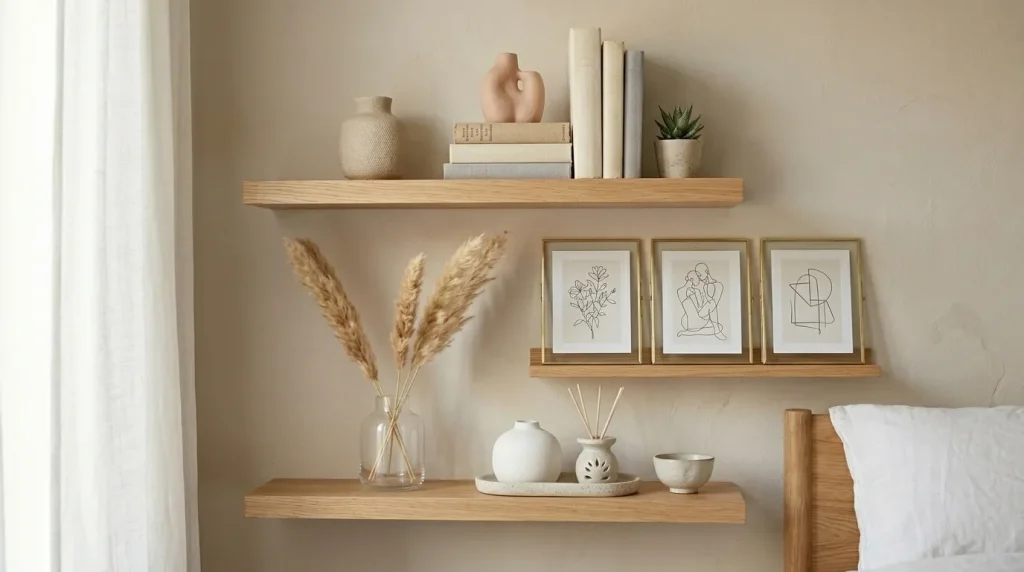
Floating shelves are a smart way to add storage and style without making a bedroom feel crowded. They keep the floor area open, which is especially helpful in smaller rooms where space matters. By using simple wooden or matte white shelves, the wall becomes a subtle design feature instead of a blank surface. In many interiors I’ve seen, this approach helps maintain order while still allowing personality through carefully chosen decor pieces like books, ceramics, or soft natural elements placed with intention rather than excess decoration.
The key to making floating shelves work is restraint and balance. Instead of filling them completely, leaving empty space between objects creates a more breathable and modern look. This design method is often used in minimalist interiors because it avoids visual clutter while still feeling styled. Soft neutral tones and organic materials work best here, especially when paired with warm lighting. The result is a calm, organized wall display that feels functional yet artistic, helping the bedroom stay visually light while still offering practical storage and subtle decorative interest.
6.Warm Ambient Glow
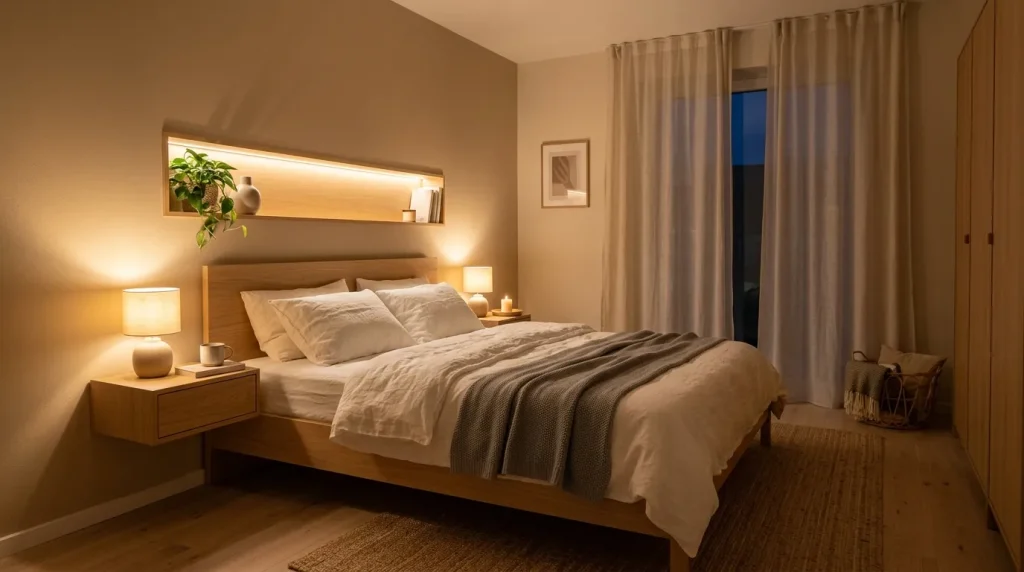
Warm ambient lighting can completely change the emotional feel of a bedroom, especially in the evening. Instead of relying on harsh overhead lights, this idea focuses on soft lamps, indirect lighting, or warm-toned bulbs that gently illuminate the space. The glow creates a cozy and peaceful atmosphere that naturally signals the body to relax. In real homes, this shift in lighting often makes the room feel more intimate and calming, especially when combined with neutral tones and soft textures that reflect light in a subtle and soothing way.
Lighting plays a major role in how a space is experienced, and warm tones are especially effective in creating comfort. When light is diffused across walls and fabrics, it removes sharp contrasts and adds depth to the room. Many interior designers recommend layering multiple light sources instead of depending on a single fixture. I’ve seen this approach transform even plain bedrooms into inviting retreats. It helps reduce visual tension at night, improves relaxation, and enhances the overall aesthetic without adding any physical clutter or unnecessary decor elements.
7.Neutral Wall Art
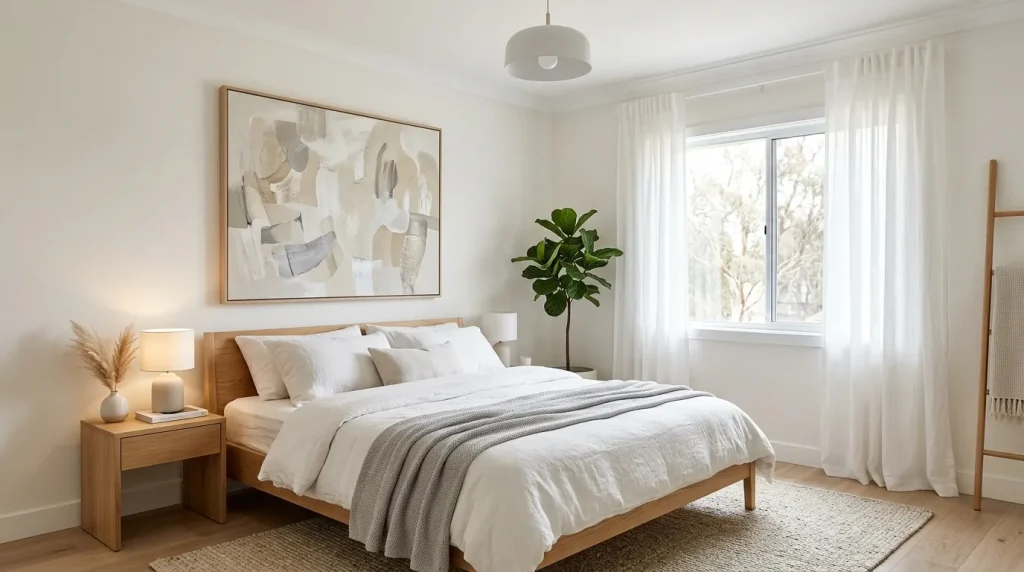
Neutral wall art is one of the simplest ways to add character to a bedroom without disturbing its calm atmosphere. Instead of bold colors or busy patterns, abstract designs in soft beige, gray, or off-white tones blend seamlessly into the space. This creates a gentle focal point above the bed while maintaining the overall minimalist aesthetic. In real interiors, I’ve noticed this approach helps people personalize their rooms without making them feel crowded or visually overwhelming, especially when paired with soft textures and natural materials that keep everything cohesive and soothing.
What makes this idea so effective is its ability to balance simplicity with expression. A single large canvas or a set of minimal prints can define the mood of the entire room without adding unnecessary detail. Designers often recommend keeping artwork aligned with the room’s color palette to maintain harmony. When combined with natural light and uncluttered furniture, the wall art enhances the feeling of openness. This subtle visual layer adds depth while still supporting a peaceful, uncluttered environment that feels modern, intentional, and easy to live in every day.
8.Low Platform Bed
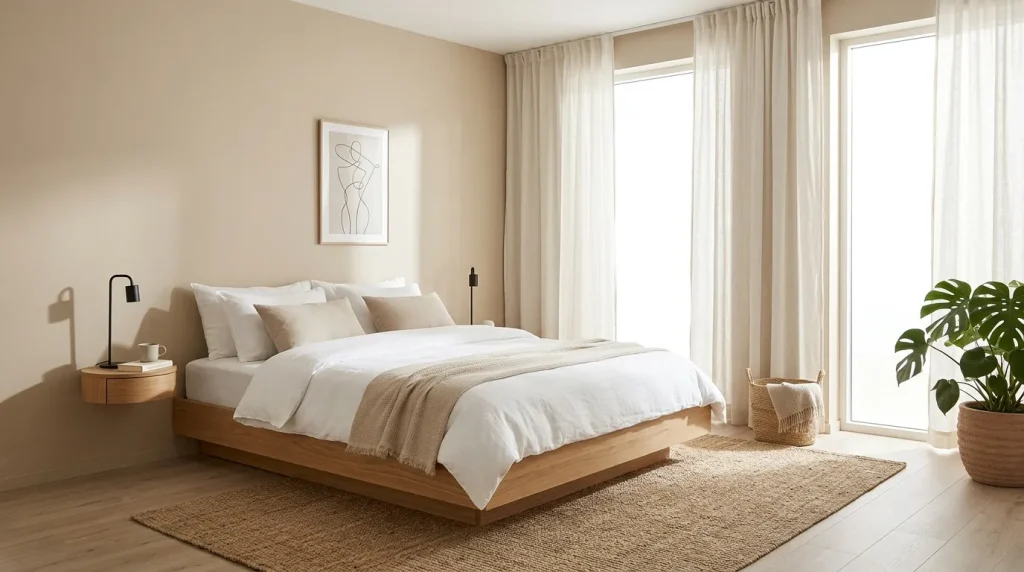
A low platform bed instantly changes the perception of space in a bedroom, making it feel larger and more open. By keeping the bed closer to the ground, the ceiling appears higher and the entire room feels lighter. This design is especially popular in modern minimalist interiors because it removes visual bulk while maintaining comfort. In many homes I’ve seen, switching to a low bed completely transforms the room’s energy, making it feel more grounded, peaceful, and aligned with a clean Scandinavian-inspired lifestyle that prioritizes simplicity over excess furniture.
This style works beautifully when paired with neutral bedding and uncluttered surroundings. The absence of heavy bed frames or tall headboards keeps attention on soft textures and natural light instead. Designers often suggest this approach for small bedrooms because it maximizes visual flow and reduces feeling of confinement. I’ve noticed that people tend to feel more relaxed in spaces where furniture sits low and unobtrusive. It creates a calming rhythm in the room, helping everything feel more balanced, breathable, and intentionally designed for everyday comfort and ease.
9.Soft Curtain Flow
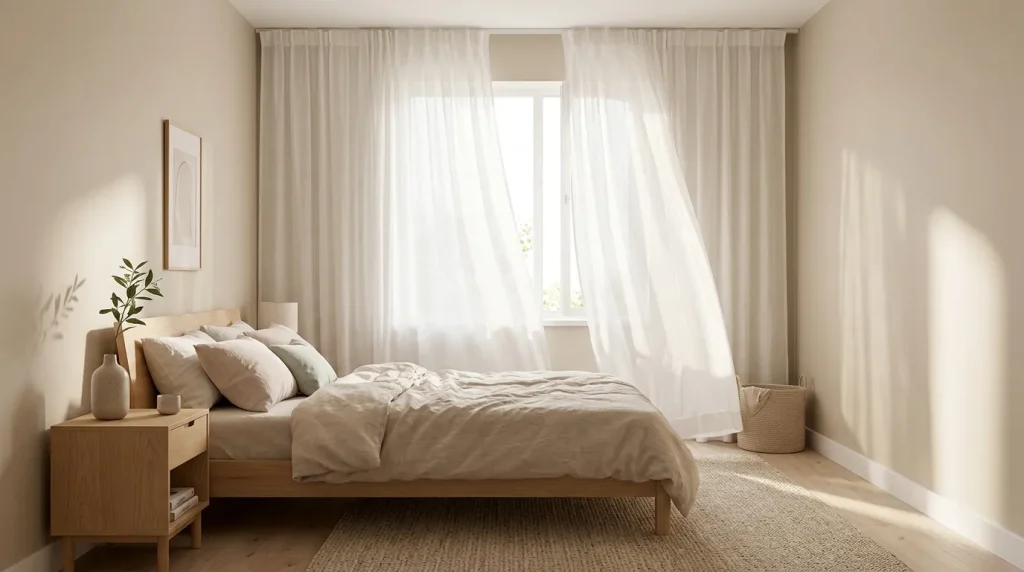
Soft flowing curtains are a simple but powerful way to make a bedroom feel more elegant and peaceful. Sheer white or light beige fabrics allow natural light to filter through gently, creating a soft glow that changes throughout the day. This movement adds life to the room without adding clutter or heavy decor. In real spaces, I’ve seen how replacing thick curtains with lighter fabrics immediately makes the room feel more open, breathable, and visually soothing, especially when paired with minimal furniture and neutral tones that support a calm environment.
The beauty of this design lies in its simplicity and natural movement. As air flows through the fabric, it creates a subtle dynamic effect that keeps the space from feeling static or heavy. Interior designers often use sheer curtains to soften harsh window edges and enhance daylight diffusion. When combined with wooden accents and clean surfaces, the result is a balanced and harmonious room. This approach is especially effective in bedrooms where relaxation is the priority, helping create a light, calming atmosphere that feels effortless and visually refined throughout the entire day.
10.Hidden Storage Beds
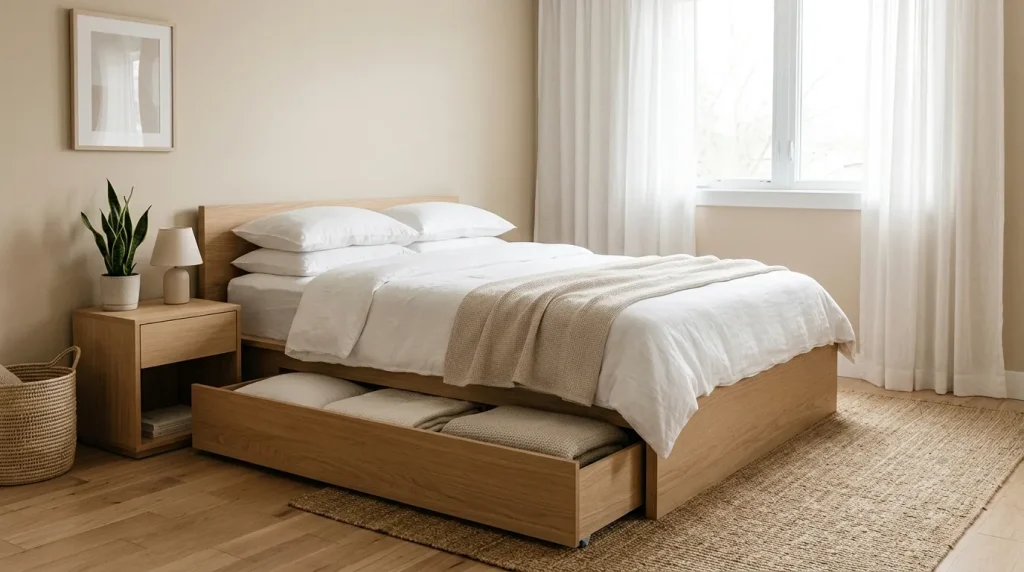
Hidden storage beds are a game changer when you want a calm, clutter-free bedroom without sacrificing functionality. This idea focuses on using the space under the bed for drawers or lift-up storage, allowing you to keep extra bedding, clothes, or seasonal items neatly tucked away. In real homes, this instantly reduces visible mess and makes the room feel more spacious. I’ve noticed that once people switch to this setup, they naturally maintain a cleaner environment because everything has a designated hidden place, which supports a more organized and stress-free lifestyle overall.
The biggest advantage of this design is how it blends practicality with minimalism. Instead of adding bulky storage units, the bed itself becomes a smart organizational solution. Designers often recommend this approach for small apartments or compact bedrooms where every inch matters. When paired with neutral bedding and simple decor, the storage remains completely invisible, preserving the calm aesthetic. The result is a bedroom that feels open, balanced, and effortlessly tidy, where functionality is built directly into the furniture without disturbing the clean Scandinavian-inspired visual flow.
11.Muted Accent Wall
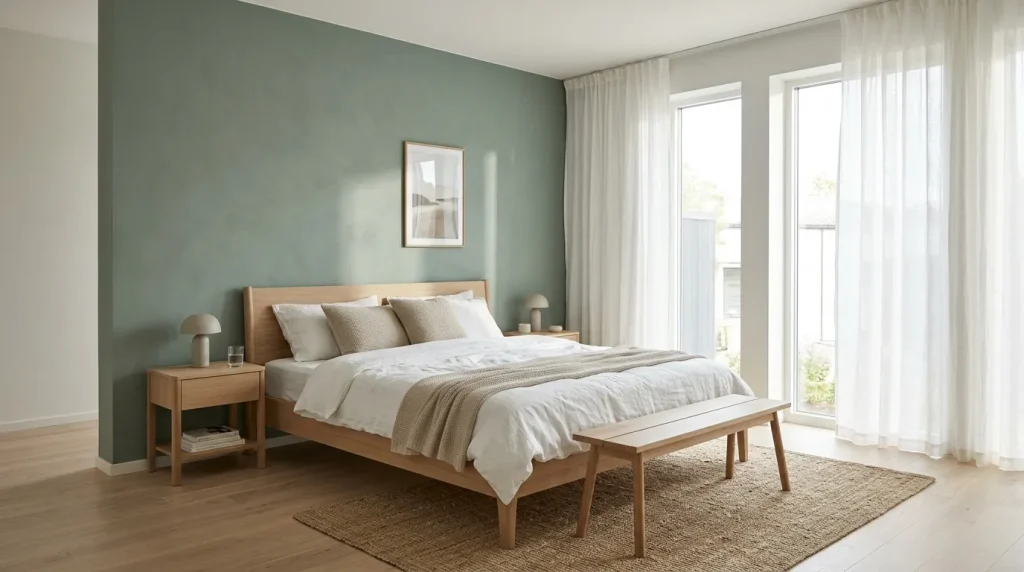
A muted accent wall is a subtle way to add character without breaking the calm atmosphere of a bedroom. Soft shades like sage green, dusty beige, or warm gray introduce depth while still staying within a neutral palette. This idea works especially well behind the bed, where it naturally draws attention without overpowering the space. In many interiors I’ve seen, this simple change instantly elevates the room’s design, making it feel more intentional and layered while still preserving the peaceful, minimal aesthetic that defines modern Scandinavian-inspired spaces.
The strength of this approach lies in its balance between simplicity and definition. Instead of using bold or distracting colors, muted tones gently frame the room and enhance architectural features. Designers often use this technique to create a visual anchor that grounds the space without cluttering it. When combined with natural textures, soft bedding, and warm lighting, the accent wall becomes part of a cohesive design story. It helps the bedroom feel thoughtfully styled, calm, and visually harmonious while still offering a touch of personality and depth.
12.Simple Floor Rug
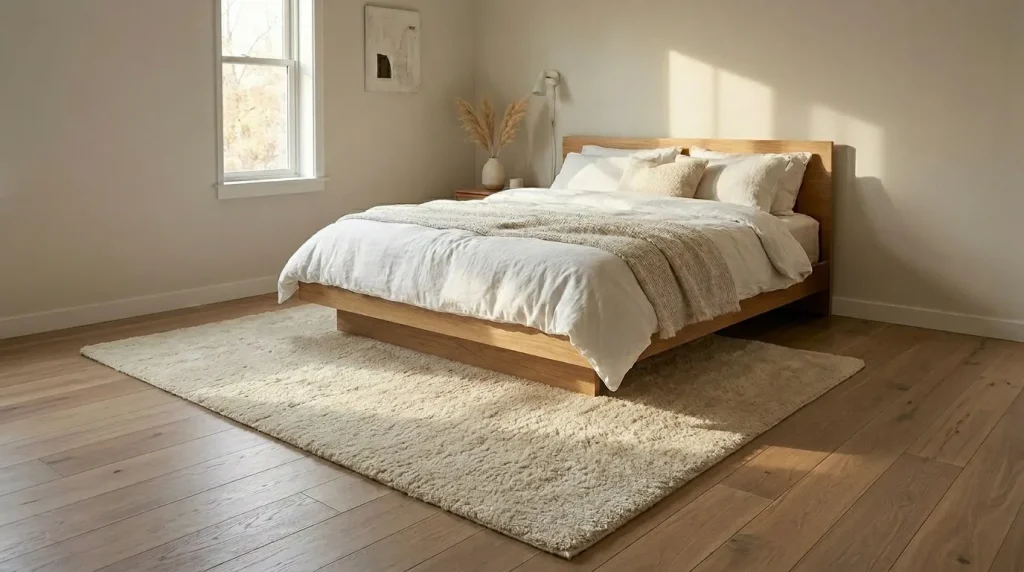
A simple floor rug is one of the easiest ways to make a bedroom feel warmer and more inviting without adding visual clutter. Placed under or beside the bed, it helps define the sleeping area and adds a soft layer that balances hard flooring like wood or tile. In real homes, I’ve seen how even a neutral-toned rug can completely shift the comfort level of a room, making it feel more grounded and cozy while still maintaining a clean and minimal Scandinavian-inspired aesthetic.
The key to using rugs effectively is choosing soft, muted colors and natural textures that blend with the overall design. Wool or cotton materials work especially well because they add warmth without feeling heavy or distracting. Designers often use rugs to break up empty floor space and create subtle zones within a room. When combined with minimal furniture and soft lighting, the rug enhances both comfort and visual harmony. The result is a balanced, calm bedroom that feels thoughtfully layered, inviting, and effortlessly comfortable every single day.
13.Open Space Flow
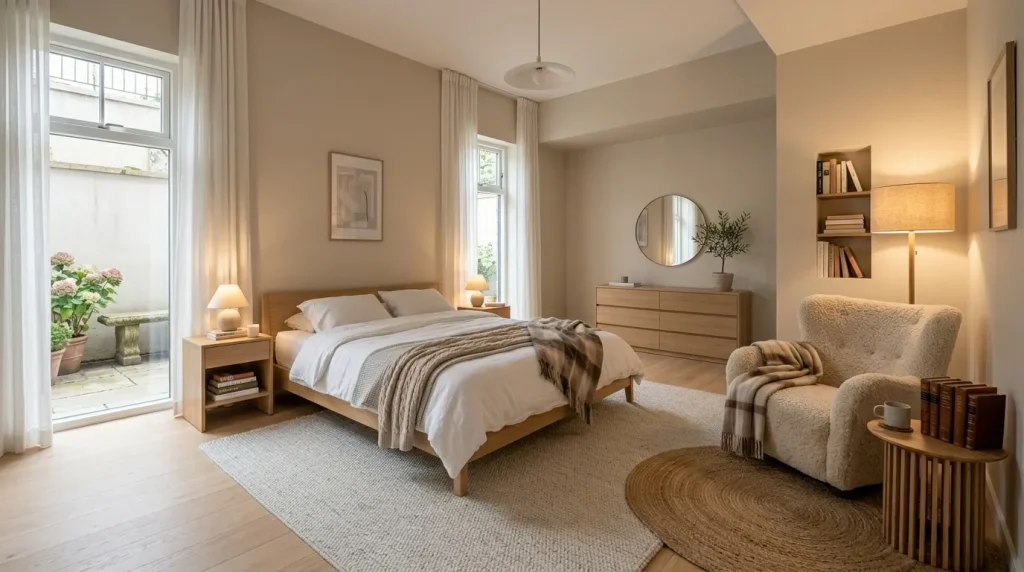
An open space flow is all about giving every piece of furniture room to breathe. Instead of filling every corner, this idea focuses on intentional spacing between the bed, nightstands, and decor elements. The result is a bedroom that feels lighter, more balanced, and easier to move through. In real homes, even small layout adjustments can dramatically change how spacious a room feels. This approach is a core principle in Scandi bedroom design because it prioritizes calmness over clutter and creates a natural sense of order without adding extra decor.
What makes this layout so effective is how it influences both mood and functionality. When the room is not overcrowded, the mind feels less stimulated and more relaxed. Designers often recommend leaving negative space intentionally because it improves visual flow and highlights key furniture pieces. Paired with neutral tones and natural light, the open layout enhances the feeling of airiness. The bedroom becomes a place where everything feels easy, accessible, and calm, supporting a stress-free environment that encourages rest and simplicity in everyday living.
14.Soft Beige Palette
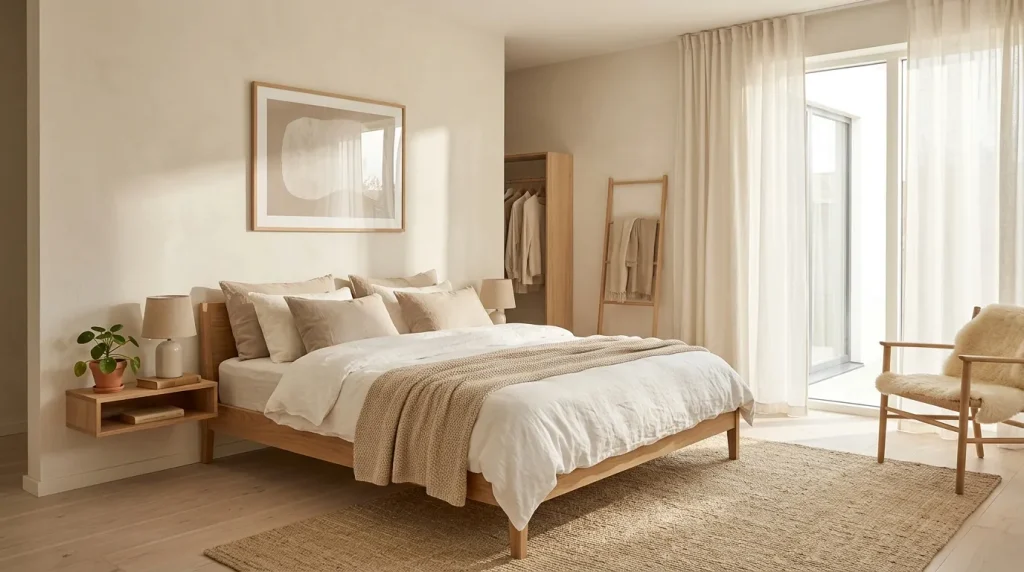
A soft beige palette is one of the most reliable ways to create a calm and timeless bedroom. By layering different shades of beige, cream, and warm sand tones, the space feels unified without becoming visually flat. This subtle variation adds depth while maintaining a peaceful and cohesive look. In many interiors I’ve seen, this palette instantly makes the bedroom feel more inviting and less overwhelming, especially when combined with natural light and simple furniture that allows the colors to stand out gently without distraction.
The strength of this approach lies in its flexibility and emotional impact. Beige tones naturally reflect light in a soft way, which helps the room feel brighter and more open. Designers often use this palette as a foundation because it pairs beautifully with wood, linen, and stone textures. I’ve noticed that people feel more relaxed in spaces with warm neutral tones because they reduce visual tension. The result is a bedroom that feels grounded, elegant, and effortlessly balanced, creating a soothing environment that supports rest and daily comfort.
15.Minimal Bed Styling
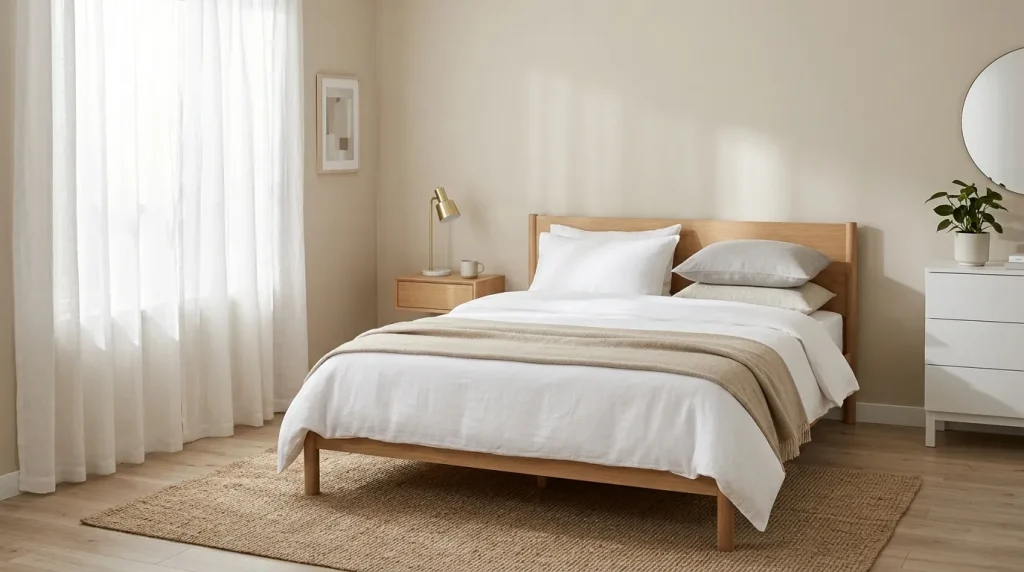
Minimal bed styling focuses on simplicity rather than decoration overload. Instead of multiple cushions and heavy layers, this idea uses just a few carefully chosen elements like crisp linen sheets, a light throw, and one or two neutral pillows. The result is a bed that always looks neat, inviting, and easy to maintain. In real homes, I’ve seen that this approach significantly reduces visual stress and makes the bedroom feel more organized because the bed naturally becomes a calm focal point rather than a cluttered display area.
The beauty of this method is how effortlessly it supports daily routines. A simple bed setup is quicker to arrange in the morning and instantly restores order to the room. Designers often recommend this style for maintaining long-term minimalism without effort. When paired with soft lighting and neutral tones, the bed becomes a peaceful visual anchor. It creates a sense of calm discipline in the space, helping the entire room feel more structured, breathable, and aligned with modern Scandinavian-inspired living principles that prioritize ease and clarity.
16.Light Wood Headboard
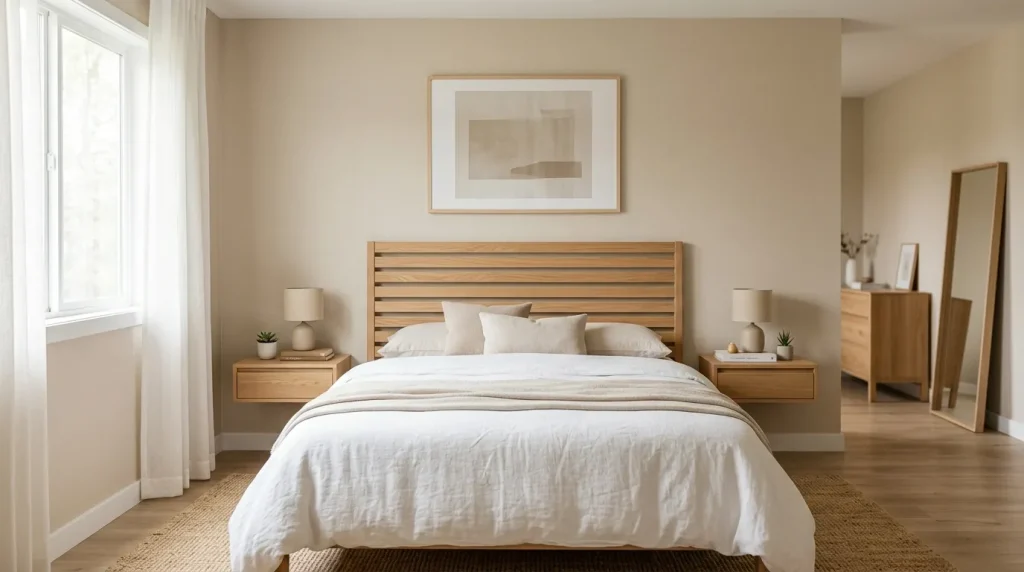
A light wood headboard is one of the easiest ways to ground a bedroom without making it feel heavy or overly styled. The natural grain of oak or ash wood adds warmth while keeping the overall look clean and minimal. It instantly frames the bed, making it the main focal point of the room without needing extra decoration. In real interiors, I’ve noticed this design works especially well in small spaces because it adds structure without visually closing in the room, keeping everything open, soft, and balanced.
The strength of this idea lies in its simplicity and natural texture. Instead of bold upholstery or decorative panels, the wood itself becomes the design feature. Designers often recommend pairing it with white or beige bedding to maintain a calm palette. When combined with soft lighting, the headboard enhances depth and creates a cozy yet modern feel. It gives the bedroom a grounded, intentional look while still keeping everything light, breathable, and aligned with a minimalist Scandinavian aesthetic that feels timeless and easy to live in.
17.White Space Balance
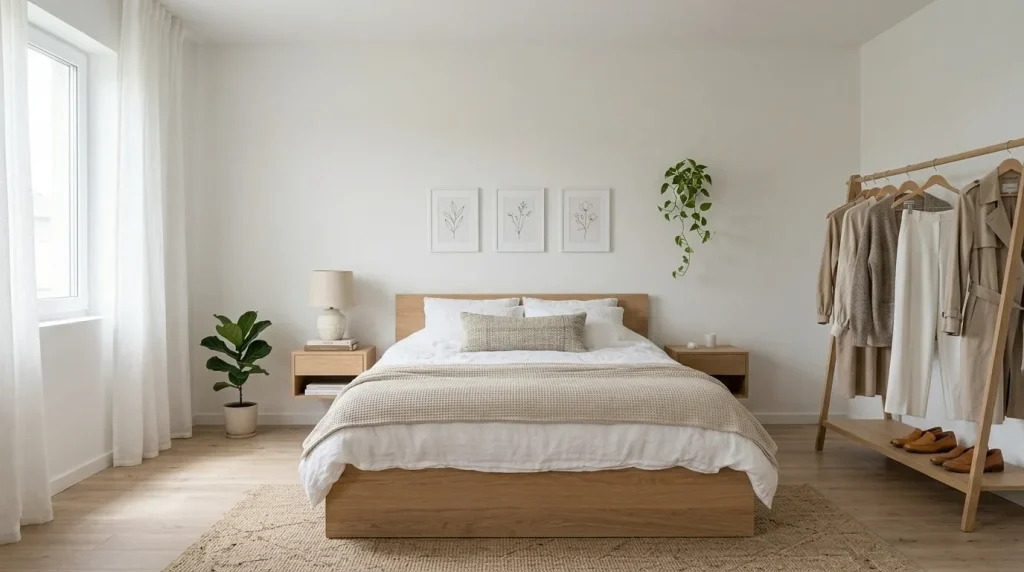
White space balance is about intentionally leaving parts of the room empty so the design can breathe. Instead of filling every surface or wall, this idea uses space as part of the aesthetic. The emptiness actually enhances the beauty of the furniture and textures around it. In many Scandinavian-inspired homes, this approach is used to create calmness and clarity. I’ve noticed that when people reduce visual noise, the room instantly feels more peaceful and organized without adding any new decor or spending extra effort.
This design principle also improves how the eye moves through a space. With fewer distractions, attention naturally goes to the bed, lighting, or natural textures. Designers often refer to this as “visual rest,” where the mind is not constantly processing clutter. When combined with neutral tones and soft lighting, white space becomes a powerful design tool. It creates a sense of openness and simplicity that feels modern, calming, and deeply connected to minimalist living principles that prioritize comfort and emotional ease.
18.Soft Corner Reading Spot
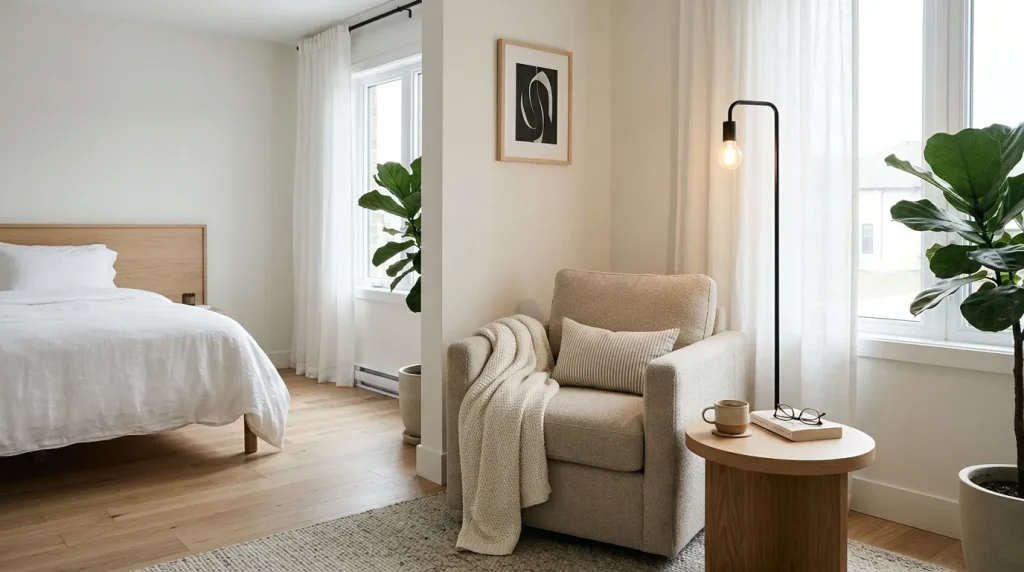
A soft corner reading spot turns an unused area of the bedroom into a peaceful escape. With just a comfortable chair, a small table, and warm lighting, the space becomes perfect for reading or quiet relaxation. This idea adds lifestyle value without overwhelming the room. In real homes, I’ve seen how even a simple corner setup can completely change how people use their bedroom, making it feel more personal, functional, and emotionally comforting while still maintaining a clean Scandinavian-inspired aesthetic.
The beauty of this idea is its simplicity and emotional impact. Instead of adding more decor to the entire room, you create a dedicated calm zone. Designers often use soft textiles and warm lighting here to enhance relaxation. When paired with neutral tones and minimal furniture, the reading corner blends naturally into the room without feeling separate. It encourages slow living, reduces screen time, and gives the bedroom a more intentional, lived-in feeling that supports both rest and quiet personal moments.
19.Textured Wall Finish
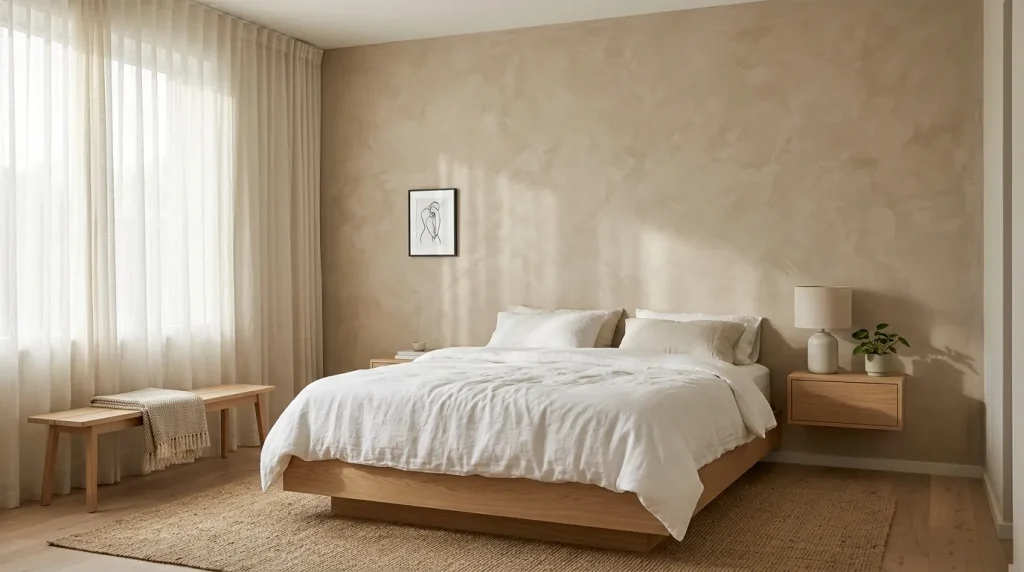
A textured wall finish is a subtle way to bring depth into a bedroom without relying on patterns or bold colors. Soft plaster, limewash, or matte finishes create a gentle variation in tone that reacts beautifully to natural light. This gives the room a quiet sense of movement throughout the day. In many interiors I’ve observed, textured walls make even the simplest furniture look more elevated because the background itself becomes part of the design rather than just a plain surface.
The real strength of this idea is how it enhances minimalism instead of competing with it. Designers often use texture instead of color to keep spaces calm but visually interesting. When paired with neutral bedding and wooden accents, the wall adds warmth and character without overwhelming the space. It creates a refined, high-end look that still feels natural and relaxed. The result is a bedroom that feels balanced, soft, and thoughtfully designed with subtle visual depth that never feels too busy or distracting.
20.Hidden Lighting Strips
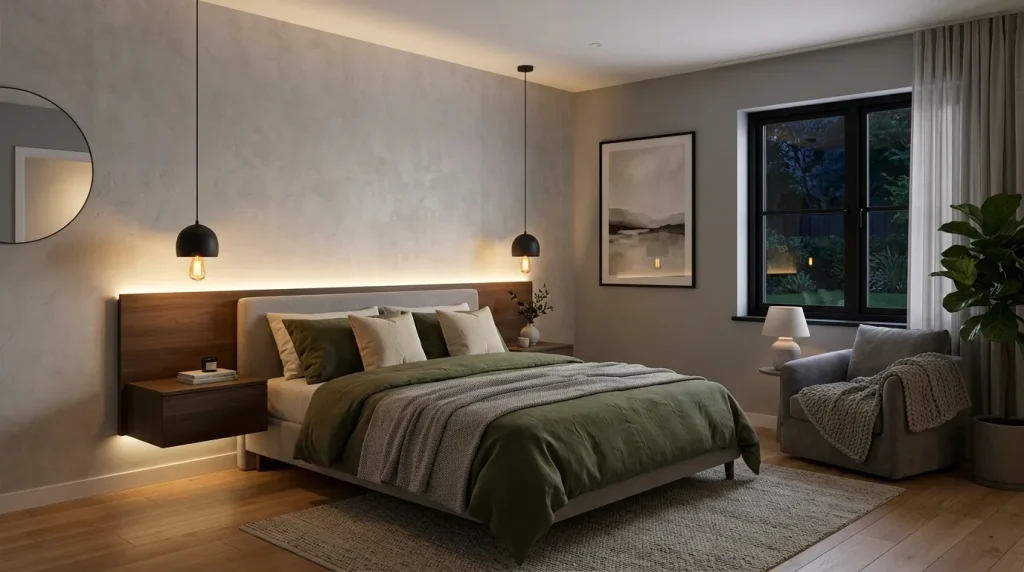
Hidden lighting strips are a modern way to add atmosphere without visible fixtures. Placed under the bed, behind the headboard, or along shelving, they create a soft glow that transforms the room in the evening. This indirect lighting feels calming and futuristic at the same time. In real spaces, I’ve seen how this approach completely changes nighttime mood, making the bedroom feel more peaceful, warm, and visually layered without introducing any clutter or overwhelming brightness.
The beauty of this lighting method is its subtlety. Instead of focusing attention on the light source, the glow gently highlights shapes and textures in the room. Designers often use warm-toned LEDs to maintain a cozy atmosphere while preserving a modern aesthetic. When combined with neutral colors and minimal furniture, hidden lighting enhances depth and softness. It creates a relaxing environment that feels both stylish and functional, supporting a calm nighttime routine and reinforcing the simplicity of Scandinavian-inspired bedroom design.
21.Monochrome Contrast
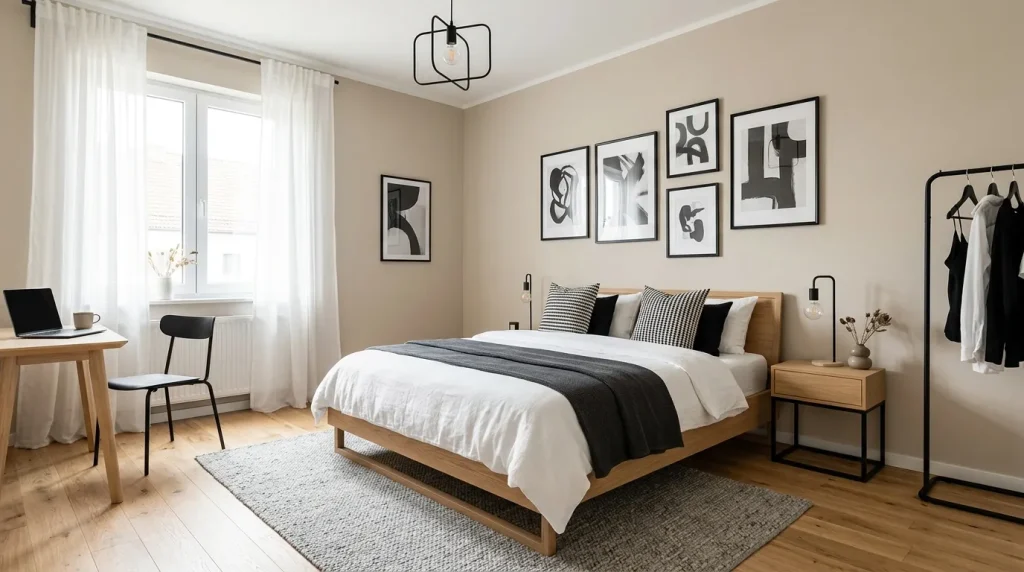
Monochrome contrast is a simple way to add definition to a Scandinavian bedroom without disrupting its calm aesthetic. By combining black accents with white and beige tones, the room gains structure and visual interest. This can be done through small details like lamps, frames, or metal fixtures. In real interiors, I’ve noticed this contrast helps prevent neutral spaces from feeling too flat while still maintaining a clean and balanced look that aligns perfectly with modern minimalist design principles.
The key is moderation. Instead of overwhelming the space with dark elements, just a few carefully placed accents are enough to create balance. Designers often use this technique to guide the eye and highlight key furniture pieces. When paired with soft textures and natural light, the contrast feels refined rather than harsh. It adds a subtle modern edge while still keeping the overall atmosphere calm, airy, and visually harmonious, making the bedroom feel both stylish and comfortably livable.
Monochrome contrast is a simple way to add definition to a Scandinavian bedroom without disrupting its calm aesthetic. By combining black accents with white and beige tones, the room gains structure and visual interest. This can be done through small details like lamps, frames, or metal fixtures. In real interiors, I’ve noticed this contrast helps prevent neutral spaces from feeling too flat while still maintaining a clean and balanced look that aligns perfectly with modern minimalist design principles.
The key is moderation. Instead of overwhelming the space with dark elements, just a few carefully placed accents are enough to create balance. Designers often use this technique to guide the eye and highlight key furniture pieces. If you love this clean and distraction-free styling approach, you’ll also appreciate how it translates into a workspace—especially in a Scandinavian home office: Easy 22 stress free ideas for a clutter free productive workspace where the same balance of light, contrast, and simplicity helps create a focused yet calming environment.
When paired with soft textures and natural light, the contrast feels refined rather than harsh. It adds a subtle modern edge while still keeping the overall atmosphere calm, airy, and visually harmonious, making the bedroom feel both stylish and comfortably livable.
22.Clutter-Free Floor Design
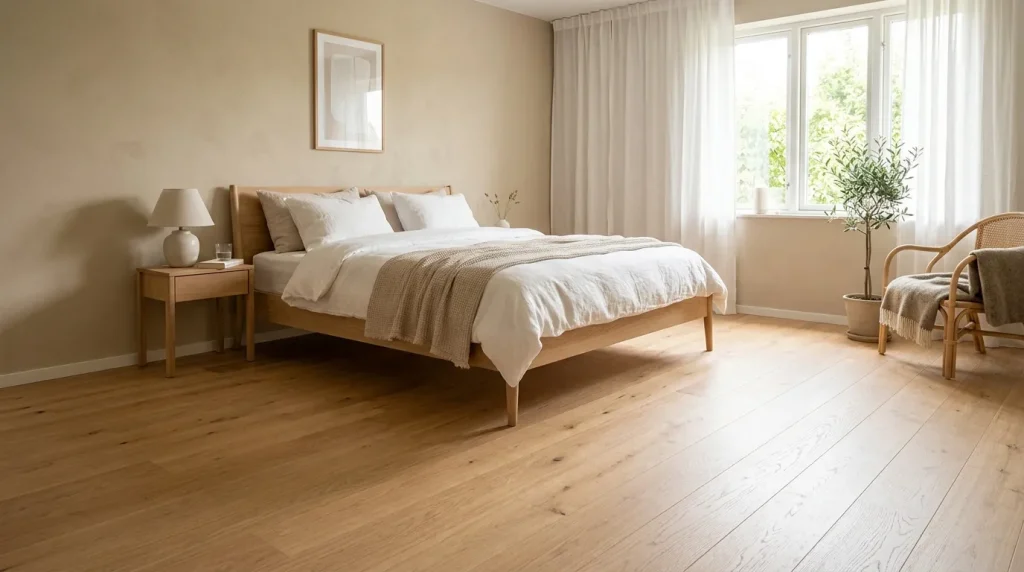
A clutter-free floor design is one of the most impactful ways to instantly improve a bedroom’s look and feel. By keeping the floor as open and visible as possible, the entire room appears larger, lighter, and more organized. Furniture with raised legs works especially well because it allows light and space to flow underneath. In real homes, I’ve noticed that even small changes like removing floor clutter can dramatically increase the sense of calm and make daily cleaning much easier and faster.
This approach is deeply connected to minimalist living principles. Designers often emphasize that the floor should not be used for storage or unnecessary items, as it visually weighs down the room. When combined with neutral tones and soft lighting, the open floor enhances the feeling of airiness and simplicity. It also helps highlight architectural details and furniture shapes more clearly. The result is a bedroom that feels clean, breathable, and intentionally designed for comfort, clarity, and effortless everyday living.
23.Soft Natural Decor
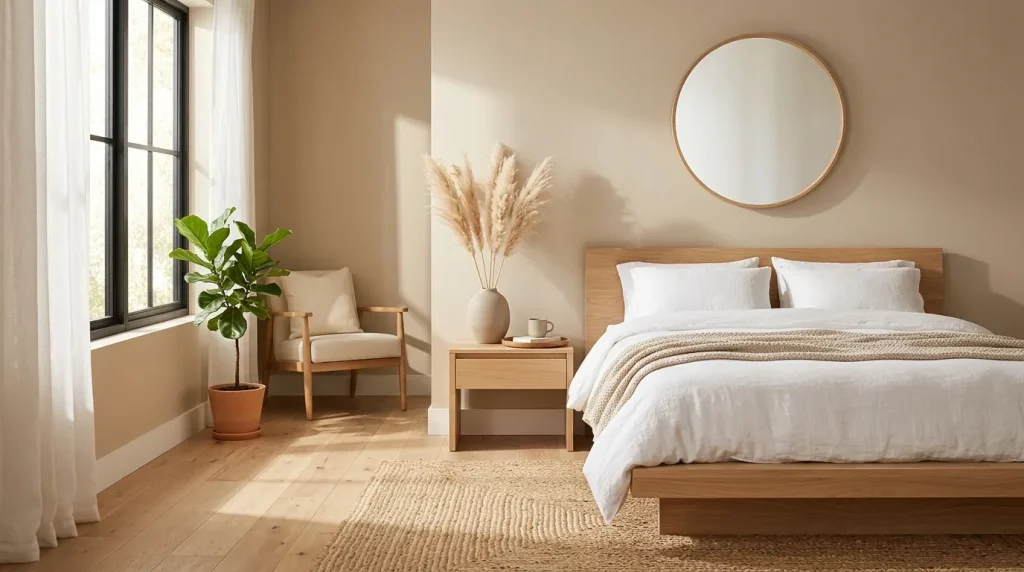
Soft natural decor brings a gentle, organic touch to a bedroom without making it feel busy. Elements like dried pampas grass, linen cushions, ceramic vases, or simple wooden trays add texture while maintaining a calm aesthetic. This idea focuses on keeping decor minimal and nature-inspired. In many interiors I’ve seen, even one or two natural accents can completely change the mood of a room, making it feel more grounded, warm, and connected to a peaceful, slow-living lifestyle.
The strength of this approach is its ability to add life without overwhelming the space. Designers often use natural materials because they age beautifully and blend effortlessly with neutral tones. When paired with soft lighting and minimal furniture, these elements enhance the overall harmony of the room. The result is a bedroom that feels calm, balanced, and slightly organic, offering a subtle connection to nature while still maintaining a clean, modern Scandinavian-inspired aesthetic that feels timeless and easy to maintain.
24.Balanced Symmetry Setup
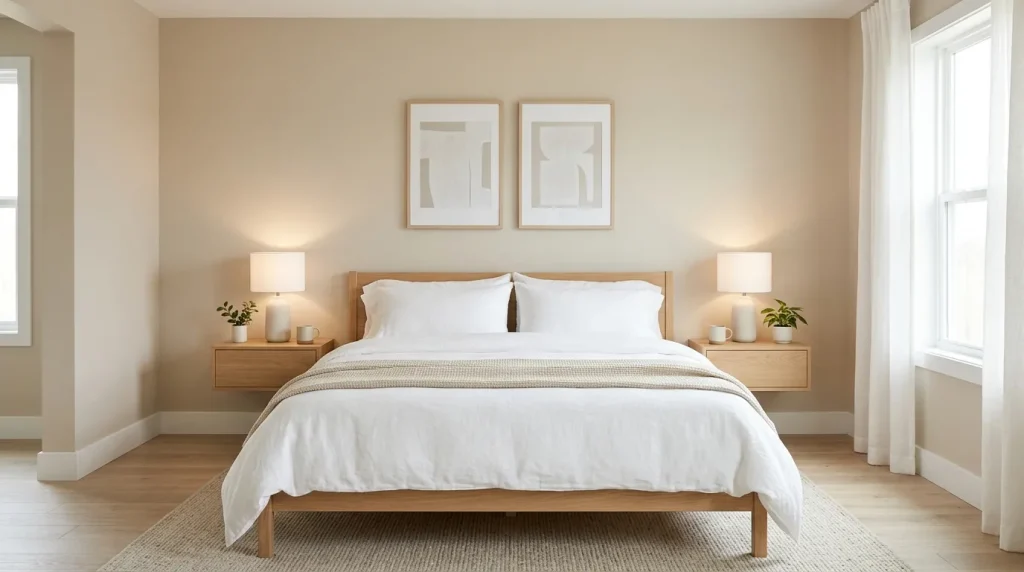
Balanced symmetry is a classic design approach that instantly makes a bedroom feel more organized and visually pleasing. By placing matching nightstands, lamps, or decor on both sides of the bed, the space gains structure and harmony. This setup naturally draws the eye to the center, creating a calm and grounded focal point. In real interiors, I’ve noticed that symmetry helps even simple bedrooms look more intentional and professionally designed without requiring expensive furniture or complex styling.
The effectiveness of symmetry lies in its psychological impact. A balanced layout feels stable and predictable, which naturally creates a sense of calm. Designers often use this method to bring order to minimalist spaces where fewer elements are present. When combined with neutral tones and soft textures, the result is a bedroom that feels cohesive, peaceful, and thoughtfully arranged. It’s a simple yet powerful way to elevate any space while maintaining the clean, uncluttered aesthetic that defines Scandinavian-inspired interiors.
25.Soft Pastel Touch
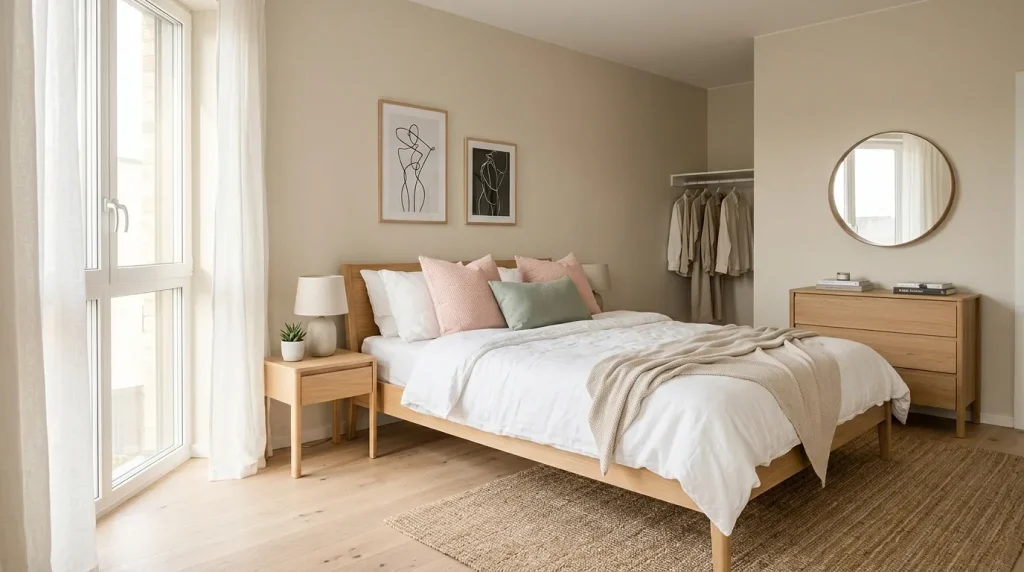
A soft pastel touch is a delicate way to introduce color into a Scandinavian bedroom without disrupting its calm aesthetic. Shades like blush pink, muted green, or dusty lavender can be added through cushions, throws, or small decor pieces. These tones blend beautifully with neutral bases like beige and white, creating a soft and inviting atmosphere. In real homes, I’ve seen how just a few pastel accents can make a room feel more alive while still maintaining a peaceful, uncluttered look.
The key to using pastels effectively is restraint and balance. Instead of spreading color throughout the room, focusing on small accents keeps the design subtle and refined. Designers often recommend pairing pastels with natural materials like wood and linen to prevent the space from feeling overly decorative. When combined with soft lighting and minimal furniture, the result is a bedroom that feels fresh, airy, and gently expressive while still staying true to a calm Scandinavian-inspired aesthetic.
Conclusion:
Creating a peaceful bedroom doesn’t require a full renovation—just intentional, thoughtful choices that bring calm into your space. These scandinavian bedroom ideas show how simplicity, soft textures, and clutter-free design can completely transform how your room feels every day.
Even small updates like neutral colors, better lighting, or minimal styling can make a noticeable difference in comfort and mood. I’ve seen how these subtle changes help people feel more relaxed and grounded at home.
Save this guide on Pinterest, try one or two ideas in your own bedroom, and share it with someone who needs a calm, stress-free space makeover.
Clara Whitmore
Clara specializes in interior styling, seasonal home trends, and cozy living spaces. She loves combining classic design elements with modern touches to create homes that feel personal, welcoming, and effortlessly stylish.