6 Narrow Entryway Ideas You’ll Love

Introduction:
Your entryway is the first thing you — and every guest — sees when walking through the door. It sets the tone for your entire home. But when that space is tight, it can feel impossible to make it look good and function well at the same time.That is exactly why these narrow entryway ideas exist — to show you that a small hallway is not a limitation. It is an opportunity.
I’ve noticed that some of the most beautifully styled entryways I’ve come across are also the smallest ones. With the right setup, even a hallway under four feet wide can feel intentional, welcoming, and surprisingly spacious. In this article, you will find five practical, Pinterest-worthy ideas that are easy to implement, budget-friendly, and genuinely transformative — no major renovation required.
1.Floating Shelf Display
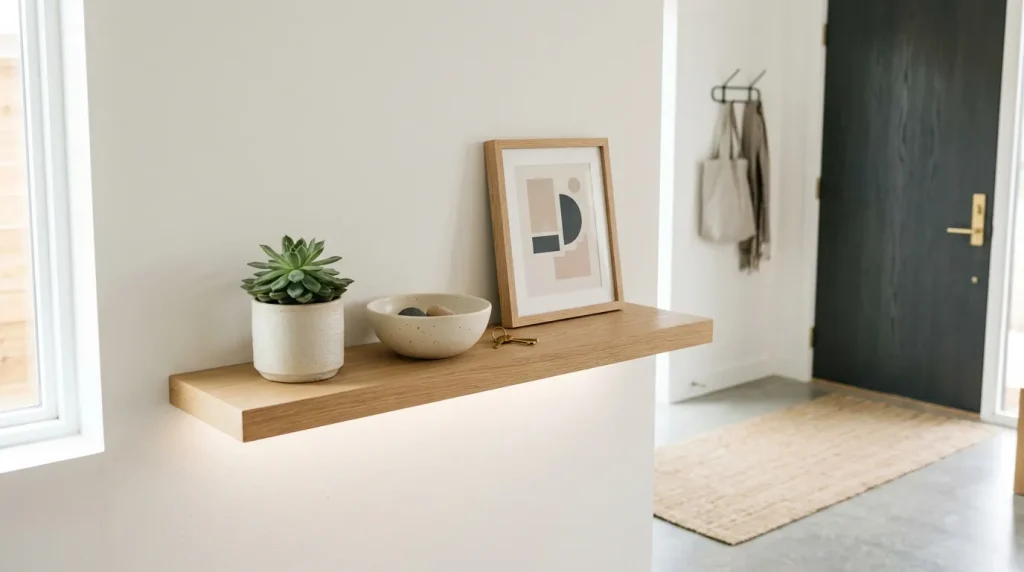
A single floating shelf can completely change how a small entryway feels the moment you walk in. Instead of clutter collecting on the floor or a bulky furniture piece blocking the path, this idea lifts everything up and keeps the space visually light. I’ve noticed that even a simple shelf styled with three intentional objects — a plant, a small dish, and one decorative piece — instantly makes the entry feel designed rather than forgotten. It signals to anyone entering that this home is thoughtfully put together, and that first impression genuinely matters more than most people realize.
What makes this idea so practical is how little space it actually takes. A shelf that is only twelve inches deep can hold everything you need near the door without eating into your walking space. In my experience, homes with very tight entries often skip décor altogether because they assume there is no room for it — but that is exactly the wrong approach. A well-placed floating shelf proves that small spaces can still feel styled, functional, and intentional. Pair it with a small hook strip just below and you have a fully functional entryway solution that takes up almost no physical room at all.
2.Slim Console Table
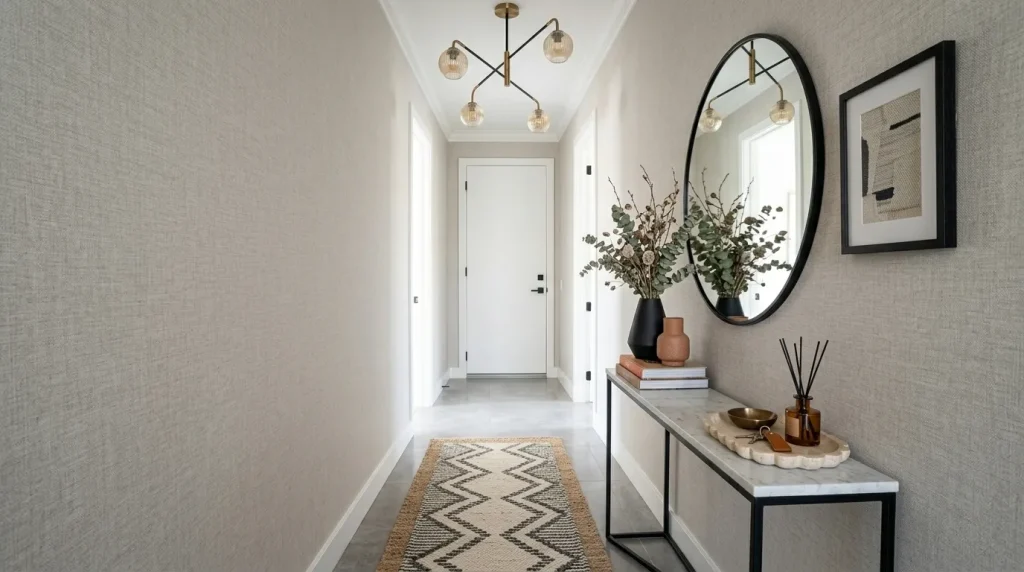
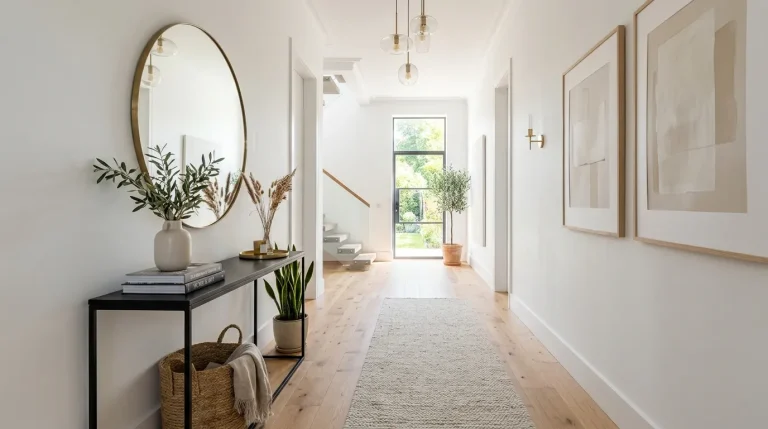
The slim console table is one of the most reliable solutions for a tight entryway that still needs to function well. It gives you a surface — somewhere to place keys, a small tray, or your phone — without the bulk of a traditional entryway cabinet. That’s why many interior designers recommend this piece as the first addition when someone is working with a hallway under four feet wide. The key is choosing a table with an open frame and thin legs so the floor remains visible, which tricks the eye into reading the space as larger and less enclosed than it actually is.
What I’ve seen work really well is pairing the console table with one statement mirror directly above it. The mirror serves two purposes at once — it reflects light deeper into the hallway and gives you a place to check yourself before heading out. When the mirror is round and slightly oversized, it adds softness to what could otherwise feel like a plain corridor. Keep the tabletop styled with a maximum of three objects and resist the urge to add more over time. Clutter builds quickly in entryways, and a slim table with a clean surface will always feel more intentional and welcoming than one buried under everyday items.
3.Vertical Storage Unit
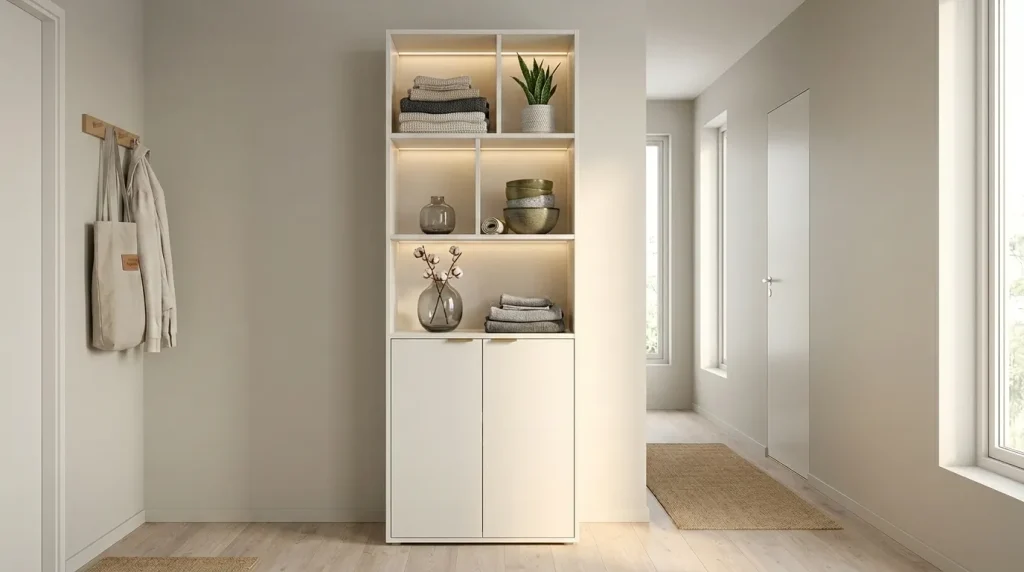
When floor space is limited, the only logical direction to go is up. A vertical storage unit takes a footprint of less than two square feet but delivers storage capacity that a wider, shorter piece simply cannot match. I’ve seen this work beautifully in narrow entryways where there is genuinely no room for a bench or a wide cabinet — the vertical unit steps in and solves the problem without making the hallway feel any more cramped. The trick is choosing a design with closed lower doors so daily essentials like shoes, bags, and charging cables stay hidden and the overall look remains calm and uncluttered.
The visual effect of a tall unit is also worth mentioning because it does something clever to a small space. By drawing the eye from floor to ceiling, it makes the hallway feel taller and more intentional rather than boxed in. That’s why many designers use vertical elements deliberately in compact interiors — not just for storage, but for the perception of height they create. Choose a finish that closely matches your wall color if you want the unit to feel built-in and seamless, or go slightly contrasting if you want it to serve as a subtle design feature. Either approach works well as long as the lines stay clean and modern.
4.Mirror Wall Trick
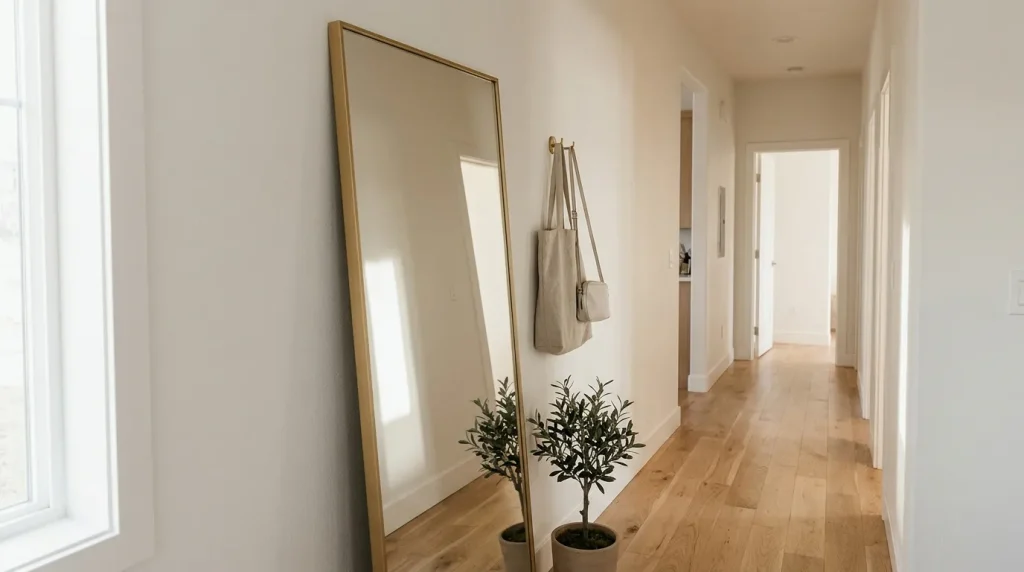
A well-placed mirror does something almost magical in a confined entryway — it removes the feeling of walls closing in. The moment natural or ambient light hits a large mirror, the hallway opens up visually in a way that no paint color or furniture piece can fully replicate. I’ve noticed that many people underestimate mirror size when shopping, and end up with something too small to make a real impact. For narrow entryway ideas that rely on this trick, bigger genuinely is better. A mirror that runs from hip height to just above eye level will transform the space far more effectively than a small decorative one ever could.
Beyond the size of the mirror, placement makes all the difference. Hanging or leaning a mirror directly across from your main light source — whether that is a window, a pendant light, or even a well-placed wall sconce — multiplies the brightness and depth of the entire hallway. In my experience, this single change makes a narrow entry feel twice as welcoming before any other update is made.
Many homeowners also pair this brighter, more polished look with stylish workspace inspiration like these Home Office Wallpaper Ideas With Bold Styles That Still Feel Professional to create a cohesive flow throughout the home. Pair the mirror with one simple hook beside it for bags or a jacket, and you have a setup that is both functional and genuinely beautiful. It is a small investment that delivers one of the highest visual returns in home design.
5.Hooks and Hanging Rail
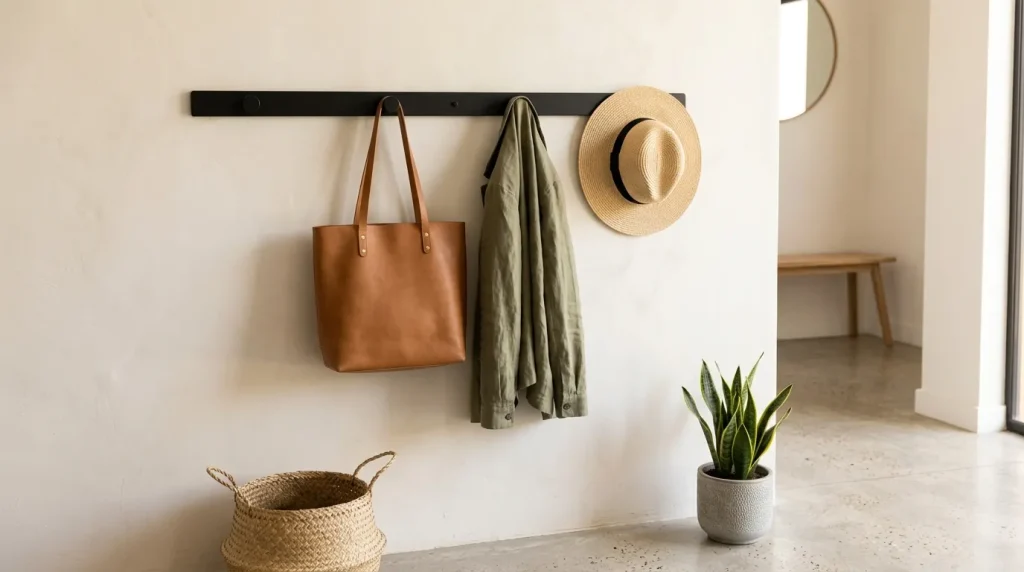
A hanging rail mounted on the wall solves one of the most common problems in a tight entryway — the pile of jackets, bags, and accessories that collects near the door with nowhere proper to go. By dedicating one clean wall section to a styled rail, you turn a functional necessity into a design feature. That’s why many interior stylists now treat the entryway wall itself as a display surface rather than just empty space between rooms. A rail with three to five hooks keeps everything accessible without creating the visual chaos that comes from overcrowded coat stands or hooks scattered without intention.
What makes this idea especially versatile is how easily it adapts to different styles and budgets. A simple brass or matte black rail costs very little but looks genuinely high-end when installed cleanly and styled with care. I’ve seen this work in very tight hallways where there was no room for a single piece of furniture — the rail took up zero floor space and still made the entryway feel organized, considered, and welcoming. The key is restraint. Hang only what belongs to the current season, keep the items to a maximum of four or five, and let the wall around the rail breathe. That negative space is what makes the whole setup feel intentional rather than crowded.
6.Bench with Hidden Storage
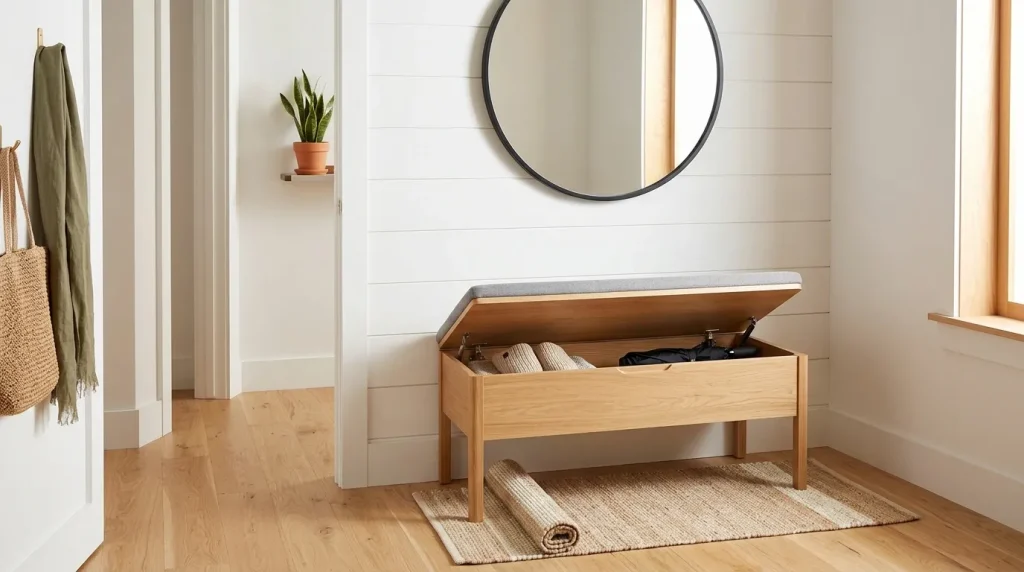
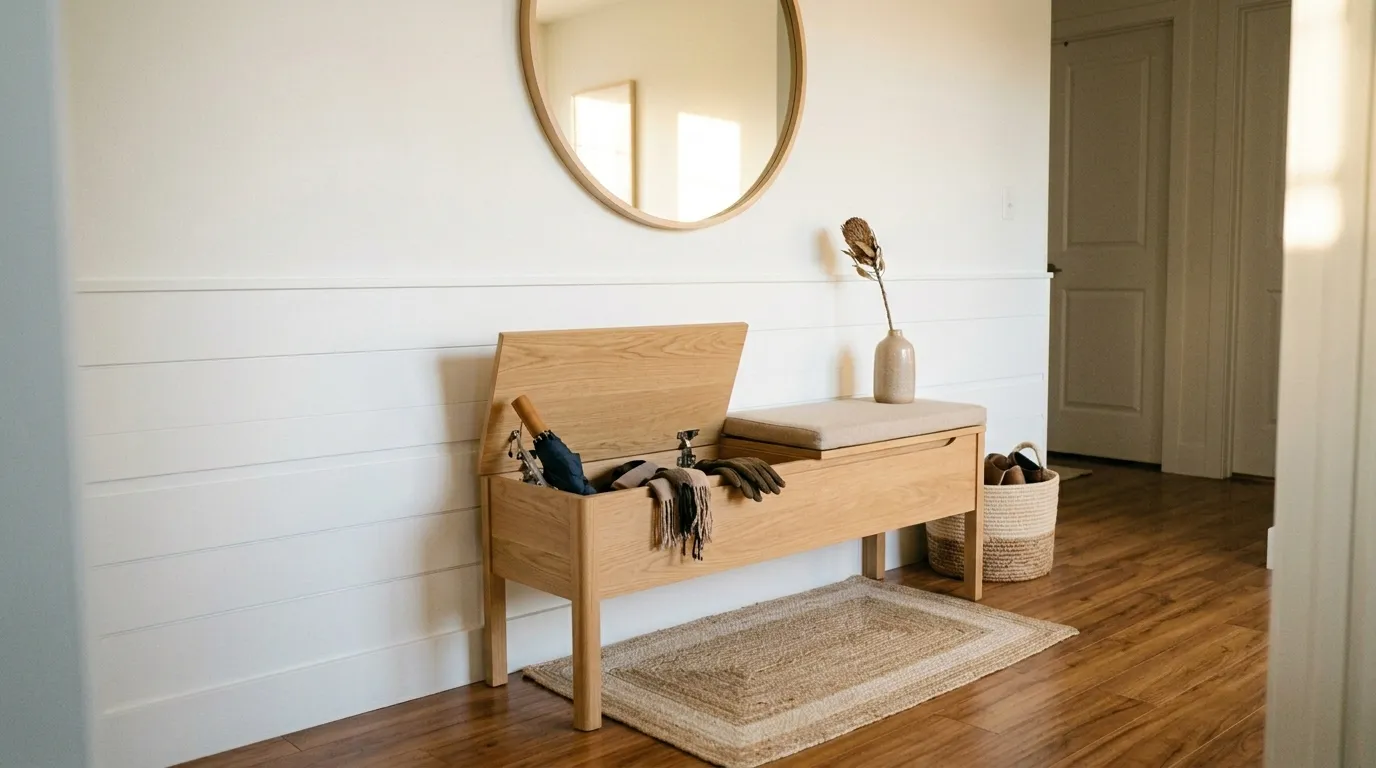
A bench with hidden storage might be the single most functional piece of furniture you can add to a tight entryway. It solves three problems at once — it gives you somewhere to sit, somewhere to store, and a visual anchor that makes the space feel like a proper, designed entry rather than just a corridor. In my experience, families with kids find this idea especially life-changing because shoes, school bags, and seasonal accessories can disappear inside the bench the moment they come through the door. The hallway stays clear, and the daily chaos of coming and going becomes noticeably easier to manage.
The design of the bench matters just as much as its function. A slim profile in light oak, white, or warm grey will always feel more current and less heavy than darker, chunkier alternatives. Keeping the top surface clear — or styled with only one or two small objects — ensures the bench reads as a deliberate design choice rather than extra furniture squeezed into a tight spot. That’s why many designers pair this piece with a round mirror directly above and nothing else on the surrounding walls. The simplicity of that combination creates a calm, welcoming entry that feels both practical and genuinely beautiful from the very first glance.
Conclusion:
A small entryway has more potential than most people ever give it credit for. With the right ideas, even the tightest hallway can feel warm, organized, and beautifully styled from the moment you walk in. I’ve seen how small changes like these — a floating shelf, a slim console table, or a well-placed mirror — can completely shift how a space feels and functions every single day. If any of these narrow entryway ideas inspired you, save this post on Pinterest, try one idea this week, and share it with a friend who could use a little entryway refresh too.
Clara Whitmore
Clara specializes in interior styling, seasonal home trends, and cozy living spaces. She loves combining classic design elements with modern touches to create homes that feel personal, welcoming, and effortlessly stylish.