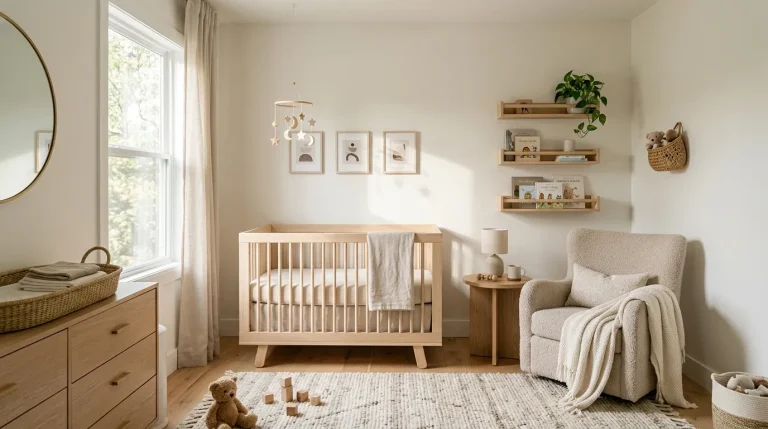
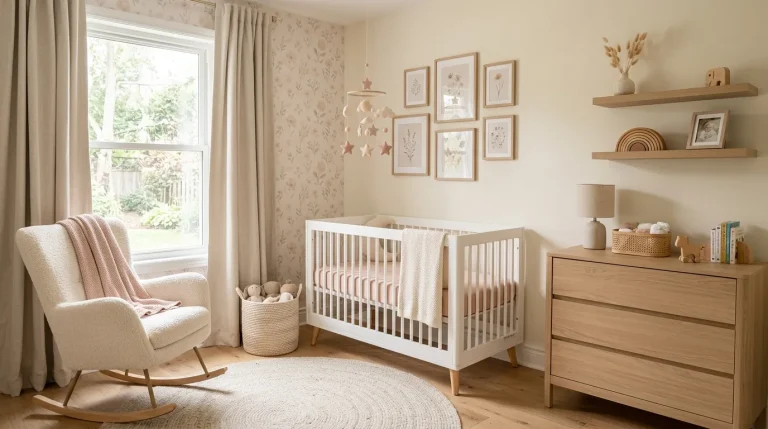
Fall in Love with Modern Nursery Decor Ideas Using Easy Design Tips

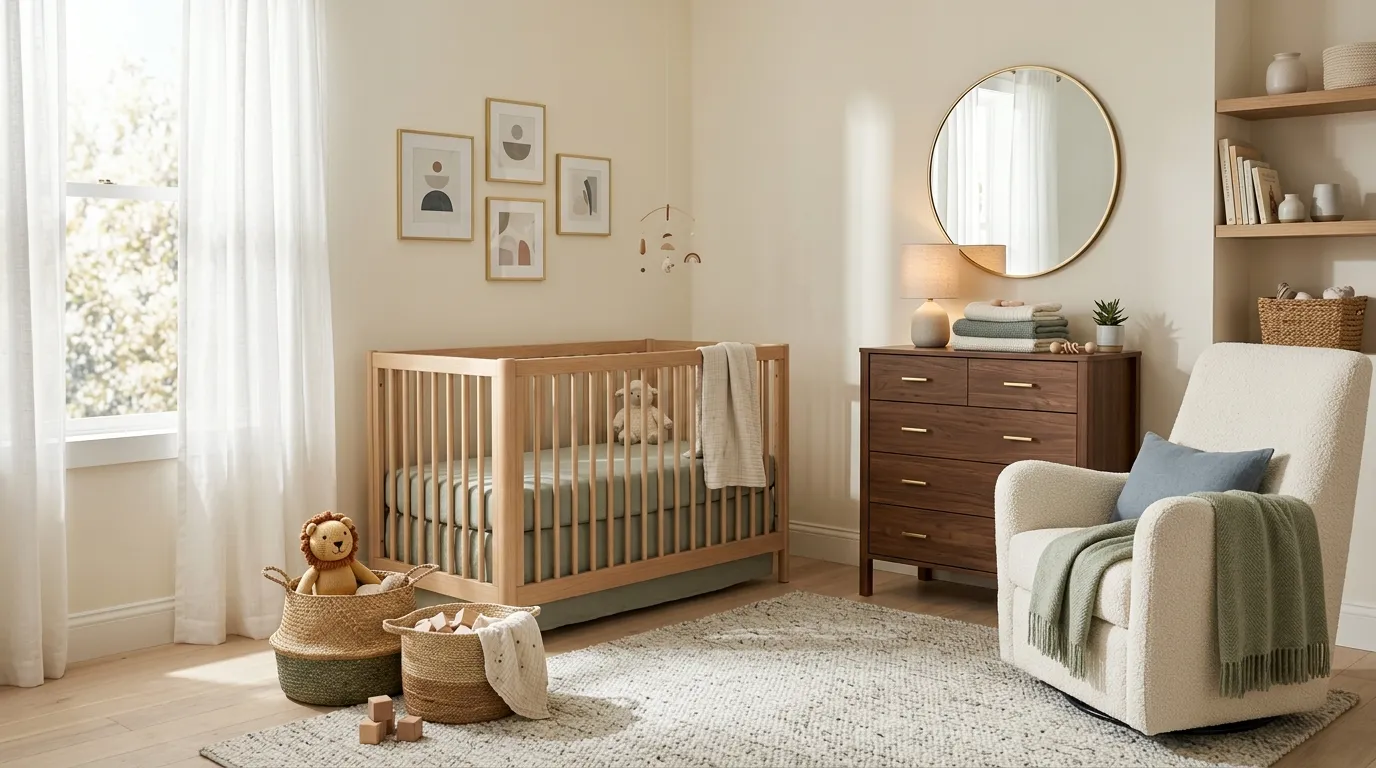
A nursery should feel calm before it looks stylish. The best modern nursery decor ideas balance clean lines with soft textures, warm colors, and useful pieces that make everyday care easier. You don’t need a room filled with matching furniture to create that feeling.
Start with the pieces that matter most, then build around them with thoughtful details. Natural wood, gentle wall colors, cozy textiles, simple lighting, and smart storage can give the room a polished look without making it feel cold. These ideas will help you create a nursery that feels fresh now and still works as your little one grows.
Warm Wood Foundations
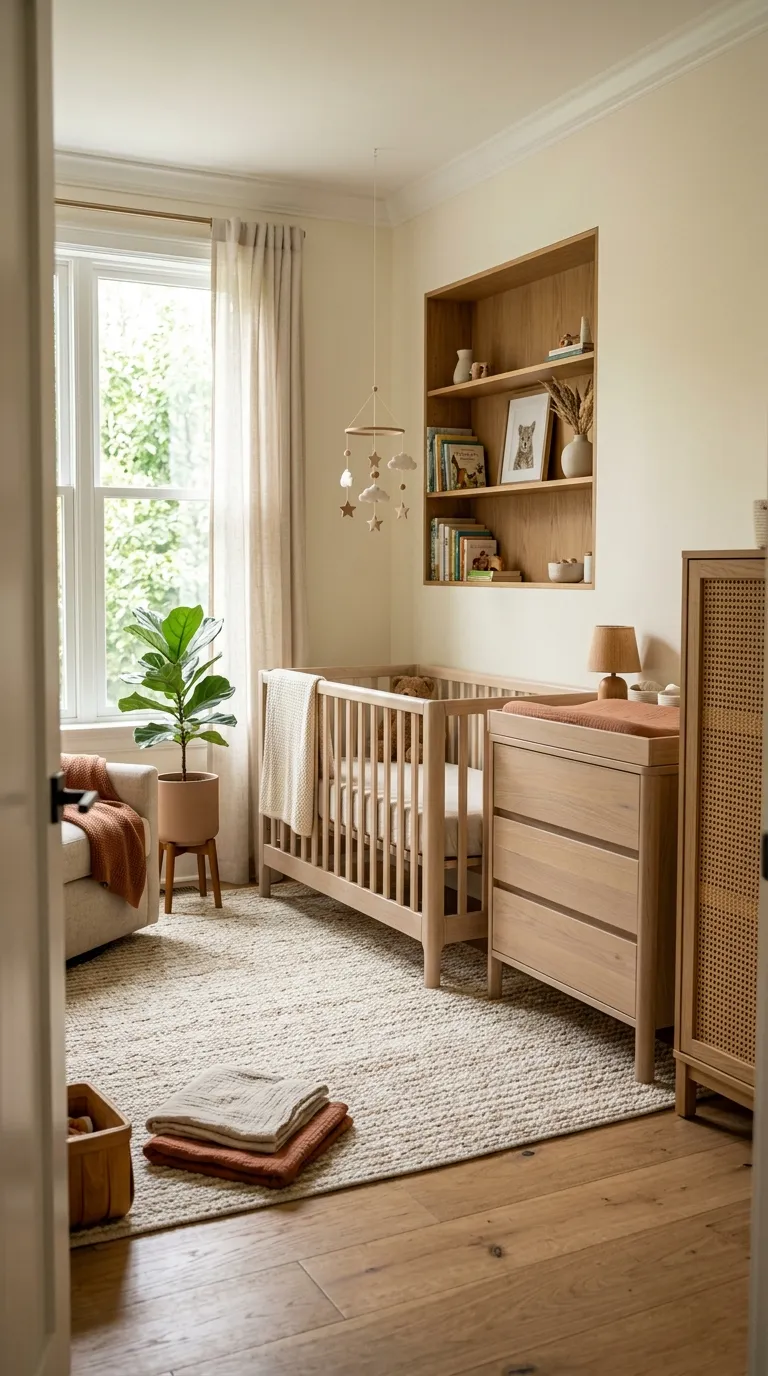
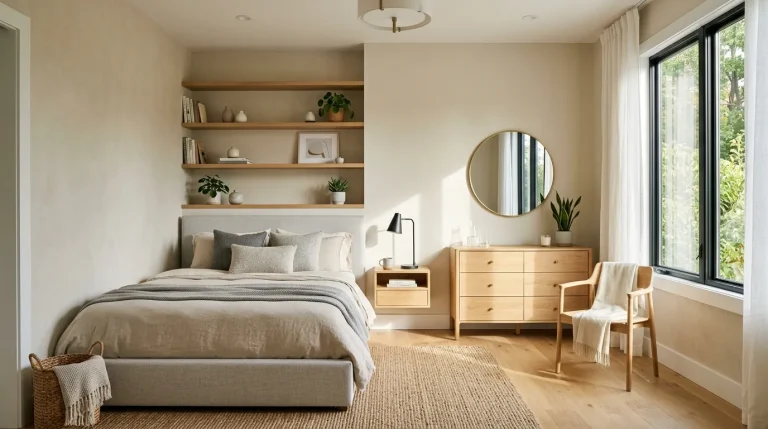
Warm wood keeps a modern nursery from feeling stark. Choose one main wood tone for the crib or dresser, then repeat it in smaller pieces such as shelves, frames, or a stool. This creates visual order without requiring a matching furniture set.
Look for rounded edges and simple fronts when choosing larger furniture. A pale oak dresser with six clean drawers can hold diapers, clothing, and blankets while adding warmth to a room with cream or white walls woodland nursery decor ideas.
Soft Neutral Layers
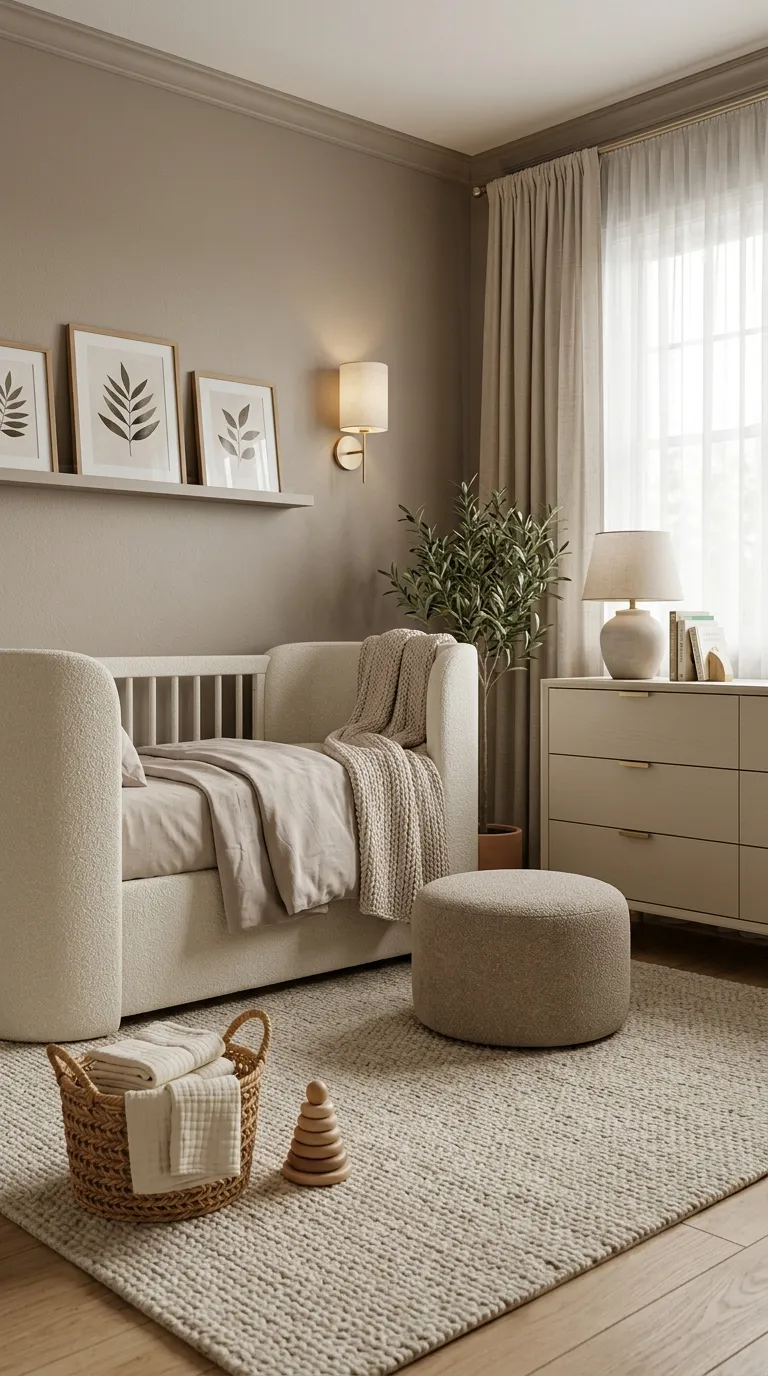
Neutral rooms work best when the textures do the visual work. Combine smooth painted walls with nubby boucle, woven baskets, washed linen, cotton bedding, and a soft wool rug so the space feels cozy without relying on lots of color.
Try three related neutrals instead of one flat shade. For example, warm white walls can sit beside mushroom curtains and sand-colored upholstery, giving the nursery depth while keeping the overall look peaceful.
Curved Furniture Details
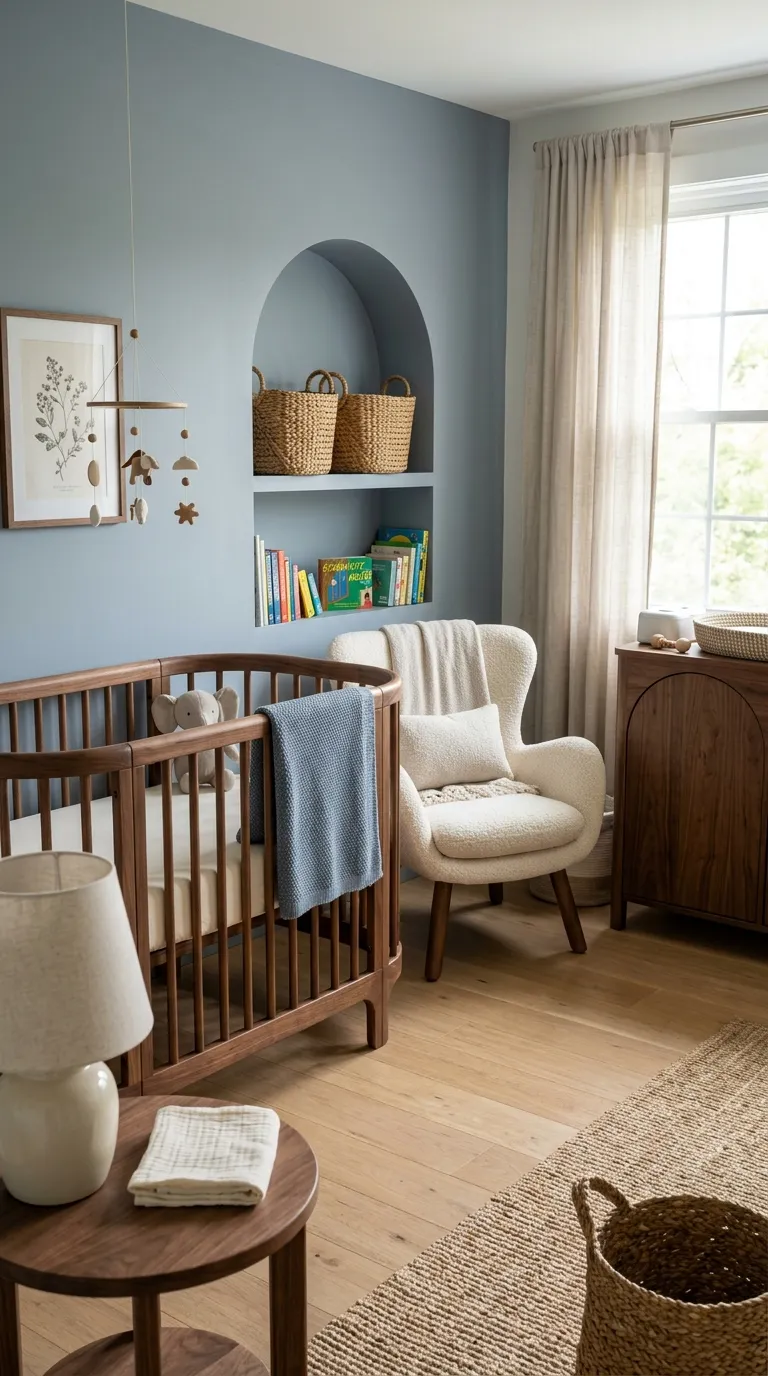
Curved furniture brings a softer shape into a room filled with straight walls and clean storage pieces. A rounded crib, arched cabinet, or circular side table can make the nursery feel gentle while keeping the overall design modern.
You don’t need several curved pieces. Pick one standout shape, then repeat a smaller rounded detail nearby. A circular rug beside an arched dresser, for instance, can make the room feel connected without looking overly themed.
Sage Green Serenity
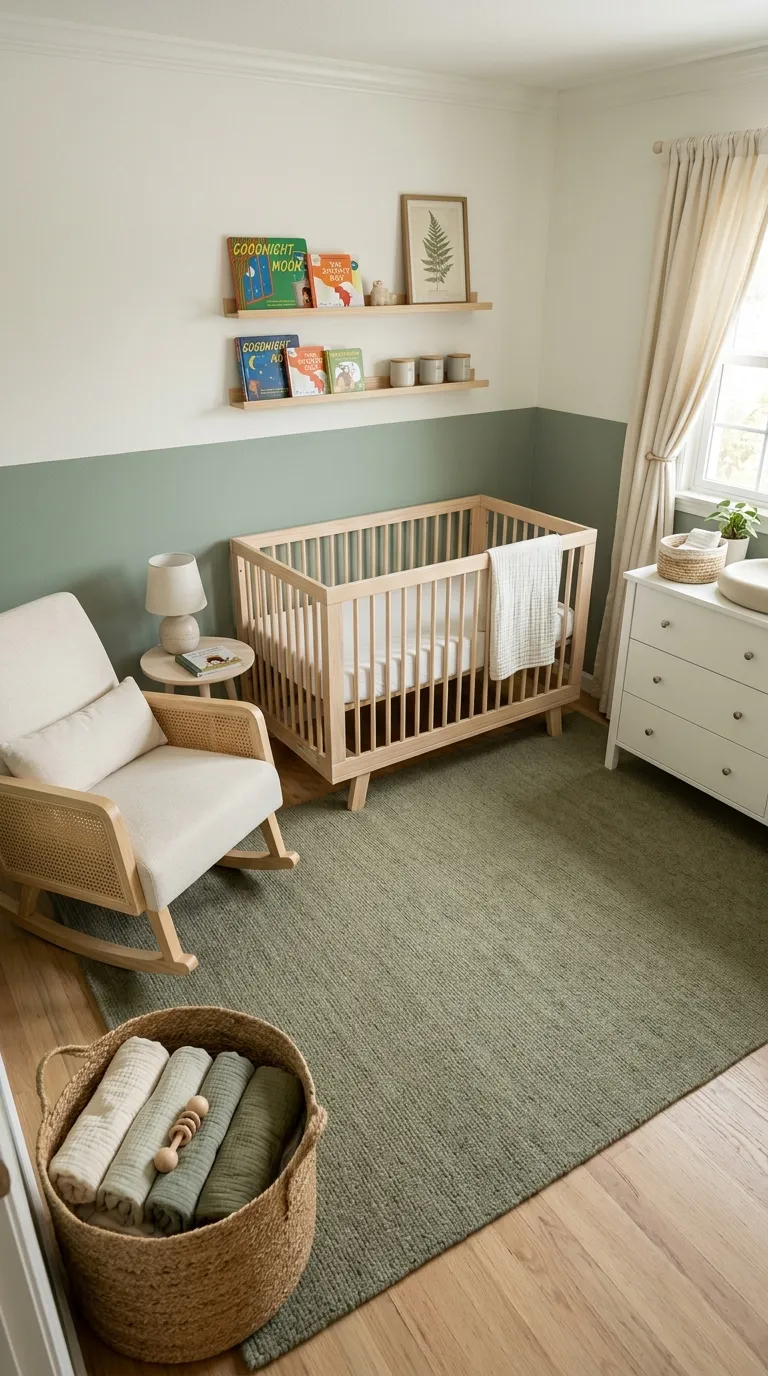
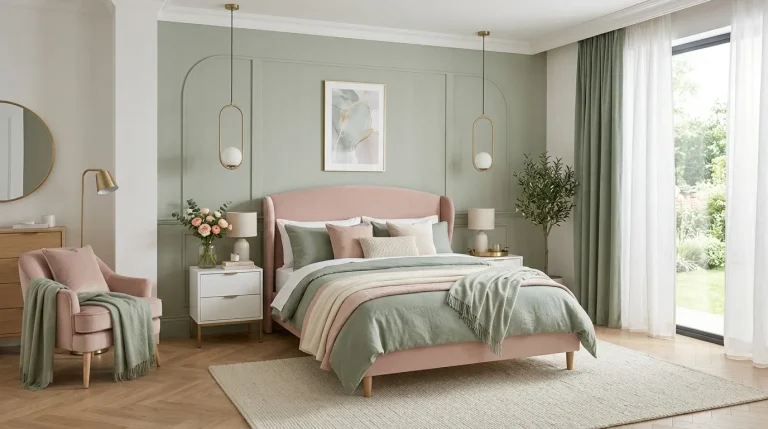
Sage green gives a nursery a gentle dose of color without making the room feel busy. Pair it with warm white and pale wood for a fresh palette that feels suitable for both a baby and an older child.
For a simple wall treatment, paint the lower portion sage and keep the upper section warm white. The horizontal break can make a small room feel taller while adding interest without wallpaper.
Statement Ceiling
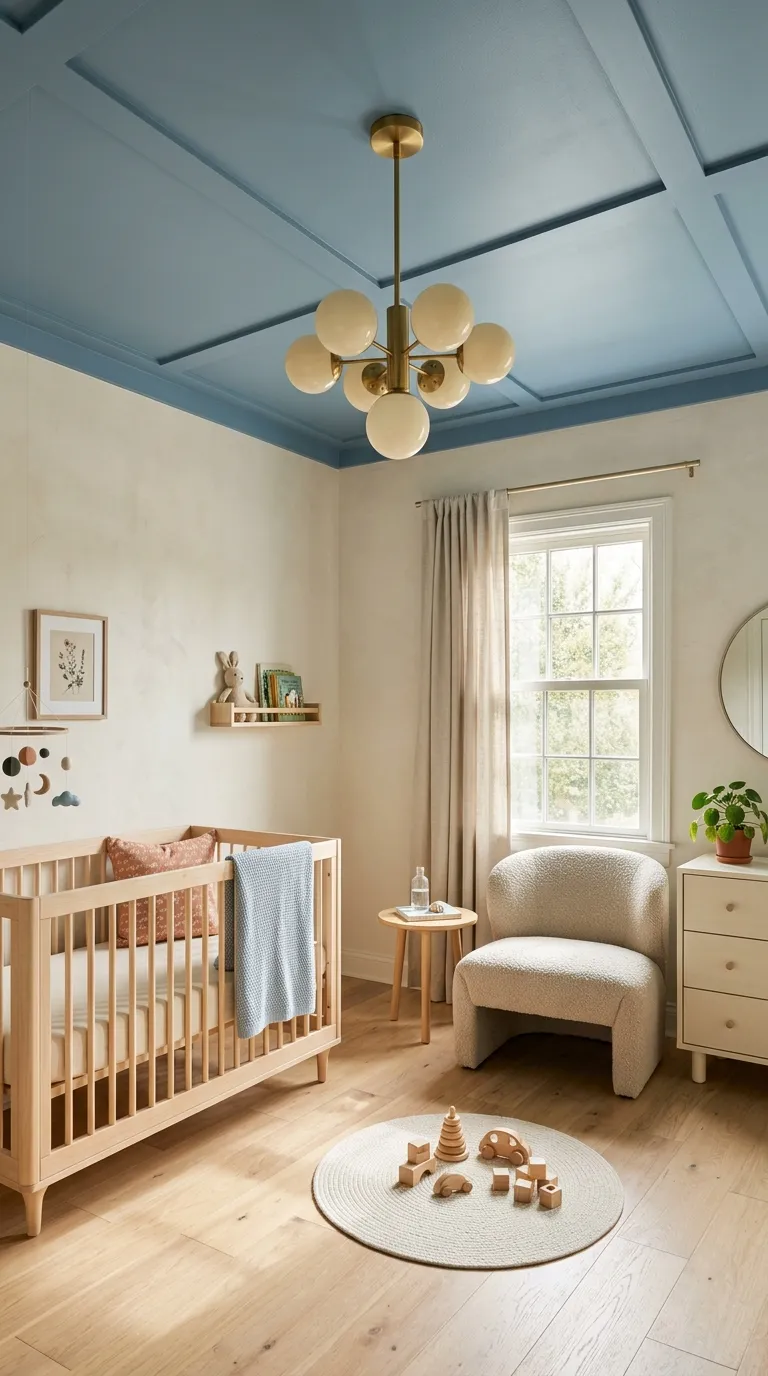
Look up when you enter the room and give the ceiling some personality. A muted blue, soft blush, or warm clay ceiling can add color while leaving the walls simple and easy to style.
Keep the furniture quieter when the ceiling carries the visual focus. This approach works especially well in a small nursery because the color sits above eye level instead of filling the room.
Minimal Wall Art
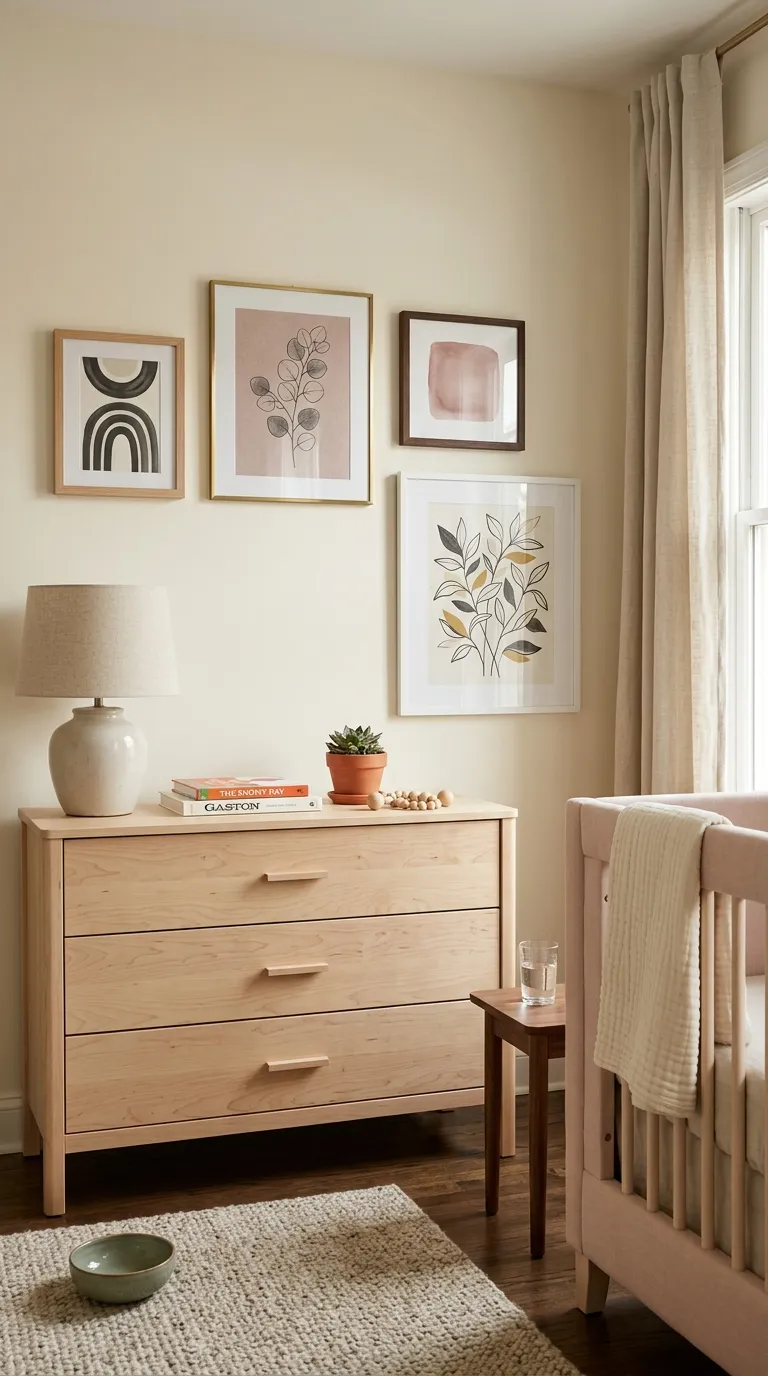
Minimal art can make a nursery wall feel finished without turning it into a themed display. Choose a small group of prints with related colors, then leave enough space between each frame so the arrangement can breathe.
Consider abstract shapes, simple botanical drawings, or quiet animal silhouettes. If you want the artwork to last beyond the baby years, skip overly specific nursery imagery and choose pieces that could work in a child’s room later.
Built-In Storage
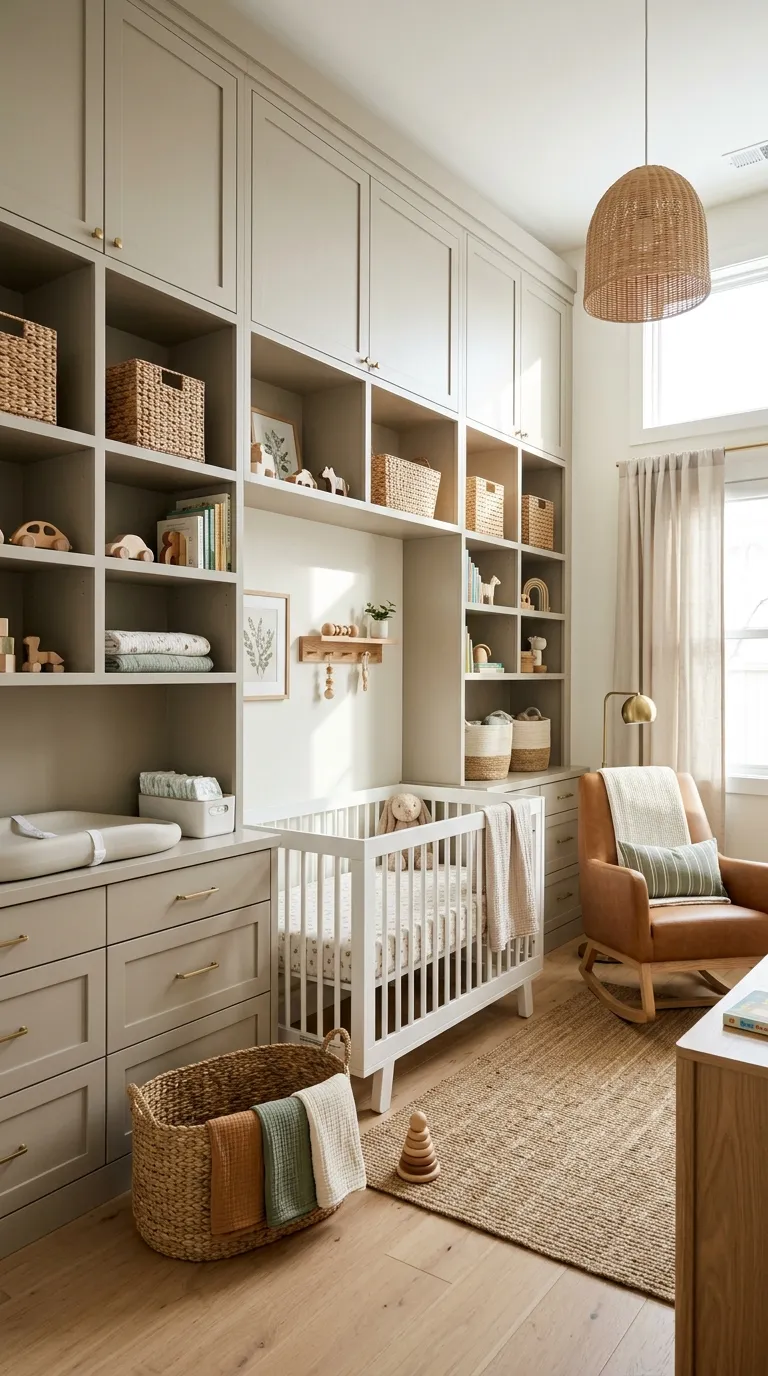
Built-in storage makes good use of vertical wall space. Mix closed cabinets for less attractive supplies with open cubbies for baskets, books, and a few decorative pieces you want within easy reach.
If custom cabinetry isn’t practical, create a similar effect with modular shelving. Choose units with matching finishes and take them close to the ceiling, leaving the upper shelves for items you don’t need every day.
Soft Blue Accents
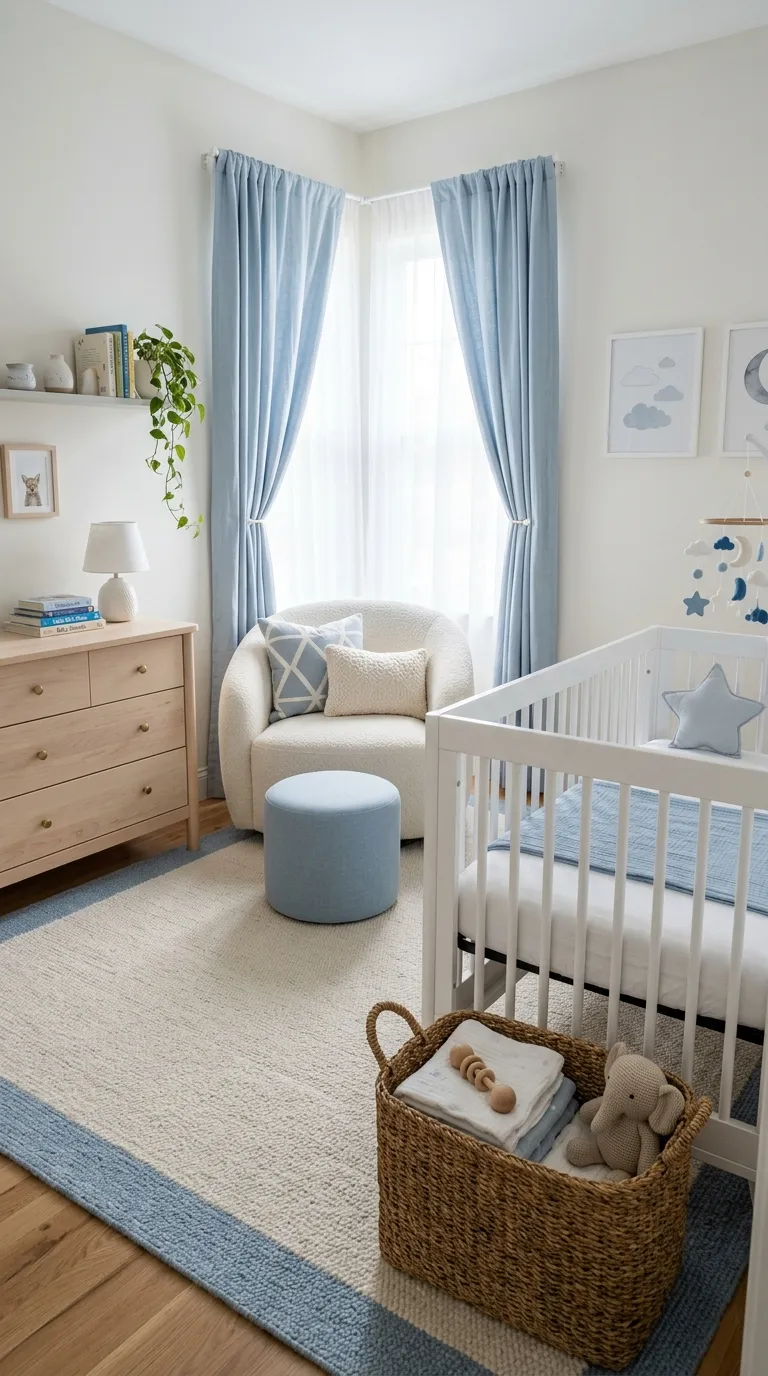
Soft blue works well when you want color without making the nursery feel heavily themed. Keep the larger furniture neutral, then use blue in textiles and smaller furnishings that can be replaced as the room changes.
Try pairing powder blue with warm ivory rather than bright white. The warmer base keeps the color gentle and gives the nursery a more comfortable look throughout the day.
Textured Accent Wall
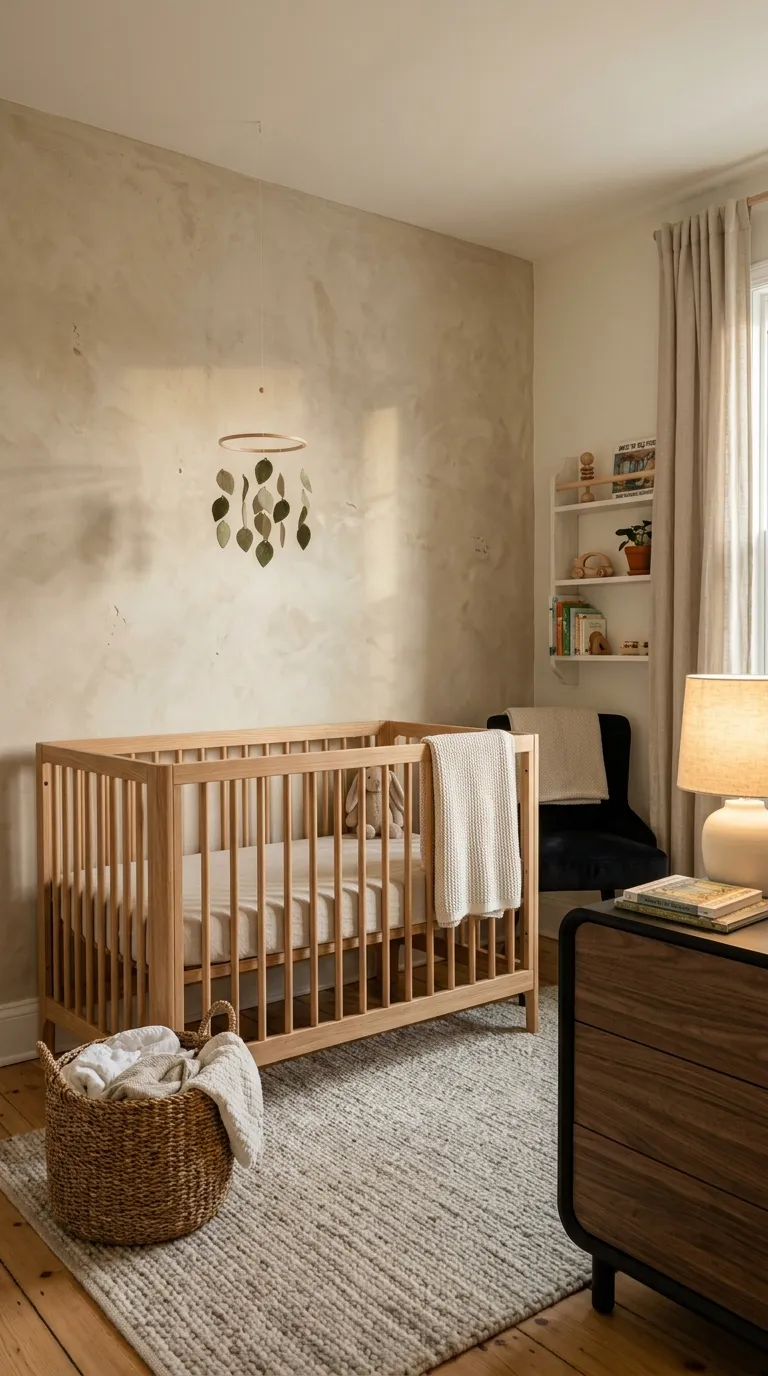
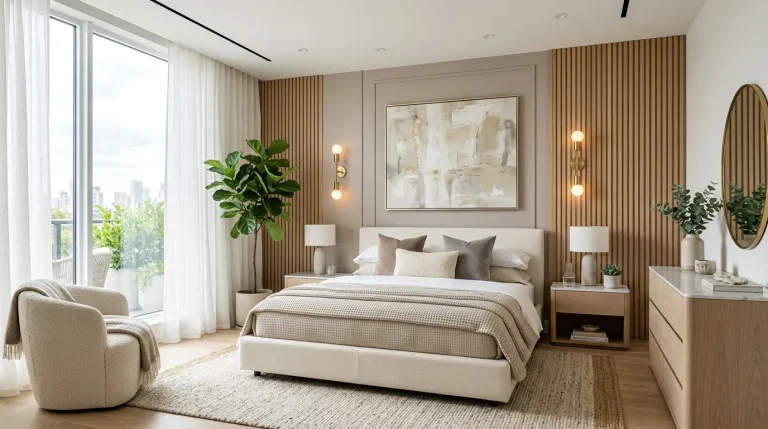
A textured wall adds character without filling the room with patterns. Limewash-style paint, subtle plaster texture, or a soft grasscloth-inspired finish can give a plain wall more depth while keeping the furniture simple.
Use the textured finish behind the crib or changing area so it becomes a natural focal point. Keep nearby artwork and accessories restrained, allowing the wall itself to provide most of the visual interest.
Compact Nursery Layout
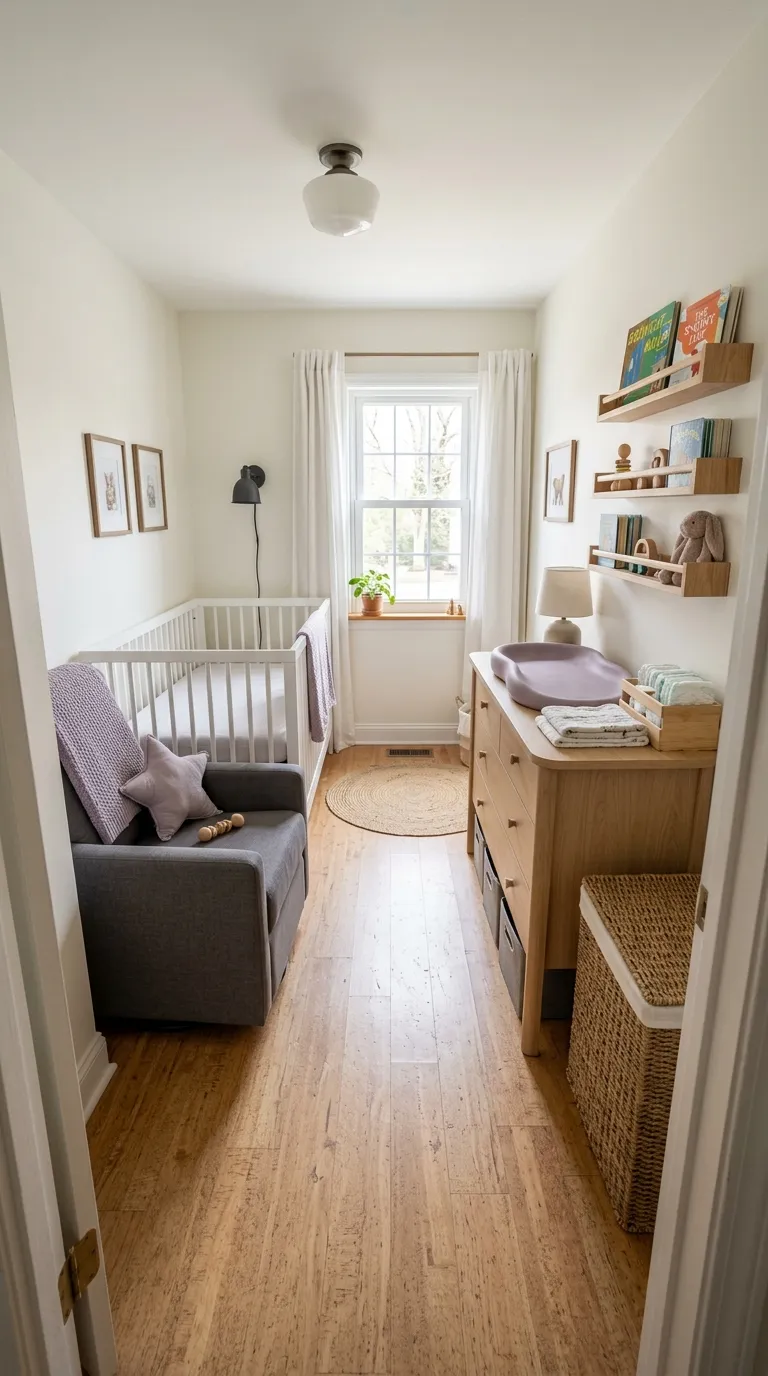
A small nursery doesn’t need oversized furniture. Measure the room first, then choose pieces that leave a clear path between the crib, changing station, chair, and door.
Use vertical storage when floor space is tight. Wall-mounted shelves, tall narrow cabinets, and hooks can hold daily supplies without taking away the floor area needed for movement.
Modern Black Accents
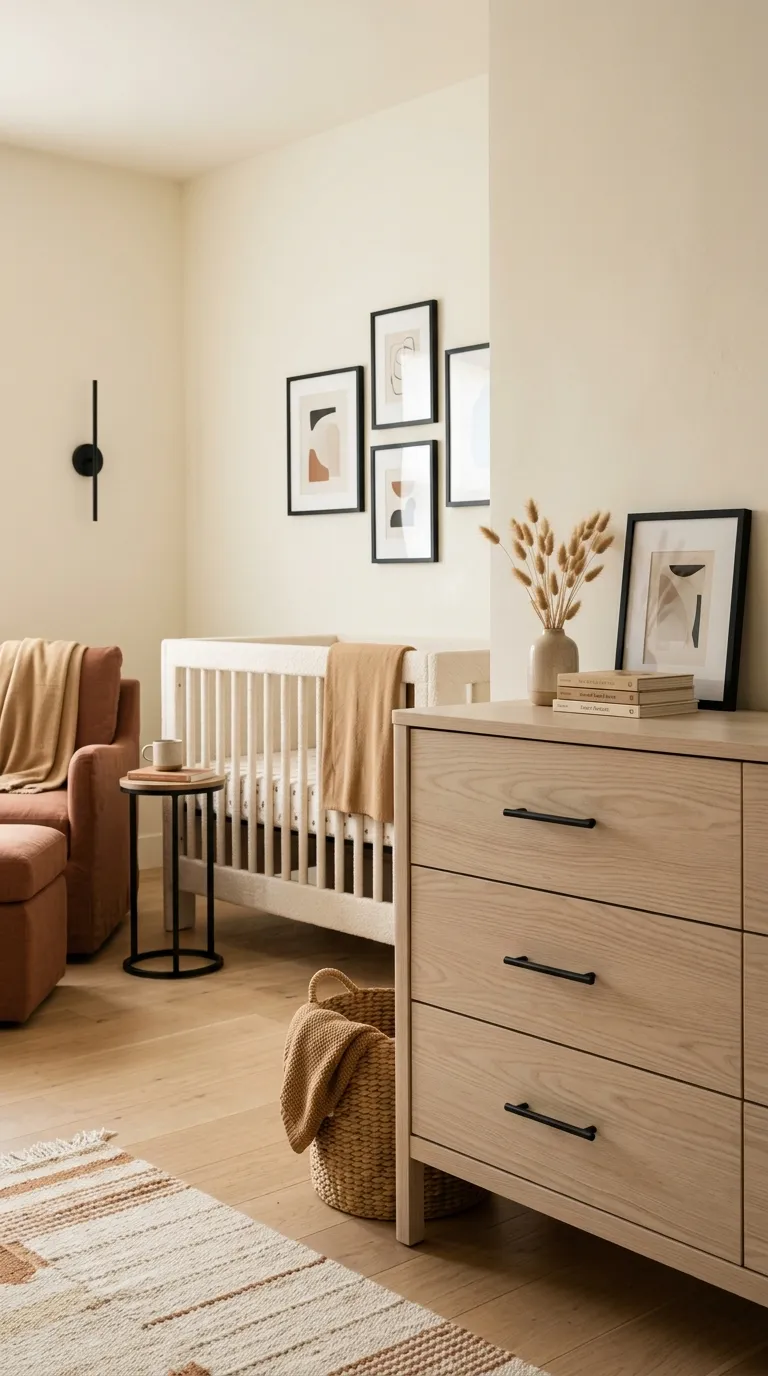
Black details can give soft nursery colors a sharper edge. The key is restraint, since too much dark hardware can make a small room feel visually heavy.
Repeat black in two or three places rather than scattering it everywhere. A wall light, dresser pulls, and picture frames can create enough contrast to define the room without taking attention away from the softer pieces.
Layered Nursery Lighting
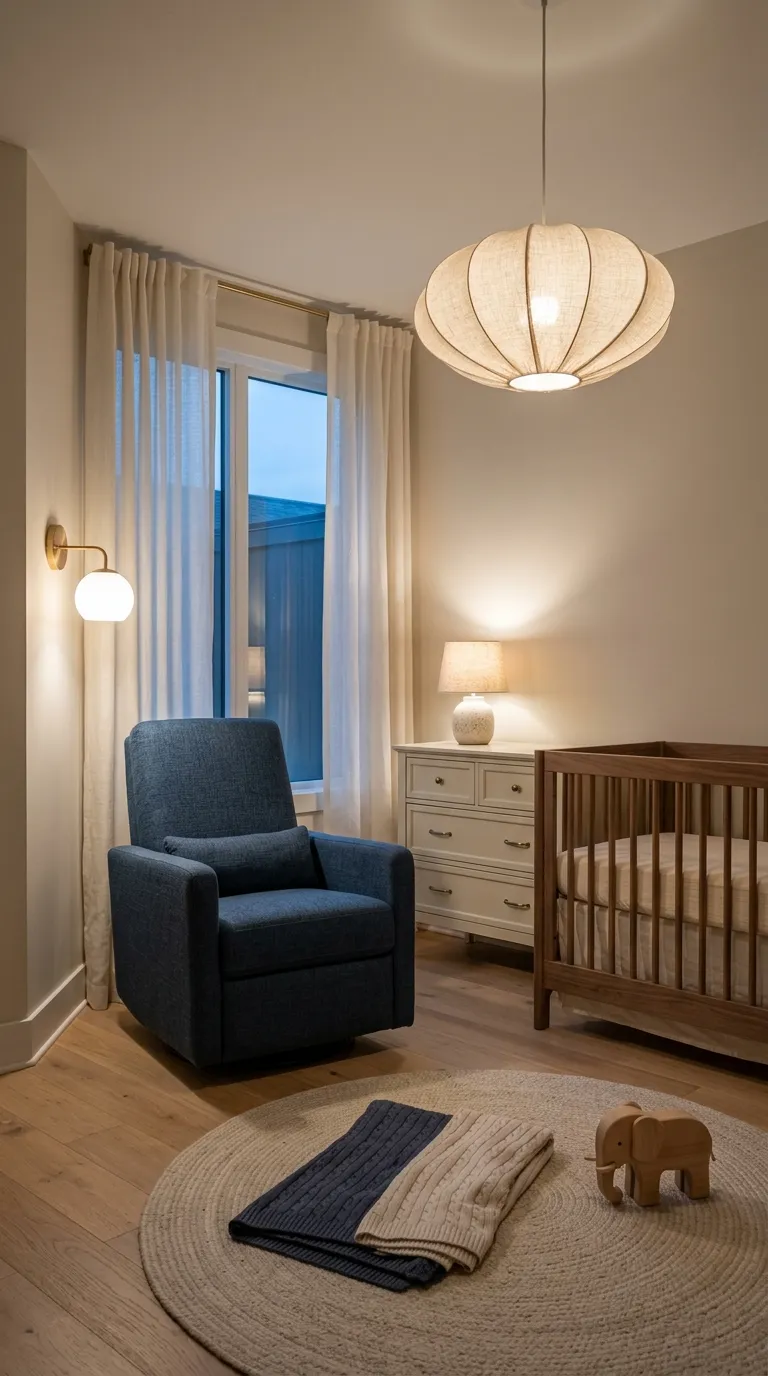
One ceiling light rarely handles every nursery task well. Layer overhead lighting with a dimmable lamp and a low-glow wall light so you can create softer illumination during nighttime care.
Place the reading light near the nursing chair and keep the changing area well lit. A warm, dimmable bulb can make late-night tasks easier while keeping the room from feeling overly bright.
Natural Fiber Rugs
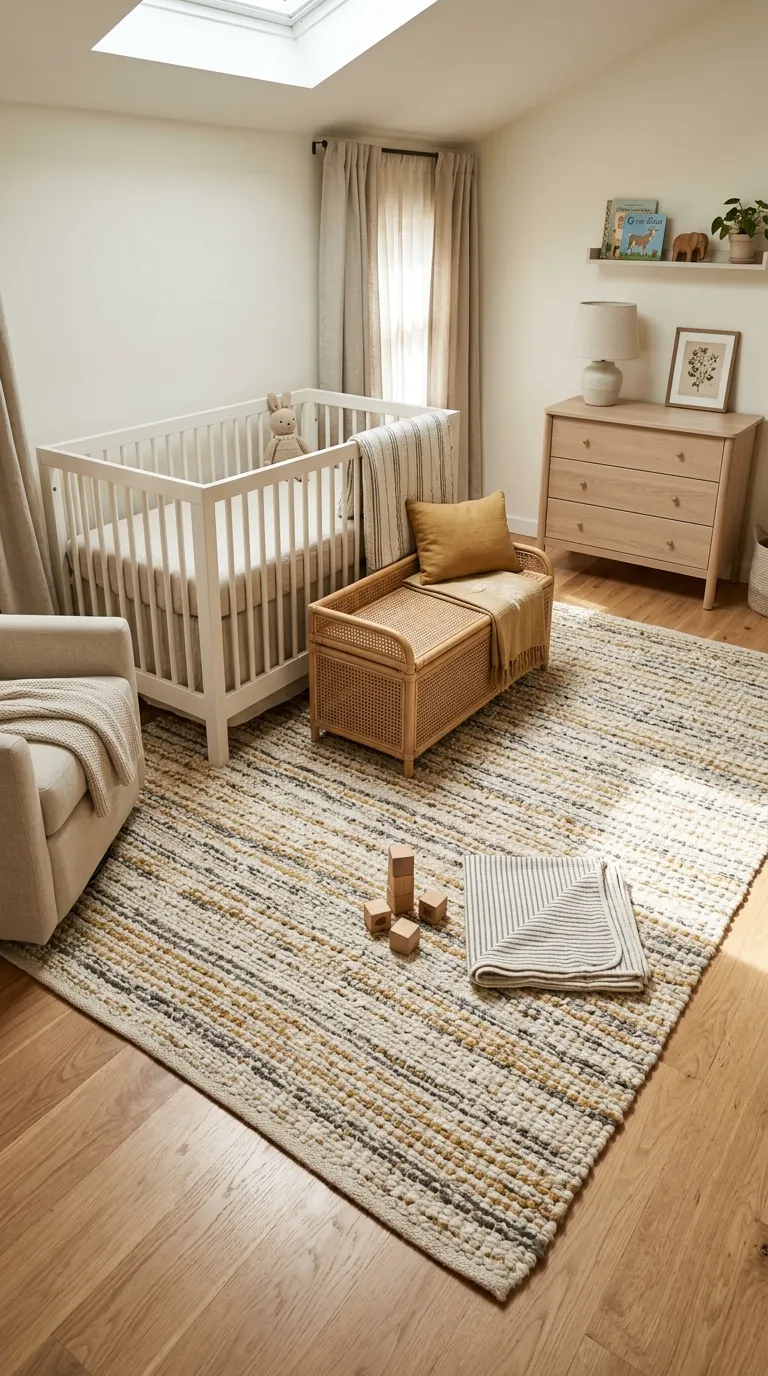
A natural fiber rug brings warmth underfoot and gives the nursery a clear visual anchor. Jute, wool, cotton, and wool-blend rugs can add texture while keeping the room’s color palette grounded.
Choose a rug large enough to sit under the crib and at least one nearby piece of furniture. A properly sized rug helps separate the sleeping area from the rest of the room and can make the layout feel more intentional.
Muted Terracotta Touches
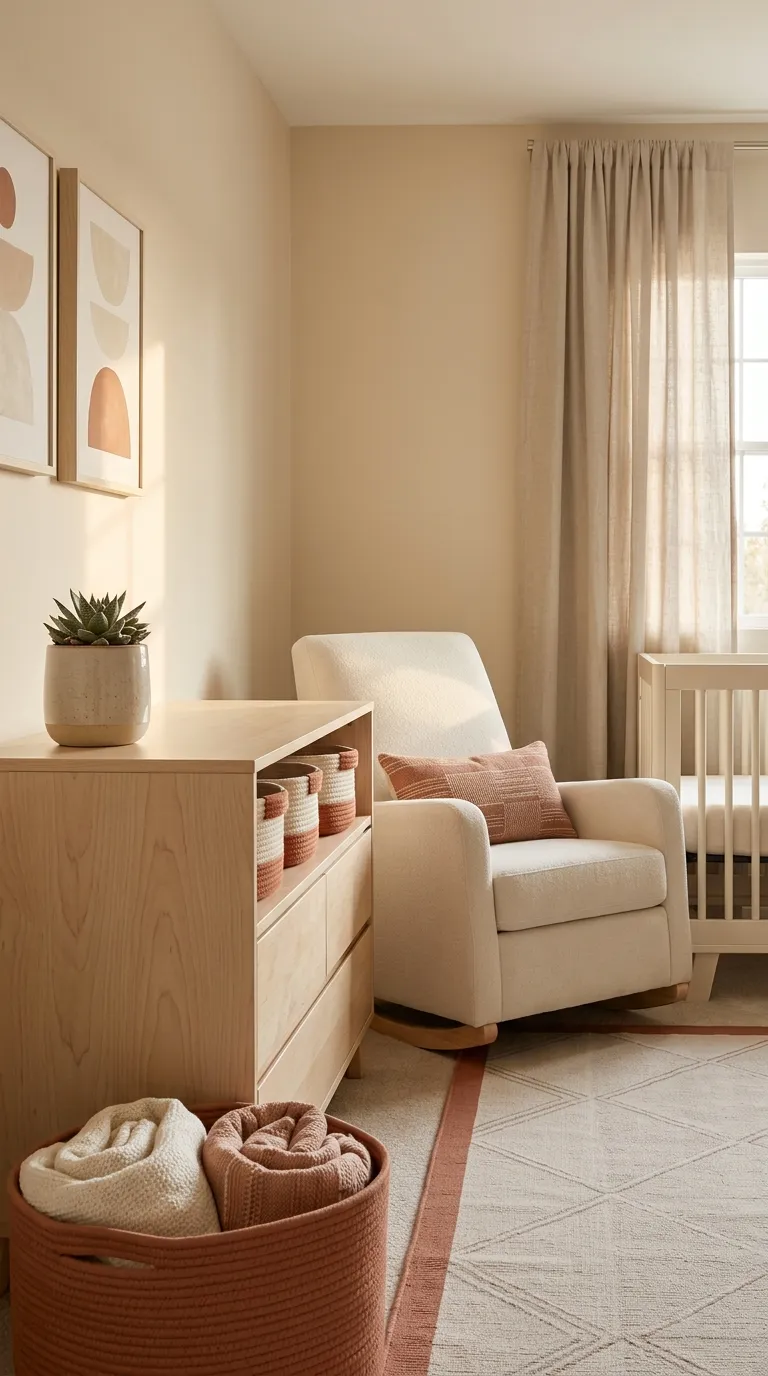
Terracotta adds warmth without the intensity of bright orange or red. Use it in small pieces when your nursery already has plenty of pale neutrals.
Try clay-colored ceramics, baskets, cushions, or artwork. Because these items are easy to replace, you can change the accent color later without buying new furniture or repainting the room.
Scandinavian Simplicity
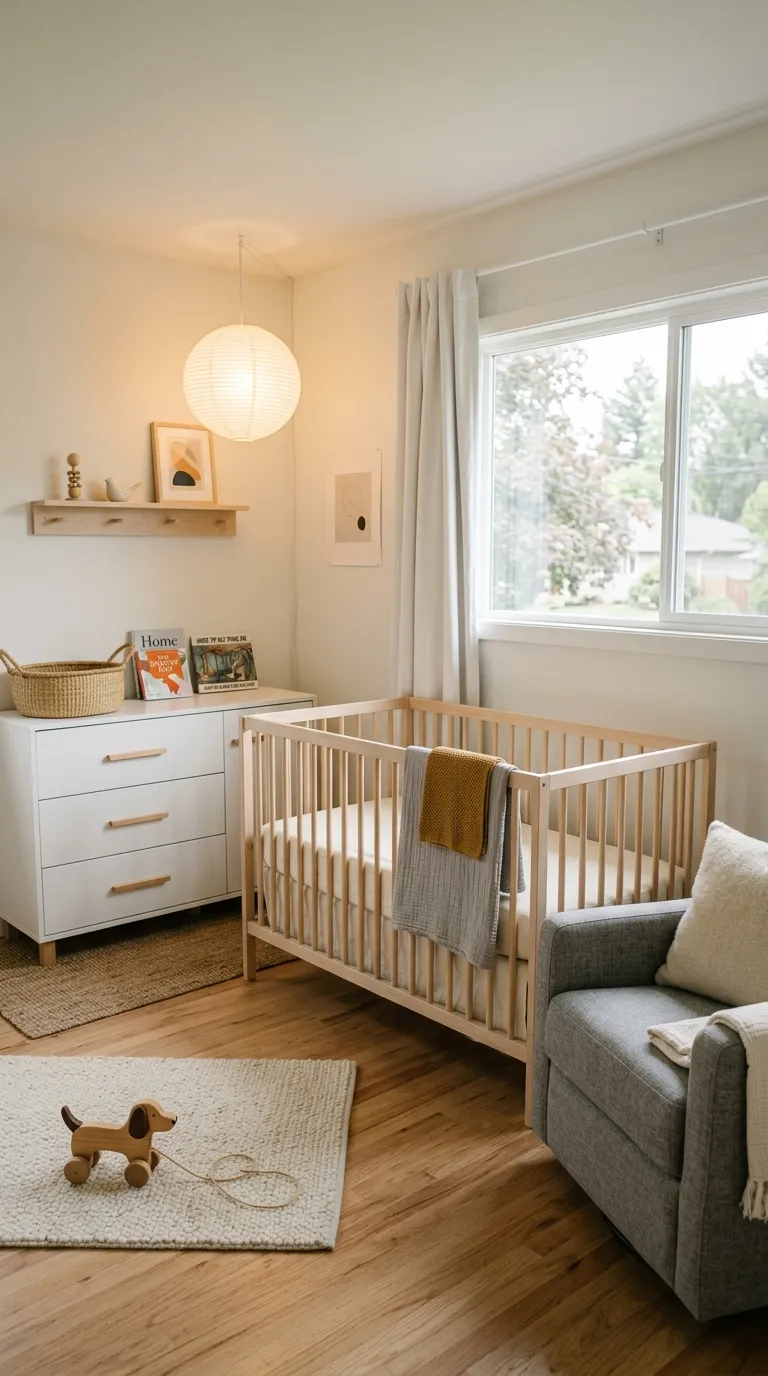
Scandinavian design suits a nursery because it puts comfort and function first. Pale wood, simple furniture, soft textiles, and open floor space create a room that feels easy to use.
Keep decoration purposeful. One well-placed shelf, a few favorite books, and a useful basket often look better than filling every empty surface with accessories.
Floating Wall Shelves
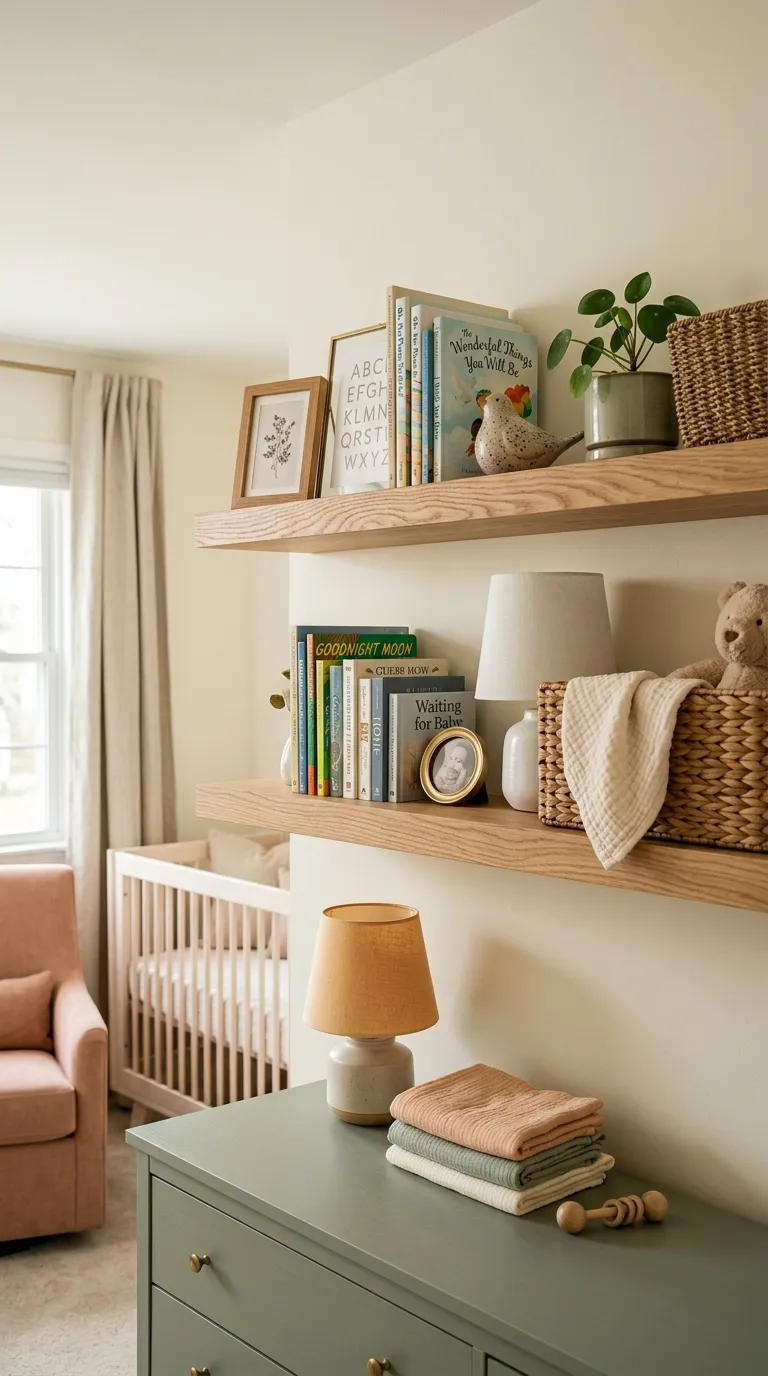
Floating shelves add storage without taking up valuable floor space. Use them for books, small baskets, framed art, or a few decorative pieces that make the nursery feel personal.
Keep heavier and frequently handled items lower and secure. For shelves within a child’s future reach, use sturdy installation and avoid placing fragile or unsafe objects where little hands can grab them.
Cozy Reading Corner
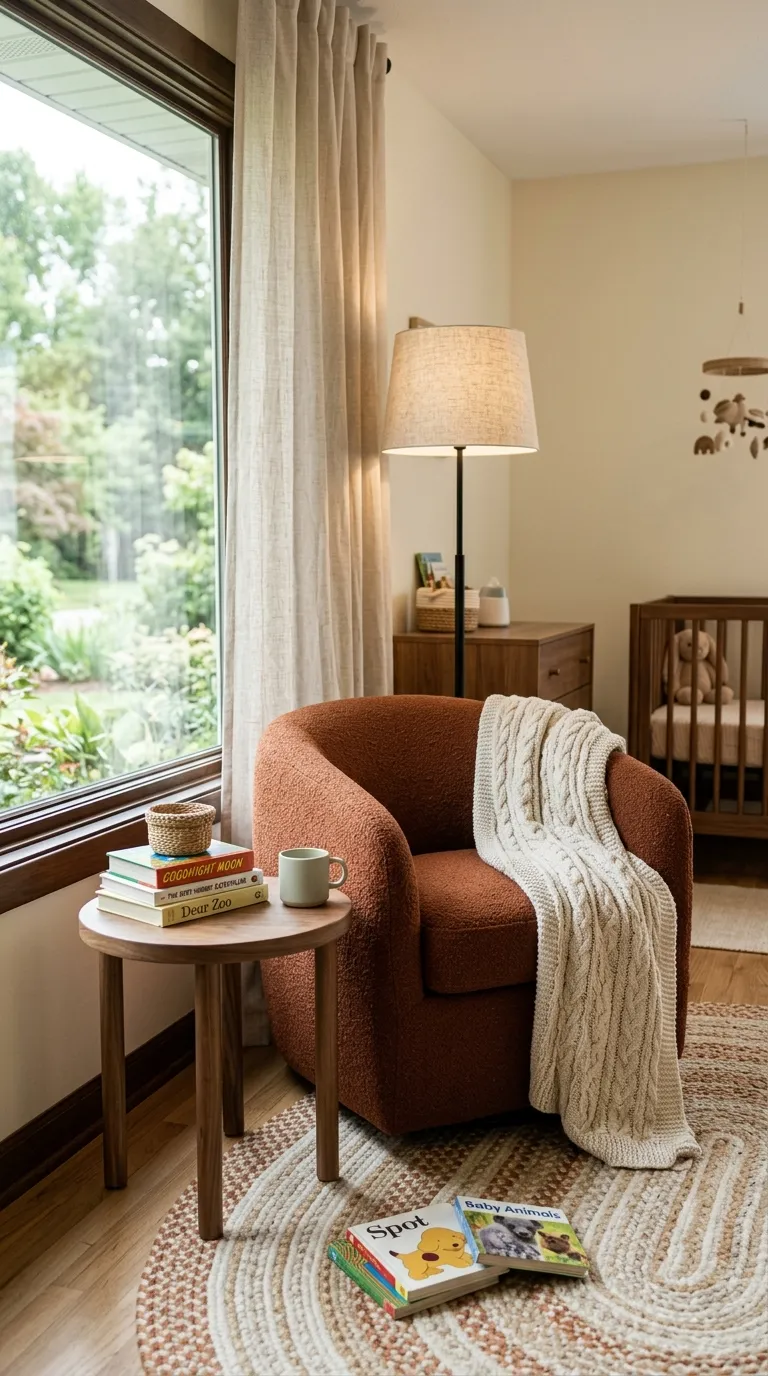
A comfortable reading corner gives the nursery a clear spot for quiet time. Choose a supportive chair with enough room for feeding, reading, or settling a baby before bedtime.
Keep the essentials within arm’s reach. A small side table can hold books, a water bottle, burp cloths, or a dimmable lamp, so you don’t have to leave the chair during a quiet moment.
Japandi Nursery Style
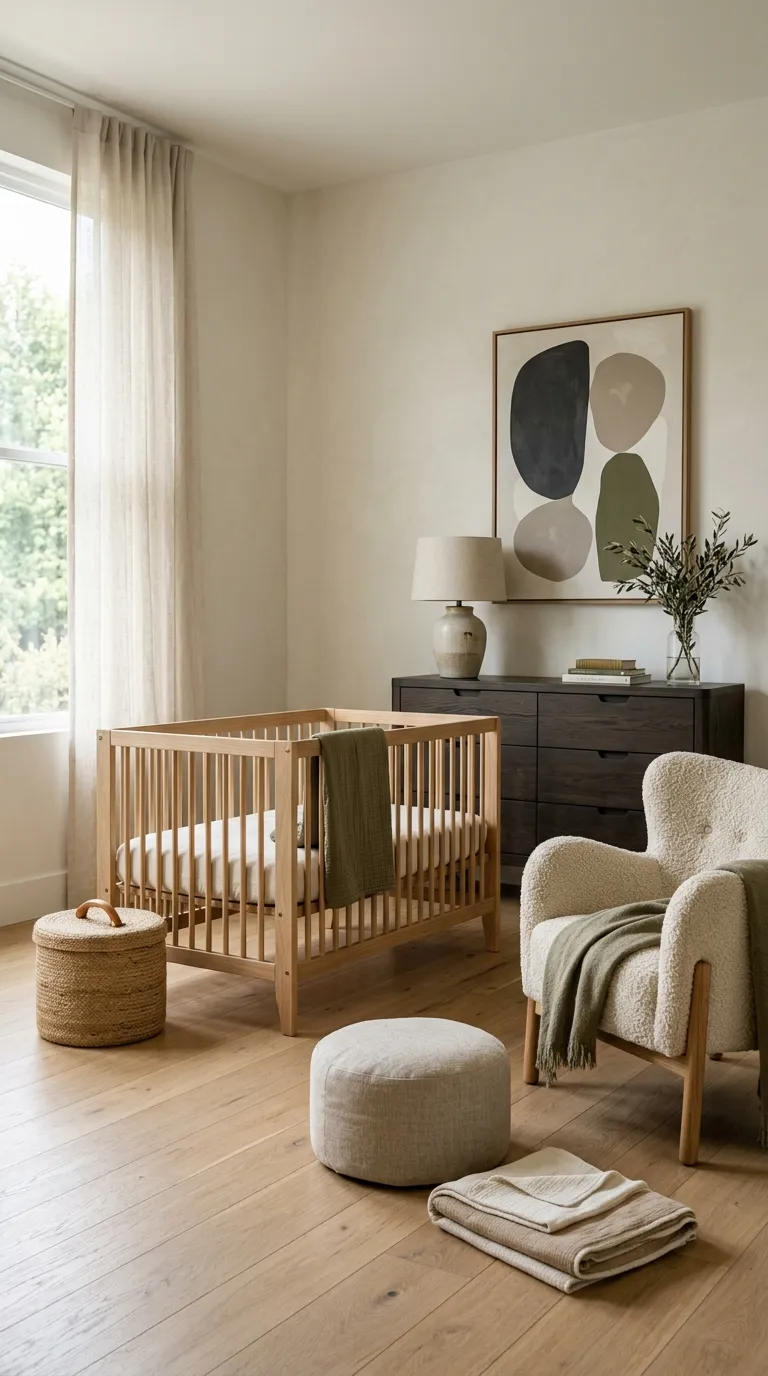
Japandi style blends simple forms with natural warmth. In a nursery, that can mean pale oak, handmade ceramics, linen, soft upholstery, and plenty of open space around the main furniture.
Choose quality over quantity when styling this look. One beautiful lamp or textured basket can make more impact than a shelf crowded with small accessories.
Playful Color Blocks
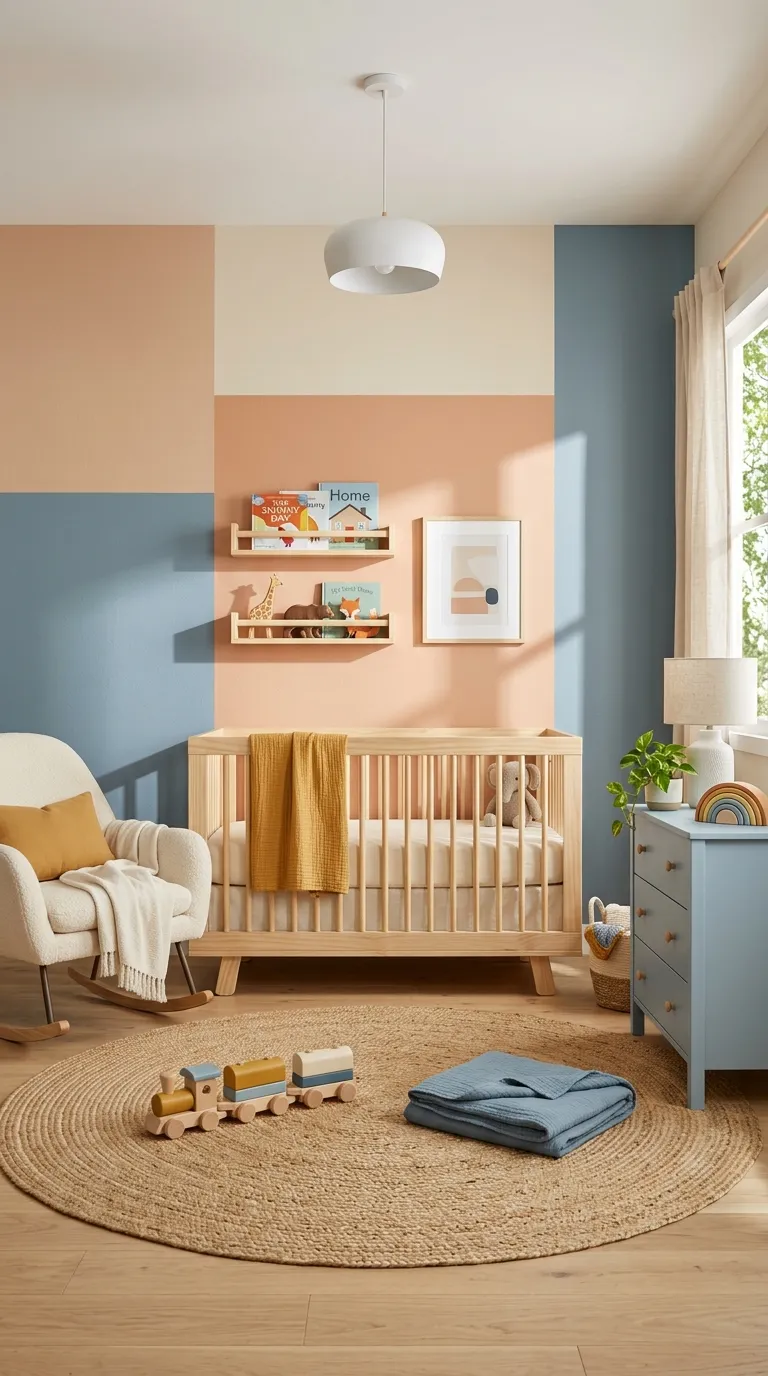
Color blocking gives you a playful nursery without relying on cartoon themes. Choose two or three muted shades and use simple shapes such as arches, half walls, rectangles, or broad vertical panels.
Keep the furniture neutral so the painted shapes remain the star. This is also a budget-friendly way to make a plain rental-friendly room feel more personal when removable paint options are available.
Tonal Pink Palette
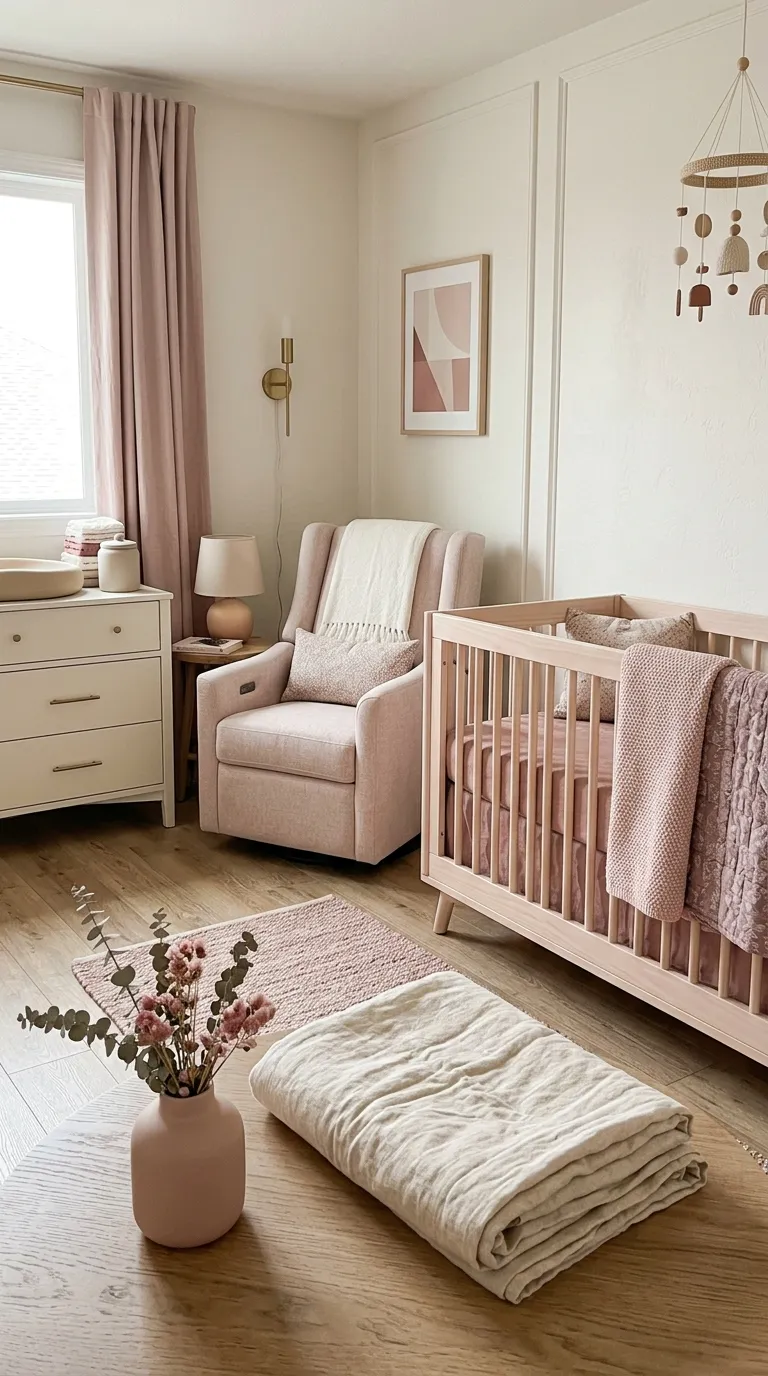
Pink can feel modern when you work with several muted shades instead of one bright color. Blush walls, dusty rose textiles, and mauve accents create depth while keeping the room soft.
Add warm ivory and natural wood to keep the palette grounded. If you want flexibility later, use pink mainly in curtains, rugs, bedding, and small accessories rather than permanent furniture.
Arched Wall Nook
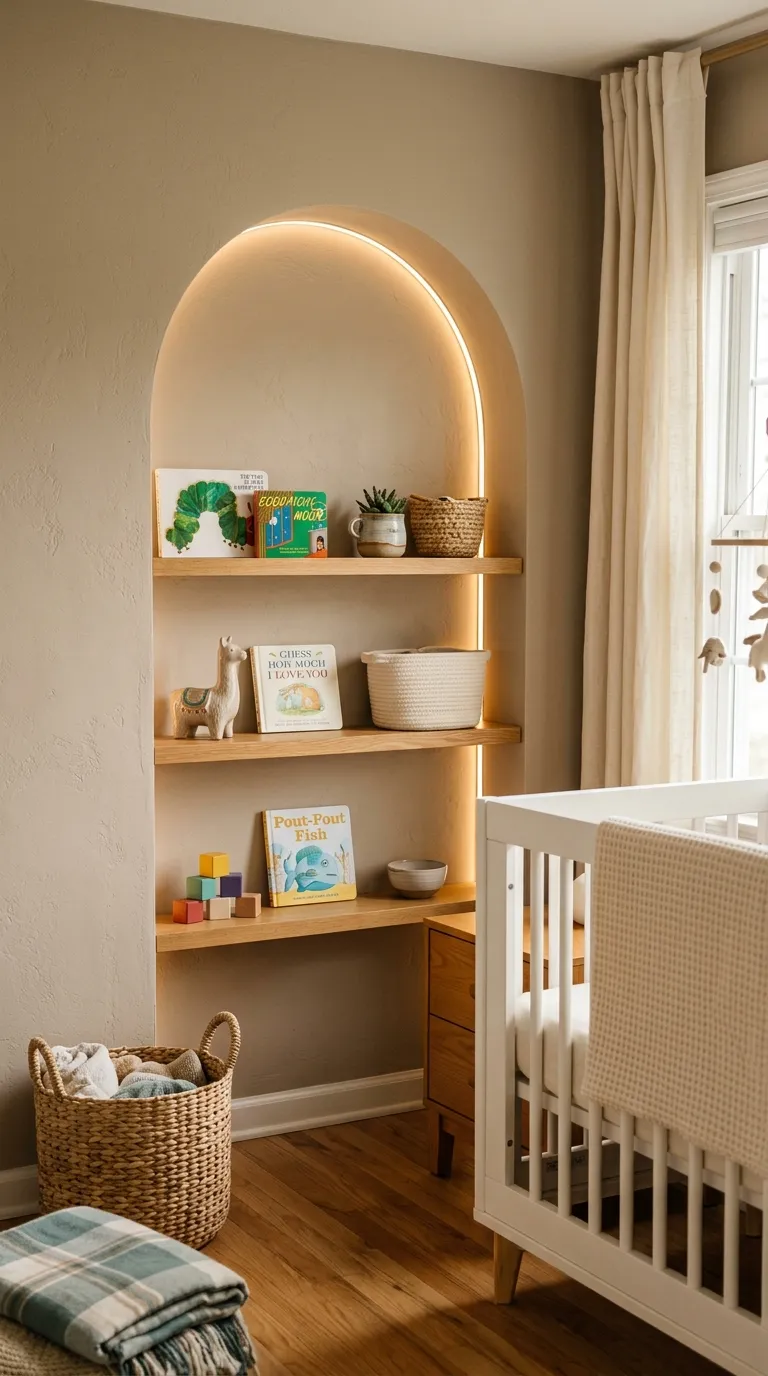
An arched nook creates a built-in focal point without needing a large piece of furniture. Use the opening for books, baskets, or a few decorative objects that connect with the nursery’s main colors.
If the room doesn’t have a real niche, mimic the shape with a painted arch behind a shallow shelf. This simple wall treatment can create a similar visual effect with far less construction.
Quiet Monochrome Mix
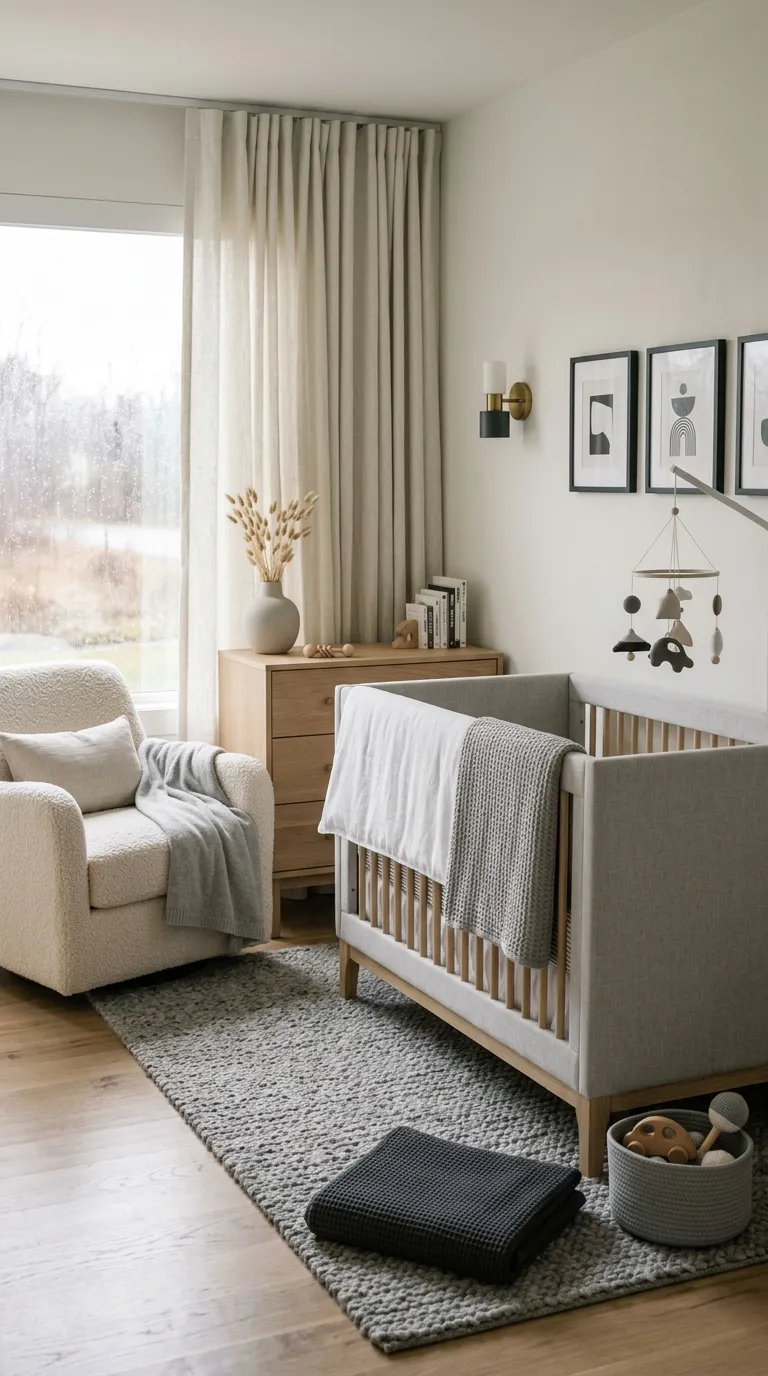
A monochrome nursery can feel warm when you layer several shades instead of using plain white everywhere. Soft gray, cream, stone, and charcoal give you a calm base with enough contrast to define each area.
Texture matters even more in a limited palette. Combine boucle, linen, wool, smooth wood, and matte ceramics so the room has visual variety without relying on strong colors or busy patterns.
Warm Beige Backdrop
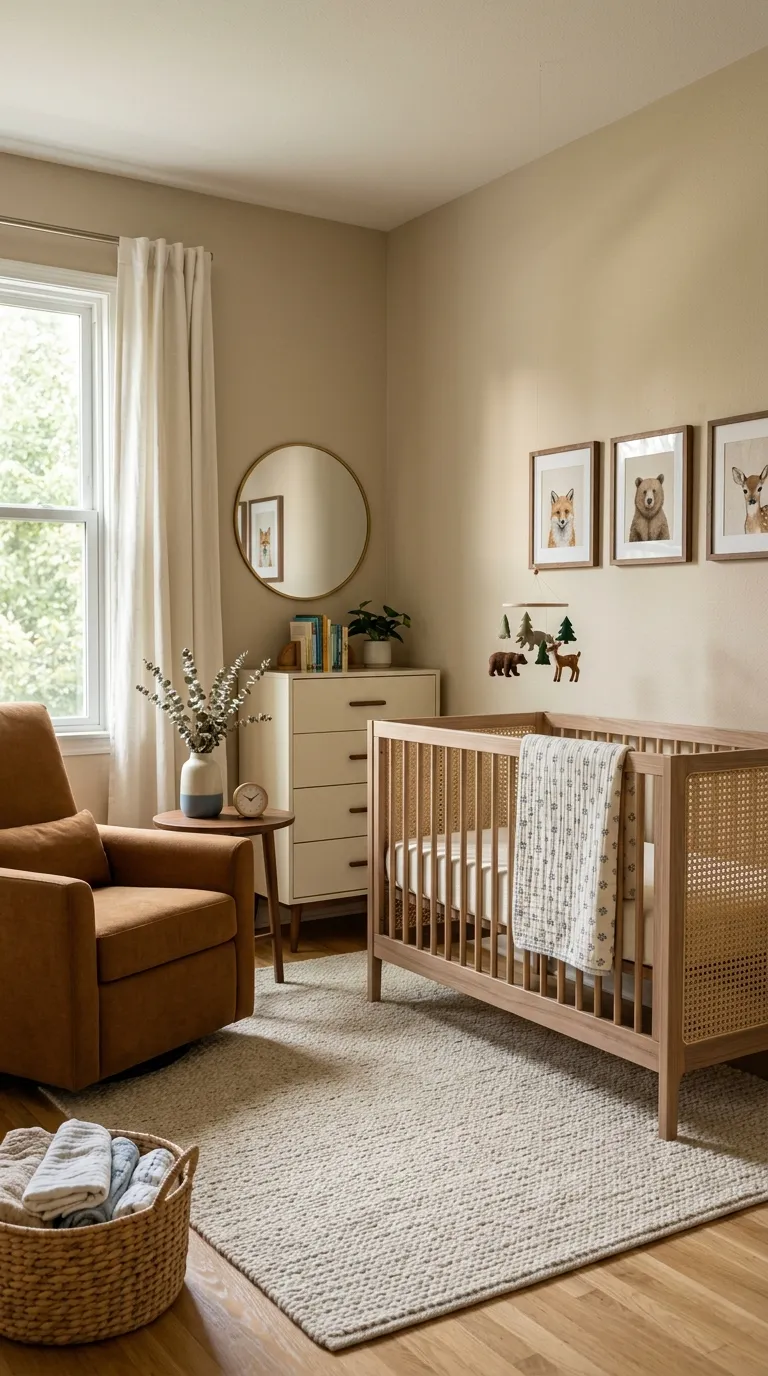
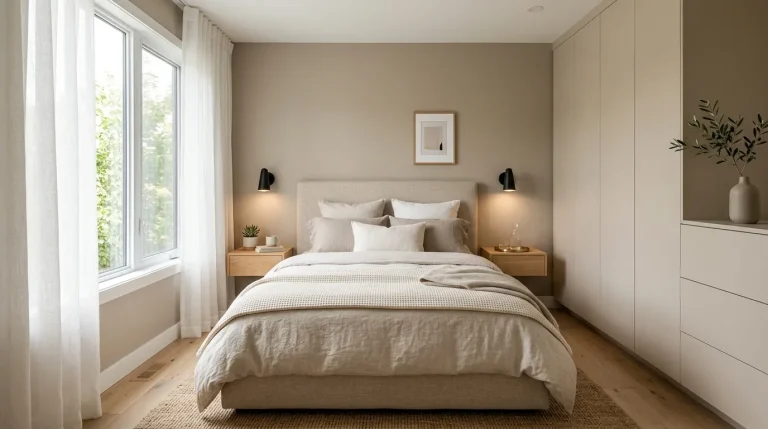
Warm beige gives you a softer alternative to bright white walls. It pairs naturally with wood, cane, cream textiles, and other earthy finishes, making it a useful base for a modern nursery.
Test your paint sample at different times of day before committing. Beige can look cooler in shaded corners and warmer near sunny windows, so checking the color throughout the day helps you choose with confidence.
Hidden Changing Station
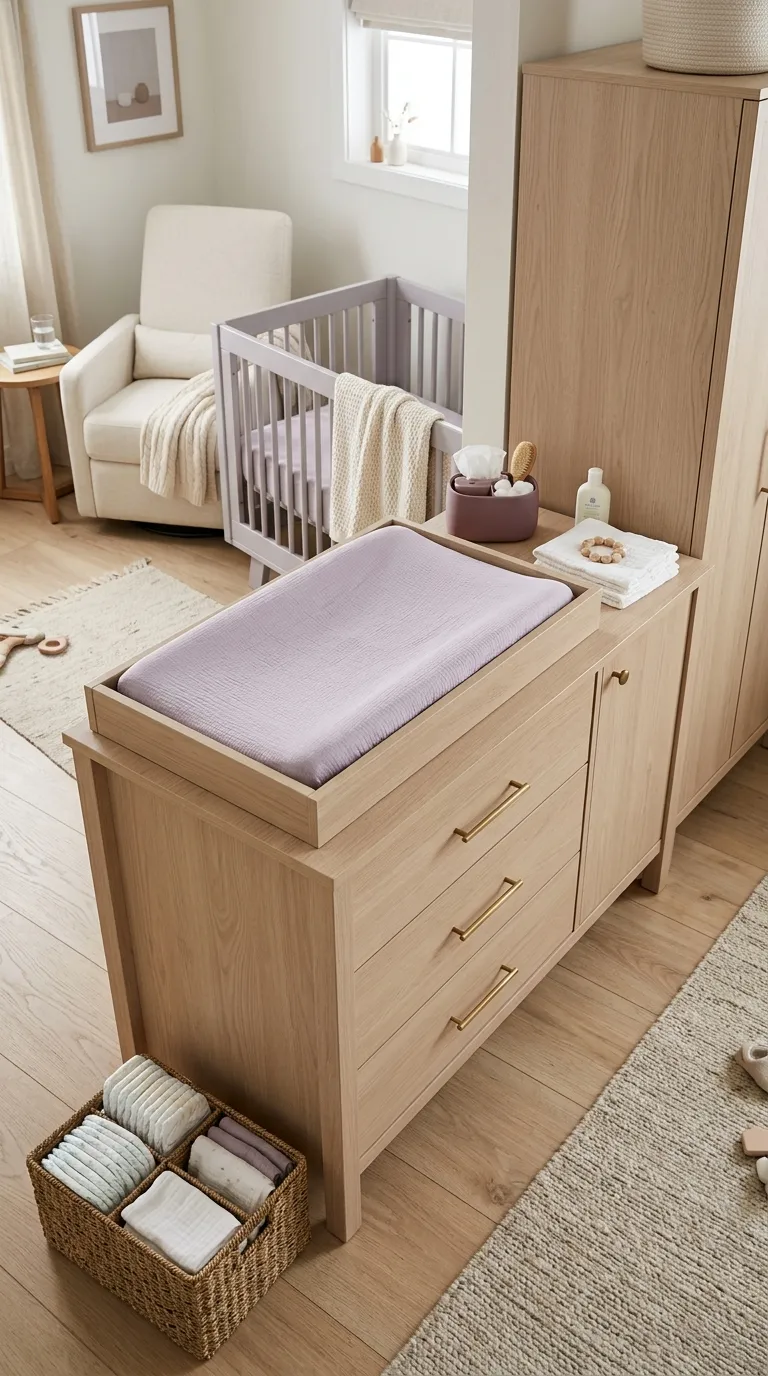
A changing station doesn’t need to look like nursery equipment. A sturdy dresser with a compatible changing setup can serve the same purpose while looking like regular bedroom furniture.
Keep diapers, wipes, creams, and clean clothes organized close to the changing surface. Closed drawers hide visual clutter, while one small open basket can hold the supplies you use most often.
Grow-With-Me Furniture
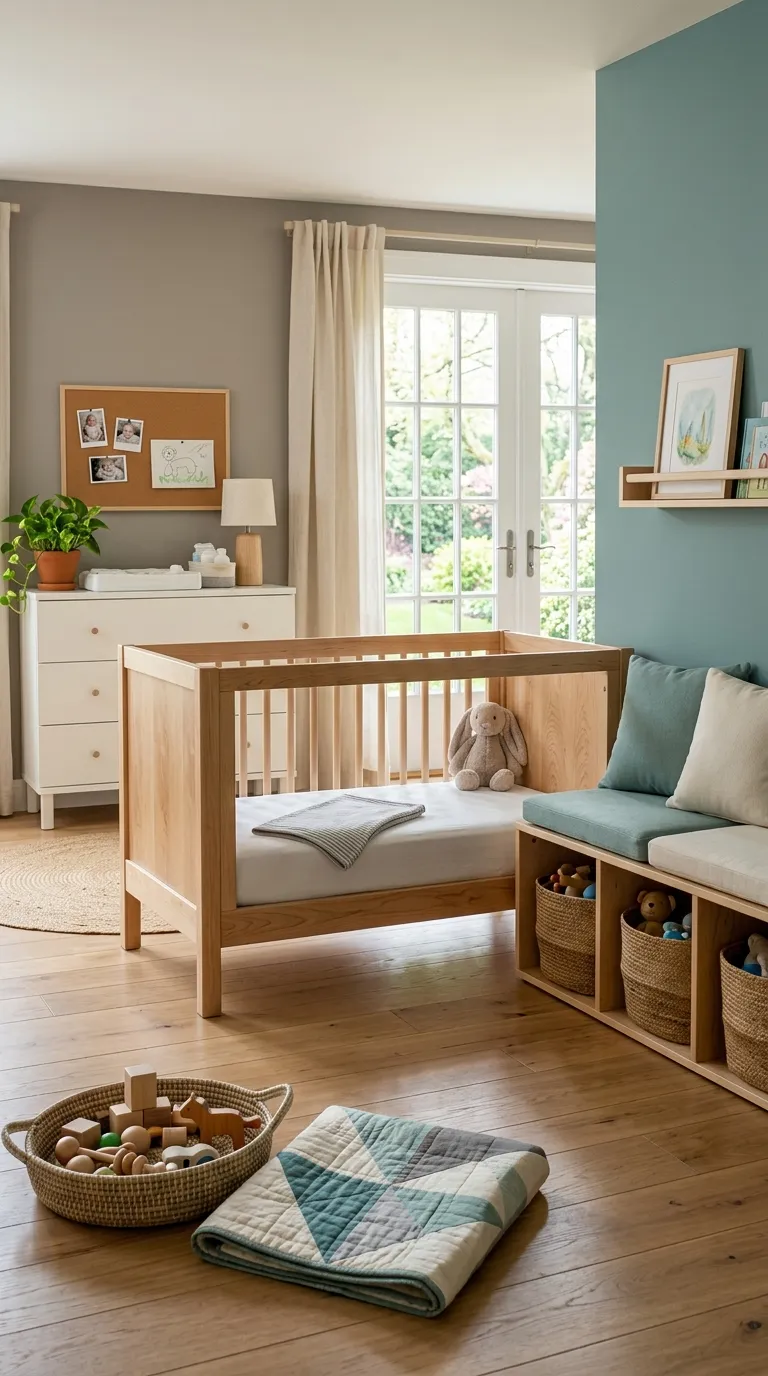
Furniture that can serve more than one stage can save space and reduce future purchases. Look for convertible cribs, sturdy dressers, adjustable shelving, and storage benches that can work beyond the baby years.
Think about how each piece could function later. A changing dresser can become clothing storage, while a small reading chair can remain useful in a child’s room long after nighttime feeds are over.
A Nursery That Feels Like Home
The best nursery design balances beauty with everyday function. Start with a comfortable crib, practical storage, useful lighting, and a color palette you enjoy seeing every day, then add texture and personality in smaller layers.
You don’t need to copy every detail from a styled room. Pick two or three ideas that fit your space, budget, and routine, then let the room grow naturally with your child.
Elira Montclair
Elira writes about timeless home decor, kitchen styling, and practical interior ideas. Her work blends warm, inviting aesthetics with simple decorating tips that make everyday spaces feel beautiful and comfortable.