Easy Modern Home Office Upgrades for a Luxe Designer Feel

Introduction:
A workspace should feel inspiring the moment you sit down. That’s exactly what a modern home office is designed to do—blend style, comfort, and productivity into one beautiful environment. If your current setup feels cluttered, dull, or uninspiring, you’re not alone. Many people struggle with creating a space that feels both functional and visually appealing.
In this guide, you’ll discover easy, design-focused upgrades that instantly elevate your workspace into something more polished and luxurious. From lighting choices to smart storage and aesthetic styling, each idea is meant to bring clarity and calm into your daily routine. A well-designed moderns home office doesn’t just improve how your space looks—it changes how you feel while working.
In my experience, even the smallest adjustments like better lighting or cleaner surfaces can dramatically shift productivity and mood. I’ve noticed that when a workspace feels intentional, it naturally encourages better focus and creativity. This article will help you achieve that transformation step by step, in a simple and realistic way.
1.Floating Wall Desk
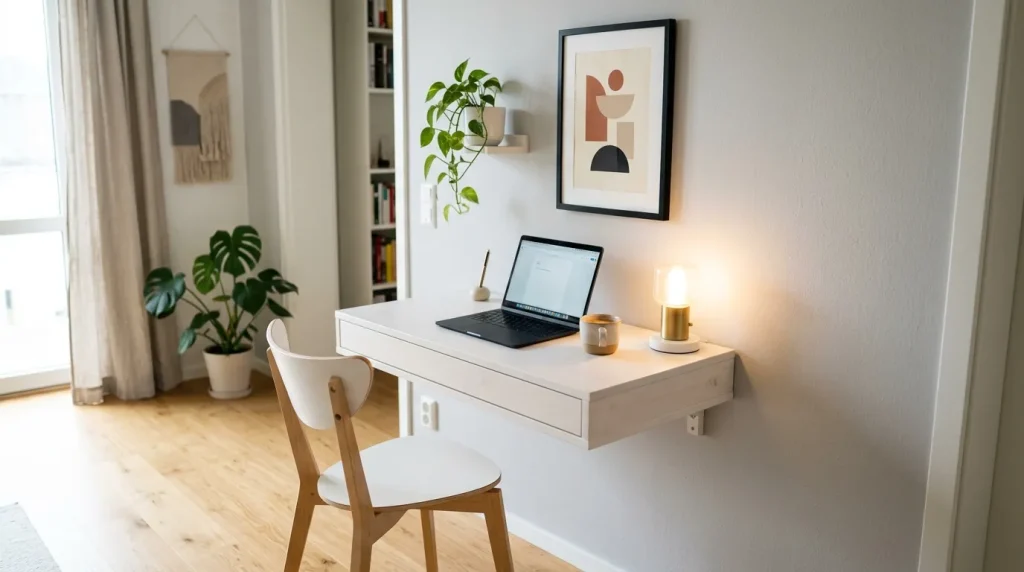
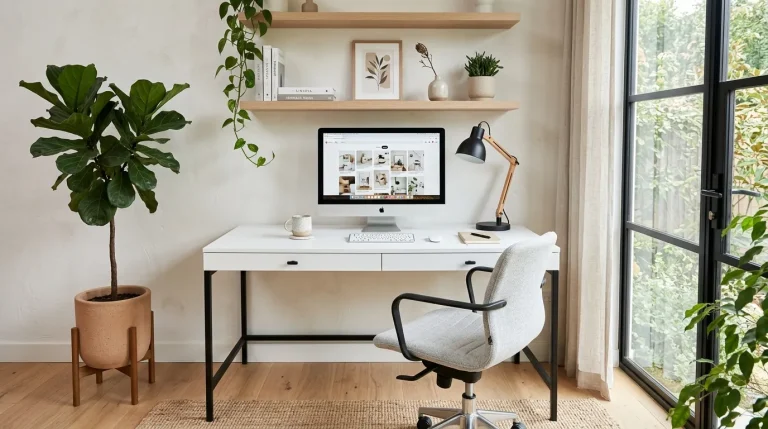
A floating wall desk is one of the smartest upgrades for a compact workspace, especially when you want a clean and modern home office without bulky furniture. By lifting the desk off the floor, the room immediately feels more open and breathable. This design works particularly well in small apartments where every inch matters. I’ve noticed that people tend to keep these setups more organized simply because there’s no space for unnecessary clutter underneath.
This setup transforms even the smallest corner into a functional workstation with a sleek architectural feel. A home office benefits greatly from this kind of design because it blends utility with visual lightness. Many designers recommend pairing it with soft lighting and minimal wall decor to keep the focus on simplicity. The result is a workspace that feels custom-built, stylish, and highly practical without overwhelming the room or sacrificing comfort.
2.Neutral Color Palette
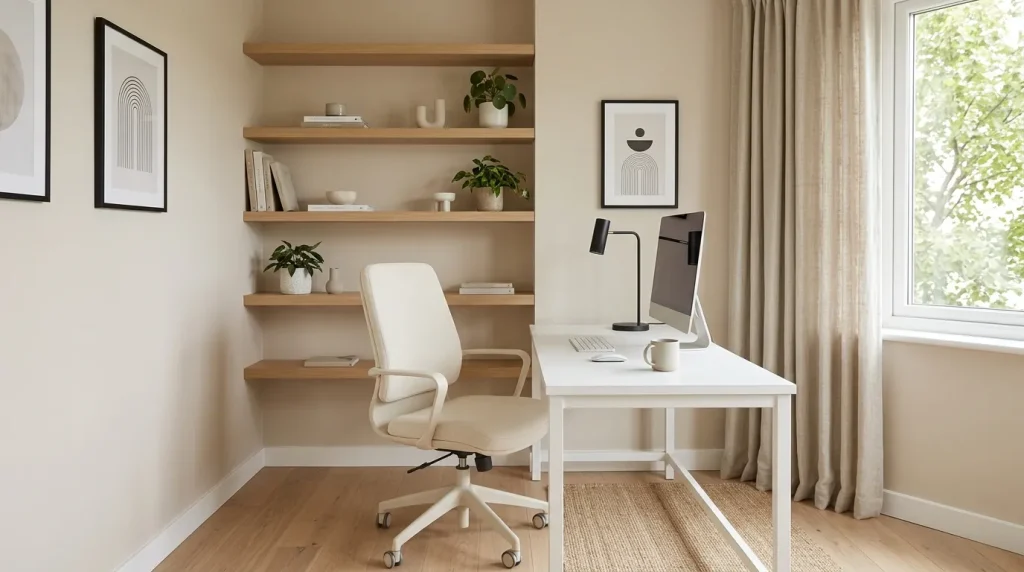
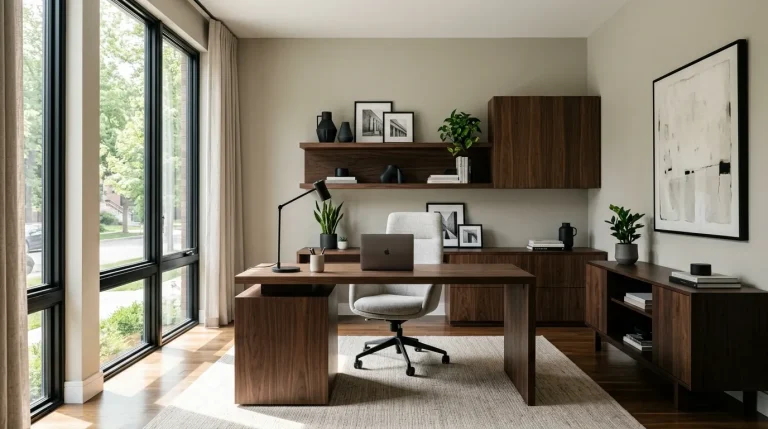
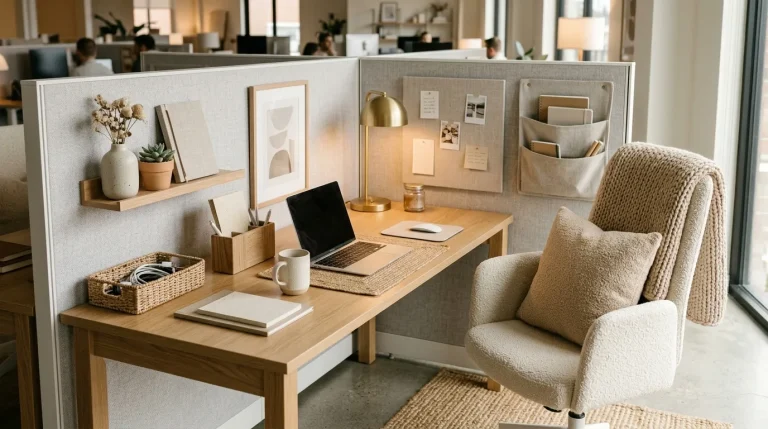
A neutral color palette is one of the most powerful foundations for a refined workspace, especially when designing a home office that feels both calming and professional. Soft tones like beige, ivory, and light wood create a seamless flow that visually expands the space. In many real homes I’ve observed, neutral interiors tend to feel more organized even when they’re not perfectly styled, simply because the colors themselves reduce visual chaos.
This design approach works because it creates a sense of harmony that supports focus and productivity. A well-balanced home office using neutral shades also allows small decor pieces to stand out more intentionally. Designers often recommend this palette because it adapts easily over time—you can change accent pieces without redesigning the entire room. The final result is a workspace that feels timeless, elegant, and effortlessly put together.
3.Built-In Shelving Wall
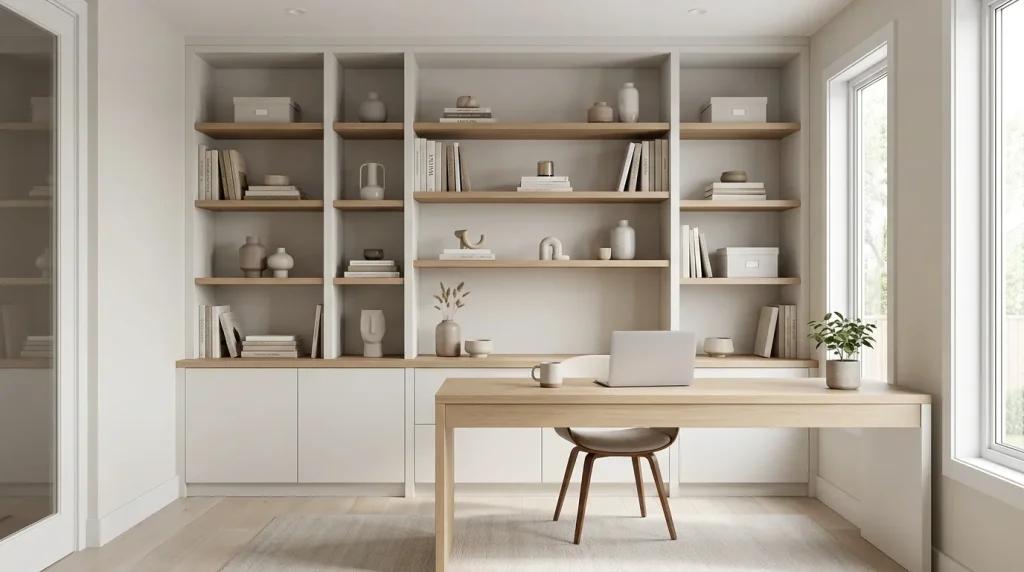
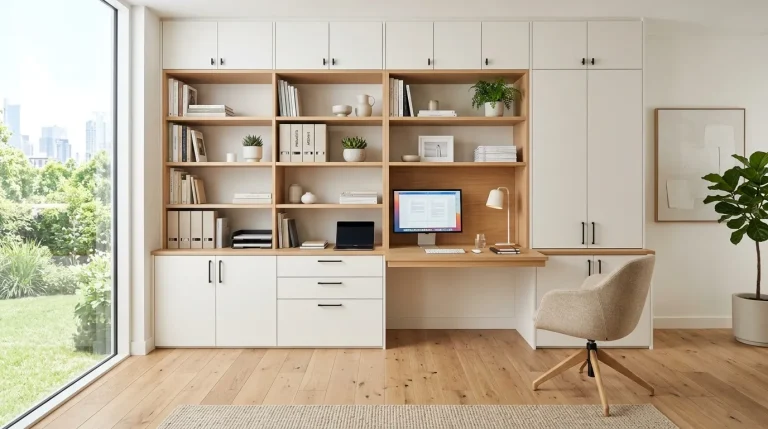
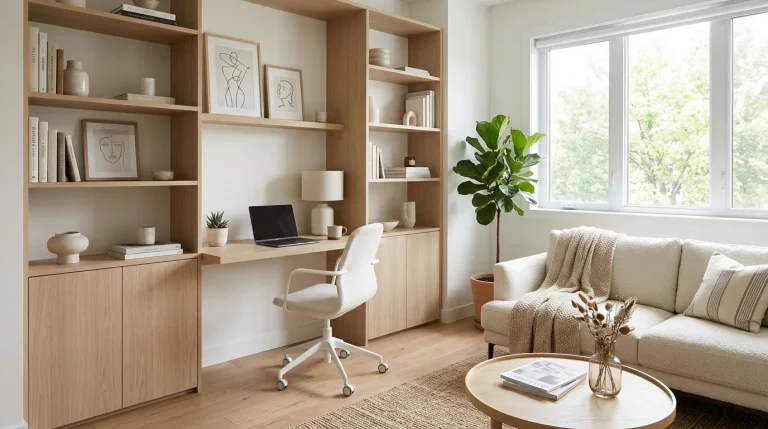
Built-in shelving is one of those upgrades that immediately makes a workspace feel professionally designed, especially in a home office where organization is key. Instead of scattered storage, everything has a defined place, which visually simplifies the entire room. I’ve seen this approach work beautifully in both small and large spaces because it uses vertical walls effectively without consuming floor area.
This design works so well because it combines practicality with aesthetic balance. A thoughtfully arranged home office with built-in shelving naturally feels more structured and calm. Designers often suggest mixing open shelves with closed storage to avoid visual overload. When styled with a few curated objects, books, and neutral decor pieces, the result feels intentional, polished, and effortlessly luxurious while still being highly functional for daily work routines.
4.Accent Wall Texture
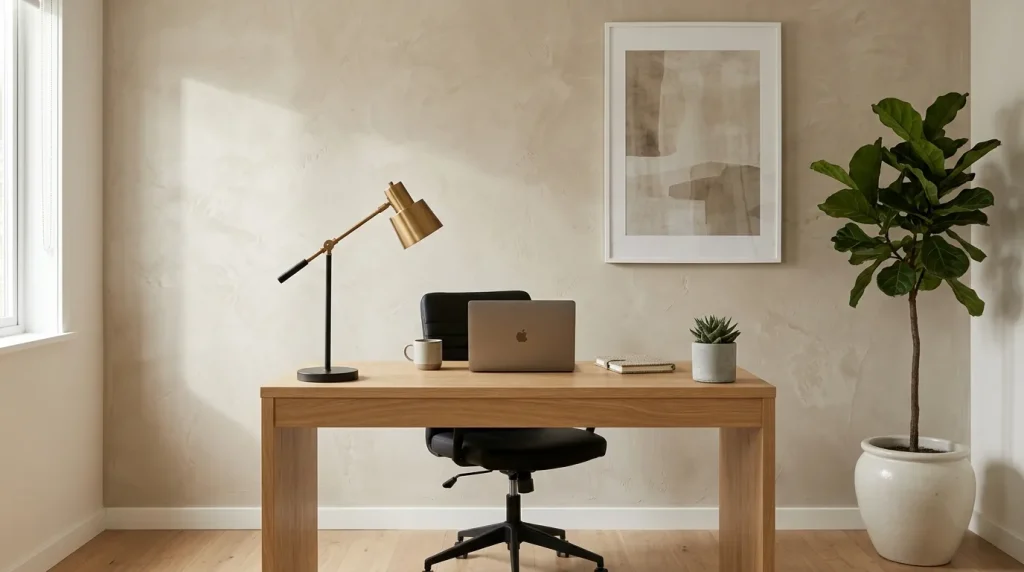
An accent wall with texture can completely redefine the personality of a workspace, especially in a home office where simplicity needs subtle depth. Instead of using bold colors or busy patterns, textured finishes like micro-cement, wood slats, or soft plaster create a refined backdrop that feels rich but still minimal. In many real interiors I’ve observed, this kind of wall instantly upgrades even basic furniture setups.
This approach works because it introduces dimension without visual noise. A well-balanced home office benefits from surfaces that feel tactile and grounded. Designers often recommend keeping surrounding decor minimal so the wall remains the hero element. The result is a workspace that feels calm yet visually layered, offering a perfect blend of sophistication and simplicity that supports both productivity and long-term aesthetic appeal.
5.Ergonomic Chair Focus
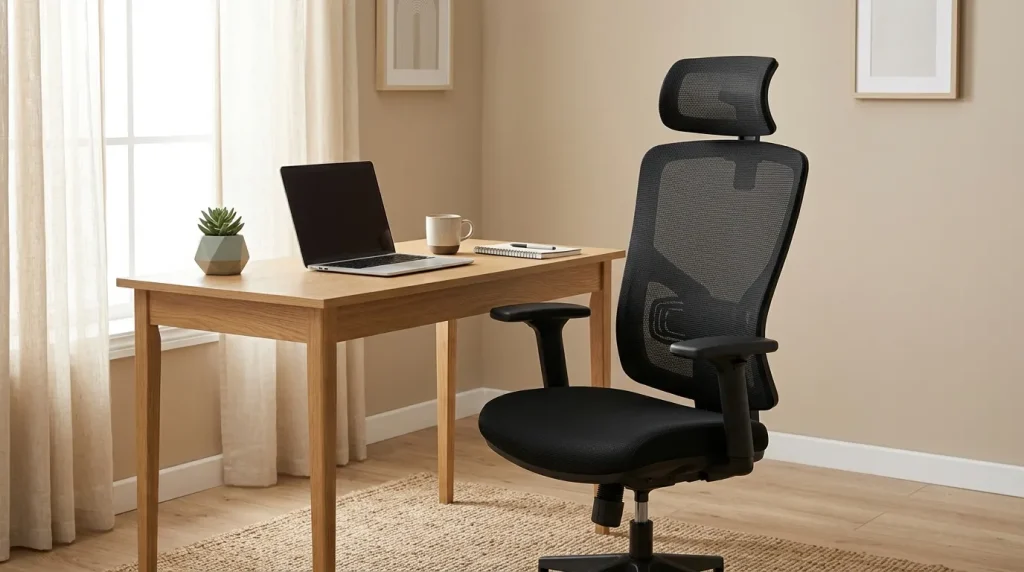
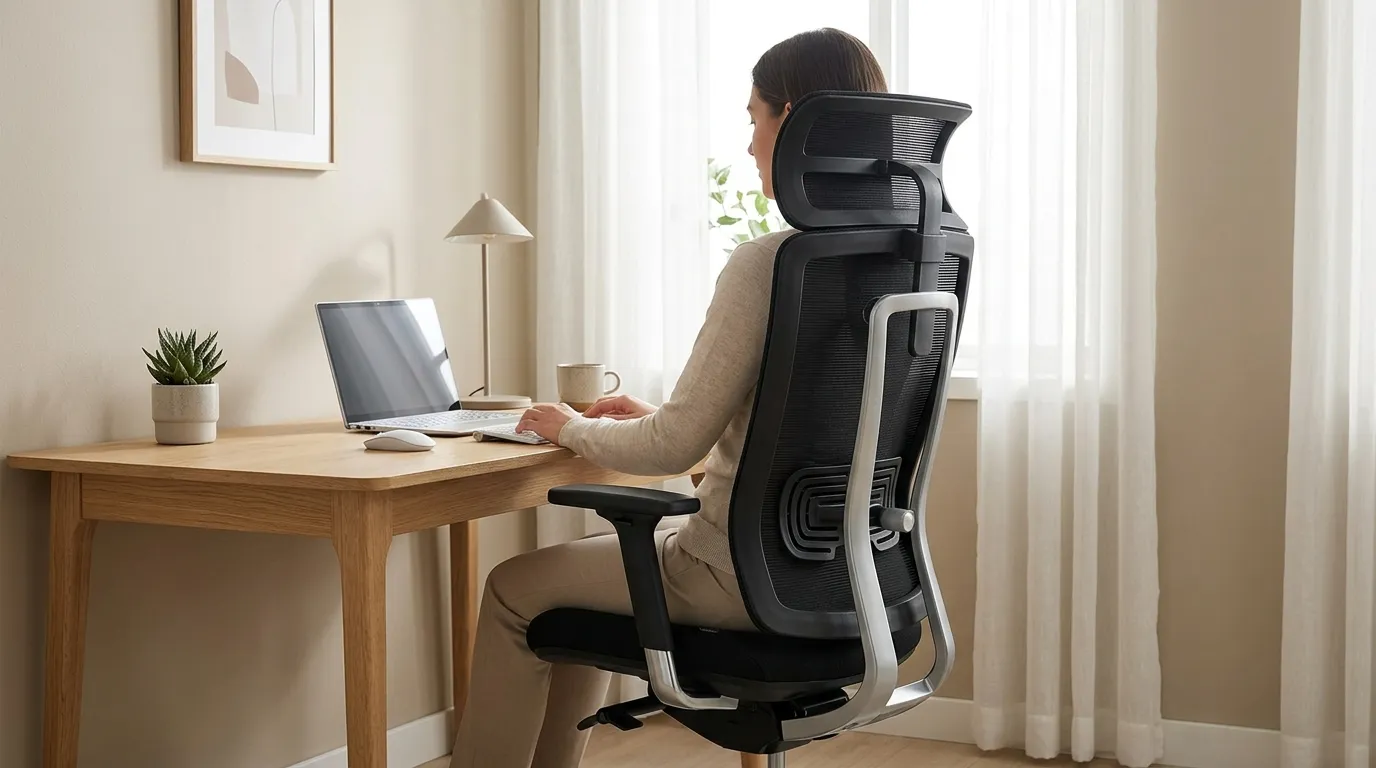
An ergonomic chair is often the most overlooked upgrade, yet it completely changes how a workspace feels and functions. In a thoughtfully designed office setup, comfort becomes just as important as visual appeal. I’ve noticed that when people invest in a supportive chair, their focus naturally improves because they are no longer distracted by discomfort.
It also subtly enhances the entire room, making even a simple desk arrangement feel more intentional and well-planned. Creating a comfortable space for focus and quiet routines is also a big part of designing a cozy home library where thoughtful seating and calming details help the room feel both functional and relaxing.
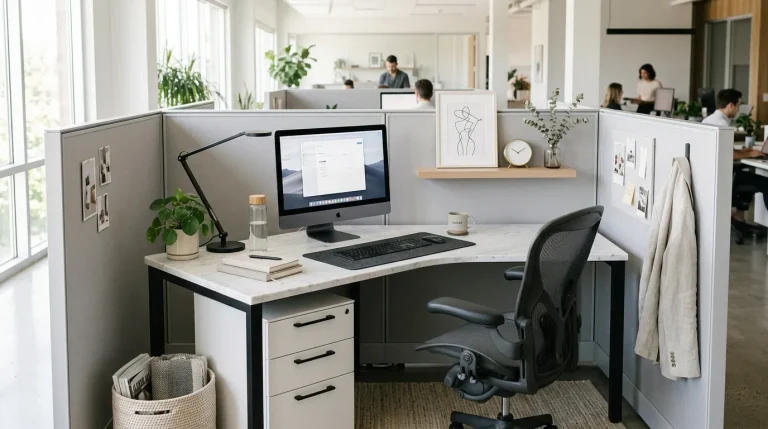
This idea works especially well in a home office where long working hours are common and posture matters. Designers often recommend choosing chairs that combine clean silhouettes with adjustable features so they don’t disrupt the visual flow. A well-selected chair balances aesthetics and function, giving the space a professional edge. The result is a workspace that feels supportive, refined, and designed for real everyday use rather than just appearance alone.
6.Layered Desk Lighting
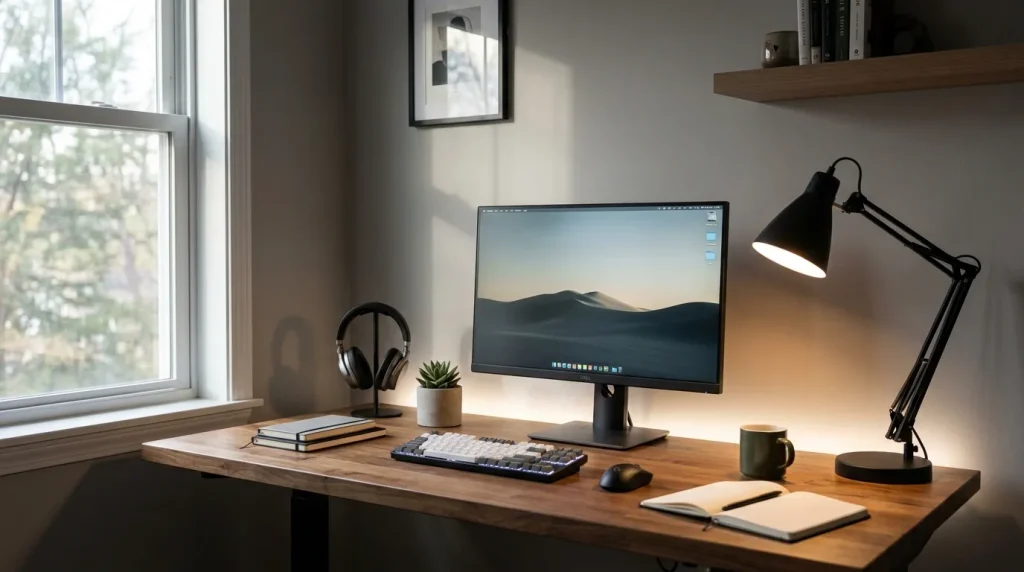
Layered lighting is one of the most effective ways to elevate a workspace because it transforms how the entire room feels throughout the day. Instead of relying on a single harsh light source, combining natural light, task lighting, and ambient glow creates balance and comfort. I’ve noticed that people tend to work longer and more comfortably in spaces where lighting feels soft, adaptable, and visually soothing.
This approach is especially valuable in a home office where productivity and atmosphere must work together. Designers often recommend mixing warm desk lamps with subtle background lighting to avoid harsh contrasts. The result is a workspace that feels dynamic yet calming at the same time. When lighting is layered correctly, the desk area becomes more inviting, visually structured, and supportive for both focused tasks and relaxed creative thinking.
Conclusion:
Creating a beautiful and functional workspace doesn’t require a full renovation—just thoughtful, intentional upgrades that work together. Each idea shared above shows how small design changes can completely transform the way your environment looks and feels. When your space is balanced, clean, and visually calming, productivity becomes effortless and even enjoyable.
A well-designed modern home office is more than just a desk and chair—it’s a reflection of your mindset and daily habits. I’ve seen how simple improvements like lighting, organization, and texture can completely reshape how people feel in their work environment.
Save this post on Pinterest so you can revisit these ideas whenever you plan a refresh. Try even one upgrade today, and you’ll instantly notice the difference. Share it with someone who needs a workspace glow-up—and start building a space that truly inspires you every day.
Clara Whitmore
Clara specializes in interior styling, seasonal home trends, and cozy living spaces. She loves combining classic design elements with modern touches to create homes that feel personal, welcoming, and effortlessly stylish.