Laundry room ideas with 9 simple upgrades you’ll wish you tried sooner

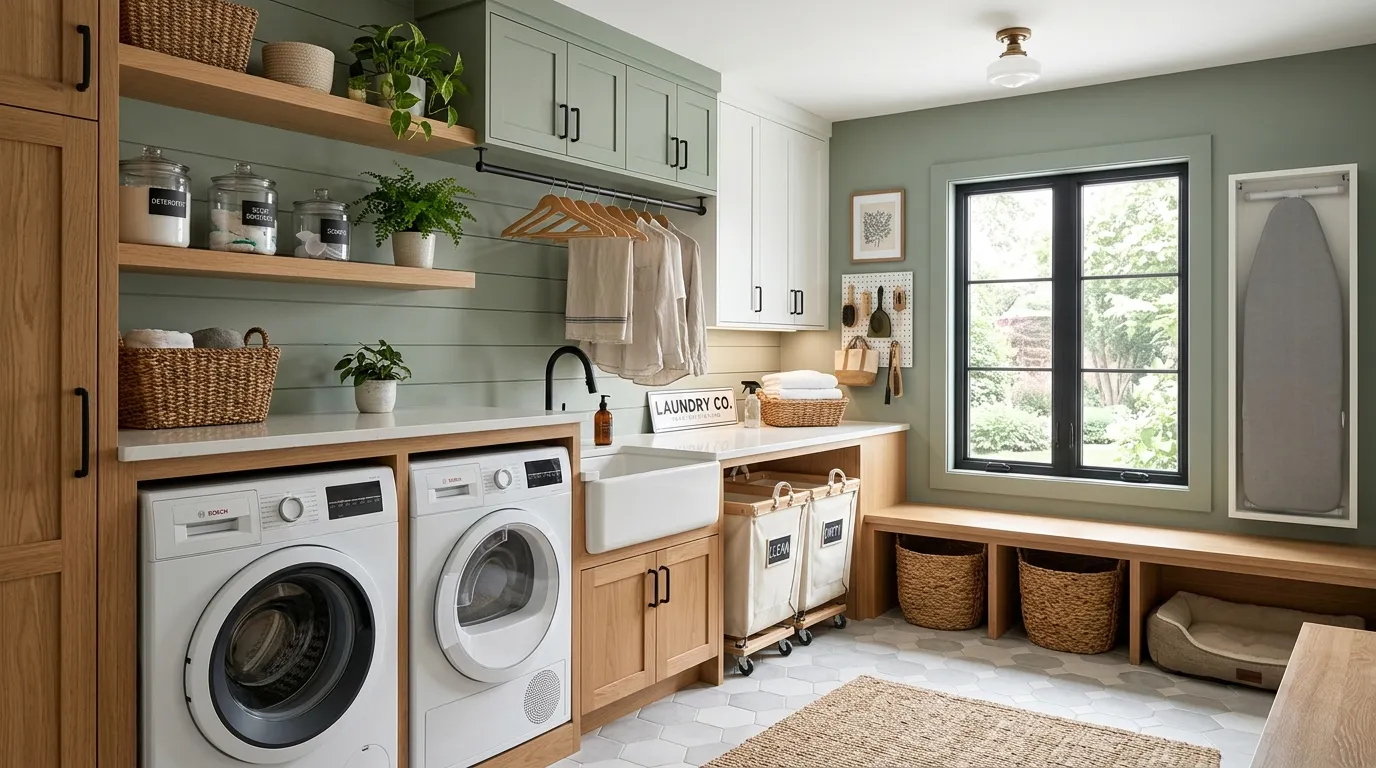
Table of Contents
Before You Start
Most laundry rooms are small, windowless and designed around two machines and nothing else, which is why they fill up with half-empty bottles, odd socks and piles of clothes waiting to be folded. The good news is that a laundry room only needs to do four things well: store supplies, give a place to sort, give a place to fold, and dry what cannot go in the dryer.
These nine laundry room ideas cover each of those jobs. Every upgrade below includes the sizes to look for, where it fits best, and the small details that stop it turning back into clutter. Most of them work in a closet laundry or a hallway nook as well as a full room.
1. Stacked Storage Wall
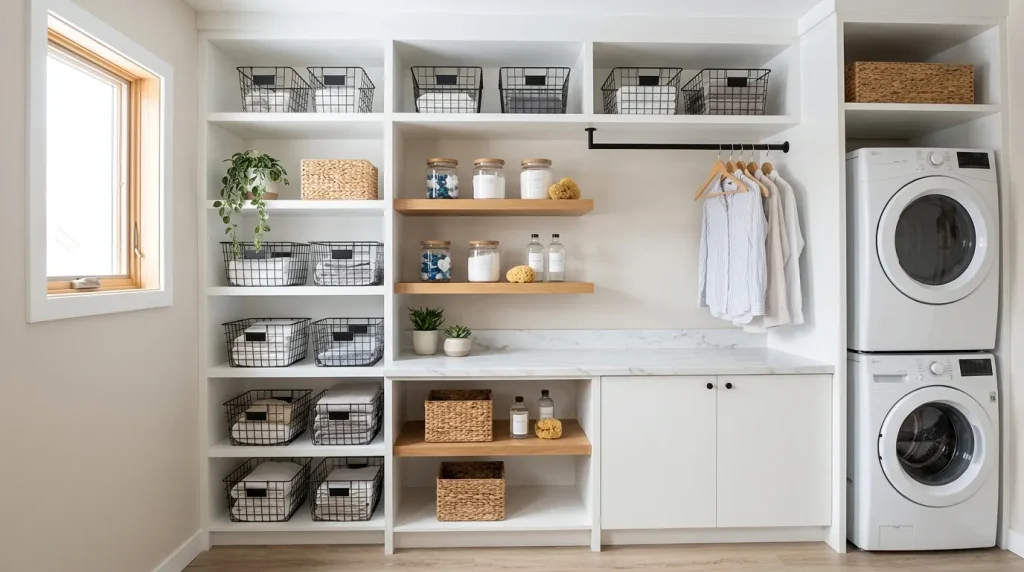
Going vertical is the fastest way to gain storage in a small laundry room. Run shelves or wall cabinets up to the ceiling above the machines, leaving about 18 to 24 inches of clearance above top-loaders so the lid can open fully. Front-loaders can take shelves lower, roughly 12 to 18 inches above the top.
Keep everyday items such as detergent and stain spray on the lowest shelf, and seasonal or backup supplies higher up in labeled bins. Matching baskets in one material, such as seagrass or white plastic, make a mixed collection of bottles look tidy. A narrow ladder or step stool stored beside the machines makes the top shelves usable.
2. Fold-Down Counter
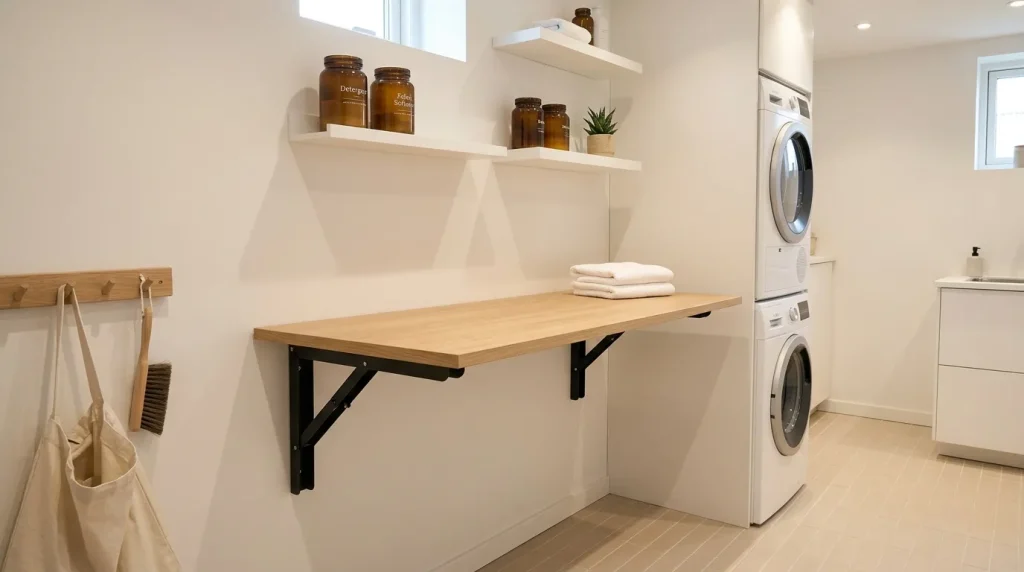
A fold-down counter gives a folding surface that disappears when not in use. Wall-mounted drop-leaf tables around 30 to 36 inches wide and 18 to 24 inches deep fold flat to just a few inches. Mount the top at 36 to 38 inches high, a comfortable standing height for folding.
In rooms with front-loading machines, a fixed counter over both machines is even better and adds a permanent work surface; leave about 1 inch above the machines for vibration. For ways to build one cheaply, see these DIY laundry room countertop ideas.
3. Hidden Cabinet Sorting
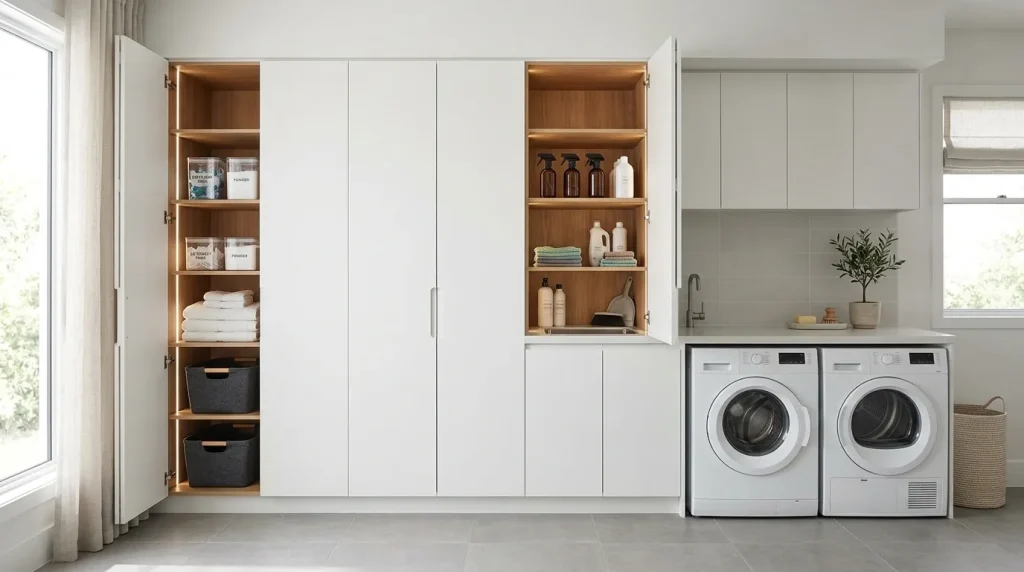
Cabinets with built-in sorting bins keep dirty laundry out of sight and pre-sorted. Pull-out hampers fit inside a standard 18 to 24 inch base cabinet; two or three bins for lights, darks and delicates make wash day faster.
Closed upper cabinets hide the visual clutter of bottles and boxes. In a shared family laundry, label each bin so everyone sorts as they drop clothes in. Soft-close hinges and drawer runners are worth the small extra cost in a room that gets opened many times a day.
4. Slim Rolling Cart
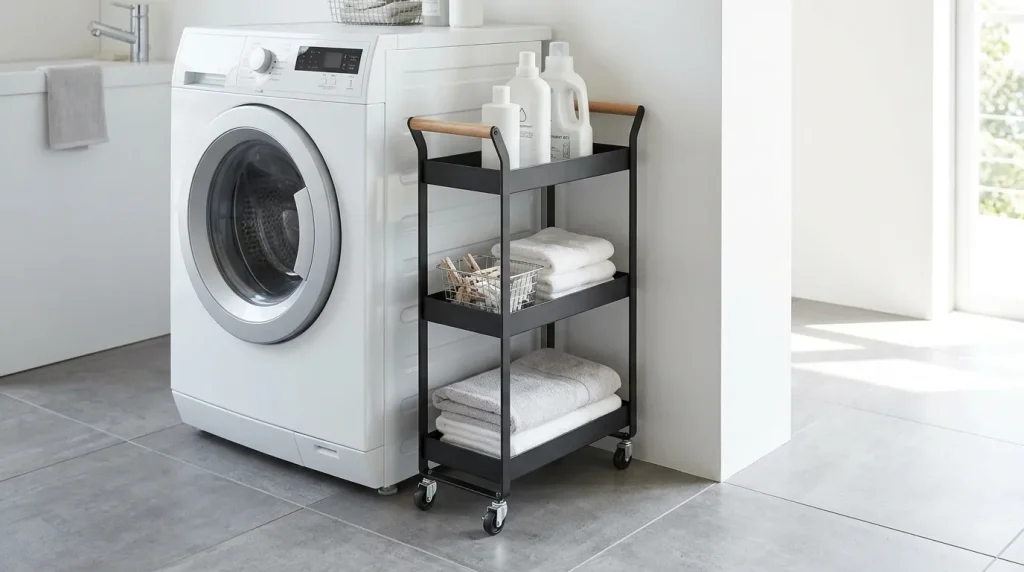
The gap between the washer and dryer, or between a machine and the wall, is usually 6 to 10 inches wide and completely wasted. A slim rolling cart made for that gap holds detergent, dryer sheets, clothespins and stain sticks and slides out like a drawer.
Measure the gap and the depth of the machines before buying, and choose a cart with a lip on each shelf so bottles do not fall off when it moves. A metal cart is easier to wipe clean than wood if detergent drips.
5. Overhead Drying Rack
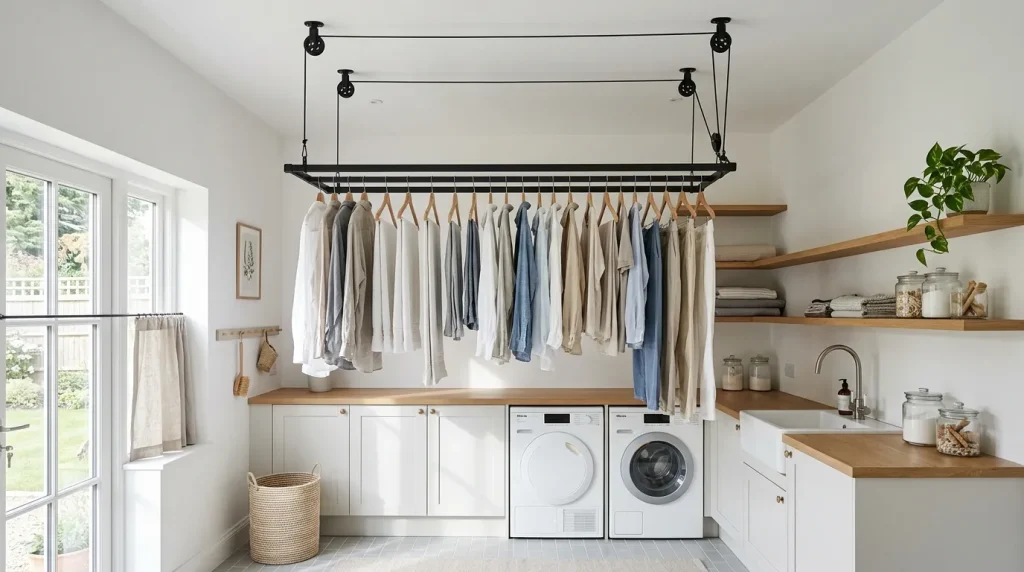
An overhead drying rack uses ceiling space instead of floor space. Pulley-style airers, such as the classic wooden clothes airer, lower for loading and raise up near the ceiling, holding a full load of shirts or towels. Wall-mounted accordion racks fold flat against the wall when empty.
Install ceiling racks into joists and keep them away from light fixtures. Good airflow matters: run an exhaust fan or crack a window so clothes dry faster and the room does not get damp. Hangers on a tension rod between two cabinets are a cheap alternative for drip-dry shirts.
6. Sink Station Upgrade
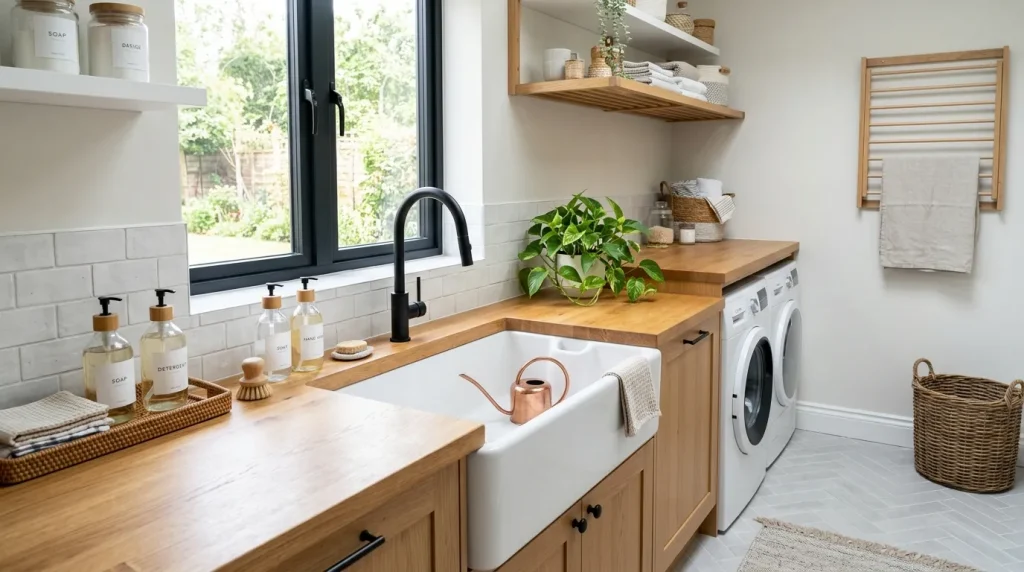
A utility sink makes a huge difference for soaking stains, hand-washing delicates, rinsing muddy shoes and filling mop buckets. A deep single bowl of about 10 to 14 inches is far more useful than a shallow bathroom basin.
A pull-down sprayer tap makes rinsing easier. If plumbing is not already there, check the cost of running supply and drain lines before planning; in many homes the sink can sit beside the washer and share its drain. A soap dispenser and a small brush caddy keep the area tidy.
7. Wall Hook Grid
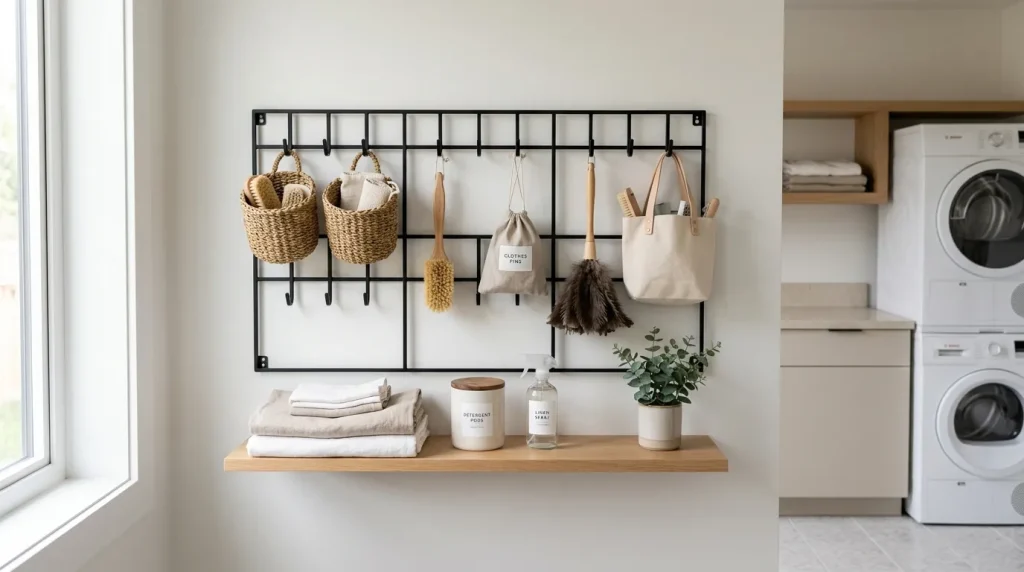
A wall hook grid or pegboard keeps small tools visible and off counters. Hang lint rollers, a broom and dustpan, reusable shopping bags, mesh wash bags and spray bottles at easy reach.
Pegboard works especially well because hooks, small shelves and cups can be moved as needs change. Paint it the wall color for a calm look or a bold contrast for a feature. Mount it on a frame or spacers so hooks can slide in behind.
8. Open Shelf Styling
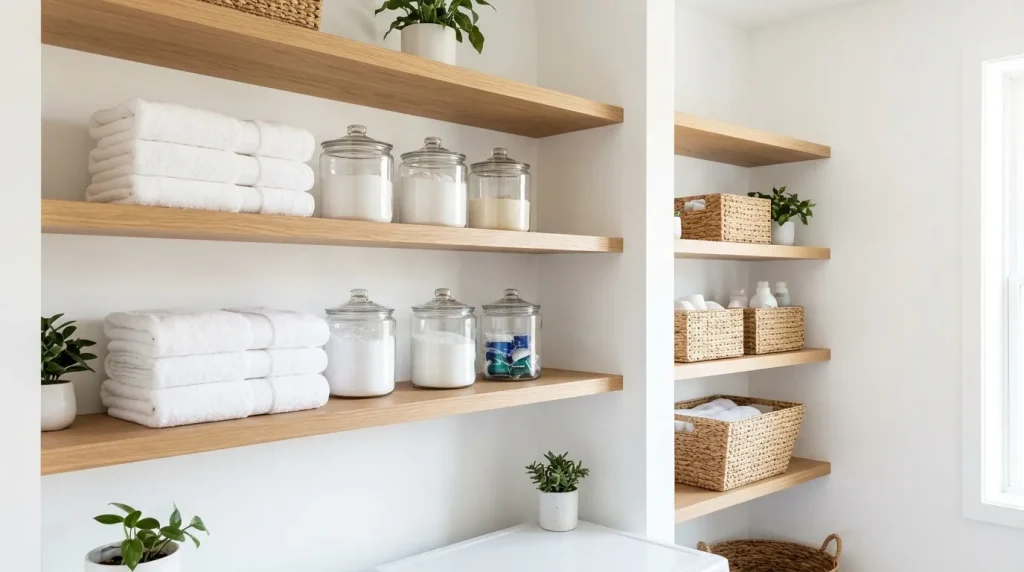
Open shelves work when they hold things that look good: folded towels, glass jars of detergent pods or clothespins, woven baskets and a plant. Keep less attractive items behind doors or in lidded bins.
Stick to two or three colors on the shelves and repeat containers so the display looks planned. Decanting liquid detergent into a glass dispenser with a tap is practical and tidy. Leave a little empty space on each shelf so it never looks crowded. More storage tricks are in these laundry room organization ideas.
9. Lighting Layer Upgrade
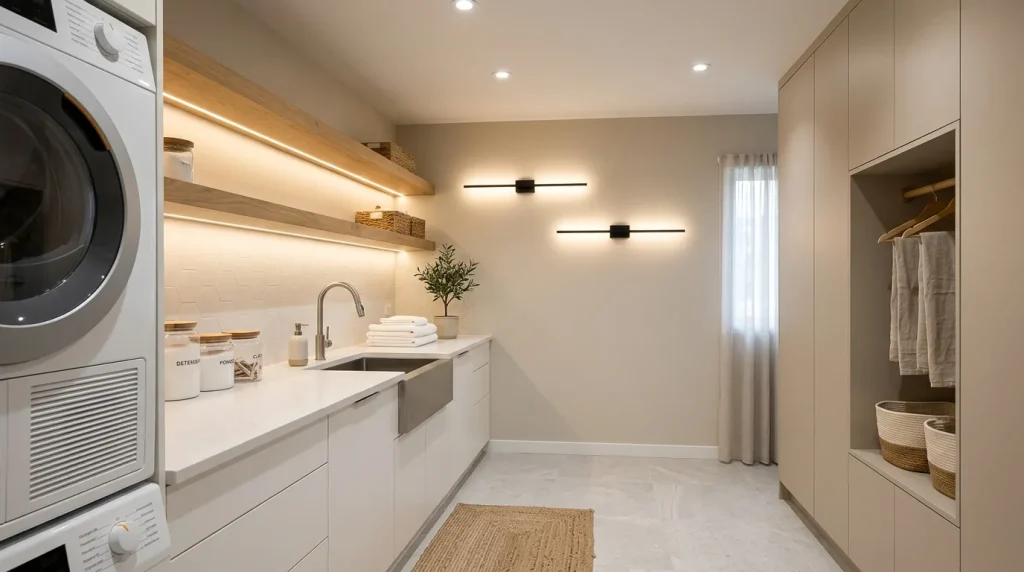
Good lighting makes stain treatment and sorting far easier, and a bright room simply feels cleaner. Combine a ceiling fixture with LED strip lights under upper cabinets or shelves, so the counter and machine tops are evenly lit.
Choose bulbs around 3000K to 4000K, which show colors accurately, and a fixture rated for damp locations near a sink. A motion-sensor switch is handy when arms are full of laundry.
Laundry Room Measurements to Plan Around
- Standard machines: about 27 inches wide each and 30 to 34 inches deep, plus 4 to 6 inches behind for hoses and the vent.
- Clearance in front: at least 36 to 42 inches so doors open fully and there is room to stand.
- Folding counter: 36 to 38 inches high, at least 24 inches deep.
- Shelves above machines: 18 to 24 inches above top-loaders, 12 to 18 inches above front-loaders.
- Stacked units: a closet about 30 to 32 inches wide fits a stacked pair; see these stackable washer dryer laundry room ideas.
Laundry Room Ideas FAQ
What is the best paint color for a laundry room? Light colors with a soft undertone, such as warm white, pale sage or soft blue, make a small room feel brighter. Use a scrubbable satin or semi-gloss finish. These best paint colors for laundry rooms list more options.
How do you add storage to a tiny laundry closet? Use the full height with shelves to the ceiling, a slim rolling cart in the side gap, hooks on the inside of the doors and a tension rod for hanging clothes.
How do you stop a laundry room smelling musty? Leave the washer door open after each load, wipe the door seal weekly, run a hot cleaning cycle monthly and keep an exhaust fan running when clothes are drying indoors.
Laundry Room Upgrades by Budget
Not every upgrade needs a contractor. Grouping ideas by cost makes it easier to plan in stages.
- Under $50: matching baskets and jars, a tension rod for hangers, a hook rail or pegboard, a slim rolling cart, and a washable runner in front of the machines.
- $50 to $300: a wall-mounted fold-down table, a pulley drying rack, LED under-shelf lights, open shelves to the ceiling and a fresh coat of scrubbable paint.
- $300 and up: a fixed counter over front-loaders, new upper cabinets with sorting pull-outs, a utility sink with a sprayer tap, or patterned floor tile.
Start with the cheapest fixes for the biggest daily problem, usually storage or a folding surface, and save larger projects such as plumbing a sink for when other work is already planned in the room.
To Sum It Up
A great laundry room is one where every job has a place: supplies stored vertically, a spot to sort, a surface to fold and a way to dry. Pick the upgrade that fixes the biggest daily frustration first, then add lighting and styling once the basics work. Even a closet-sized space can become one of the most organized parts of the home with these laundry room ideas.
Elira Montclair
Elira writes about timeless home decor, kitchen styling, and practical interior ideas. Her work blends warm, inviting aesthetics with simple decorating tips that make everyday spaces feel beautiful and comfortable.