22 Warm Wood Kitchen Ideas for a Welcoming Kitchen

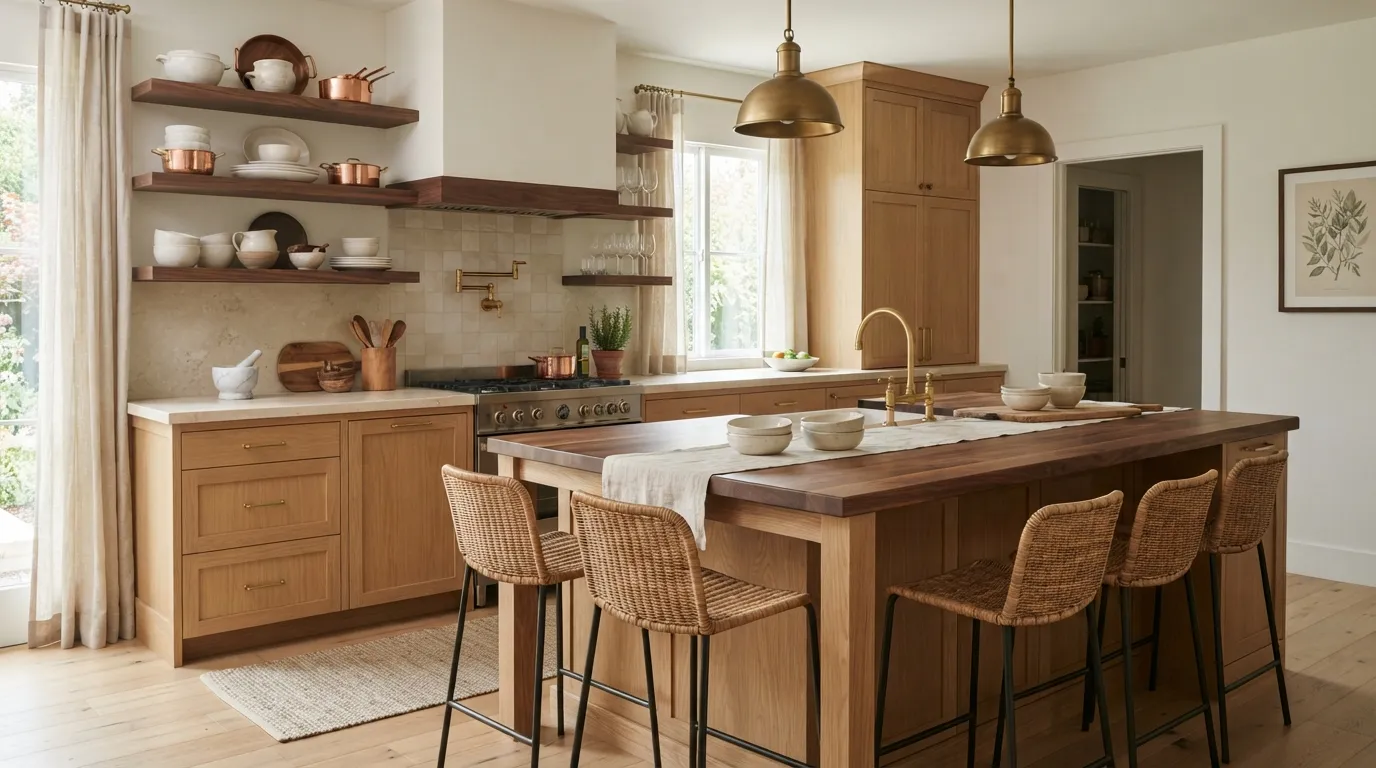
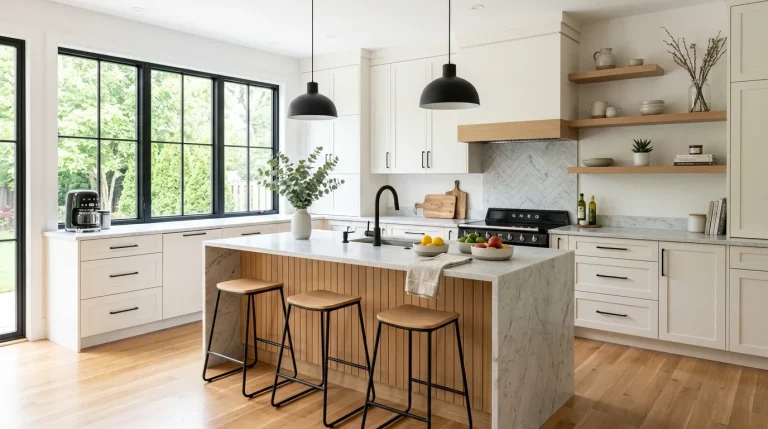
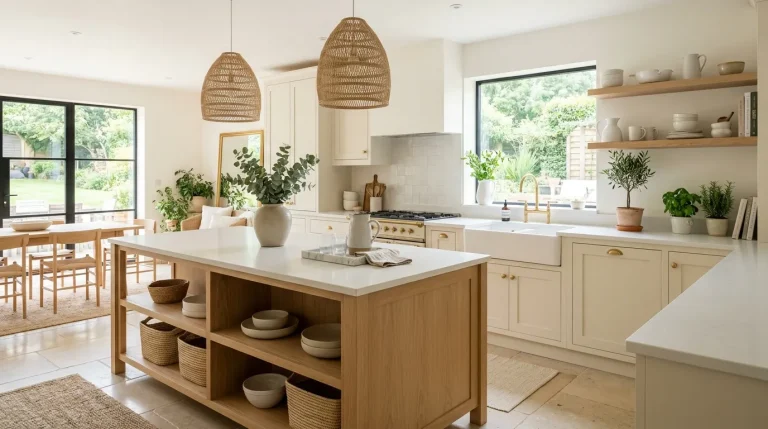
A kitchen can feel warm without looking dated. Warm Wood Kitchen Ideas make it easier to bring natural grain, soft color, and tactile finishes into the room while keeping the overall look fresh. Think oak cabinets, walnut islands, wood shelving, creamy counters, woven stools, and small touches of brass that make the space feel lived-in.
The best approach starts with balance. Too much wood can feel heavy, while too little may lose the cozy quality you’re after. These ideas show how to pair different wood tones, surfaces, hardware, lighting, and decor so your kitchen feels inviting from morning coffee through evening meals.
Natural Oak Cabinets
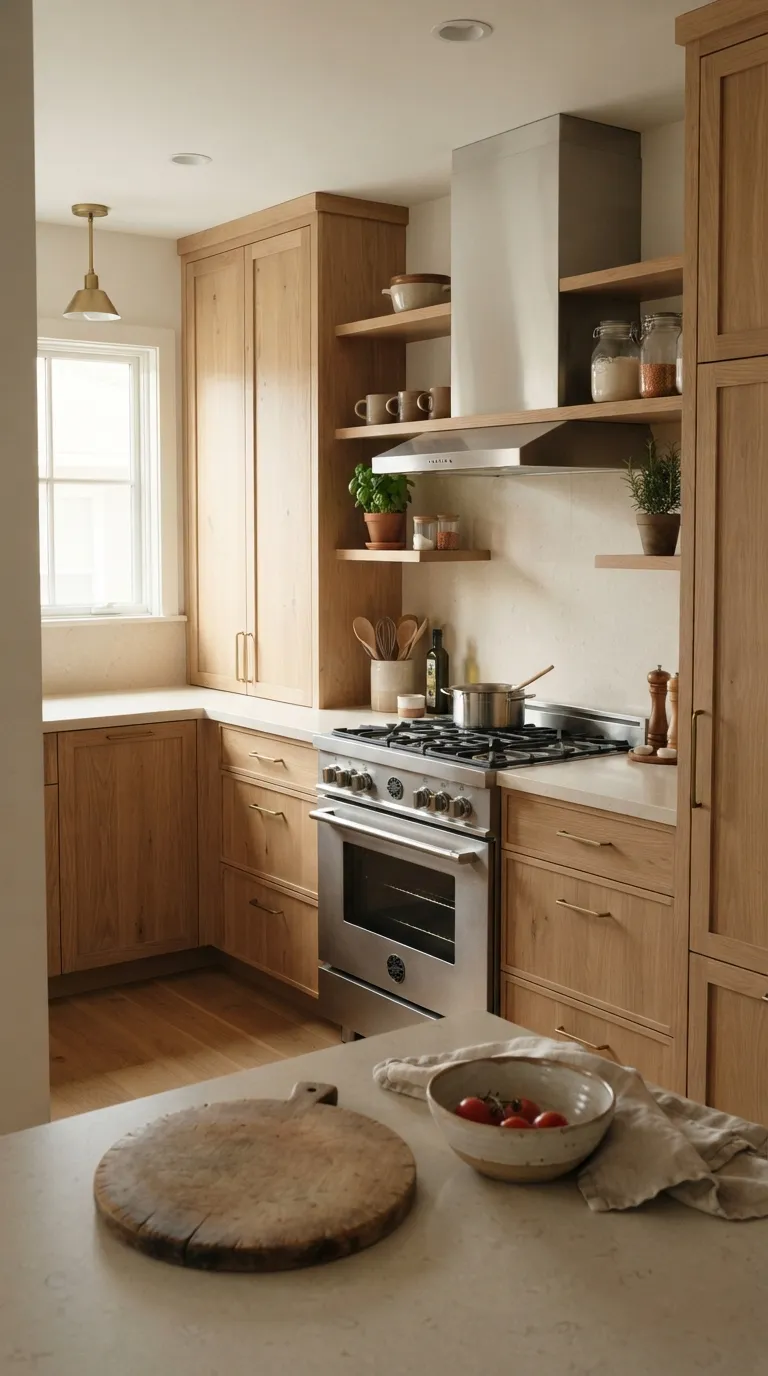
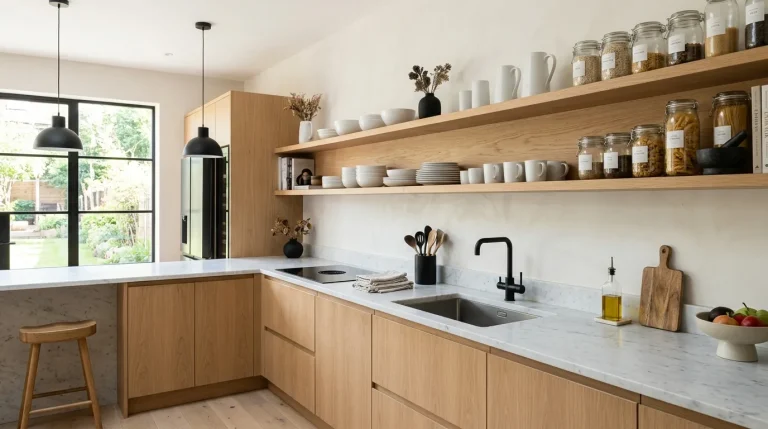
Natural oak brings an easy sense of warmth to cabinetry. Its visible grain adds character without needing bold color, making it a strong choice for both traditional and modern kitchens. Pair oak doors with creamy counters and simple hardware for a look that feels settled rather than overly matched.
For a softer room, choose a clear or light matte finish that lets the natural grain show through. Many designers pair oak with off-white walls, woven accents, and muted green decor because these shades sit comfortably beside warm wood. If your kitchen is small, keep the surrounding surfaces light so the cabinets don’t visually crowd the room.
Walnut Kitchen Island
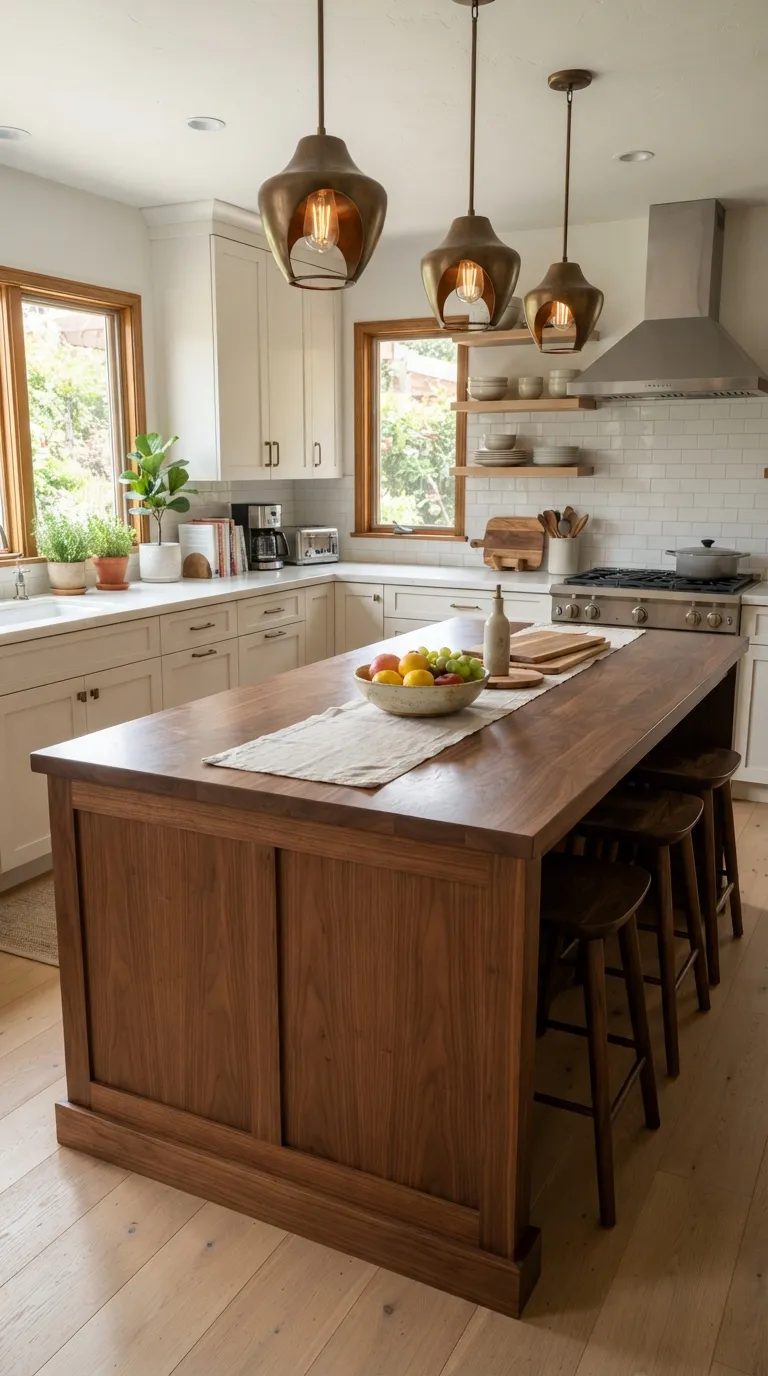
A walnut island can become the visual anchor of a kitchen. The deeper wood tone gives the room weight while lighter cabinets keep the overall palette airy. This pairing works especially well when the island includes drawers, seating, and generous prep space.
Keep the surrounding finishes restrained so the walnut gets room to stand out. Cream, ivory, or warm white cabinetry creates a clear contrast without making the kitchen feel stark. Add a stone countertop and a few natural accessories, and the island can feel like a piece of furniture rather than just another work surface.
Wood Shelving With Character
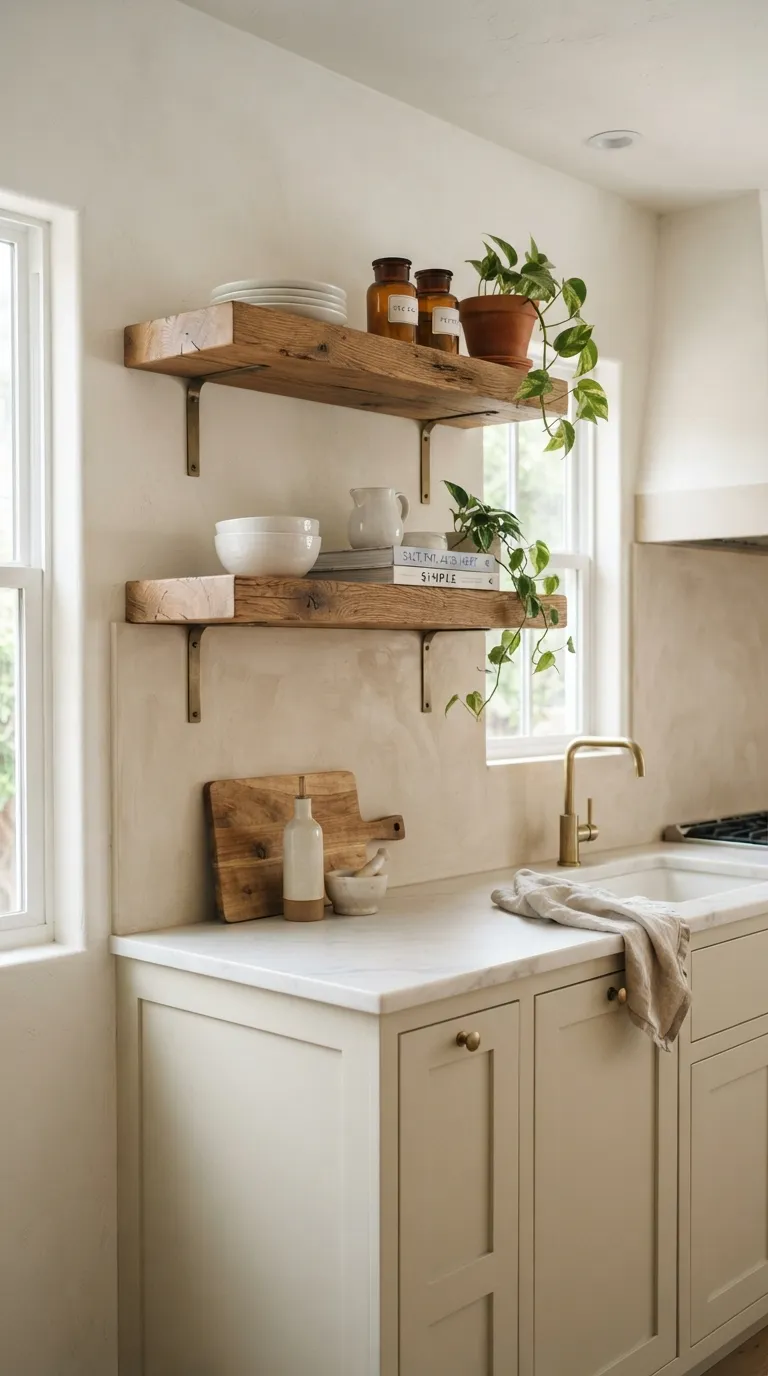
Wood shelves add warmth without covering every wall in cabinetry. They also give you a practical spot for everyday dishes, jars, and a few decorative pieces. Reclaimed oak works particularly well when you want visible knots and slight color variation.
Keep the shelves useful, not crowded. Leave some open space between objects and mix taller pieces with low bowls or plates to create a relaxed arrangement. If you’re working with a narrow kitchen, two shorter shelves can provide the same warm wood detail without making the wall feel packed.
Wood Ceiling Beams
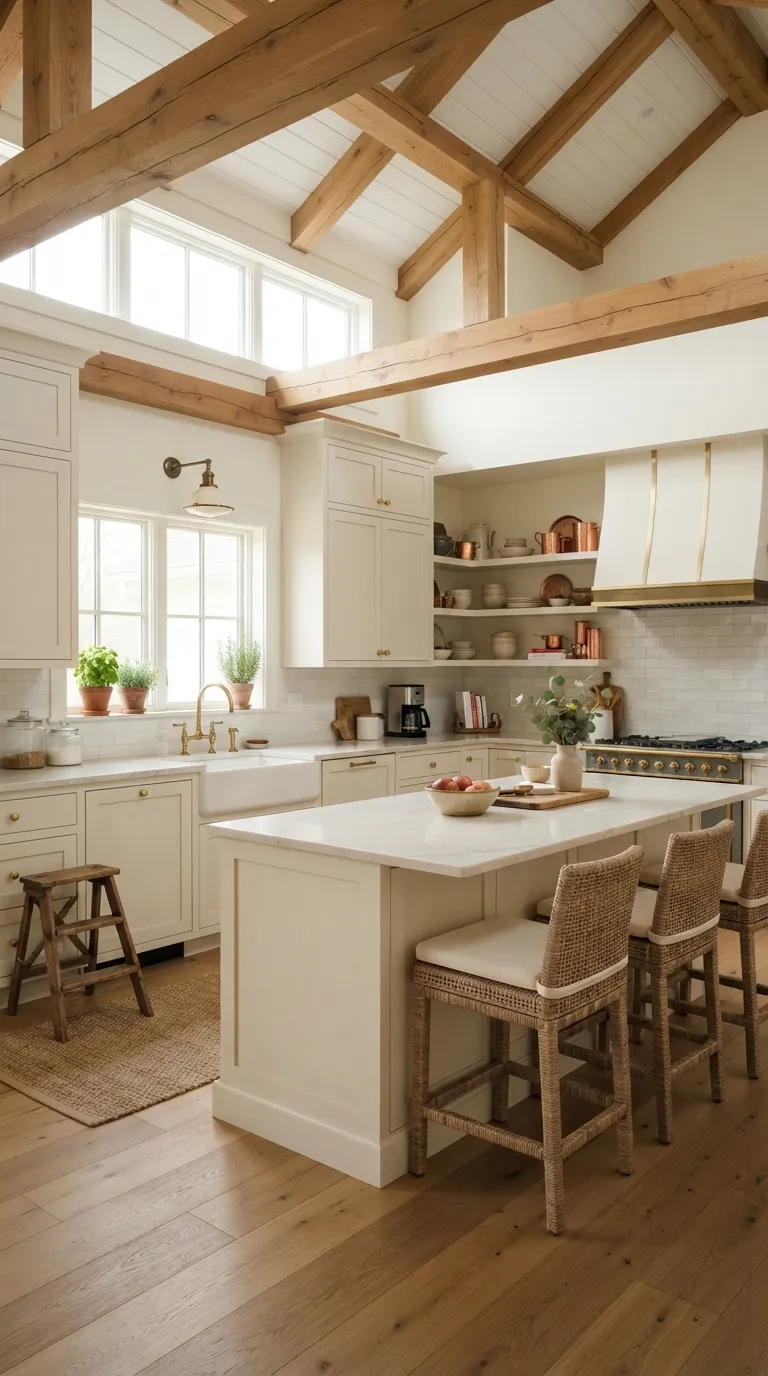
Wood beams can add warmth from above without changing your cabinets or counters. They work especially well in kitchens with high ceilings because the wood draws the eye upward and makes the room feel more grounded. Keep the beam finish natural or lightly sealed so the grain remains visible.
Balance the ceiling with lighter surfaces below. Cream cabinets, pale counters, and simple walls prevent the wood from making the kitchen feel visually heavy. For a more rustic kitchen, slightly rougher beams can work well, while smooth beams suit cleaner modern spaces.
Two-Tone Wood Cabinets
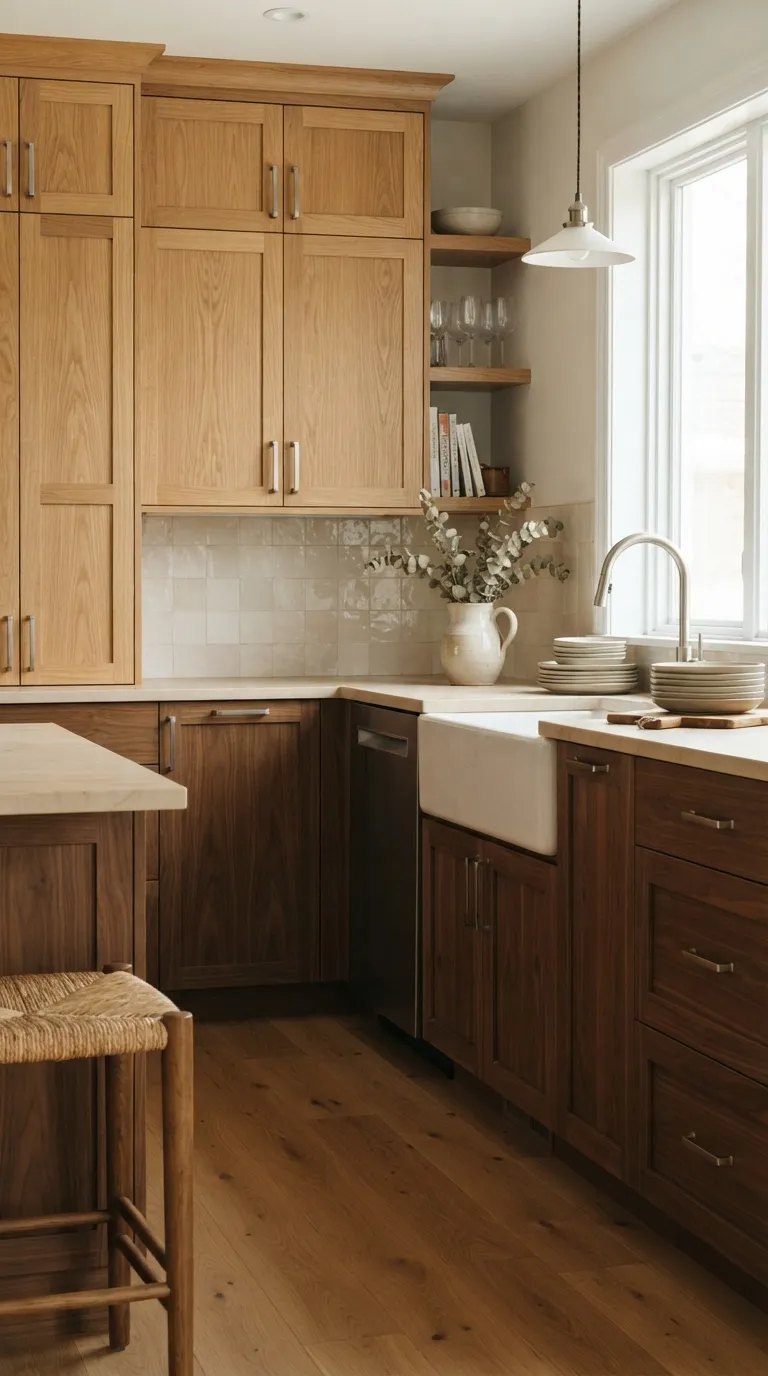
Two wood tones can give your kitchen more depth than a single finish. The key is to make each tone serve a clear purpose, such as lighter uppers and richer lower cabinets. A neutral backsplash can act as the visual bridge between them.
Don’t try to make every wooden surface identical. Slight differences can make the room feel collected rather than showroom-perfect. If the cabinet tones are already strong, keep the flooring and counters quieter so the wood remains the main feature.
Warm Wood Range Hood
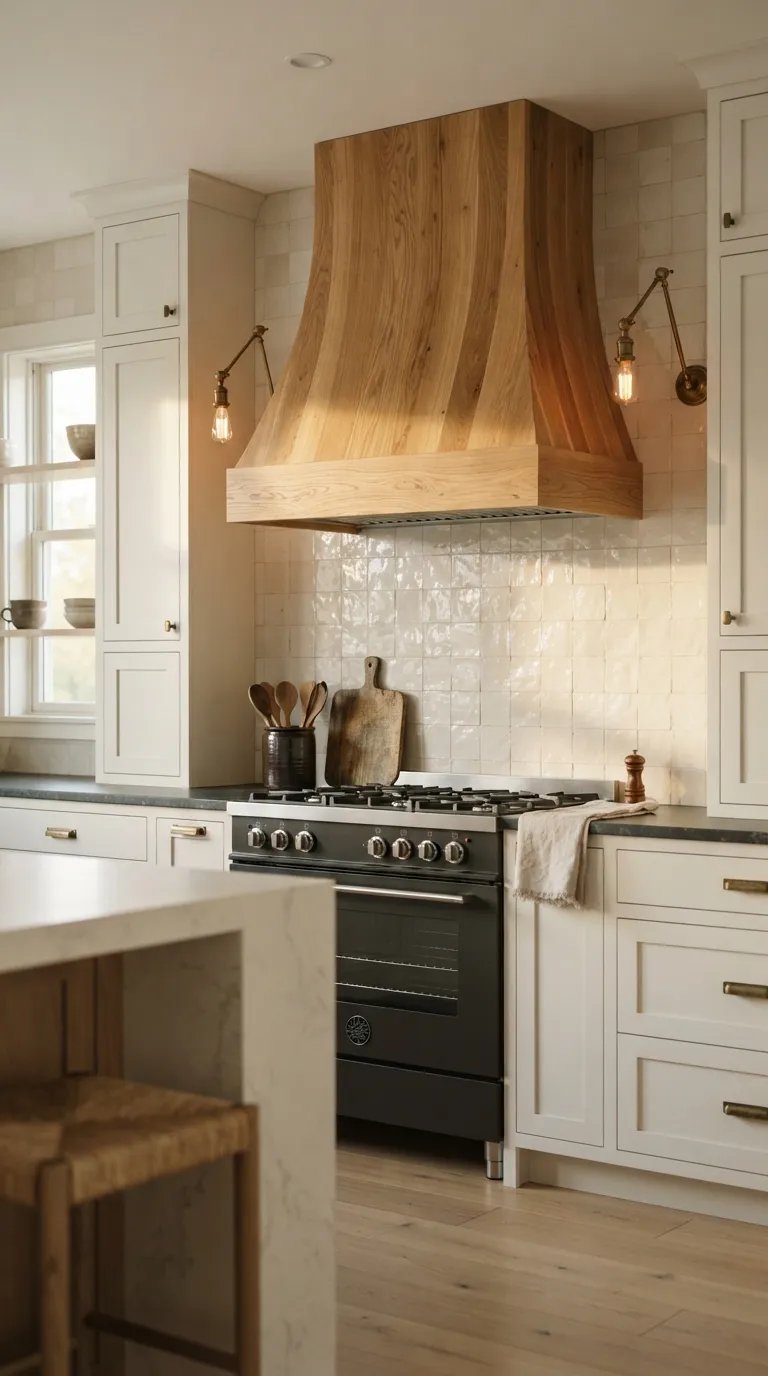
A wood range hood can turn a practical feature into a strong focal point. Oak, walnut, or another warm timber gives the cooking wall more character while keeping the room connected to natural materials. This idea works particularly well when the surrounding cabinets are painted.
Keep the hood shape fairly simple if your kitchen has other standout details. A smooth curved hood suits softer interiors, while a straight rectangular design fits a modern kitchen. Pair it with a stone backsplash and understated lighting for a balanced finish.
Wood And Cream Pairing
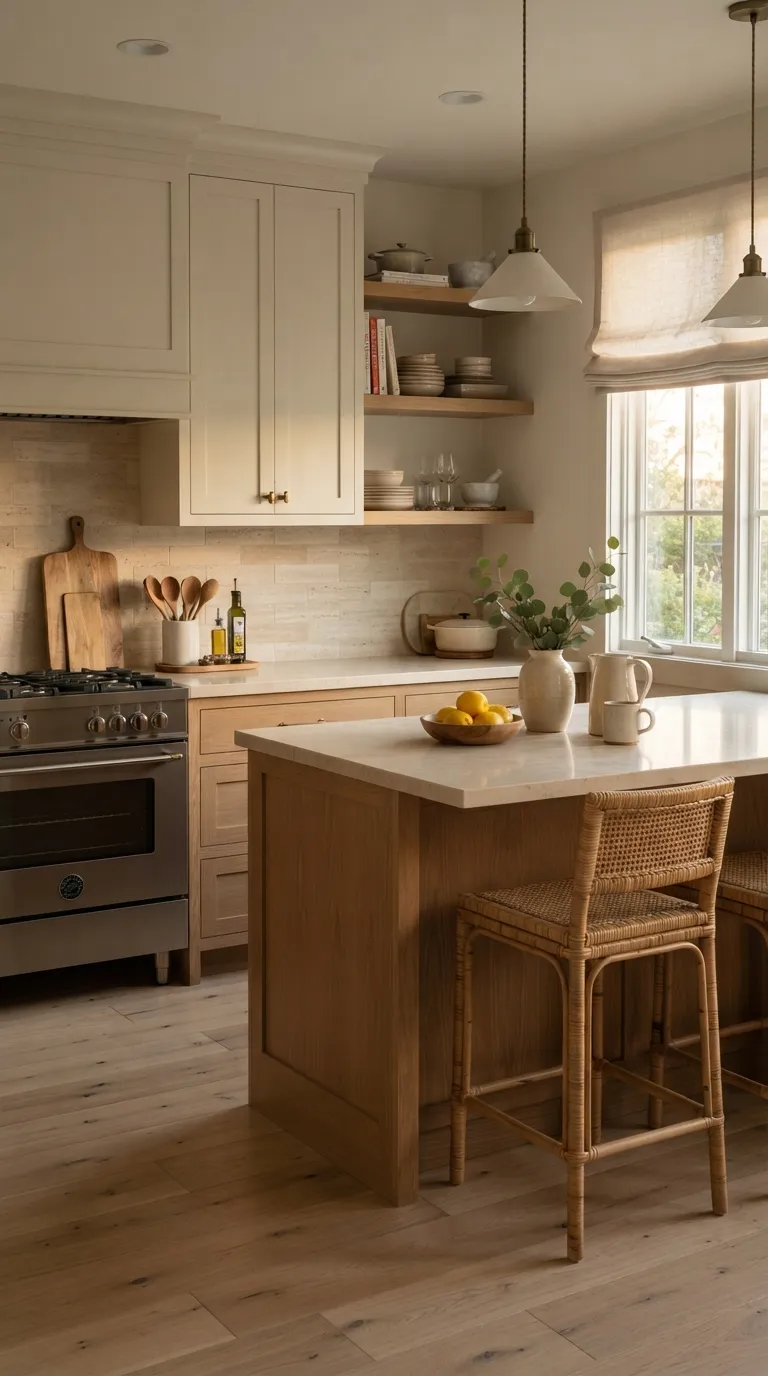
Cream and wood make an easy pairing for a welcoming kitchen. The cream keeps the room light, while natural timber adds the warmth that painted cabinetry alone can sometimes lack. This combination suits farmhouse, transitional, Scandinavian, and relaxed modern interiors.
Use cream on larger surfaces when you want the kitchen to feel open. Wood can then appear on cabinets, shelving, stools, or an island without taking over the room. A few aged-brass details can tie the warm palette together without adding too much visual noise.
Vertical Wood Paneling
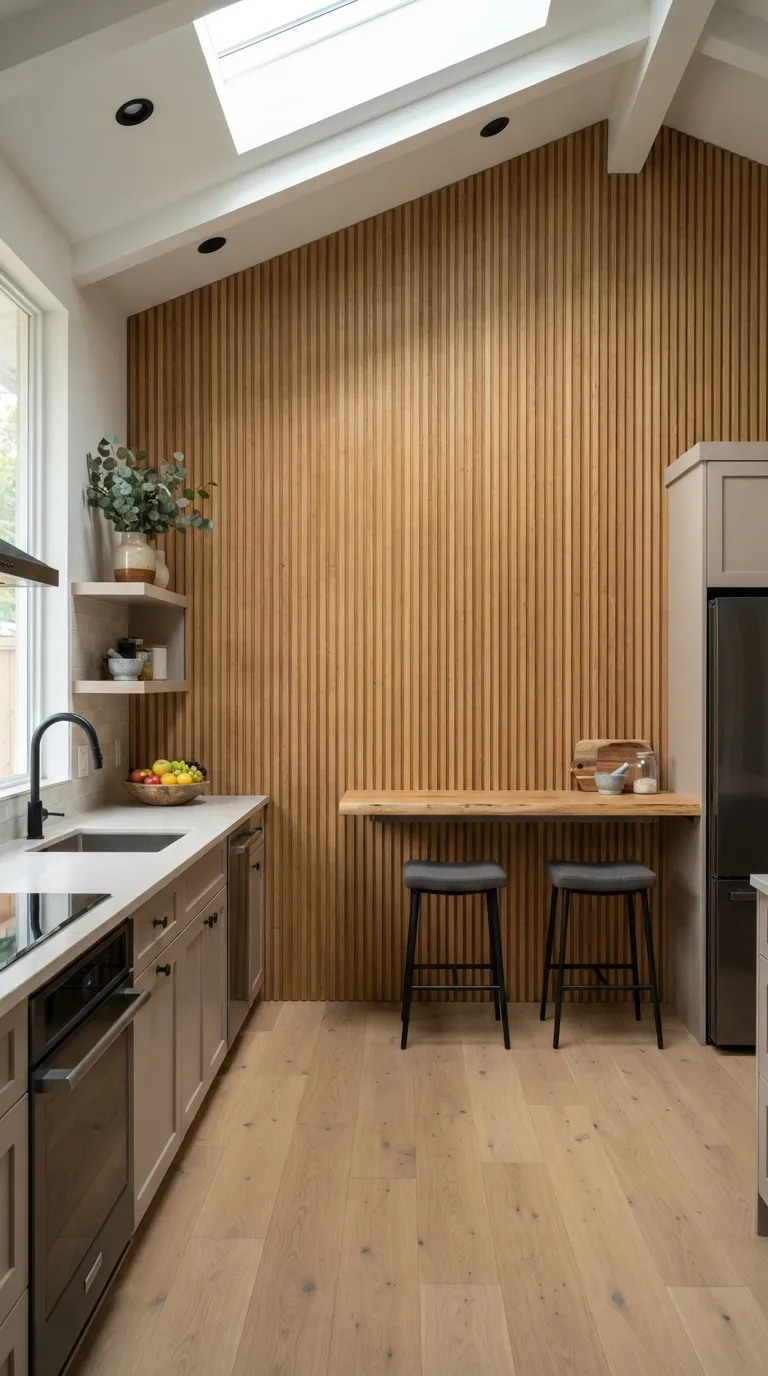
Vertical wood paneling adds texture without relying on lots of decoration. The narrow lines can also draw the eye upward, which makes the kitchen feel taller. A single accent wall is often enough to create this effect.
Choose a wood shade that works with your existing cabinets and flooring. If several surfaces already have strong grain, keep the paneling subtle and let its texture do the work. For a smaller kitchen, using paneling on one wall can give you warmth without making every surface feel wooden.
Light Wood And Stone
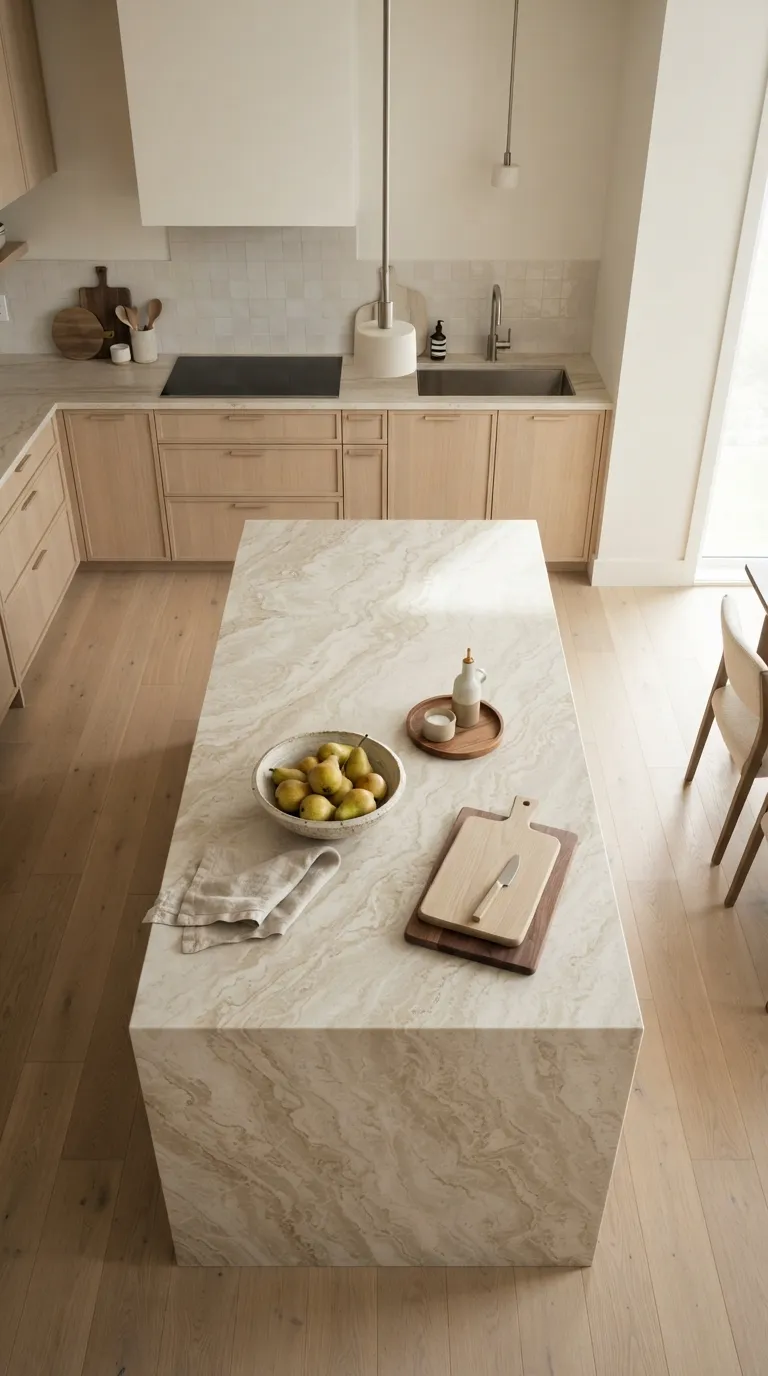
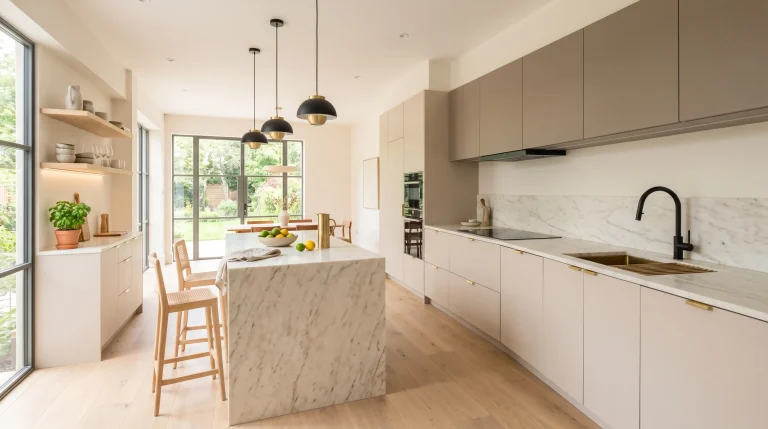
Light wood looks especially inviting beside natural stone. Ash, maple, or pale oak can soften the visual weight of a substantial stone island while keeping the kitchen bright. The result feels warm without relying on dark finishes.
Let the stone bring some variation to the room. A gently veined limestone or quartzite surface can add interest while the wood supplies a steady natural texture. Keep accessories simple so both materials remain easy to appreciate.
Wood Backsplash Detail
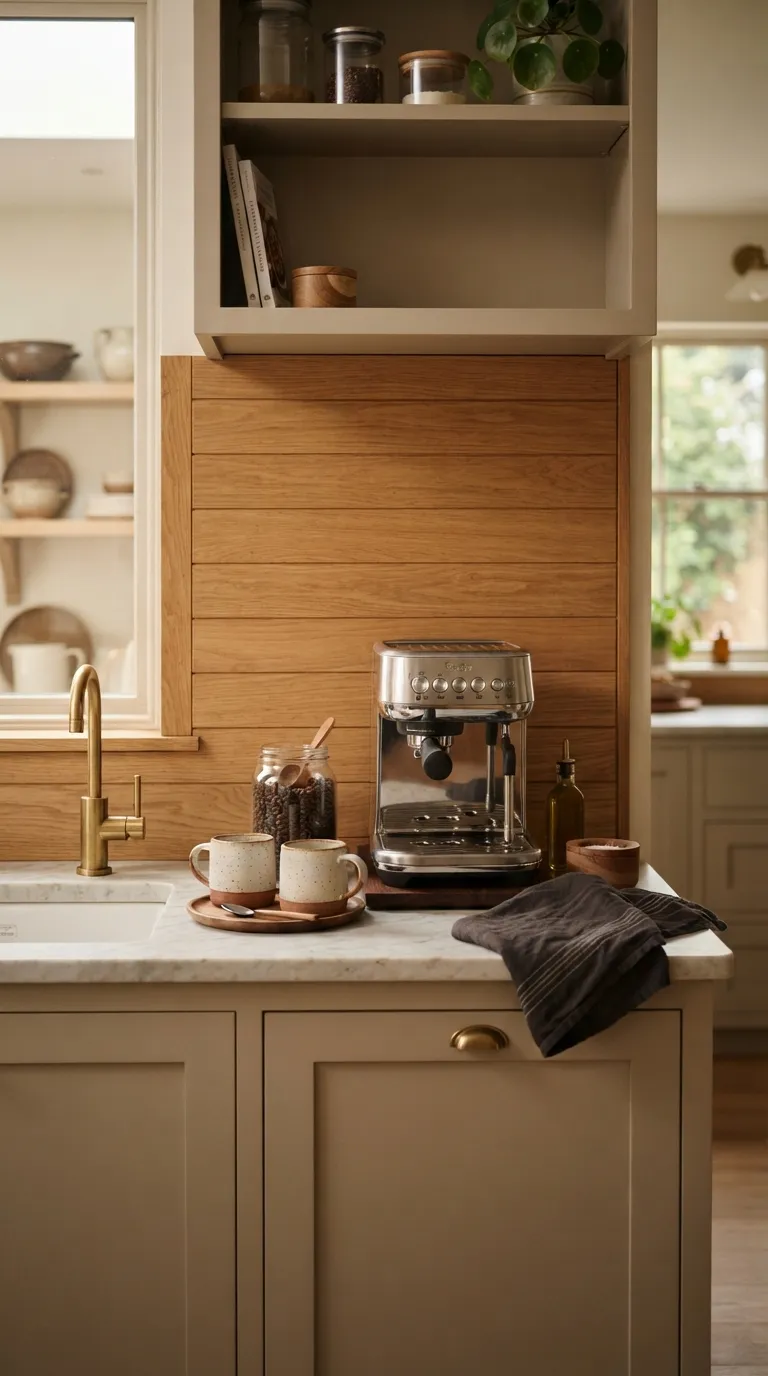
A wood backsplash brings natural texture into an area that often gets overlooked. It can work particularly well behind a dry prep area, coffee station, or open shelving where moisture and heavy cooking splashes aren’t a concern. Oak boards give the wall a warm, furniture-like quality.
Think about maintenance before choosing wood near a sink or cooktop. A properly sealed surface is easier to wipe clean, but a tile or stone backsplash may be more practical in high-splash zones. Use wood where it adds warmth without creating extra upkeep.
Warm Wood Breakfast Nook
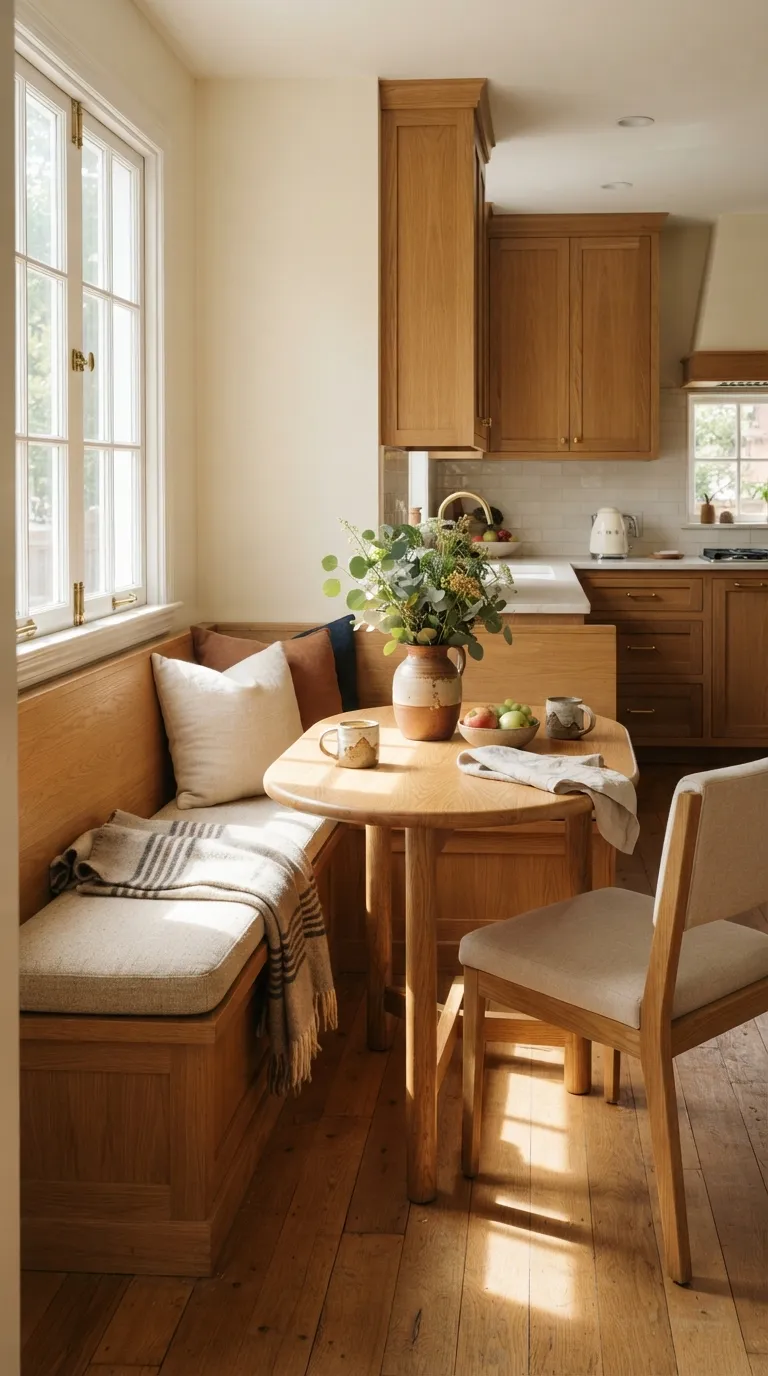
A wooden breakfast nook can make an ordinary corner feel useful and cozy. A built-in oak bench saves floor space while giving the kitchen a dedicated spot for coffee, quick meals, or casual conversation. Pair it with washable linen or performance fabric if the area gets frequent use.
Keep the table slightly smaller than the bench so movement stays easy. An oval or round top works nicely in tight corners because there are no sharp corners to work around. Add a few everyday pieces rather than filling the nook with decor.
Dark Wood With Warm Whites
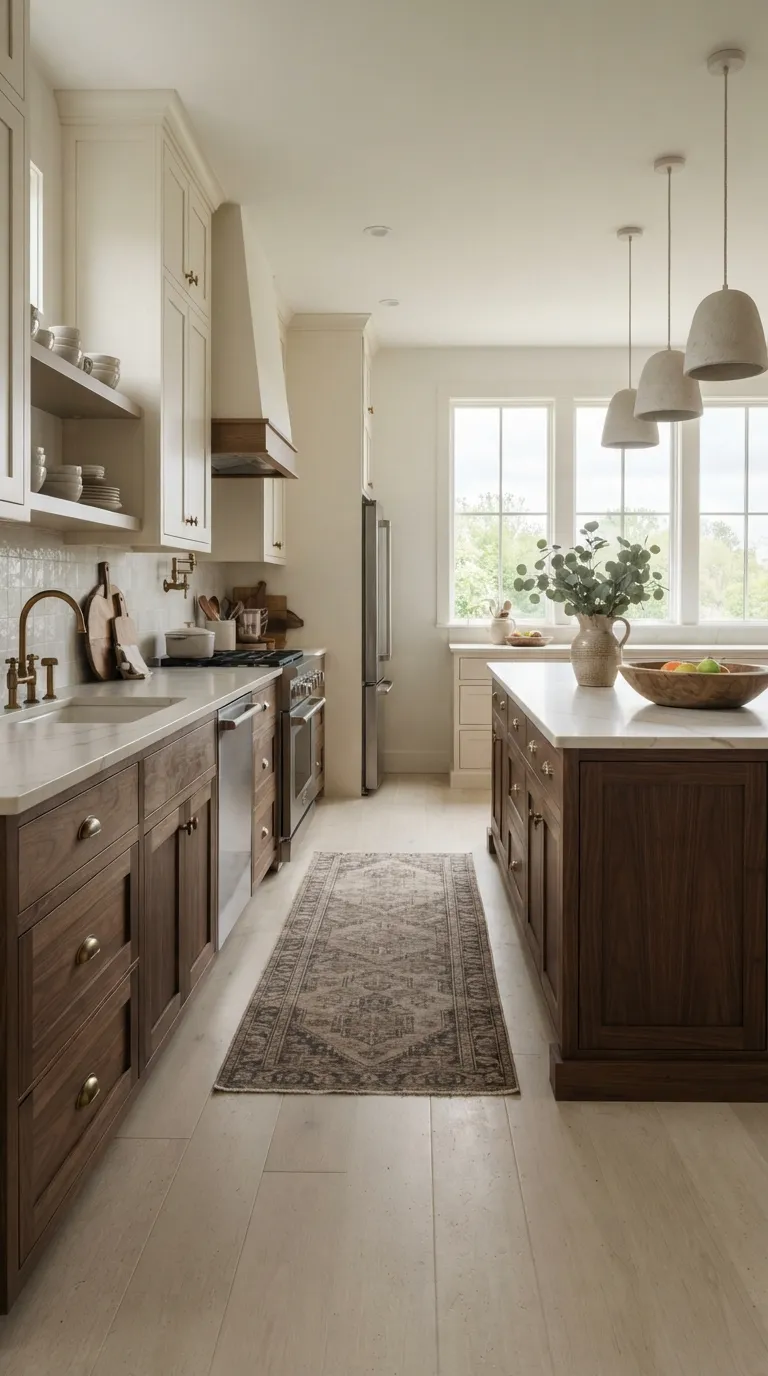
Dark walnut can give a kitchen a cozy, grounded feel. The trick is to pair it with enough warm white to keep the room from becoming visually dense. Ivory counters and creamy walls provide a softer contrast than bright white.
This is one of the stronger Warm Wood Kitchen Ideas for a larger space with good natural light. If your kitchen is small, use dark wood on a single island or a lower cabinet run instead. Keep upper areas lighter to preserve an open feel.
Wood Island With Waterfall Edge
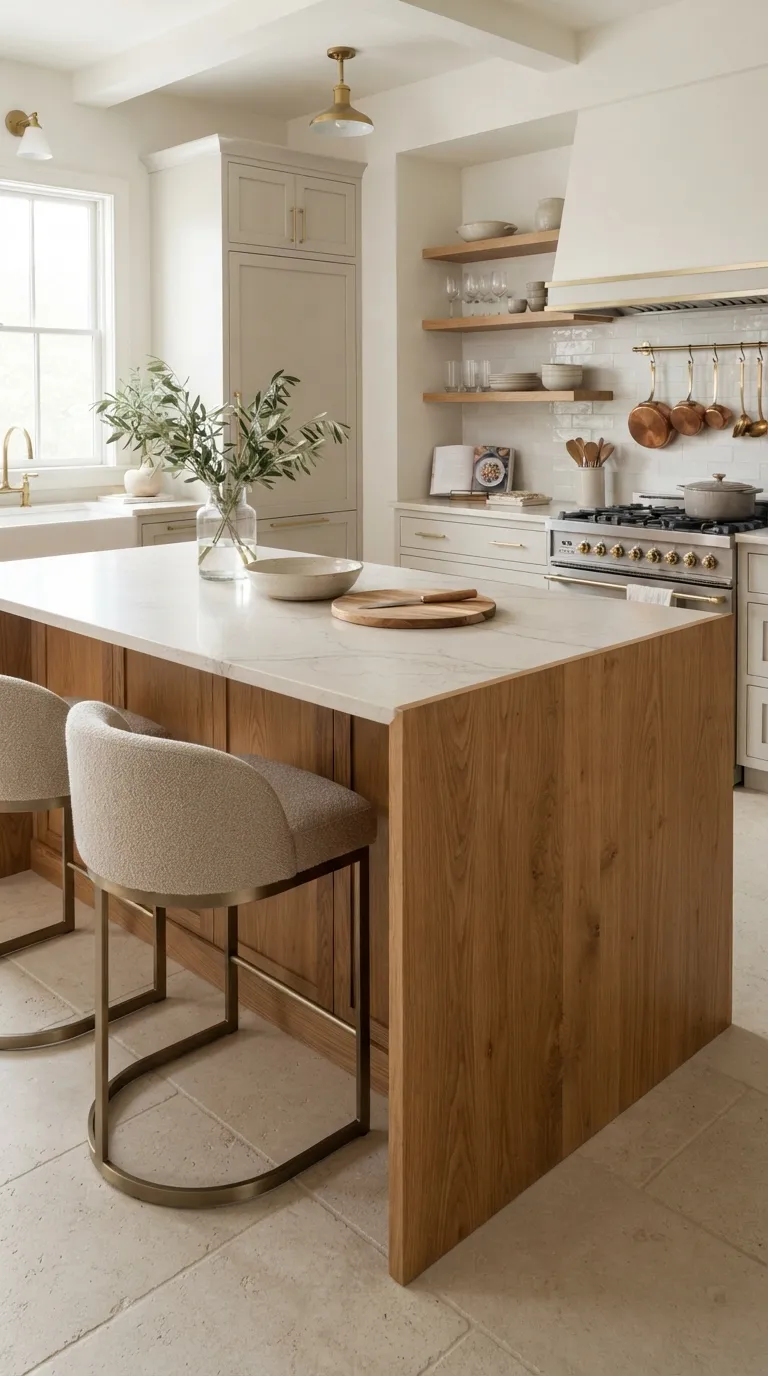
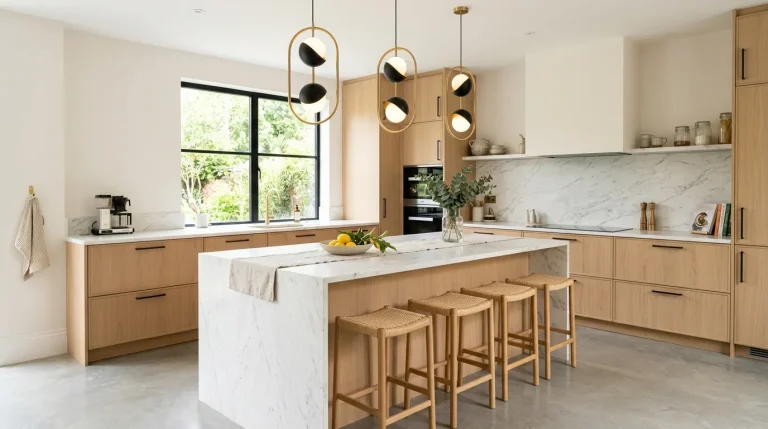
A waterfall edge gives a wood island a clean, finished profile. When the grain continues down the side, the island can feel more like custom furniture than a basic cabinet box. This detail suits kitchens where the island is visible from nearby living or dining areas.
Choose a relatively calm wood grain if you want a refined look. Pair it with a light stone top and simple stools so the edge stays easy to notice. In an open-plan home, this type of island can also help define the kitchen without adding a wall.
Mixed Wood Cutting Boards
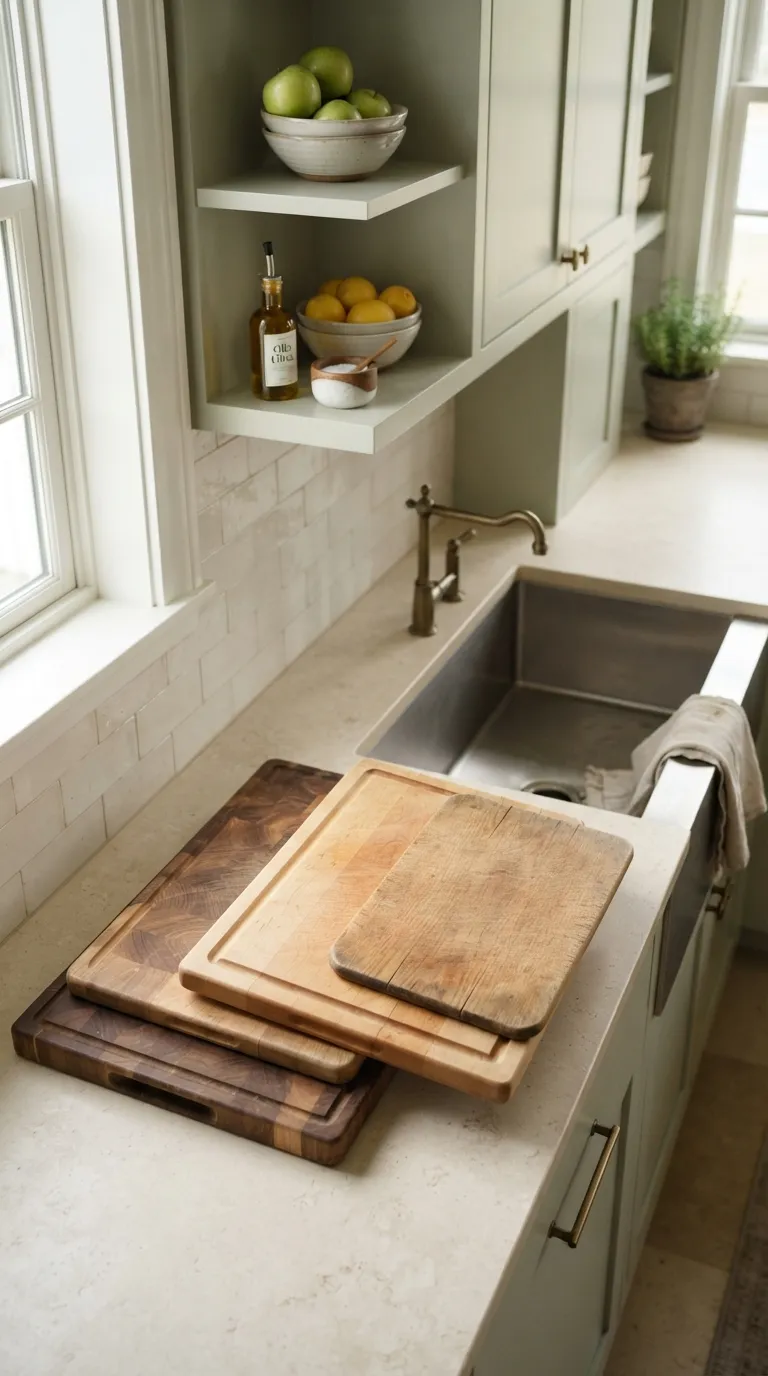
Small wooden accessories can add warmth even when your kitchen doesn’t have wood cabinetry. Cutting boards are especially useful because they bring natural texture to an otherwise hard-working counter. Mix two or three wood shades for a relaxed, collected look.
Display the boards where they’re easy to grab rather than hiding them away. Lean larger boards against the backsplash and keep smaller ones in a shallow container nearby. Choose food-safe boards and follow the maker’s care instructions so they stay in good shape.
Warm Wood Pantry Doors
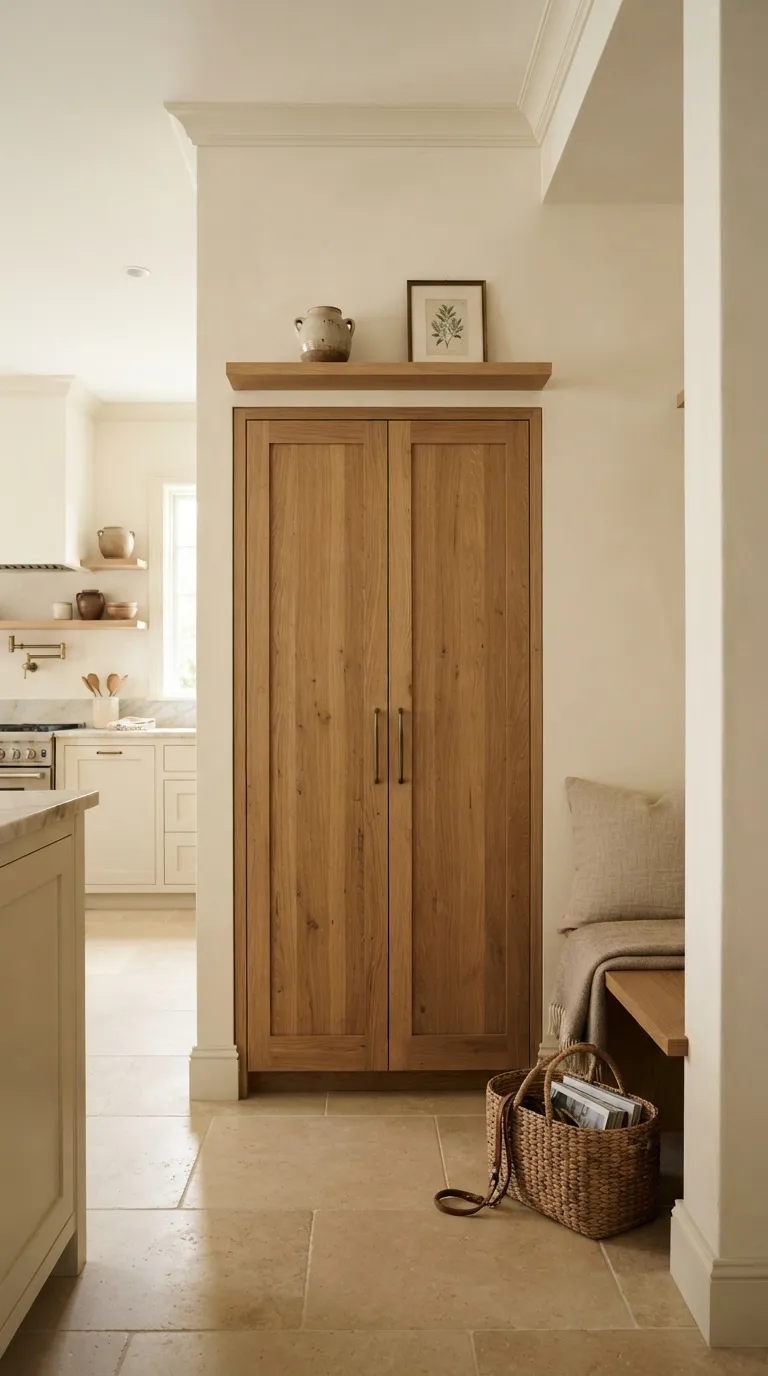
A wood pantry door is a simple way to add warmth without replacing the whole kitchen. Tall oak doors can make a storage wall feel intentional while giving the room a strong vertical detail. This works well when most of the cabinetry is painted.
Match the wood tone to one other element nearby instead of repeating it everywhere. A wood stool, cutting board, or small shelf can create enough connection. Keep the hardware simple so the grain remains the main feature.
Rustic Wood And Soapstone
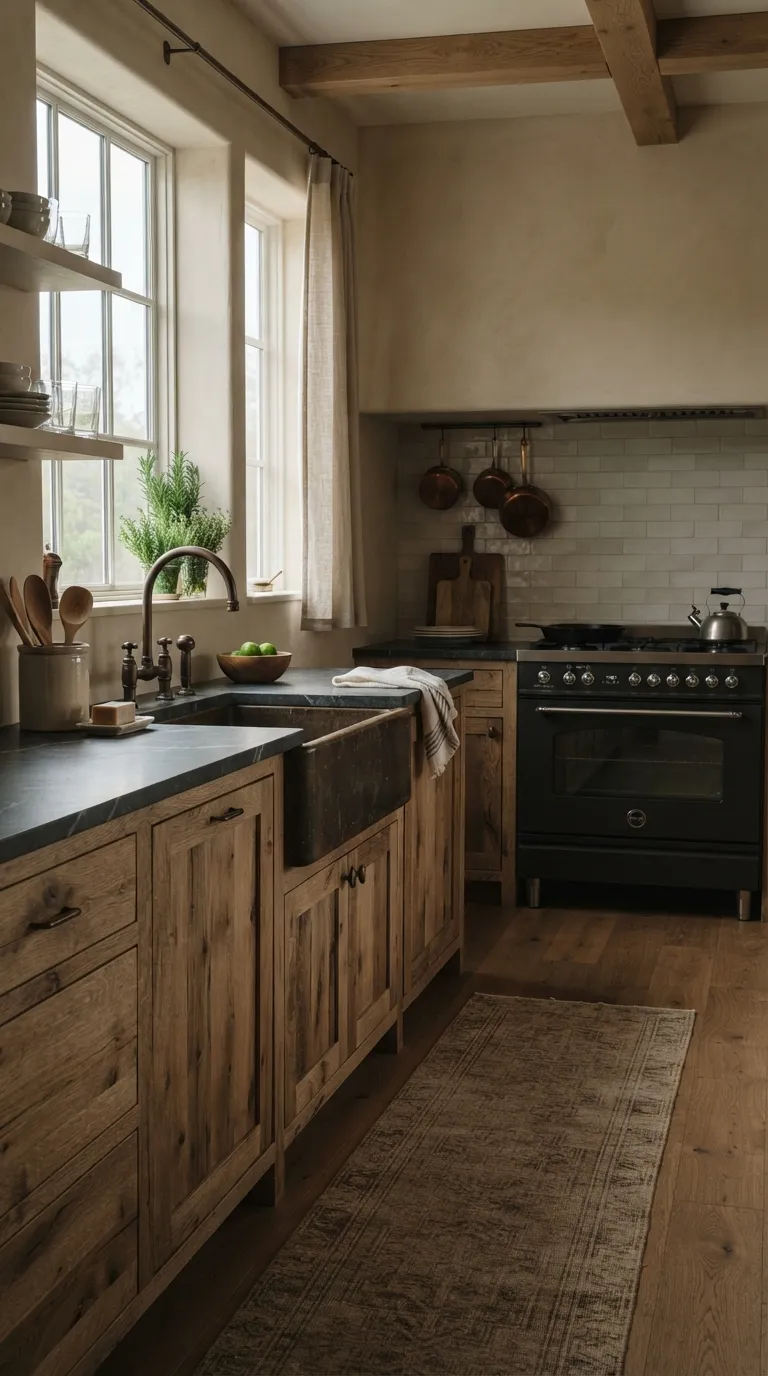
Rustic wood and soapstone create a kitchen with a deeper, earthier character. The rougher grain of reclaimed oak contrasts nicely with the smooth, dark counter. Together, they make the room feel sturdy without relying on ornate details.
Keep the wall color warm to soften the dark countertop. Plaster, cream paint, or muted beige tile can work well around this combination. Add aged metal hardware and simple ceramics for a practical look that doesn’t feel overly styled.
Wood Framed Windows
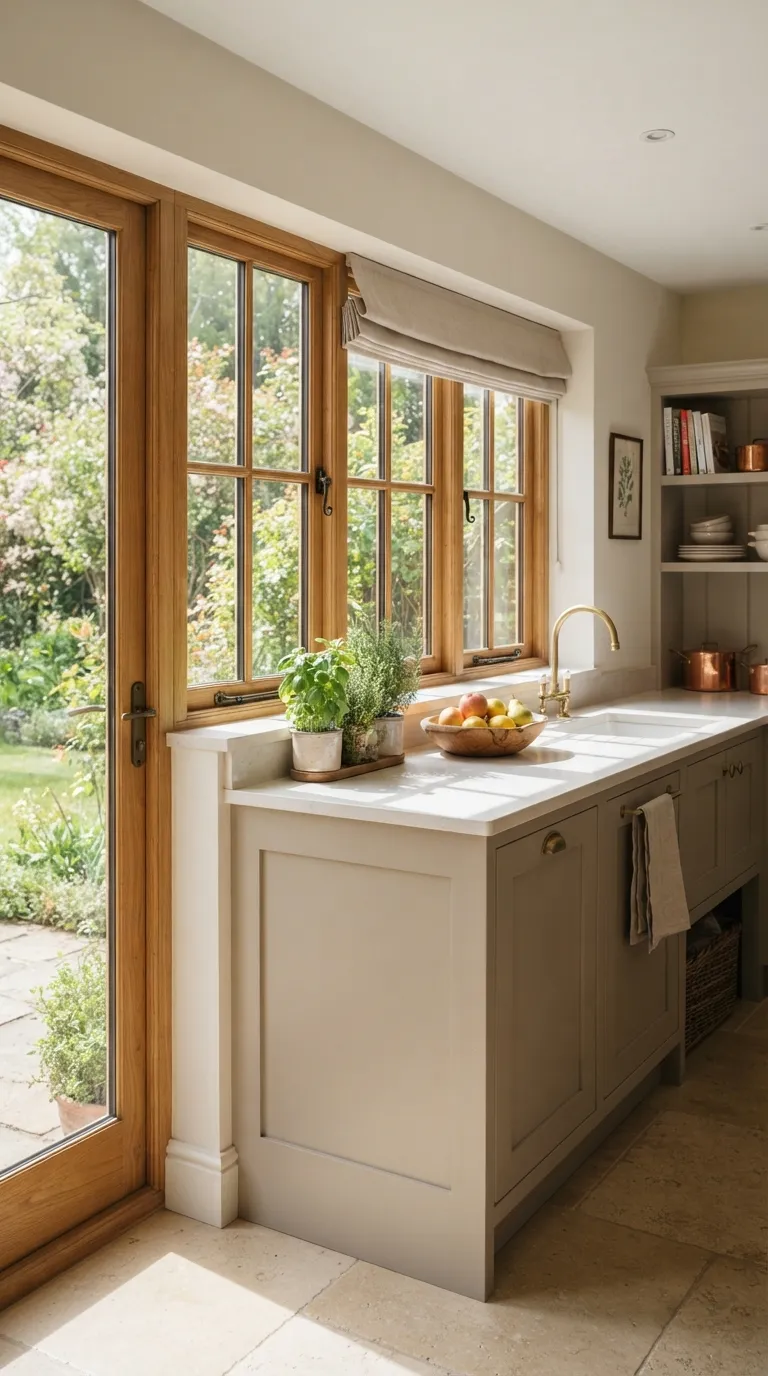
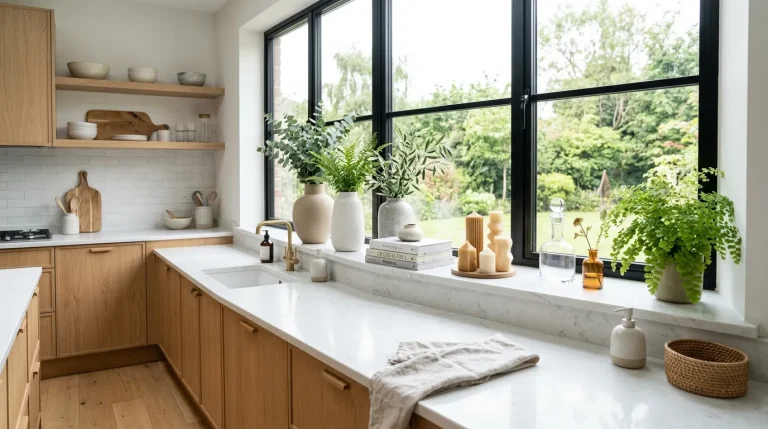
Wood window trim can add warmth in a surprisingly subtle way. Instead of adding another cabinet or shelf, the timber becomes part of the architecture. Oak trim looks especially good against creamy paint and natural stone.
Use this idea when your kitchen already has enough cabinetry. A warm wood frame can connect the windows to nearby flooring, shelves, or furniture without making every surface match. Keep the window treatment simple so daylight remains the main feature.
Wood Cabinetry With Brass
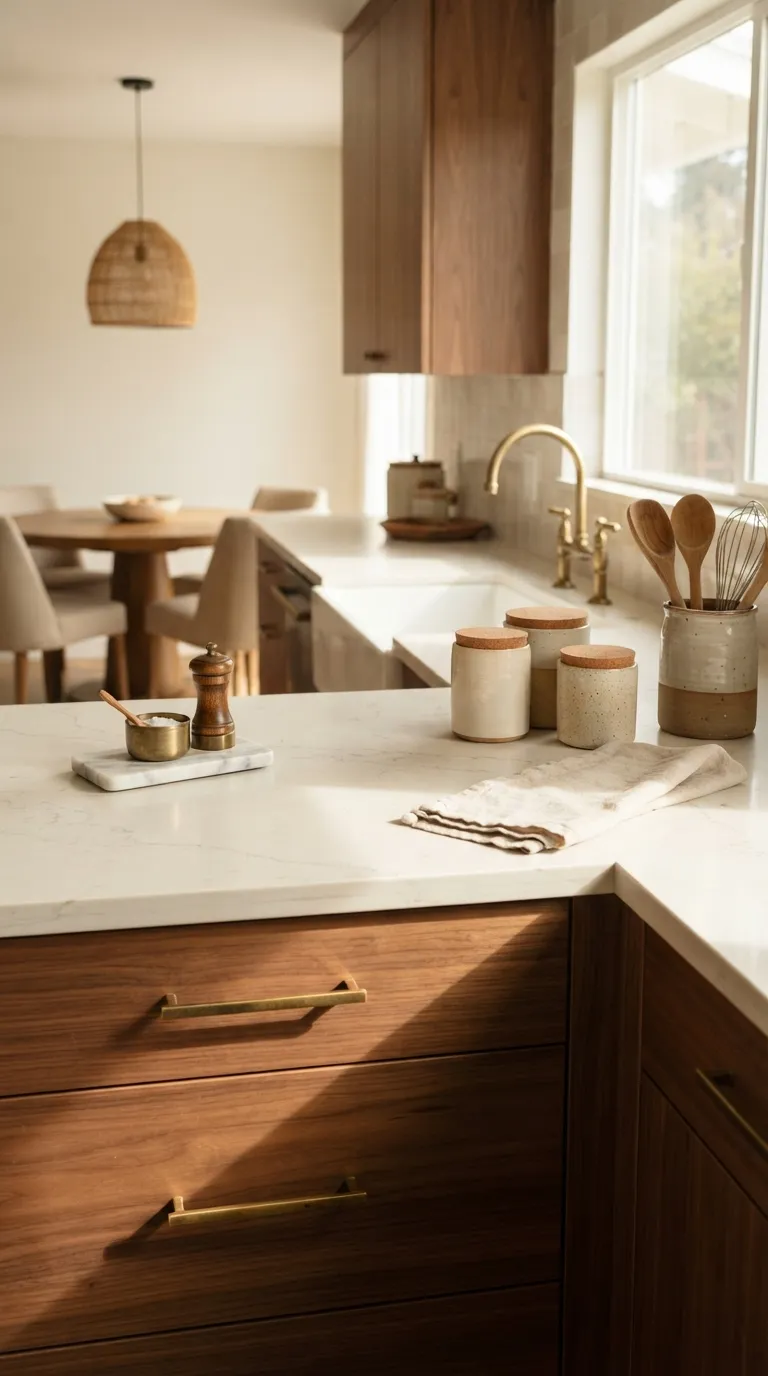
Brass hardware brings a gentle glow to natural wood cabinetry. Aged brass works particularly well because its softer finish doesn’t compete with the grain. This pairing can suit both classic kitchens and cleaner contemporary spaces.
Keep the hardware style consistent across the room. Pulls, knobs, faucets, and lighting don’t need to be identical, but they should share a similar warm metal tone. Against walnut or oak, that small metal detail can make the cabinetry feel carefully considered.
Warm Wood Open Pantry
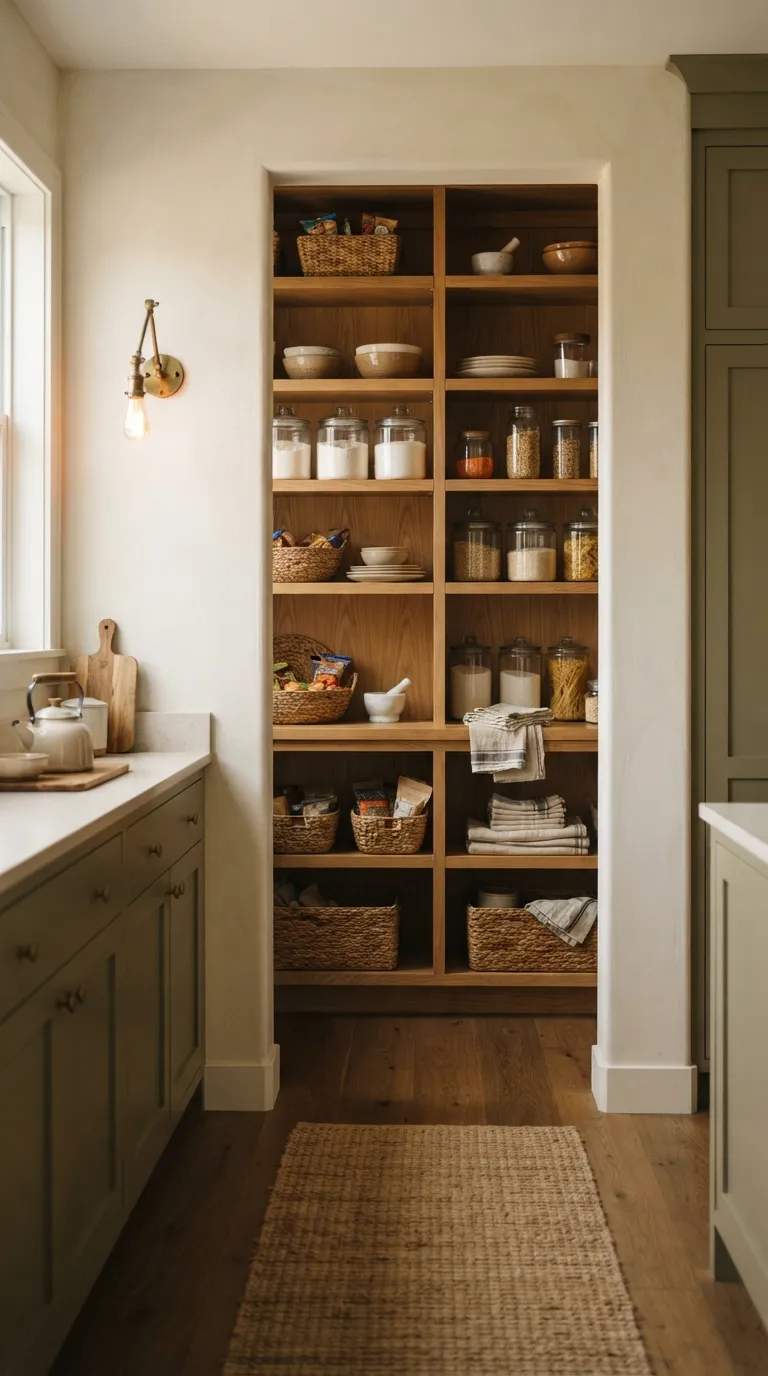
An open pantry can turn storage into part of the kitchen design. Warm oak shelves make jars, baskets, and dishes feel like part of the room instead of items tucked behind a door. This works especially well in kitchens with a small unused alcove.
Keep the storage practical from top to bottom. Place everyday items within easy reach and reserve higher shelves for pieces you use less often. Matching baskets can reduce visual clutter while still letting the wood remain visible around them.
Wood And Terracotta Accents
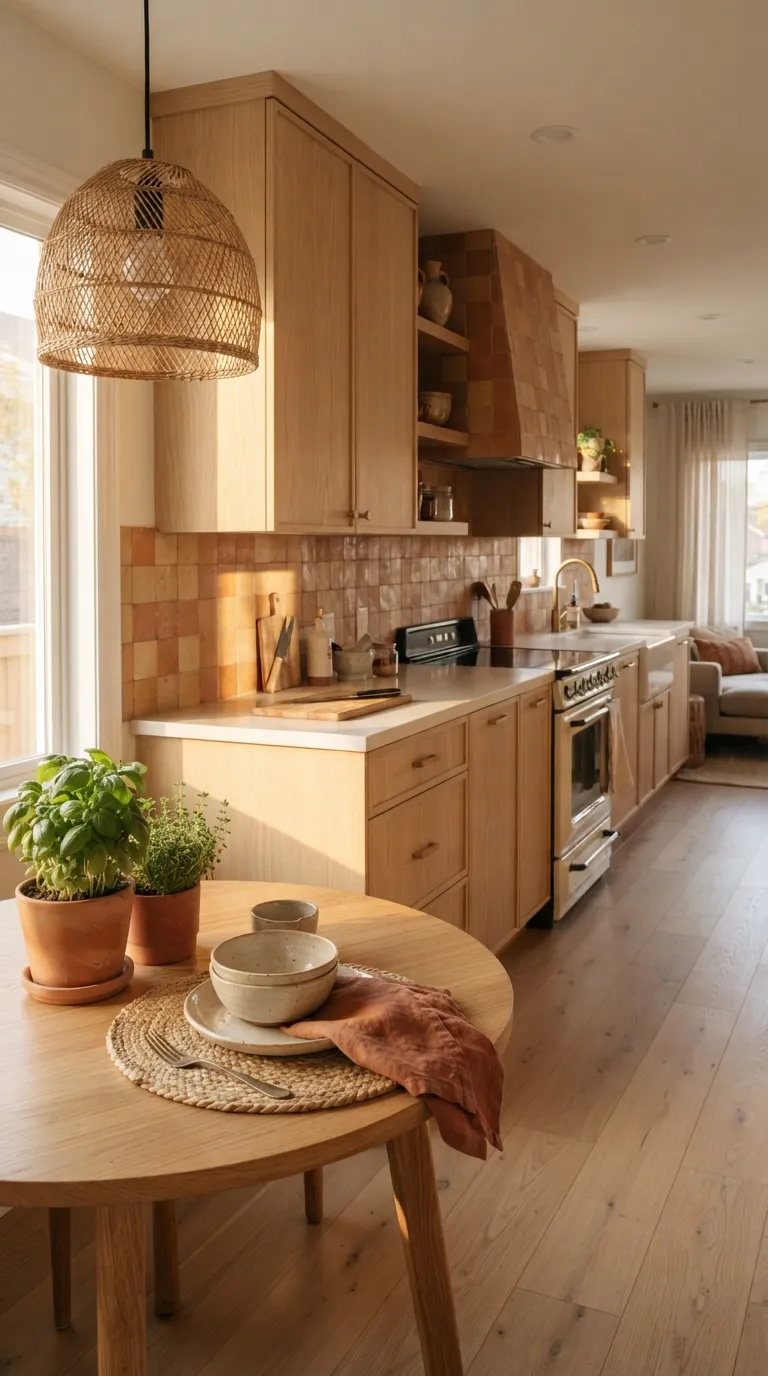
Wood and terracotta make a naturally warm combination. The reddish clay tones bring a little color to oak cabinetry without creating a loud contrast. This pairing works well for kitchens inspired by Mediterranean, rustic, or earthy interiors.
Use terracotta in small areas if you want a quieter look. A backsplash, planter, pendant, or a few ceramic pieces can be enough to introduce the color. Keep the remaining surfaces neutral so the warm wood and clay tones don’t compete.
Floating Wood Vanity Cabinet
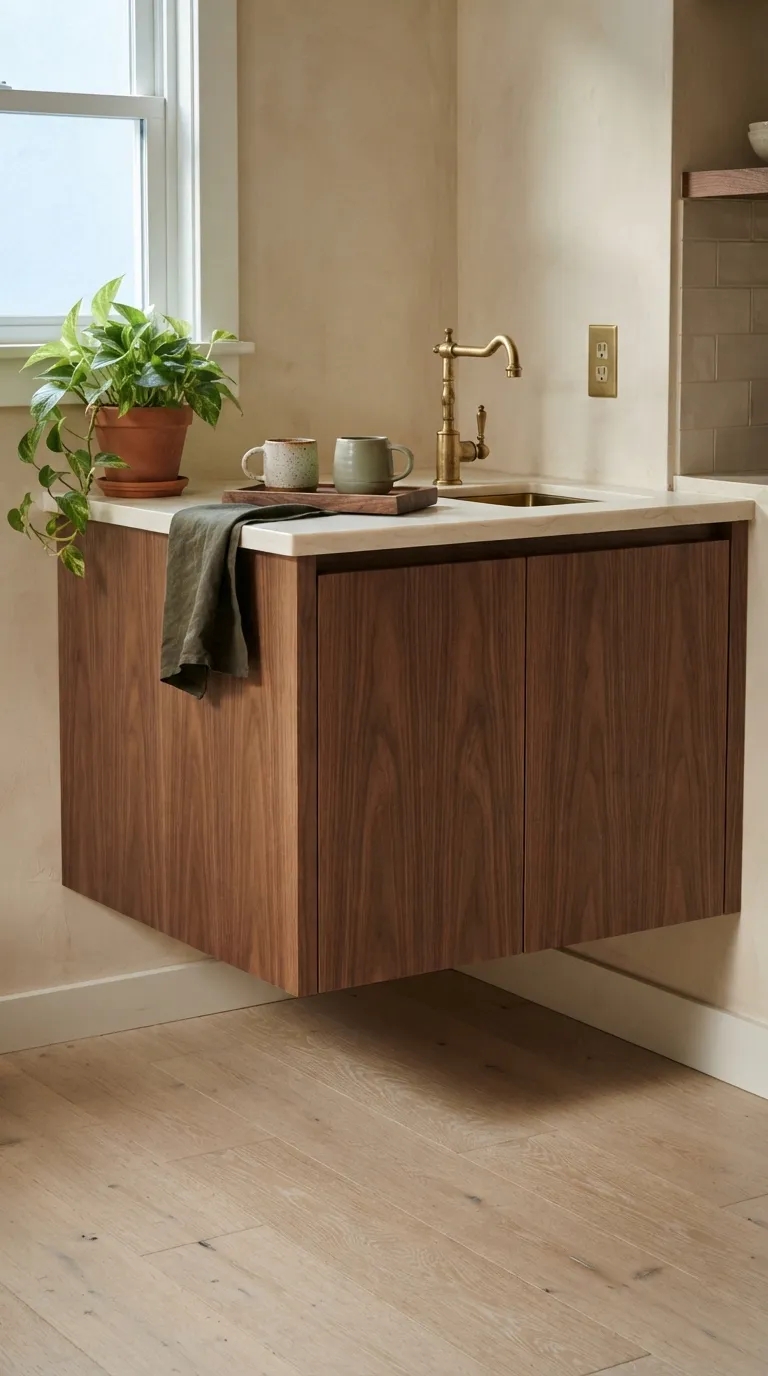
A floating wood cabinet can give a kitchen a lighter furniture-like detail. The open space underneath keeps the cabinet from feeling bulky, which can be useful in a compact beverage station or secondary prep area. Walnut works especially well when you want richer color in a small dose.
Use this approach where you don’t need a full bank of storage. The open area beneath the cabinet can hold baskets or remain clear for an airy look. Pair the wood with a pale counter and simple hardware to keep the feature easy on the eye.
Wood Island With Seating
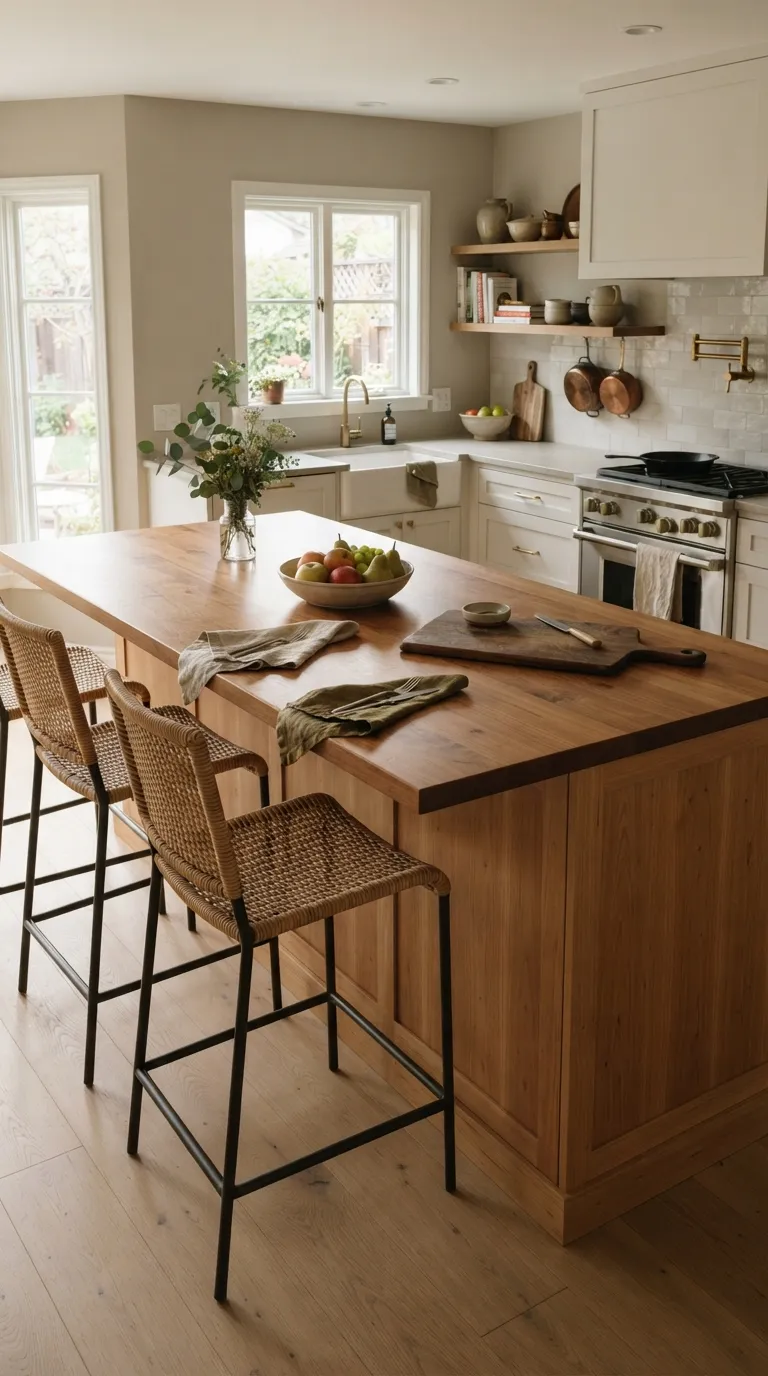
A wood island with seating can make the kitchen feel more connected to daily life. The timber adds warmth, while the overhang gives family members or guests a comfortable place to sit without needing a separate dining table. Maple, oak, and walnut can all work depending on the room’s palette.
Check the seating height and overhang before choosing the final design. Leave enough knee space for comfortable use and enough clearance around the island for people to move easily. Finish the look with stools that repeat one texture or tone already used elsewhere in the kitchen.
A Welcoming Wood-Filled Kitchen
Warm wood works best when you give it room to breathe. Start with one major feature, such as cabinets or an island, then add smaller touches through shelving, stools, cutting boards, trim, or hardware. This keeps the kitchen layered without making every surface compete.
Use your existing finishes as the starting point. Creamy walls, natural stone, woven textures, aged metals, and earthy accents can all support a warm timber palette. With a few thoughtful changes, these Warm Wood Kitchen Ideas can help your kitchen feel comfortable, practical, and ready for everyday life.
Elira Montclair
Elira writes about timeless home decor, kitchen styling, and practical interior ideas. Her work blends warm, inviting aesthetics with simple decorating tips that make everyday spaces feel beautiful and comfortable.