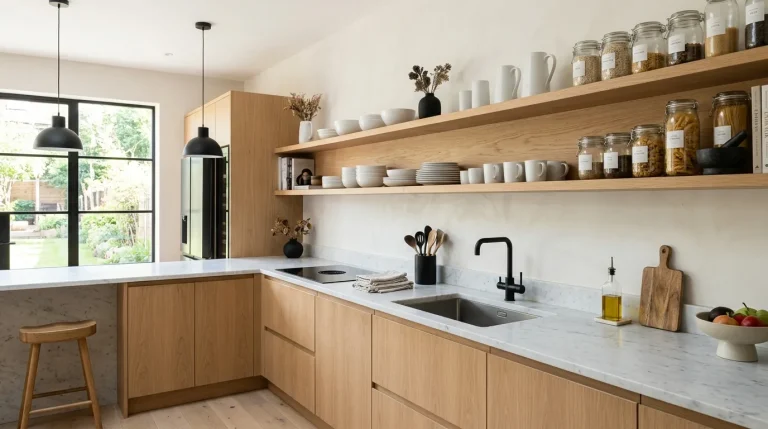
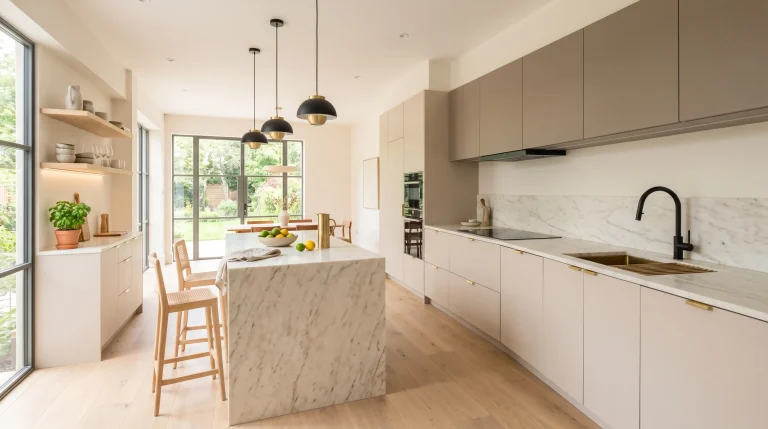
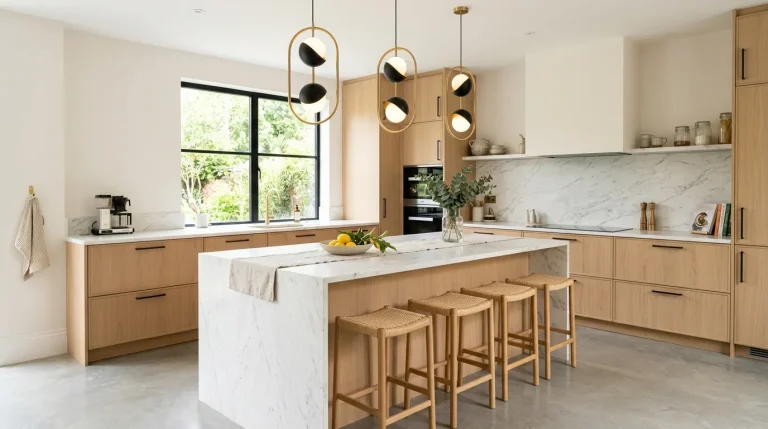
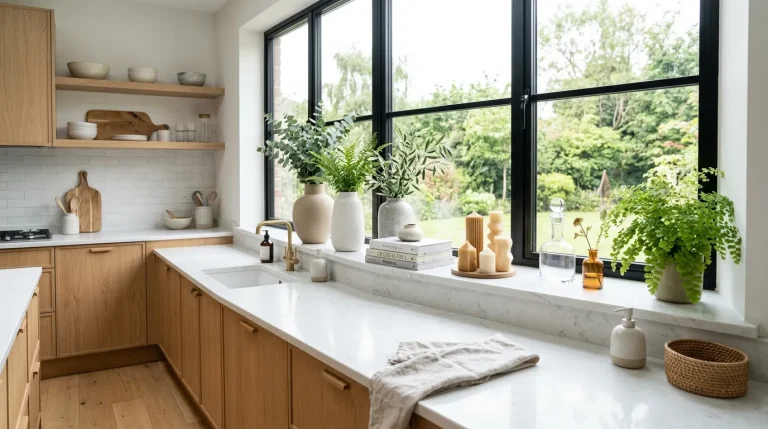
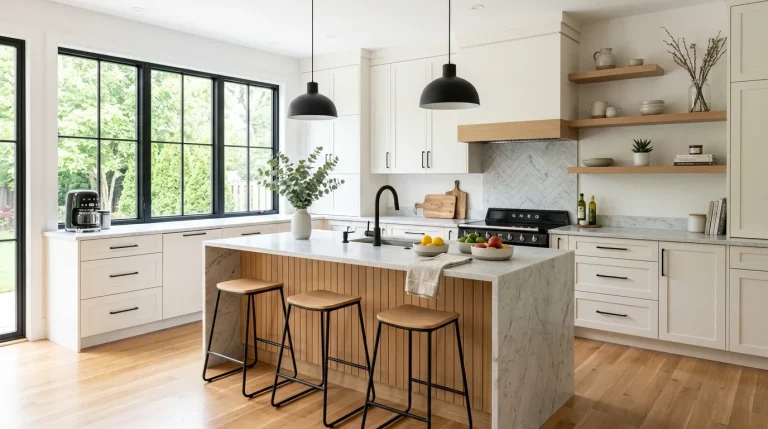
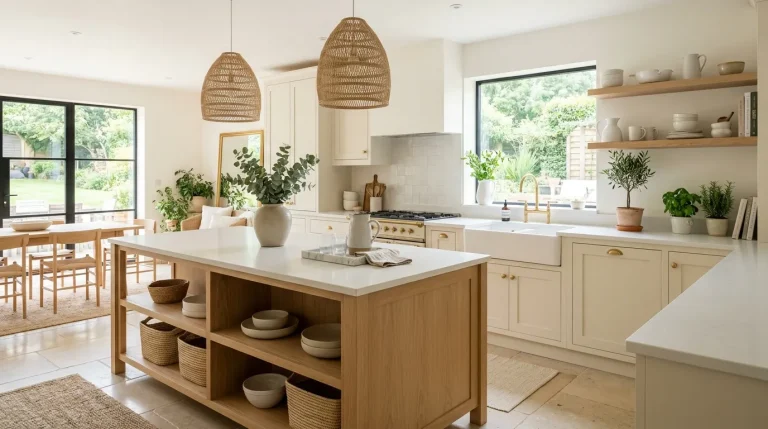
Could 25 Moody Blue Kitchen Ideas Transform Your Home?

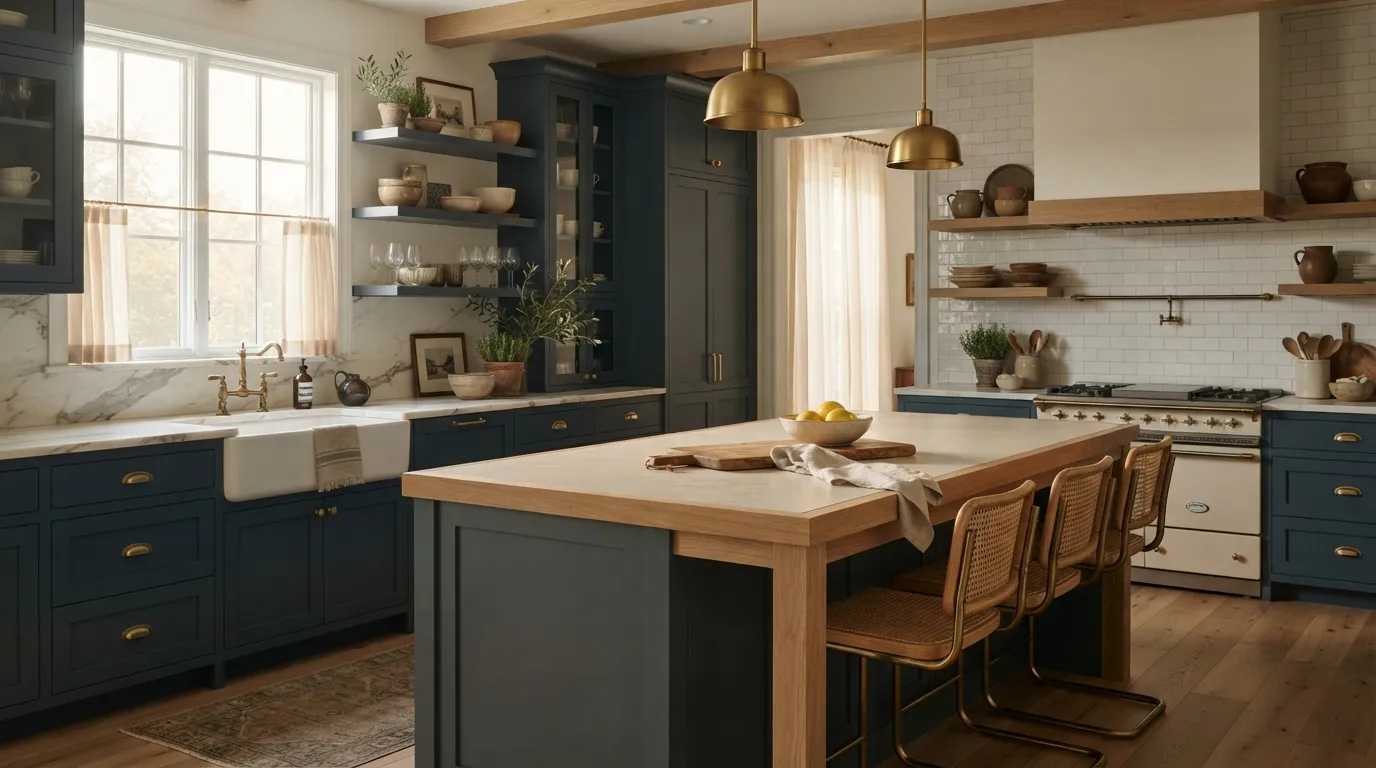
A Moody Blue Kitchen can make an ordinary cooking space feel grounded, cozy, and full of character. Deep navy, slate, ink, and blue-green cabinet tones work especially well with warm wood, creamy stone, aged brass, and soft lighting. The result feels rich without needing a room full of bold decor.
The best blue kitchens aren’t about making everything dark. Balance does the work. Light countertops can keep the room airy, while wood accents add warmth and open shelves break up a long wall of cabinetry. Whether you’re planning a full kitchen update or a small cabinet refresh, these ideas can help you find a blue look that feels right for your home.
Navy Cabinets With Marble
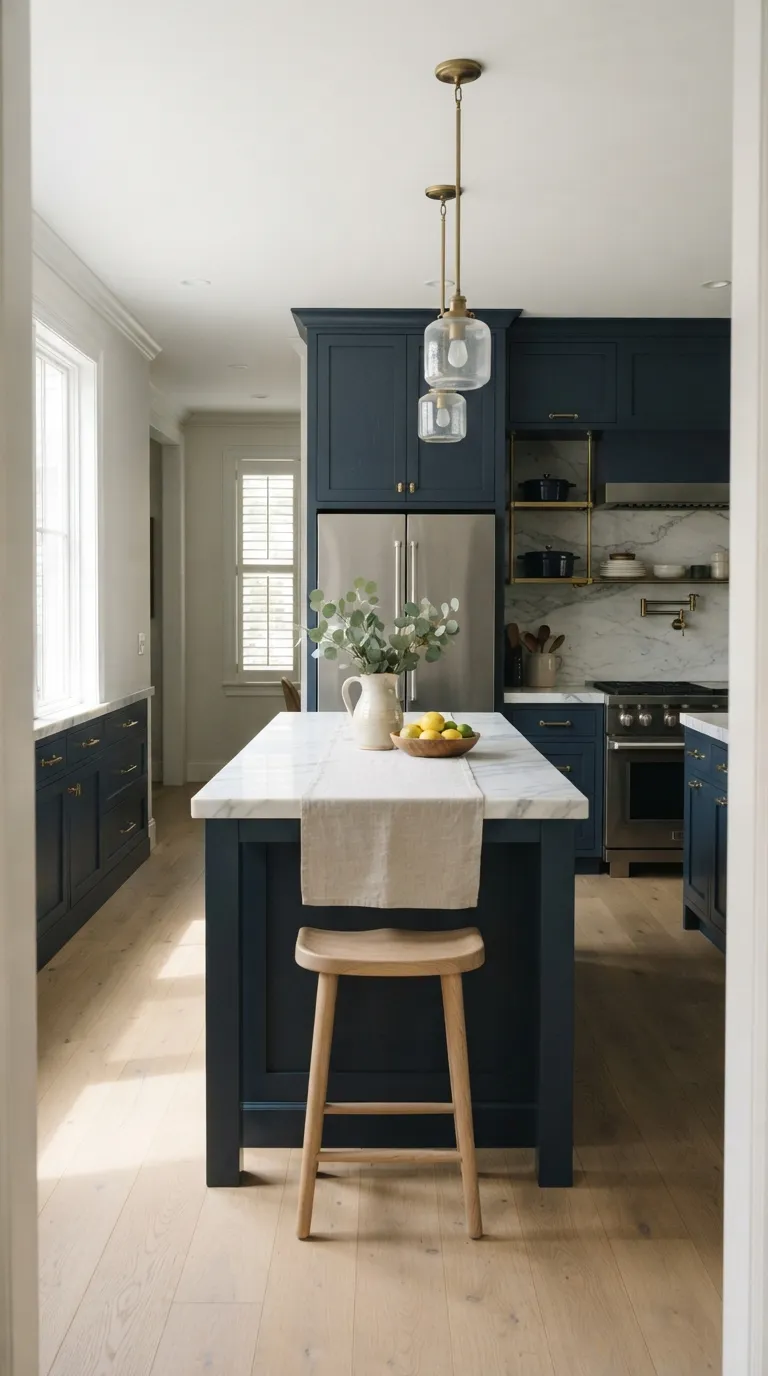
Navy cabinets give a kitchen a strong foundation without making it feel overly formal. Marble works beautifully beside them because its pale surface catches light and keeps the darker cabinetry from weighing down the room.
For a classic Moody Blue Kitchen, keep the hardware warm rather than adding another cool metal. Brass pulls, oak stools, and creamy textiles soften the contrast and make the space feel more welcoming. This pairing also works well when you want a timeless look that won’t depend on passing color trends.
Blue-Green Lower Cabinets
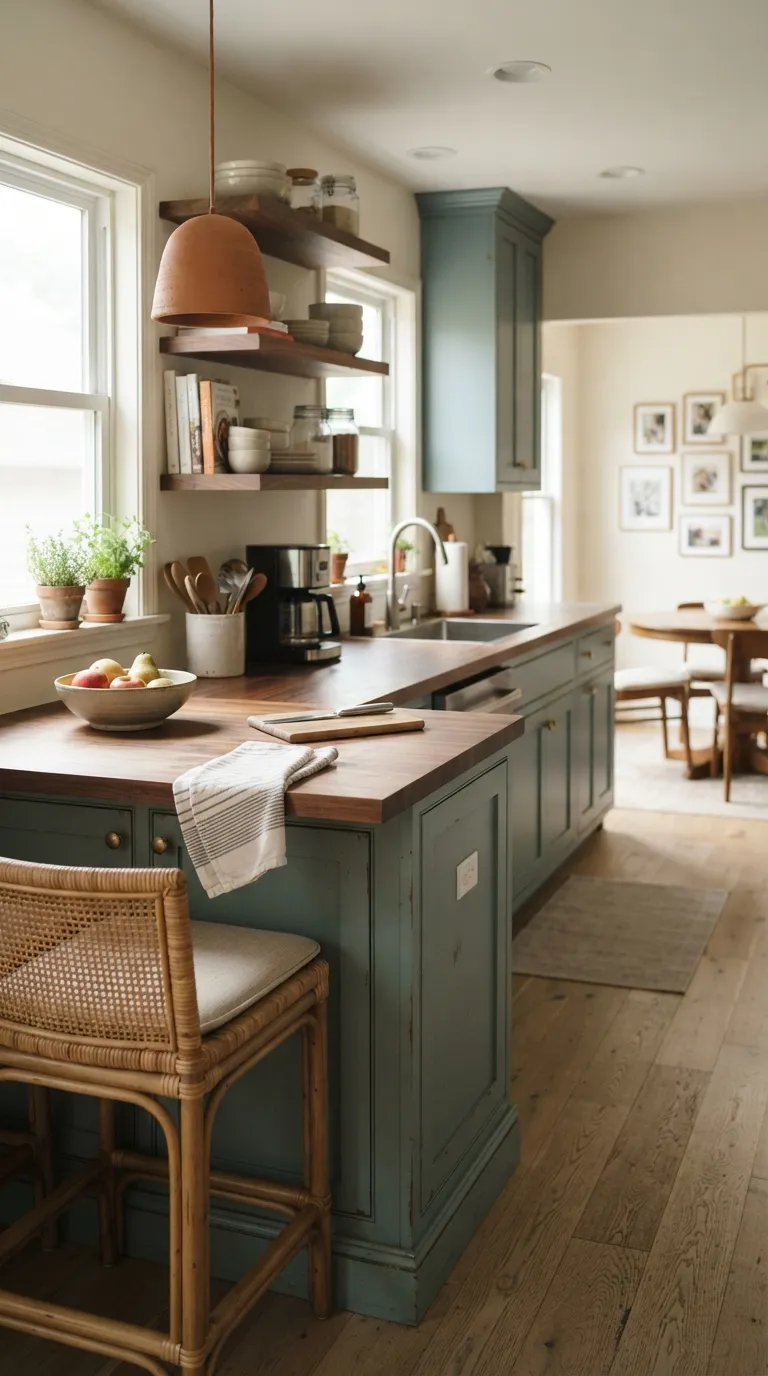
Blue-green cabinets can soften the mood while keeping the depth of a darker paint color. This shade sits nicely between classic blue and earthy green, making it useful when your kitchen already has wood floors or natural timber furniture.
Use the darker color below eye level and keep the walls lighter for an open feel. A walnut counter, woven stools, or terracotta accessories can add warmth without competing with the cabinetry. It’s a smart choice for a smaller kitchen where full-height dark cabinets might feel too heavy.
Moody Blue With Warm Oak
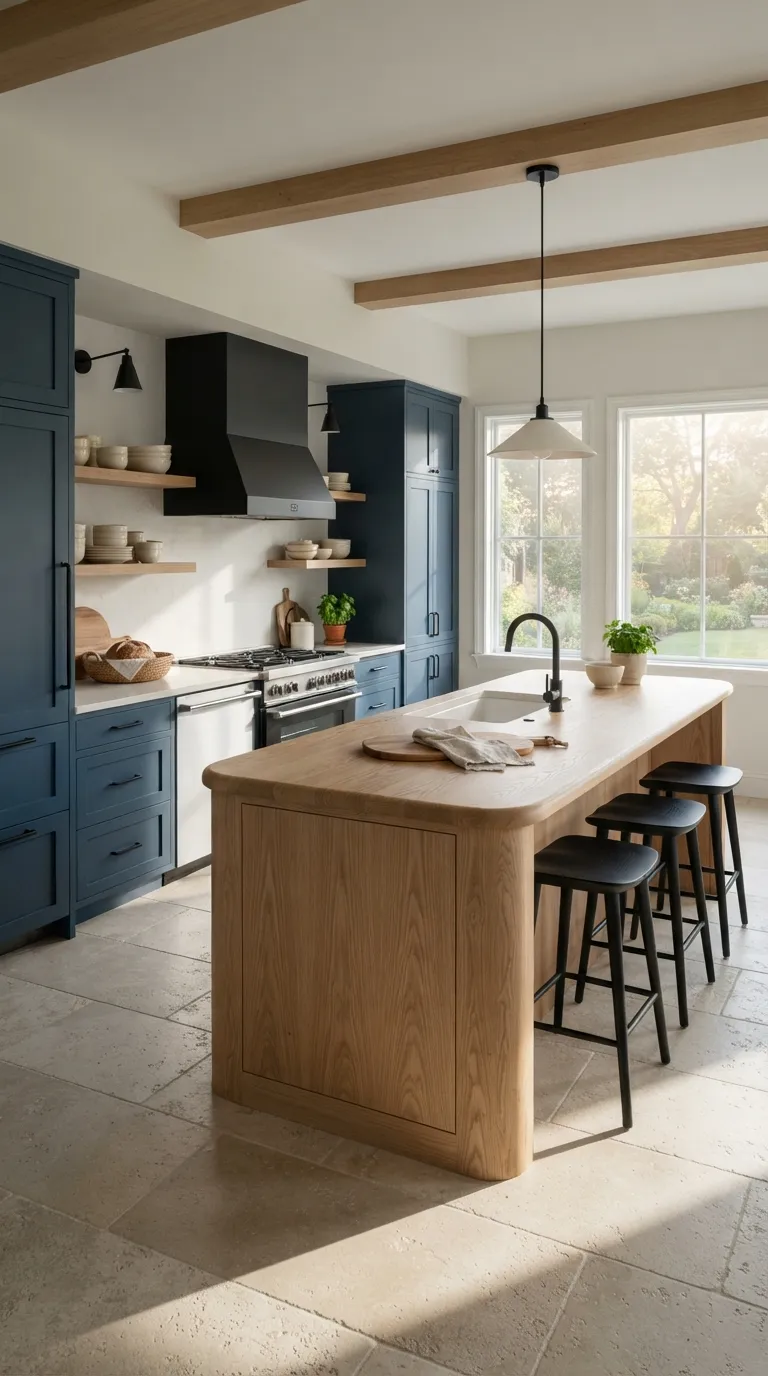
Warm oak gives dark blue cabinetry a softer, more relaxed feel. The natural grain breaks up the solid color and brings a touch of nature into a kitchen that could otherwise look quite sleek.
Try oak on the island if your perimeter cabinets are deep blue. You can also repeat the wood on floating shelves, stools, or a range hood surround for a connected look. With this approach, the Moody Blue Kitchen feels cozy and balanced rather than dark from wall to wall.
Deep Blue Pantry Wall
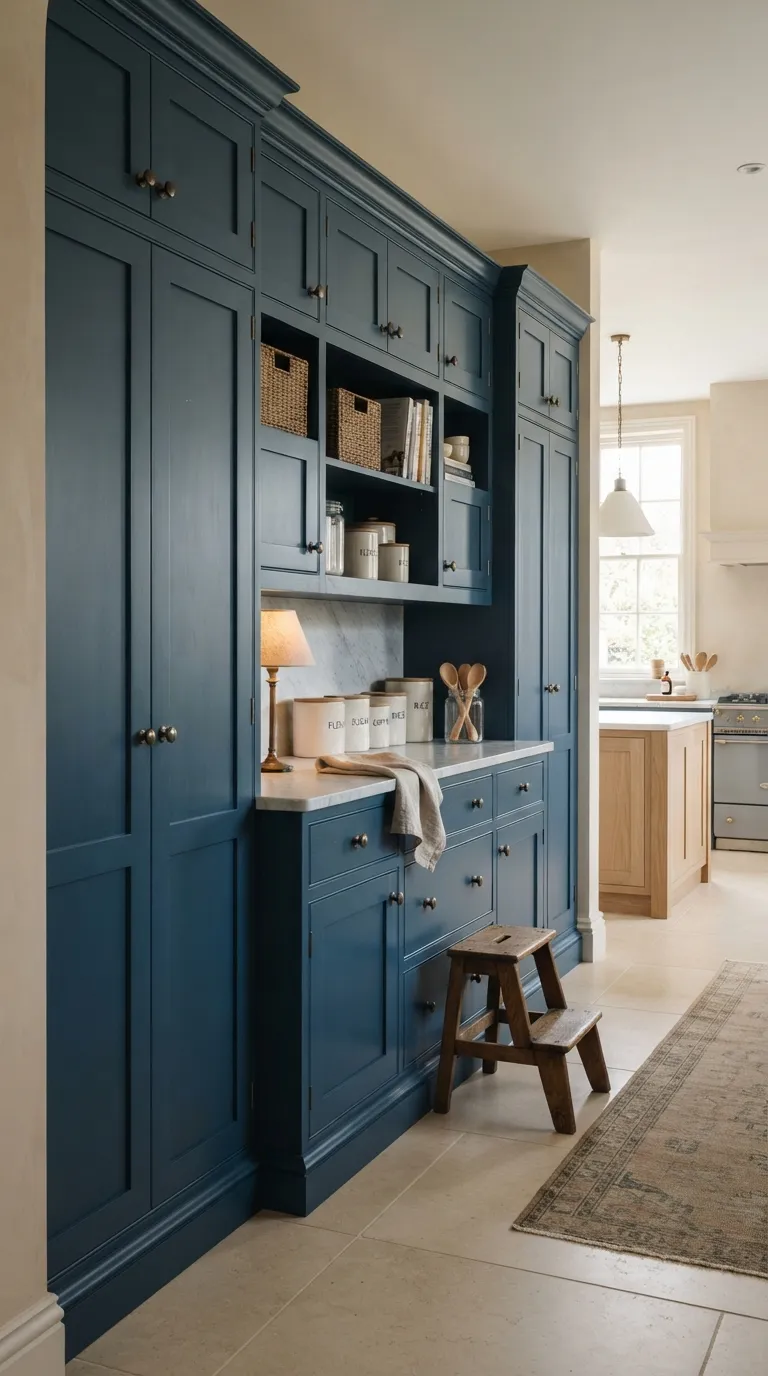
A pantry wall is a smart place to use a deep blue because the color gives a large bank of cabinets a clear visual identity. It also helps ordinary storage feel like part of the room’s design instead of something to hide.
Keep the surrounding finishes light so the blue remains the main feature. Marble, limestone, woven baskets, and aged metal all pair nicely with rich cabinet colors. If your kitchen has a long blank wall, this approach can turn it into useful storage with plenty of character.
Blue Cabinets With Brass
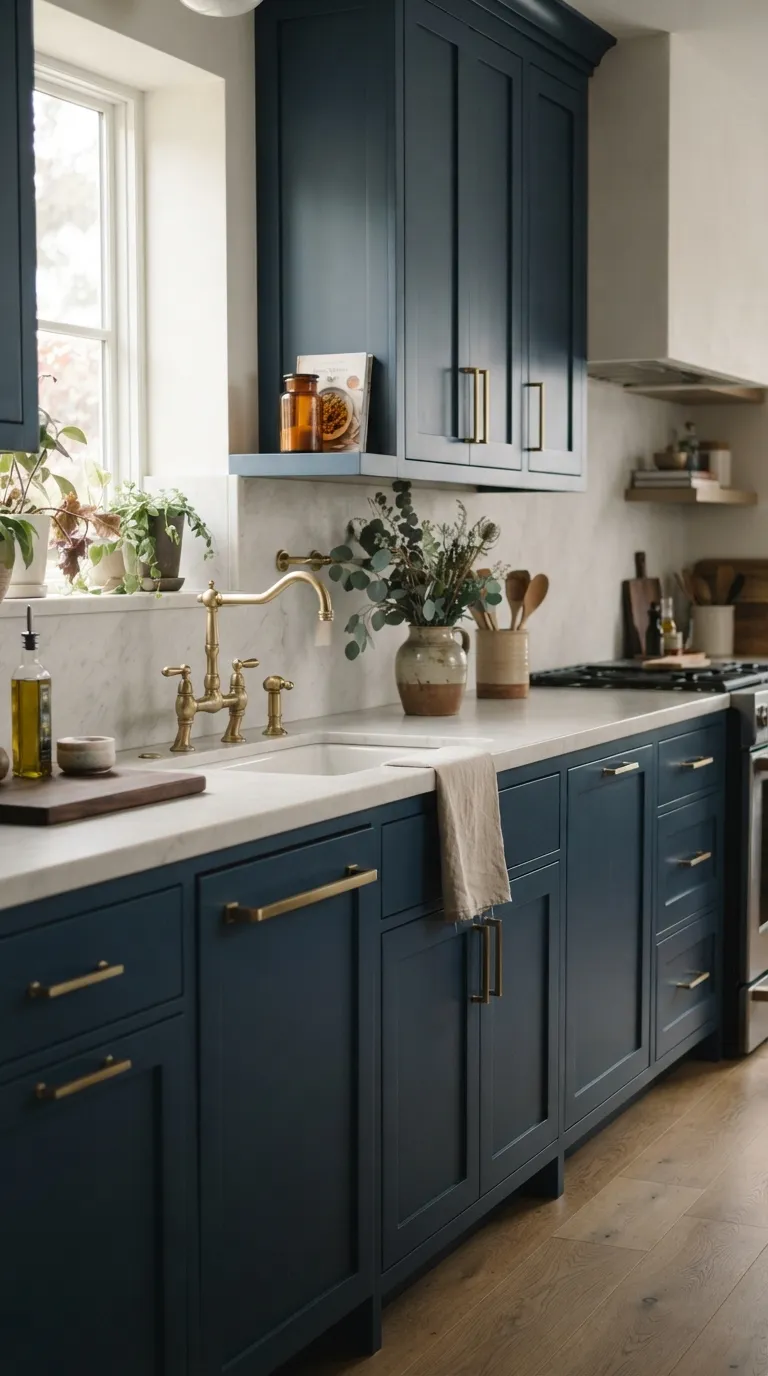
Brass hardware can make blue cabinetry feel warmer without adding another paint color. Choose brushed or aged brass if you want a softer finish that blends into the room rather than looking overly shiny.
Repeat the metal in two or three places for a pulled-together look. Cabinet handles, the faucet, and a small light fixture are enough. In a Moody Blue Kitchen, this simple detail can add warmth while keeping the cabinets firmly in focus.
Blue Island As A Focal Point
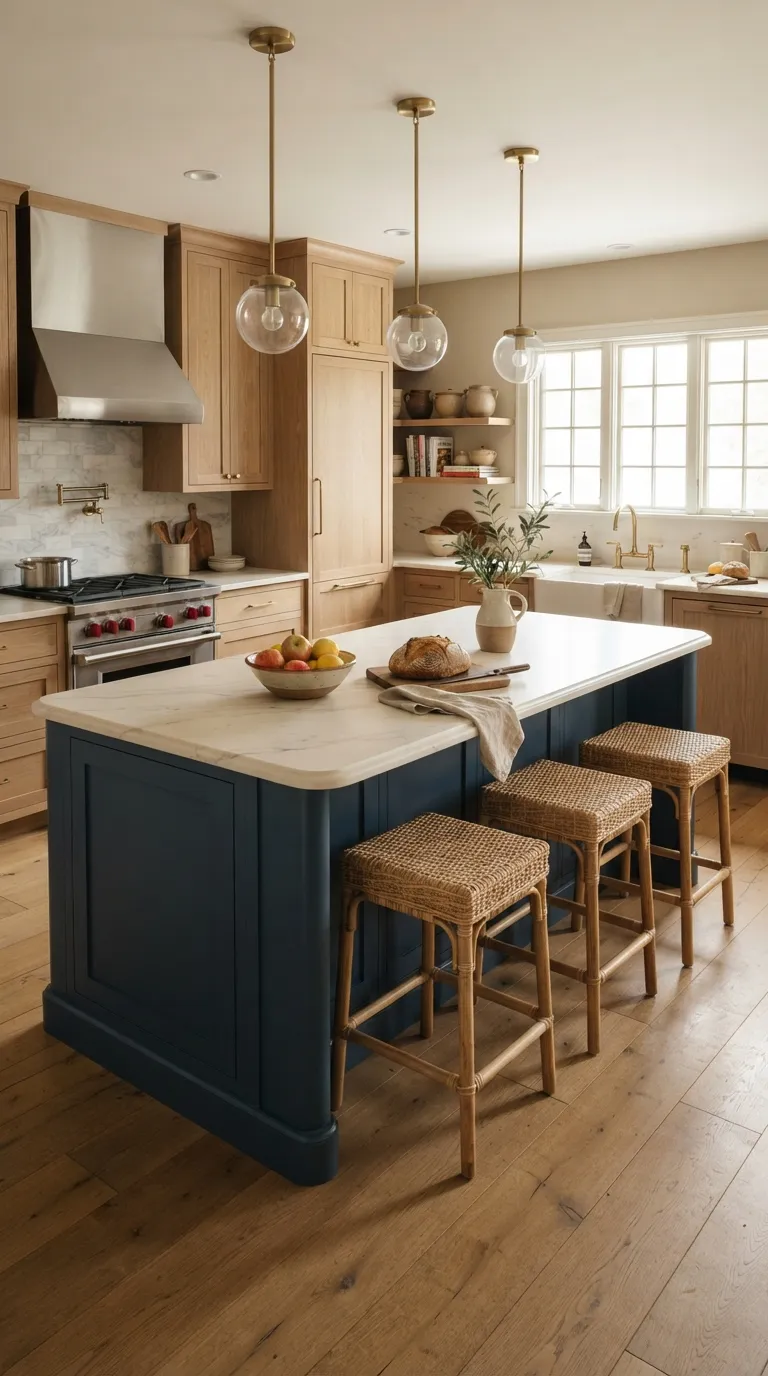
A blue island gives you the mood of dark cabinetry without covering every wall in color. It’s especially useful when you like strong kitchen colors but still want plenty of light around the cooking and prep areas.
Keep the perimeter cabinets neutral or natural wood, then let the island carry the visual weight. A pale countertop and simple stools prevent the center of the room from feeling too heavy. This layout also makes the island feel like a natural gathering spot for meals, homework, or casual conversation.
Blue Tile Backsplash
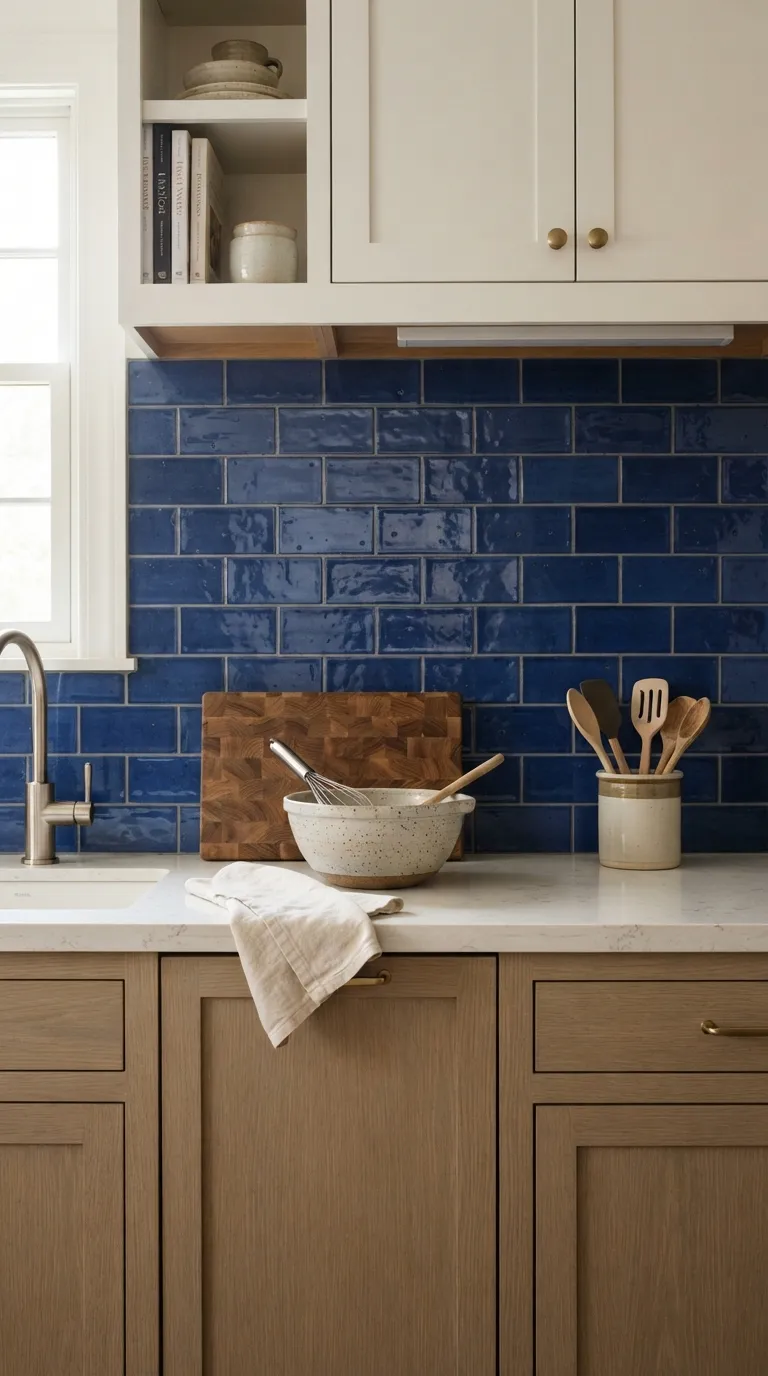
A blue tile backsplash is a simple way to bring color into your kitchen without repainting every cabinet. Cobalt, navy, and dusty blue tiles can create different moods while still working with neutral counters and wood cabinetry.
Pay attention to the tile finish before choosing a shade. Glossy tile catches daylight and gives the wall more visual movement, while matte tile creates a quieter surface. For a Moody Blue Kitchen, neutral grout can keep a bold backsplash from looking too busy.
Soft Slate Blue Cabinets
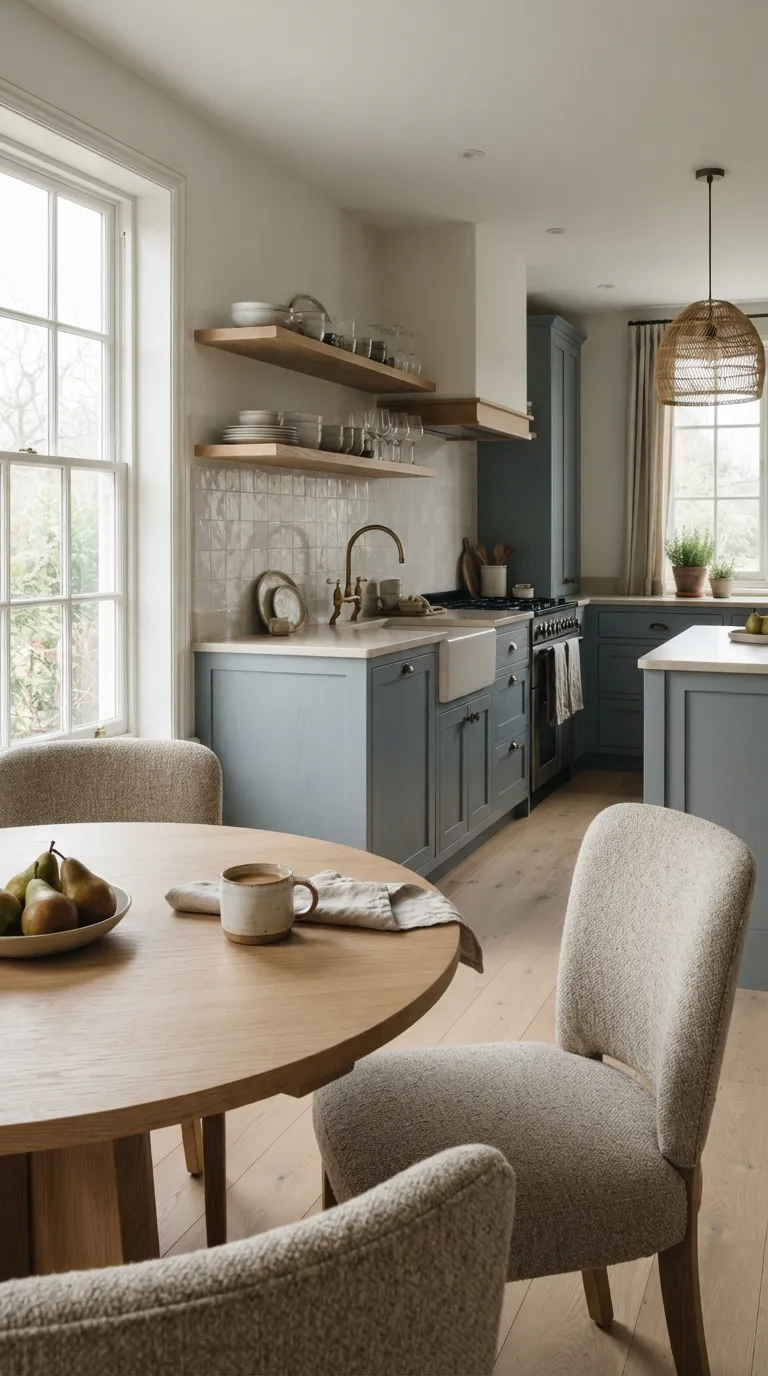
Slate blue is a good middle ground when navy feels too strong. Its muted quality works particularly well with pale woods, limestone, cream walls, and other soft neutral finishes.
Use this shade across the main cabinetry when you want a darker kitchen that still feels relaxed. An eggshell or satin finish can provide a gentle amount of light reflection without looking glossy. The result is a Moody Blue Kitchen that feels comfortable from morning through evening.
Blue And Cream Contrast
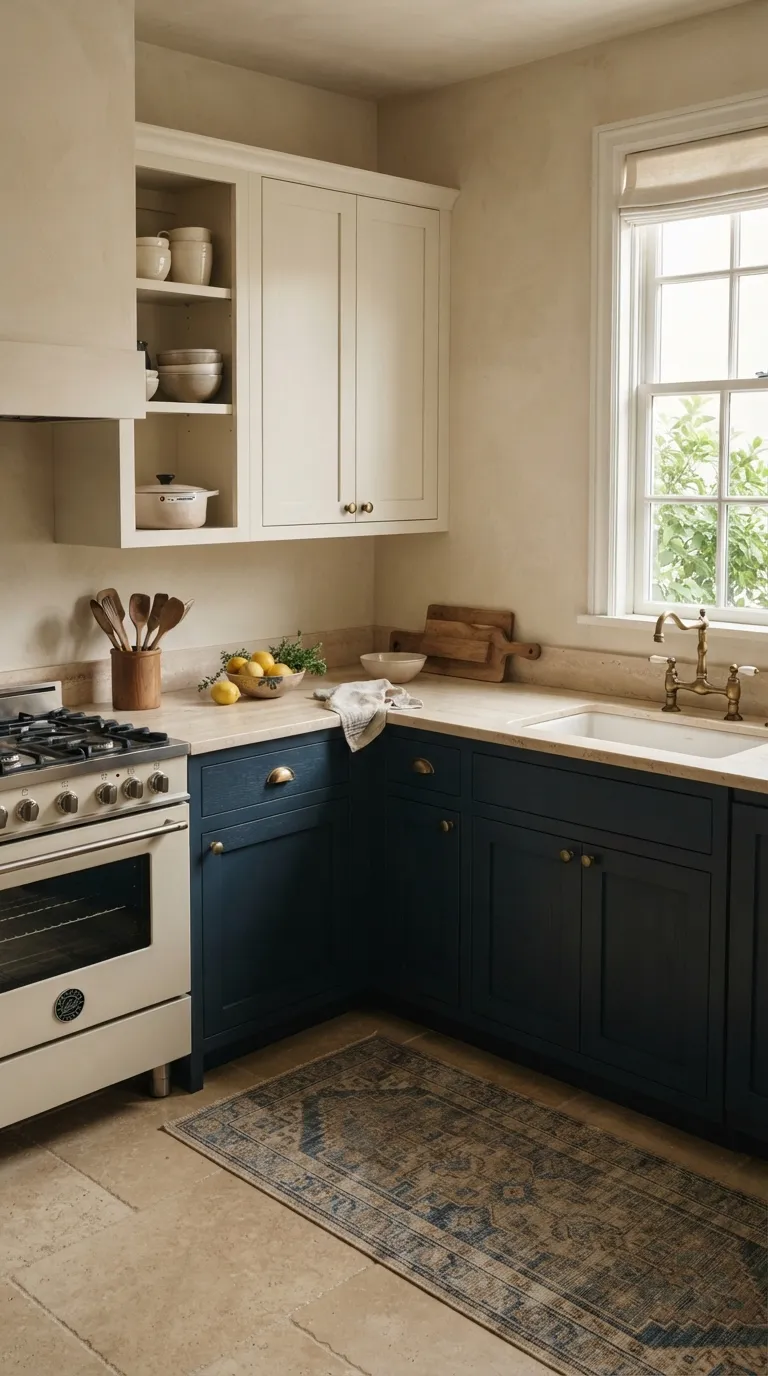
Blue and cream create an easy contrast that feels rich without relying on lots of decoration. Cream walls and counters can also bounce natural light around the room when the cabinetry uses a deep shade.
Try placing cream on the larger surfaces and blue on the cabinetry. This gives the eye a clear color anchor while keeping the kitchen visually open. Add warm wood or antique brass in small amounts to make the palette feel connected rather than split into two separate colors.
Moody Blue Range Hood
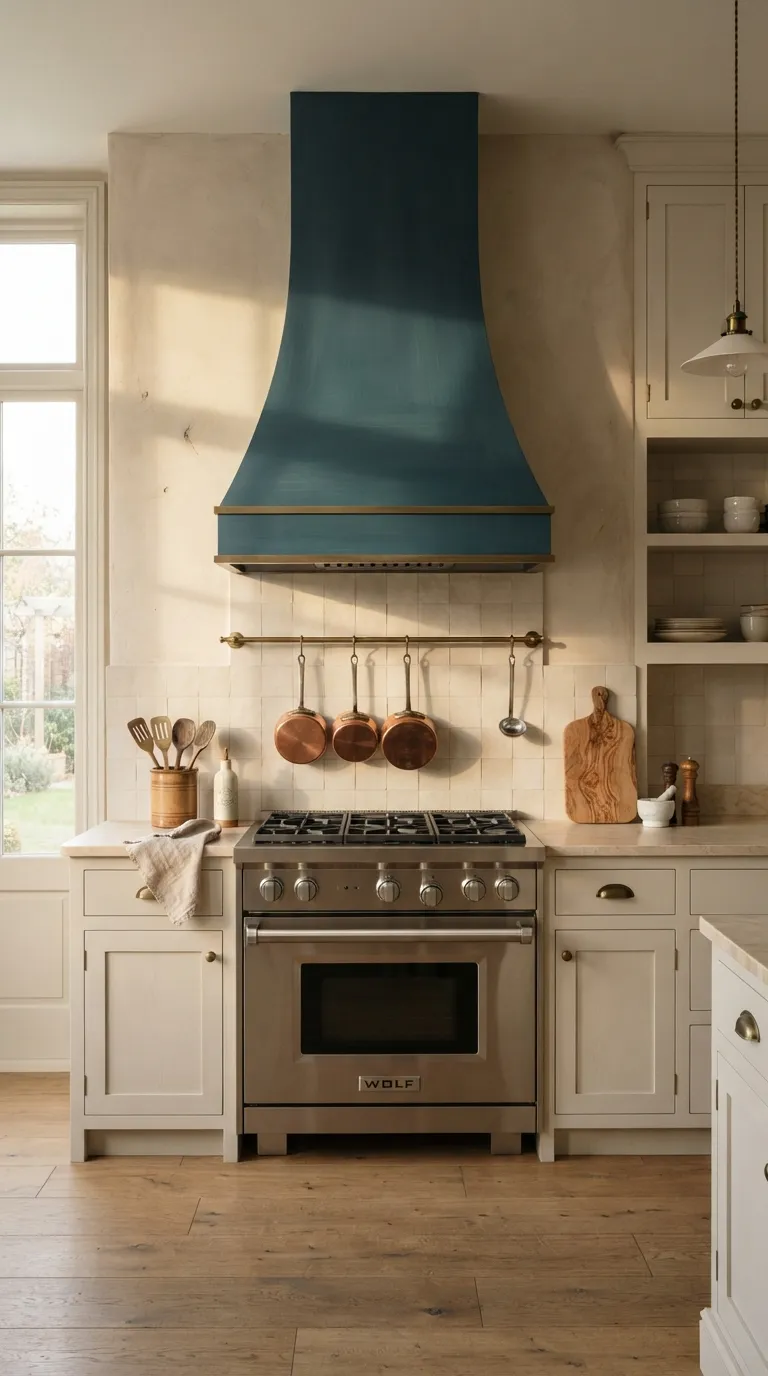
A painted range hood can give you a strong dose of blue without committing the whole kitchen to dark cabinetry. It works especially well when the hood has a custom shape or sits above a prominent cooking zone.
Choose a blue that relates to the rest of the room rather than matching every surface exactly. Warm white cabinets, stone counters, and brass details can keep the hood from feeling isolated. In a Moody Blue Kitchen, this technique creates a focal point while leaving plenty of breathing room around it.
Two-Tone Blue Cabinetry
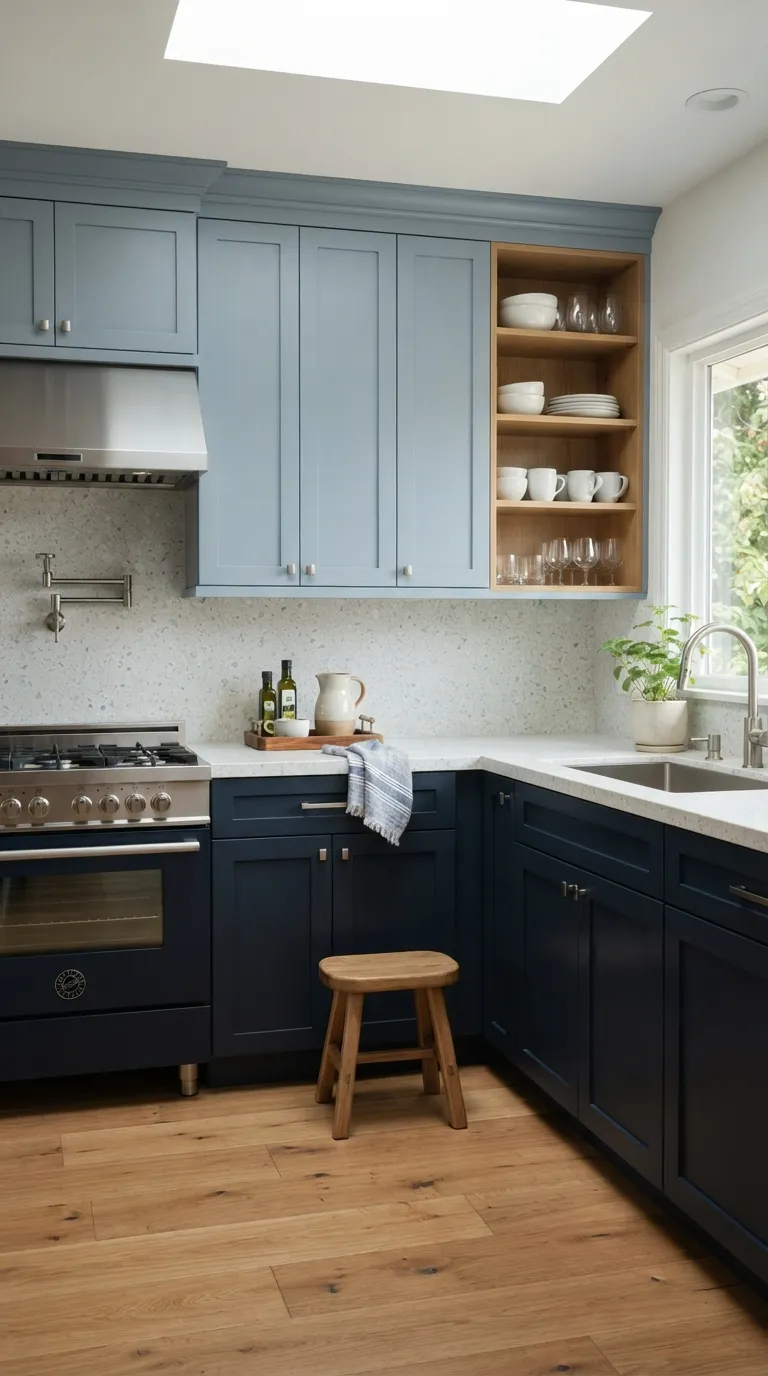
Two shades of blue can make cabinetry feel more layered without adding a completely different color family. A darker lower section grounds the kitchen, while a lighter upper shade keeps the eye moving upward.
This setup works well when you want visual interest but don’t want patterned tile or busy wallpaper. Keep the countertop quiet and repeat one hardware finish throughout the room. The result is a Moody Blue Kitchen with depth that still feels orderly.
Blue Cabinets With Black Fixtures
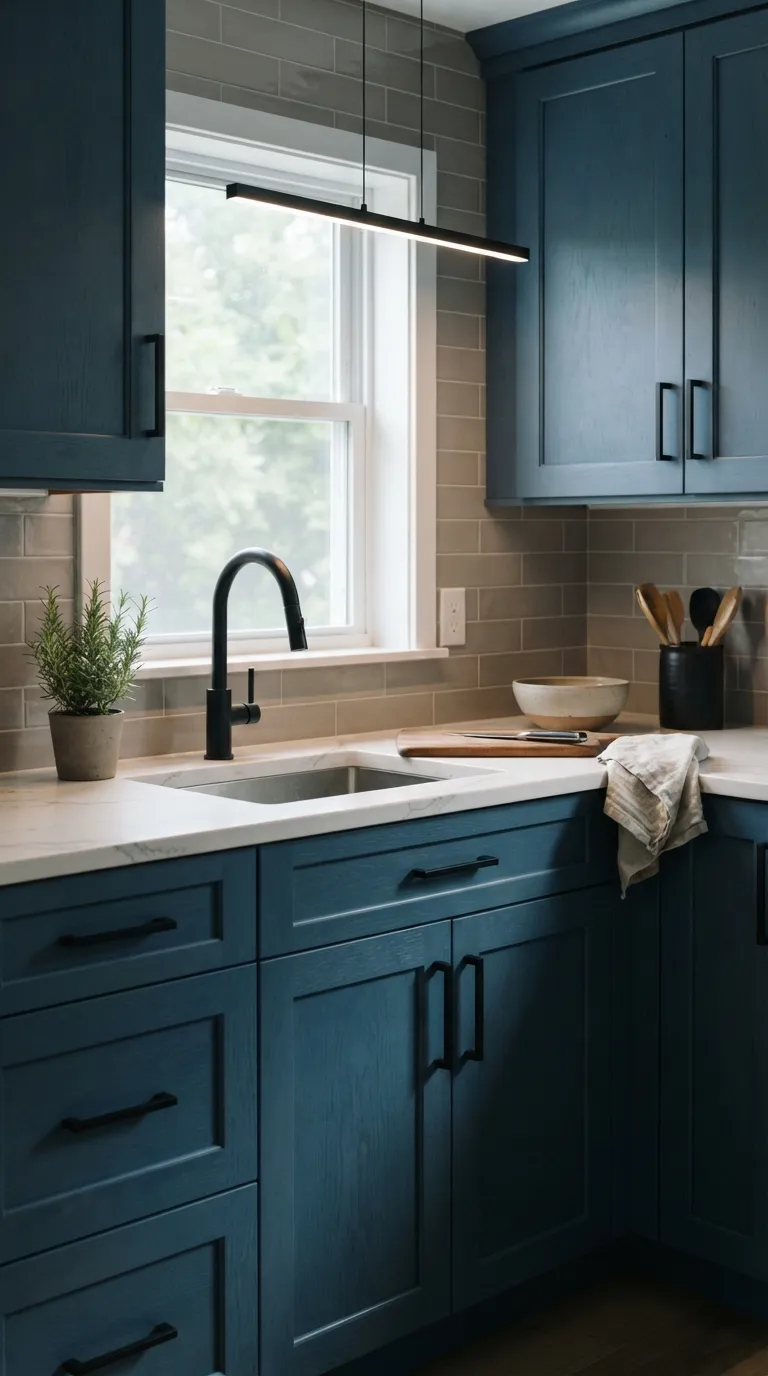
Black fixtures give blue cabinets a crisp, graphic edge. This combination suits kitchens with clean lines, simple hardware, and modern architectural details.
Keep the counter and backsplash fairly light so the black metal doesn’t disappear against the dark cabinetry. Warm walnut or oak can also keep the palette from feeling too cool. If your style leans modern, this pairing gives a Moody Blue Kitchen a sharp but comfortable character.
Blue Cabinets And Natural Stone
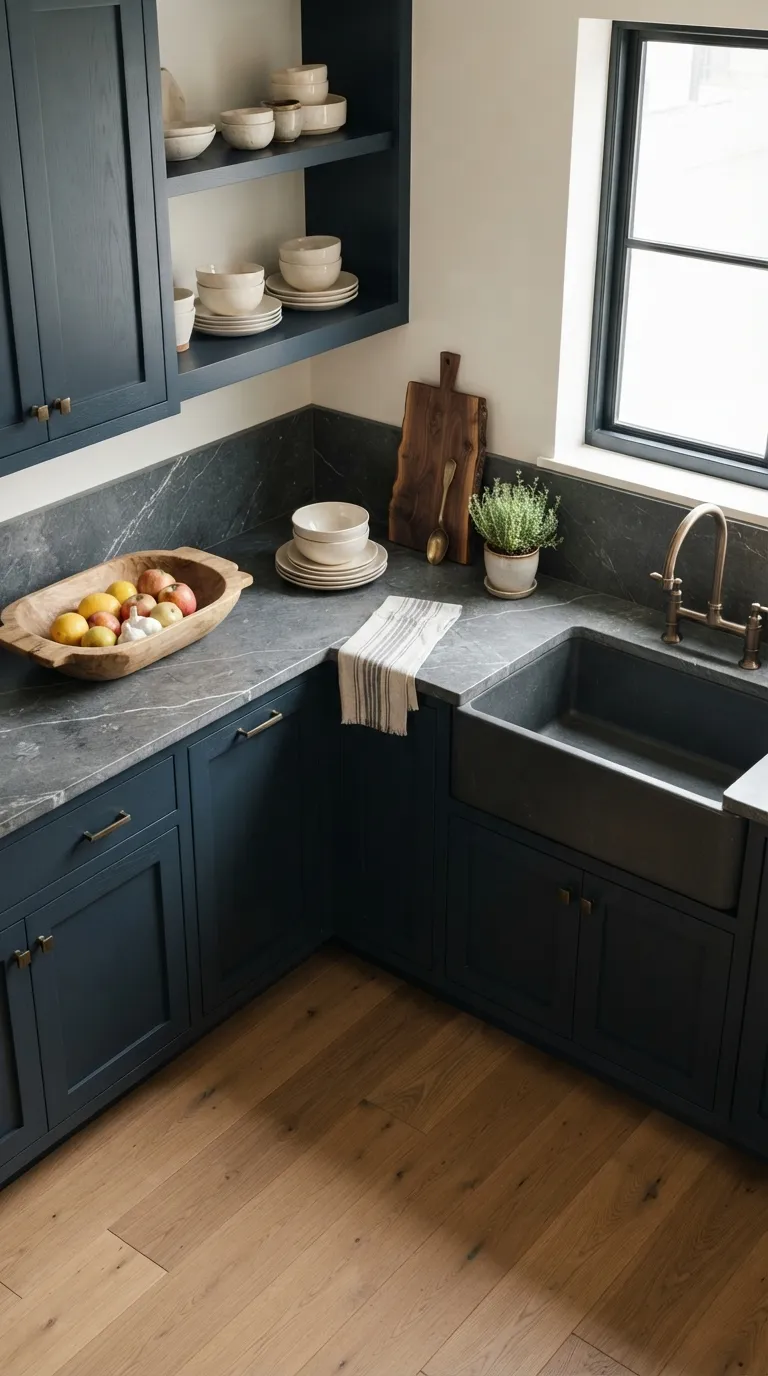
Natural stone can give dark blue cabinetry a grounded, earthy feel. Soapstone, limestone, and other stones with gentle variation can add texture without introducing a busy pattern.
Choose a honed finish when you prefer a soft, understated surface. Pair it with warm wood and cream ceramics so the stone and cabinets don’t make the kitchen feel too cool. This approach gives a Moody Blue Kitchen plenty of texture while keeping the palette controlled.
Blue Cabinets With Open Shelves
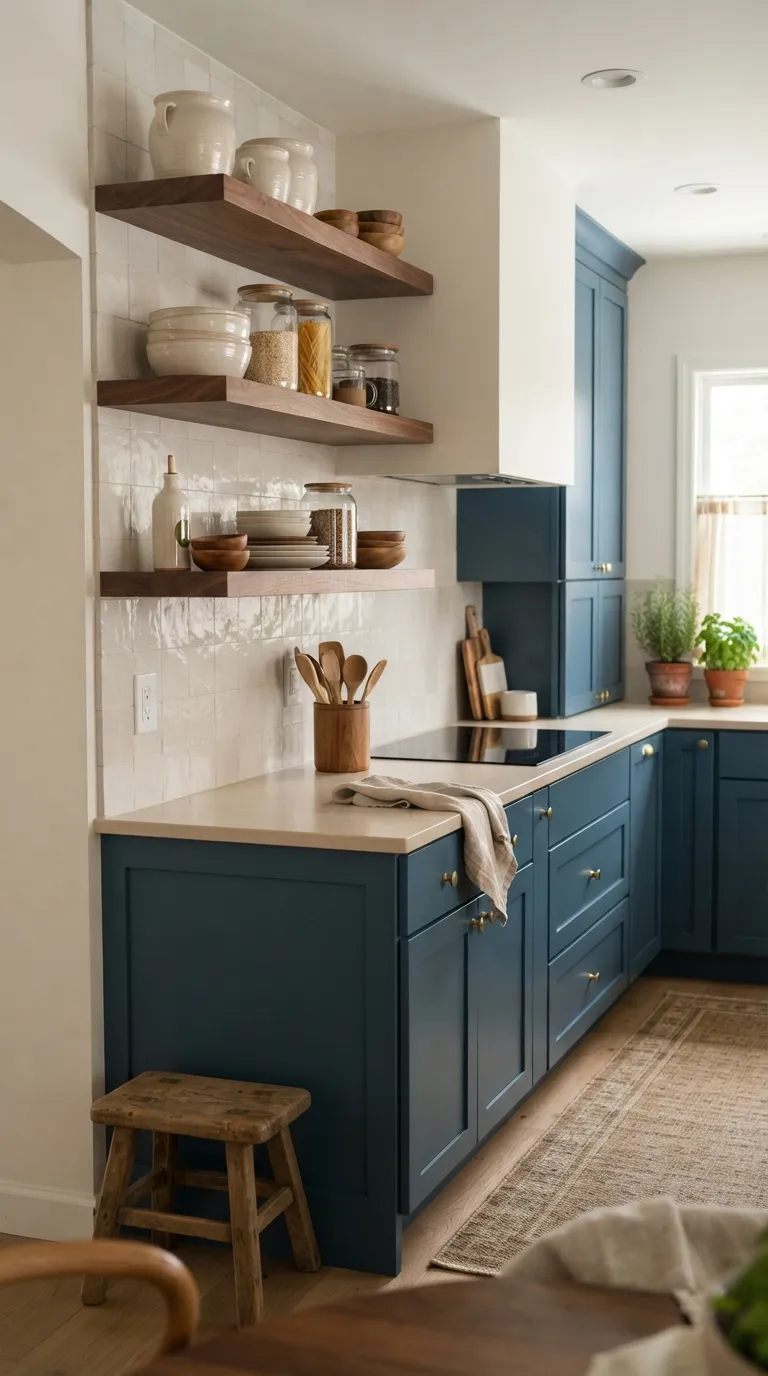
Open shelves can break up a long run of blue cabinetry and give you space for useful pieces. Walnut shelves are especially effective because the warm wood creates a natural contrast against deep blue paint.
Don’t overcrowd the shelves. A few everyday dishes, bowls, and glass jars can provide enough visual interest while keeping the kitchen practical. For a Moody Blue Kitchen, open shelving also gives lighter objects a chance to stand out against the darker wall.
Dark Blue Kitchen With Copper
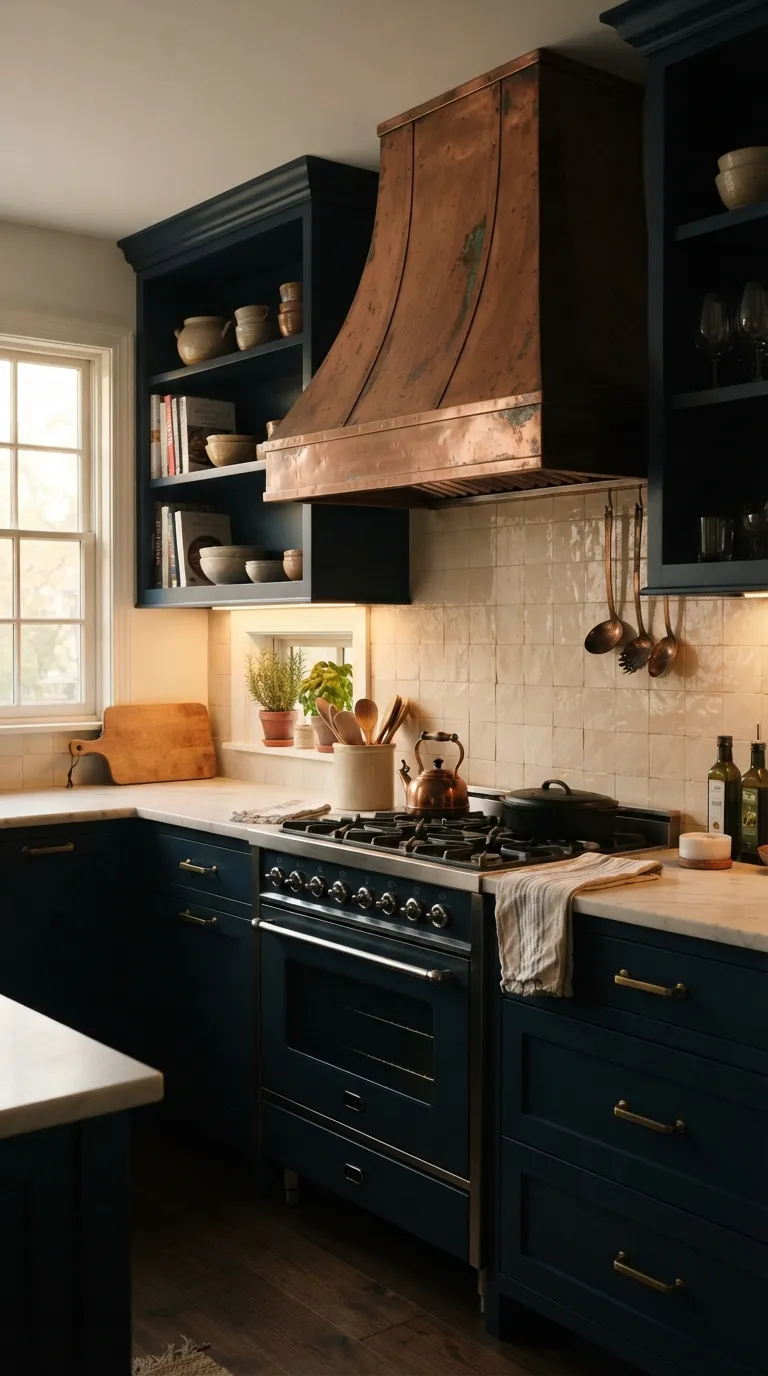
Copper brings a warm metallic note to deep blue cabinetry. Its reddish-brown tone creates a pleasing contrast, especially when the kitchen already includes cream stone or warm wood.
A copper hood can become the main detail, but you don’t need copper everywhere. One large feature paired with a few smaller accents is usually enough. In a Moody Blue Kitchen, aged copper works particularly well when you want the room to feel warm, traditional, and slightly collected.
Blue Cabinets With Cream Countertops
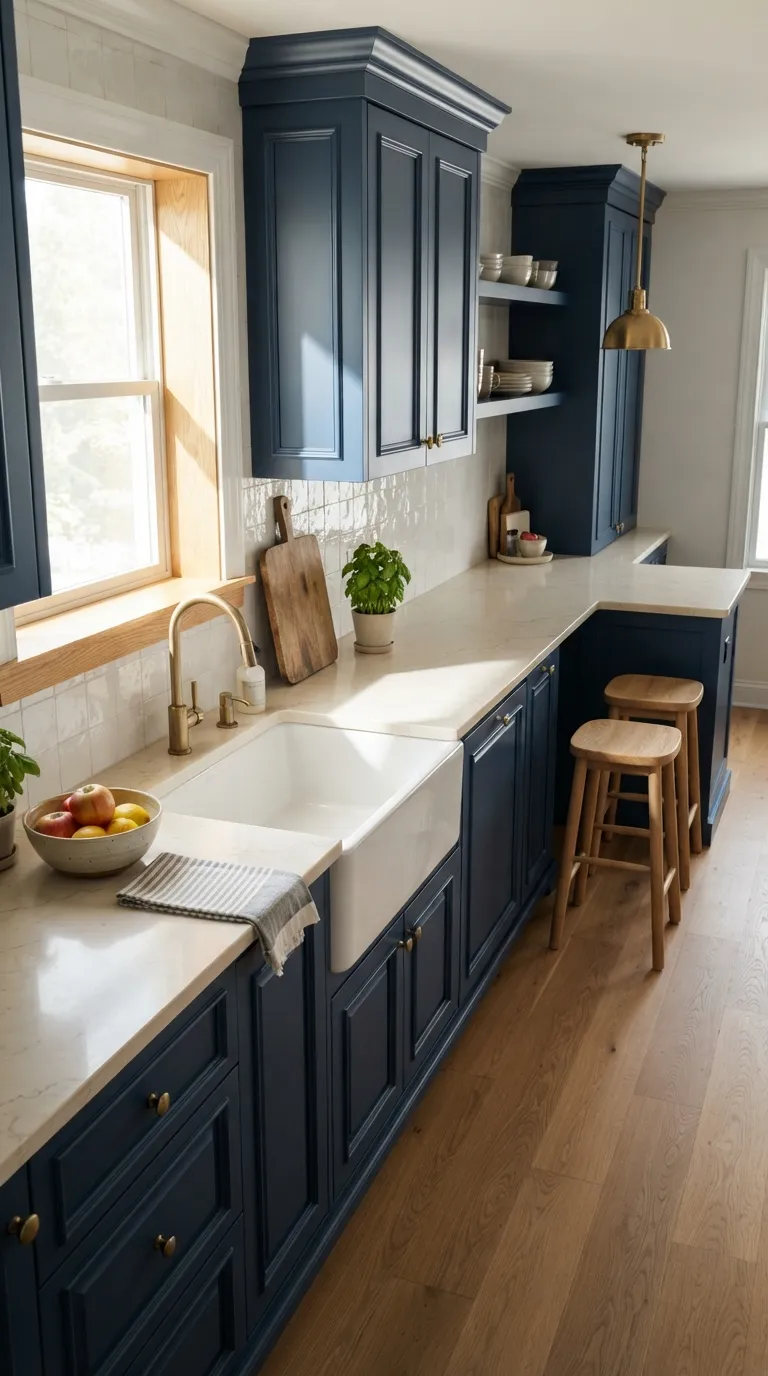
Cream countertops give dark blue cabinets plenty of contrast. The light surface also reflects more available daylight, which can help a kitchen with limited windows feel less enclosed.
Quartz is a practical option when you want a consistent cream tone with minimal visual variation. For a softer look, consider limestone or another natural stone with gentle markings. Keep the backsplash close to the countertop color so the Moody Blue Kitchen has a calm transition between surfaces.
Moody Blue With Wood Ceiling
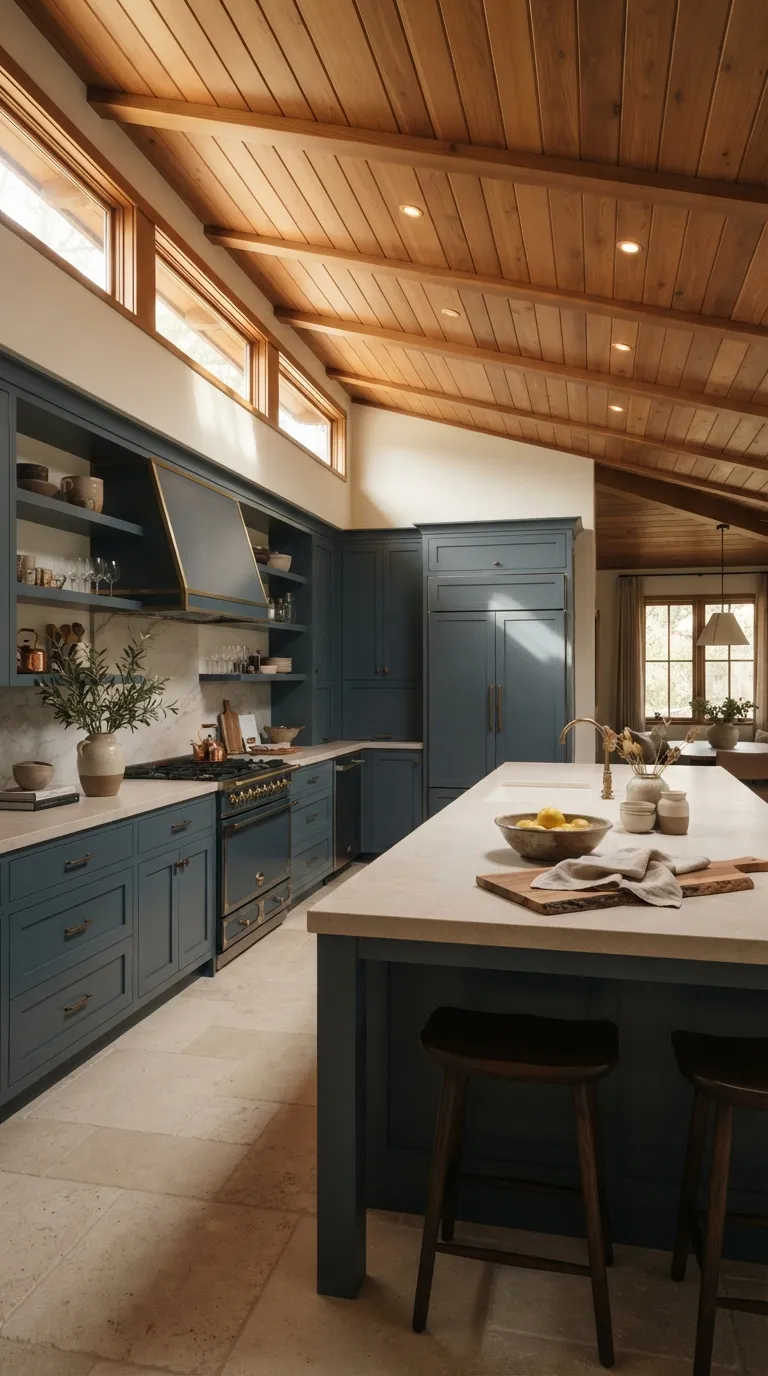
A wood ceiling can make dark cabinetry feel much warmer. The overhead surface adds natural texture while drawing attention upward, which can work well in kitchens with tall walls or open floor plans.
Choose a wood tone that feels warm but not too orange. Light oak, white oak, and softly aged timber can all pair nicely with slate or navy cabinets. With a balanced mix of wood and blue, the room feels cozy without becoming visually heavy.
Blue Backsplash Behind The Range
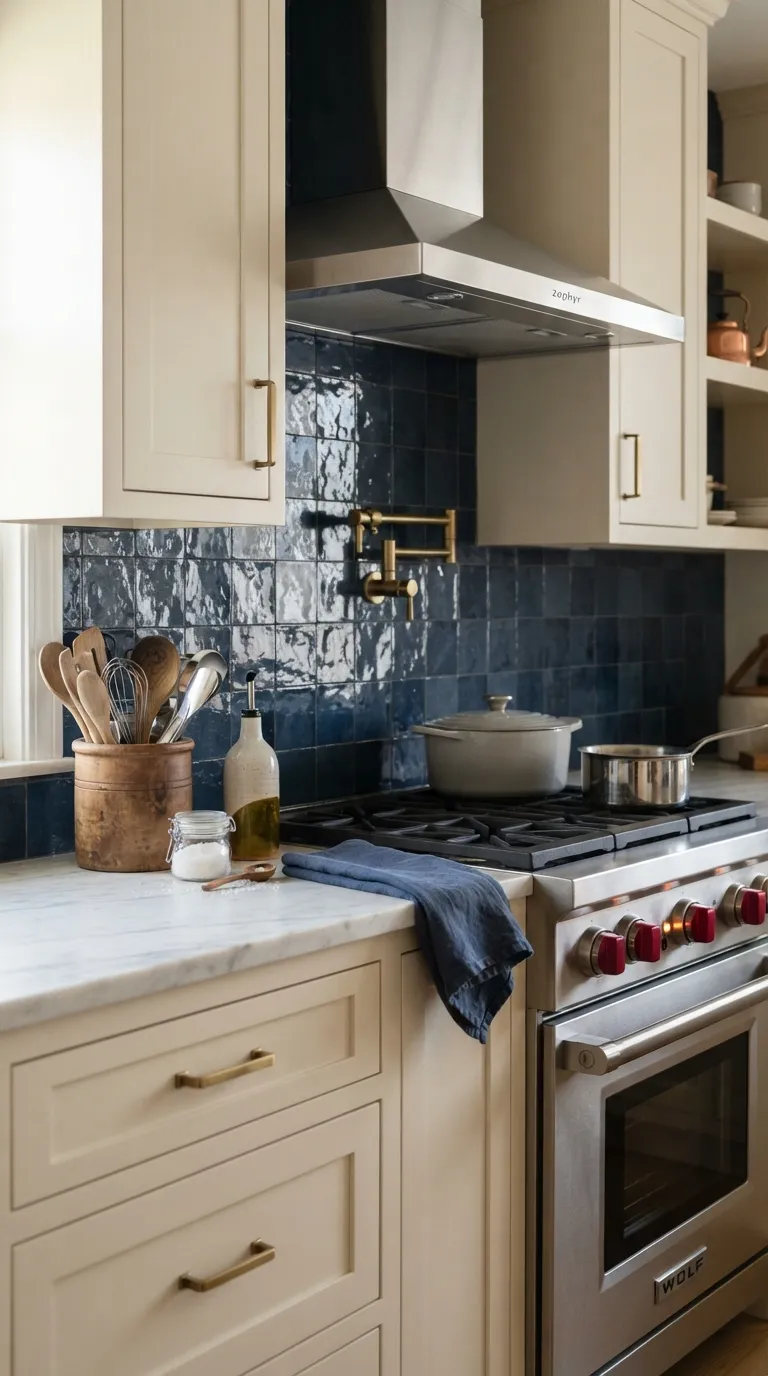
A blue backsplash behind the range gives the cooking area its own identity. It can also be a good option when you want color but don’t want to repaint cabinets or replace large surfaces.
Keep the surrounding finishes simple so the tile gets the attention. Handmade tile is especially useful when you want small changes in color and texture rather than a perfectly uniform wall. This idea works nicely in a Moody Blue Kitchen where one strong blue surface can anchor an otherwise neutral room.
Blue Cabinets With Cream Countertops
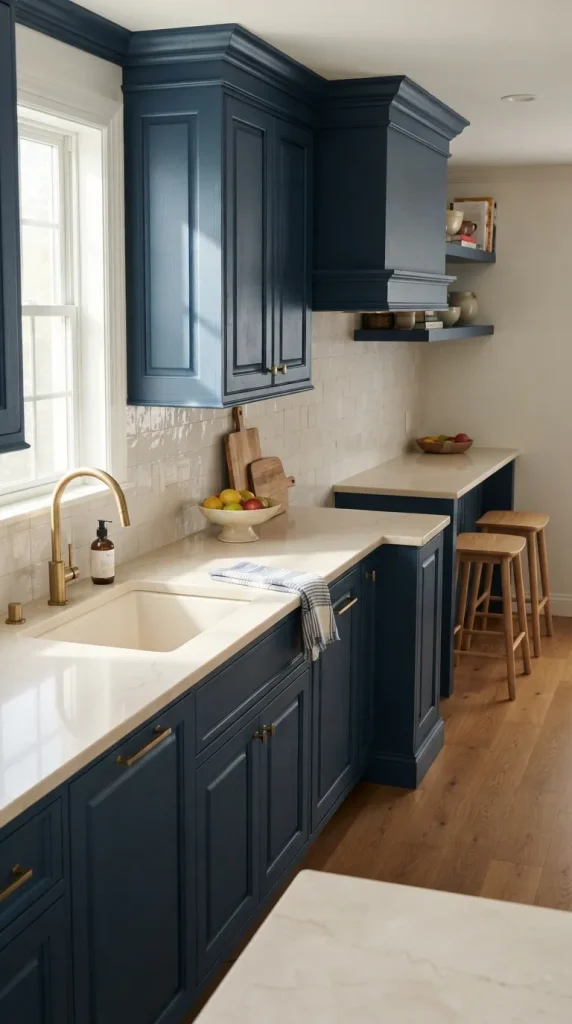
Cream countertops give dark blue cabinets plenty of contrast. The light surface also reflects more available daylight, which can help a kitchen with limited windows feel less enclosed.
Quartz is a practical option when you want a consistent cream tone with minimal visual variation. For a softer look, consider limestone or another natural stone with gentle markings. Keep the backsplash close to the countertop color so the Moody Blue Kitchen has a calm transition between surfaces.
Moody Blue With Wood Ceiling
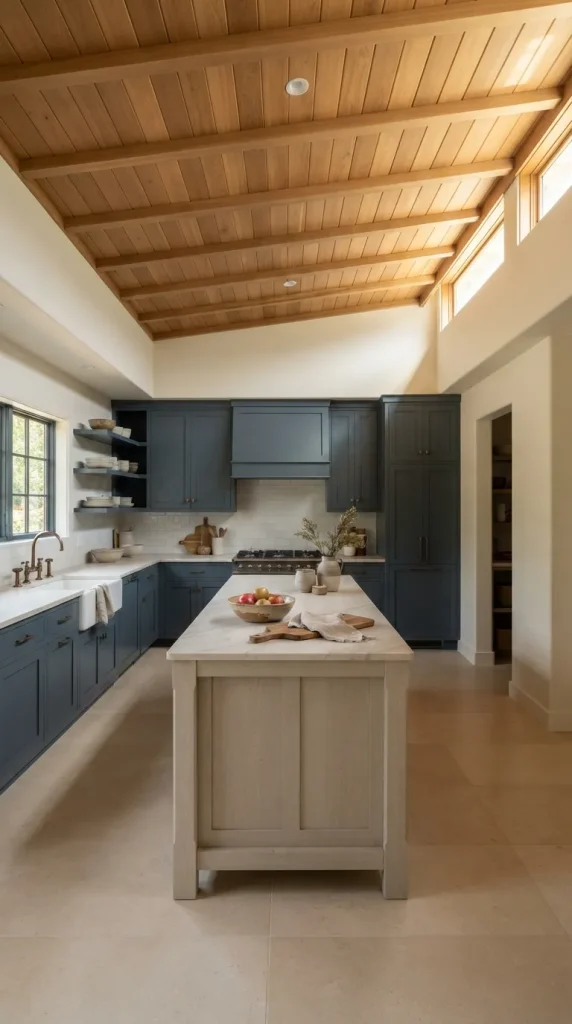
A wood ceiling can make dark cabinetry feel much warmer. The overhead surface adds natural texture while drawing attention upward, which can work well in kitchens with tall walls or open floor plans.
Choose a wood tone that feels warm but not too orange. Light oak, white oak, and softly aged timber can all pair nicely with slate or navy cabinets. With a balanced mix of wood and blue, the room feels cozy without becoming visually heavy.
Blue Backsplash Behind The Range
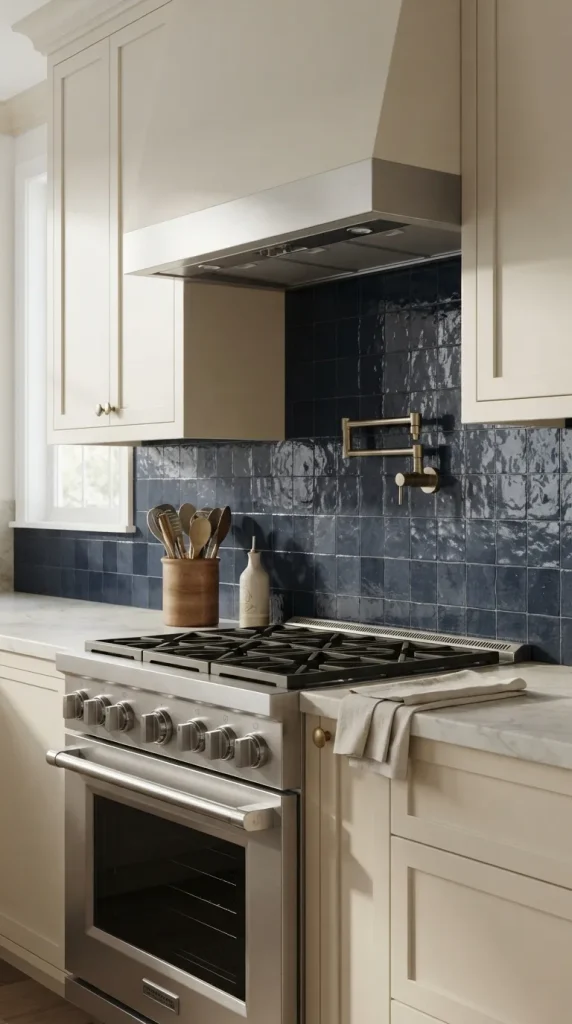
A blue backsplash behind the range gives the cooking area its own identity. It can also be a good option when you want color but don’t want to repaint cabinets or replace large surfaces.
Keep the surrounding finishes simple so the tile gets the attention. Handmade tile is especially useful when you want small changes in color and texture rather than a perfectly uniform wall. This idea works nicely in a Moody Blue Kitchen where one strong blue surface can anchor an otherwise neutral room.
Blue Cabinets With Warm Wallpaper
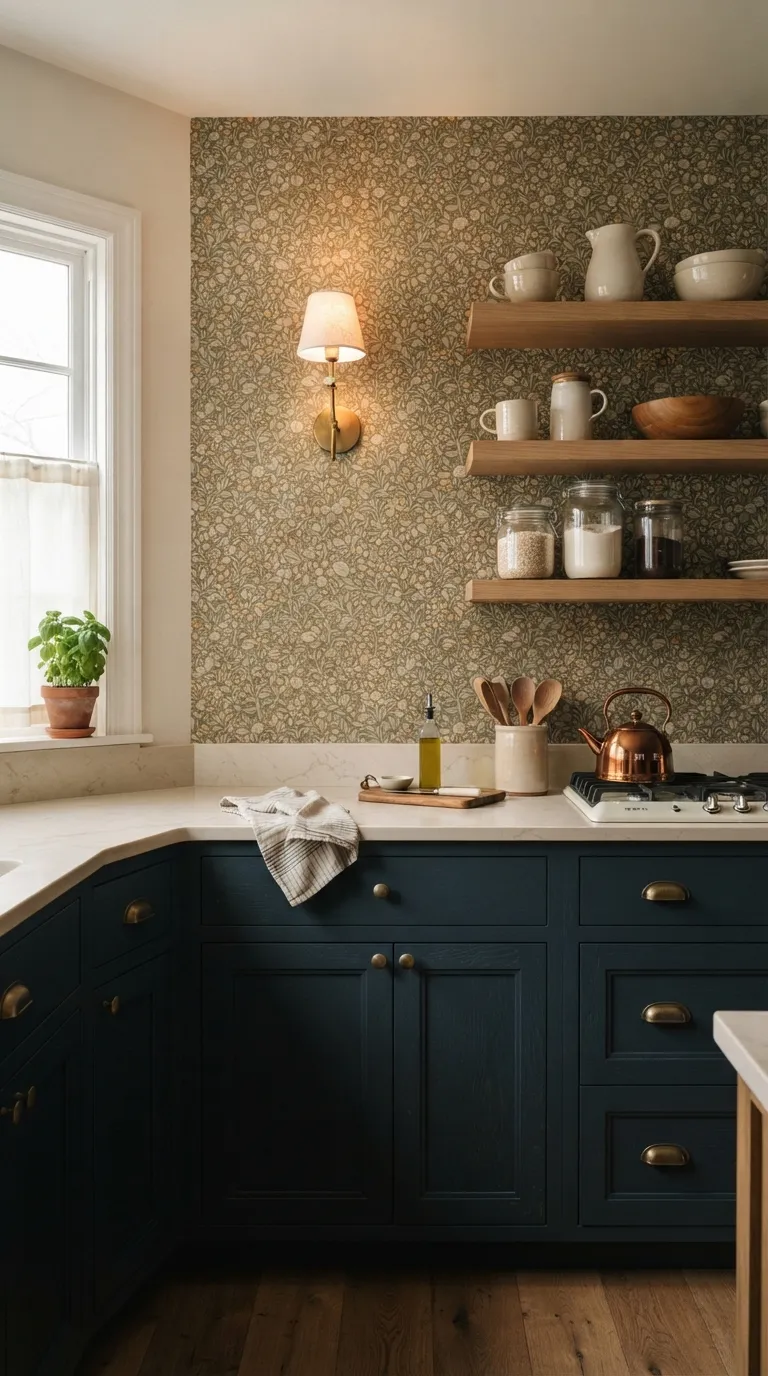
Warm wallpaper can keep dark blue cabinets from feeling too plain. A small botanical pattern adds softness and gives the wall more personality without requiring extra decorative pieces.
Choose wallpaper with colors that already appear elsewhere in the kitchen. Cream, tan, olive, or muted brown can connect the pattern to wood and stone finishes. In a Moody Blue Kitchen, this pairing works best when the wallpaper stays quieter than the cabinetry.
Blue Cabinets With Aged Brass
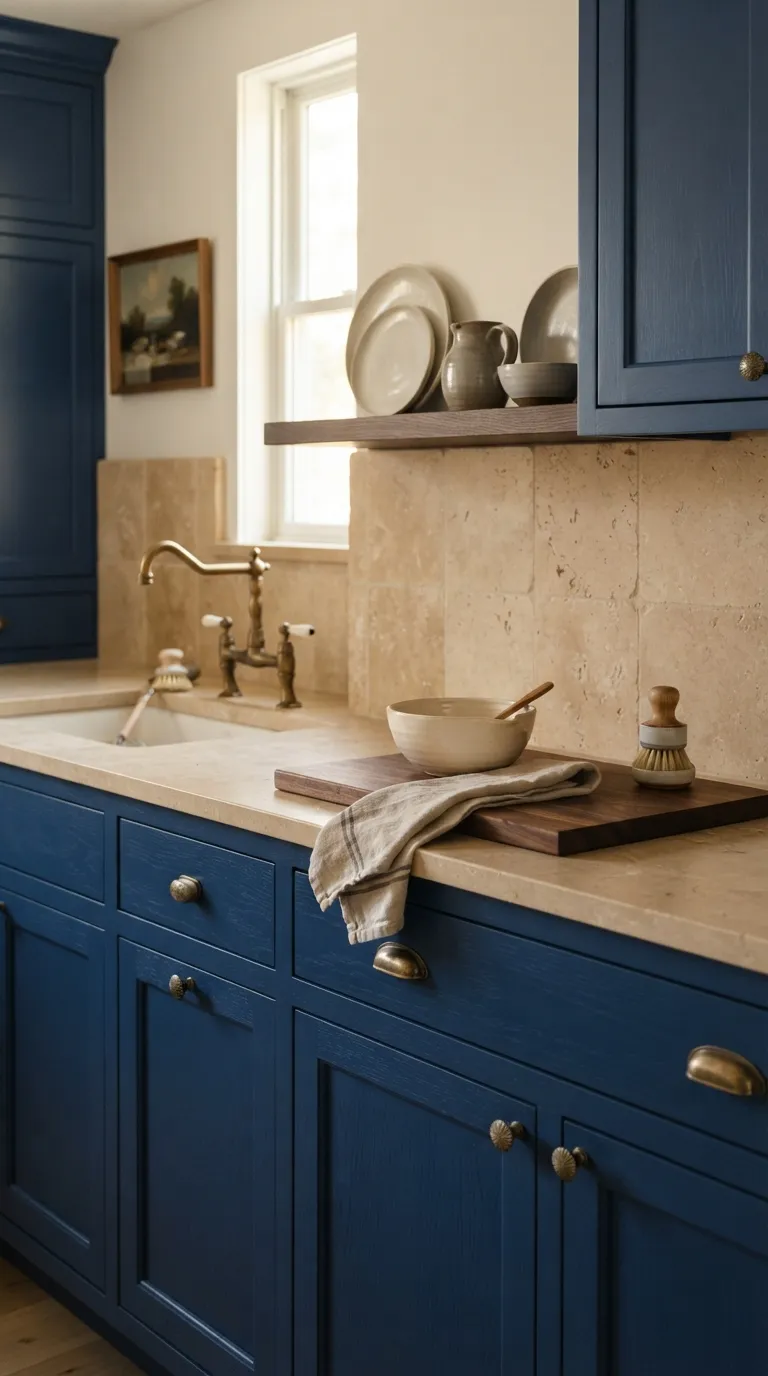
Aged brass adds warmth to saturated blue cabinetry without making the room feel overly polished. Its softer finish also hides small fingerprints and marks better than highly reflective hardware.
Repeat the brass across a few useful features rather than every possible surface. Cabinet pulls, the faucet, and one light fixture can create a clear connection. Pairing these details with warm stone makes a Moody Blue Kitchen feel balanced and inviting.
Small Kitchen With Blue Cabinets
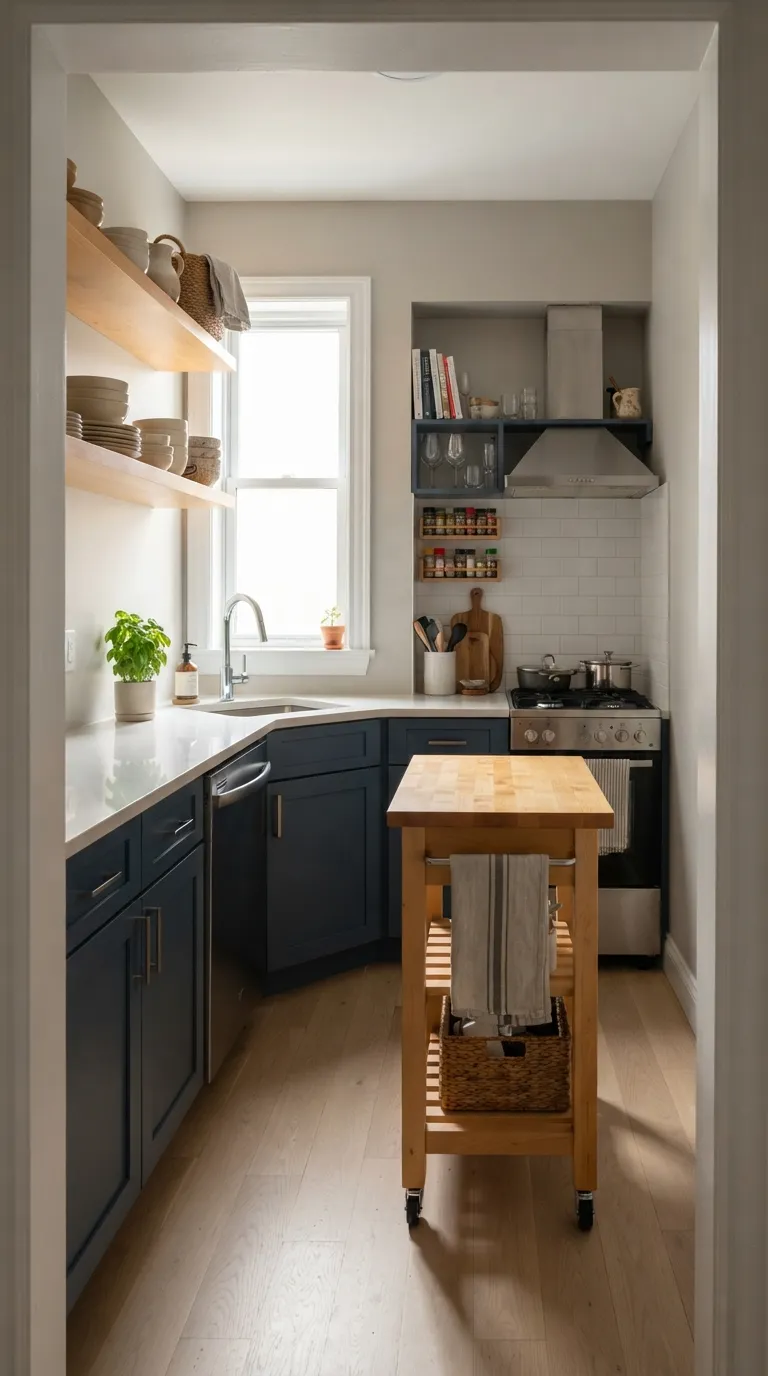
A small kitchen can handle dark blue when the rest of the room stays visually light. Pale counters, open shelves, and warm wood can prevent the cabinets from making the space feel boxed in.
Focus on where the eye sees the most color. If upper cabinets make the room feel crowded, consider blue on the lower cabinets and lighter storage above. Good lighting matters too, so keep windows clear and add practical task lighting where needed.
Blue And Terracotta Accents
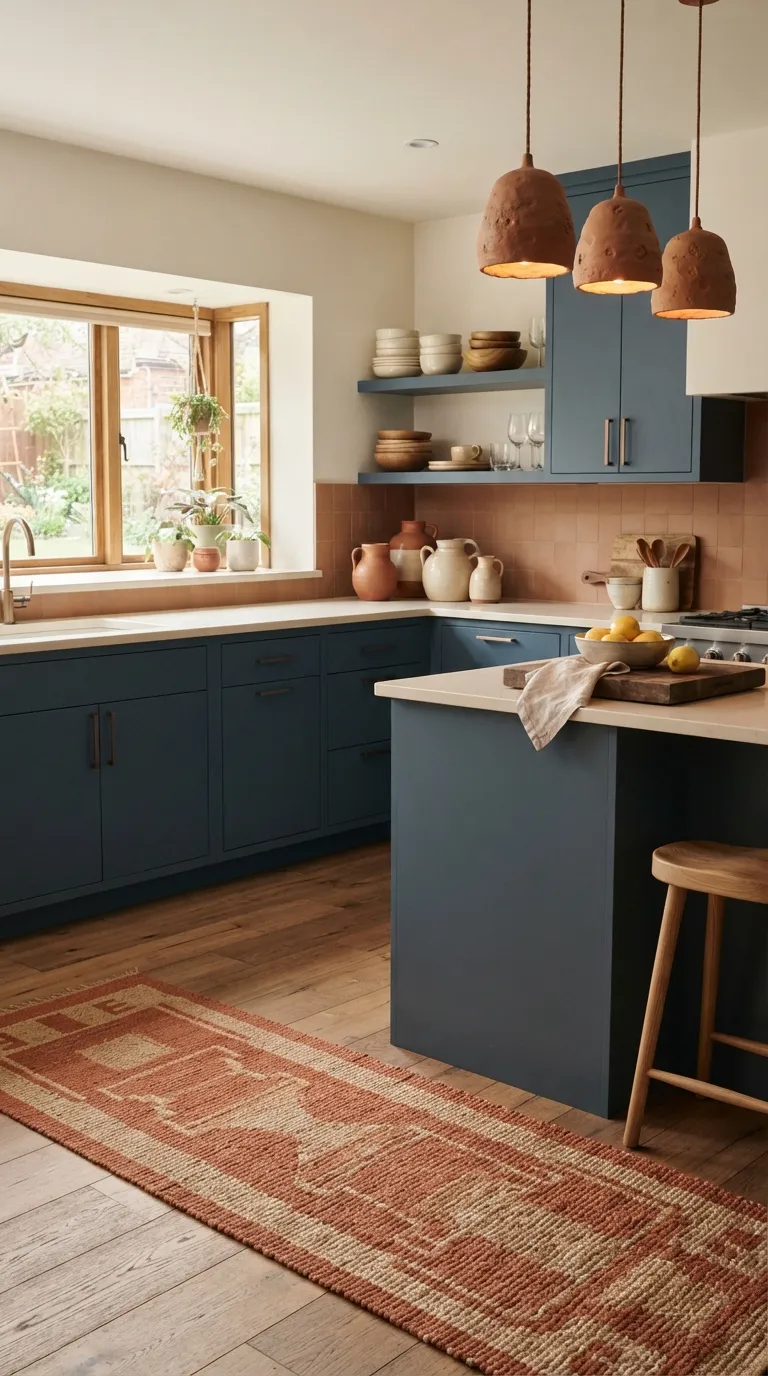
Terracotta brings earthy warmth to deep blue. The reddish clay tone creates a natural contrast that can make cool cabinetry feel more relaxed and less formal.
You don’t need much terracotta to get the effect. A pendant, ceramic vessel, runner, or small group of accessories can be enough. Keep the remaining finishes simple so the Moody Blue Kitchen stays cohesive and the warm accents don’t compete with the cabinets.
Making Blue Work In Your Kitchen
A deep blue kitchen can feel rich, calm, traditional, or modern depending on what you place beside it. Light stone, natural wood, warm metals, cream finishes, and carefully chosen lighting can all help you control the mood. The key is to give the blue enough contrast to stand out without letting it dominate every surface.
Start with one area if you’re unsure about committing to the color. A kitchen island, pantry wall, backsplash, or range hood can give you the look with less work than repainting the entire room. From there, repeat a few supporting materials so the space feels connected, practical, and easy to live with.
Elira Montclair
Elira writes about timeless home decor, kitchen styling, and practical interior ideas. Her work blends warm, inviting aesthetics with simple decorating tips that make everyday spaces feel beautiful and comfortable.