25 Aubergine Kitchen Ideas for a Sophisticated Kitchen

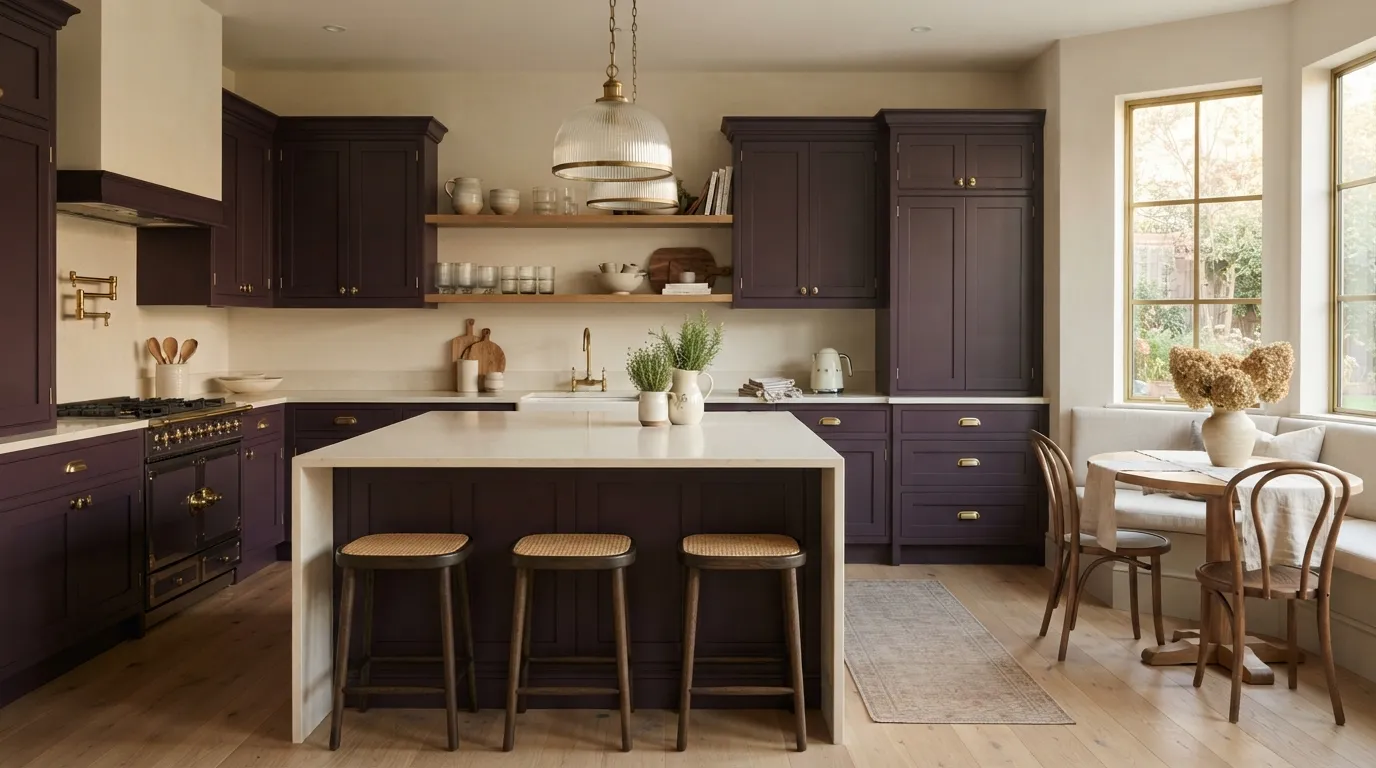
Aubergine brings depth without making a kitchen feel heavy. These Aubergine Kitchen Ideas show how this rich purple shade can work with creamy neutrals, natural wood, brass, marble, and modern black details. Whether you’re planning a full remodel or simply changing cabinet color, aubergine gives the room a strong focal point.
The key is balance. Pair deep purple cabinetry with lighter surfaces, warm textures, and plenty of daylight so the kitchen still feels open. From small galley spaces to generous family kitchens, the right mix of finishes can make aubergine feel tailored rather than overpowering.
Aubergine Cabinets With Creamy Quartz
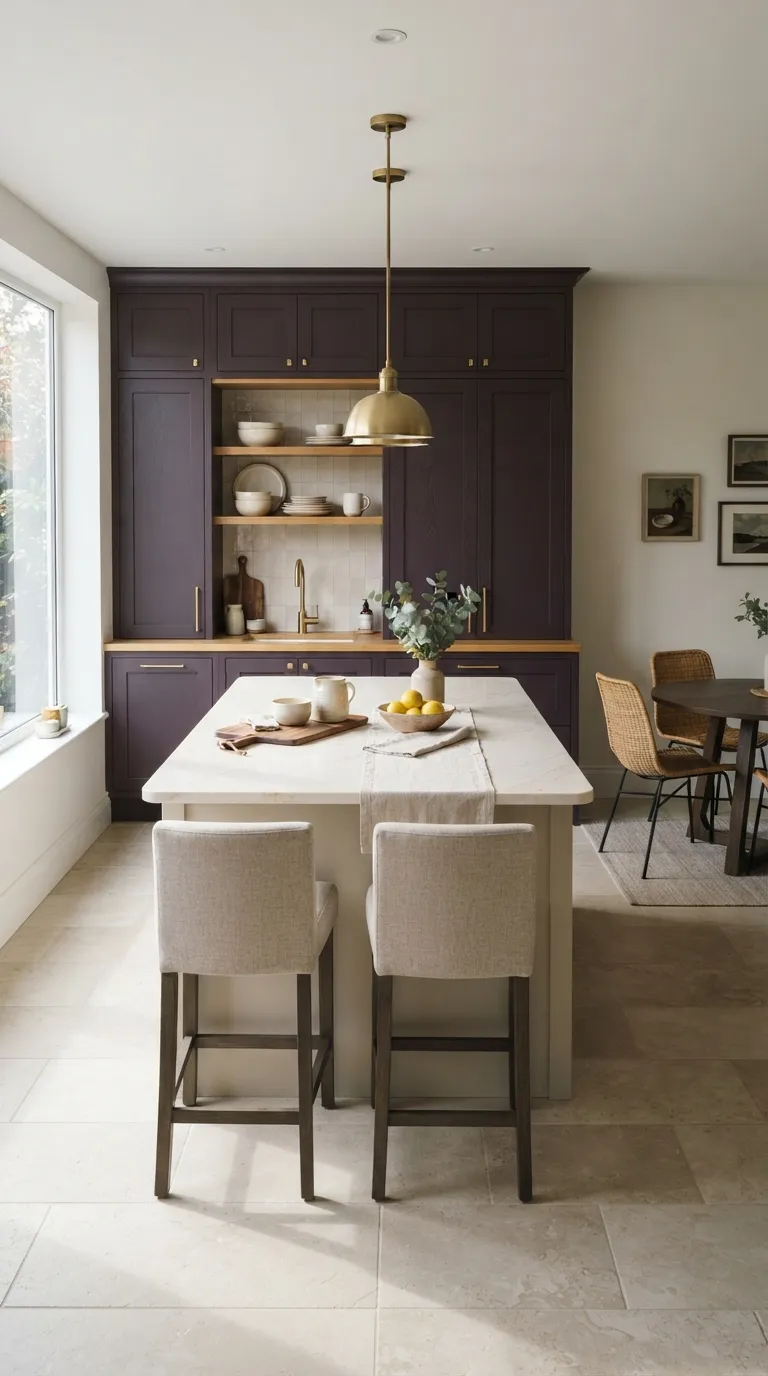
Creamy quartz is a natural partner for deep aubergine cabinets. Its pale surface breaks up the darker color while warm veining adds a quiet layer of detail. This pairing suits both classic shaker doors and cleaner slab fronts.
Keep the rest of the palette restrained. Oatmeal stools, pale flooring, and warm metal hardware let the cabinets take center stage without crowding the room. Among Aubergine Kitchen Ideas, this is a practical choice when you want color with an easy-to-live-with backdrop.
Two-Tone Aubergine and Natural Oak
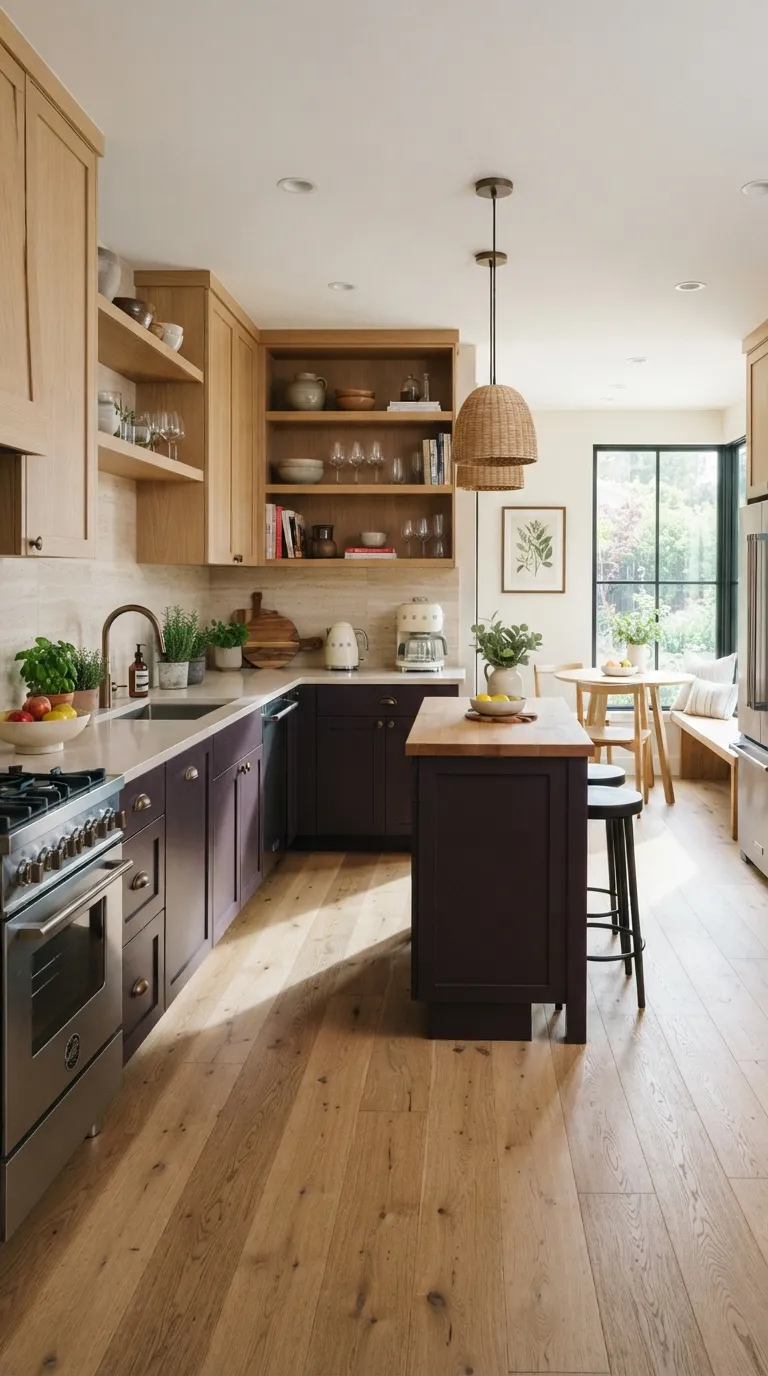
Natural oak gives aubergine a softer side. Use purple on the base cabinets and oak above to keep the upper half of the room visually light. The wood grain also brings warmth that painted cabinetry can’t provide on its own.
This scheme works especially well in open-plan kitchens. Picture a kitchen where the aubergine base anchors the cooking zone while oak cabinetry connects it with nearby wood furniture. A travertine backsplash and bronze hardware can tie both cabinet finishes together.
Aubergine Island as the Main Accent
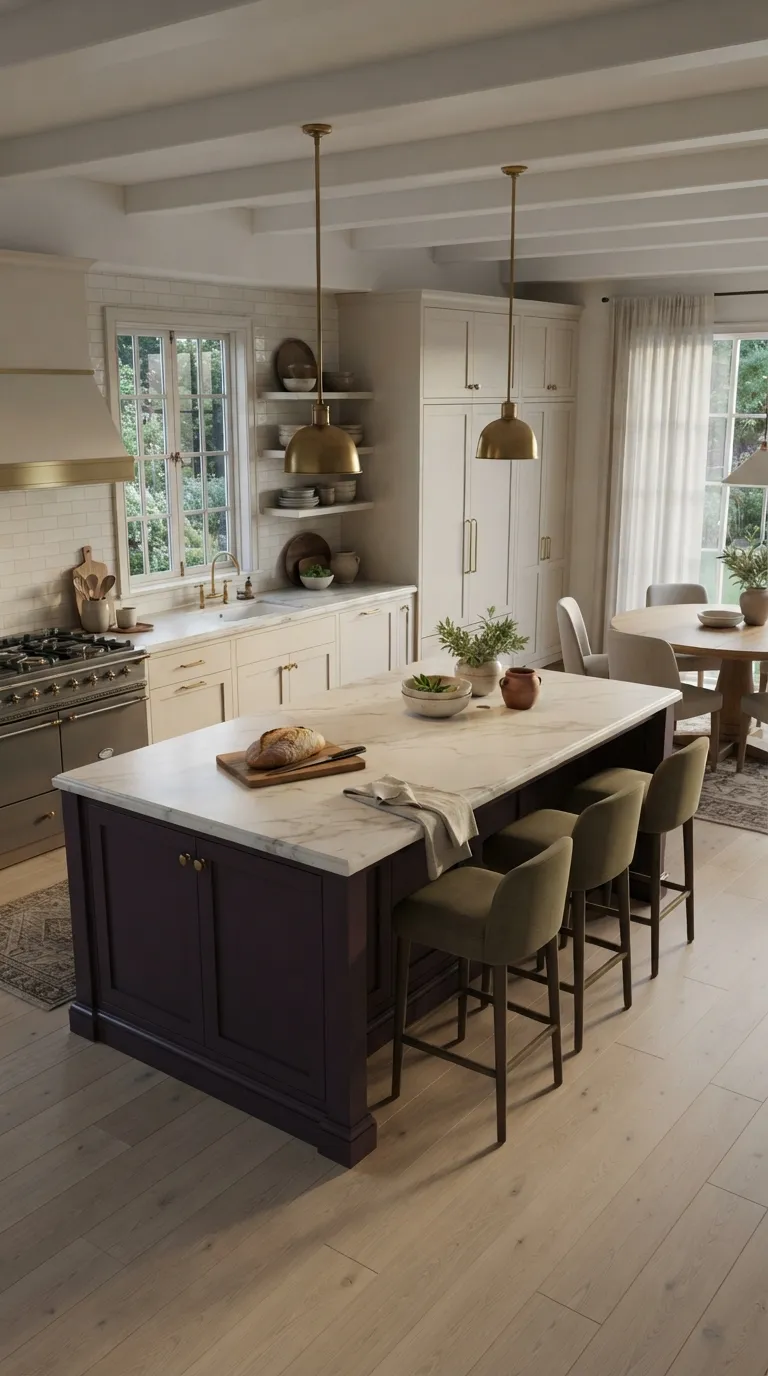
An aubergine island gives you color without committing every cabinet to purple. This approach suits a neutral kitchen that needs one strong focal point. A pale marble or honed stone top keeps the island feeling refined and grounded.
Let the surrounding cabinetry stay simple. Warm white doors, pale oak floors, and muted upholstery create breathing room around the darker island. For smaller kitchens, a compact aubergine peninsula can create a similar focal point while keeping the walkway clear.
Aubergine Lower Cabinets With White Walls
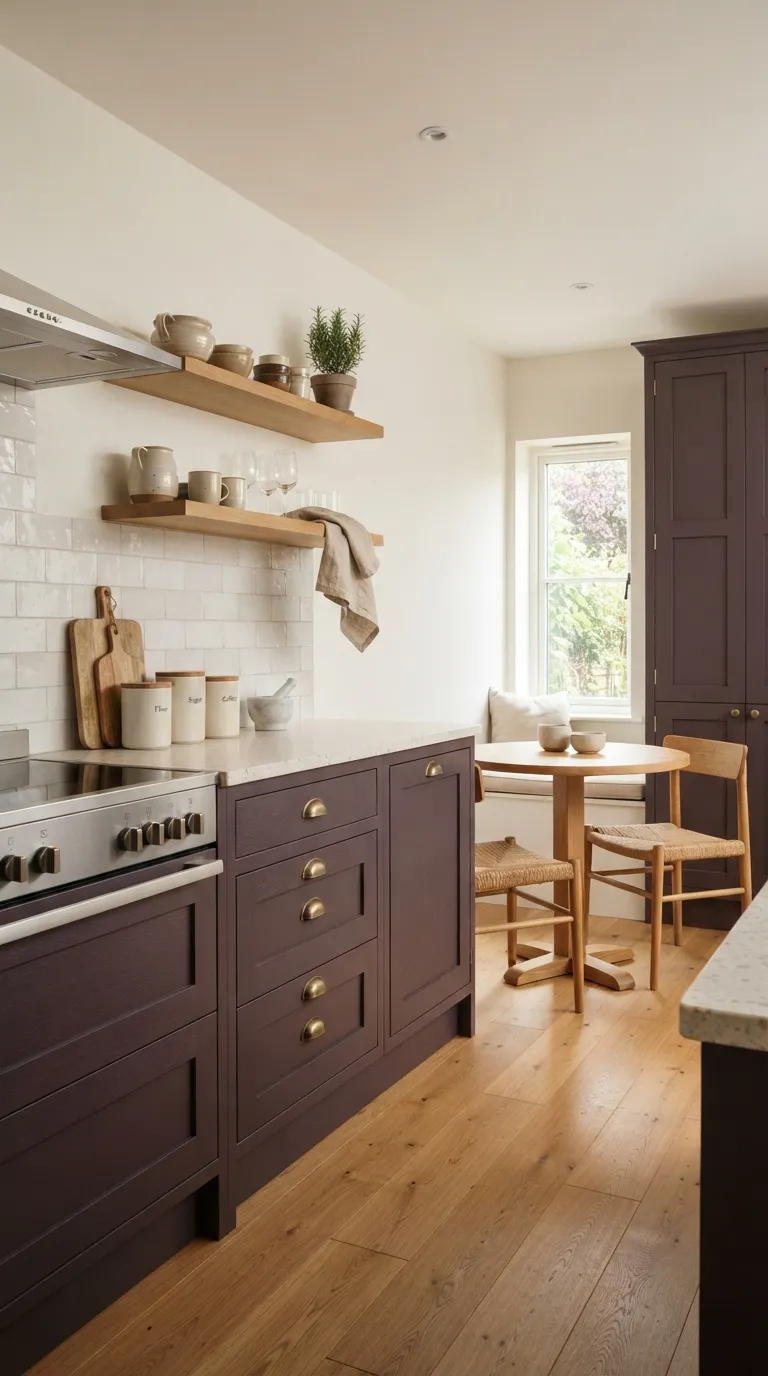
White walls give deep purple cabinetry plenty of breathing room. This pairing works particularly well when your kitchen has limited natural light or a narrow footprint. The contrast keeps the room crisp while the aubergine adds character below eye level.
Choose warm white rather than a stark blue-white. That small color difference can make the purple feel softer and more inviting. Add natural wood and aged brass for a kitchen palette that feels collected rather than overly matched.
Aubergine Shaker Cabinets With Marble
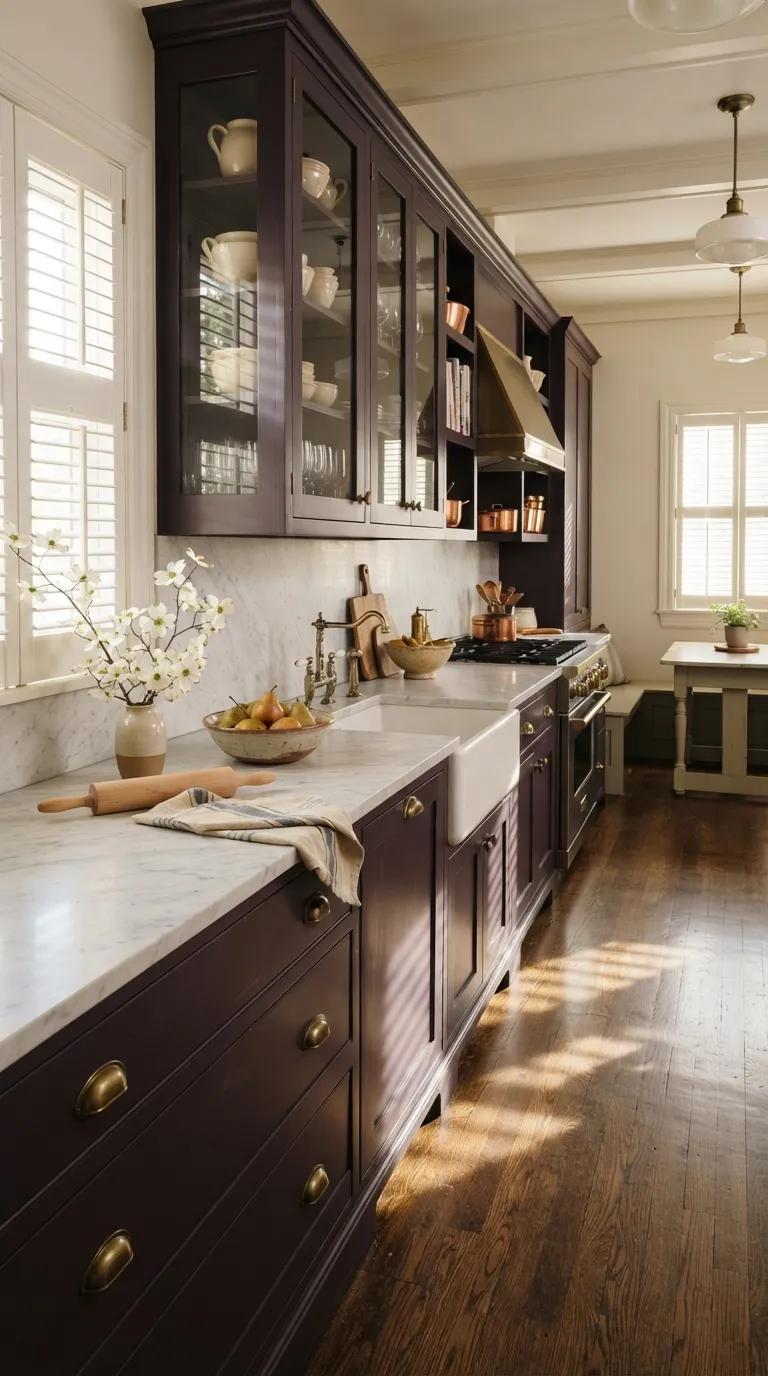
Marble and aubergine create a classic combination with plenty of visual depth. White marble keeps the purple cabinetry from feeling too dark, while gray veining adds a natural connection between the two colors. Shaker doors make the palette feel timeless.
For a softer finish, choose honed marble instead of highly polished stone. The lower sheen gives the room a quieter look and hides everyday marks more easily. Brass hardware can then add a warm finishing touch without competing with the stone.
Aubergine Cabinets and Matte Black Hardware
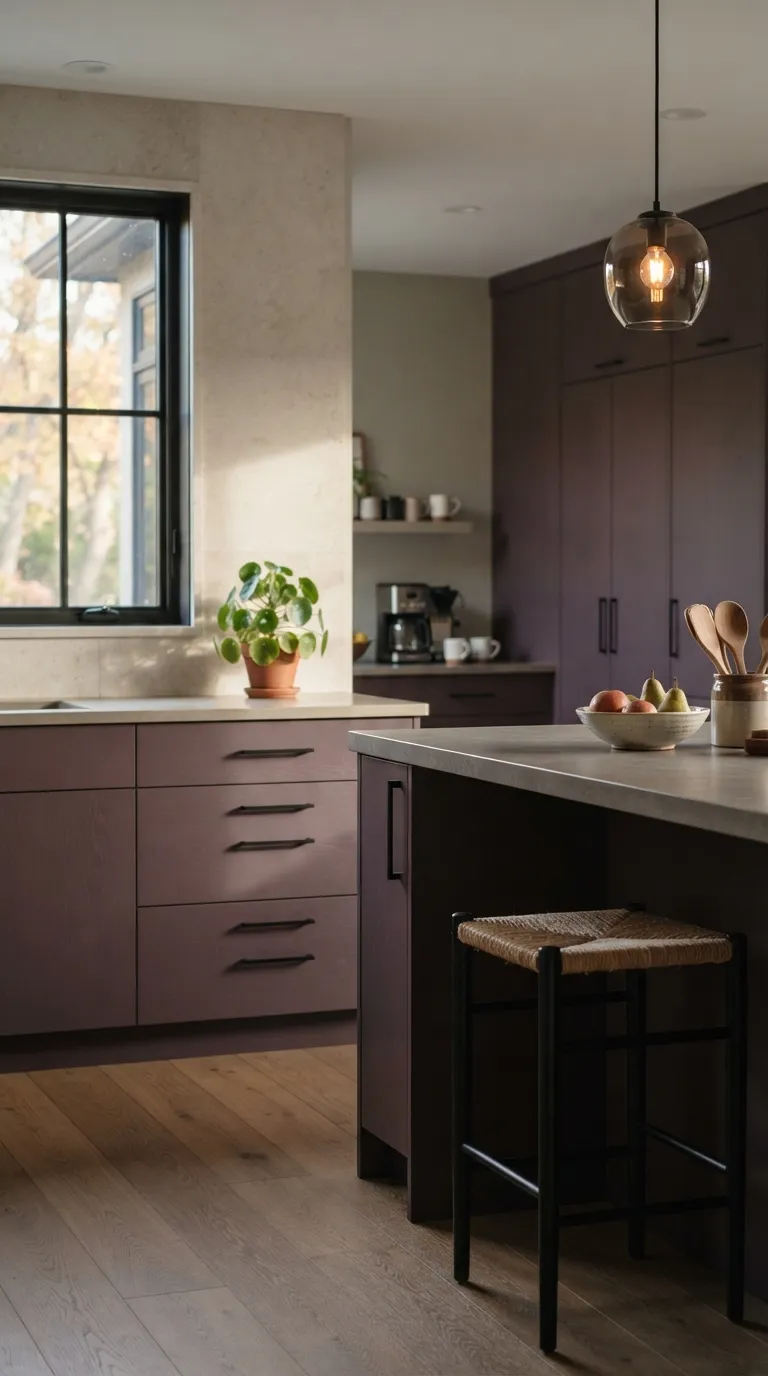
Matte black hardware gives aubergine cabinetry a sharper modern edge. Slim pulls work well on slab doors, while chunky handles can suit a more substantial cabinet style. Keep the worktop lighter so the hardware reads as a detail rather than another dark block.
Warm gray is a useful bridge between purple and black. Add oak flooring or woven seating to bring natural texture into the scheme. This is one of the easier Aubergine Kitchen Ideas to adapt if you’re updating existing cabinets instead of starting from scratch.
Aubergine and Brushed Brass Details
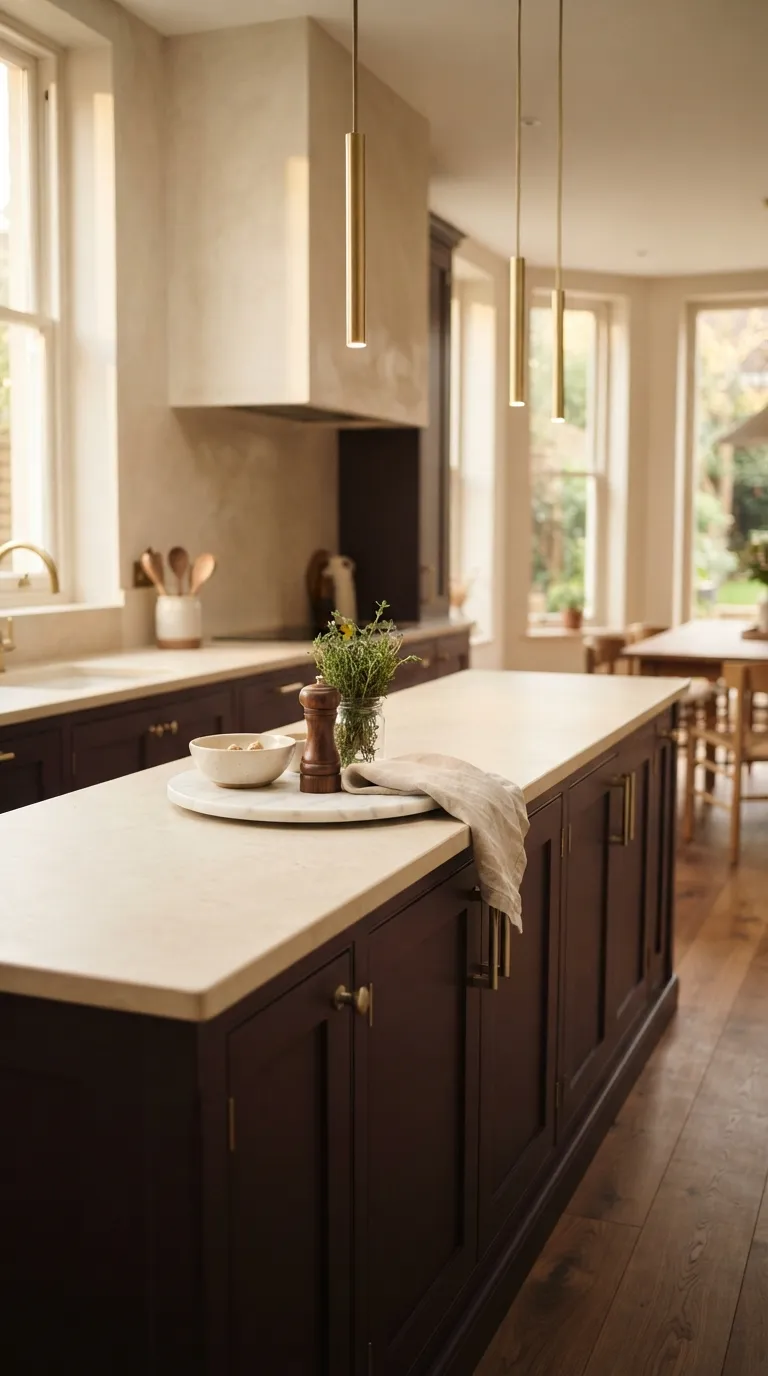
Brushed brass brings warmth to deep aubergine cabinetry. Choose a soft satin finish if you want the metal to look refined rather than shiny. Repeating the finish on handles, faucets, and lighting creates a clear visual thread.
Keep other metals to a minimum. Creamy limestone, beige walls, and walnut can support the color pairing without adding visual noise. For a small kitchen, even a brass faucet and cabinet pulls can give aubergine doors a polished finish.
Aubergine Pantry Wall With Open Shelves
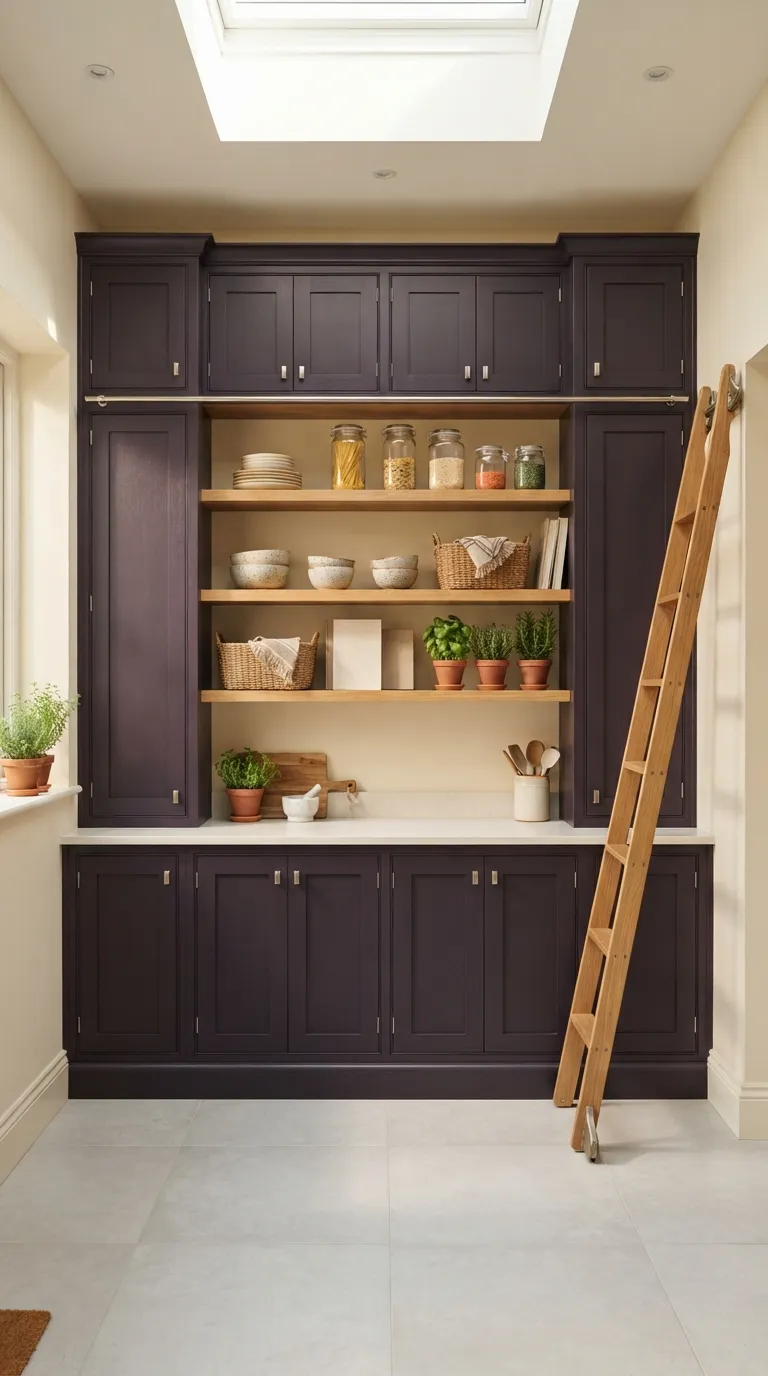
Aubergine works beautifully on a pantry wall because the darker color can frame your everyday storage. Open oak shelves break up the solid cabinet surface and bring natural warmth into the composition. Keep the shelf display edited so the wall still feels calm.
This idea also suits kitchens with a separate storage run. Use the purple cabinetry as a visual anchor while keeping the main cooking area lighter. Cream ceramics and woven baskets can make the storage feel useful as well as decorative.
Aubergine Backsplash With Light Cabinetry
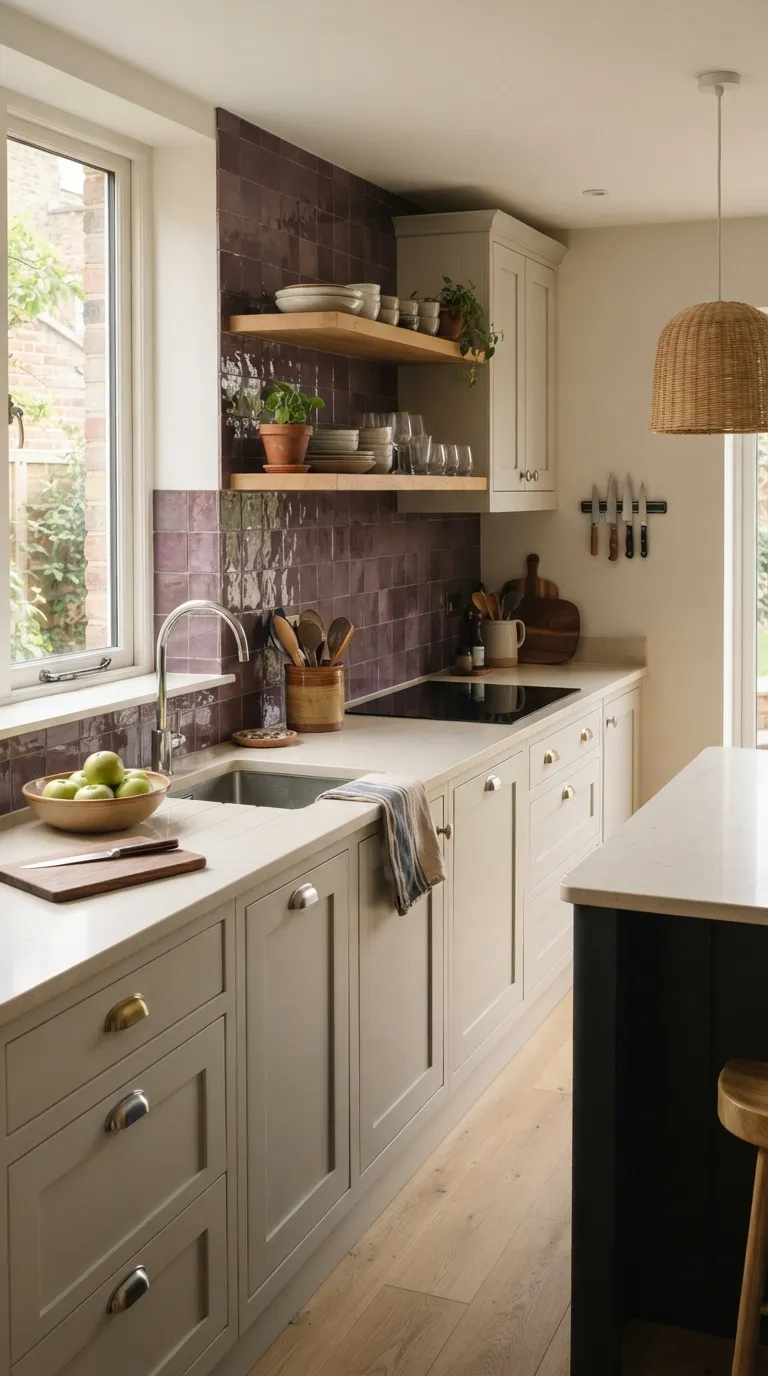
You don’t need aubergine cabinets to bring the color into your kitchen. A rich purple backsplash can create the same visual interest while pale cabinetry keeps the room bright. Handmade tile adds small variations that make the wall feel less flat.
Use a simple counter surface to let the backsplash do the talking. Greige, cream, and pale wood all pair naturally with aubergine tile. If you’re working with a rental or smaller renovation, a backsplash is also a more contained way to introduce this strong color.
Aubergine and Warm Walnut Cabinetry
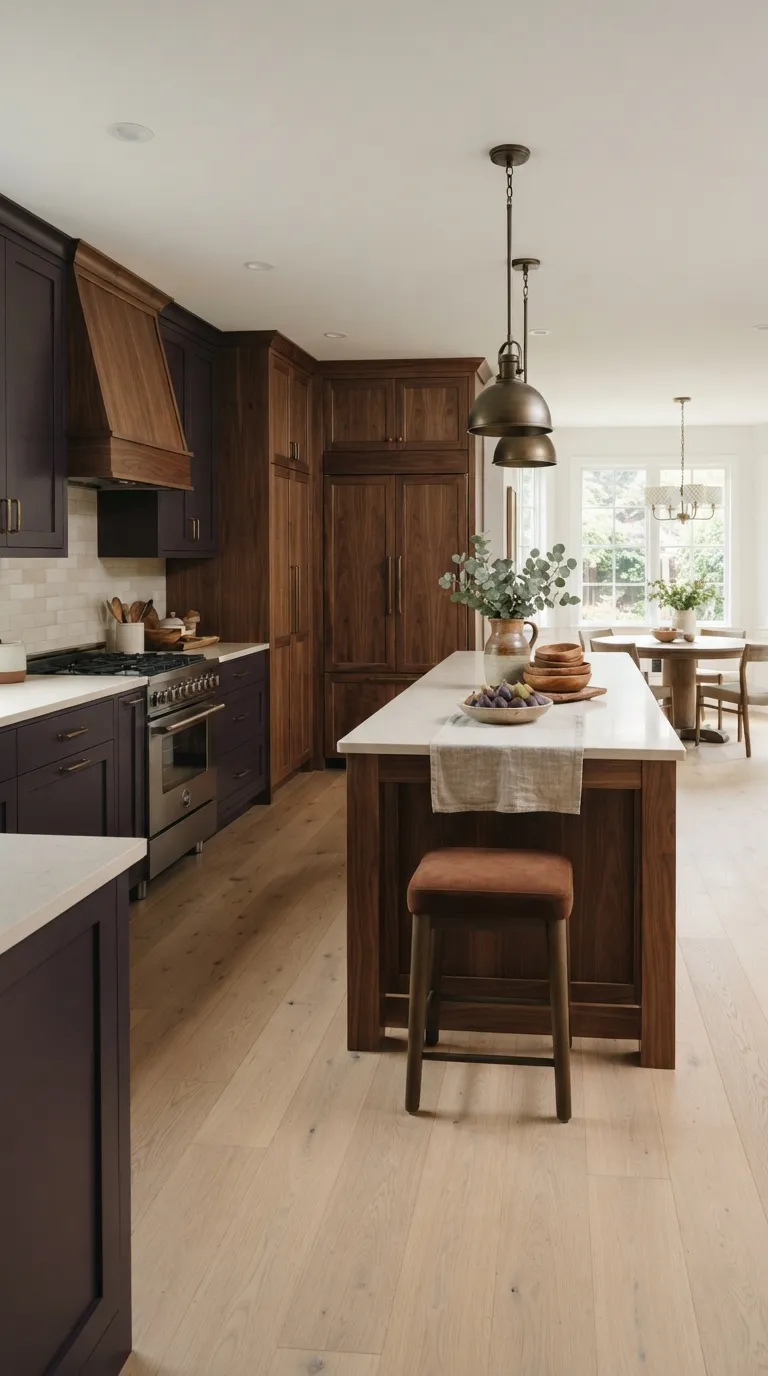
Warm walnut adds richness without making aubergine feel too dark. Use walnut for tall cabinets, an island detail, or a breakfast nook while keeping the main purple cabinetry fairly simple. The contrast between painted color and visible grain gives the room plenty of texture.
Choose a light counter to separate the darker materials. Ivory quartz or pale limestone works well between the two finishes. In an open-plan space, walnut can also connect the kitchen with nearby dining furniture for a more cohesive look.
Aubergine and Dusty Pink Accents
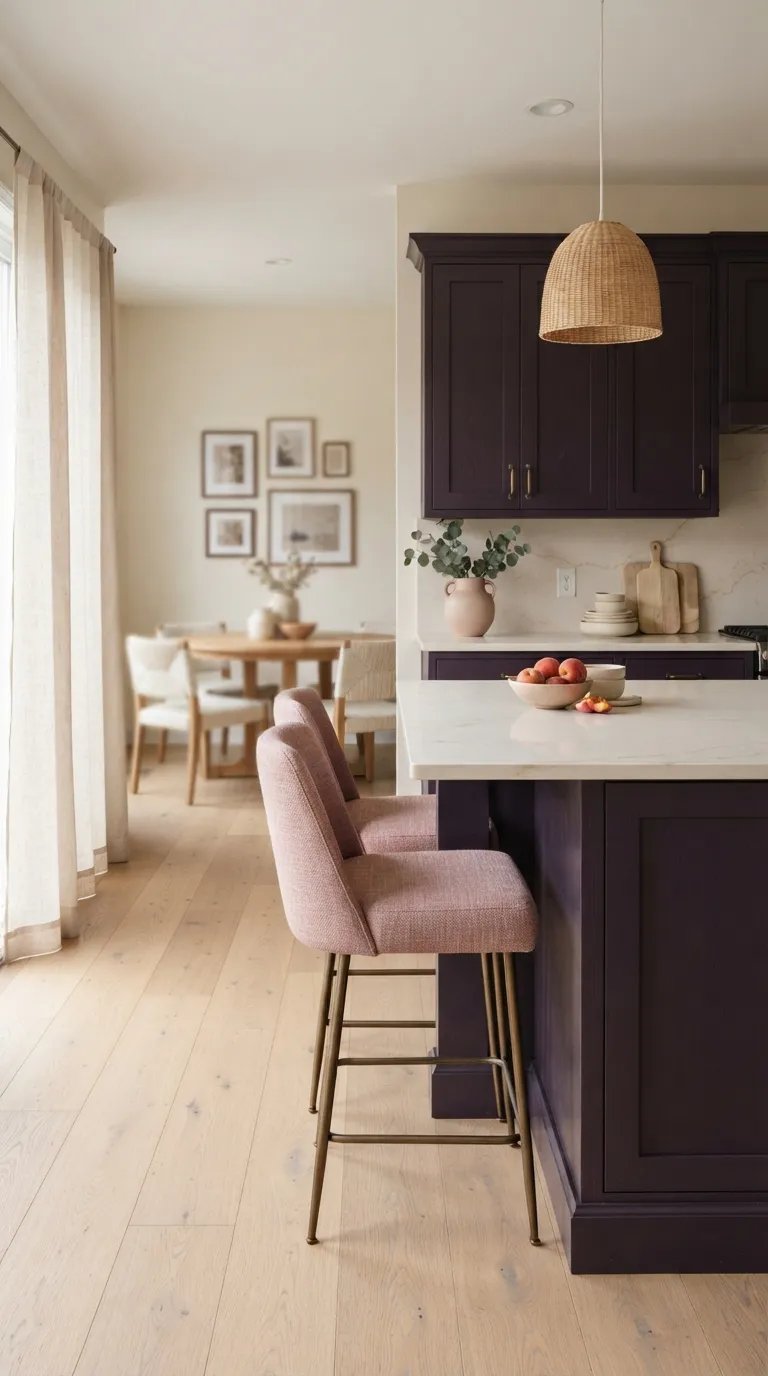
Dusty pink can soften the richness of aubergine without turning the kitchen sugary. Use the lighter shade in small areas such as counter stools, textiles, or pottery. Warm cream walls help both colors sit comfortably together.
Keep the pink muted and slightly earthy. A pale oak floor can bridge the two shades and add a natural note. This palette suits a kitchen where you want a little softness while keeping the cabinetry as the main feature.
Aubergine Cabinets With Fluted Glass
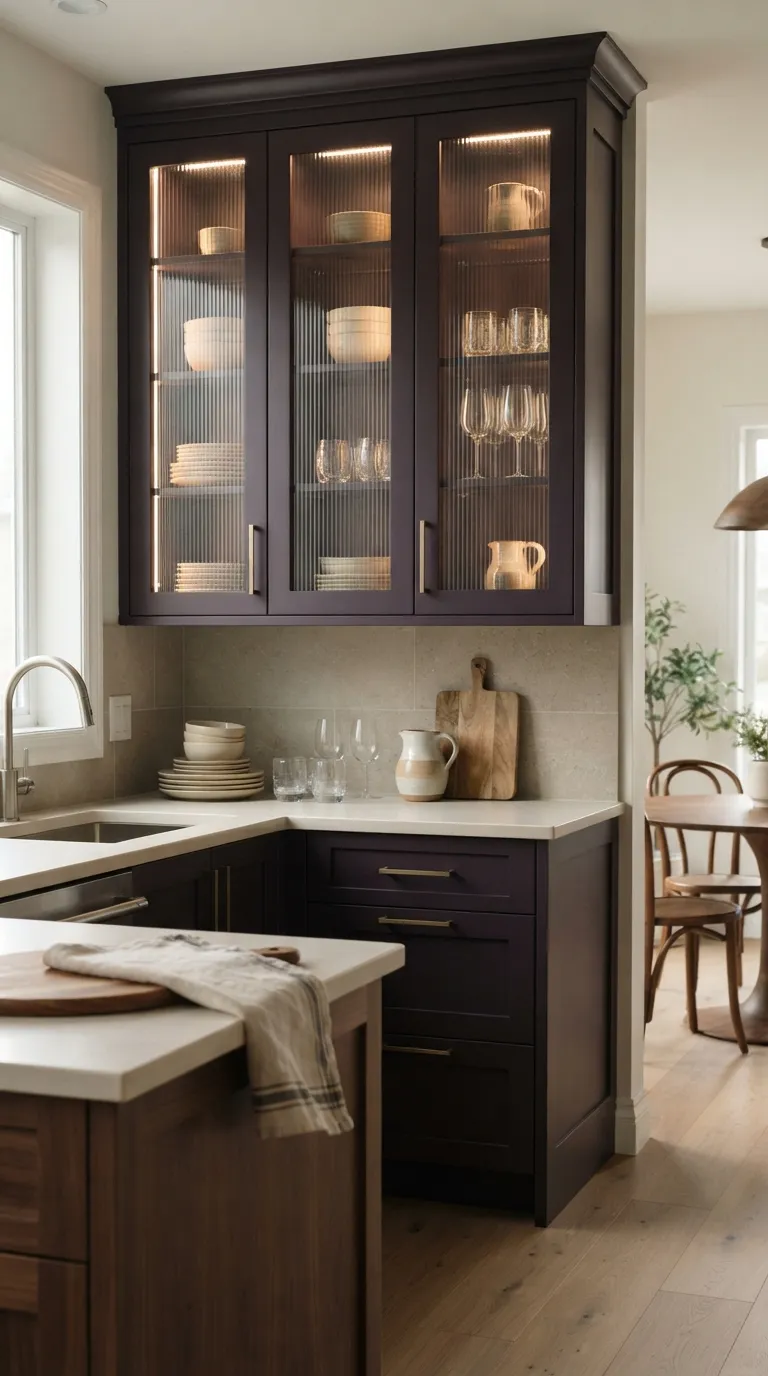
Fluted glass breaks up solid aubergine cabinetry with texture and light. Use it on one or two upper cabinets rather than every door for a balanced look. The ribbed surface also gives everyday dishes a softer appearance.
Warm internal lighting can make the glass doors useful after sunset. Place the lights toward the cabinet sides to create an even glow. Brass hardware, walnut, and pale stone provide enough contrast to keep the display area from feeling too dark.
Aubergine Peninsula With Pendant Lighting
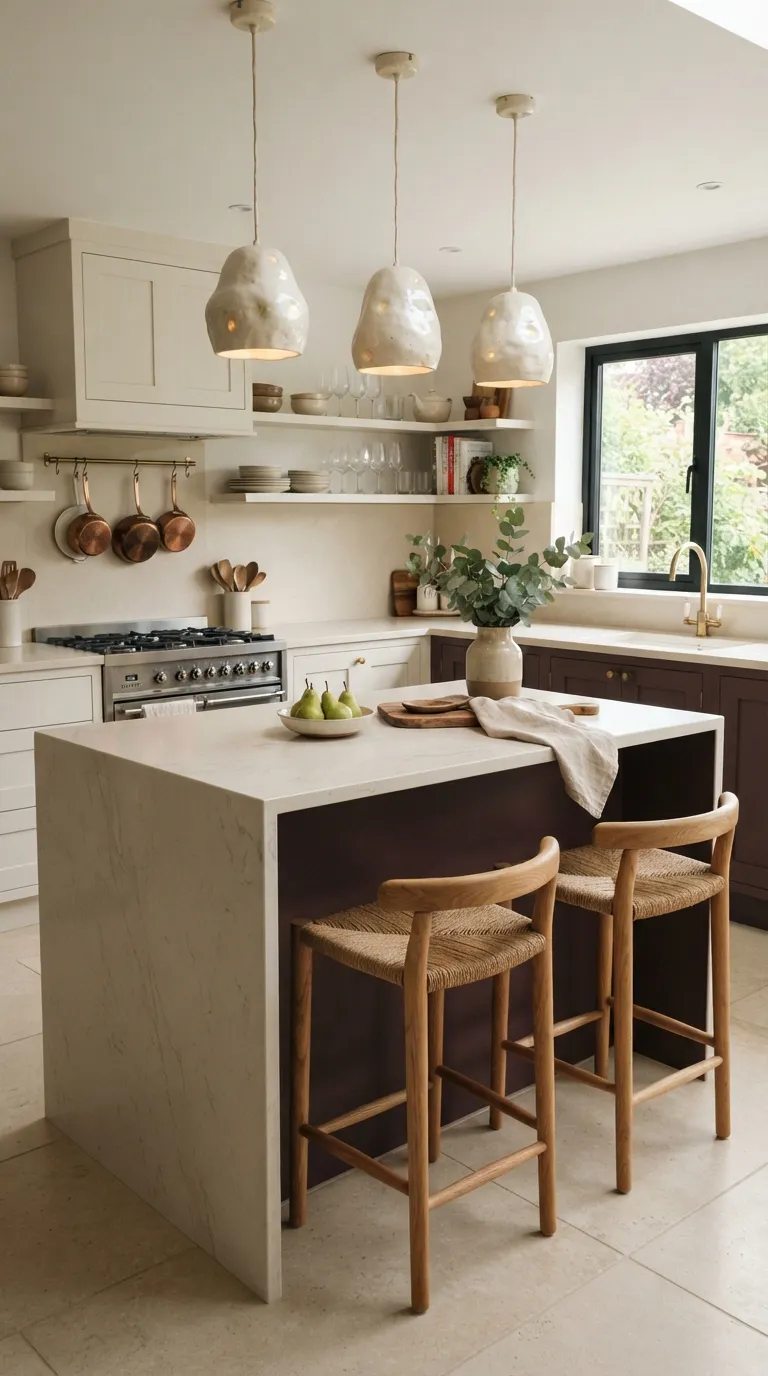
Aubergine can work on a peninsula when a full island won’t fit. The concentrated color gives the seating area a clear identity without taking over the whole kitchen. A pale countertop helps the peninsula feel lighter.
Lighting matters here because the peninsula often becomes a visual focal point. Cream ceramic pendants add shape while keeping the palette soft. Choose stools with curved profiles if you want the compact area to feel less boxy.
Aubergine Ceiling-Height Cabinetry
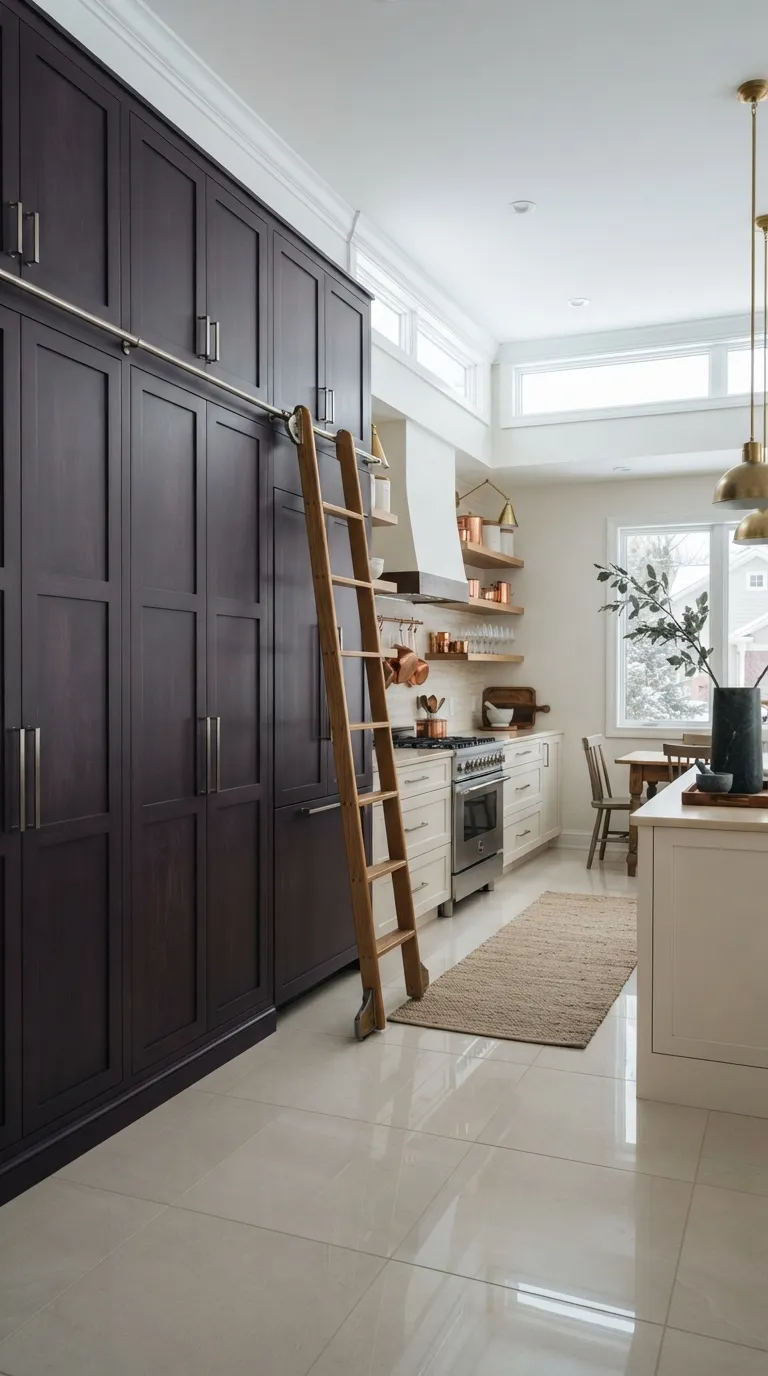
Tall aubergine cabinets turn storage into a strong architectural feature. The vertical lines can make the room feel taller while giving you generous pantry and appliance space. This approach suits kitchens with high ceilings especially well.
Balance the height with a lighter opposite wall. Warm white cabinetry and pale stone keep the room from becoming visually dense. An oak ladder or woven runner can add practical texture without competing with the purple storage wall.
Aubergine and Dusty Pink Accents
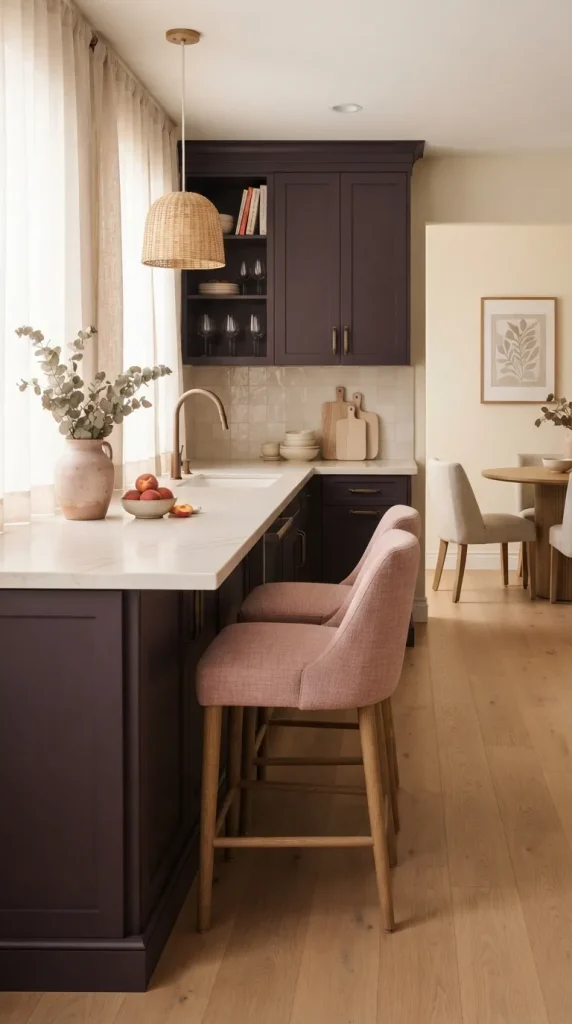
Dusty pink can soften the richness of aubergine without turning the kitchen sugary. Use the lighter shade in small areas such as counter stools, textiles, or pottery. Warm cream walls help both colors sit comfortably together.
Keep the pink muted and slightly earthy. A pale oak floor can bridge the two shades and add a natural note. This palette suits a kitchen where you want a little softness while keeping the cabinetry as the main feature.
Aubergine Cabinets With Fluted Glass
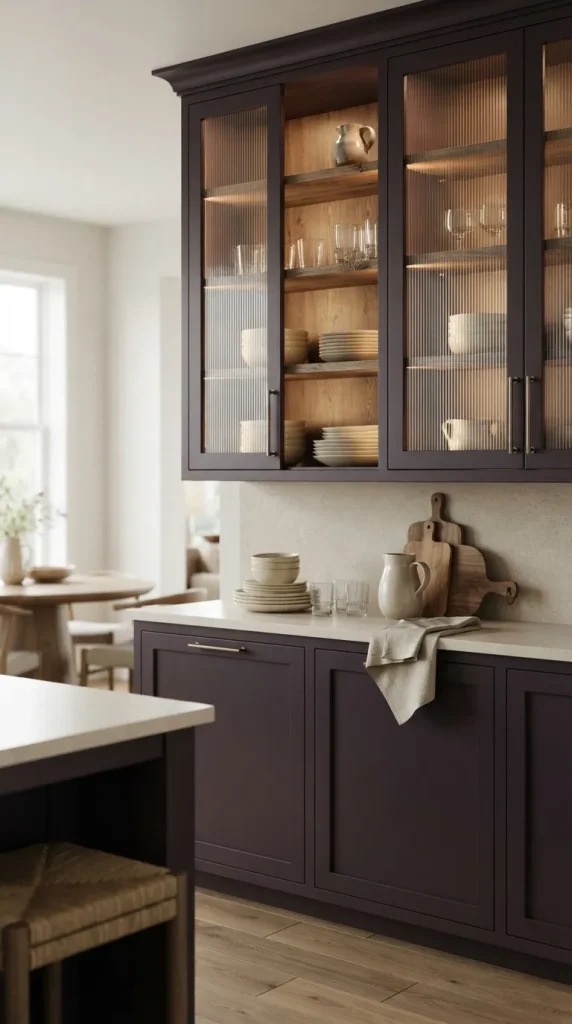
Fluted glass breaks up solid aubergine cabinetry with texture and light. Use it on one or two upper cabinets rather than every door for a balanced look. The ribbed surface also gives everyday dishes a softer appearance.
Warm internal lighting can make the glass doors useful after sunset. Place the lights toward the cabinet sides to create an even glow. Brass hardware, walnut, and pale stone provide enough contrast to keep the display area from feeling too dark.
Aubergine Peninsula With Pendant Lighting
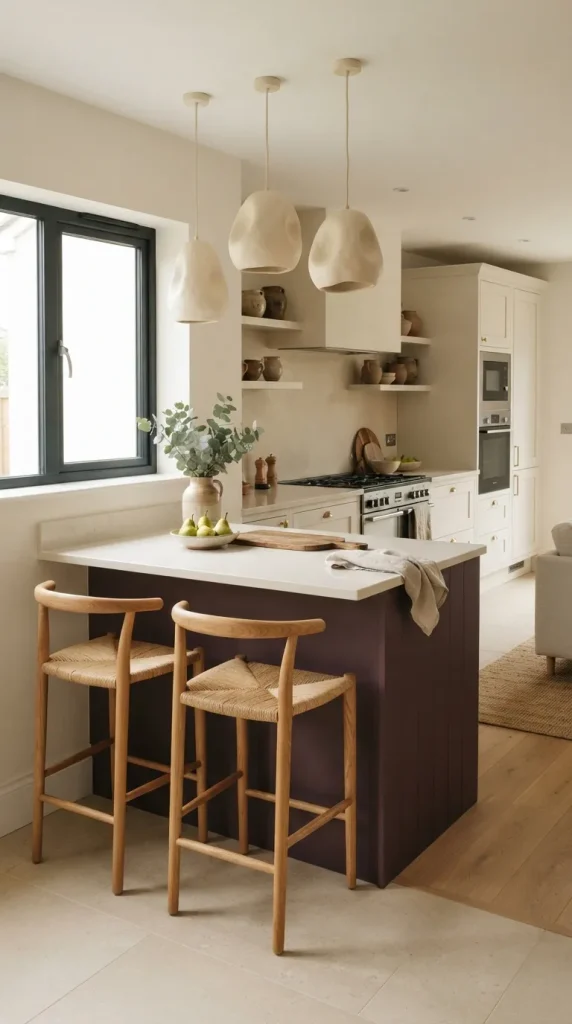
Aubergine can work on a peninsula when a full island won’t fit. The concentrated color gives the seating area a clear identity without taking over the whole kitchen. A pale countertop helps the peninsula feel lighter.
Lighting matters here because the peninsula often becomes a visual focal point. Cream ceramic pendants add shape while keeping the palette soft. Choose stools with curved profiles if you want the compact area to feel less boxy.
Aubergine Ceiling-Height Cabinetry
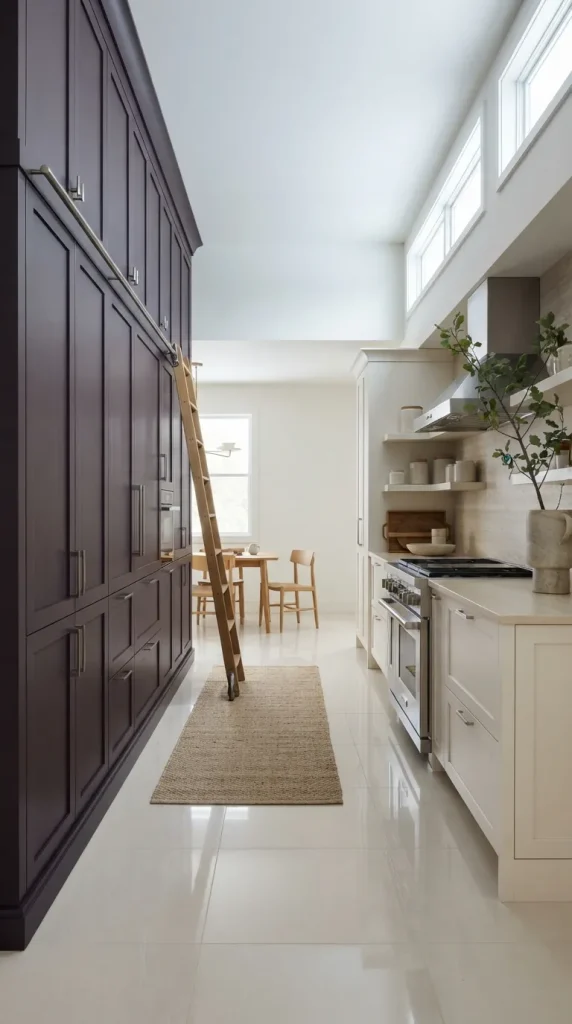
Tall aubergine cabinets turn storage into a strong architectural feature. The vertical lines can make the room feel taller while giving you generous pantry and appliance space. This approach suits kitchens with high ceilings especially well.
Balance the height with a lighter opposite wall. Warm white cabinetry and pale stone keep the room from becoming visually dense. An oak ladder or woven runner can add practical texture without competing with the purple storage wall.
Aubergine and Cream Checkerboard Flooring
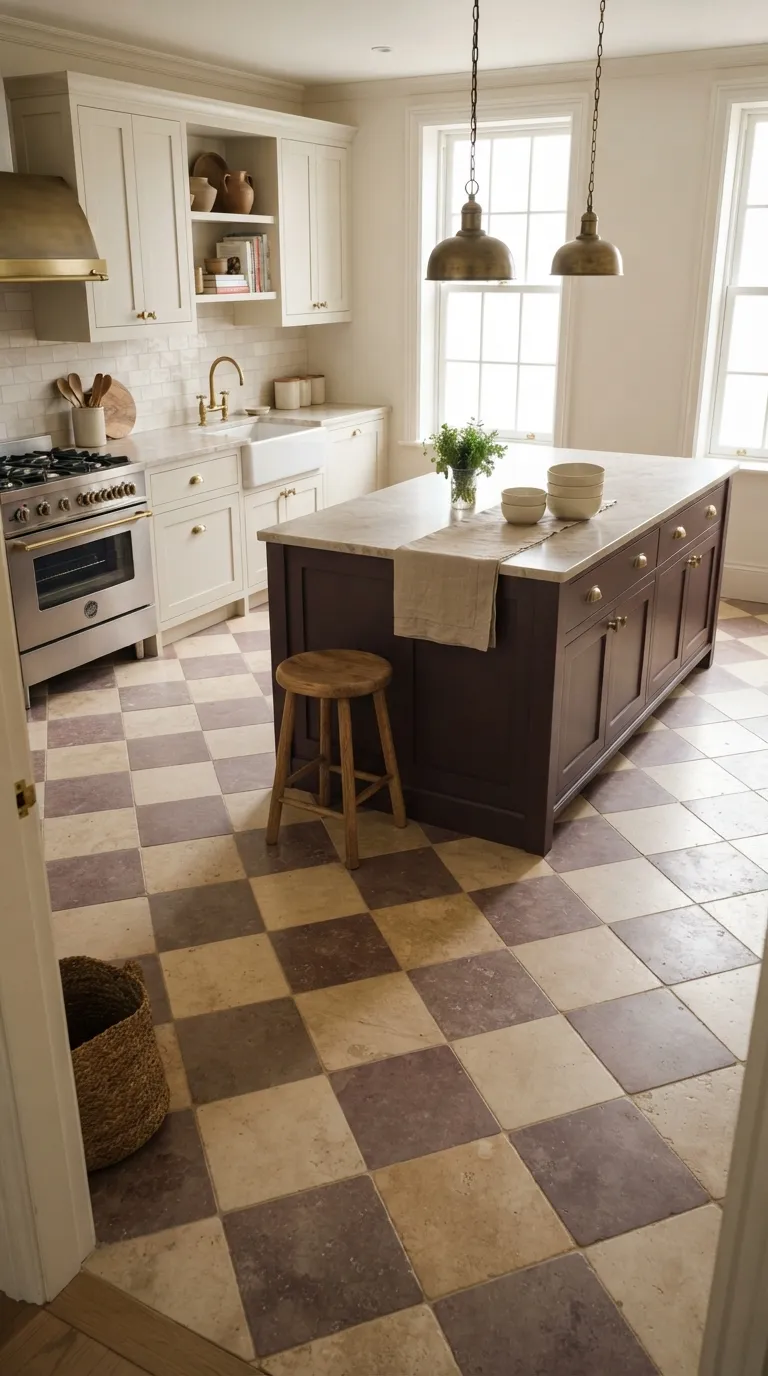
A checkerboard floor can bring aubergine down to ground level. Using the color in the floor rather than across every cabinet creates a playful connection without making the room too purple. Cream tiles keep the pattern bright and classic.
Let the cabinetry stay relatively simple when the floor has a strong pattern. An aubergine island can echo the darker tiles, while cream cabinets keep the upper half calm. This idea works best when the rest of the room uses quiet finishes and limited decoration.
Aubergine Cabinetry With Creamy Beige Walls
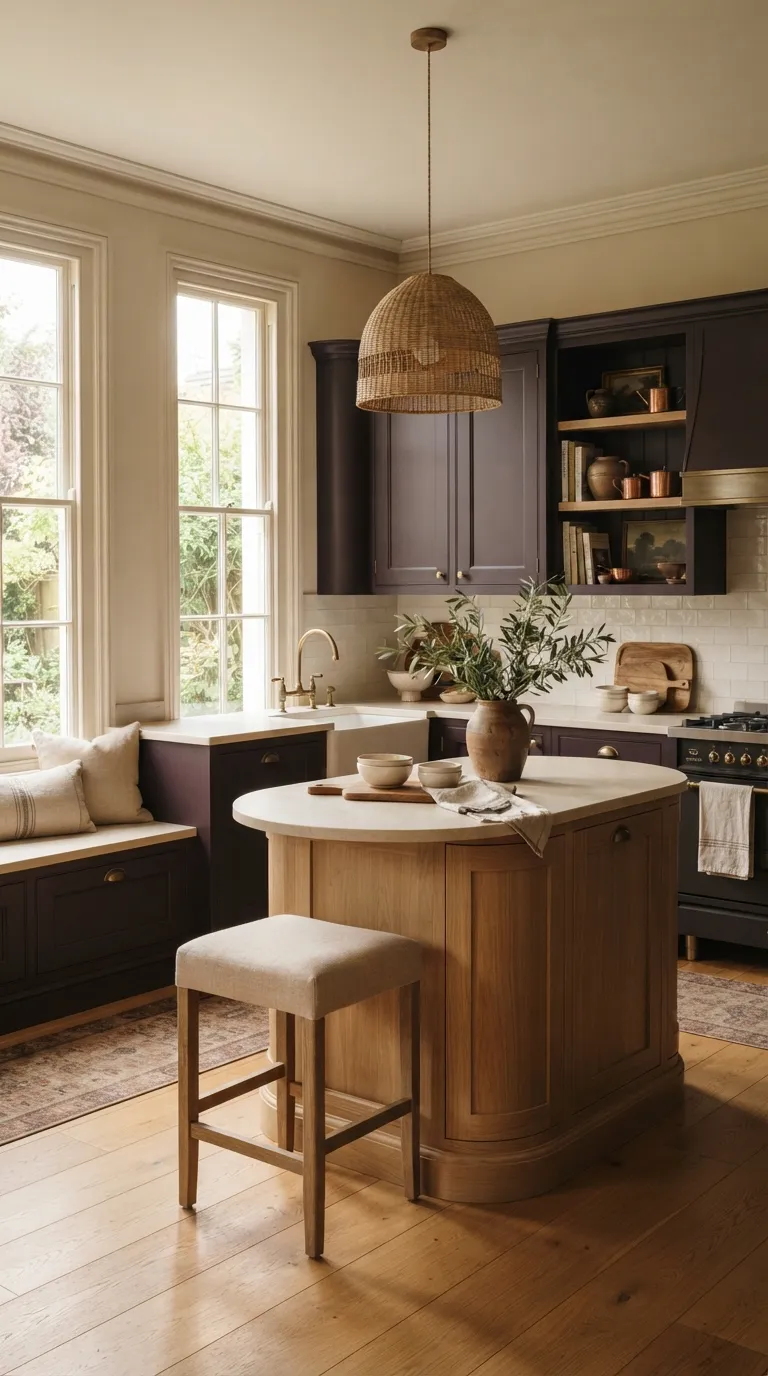
Creamy beige walls soften the contrast between deep aubergine cabinets and the rest of the kitchen. The warm undertone keeps the purple from looking too cold, especially in rooms with limited daylight. This pairing also gives you more freedom with wood and brass finishes.
Use beige on the walls rather than every surface. A pale stone counter and lighter ceiling can keep the room fresh. Add natural textiles and warm oak for a relaxed kitchen that still feels polished.
Aubergine Island With Waterfall Stone Edge
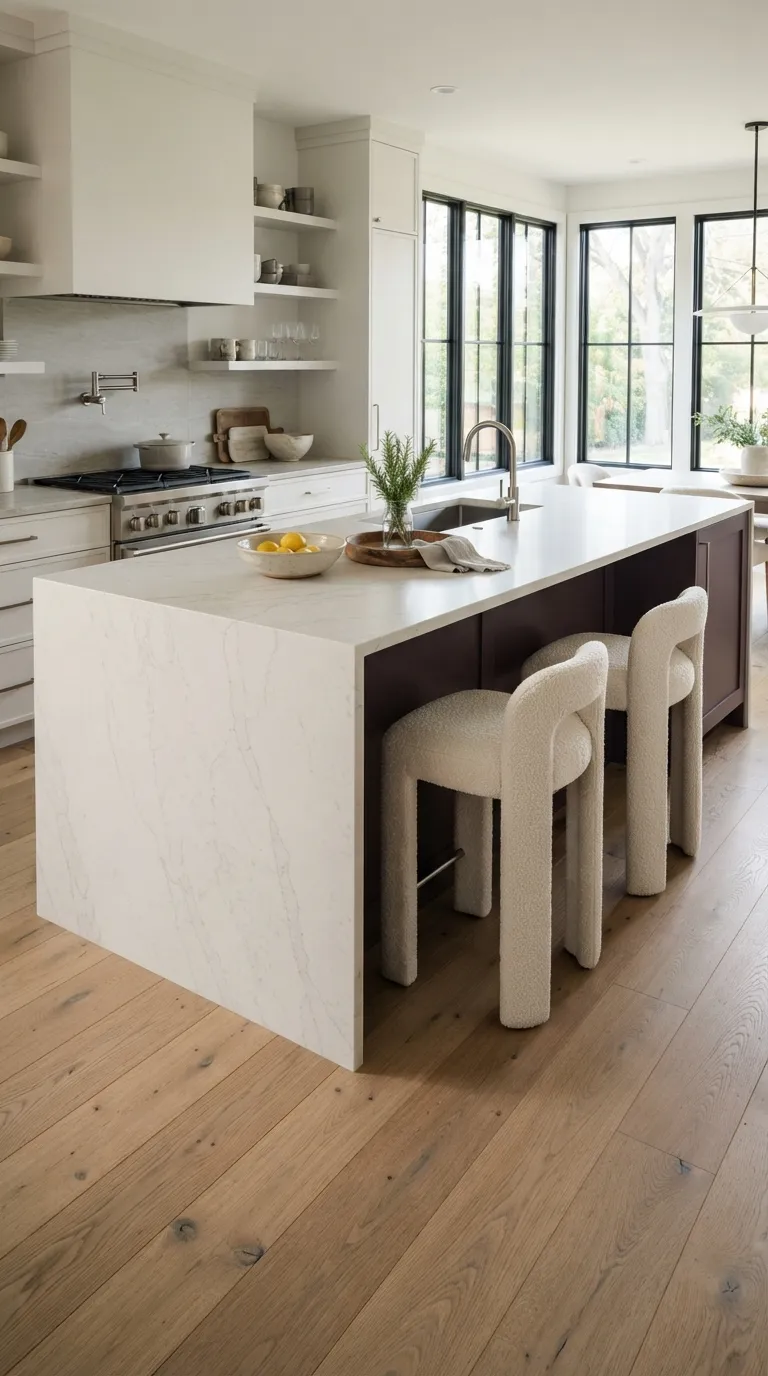
A waterfall stone edge gives an aubergine island a clean architectural shape. The pale stone wraps down the sides, breaking up the darker cabinet color and drawing attention to the island’s form. This look suits open kitchens where the island is visible from several rooms.
Keep the surrounding cabinetry quiet. White or pale gray doors allow the island to stand apart without competing patterns. For a smaller island, a single waterfall end can provide the same tailored effect with less stone.
Aubergine Cabinets With Cream Subway Tile
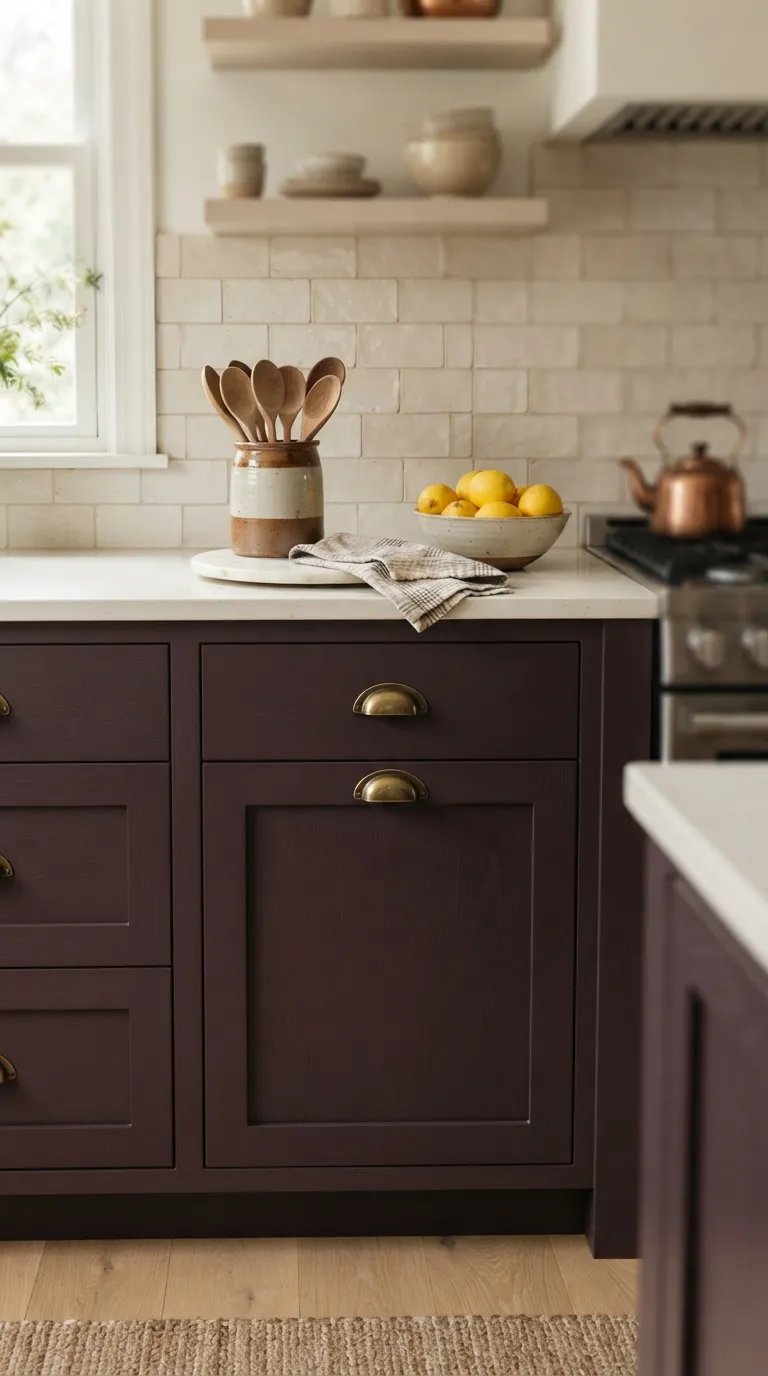
Cream subway tile is a reliable match for aubergine cabinets. Its familiar shape adds texture while the light surface keeps the kitchen feeling bright. Choose a slightly handmade finish if you want the backsplash to have more character.
The grout color can change the overall look. Warm white grout creates a softer effect, while pale gray makes each tile shape more visible. Keep the counter simple so the cabinet color and backsplash remain the main visual pair.
Aubergine Kitchen With Arched Details
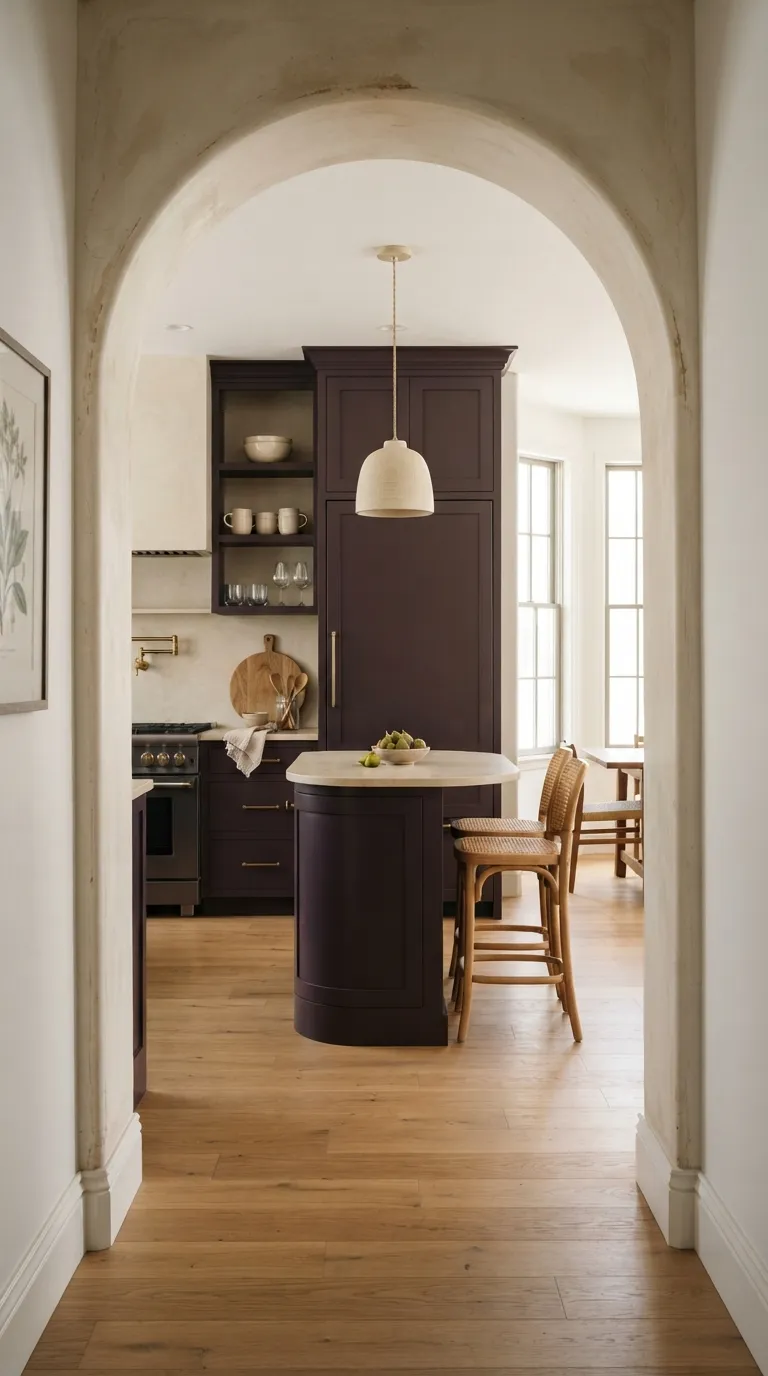
Arched details can make a deep cabinet color feel softer. A curved doorway, range alcove, or island edge adds contrast to the straight lines of kitchen cabinetry. The rounded forms also suit aubergine’s rich, classic character.
Keep the architectural color palette simple. Cream plaster, limestone, and oak provide enough warmth around the purple cabinetry. If a full arch isn’t practical, try a curved shelf or rounded island corner instead.
Aubergine and Natural Stone Statement Wall
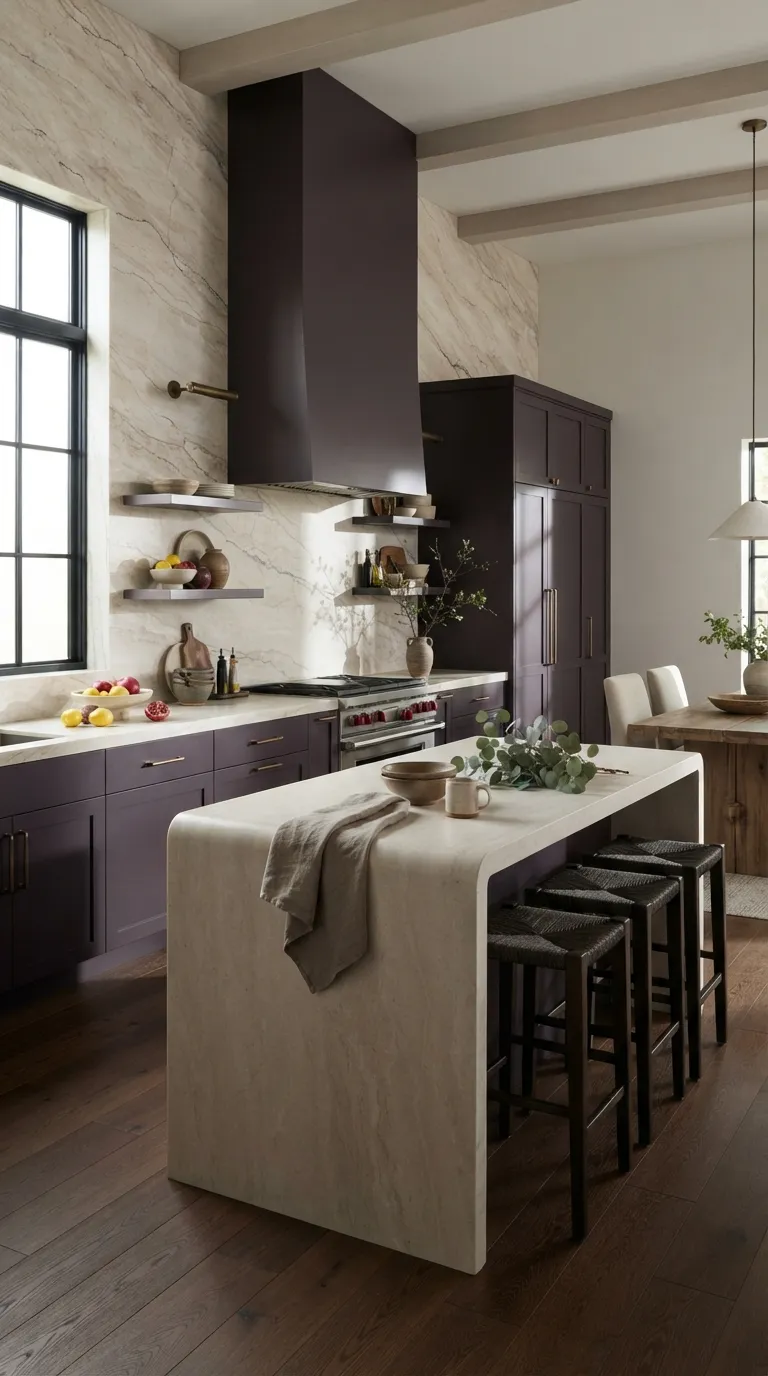
A natural stone statement wall can give aubergine cabinetry a strong backdrop. Choose stone with cream, taupe, or soft gray movement so it connects with the cabinet color without creating visual clutter. Full-height stone also gives the cooking wall a finished appearance.
Let the stone remain the star behind the work area. Simple aubergine doors, understated hardware, and restrained accessories will keep the materials in balance. For a smaller budget, use statement stone behind the range while keeping the remaining backsplash areas simple.
Styling an Aubergine Kitchen With Confidence
Aubergine works best when you treat it as a rich anchor rather than a color that needs to appear everywhere. Pair it with cream, oak, marble, travertine, brass, sage, or soft pink depending on the mood you want. A lighter counter, warm wall color, or natural floor can give the purple room to breathe.
Start with one clear feature. It might be an island, a cabinet wall, a backsplash, or even a few painted lower cabinets. Once you’ve chosen that focal point, repeat two or three supporting finishes throughout the room so everything feels connected without looking overly coordinated.
Elira Montclair
Elira writes about timeless home decor, kitchen styling, and practical interior ideas. Her work blends warm, inviting aesthetics with simple decorating tips that make everyday spaces feel beautiful and comfortable.