Librarian Home Aesthetic With Essential Touches Every Reader Will Love

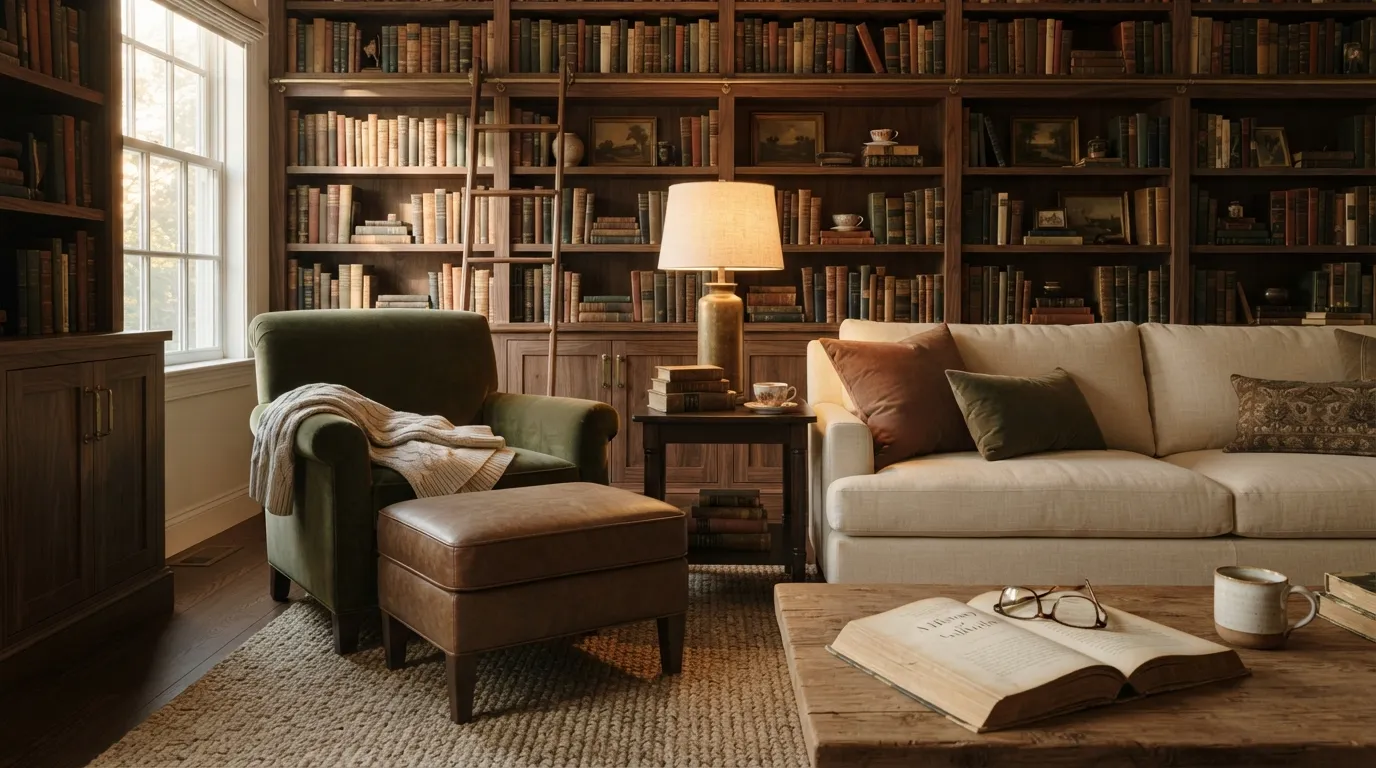
If books are part of your happy place, your home can show it without looking like a themed set. A librarian home aesthetic mixes books, classic furniture, warm lighting, and collected details to create rooms that feel personal and lived-in. Think quiet reading corners, dark wood, soft textiles, framed art, and shelves that invite you to browse.
The best part is how flexible this look can be. You don’t need a huge library or expensive antiques to get the feeling. A well-placed bookcase, a comfortable chair, an old-style lamp, and a few carefully chosen objects can give your space that cozy library character while still feeling fresh and practical.
Start With Tall Bookshelves
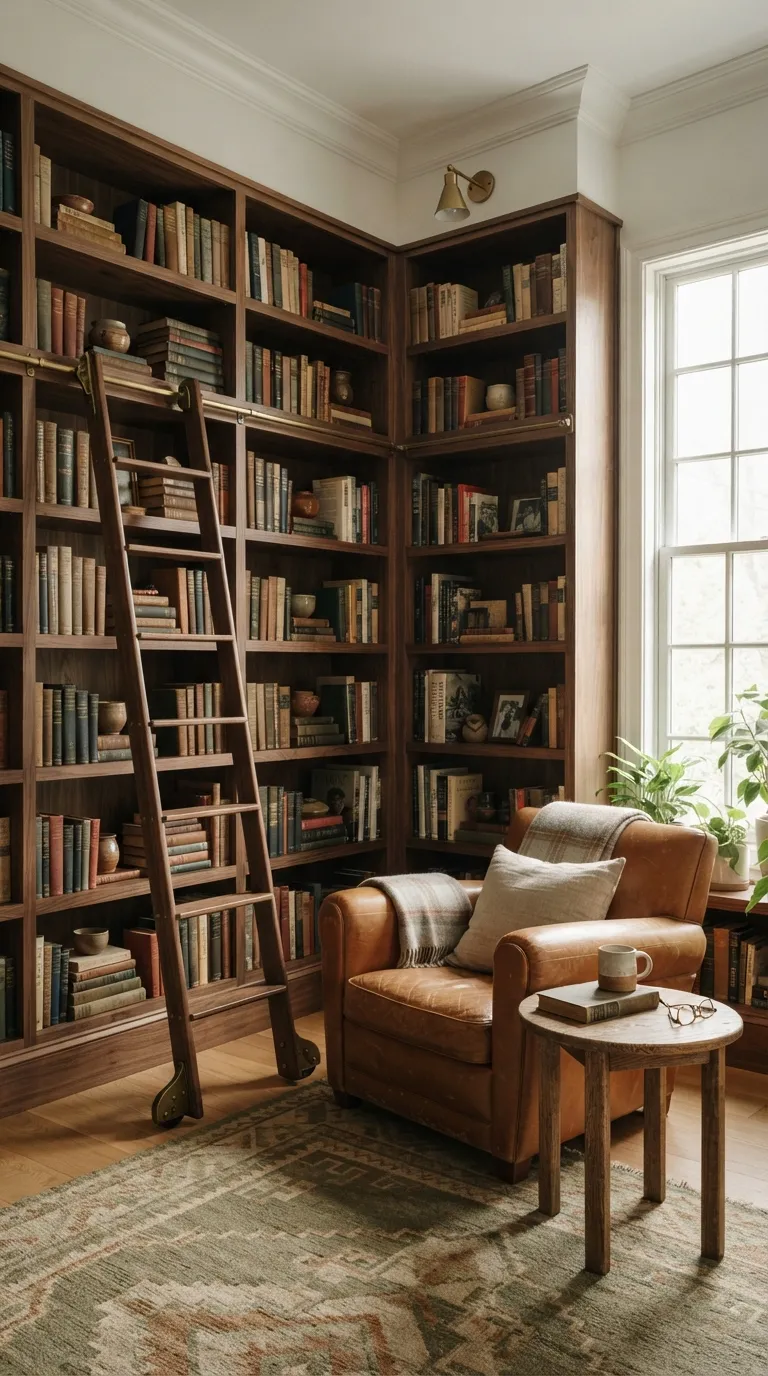
Tall bookshelves give this style its strongest visual anchor. If your room has high ceilings, take the shelves upward rather than filling every inch of floor space, because vertical storage draws the eye up and makes a reading room feel more like a private library. Built-in walnut or painted shelving works well, but a freestanding bookcase can create the same mood in a rental.
Don’t make every shelf perfectly neat. Mix upright books with a few horizontal stacks, leaving small gaps between groups so the collection feels natural. A rolling library ladder can add classic character, while lower shelves can hold baskets, framed prints, or a small reading collection that’s easy to reach.
Add A Reading Chair
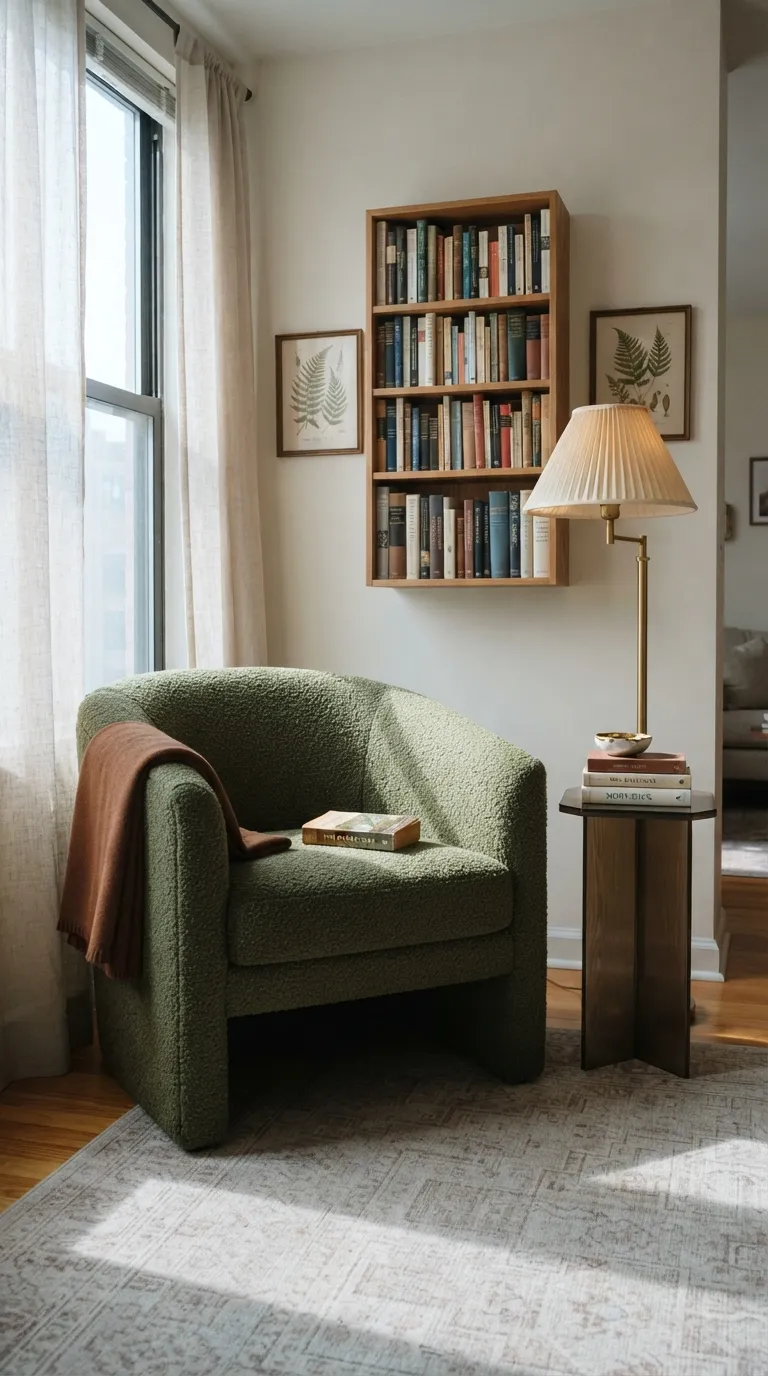
Every book lover needs a chair that makes opening a book feel easy. Look for a seat with good back support, enough depth to curl up comfortably, and upholstery that adds texture without competing with the books around it. A moss green, tobacco, navy, or warm brown chair fits naturally with classic library colors.
Place a small table within arm’s reach rather than across the room. It can hold your current book, reading glasses, or a cup, while a floor lamp gives the corner a practical light source. Picture a narrow apartment corner with one generous chair, a slim table, and a shelf above it. That small setup can feel intentional without taking much space.
Layer Warm Library Lighting
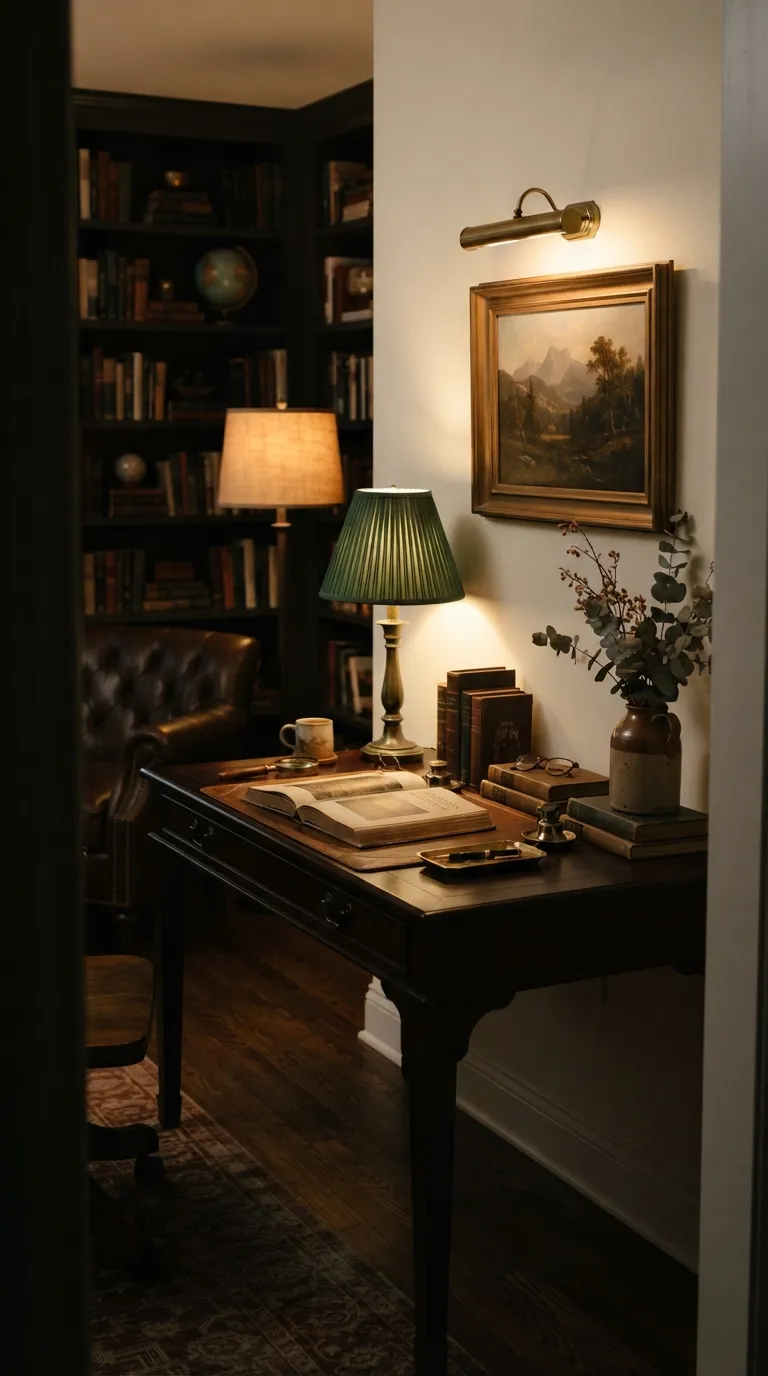
Good lighting makes a reading space useful after sunset. Instead of relying on one bright ceiling fixture, combine a table lamp, floor lamp, or picture light so each area has its own soft glow. Warm bulbs around 2700K usually create a cozy tone that pairs naturally with wood, leather, and cream textiles.
Place the brightest reading light close to the chair or desk, then keep surrounding lights softer. This creates pools of light instead of one flat wash across the room. In a librarian home aesthetic, brass lamp bases, pleated shades, and simple ceramic lamps can also act as decor, especially when their finishes repeat elsewhere in the room.
Choose Rich Wood Tones
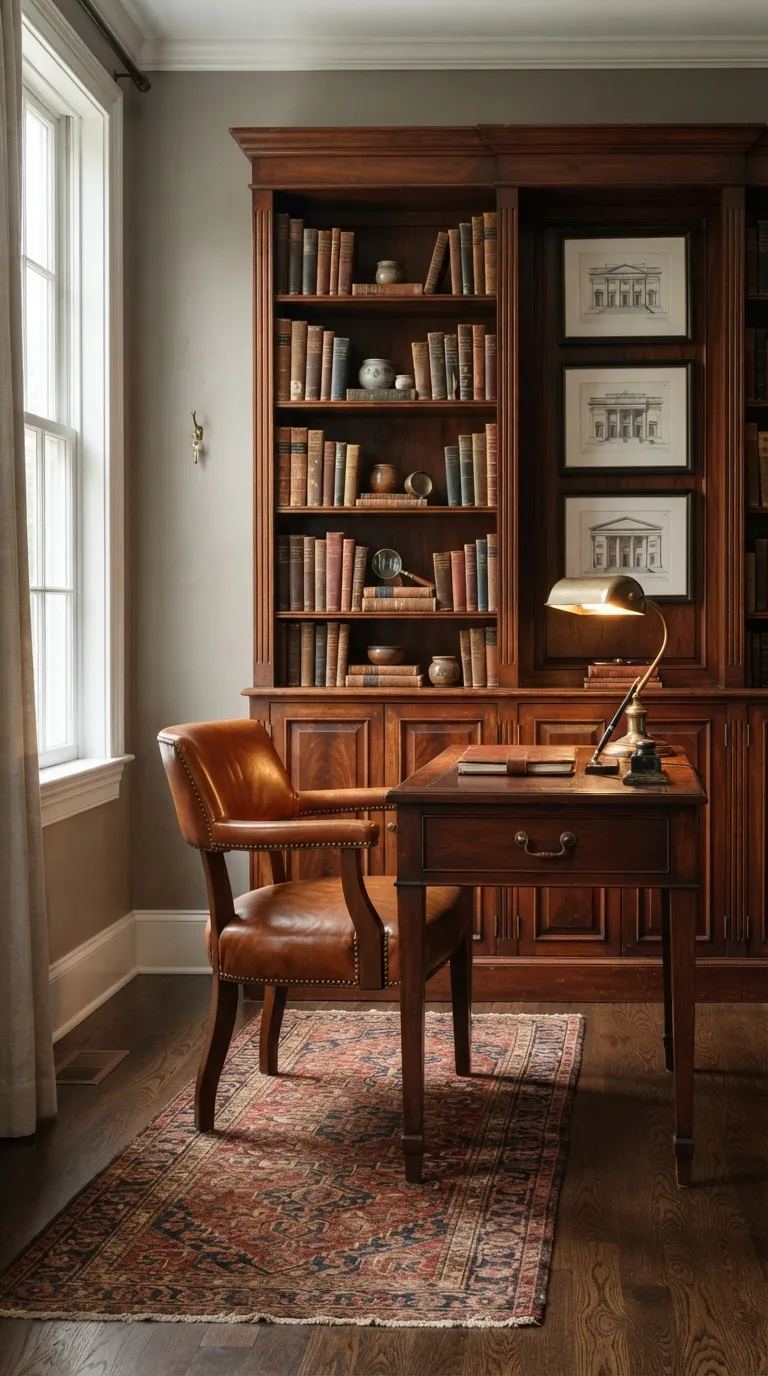
Rich wood gives a room instant library character. Mahogany, walnut, oak, and espresso finishes all work well, but you don’t need matching furniture throughout the space. One substantial wood piece can anchor lighter furniture and keep the room from feeling too heavy.
For a smaller room, try medium walnut rather than very dark finishes. The warm grain still creates that classic reading-room mood while keeping the space visually open. Repeat the wood tone in a picture frame, side table, or shelf trim so the room feels pulled together without looking like a furniture showroom.
Display Books With Character
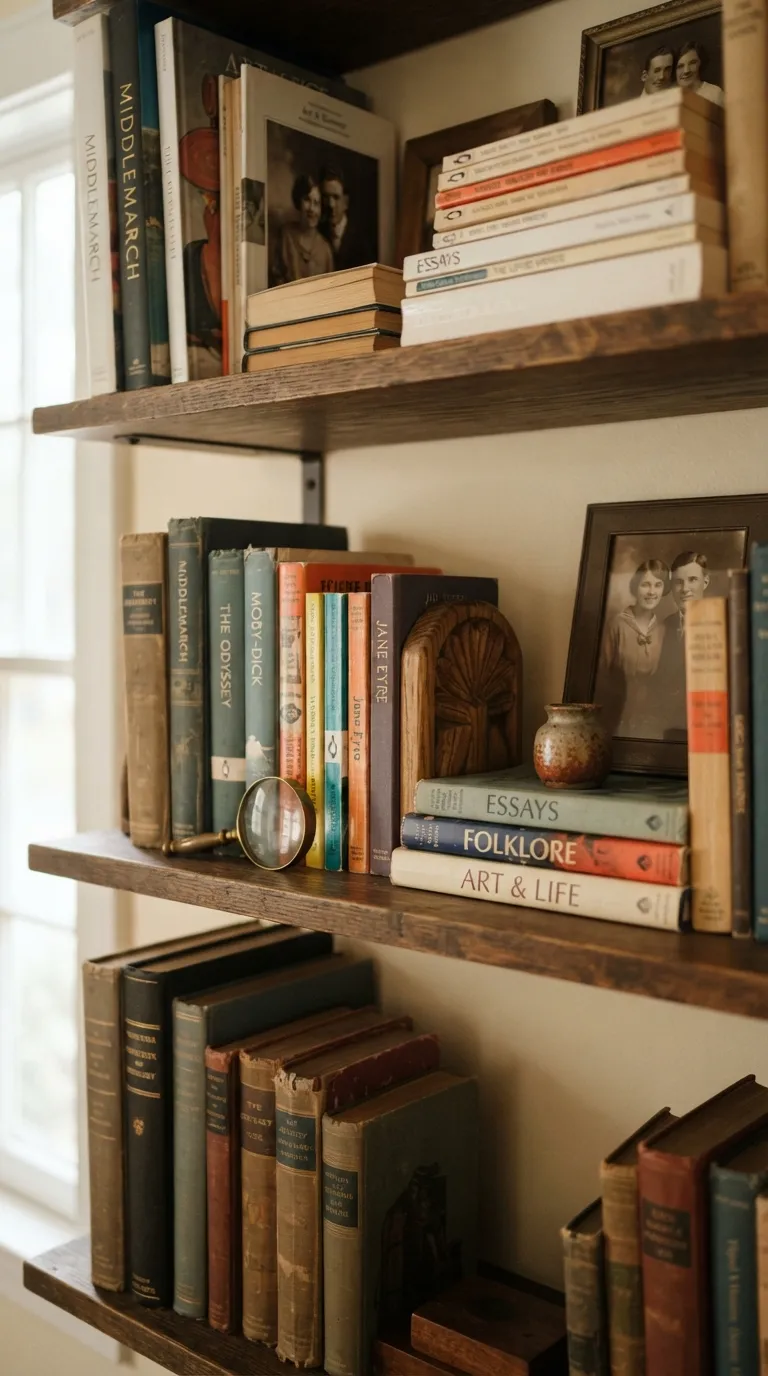
Your books don’t have to match to look good together. In fact, mixed colors, sizes, and bindings often make shelves feel more personal. Group books by subject, approximate height, or color, then add a few horizontal piles to break up long vertical lines.
Leave some breathing room around special editions or favorite titles. A brass magnifying glass, carved bookend, or small framed photograph can fill a gap without stealing attention from the collection. The goal is a shelf that feels like someone actually reads from it, not a display arranged solely for a photograph.
Bring In Leather Details
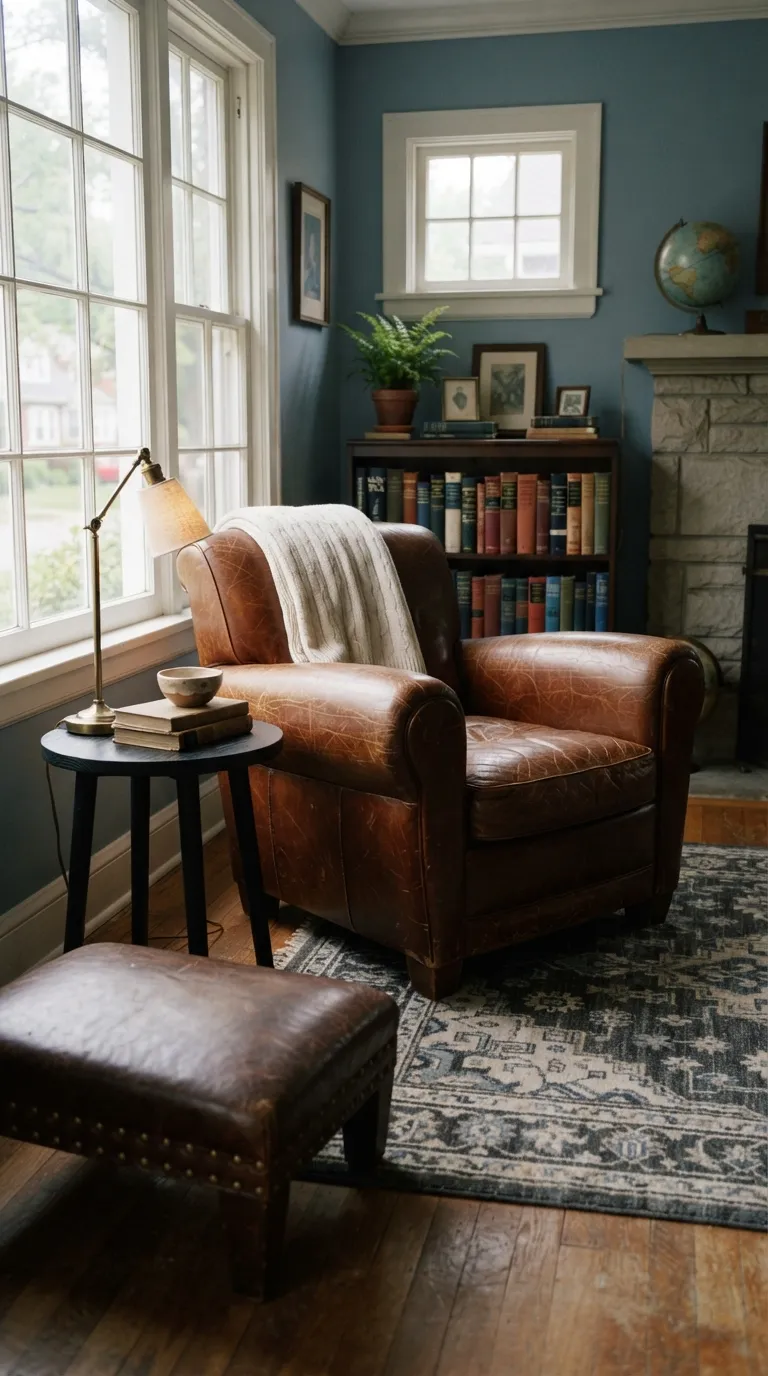
Leather works especially well when you want your librarian decor to feel grown-up and timeless. A club chair, footstool, desk pad, or small accent pillow can introduce the material without turning the room into a leather-heavy space. Chestnut and cognac shades pair naturally with walnut and cream.
Choose pieces with visible grain and simple shapes. A few natural creases can make leather feel warmer and more lived-in than perfectly smooth upholstery. If a full leather chair feels too strong, use a leather-bound journal or desk accessory instead.
Frame Vintage Artwork
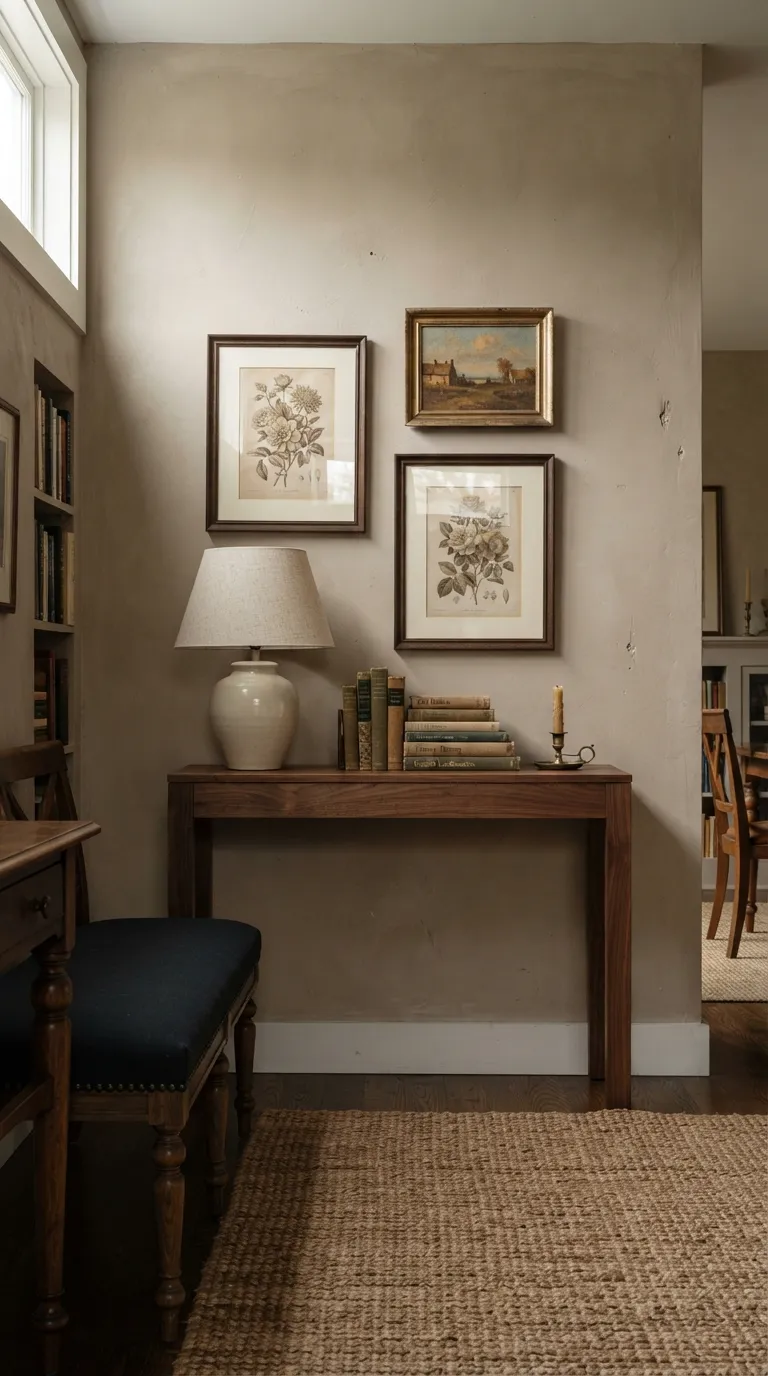
Vintage artwork gives bookshelves and reading spaces a collected feel. Botanical prints, old maps, portraits, landscapes, and architectural drawings all suit a bookish room without making every wall look themed. Choose frames in wood, brass, or aged black for a classic finish.
Try hanging art beside your shelves instead of filling every available wall with books. A small gallery can also break up a long stretch of cabinetry. For a softer look, mix one larger artwork with two or three smaller pieces and keep a shared color, such as faded blue or warm ochre, running through them.
Use A Library Ladder
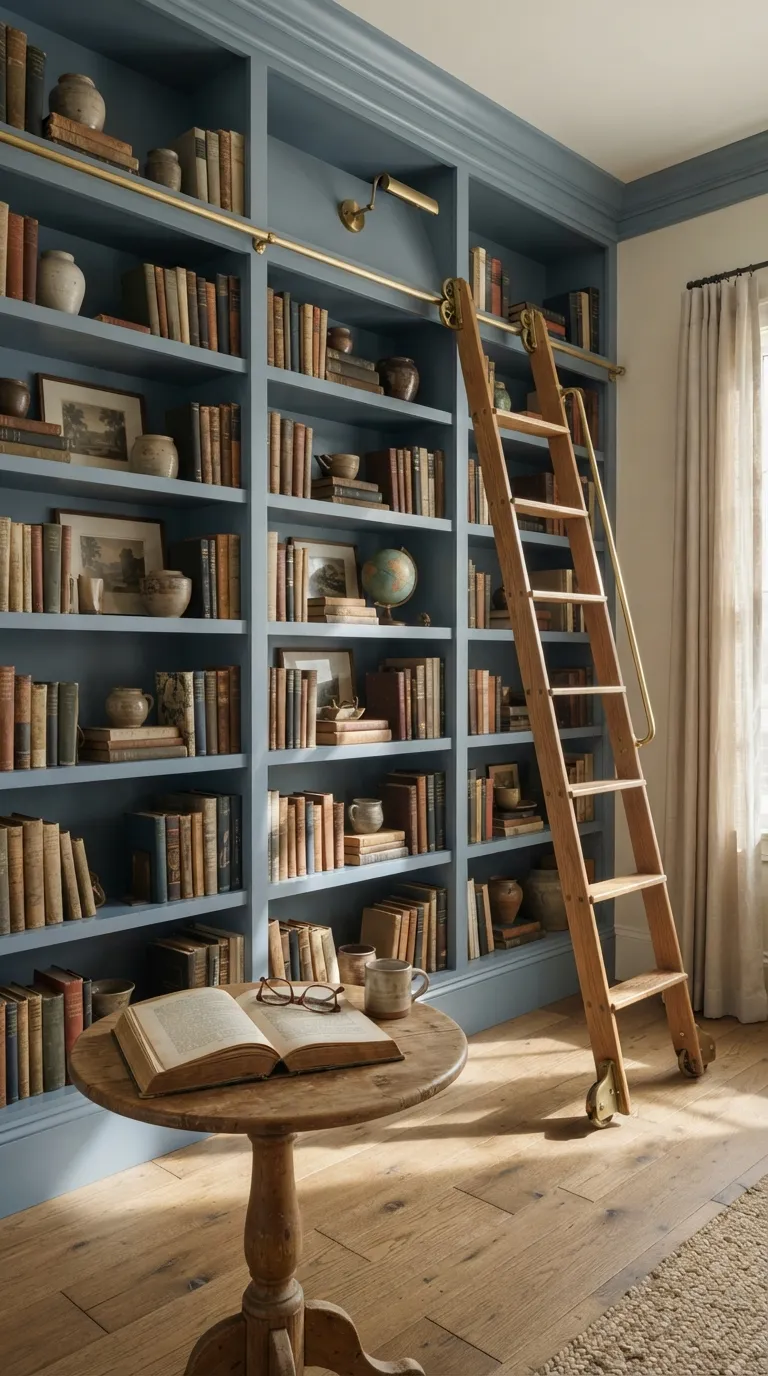
A library ladder adds height and old-world character while solving a practical problem on tall shelves. If you have ceiling-high bookcases, a slim rolling ladder can help you reach upper rows without keeping a large step stool nearby. Make sure any ladder you use is designed for safe household use and placed on a suitable surface.
You can keep the rest of the room simple when the ladder is visually strong. Natural oak works nicely against painted shelves, while brass hardware adds a small warm detail. Keep the upper shelves reserved for books or objects you don’t need every day, leaving your favorite reads within easy reach.
Add A Writing Desk
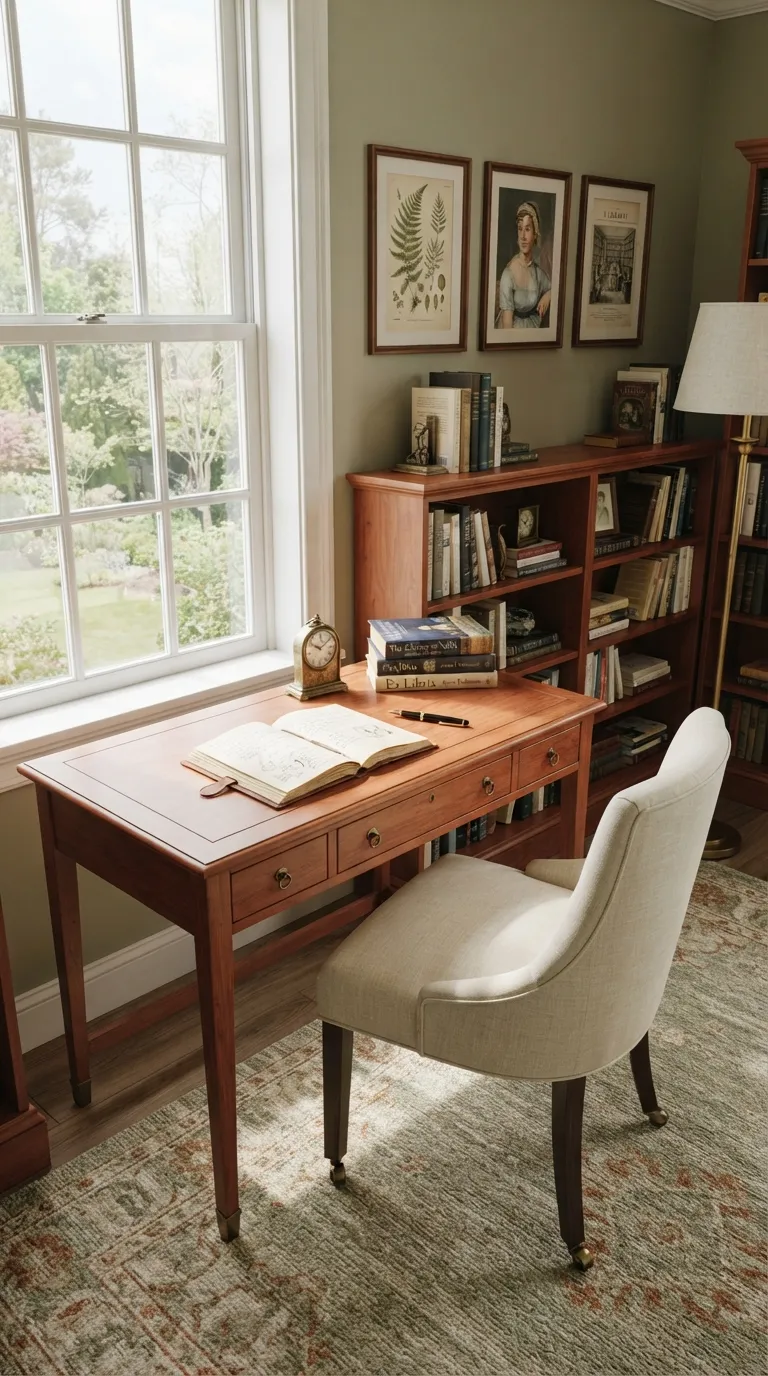
A writing desk fits naturally into a reader’s home. It gives you a dedicated place for journaling, sorting notes, writing letters, or working beside your book collection. Choose a desk with enough surface area for daily tasks but avoid oversized designs if the room already has substantial shelving.
Keep the desktop useful rather than crowded. A lamp, notebook, pen cup, and one current book are often enough to create the right mood. In a small room, place the desk near a bookcase so your reading and writing zones feel connected without needing separate furniture.
Pick A Persian-Style Rug
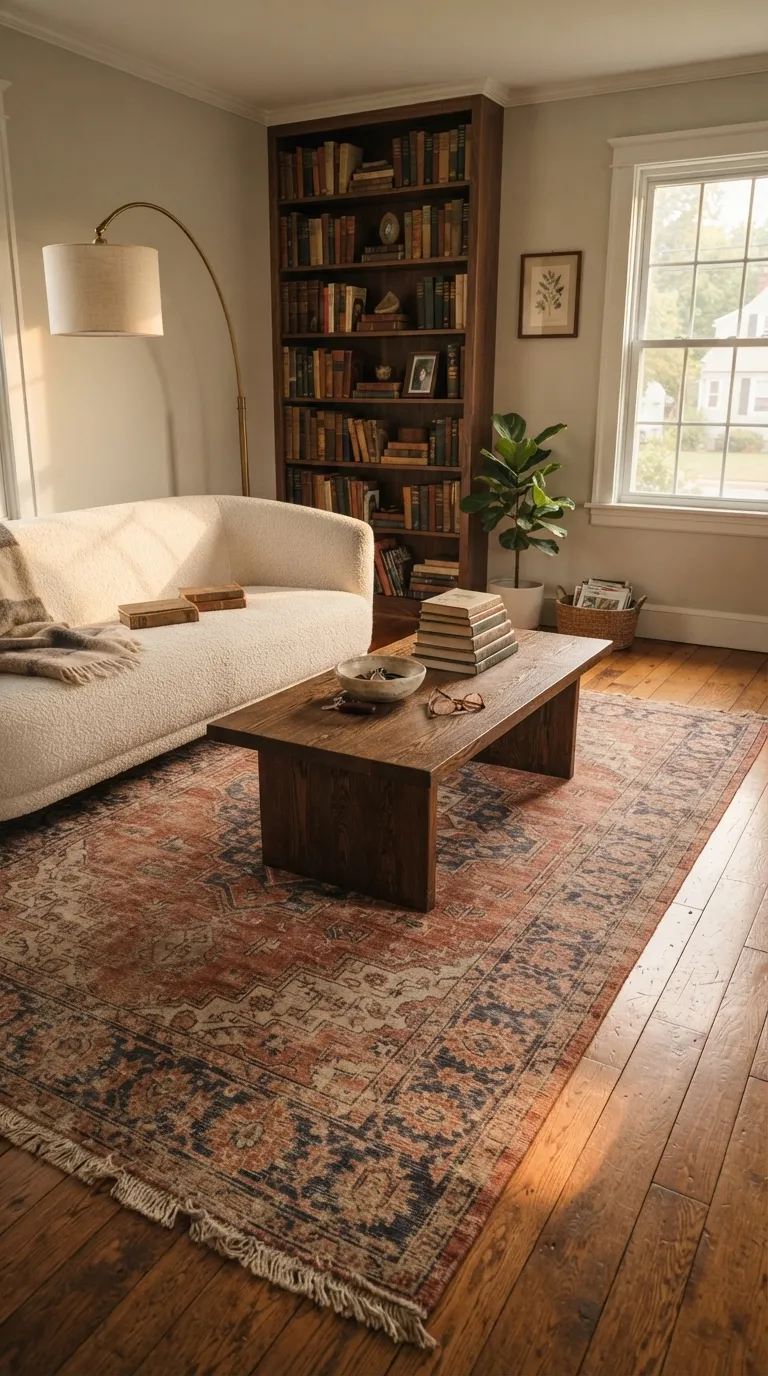
A patterned rug can bring the separate pieces of a library-inspired room together. Persian-style designs work especially well because their muted reds, blues, browns, and creams pair easily with wood furniture and books. Look for a faded pattern if you prefer a quieter room.
Size matters more than pattern. In a seating area, choose a rug large enough for at least the front legs of the main furniture to sit on it. This creates a connected arrangement instead of making each chair or table look like a separate island.
Style A Brass Banker Lamp
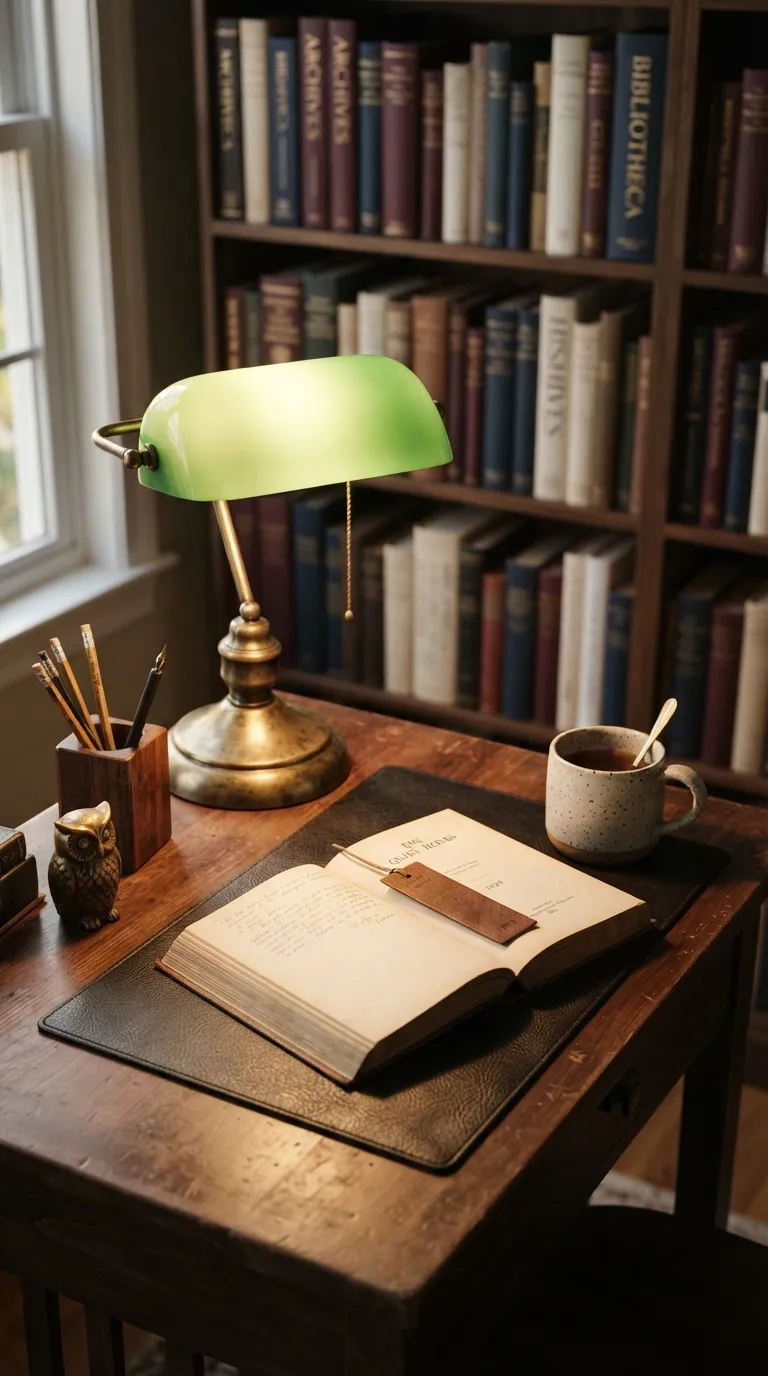
A banker lamp is a simple way to give a desk that classic library feeling. The familiar green glass shade and brass base create a focused pool of light for reading or writing while adding a strong visual detail to the desktop.
Use one on a desk, console, or side table rather than placing similar lamps everywhere. Its traditional shape works best when balanced with simpler pieces around it. If green doesn’t suit your palette, look for a neutral glass shade or a brass lamp with a linen shade for a softer interpretation.
Mix In Bookish Objects
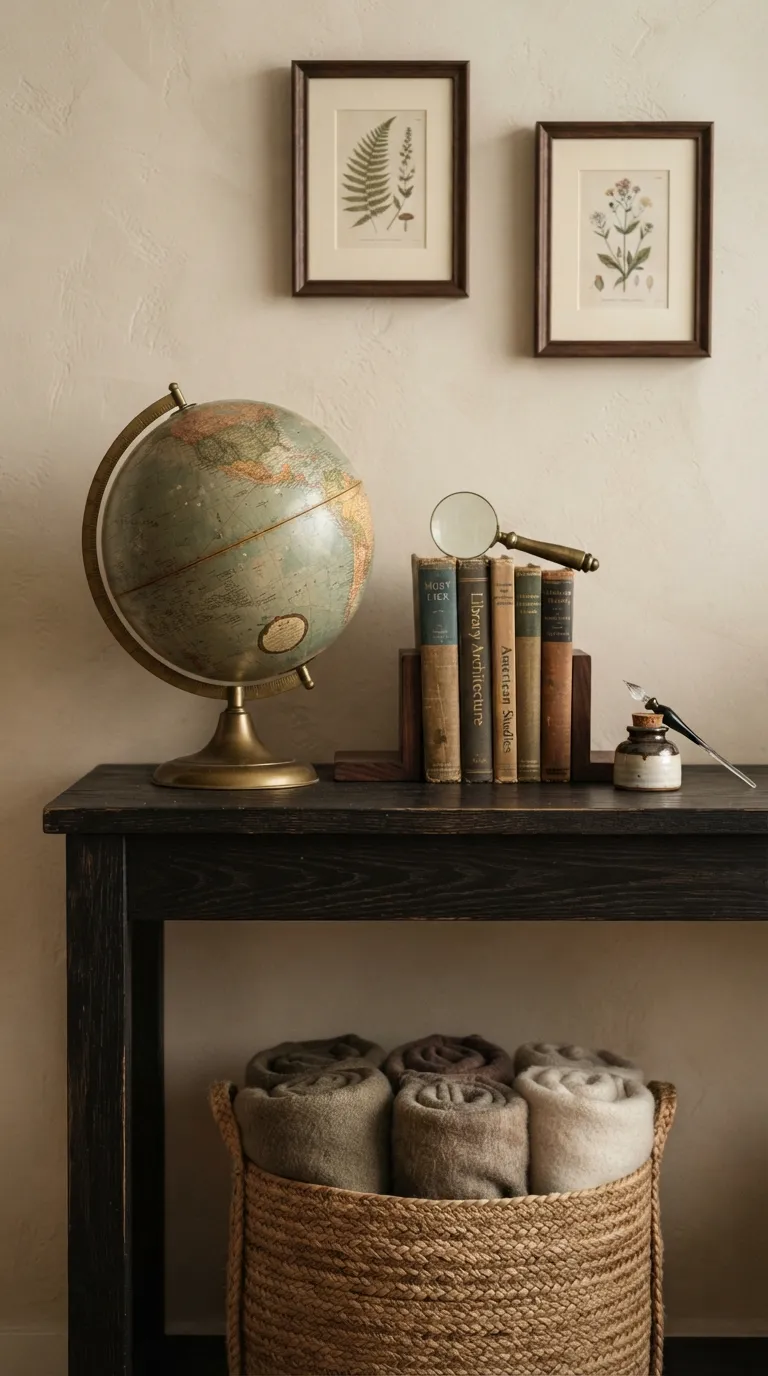
Small objects can tell the story of a reader without filling every surface. A globe, magnifying glass, wooden bookend, letter opener, or vintage-style desk clock can add personality around your books. Pick pieces that have a purpose or connect naturally to reading, writing, or study.
Use these objects in small groups of two or three. A stack of books can become a base for a ceramic piece, while a globe can stand alone on a console. This approach keeps your librarian home aesthetic personal and prevents shelves from turning into crowded collections of accessories.
Paint Walls In Moody Tones
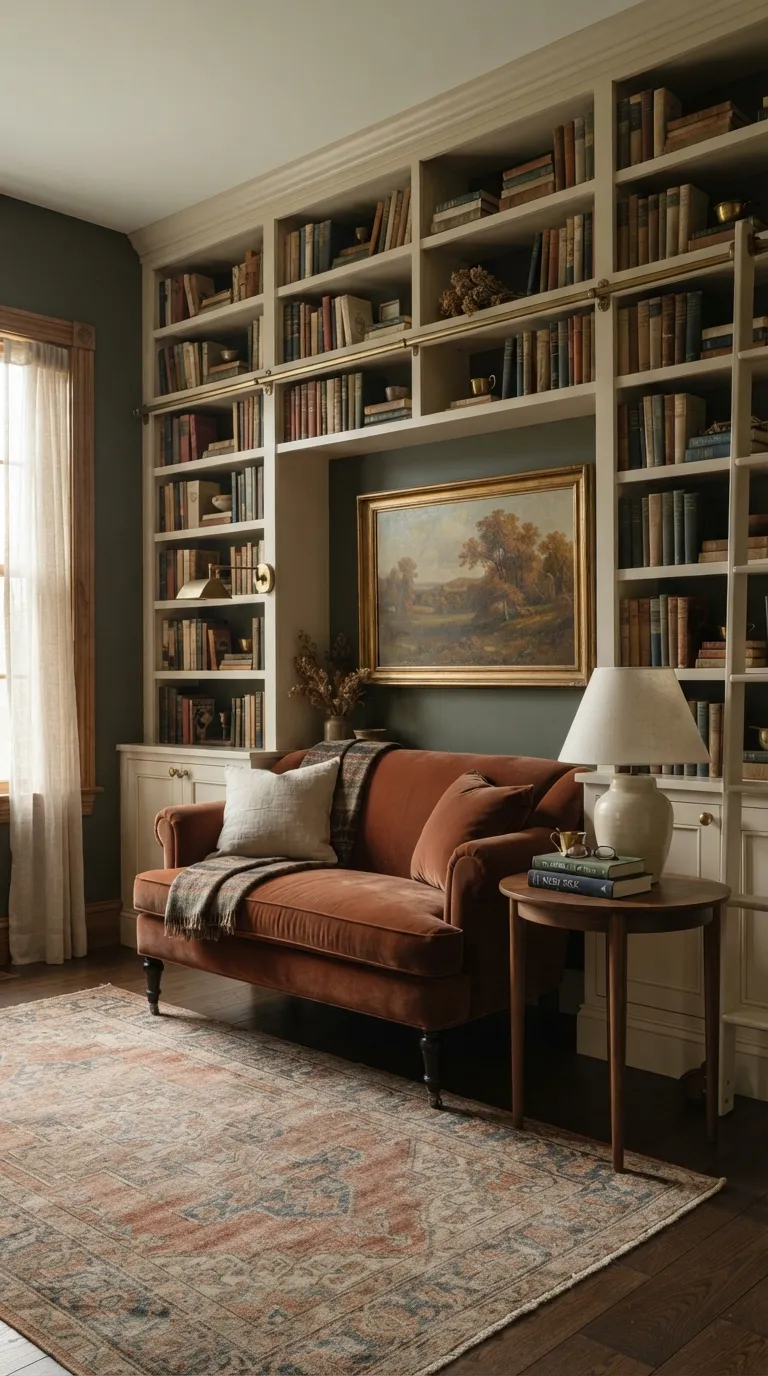
Moody wall colors can make books and wood furniture stand out. Deep olive, muted navy, charcoal, and warm brown create a quiet backdrop that suits a librarian home aesthetic without requiring elaborate decor. Use the wall color on one room or a single accent wall if you’re unsure about going darker.
Balance a rich wall with lighter upholstery or pale curtains. This keeps the room from feeling closed in, especially when natural light is limited. A cream bookcase against olive paint can also create a useful contrast while keeping the overall palette calm.
Hang Picture Lights
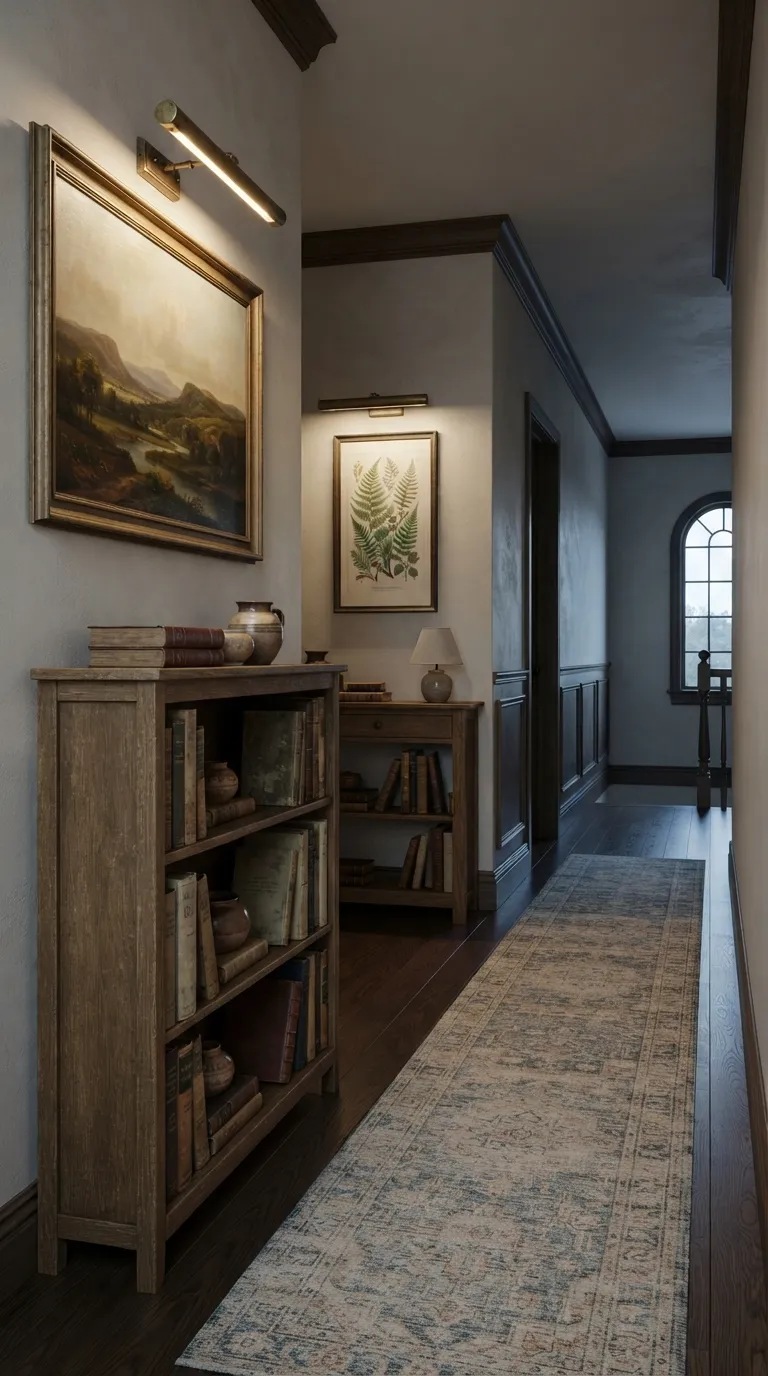
Picture lights bring attention to artwork while giving shelves a soft library-style glow. A narrow brass fixture above a painting can create a polished detail without adding another large lamp to the room. They work especially well above low bookcases, gallery walls, and built-in shelving.
Keep the fixtures slim and let the artwork remain the star. Warm light works nicely with sepia prints, landscapes, and darker frames. If you have a long wall, repeating the same small fixture above two or three artworks can create rhythm without making the room feel overly decorated.
Create A Cozy Window Seat
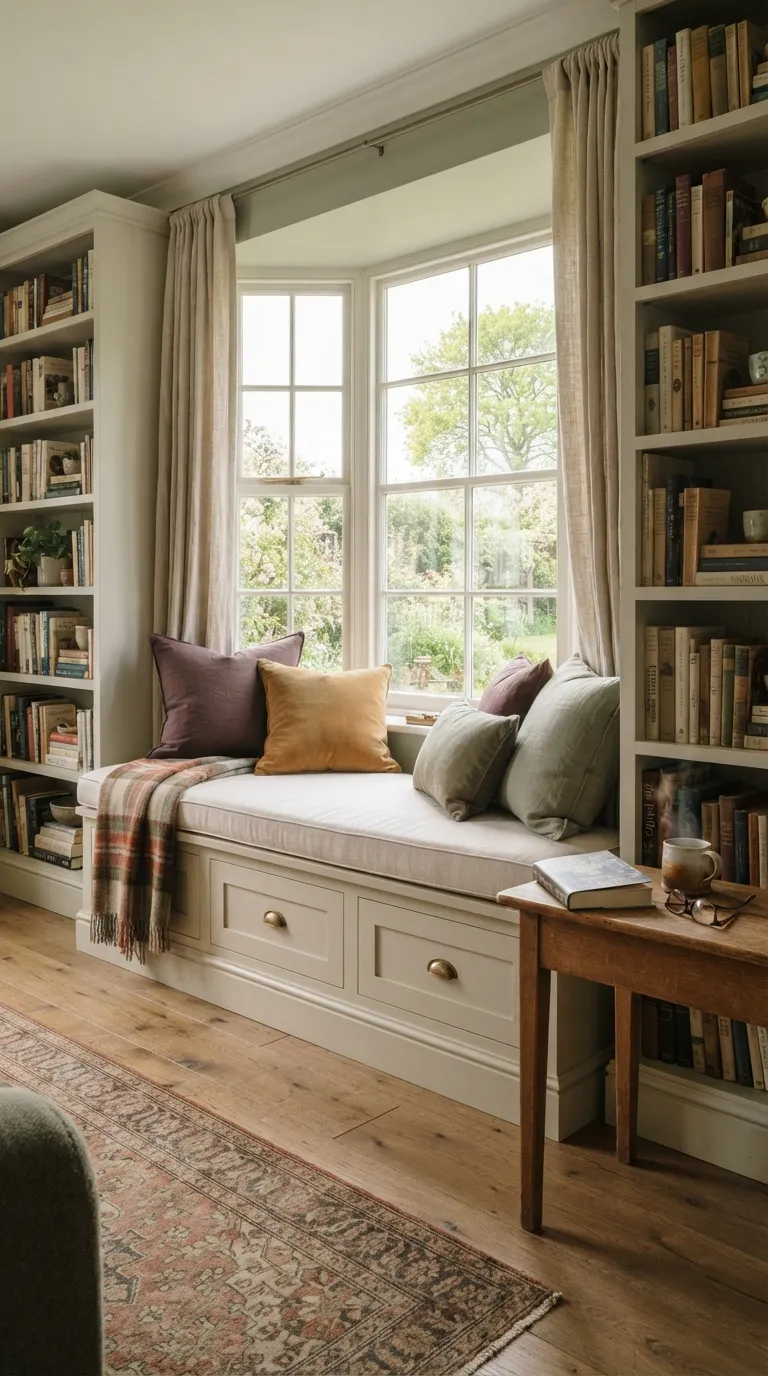
A window seat turns unused space into a natural reading spot. A firm cushion, a couple of supportive pillows, and nearby shelves can create a comfortable place to read while making good use of a deep window recess. Storage drawers beneath the seat can also keep extra books, blankets, or magazines out of sight.
Choose fabrics that feel soft but can handle daily use. Linen, cotton, and wool blends fit the relaxed library mood while giving the space useful texture. Keep the area close to the window fairly simple so daylight remains the main feature.
Add A Classic Floor Lamp
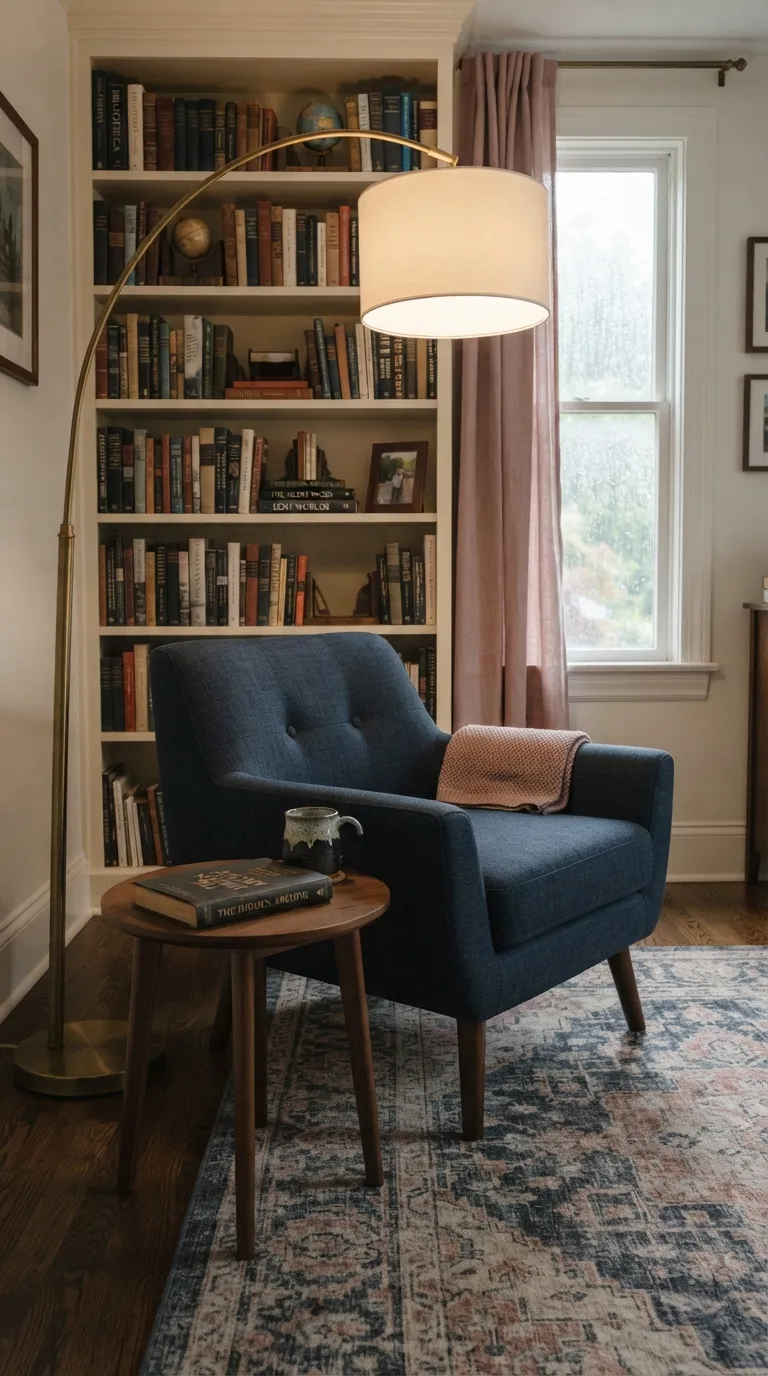
A floor lamp gives a reading chair its own light source without taking up table space. Look for a shade that directs light toward the book rather than shining directly into your eyes. Arc lamps, pharmacy-style lamps, and simple brass designs can all fit a classic bookish room.
Think about the lamp’s height before buying it. The shade should sit high enough to light the page comfortably while staying out of your direct line of sight. A simple lamp can also balance a tall bookcase by adding a vertical line on the opposite side of the seating area.
Use Velvet Seating
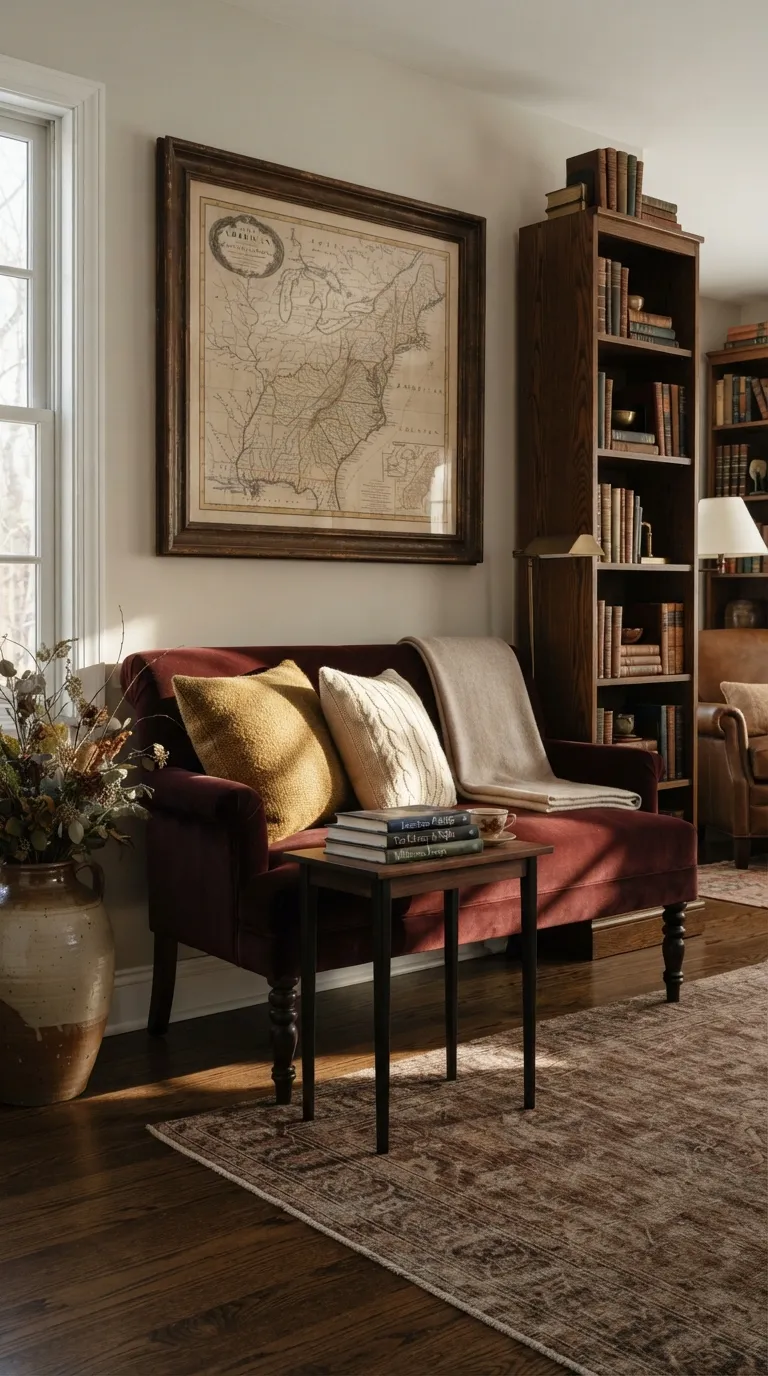
Velvet can give a reading room a softer, more traditional feel. A small settee in burgundy, forest green, navy, or muted plum adds color while still working with dark wood and old-style artwork. You don’t need a large sofa to get the effect.
Use velvet as one strong seating element rather than repeating it across the room. Pair it with linen, wool, or cotton so the textures don’t compete. A velvet settee also works well in a narrow library because its compact shape can provide comfortable seating without overwhelming the shelves.
Layer Linen And Wool
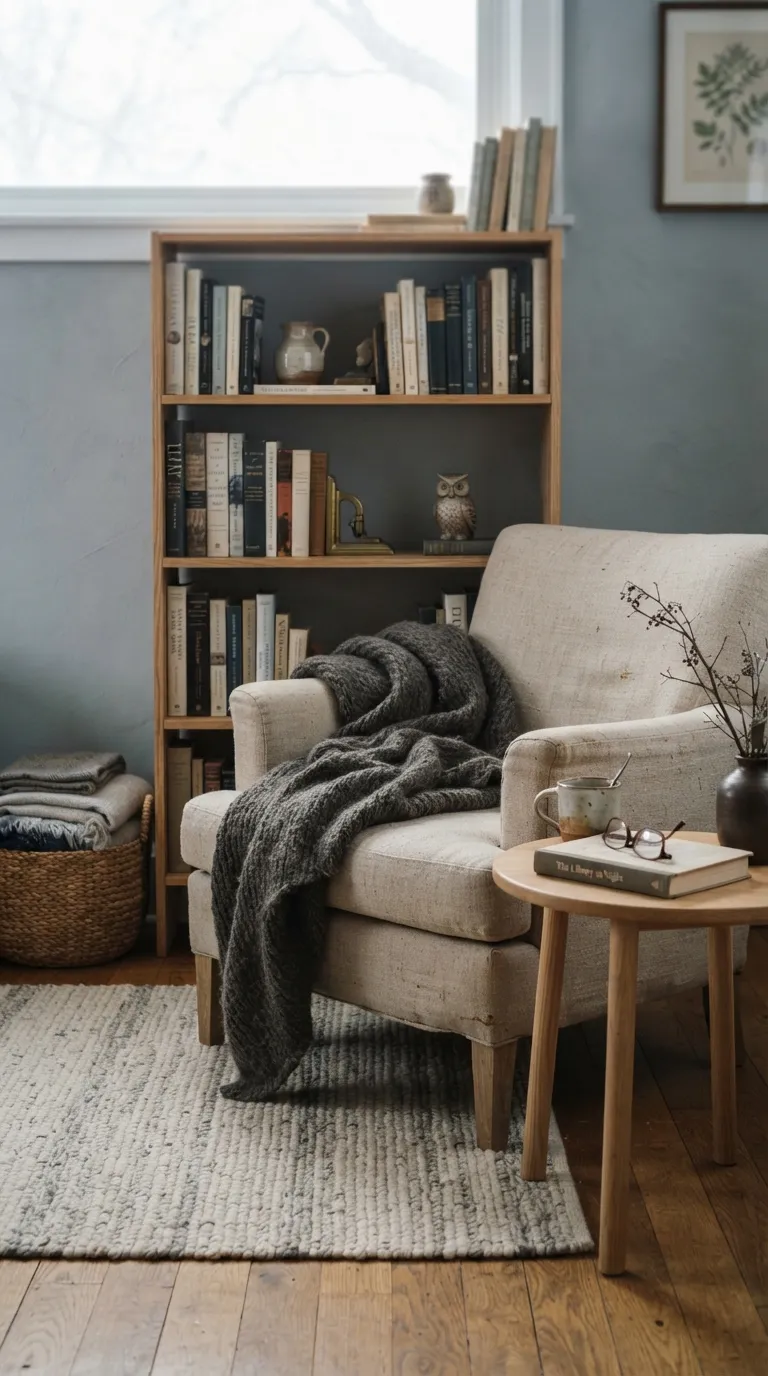
Soft textiles keep a book-filled room from feeling too formal. Linen gives chairs and curtains a relaxed texture, while wool throws and rugs add warmth for long reading sessions. These materials also soften the harder surfaces of wood shelves, desks, and tables.
Don’t over-layer every seat. One folded wool throw and a pair of textured cushions can be enough. Keep the colors close in tone, such as oatmeal with charcoal or cream with muted blue, so the room stays calm even when several textures are present.
Style A Grand Mirror
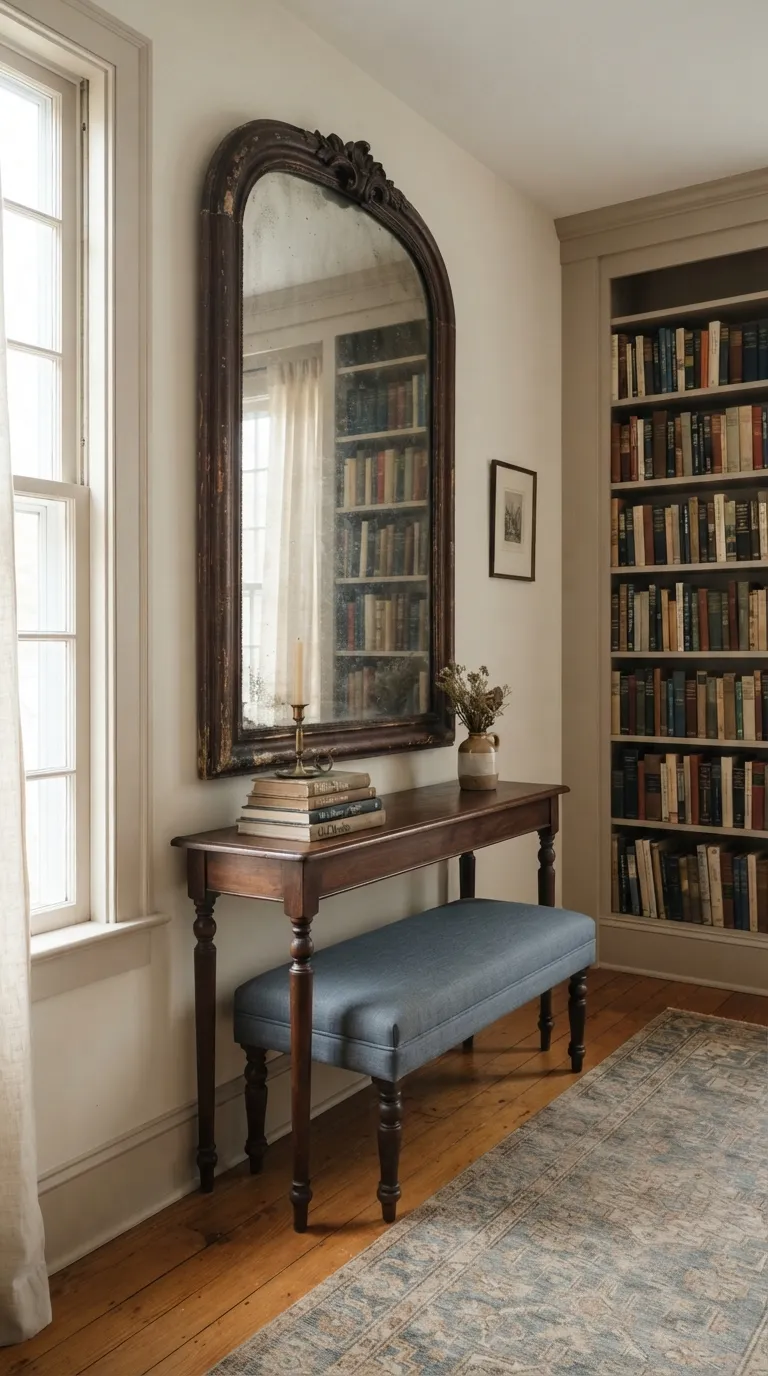
A large mirror can make a book-filled room feel more open while adding a classic decorative note. Choose a wood-framed design with an arched, rectangular, or gently rounded shape rather than a very sleek modern frame.
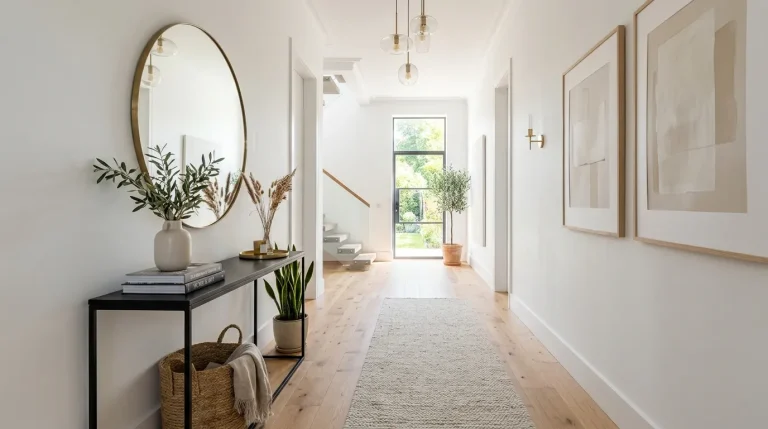
Place it across from a window when possible so it catches daylight and reflects part of the room. A mirror near a bookshelf can also repeat the visual depth of the books without adding another storage unit. Keep the console below it lightly styled with a few useful objects.
Create A Quiet Book Nook
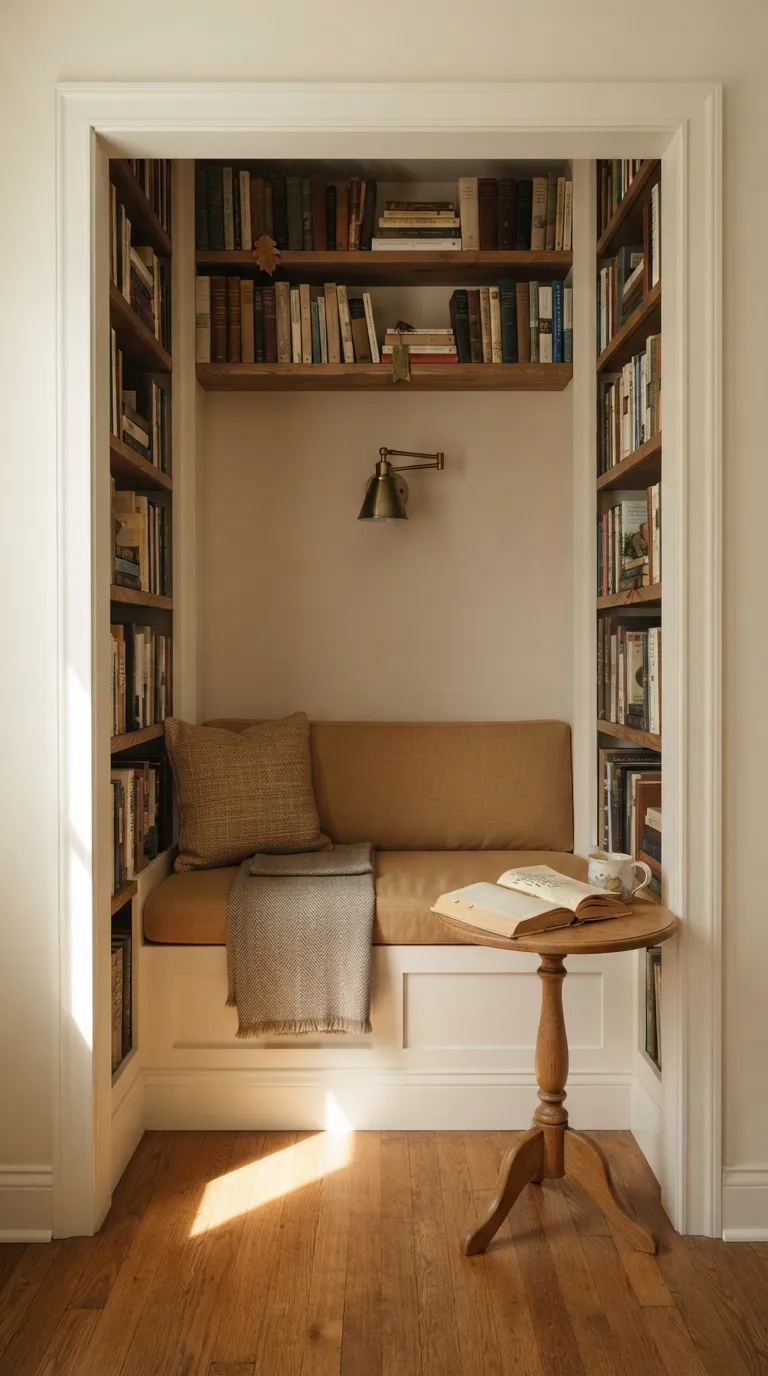
A quiet nook doesn’t need a full room. A recessed corner, wide hallway, or unused space beside a staircase can hold a chair or built-in bench with a few nearby shelves. The key is creating a clear spot where reading feels separate from the busier parts of the home.
Give the nook one comfortable seat and one convenient light. A small table keeps your current book close, while a cushion or wool throw makes the space feel inviting without adding clutter. If you’re working with a narrow area, shallow shelves can hold plenty of books without taking much floor space.
Add Dark Wood Trim
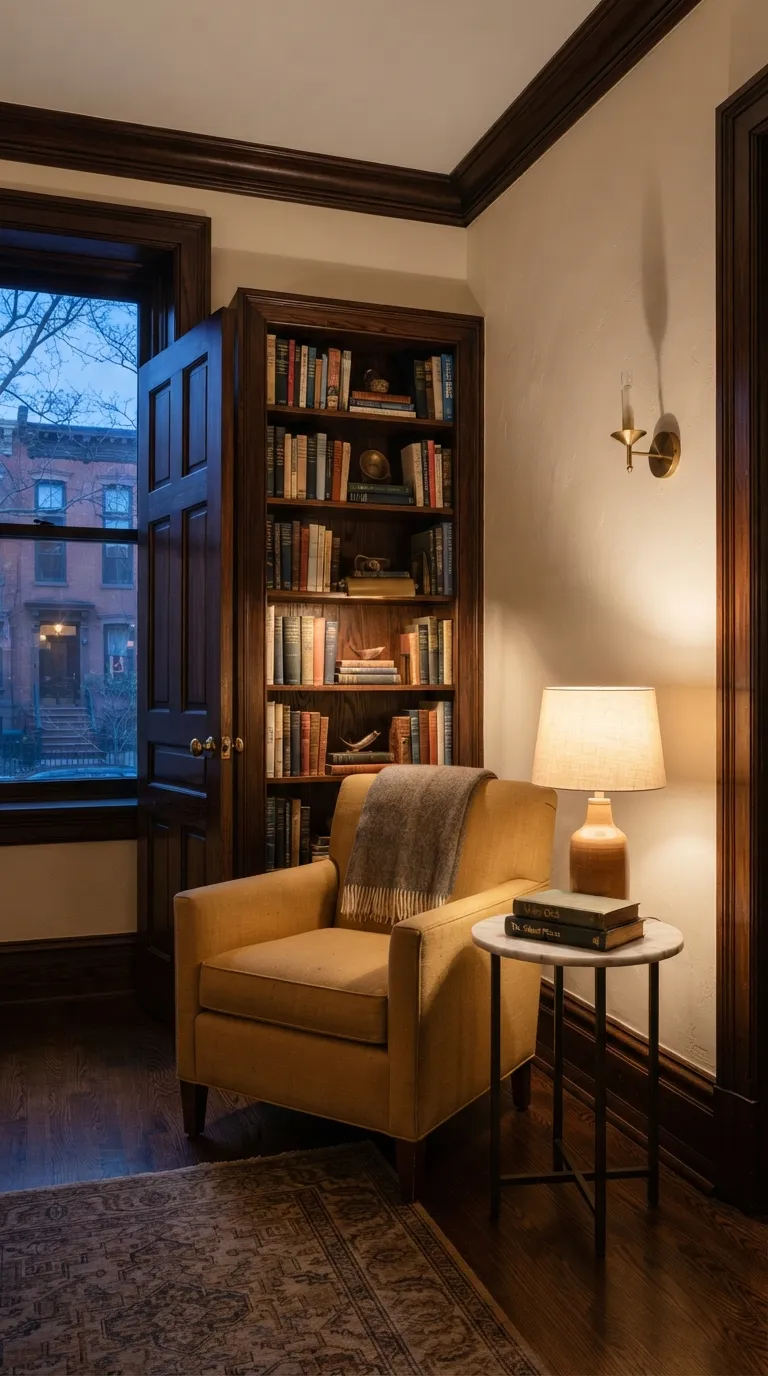
Dark trim can give a simple room the architectural character often associated with traditional libraries. Espresso or walnut-stained casing around doors, windows, and built-ins creates strong lines against lighter walls.
You don’t need to redo every piece of trim to get this look. Start with one doorway, a bookshelf surround, or a small section of paneling. Keep nearby furniture lighter if the wood is very dark, then repeat the finish through one or two smaller pieces such as a side table or picture frame.
Display A Library Table
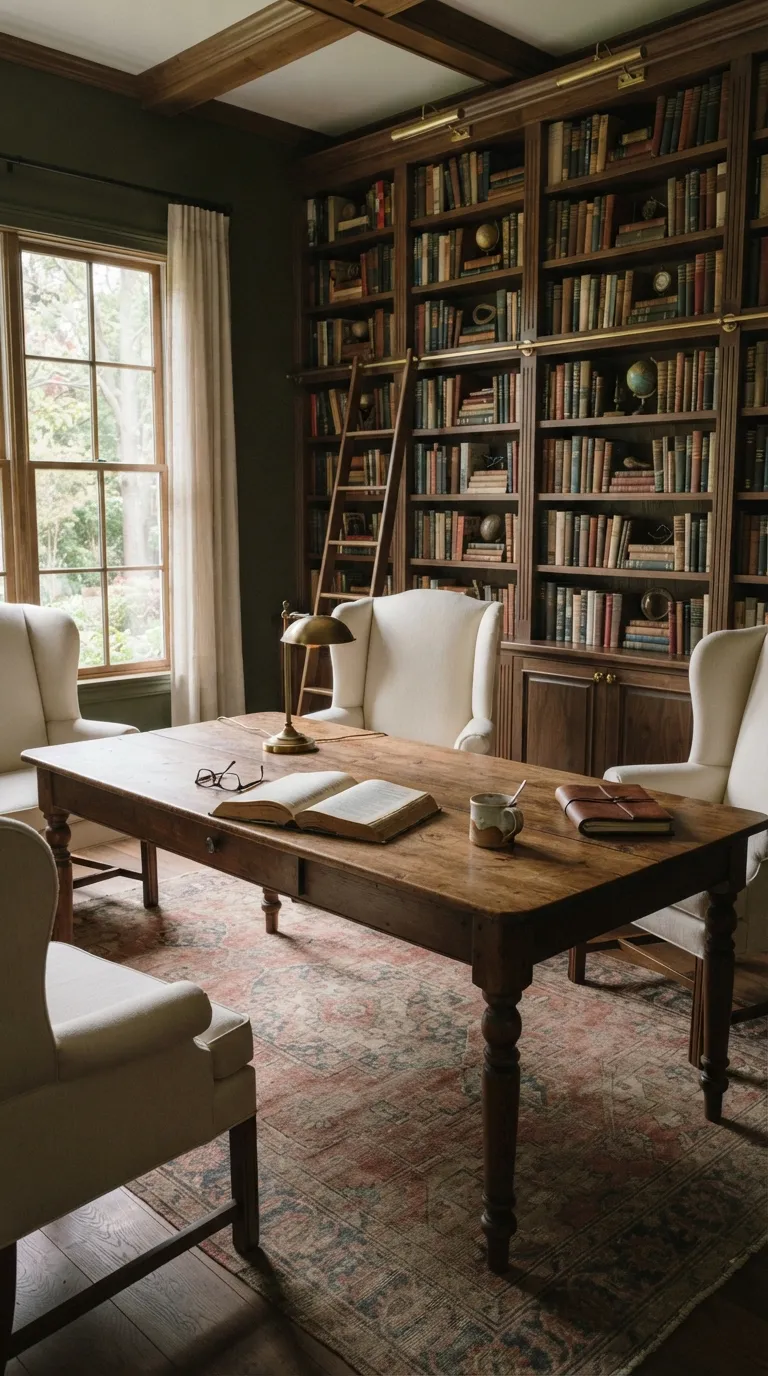
A library table gives a room a useful center without making it feel like a formal study. Choose a solid wood table with enough space for books, notebooks, and a reading lamp, then keep the surface lightly styled so it remains practical. A rectangular shape works well in larger rooms, while a smaller round table can suit a compact reading area.
Try placing the table between two seating pieces or in front of a broad bookcase wall. The open tabletop creates a natural place for daily reading, while the surrounding chairs make the room feel ready for conversation. This simple furniture choice also helps connect the librarian home aesthetic with everyday living.
Choose Pleated Curtains
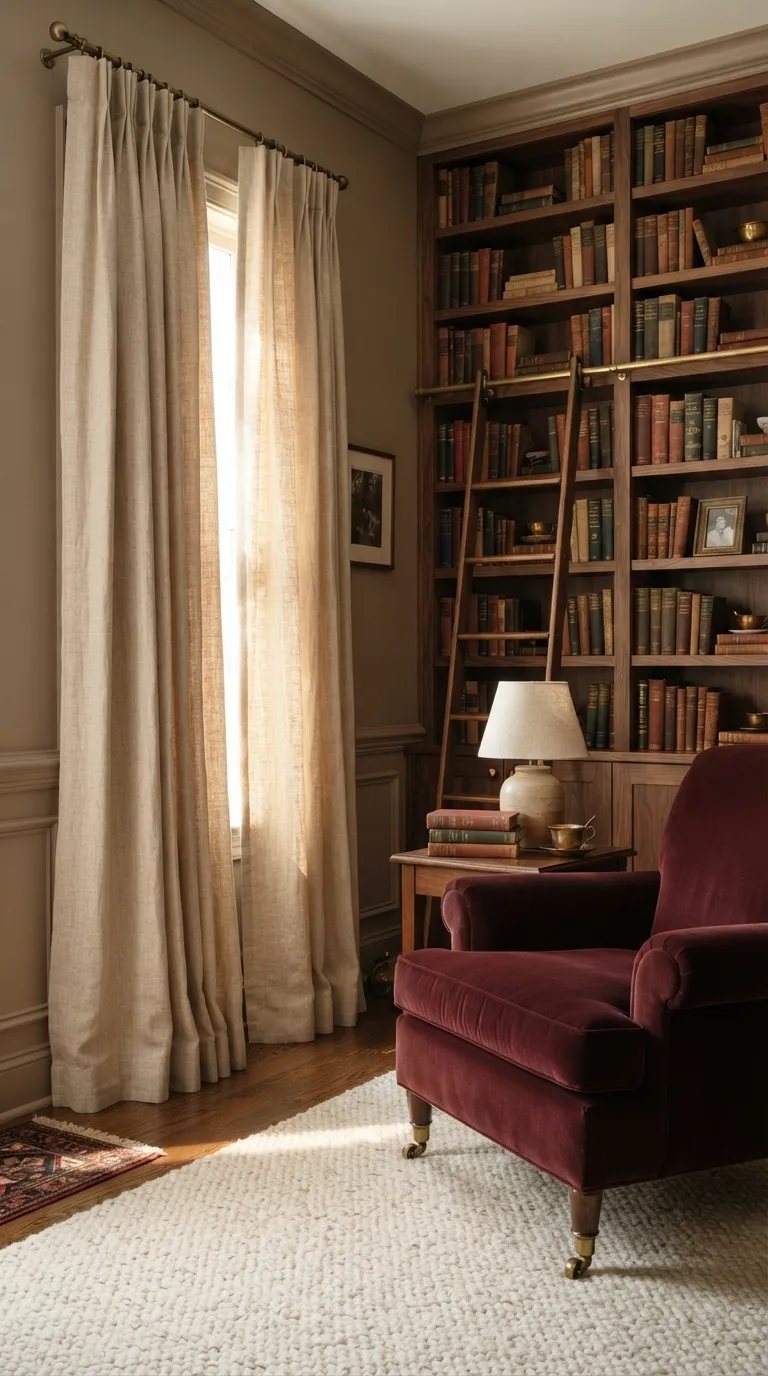
Curtains can soften hard shelves, wood furniture, and darker wall colors. Look for linen, cotton, or a linen blend in cream, oatmeal, muted taupe, or soft brown, and choose a fuller fabric rather than a very thin panel. Pinch pleats or tailored folds give the windows a classic library feel without making them look overly formal.
Hang the rod close to the ceiling and let the panels reach the floor for a cleaner line. Keep the pattern subtle if your shelves already contain colorful book covers and artwork. This lets the curtains act as a quiet backdrop while the books and furniture remain the main focus.
Keep Shelves Practical
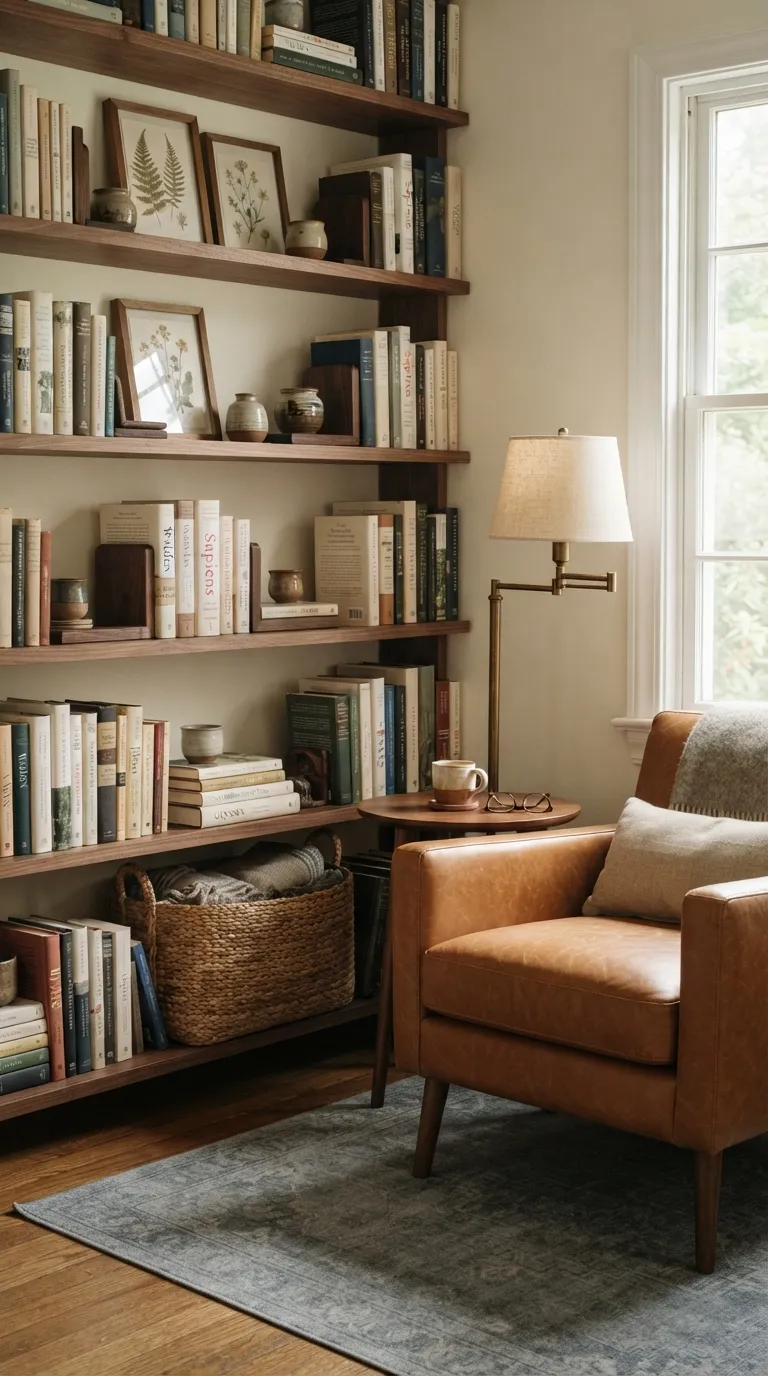
A beautiful bookcase still needs to work for real life. Keep the books you reach for most often between waist and eye level, and use lower shelves for baskets, larger art books, or less frequently used items. Leave a little empty space around decorative pieces so the shelves don’t become difficult to use.
You can also make practical storage part of the look. Woven baskets can hold magazines and loose papers, while sturdy bookends keep tall stacks upright. When function comes first, the room feels natural and lived-in instead of carefully arranged for display.
Make Your Home A Reader’s Retreat
A librarian-inspired home doesn’t require a complete library or a house filled with antique furniture. Start with the pieces that make reading comfortable, such as tall shelves, a supportive chair, warm lamps, useful tables, and soft textiles. Then add personality through artwork, wood tones, favorite books, and a few objects that feel collected over time.
The strongest rooms leave space for everyday life. Let books be handled, chairs be used, and shelves change as your collection grows. With a thoughtful mix of classic materials and comfortable details, you can create a warm librarian home aesthetic that feels personal, practical, and inviting.
Clara Whitmore
Clara specializes in interior styling, seasonal home trends, and cozy living spaces. She loves combining classic design elements with modern touches to create homes that feel personal, welcoming, and effortlessly stylish.