Wall Art Living Room Decor That Makes Your Space Feel Expensive

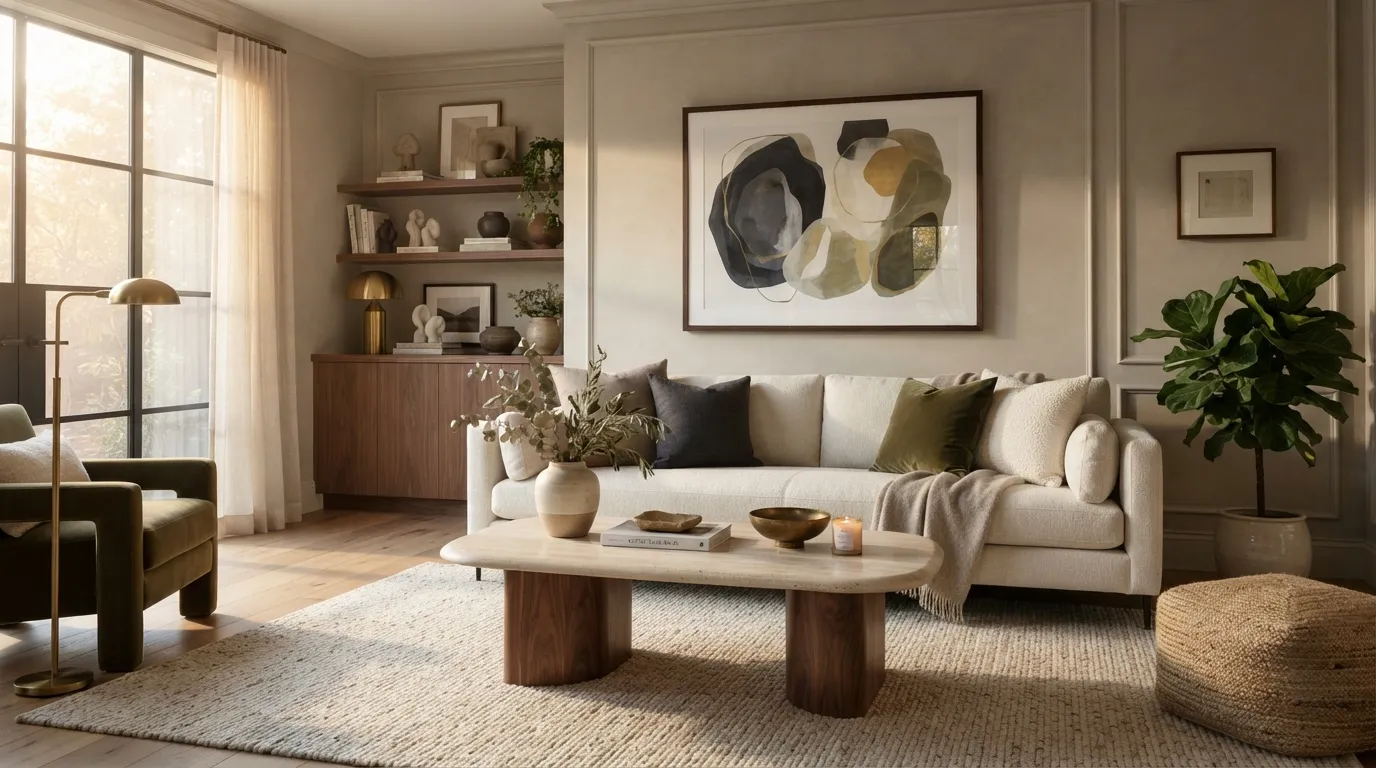
A beautiful room doesn’t need a huge budget. Often, the wall above your sofa or console simply needs the right artwork, frame, and spacing to make the whole space feel more polished. With thoughtful wall art living room choices, you can create a room that looks collected rather than crowded.
The trick is to treat artwork like part of the furniture plan. Think about scale, color, texture, framing, and the visual weight of nearby pieces before hanging anything. These ideas will help you build a living room gallery that feels intentional while still looking relaxed and personal.
Oversized Art Anchor
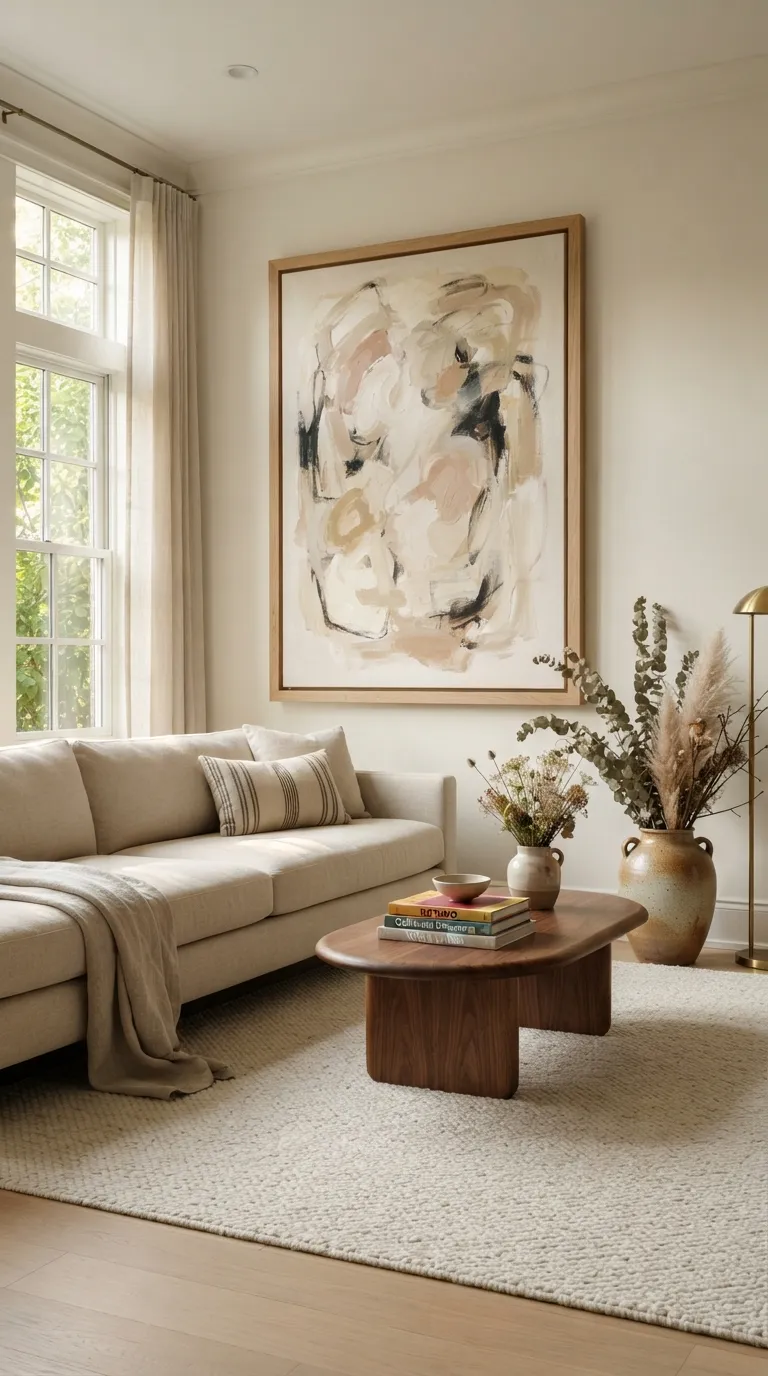
One large piece can give your living room a strong focal point without filling every inch of wall space. Choose artwork that spans roughly two-thirds of the sofa width, then leave enough breathing room around it so the piece feels connected to the furniture without looking cramped.
For a high-end look, let the artwork carry the visual weight while the rest of the room stays fairly quiet. A thick wood frame, wide mat, or textured canvas can add depth without needing lots of decoration. This approach works especially well when your sofa, rug, and curtains already have several soft textures.
Tonal Gallery Wall
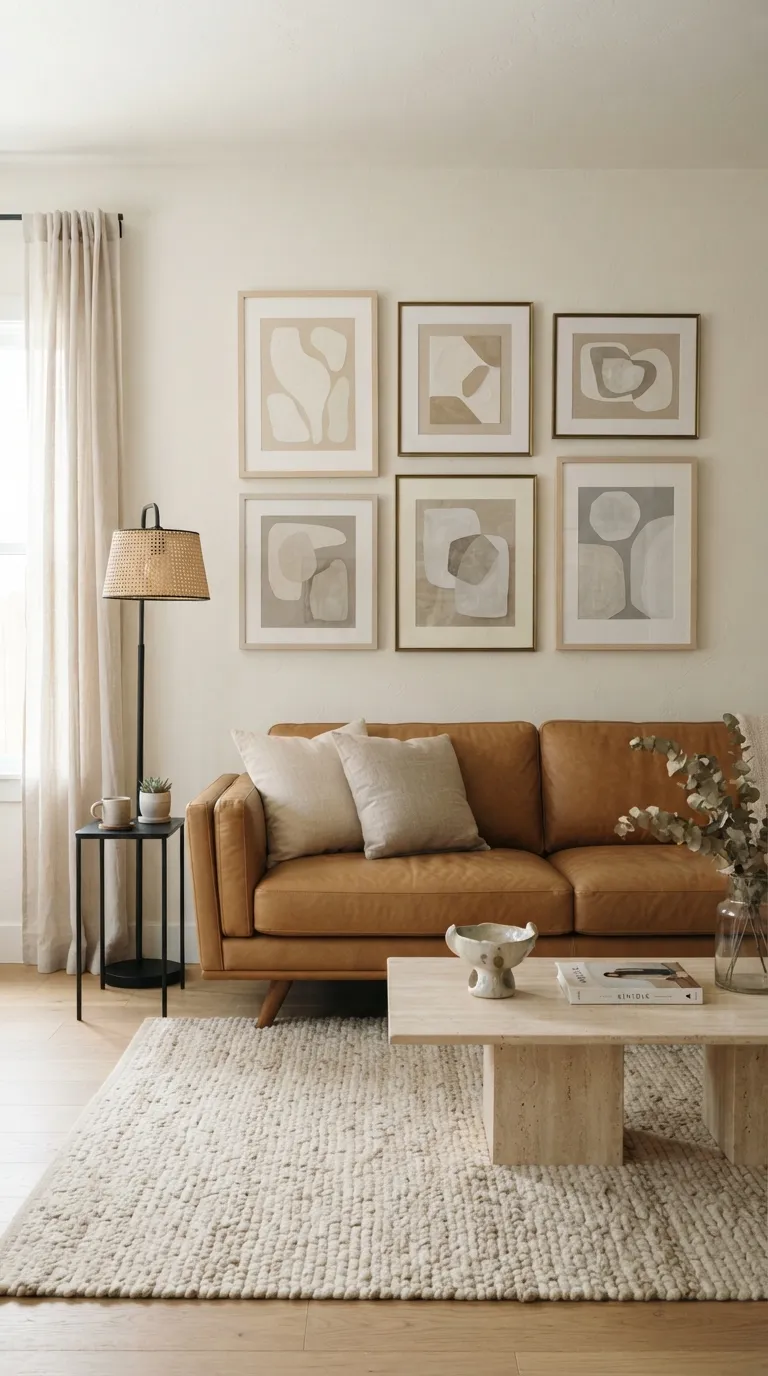
A gallery wall can look expensive when the pieces share a quiet color family. Try six or seven prints in related shades rather than mixing every color you love, then repeat one frame finish to give the collection a clear thread.
Spacing matters just as much as the art itself. Keep the gaps consistent and arrange the largest piece near the center, with smaller works balancing it around the edges. For wall art living room styling, this controlled mix gives you personality without making the wall feel busy.
Sculptural Neutral Pieces
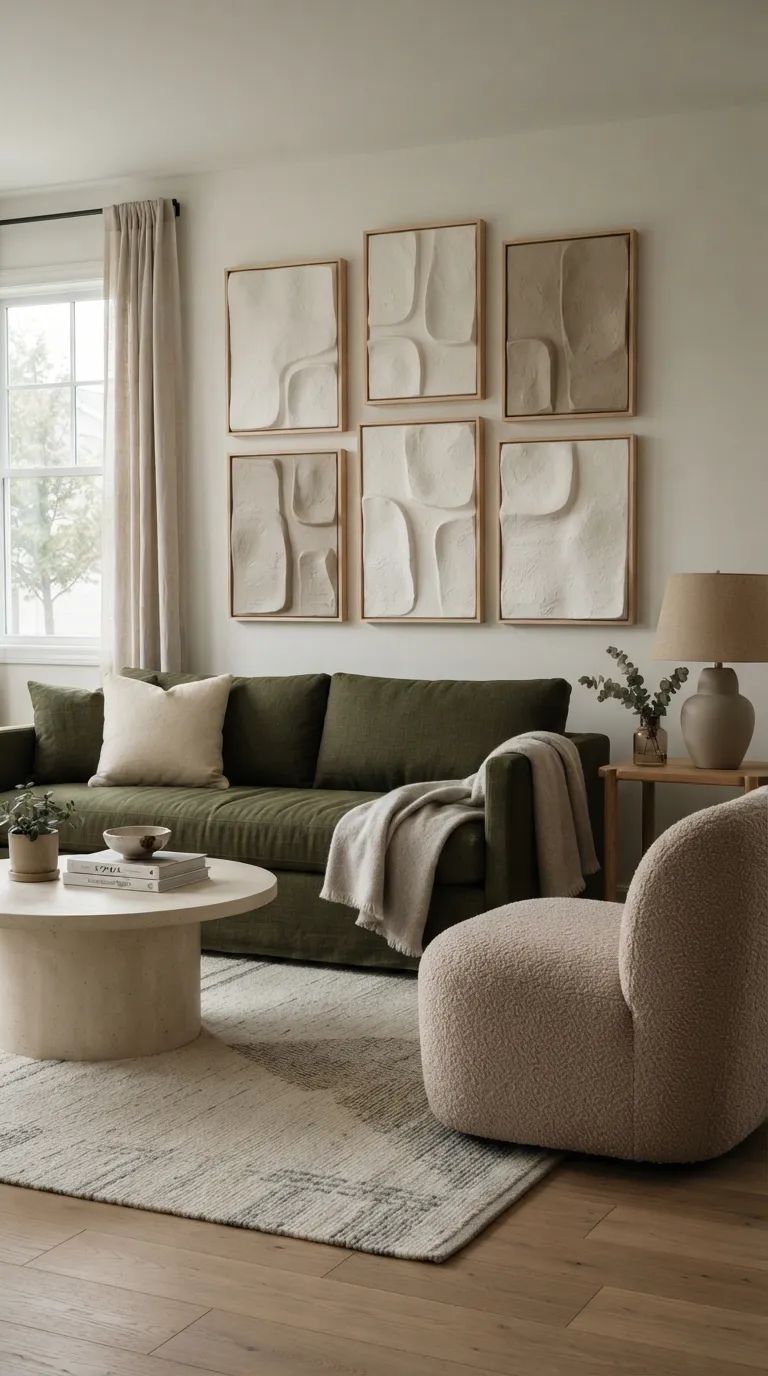
Flat prints aren’t your only option. Raised plaster panels, woven wall pieces, carved wood, and textured paper art can give a neutral room more depth while keeping the palette calm. This is useful when your furniture already has strong shapes but the walls feel too plain.
Keep the surrounding decor restrained so the texture can stand out. A single earthy sofa color can anchor pale wall pieces, while natural stone and woven materials repeat the handmade feel lower in the room. The result feels layered without relying on a wall packed with frames.
Vintage Frame Mix
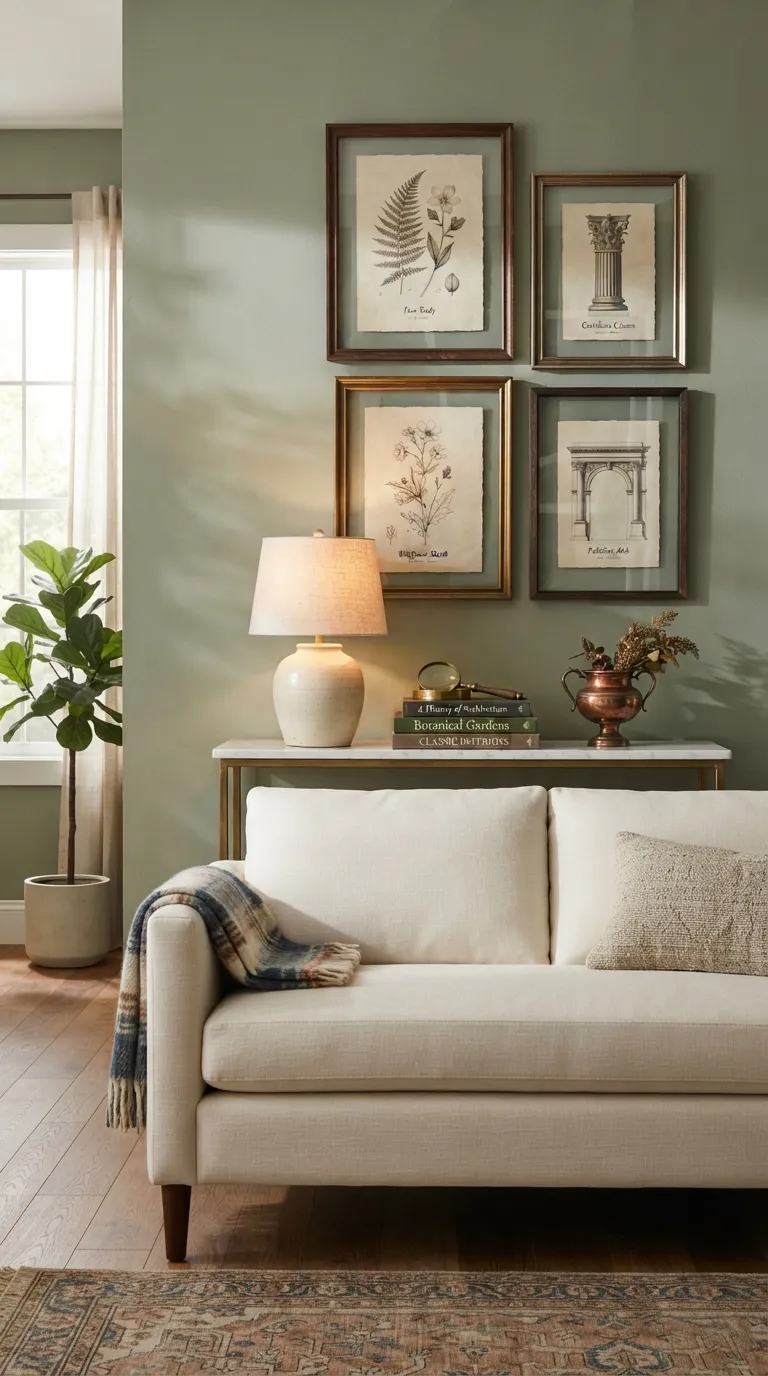
Mixing frame finishes can make a wall feel collected over time rather than bought as one matching set. The key is to repeat a shared color in the artwork, such as cream, brown, or charcoal, so the different frames still feel connected.
This look works especially well in rooms with classic furniture or warm wood accents. Place the largest frame slightly off center and balance it with smaller pieces instead of making every edge perfectly symmetrical. A little variation gives the arrangement a relaxed character.
Black And White Prints
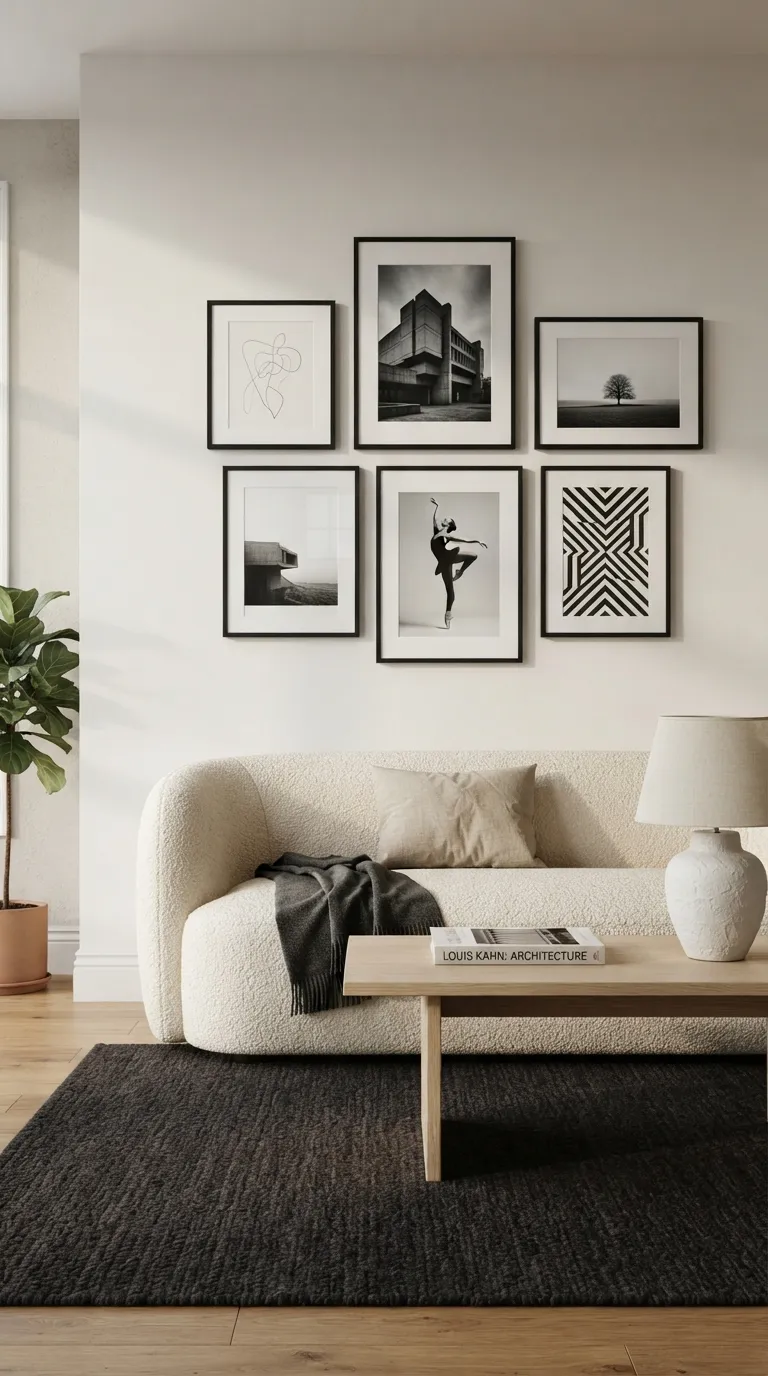
Black and white prints give you a simple way to add contrast without introducing another strong color. They pair nicely with cream sofas, light wood, gray rugs, and darker metal details.
Use generous white mats when the prints are small. The extra space around each image helps inexpensive or simple artwork feel more considered. For a polished wall art living room, keep the frame widths similar even when the images themselves have different subjects.
Art Above The Fireplace
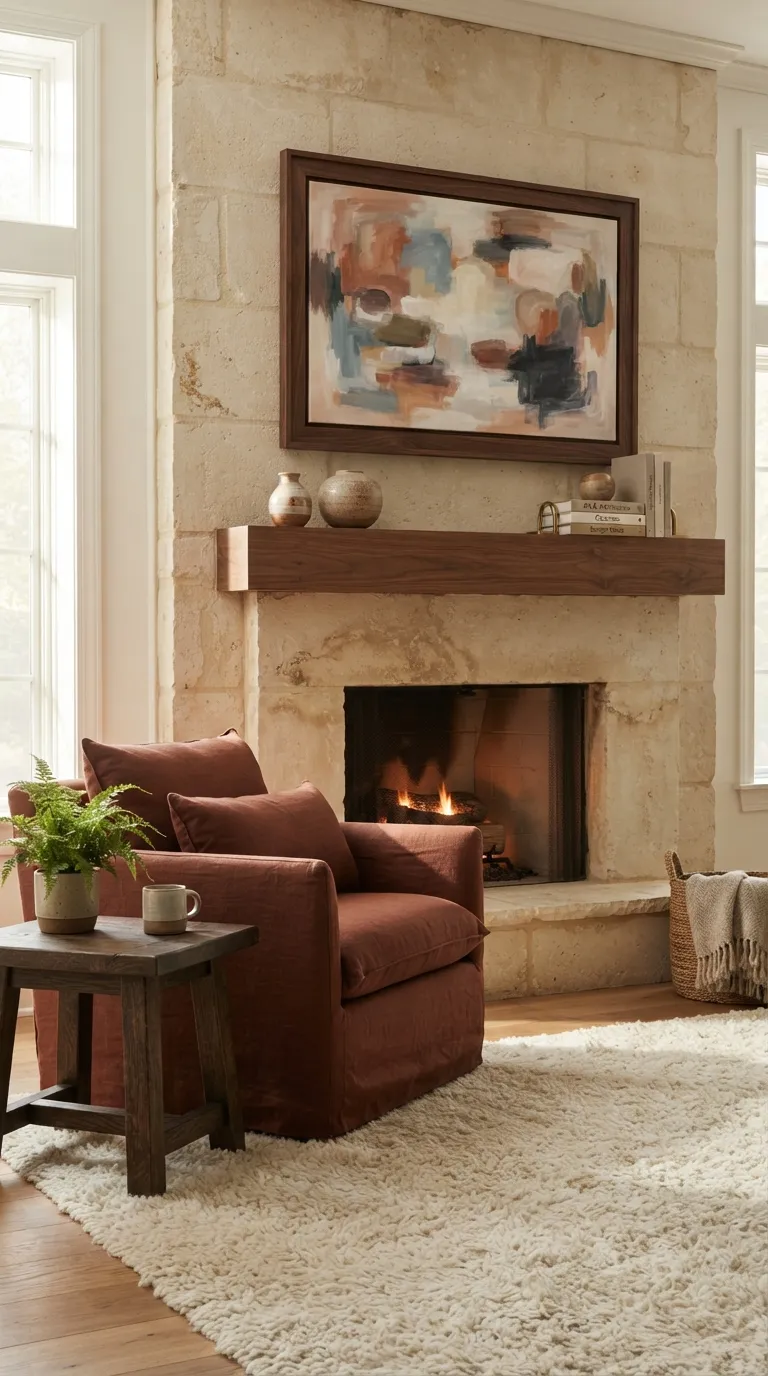
A fireplace already creates a natural focal point, so the artwork above it should support that feature rather than compete with it. Choose a piece that fits the mantel’s width and leave enough space around the frame to keep the wall from feeling crowded.
A horizontal painting often works well above a wide fireplace because its shape follows the architecture below. If the mantel has several decorative objects, keep the artwork relatively calm so the full arrangement reads as one scene instead of separate layers.
Layered Picture Ledges
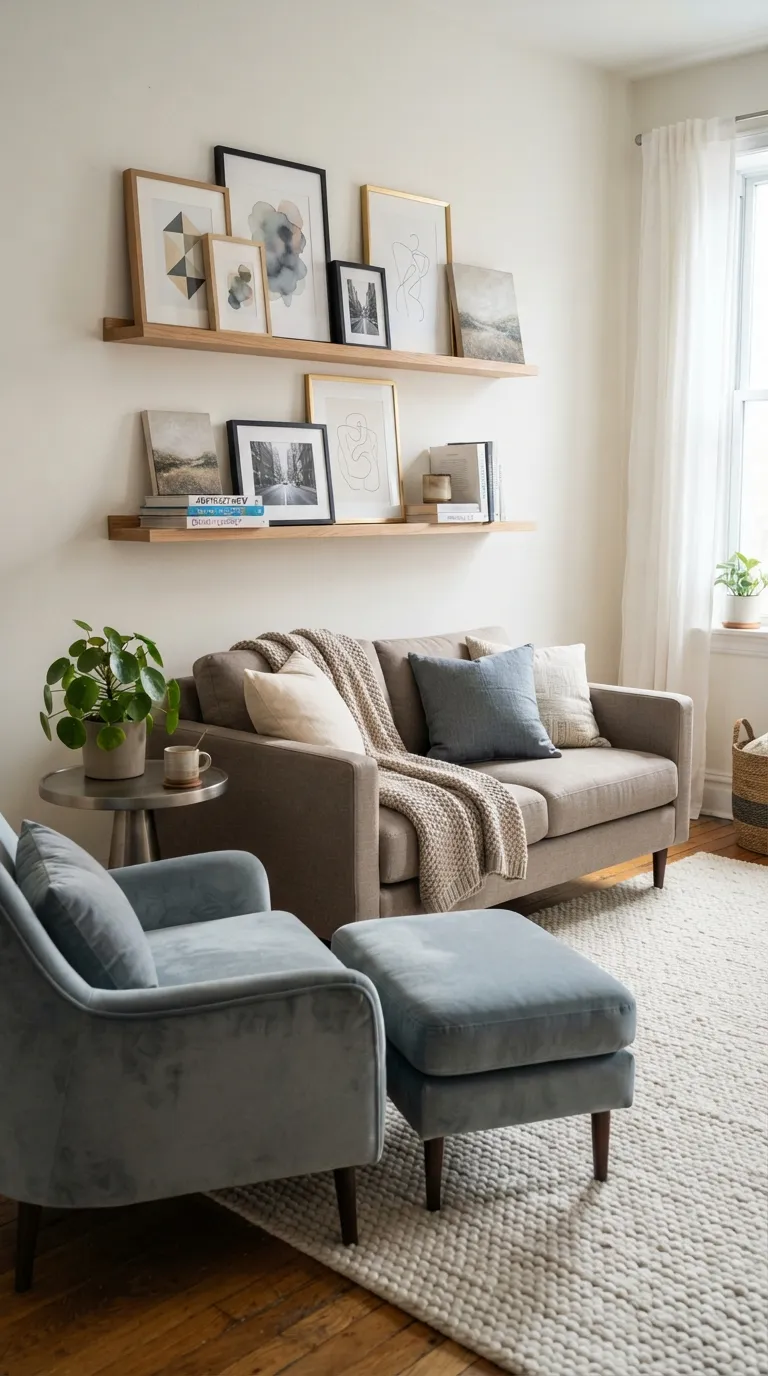
Picture ledges give you flexibility when you like changing artwork throughout the year. Instead of drilling a new hole for every print, you can layer frames at different heights and swap pieces whenever the room needs a fresh look.
Keep the ledges fairly narrow and avoid filling every inch. Two or three larger frames mixed with one small object usually create better visual breathing room than a packed shelf. This setup also suits renters who want stylish wall decor without a large gallery installation.
Warm Earthy Artwork
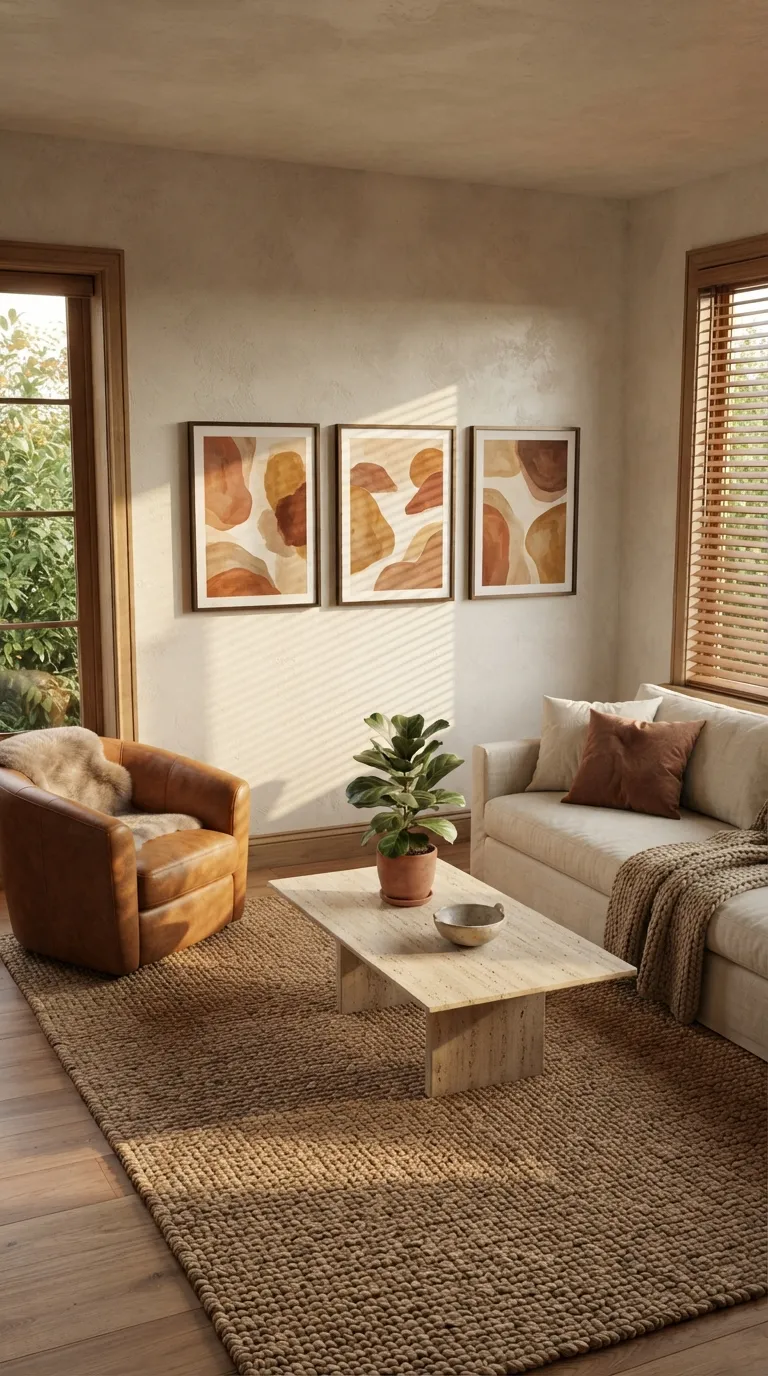
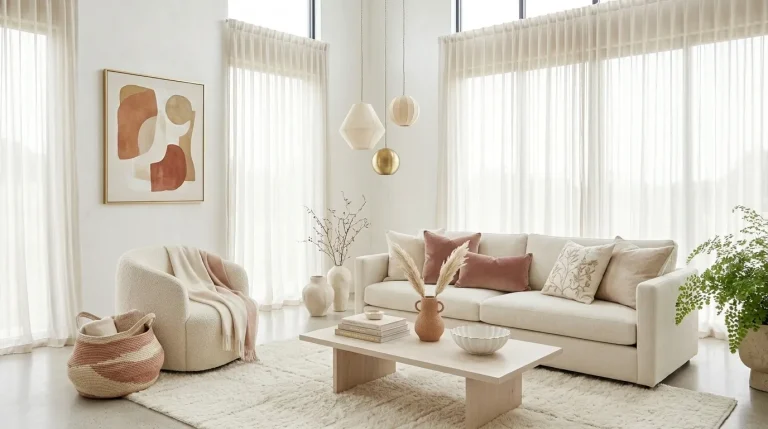
Earthy artwork can make a neutral living room feel warmer without turning it heavily colorful. Look for rust, clay, ochre, tan, cocoa, or muted olive that echoes shades already found in your furniture and textiles.
Try pulling one small color from the artwork into a cushion or ceramic accessory. That tiny repeat can make the room feel more connected. When choosing wall art living room pieces, this method helps new artwork sit naturally within an existing palette.
Minimal Line Art
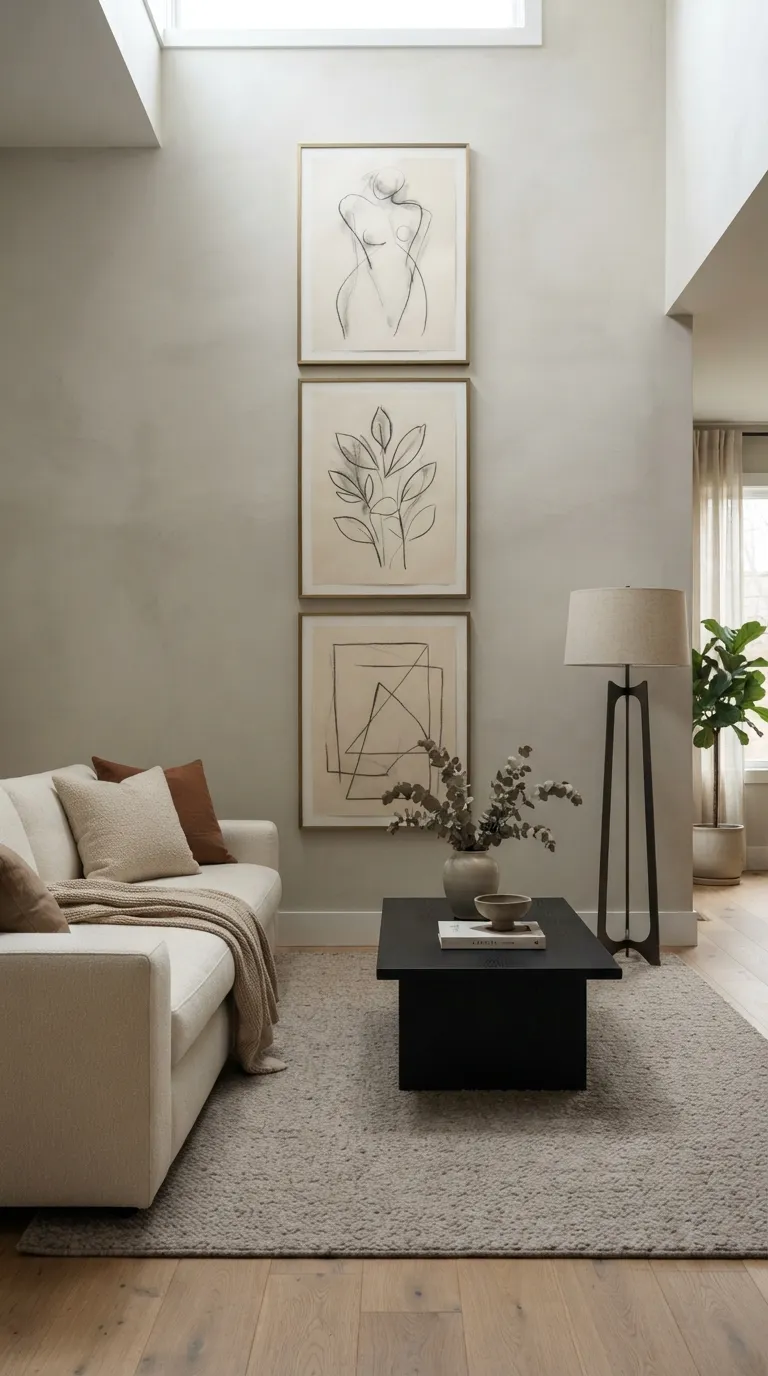
Minimal line art suits rooms where the furniture already has a strong silhouette. Simple faces, abstract curves, botanical outlines, or architectural sketches can fill a large wall while keeping the visual mood quiet.
Frame simple drawings with generous mats for a more finished appearance. The white space around the artwork gives each line room to breathe and prevents the wall from looking like a collection of small posters. Pairing the prints with one darker furniture piece can also give the room enough contrast.
Oversized Photography
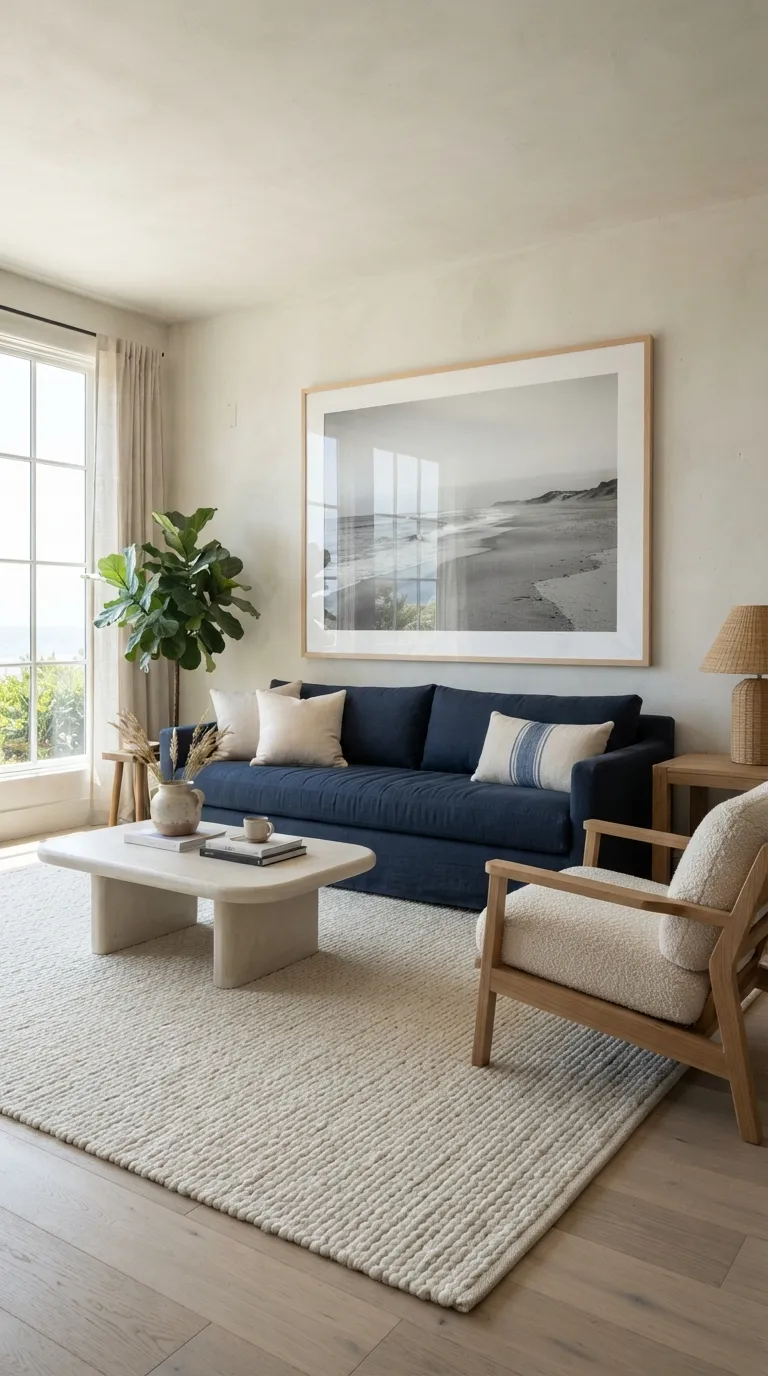
A large photograph can give your living room a sense of scale while keeping the subject easy to understand. Landscapes, architecture, black and white portraits, and quiet travel scenes can all work when the image has enough open space.
Choose the frame based on the room rather than the photograph alone. Light maple suits airy interiors, while dark wood can add weight to a room with deeper furniture tones. A wide mat is another simple detail that can make photographic wall decor feel more tailored.
Matching Art To Rugs
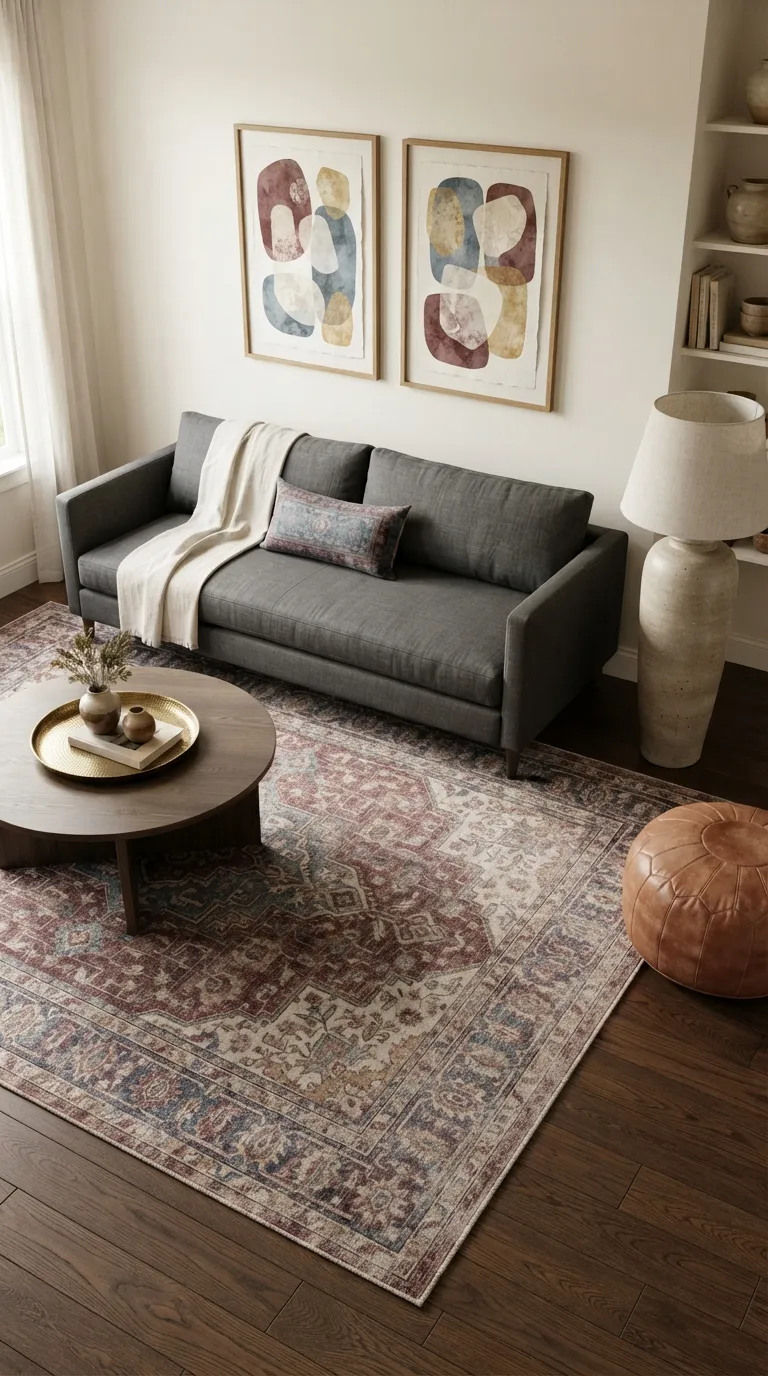
Your artwork doesn’t have to match the rug exactly. Instead, pick one or two colors from the rug and repeat them in the wall pieces so the floor and walls feel visually connected.
This works particularly well when your rug has several colors. Choose quieter artwork that borrows its secondary shades instead of copying the strongest pattern. The room then feels coordinated without looking like everything came from the same set.
Decorative Mirror Pair
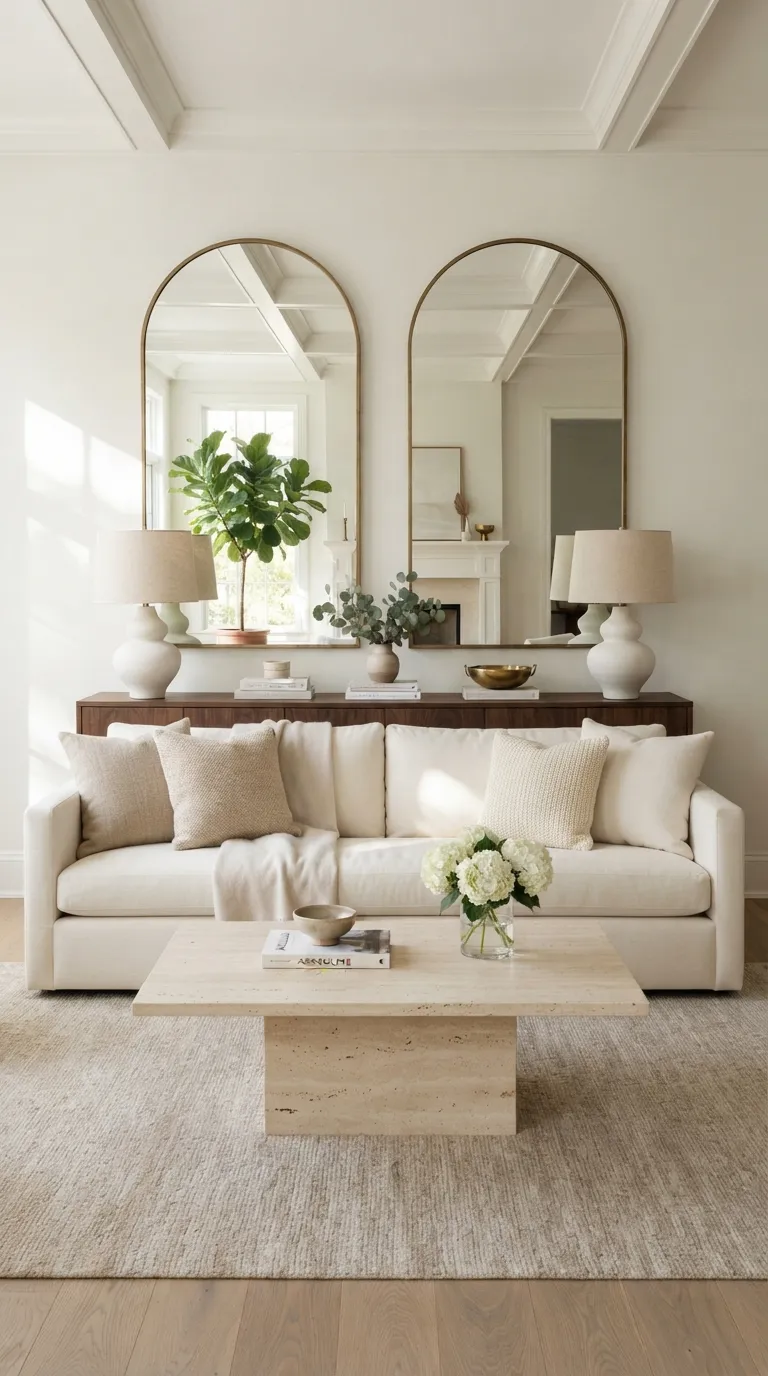
Artwork isn’t the sole choice for a polished wall. A pair of decorative mirrors can fill a large area while reflecting natural light and making the room feel more open.
Use matching mirrors when the room has a formal layout or strong symmetry. If your space already contains many straight lines, arched shapes can soften the look. Keep the frames slim so the reflective surfaces remain the main feature.
Statement Art Wall
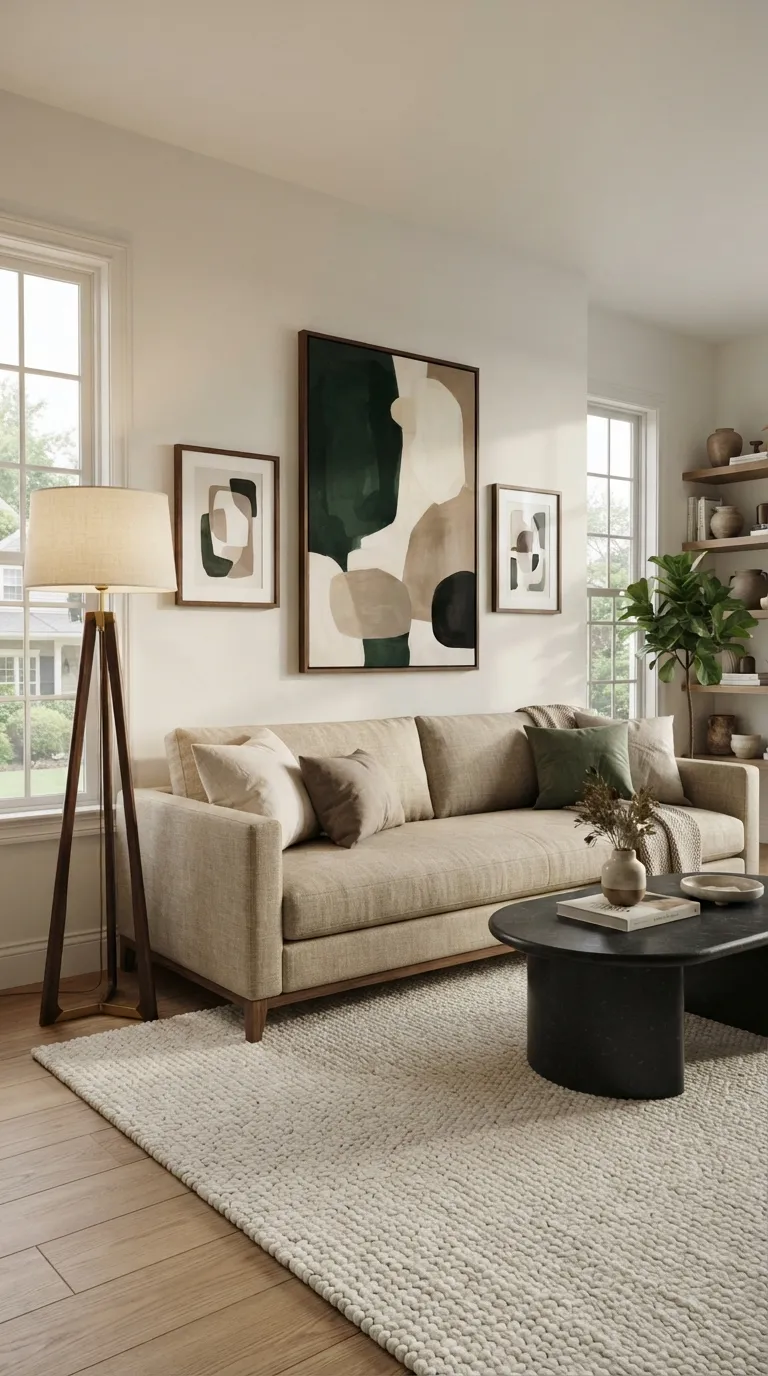
A statement wall works when one piece clearly leads the arrangement. Start with a large artwork you love, then add smaller pieces that support its colors or subject instead of competing for attention.
Keep the furniture below fairly simple. A clean sofa and low coffee table give the artwork enough visual space, while one darker accent can repeat a strong tone from the main piece. This creates a room that feels styled without looking overworked.
Soft Blue Artwork
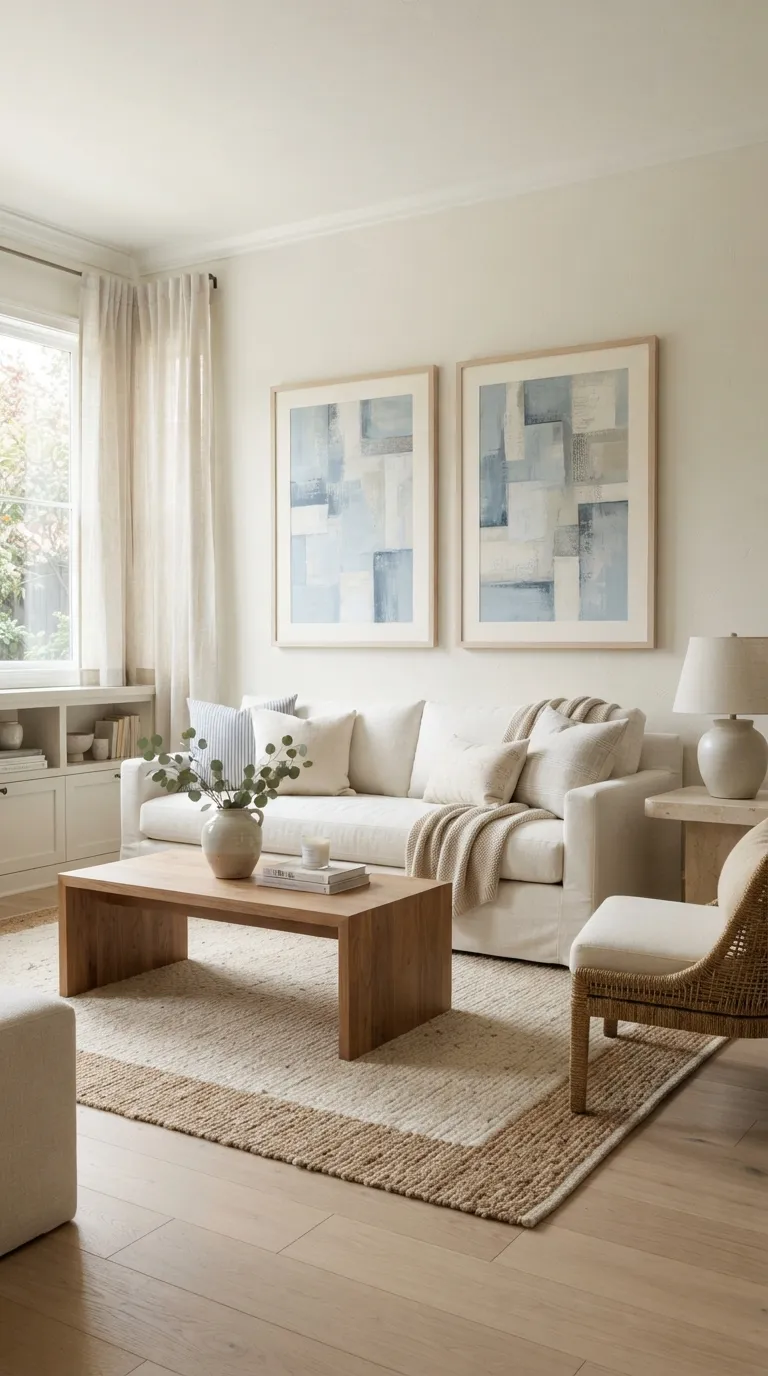
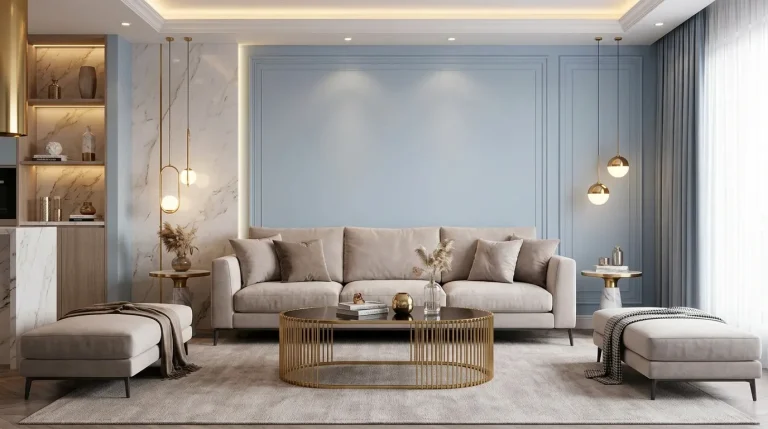
Soft blue can bring color into a neutral living room without making the space feel loud. Look for artwork with dusty blue, denim, slate, or pale gray rather than highly saturated shades.
Repeat the blue once or twice elsewhere, perhaps in a cushion or small vase. You don’t need to match every accessory. A few quiet color echoes can make the artwork feel connected to the rest of the room.
Large Canvas Diptych
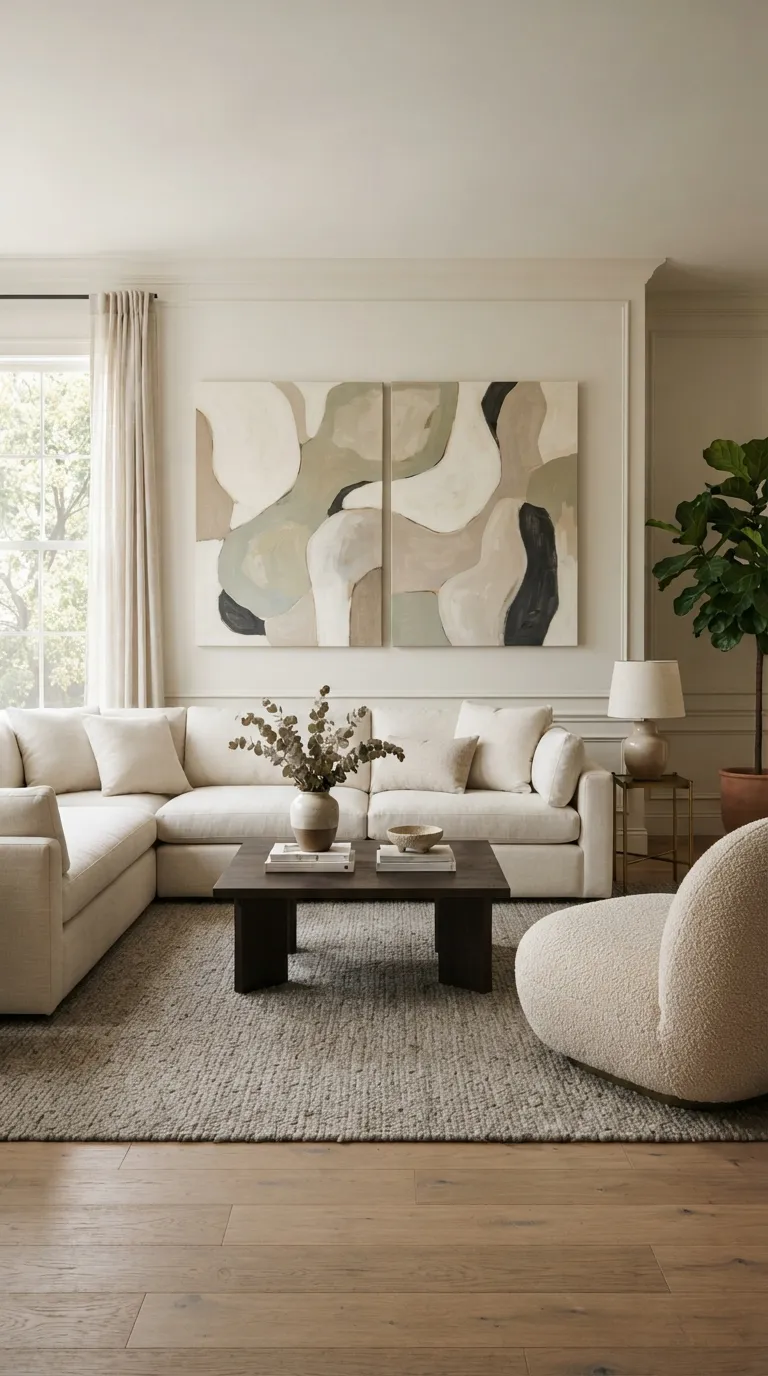
A diptych gives you the scale of one large artwork while adding a clear visual break through the center. Choose two canvases that form one continuous composition rather than two unrelated images.
Leave a modest gap between the panels so each piece remains distinct. The combined width should relate to the sofa beneath it, with enough wall showing at the sides to keep the arrangement balanced. This format is especially useful for wide seating areas.
Organic Shape Prints
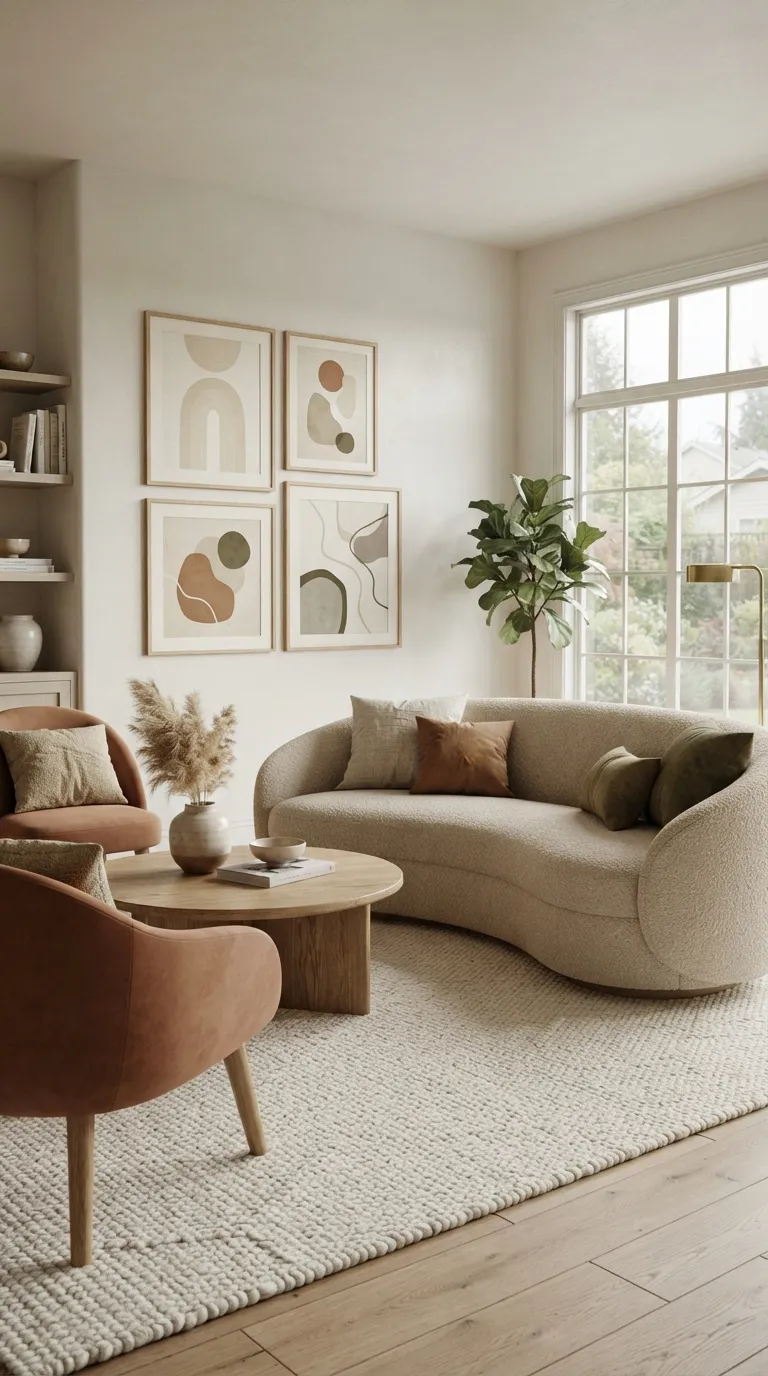
Organic artwork pairs naturally with curved furniture and softer room shapes. Look for arches, circles, loose brushwork, and irregular forms if your living room already has rounded tables, curved chairs, or arched lamps.
The shapes don’t need to match exactly. Instead, repeat the general feeling of softness across several pieces. This creates visual rhythm while keeping your wall art living room decor relaxed and easy on the eyes.
Oversized Textile Art
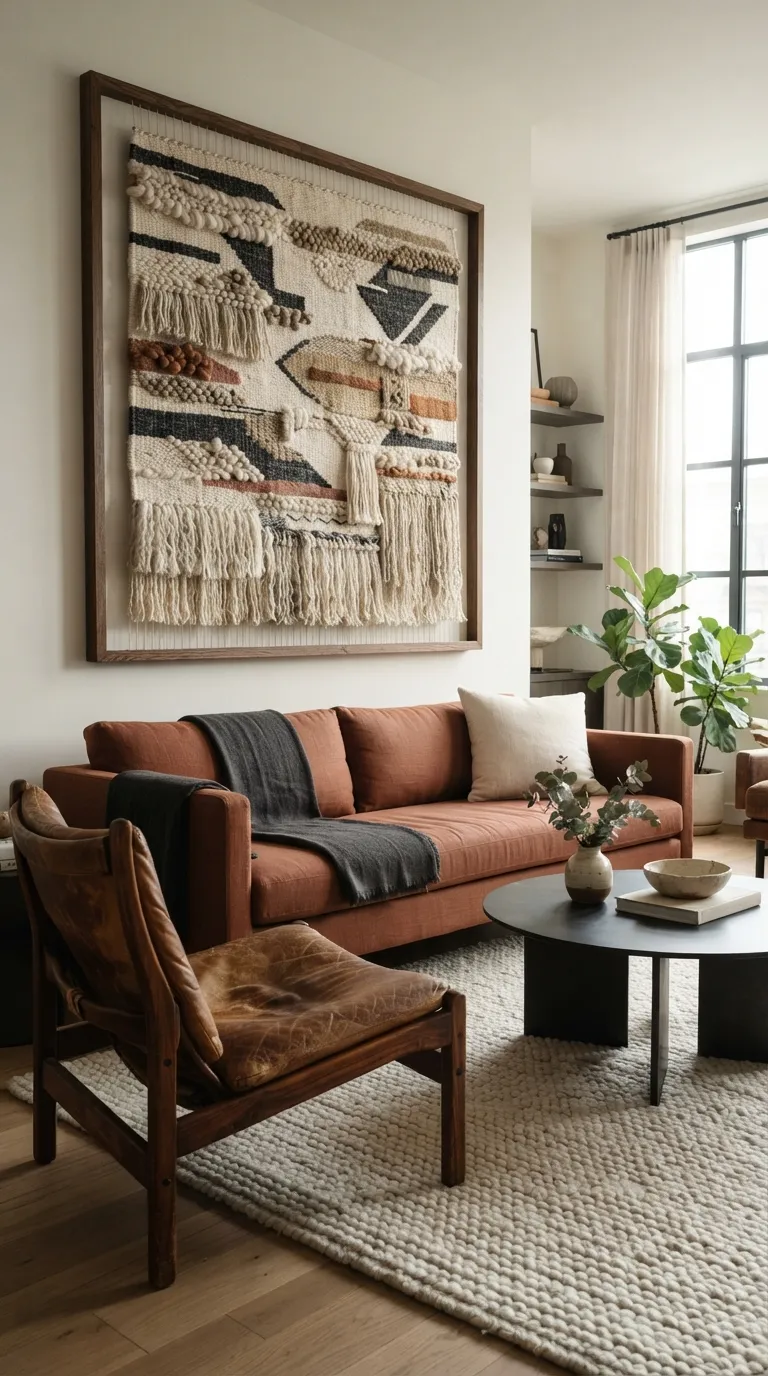
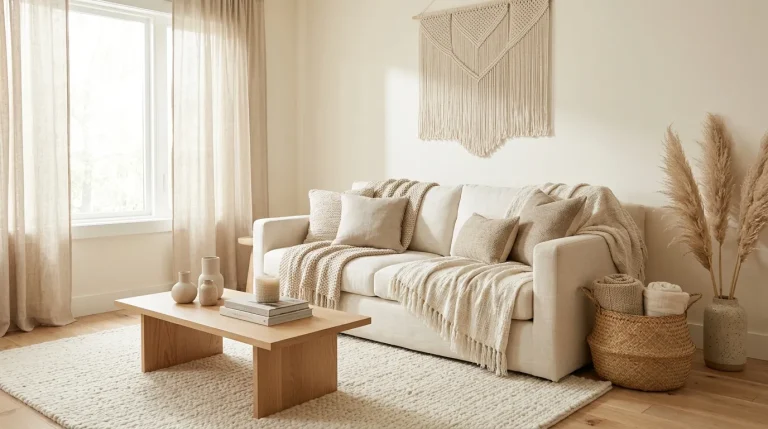
Textile art brings a different kind of depth to a living room because you can see and feel the pattern from across the space. Woven wool, linen, cotton, and knotted fiber pieces can work particularly well against plain painted walls.
Give a large textile enough empty wall around it to show its shape. Because the surface already has texture, you can keep nearby prints and accessories simple. This balance helps the room feel rich without becoming visually heavy.
Curved Gallery Layout
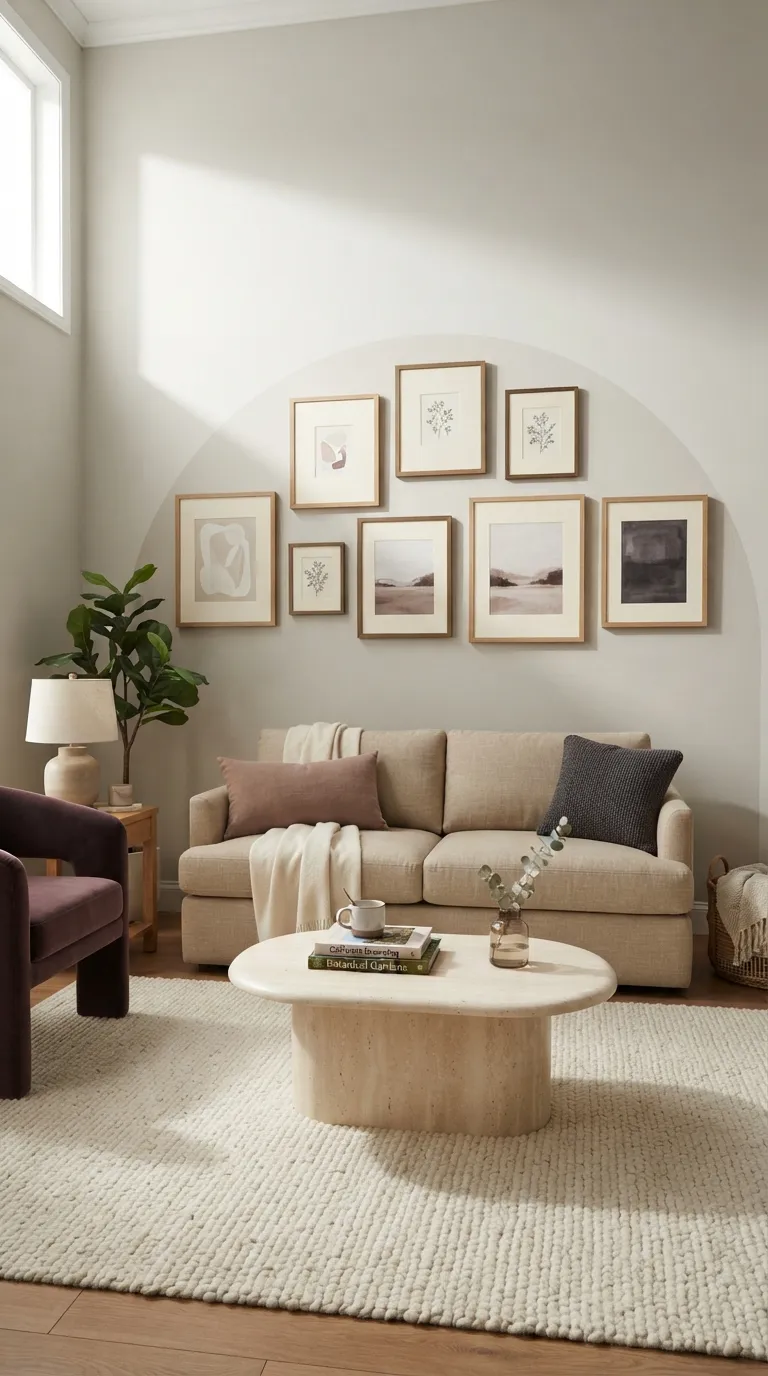
A curved gallery layout can make a wide wall feel more intentional than a simple row of frames. Start with the center artwork, then place the remaining pieces so the outer edges gradually rise toward the middle.
Keep the distance between frames fairly consistent. The arch should feel gentle rather than perfectly geometric, especially if the room has soft furniture shapes. This layout also works nicely over sofas with rounded arms or curved backs.
Moody Dark Artwork
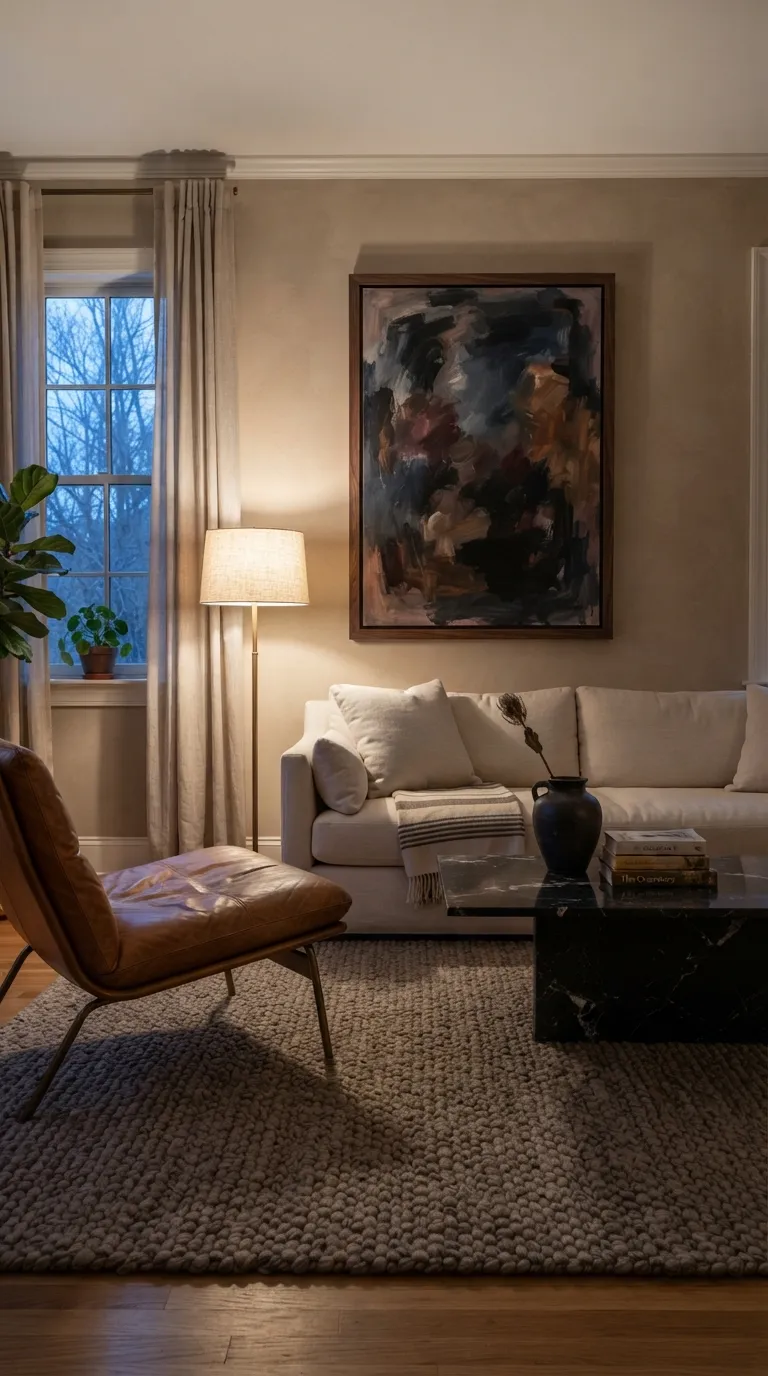
Dark artwork can give a neutral living room more depth, especially when the furniture feels pale or understated. Charcoal, navy, espresso, and muted wine shades create contrast without requiring a bright accent color.
Balance the darker piece with lighter upholstery or flooring nearby. If both the artwork and furniture are dark, the wall can start to feel visually dense. A pale rug or warm cream sofa gives the artwork a clear place to stand out.
Floating Frame Effect
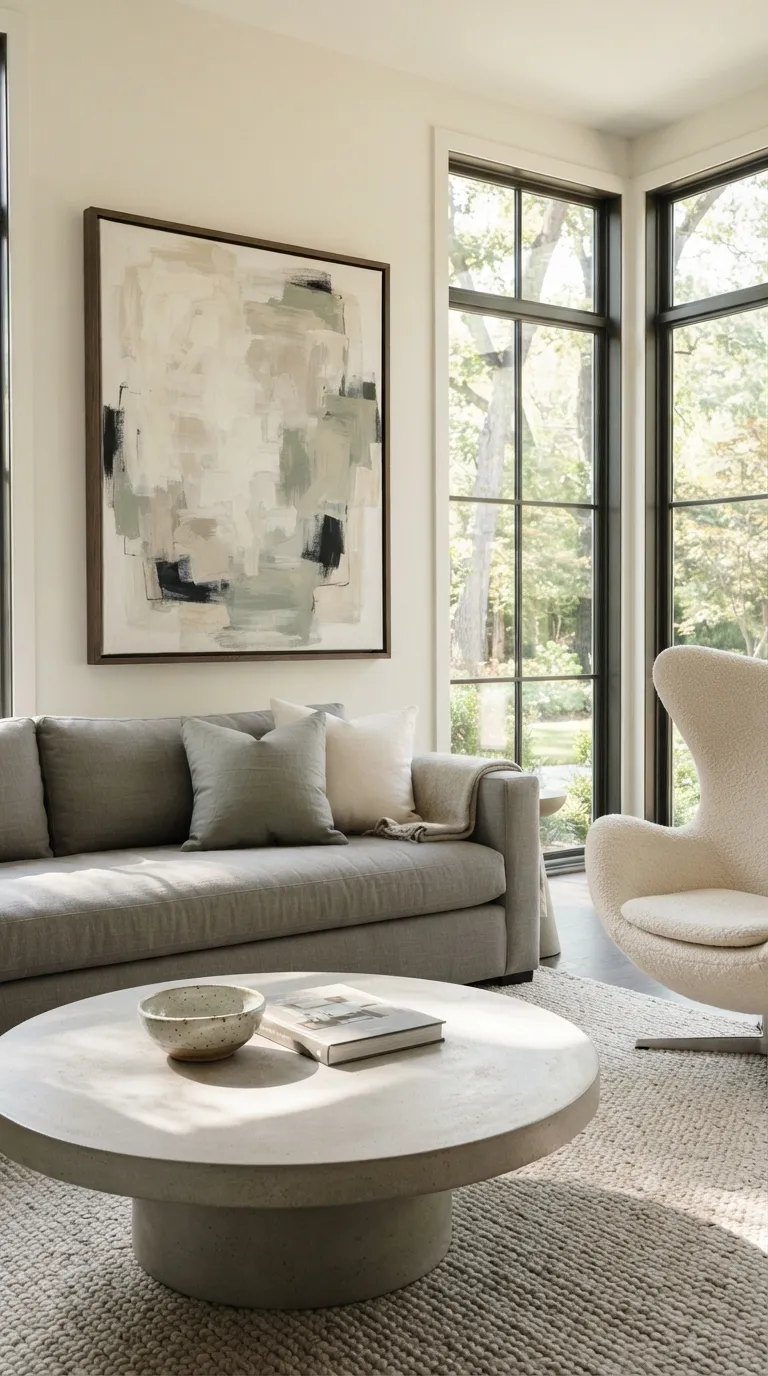
A floating frame adds a slim layer around canvas art, creating a crisp boundary without making the piece look boxed in. It’s a useful choice when you want the artwork to feel substantial but still modern.
Choose a frame finish that repeats another material in the room. Dark oak can connect with a wood table, while bronze can tie into lighting or hardware. The small gap around the canvas also creates a subtle shadow that gives the piece more depth.
Oversized Botanical Prints
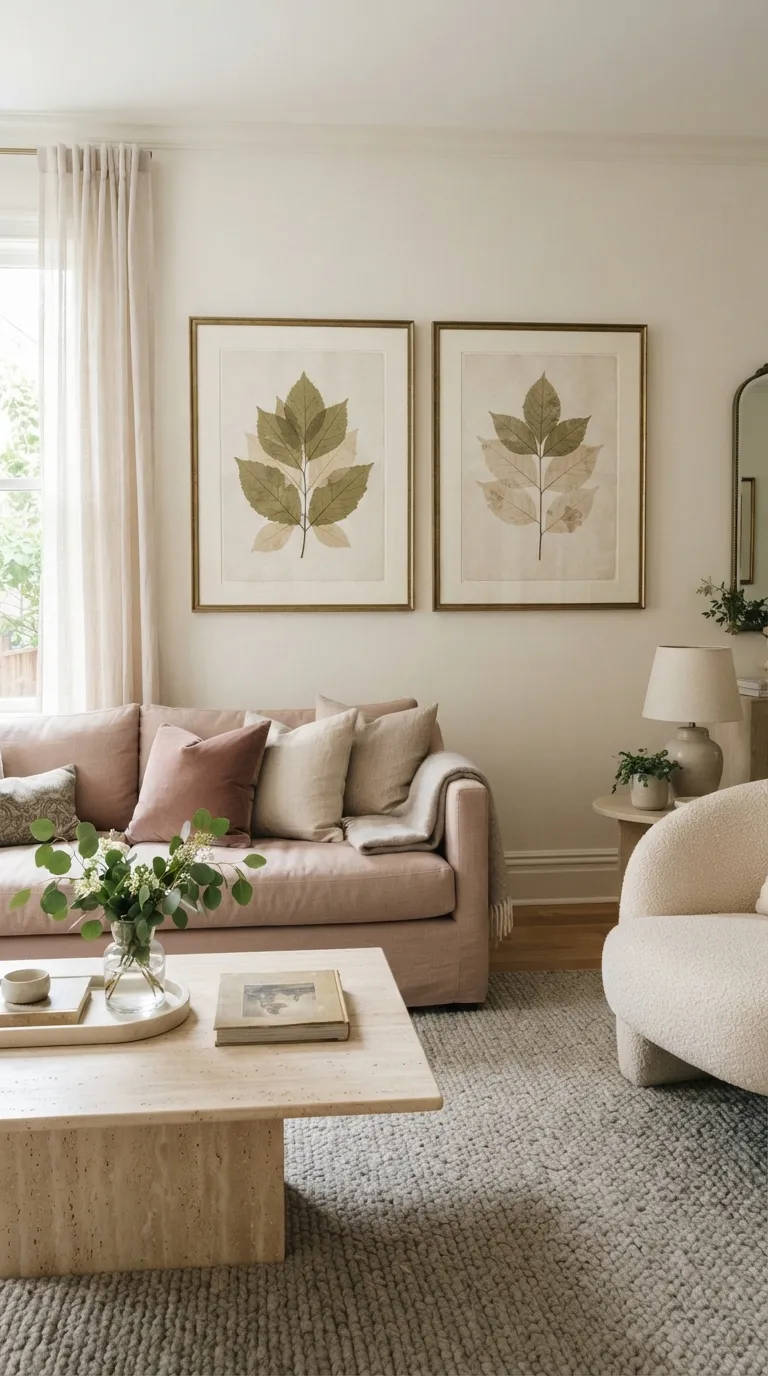
Botanical prints bring nature-inspired detail to a living room without requiring a large collection of plants. Choose oversized leaves, branches, or pressed-flower studies when you want the wall to feel calm but not empty.
Use generous mats to keep detailed botanical imagery from looking crowded. Olive, sage, and muted green tones also pair easily with beige, cream, blush, and natural wood. This makes botanical wall decor a flexible choice for both traditional and modern rooms.
Art In A Small Nook
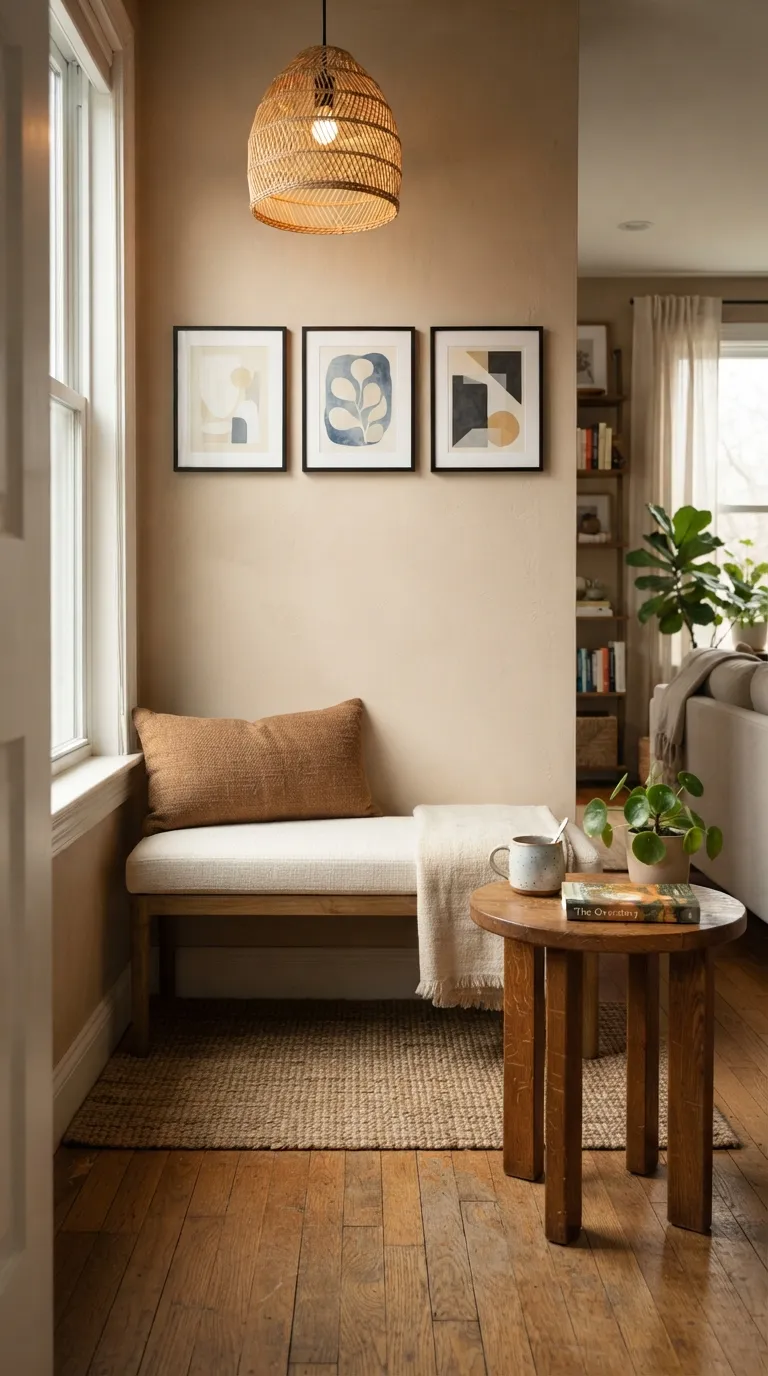
Small wall areas can still carry plenty of personality. A reading corner, narrow wall beside a doorway, or unused space above a bench can hold a compact art arrangement without competing with the main seating area.
For a small nook, three pieces often provide enough visual interest. Keep the frame color consistent and let the artwork vary slightly in size or subject. The result feels intentional while making use of a wall that might otherwise sit empty.
Brass Frame Details
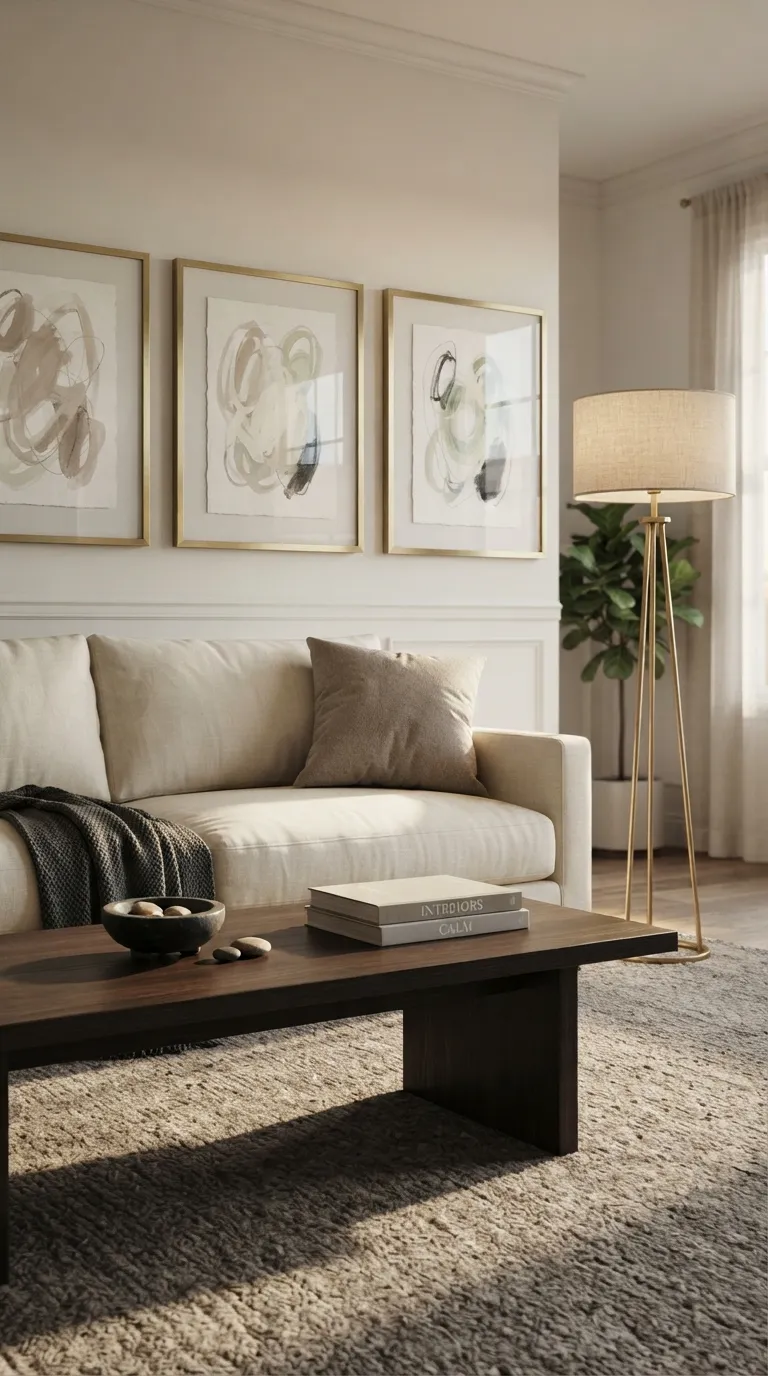
Brass frames can bring a warm metallic note to a living room without taking over the palette. Brushed finishes tend to look softer than highly polished gold, especially beside linen, wood, stone, and wool.
Repeat the metal in one or two nearby details for a connected look. A lamp base, small tray, or hardware can be enough. Keep the rest of the metals restrained so the brass frames remain a clear part of the room’s visual story.
Art Around A TV
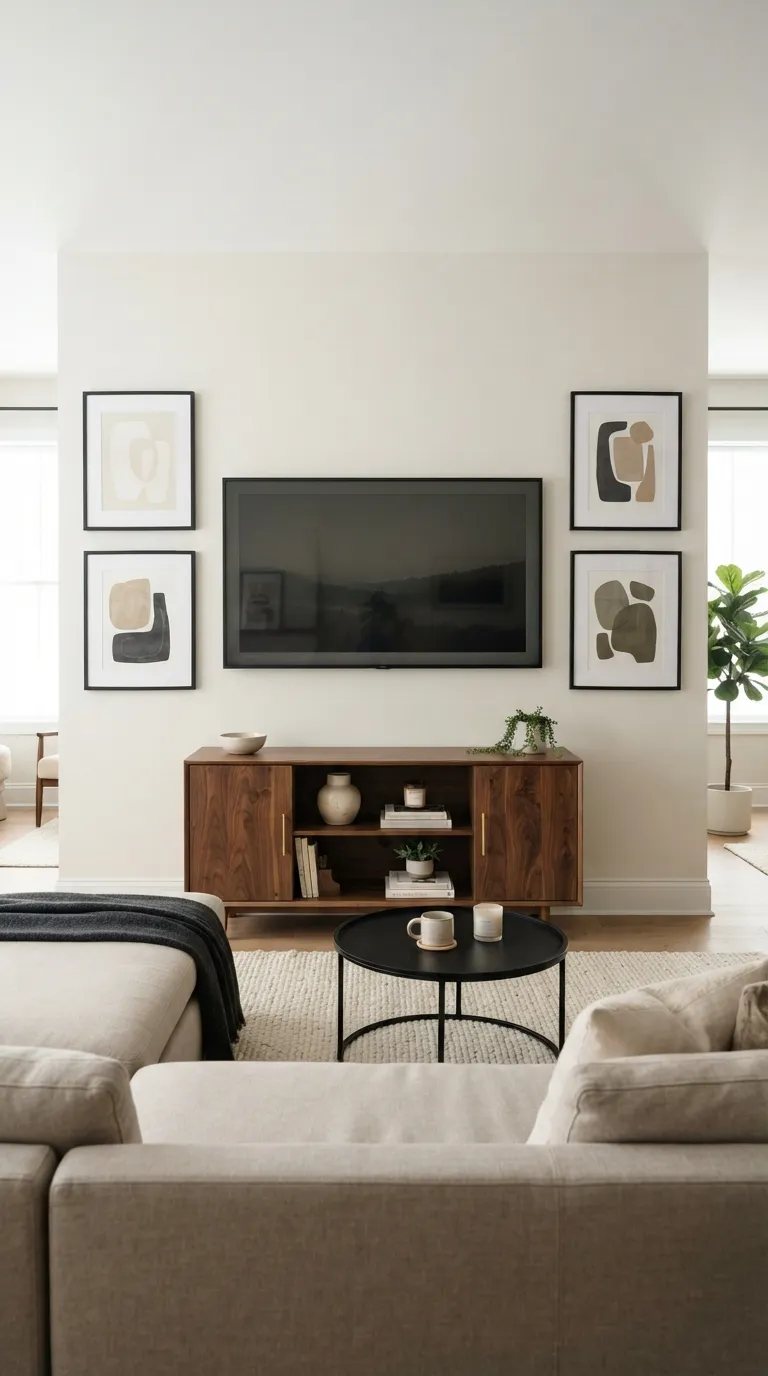
A television can dominate a living room wall, but surrounding it with artwork can make the media area feel more connected to the rest of the decor. Keep the pieces outside the screen’s immediate footprint so the arrangement remains easy to read.
Choose artwork with quieter colors when the television already creates a large dark rectangle. Matching frame finishes on both sides can also give the wall a more orderly appearance. The goal is to make the TV part of the furniture plan rather than the room’s sole focal point.
Floor-To-Ceiling Art
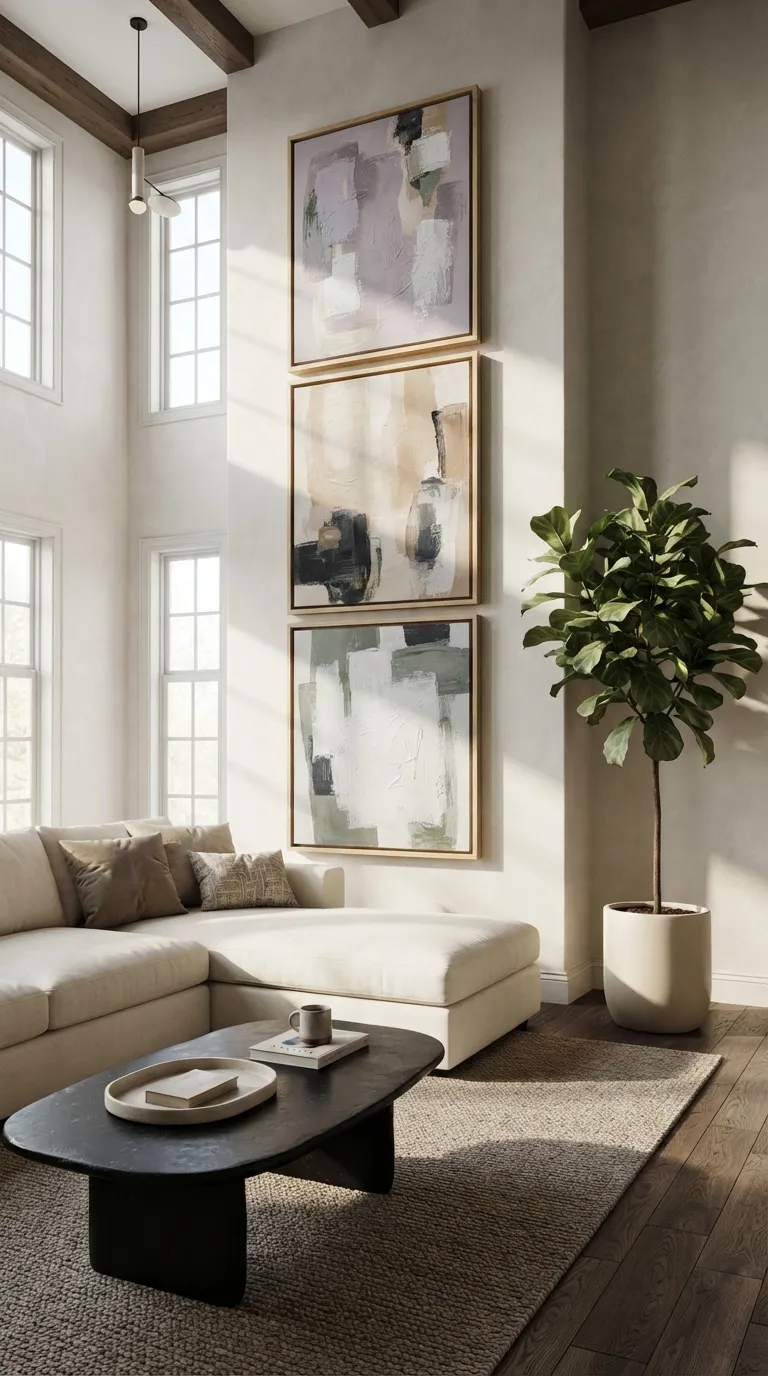
Tall artwork can help a room with high ceilings feel more balanced. Instead of spreading several small pieces across the full wall, stack a few vertical canvases to create a strong line that draws the eye upward.
Keep the colors connected so the height doesn’t make the display feel disconnected. Pale oak frames and muted artwork can soften the scale, while darker furniture below gives the arrangement a grounded base. This approach works best when the wall has enough open space around the installation.
One Quiet Masterpiece
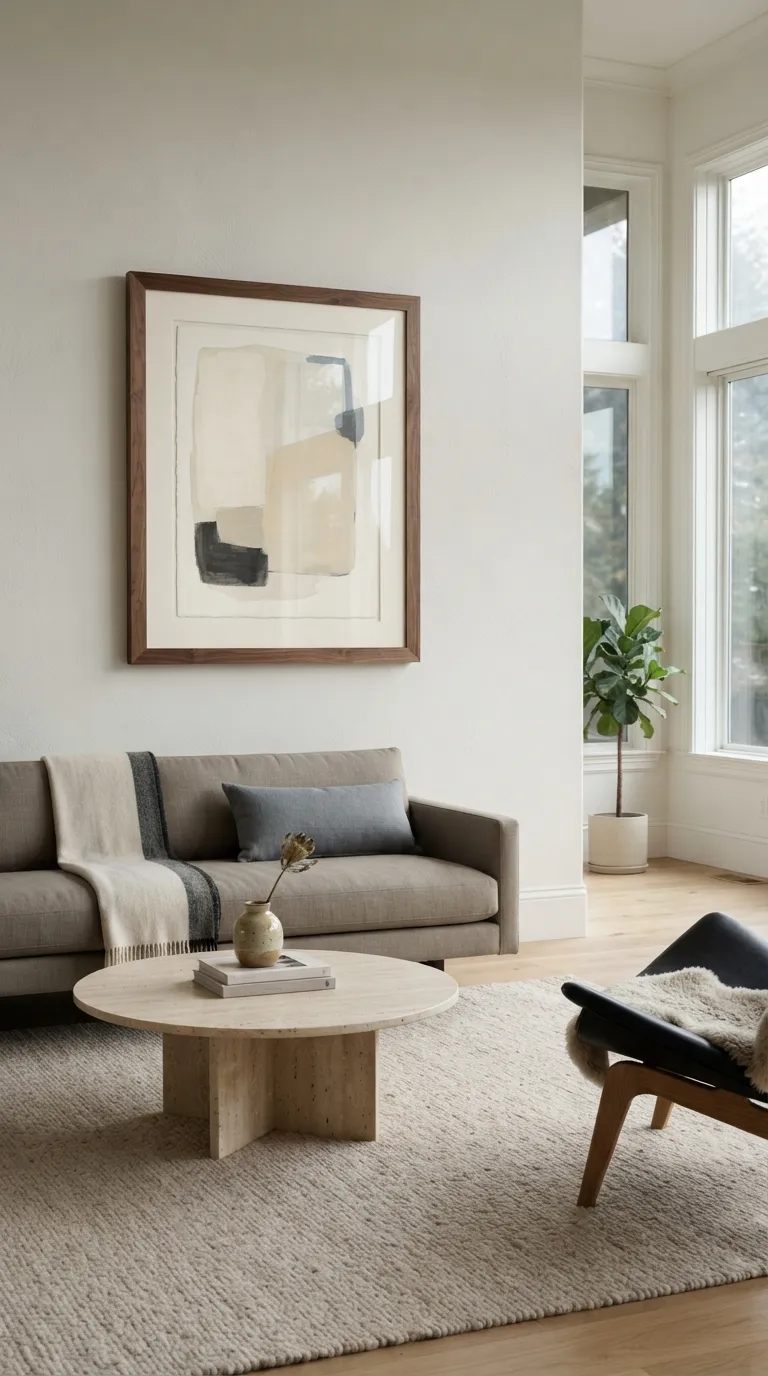
Sometimes one carefully chosen piece says more than a packed wall. A quiet painting with a strong frame can give your living room a polished focal point while leaving plenty of open space around it.
Choose the piece based on the room’s existing colors and proportions. If the sofa is wide, use artwork with enough visual weight to hold the wall. If the furniture is already detailed, a simpler composition can keep the whole space feeling calm and balanced.
Make The Walls Feel Collected
The best wall art living room choices don’t need to look expensive on their own. Scale, spacing, framing, and color often make a bigger difference than the price of the artwork.
Start with one wall that feels unfinished, then choose the piece that suits its size and the furniture below it. From there, add only what the room needs. A thoughtful arrangement can make your space feel polished, personal, and ready to enjoy.
Elira Montclair
Elira writes about timeless home decor, kitchen styling, and practical interior ideas. Her work blends warm, inviting aesthetics with simple decorating tips that make everyday spaces feel beautiful and comfortable.