Make Cooking Easier with Small Apartment Kitchen Organization Ideas

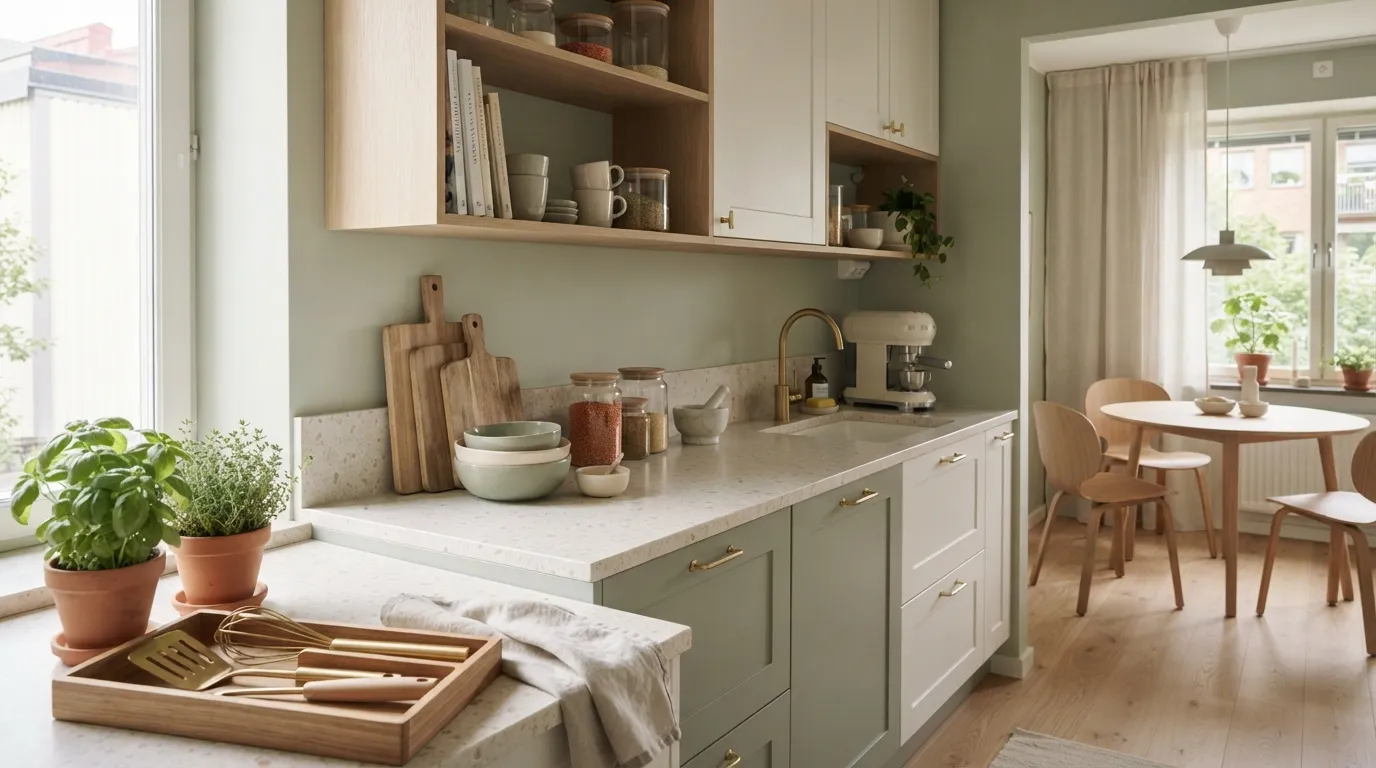
Small kitchens can feel crowded before you even start cooking. The right small apartment kitchen organization ideas can free up useful space without making your room look packed with storage bins and gadgets. A few smart changes can give every pan, spice, and utensil a clear home.
The best setup works with the kitchen you already have. Think upward when cabinets are full, keep daily tools close to your prep area, and use awkward corners instead of ignoring them. These simple ideas can make meal prep feel smoother while keeping your kitchen neat enough to enjoy.
Use Vertical Wall Storage
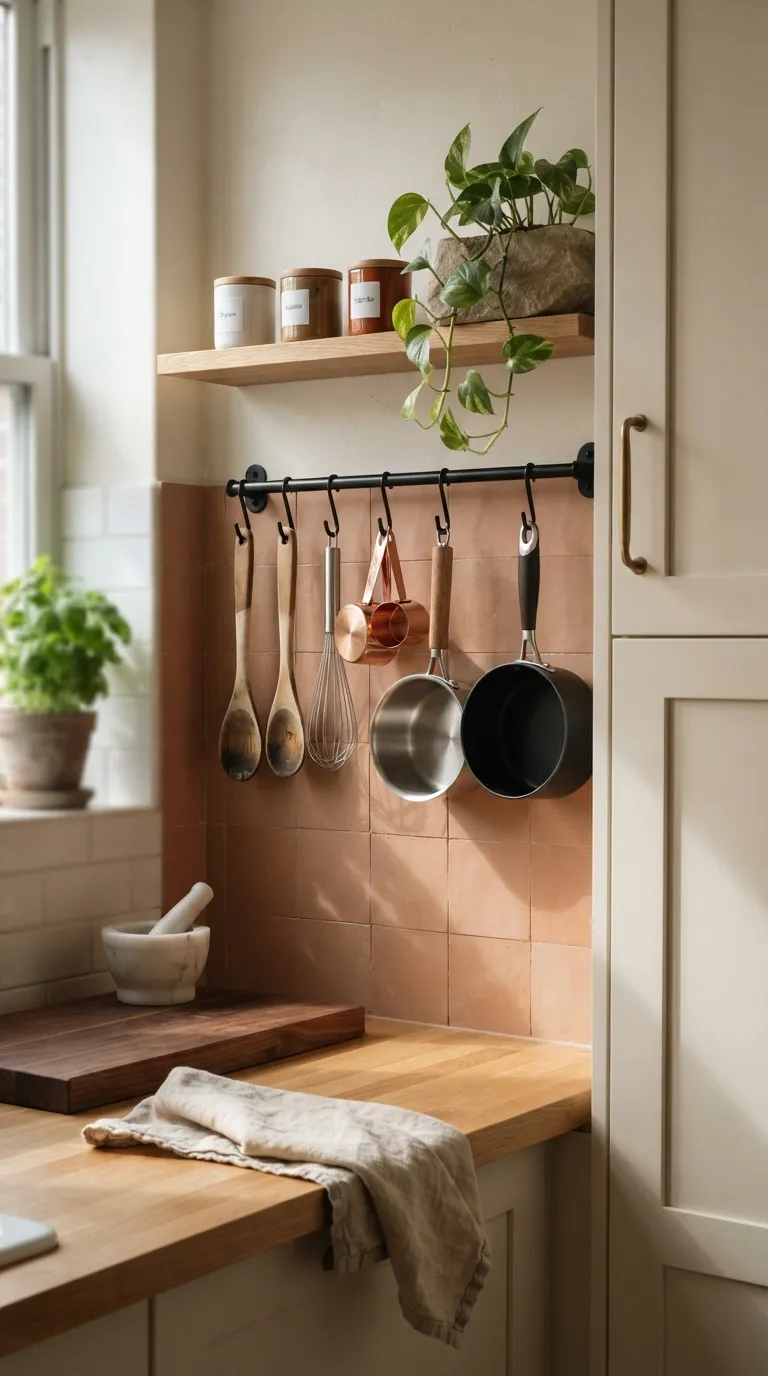
Walls can give you storage without taking away valuable counter space. A slim rail or pegboard can hold utensils, measuring cups, and lightweight pans where they’re easy to grab while cooking. Keep the most-used tools between waist and eye level so you don’t have to reach into a crowded drawer.
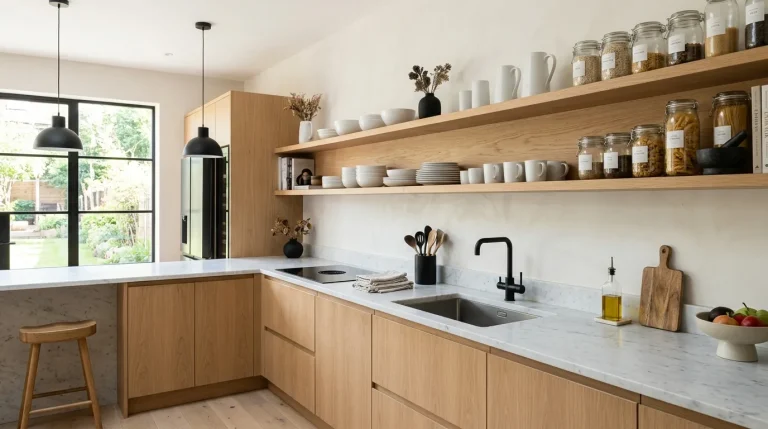
A narrow shelf can also make an empty wall work harder. Store small spice jars or cooking oils there, but keep heavy cookware lower for easier handling. This is one of the simplest small apartment kitchen organization ideas because it uses unused wall height rather than adding another piece of furniture.
Add a Slim Rolling Cart
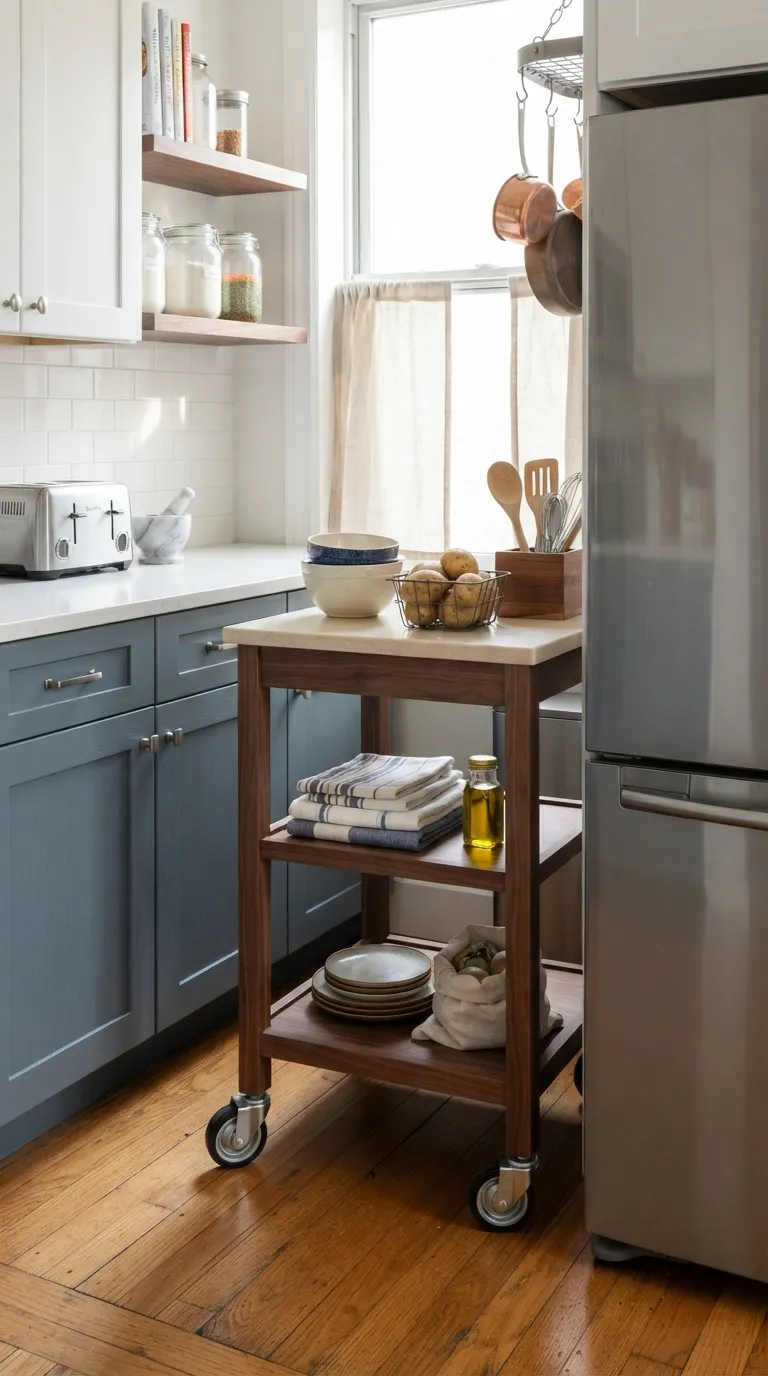
A narrow rolling cart can fill the gap between two fixtures and give you storage that moves when needed. Choose one slightly narrower than the available space, then use its shelves for pantry basics, mixing bowls, or appliances that don’t need to stay on the counter.
Picture pulling the cart beside your prep area when you’re making dinner, then rolling it back afterward. The top can serve as a temporary work surface, while baskets underneath keep smaller items together. Among small apartment kitchen organization ideas, this one is especially useful when your layout needs flexible storage rather than permanent cabinets.
Make Drawer Zones
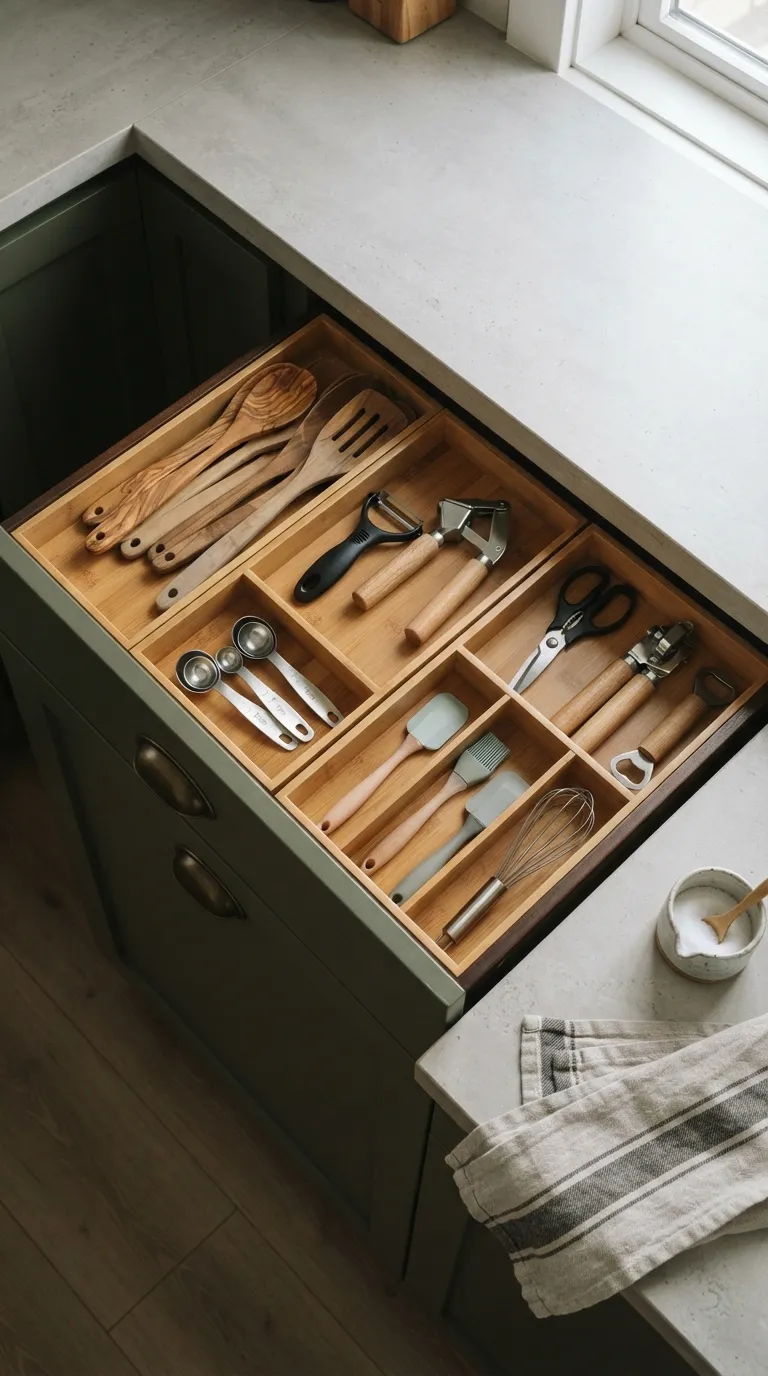
Drawers work best when similar tools stay together. Create simple zones for measuring tools, prep utensils, baking items, and small gadgets instead of letting everything share one deep space. Adjustable dividers can keep these groups from sliding into each other every time you open the drawer.
Place everyday tools in the easiest drawer to reach from your main prep spot. Less-used items can move to higher or deeper storage. This small change cuts down on searching and gives your kitchen a more orderly feel without adding extra furniture.
Store Pans Sideways
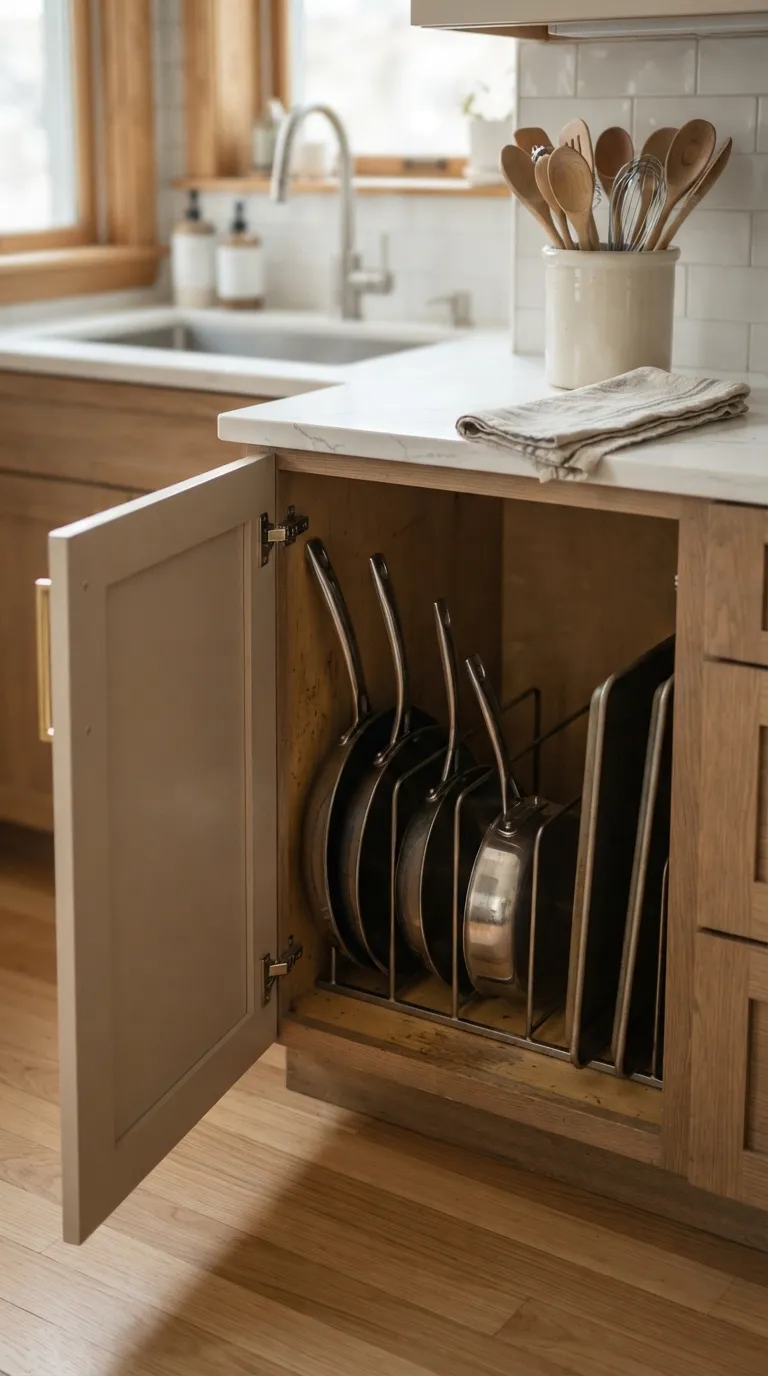
Pans take up less room when they stand upright instead of sitting in a tall stack. Add sturdy dividers inside a lower cabinet to separate skillets, baking sheets, and cutting boards. You can then pull out one item without lifting half the cabinet first.
Keep heavier cookware in a lower zone where it’s easier to handle. Place frequently used pans near the stove if your cabinet layout allows it. This setup makes small apartment kitchen organization ideas feel practical because storage follows the way you actually cook.
Claim the Cabinet Door
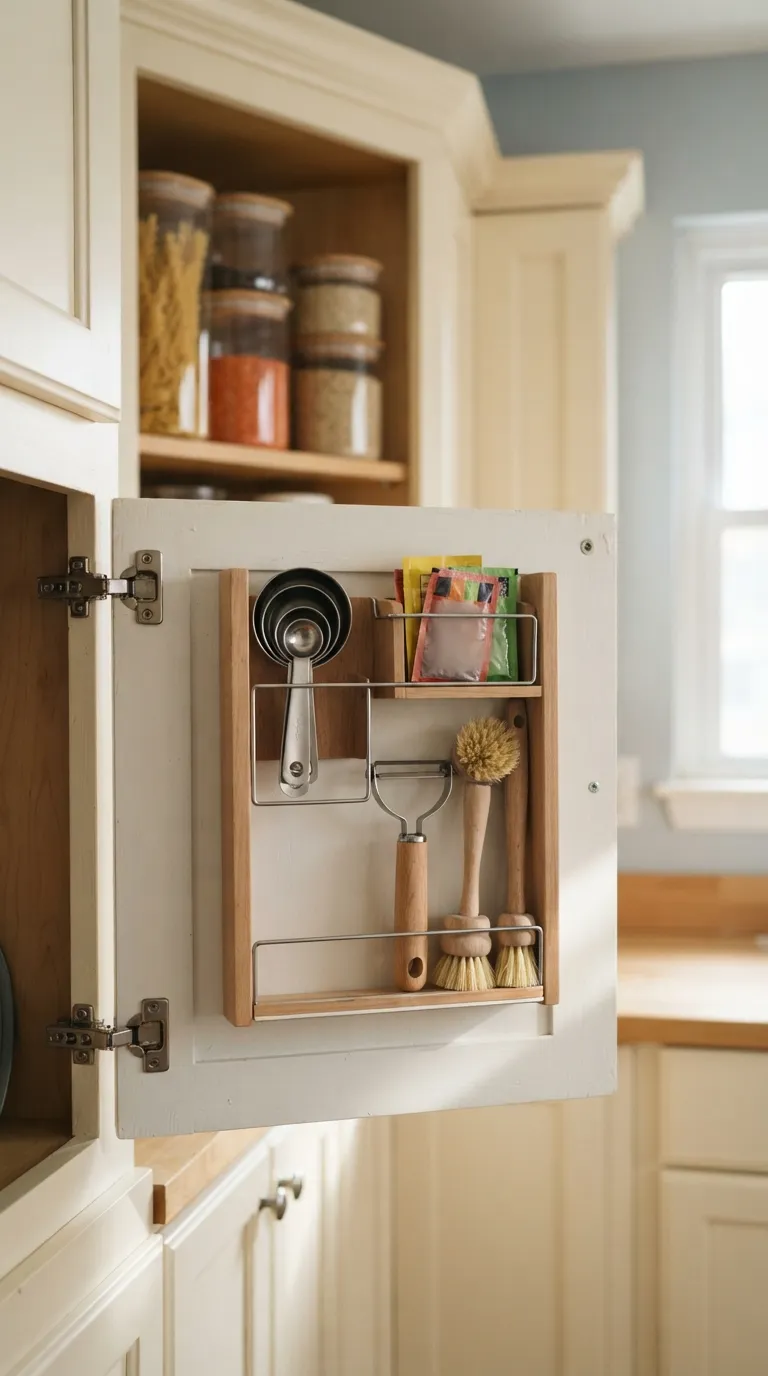
The inside of a cabinet door is easy to overlook, yet it can hold small items that usually wander around drawers. A shallow rack can keep measuring spoons, wraps, cleaning brushes, or small packets within reach without taking over a shelf.
Choose an organizer that leaves enough clearance for the cabinet to close properly. Keep door storage light, especially on older hinges. This is a handy option when you’re short on drawers but still have unused space behind cabinet fronts.
Create a Coffee Corner
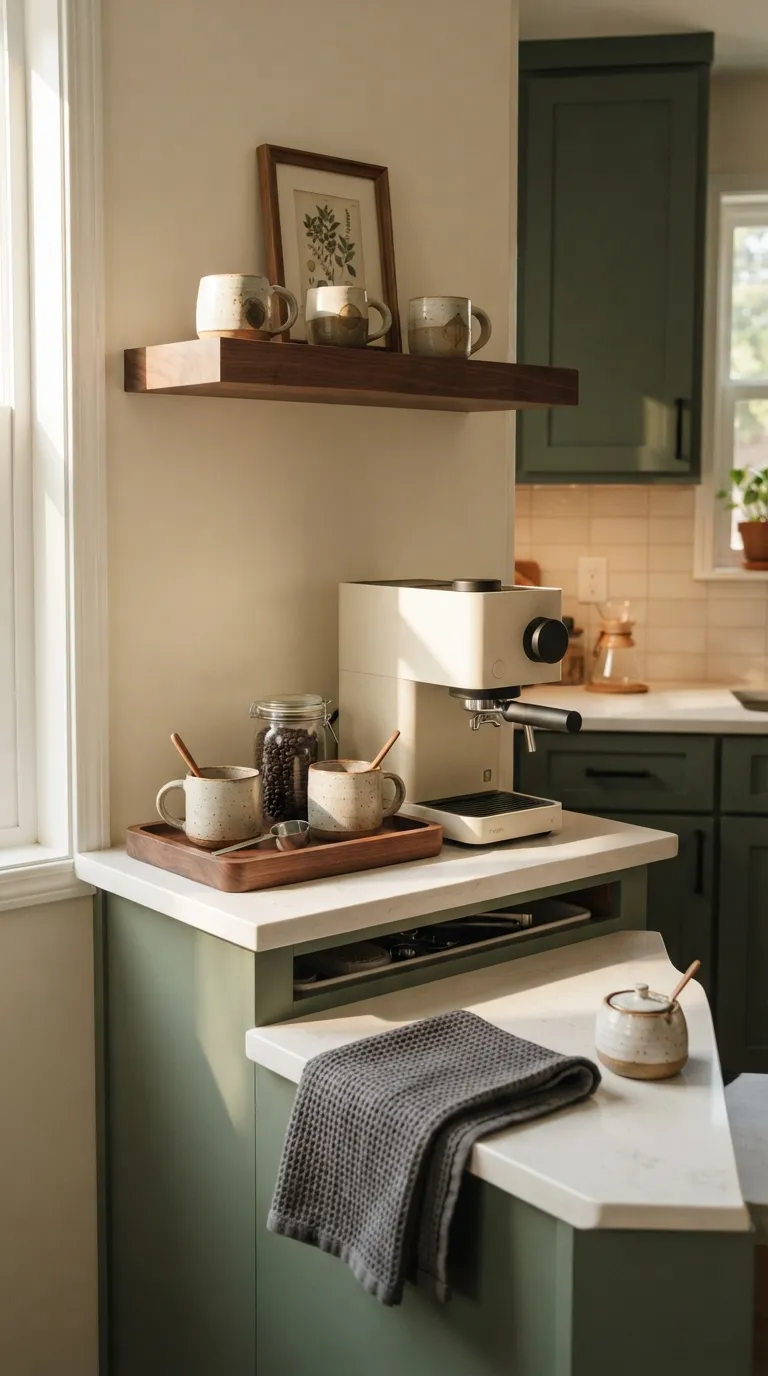
A dedicated coffee corner keeps mugs, beans, filters, and daily tools together. Instead of spreading these items across several cabinets, give them one small tray or shelf near the coffee maker. You’ll save a few steps each morning and keep the rest of the counter clear.
The same idea works for tea or breakfast supplies. Use one container for packets and one small shelf for cups, leaving only the items you use daily in sight. For small apartment kitchen organization ideas, a focused station can make a tiny counter feel far more useful.
Tame the Spice Shelf
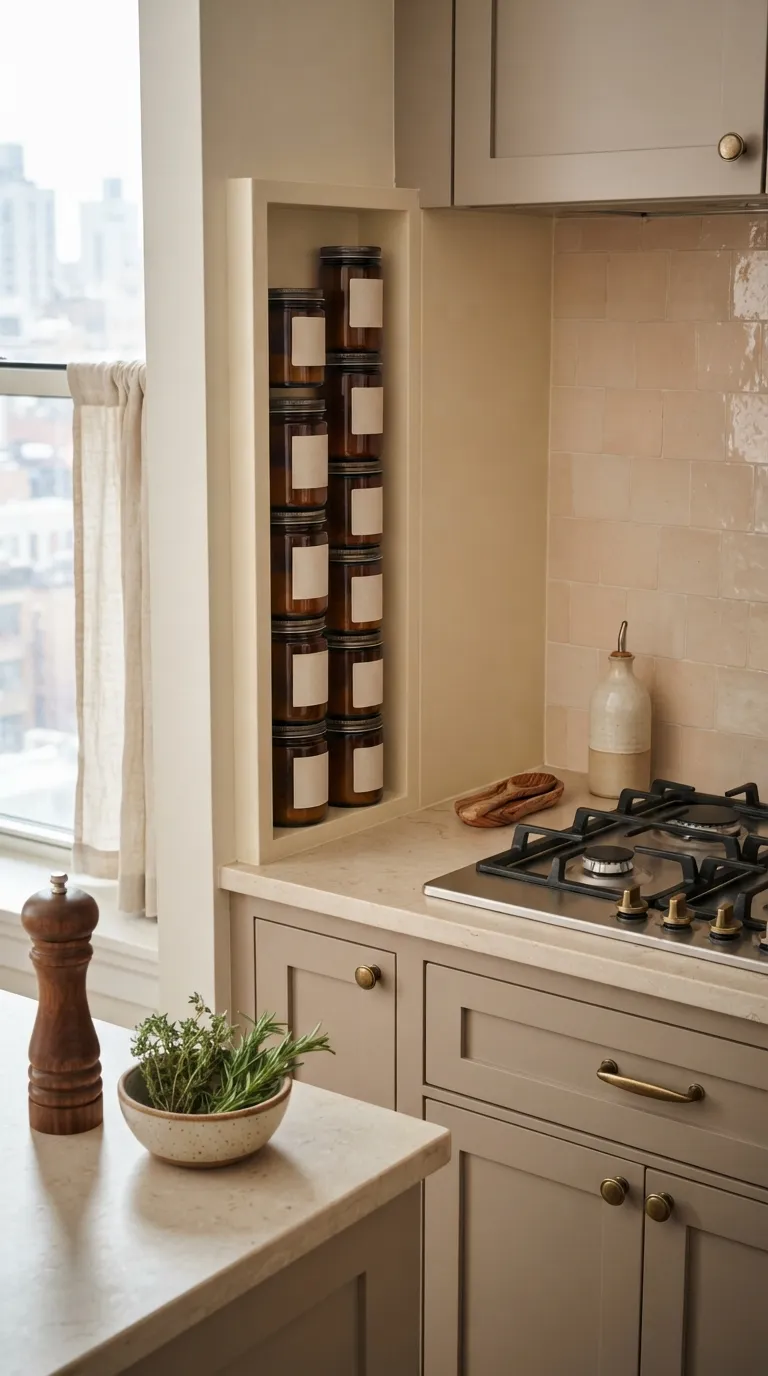
Spices become much easier to use when you can see every jar at a glance. A narrow shelf near the stove keeps everyday seasonings close, while less-used jars can stay in a cabinet or pantry box. Arrange them in a single layer whenever possible so nothing hides behind another jar.
A small tray can keep oils and seasonings together without spreading across the counter. Leave enough space around the stove for safe cooking and cleaning. This simple spice setup gives your kitchen a tidy focal point while making daily meal prep less fussy.
Use Sink-Side Space
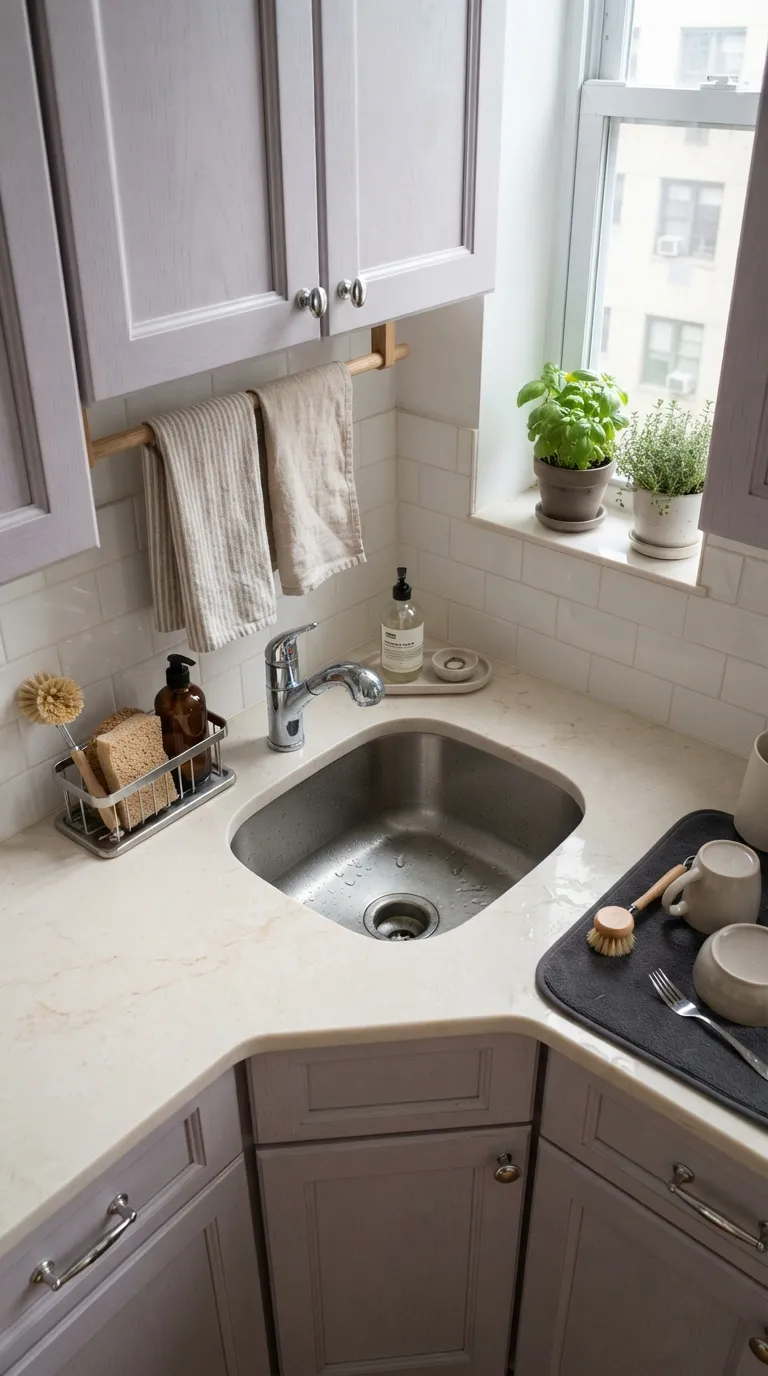
The sink area has useful storage potential beyond the cabinet underneath. A slim caddy can gather cleaning tools, while a small rail can hold towels where they dry quickly. Keep these items close to the sink instead of letting them occupy your main prep counter.
Look for narrow accessories that fit the exact width of your space. A compact drying mat can also be rolled away when you’re not washing dishes. In a small apartment, even a few inches of reclaimed counter space can make food prep feel less cramped.
Give Appliances One Home
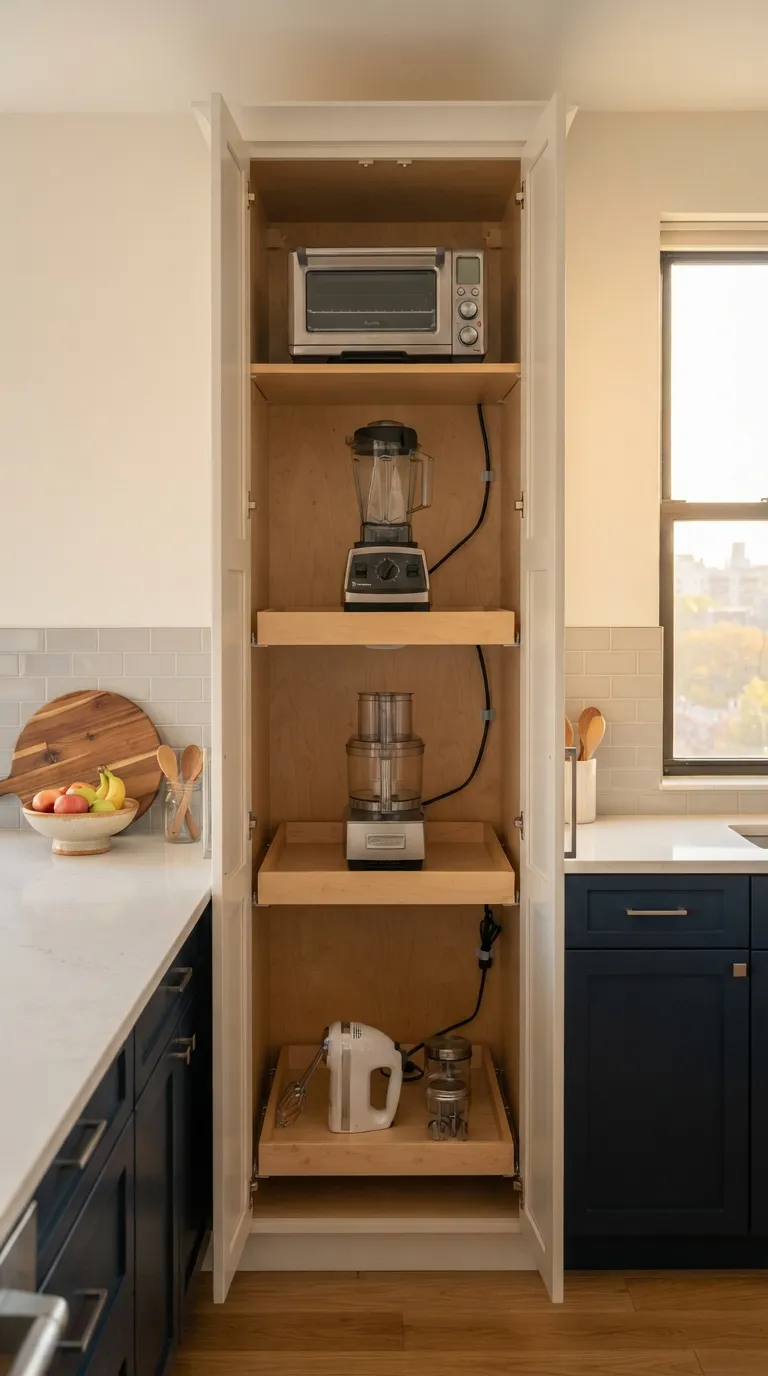
Small appliances can quickly take over a tiny counter. Give them one cabinet, shelf, or rolling cart zone instead of storing each item wherever space happens to be available. Keep the appliances you use most often at an easy height.
Measure both the appliance and its cord before choosing a storage spot. Leave room for your hands to grip handles and lift items safely. A clear appliance zone is one of the more useful small apartment kitchen organization ideas because it keeps visual clutter off the work surface.
Add Under-Shelf Baskets
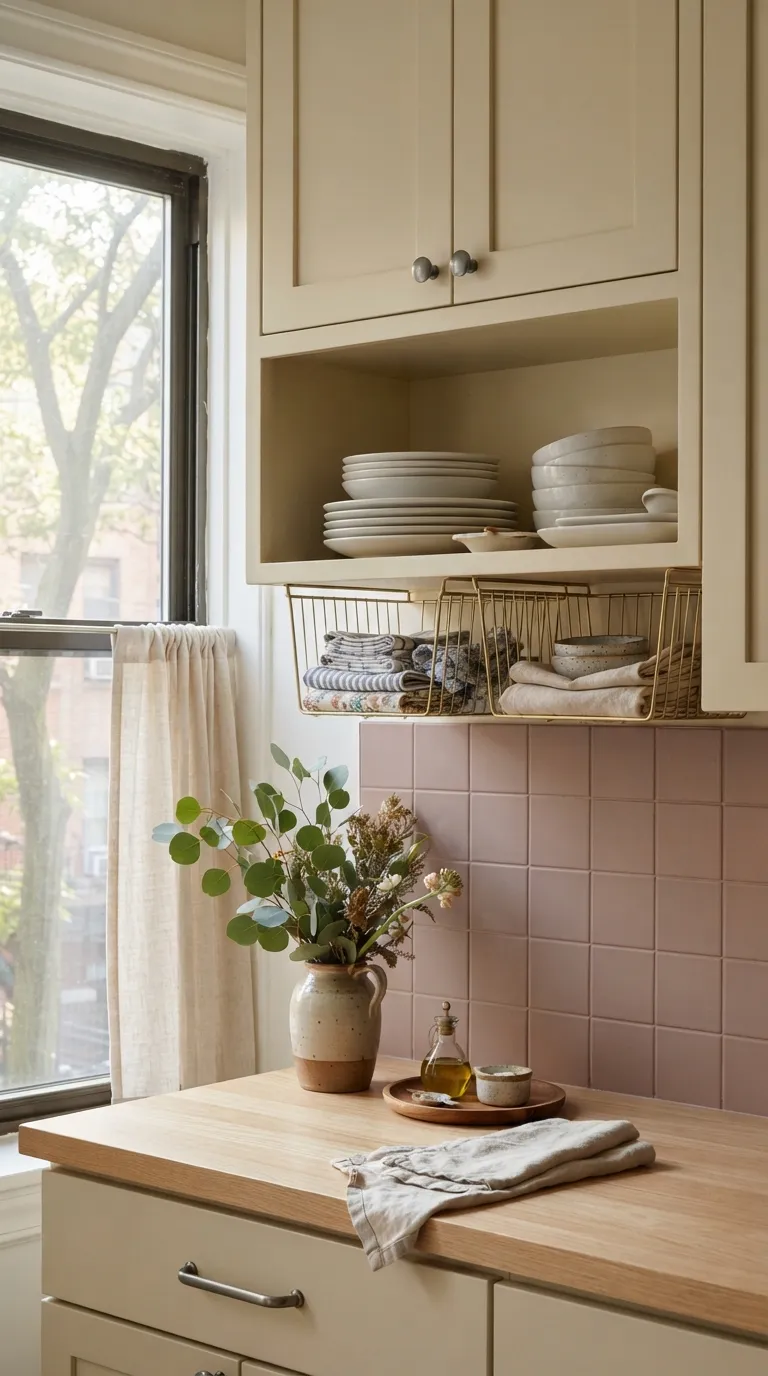
Under-shelf baskets create a second layer inside cabinets without requiring another shelf installation. Use them for lightweight items such as napkins, small bowls, tea towels, or baking liners. They’re especially useful when the vertical gap above your stacked dishes feels wasted.
Check the basket height before buying one. You want enough clearance underneath for your hand to reach items comfortably. This small adjustment can turn a single shelf into a two-level storage zone while keeping the cabinet easy to use.
Hang a Pot Rail
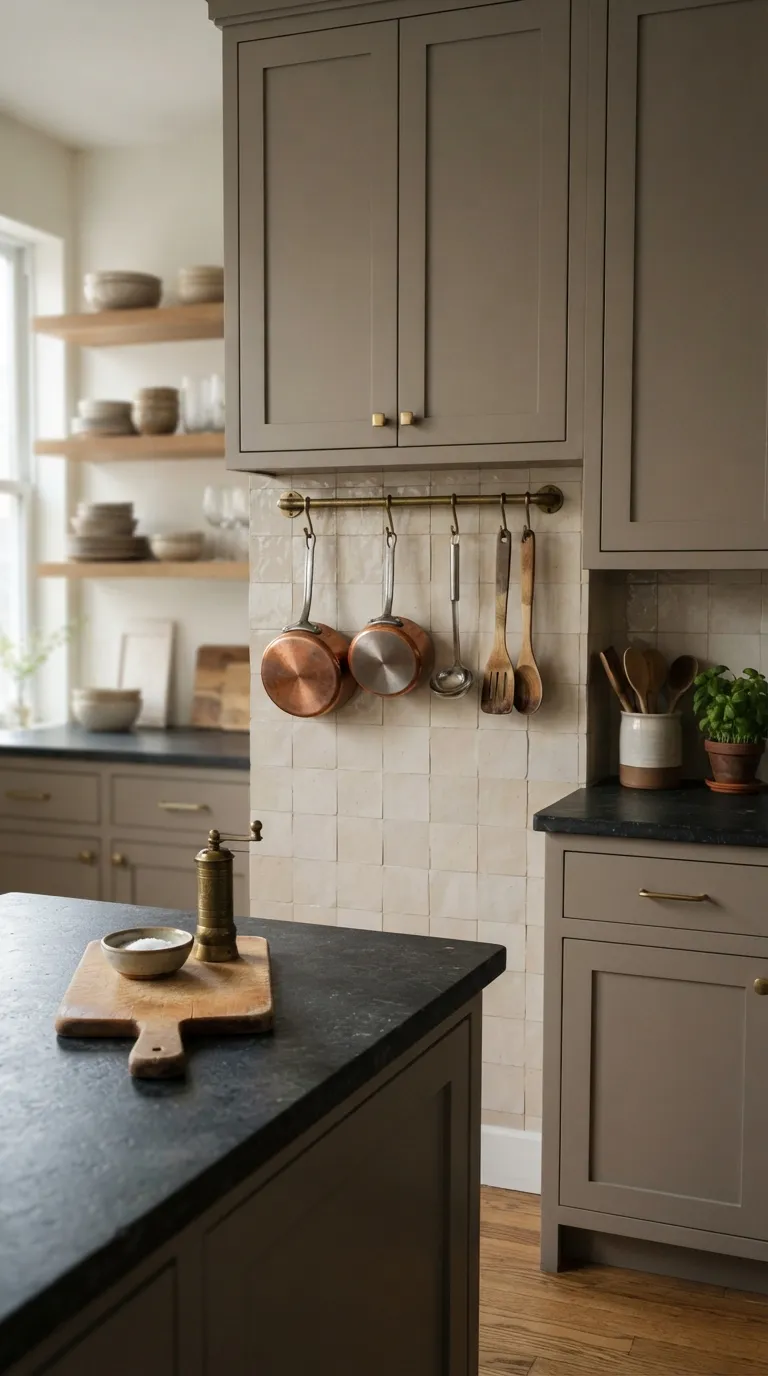
A short pot rail can move cookware out of a crowded cabinet and onto an unused wall area. Hang just the pans and utensils you reach for often, leaving plenty of space between pieces. Too many items on one rail can make the kitchen look busy.
Place the rail away from direct heat and where hanging handles won’t interfere with nearby cabinets. If you’re renting, check whether wall mounting is allowed before installing it. For renters, a removable hanging system can offer a similar idea with less commitment.
Try Corner Shelving
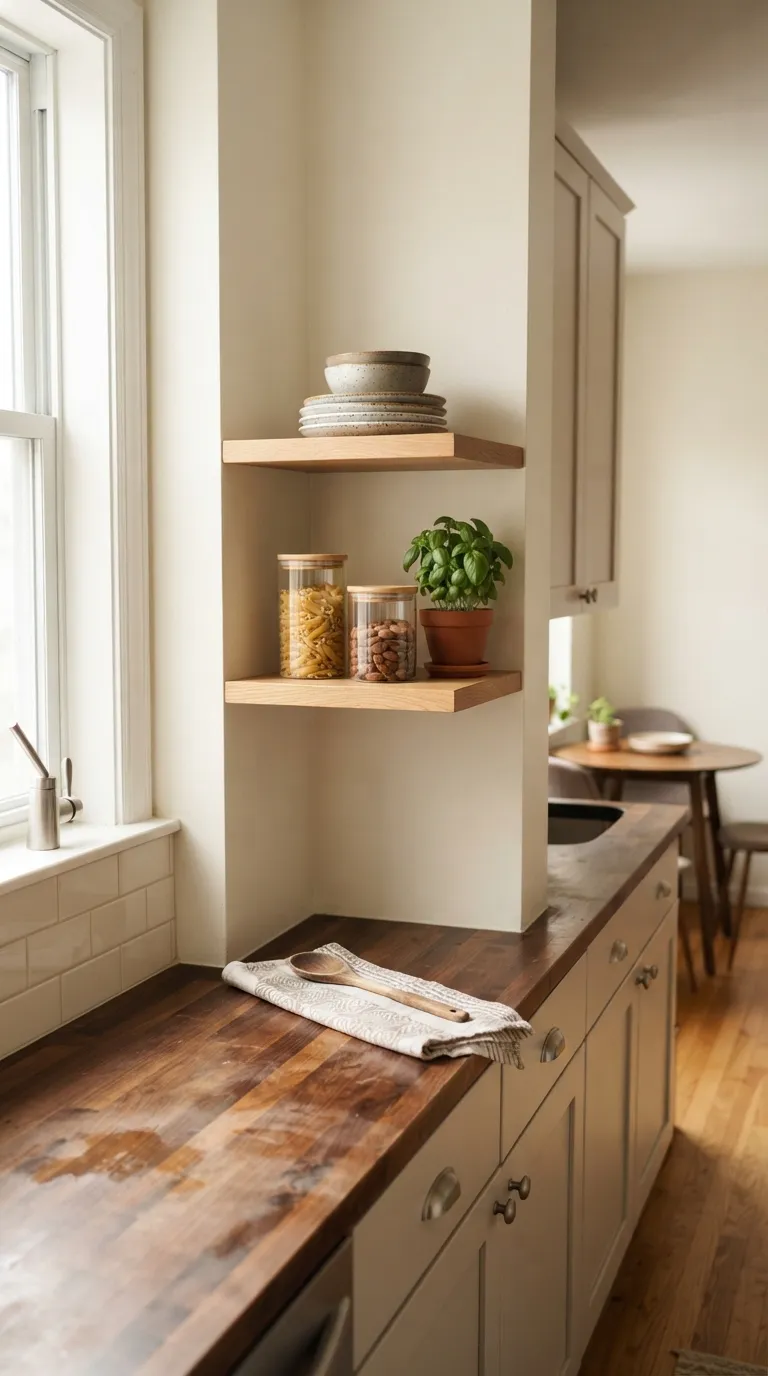
Corners often become dead zones because they’re awkward to reach. A pair of shallow shelves can make that space useful for dishes, pantry jars, or a few cooking staples. Keep the shelves shallow enough that nothing gets lost behind the front row.
Use heavier items on lower shelves and lighter pieces higher up. If the corner is near the stove, avoid storing anything that could be damaged by heat or splashes. A tidy corner shelf can also add warmth without taking up the counter area you need for chopping.If you enjoyed this, you might enjoy Small Dining Room Ideas too.
Use Clear Pantry Bins
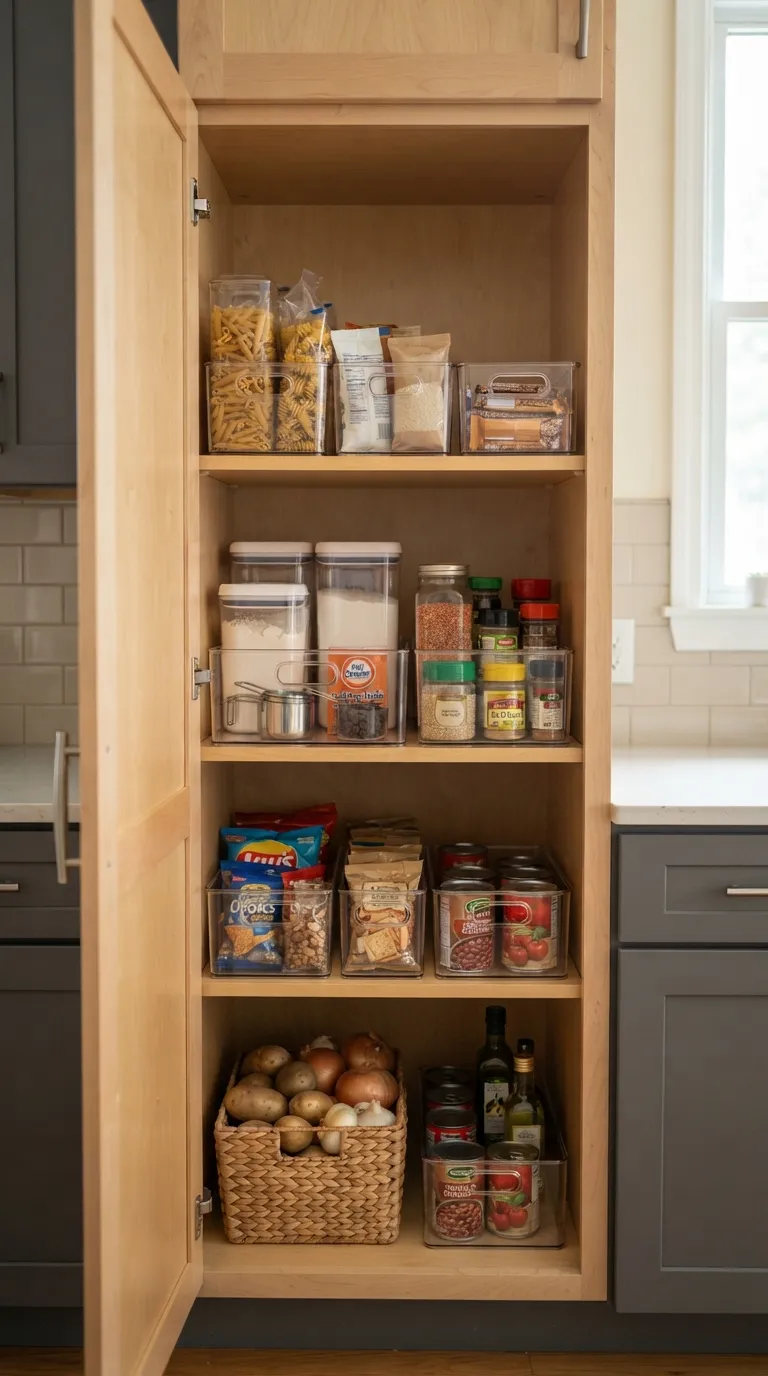
Clear bins can make a small pantry easier to scan. Group similar foods together, such as pasta, baking supplies, breakfast items, or snacks, so you can spot what you need without moving several packages. Choose bins that fit the shelf depth rather than leaving large gaps around them.
Avoid filling every container to the top. A little breathing room makes it easier to grab a bin and see what’s inside. Among small apartment kitchen organization ideas, this method works well when your pantry has plenty of vertical space but limited shelf width.
Build a Prep Station
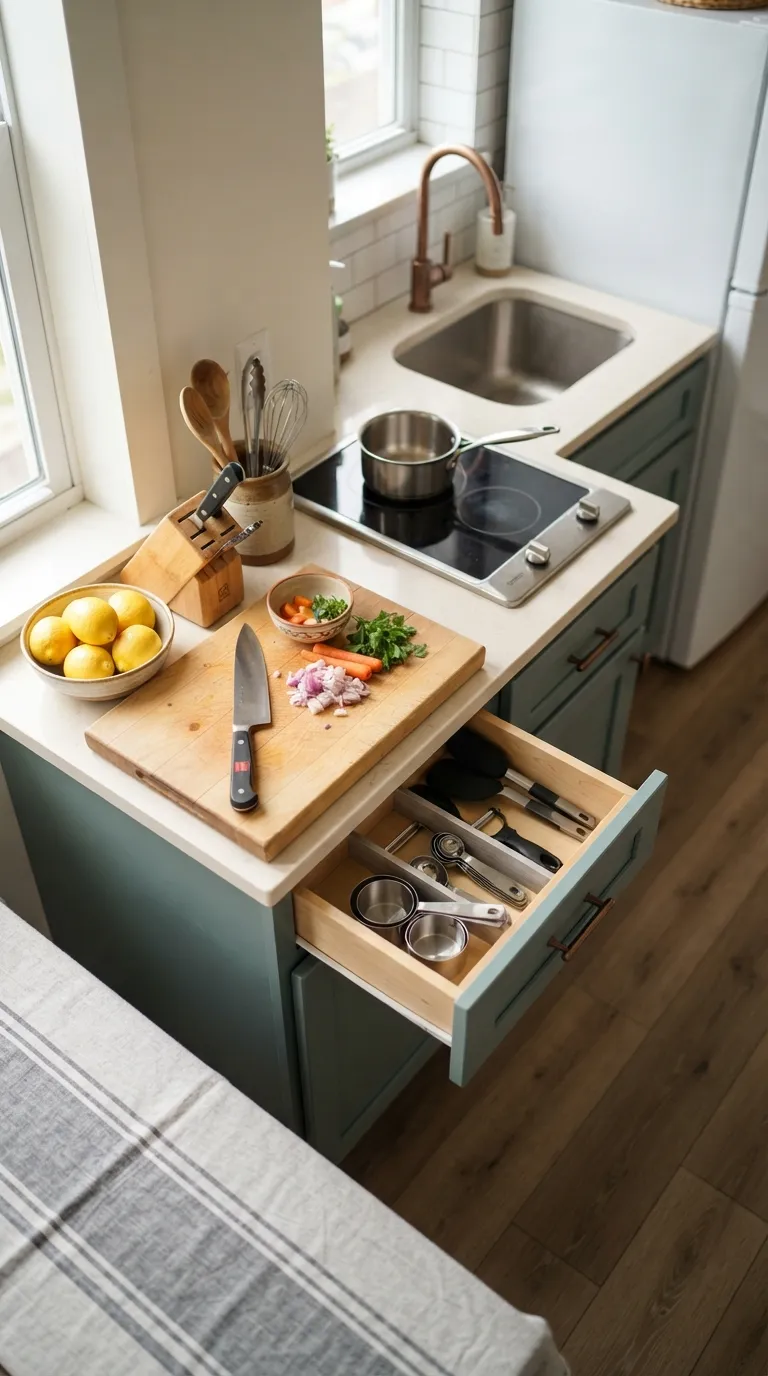
A small kitchen works better when your main prep tools live close to the place where you chop and mix. Keep a cutting board, knife storage, mixing bowl, and measuring tools within easy reach of one clear section of counter. This creates a simple work zone instead of making you collect supplies from every cabinet.
Think of the prep area like a small workstation. Keep the surface clear before you begin, then return tools to their homes when you’re finished. This approach makes cooking feel more orderly without requiring a larger kitchen.
Free the Countertop
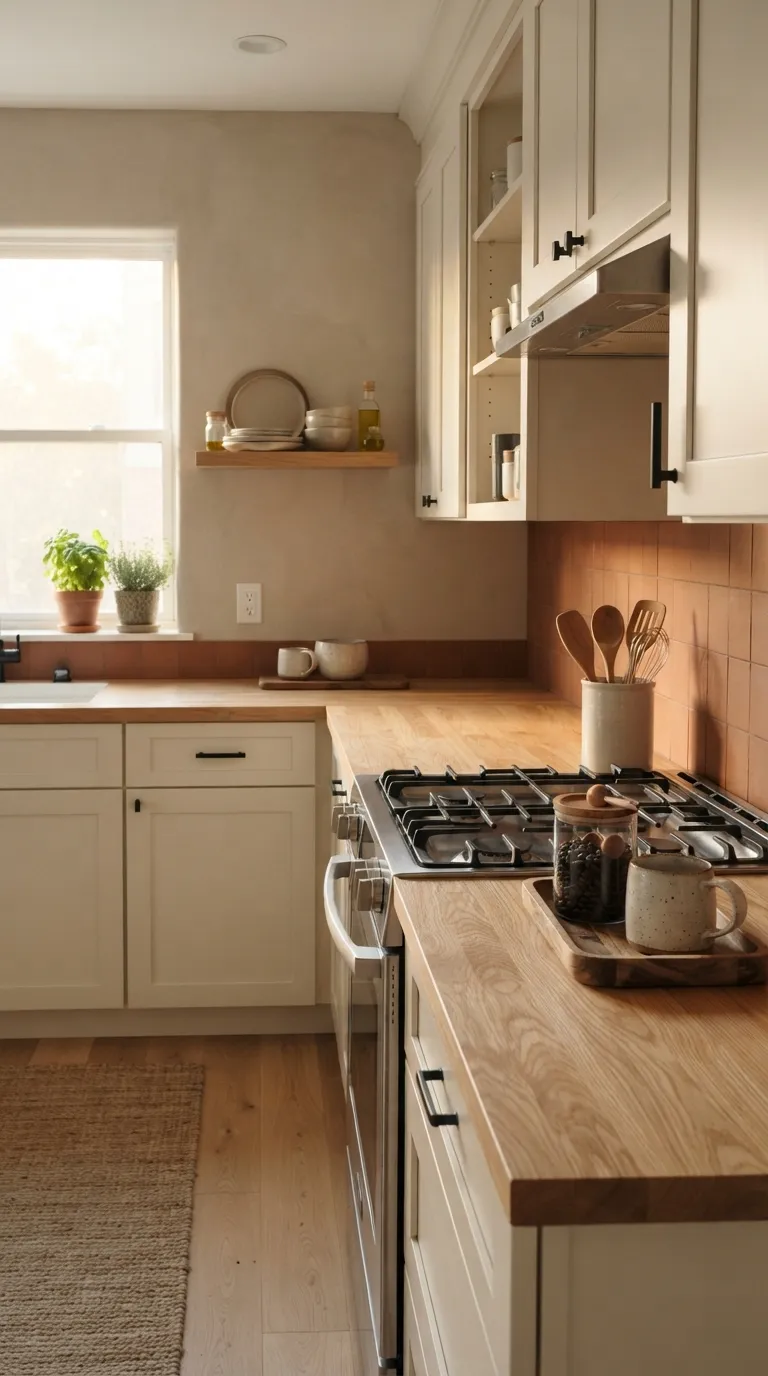
Your countertop is prime working space, so don’t let storage take over all of it. Keep out the tools you use every day and give everything else a cabinet, drawer, shelf, or cart home. Even removing two rarely used appliances can open a useful patch of prep space.
Try setting a simple rule for visible items. If something isn’t used most days, store it out of sight unless it also serves a decorative purpose. A clear counter gives you more room to chop, assemble meals, and clean as you cook.
Choose Stackable Containers
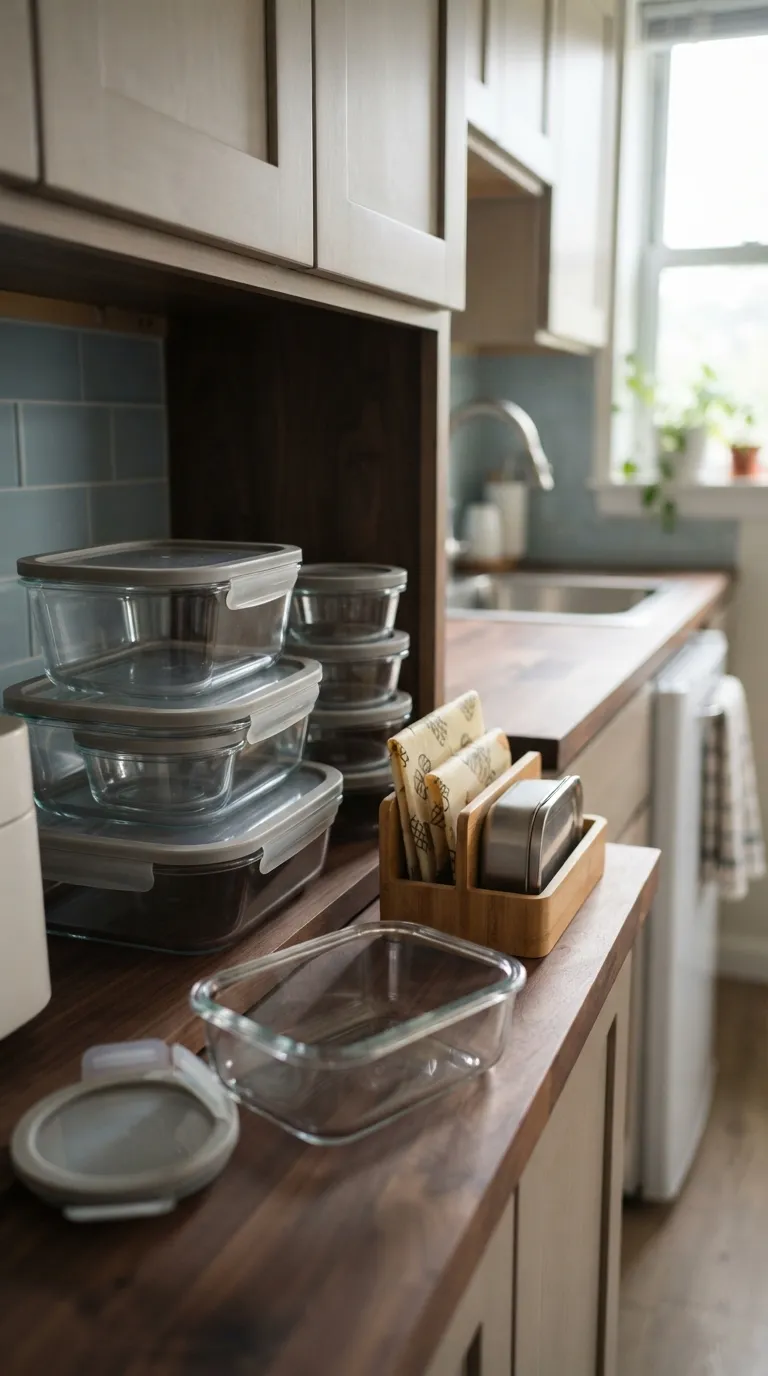
Food containers can create a messy cabinet when every shape needs its own spot. Stackable pieces keep the same footprint while using more of the cabinet’s vertical space. Choose a small group with compatible sizes instead of collecting many mismatched sets.
Store lids together in a narrow rack or upright divider. Place the largest containers at the back or bottom, then keep smaller pieces where they’re easy to grab. This gives your food storage area a cleaner layout and makes packing leftovers less of a chore.
Organize the Fridge Door
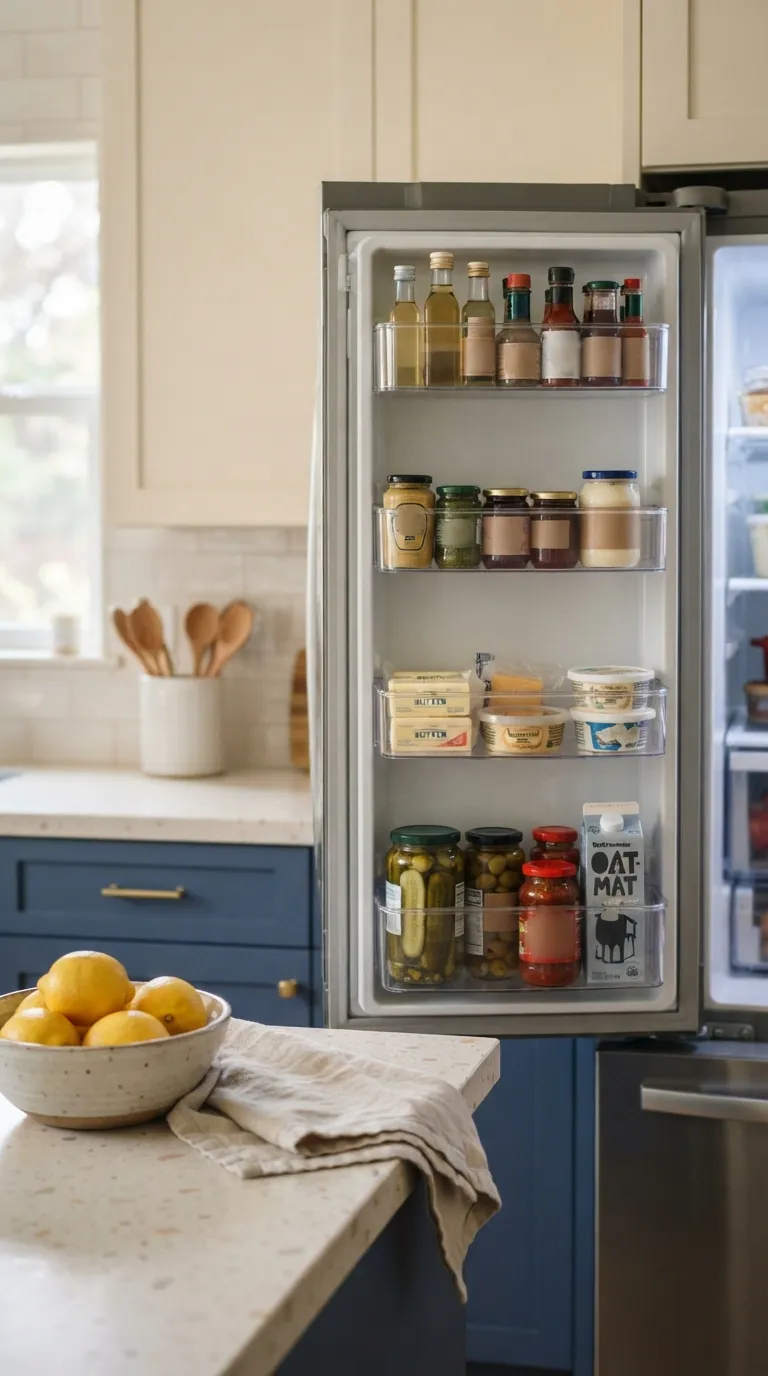
The refrigerator door can hold more than random bottles. Group condiments, sauces, spreads, and smaller jars so similar items stay together. A shallow bin can also keep loose packets from sliding around every time the door opens.
Avoid stuffing the door until bottles block one another. Keep heavier containers in sturdy lower shelves and lighter items higher up. This makes fridge storage easier to scan and helps you use the space you already have more wisely.
Add a Narrow Trash Station
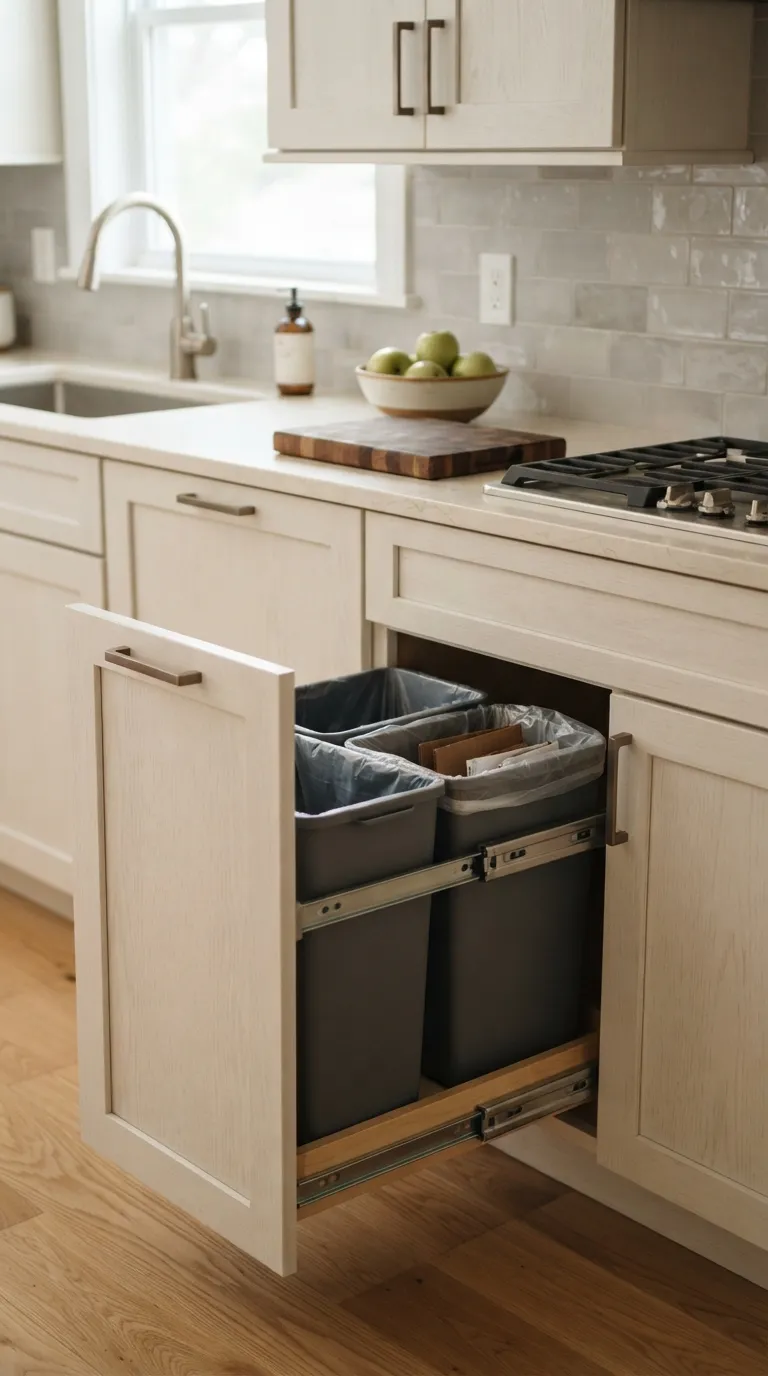
A slim pull-out bin can keep waste off the floor and out of the main walking path. If your cabinet allows it, place the station near the sink or prep area so scraps have a short route from counter to bin.
Measure the cabinet opening before choosing a pull-out system. You need enough room for the door, bin, and your hand to work comfortably. In a compact kitchen, giving waste its own defined zone can free up floor space and reduce visual clutter.
Use the Oven Drawer
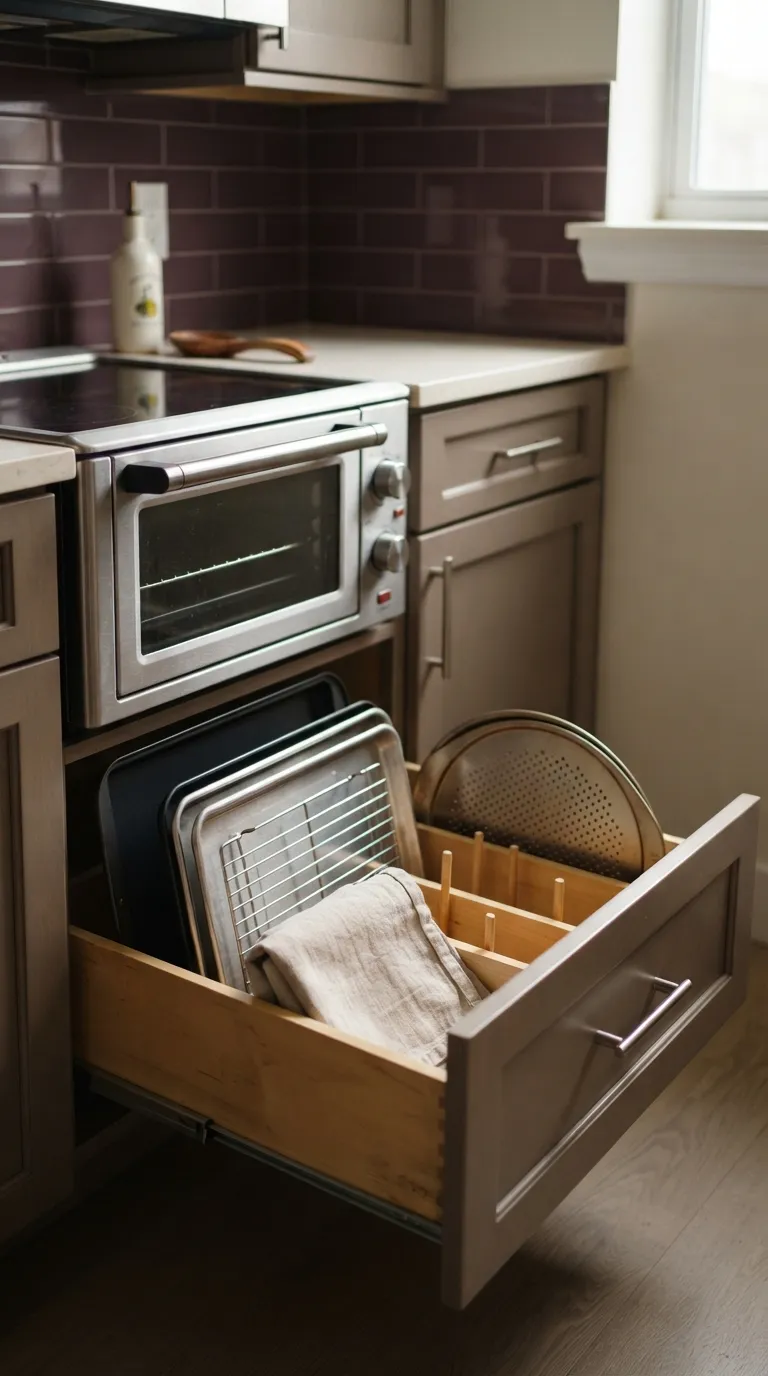
That shallow drawer beneath the oven can be useful for flat cookware, but check your appliance manual before storing anything there. Some oven drawers are warming drawers rather than general storage spaces, so their intended use can differ by model.
If yours is suitable for storage, keep baking sheets, racks, and pizza pans there. Store them upright when the drawer shape allows it, using dividers to stop pieces from sliding into a pile. This keeps bulky flat items from taking over another cabinet.
Create a Breakfast Drawer
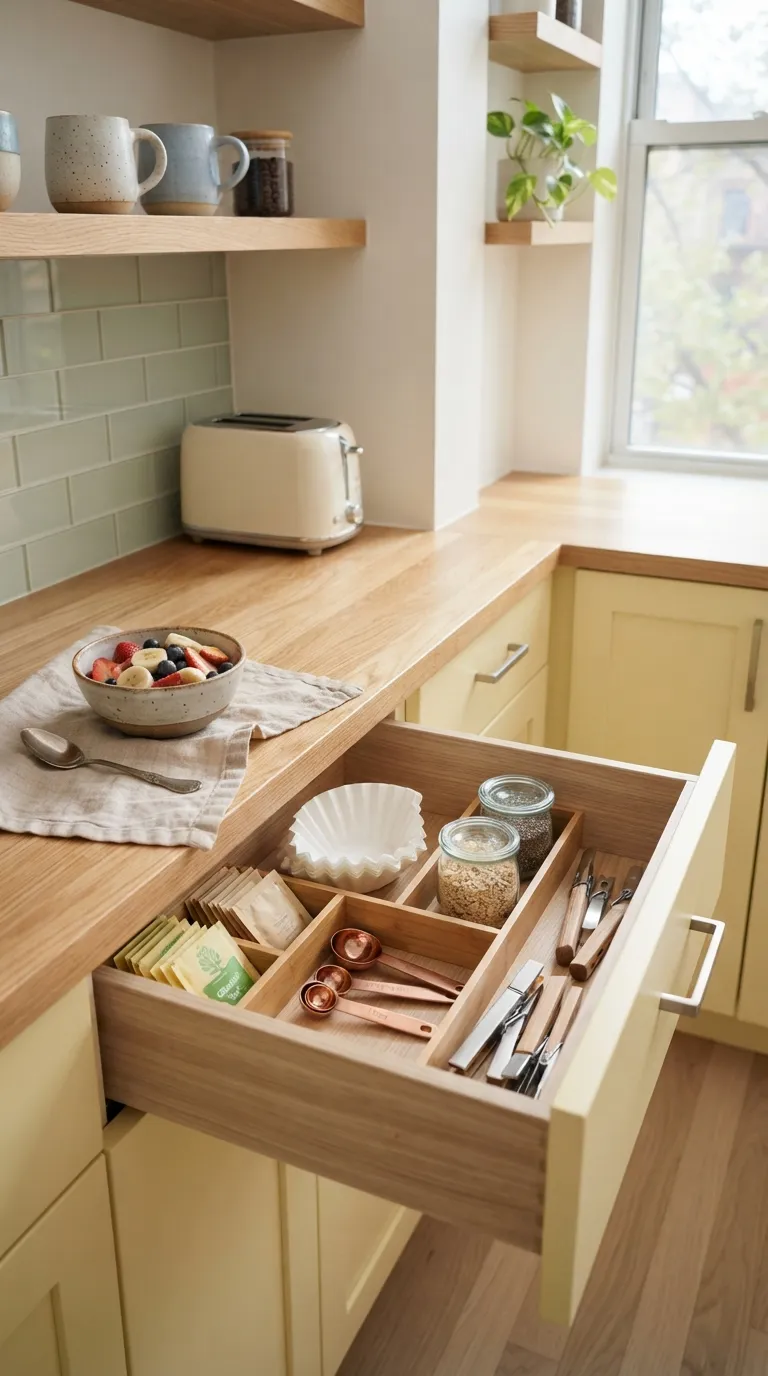
A breakfast drawer keeps small morning supplies together instead of scattering them across several cabinets. Use one shallow drawer for coffee filters, tea, measuring spoons, clips, and other items you reach for before work or school. Keep bulky food packages elsewhere.
Place the drawer close to the coffee maker, toaster, or breakfast prep area when possible. This creates a simple routine because the supplies you need sit in one predictable spot. Even a small drawer can feel useful when every section has a clear purpose.
Store Cutting Boards Upright
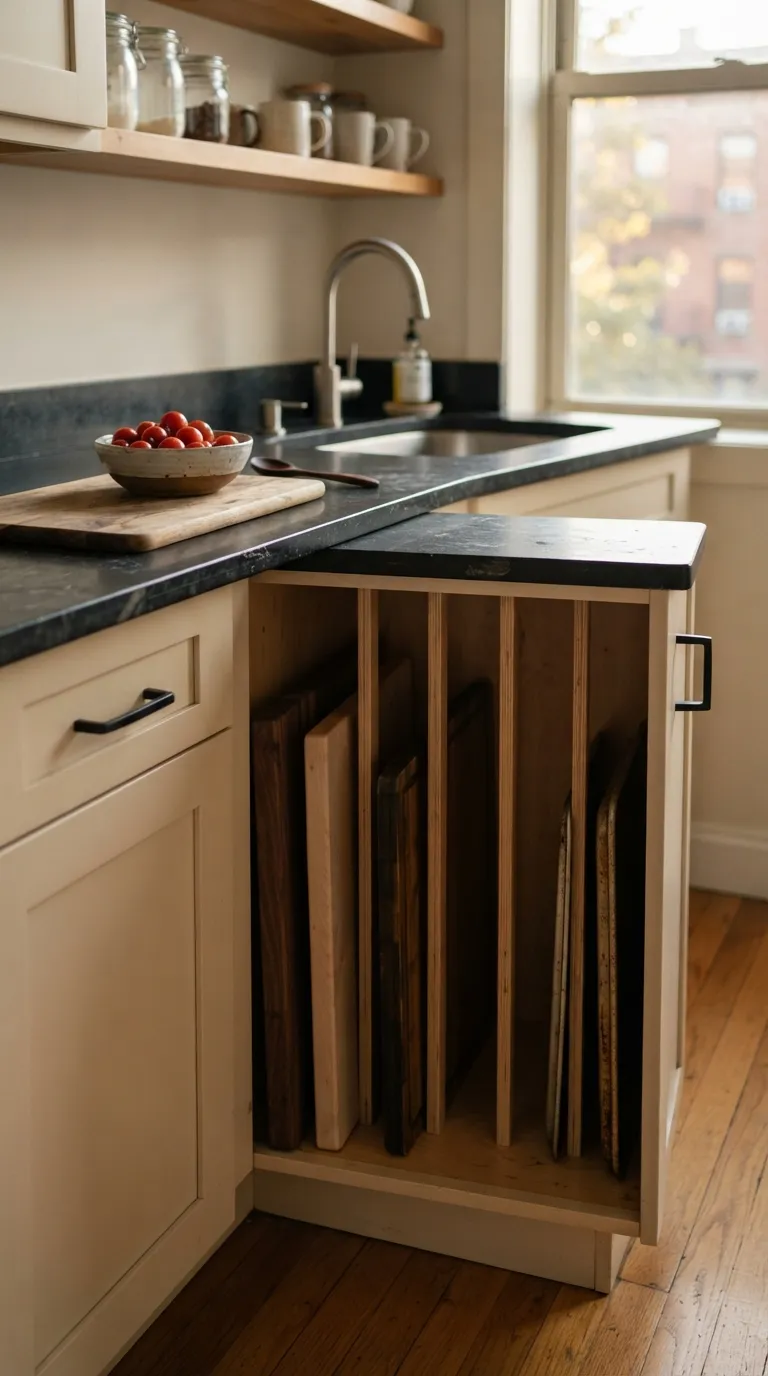
Cutting boards are easier to grab when they stand upright. A narrow divider inside a cabinet can keep boards, trays, and flat serving pieces separated instead of stacked in one heavy pile. You can pull out the piece you need without disturbing everything around it.
Keep boards in a dry storage area and allow room for air circulation if they’re damp after washing. Put your most-used board at the front. This setup uses narrow cabinet space efficiently and works well when deep drawers are limited.
Add Toe-Kick Storage
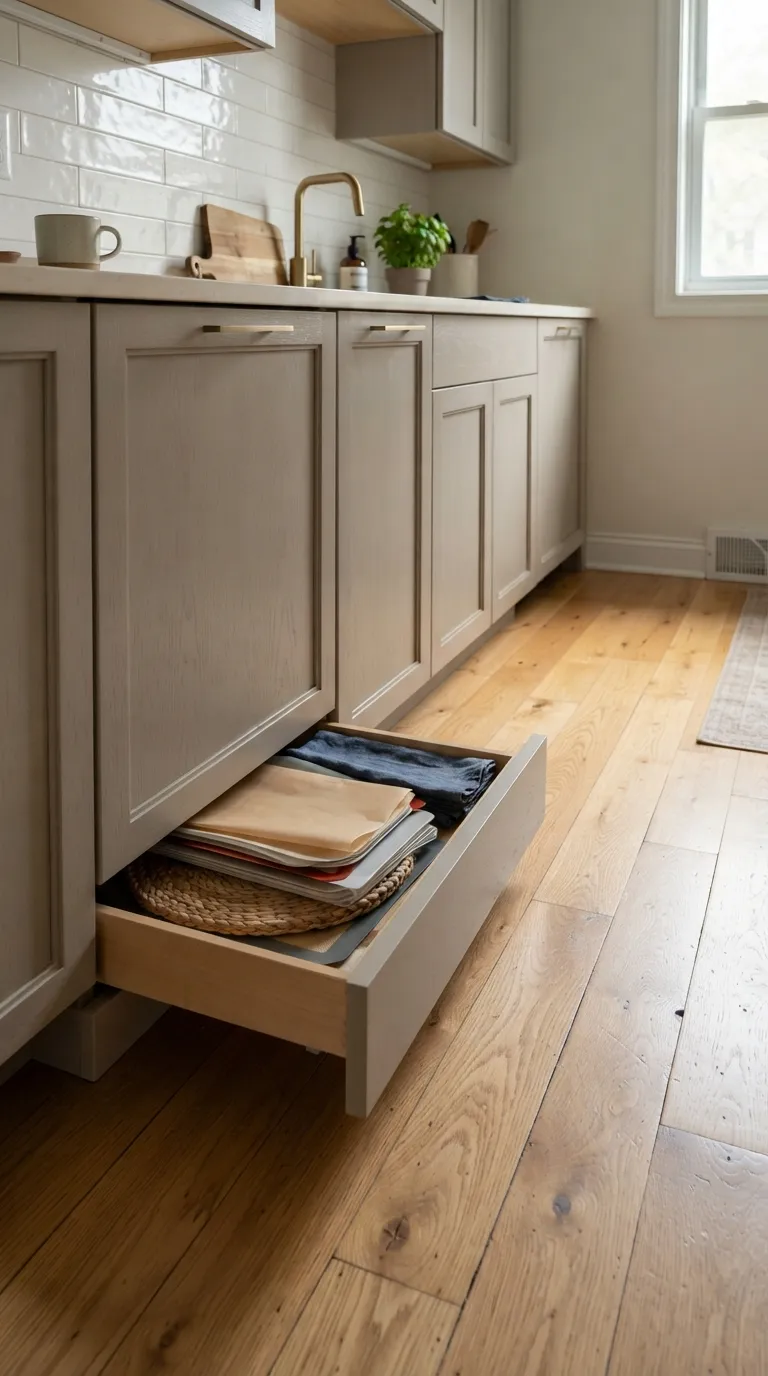
The narrow space beneath lower cabinets can sometimes become useful hidden storage. A toe-kick drawer is suited to thin items such as baking mats, placemats, kitchen linens, or spare parchment. Because the drawer is shallow, it’s better for flat pieces than bulky supplies.
This option usually requires cabinetry designed for the feature, so it’s worth considering during a kitchen renovation rather than as a quick rental fix. If you already have the space, even one shallow drawer can add storage without changing the main cabinet layout.
Simplify the Daily Setup
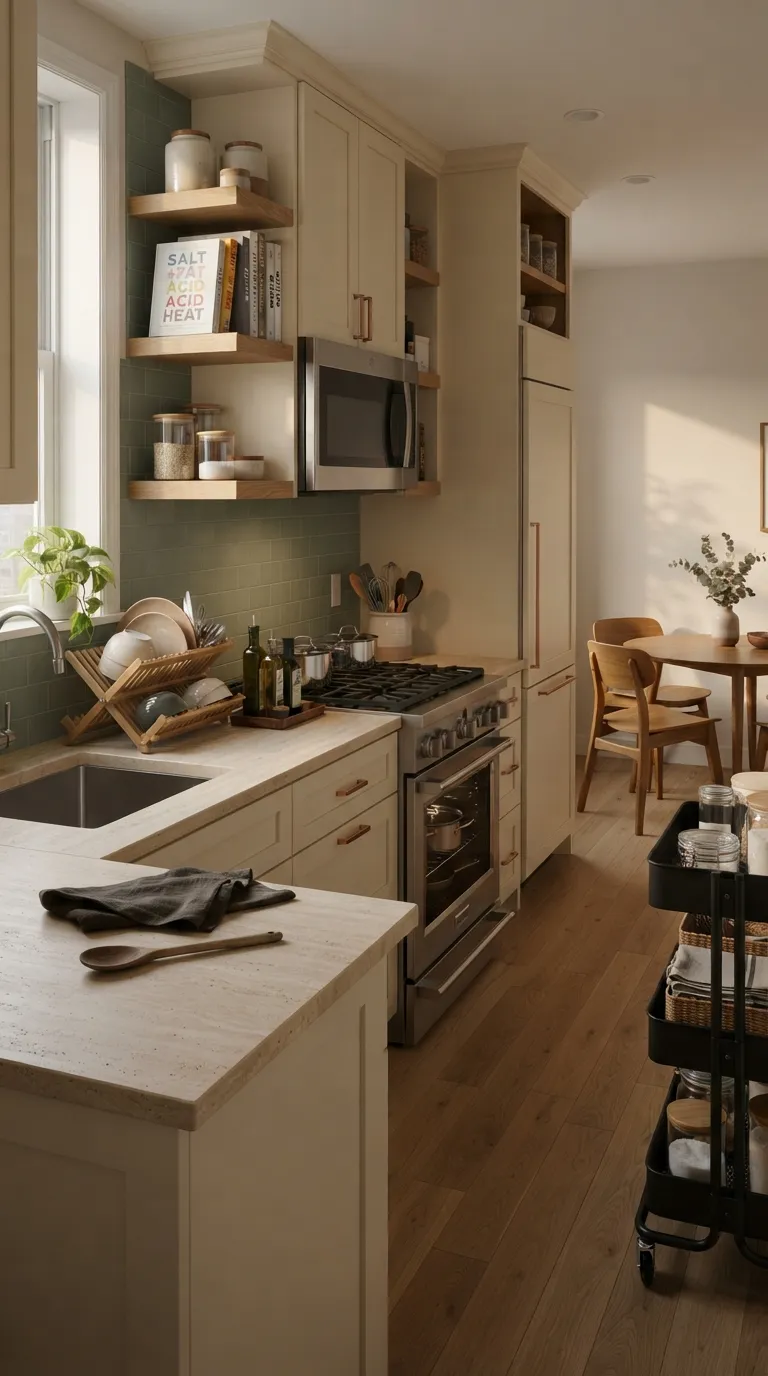
The easiest kitchen to maintain is one where daily items have obvious homes. Keep your most-used tools near the places where you use them, then store everything else out of the main work area. You don’t need to fill every wall or cabinet to make a small kitchen work harder.
Start with one problem zone rather than changing the whole room at once. A crowded utensil drawer, messy pantry shelf, or overloaded counter can become your first target. Once that area works better, the rest of your storage choices become much easier to make.
Make Every Inch Count
Small kitchens don’t need endless storage pieces to feel functional. The strongest small apartment kitchen organization ideas use existing walls, cabinet doors, drawers, corners, and vertical space with purpose. Start with the areas that slow you down most, then give those items a clear home.
A few focused changes can make meal prep feel less crowded and cleanup feel simpler. Keep your best work surface open, store similar items together, and choose storage that matches your actual routine. Your kitchen may stay compact, but it can still feel calm, practical, and ready for everyday cooking.
Elira Montclair
Elira writes about timeless home decor, kitchen styling, and practical interior ideas. Her work blends warm, inviting aesthetics with simple decorating tips that make everyday spaces feel beautiful and comfortable.