Cozy Desk Setup Inspiration With Simple Touches That Feel Luxurious

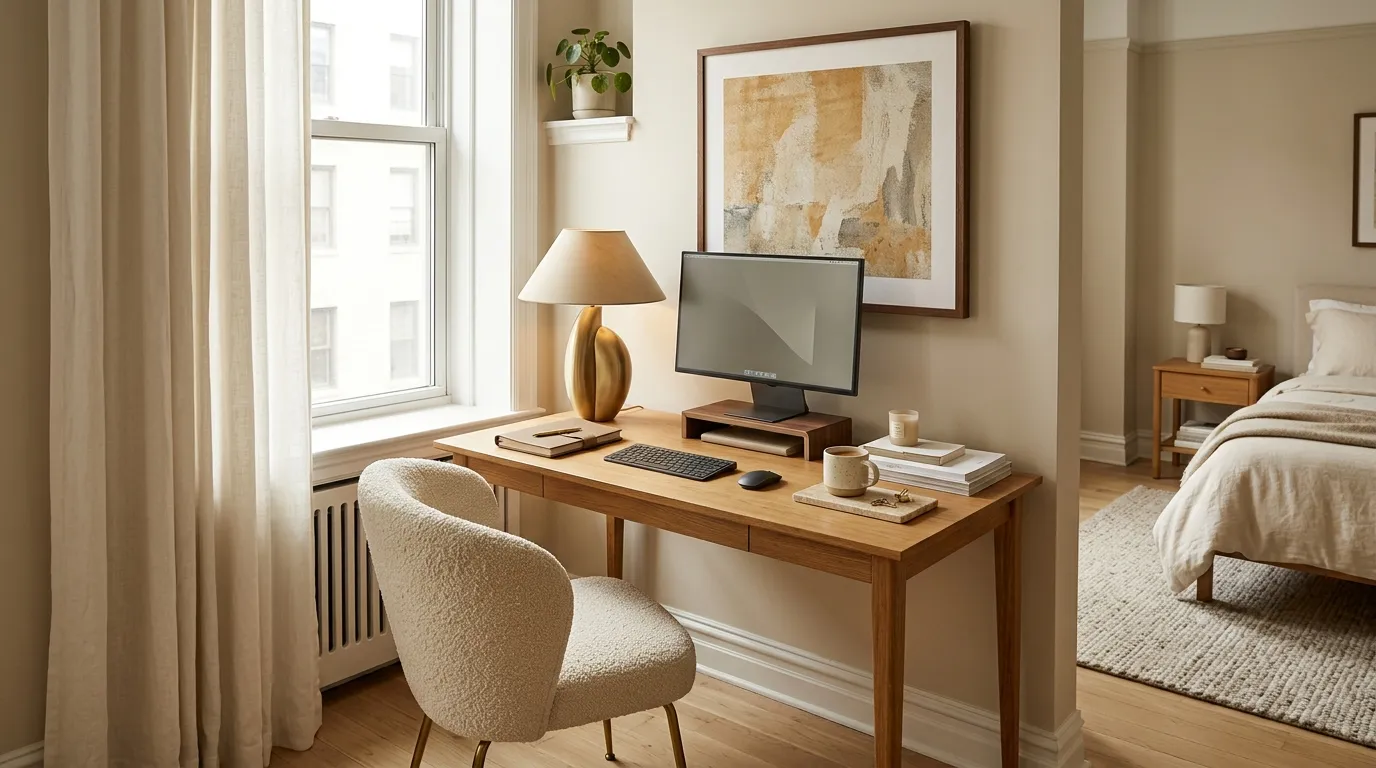
A beautiful desk doesn’t need a long shopping list. The right cozy desk setup inspiration can turn a plain work corner into a space that feels calm, polished, and comfortable without looking overdone. Think warm wood, soft lighting, useful storage, and a few pieces that feel personal.
Your desk should also work for real life. A comfortable chair, clear work surface, easy cable control, and nearby storage can make daily tasks feel less cluttered. Small choices matter here, especially when you want a home office that looks refined while still feeling easy to use.
Warm Wood Layers
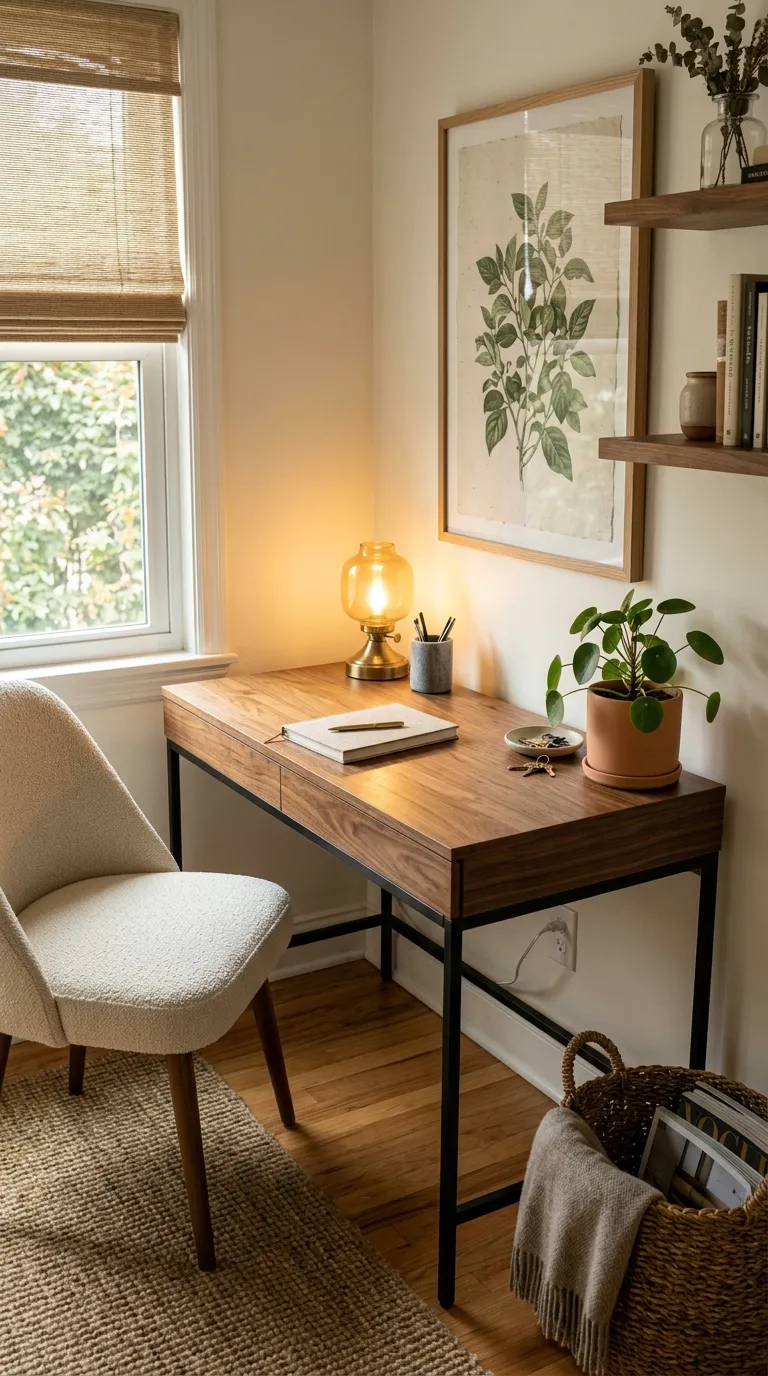
Warm wood gives a desk a grounded feel. Walnut, oak, and acacia work especially well when paired with creamy fabrics or soft beige walls. The wood grain adds visual interest without making the workspace feel busy.
Keep the desktop practical rather than packed. A small tray can hold loose items, while a single lamp creates a defined work zone after sunset. This simple mix makes the desk feel more like part of the room than a separate office station.
Soft Task Lighting
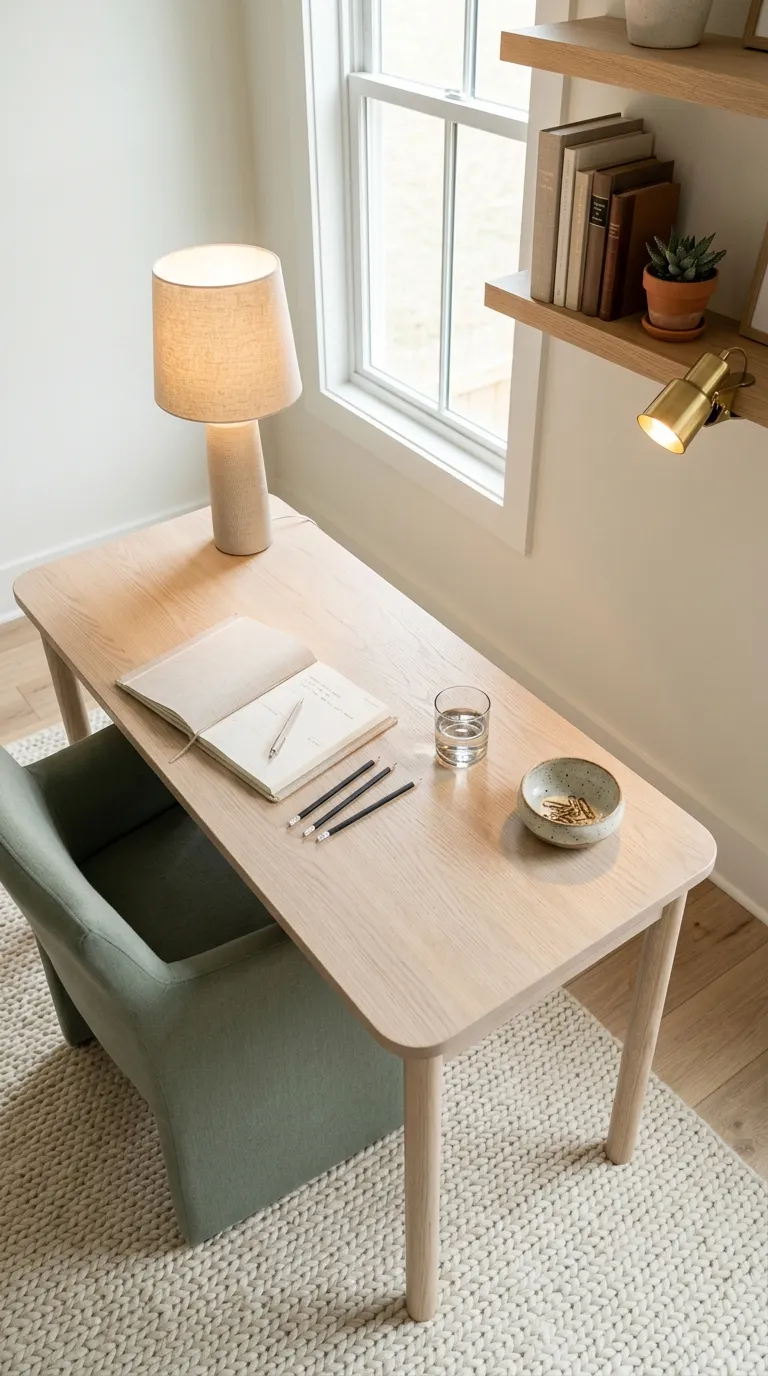
Good desk lighting does more than brighten the keyboard. It creates a softer mood and helps separate your work area from the rest of the room. A shaded lamp can also keep harsh overhead light from taking over the space at night.
Place your main lamp on the side opposite your writing hand when possible. That setup helps reduce shadows across notebooks and papers. For a polished look, pair one warm table lamp with gentle daylight instead of filling every corner with fixtures.
Creamy Textile Comfort
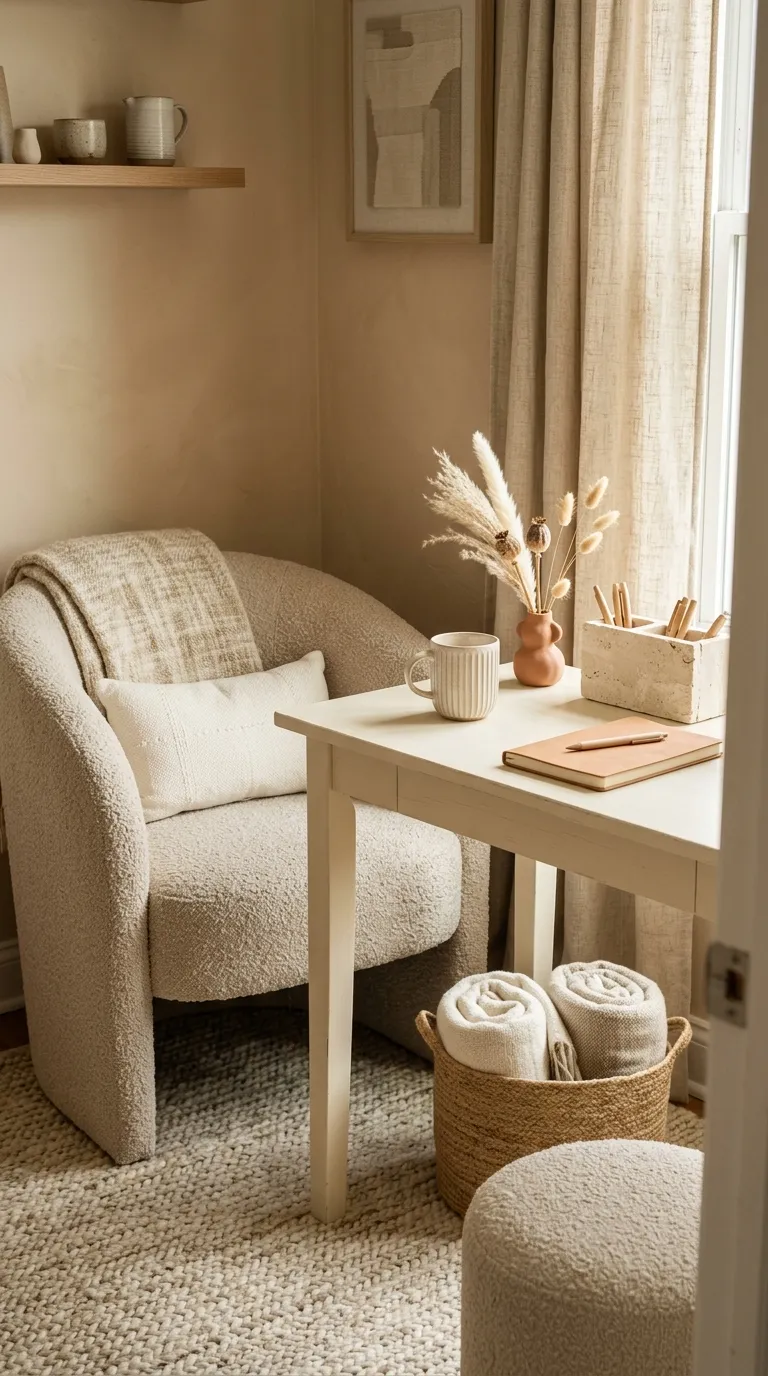
Soft textiles can make a hard desk area feel much more inviting. Boucle upholstery, linen curtains, woven rugs, and a small cushion add warmth without taking valuable work space. This is a useful trick for rooms that need to serve both work and relaxation.
Choose fabrics that can handle everyday use. A washable cushion cover or tightly woven rug is easier to care for than delicate materials. Keep the palette close in tone, such as cream, oatmeal, sand, and beige, so the workspace feels calm rather than visually crowded.
Brass Accent Details
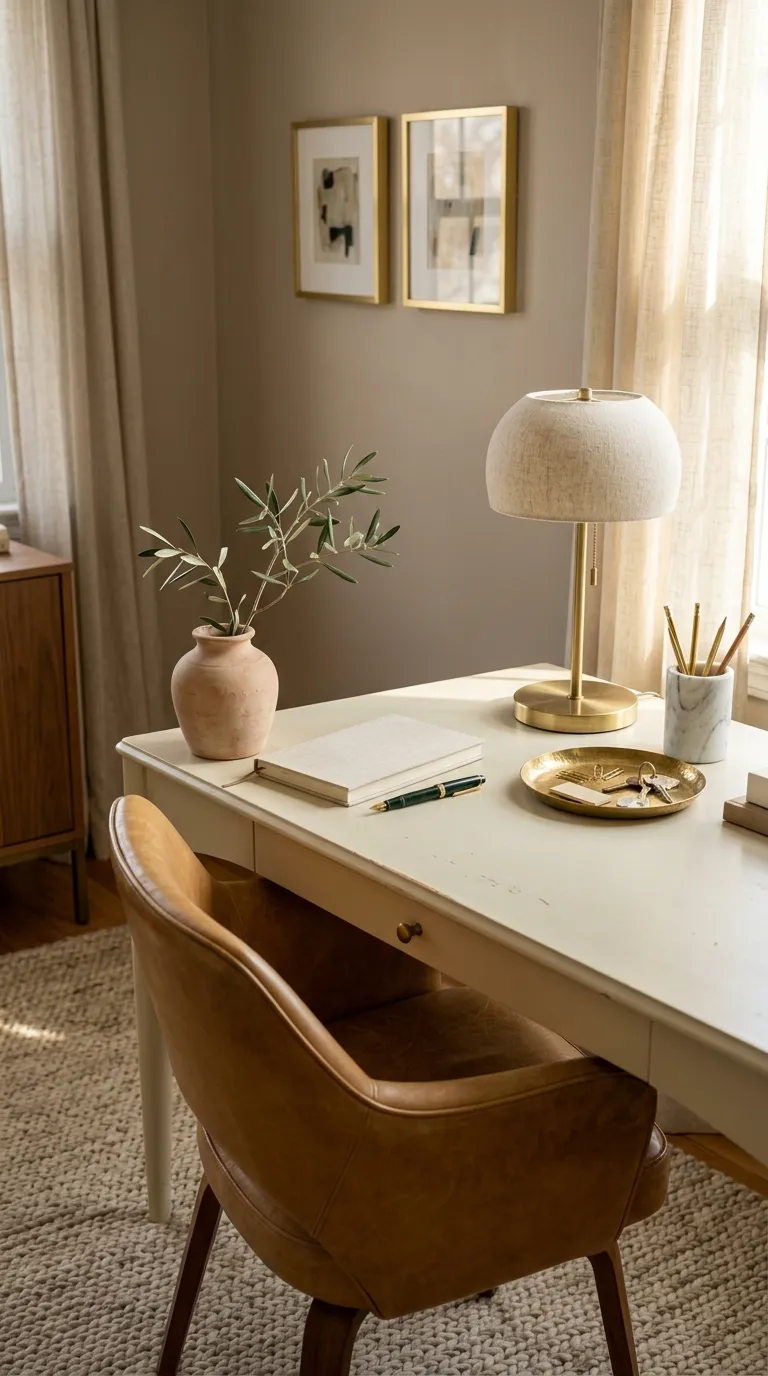
Small metallic accents can make a workspace feel more finished. Brass works well with cream, brown, olive, and warm wood because it adds a quiet point of contrast without taking over the room.
Use brass in two or three places rather than everywhere. A lamp, tray, or picture frame is enough to create a connected look. This approach keeps the desk useful while giving ordinary accessories a more polished feel.
Hidden Cable Control
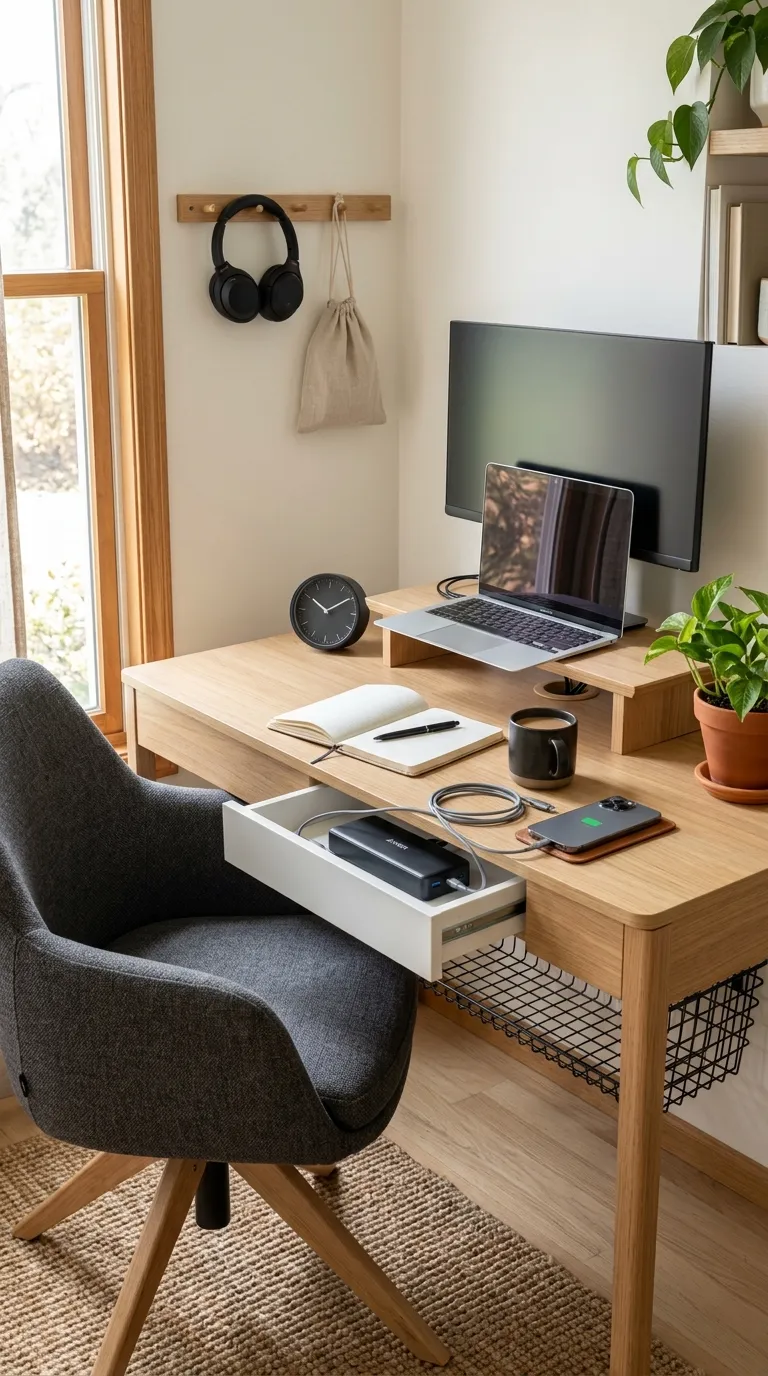
Loose cords can make even a beautiful desk look messy. A cable tray mounted beneath the desktop keeps power strips out of sight, while a simple desk grommet gives charging cables a clean path to your devices.
Think about the cords you use every day. Keep those within easy reach and hide the rest. A single visible cable can look intentional, but a tangled bundle quickly takes attention away from the warm, orderly feel you’re creating.
Curated Shelf Styling
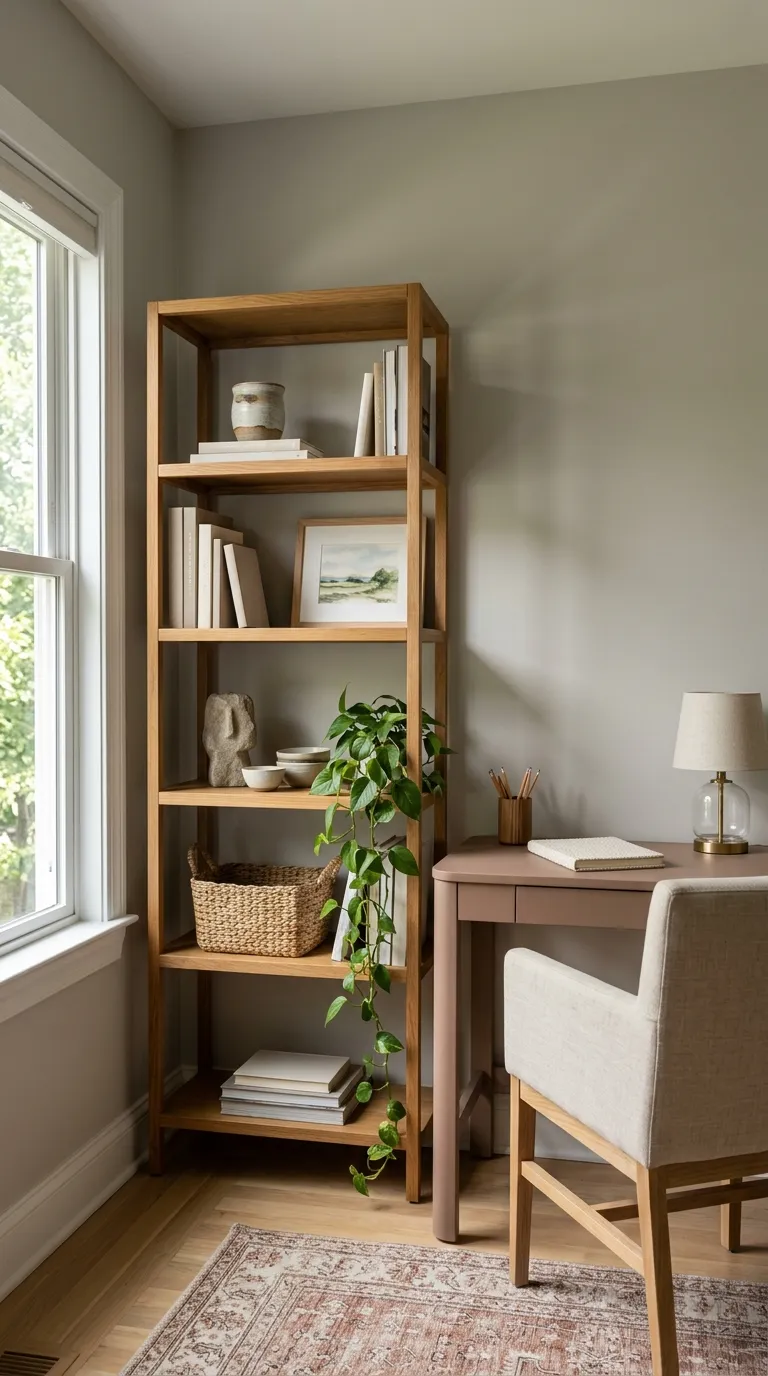
A nearby shelf gives your desk more room to breathe. Instead of filling the desktop with books, plants, and decorative pieces, move some of those items upward and create a layered backdrop.
Use a simple styling rule for each shelf. Combine something tall, something low, and something textured, then leave a little empty space around them. The result feels collected without making the workspace look like a storage area.
Framed Art Balance
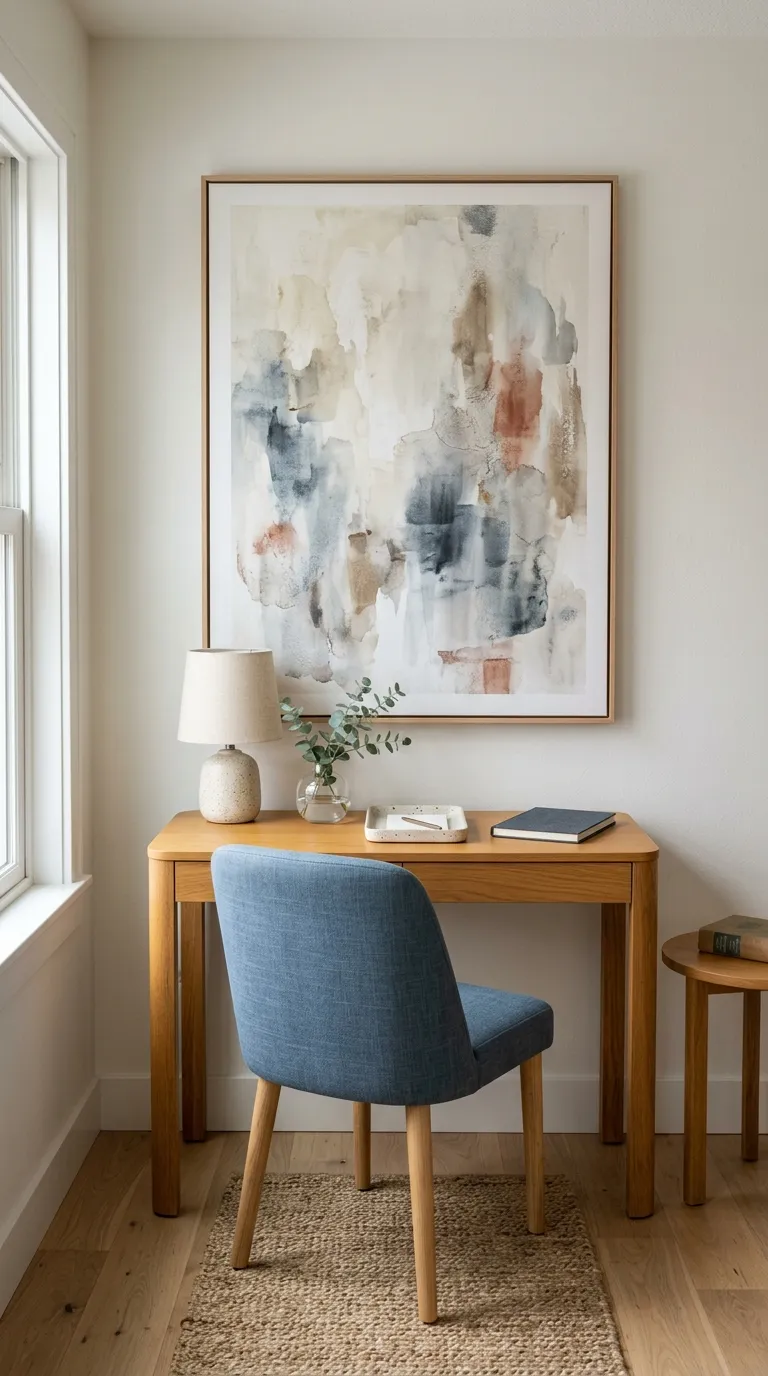
Wall art can give a desk a finished look without adding clutter. One larger piece often feels calmer than several tiny frames competing for attention.
Choose artwork that shares at least one color with your chair, rug, or accessories. That small connection helps the workspace feel intentional. For a narrow desk, hang the art slightly above the surface so the wall still feels open.
Rounded Desk Shapes
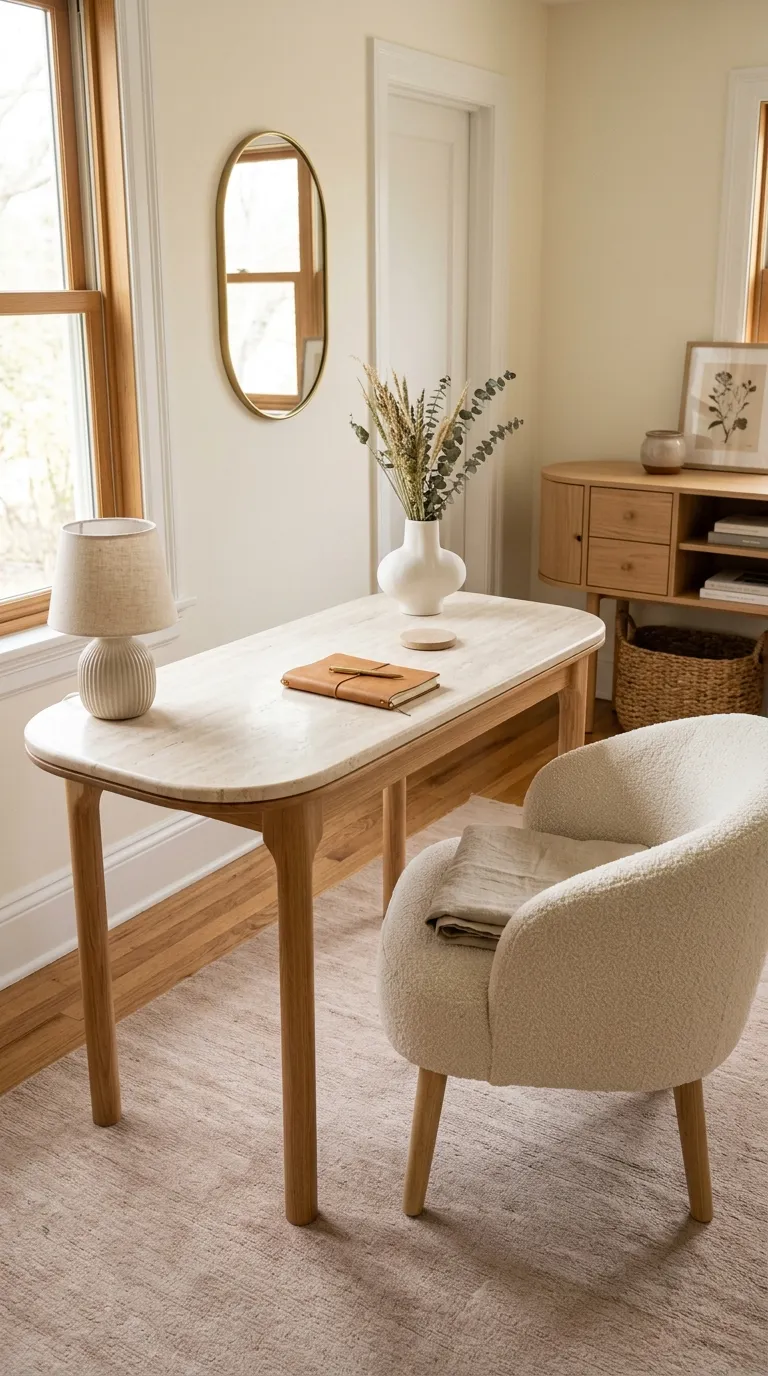
Rounded furniture softens the visual lines of a workspace. A curved desk, oval mirror, or softly shaped chair can make a small corner feel less rigid.
This shape works especially well when the rest of the room has straight shelves or rectangular artwork. The contrast keeps the space interesting without adding more decoration. Look for rounded edges on practical pieces first, such as the desk, chair, or storage cabinet.
Natural Greenery
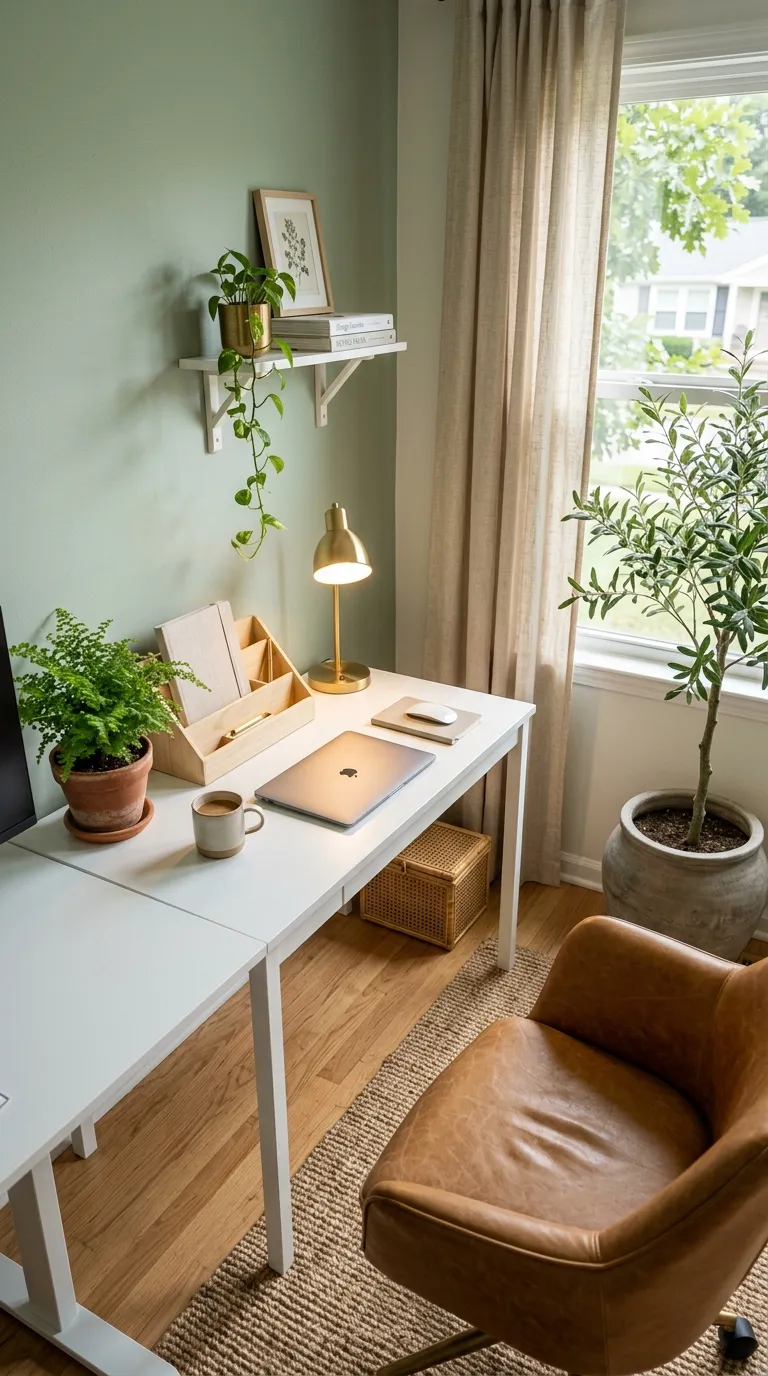
Plants bring a natural color break to a desk without making it feel decorative for decoration’s sake. A small fern, pothos, or compact olive plant can add softness while keeping the workspace fresh.
Match the plant size to the room. One taller plant beside the desk can fill an empty corner, while a small pot works better on a crowded desktop. Choose containers in clay, stone, or woven finishes to connect the greenery with other natural materials.
Layered Neutral Tones
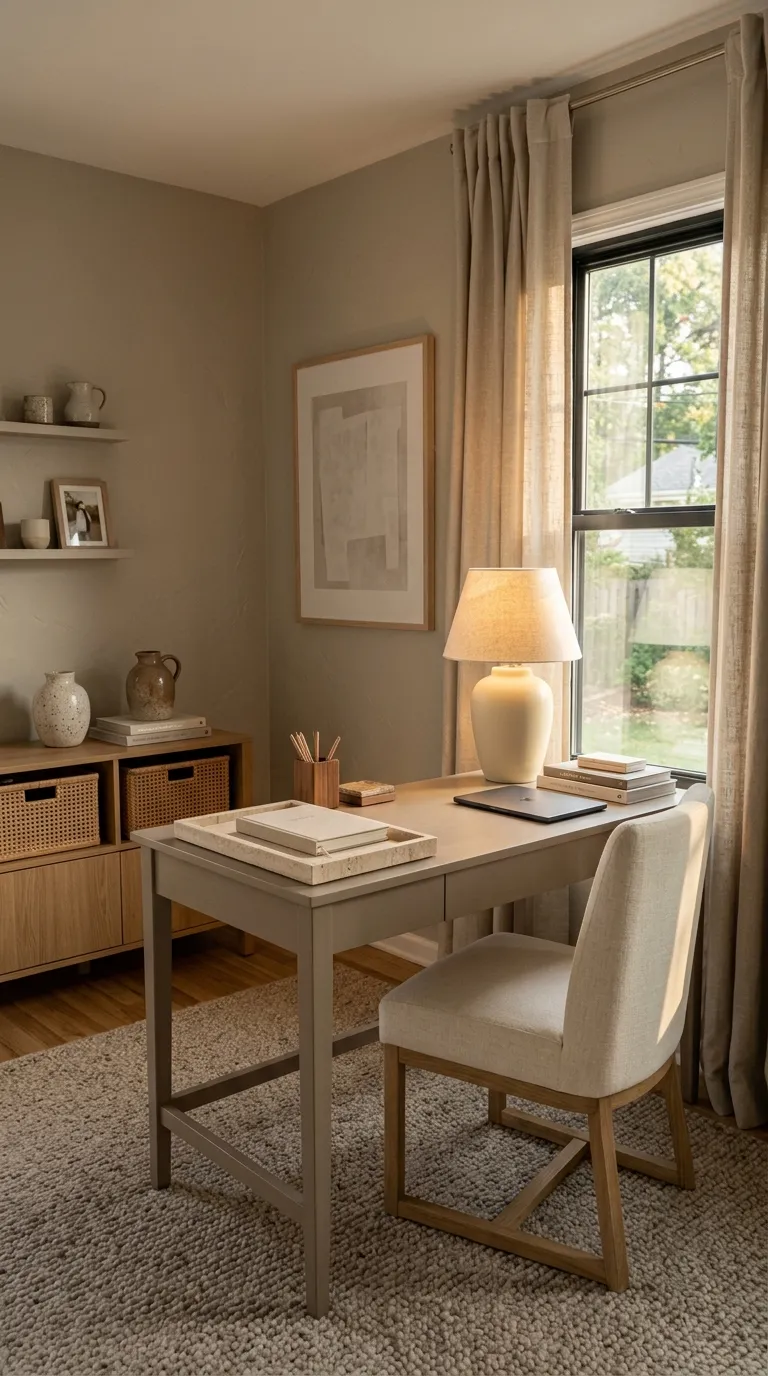
Neutral colors don’t have to feel plain. The secret is using several nearby shades so the room has depth without strong visual contrast. Warm white walls can sit comfortably beside taupe furniture, oatmeal textiles, and caramel accents.
Keep one tone slightly deeper than the others. A mushroom desk or caramel chair can anchor a mostly light palette. This makes the workspace feel polished while still giving your eyes a quiet place to rest.
Luxe Desk Accessories
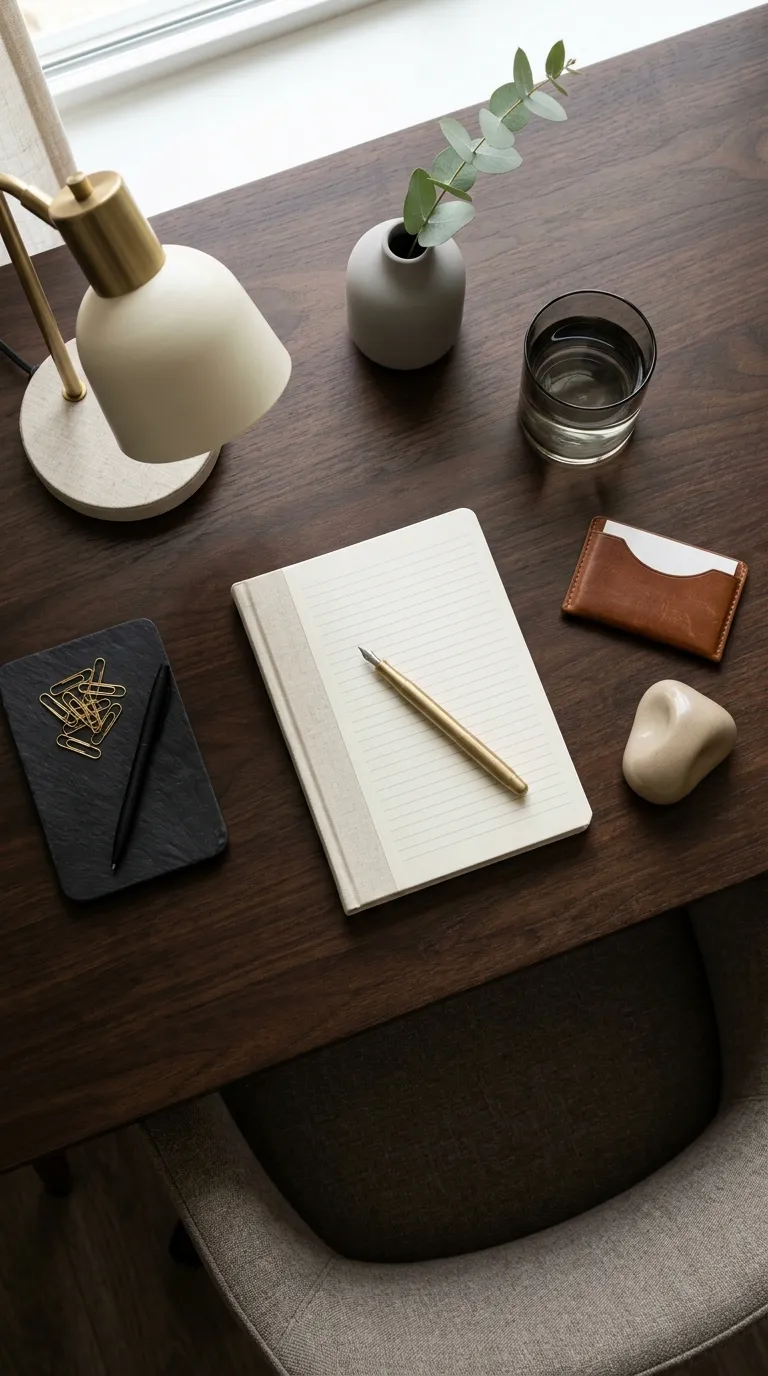
A few well-made accessories can make a desk feel special without filling every inch. Look for materials such as leather, stone, glass, ceramic, and brushed metal when choosing everyday pieces.
Start with items you already need. Replace a plastic pen cup with a ceramic holder or use a small stone tray for loose essentials. Practical objects can still look beautiful when their shapes, finishes, and colors work together.
Compact Drawer Storage
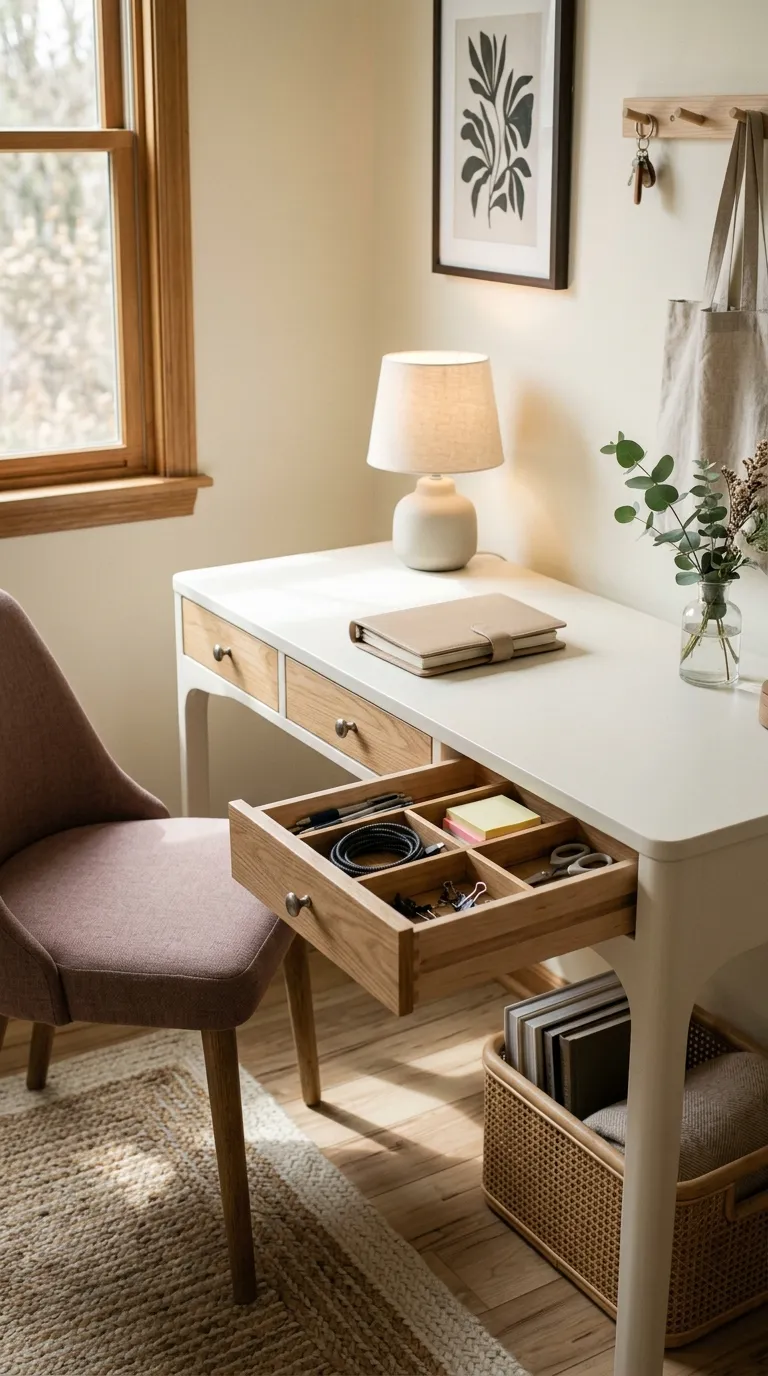
Drawers are useful when you want a clean desk at the end of the day. Small compartments prevent pens, chargers, clips, and notebooks from becoming one mixed pile.
Give each drawer a simple purpose. One can hold writing supplies, another can store electronics, and a third can keep personal items out of sight. This makes tidying quick because everything has a clear home.
Window-Side Placement
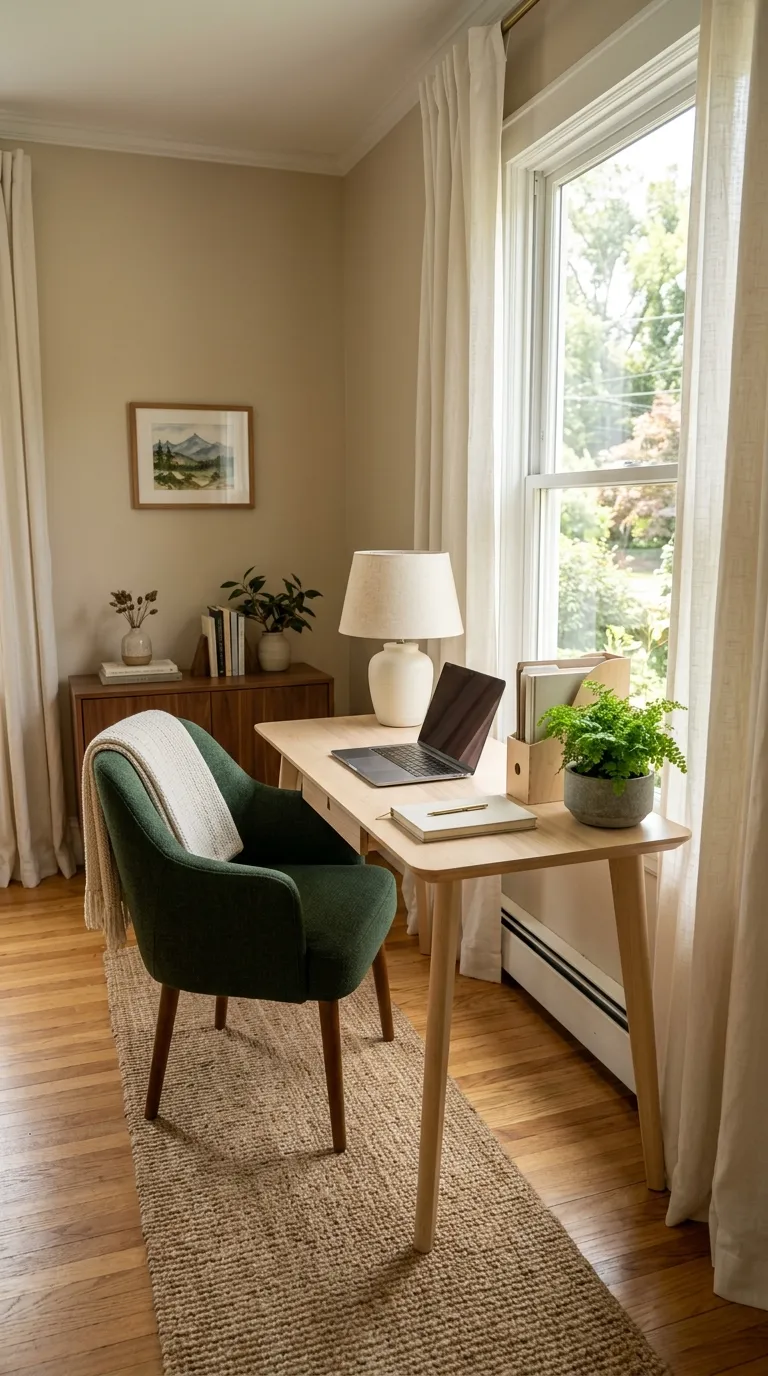
A window can give your workspace a natural source of light and a pleasant view. Place the desk near the glass when possible, but avoid positioning your monitor where direct sunlight creates glare.
Sheer curtains give you more control during bright parts of the day. They soften strong light while keeping the room open and airy. A desk beside a window can also make a small room feel more connected to the outdoors.
Leather Chair Comfort
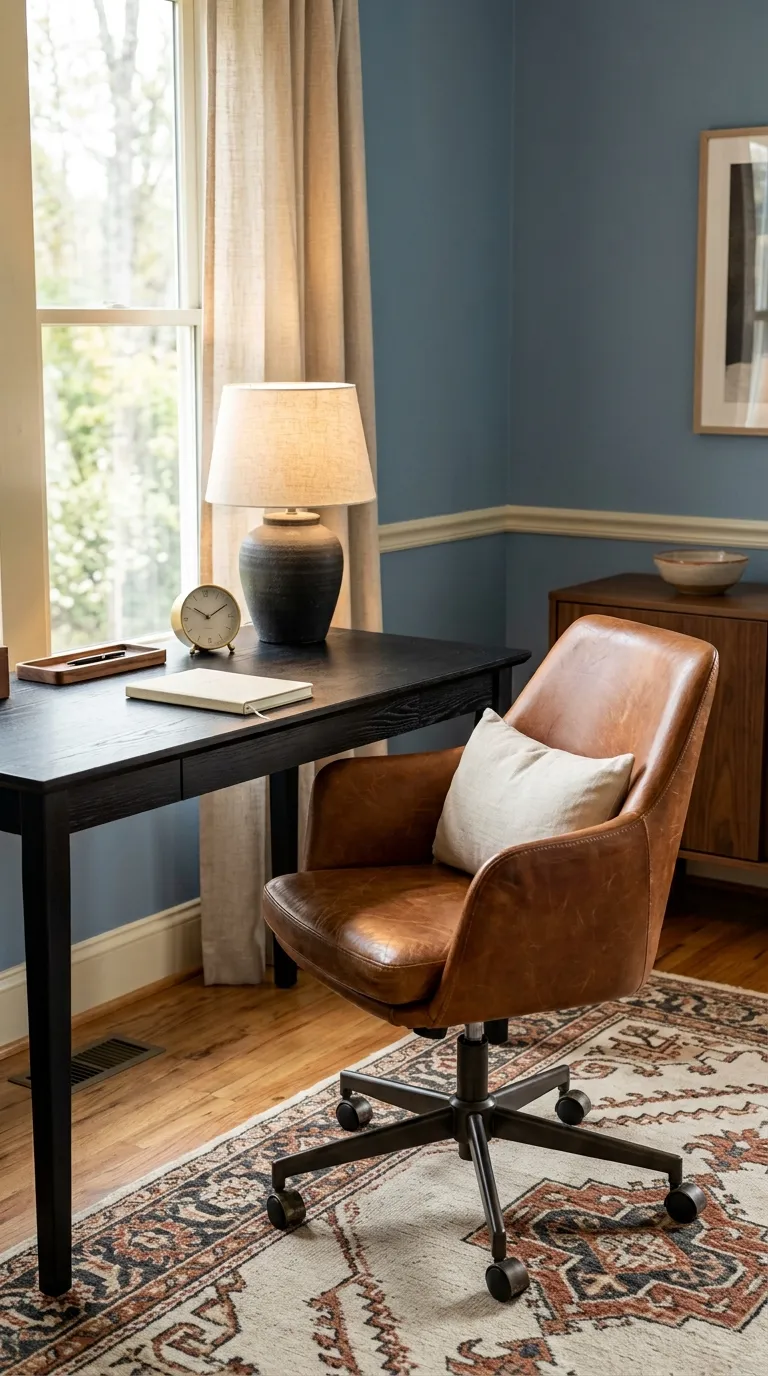
A comfortable chair can change how the whole desk feels. Leather brings a warm, substantial texture, while a curved back gives you support without making the room look overly formal.
Check the chair height against your desk before buying one. Your elbows should rest comfortably while you type or write. A small cushion can add comfort, but the chair itself should still provide the main support.
Personal Display Pieces
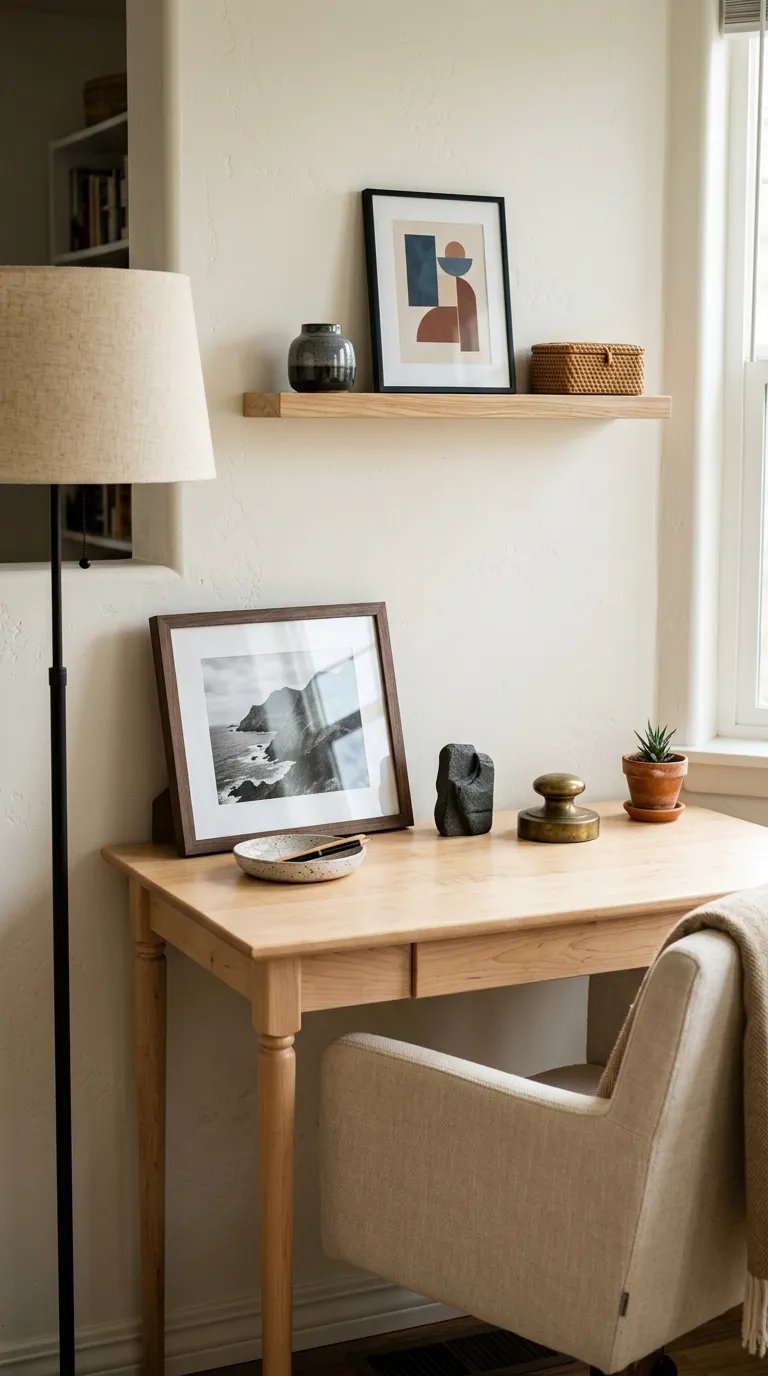
A few personal objects can make a desk feel like your own space. A framed print, keepsake, handmade bowl, or small object from a favorite place can add meaning without taking over the room.
Keep personal pieces limited to a small group. Too many objects can crowd the work surface and make cleaning harder. Choose items that have a useful place, then give each one enough breathing room to stand out.
Soft Evening Glow
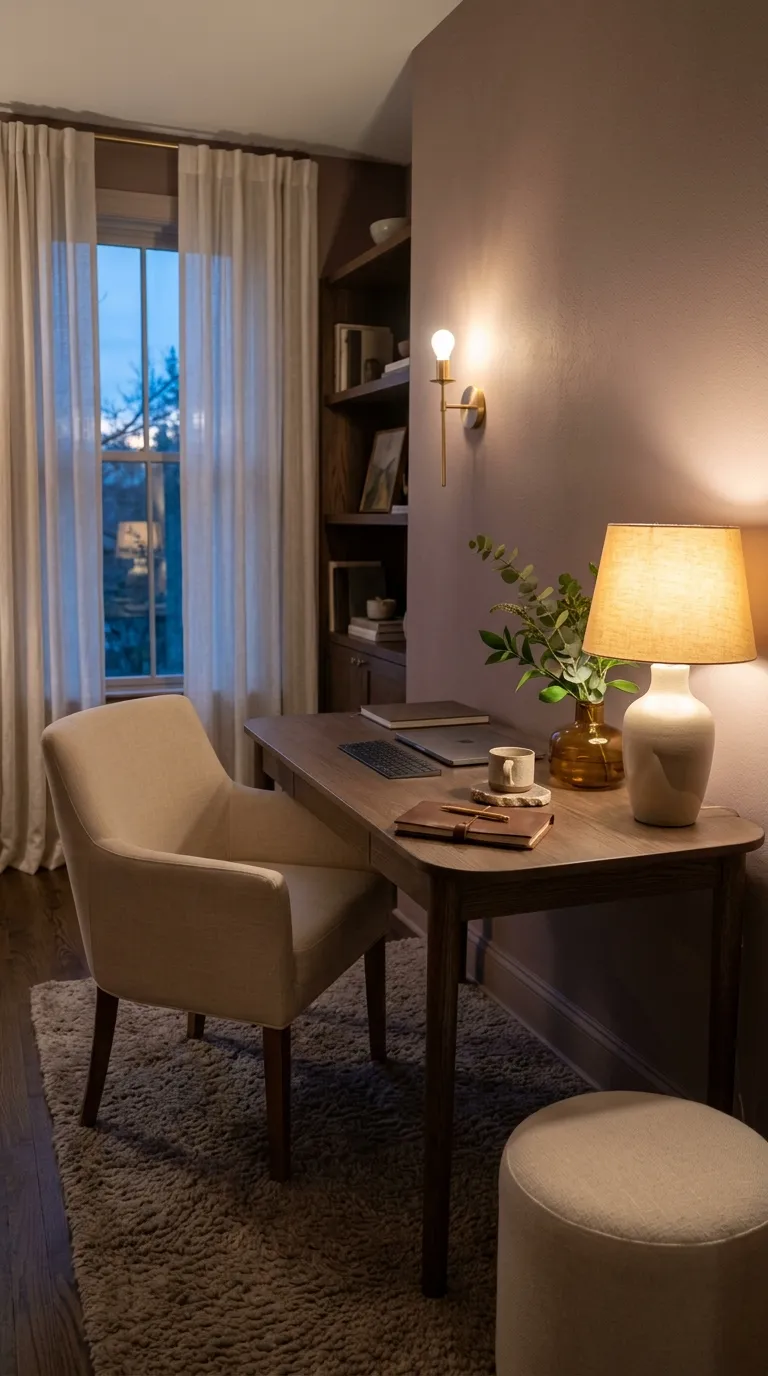
Evening lighting can make a desk feel softer after a long day. A warm lamp with a fabric shade gives the workspace a gentle glow without making the room feel like a bright office.
Try placing the light slightly to one side instead of directly behind your screen. This keeps the desktop visible while avoiding strong reflections. A second low-intensity light nearby can add depth without turning the space overly bright.
If this resonated with you, Coffee Tables Ideas Decorations might too.
Minimal Desktop Styling
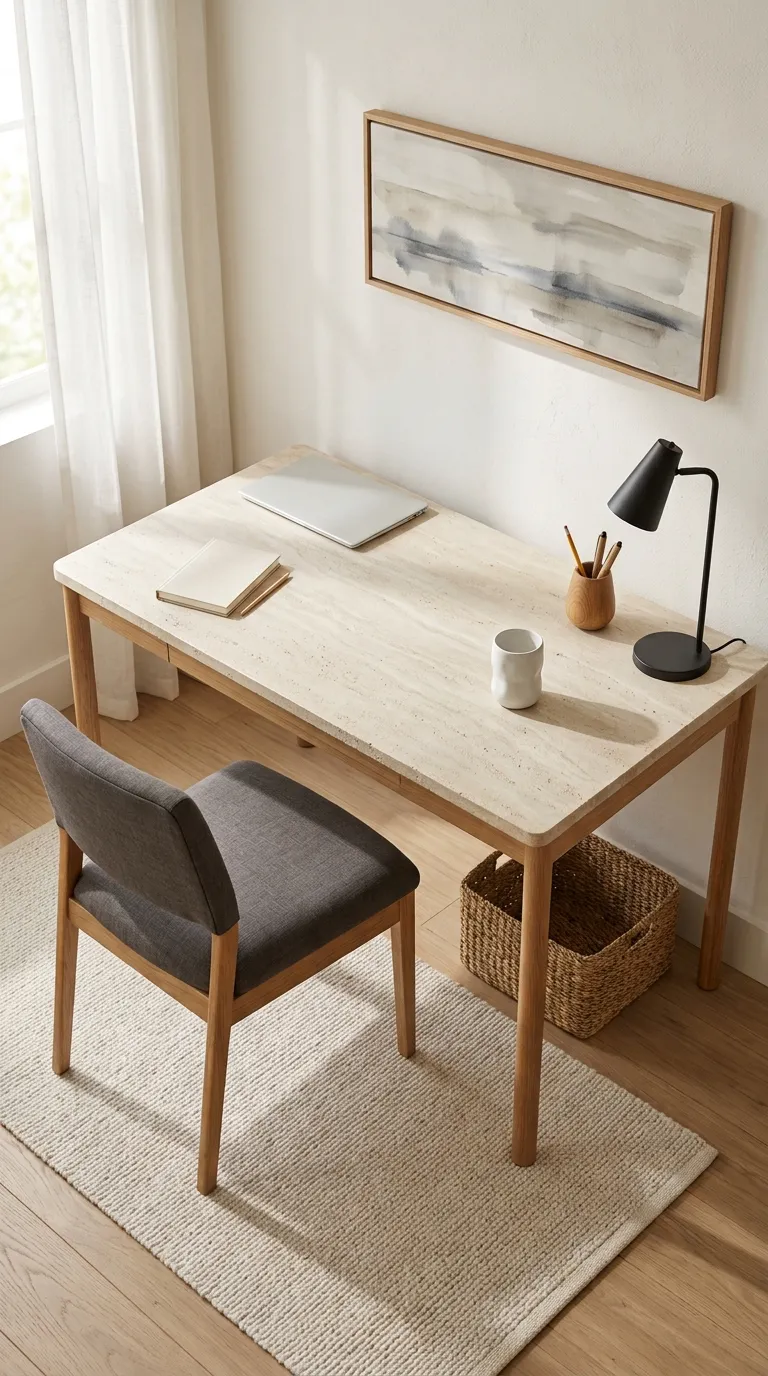
A clear desktop can feel more luxurious than a crowded one. When only the items you use most stay visible, the desk looks calmer and gives you more room to work.
Try keeping the center of the desk open. Place your lamp and organizer near the back or along one side, then store extra supplies in drawers or nearby baskets. This simple arrangement makes resetting the workspace much faster.
Built-In Wall Storage
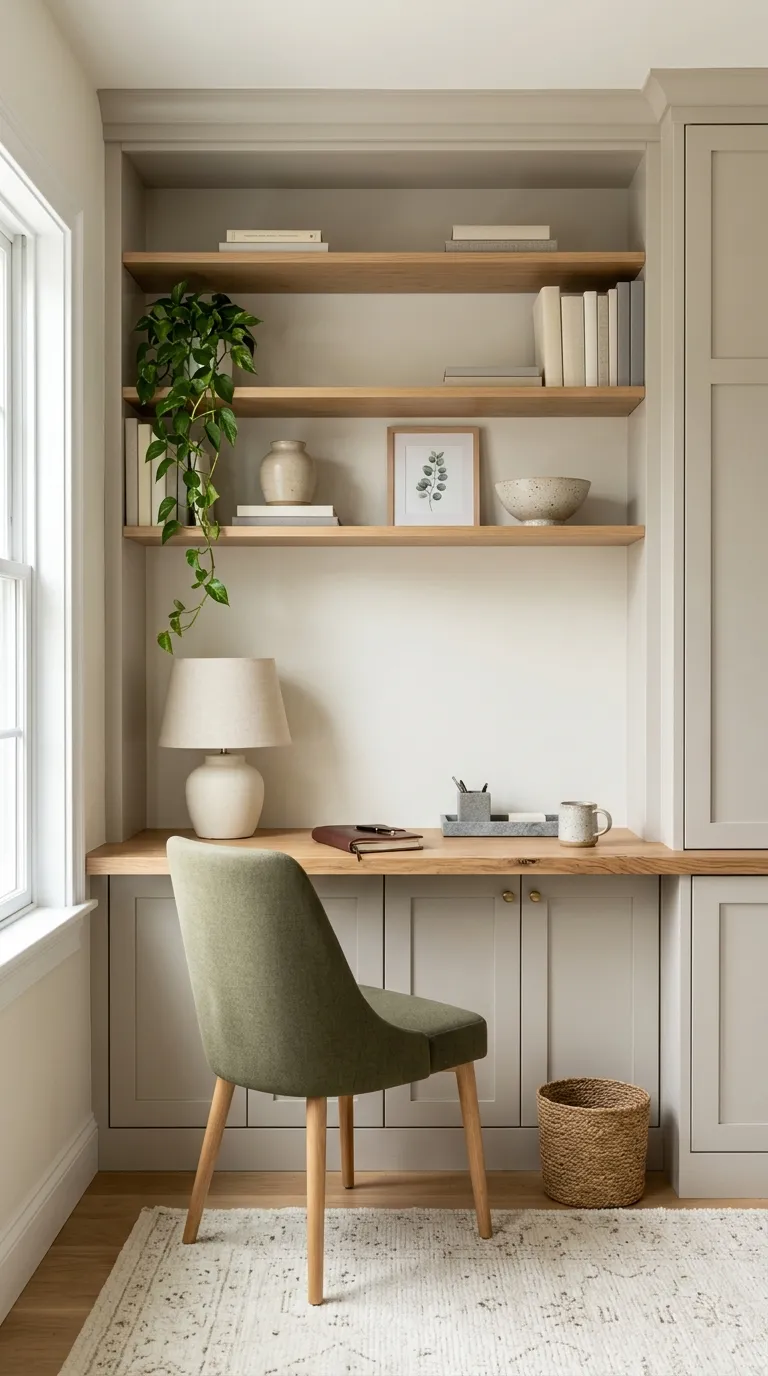
Built-in storage can make a small work area feel intentional. Open shelves give you room for a few decorative pieces, while closed cabinets keep paperwork, technology, and spare supplies out of sight.
If permanent cabinetry isn’t possible, recreate the same look with modular shelves. Keep the desk centered beneath the storage and repeat one or two finishes across the pieces. That visual connection can make separate furniture feel like one cohesive setup.
Soft Color Accents
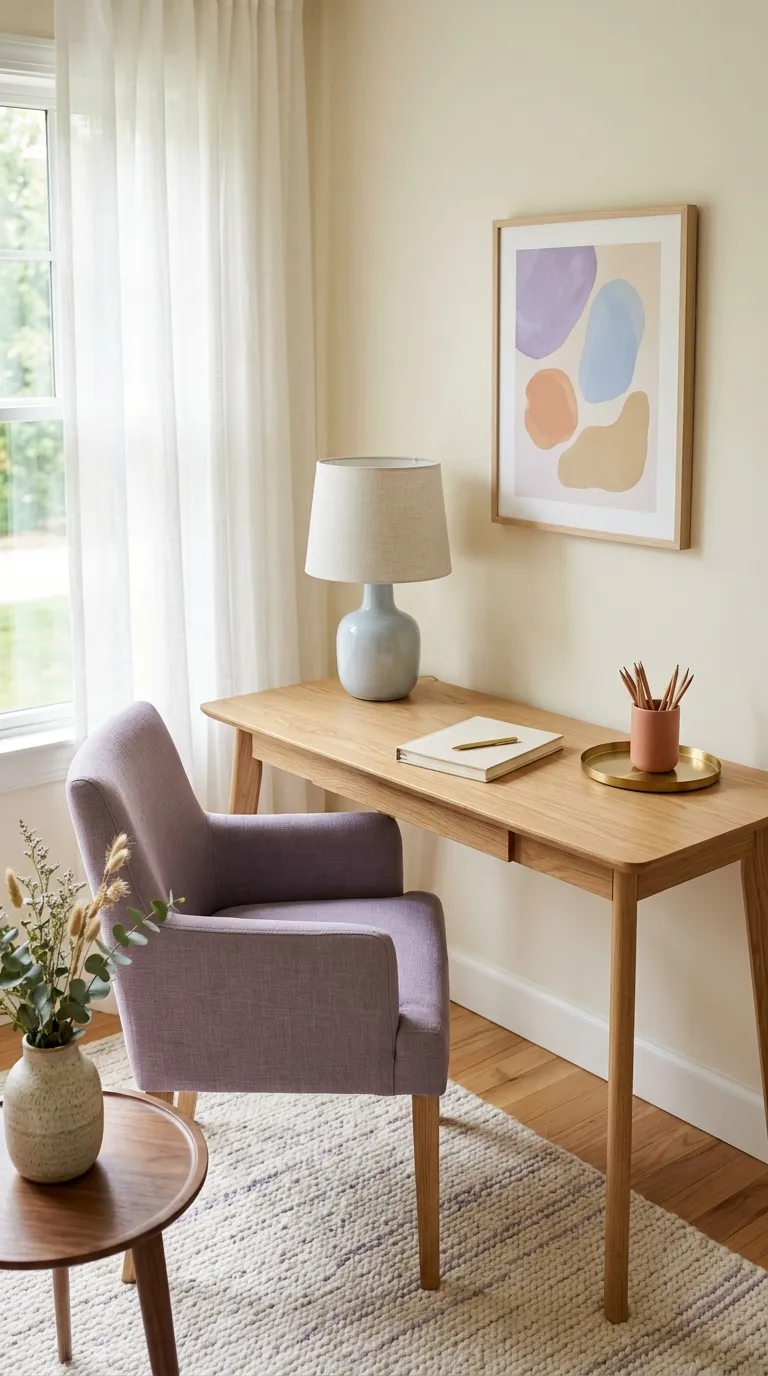
A neutral desk doesn’t need to stay completely beige. Soft shades such as dusty lavender, muted blue, pale green, or warm peach can give the room a little personality.
Pick one main accent and repeat it two or three times. A colored chair, small lamp, and artwork detail can create enough connection without making the workspace feel busy. Keep larger surfaces neutral so the accent remains easy on the eyes.
Cozy Reading Corner
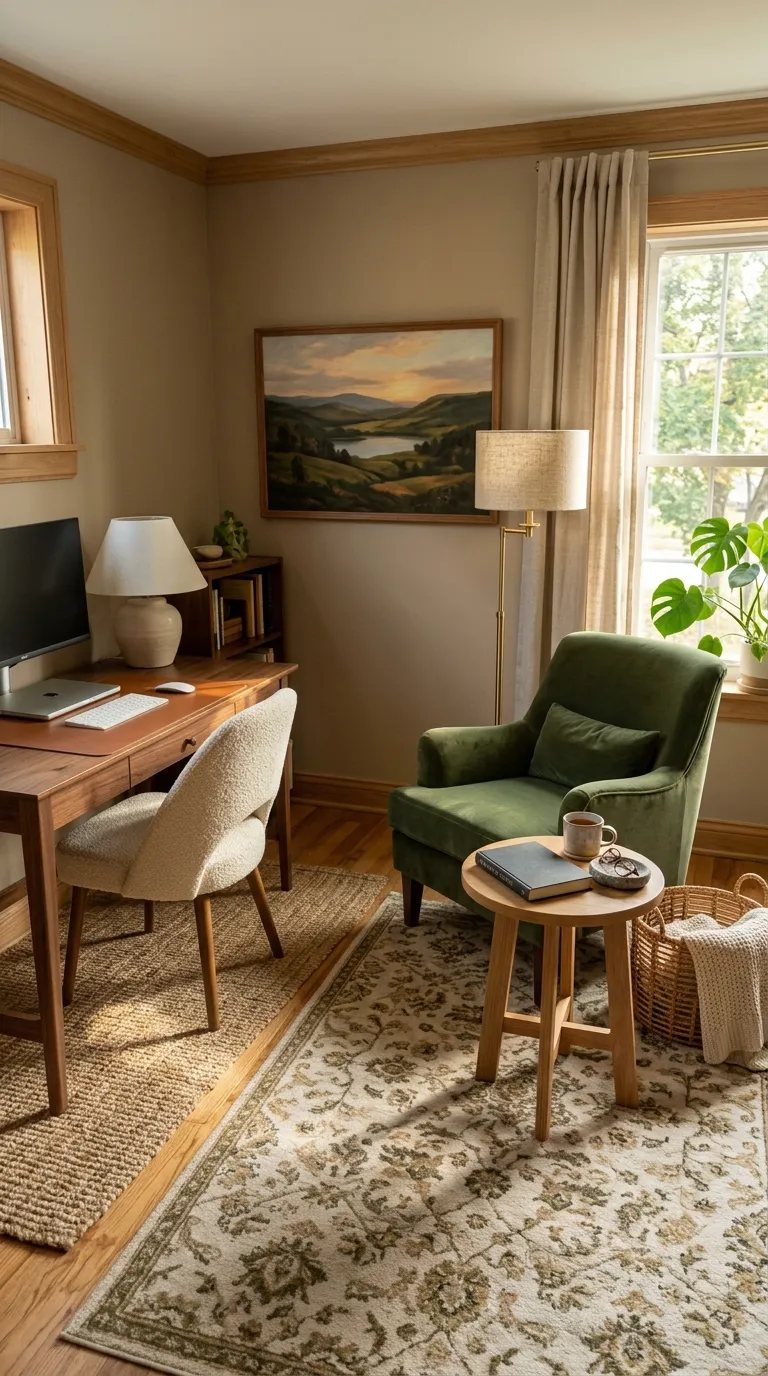
If your room has extra space, a reading chair can give the desk area another purpose. It creates a quiet spot for checking a book, taking a short break, or reviewing printed pages away from the screen.
Keep the reading corner visually connected to the desk. Repeat one material or color, such as oak, cream, or olive green. A small side table and nearby lamp are enough to make the second zone feel complete.
Small Space Efficiency
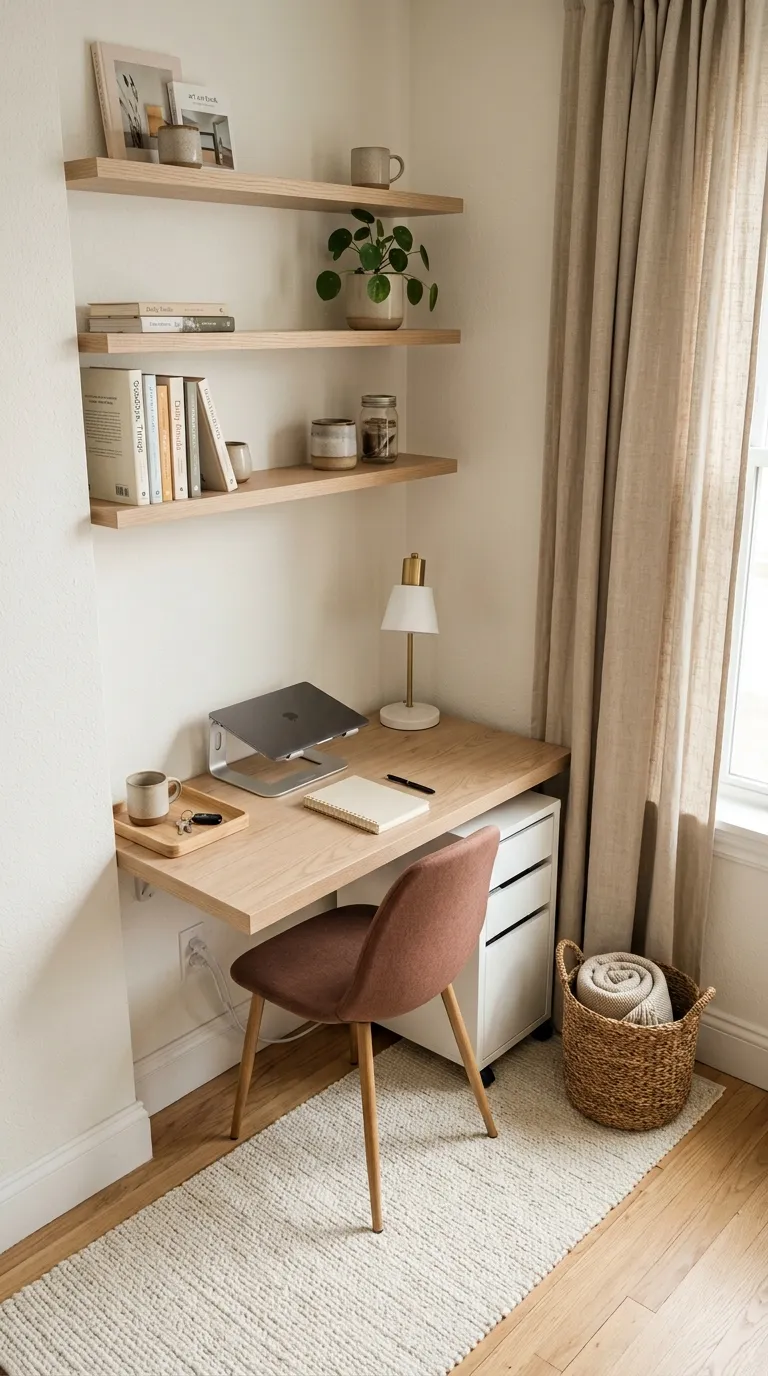
A small workspace can still feel comfortable when every piece earns its place. Floating desks, slim chairs, wall shelves, and rolling drawers help keep the floor open.
Measure the available wall before choosing furniture. A desk that leaves a little breathing room on both sides often looks better than one that fills the entire wall. Keep storage vertical when floor space is limited.
Textured Wall Backdrop
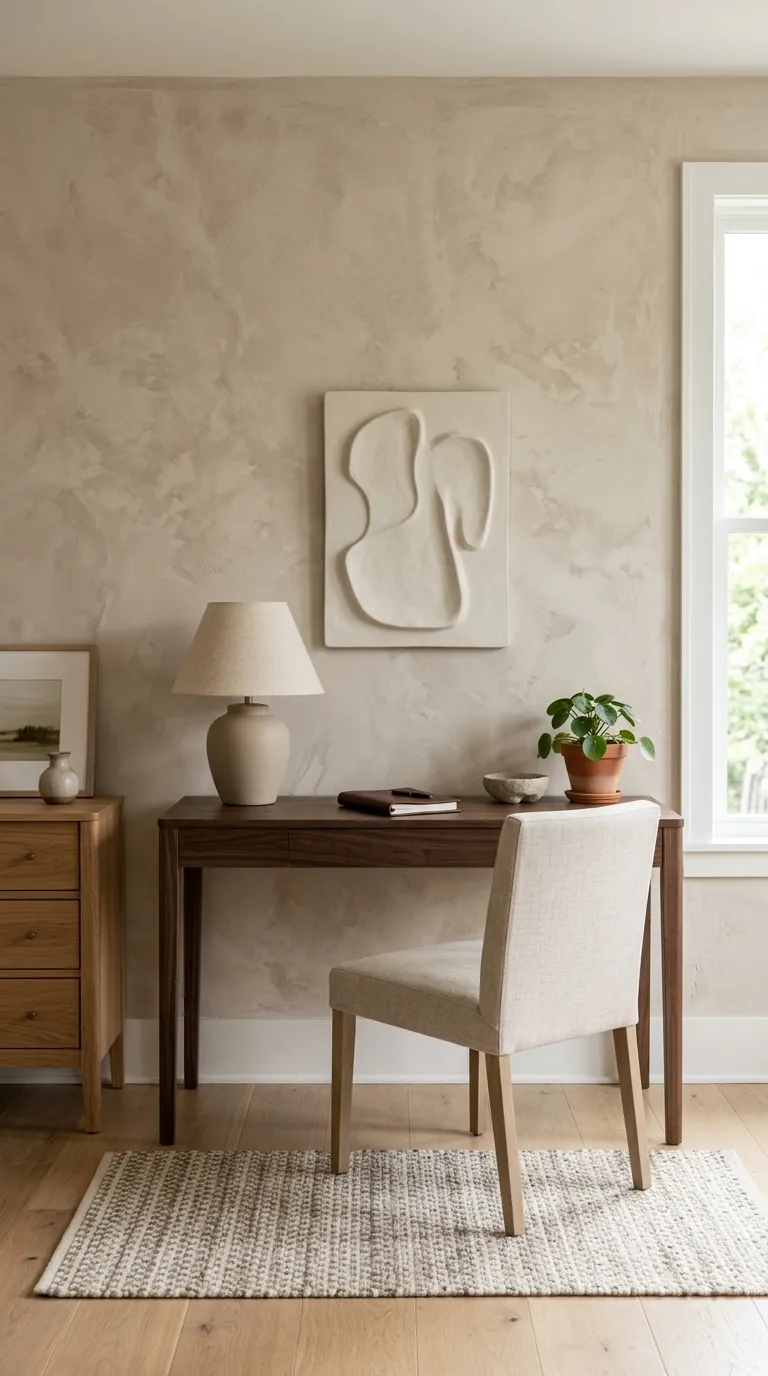
A textured wall can add depth when the furniture itself stays simple. Limewash, plaster, subtle paneling, or a softly uneven painted finish can create interest without extra shelves or decorations.
Keep the texture restrained behind a busy desk. If your workspace already has monitors, books, or storage, choose a quiet wall finish. The goal is to add character while leaving the work area easy to look at.
Warm Floor Elements
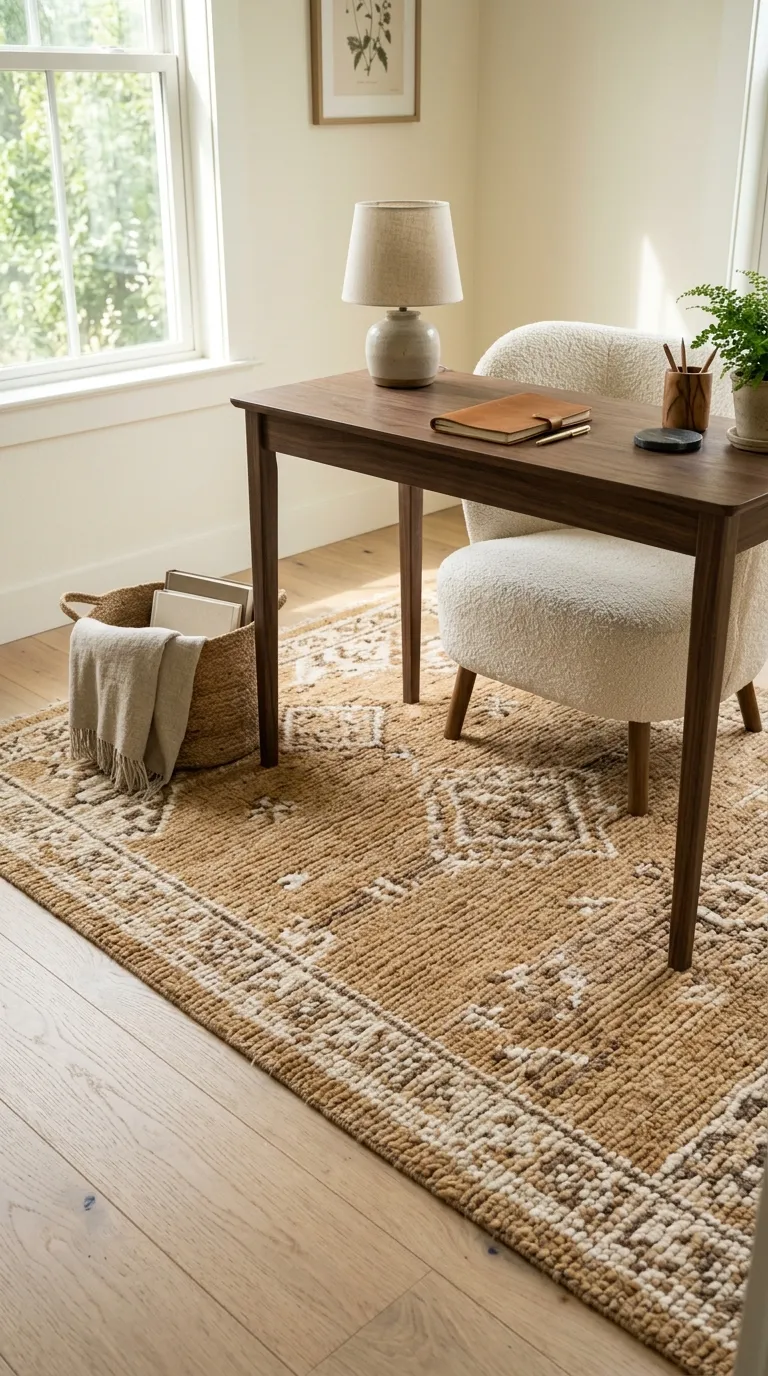
The floor matters more than it may seem in a desk area. A textured rug can soften hard flooring, define the workspace, and make the chair feel more connected to the room.
Choose a rug large enough to extend beyond the chair legs. Warm wool, cotton, jute, or flatweave designs can all work well. Pick a pattern with quiet variation if your desk and wall already have plenty of detail.
Open Airy Layout
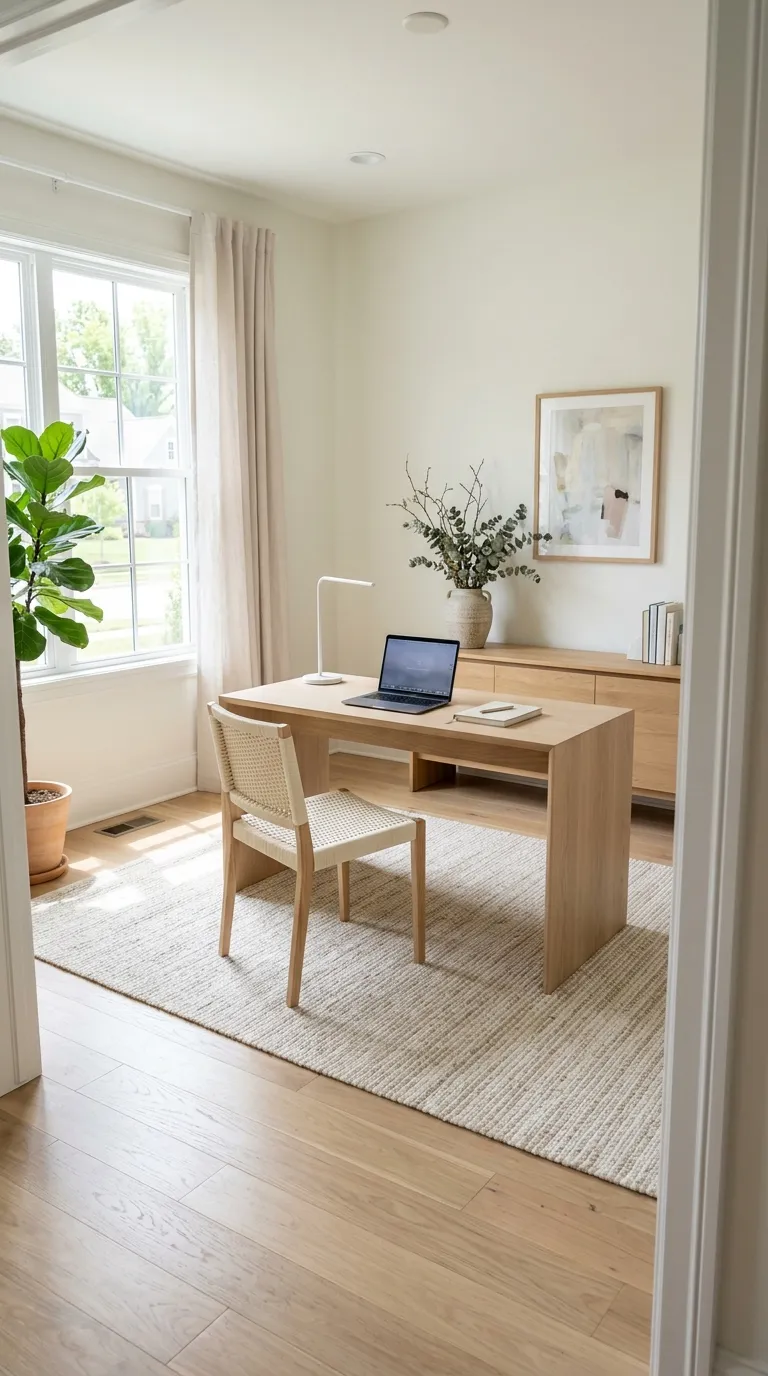
An airy layout gives a desk room to breathe. Instead of pushing every piece against a wall, leave clear paths around the workspace when the room allows it.
This works especially well in larger bedrooms, open living areas, and dedicated offices. Keep furniture slim and avoid oversized storage near the desk. The extra floor space makes the room feel calmer and keeps movement easy.
Polished Morning Routine
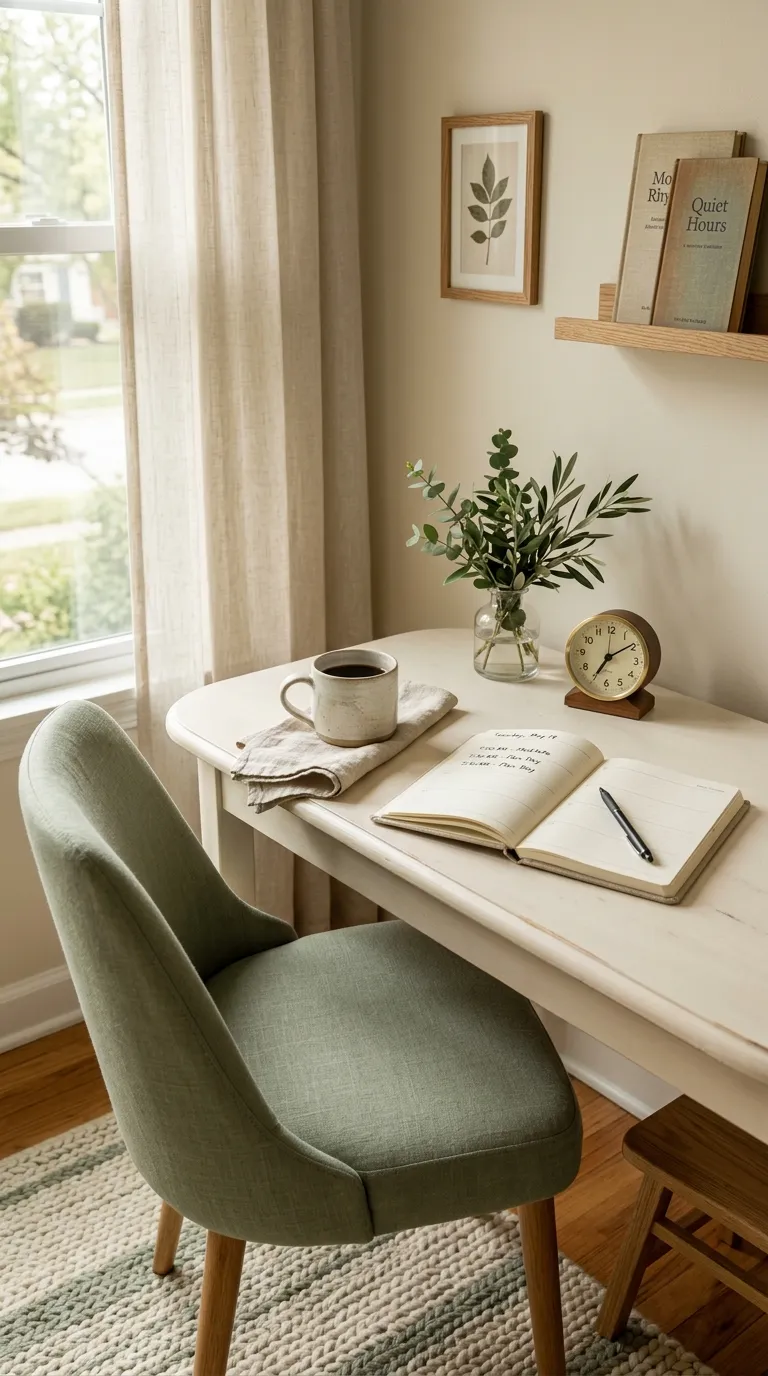
A polished desk can make your morning feel more organized before work even begins. Keep a few useful items ready, such as your planner, favorite pen, water or coffee cup, and a clear spot for the day’s first task.
Set up the desk the night before if mornings feel rushed. Put supplies back in their usual places and leave the main work area open. That small reset can make a cozy workspace feel easier to use every day.
A Desk That Feels Like Home
Your desk doesn’t need expensive furniture to feel luxurious. Warm materials, comfortable textures, useful storage, soft lighting, and a few personal pieces can create a workspace that feels both polished and lived-in.
Start with one change that solves a real problem. Add a warmer lamp, clear the cables, bring in a textured rug, or simplify the desktop. Once the basics feel right, layer in the details that make the space feel like a natural part of your home.
Clara Whitmore
Clara specializes in interior styling, seasonal home trends, and cozy living spaces. She loves combining classic design elements with modern touches to create homes that feel personal, welcoming, and effortlessly stylish.