Exterior House Colors Ideas to Create a Beautiful Lasting Impression

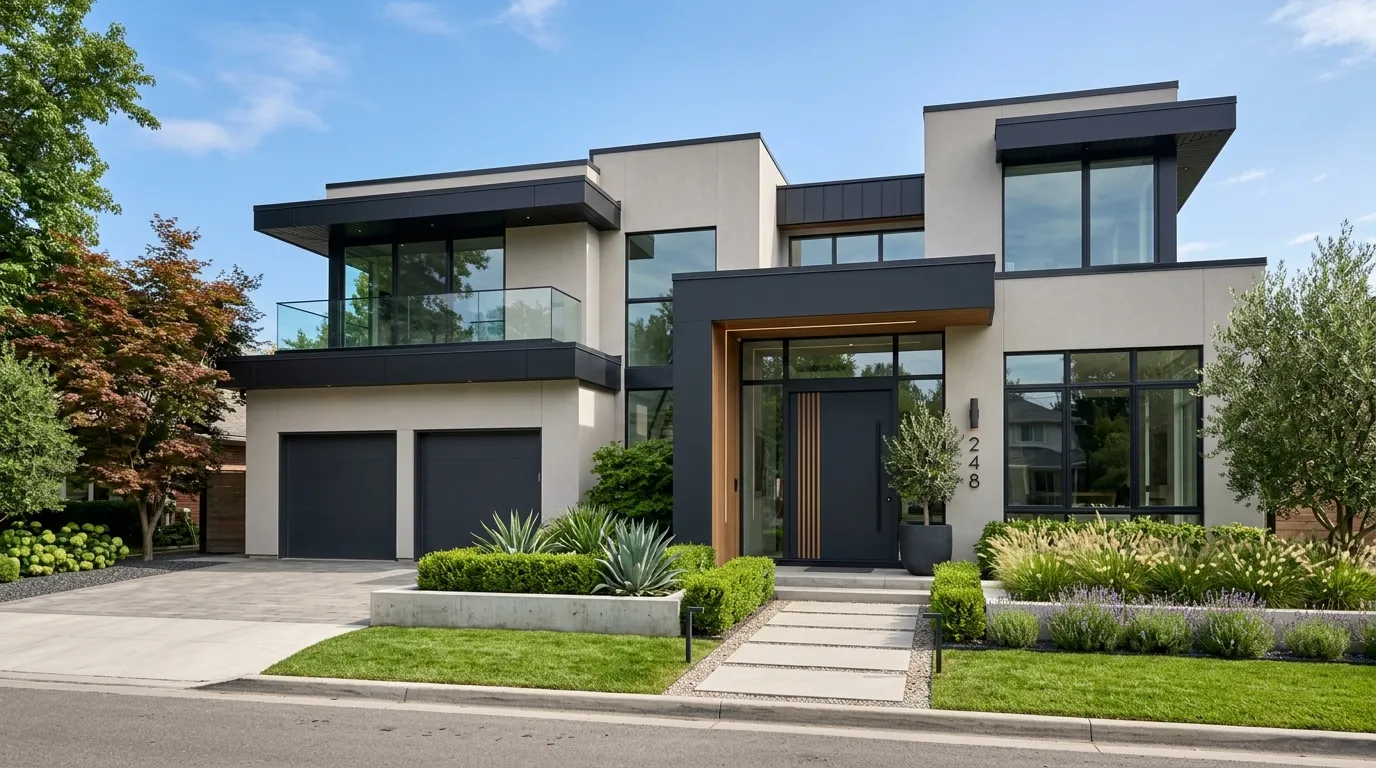
Your home’s exterior is the first thing people notice, and the right colors can completely transform its personality. Exterior house colors ideas can help you create a welcoming, stylish, and memorable look without making expensive structural changes. From soft neutrals and bold accents to modern layered combinations, the perfect palette can highlight your home’s best features and create a polished first impression.
Choosing exterior colors is about more than following trends. It is about finding shades that match your architecture, surroundings, and personal style. I’ve noticed that homes with carefully planned color combinations often feel more balanced and thoughtfully designed. In this guide, you’ll discover inspiring approaches that make your exterior look modern, elegant, and Pinterest-worthy while adding long-lasting visual appeal.
1. Soft Neutral Tones
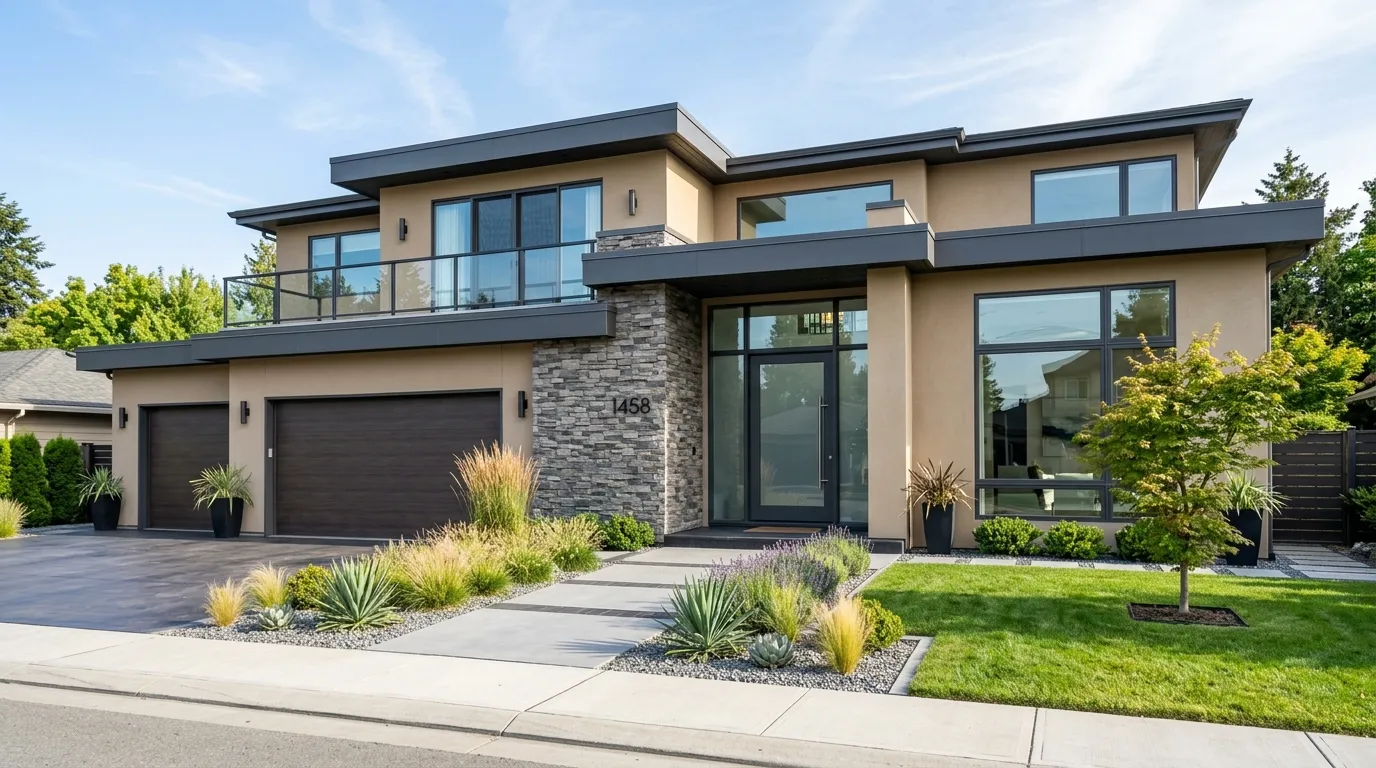
The right neutral palette can instantly make a home exterior feel more polished and welcoming without looking boring or plain. Soft beige, cream, and warm gray shades create a timeless foundation that works beautifully with modern architecture and natural surroundings. In my experience, these tones are especially effective because they allow doors, windows, and landscaping features to stand out while keeping the overall look calm. Many homeowners choose these colors when they want a fresh update that feels expensive yet easy to maintain. This approach adds subtle elegance and long lasting appeal to exterior spaces through simple color choices.
Choosing the perfect shade combination can completely change how your property feels from the street. Neutral exterior finishes create a balanced appearance that blends with different seasons and design trends while giving the house a refined character. I’ve noticed that lighter tones can also make smaller homes appear more open and spacious. Pairing soft colors with dark accents, modern lighting, or natural materials creates contrast without overwhelming the design. These thoughtful choices help build a welcoming first impression and show how carefully selected paint colors can transform an ordinary exterior into a stylish, memorable space.
2. Statement Front Doors
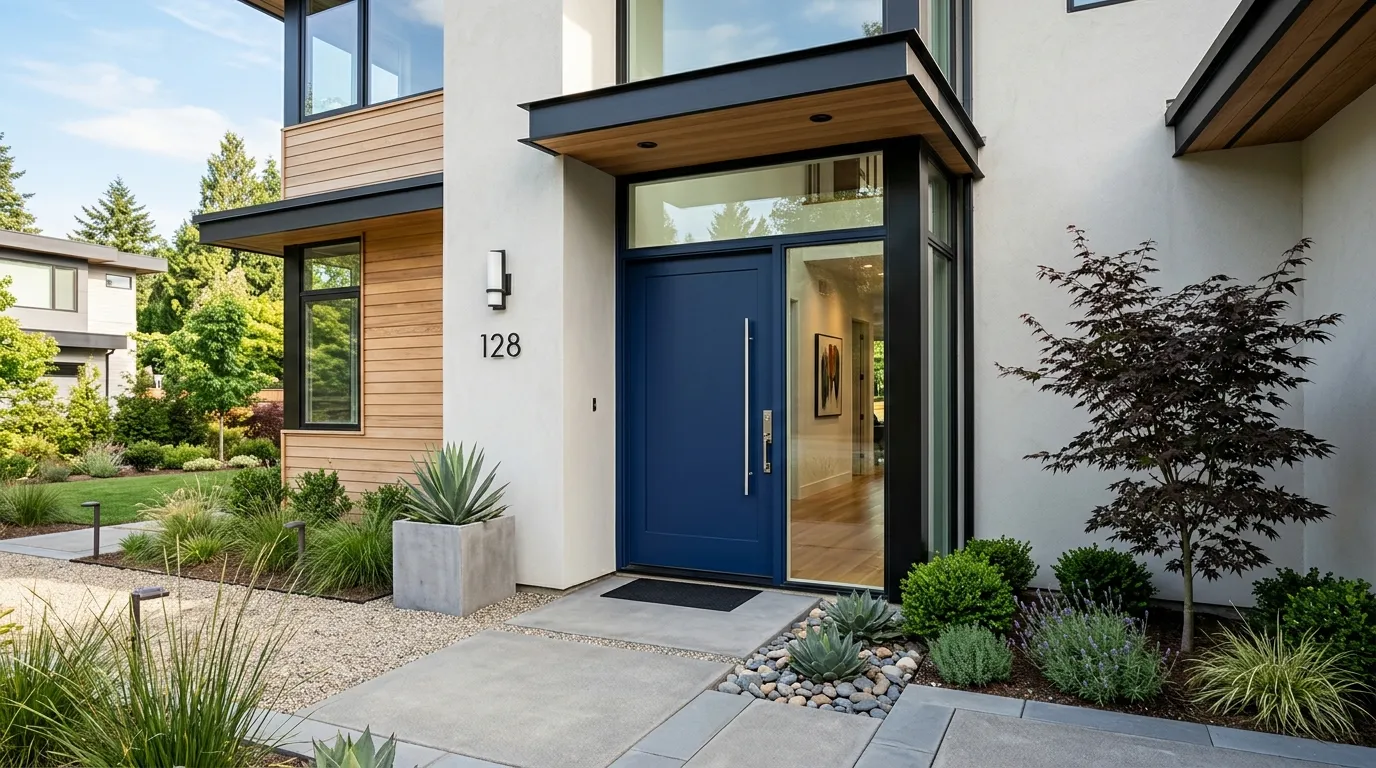
A bold accent door can become the most memorable feature of your home’s entrance while adding personality without a major renovation. Deep green, navy, black, or muted terracotta shades create visual interest against softer walls and modern finishes. I’ve seen this work well in many homes because a single statement color can make the entire exterior feel more intentional. The key is choosing a shade that complements the surrounding palette instead of competing with it. This simple update brings energy, style, and a designer-inspired touch to your outdoor appearance while keeping the overall look sophisticated and balanced.
3. Coordinated Color Layers
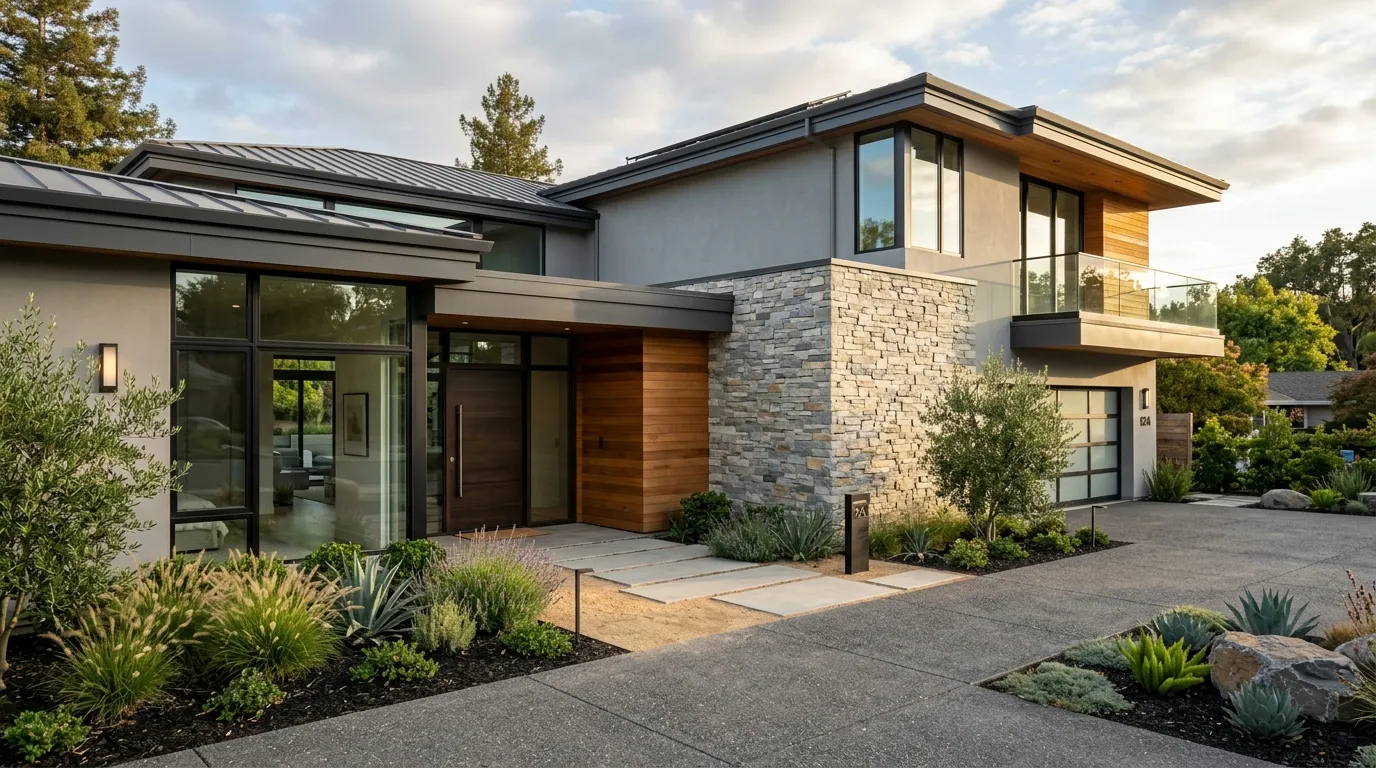
An exterior with coordinated colors and materials feels more complete because every detail works together visually. Matching the main paint shade with trim, roofing, and outdoor elements creates a smooth connection across the entire property. I’ve noticed that homes with thoughtful color flow often appear more luxurious because nothing feels random or disconnected. Modern homeowners can use monochrome combinations, layered neutrals, or soft contrasts to create depth while maintaining a clean aesthetic. This approach helps your house feel carefully designed and highlights architectural features that might otherwise go unnoticed from the outside.
4. Dark Trim Accents
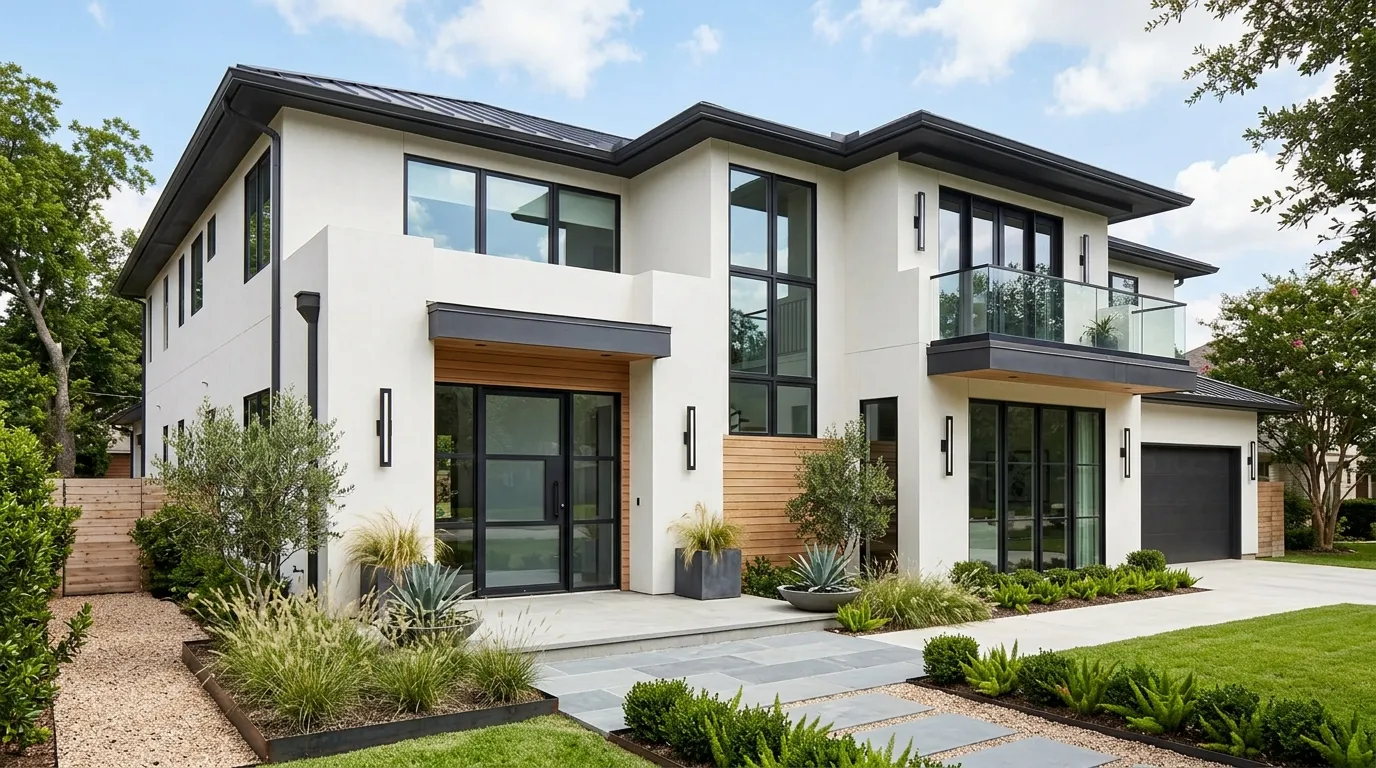
Dark trim is one of the easiest ways to give an exterior a more sophisticated and updated appearance. Black, charcoal, and deep gray accents create strong visual lines that highlight windows, doors, and unique architectural details. I’ve noticed that this technique works especially well on homes with simple shapes because it adds depth without requiring dramatic changes. When paired with lighter walls, these contrasting details create a balanced and contemporary look. This combination gives the property a polished finish while making the overall design feel more intentional, stylish, and visually appealing from every angle.
Using darker accents around exterior features can also improve the way a home’s structure is perceived. Trim colors help frame important areas and guide the eye toward beautiful details like large windows, entryways, and modern finishes. Many designers recommend contrast because it creates a sense of dimension and prevents a flat appearance. Whether the main color is white, beige, or soft gray, a darker border can instantly elevate the design. These small adjustments prove that thoughtful color placement can make a noticeable difference without requiring a complete exterior renovation or expensive upgrades.
5. Monochrome Exterior
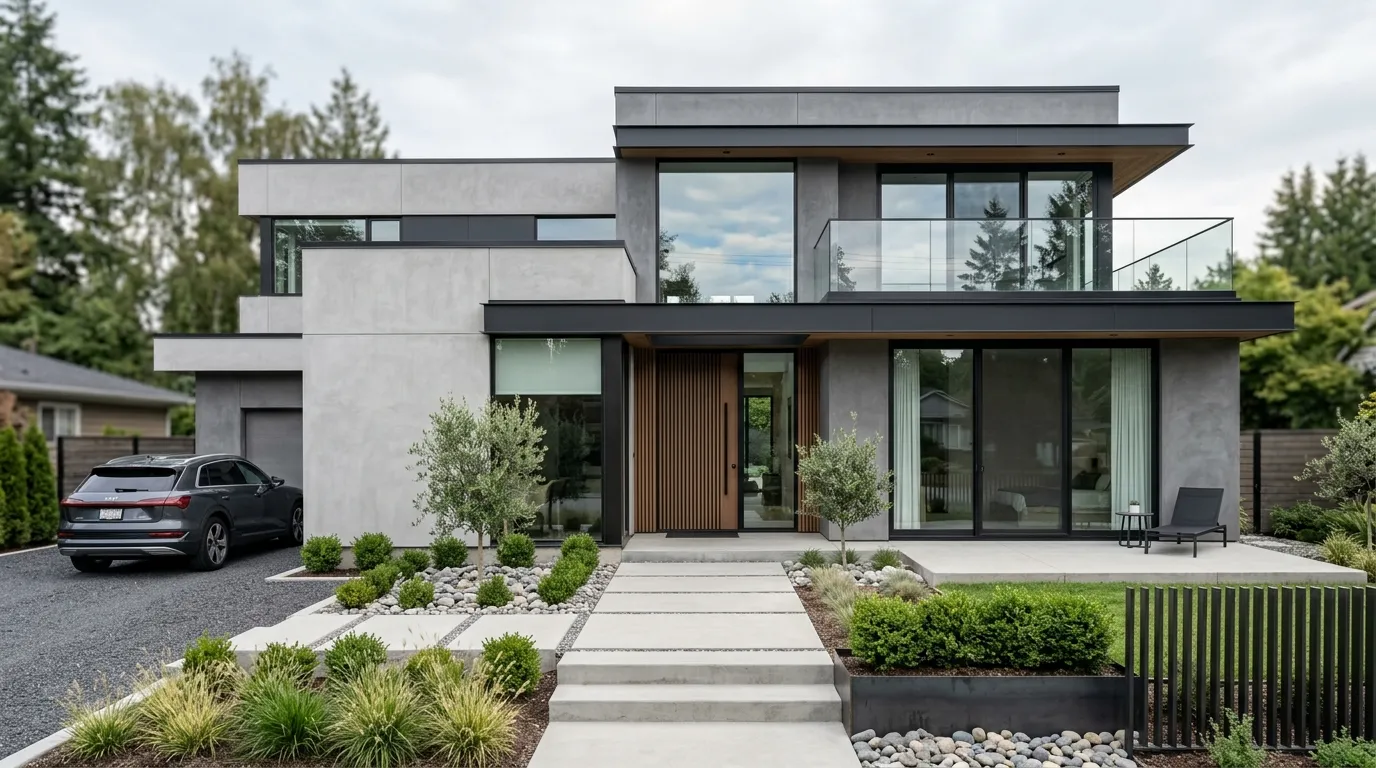
A monochrome exterior uses different shades of the same color to create a calm and sophisticated design. Soft grays, warm whites, or layered beige tones can make a home look modern while maintaining a comfortable and inviting feel. This approach is popular because it avoids visual clutter and allows textures, shapes, and materials to become the main focus. In my experience, monochrome palettes are especially helpful for homeowners who want a luxury look without using bold colors. The result is a balanced exterior that feels peaceful, elegant, and easy to coordinate with landscaping and outdoor decor.
Choosing one color family does not mean the exterior has to feel plain. Different finishes, textures, and shades can add enough variation to keep the design interesting. For example, combining matte walls with slightly darker doors or textured stone details creates subtle contrast while keeping the overall style cohesive. I’ve seen many modern homes benefit from this technique because it creates a high-end appearance with fewer visual distractions. A carefully planned monochrome palette can make your property feel more current, organized, and professionally designed while remaining timeless for years.
6. Natural Material Pairings
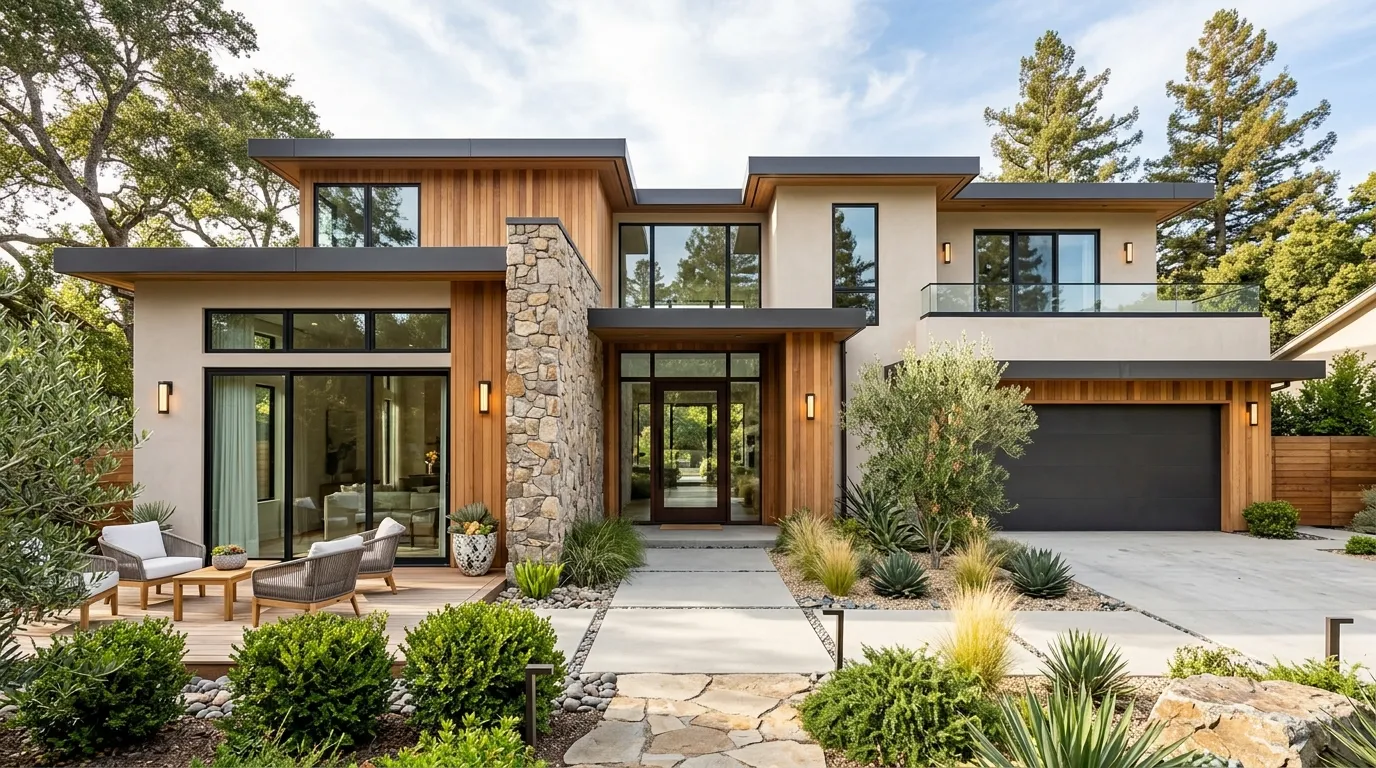
Combining paint colors with natural materials can create an exterior that feels both modern and inviting. Wood accents, stone surfaces, and textured finishes add warmth while helping neutral paint shades feel more interesting. I’ve noticed that these combinations are especially effective because they bring softness to contemporary designs without making them look outdated. Natural materials work beautifully with colors like white, gray, beige, and charcoal, creating a balanced appearance that feels connected to the environment. This style approach gives homeowners a way to add character while keeping a clean and sophisticated outdoor aesthetic.
The beauty of natural pairings comes from the contrast between smooth modern surfaces and organic textures. A simple exterior can become more visually appealing when materials are carefully layered throughout the design. Designers often use wood-look panels, stone pathways, or subtle textured walls to create depth and movement. These details help the home feel thoughtfully designed instead of overly simple. Whether you are updating a new build or refreshing an existing property, combining modern colors with natural elements can create a timeless look that remains stylish through changing trends.
7. Warm Gray Shades
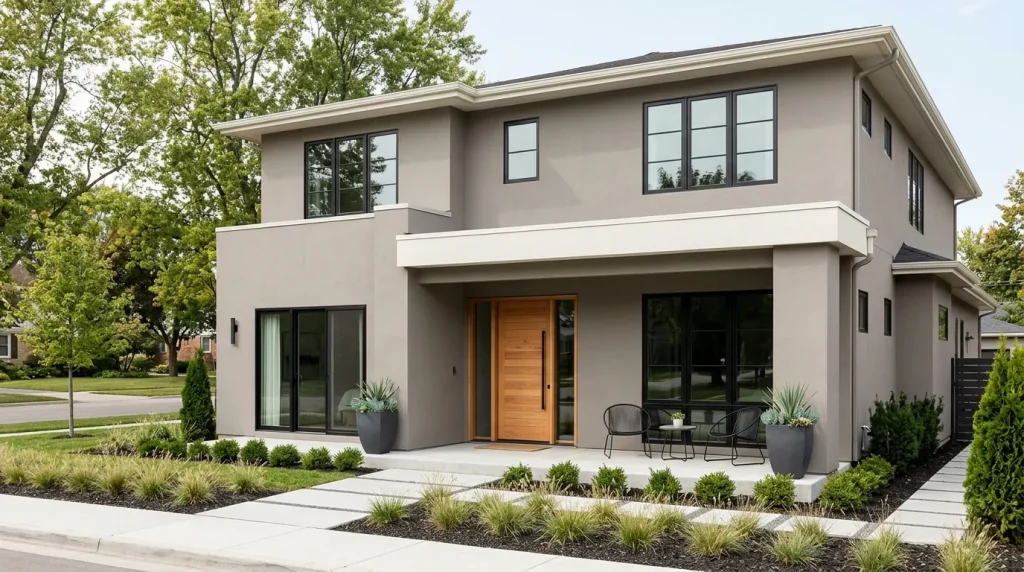
Warm gray shades have become a favorite choice for homeowners who want a modern exterior that still feels comfortable and welcoming. Unlike cooler grays, these tones include subtle beige or taupe undertones that create a softer appearance. I’ve noticed this color family works especially well because it adapts easily to different lighting conditions throughout the day. It can make a home feel refined in bright sunlight while maintaining a cozy look during evening hours. This versatile choice pairs beautifully with dark accents, natural textures, and contemporary architectural features for a balanced exterior design.
You may find Ceiling Ideas useful too.
Choosing the right gray shade can transform the personality of a home without overwhelming the overall style. Warm gray finishes create a neutral background that allows doors, windows, landscaping, and outdoor lighting to stand out. Many designers use these shades because they offer a timeless foundation that does not quickly feel outdated. When combined with modern materials like glass, metal, or smooth stone, the result feels polished and sophisticated. This color approach is ideal for homeowners who want a stylish exterior that feels fresh, calming, and easy to personalize with additional design details.
8. Crisp White Finishes
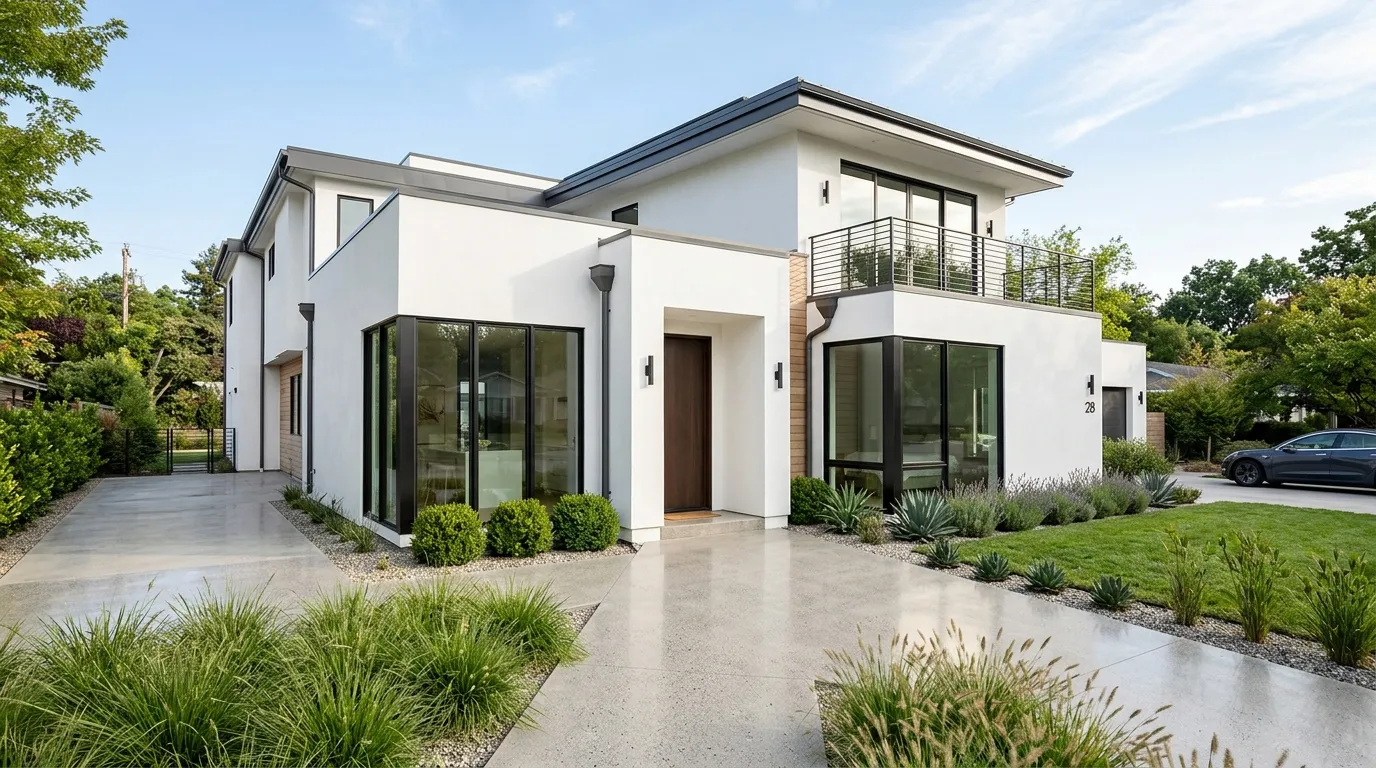
Crisp white finishes create an exterior that feels bright, elegant, and effortlessly modern. This classic choice reflects natural light beautifully, helping homes appear cleaner and more spacious from the outside. In my experience, white exteriors are especially popular because they provide endless styling flexibility and allow homeowners to change accents without repainting the entire property. When paired with dark windows, natural wood, or simple landscaping, white creates a beautiful contrast that feels both luxurious and welcoming. This clean foundation works well for contemporary homes where simplicity and strong architectural lines are the main focus.
A white exterior does require thoughtful planning to avoid looking flat or unfinished. Adding texture through materials like stone, wood accents, or modern lighting can create depth while maintaining the fresh appearance. I’ve seen many homes achieve a high-end look by combining different white tones with subtle contrasting elements. The result is a balanced design that feels organized and visually appealing from every angle. Whether used on a small house or a larger property, crisp white finishes create a timeless style that continues to feel modern through changing trends.
9. Soft Green Accents
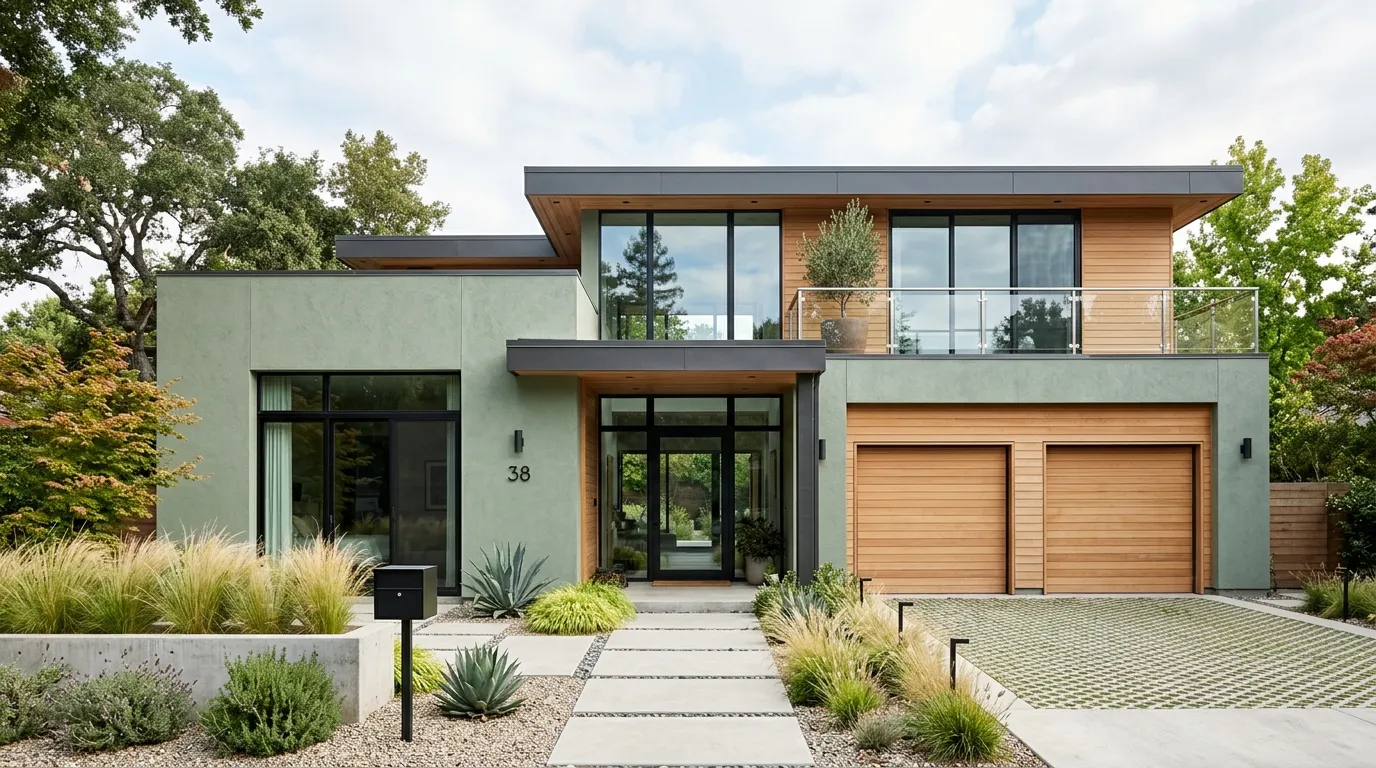
Soft green accents bring a refreshing connection between a home and its natural surroundings. Shades like sage, olive, and muted eucalyptus create a peaceful exterior that feels modern while adding personality. I’ve seen this approach work beautifully for homes surrounded by gardens because the colors blend naturally with greenery while still creating a polished appearance. These tones pair well with warm wood, stone, and neutral finishes, making them easy to incorporate into contemporary designs. A carefully chosen green shade can make an exterior feel inviting, sophisticated, and different without becoming too bold.
The appeal of soft green comes from its ability to add color while maintaining a calm atmosphere. Unlike brighter shades, muted greens create a refined look that feels timeless and relaxing. Many homeowners choose these tones when they want their property to feel connected to nature but still look professionally designed. Adding green through walls, shutters, doors, or smaller exterior details can create visual harmony throughout the space. This gentle color choice proves that modern exteriors do not always need dramatic contrasts to make a memorable and stylish first impression.
Conclusion:
Refreshing your home’s exterior with thoughtful colors can create a beautiful transformation that feels both personal and timeless. The right shades can enhance architectural details, improve curb appeal, and make your property feel more welcoming. These exterior house colors ideas show that even simple updates can create a major visual impact. Save this post on Pinterest for future inspiration and try a color combination that matches your home’s style. I’ve seen how small design choices can completely change the feeling of a space, and your exterior can become a stylish reflection of your vision. Share this guide with anyone planning a home refresh.
Clara Whitmore
Clara specializes in interior styling, seasonal home trends, and cozy living spaces. She loves combining classic design elements with modern touches to create homes that feel personal, welcoming, and effortlessly stylish.