Under the Stairs Kids Space That Makes Playtime Magical

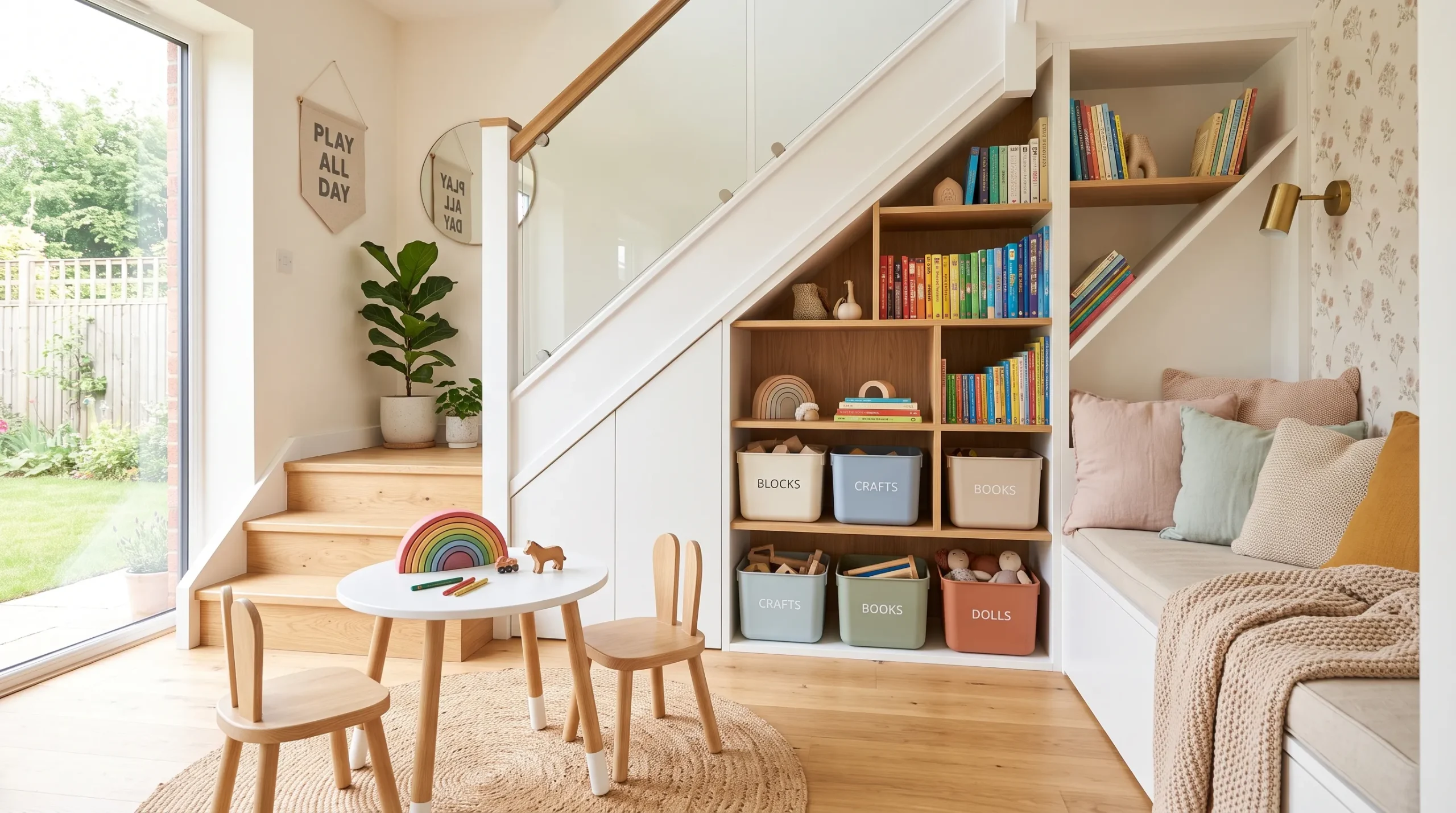
Imagine turning that overlooked area beneath your staircase into an inspiring under the stairs kids space your children can’t wait to use every day. Instead of letting it become wasted storage or an empty corner, you can create a cozy, functional area that encourages reading, creativity, learning, and imaginative play while blending beautifully with the rest of your home.
Whether your house is large or compact, this hidden spot offers incredible potential when planned thoughtfully. From built-in reading nooks and organized toy storage to mini homework stations and playful hideaways, even simple updates can make a remarkable difference. In my experience, the most successful family spaces aren’t always the biggest—they’re the ones designed with purpose and flexibility. I’ve noticed that children naturally spend more time in spaces that feel welcoming, organized, and created just for them.
In this guide, you’ll discover practical, modern ideas that combine style with everyday function. Each one is designed to help you maximize every inch of available space while creating a beautiful area your family will enjoy for years. Whether you’re planning a complete makeover or looking for one easy weekend project, you’ll find plenty of inspiration worth saving for later.
1. Cozy Reading Nook
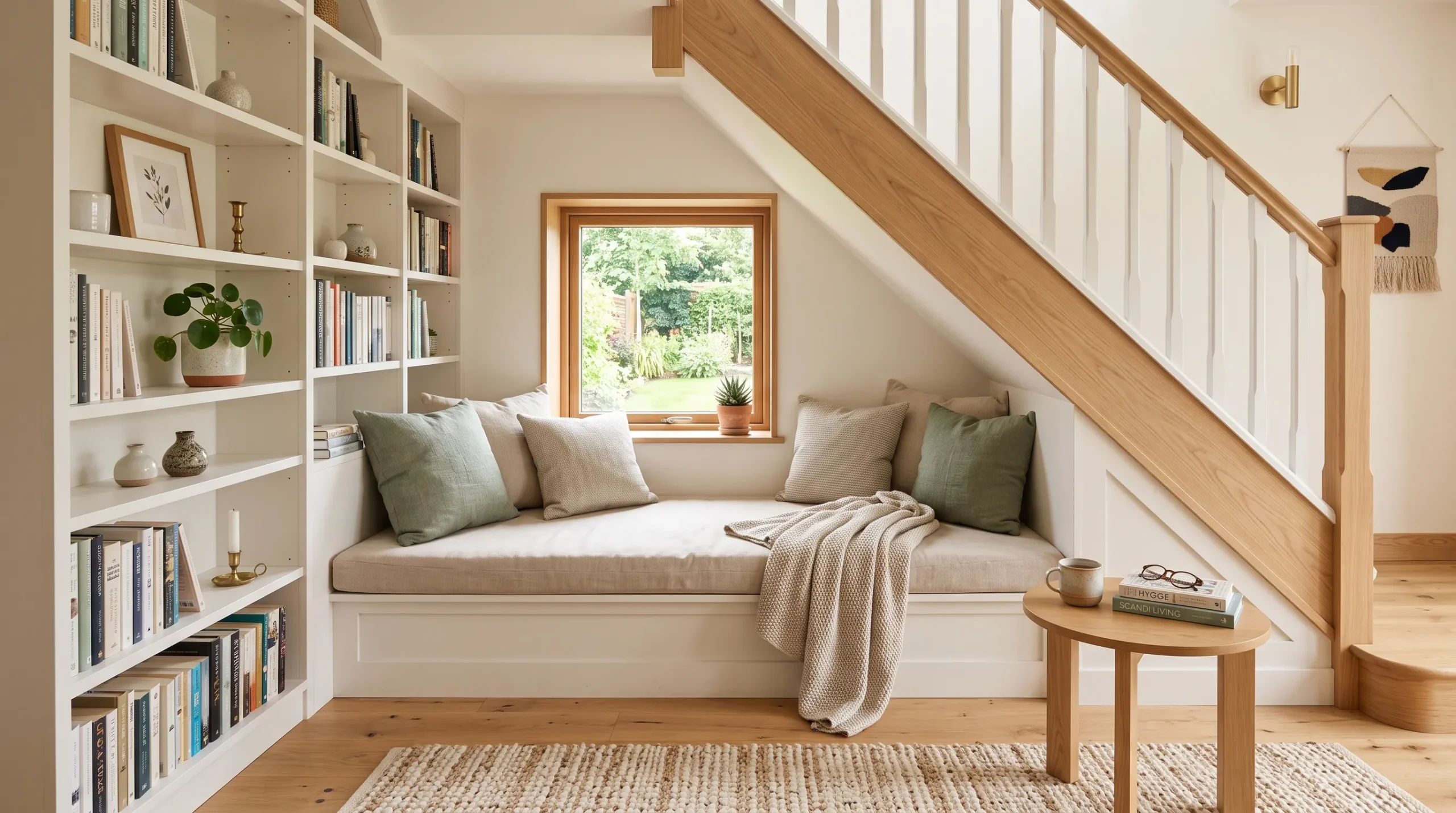
A comfortable reading nook instantly changes an unused corner into a favorite destination for quiet moments. Soft seating, accessible bookshelves, and calming colors encourage children to spend more time exploring stories instead of looking for entertainment elsewhere. In my experience, even a small reading corner becomes one of the most-loved areas when it feels cozy and personal. Adding layered cushions and gentle lighting makes the space feel welcoming throughout the day while creating a peaceful retreat that naturally supports learning, imagination, and everyday relaxation without requiring a large room.
The beauty of this setup is that it grows with your child while remaining timeless. Open shelving keeps favorite books visible, making it easier for young readers to choose something independently. Neutral finishes blend beautifully with modern interiors, allowing the space to look intentional rather than temporary. I’ve noticed that parents often appreciate how this simple addition also reduces clutter because books finally have a dedicated home. The result is a stylish family-friendly corner that feels thoughtfully designed while encouraging healthy daily habits through an inviting environment.
2. Built-In Toy Storage
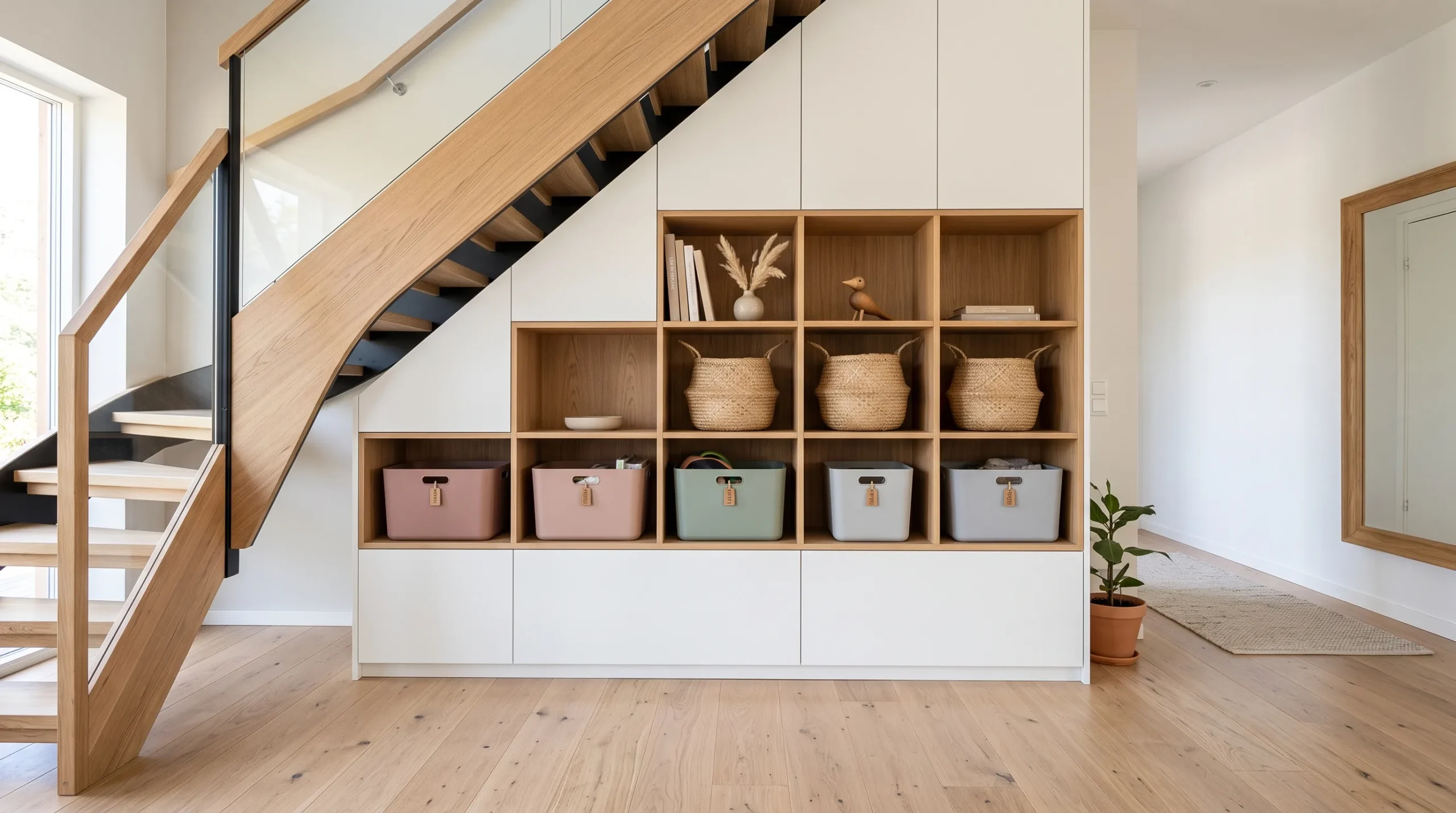
Smart storage transforms a busy children’s area into a calm and organized environment without sacrificing style. Built-in cabinets and open cubbies create dedicated places for puzzles, games, stuffed animals, and creative supplies. That’s why many designers recommend combining hidden storage with a few open display sections to balance practicality and personality. This approach keeps favorite toys accessible while making cleanup feel simple, helping children build good organization habits from an early age without overwhelming the room with visible clutter.
An organized play area also makes everyday routines noticeably smoother for parents. Instead of searching through overflowing toy boxes, everything has a clear location that encourages quick tidying before bedtime. Soft neutral finishes help the cabinetry blend seamlessly into the home’s overall design, making the storage feel like custom furniture rather than children’s equipment. The finished result feels polished, functional, and welcoming while proving that practical family spaces can still look elegant enough for Pinterest-worthy inspiration.
3. Creative Art Corner
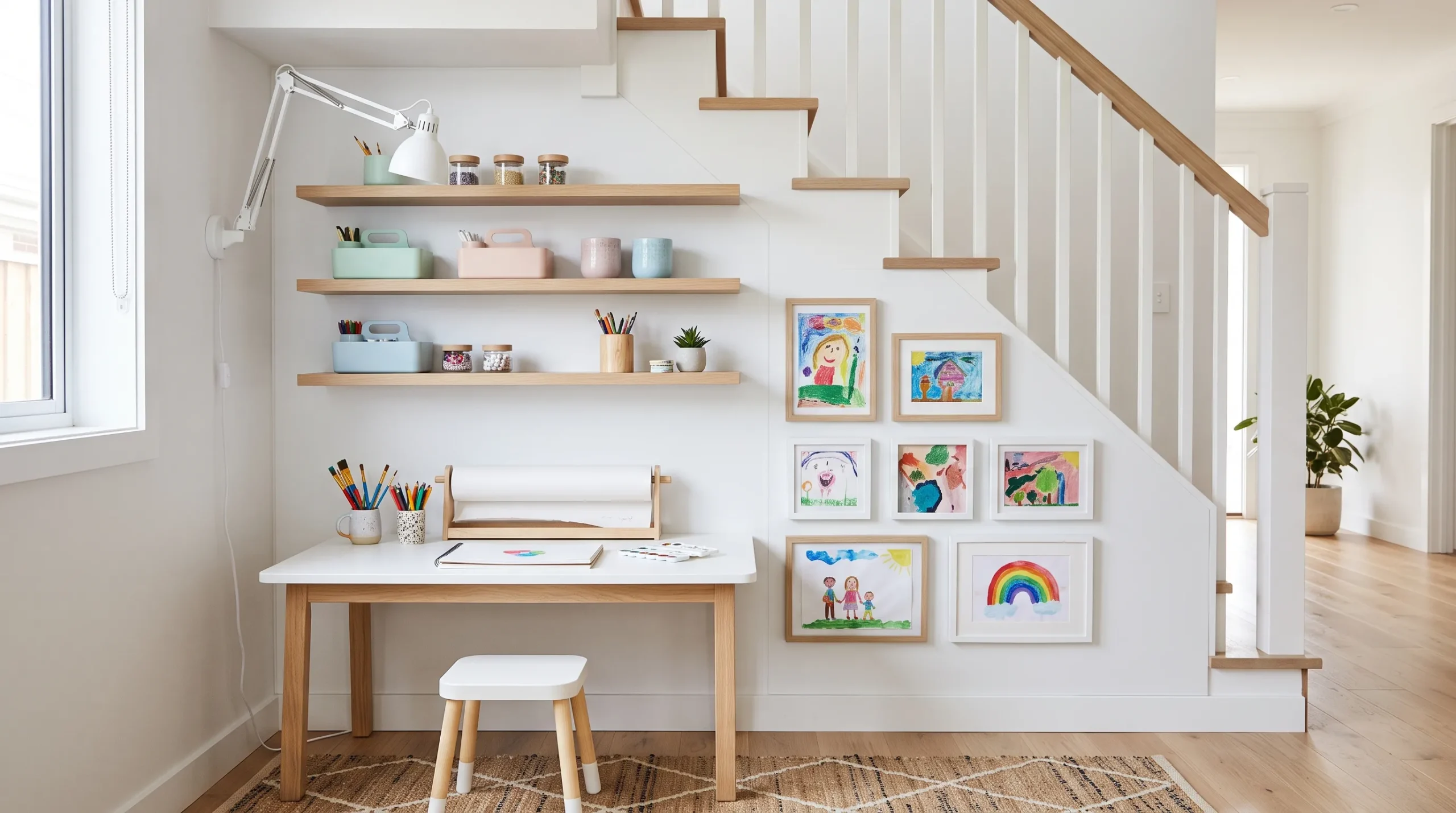
A dedicated art corner inspires creativity while keeping messy projects away from dining tables and kitchen counters. A compact desk paired with organized shelves provides enough room for drawing, painting, and crafting without taking over the rest of the home. I’ve seen this work well in many homes because children become excited to return to a space that feels designed just for them. Washable surfaces and practical storage also make creative time less stressful, allowing parents to encourage artistic expression with greater confidence.
Modern finishes ensure the creative station complements the surrounding interior instead of feeling out of place. Floating shelves display favorite artwork while keeping supplies neatly arranged and easy to reach. Bright lighting improves visibility during detailed projects, and soft neutral colors prevent the area from feeling visually overwhelming. Together, these thoughtful elements create an inspiring workspace that supports creativity every day while maintaining the clean, stylish appearance many homeowners want throughout their living spaces.
You might also enjoy Luxury Dining Room Aesthetic.
4. Mini Homework Station
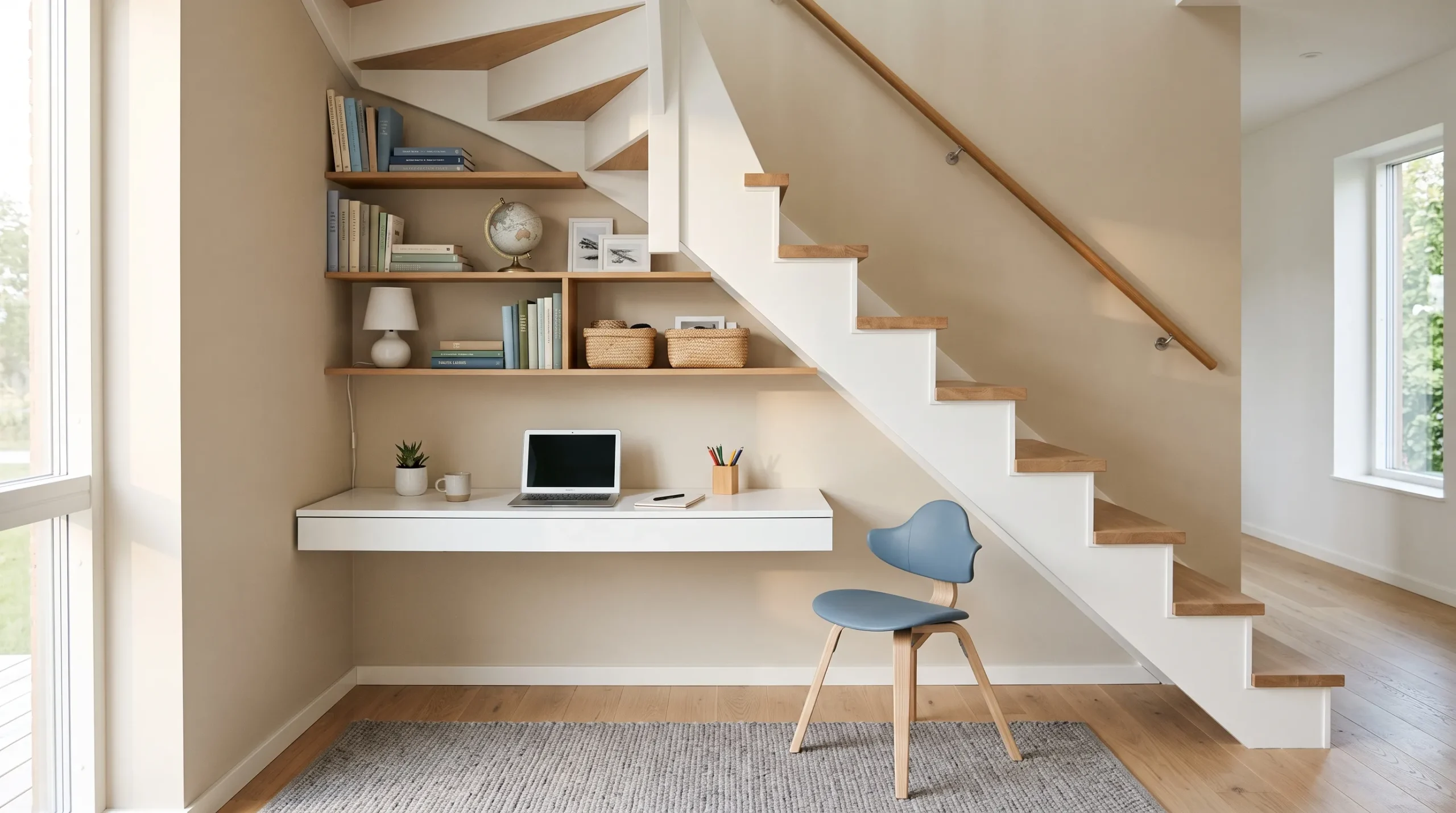
A compact homework station helps children shift into learning mode without needing an entire room. A floating desk saves valuable floor space while open shelving keeps notebooks, pencils, and school supplies neatly organized. In my experience, children often focus better when they have a consistent place to complete assignments instead of moving from one room to another. Even a small workspace can build positive routines while making daily homework feel less overwhelming and much more enjoyable.
Modern finishes allow this study corner to complement the rest of the home’s décor instead of standing out. Soft lighting reduces eye strain, while a comfortable chair encourages better posture during longer activities. Hidden cable management keeps electronic devices tidy if tablets or laptops are occasionally used. The result is a functional area that supports learning, organization, and independence while maintaining the clean, Pinterest-inspired appearance that makes the entire under-stair space feel thoughtfully designed.
5. Soft Play Zone
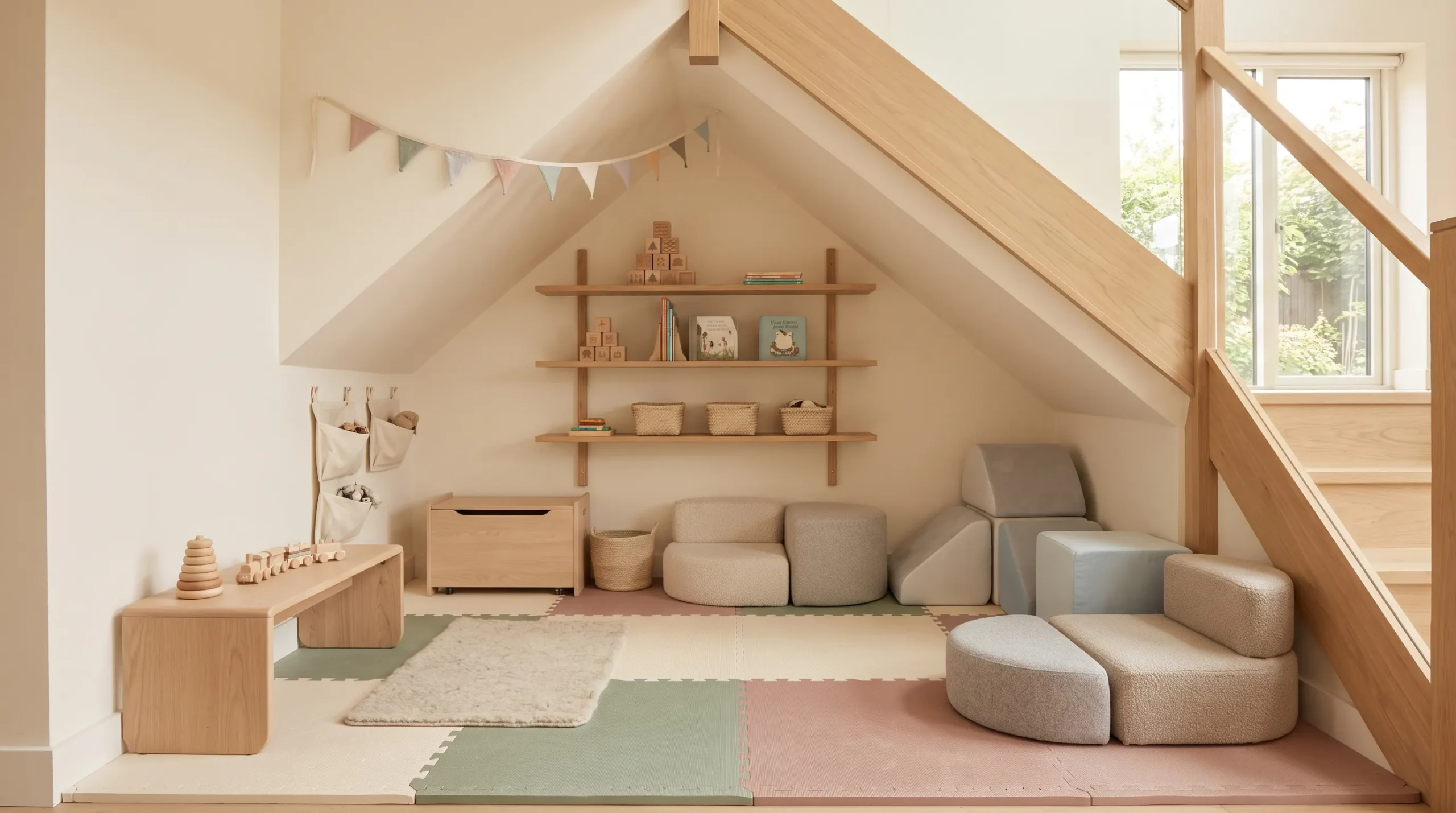
A soft play area transforms an awkward corner into an energetic yet comfortable space where younger children can explore safely. Foam flooring, rounded furniture, and lightweight play pieces provide freedom to climb, crawl, and build while minimizing hard surfaces. I’ve noticed this type of setup works especially well for toddlers because it offers independence without requiring a large dedicated playroom. The cozy environment encourages active play while helping parents feel more confident during everyday activities.
Choosing neutral colors keeps the area visually calm despite the variety of toys and play equipment. Open shelving allows favorite items to remain accessible while preventing unnecessary clutter from spreading into nearby living spaces. Soft textures also make the space feel inviting enough for quiet play after energetic activities. Altogether, this thoughtful arrangement balances safety, comfort, and modern design, creating a versatile family-friendly zone that looks beautiful while supporting healthy childhood development.
6. Display Wall
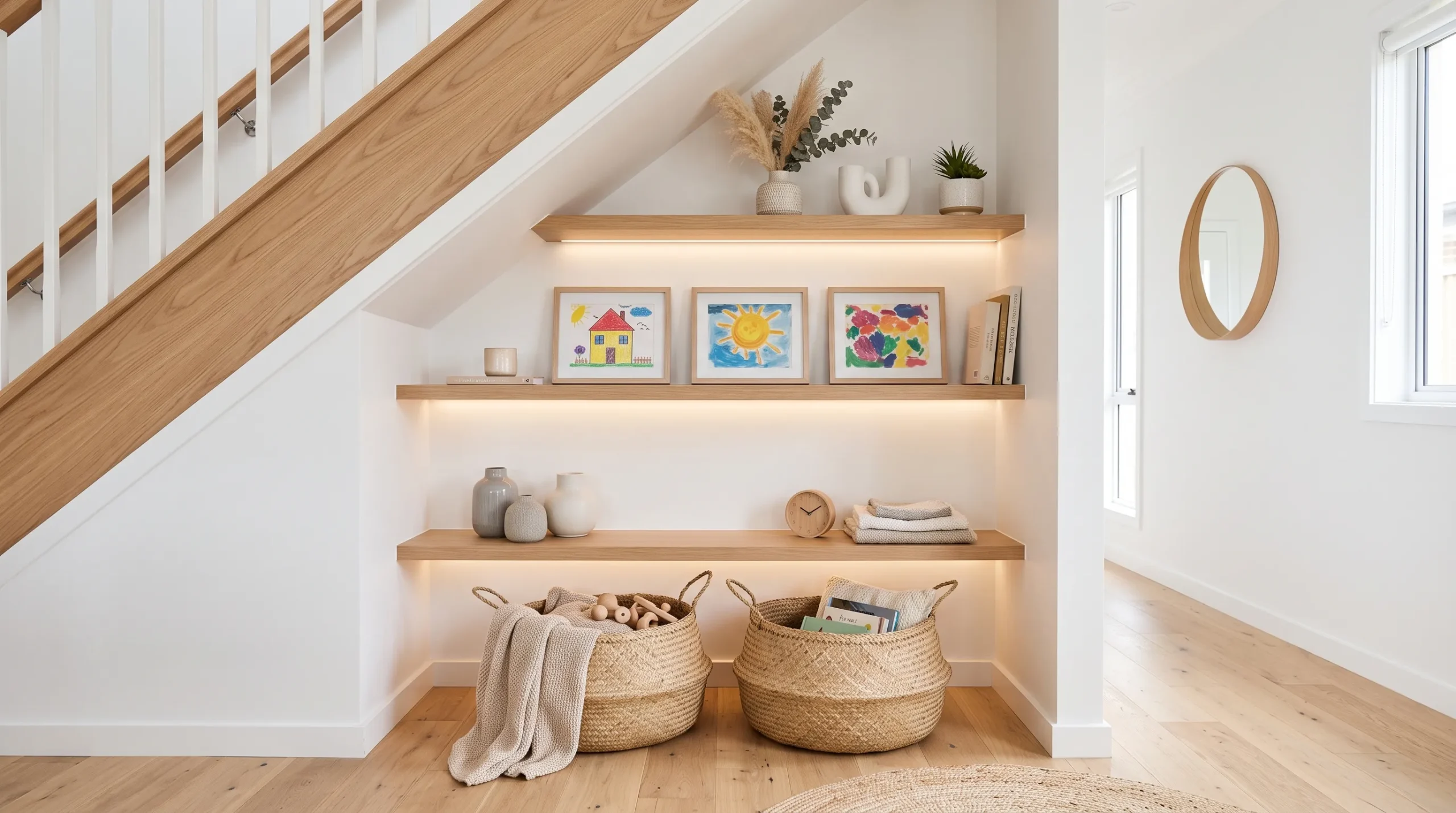
Turning the under-stair wall into a curated display instantly gives the area more personality. Floating shelves can showcase favorite books, framed artwork, treasured crafts, and decorative storage baskets without feeling crowded. That’s why many designers recommend mixing practical storage with meaningful displays rather than filling every shelf with toys. This balanced approach keeps the space visually interesting while making children’s accomplishments a beautiful part of the home’s overall design.
A carefully arranged display also evolves naturally as children grow and develop new interests. Swapping artwork or decorative pieces every few months refreshes the look without requiring expensive renovations. Warm lighting highlights each shelf while adding depth and a welcoming atmosphere during the evening. The finished result feels polished, modern, and highly personal, proving that functional family spaces can also become elegant design features worthy of saving for future inspiration.
7. Hidden Playhouse
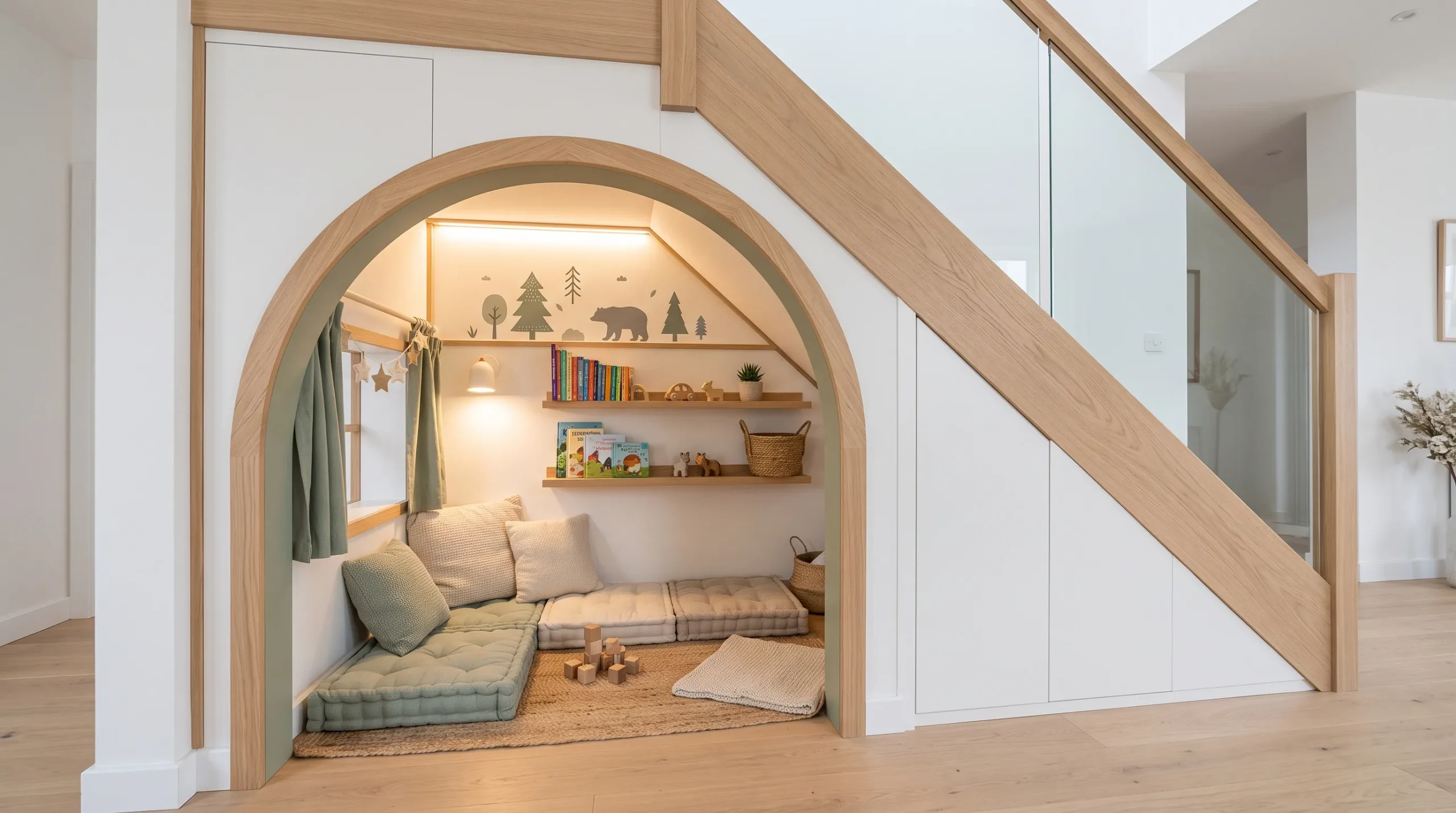
A hidden playhouse gives children a special place that feels private while remaining close to the family’s main living areas. An arched entrance, soft cushions, and built-in shelving instantly make the space feel inviting without requiring a large footprint. In my experience, children naturally spend more time using spaces that feel unique and designed just for them. Even simple decorative details can transform an overlooked corner into an imaginative escape that supports creativity, quiet play, and independent exploration throughout the day.
Keeping the design clean and neutral ensures the playhouse complements the surrounding décor instead of overwhelming it. Soft lighting creates a warm atmosphere during afternoons and evenings, while integrated storage keeps favorite toys nearby without creating visual chaos. The finished result feels like a custom-built feature rather than an afterthought, adding both personality and functionality to the home while making the area look polished enough for a Pinterest-worthy interior.
8. LEGO Building Zone
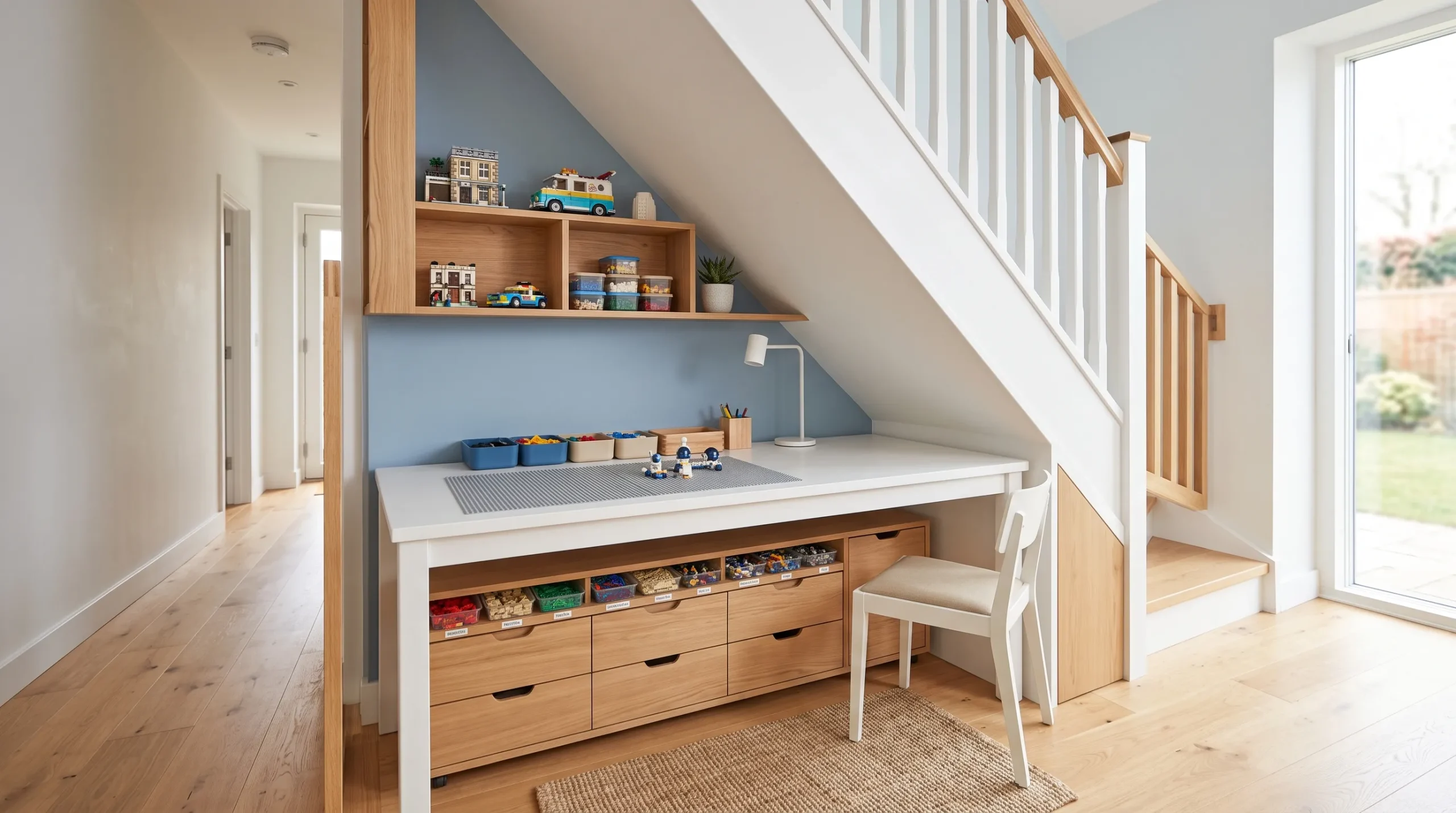
A dedicated building station helps creative projects stay organized instead of spreading across the entire house. A sturdy activity table paired with labeled storage drawers allows children to find pieces quickly and return them just as easily. I’ve noticed that organized play areas often encourage children to spend more time completing their creations because everything they need remains within reach. This thoughtful setup supports concentration while making cleanup faster for everyone after playtime ends.
Simple cabinetry and neutral finishes allow the building zone to blend seamlessly into a contemporary home. Open shelving can display completed models, adding personality without creating unnecessary clutter. Bright lighting makes smaller pieces easier to sort and assemble, improving both comfort and functionality. Altogether, this organized corner proves that practical play spaces can look sophisticated while supporting creativity, independence, and everyday family routines.
9. Dress-Up Corner
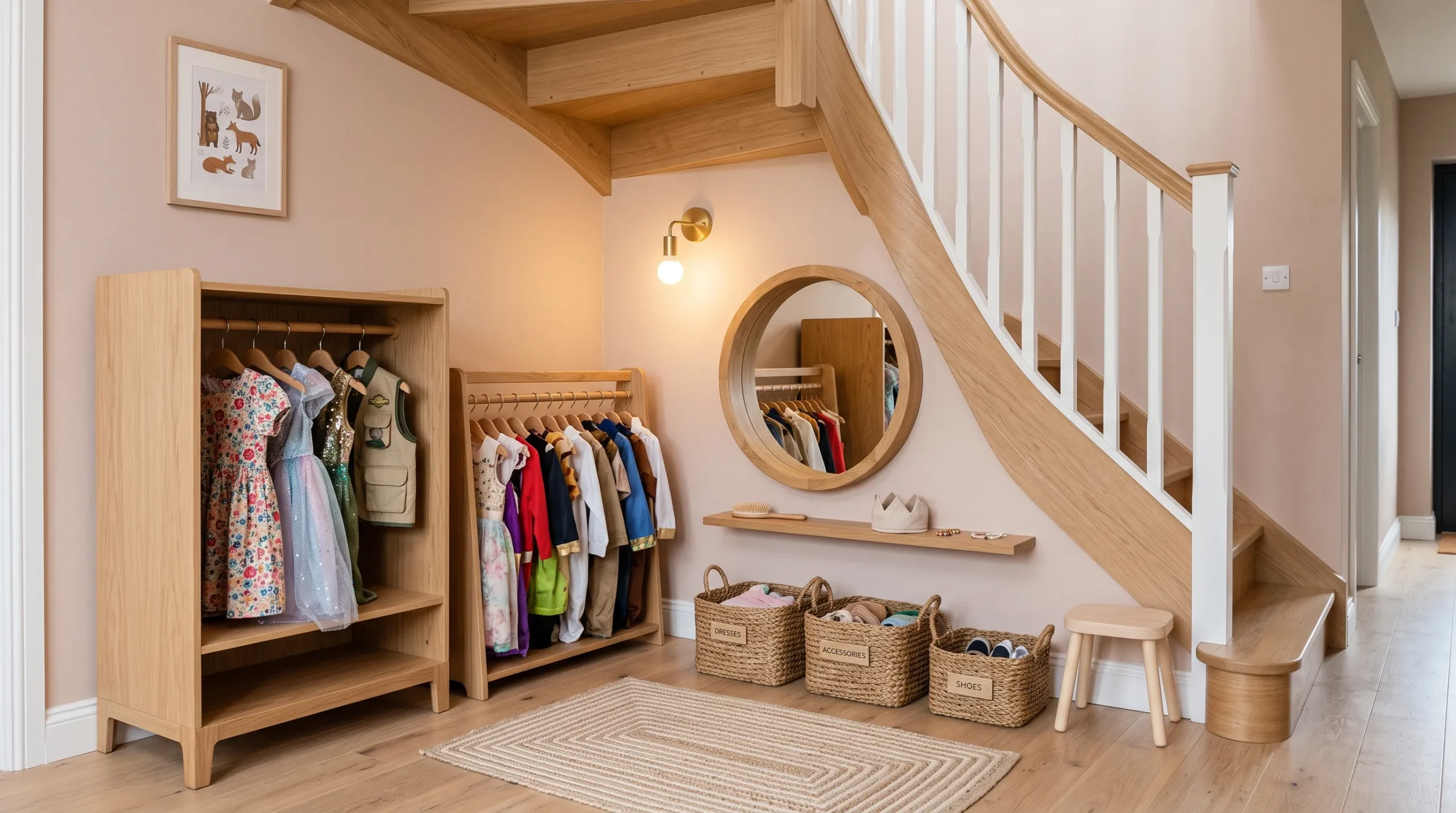
A well-designed dress-up corner encourages endless imaginative adventures while keeping costumes neatly contained. A low clothing rack, woven baskets, and a child-friendly mirror make it easy for little ones to choose outfits independently. That’s why many designers recommend creating clearly defined activity zones instead of mixing every toy together. This arrangement gives children ownership of their creative space while helping the entire area stay tidy and visually balanced throughout the week.
Soft colors and natural materials make the dress-up station feel elegant rather than overly themed, allowing it to age gracefully as interests change. A simple wardrobe can later transition into storage for books, games, or hobbies, making the investment practical over time. The finished design combines organization, creativity, and timeless style, proving that even a compact under-stair corner can become one of the most memorable spaces in the home.
Conclusion
Creating an under the stairs kids space is one of the smartest ways to make every part of your home more functional, beautiful, and enjoyable. From cozy reading corners to organized play zones and creative activity areas, these ideas prove that even the smallest spaces can have a big impact. I’ve seen how thoughtful design can completely change the way families use their homes, making everyday routines feel easier and more enjoyable. Save these ideas on Pinterest for future inspiration, try the ones that fit your home best, and share this guide with friends or family who would love creating a magical space for their little ones.
Clara Whitmore
Clara specializes in interior styling, seasonal home trends, and cozy living spaces. She loves combining classic design elements with modern touches to create homes that feel personal, welcoming, and effortlessly stylish.