Colorful Boys Room Style Guide for a Fun and Calm Space

Introduction:
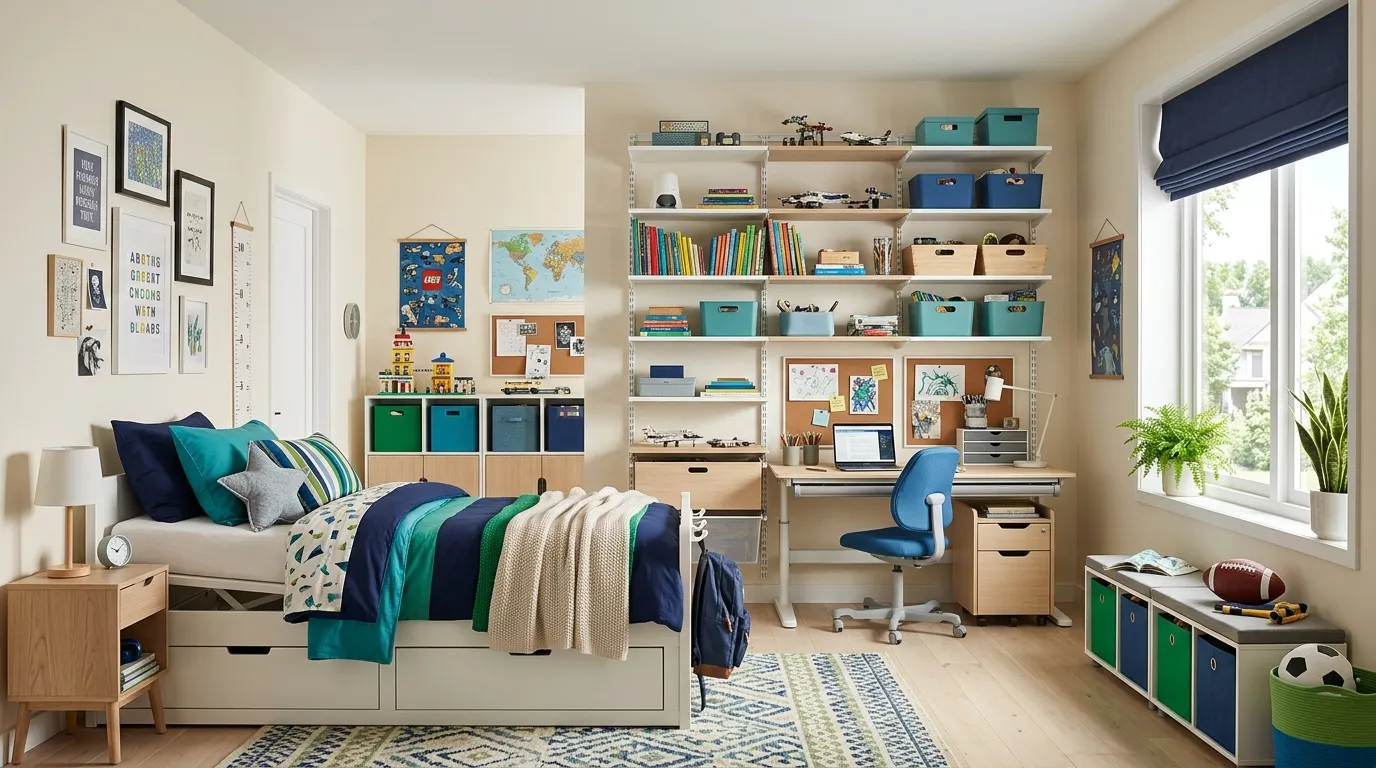
A colorful boys room can be much more than a space filled with bright paint and playful décor. When thoughtfully designed, it becomes an environment that encourages creativity, supports learning, promotes relaxation, and grows alongside your child. Finding the right balance between energy and calm can feel challenging, especially with so many color combinations, furniture choices, and decorating trends available today. This guide explains the principles behind creating a room that is both visually engaging and highly functional.
In my experience, the most successful children’s bedrooms are those designed with everyday life in mind rather than short-lived trends. I’ve noticed that families are happiest with spaces that remain practical as children develop new interests and routines. Throughout this guide, you’ll learn how color psychology, lighting, furniture selection, storage solutions, textiles, and thoughtful planning work together to create a welcoming environment. Whether you’re decorating a brand-new bedroom or refreshing an existing one, these insights will help you make confident design decisions that combine style, comfort, and long-term usability.
How to Choose a Balanced Color Palette
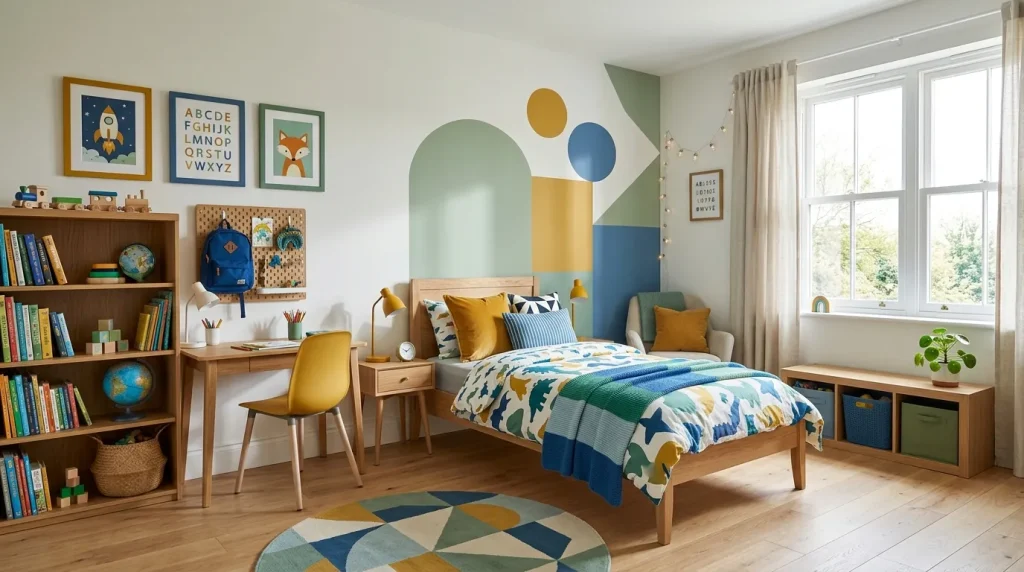
Choosing colors thoughtfully is the foundation of a room that feels both exciting and comfortable. A well-balanced palette helps children enjoy an energetic environment without creating constant visual stimulation. Designers often recommend combining one dominant color with two or three supporting shades to maintain harmony throughout the space. Research shows balanced interiors can improve visual comfort and make decorating decisions easier over time. Starting with a simple palette also allows accessories, artwork, and furniture to complement one another instead of competing for attention.
Many parents naturally gravitate toward bright tones because they reflect childhood energy, but moderation usually creates the best long-term results. In my experience, pairing vivid colors with softer neutrals keeps the room playful while preventing it from feeling overwhelming. For example, rich navy walls combined with white furniture and colorful textiles provide personality without excessive contrast. This balanced approach also makes seasonal updates easier because changing pillows, rugs, or wall art refreshes the overall appearance without requiring expensive renovations or complete redesigns.
Understanding the Role of Color Psychology
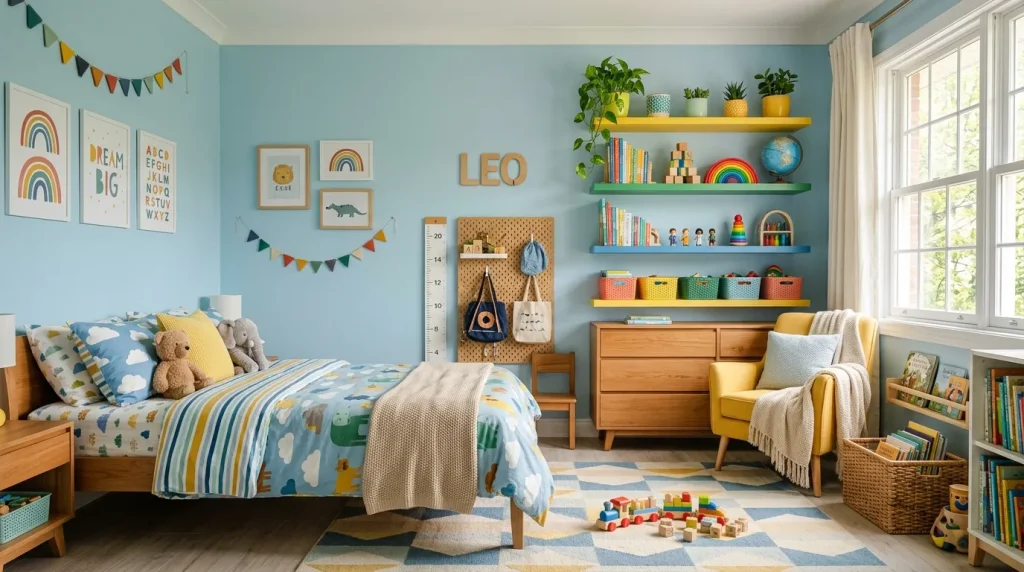
Every color influences how a space feels, making color psychology an important part of children’s room design. While individual preferences always matter, studies suggest certain shades encourage relaxation, creativity, concentration, or confidence more effectively than others. Understanding these emotional responses helps parents make informed decorating choices instead of selecting colors based only on appearance. The goal is not to follow strict rules but to create an environment that supports learning, play, rest, and everyday routines in a balanced and enjoyable way.
Cool shades such as blue and green are often associated with calmness and focus, making them excellent choices for sleeping or study areas. Meanwhile, warmer colors like yellow or orange can introduce optimism and creative energy when used as accents. I’ve noticed that children often respond positively when brighter tones appear through artwork, cushions, or storage rather than covering every wall. This measured approach creates visual excitement while preserving a peaceful atmosphere that continues supporting changing interests as children grow older.
How Lighting Influences Color Perception Indoors
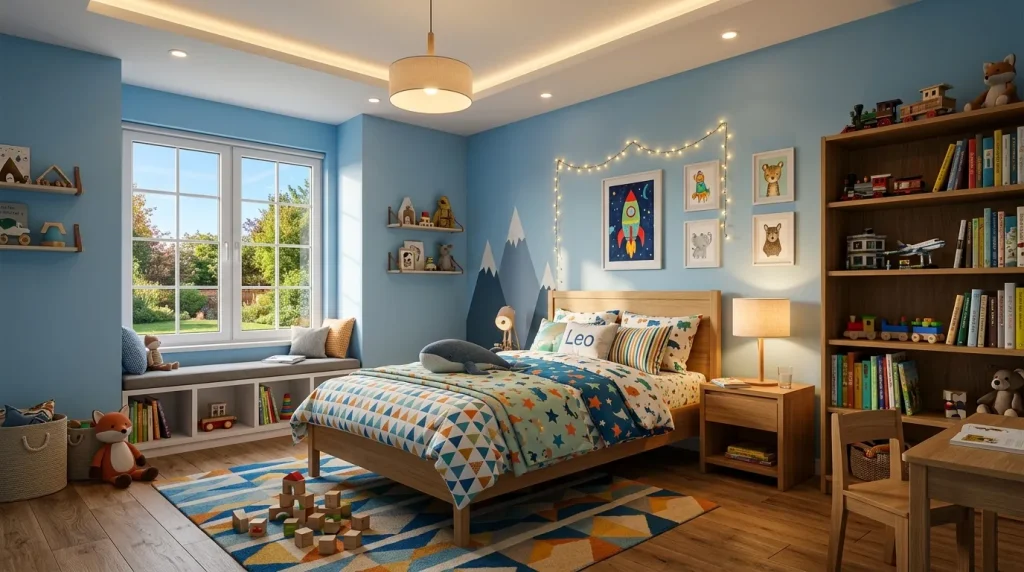
Lighting has a greater impact on interior colors than many people realize. The same paint shade can appear cool in morning sunlight, warmer during sunset, or slightly muted under artificial lighting. Understanding this relationship helps prevent disappointment after decorating and allows homeowners to choose finishes with greater confidence. Many designers recommend observing paint samples at different times of the day before making final decisions. This simple step reveals how changing light conditions influence the overall mood and appearance of a child’s bedroom throughout everyday routines.
Artificial lighting deserves just as much attention because children use their rooms long after daylight fades. Warm white bulbs usually create a relaxing evening atmosphere, while neutral white lighting provides better visibility for reading, homework, and creative activities. I’ve observed that combining ceiling fixtures with bedside lamps and task lighting produces the most flexible environment. Layered lighting not only improves functionality but also highlights colorful décor, artwork, and furniture in ways that make the room feel inviting, comfortable, and visually balanced during every part of the day.
What Furniture Colors Work Best Together
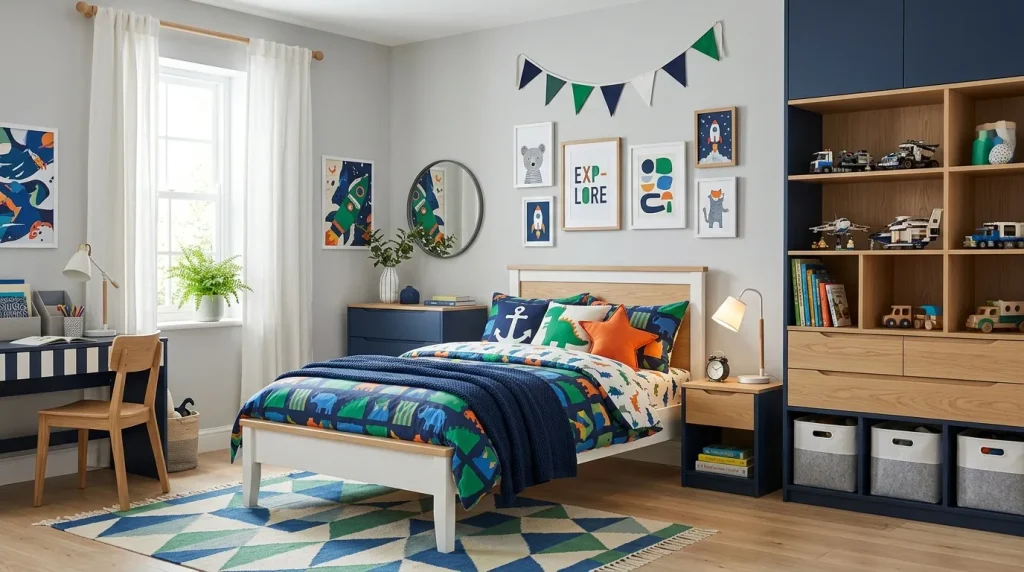
Furniture plays a major role in determining whether a bedroom feels coordinated or visually cluttered. While colorful walls or accessories attract attention, larger pieces establish the room’s long-term visual foundation. Choosing complementary furniture colors helps maintain balance even as decorations change over time. Neutral finishes such as white, light oak, gray, or natural wood remain popular because they pair easily with evolving color schemes and decorative styles. This flexibility makes future updates simpler without requiring expensive replacements or complete redesigns.
Instead of matching every piece exactly, designers often combine two complementary furniture finishes to create subtle contrast and depth. For example, white storage units can work beautifully alongside natural wood shelving or a darker study desk. Research shows visual variety keeps interiors interesting while preserving harmony when repeated thoughtfully. In my experience, maintaining consistency in furniture style is often more important than matching every color perfectly. A cohesive design language allows decorative accents to stand out while the larger furnishings continue providing stability and timeless appeal.
Creating Separate Zones for Play and Rest
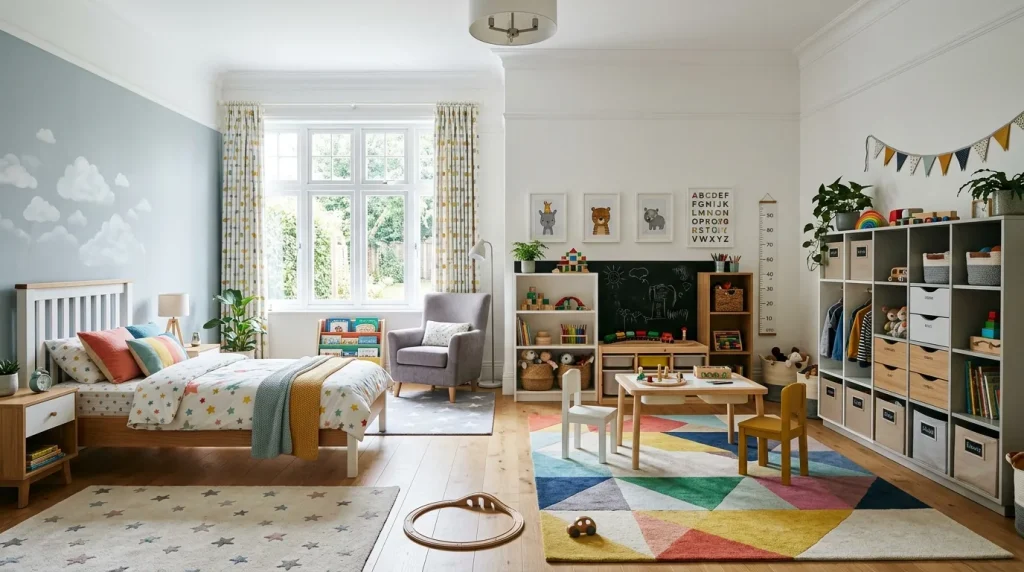
A well-designed bedroom supports many daily activities beyond sleeping. Children often use the same space for reading, imaginative play, homework, creative projects, and quiet relaxation. Creating separate zones helps each activity feel intentional while making the room easier to organize. Even in smaller bedrooms, thoughtful furniture placement and strategic use of rugs, shelving, or lighting can define different functions without requiring physical dividers. This organized layout encourages independence because children quickly understand where each activity naturally belongs.
Visual separation also improves the overall experience of using the room throughout the day. A calm sleeping area with softer colors and comfortable bedding promotes relaxation, while a brighter play space encourages creativity and movement. Many professionals recommend maintaining consistent organization within each zone to reduce clutter and simplify everyday routines. I’ve noticed that children often respond positively when activity areas remain predictable because they develop habits around cleaning, studying, and relaxing. Small layout adjustments can therefore improve both functionality and long-term usability.
How Wall Treatments Add Personality and Depth
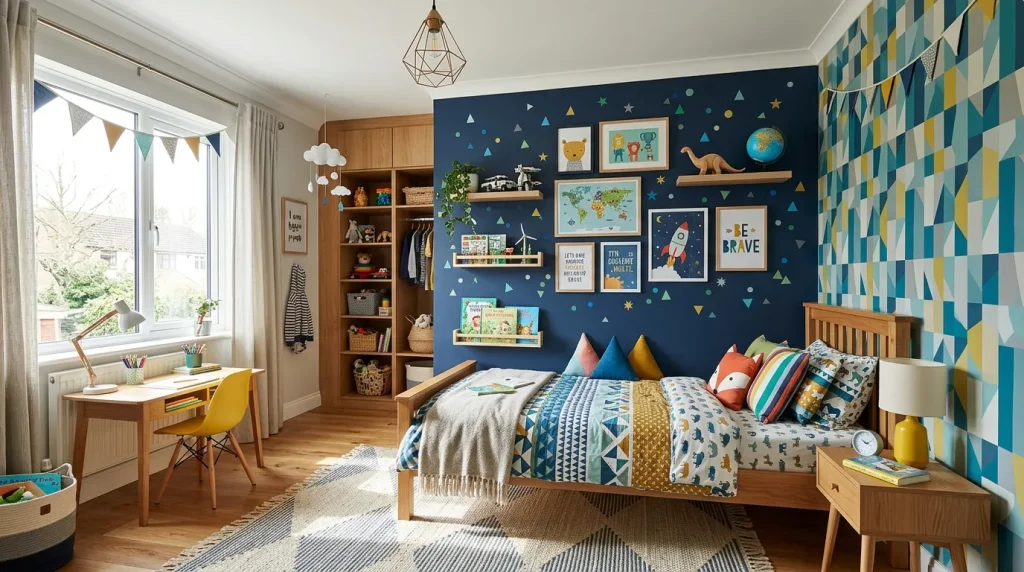
Walls provide the largest visual surface in a bedroom, making them one of the most effective ways to establish character and depth. Paint, wallpaper, murals, paneling, and decorative wall art each contribute differently to the overall atmosphere. Rather than covering every surface with bold patterns, many designers recommend choosing one focal wall while keeping surrounding walls more subtle. This balanced approach draws attention naturally, prevents visual overload, and creates a room that feels interesting without becoming distracting as children’s tastes evolve over time.
Decorative wall elements should also reflect flexibility because interests often change as children grow. Framed prints, removable decals, floating shelves, and interchangeable artwork allow families to refresh the room without major renovations. Research suggests adaptable decorating choices offer greater long-term value while reducing unnecessary costs. In my experience, combining permanent finishes with easily updated decorations creates the most practical solution. The room maintains a polished appearance today while remaining ready for new hobbies, favorite colors, and changing personalities in the years ahead.
Why Smart Storage Supports Everyday Organization
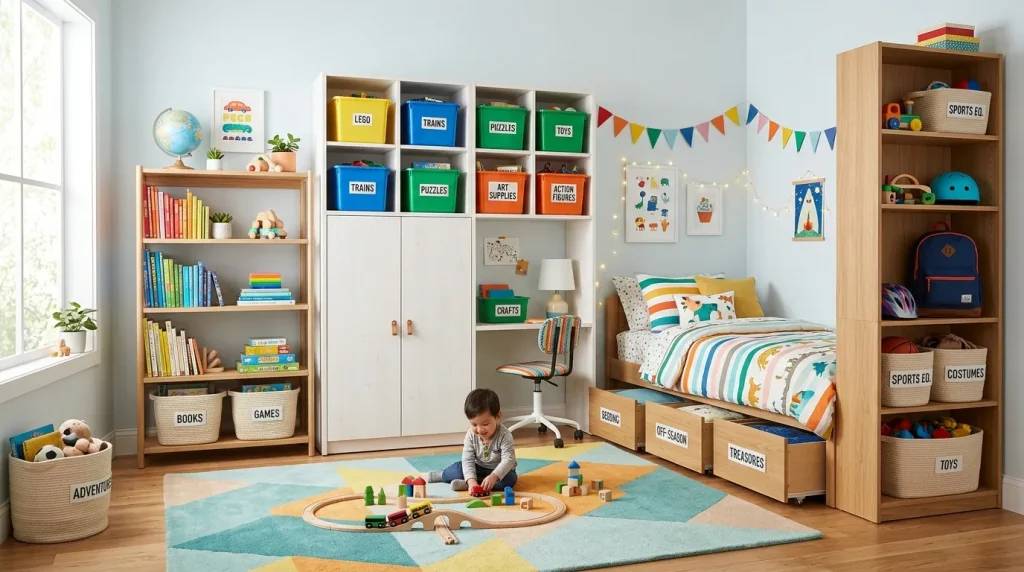
An organized bedroom is easier to enjoy, maintain, and adapt as children grow. Smart storage solutions reduce clutter while making everyday items accessible without sacrificing style. Instead of relying on one large cabinet, combining shelves, baskets, drawers, and under-bed storage distributes belongings efficiently throughout the room. This layered approach supports daily routines by giving every item a dedicated place. Organized environments also make cleaning less overwhelming because children can quickly recognize where toys, books, clothes, and school supplies belong.
Storage works best when it matches a child’s abilities and changing needs. Lower shelves encourage younger children to tidy independently, while labeled containers simplify sorting and finding belongings. Many professionals recommend choosing versatile storage pieces that can evolve from toy organization to school supplies or hobby collections. I’ve observed that families who prioritize practical organization often spend less time managing clutter and more time enjoying the space together. Functional storage therefore improves both the room’s appearance and its everyday usability.
Choosing Textiles That Improve Comfort and Style
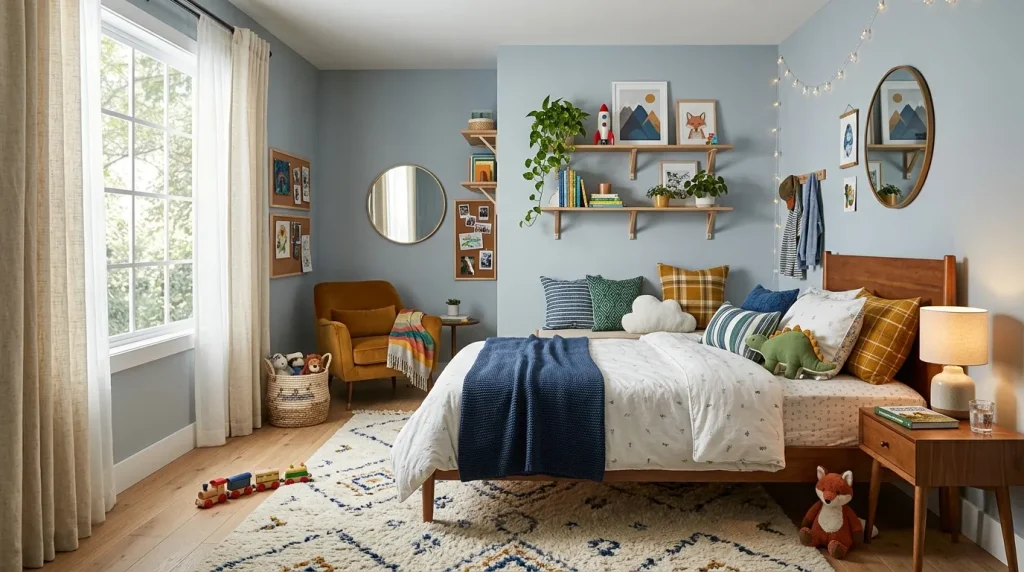
Textiles bring warmth, softness, and personality to a bedroom while helping unify the overall design. Bedding, rugs, curtains, cushions, and blankets introduce color, texture, and visual interest without requiring permanent changes. Because fabrics are relatively easy to replace, they provide a flexible way to update the room as preferences change. Designers frequently use layered textiles to create depth and comfort, allowing the space to feel welcoming while maintaining a coordinated appearance that supports both active play and restful sleep. The same layering techniques can also transform bathrooms, and this guide to a cozy bathroom aesthetic explores how soft textures and thoughtful details create a warm, relaxing retreat.
Material selection is equally important because children interact with fabrics every day. Breathable cotton, durable blends, and washable materials typically offer the best balance between comfort and practicality. Choosing textures with subtle variation also makes the room feel richer without depending entirely on bold colors or patterns. In my experience, thoughtfully layered textiles soften hard furniture lines and improve the overall atmosphere significantly. They help transform an ordinary bedroom into a comfortable environment where children can relax, learn, and enjoy everyday activities.
How Decorative Accessories Complete the Overall Design
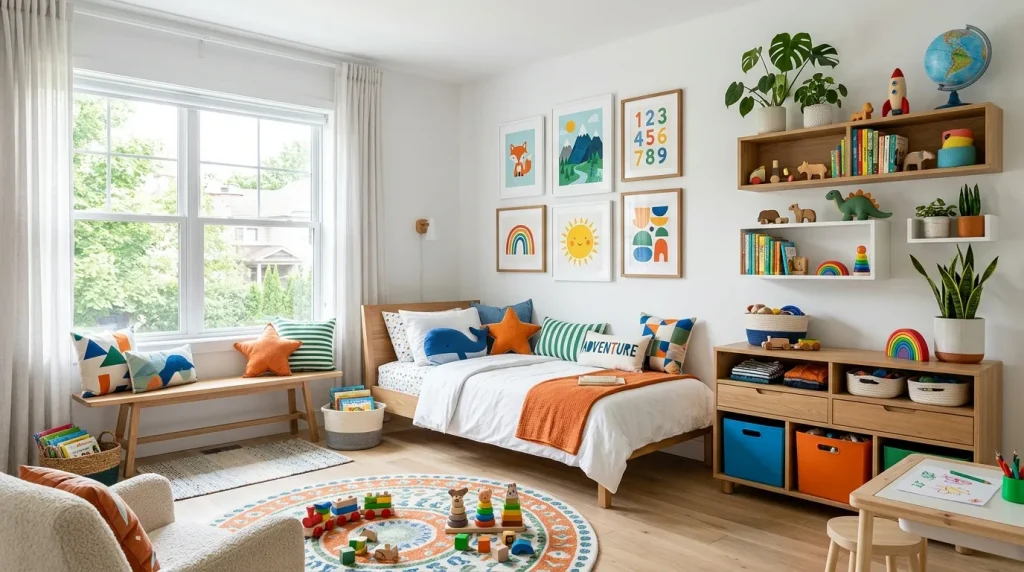
Decorative accessories are often the finishing touches that transform a functional bedroom into a space with character and personality. Items such as artwork, clocks, cushions, display shelves, indoor plants, and collectibles introduce visual interest without overwhelming the room. Rather than filling every available surface, thoughtful placement allows each accessory to contribute meaningfully to the overall design. Many interior designers recommend selecting decorations that complement the room’s color palette while reflecting the child’s hobbies, interests, and evolving personality in a balanced, organized way.
Accessories also provide one of the easiest opportunities to refresh a bedroom over time. Replacing artwork, decorative pillows, or display pieces can update the atmosphere without changing furniture or repainting walls. Research suggests that regularly refreshing small decorative details helps maintain a space that feels engaging and personalized. I’ve noticed that carefully edited collections create a calmer appearance than overcrowded shelves. Choosing meaningful accessories instead of excessive decoration results in a room that feels welcoming, organized, and visually cohesive throughout every stage of childhood.
The Importance of Designing for Future Growth
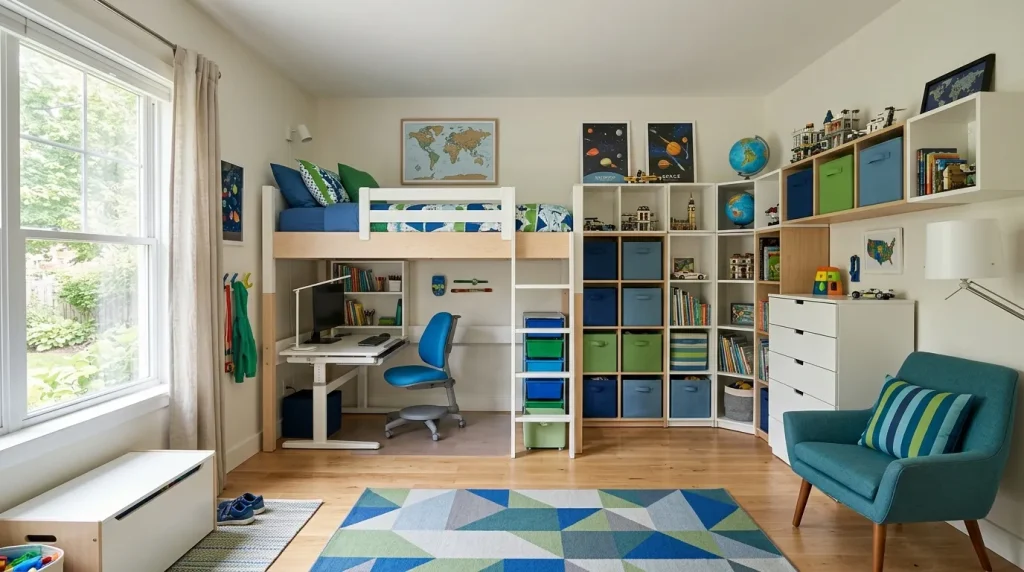
Children’s interests, routines, and responsibilities naturally change over time, making long-term planning an important part of bedroom design. A room that works perfectly for a young child may require adjustments as schoolwork, hobbies, and personal preferences develop. Choosing adaptable furniture, timeless finishes, and flexible layouts reduces the need for complete redesigns later. This forward-thinking approach helps families invest in durable elements while leaving enough flexibility to accommodate future changes with minimal effort and expense.
Growth-focused design also supports independence by allowing the room to evolve alongside everyday routines. Adjustable desks, modular shelving, and versatile storage systems can serve different purposes as children mature. Many professionals recommend investing in quality foundational pieces while updating decorative elements as interests change. In my experience, this strategy creates a space that remains practical for many years without losing its sense of personality. Careful planning today often saves considerable time, money, and effort while preserving a comfortable and functional environment.
Common Decorating Mistakes and How to Avoid Them
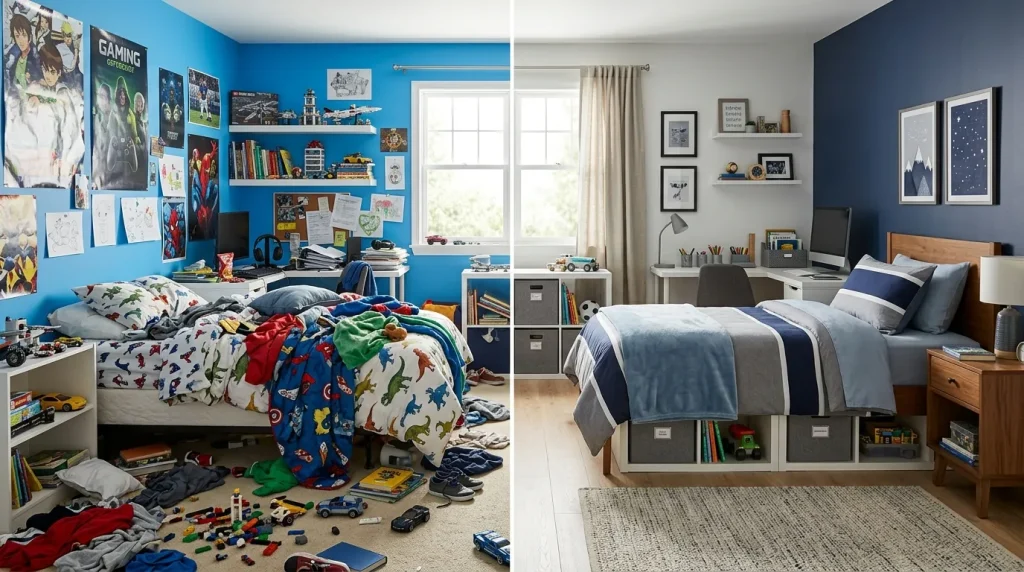
Even well-intentioned decorating projects can encounter challenges when planning focuses only on appearance rather than everyday functionality. One common mistake is using too many bold colors at once, creating a visually overwhelming environment. Another frequent issue involves overcrowding the room with oversized furniture or excessive decorations that limit movement and storage. Understanding these pitfalls helps homeowners make more confident decisions while creating spaces that remain practical, comfortable, and visually appealing throughout changing stages of childhood.
Another mistake involves overlooking lighting, organization, and flexibility in favor of short-term trends. Rooms designed around temporary interests often require expensive updates as children grow. Many experts recommend prioritizing quality, adaptability, and thoughtful planning instead of chasing every new decorating style. I’ve observed that successful bedrooms usually balance creativity with practicality, allowing decorative features to complement everyday living rather than complicate it. Careful planning from the beginning creates a space that remains enjoyable, functional, and easy to maintain for years.
Conclusion:
Designing a beautiful children’s bedroom is about much more than choosing attractive colors. By understanding how color, lighting, furniture, storage, textiles, and thoughtful planning work together, you can create a space that supports creativity, organization, comfort, and everyday living. A well-planned colorful boys room offers lasting value because it adapts to changing interests while maintaining a balanced and welcoming atmosphere. I’ve seen how applying these design principles helps families create rooms that remain functional and enjoyable for years. Use this guide whenever you plan updates, and share it with others looking to build a space where children can learn, play, grow, and feel completely at home.
Clara Whitmore
Clara specializes in interior styling, seasonal home trends, and cozy living spaces. She loves combining classic design elements with modern touches to create homes that feel personal, welcoming, and effortlessly stylish.