Moody Neutral Living Room Ultimate Guide for a Calm Luxe Home

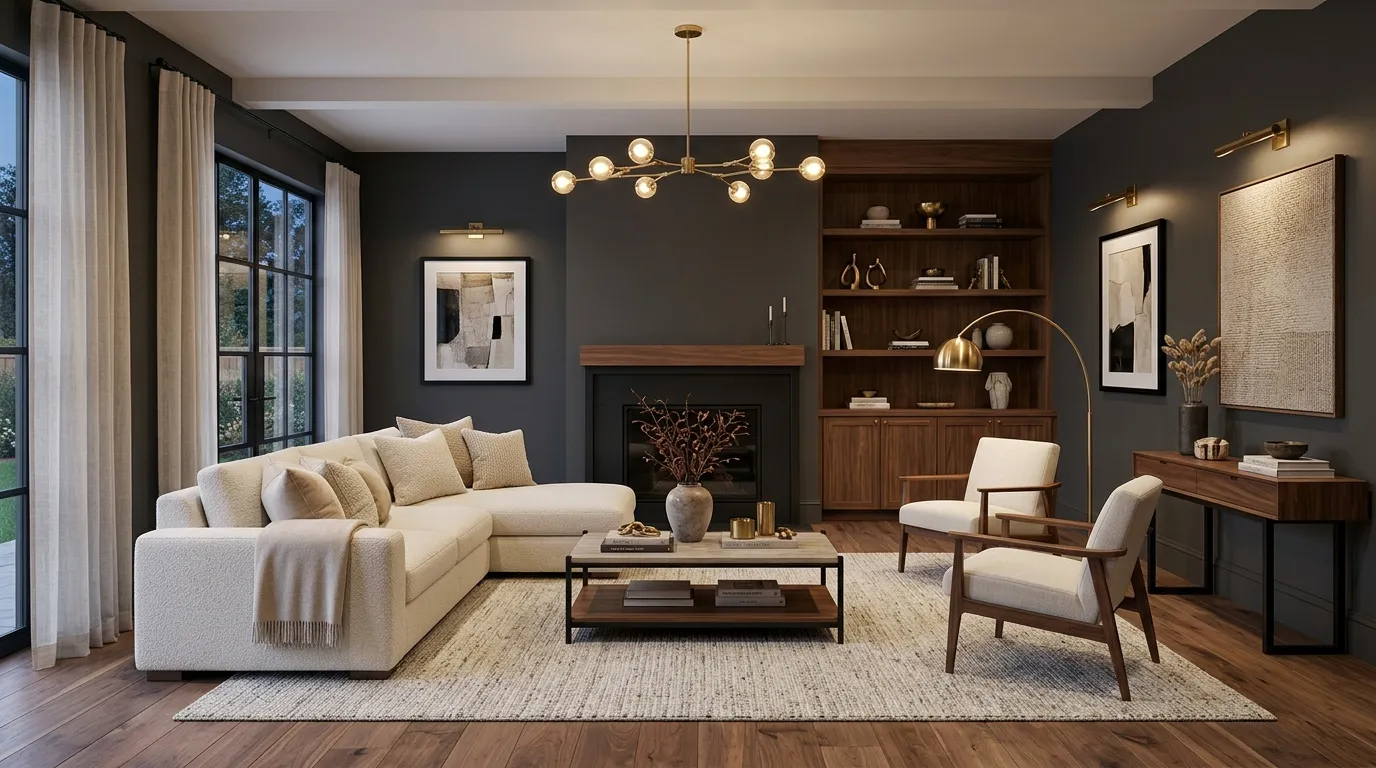
Table of Contents
Before You Begin
A moody neutral living room uses deep, earthy neutrals, such as charcoal, mushroom, taupe, chocolate and warm greige, instead of bright white or bold color. The result feels enveloping and calm, especially in the evening, while still being easy to live with and simple to update.
This guide covers how to choose the right shades, how to light a darker room so it glows rather than feels gloomy, which textures keep it from looking flat, and the mistakes that most often go wrong. For a darker, more dramatic version of the look, see these moody living room ideas.
What Defines a Dark and Neutral Living Space?
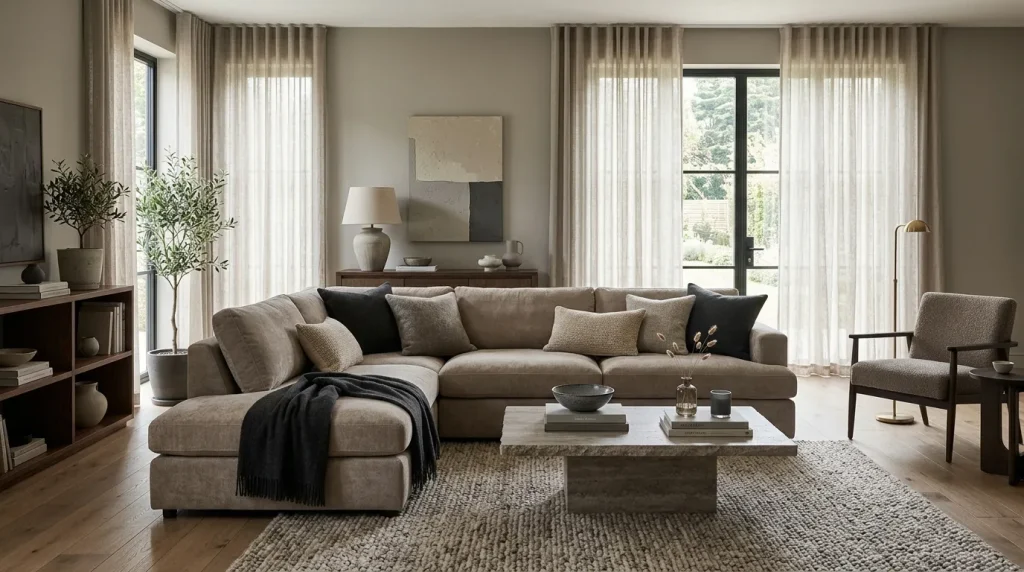
A moody neutral room sits between a light, airy neutral scheme and a dark, dramatic one. Walls are usually mid to deep tones, such as warm taupe, mushroom, smoky greige or soft charcoal, paired with lighter upholstery and natural materials.
The key is warmth. Neutrals with brown, beige or olive undertones feel cozy, while cool blue-grays can feel cold. Most moody neutral rooms use three to five related shades, from a creamy off-white to a deep brown or charcoal, layered across walls, furniture and textiles.
Why Layered Neutral Colors Create Lasting Depth
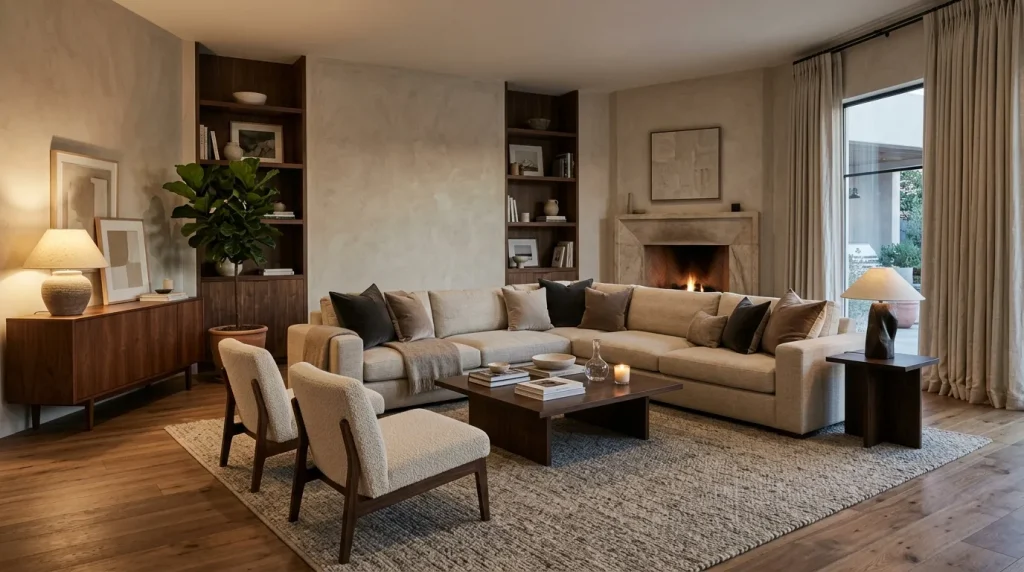
Layer shades of the same family rather than mixing unrelated neutrals. A simple plan is a mid-tone wall color, a lighter sofa, a darker rug or accent chair and one or two near-black accents such as a lamp base or picture frames.
Test paint samples side by side with the sofa fabric and floor, in both daylight and lamp light. Painting the trim and ceiling in the same color or a slightly lighter shade makes the room feel wrapped and calm; these color drenching living room ideas show the full effect.
How Lighting Shapes the Overall Atmosphere
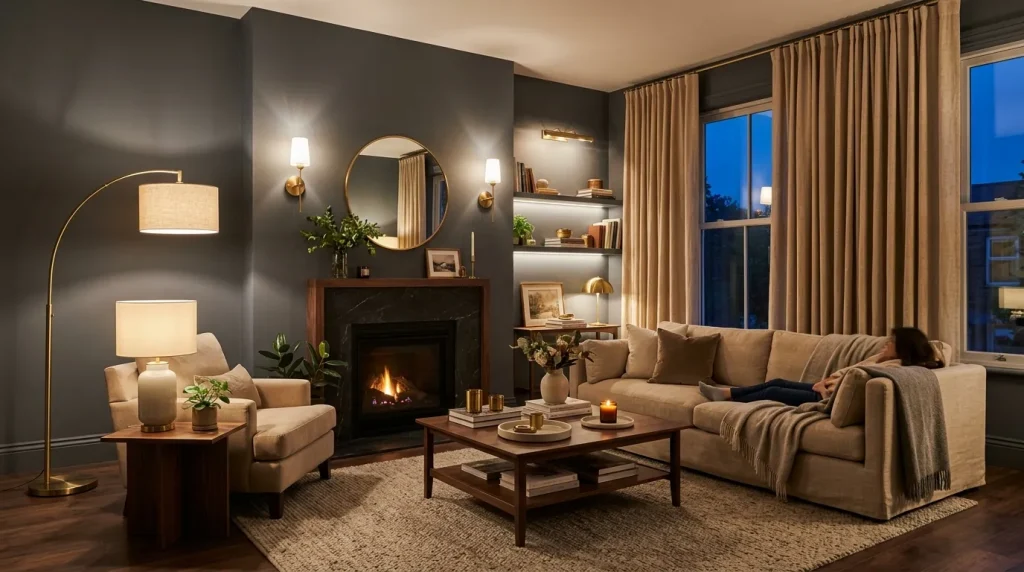
Lighting decides whether a dark room feels cozy or cave-like. Plan at least three light sources: a ceiling fixture, two or more lamps at different heights, and an accent light such as a picture light or LED strip on a bookshelf.
Use warm bulbs around 2700K to bring out the brown and beige undertones in the paint. Fabric or paper lampshades diffuse light softly. In a room with little daylight, add a large mirror opposite the window and keep the lightest-colored furniture closest to it.
Understanding Texture as an Essential Design Element
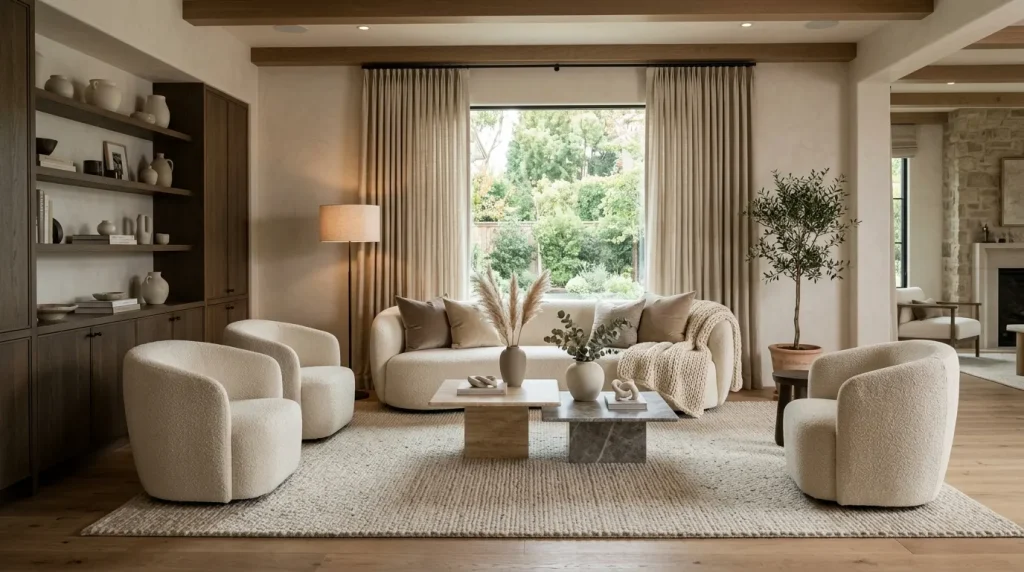
Texture keeps a narrow color palette interesting. Aim for at least four or five materials in the room: for example a bouclé or linen sofa, a wool rug, a wood coffee table, a stone or ceramic lamp and a velvet or leather accent chair.
Mix smooth and rough surfaces so light catches them differently, such as matte plaster-effect walls beside a polished brass lamp, or a nubby throw on a sleek leather chair. Swapping pillow covers and throws is the easiest way to add new texture each season.
Why Furniture Shapes Balance and Visual Flow
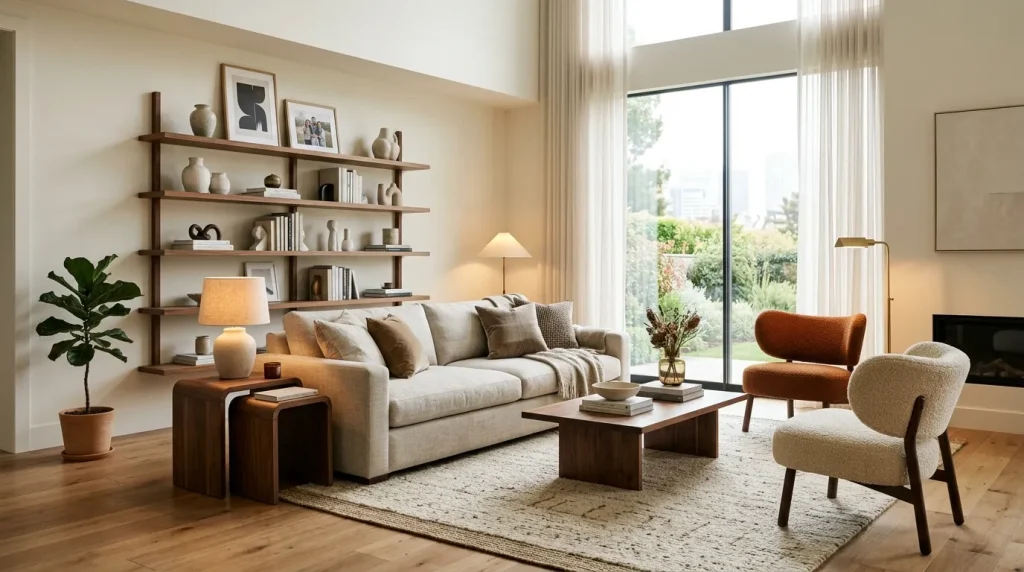
Furniture shape and placement control how relaxed the room feels. Rounded sofas, curved chairs and oval or round coffee tables soften a dark palette. Pull furniture away from the walls slightly and group it around a rug to create a cozy conversation area.
Leave about 30 to 36 inches for main walkways and 16 to 18 inches between the sofa and coffee table. In a small room, choose a sofa with slim arms and raised legs so the floor shows underneath and the space feels lighter.
The Importance of Contrast Without Overpowering the Room
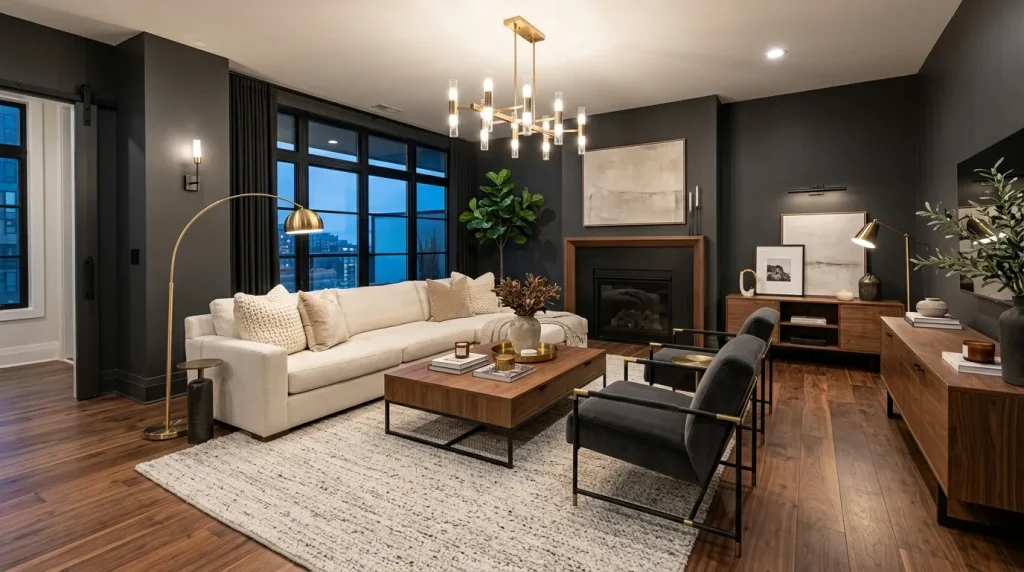
Gentle contrast gives a moody room shape. Pair a lighter cream sofa with deeper walls, or a dark leather chair with a pale rug. One or two near-black accents, such as an iron lamp or black picture frames, add definition.
Keep contrast controlled: a jump from almost-white to almost-black in one corner looks harsh. Instead, step gradually through mid tones, and repeat the darkest shade at least twice so it looks intentional.
Why Thoughtful Storage Supports a Relaxing Environment
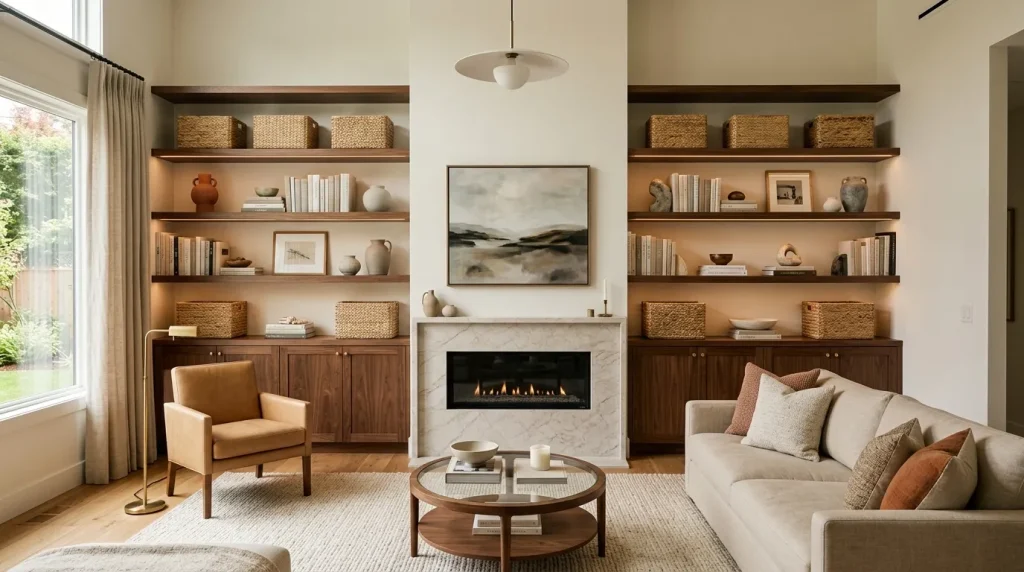
Clutter shows up quickly against dark walls, so hidden storage matters. A media console with doors, a storage ottoman, lidded baskets and a sideboard keep remotes, chargers and toys out of sight.
Combine closed storage below with open shelves above for books and a few chosen objects. Style shelves with items in the same palette, such as cream ceramics, brown books and a little brass, and leave space between groups.
How Artwork Adds Personality Without Overwhelming Neutrals
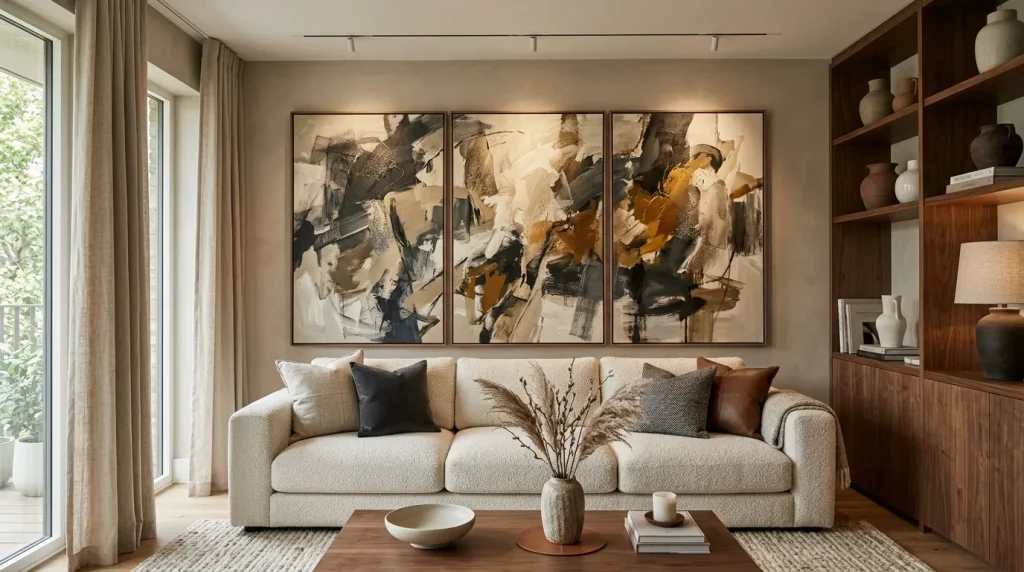
Art adds personality to a neutral scheme. Large abstract pieces in brown, rust, cream and charcoal, black-and-white photography and textured canvases all suit the look.
Over a sofa, choose art about two-thirds the sofa width and hang the bottom 8 to 10 inches above the back. A picture light or a nearby sconce makes art glow in the evening. One large piece often looks calmer than a busy gallery wall.
Common Decorating Mistakes and How to Avoid Them
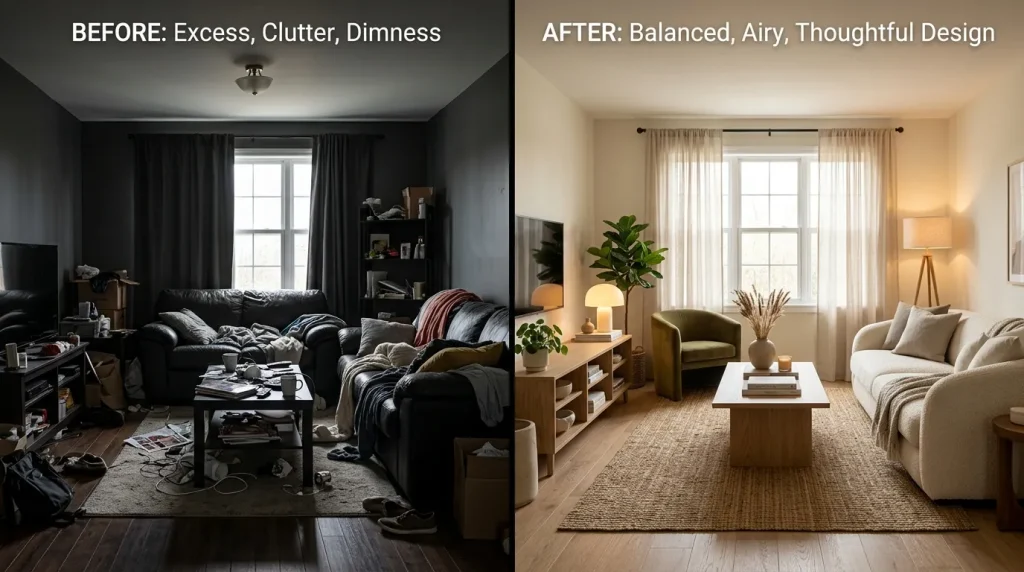
The most common mistakes are using only one flat shade everywhere, relying on a single ceiling light, choosing cool gray paint that turns cold at night, and filling every surface with décor.
Another frequent issue is furniture that is too large for the room, which makes dark walls feel closer. Measure before buying, keep some floor visible and edit accessories regularly.
How Seasonal Updates Keep the Space Feeling Fresh
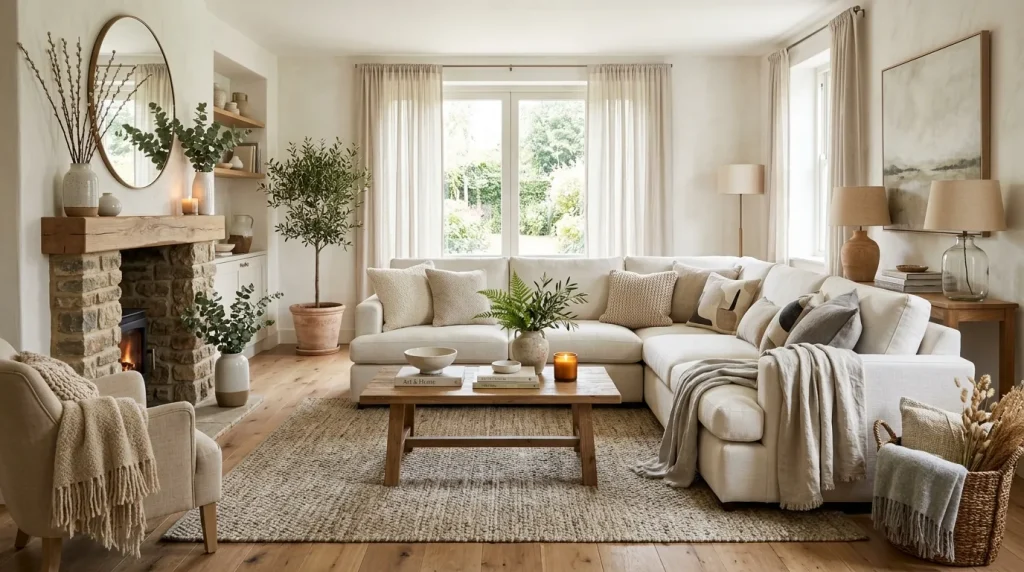
Small seasonal swaps keep the room feeling fresh without changing the palette. In autumn and winter, add chunky knit throws, wool pillows, warm candlelight and dried branches; these cozy winter living room ideas show the full layered look.
In spring and summer, switch to linen pillow covers, a lighter throw, fresh greenery and a jute rug layered over the wool one. Keep changes to textiles and small accessories so the core room stays the same.
Creating a Home That Feels Calm Every Day
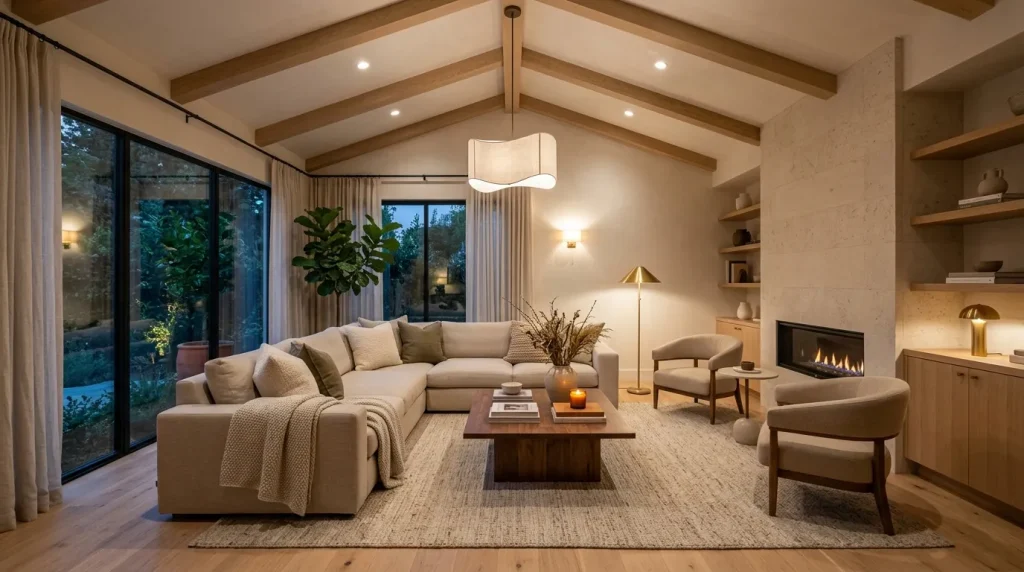
Daily calm comes from a few habits as much as from décor: a basket for throws, a tray for remotes, a five-minute reset each evening and lamps on timers or smart plugs so the room glows when someone walks in.
Comfort details matter too, such as a soft rug underfoot, plenty of pillows and a side table within reach of every seat.
Why Thoughtful Design Creates Lasting Value
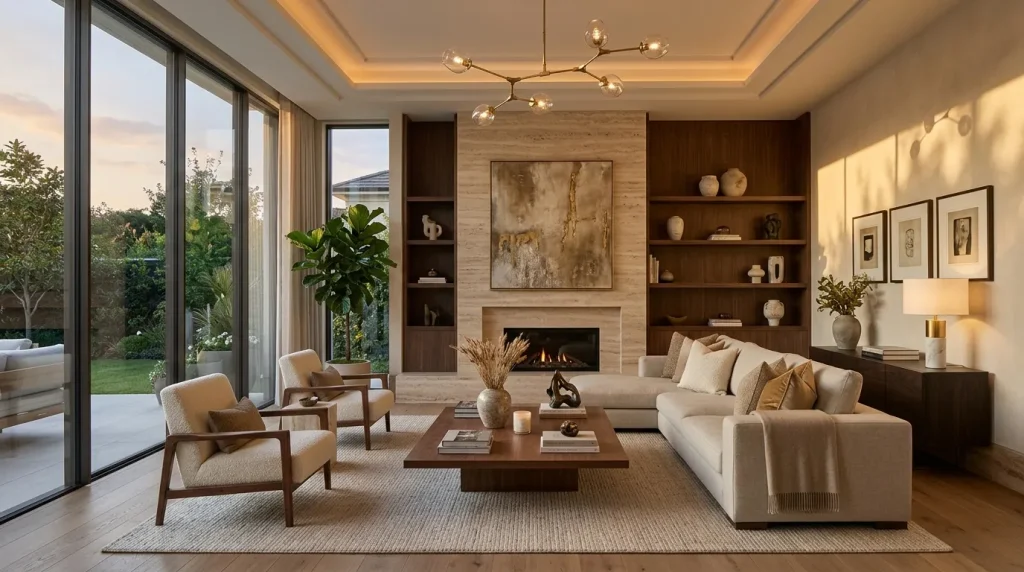
A moody neutral scheme is easy to adapt over time. Because the base is neutral, new pillows, art or a single accent chair can shift the mood without repainting. Investing in a quality sofa, rug and lighting first gives the best long-term value.
For a richer brown variation, these chocolate brown living room ideas push the palette deeper while keeping it warm.
Moody Neutral Paint Palettes
- Warm and cozy: mushroom walls, cream sofa, walnut wood and brass.
- Soft and smoky: smoky greige walls, oatmeal linen, black iron and oak.
- Deep and rich: chocolate or espresso accent wall, taupe walls, camel leather and ivory.
- Earthy: warm taupe walls with olive and rust accents.
Moody Neutral Living Room FAQ
Will dark neutral walls make a small living room feel smaller? Not if the whole room is treated the same way. Painting walls, trim and ceiling in one deep, warm shade blurs the corners, and good lamps keep it bright enough.
What sofa color suits a moody neutral room? Cream, oatmeal, camel, cognac leather or a soft taupe all work. A lighter sofa against darker walls gives the most balanced contrast.
What finish should the paint be? Matte or eggshell gives the soft, velvety look; choose a washable matte in busy family rooms.
Building the Look on a Budget
- Under $100: warm bulbs, two new pillow covers in wool or linen, a chunky knit throw and lidded baskets.
- $100 to $400: a gallon or two of deep neutral paint, a large floor lamp and a table lamp, a picture light and a large abstract print.
- $400 and up: a bouclé or leather accent chair, a large wool rug, a new sofa slipcover or a closed media console.
Paint and lighting give the biggest change for the money, so start with those and add larger pieces over time.
The Bottom Line
A moody neutral living room comes together through warm deep neutrals, layered lighting, plenty of texture and controlled contrast. Start with the wall color and lamps, then add textiles and art, and the room will feel calm, cozy and quietly luxurious every evening.
Clara Whitmore
Clara specializes in interior styling, seasonal home trends, and cozy living spaces. She loves combining classic design elements with modern touches to create homes that feel personal, welcoming, and effortlessly stylish.