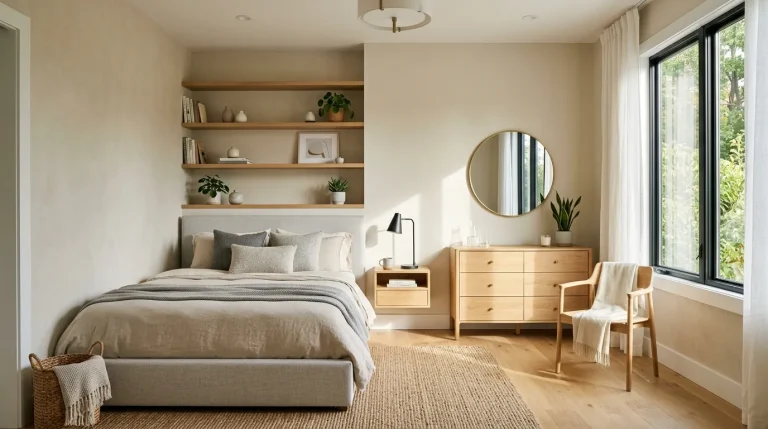
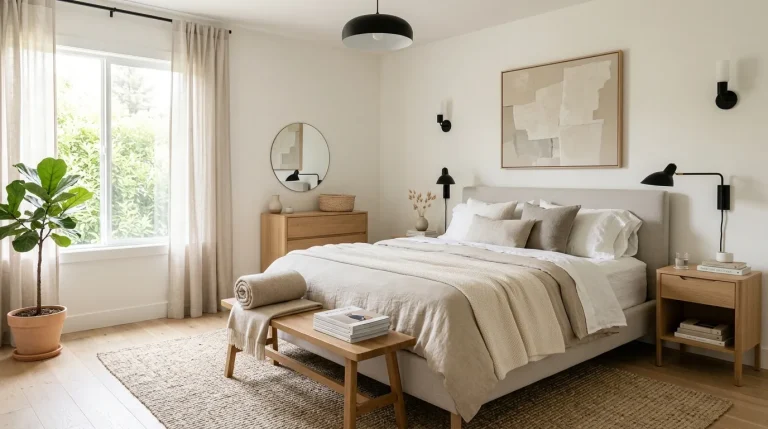
Japandi Bedroom Ideas for a Simple Yet Luxurious Makeover

Introduction:
If you’ve been dreaming of a calm, clutter-free, and beautifully balanced bedroom, these japandi bedroom ideas will completely transform how your space feels. This style blends Japanese simplicity with Scandinavian warmth, creating a peaceful environment that feels both modern and luxurious at the same time.
In my experience, even small changes like soft lighting, natural wood accents, or layered neutral fabrics can instantly shift the mood of a room. I’ve noticed many people struggle with bedrooms that feel either too crowded or too plain, and this design approach solves both problems beautifully. It focuses on simplicity, comfort, and intentional styling—helping you create a space that feels relaxing the moment you walk in.
1.Soft Wood Accents
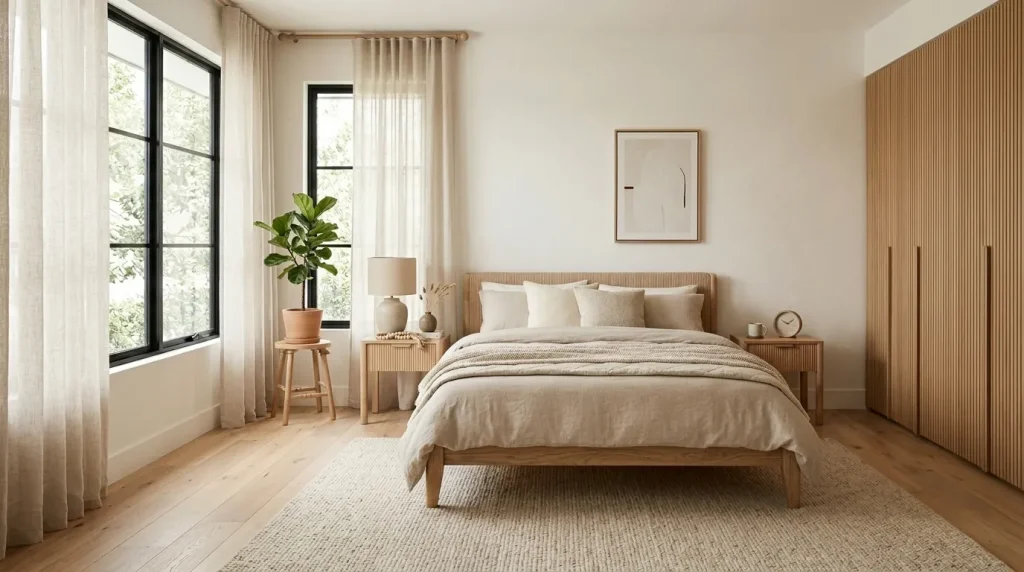
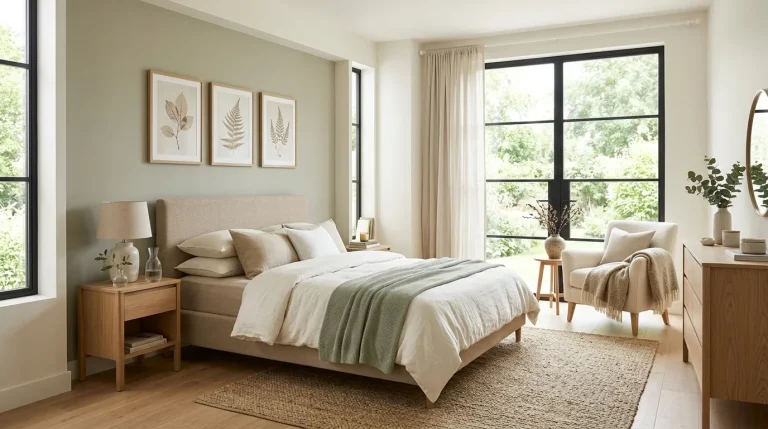
Soft wood accents bring instant warmth into a bedroom without disrupting its minimal feel. Natural oak or light walnut tones introduce a gentle organic layer that softens clean walls and simple furniture. This balance is especially important in modern interiors where too much white or gray can feel cold. Wood naturally grounds the space and makes it feel more human and inviting.
In many modern homes, I’ve seen that even small wooden additions can transform the entire mood of a room. A bedside table, bed frame, or shelving detail is enough to create harmony. This approach works because it connects the bedroom with natural elements, making the space feel calm and balanced. The result is a quiet luxury aesthetic that feels intentional, warm, and visually stable throughout daily use.
2.Sliding Wood Panels
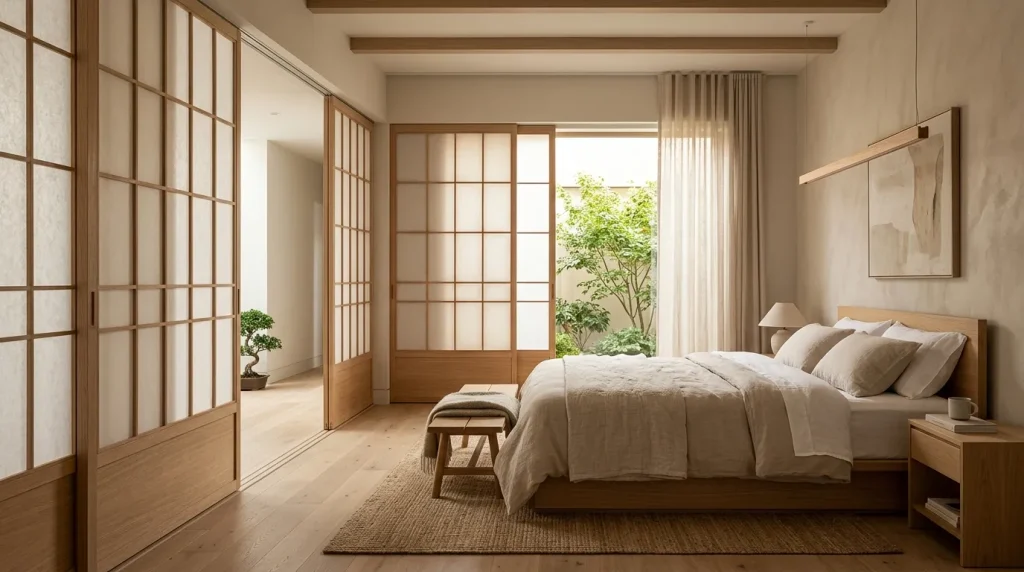
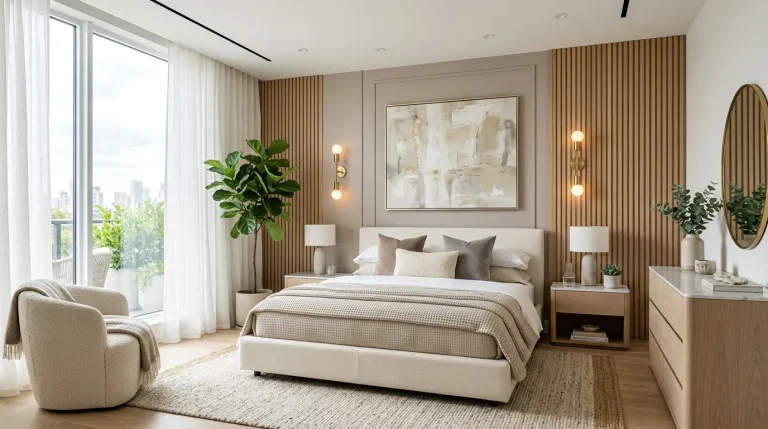
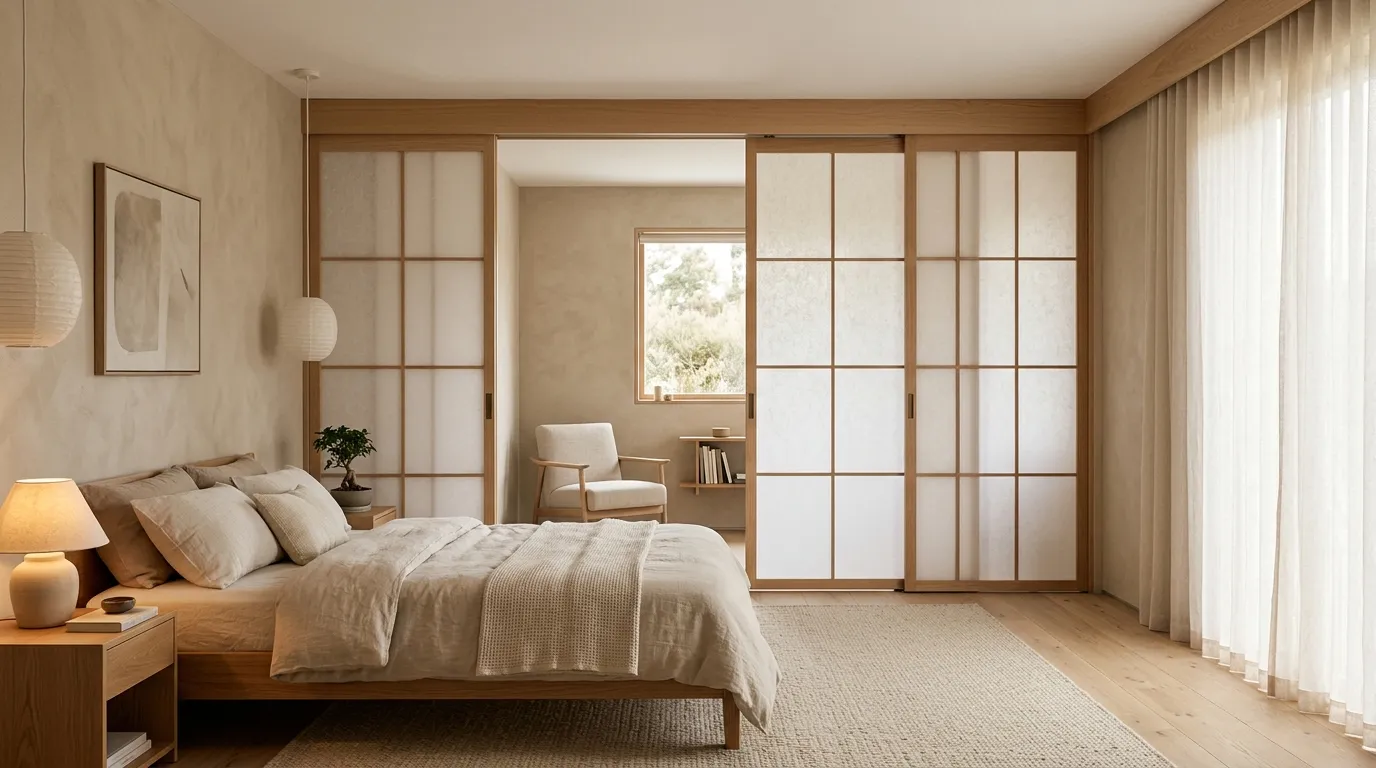
Sliding wood panels bring a quiet architectural beauty into a bedroom while keeping everything visually light and flexible. Instead of solid walls, these soft dividers allow you to separate spaces without blocking natural light. This approach works especially well in open-plan homes where maintaining flow is important. The texture of wood combined with soft translucent panels creates a balanced contrast that feels calm and intentional rather than closed off or heavy.
In real interiors, I’ve seen this design completely change how a room functions without adding clutter. It allows the bedroom to feel more structured while still staying airy and breathable. Many designers recommend sliding panels because they offer both practicality and elegance in small spaces. The result is a peaceful environment where every zone feels defined yet still connected, making the bedroom feel thoughtfully designed and visually cohesive throughout the day.
3.Minimal Art Grid
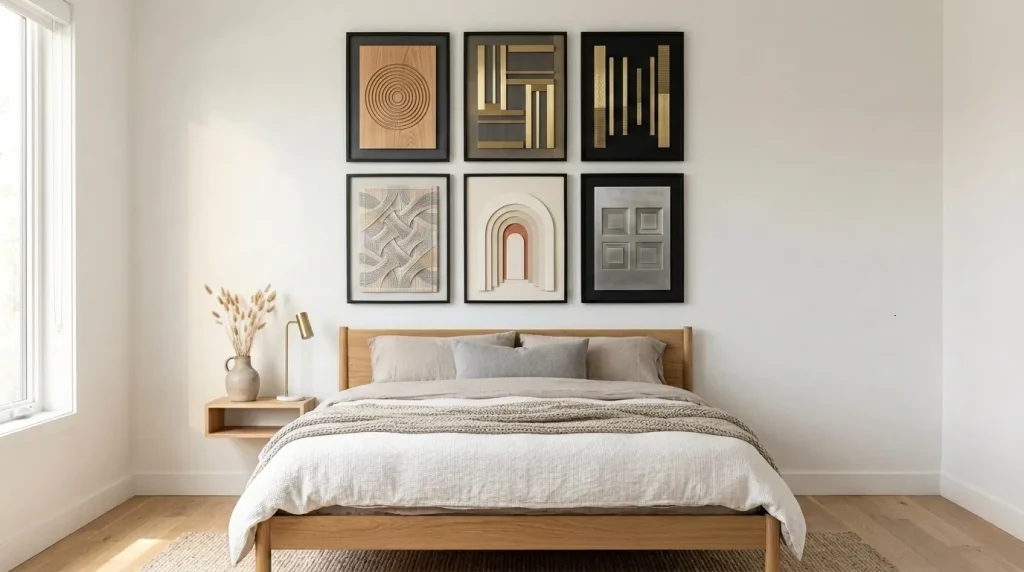
A minimal art grid instantly elevates a bedroom wall without overwhelming the space. The structured layout brings order and symmetry, which naturally feels calming to the eye. Soft abstract prints in neutral tones blend seamlessly into a Japandi-inspired interior, creating a quiet visual rhythm. This approach is ideal for blank walls that need character without introducing clutter or bold distractions that break the room’s peaceful mood.
In many modern homes, I’ve noticed that even a small set of coordinated prints can completely refine the atmosphere. That’s why many designers recommend sticking to muted colors and consistent framing styles. The result is a bedroom that feels curated rather than decorated. It adds personality in a subtle way, making the space feel more intentional, balanced, and visually cohesive without overpowering the minimalist foundation of the room.
4.Soft Paper Lighting
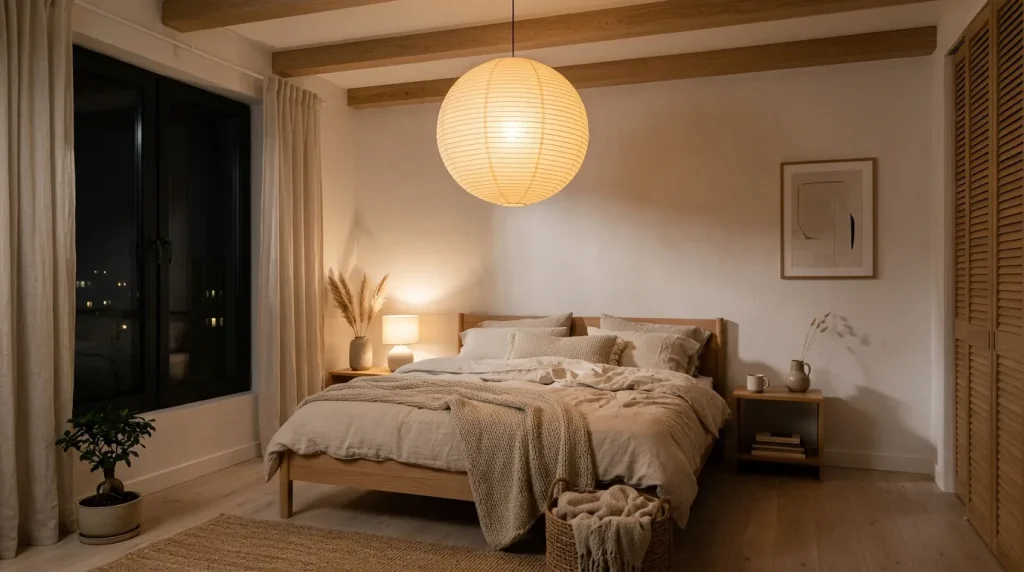
Soft paper lighting completely changes the emotional feel of a bedroom. Instead of harsh brightness, it introduces a gentle glow that spreads evenly across the space. This lighting style works beautifully in minimalist interiors where calmness and softness are key design goals. The diffused effect highlights natural textures like linen, wood, and cotton without creating strong shadows or visual noise. It makes the room feel more peaceful and inviting instantly.
In real homes, I’ve noticed that switching to paper-style lighting often makes the biggest difference in how relaxing a bedroom feels at night. That’s why many designers prefer layered lighting instead of a single overhead source. This approach allows the space to transition smoothly from day to evening. The result is a warm, balanced environment that feels cozy, modern, and visually soft without losing its clean minimalist identity.
5.Hidden Storage Walls
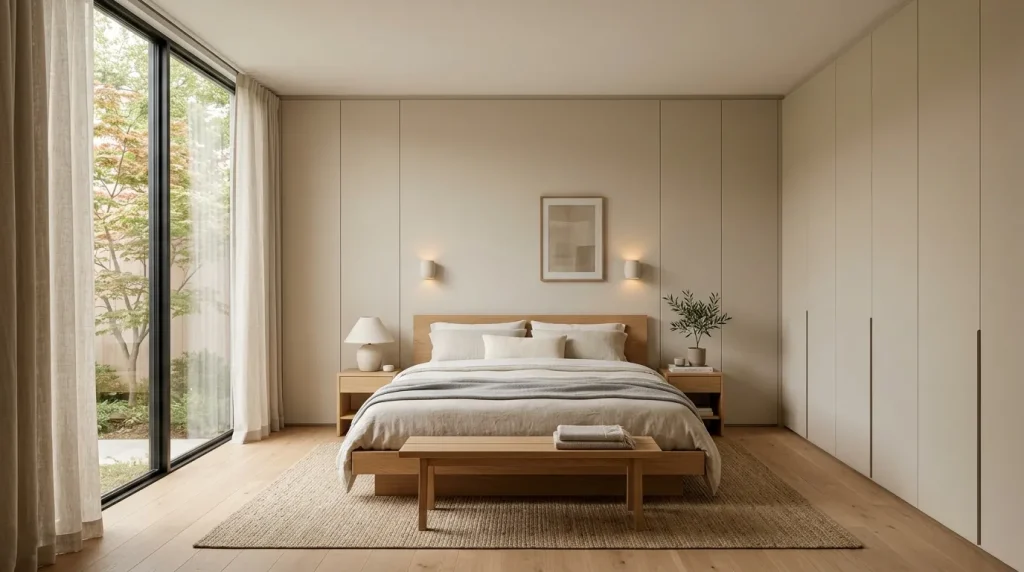
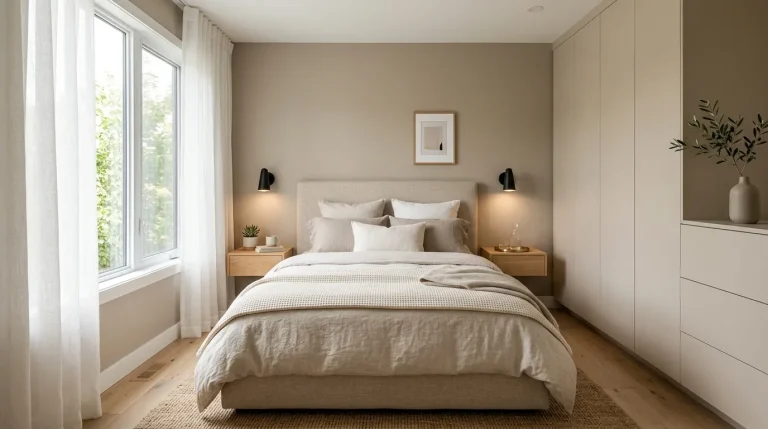
Hidden storage walls are one of the most effective ways to maintain a truly minimalist bedroom. By concealing storage behind smooth, seamless panels, the room instantly feels more open and organized. This design removes visual distractions and allows focus to stay on textures, lighting, and spatial balance. It works especially well in small bedrooms where visible storage can quickly make the space feel crowded or chaotic. The same emphasis on smart organization can be seen in farmhouse laundry rooms, where hidden storage, cabinetry, and practical layouts help everyday spaces feel cleaner, calmer, and more functional.
In many modern interiors I’ve observed, hidden storage dramatically improves daily living comfort. Everything has a place, but nothing feels exposed or messy. Designers often recommend this approach because it supports long-term organization without requiring constant effort. The result is a calm, uncluttered environment where surfaces remain clean, and the entire bedroom maintains a serene, high-end aesthetic that feels both functional and beautifully simple.
6.Stone Texture Walls
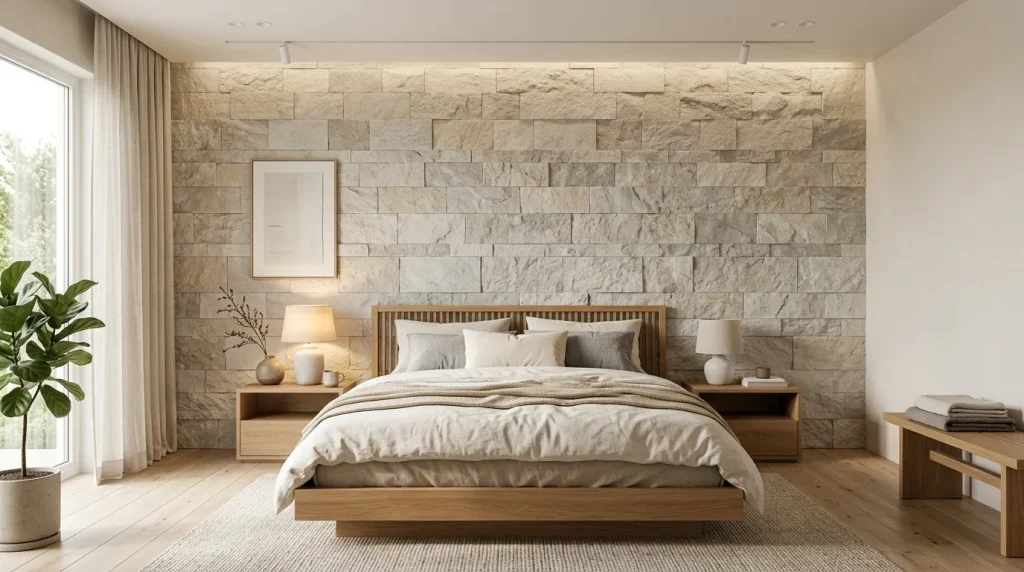
Stone texture walls bring a grounded, natural elegance into a bedroom without overwhelming the simplicity of the design. The soft, muted surface creates depth and character while still maintaining a calm and neutral atmosphere. This idea works especially well behind the bed as a subtle focal point that enhances the entire room without needing additional decor or bold color accents. It feels refined yet organic at the same time.
In real design projects, I’ve noticed that textured walls often become the silent highlight of the room. They add dimension that you only truly notice when light changes throughout the day. That’s why many designers use stone or plaster finishes instead of flat paint. The result is a bedroom that feels more architectural, stable, and naturally luxurious while still staying simple, modern, and visually peaceful overall.
Conclusion:
A calm, beautiful bedroom is not about adding more—it’s about choosing less, but better. These japandi bedroom ideas show how small, thoughtful design choices can completely transform your space into something peaceful, modern, and deeply comforting.
If you’re feeling inspired, start with just one idea and notice how your room changes instantly. I’ve seen how even the simplest updates can shift the entire mood of a home. Save this article on Pinterest so you can revisit it anytime you need fresh inspiration, and share it with someone who wants a more serene living space. Your perfect minimalist retreat starts with one intentional step.
Elira Montclair
Elira writes about timeless home decor, kitchen styling, and practical interior ideas. Her work blends warm, inviting aesthetics with simple decorating tips that make everyday spaces feel beautiful and comfortable.