Attic Bedroom Ideas for Teens for the Ultimate Hangout Space

Introduction:
An attic bedroom ideas for teens makeover can completely change how a small, unused space feels, turning it into the ultimate hangout, study zone, and cozy retreat. Imagine walking into an attic that once felt cramped and forgotten—now it feels stylish, warm, and full of personality. That transformation is exactly what this guide is about.
If you’ve ever struggled with awkward slanted ceilings, low light, or limited floor space, you’re not alone. Many people don’t realize how much potential an attic actually has. In my experience, even the smallest attic can become a dream teen room with the right layout and lighting choices. This article explores creative, Pinterest-inspired ideas that solve real space problems while making the room feel fun, functional, and visually stunning. Get ready to see how simple design changes can completely reshape the way an attic is used and enjoyed.
1.Loft Bed Lounge Corner
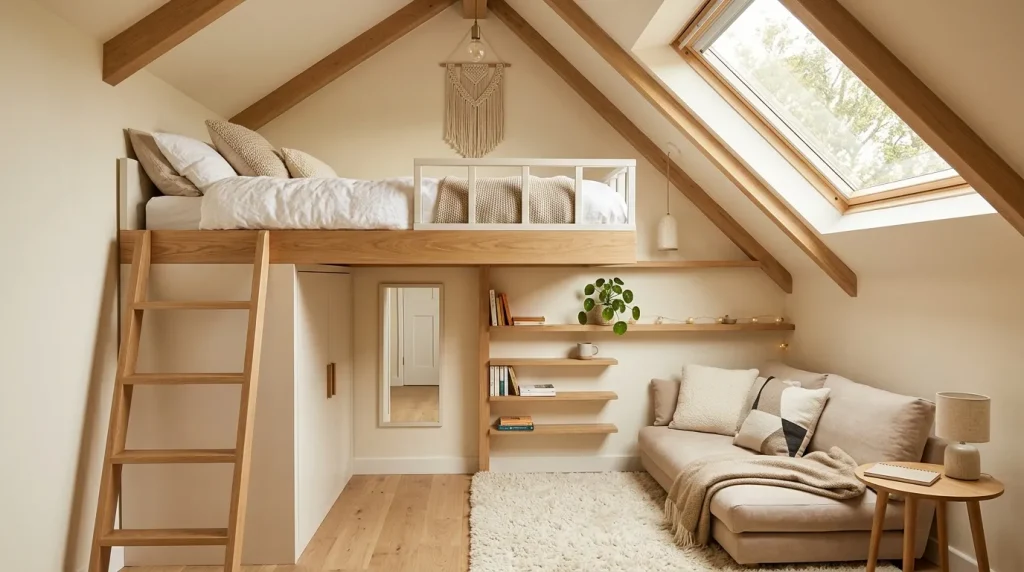
This setup instantly changes how a compact attic feels by introducing a smart vertical layout. The loft bed lounge corner creates two usable zones in one footprint, which is perfect for teens who need both rest and social space. I’ve noticed that this design works especially well in angled ceilings because it frees up floor area. It also makes the room feel more dynamic, like a personal mini studio designed for relaxing, studying, and hanging out comfortably.
What makes this idea stand out is how it blends comfort with practicality in a visually clean way. The lower lounge area becomes a personal hangout spot where teens can read, scroll, or relax with friends. In many real homes, designers use this trick to make small attic bedrooms feel intentionally designed rather than squeezed. That’s why many designers recommend loft setups for attic spaces—they turn awkward roof angles into functional, stylish zones that feel open and inviting.
2.Fairy Light Ceiling Glow
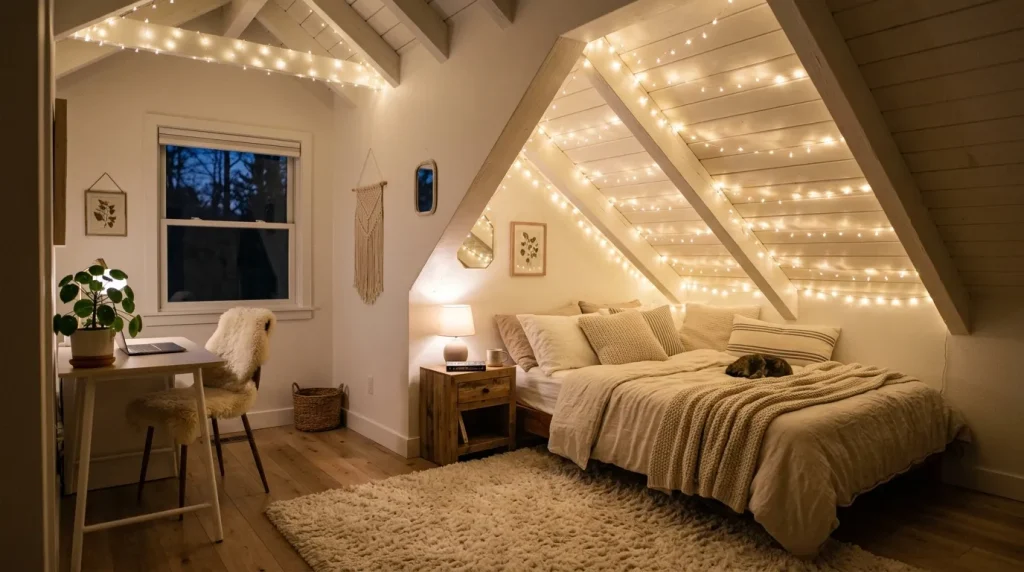
Fairy light ceilings completely transform the emotional feel of an attic bedroom. The soft glow spreads across angled roofs and wooden beams, making the space feel magical and calm. I’ve seen this work especially well in teen rooms where lighting sets the entire mood. Instead of relying on harsh overhead lights, this approach creates a relaxed environment that feels personal and comforting, especially during evening downtime or study sessions.
The real strength of this idea is how affordable yet impactful it is. With just string lights, the entire room gains a cozy aesthetic that feels straight out of Pinterest inspiration boards. In many real homes, designers use warm lighting layers to reduce the heavy look of slanted ceilings. That’s why fairy light setups are so popular—they visually soften architectural angles and turn them into a glowing design feature instead of a limitation.
3.Built-In Desk Nook
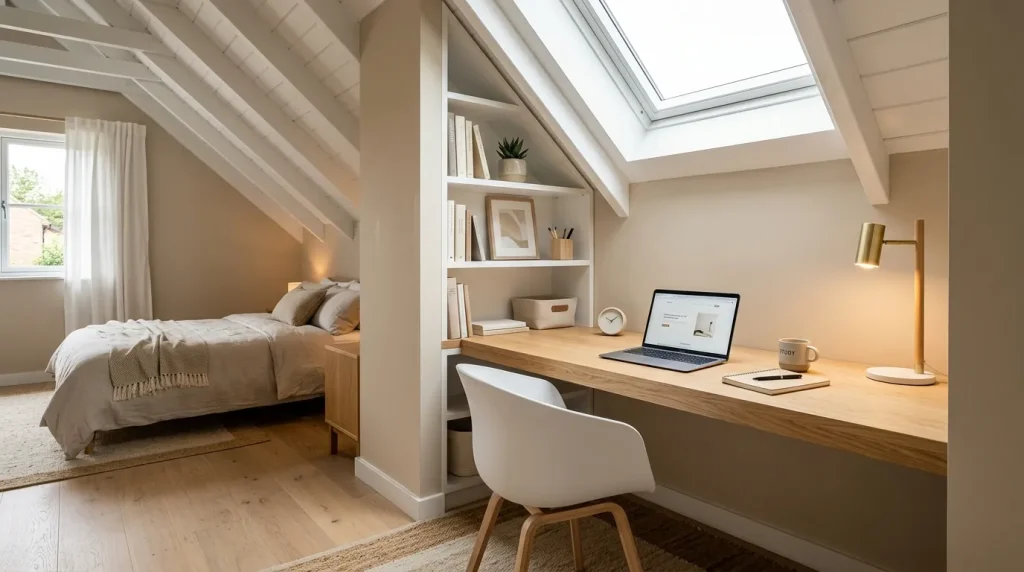
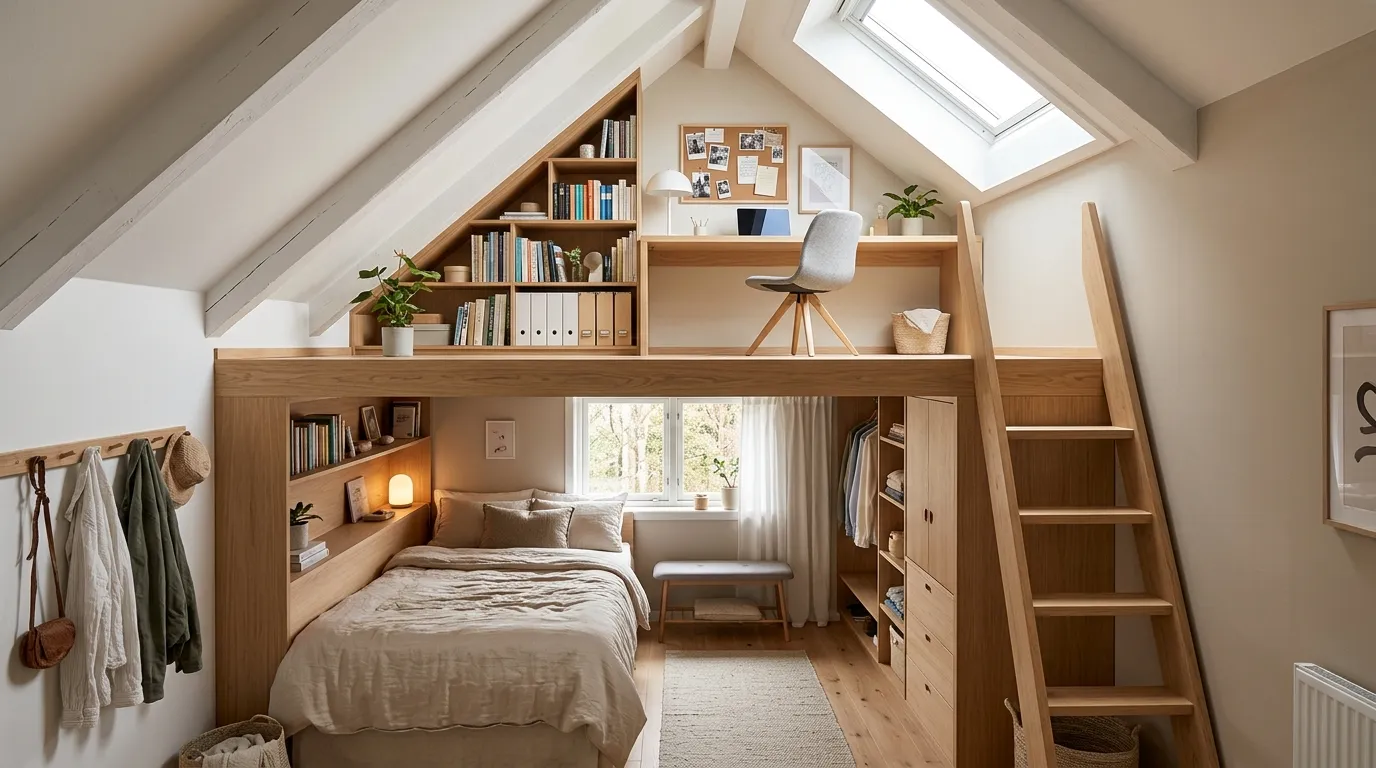
A built-in desk nook is one of the smartest ways to use awkward attic angles. Instead of wasting low ceiling areas, this setup turns them into a productive study corner. I’ve noticed that teens tend to focus better when their workspace feels defined and separate from their sleeping area. This layout helps create that mental boundary, even in a small attic room where every inch matters. To make the nook feel even more personalized, consider incorporating textured wall ideas behind the desk to add visual interest and define the workspace without taking up any extra floor space.
This design also improves overall organization because everything has a place. Shelving above the desk keeps books and decor neatly arranged while keeping the floor clear. Many designers prefer built-in solutions for attic rooms because they maximize function without overcrowding the space. It also gives the room a custom-designed look, making it feel intentional and stylish rather than improvised or cramped.
4.Window Seat Chill Spot
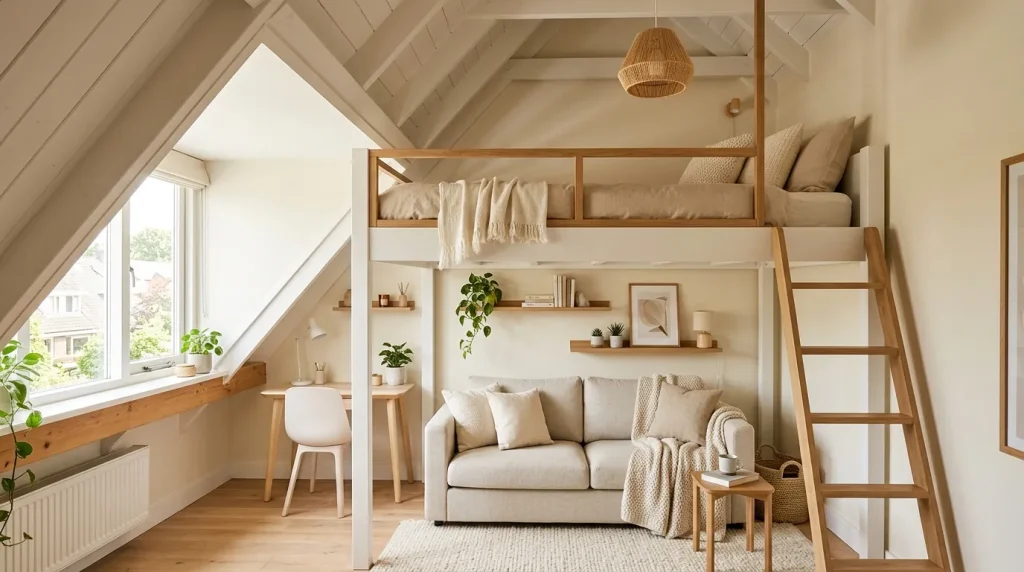
This window seat chill spot completely transforms unused attic space into a peaceful relaxation zone that feels both functional and stylish. It makes use of natural light from dormer windows, creating a soft and calming atmosphere perfect for reading, scrolling, or simply unwinding after a long day. I’ve noticed in many real attic designs that this type of seating helps break up empty corners and adds a built-in cozy feel without requiring extra furniture. It also encourages teens to spend more time near the window, enjoying daylight and improving the overall mood of the room naturally.
One of the strongest benefits of this design is how it blends comfort with functionality in a very simple way. It turns an awkward attic window into a feature point instead of wasted space, making the room feel custom-built and thoughtfully planned. Many designers recommend adding cushions and layered textiles to enhance comfort, especially in teen rooms where relaxation zones matter as much as study areas. We’ve seen this approach work especially well in smaller attic layouts because it visually opens up the space while still keeping it functional efficiently.
5.Slanted Wall Storage Drawers
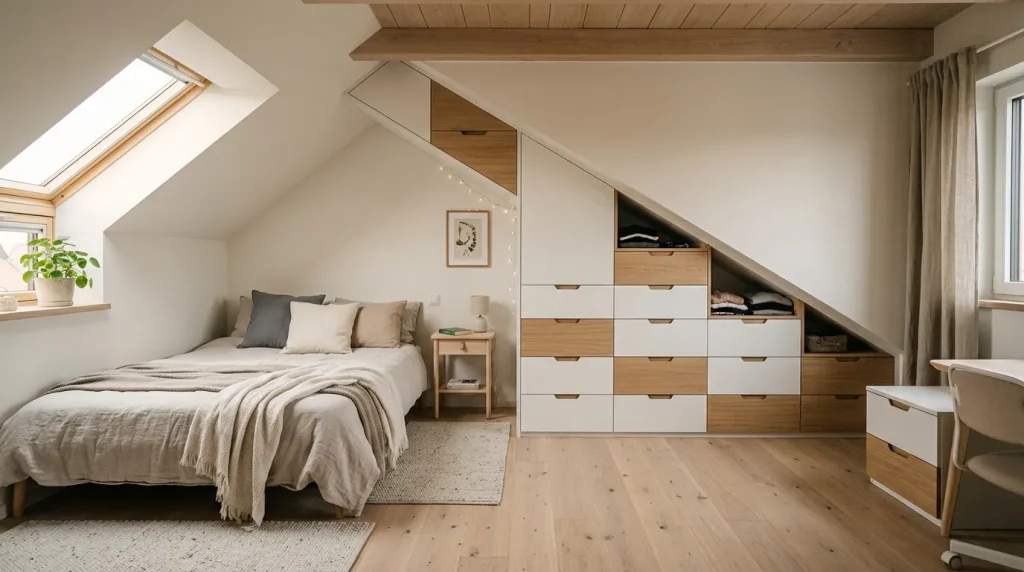
Slanted wall storage drawers are a game-changing solution for attic bedrooms where space feels limited or uneven. They turn low roof angles into functional storage zones that stay hidden yet highly practical for everyday use. I’ve seen this design used in many modern teen rooms because it eliminates clutter while keeping everything accessible and neatly arranged. The result is a smooth, built-in look that makes the attic feel more expensive and professionally designed. This is especially helpful in small attic layouts where visible storage can easily make the room feel crowded or messy.
This storage approach is not just practical but also visually powerful, especially when you want a clean and modern teen space. By integrating drawers into the architecture, the room feels more intentional and less like a temporary setup. That’s why many interior designers prefer built-in solutions for attic bedrooms, as they maximize both aesthetics and functionality. In real homes, I’ve noticed this instantly makes even compact rooms feel more organized and visually balanced. It also improves day-to-day usability in ways that really matter for teen lifestyles over time and daily comfort.
6.Hanging Chair Nook
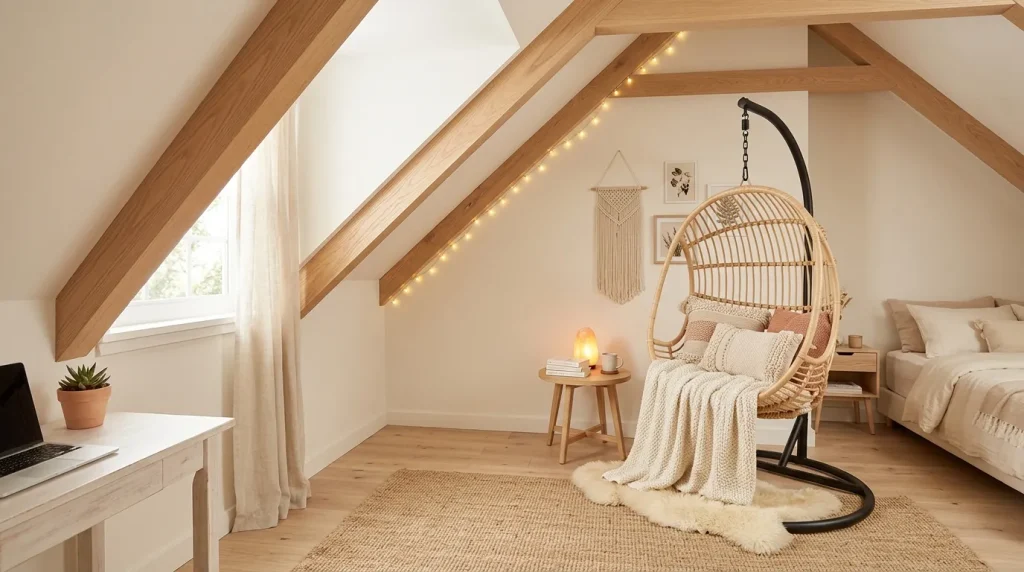
A hanging chair nook instantly adds personality and comfort to an attic bedroom, especially in spaces that feel visually empty. The floating design creates a soft, relaxed corner where teens can unwind, read, or simply relax after a long day. I’ve noticed that this type of seating becomes a favorite hangout spot because it feels both private and playful. It also breaks the rigidity of straight furniture lines, making the entire attic space feel more dynamic and visually interesting without overwhelming the room.
What makes this idea especially powerful is how it introduces movement and softness into angled ceiling environments. Instead of heavy furniture, the suspended chair keeps the floor open and airy, which is crucial in attic layouts. Many designers use this trick to balance structure with comfort, especially in teen bedrooms where personality matters. The result is a cozy, Instagram-worthy corner that feels intentional and inviting, turning unused space into a visually engaging relaxation zone that stands out beautifully.
7.Canopy Bed Corner
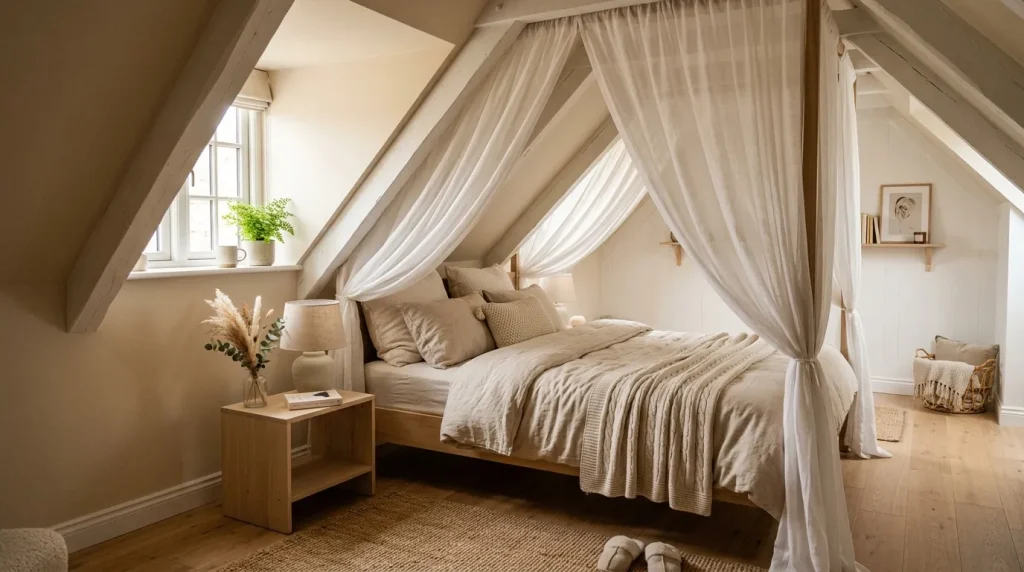
A canopy bed corner brings an instant sense of comfort and privacy to an attic bedroom. The flowing fabric softens the sharp lines of slanted ceilings, making the space feel more balanced and visually gentle. I’ve noticed that teens especially love this setup because it creates a “personal escape” feeling inside their own room. Even in compact attic layouts, a canopy adds depth and softness without needing bulky furniture or complicated design elements, which keeps the space feeling open and breathable.
This idea works so well because it visually frames the bed as the main feature of the room. The fabric creates a light enclosure that feels cozy but not closed off, which is ideal for attic spaces with angled walls. Designers often use sheer curtains in small rooms to avoid heaviness while still adding style. In real homes, this setup helps transform a simple sleeping area into a calm, aesthetic retreat that feels intentional, relaxing, and perfect for teen comfort.
8.Mini Study Loft
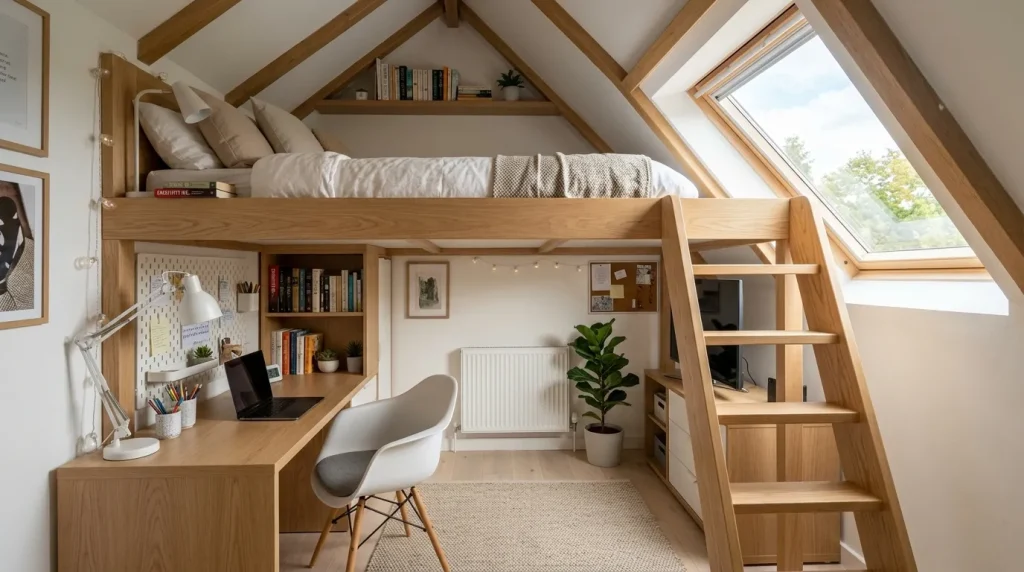
A mini study loft is one of the most efficient ways to design an attic bedroom for teens who need both rest and focus areas. By lifting the study zone or bed slightly, the space underneath becomes fully usable without overcrowding the room. I’ve noticed that this layout helps create a strong mental separation between studying and relaxing, which improves concentration and reduces distractions. It works especially well in attic spaces where walls are uneven and traditional layouts feel restrictive.
This design also gives the room a layered, architectural feel that looks custom-built and highly functional. Instead of everything sitting on one level, the space feels dynamic and intentionally structured. Designers often recommend loft-style solutions for compact rooms because they maximize usability without sacrificing style. In real homes, this setup makes even small attic bedrooms feel more organized, efficient, and visually appealing, while still giving teens a dedicated space for both productivity and comfort.
Conclusion:
Transforming an attic into a teen hangout is all about creativity, smart space use, and personal style. With the right ideas, even the most awkward corners can become cozy, functional, and visually stunning. These designs prove that small or slanted spaces are not limitations—they’re opportunities for something unique and inspiring.
Exploring attic bedroom ideas for teens shows how easily a simple room can turn into a favorite spot for relaxation, study, and self-expression. I’ve seen how small design changes like lighting, storage, and layout can completely shift the mood of a space. Save these ideas on Pinterest, try your favorite ones, and share them with someone who’s dreaming of their perfect attic room.
Clara Whitmore
Clara specializes in interior styling, seasonal home trends, and cozy living spaces. She loves combining classic design elements with modern touches to create homes that feel personal, welcoming, and effortlessly stylish.