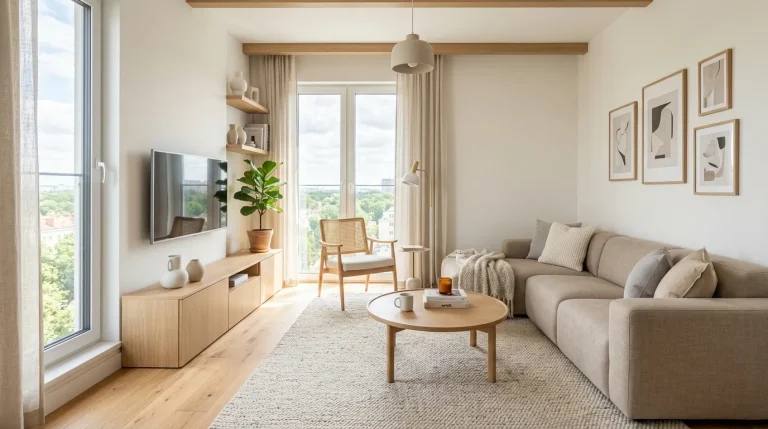
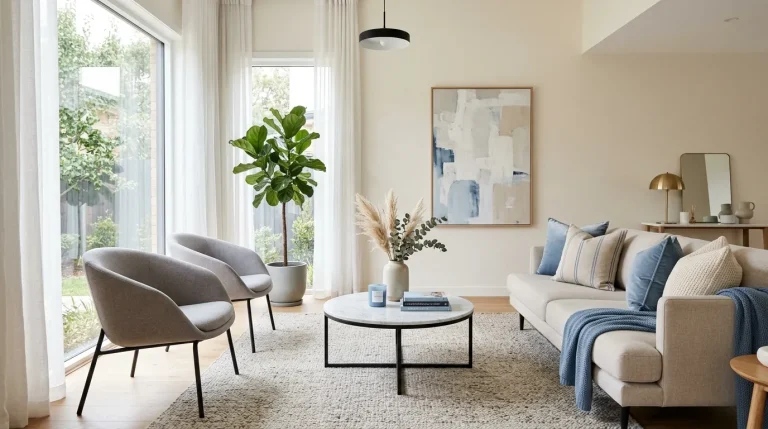
Best Small Entrance Hall Tips to Create a Luxe Entryway Feel

Introduction:
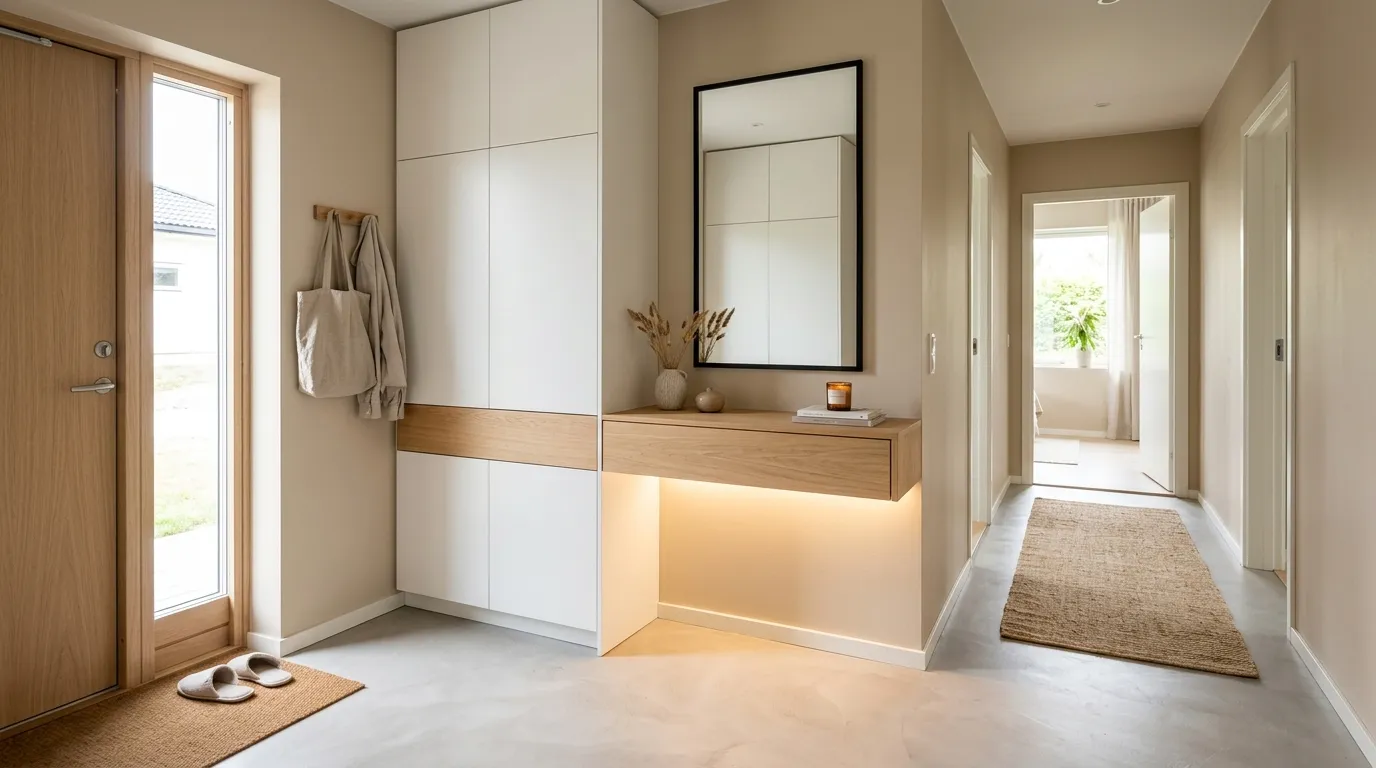
A cramped and cluttered entry can change the whole mood of your home the moment you walk in. But with the right small entrance hall tips, even the tiniest hallway can feel bright, stylish, and surprisingly spacious. Imagine stepping into a space that instantly feels calm, organized, and beautifully designed instead of tight or chaotic. That transformation is exactly what this article is about.
In my experience, small entryways often get overlooked, yet they set the emotional tone for the entire home. Here, you’ll discover simple, practical ideas that make a real visual difference—without major renovations. Each idea focuses on creating light, flow, and elegance so your entrance feels inviting, functional, and Pinterest-worthy every single day.
1.Slim Console Setup
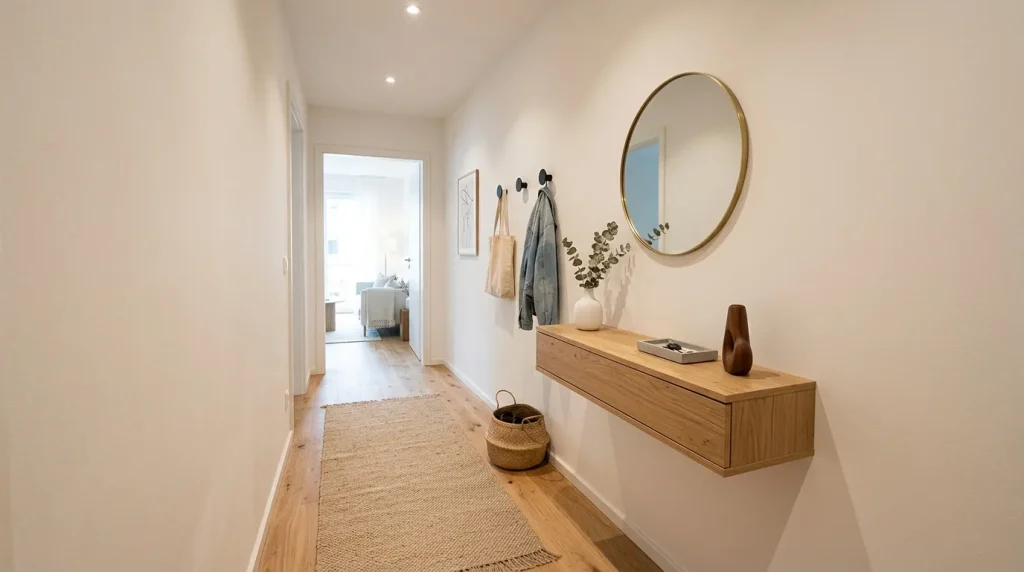
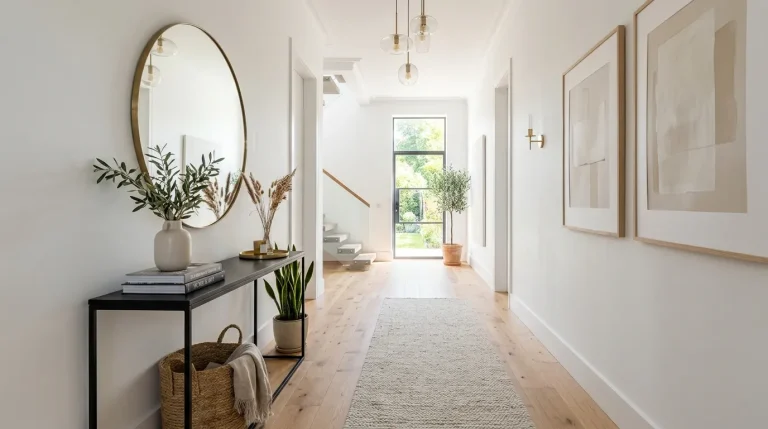
A slim console table is one of the smartest additions for a narrow entry because it brings function without bulk. I’ve seen how even the smallest wall can feel intentional when a floating or narrow table is added. It gives you a place to drop keys, mail, or small décor without crowding the space. The design keeps the walkway open while still offering storage and styling potential. This idea works especially well in modern apartments where every inch matters and visual simplicity plays a big role in creating a calm, welcoming entrance.
The beauty of this setup lies in its balance between practicality and aesthetics. Designers often recommend keeping the surface minimal, using just one or two decorative objects to avoid visual clutter. In my experience, a simple vase or sculptural piece is enough to elevate the look without overwhelming the area. When paired with soft lighting or a mirror above, the console becomes a focal point. It subtly organizes the entry while maintaining a clean, airy feel. This approach turns even the smallest hallway into a thoughtfully styled and functional transition space.
2.Soft Rug Layer
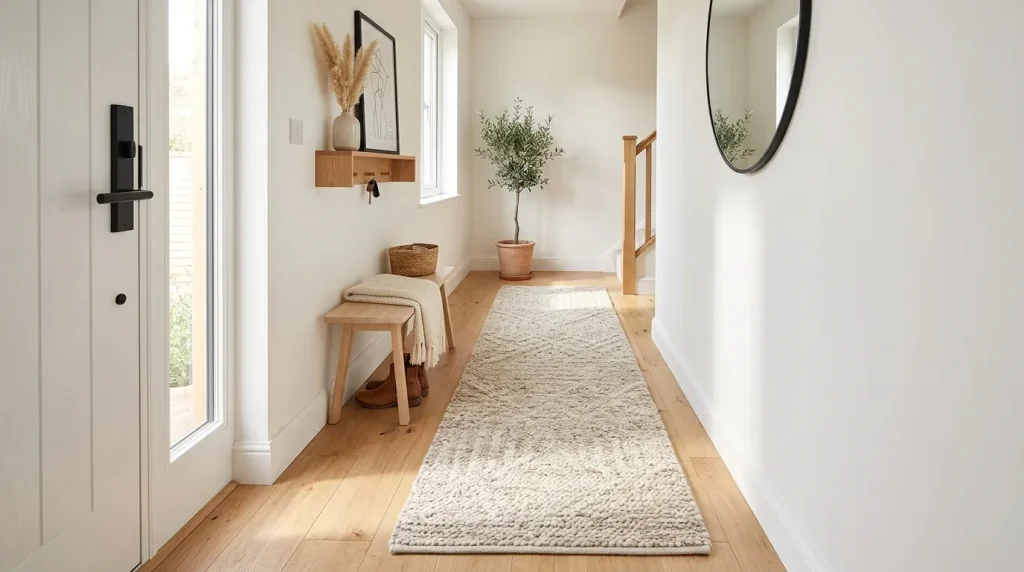
A soft rug layer immediately changes the mood of an entryway, especially when the space feels cold or empty. I’ve noticed that even in very small hallways, a well-chosen runner can define the zone and make it feel more intentional. Neutral tones work best because they blend with modern interiors while still adding texture. The rug also creates a subtle path that guides movement through the space. This is one of those small entrance hall tips that doesn’t require structural change but still delivers a noticeable improvement in comfort and visual warmth.
Beyond aesthetics, a runner rug also protects high-traffic flooring from dust and daily wear, which is especially important in busy homes. Designers often suggest choosing low-pile materials for easier cleaning and a more streamlined look. In my experience, layered textures work best when the rest of the space is kept minimal. The rug becomes a grounding element that ties everything together without overpowering the design. It subtly adds softness and balance, making the entry feel more inviting while still maintaining a modern, uncluttered appearance that suits compact living spaces.
3.Hidden Shoe Storage
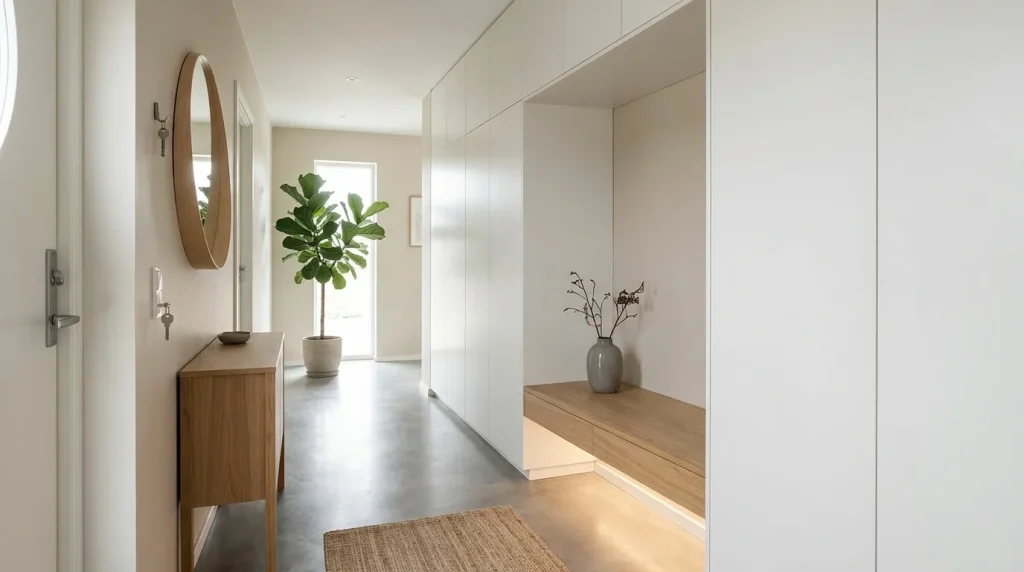
Hidden storage completely transforms the way a small entry feels, especially when shoes are usually scattered around the floor. I’ve noticed that built-in cabinets or concealed compartments make even the tightest hallways look instantly more spacious. By removing visible clutter, the space feels calmer and more intentional. This approach works particularly well in modern homes where clean lines are a priority. It allows the entrance to function efficiently without sacrificing style. The result is a smooth, uninterrupted visual flow that makes the entire area feel more refined and thoughtfully designed.
The real strength of this idea lies in its ability to combine practicality with visual simplicity. Designers often recommend handleless or push-to-open systems because they maintain a seamless surface. In my experience, homes feel significantly more organized when everyday items are hidden away rather than displayed. It also reduces the stress of constant tidying since everything has a designated place. When paired with soft lighting or a neutral color palette, the storage blends effortlessly into the architecture. This creates a polished, high-end entry that feels both functional and visually calming at the same time.
4.Vertical Hook Wall
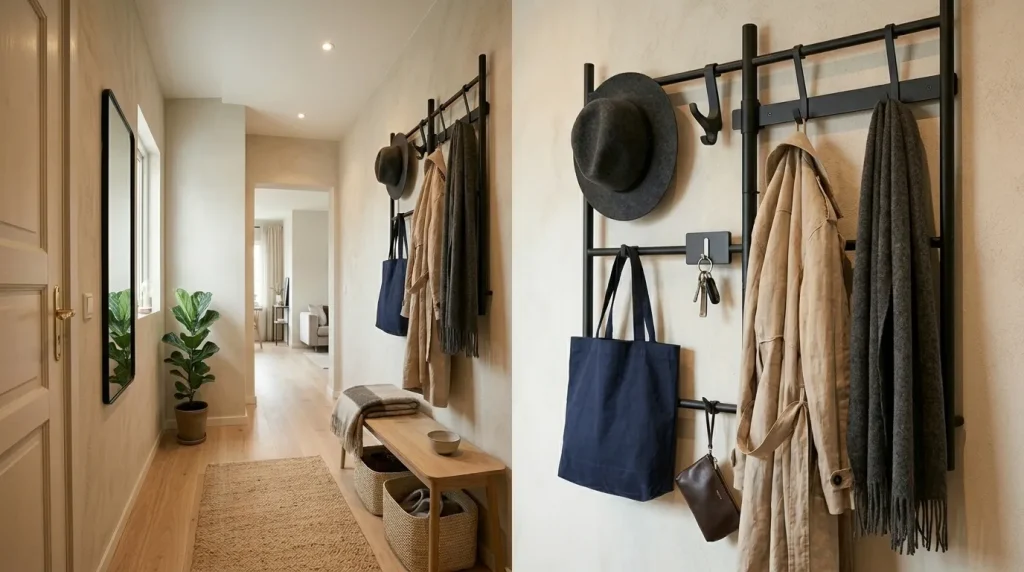
A vertical hook wall is one of the most efficient solutions for tight entry spaces where floor storage is limited. I’ve seen this setup work especially well in apartments where every inch matters. By using wall height instead of floor area, it keeps essentials like coats, bags, and hats neatly organized. The design feels practical but still visually structured. It also prevents clutter from building up near the doorway. This simple addition can instantly make a small hallway feel more intentional and functional without requiring any major renovation or investment.
The effectiveness of this idea comes from how naturally it encourages organization. Designers often suggest spacing hooks evenly so the wall feels balanced rather than crowded. In my experience, pairing hooks with a slim bench or baskets below creates a complete entry system that works effortlessly in daily life. It also helps reduce visual chaos since items are no longer piled on chairs or surfaces. When kept in neutral tones, the hook wall blends into the interior while still serving a strong functional role. The result is a clean, structured entry that feels easy to maintain.
5.Bright Neutral Palette
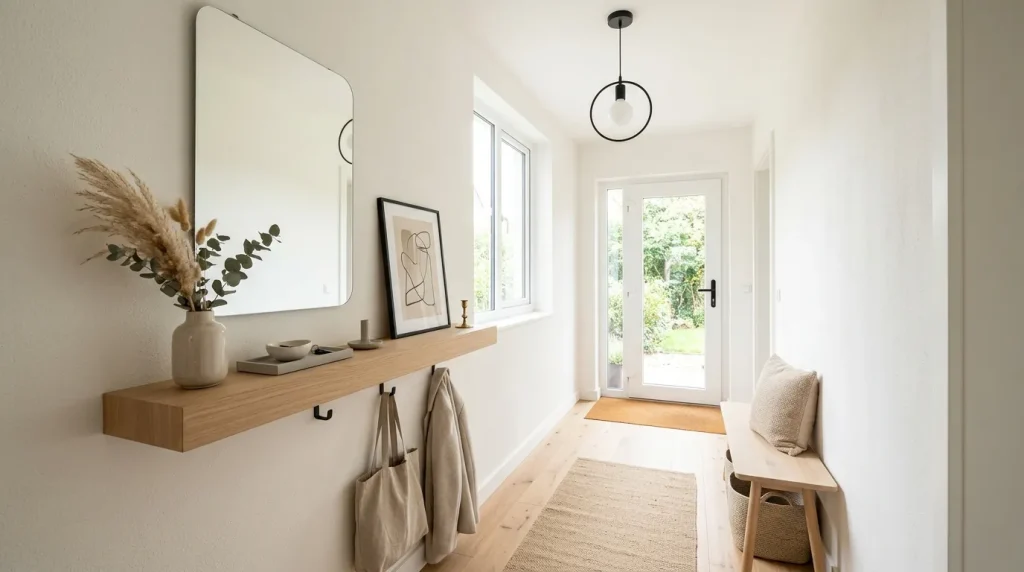
A bright neutral palette can completely change how a compact entrance feels, making it appear larger and more open. I’ve noticed that lighter shades like warm white, beige, and soft greys naturally reflect more light, which is crucial in small or narrow hallways. This approach removes visual heaviness and creates a sense of calm from the moment you step inside. It also provides a versatile base for styling, allowing décor elements to stand out without overwhelming the space. The overall effect is clean, modern, and effortlessly welcoming in everyday living environments.
This color strategy works because it simplifies everything visually, reducing unnecessary contrast and clutter. Designers often recommend layering subtle textures within the same tonal family to avoid a flat look. In my experience, combining matte finishes with light wood or soft fabrics adds depth without disrupting the airy feel. It also ensures the entrance remains timeless rather than trend-dependent. When natural light enters the space, the neutral tones amplify brightness and openness. The result is a balanced entryway that feels both stylish and functional while supporting a long-term cohesive design approach.
6.Wall Light Layers
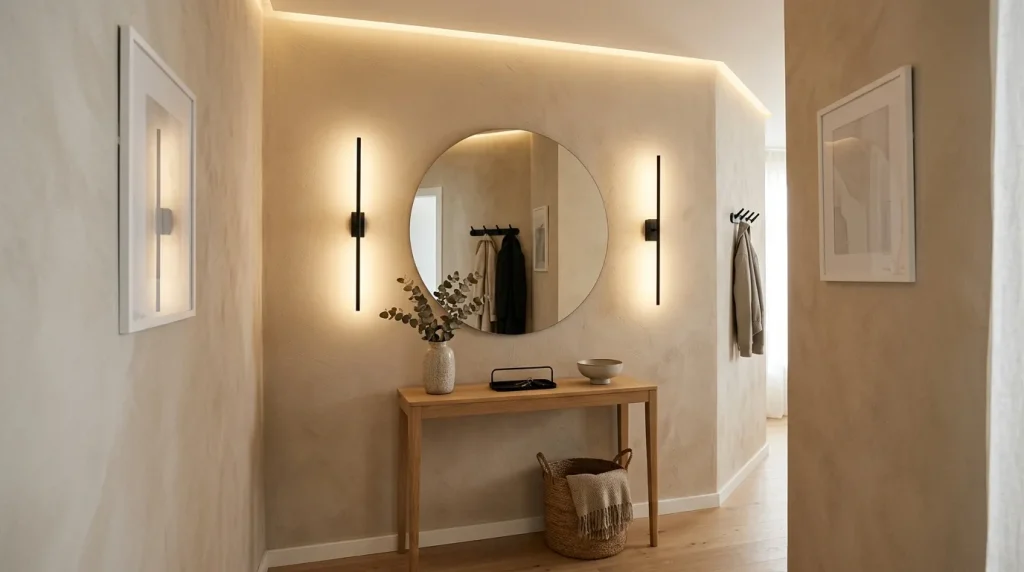
Layered wall lighting can instantly elevate a small entrance by adding depth that flat lighting cannot achieve. I’ve noticed that when soft sconces or indirect lights are placed strategically, the entire hallway feels warmer and more inviting. Instead of relying only on ceiling lights, this approach distributes light more evenly across the space. It also helps reduce harsh shadows that often make narrow areas feel smaller. This simple adjustment creates a soft glow effect that enhances both functionality and atmosphere, making the entry feel thoughtfully designed and visually balanced.
The real strength of this idea is how it enhances architectural features without overwhelming the space. Designers often recommend placing lights at eye level to create a natural, flattering illumination. In my experience, combining wall sconces with reflective surfaces like mirrors amplifies the brightness even further. It also helps guide movement through the hallway during evening hours. When kept in warm tones, the lighting feels cozy rather than clinical. The result is a welcoming entry that feels layered, intentional, and far more spacious than it actually is, even in compact homes.
7.Floating Shelf Style
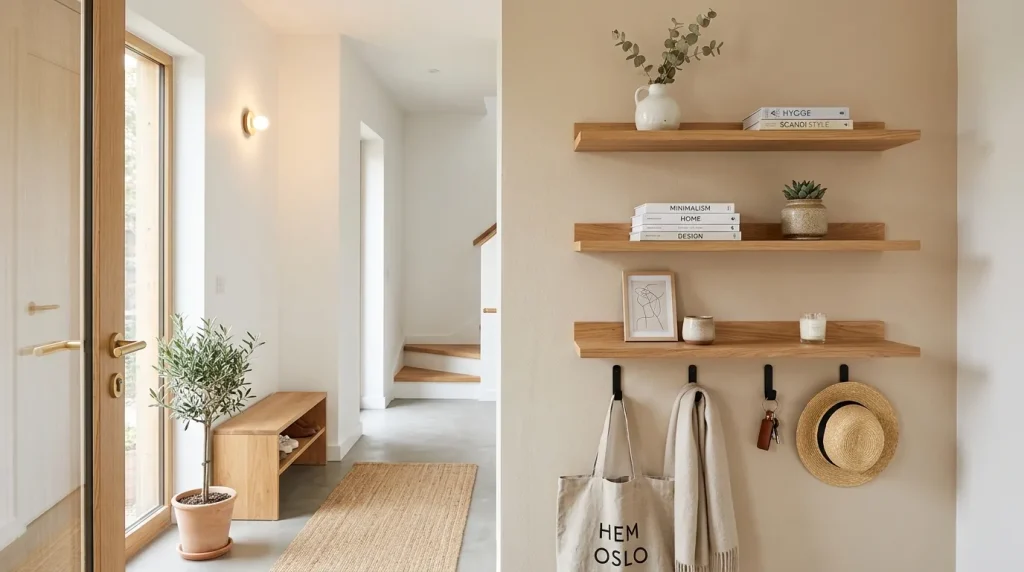
Floating shelves are a smart way to add storage without making a small entry feel crowded. I’ve noticed that when shelves are kept minimal and properly spaced, they create a sense of structure without overwhelming the wall. They are perfect for holding small décor items, keys, or even plants, while still maintaining an open visual flow. This design works especially well in narrow hallways where floor space is limited. It keeps everything elevated and organized, allowing the entrance to feel both functional and visually light at the same time. The same space-saving approach is often seen in luxury bedroom ideas, where carefully styled floating shelves add both elegance and practicality without disrupting the room’s clean, sophisticated aesthetic.
The effectiveness of floating shelves lies in their ability to combine practicality with clean aesthetics. Designers often suggest limiting items on each shelf to avoid visual clutter and maintain balance. In my experience, negative space is just as important as the objects themselves because it keeps the design breathable. When paired with soft lighting or neutral wall tones, shelves become subtle design features rather than storage overload. This approach helps create a curated entry that feels intentional and modern while still being highly functional for everyday use in compact living spaces.
8.Glass Partition Entry
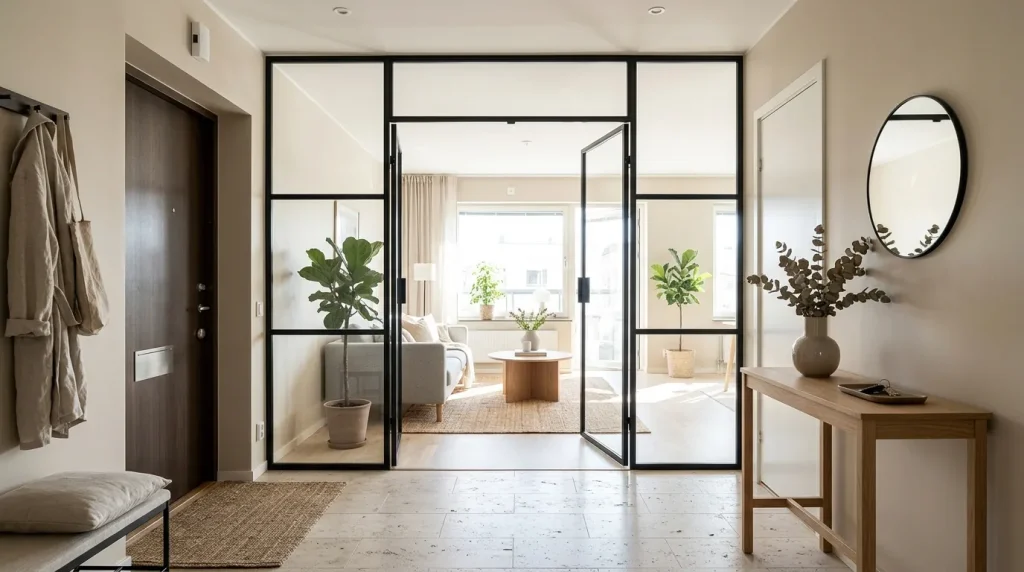
A glass partition is one of the most effective ways to define an entry without closing it off visually. I’ve seen this work beautifully in compact apartments where maintaining openness is essential. The transparent surface allows light to flow freely, preventing the hallway from feeling dark or confined. It also subtly separates the entrance from the living area, creating a sense of structure without heavy walls. This balance between division and openness makes the space feel modern, airy, and well-planned, even when the overall footprint is very limited.
The real advantage of this design is how it maintains spatial continuity while still offering subtle separation. Designers often recommend using slim black or neutral frames to keep the look minimal and elegant. In my experience, glass partitions also help reduce visual noise, especially in open-plan homes where clutter can spread easily. When combined with soft lighting and neutral interiors, the effect becomes even more refined. The result is a sophisticated entry that feels connected yet defined, offering both functionality and style without compromising the sense of openness in small living environments.
Conclusion:
A beautiful entry doesn’t require a large space—just thoughtful design choices that work together. These ideas show how small changes can completely elevate your home’s first impression, making it feel more open, organized, and welcoming. When you apply these small entrance hall tips, you’ll notice how even subtle upgrades like lighting, storage, or color can transform the entire atmosphere.
I’ve seen how simple adjustments like these completely change how people experience their home from the moment they step inside. Save this article on Pinterest, try one or two ideas in your own space, and share it with someone who needs a fresh entryway transformation.
Clara Whitmore
Clara specializes in interior styling, seasonal home trends, and cozy living spaces. She loves combining classic design elements with modern touches to create homes that feel personal, welcoming, and effortlessly stylish.