Low ceiling living room ideas for Quick Cozy Modern Makeover

Introduction:
Low ceiling living room ideas can completely change how small, compact spaces feel, turning them into bright, cozy, and modern living areas. If your room often feels tight, dark, or a little boxed in, the right design choices can make a huge difference without any major renovation. In this guide, you’ll discover simple yet powerful ways to create height, light, and openness using smart layouts, colors, and décor tricks. The goal is to help you visually expand your space while keeping it stylish and comfortable. I’ve noticed that even small adjustments like lighting or furniture style can instantly shift the mood of a room and make it feel more breathable and inviting.
1.Vertical Light Walls
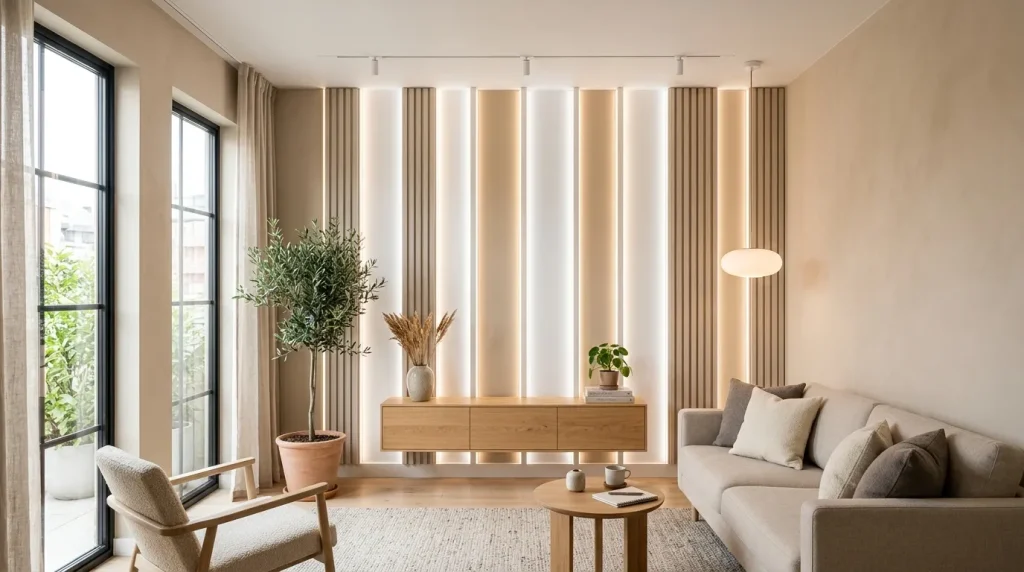
A strong vertical wall design can completely reshape how a small living room feels by guiding the eyes upward and creating an immediate sense of height. When spaces have restricted overhead clearance, vertical patterns, panels, or slim design lines help shift focus away from the ceiling. This makes the room appear more open and structured. In many modern homes, even simple wall updates can dramatically improve visual balance without major renovation, making the space feel thoughtfully designed and more breathable overall.
This approach works because the human eye naturally follows upward lines, which creates a psychological illusion of extended height in compact interiors. In many real homes, I’ve noticed that replacing flat wall surfaces with vertical detailing instantly changes perception of scale. The room feels less boxed in and more refined, even without changing furniture. That’s why designers often prioritize wall structure first, since it sets the foundation for how spacious and comfortable the entire living environment feels every day.
2.Ceiling Stripe Lines
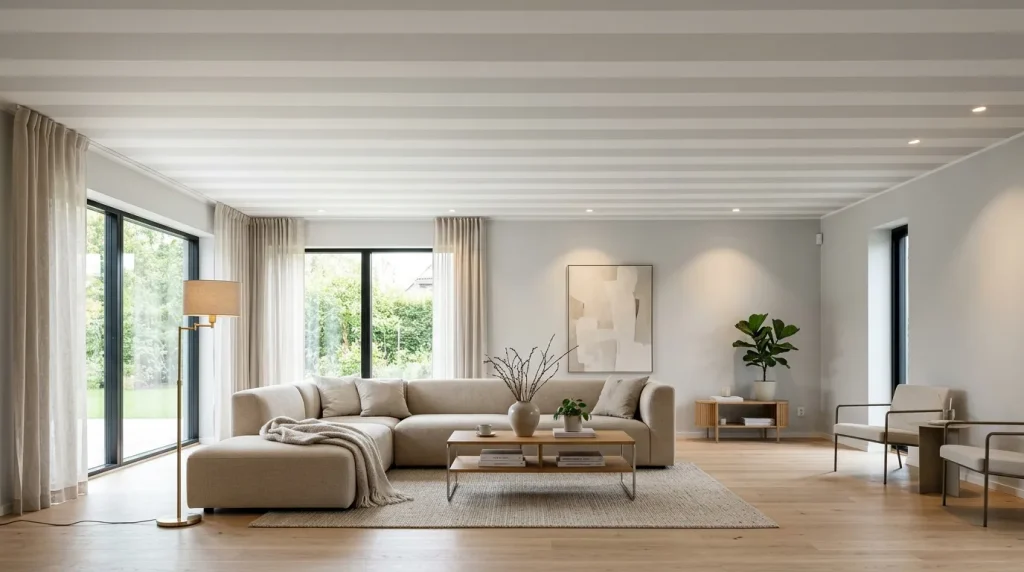
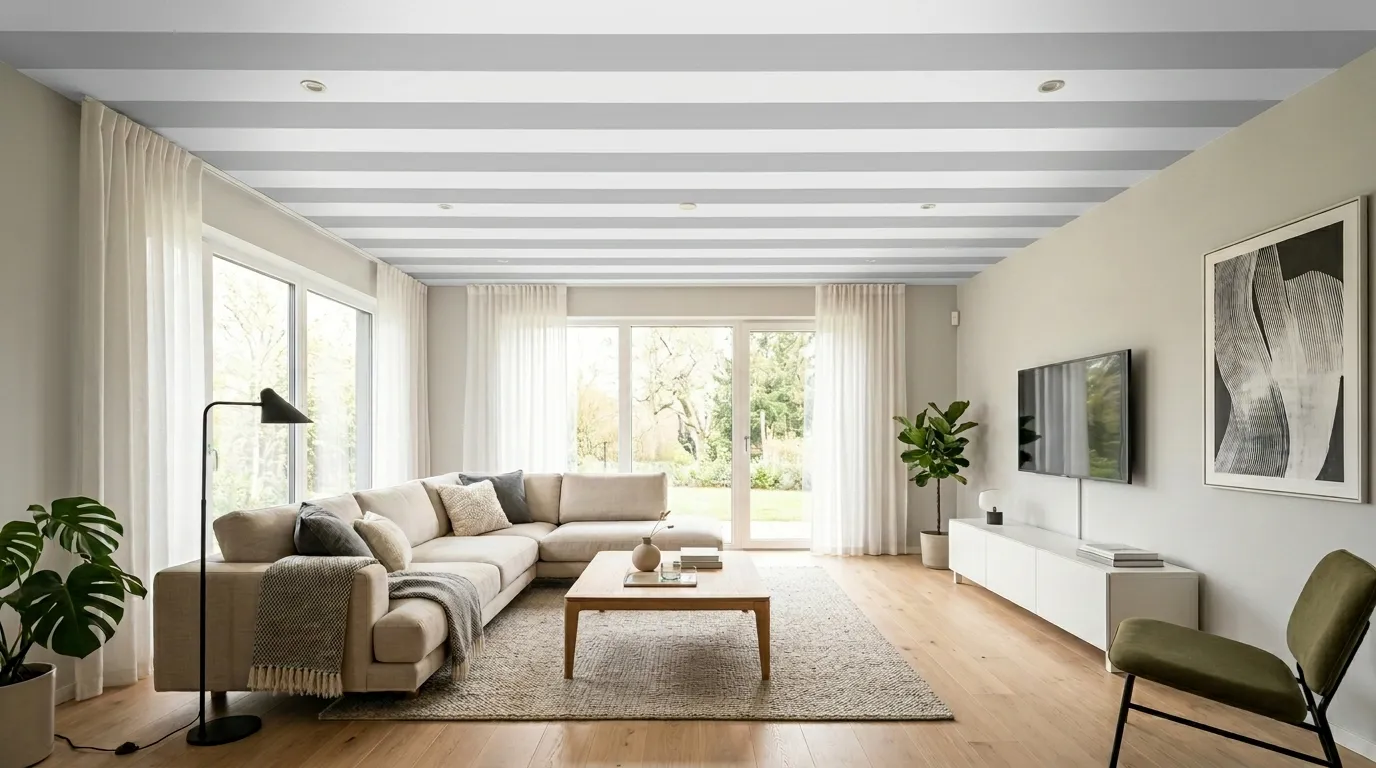
Horizontal stripe lines on the ceiling can gently expand the visual width of a room, making compact spaces feel more balanced and less compressed. Instead of focusing on height, this design approach distributes attention evenly across the space. It is especially useful in low-ceiling environments where structural changes are not possible.
The soft linear patterns guide the eye sideways, helping the room feel more stable, proportional, and visually comfortable without overwhelming the overall interior design. Similar principles of visual balance and thoughtful space planning can also be found in bedroom ideas for women, where strategic design choices help create rooms that feel stylish, functional, and more spacious regardless of their size.
This technique works because it corrects proportion perception, allowing the ceiling to feel more integrated with the room rather than pressing down on it. I’ve noticed in many modern interiors that even subtle ceiling striping can significantly improve spatial harmony. It creates a calm architectural rhythm that supports minimal furniture layouts and light color palettes. That’s why many designers use it in compact homes where visual expansion and comfort must be achieved through surface design rather than structural changes.
3.Recessed Glow Layers
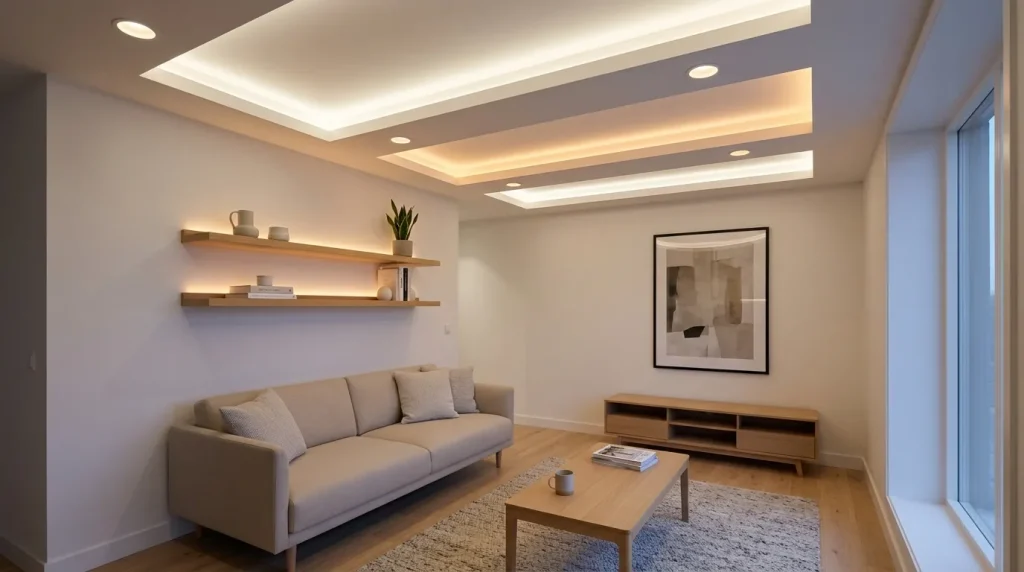
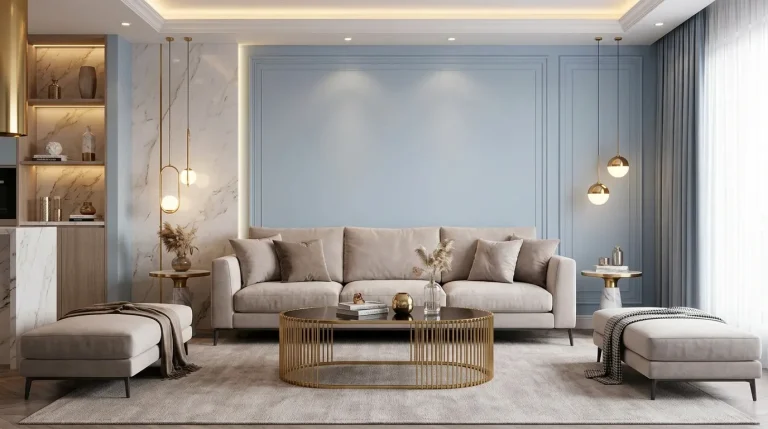
Soft recessed lighting can completely redefine how a compact living room feels by removing heavy visual clutter from the ceiling and replacing it with smooth, layered illumination. Instead of hanging fixtures that shorten the space, hidden lights create a seamless glow that gently expands the room upward. This effect is especially powerful in modern apartments where ceiling height is limited. The lighting spreads evenly across surfaces, reducing harsh shadows and making the entire space feel more open, balanced, and visually calm for everyday living and evening relaxation without visual heaviness.
That is why recessed lighting has become a core design choice in many modern low ceiling homes because it improves both mood and structure at the same time. I’ve noticed in real interior projects that removing bulky ceiling fixtures instantly increases perceived height and comfort. Designers often use layered lighting zones to highlight different areas without overcrowding the ceiling. This method also enhances furniture visibility and creates a soft architectural rhythm that makes small living rooms feel intentionally designed, spacious, and far more inviting throughout the day and night flow.
4.Mirror Expansion Wall
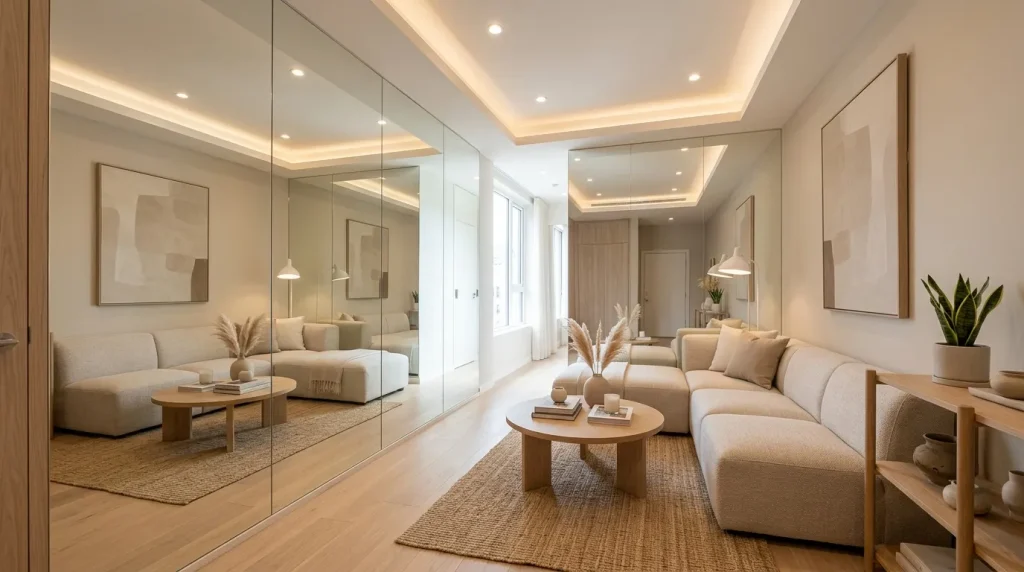
A mirror feature wall can instantly transform a compact living room by doubling visual depth and reflecting light across every corner of the space. When placed strategically, it creates the illusion of extended width and height, making low ceilings feel far less restrictive. This design trick works especially well in modern homes where natural light is limited. The reflective surface amplifies brightness, reduces shadows, and visually pushes the walls outward, giving the room a clean, airy, and more open architectural feel overall that enhances everyday comfort and spatial perception dramatically.
I’ve seen mirror walls work particularly well in small apartments where space optimization is a priority, because they not only improve lighting but also visually reorganize the entire layout. Designers often recommend pairing mirrors with soft neutral tones to avoid harsh reflections and maintain balance. This combination creates a calm, elegant environment that feels larger than its actual dimensions. Over time, this approach helps residents feel less confined and more connected to a brighter, more open living atmosphere that supports both relaxation and daily activities without overwhelming the interior design balance.
5.Soft Neutral Flow
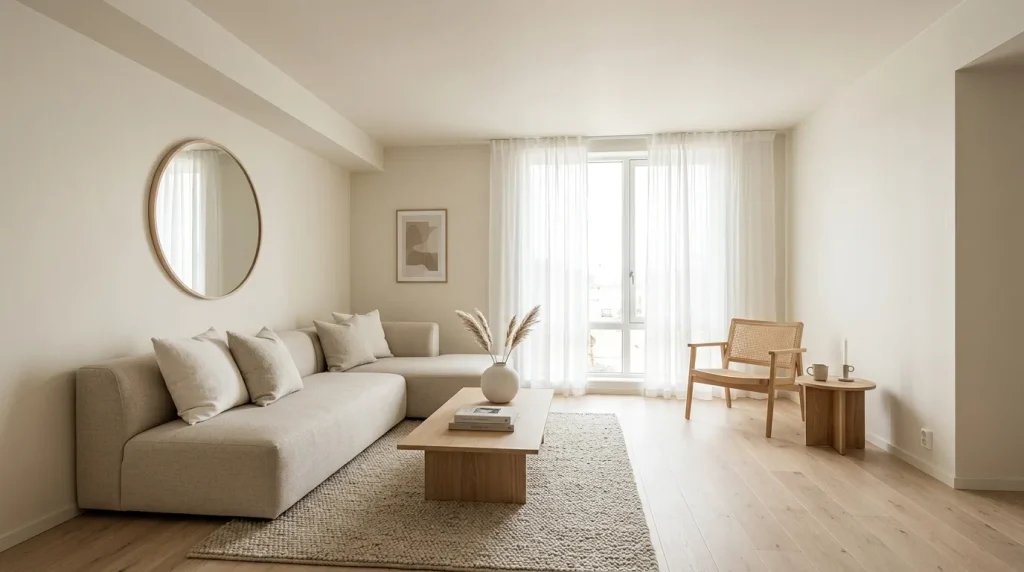
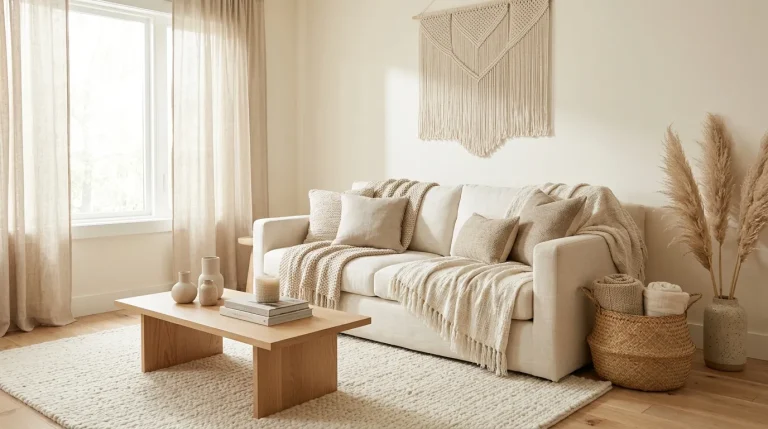
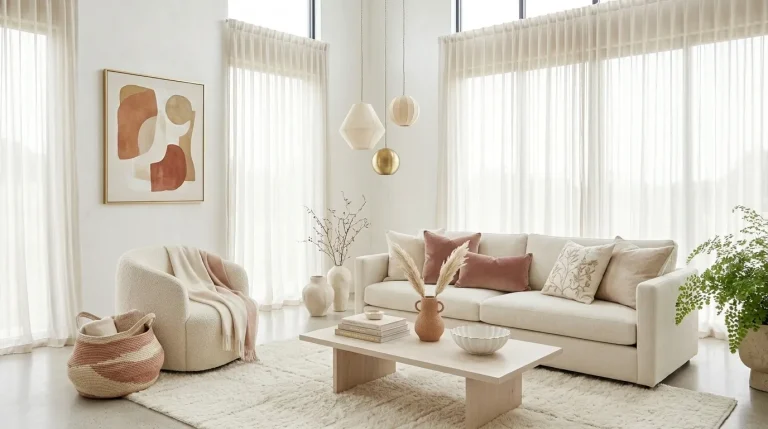
Soft neutral color schemes play a powerful role in making low ceiling living rooms feel more open and breathable. When walls, furniture, and décor stay within a cohesive palette of warm whites, creams, and light beige tones, the eye moves smoothly across the space without interruption. This reduces visual heaviness and helps the ceiling feel less dominant. In many modern homes, this approach is one of the simplest yet most effective ways to create a calm, unified environment that feels naturally spacious and inviting.
This design works because color consistency removes contrast distractions that usually compress small interiors. I’ve noticed that when homeowners shift from dark or mixed tones to soft neutrals, the entire room feels instantly brighter and more balanced. Natural light also reflects better across surfaces, improving the sense of height and openness. That’s why many designers rely on this palette as a foundation for compact spaces, especially when aiming for a clean, modern, and visually expanded living area experience.
Conclusion:
Transforming a compact space becomes much easier when you apply these low ceiling living room ideas with intention and creativity. Even small design adjustments can completely shift how open, bright, and comfortable your home feels. From lighting to furniture choices, each idea helps create a more balanced and visually expanded environment. If you’re planning a cozy modern makeover, start with just one or two changes and build from there. I’ve seen how simple updates can completely refresh a room’s energy. Save this guide on Pinterest, try your favorite ideas, and share it with someone who needs inspiration.
Clara Whitmore
Clara specializes in interior styling, seasonal home trends, and cozy living spaces. She loves combining classic design elements with modern touches to create homes that feel personal, welcoming, and effortlessly stylish.