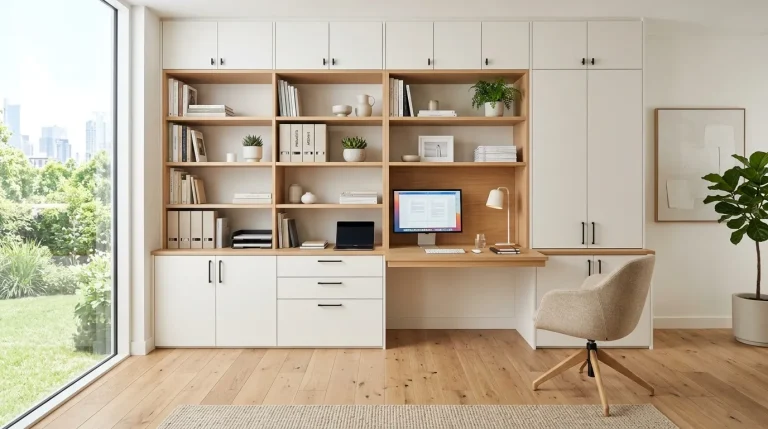
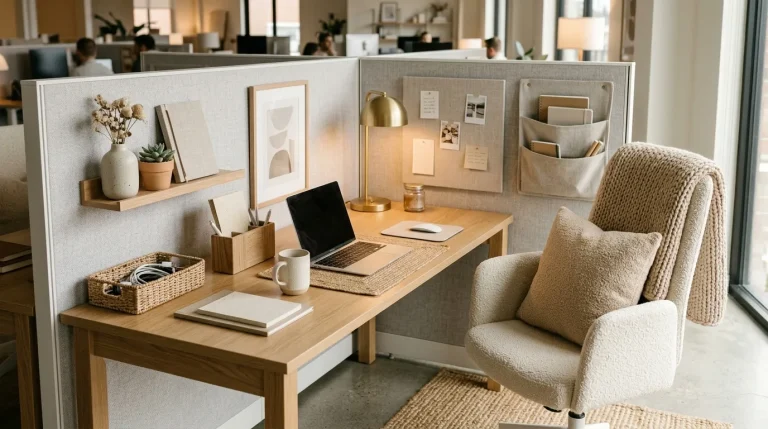
home office ideas: Simple 20 easy setups that make work stress-free

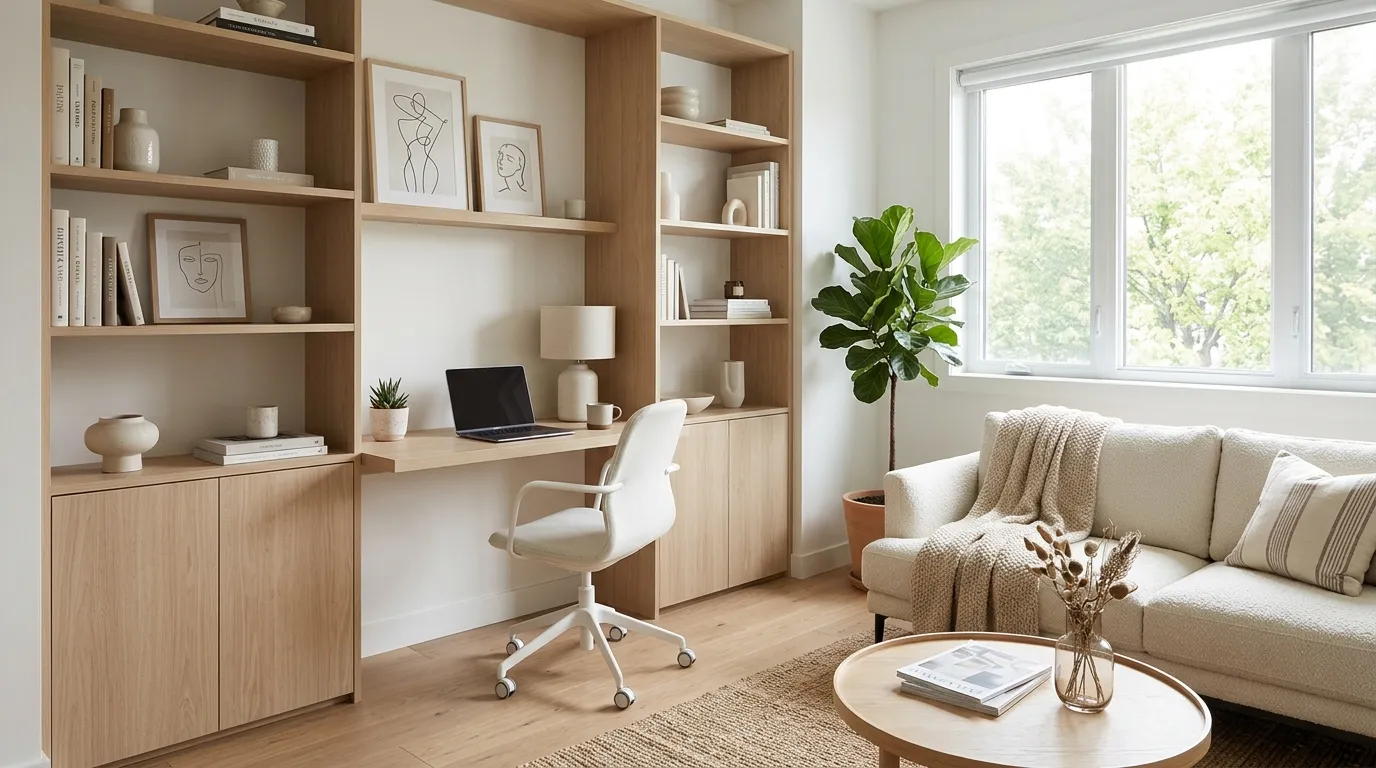
Introduction:
If you’ve been searching for fresh home office ideas, you’re not alone—many people today want a workspace that feels calm, beautiful, and truly stress-free. The right setup can completely change how you think, focus, and even how productive your day feels. Instead of a cluttered corner or boring desk, imagine a space that actually inspires you to work better and feel better at the same time.
In my experience, even small design changes—like better lighting or a cleaner layout—can transform the entire mood of a room. These ideas are designed to help you create a workspace that feels organized, peaceful, and visually pleasing. Whether you love cozy textures, minimal setups, or modern aesthetics, you’ll find simple inspiration that makes working from home feel effortless and enjoyable.
1.Minimal Desk Setup
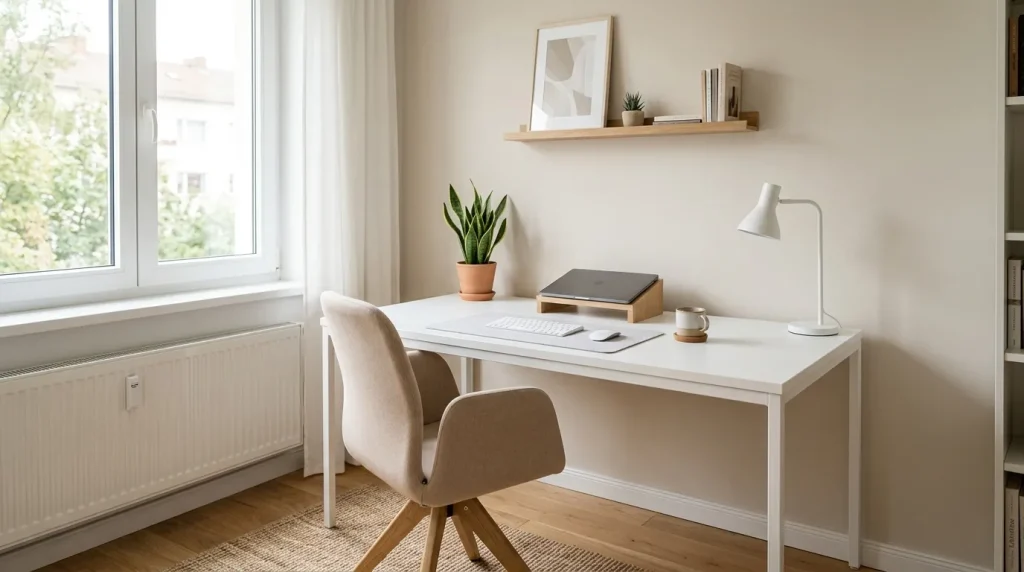
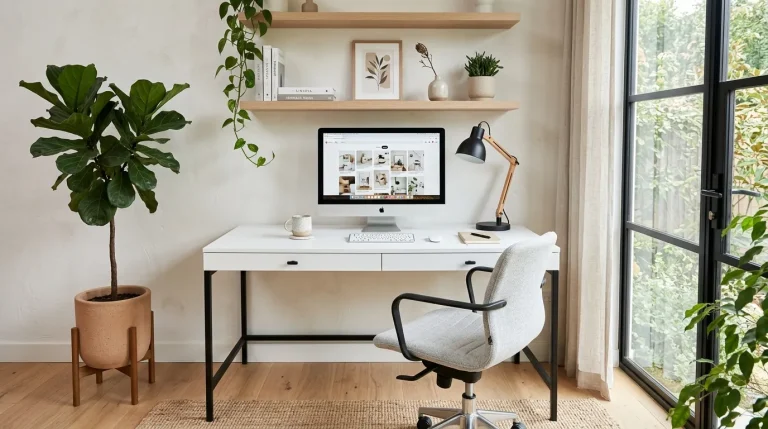
A minimal desk setup completely changes how your workspace feels the moment you sit down. Clean surfaces, soft neutral tones, and just a few essential items create a calm visual flow that reduces mental noise. This kind of setup works especially well in small apartments or shared spaces where distraction builds quickly. In my experience, removing unnecessary items from the desk instantly improves focus and makes work feel lighter and more structured throughout the day.
When designed thoughtfully, a minimal desk area becomes more than just a workspace—it turns into a mental reset zone. The simplicity allows your attention to stay on tasks instead of clutter. Many modern designers recommend keeping only daily-use items visible, like a laptop, lamp, and notebook. I’ve noticed that when people switch to this style, they often feel less overwhelmed and more in control of their workflow, especially during long working hours at home.
2.Window Light Corner
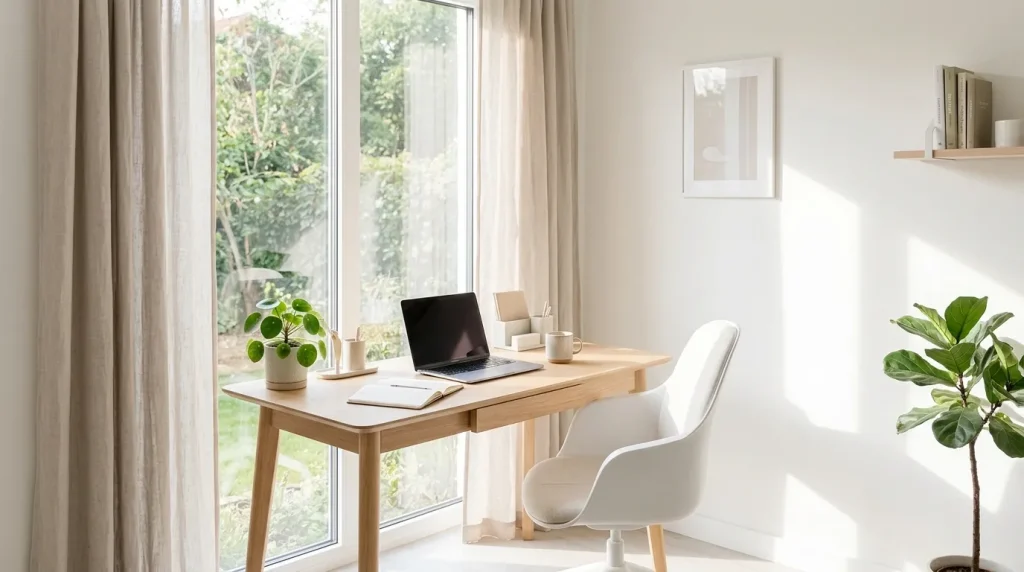
A window light corner transforms any ordinary room into a refreshing workspace filled with natural energy. Positioning your desk near sunlight instantly improves visibility and reduces the need for harsh artificial lighting during the day. This setup feels especially powerful in the morning when soft daylight fills the room. I’ve noticed that people naturally feel more motivated and less tired when their workspace is connected to natural light, especially in compact home environments.
Beyond aesthetics, this setup also supports better productivity and emotional balance throughout the day. Natural light helps regulate focus and keeps the space feeling alive rather than closed in. Many home designers suggest pairing this layout with sheer curtains to soften glare while maintaining brightness. In real homes, this idea often becomes a favorite corner because it blends comfort, freshness, and functionality in a very effortless way.
3.Neutral Tone Workspace
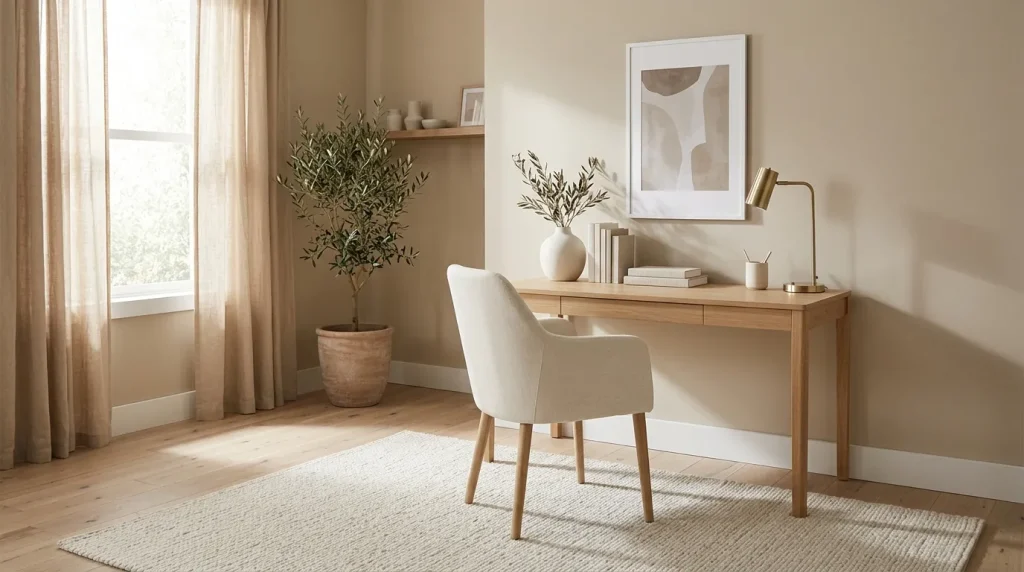
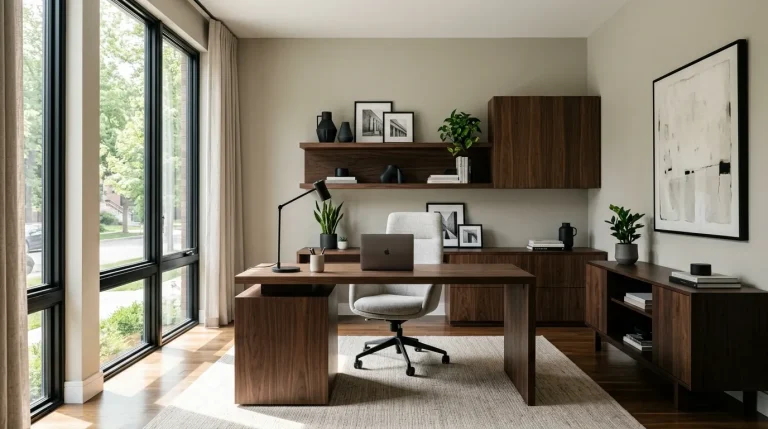
A neutral tone workspace brings a sense of quiet balance that instantly makes working from home feel more peaceful. Soft shades like beige, white, and light wood create a smooth visual rhythm that doesn’t overwhelm the eyes. This approach is especially helpful for people who feel stressed in overly colorful or busy environments. I’ve seen this simple color shift completely change how a room feels, making it more stable and emotionally calming during long work sessions.
This setup also enhances the overall aesthetic without needing expensive decor or heavy styling. Neutral palettes naturally reflect light, making the room appear cleaner and more spacious. Designers often recommend layering different textures instead of adding strong colors to keep interest alive. In real homes, this style works because it feels timeless, adaptable, and effortlessly clean, helping the workspace stay visually peaceful even on busy or stressful workdays.
4.Floating Wall Desk
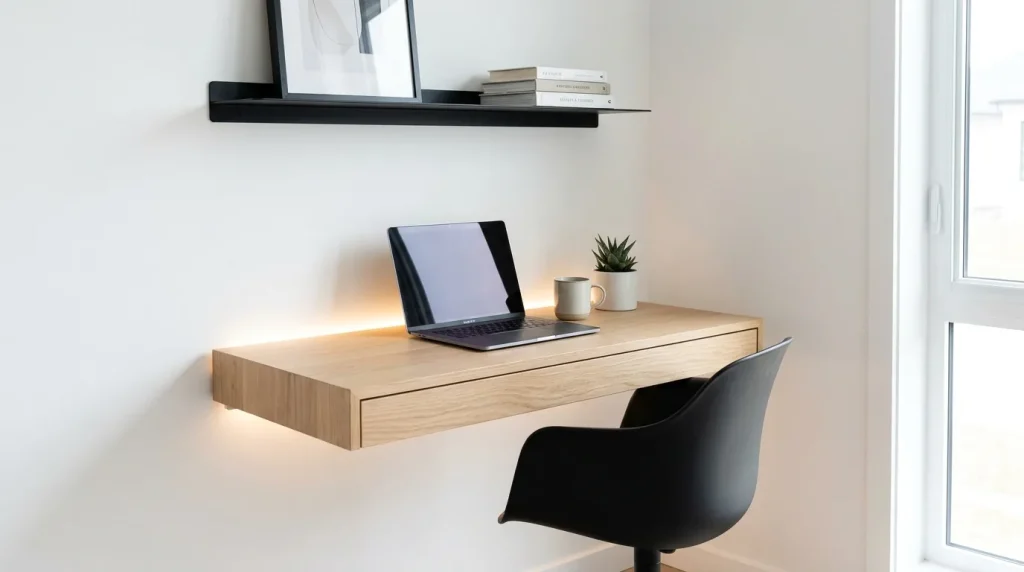
A floating wall desk is one of the smartest ways to create a functional workspace without taking up valuable floor space. It gives the illusion of openness, especially in smaller rooms where every inch matters. The clean mounting design keeps everything visually light and uncluttered. In my experience, this setup works best when you want a dedicated work zone that doesn’t overpower the rest of your living area.
This style also makes cleaning and organizing much easier since there are no heavy desk legs or bulky structures. You can customize the height and length based on your comfort and room size. Designers often recommend pairing it with soft lighting or a small wall shelf for essentials. I’ve noticed that people who switch to this setup often feel more organized because the workspace naturally forces simplicity and intentional arrangement.
5.Cozy Reading Nook Desk
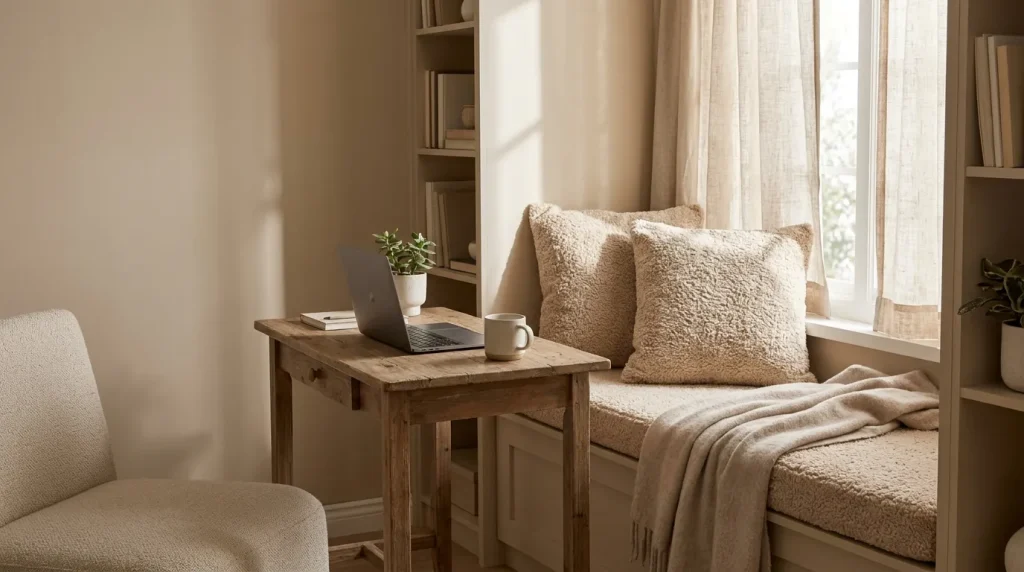
A cozy reading nook desk blends comfort with productivity, creating a space that feels more like a personal retreat than a traditional office. Soft seating, warm textures, and natural light help reduce stress while working on tasks that require focus or creativity. I’ve noticed this setup is especially helpful for people who feel mentally drained in rigid office environments, as it encourages a slower, more thoughtful working rhythm.
This idea works beautifully in corners, bedrooms, or near windows where light naturally softens the space. Adding cushions or a small bench creates a welcoming feel that doesn’t overwhelm the room. Designers often suggest keeping the desk small and intentional so the area stays calming. In real homes, this setup becomes a favorite spot not just for work, but also for reading, journaling, or quiet reflection throughout the day.
6.Dual Monitor Zone
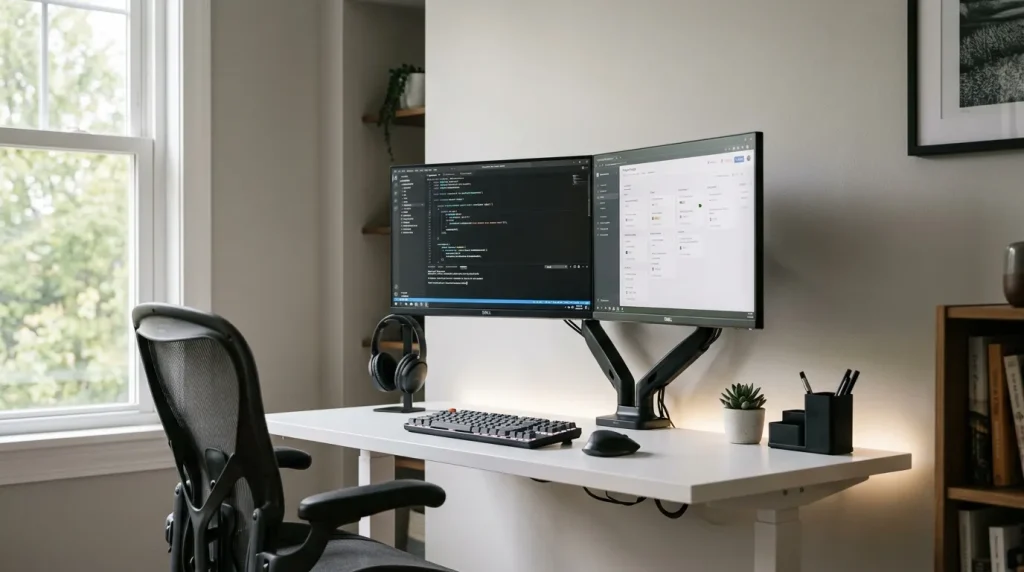
A dual monitor zone creates a highly efficient workspace for anyone managing multiple tasks at once. Whether you’re designing, coding, or handling business work, having two screens dramatically improves workflow speed. The setup feels structured and intentional, helping you stay focused without constantly switching tabs. I’ve seen this arrangement significantly improve productivity for people who work remotely full-time and need a more professional home setup.
Beyond functionality, this layout can still look visually clean when styled properly with cable management and minimal accessories. Keeping the desk surface uncluttered is key to maintaining balance. Many modern setups also include soft LED backlighting to reduce eye strain and enhance focus. In real homes, this idea works because it combines performance with clean aesthetics, making the workspace feel both professional and comfortable at the same time.
7.Soft Neutral Palette
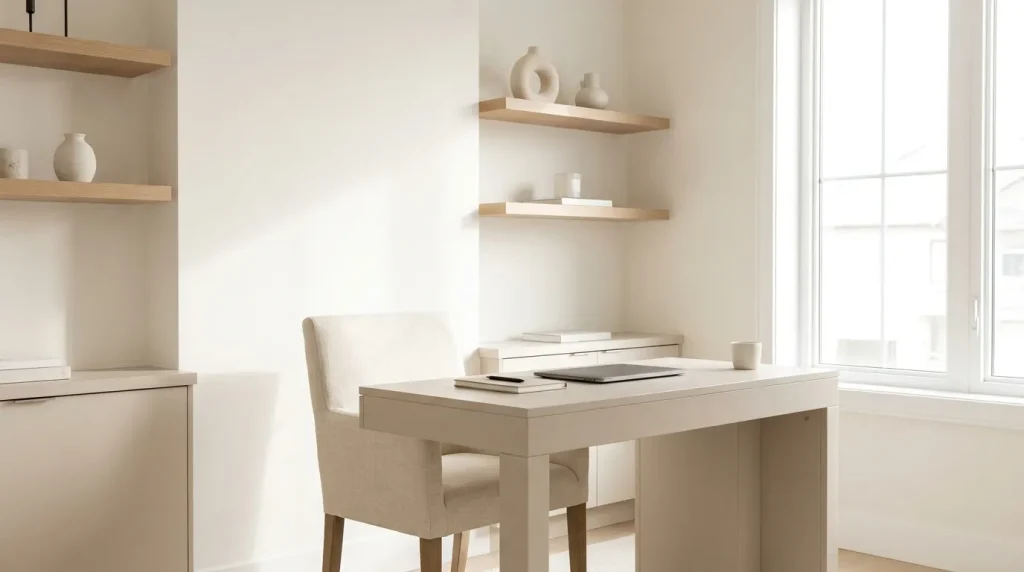
A soft neutral palette instantly changes the emotional tone of a workspace, making it feel calmer and more grounded. Shades like warm white, beige, and soft grey create a gentle background that doesn’t compete for attention. This kind of environment helps the mind stay relaxed, especially during long work hours. I’ve noticed that people working in neutral-toned rooms often feel less distracted and more mentally organized throughout their day.
This style also gives you long-term flexibility because it pairs easily with any furniture or decor change. Instead of constantly redesigning the space, you can simply adjust small accents like cushions or desk items. Designers often recommend neutral palettes for home offices because they support focus without feeling cold or empty. In real homes, this approach creates a timeless workspace that always feels fresh, no matter how trends change over time.
8.Corner Productivity Zone
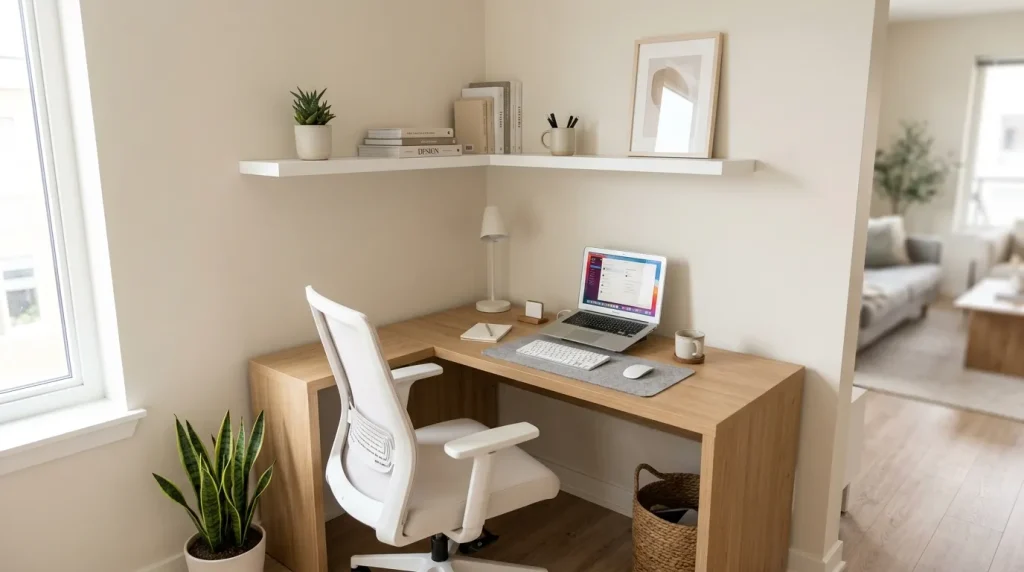
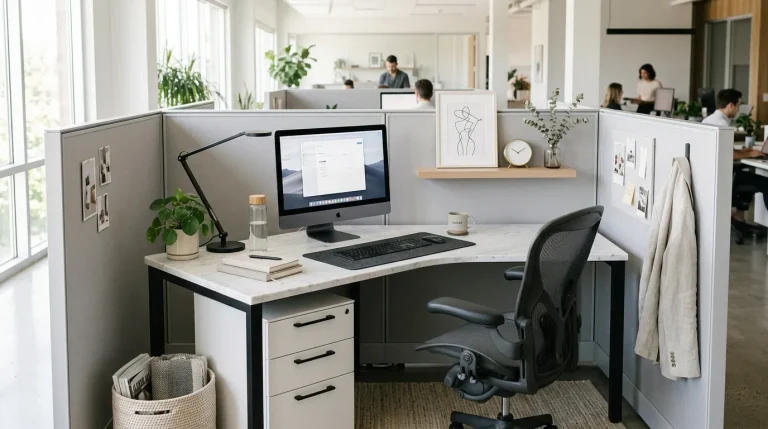
A corner productivity zone is one of the smartest ways to turn unused space into a fully functional workspace. Corners often go unnoticed, but when designed properly, they can become highly efficient work areas. The L-shaped layout or compact desk setup helps define a clear boundary between work and rest. I’ve seen this setup work especially well in small homes where space optimization is essential for daily comfort.
This design also helps build better work discipline because the corner naturally signals “work mode.” Adding shelves or vertical storage above the desk keeps everything organized without taking extra space. Designers often recommend using soft lighting to avoid harsh shadows in corner setups. In real homes, this idea works because it creates structure, improves focus, and makes even the smallest rooms feel more purposeful and organized.
9.Warm Ambient Lighting
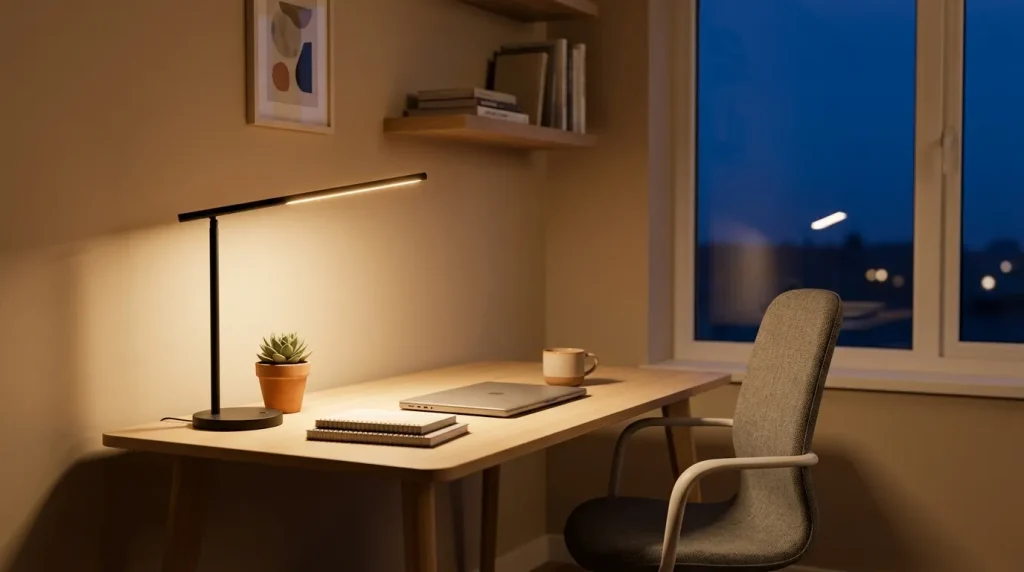
Warm ambient lighting completely transforms how a home office feels, especially during evening work sessions. Instead of harsh white light, soft golden tones create a calming atmosphere that reduces stress and eye fatigue. This setup makes long working hours feel more comfortable and less draining. I’ve noticed that people tend to stay more relaxed and focused when their workspace has gentle lighting instead of bright overhead glare.
This lighting style also adds emotional warmth to the room, making it feel more lived-in and less like a strict office environment. Desk lamps, LED strips, or indirect lighting all work beautifully when layered correctly. Designers often recommend combining multiple light sources to create depth and balance. In real homes, this approach makes the workspace feel cozy, supportive, and much more enjoyable to spend time in every day.
10.Minimal Shelf Wall
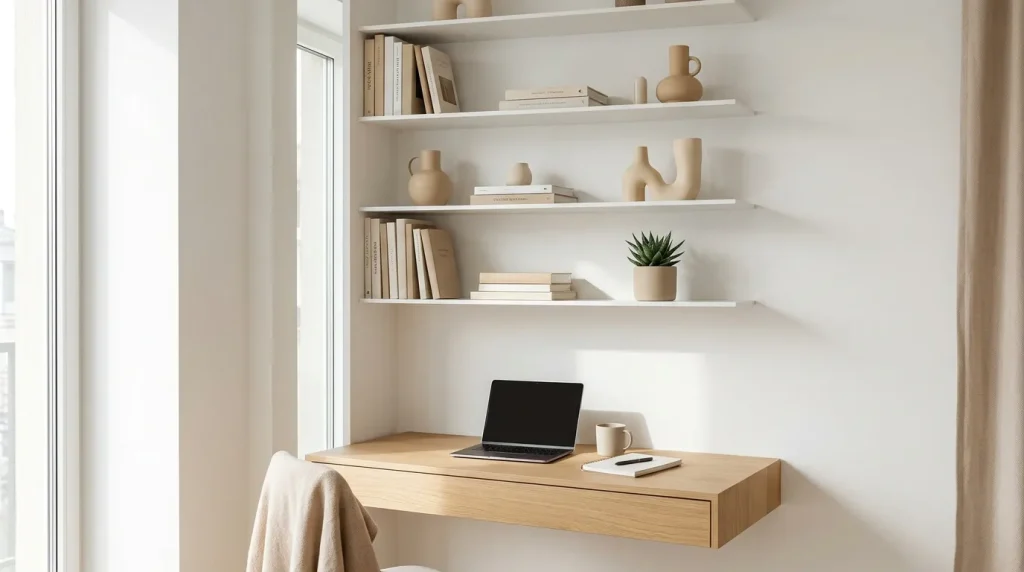
A minimal shelf wall brings structure and style to your workspace without making it feel heavy or crowded. Floating shelves allow you to store essentials while keeping the desk surface completely clear. This setup works especially well in small rooms where vertical space is often underused. I’ve noticed that adding even two simple shelves instantly makes the workspace feel more intentional and visually balanced.
This idea also helps create a clean visual flow that supports better focus throughout the day. Instead of scattering items on the desk, everything has a defined place above eye level. Designers often recommend keeping shelf styling simple with books, plants, and a few neutral decor pieces. In real homes, this approach creates a calm, organized environment that feels both functional and aesthetically pleasing without overwhelming the space.
11.Hidden Cable Setup
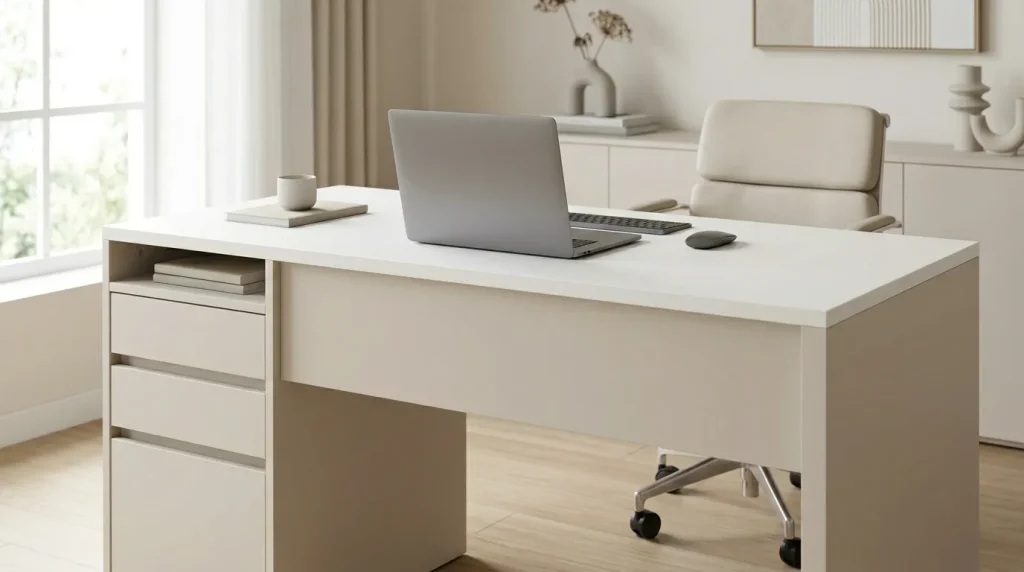
A hidden cable setup completely transforms how clean and professional your workspace looks. Visible wires often create visual stress, even in well-designed rooms. By managing cables inside trays, clips, or desk compartments, the entire space instantly feels more organized and modern. I’ve seen this simple change make even basic setups look high-end and thoughtfully designed without adding any extra furniture.
This approach also improves daily functionality because you don’t have to deal with tangled wires or messy connections. Everything stays in place, making the workspace easier to maintain over time. Designers often emphasize cable management as a key part of minimal interiors. In real homes, this idea creates a smoother, distraction-free environment that supports better focus and gives the entire desk a polished, intentional look.
12.Green Plant Desk
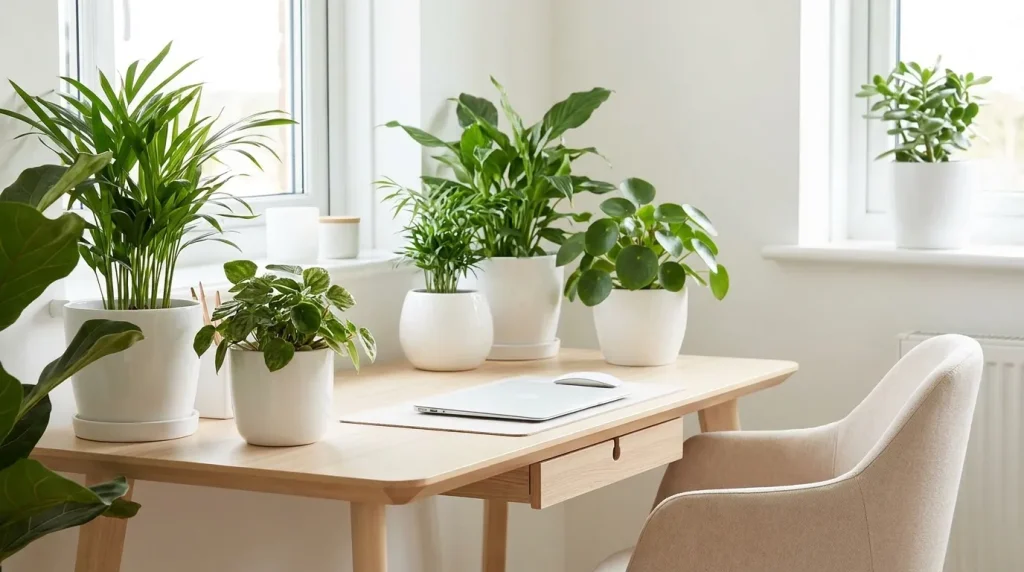
A green plant desk brings life and freshness into your workspace in the simplest way possible. Adding even a few small indoor plants instantly softens the environment and creates a more natural, calming atmosphere. The presence of greenery helps reduce stress and improves mood, especially during long working hours. I’ve noticed that people often feel more relaxed and focused when their desk includes natural elements like plants.
This setup also enhances the visual appeal of the entire room without requiring expensive decor. Plants add texture, color, and softness that balance out modern furniture. Designers often recommend low-maintenance plants for home offices because they stay fresh with minimal effort. In real homes, this idea works beautifully because it creates a refreshing, lively workspace that feels more connected to nature and less like a rigid office environment.
13.Scandinavian Setup
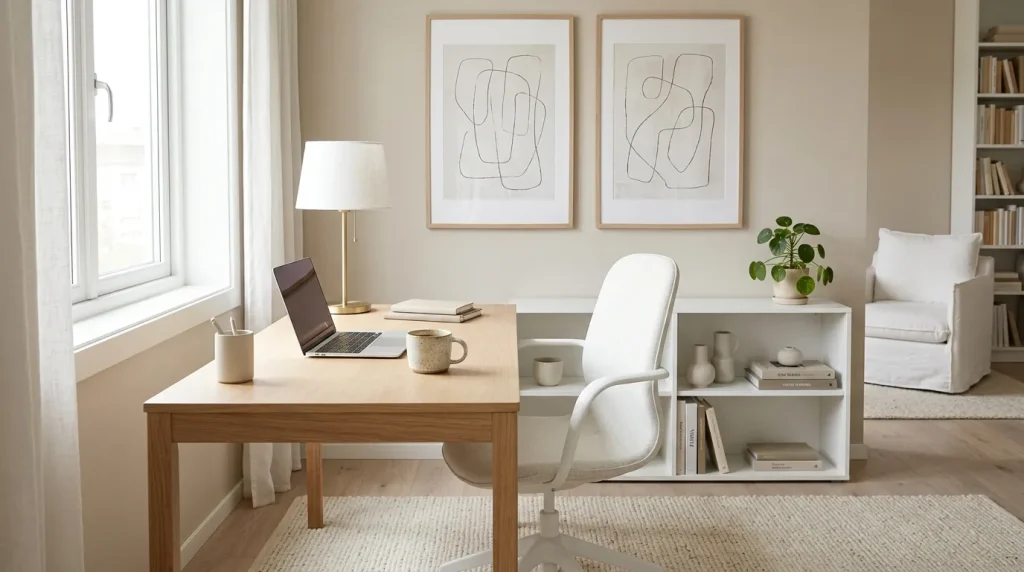
A Scandinavian setup is all about simplicity, light, and functionality coming together in the most effortless way. The combination of white, beige, and light wood creates a visually calm space that helps your mind stay clear and focused. This style avoids unnecessary decoration, which makes the room feel more open and breathable. I’ve noticed that people working in this kind of setup often feel less mentally cluttered and more structured throughout their day.
This design also works beautifully because it blends comfort with practicality. Every piece has a purpose, from the clean desk surface to the minimal storage solutions. Designers often recommend keeping accessories soft and neutral to maintain harmony. In real homes, this approach creates a timeless workspace that never feels overwhelming and always stays visually fresh, even after long hours of daily use.
14.Dual Purpose Space
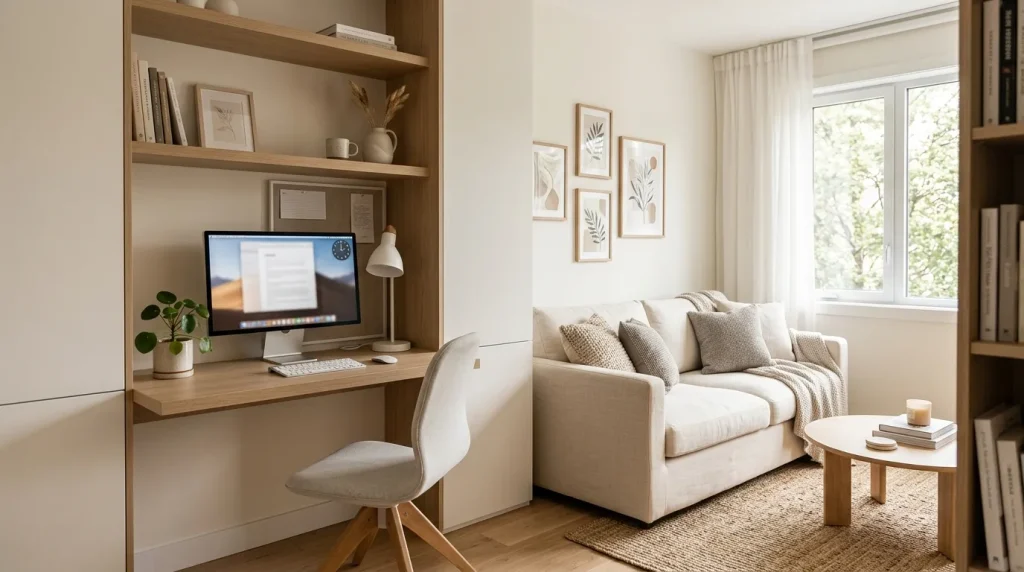
A dual-purpose space is ideal when you need your home to work harder without feeling crowded. By combining a workspace with living or bedroom areas, you can create a functional zone that still feels comfortable and stylish. This setup is especially useful in smaller homes where separate rooms are not always possible. I’ve seen this approach help people maintain productivity while still enjoying a relaxed home atmosphere.
The key to making this idea work is balance and subtle separation. Using furniture placement, lighting, or rugs helps define the work area without physically closing it off. Designers often suggest keeping colors consistent so the space feels unified. In real homes, this setup works because it blends practicality with comfort, allowing you to switch between work and rest without feeling like you’re constantly moving between different environments.
A dual-purpose space is ideal when you need your home to work harder without feeling crowded. By combining a workspace with living or bedroom areas, you can create a functional zone that still feels comfortable and stylish. This setup is especially useful in smaller homes where separate rooms are not always possible. I’ve seen this approach help people maintain productivity while still enjoying a relaxed home atmosphere—similar to how calming layouts are used in Modern boho kitchen ideas: 22 Easy Stress-Free Ideas for Calm Kitchens to create spaces that feel both functional and peaceful.
The key to making this idea work is balance and subtle separation. Using furniture placement, lighting, or rugs helps define the work area without physically closing it off. Designers often suggest keeping colors consistent so the space feels unified. In real homes, this setup works because it blends practicality with comfort, allowing you to switch between work and rest without feeling like you’re constantly moving between different environments.
15.Soft Texture Layers
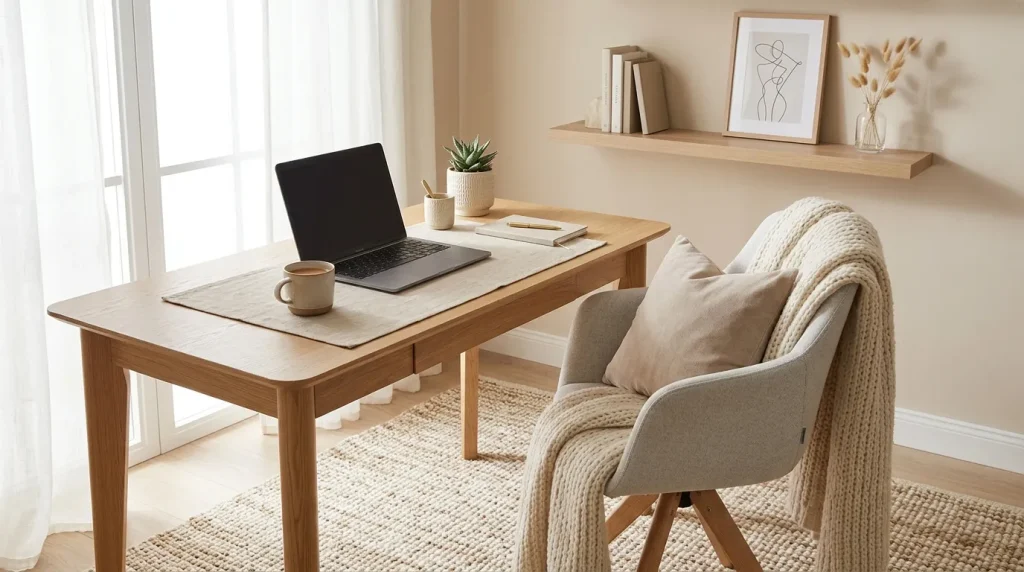
Soft texture layers bring emotional warmth into a workspace that might otherwise feel too plain or structured. By adding materials like linen, wool, and woven fabrics, the room instantly feels more inviting and comfortable. These subtle layers help soften hard surfaces like desks and chairs, creating a balanced environment. I’ve noticed that even small texture additions can completely change how relaxed a workspace feels during long hours of focus.
This idea also improves visual depth without adding clutter. Instead of relying on heavy decor, textures create interest through touch and material variation. Designers often recommend mixing light fabrics with neutral tones to maintain a calm aesthetic. In real homes, this approach works because it makes the workspace feel lived-in, cozy, and emotionally supportive, helping you stay comfortable while still maintaining a clean and organized look.
16.Soft Color Accents
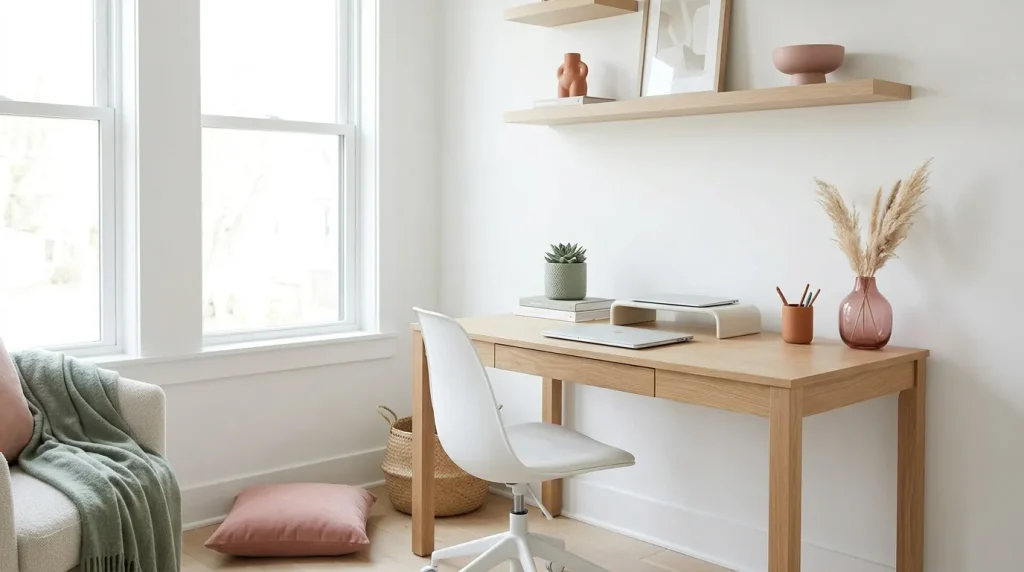
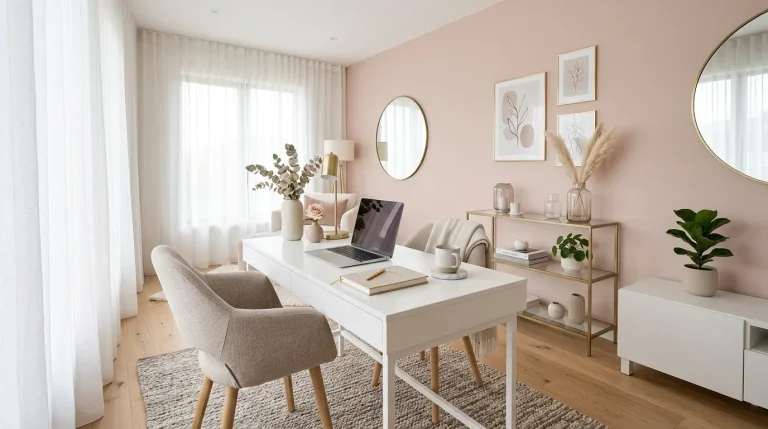
Soft color accents bring life into a neutral workspace without disturbing its calm structure. Instead of bold, distracting colors, muted tones like sage green or dusty blush add just enough personality to keep the space visually interesting. This balance is what makes the setup feel modern yet comfortable. I’ve noticed that even small accents like a pastel notebook or colored vase can completely refresh the mood of a desk area.
This approach also gives you flexibility to change the look anytime without redesigning the whole room. You can rotate accessories seasonally or whenever you want a fresh feel. Designers often recommend keeping the base neutral and layering soft tones through decor items only. In real homes, this idea works beautifully because it keeps the workspace calm, adaptable, and visually pleasing while still allowing subtle expression of personal style.
17.Clean Work Essentials
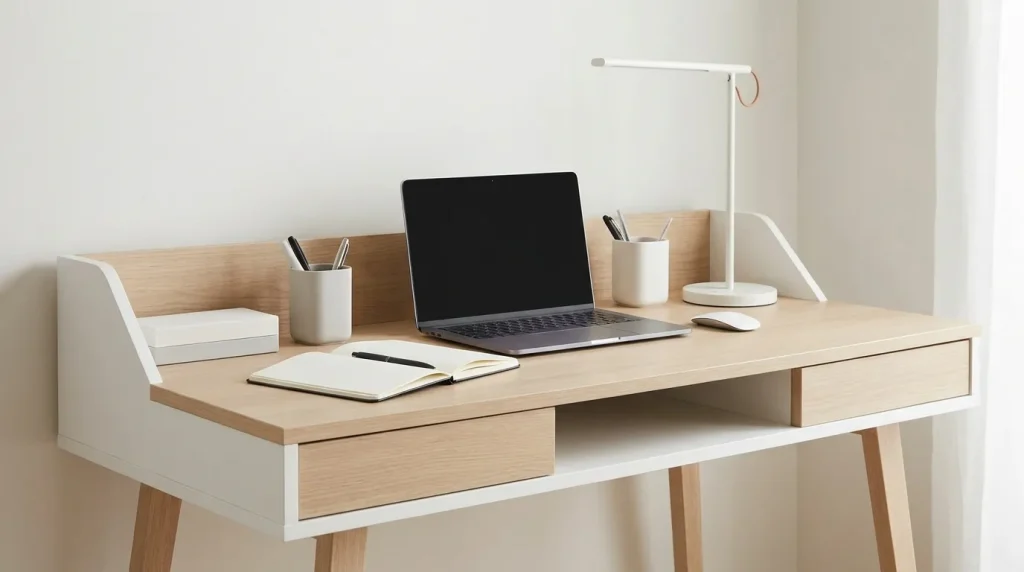
Clean work essentials focus on keeping only what truly matters on your desk, creating a workspace that feels calm and controlled. When unnecessary items are removed, the mind naturally feels less distracted and more focused on tasks. This setup is especially helpful for people who tend to accumulate clutter while working. I’ve seen this simple habit dramatically improve productivity and reduce daily overwhelm in home environments.
This idea also helps build long-term organization habits because everything has a defined place and purpose. Instead of searching for items or dealing with mess, the workflow becomes smoother and more efficient. Designers often recommend limiting desk items to just three to five essentials. In real homes, this approach creates a clean, structured, and stress-free workspace that supports better focus and makes everyday work feel lighter and more manageable.
18.Hidden Storage Desk
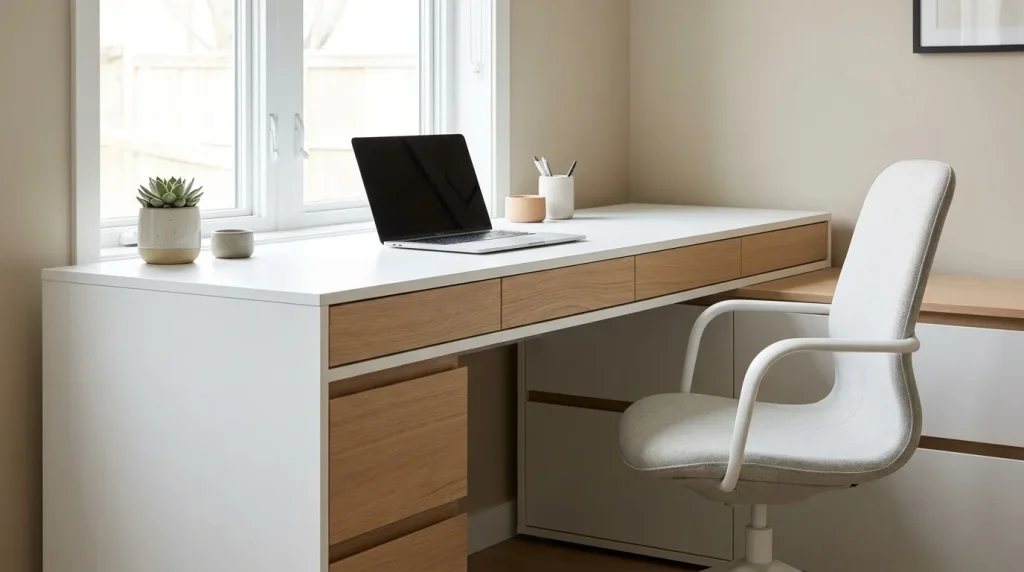
A hidden storage desk is perfect for creating a workspace that always looks clean, even on busy days. With built-in drawers and concealed compartments, everything from cables to stationery can disappear instantly. This keeps the surface visually calm and helps maintain a stress-free environment. I’ve noticed that when the desk looks clean, it naturally encourages a more focused and organized mindset throughout the workday.
This setup is especially useful for people who struggle with clutter buildup. Instead of letting items spread across the desk, everything has a hidden place. Designers often recommend this style for modern home offices because it balances practicality with aesthetics. In real homes, this idea works beautifully as it keeps the workspace looking effortlessly tidy while still offering full functionality for daily tasks.
19.Soft Mood Lighting
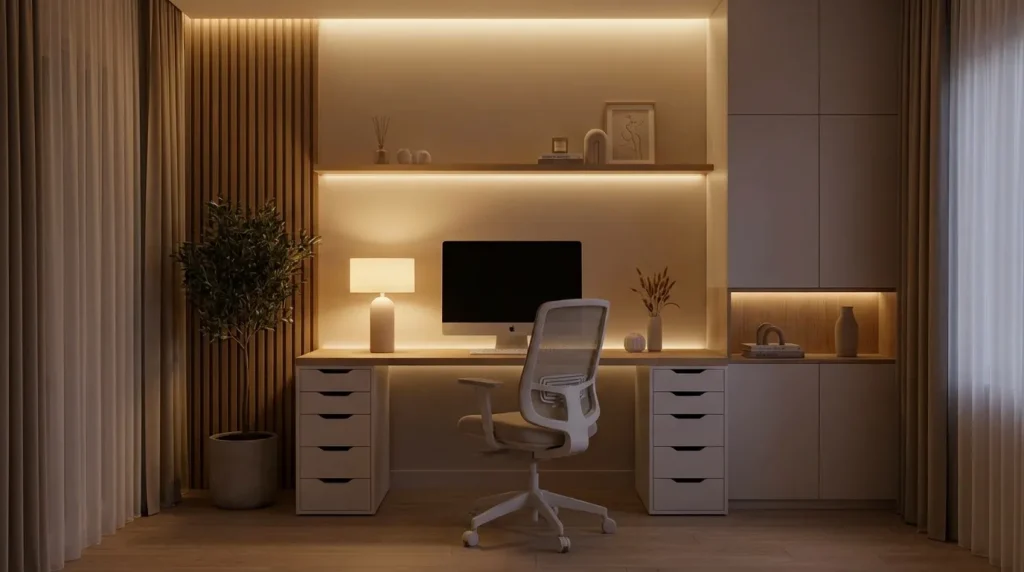
Soft mood lighting transforms a home office into a comfortable and inviting space, especially during evening hours. Instead of harsh overhead lights, gentle warm tones create a relaxing environment that reduces fatigue. This makes working late feel less stressful and more manageable. I’ve noticed that people often stay more focused and calm when their workspace has layered lighting instead of a single bright source.
This lighting style also enhances the overall aesthetic of the room by adding depth and warmth. Desk lamps, LED strips, or indirect lighting all work well together when balanced correctly. Designers often recommend using warm white tones to create a cozy atmosphere. In real homes, this approach helps the workspace feel more comfortable, emotionally balanced, and visually soothing after long working hours.
20.Minimal Wall Art
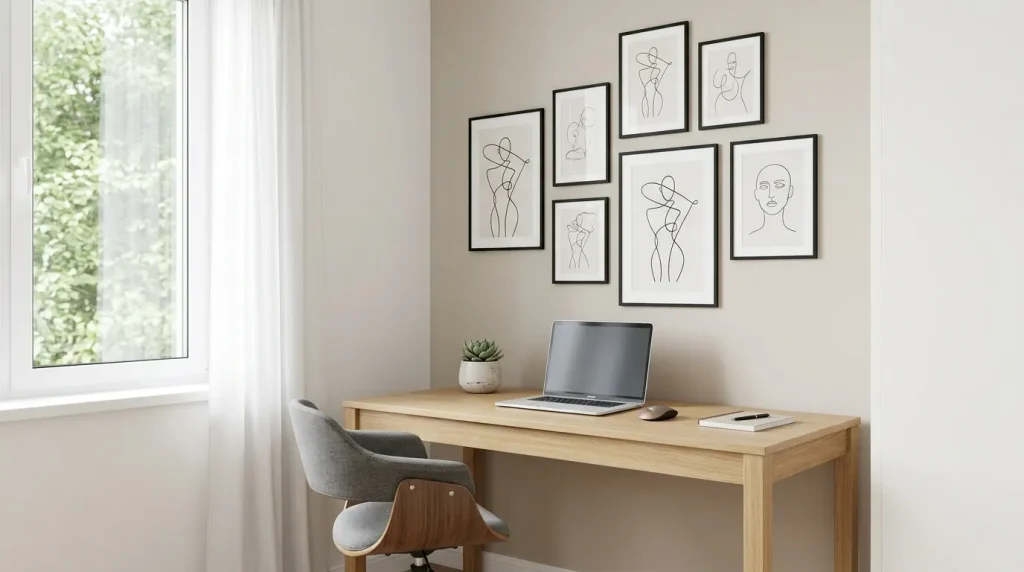
Minimal wall art adds subtle personality to a workspace without overwhelming its calm structure. Simple abstract prints or line drawings create visual interest while maintaining a clean and professional look. This is especially useful for blank walls that feel empty but don’t need heavy decoration. I’ve seen this approach instantly elevate even the simplest desk setups into more thoughtful and visually balanced spaces.
This idea also allows flexibility because wall art can be easily changed whenever you want a fresh look. Designers often suggest sticking to neutral tones or soft contrast pieces to maintain harmony in the room. In real homes, this works well because it adds character without clutter, helping the workspace feel more complete, stylish, and visually inspiring while still keeping everything minimal and distraction-free.
Conclusion:
Creating a beautiful workspace doesn’t require a big budget—just thoughtful home office ideas that focus on comfort, clarity, and style. Each small change, from lighting to layout, can completely transform how your space feels and how productive you become throughout the day. When your environment feels calm and organized, your mind naturally follows.
I’ve seen how even simple updates can make working from home feel more enjoyable and less stressful. Try one or two ideas from this list, save your favorites on Pinterest, and build a space that truly supports your daily life. Share these ideas with someone who needs a fresh workspace reset—it might inspire their best work yet.
Elira Montclair
Elira writes about timeless home decor, kitchen styling, and practical interior ideas. Her work blends warm, inviting aesthetics with simple decorating tips that make everyday spaces feel beautiful and comfortable.