Sage Green Living Room Ideas That Make Every Room Feel Alive

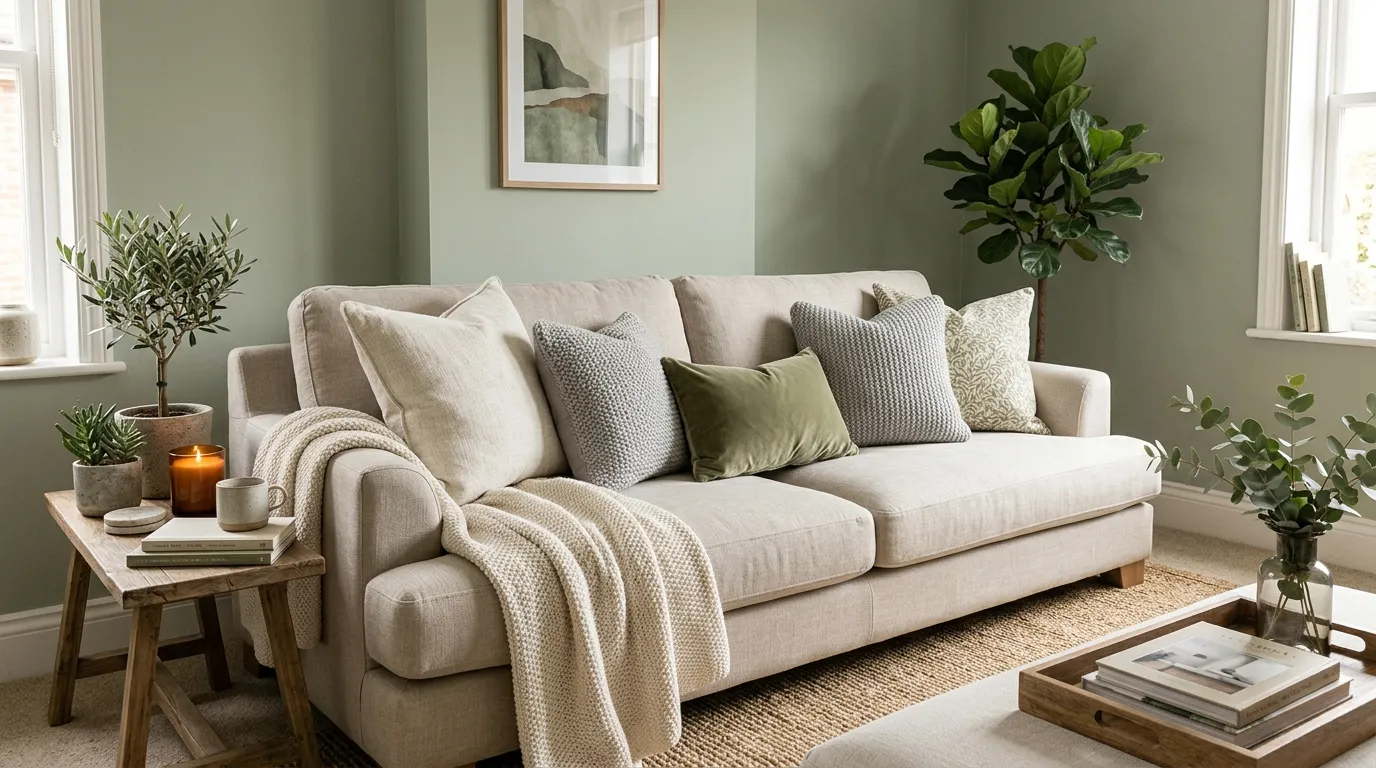
Sage green sits between gray and green, which is why it feels calm without turning cold. It works with warm wood, cream fabrics, black metal, and brass, so it suits almost any living room style from Scandinavian to cottage.
The ideas below show how to use it on walls, how to build the rest of the room around it, and which accents keep it from looking flat. The same shade also works in bedrooms, as this sage green and pink bedroom shows.
Table of Contents
1. Soft Sage Walls
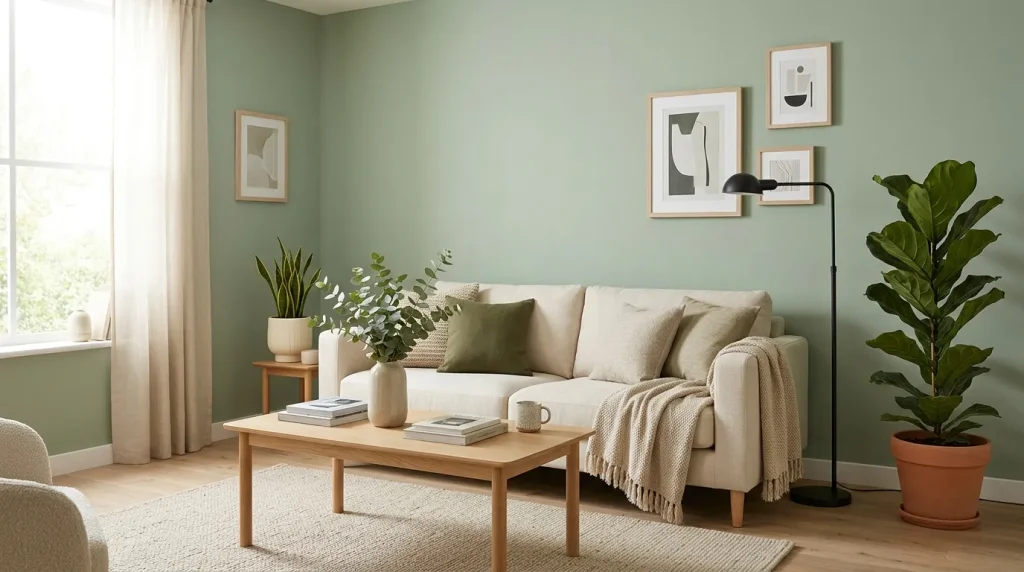
Sage walls give a living room a soft, nature-inspired backdrop. Check the undertone before buying: a warm sage with a hint of yellow suits north-facing rooms that get cooler light, while a grayer sage can look fresh in a sunny south-facing room.
Test two or three large swatches on different walls and look at them morning and evening. A matte or eggshell finish keeps the color soft, and white or warm cream trim keeps the look crisp.
2. Neutral Sofa Layering
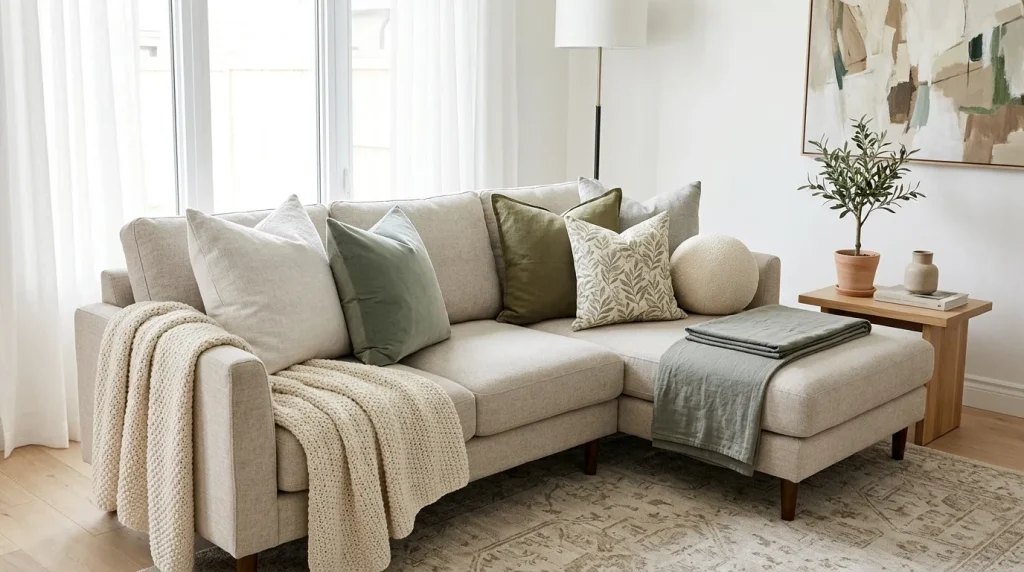
A neutral sofa in oatmeal, ivory, or light gray lets the green walls lead. Build depth with pillows in two or three textures, such as linen, bouclé, and a chunky knit, rather than adding many colors.
Pillows in a mix of sage, rust, and cream tie the sofa to the walls. Swapping only covers and a throw each season keeps the room feeling new without replacing the main piece.
3. Natural Wood Contrast
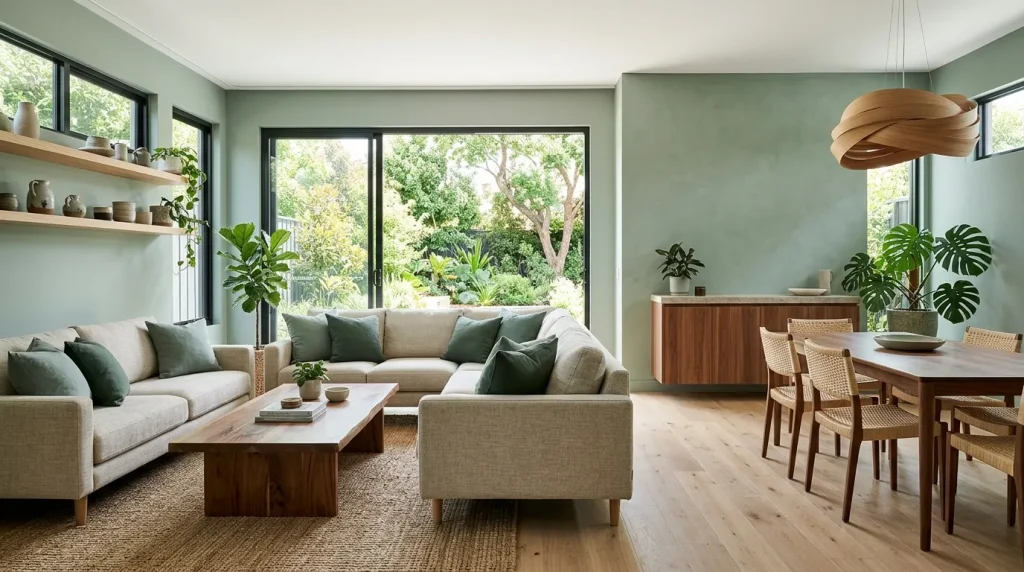
Wood stops sage green from feeling too cool. A coffee table, sideboard, or open shelves in oak, ash, or walnut warms the palette straight away.
Light oak gives a fresh Scandinavian look, while walnut feels richer and more mid-century. Repeating the same wood tone two or three times around the room keeps it cohesive.
4. Cream Textured Rugs
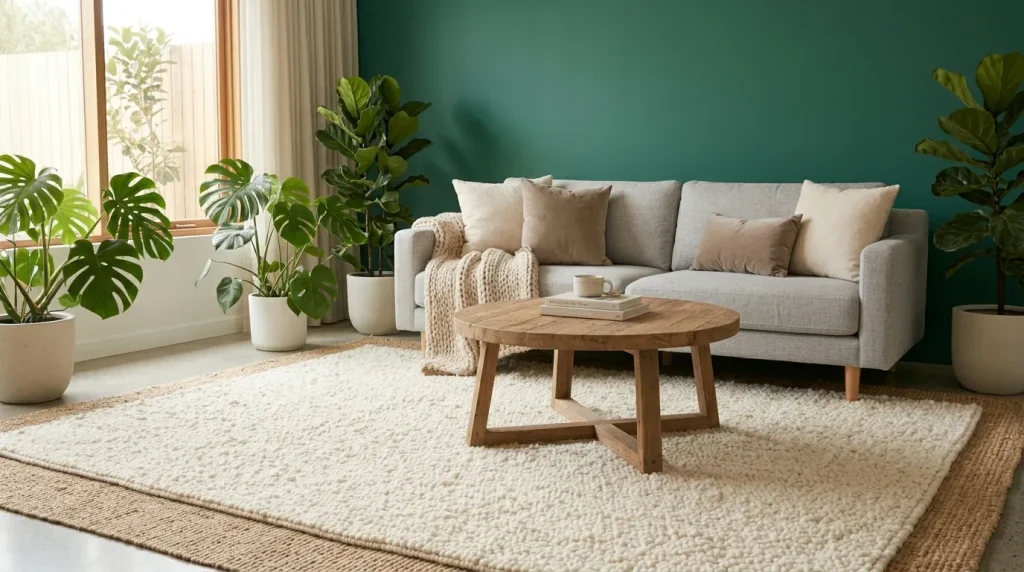
A cream rug brightens the floor and visually connects the furniture. Wool, jute blends, or a low-pile textured rug add warmth without competing with the walls.
Size it so at least the front legs of the sofa and chairs sit on it; in most living rooms that means 8 by 10 feet or larger. Cream shows dirt, so a washable or wool rug is the practical pick in homes with kids or pets.
5. Brass Accent Touches
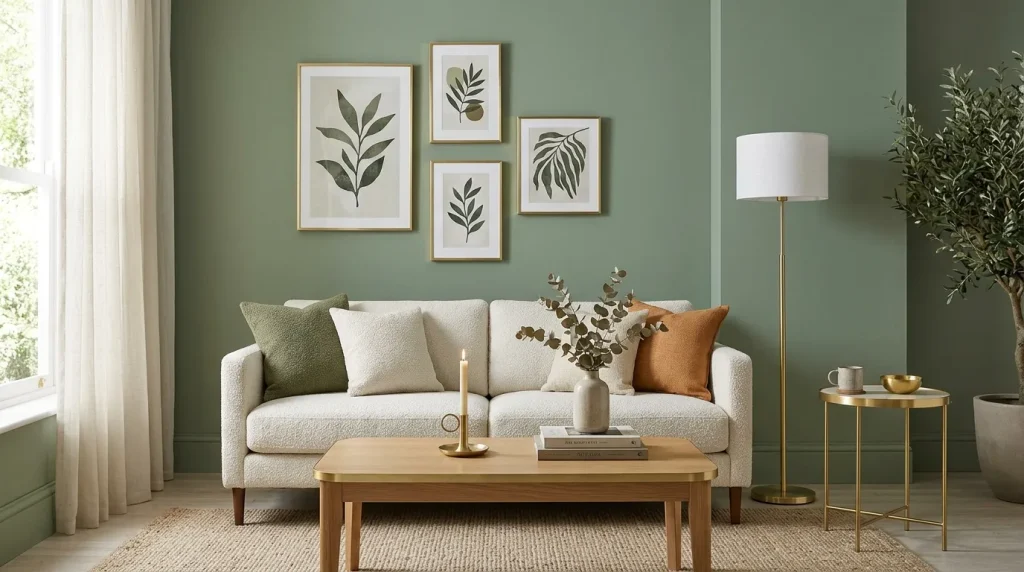
Brass accents add a warm glow against sage. Use it in a few small places: a floor lamp, picture frames, a tray, or cabinet pulls. Brushed brass looks softer than shiny gold and suits the muted palette better.
This mix of muted color, natural texture, and soft metal also shows up in these Japandi dining room ideas, which can help when styling an open-plan space.
6. Black Accent Balance
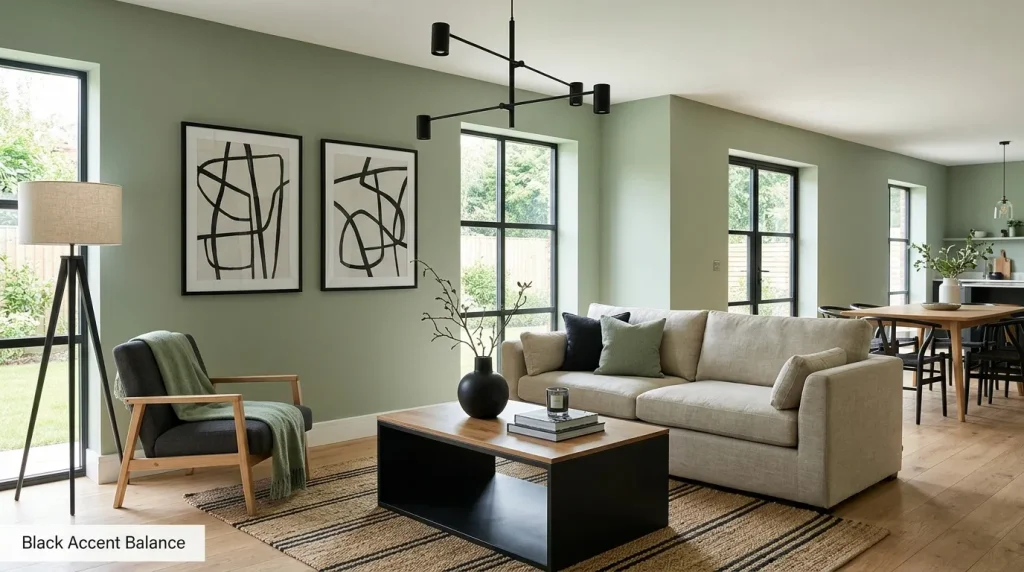
A few black details give a soft green room some definition. Think slim black picture frames, a metal side table, a black lamp shade, or thin window frames.
Keep black to three or four small touches so the room stays calm. It works especially well in open-plan spaces, where it helps separate the seating area from the rest of the room.
7. Flowing Linen Curtains
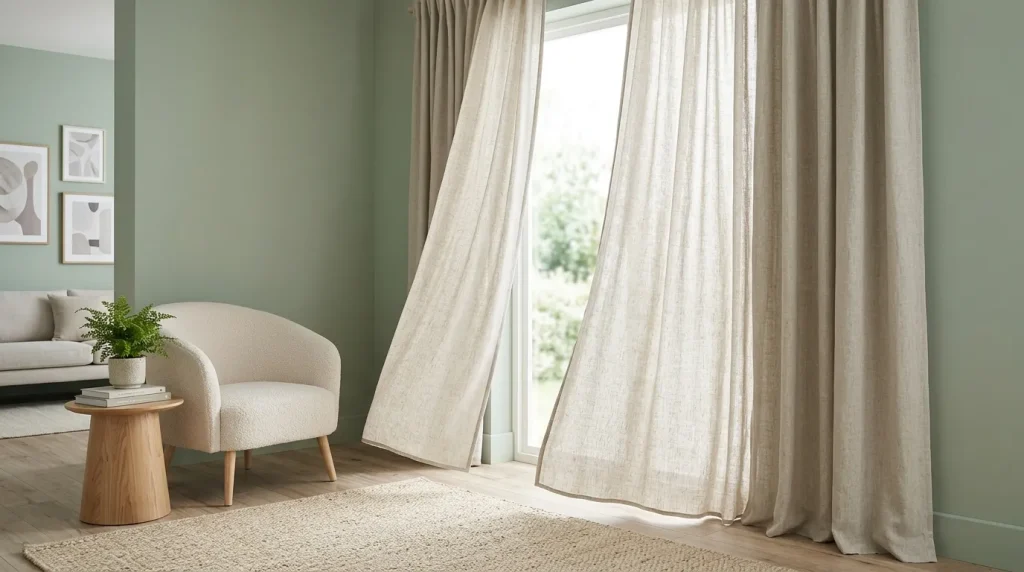
Linen curtains soften daylight and suit the relaxed feel of sage green. White, oat, or a pale sage linen all work; a slightly heavier lined linen gives more privacy in the evening.
Hang the rod close to the ceiling and extend it 6 to 10 inches past each side of the window, so the curtains frame the glass instead of covering it. This makes ceilings look higher and windows look wider.
Colors That Pair Well With Sage Green
The right companion colors decide whether sage looks fresh, cozy, or moody.
- Warm white and cream: the easiest pairing, best for trim, sofas, and curtains.
- Terracotta and rust: adds warmth through pillows, vases, or a rug pattern.
- Blush pink: gives a soft, romantic look, especially in throws and art.
- Navy or charcoal: grounds the room and works well on a single armchair or cabinet.
- Deeper greens: layering sage with olive creates a tonal look; see these olive green living room ideas for a darker take.
Lighting a Sage Green Room
Green paint changes a lot under artificial light, so lighting is worth planning alongside the color.
- Bulb color: warm white around 2700K keeps sage soft and cozy at night; cooler bulbs above 4000K can make it look gray or flat.
- Layers: combine a ceiling light with at least two lamps, such as a floor lamp by the sofa and a table lamp on a console, so the walls glow evenly.
- Shades: linen or paper shades in cream diffuse light gently and suit the natural feel of the color.
- Daylight: in a dark room, a large mirror opposite the window spreads natural light across the green walls.
Final Thoughts
Sage green works best as a calm base with warmth layered on top. Start with the wall color, add wood and a soft rug, then finish with a few brass or black accents. One or two of these changes is enough to give a living room a fresh, settled look.
Clara Whitmore
Clara specializes in interior styling, seasonal home trends, and cozy living spaces. She loves combining classic design elements with modern touches to create homes that feel personal, welcoming, and effortlessly stylish.