Wooden Coffee Tables With Easy Styling Tips for a Designer Look

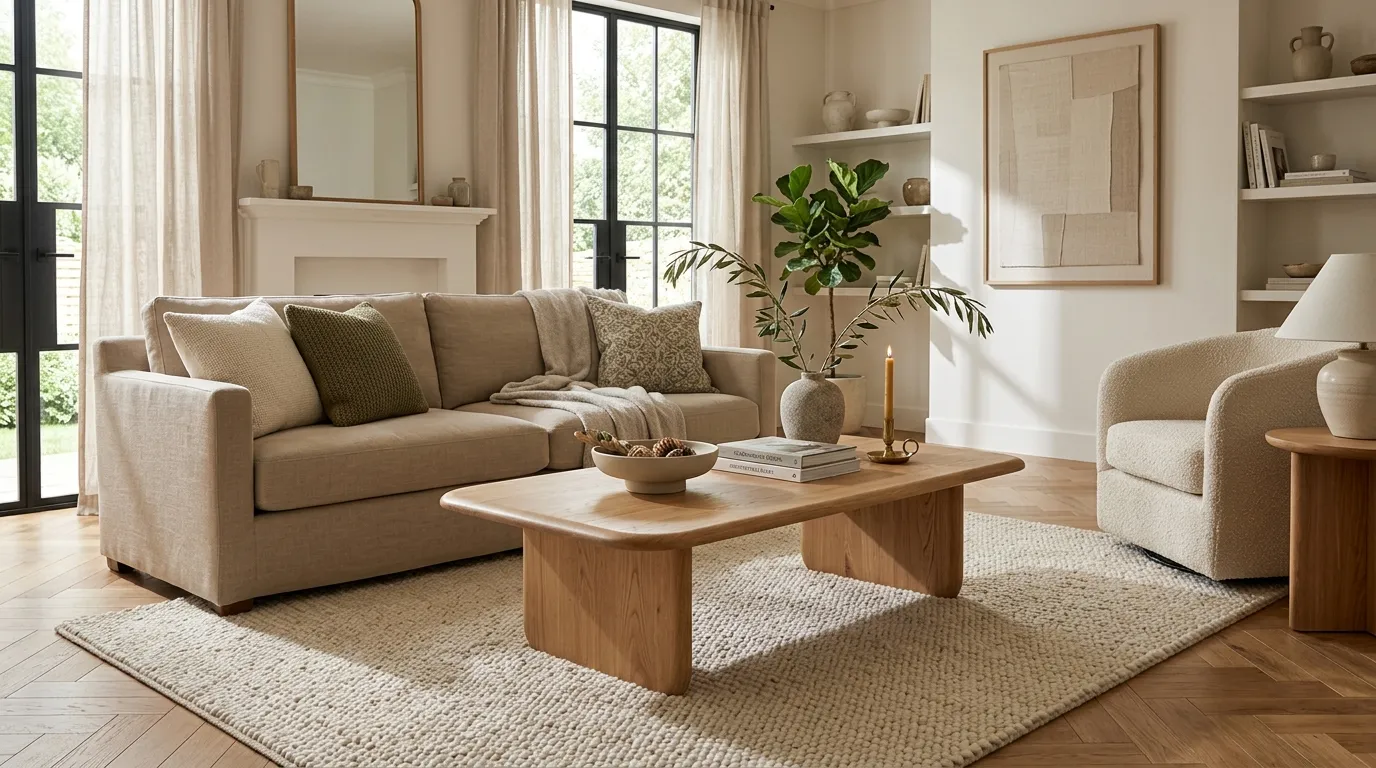
A coffee table can set the tone for your whole living room. Wooden coffee tables bring warmth, texture, and a grounded feel, while the right styling keeps the surface useful instead of crowded. With a few thoughtful pieces, even a simple table can look polished and personal.
The trick is to work with the table’s shape, finish, and size rather than covering every inch. Think of the surface as a small stage where books, ceramics, trays, greenery, and everyday items each have a clear role. These easy ideas will help you create a designer look that still feels comfortable for daily life.
Table of Contents
1. Start With a Simple Tray
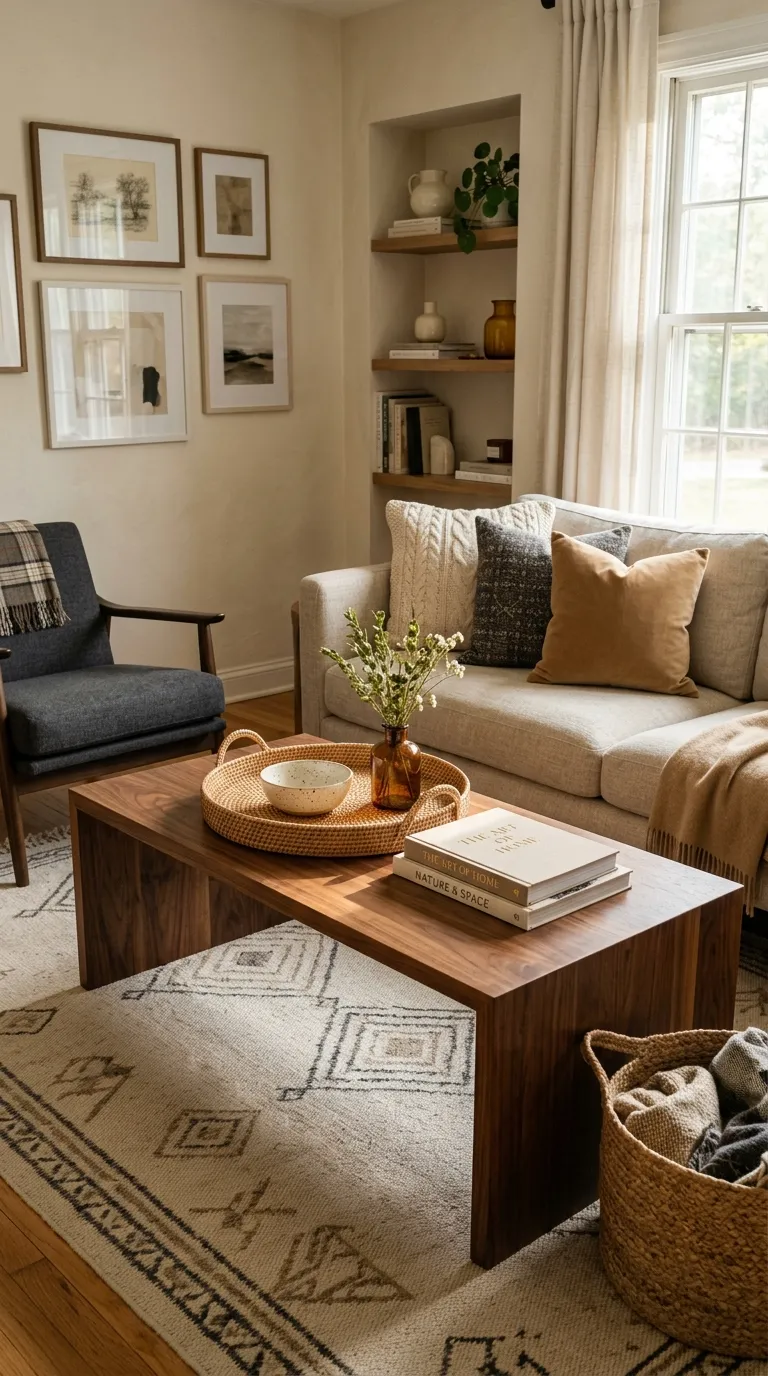
A tray gives small objects a visual home and makes the table easier to clear when you need more space. Choose one that’s roughly one-third to one-half the table’s length, then leave plenty of exposed wood around it. That open area lets the finish remain part of the decor.
Keep the tray arrangement low and varied. A ceramic bowl can hold remotes, while a short vase adds height without blocking conversation across the room. Many designers recommend grouping items in odd numbers because the arrangement often feels less rigid and more relaxed.
2. Layer Coffee Table Books
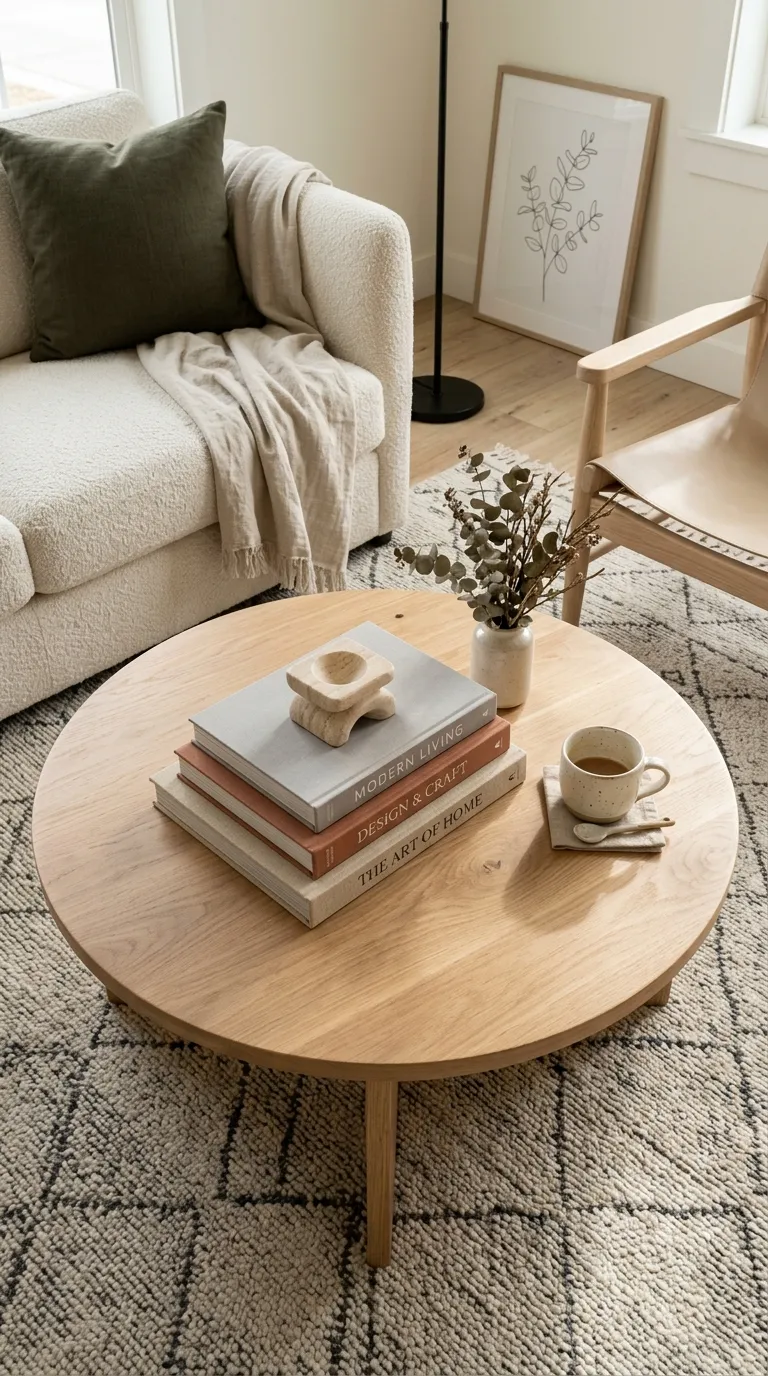
Books add height, color, and personality without making wooden coffee tables feel overly decorated. Start with two or three books in different sizes, placing the largest one at the bottom and the smallest one on top. Keep the stack slightly away from the table edge so it doesn’t interfere with drinks or movement.
Choose covers that connect with the room’s palette rather than matching every detail. For a warm wood table, sand, rust, cream, olive, or charcoal covers can create subtle contrast. A small bowl, candle holder, or stone accent on top of the stack gives the arrangement another layer without making it busy.
3. Add One Natural Accent
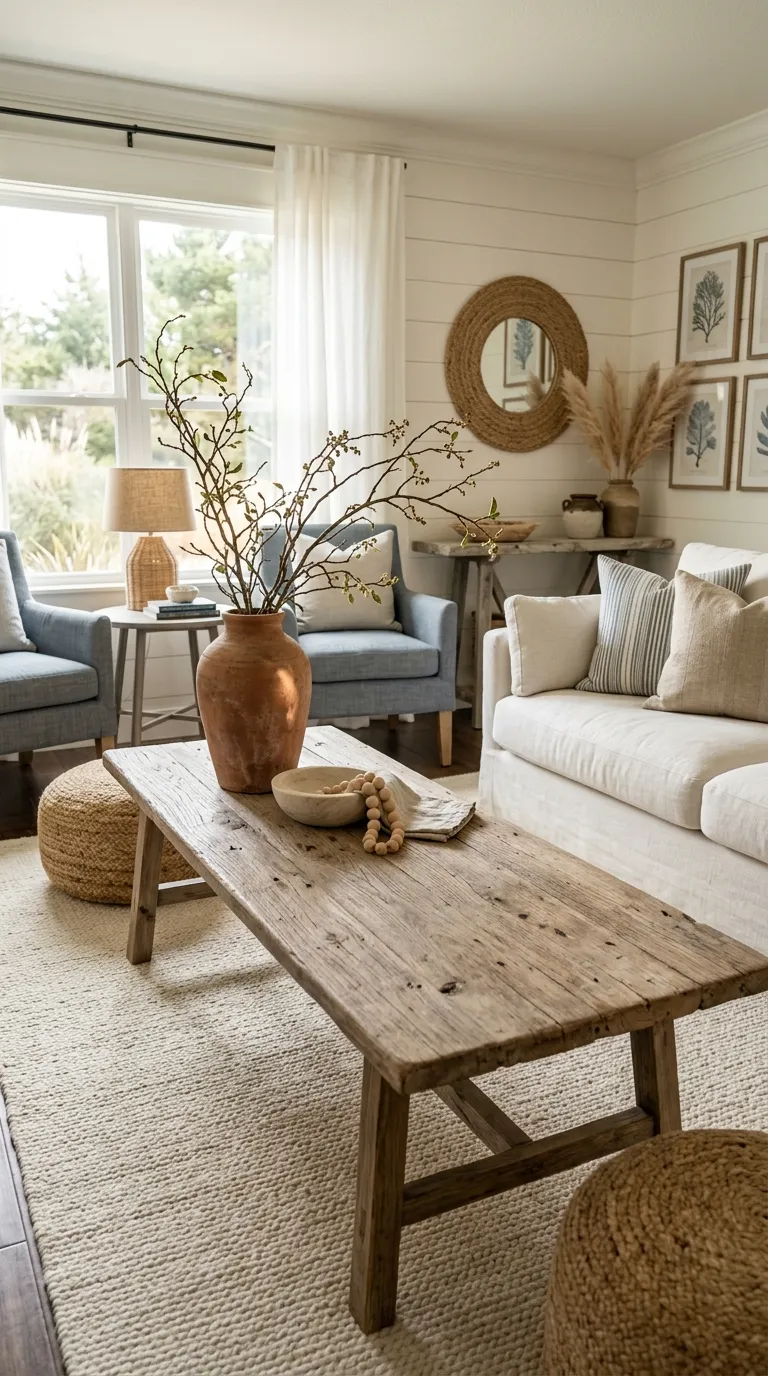
One natural accent can soften the clean lines of a coffee table and bring a fresh outdoor note indoors. Try a leafy branch, dried stems, a small potted plant, or a single seasonal arrangement in a vessel that suits the wood finish. Keep the container proportionate so the greenery doesn’t dominate the room.
Picture a long reclaimed table with a low seating arrangement around it. A tall branch placed near one end creates height while leaving the center open for drinks, games, or conversation. Natural materials such as terracotta, stone, rattan, and linen also pair naturally with wood because their textures add interest without relying on strong patterns.
4. Try a Sculptural Bowl
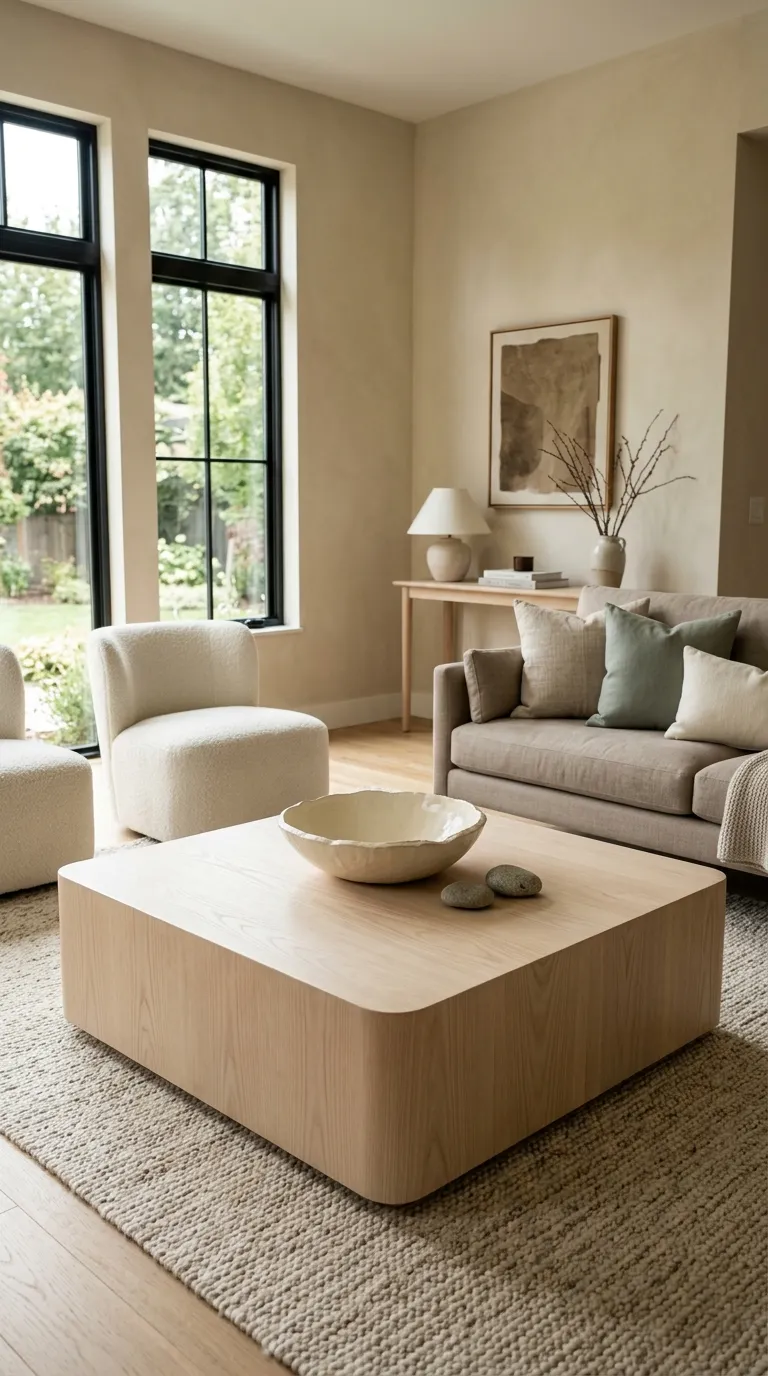
A sculptural bowl works well when you want one strong focal piece instead of several small decorations. Choose a shape with a wide opening and enough visual weight to suit the table. The empty space around it keeps the wood surface visible and gives the arrangement room to breathe.
Use the bowl for both style and function. It can hold remote controls, small coasters, or a few decorative objects when the table needs to stay practical. On wooden coffee tables with bold grain, a simple matte ceramic finish can provide a quiet contrast without competing with the wood.
5. Mix Round and Square Shapes
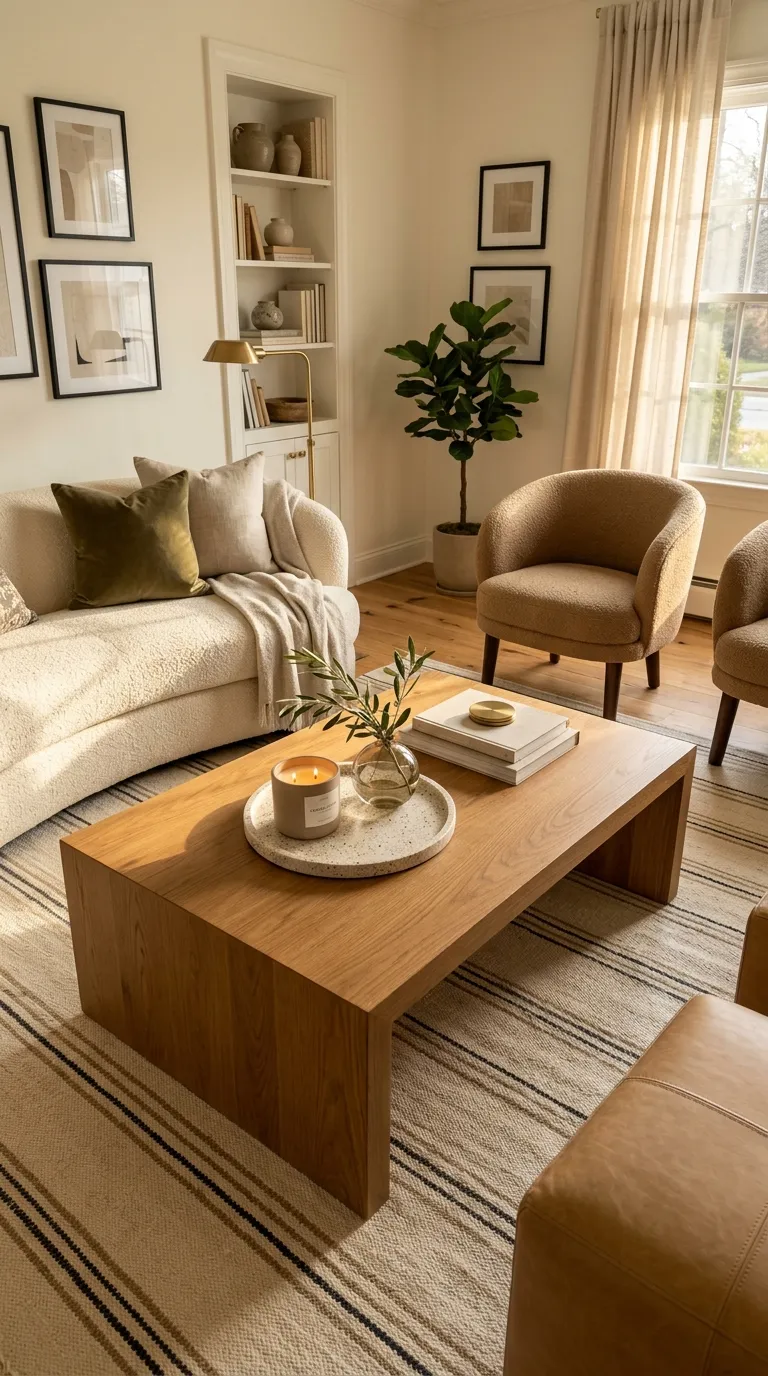
Shape can make a coffee table arrangement feel more balanced. If your table has strong straight lines, add round accessories such as a circular tray, curved bowl, or rounded vase. This small contrast keeps the styling from looking too rigid.
The same idea works in reverse. A round coffee table can benefit from a square book stack or rectangular tray. When wooden coffee tables already have a strong silhouette, accessories with opposing shapes can create visual balance while keeping the room easy on the eyes.
6. Keep the Center Mostly Open
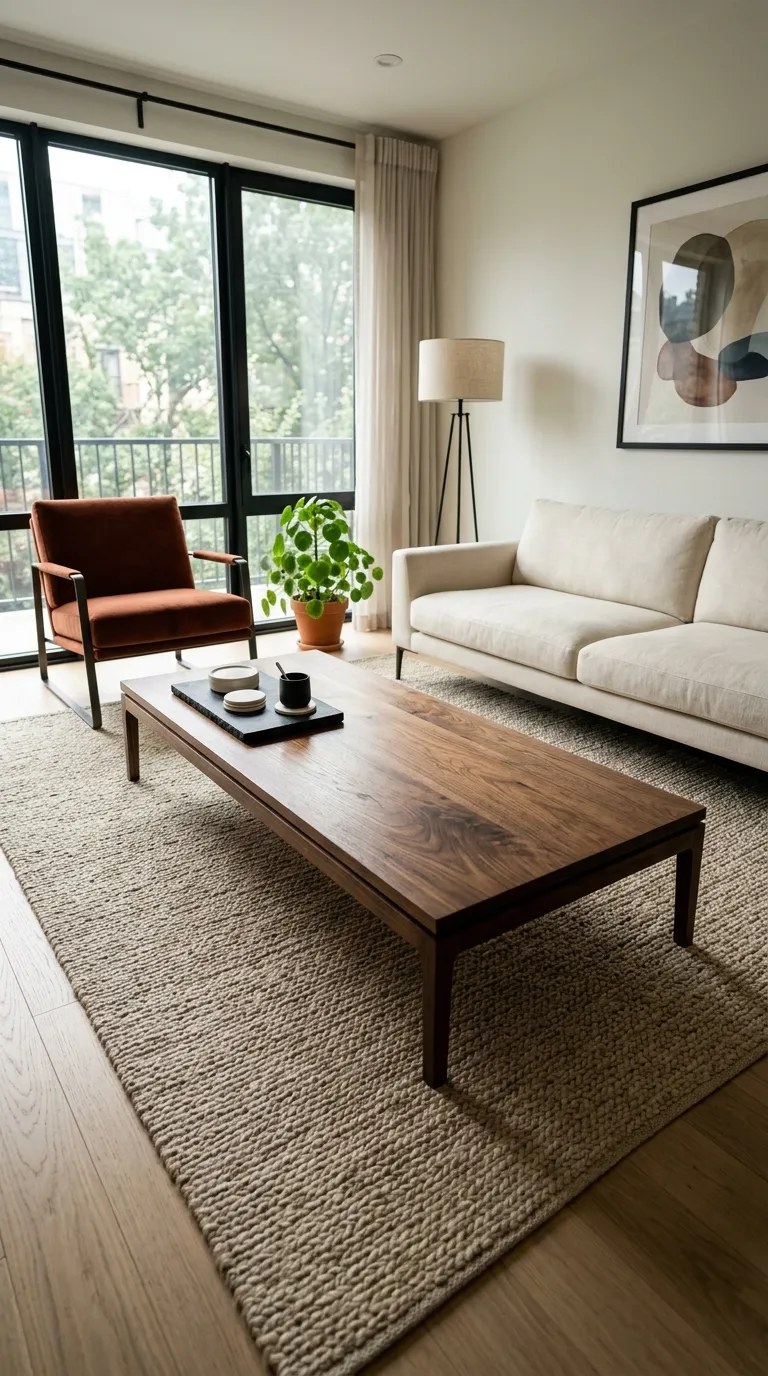
An open tabletop often looks more polished than a crowded one. Leave enough clear space for coffee cups, laptops, board games, or whatever your household uses the table for each day. A useful rule is to style one main zone and let the rest of the surface stay quiet.
This approach also makes smaller rooms feel less busy. Consider a compact apartment where the coffee table sits close to the sofa and chairs. A few carefully placed objects can provide personality while preserving the visual breathing room that helps the living area feel comfortable.
7. Use a Low Vase
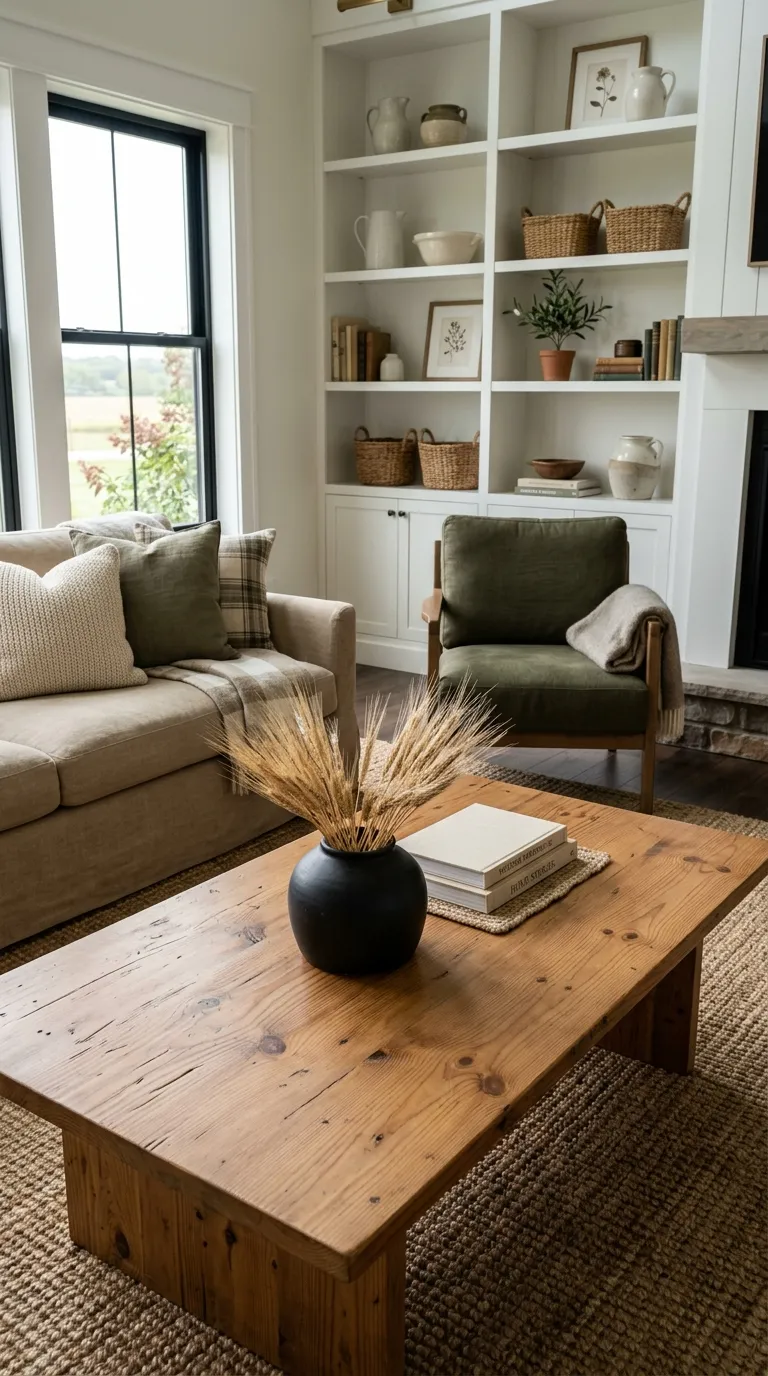
A low vase adds height without creating a visual wall between people sitting across from each other. Pick a vessel that’s broad enough to feel stable but low enough to keep sightlines clear. Short branches, dried stems, or a compact leafy arrangement can all work.
For wooden coffee tables with a rustic or farmhouse finish, handmade pottery feels especially natural. A dark vase can create contrast against pale timber, while a cream or clay vessel works nicely with walnut and deeper brown finishes. Keep the plant material simple so the wood remains part of the composition.
8. Style by the Coffee Table Size
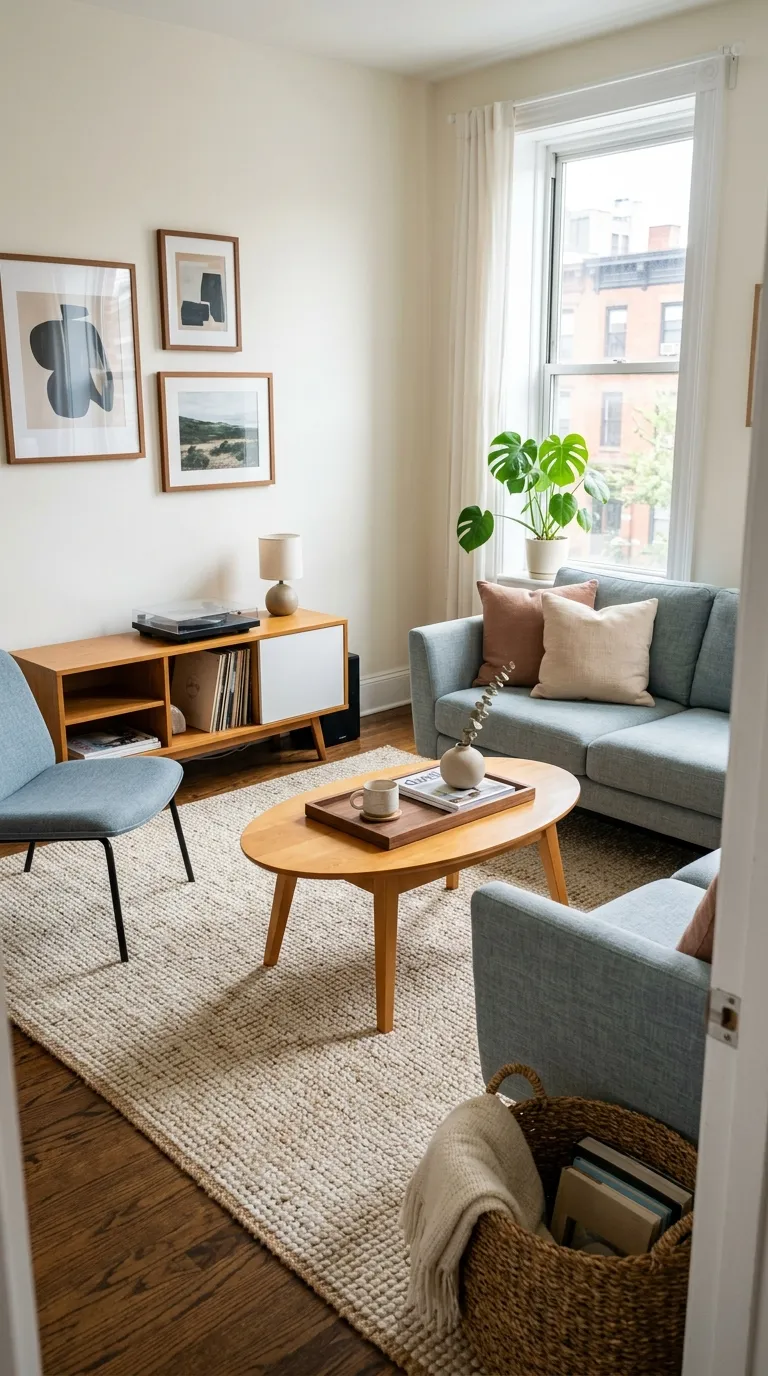
Your table size should guide the amount of decor you use. A small coffee table usually needs one compact grouping, while a large rectangular table can handle two or three related zones. Too many objects on a small surface can make the furniture feel cramped.
Scale matters just as much as quantity. A tiny vase can disappear on a large slab table, while an oversized bowl may overwhelm a narrow design. Before buying accessories, place them on the table and check whether you can still reach the seating comfortably from every side.
9. Pair Wood With Stone
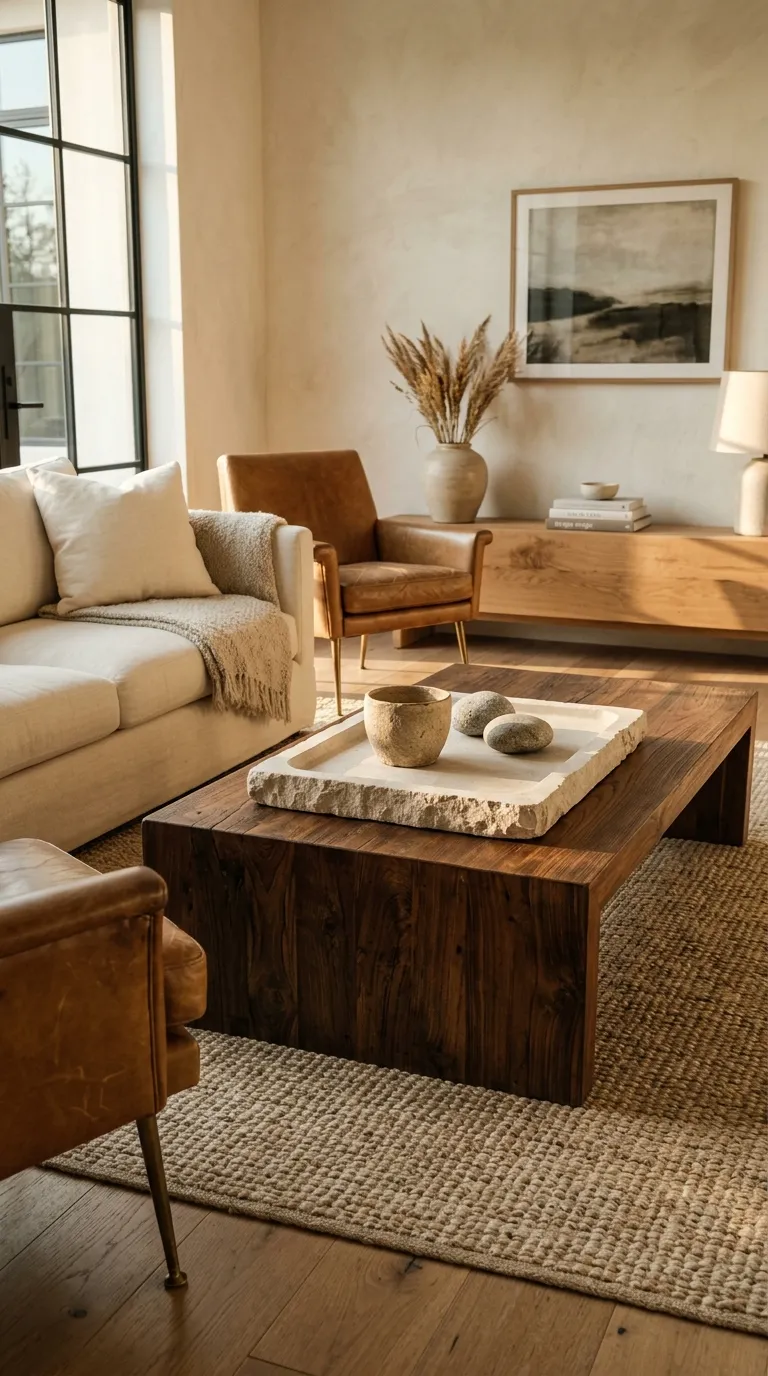
Wood and stone create a strong material pairing because one feels warm and organic while the other feels cool and solid. Try a limestone tray, marble coaster set, travertine bowl, or small stone object on a timber table. The contrast adds texture without needing bold color.
Keep the palette restrained when using this combination. A dark wood table can look grounded with pale limestone, while light oak works well with darker slate or charcoal stone. This pairing suits both modern and rustic living rooms because the materials provide character without excessive decoration.
10. Add a Candle Cluster
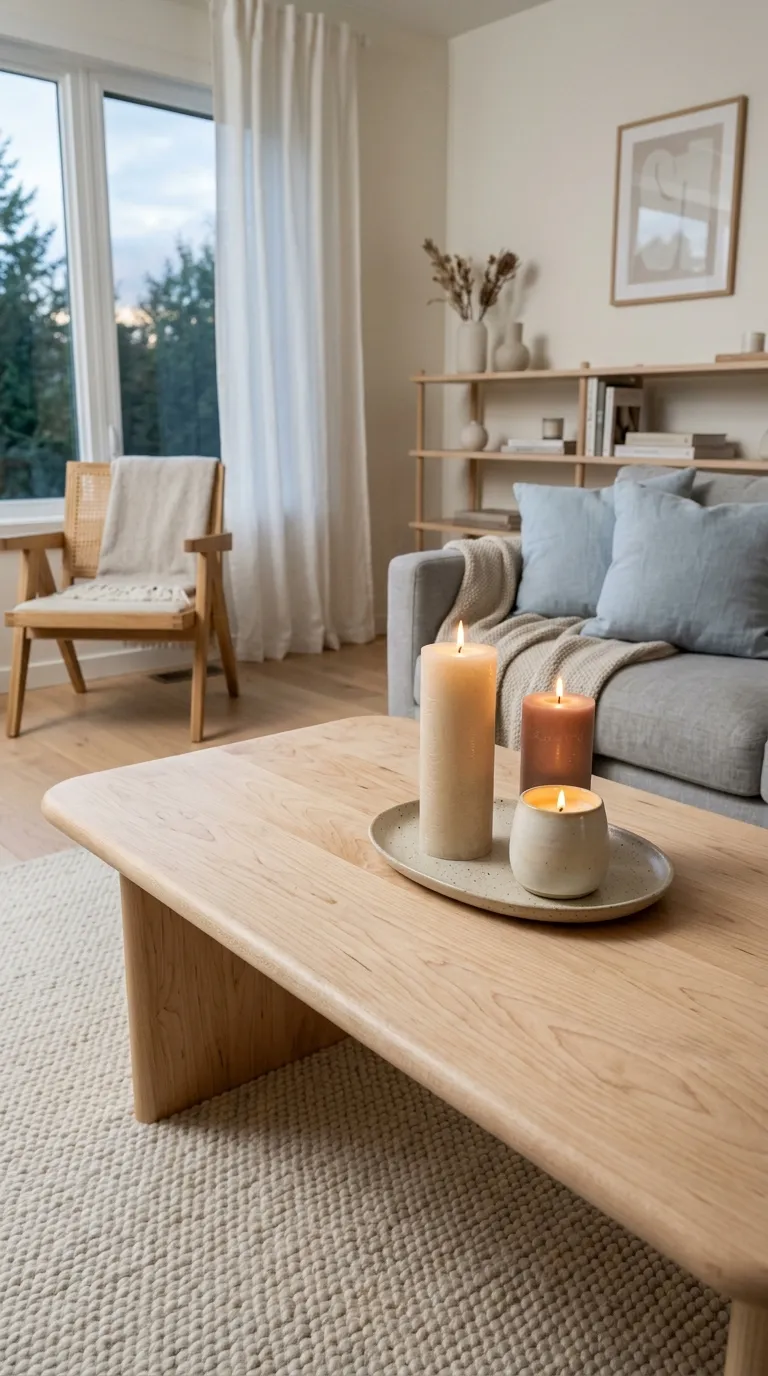
Candles can bring softness to a hard tabletop, especially when you group them instead of scattering them around the room. Use three pieces with different heights or shapes and place them on a small tray or plate. Coffee Table Decor This keeps the wax and small accessories contained.
Choose colors that complement the wood rather than compete with it. Cream, clay, muted green, smoky gray, and warm white work well across many timber finishes. If the table already has a strong grain pattern, simple candle shapes can keep the surface from looking too busy.
11. Bring in Woven Texture
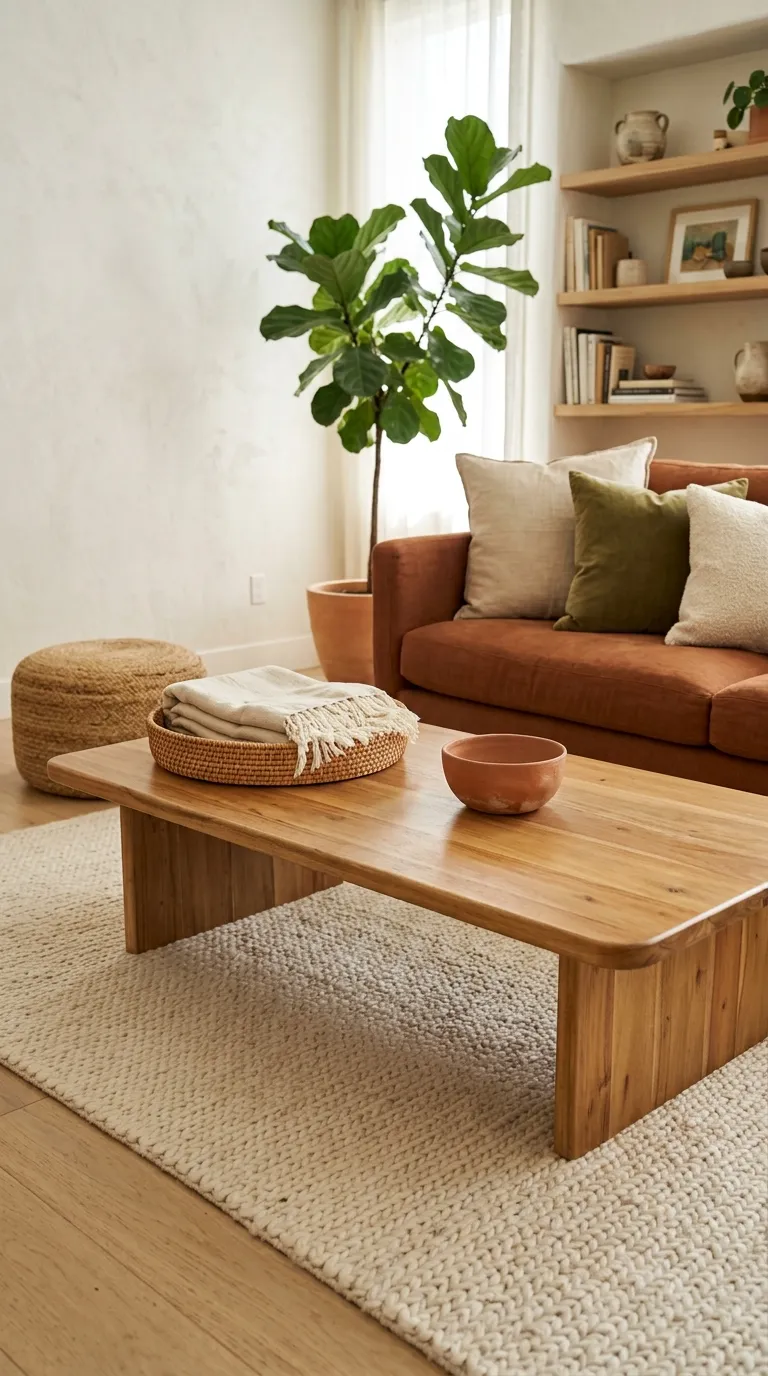
Woven materials can make a wooden coffee table feel softer and more relaxed. Add a rattan tray, seagrass basket, woven coaster, or small fiber container to introduce a different surface. The key is to use one or two woven pieces rather than turning the table into a collection of textures.
This idea works particularly well in casual family rooms. Picture a warm acacia table paired with a woven basket for spare throws and a simple ceramic bowl for small items. The wood provides structure, while the woven material adds an easygoing layer that feels useful as well as decorative.
12. Use a Dark Accent
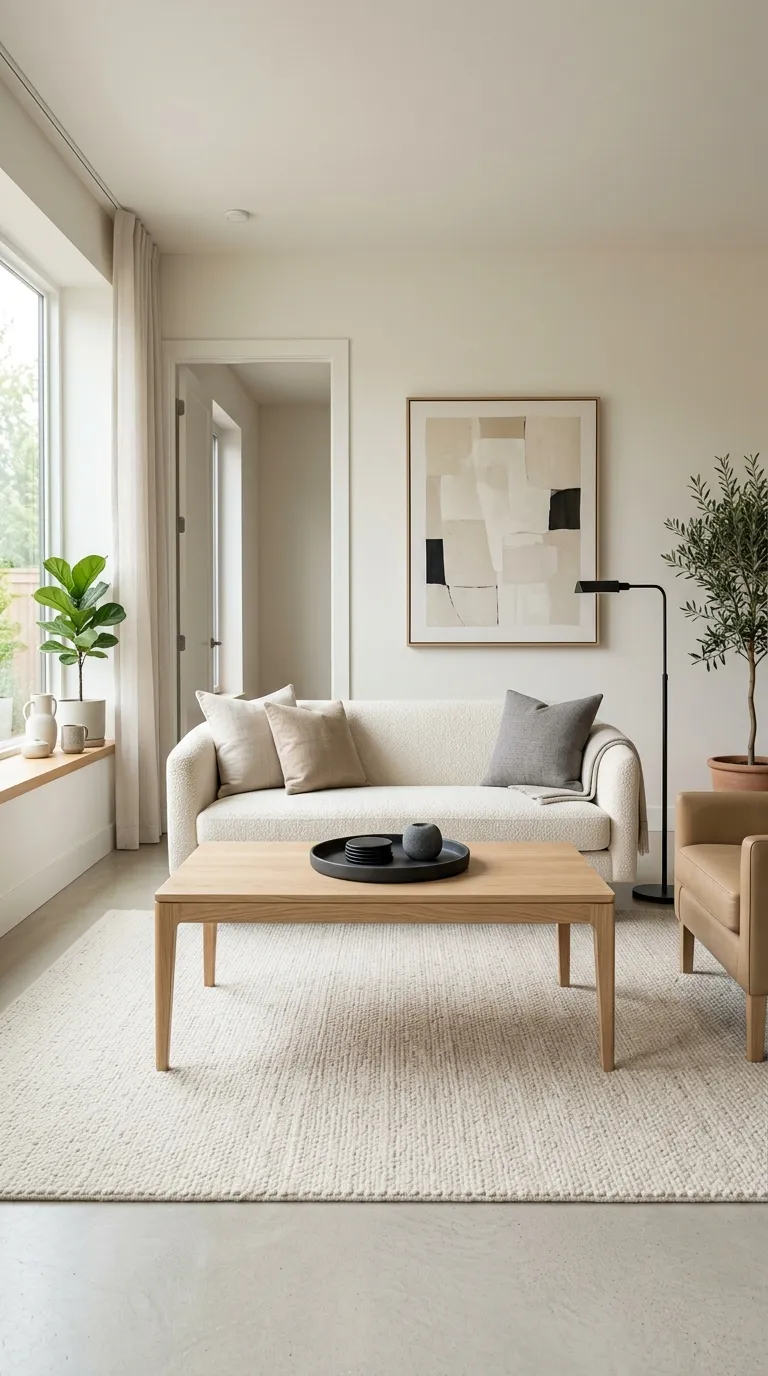
A dark accessory can give pale wood more definition. Try a charcoal tray, black stone bowl, dark bronze vessel, or smoked glass accent. One strong dark note often works better than several small black objects scattered across the surface.
For a room with darker wooden coffee tables, reverse the idea with pale accessories. Cream ceramics and light stone can stand out beautifully against walnut or espresso finishes. Think of the tabletop as a neutral base, then choose one contrasting tone to give the styling a clear visual anchor.
13. Create Two Styling Zones
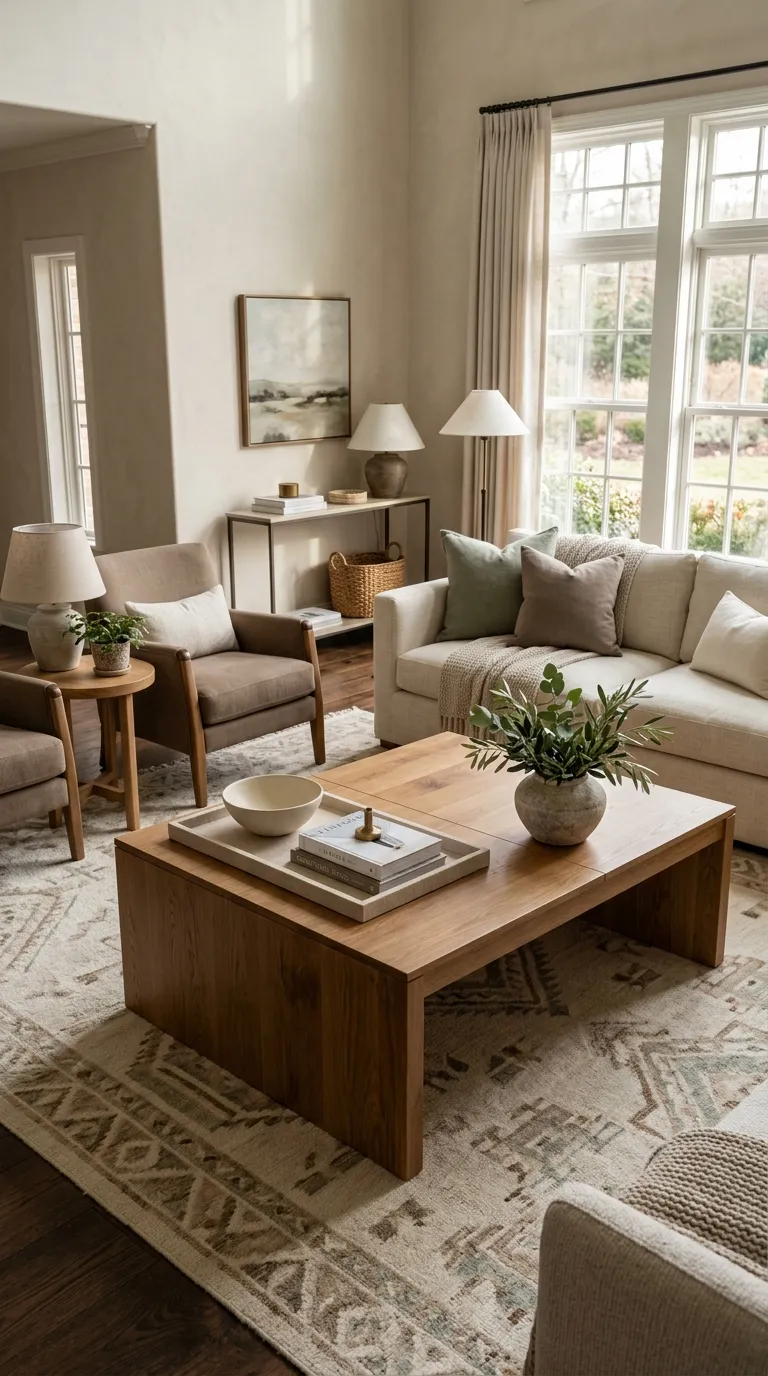
A large rectangular table gives you room to create more than one small arrangement. Instead of spreading objects evenly across the surface, group related pieces at opposite ends. This creates order while keeping the middle available for everyday activities.
Try pairing different materials in each zone. One side might use books and linen, while the other uses stone and greenery. With wooden coffee tables, this method also lets the natural surface show through, so the table itself remains a visible part of the room’s design.
14. Style With a Single Stack
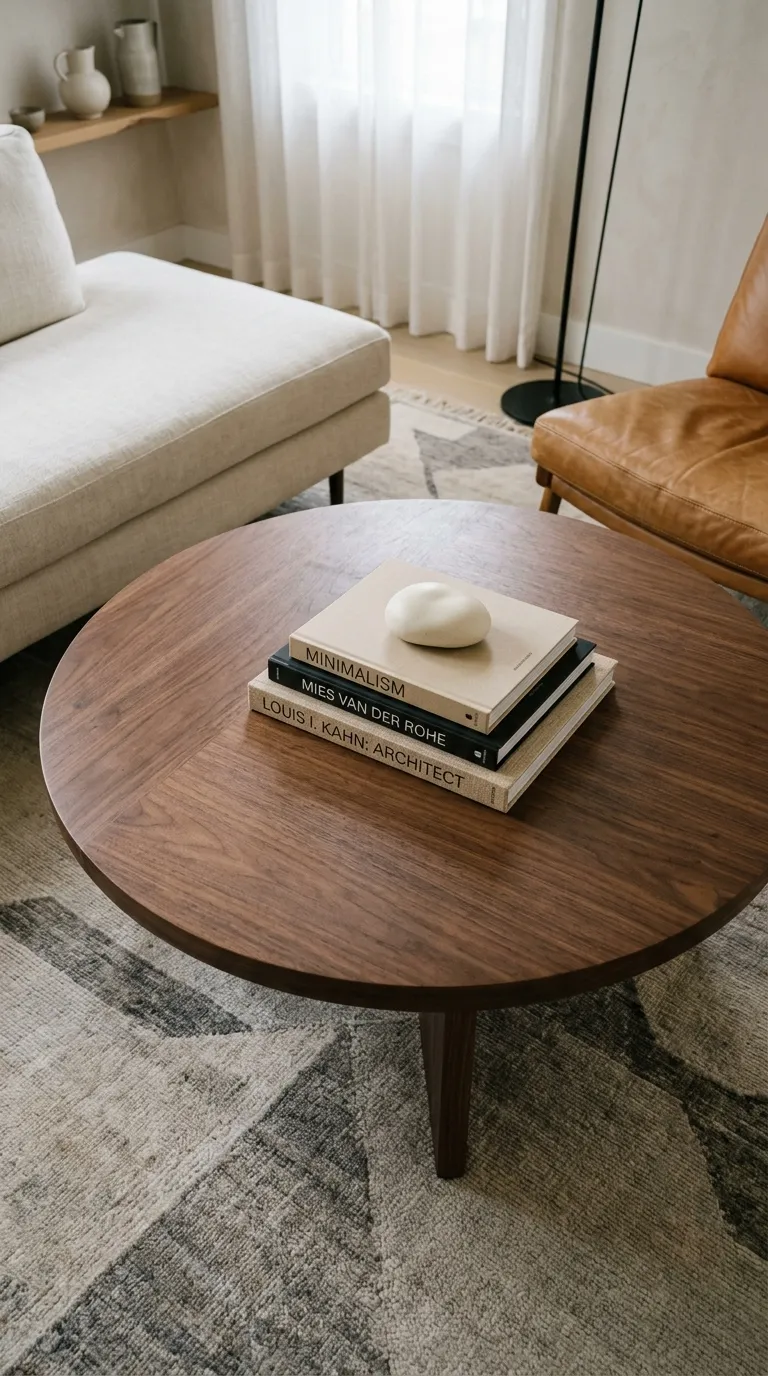
Minimal styling can make a strong table finish stand out. A stack of two or three books gives you enough height and color without taking over the entire surface. Place the stack slightly off center to create a relaxed composition.
Top the books with one small object if the arrangement needs another layer. A ceramic pebble, tiny bowl, or smooth wooden sculpture can work well. The goal is to create one clear focal point rather than several competing ones.
15. Add Fresh Greenery
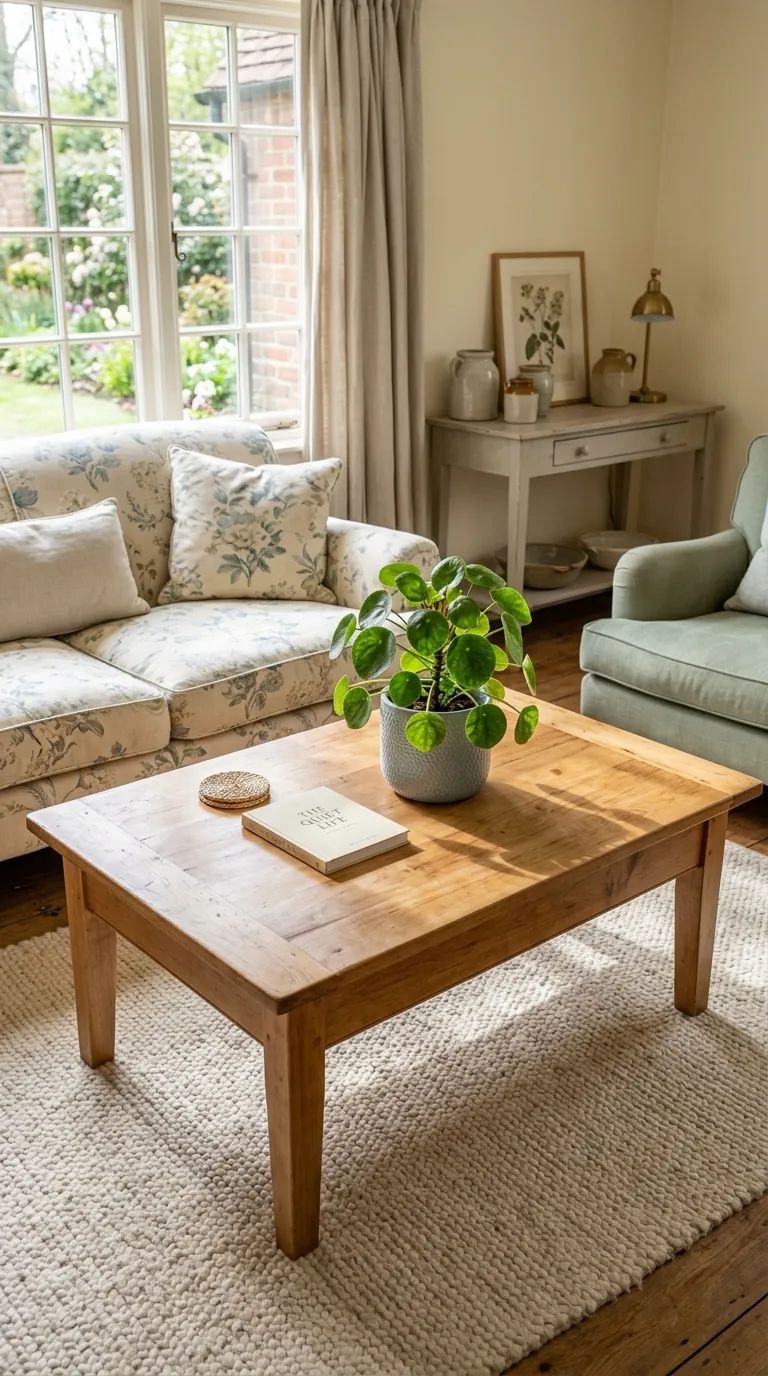
A small plant can make the coffee table feel fresh without requiring a large floral arrangement. Choose a compact variety with a simple pot that suits the room’s colors. Keep the plant healthy and trimmed so it stays proportional to the tabletop.
Greenery also adds a natural color break when your room uses many neutral shades. Against honey, oak, or walnut, green leaves provide a gentle contrast that feels connected to nature. If a live plant isn’t practical, a small dried botanical arrangement can provide a similar visual layer.
16. Use a Glass Accent
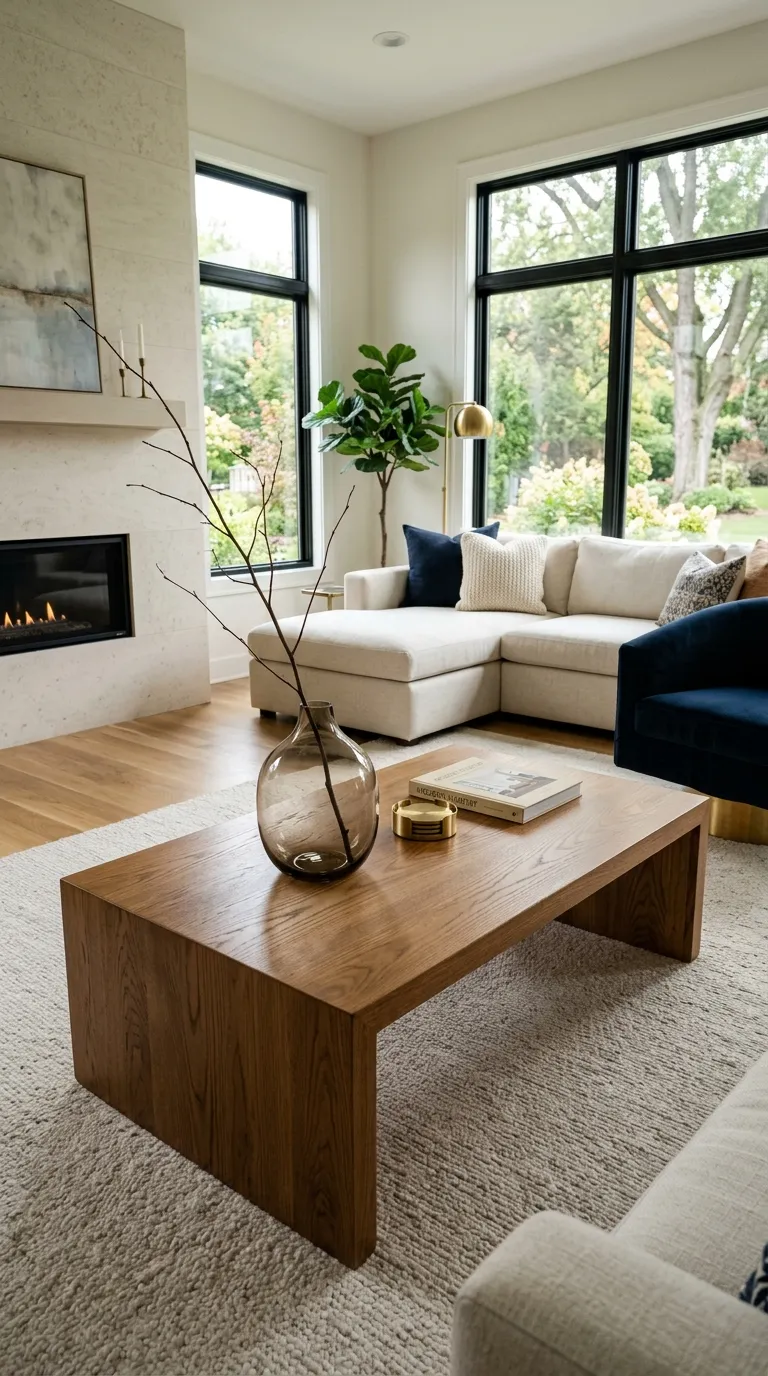
Glass accessories can add a lighter visual note to a solid wood table. A clear or lightly tinted vase lets the timber remain visible behind it, which keeps the arrangement from looking heavy. One glass piece is often enough to create the effect.
Try combining glass with another quiet material. Smoked glass and brass can suit walnut, while clear glass and brushed steel can work nicely with pale oak. Keep the number of reflective objects low so the table still feels warm rather than overly polished.
17. Match the Room’s Palette
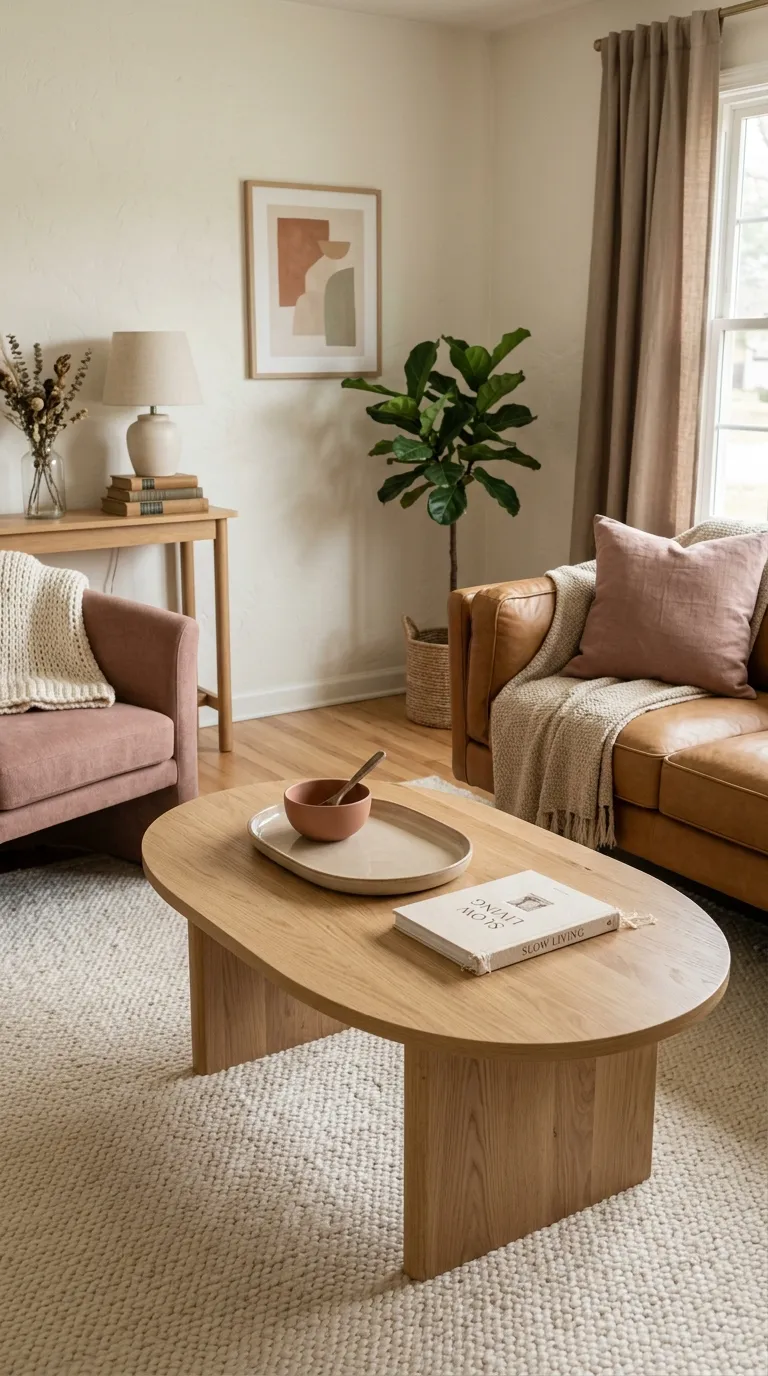
Your coffee table doesn’t need to match the room exactly. Instead, pull one or two colors from nearby furniture, rugs, curtains, or artwork and repeat them on the tabletop. This creates a visual connection without making the space feel overly coordinated.
Wooden coffee tables already bring a natural color into the room, so they pair easily with warm neutrals, muted greens, soft blues, terracotta, and charcoal. If your table has a strong orange or red undertone, cooler accessories can help balance it.
18. Leave Room for Daily Life
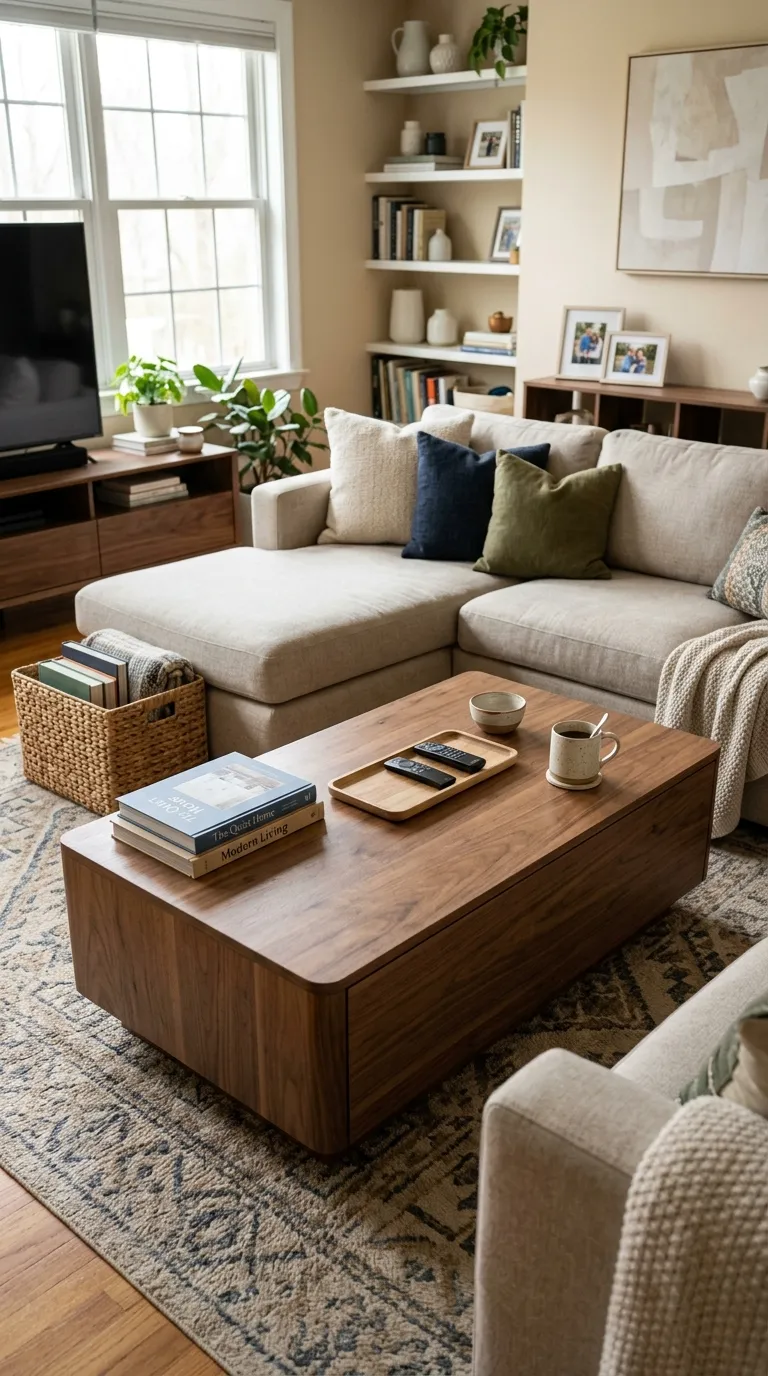
A beautiful coffee table still needs to work on an ordinary Tuesday. Keep space available for mugs, remotes, books, snacks, games, or anything else your household uses while relaxing. Styling should support the room instead of making the furniture difficult to use.
Storage can help when your table has a lower shelf or drawers. Keep everyday items together in a tray or basket, then return decorative pieces to their usual spots when the surface gets busy. This simple habit keeps wooden coffee tables looking tidy without requiring constant rearranging.
19. Highlight the Wood Grain
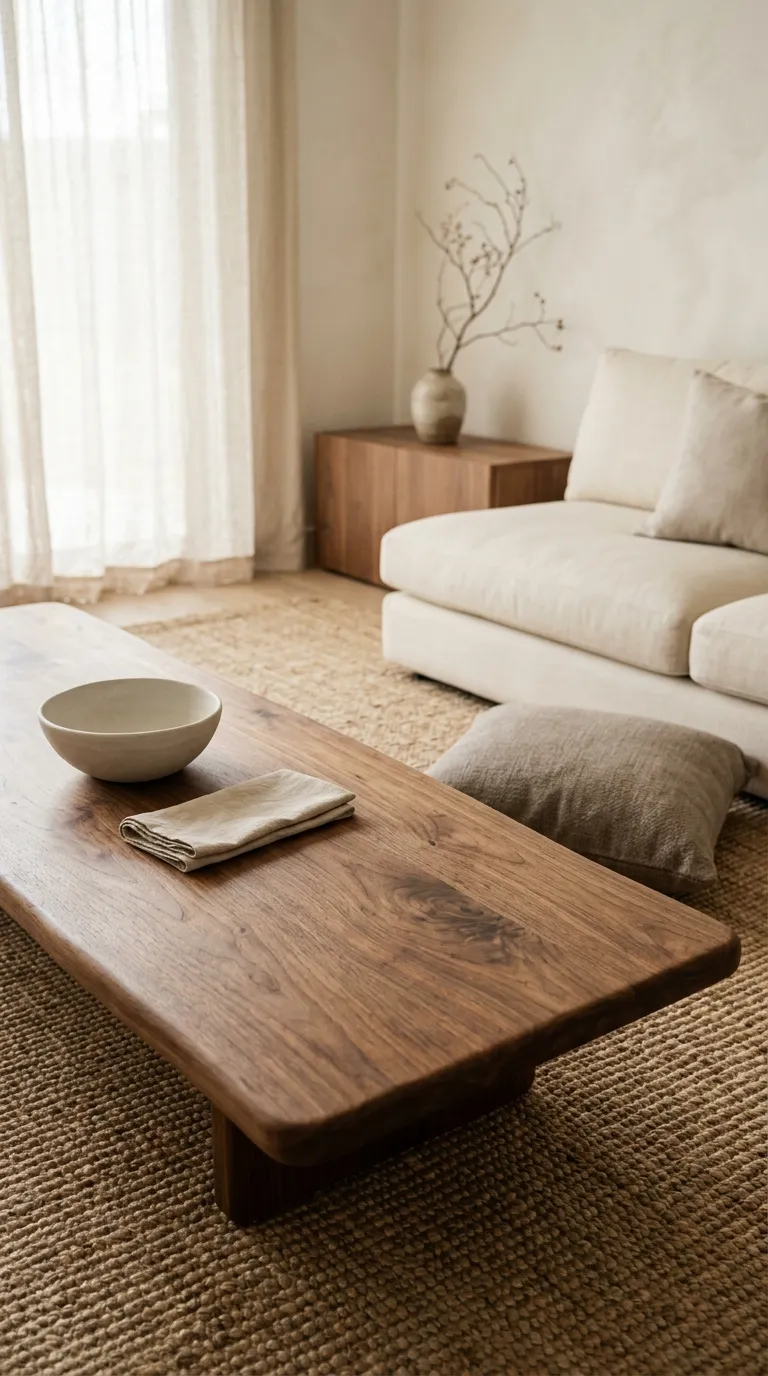
Some wooden coffee tables have enough natural character that they don’t need much decoration. If the grain is bold, knots are visible, or the slab has an unusual shape, let those details take center stage. Use just a few quiet accessories around the strongest part of the surface.
A matte finish can also help natural grain remain visually prominent. Avoid placing large trays or stacks directly over the most interesting section of the wood. Leaving it exposed gives the table a stronger presence and keeps the room connected to its natural materials.
20. Balance Height Carefully
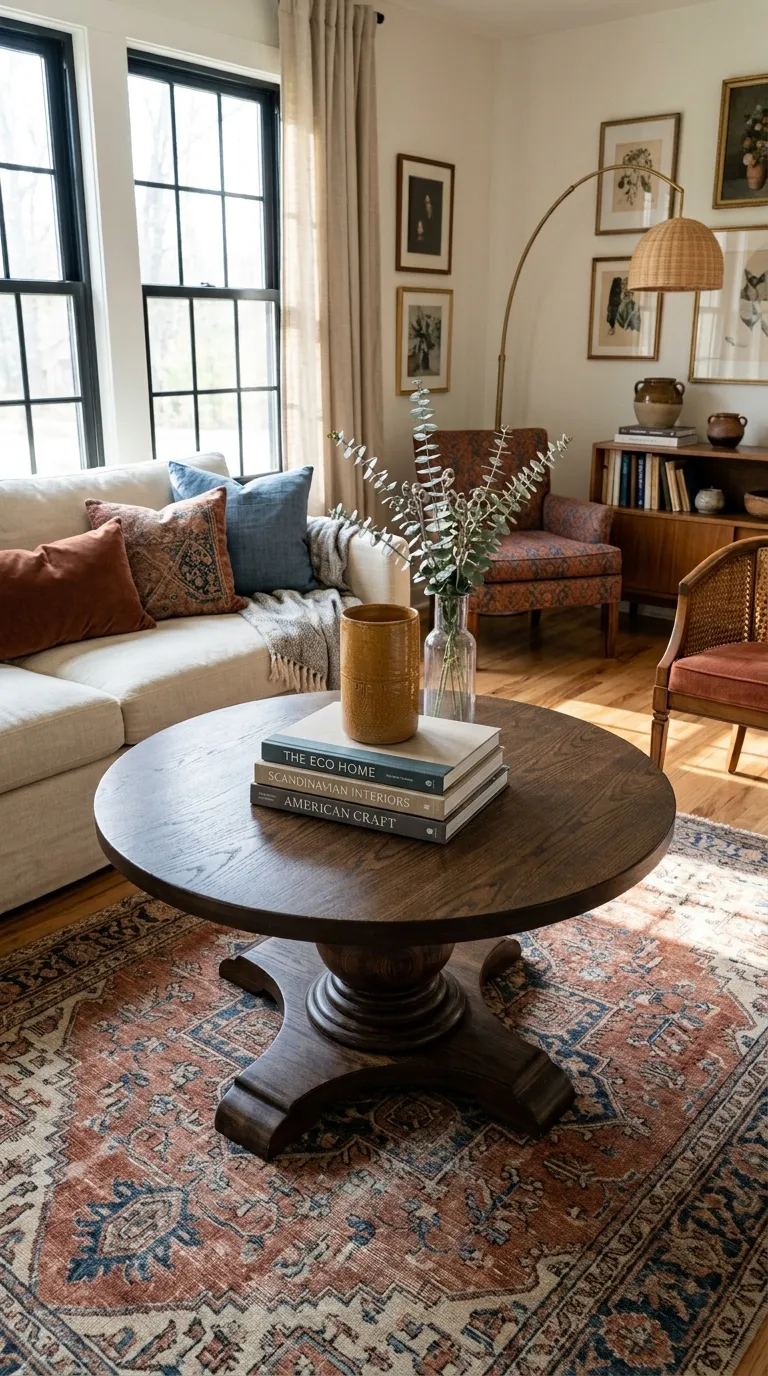
Height variation keeps a tabletop arrangement from looking flat. Pair something low, such as a book stack, with a medium bowl or vessel and one taller piece. The difference creates a gentle rhythm that guides the eye across the table.
Don’t make the tallest object too tall for the seating around it. A decorative branch that blocks conversation can quickly become impractical. For wooden coffee tables placed in the center of a seating group, keep taller items narrow and position them where they won’t interrupt sightlines.
21. Use Seasonal Details
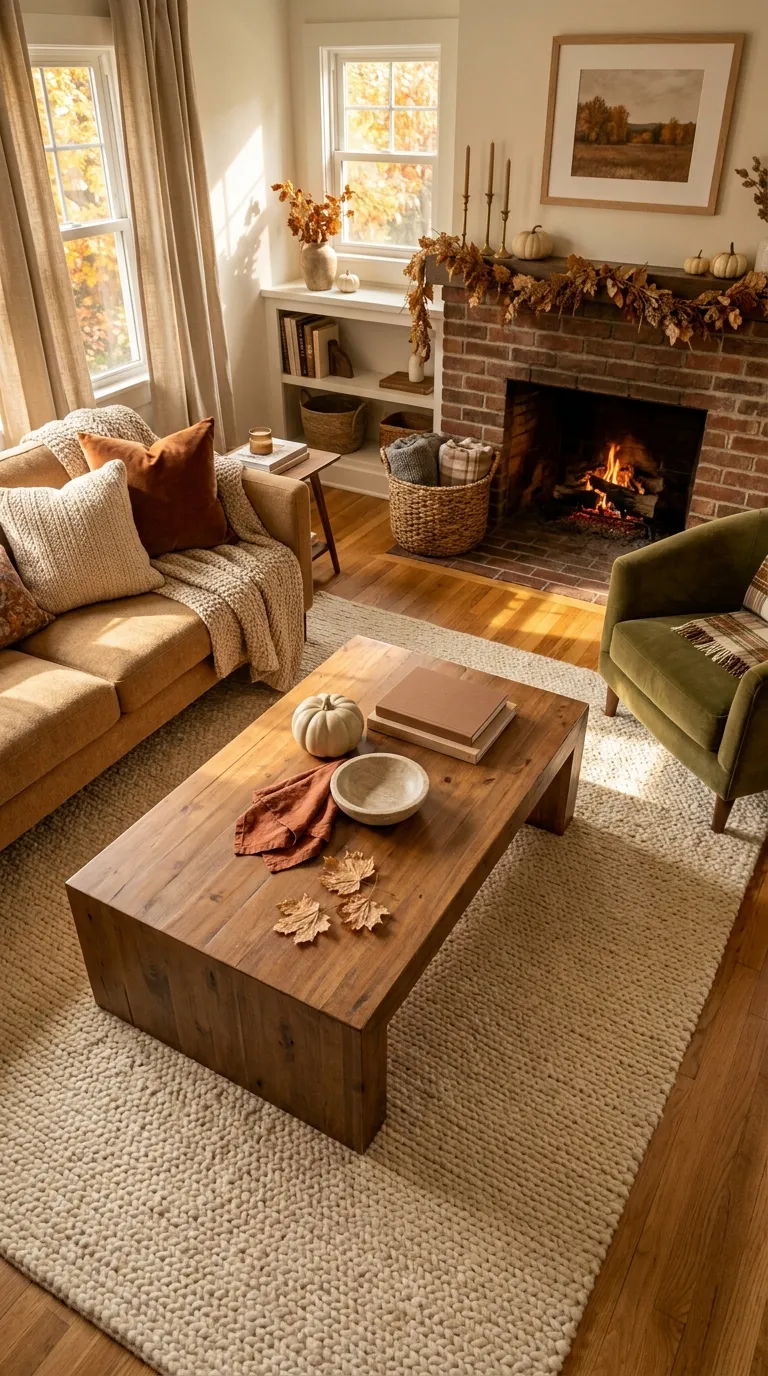
Seasonal decorating doesn’t require a full tabletop makeover. Swap one or two small accessories as the year changes, then keep the main pieces consistent. A ceramic pumpkin in autumn, a simple branch in spring, or a small bowl of pinecones in winter can create a timely touch.
Choose seasonal pieces that work with the wood rather than hiding it. Warm timber pairs naturally with rust, cream, olive, and muted brown in fall, while lighter woods can work with soft blue, pale green, and white in spring. Small changes keep the room fresh without filling the table with themed decor.
22. Try Asymmetrical Styling
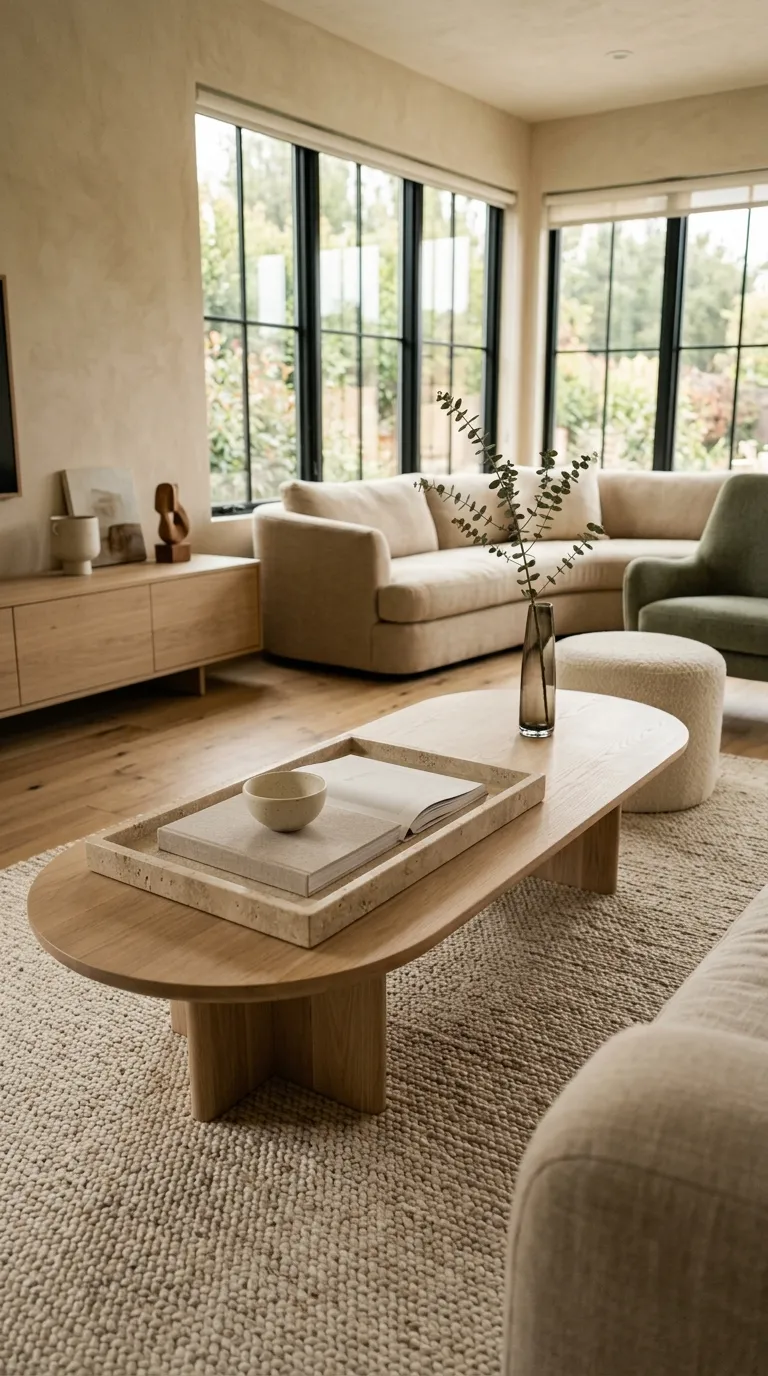
Symmetry can look polished, but asymmetry often feels more relaxed and natural. Place your main accessory off center, then balance it with a smaller piece on the opposite side. The visual weight doesn’t need to be identical on both ends.
This works especially well with oval and rectangular wooden coffee tables. A large tray on one side and a narrow vase on the other can create movement while preserving an open center. The result feels intentional without looking like every object was measured into place.
23. Keep Materials Cohesive
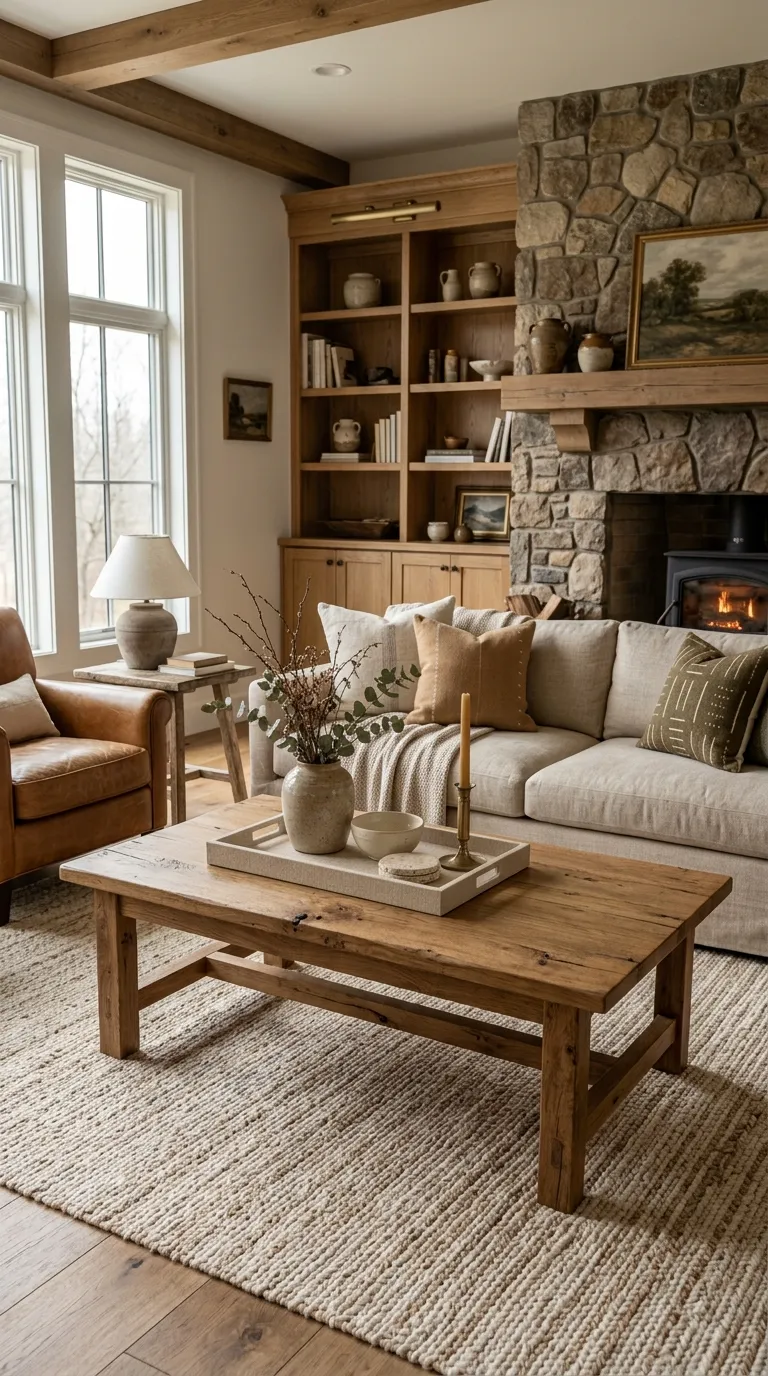
A cohesive material mix can make a table arrangement feel collected rather than random. Wood pairs naturally with linen, ceramic, stone, glass, leather, and metal. Choose two or three materials and repeat them lightly across the tabletop.
You don’t need every accessory to match. In fact, slight differences often keep the arrangement from looking like a showroom display. With wooden coffee tables, warm natural textures usually create an easy connection between the furniture and smaller decorative pieces.
24. Edit Before You Finish
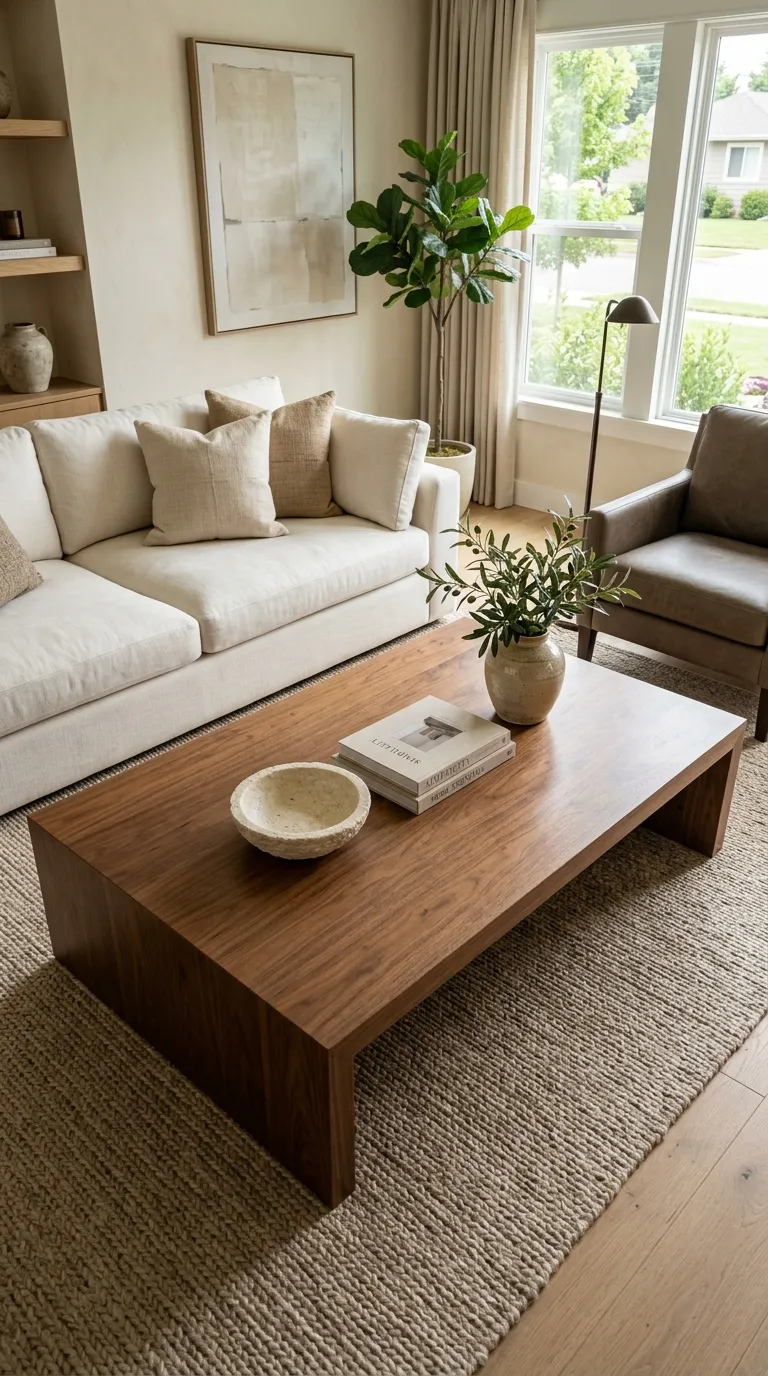
The final styling step is simple: take something away. Look at the table from the sofa, then remove one piece if the arrangement feels crowded or if the wood finish has disappeared beneath the decor. Good styling often comes from knowing when to stop.
Check practical details too. Make sure drinks can sit safely, drawers or shelves remain accessible, and taller pieces don’t block conversation. Once the useful parts are working, let the remaining objects provide texture, color, and personality.
Bringing It All Together
The best coffee table styling balances beauty with real life. Start with the table’s shape and finish, add a few materials that complement the room, then leave enough open space for everyday use.
Whether you prefer walnut, oak, maple, reclaimed timber, or another finish, the same idea applies – choose fewer pieces, vary their heights and textures, and let the wood remain visible. A small edit can often make wooden coffee tables feel much more considered without making the room feel precious.
Clara Whitmore
Clara specializes in interior styling, seasonal home trends, and cozy living spaces. She loves combining classic design elements with modern touches to create homes that feel personal, welcoming, and effortlessly stylish.