Small Office Ideas That Make Tiny Spaces Feel Luxe

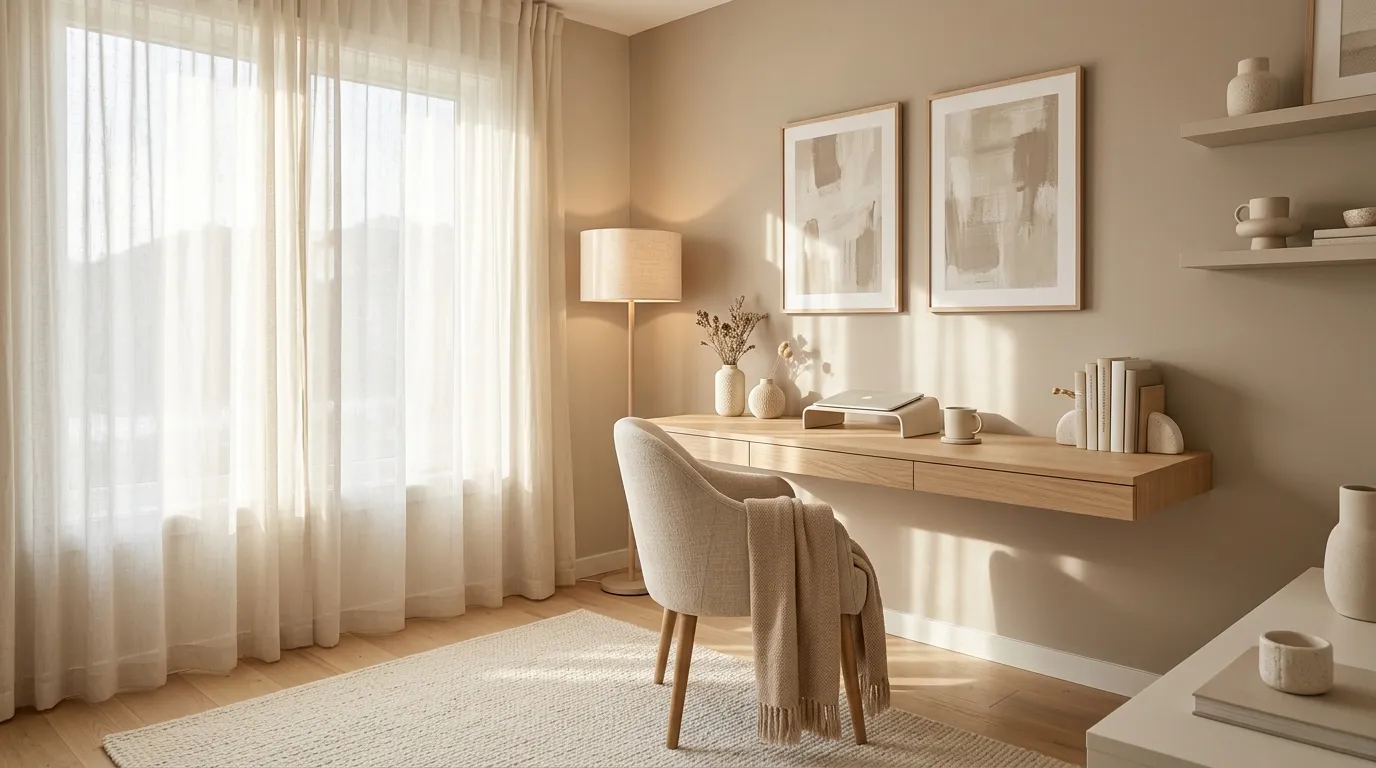
A small office does not need more square feet to feel good to work in. It needs less visible clutter, better light, and furniture sized for the room. The ideas below cover all three, with notes on measurements and placement so they are easy to copy in a spare corner, a closet, or the end of a bedroom.
For layout basics before buying anything, this guide to small home office design is a helpful starting point.
Table of Contents
1. Hidden Cabinet Desk
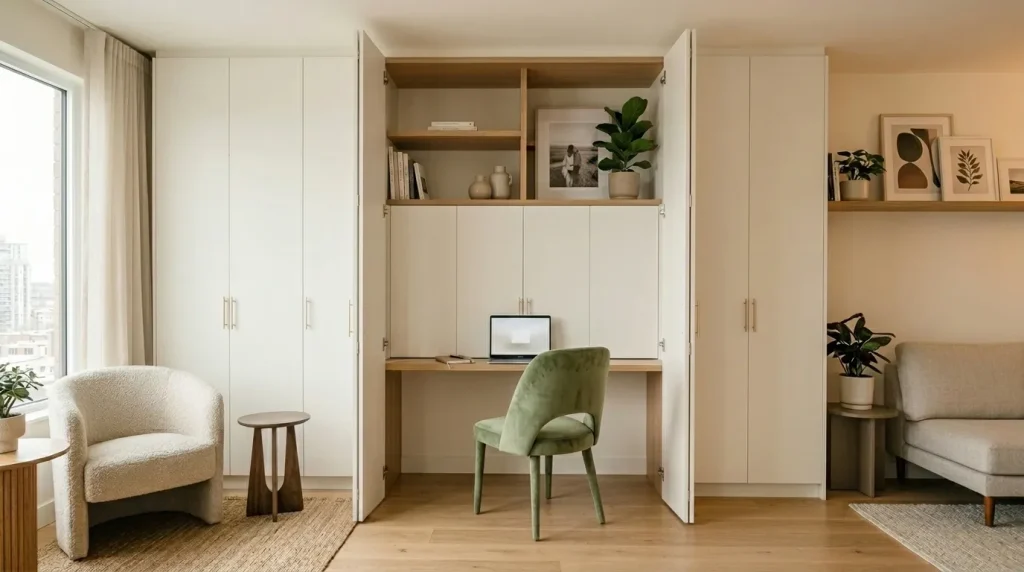
A desk built into a cabinet, sometimes called a cloffice or secretary desk, hides the whole workstation when the doors close. Look for a unit around 18 to 24 inches deep with a pull-out or fold-down work surface and shelves above for files and a printer.
This suits a living room or bedroom where the office shares space with daily life. Route cables through a hole in the back panel and add a power strip inside, so the laptop can charge with the doors shut.
2. Soft Neutral Layers
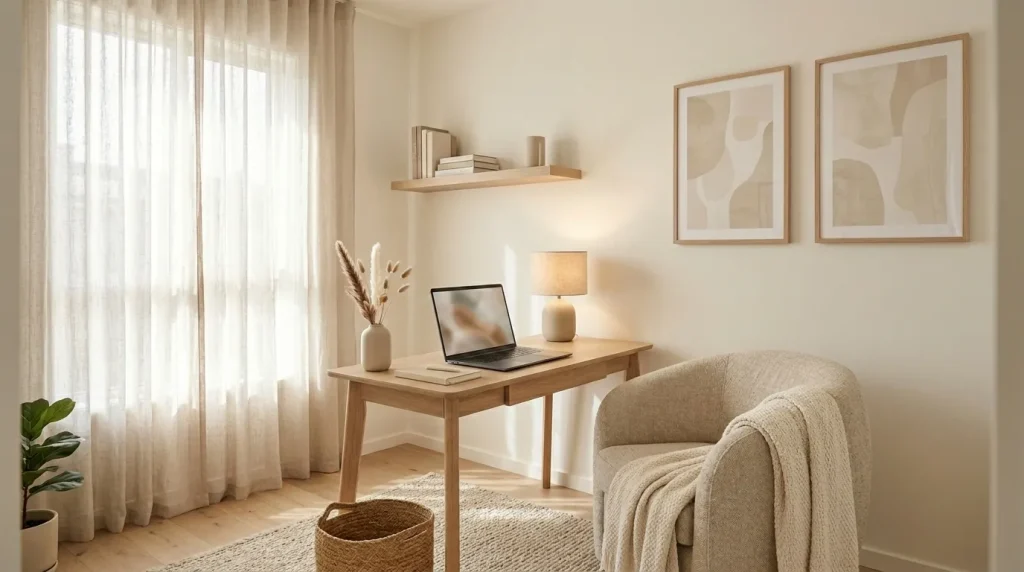
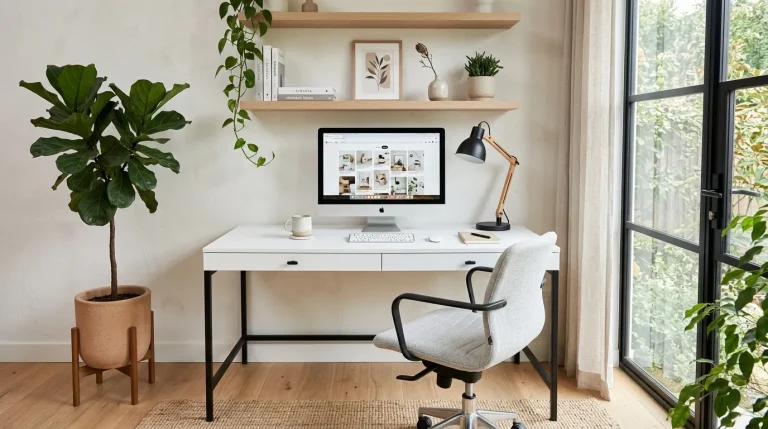
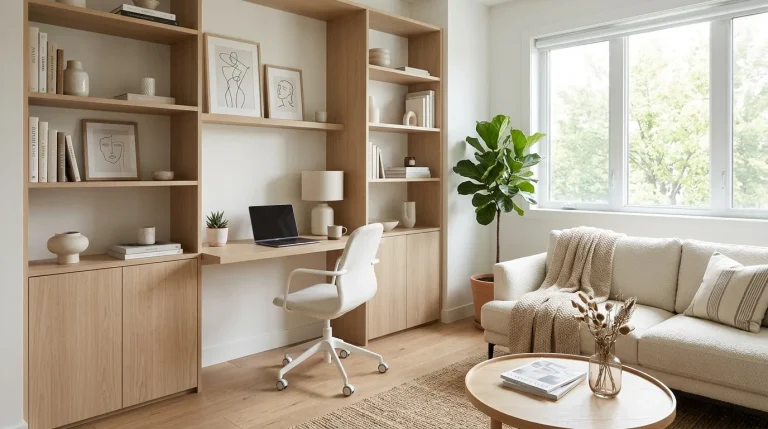
Layering soft neutrals, such as warm white walls, a cream chair, oak, and linen, makes a small office feel bigger and calmer. Keep most large surfaces light and add depth through texture: a woven rug, a wool throw, a linen pinboard, or ribbed ceramics.
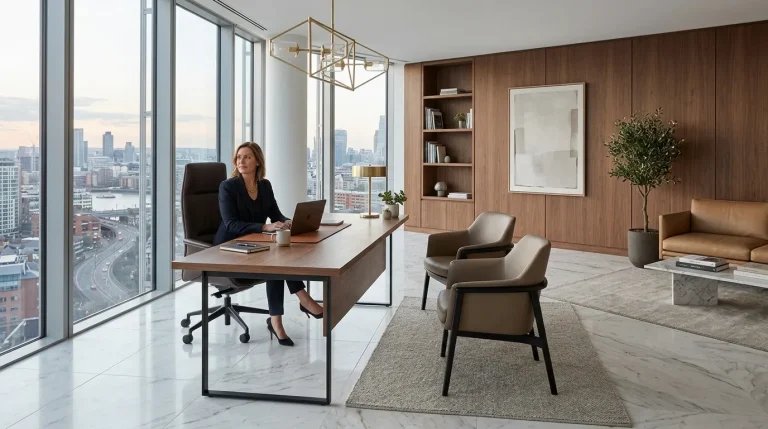
Pick one accent color for small things like a mug, folders, or a print, so the space still has some personality. Polished, executive-style details from this luxury CEO office can be scaled down too, such as brass desk accessories or a leather desk pad.
3. Slim Ladder Shelf
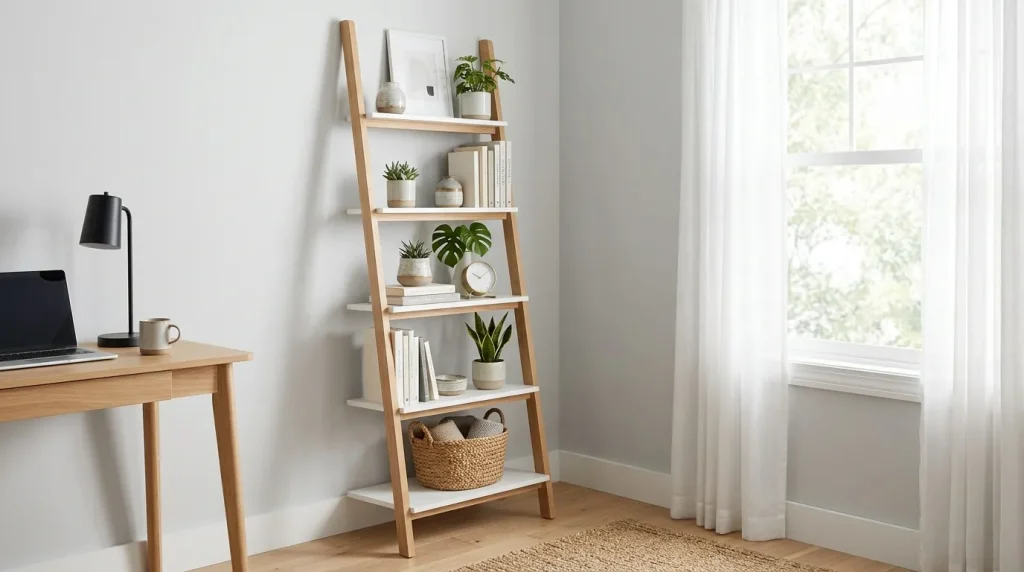
A ladder shelf leans against the wall and takes only about 12 to 16 inches of floor depth, yet gives five or so shelves of vertical storage. It works well beside a desk in a tight corner, where a full bookcase would feel bulky.
Keep the lower shelves for heavier items like books and storage boxes, and the upper ones for lighter pieces such as a plant or framed photo. Anchor it to the wall if there are kids or pets at home.
4. Mirror Illusion Desk
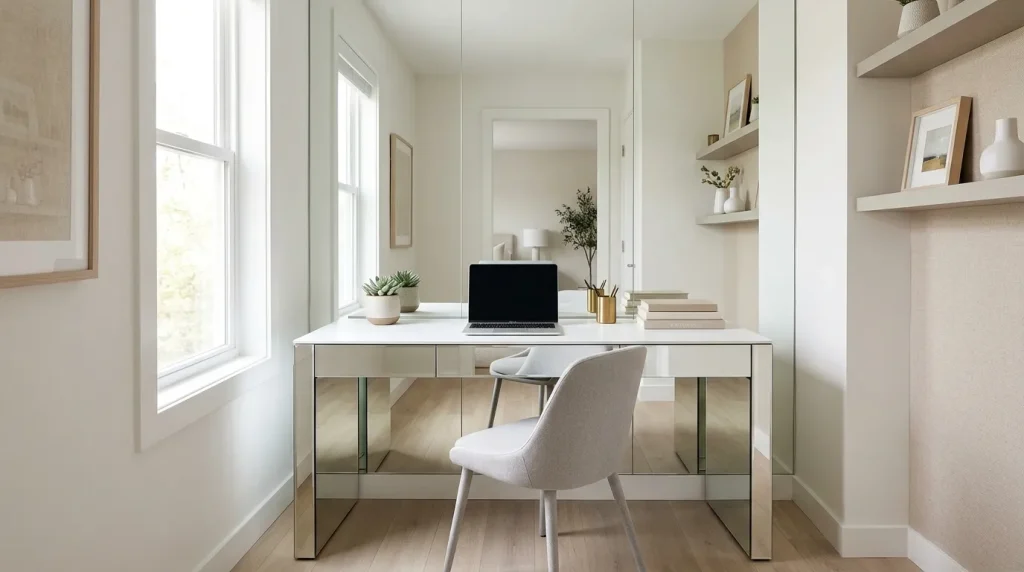
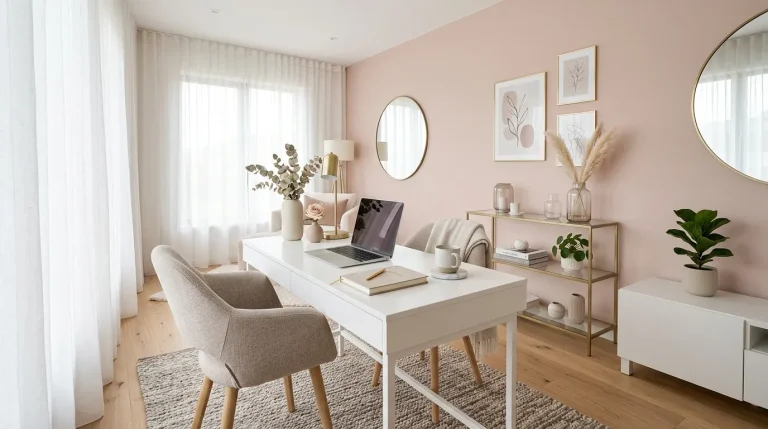
A large mirror placed beside or behind a desk reflects light and makes a cramped corner feel deeper. If the desk faces a wall, a mirror mounted to one side catches window light without reflecting the screen and causing glare.
A mirrored or glass-topped desk gives a similar effect in a lighter, more glam style. Wipe it often, since fingerprints show quickly on reflective surfaces.
5. Wall Mounted Lighting
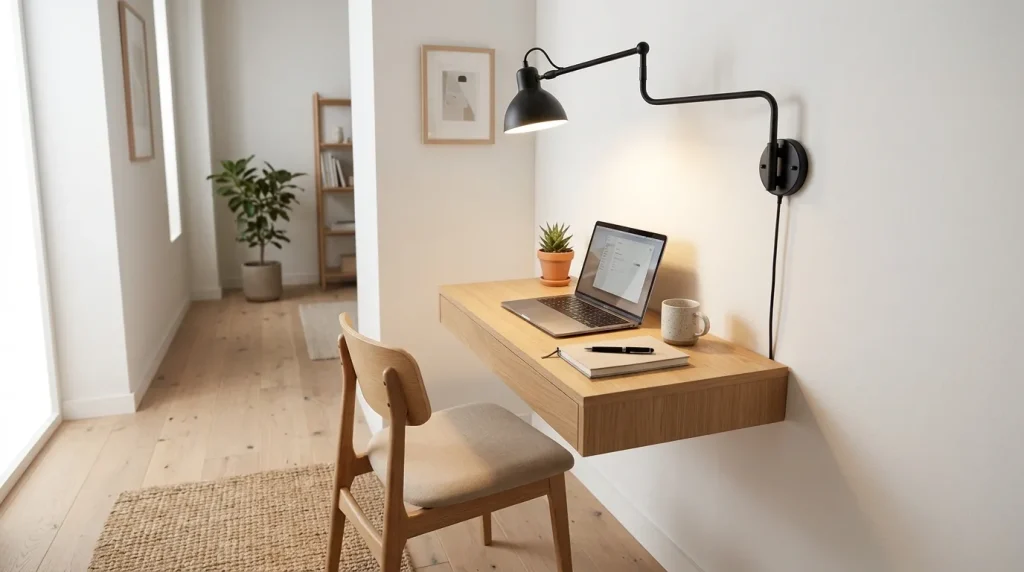
Wall-mounted sconces or a swing-arm lamp free up the desk surface and light the work area evenly. Position the light to the side opposite the dominant hand to avoid shadows while writing.
Plug-in sconces with a cord cover mean no electrician is needed. Choose warm white bulbs, around 3000K to 3500K, for a balance of focus and comfort during long hours.
More Space-Saving Ideas for a Tiny Office
- Floating desk: a wall-mounted shelf desk, about 20 inches deep, leaves the floor clear and fits under a window.
- Pegboard wall: hang pens, cords, headphones, and small shelves on pegboard to keep the desk empty.
- Desk with a drawer under the top: a slim drawer holds chargers and notebooks without needing a separate cabinet.
- Wallpaper on one wall: a patterned accent wall gives a small office character without taking any space; see these home office wallpaper ideas.
- Stackable chair or stool: in a shared room, a compact chair that tucks fully under the desk keeps walkways open.
Sizing a Desk and Chair for a Small Room
Getting the size right matters more in a tiny office than in any other room, since a desk that is a few inches too deep can block a doorway or closet.
- Desk width: 36 to 40 inches fits a laptop plus a notebook; 48 inches is comfortable for a monitor and keyboard.
- Desk depth: 20 to 24 inches works for most setups. Go shallower only if the screen sits on a wall arm.
- Desk height: standard desks sit around 29 to 30 inches; elbows should rest at roughly a 90 degree angle when typing.
- Chair clearance: leave about 30 inches behind the desk so the chair can roll back without hitting a wall or bed.
- Monitor position: top of the screen at or just below eye level, about an arm’s length away.
Cables are the other big source of clutter in a small office. A cable tray screwed under the desk holds the power strip, and a few adhesive clips along the desk leg keep cords off the floor. A wireless keyboard and mouse remove two more cords from view.
In the End
A small office works best when every item has a home and the desk stays mostly clear. Start with light and storage, then add one or two decorative touches that make the space enjoyable to sit in. Even a closet corner can feel like a real office with the right pieces.
Clara Whitmore
Clara specializes in interior styling, seasonal home trends, and cozy living spaces. She loves combining classic design elements with modern touches to create homes that feel personal, welcoming, and effortlessly stylish.