Primitive Living Room Gallery Wall Styles That Make Rooms Feel Inviting

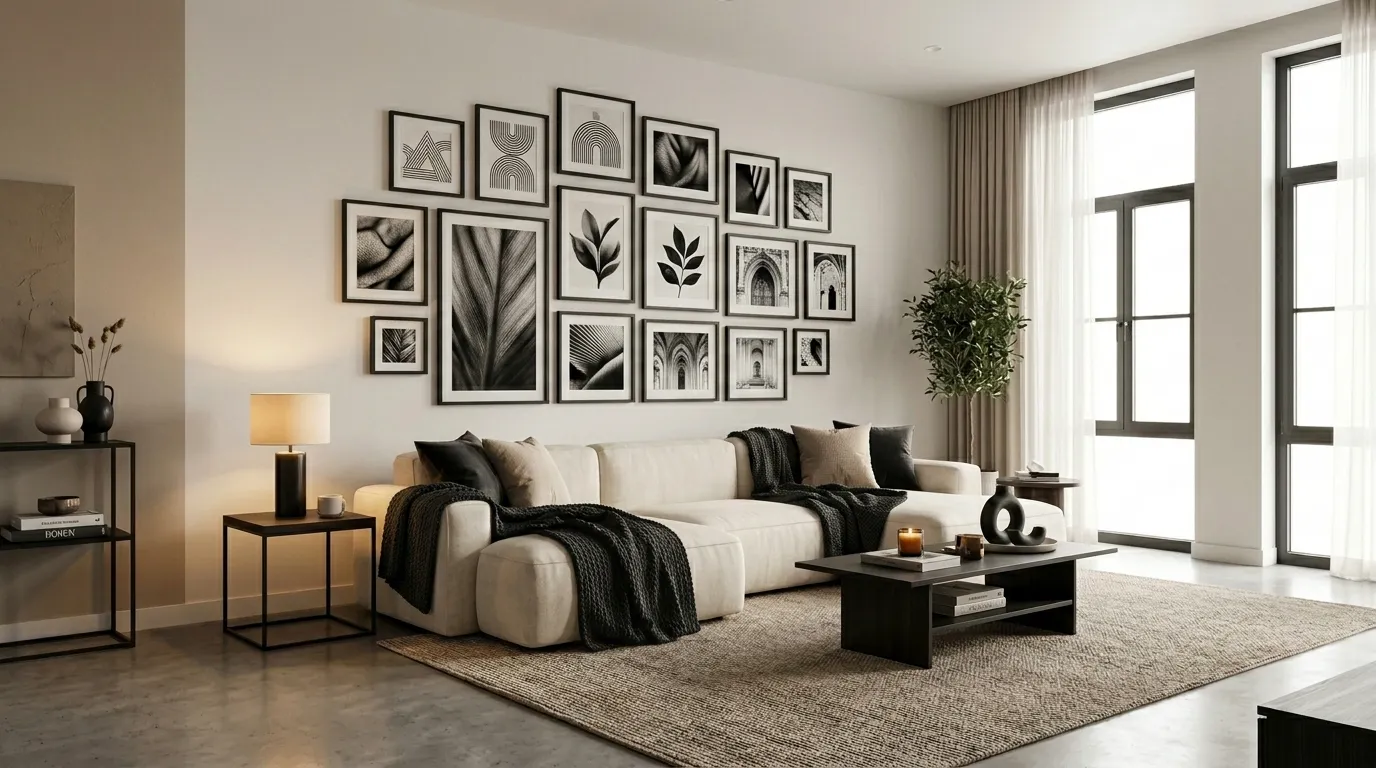
Table of Contents
The Big Picture
The primitive living room gallery wall has become one of the most loved ways to turn a plain wall into something warm, layered, and deeply inviting. It’s not just decor—it’s the visual heartbeat of a cozy living space.
If your living room feels a little empty, flat, or unfinished, this is exactly the kind of design idea that changes everything. A thoughtfully styled gallery wall can instantly add character, balance, and personality without needing a full renovation. In my experience, even the simplest frame arrangement can make a room feel more lived-in and emotionally connected.
In this guide, you’ll discover inspiring gallery wall styles that blend rustic charm with modern simplicity. Each idea is designed to help you create a space that feels more welcoming, visually rich, and Pinterest-worthy—while still staying practical for real homes.
1.Weathered Wood Frames
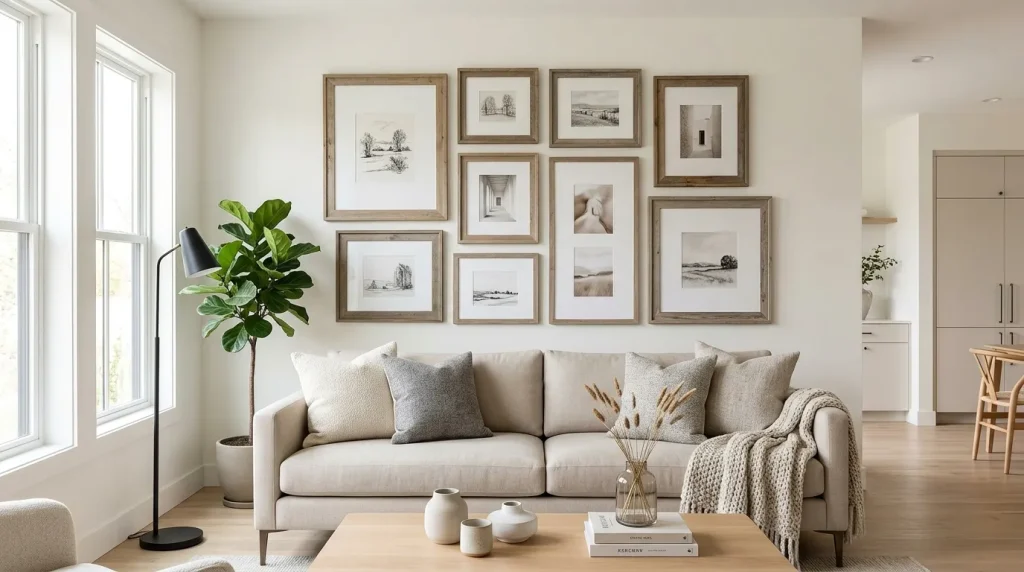
A blank wall can instantly make a living room feel unfinished, especially when the furniture already looks polished and intentional. Weathered wood frames solve that problem by adding texture, softness, and visual structure without overwhelming the space. The slightly aged finish brings character while still blending beautifully with modern layouts and neutral decor. In my experience, this setup works especially well in homes with open floor plans because it creates a cozy focal point without adding bulky furniture. The layered frame tones also help soften sharp architectural lines, making the room feel calmer, warmer, and far more inviting overall.
One reason this arrangement works so well is because it balances rustic texture with clean modern styling. Instead of using overly decorative artwork, many homeowners pair simple black-and-white prints, landscape sketches, or soft neutral photography inside the frames. That keeps the gallery wall visually interesting while still feeling uncluttered and elevated. I’ve seen this work beautifully above long sectionals where the wall needs dimension but not heavy decor. The natural wood texture also reflects warm lighting in a subtle way, which helps the entire room feel softer during evenings and creates a relaxed atmosphere people naturally want to gather in.
2.Neutral Layered Art
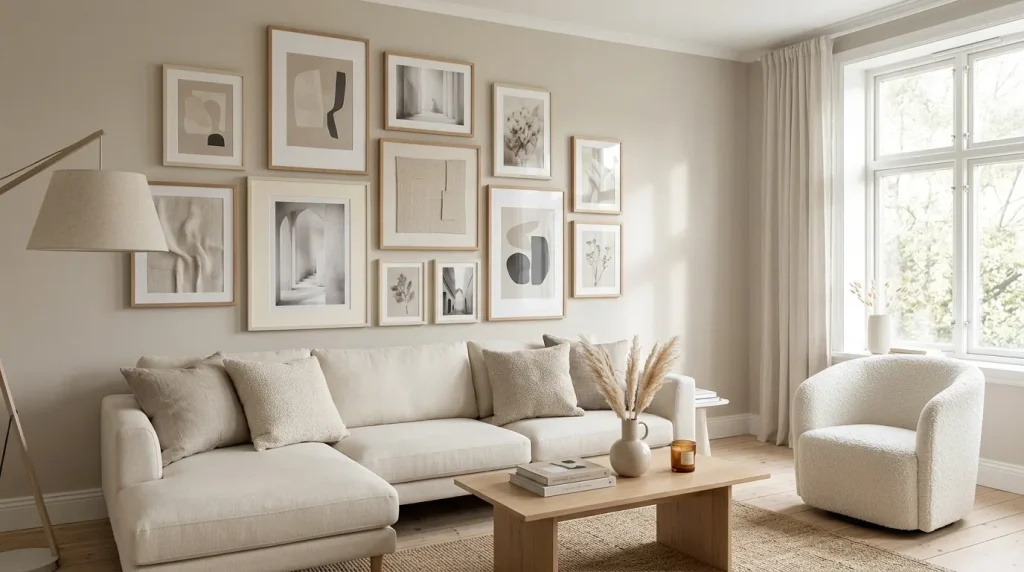
A living room instantly feels more polished when layered artwork introduces subtle depth without creating visual noise. Neutral-toned prints stacked together in coordinated frames bring a calm designer feel that works beautifully in both small apartments and larger homes. Instead of competing with furniture, the soft colors quietly support the entire room palette. That’s why many designers recommend this approach for spaces that already include textured fabrics or statement lighting. I’ve noticed these softer arrangements also make natural daylight feel brighter, which helps the room appear cleaner, more open, and much easier to style throughout the year.
The beauty of this idea is how flexible and beginner-friendly it feels in real homes. Homeowners can mix abstract sketches, soft photography, fabric art, or minimalist landscapes without making the wall feel chaotic. Keeping the artwork within similar tones creates a collected look even when the pieces are different sizes. In my experience, this works especially well for anyone creating a primitive living room gallery wall that still feels modern enough for Pinterest-inspired styling. The layered effect adds movement and personality while maintaining a peaceful atmosphere that encourages relaxation, conversation, and everyday comfort without requiring constant redecorating.
3.Black Accent Layout
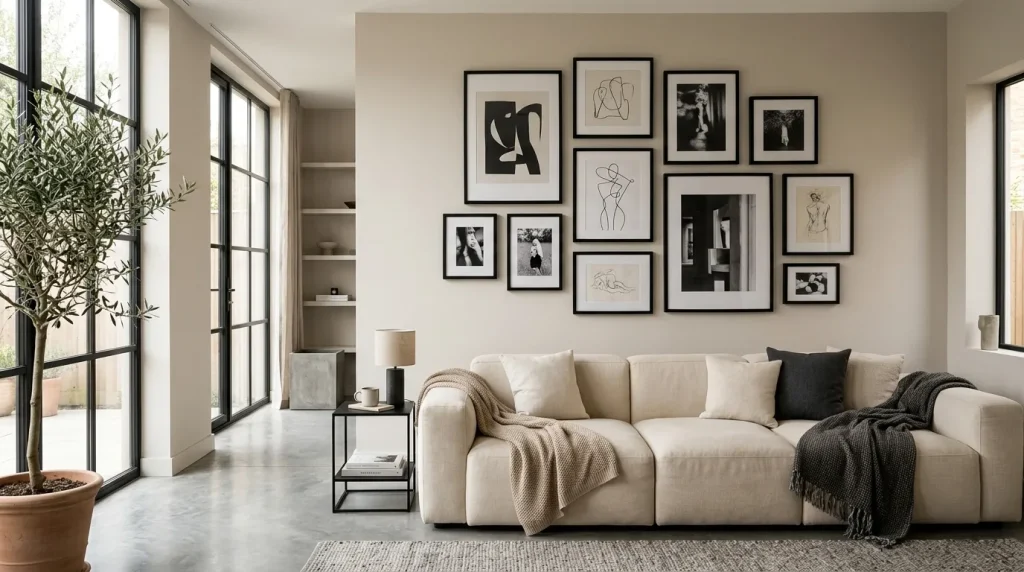
Sometimes a living room feels too soft or visually flat, especially when everything blends into similar beige or cream tones. Black-framed artwork instantly sharpens the space and creates contrast that makes the entire room feel more styled and intentional. Even simple prints suddenly stand out when surrounded by clean dark lines. I’ve noticed this approach works particularly well in modern homes where minimal furniture needs extra visual structure. The contrast naturally draws attention upward, helping ceilings feel taller while giving the seating area a stronger centerpiece that feels balanced, elegant, and surprisingly cozy at the same time.
A well-planned black accent arrangement also makes decorating easier because it visually connects different parts of the room together. Black frames can tie into lighting fixtures, coffee tables, or hardware without making the space feel overly coordinated. That subtle repetition creates harmony while still keeping the room relaxed and livable. In many primitive livings room gallery wall designs, homeowners use dark accents to modernize softer natural textures like wood, linen, and woven fabrics. The result feels grounded, clean, and welcoming instead of overly rustic. It also photographs beautifully, which explains why this style performs so well across Pinterest and interior inspiration platforms.
4.Rustic Black & Wood
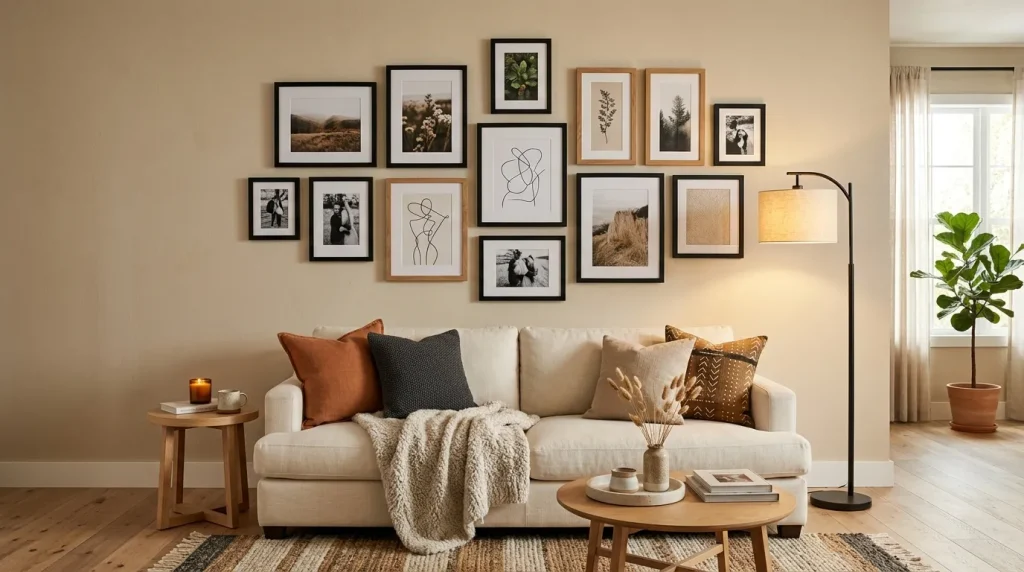
A combination of black and wood frames creates a balanced look that feels both grounded and modern. The warmth of natural wood softens the sharpness of black accents, resulting in a wall that feels inviting rather than harsh. This mix works especially well in living rooms that already include natural materials like linen sofas or wooden coffee tables. I’ve noticed this pairing is often used in transitional interiors because it bridges rustic charm with clean modern structure without feeling forced or overly styled.
The strength of this idea lies in its ability to connect different textures across the room. Black frames can echo lighting fixtures or hardware, while wood tones tie into flooring or furniture finishes. That subtle repetition creates visual harmony without needing perfect matching. In many primitive livings room gallery wall setups, this combination brings just enough contrast to make the wall stand out while still feeling soft and livable. The result is a cozy, well-layered space that feels curated but not over-designed, making it ideal for everyday family living.
5.Floating Shelf Mix
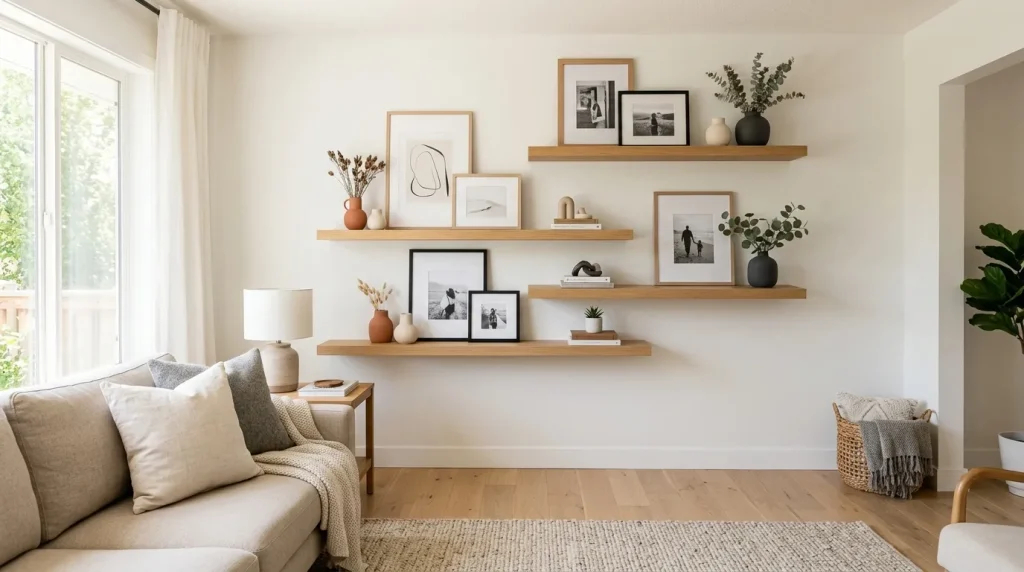
Floating shelves introduce a dynamic way to style wall art because they allow layering instead of fixed placement. Frames can lean casually against the wall while small decor pieces fill the gaps, creating a relaxed but intentional look. This approach feels especially useful in real homes where flexibility matters.
In my experience, people appreciate how easy it is to refresh the display without starting from scratch. You can swap prints, adjust spacing, or change accessories depending on the season or mood, which keeps the room feeling constantly updated and visually interesting. This layered and adaptable styling approach also works beautifully in a pewter green home office where shelves, artwork, and decorative accents help create a workspace that feels both inspiring and personalized.
Another benefit of this setup is how naturally it blends structure with personality. Instead of a rigid gallery wall, the shelves create gentle levels that make the wall feel more dimensional. I’ve noticed this works particularly well in smaller living rooms because it adds visual interest without overwhelming the space. The mix of frames and objects also helps break up flat walls, making the room feel more curated and lived-in. When styled with neutral tones and soft lighting, the result is a calm, Pinterest-ready atmosphere that feels both practical and beautifully designed.
6.Monochrome Photo Story
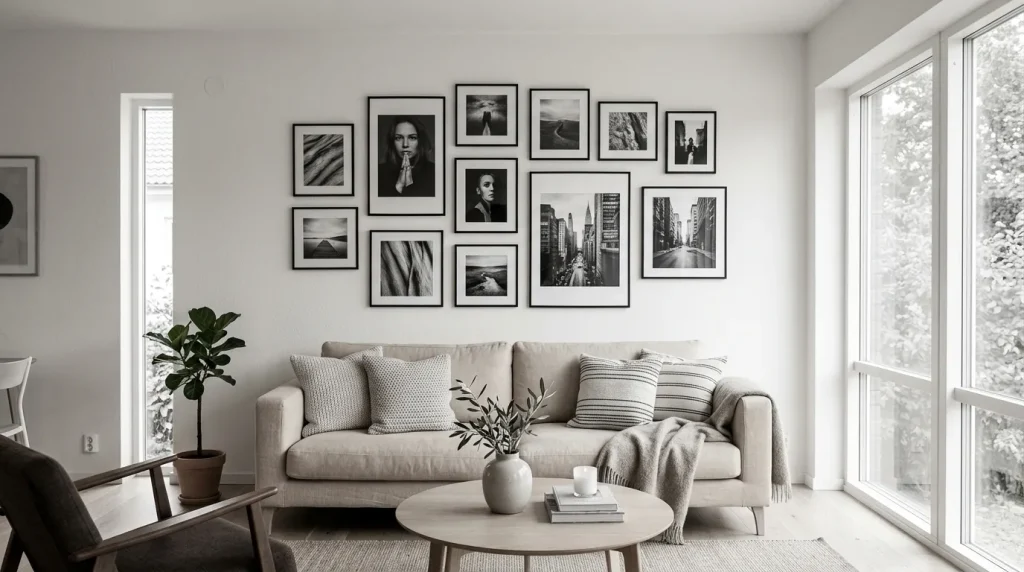
A monochrome photo arrangement can completely change the emotional tone of a living room by turning personal memories into a refined design feature. Instead of overwhelming color, the black-and-white palette keeps everything visually calm and balanced. This style works especially well when the rest of the room already includes neutral furniture and soft textures. In my experience, people often underestimate how powerful simple photography can be when framed consistently. The result feels deeply personal but still polished enough to look like a professionally designed interior, making the space feel warm, inviting, and thoughtfully composed.
What makes this approach especially effective is how it brings unity to different types of images. Family moments, travel memories, or architectural shots all blend seamlessly when converted into monochrome tones. That consistency creates a smooth visual rhythm across the wall. I’ve seen this work particularly well in modern homes where simplicity is key and clutter is avoided. The frames don’t compete with the images but instead elevate them, allowing the emotional value to shine through. The final result feels calm, elegant, and perfectly suited for a cozy yet refined living room atmosphere.
7.Framed Textile Art
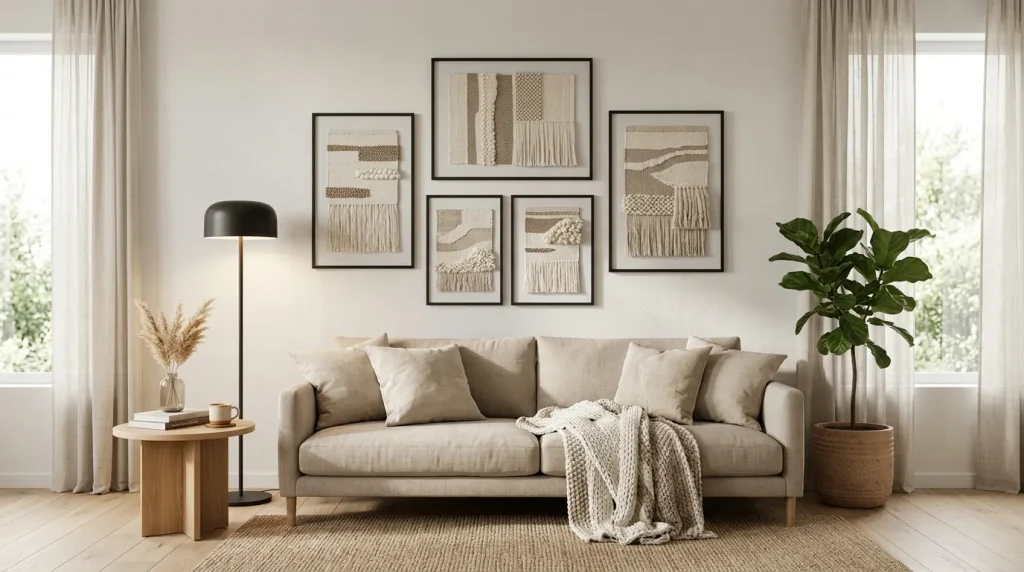
Framed textile art introduces a completely different kind of visual warmth compared to standard prints or photographs. Instead of flat imagery, woven or fabric-based designs add subtle texture that immediately softens the atmosphere of a living room. This works especially well in spaces that already lean toward minimal or modern styling. In my experience, textile pieces help break the monotony of smooth surfaces like painted walls, glass, or polished wood. The result feels more layered and inviting, creating a gentle tactile presence that makes the room feel calmer and more emotionally comfortable.
Another reason this idea works so well is because it blends art with material richness. Even simple woven patterns or neutral fabric compositions can create a strong visual impact when framed properly. I’ve noticed this approach is often used in Scandinavian-inspired interiors where warmth and simplicity are key design goals. The textures naturally absorb light in a soft way, preventing the wall from feeling flat or cold. When combined with neutral furniture and natural tones, framed textile art transforms the living room into a soothing, balanced environment that feels both modern and deeply comforting.
Your Next Step
A well-designed gallery wall can completely redefine the atmosphere of your home, turning empty walls into meaningful focal points filled with warmth and personality. With the right mix of frames, textures, and layout styles, even the simplest living room can feel thoughtfully designed and deeply inviting. The beauty of a primitive living room gallery wall is how easily it blends comfort with creativity, making your space feel lived-in yet visually balanced.
Now it’s your turn to bring these ideas into your own home. Save this article on Pinterest so you can revisit it when decorating, and try one or more styles that match your space. Small changes can create powerful transformations, and I’ve seen how even one well-placed gallery wall can completely shift the mood of a room. Share it with someone who loves home decor and start creating a space that truly feels like home.
Clara Whitmore
Clara specializes in interior styling, seasonal home trends, and cozy living spaces. She loves combining classic design elements with modern touches to create homes that feel personal, welcoming, and effortlessly stylish.